ETN Thunderstorm Alerts

This being my first day really focusing on the ETN data, my initial thoughts on the thunderstorm alerts in the warning operations environment is that is can be useful to identify when storms are becoming electrified but I find myself gravitating to only looking at the DTA (Dangerous Thunderstorm Alerts) as opposed to all three thunderstorm alerts. As others have mentioned I concur that the length of time that the alert boxes remain on the screen is entirely too long (45 minutes).  In some cases, the storm has completely dissipated or moved well outside of the alert box and the boxes become more of a distraction in my opinion.  I think a reasonable time frame for the alert boxes would be 15 minutes or 20 minutes max.

TstmAlerts

Jack Bauer

Tags: None

First warning May 6 OUN

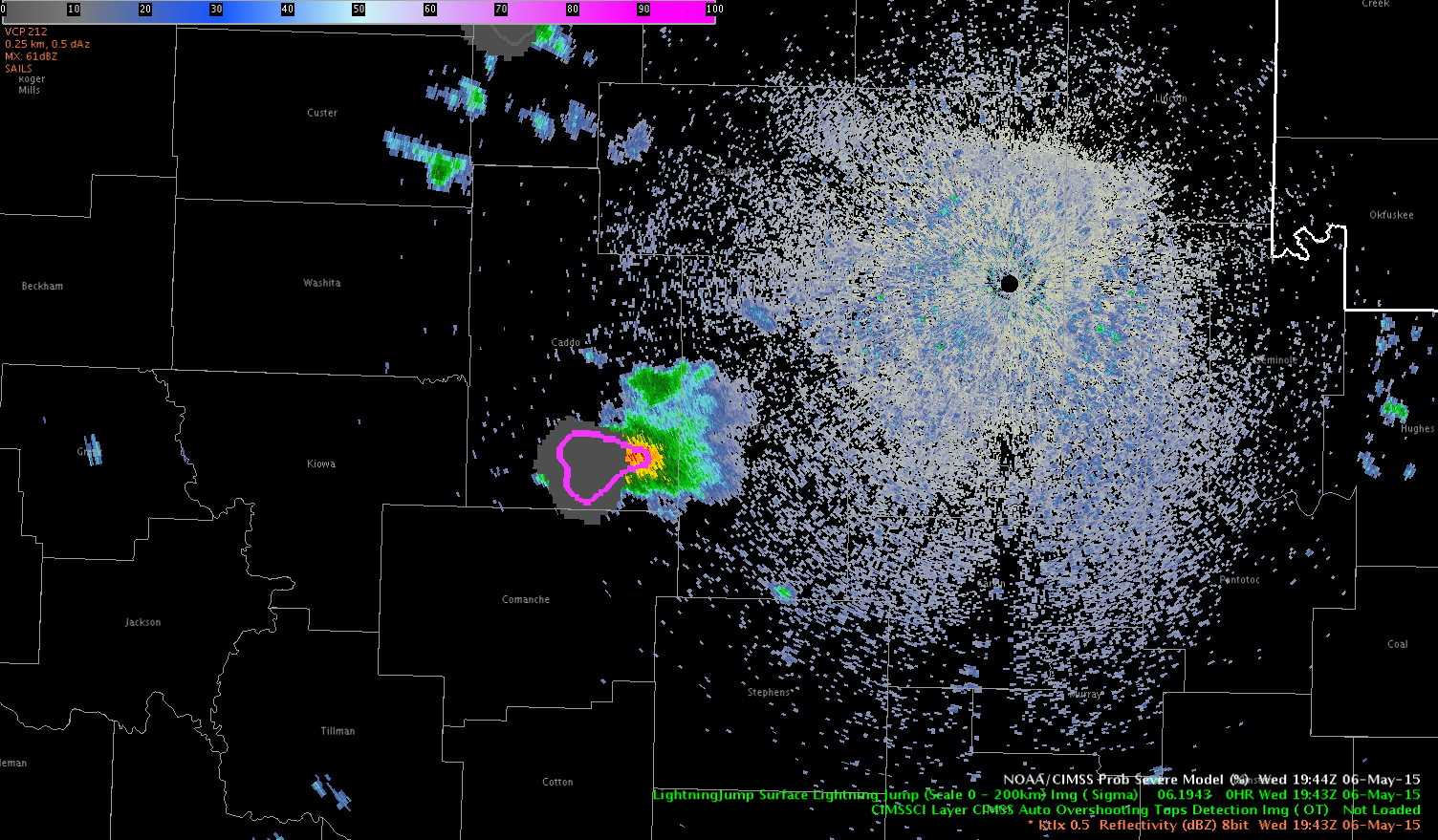
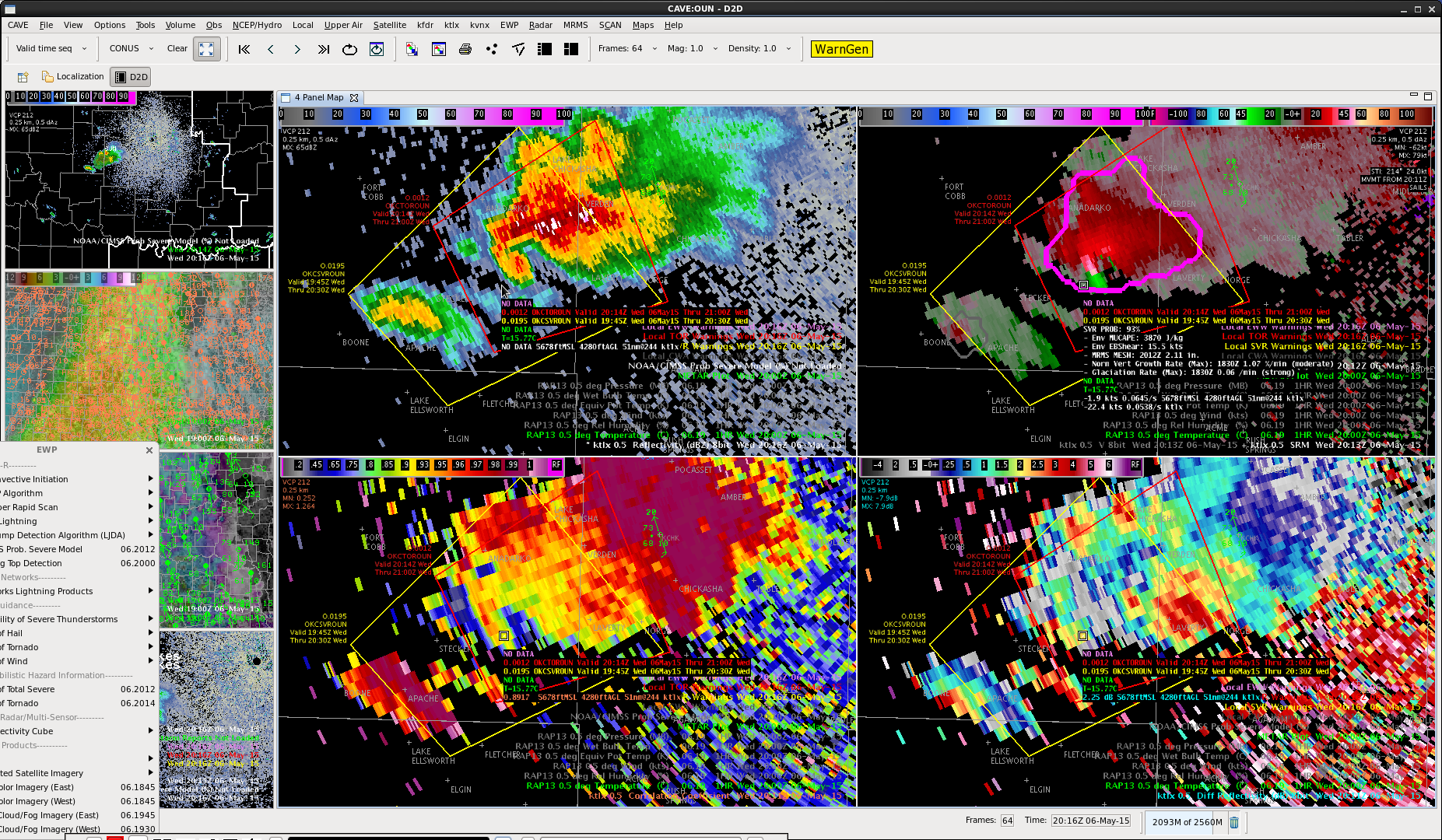
First warning issued. Solid structure with good storm top divergence and deep mesocyclone. Prob of Svr was 81% at 1944z with a MESH 1.10 inches. 1 sigma lightning jump at 19:37 and 19:39z. Lightning jump 1943

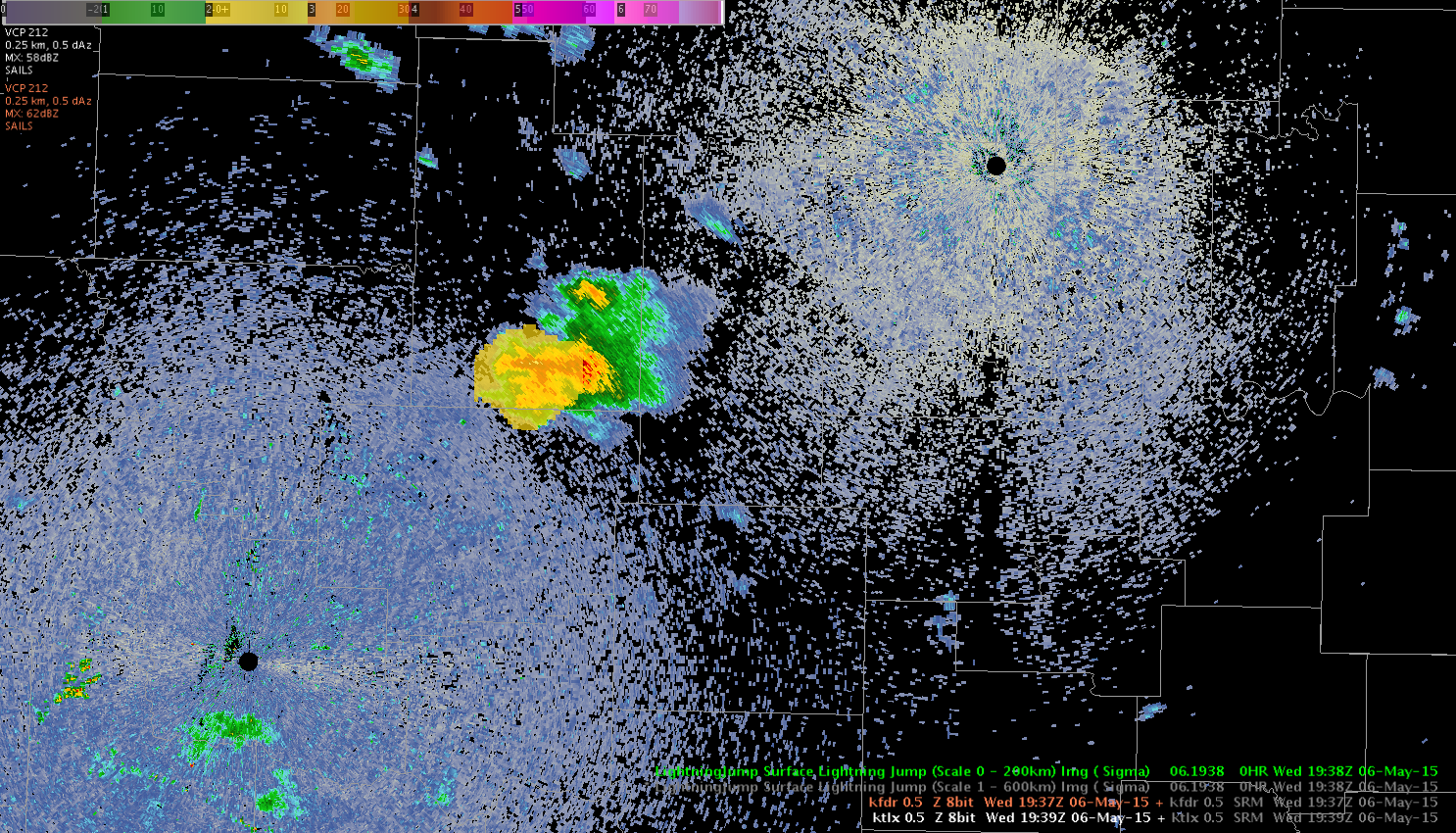
Also saw a 2 sigma jump at 1938Z, seen on the image below.

20150506_1938Z_LightningJump

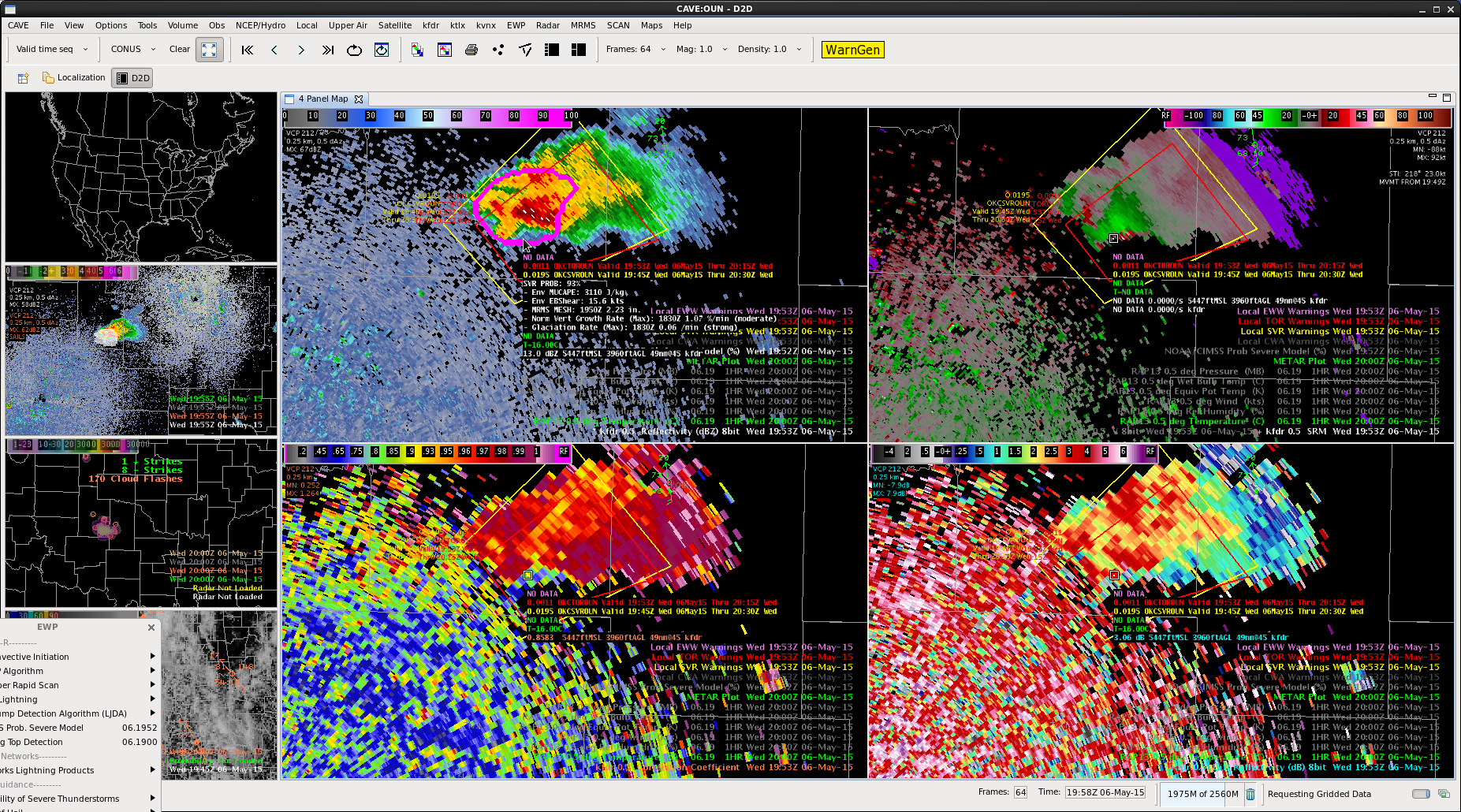
A tornado warning was issued just after 1950Z based off the latest radar signatures.

20150506_1953Z_TOR

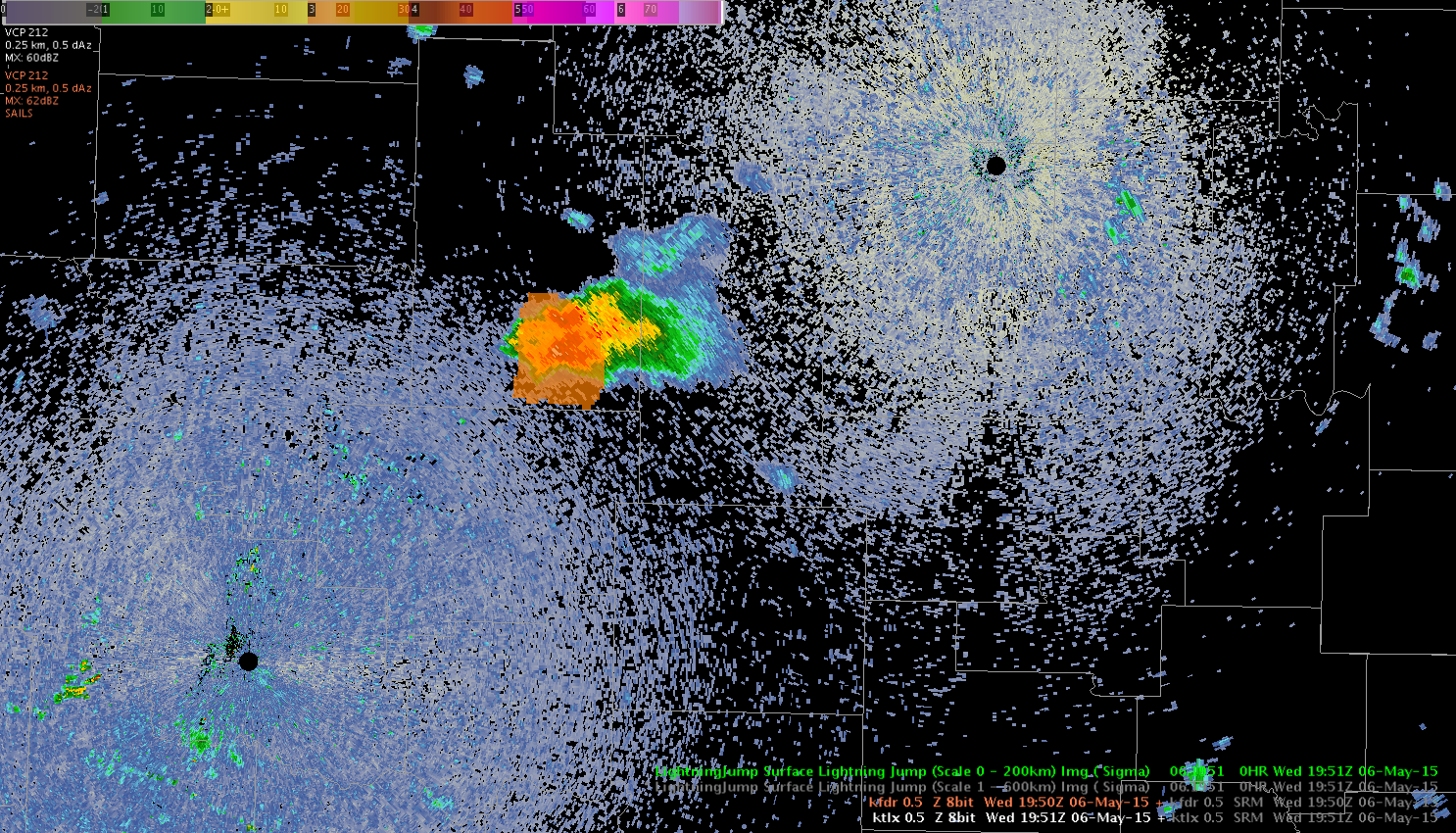
Shortly after that and as the tornado touched down, there was a 3 sigma lightning jump.

20150506_1951Z_LightningJump

classic gate to gate rotation. 2 inch hail reported with this cell.

20150506_2016Z_Radar_TOR

Lynford/SRF

Tags: None

Active Day Expected!

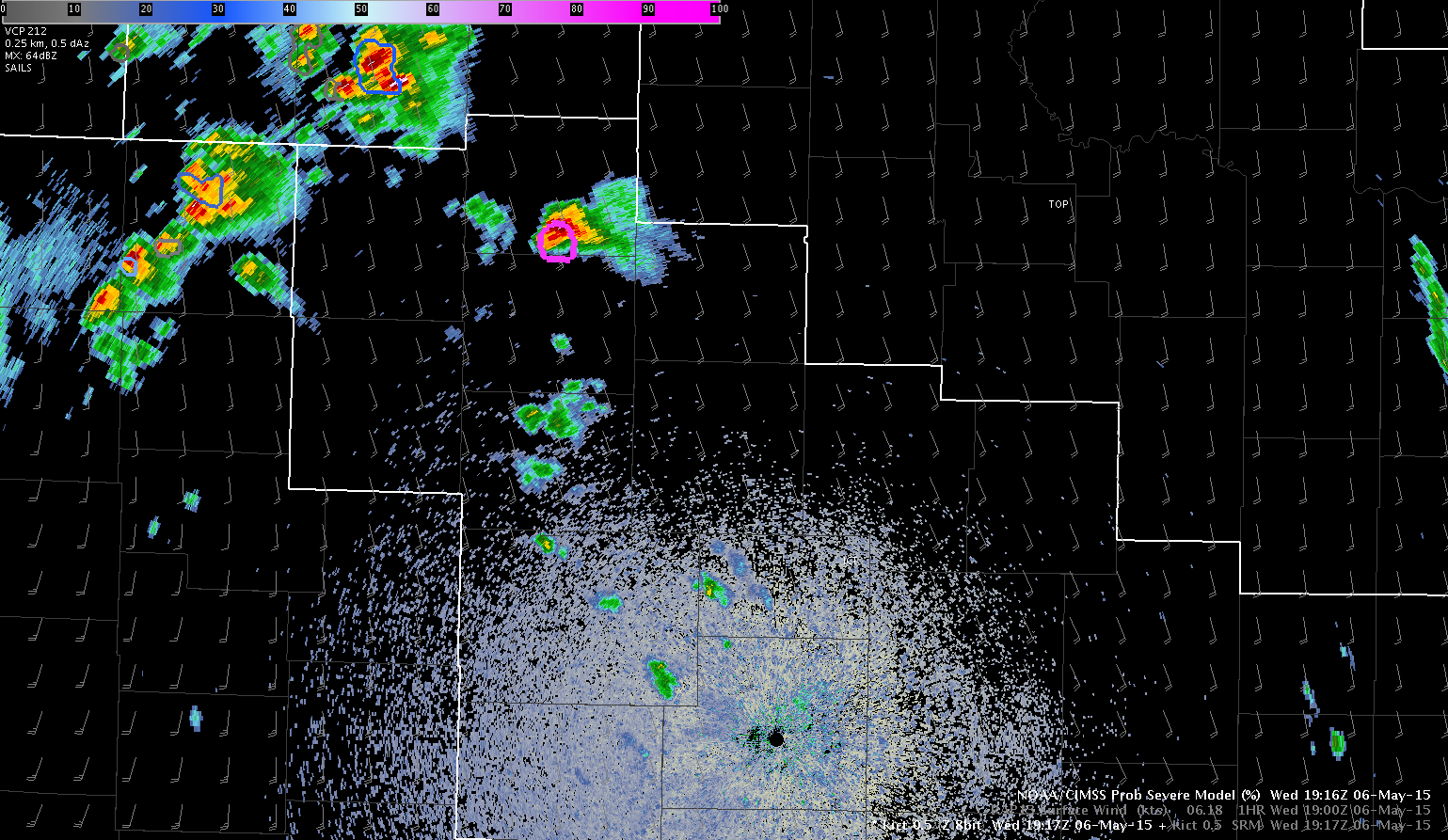
Upon sitting down at the desk today initialized as the Wichita WFO (ICT) there was a tornadic storm already in progress in the northern portion of the CWA, which had a ProbSevere of 82%.   Since we are just getting set up and getting familiar with the environment we are going to assume that storm has been covered and monitor new convection as it develops.

Radar_1917

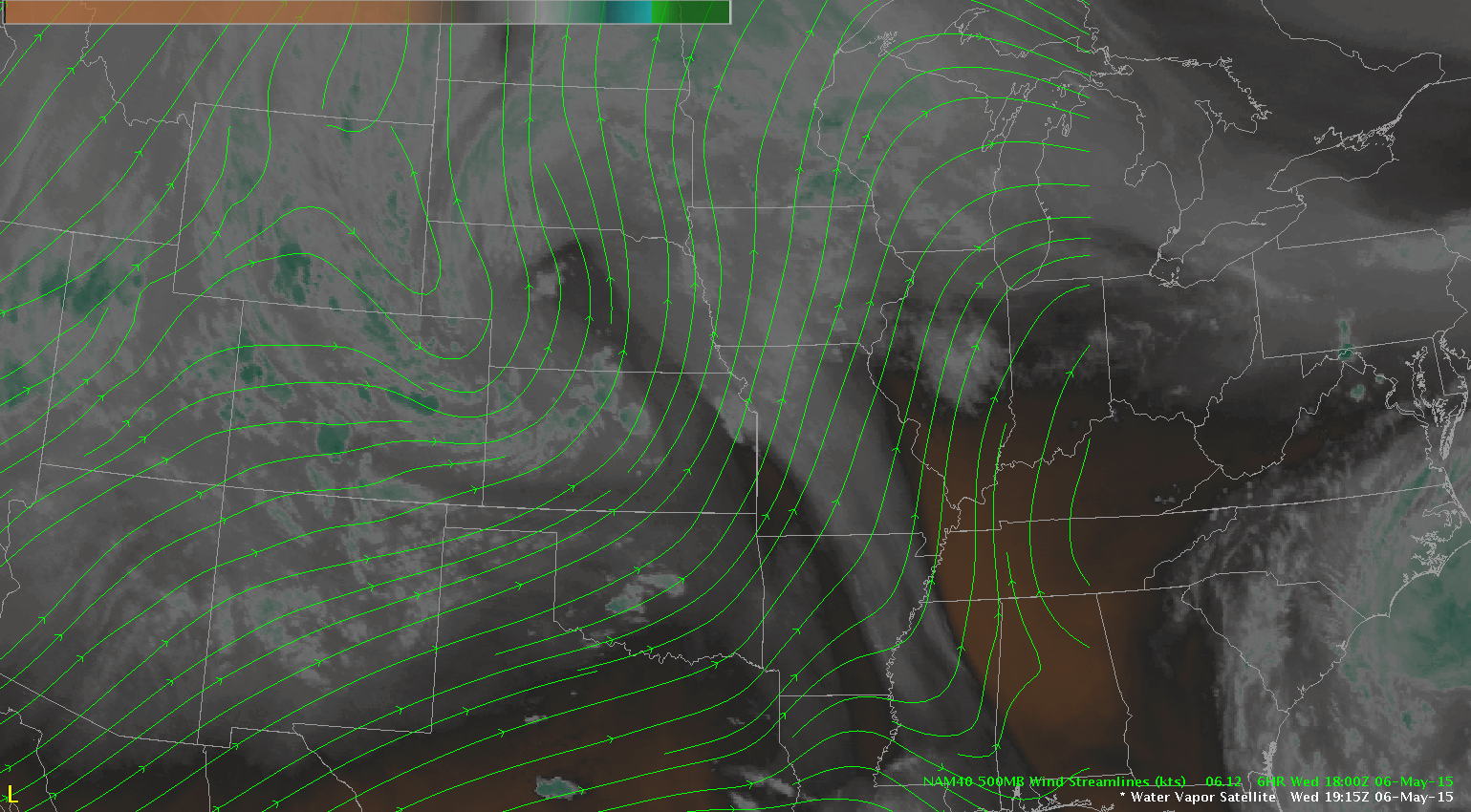
The water vapor imagery is showing a deep upper low over northeast CO with shortwave energy rotating across the central plains which is helping to initiate convection early this afternoon.

WV_1915

A special 18 UTC sounding from OUN shown below revealed strong instability with MUCAPE of around 2200 J/kg and favorable shear for tornadoes with 0-1km SRH values just under 200 m2/s2 and good directional shear in the lowest 2 km.

KOUN 18Z sounding2

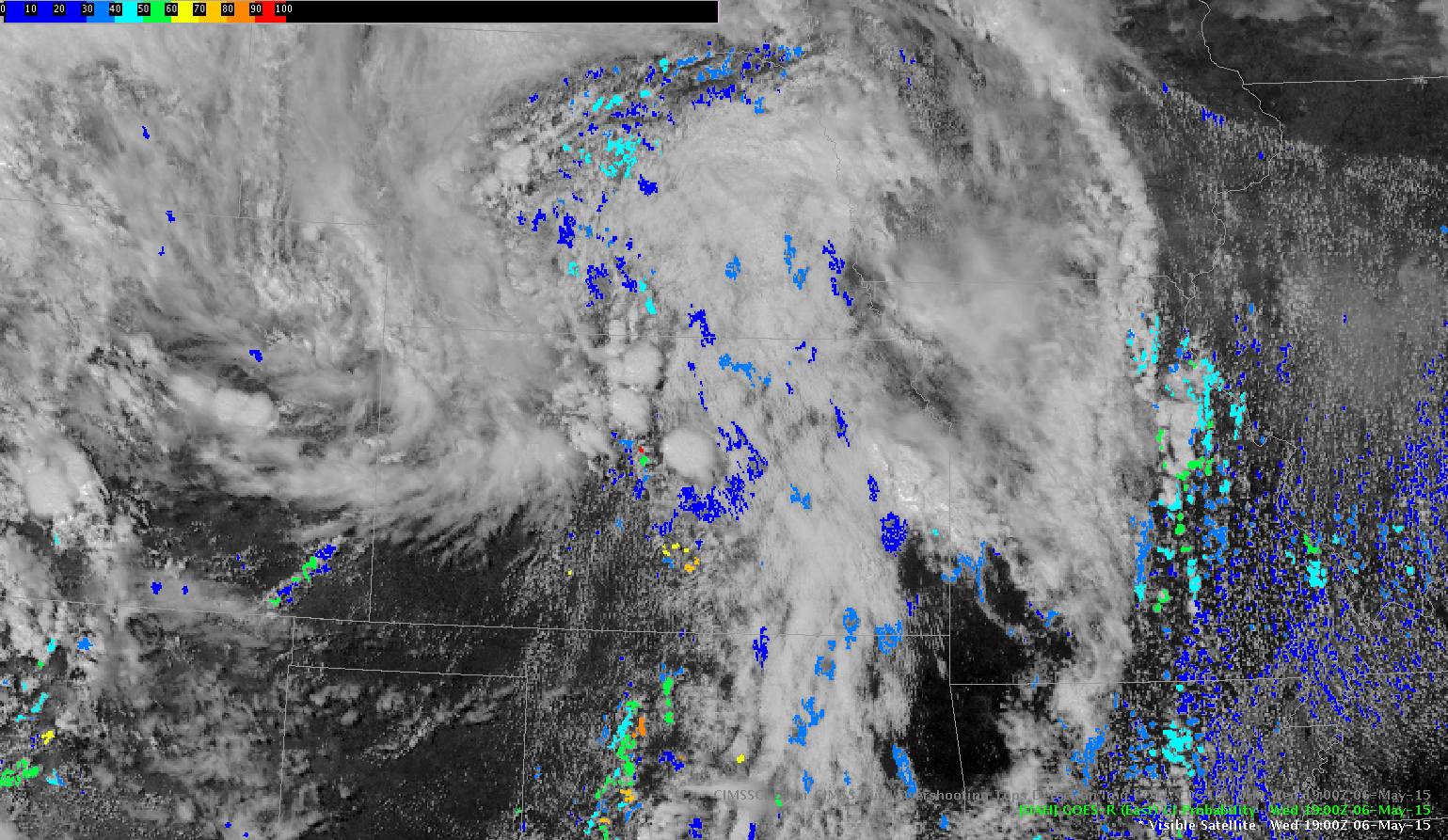
An initial look at the Convective Initiation product revealed some probabilities above 70% near Wichita at 1900 UTC and further to the west over the eastern portion of DDC CWA.

VisCI_1900

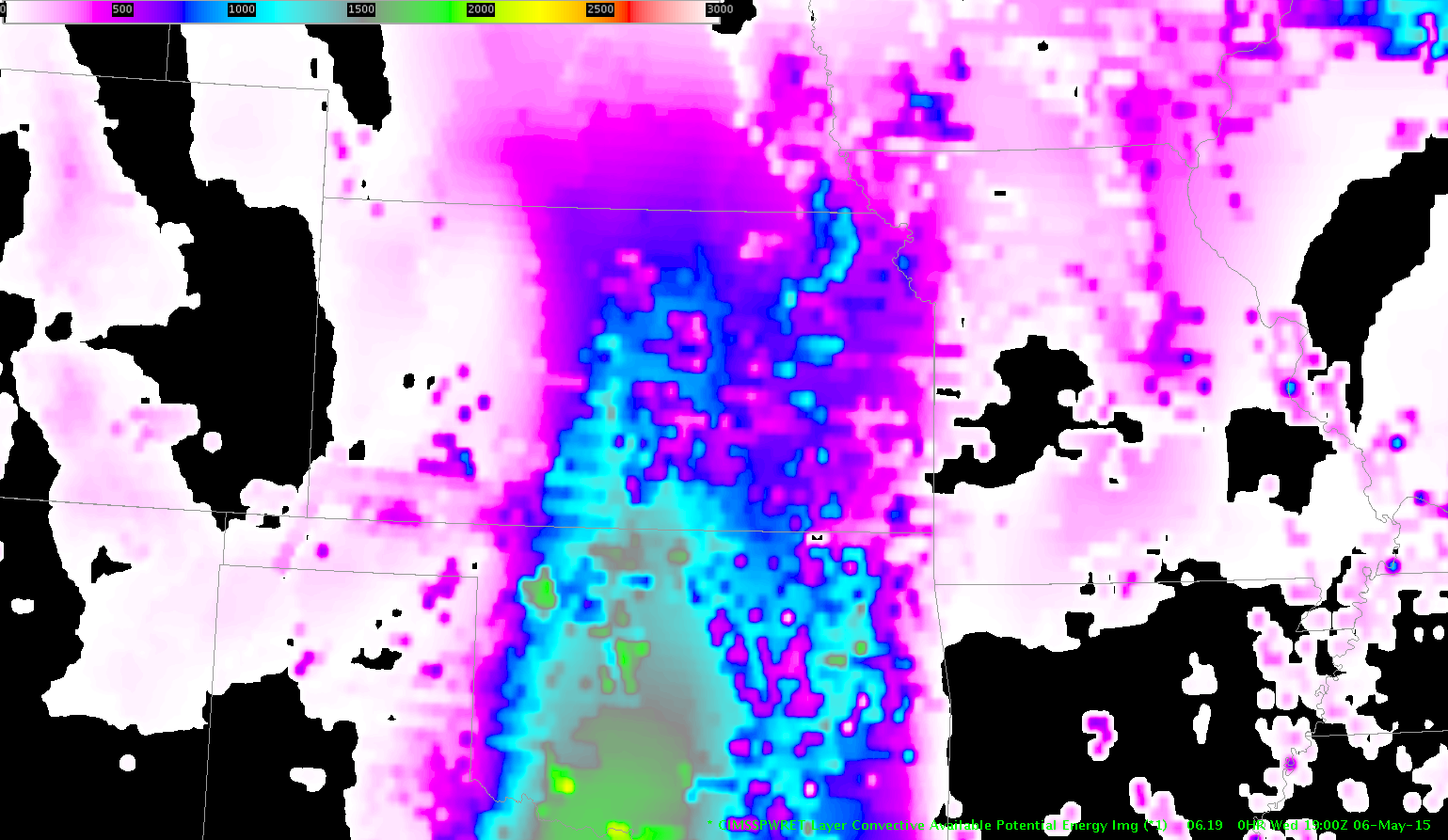
The GOES-R LAP CAPE product reveals instability is not quite as high over our area (but the trend has been increasing with more clearing of the clouds) compared to further south over OK but combined with the shear will be enough to support severe convection through the afternoon.

GOES-R_CAPE

Jack Bauer/V. Darkbloom

Tags: None

Lightning Jump and Flash Density…then a Tornadic Supercell Develops

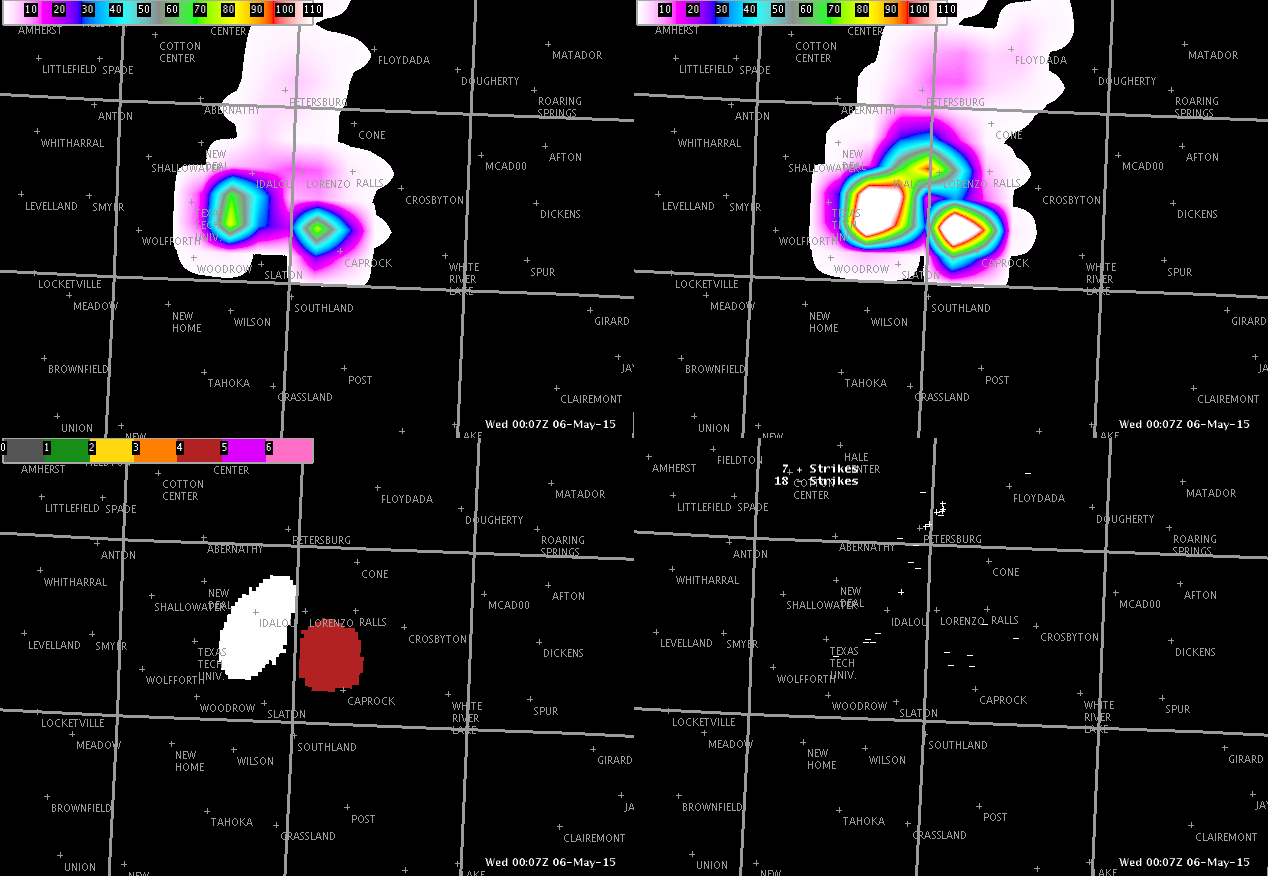
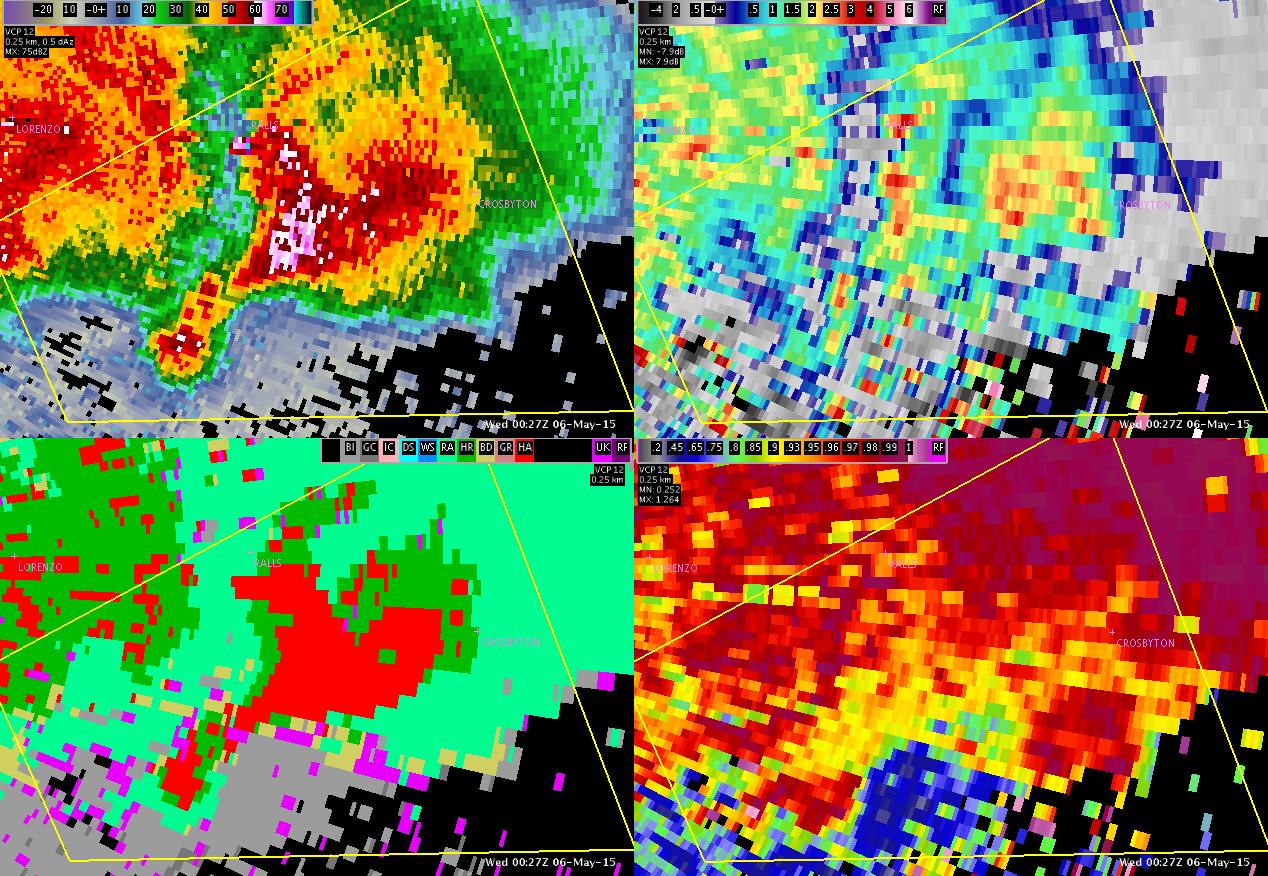
At 2353 UTC, a developing thunderstorm was seen on radar southeast of Lubbock.  At 0007 UTC, lightning jump data increased to 4 sigma.  At this same time, flash density increased to 70-80 flashes.  A warning was issued at 0011 UTC, based off the lightning data and radar data (50 dBz core at 33000 ft per MAF and low Zdr values per LUB).  ProbSevere increased to 87% at 0007 UTC also, and remained above 84%.  The storm took on a classic supercell structure and later produced a tornado.

LBBlightning LBBtornadopng

Tags: None

Update to First SJT Warning

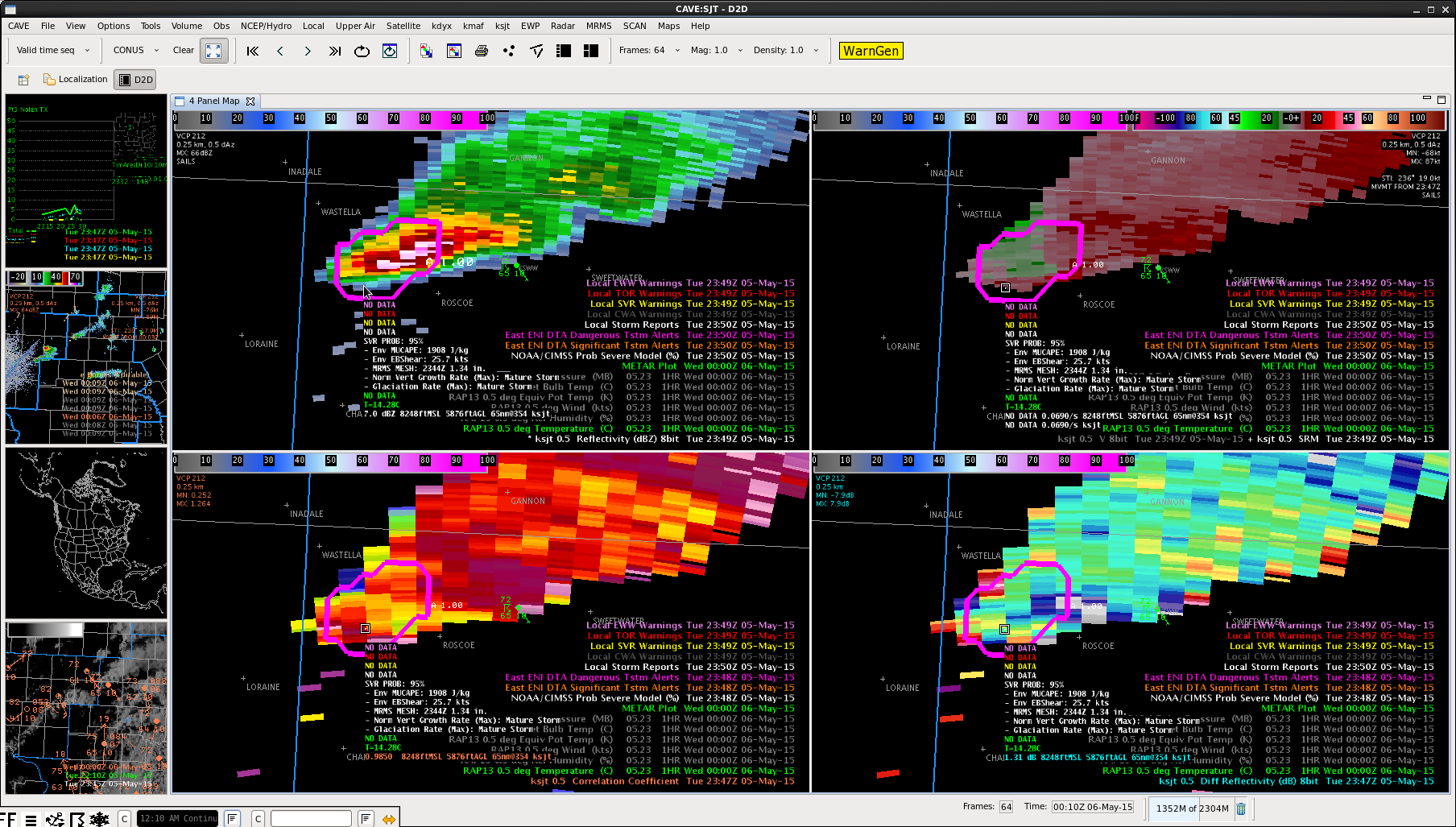
Had a storm report come in from 2mi north of Roscoe at 2350Z with 1″ hail within our warning. As indicated in the image below, the ProbSevere data was still indicating 95% severe probability at that time. That provided around 20 minutes lead time from both when the warning was issued and the ProbSevere value jumped above 90%. It looks like the MRMS MESH data was overestimating the hail size slightly (1.34″). -SRF

20150505_2350z_Radar_LSR

Tags: None

Severe Warning issued for Lubbock County 2323 UTC

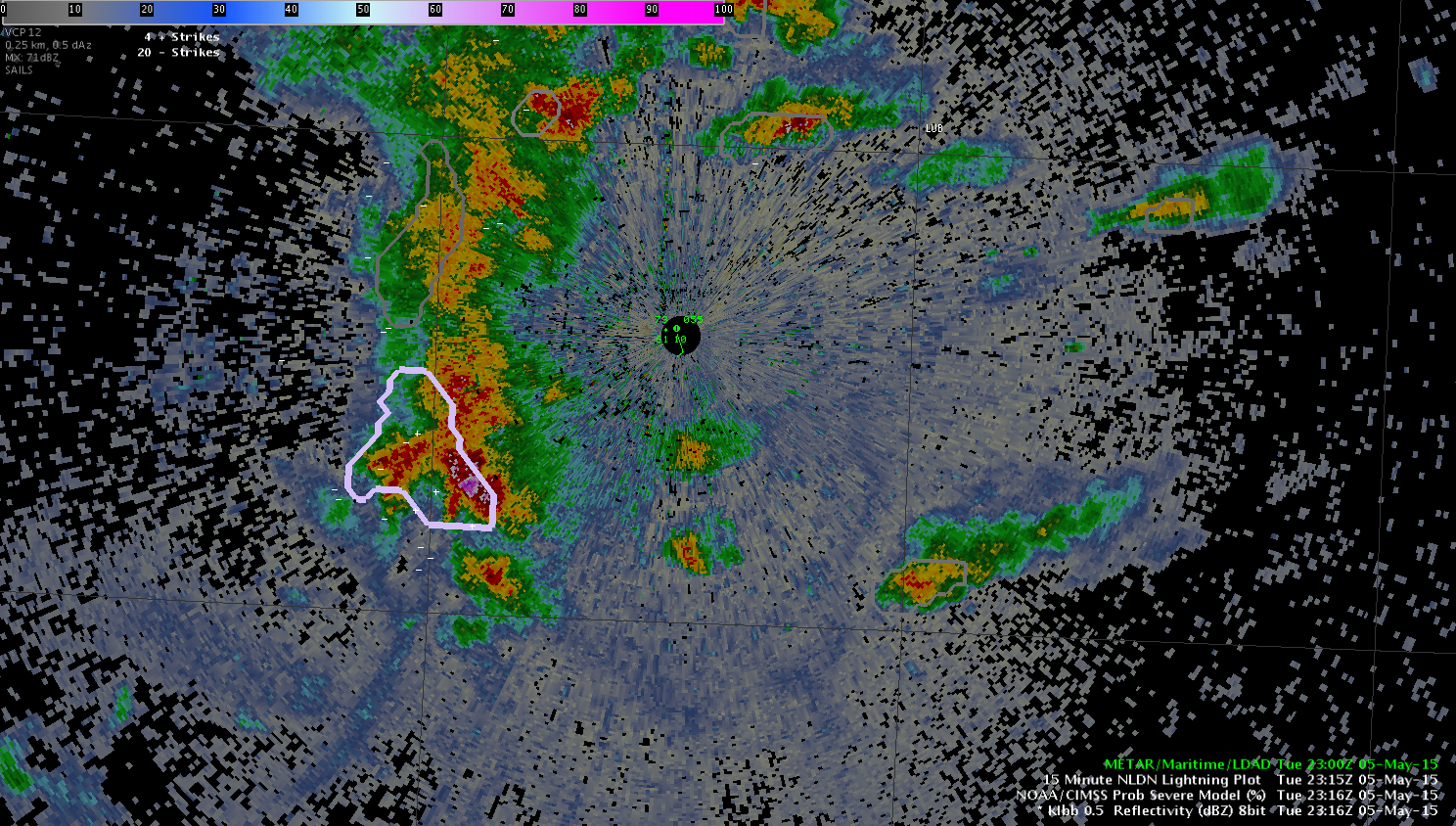
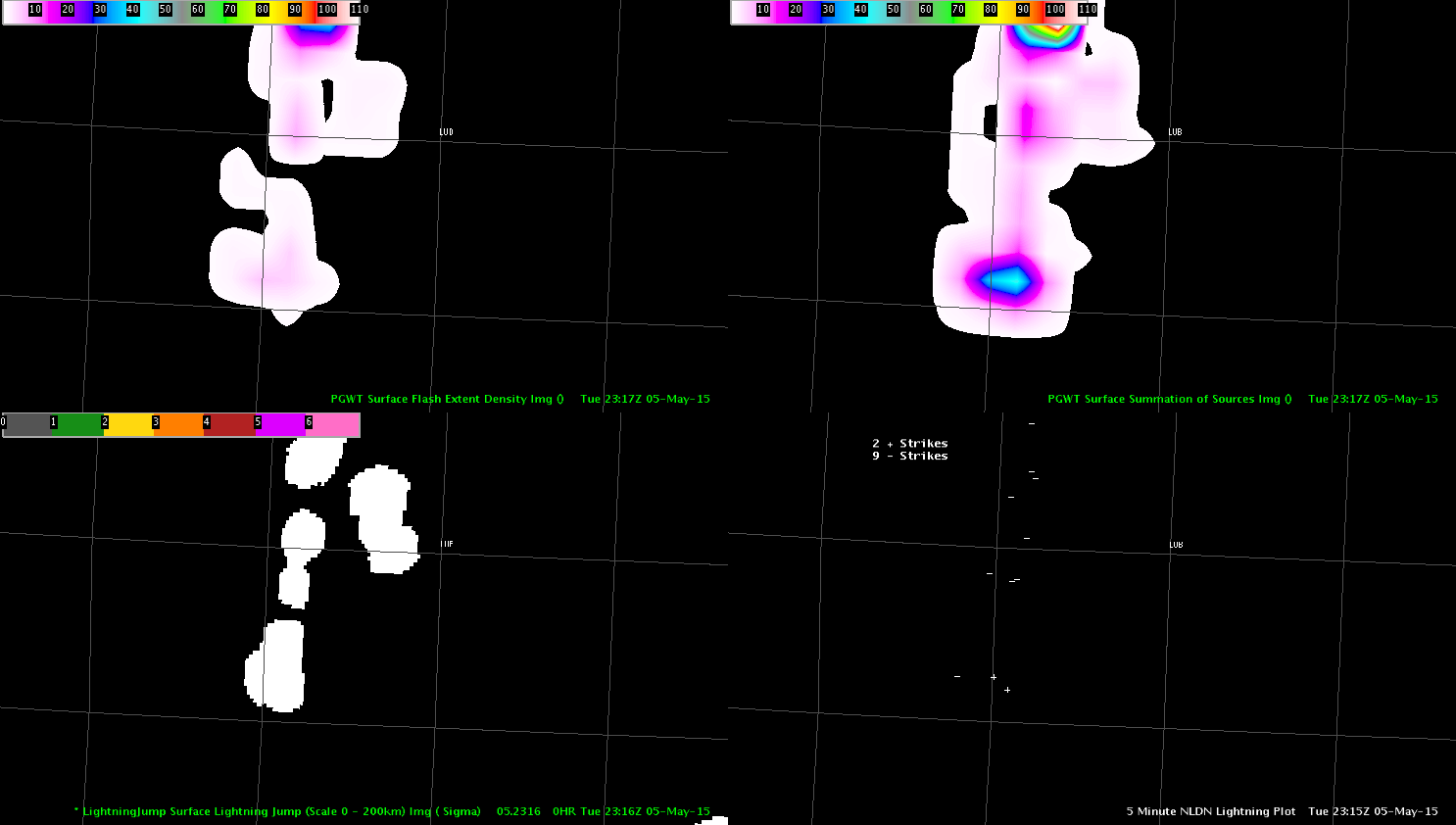
We decided to issue a warning at 2323 UTC for Lubbock county on a storm that was moving eastward towards the city of Lubbock. The ProbSvr increased to around 59% at 2316 UTC with a MESH of 0.76 inches.Radar_Probsvr_2316The PGLM data and Lightning jump data at 2316 UTC were not very impressive with flash density less than 10 flashes (upper left in the image below) and the Lightning jump showing values less than 1 sigma (lower left in the image below).

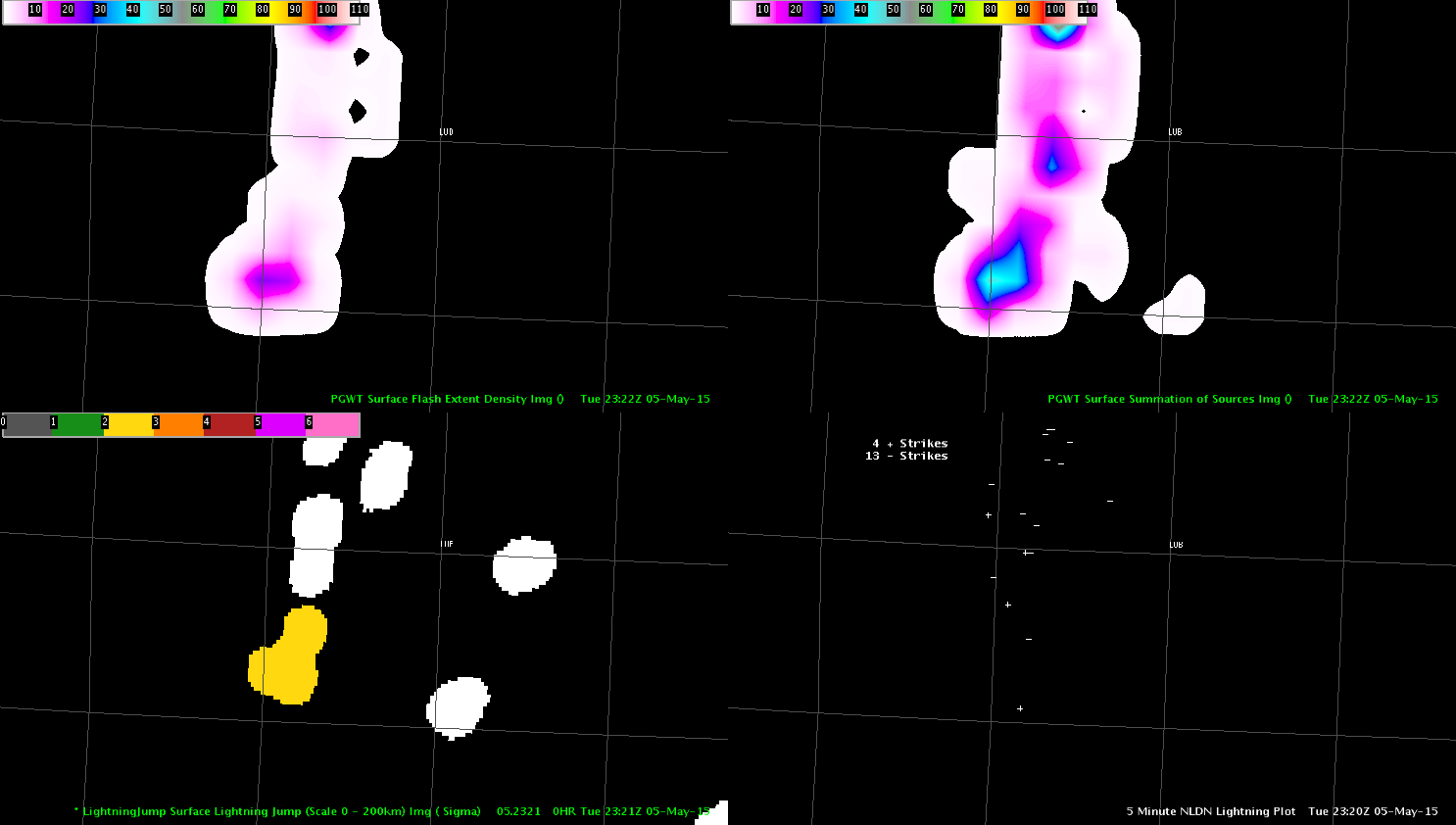
4pnl_PGLM_LTGjump_2316Based on the base radar data from the all tilts display off of the MAF radar (LBB was too close to the storm and not able to see the top of the storm), we began writing up a severe thunderstorm warning at 2320 UTC which was issued at 2323 UTC.  It was noted that at 2322 UTC the Lightning jump algorithm displayed a 2 sigma value on the storm (we did not see this is real time as we were writing up the warning), while the PGLM showed an increase in flash density to around 23 flashes which was still relatively unimpressive.

4pnl_PGLM_LTGjump_2322In this instance the PGLM and Lightning jump did not really provide any significant factor in the warning decision although the 2 sigma Lightning jump is a positive sign but in this instance did not outperform traditional base data storm interrogation.  A large hail report of 1.75 inches was received just southwest of Lubbock at 2333 UTC.

Jack Bauer

Tags: None

Warning Issued for SJT CWA

The cell that was diminishing as it crossed the border, started to show an increase aloft while finishing my previous post. That can be seen in the 2.4 degree scan from the SJT radar at 2317Z. That increase was noted before the ProbSevere began to increase and at this time it was showing 28%.

20150505_2317Z_SJT_Radar_2_4

That increase continued over the next couple of scans, but unfortunately a data issue with the MESH product (value dropped to 0.00″) caused the ProbSevere to plummet to 10% at 2327Z (after rising to 50% at 2322Z).

20150505_2327Z_SJTRadar_ProbSevere_DropOut

Even with that issue, the continued increase in the radar signature prompted me to issue a SVR for the storm at 2331Z. Right around the time the warning was issued, the ProbSevere quickly jumped to 94% and then 97%.

20150505_2332Z_SJTRadar_SVR

While the ProbSevere data dropped out around the warning issuance time, its arrival with high values right after the warning issuance supported the thoughts I had from the radar data. -SRF

Tags: None

DTA Polygons

If two or more DTA polygons are displayed for the same cell, only display the highest level DTA. This will eliminate some of the clutter due to numerous DTAs.

Multiple polygonsLynford

Tags: None

Surprising Lack of CGs

There has been quite a lack of CG lightning today. This slow moving cell that we have been tracking for hours (just go into our CWA already!) has been producing very little CG flashes. Even during the large lightning jump, there would be a CG flash rate of about 1/min, while IC was over 30 flashes/min.

Flash rate time series
0.5 deg reflectivity and 5 min lightning at 2212Z

Since then the cell has split. The left mover has pretty much dissipated. The right mover began to weaken, but has strengthened again and is finally going to move into the SJT forecast area.

SJT almost here
0.5 deg reflectivity at 2317Z

Maybe we’ll finally get to issue a warning!

-V. Darkbloom

Tags: None