Day 3 Review of Products & Operational Applications

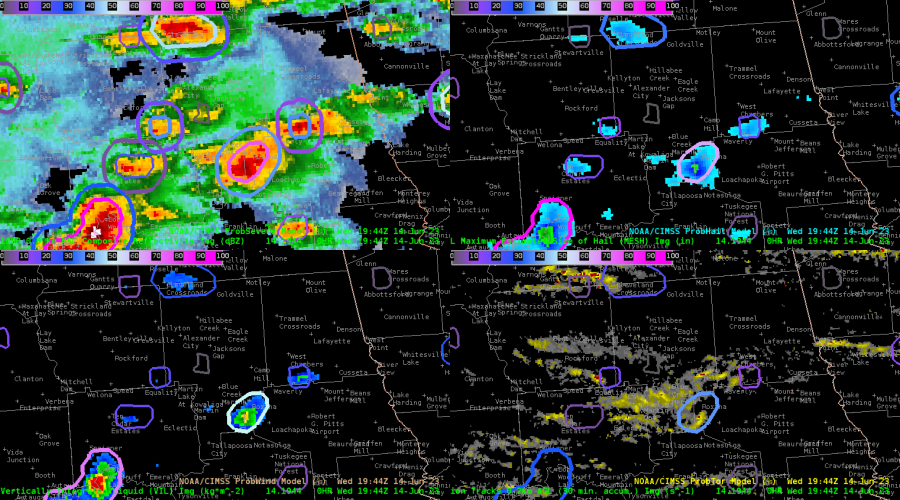
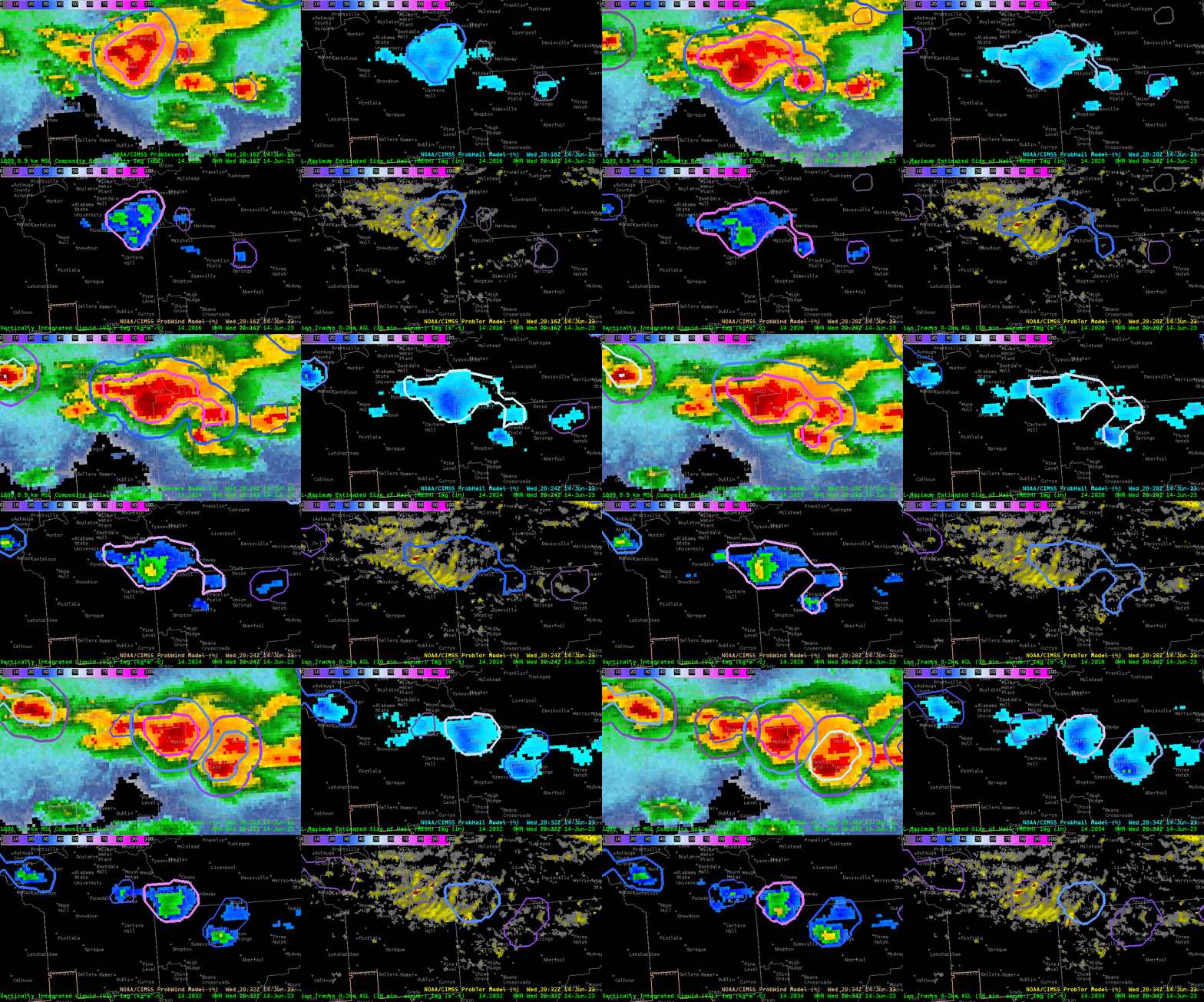
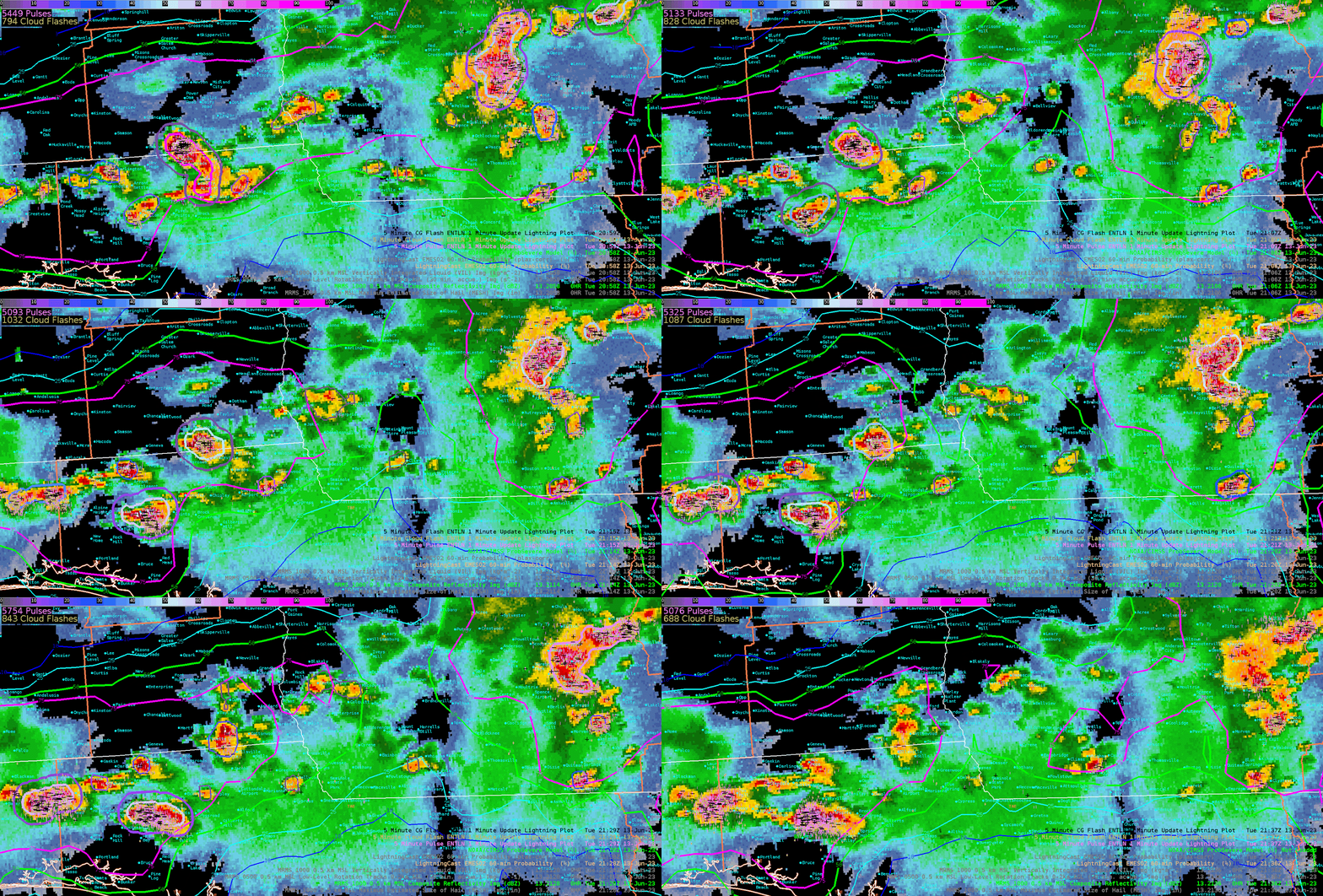
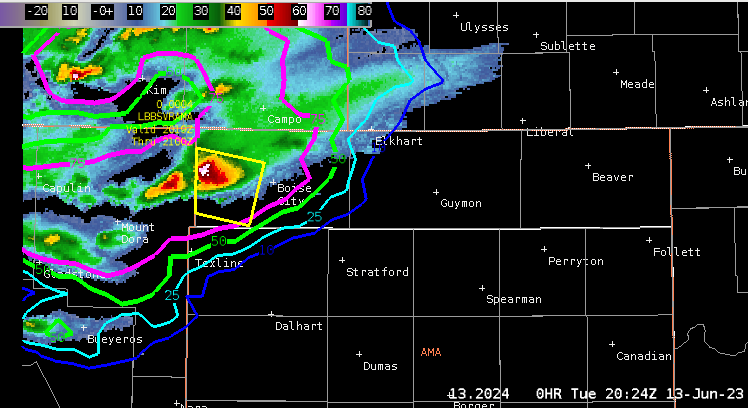
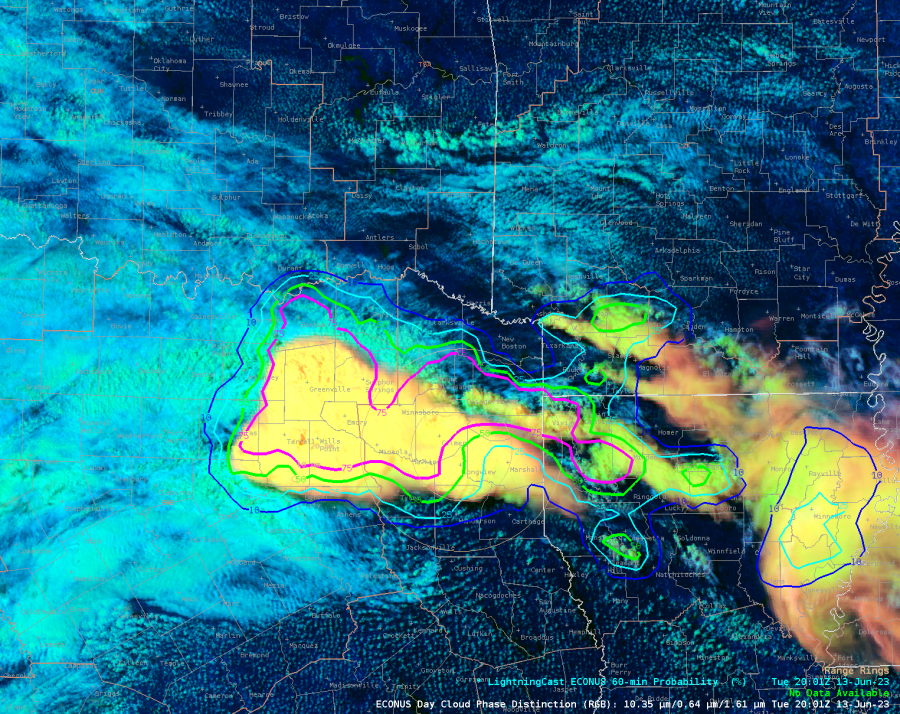
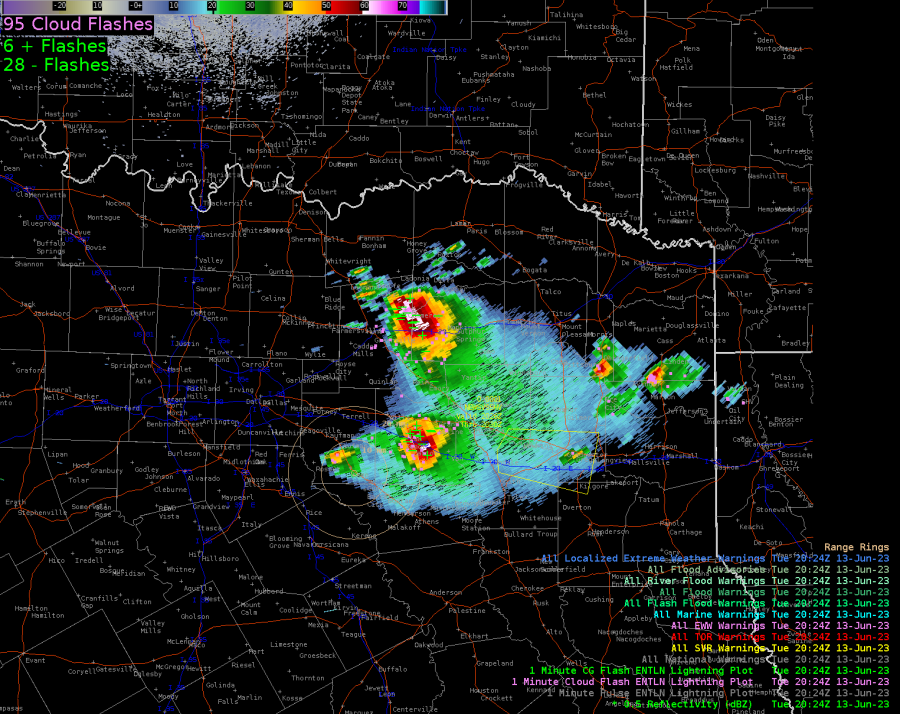
I took on the warning forecaster role during the operational period today. A supercell was underway at the start of the period, so I began by issuing a Severe Thunderstorm Warning. ProbSevere was (unsurprisingly) indicating a slam dunk for severe wind and large hail (Figure 1) but I noticed when sampling the ProbSevere data that MESH was slow to pick up on just how large the hail was with this storm. A broadcast meteorologist passed along a report of 5-inch hail at 2000z, but MESH did not indicate 4+ inch hail until 2020z.
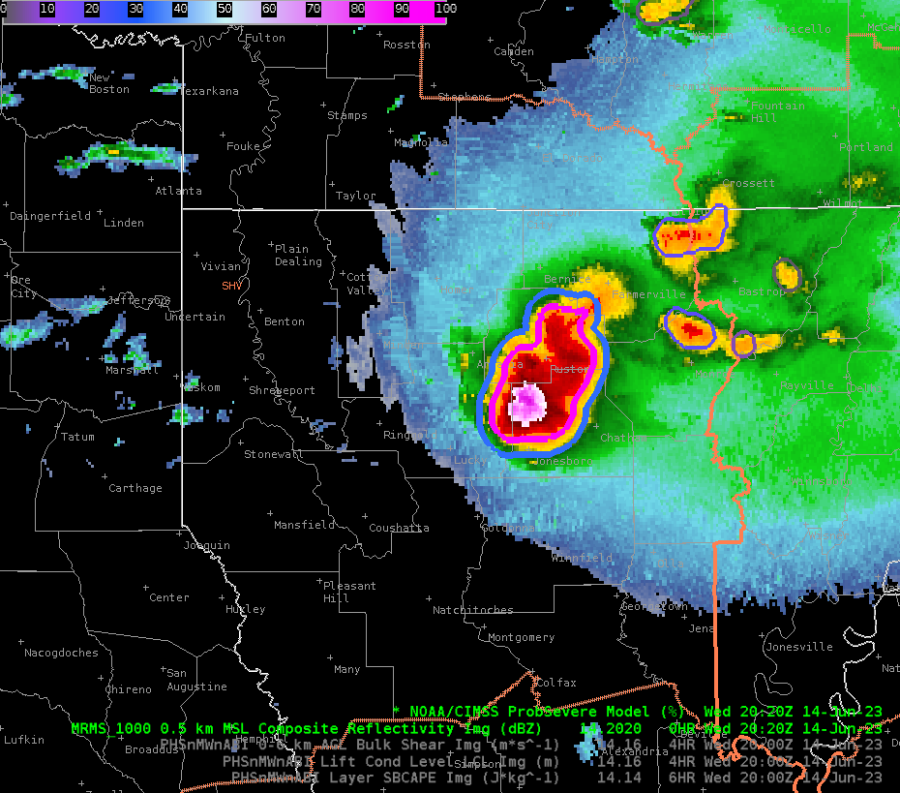
Figure 1

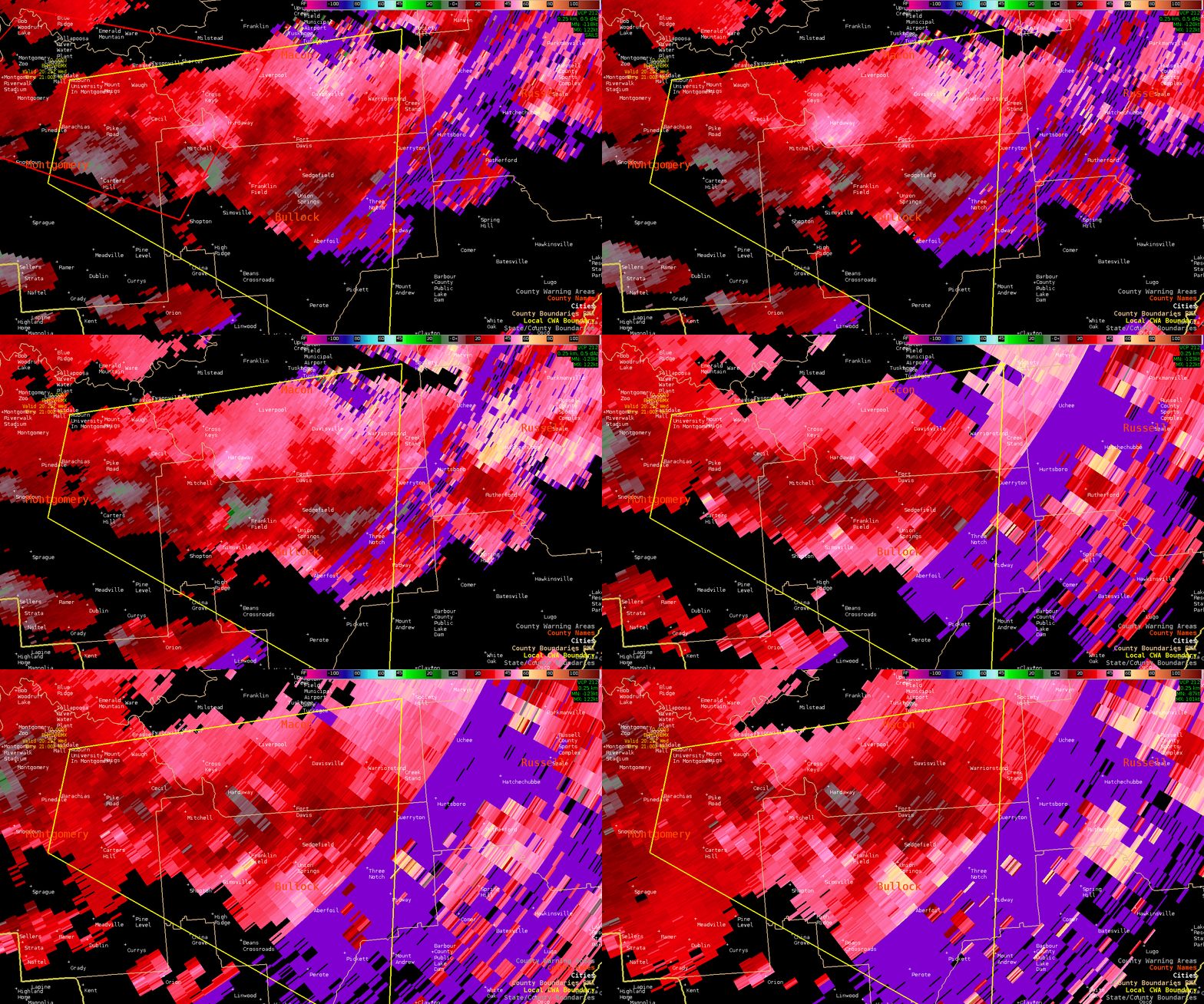
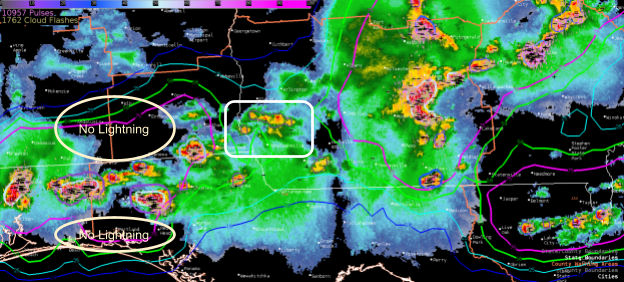
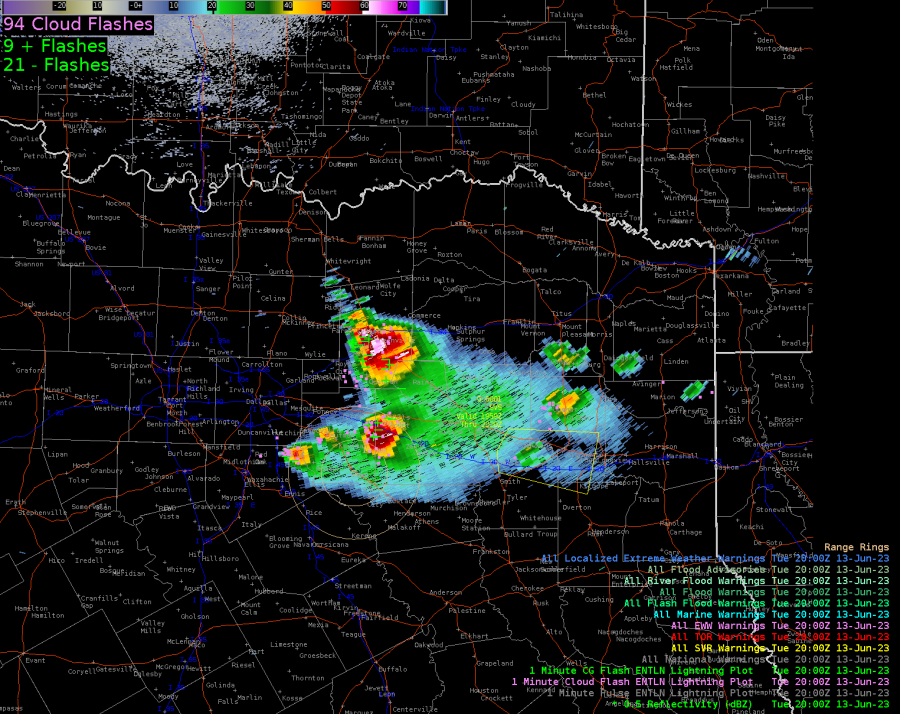
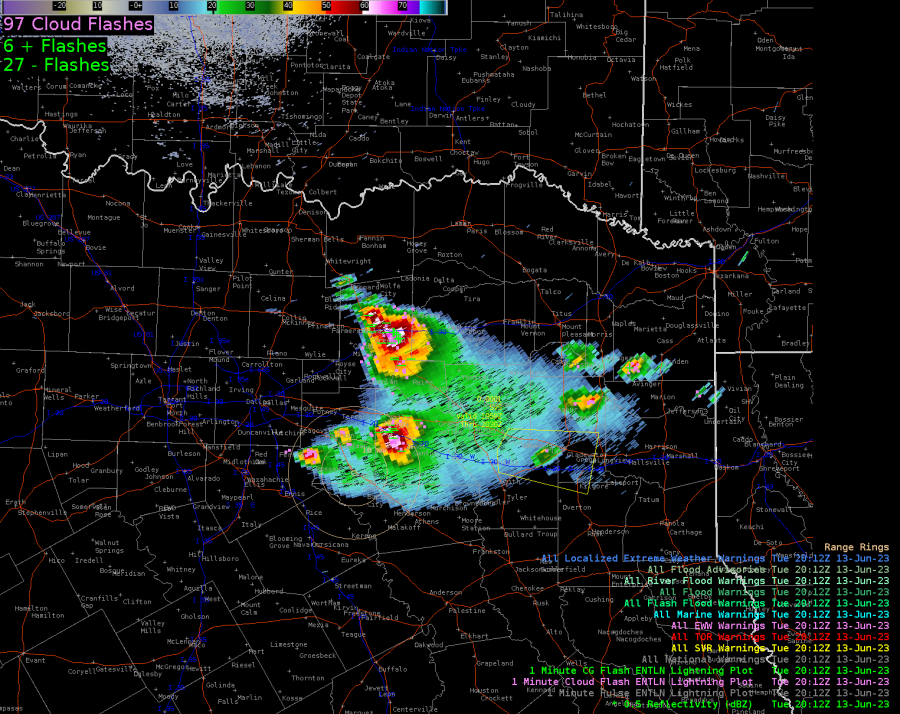
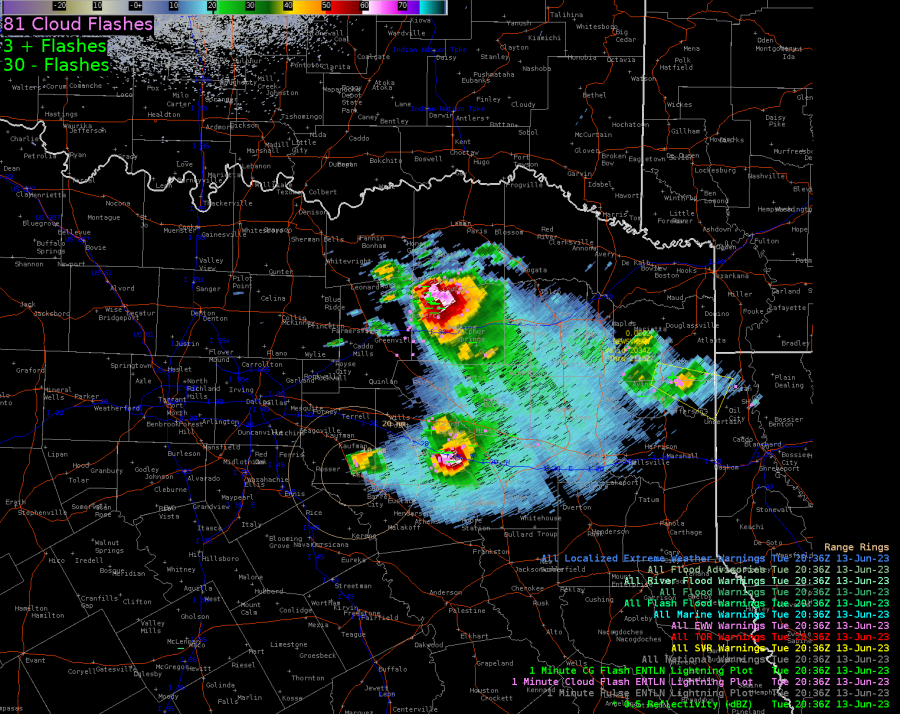
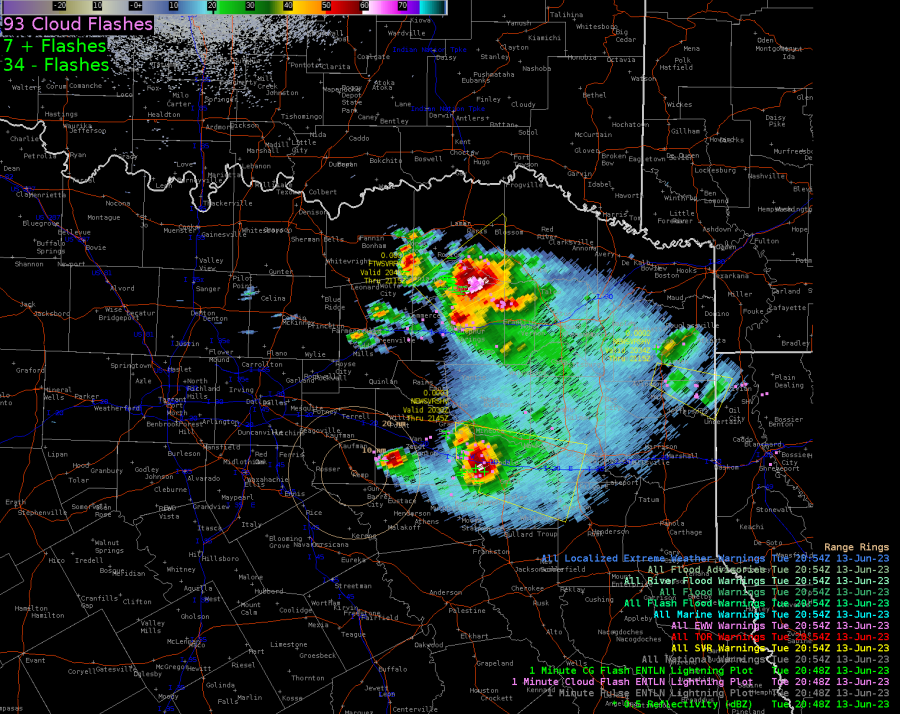
I also noticed that PHS composite reflectivity was much too slow with the progression of convection across the SHV CWA. Below are a screenshot of PHS progged composite reflectivity at 21z and a screenshot of the radar 0.3 degree reflectivity at 21z. PHS expected the supercell of interest to still be located over the northeast portion of SHV (Figure 2) while in reality the supercell was about to exit the easternmost fringes of the CWA (Figure 3).
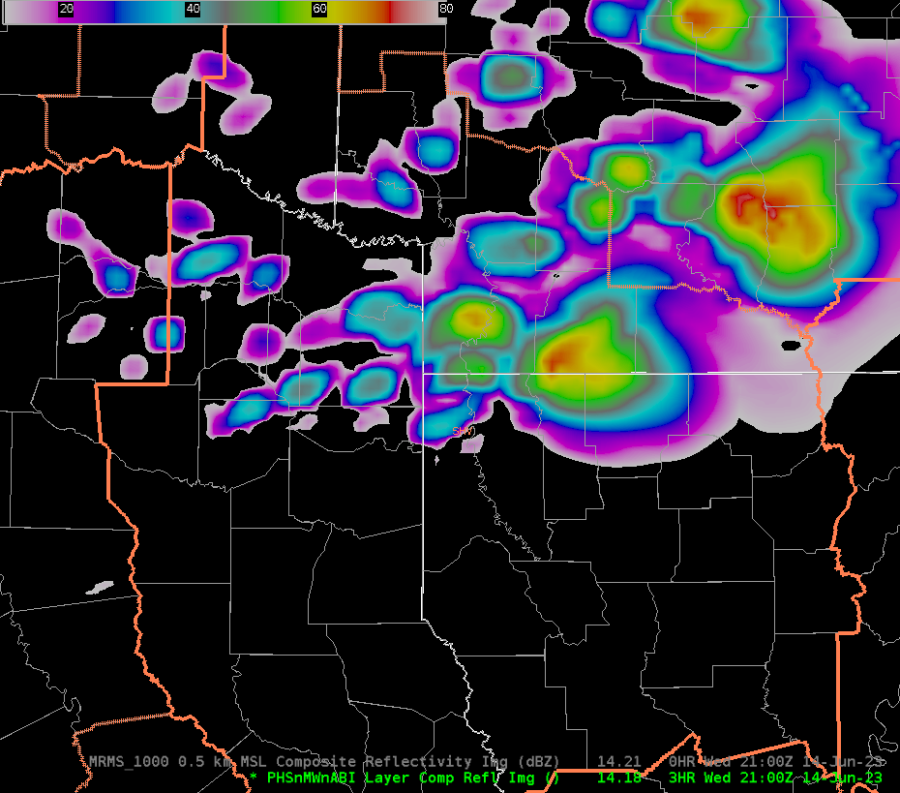
Figure 2
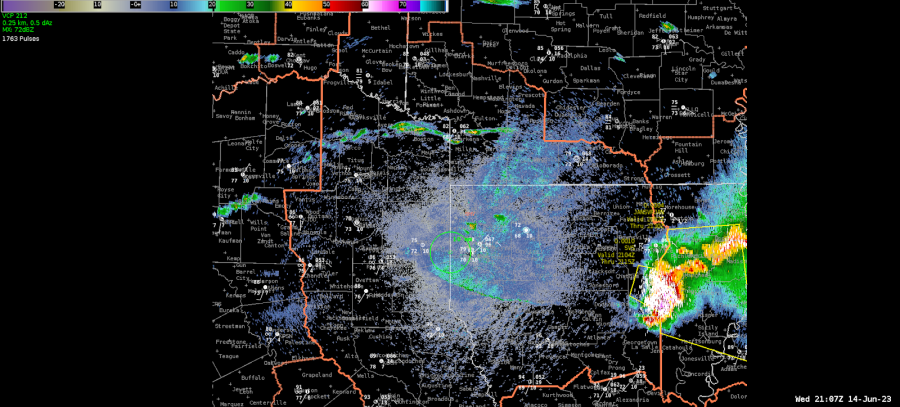
Figure 3

Once the aforementioned supercell exited the SHV CWA, we pivoted to the LZK CWA to monitor the ongoing convection there. I decided to interrogate the OCTANE products because I hadn’t looked at much satellite imagery thus far.

OCTANE was especially useful in two ways today:

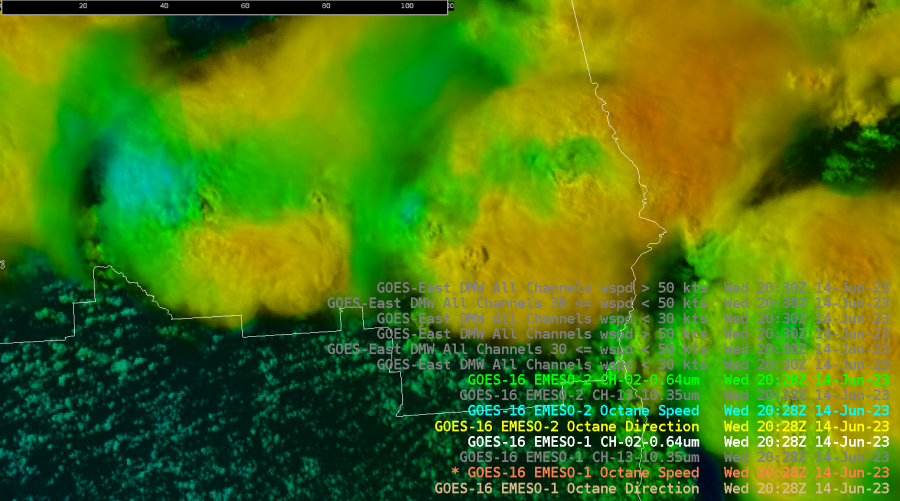
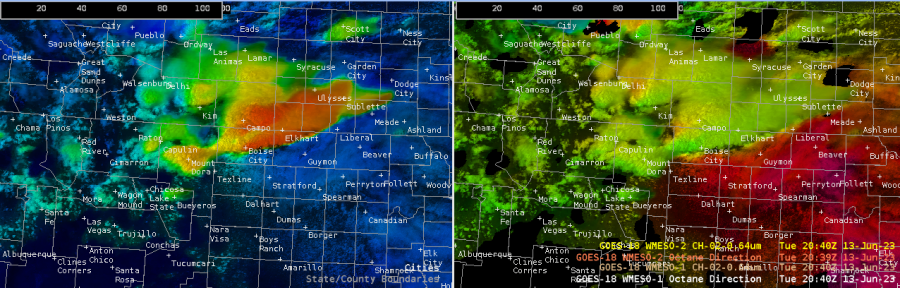
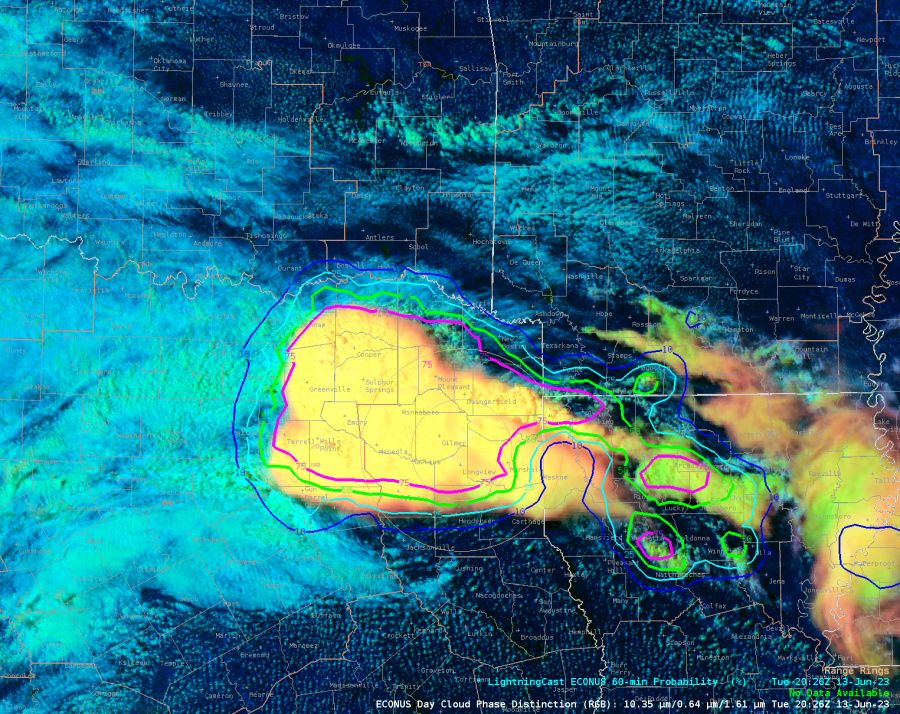
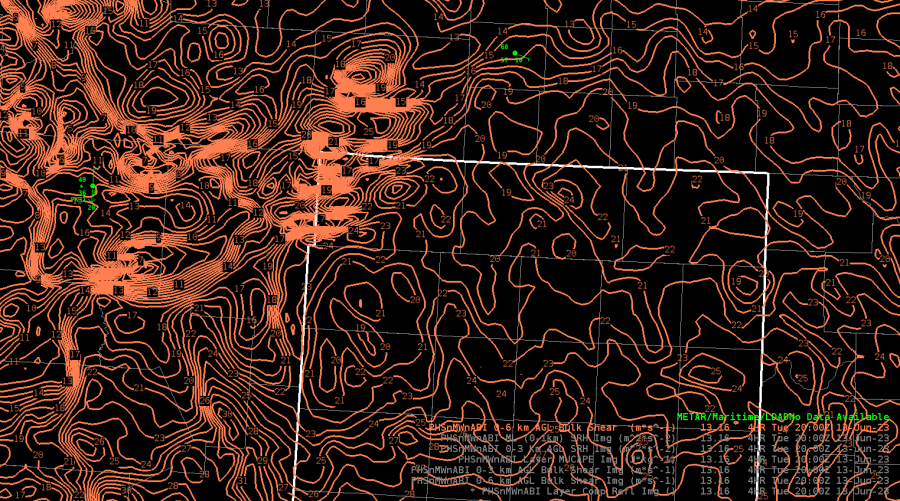
  • OCTANE Speed indicated a storm split underway as two speed maxima can be seen in the red-orange hues (Figure 4, top left panel)
  • I tweaked the AWIPS colormap for OCTANE Direction to better depict the storm-top divergence occurring (Figure 4, top right panel)
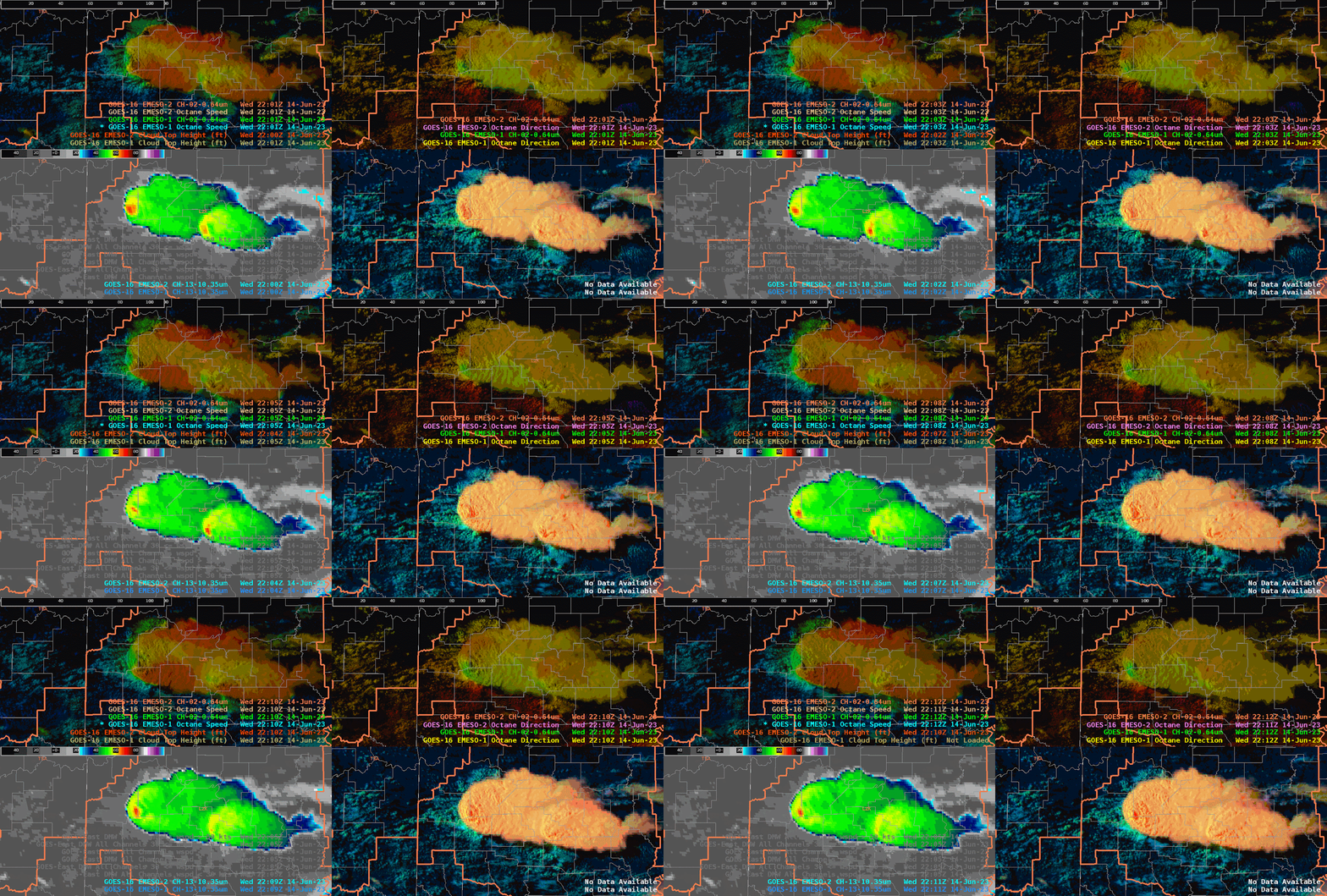
Figure 4

– Vort Max
Tags: None

Verification of NUCAPS Soundings

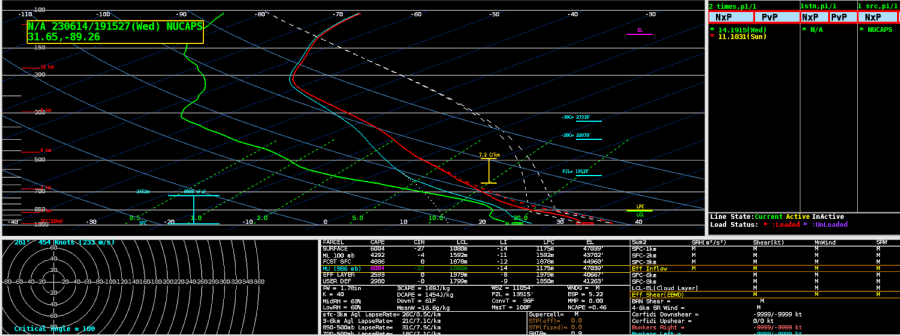
Using the 1930z pass of the NUCAPS soundings during an SPC Moderate Risk was quite exciting.  The environment was primed for significant severe weather and having NUCAPS soundings available at the time of convection out of ahead of storms was beneficial. It provided additional confidence in the severity of the environment. 

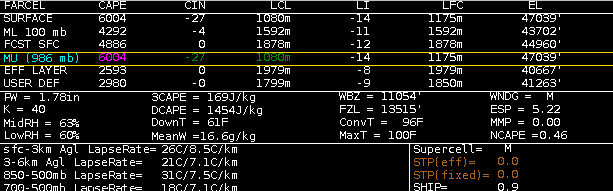
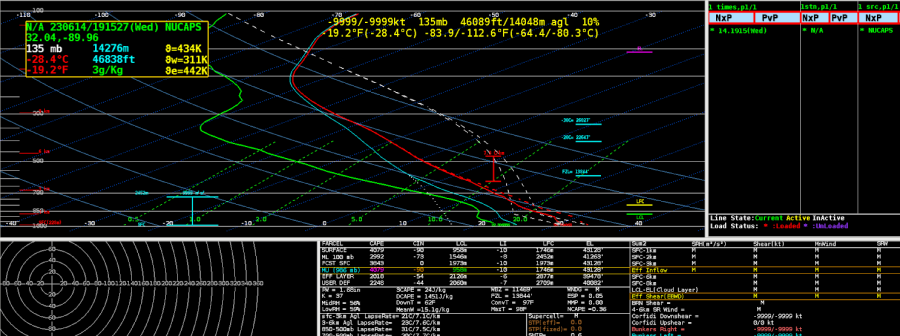
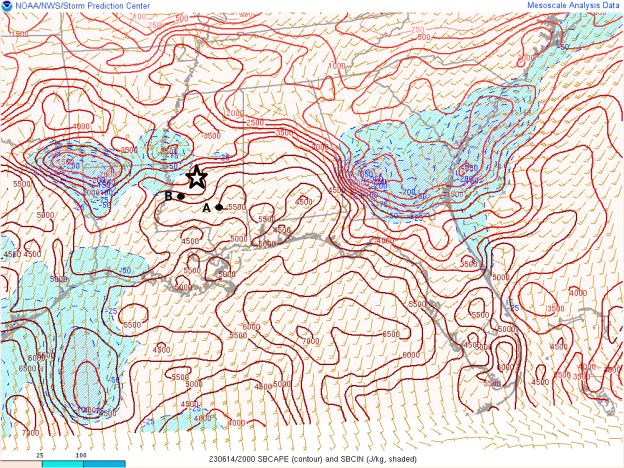
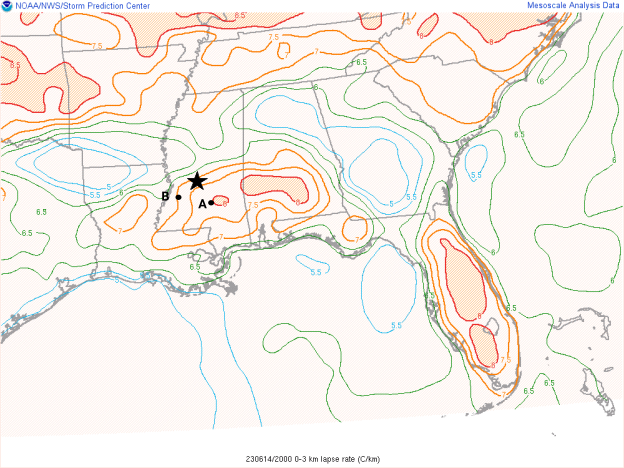
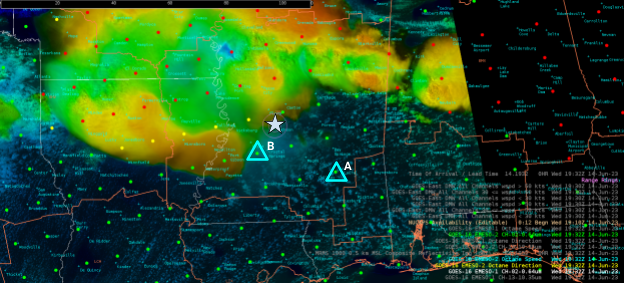
As you can see from the satellite, soundings were unusable further north due to the ongoing convection and cloud cover. Thankfully clear skies prevailed from Jackson and southeastward providing some impressive sounding data to compare to SPC Mesoanalysis.  Sounding A was well in the warm sector and sunny skies and thus had the highest CAPE values and lapse rates. Sounding B was just to the southwest of the DSS event and was beginning to see some anvil over that location, but it still provided reasonable data and compared well with SPC mesoanalysis.    

Figure 1: Location of the NUCAP Soundings chosen to view and compare to SPC mesoanalysis. For reference, the range rings outline the 5 and 10-mile radius around a DSS event in Jackson, MS. 

Figure 2: Sounding A with a surface-based CAPE of 6004!

Figure 3: Sounding B with a modest 4079 surface-based CAPE.

Figure 4: SPC mesoanalysis Surface-Based CAPE and CIN at 20z on June 14, 2023.  The star is the DSS event location and the two dots are the estimated location of the soundings analyzed.

Figure 5: SPC Mesoanalysis 0-3km lapse rate (C/km) depicted lapse rates from 7.0-8.0. Once again, both soundings matched up well with SPS data.

– Podium

Tags: None

BMX Warning Met (West Sector) on June 14, 2023

Our group role played as BMX during an anomalously conducive environment for severe weather consisting of very high instability and very high shear. My position was warning met, sectorized for the western half of the CWA.

ProbSevere helped considerably in triaging which storms deserved attention, and which storms were trending in such a way that warranted a warning decision and/or adjustment. A combination of several supercells that would merge with other cells and evolve into clusters and bowing quasi-linear structures made it difficult to have a comfortable handle on storm behavior and associated hazards. This was compounded by the fact that radar data from the favored radar site, KBMX, was dropping out at times. While other datasets were referenced (satellite, surface observations, storm reports, objective analysis, etc.), ProbSevere felt like it gave the biggest helping hand in warning decisions during this complex scenario.

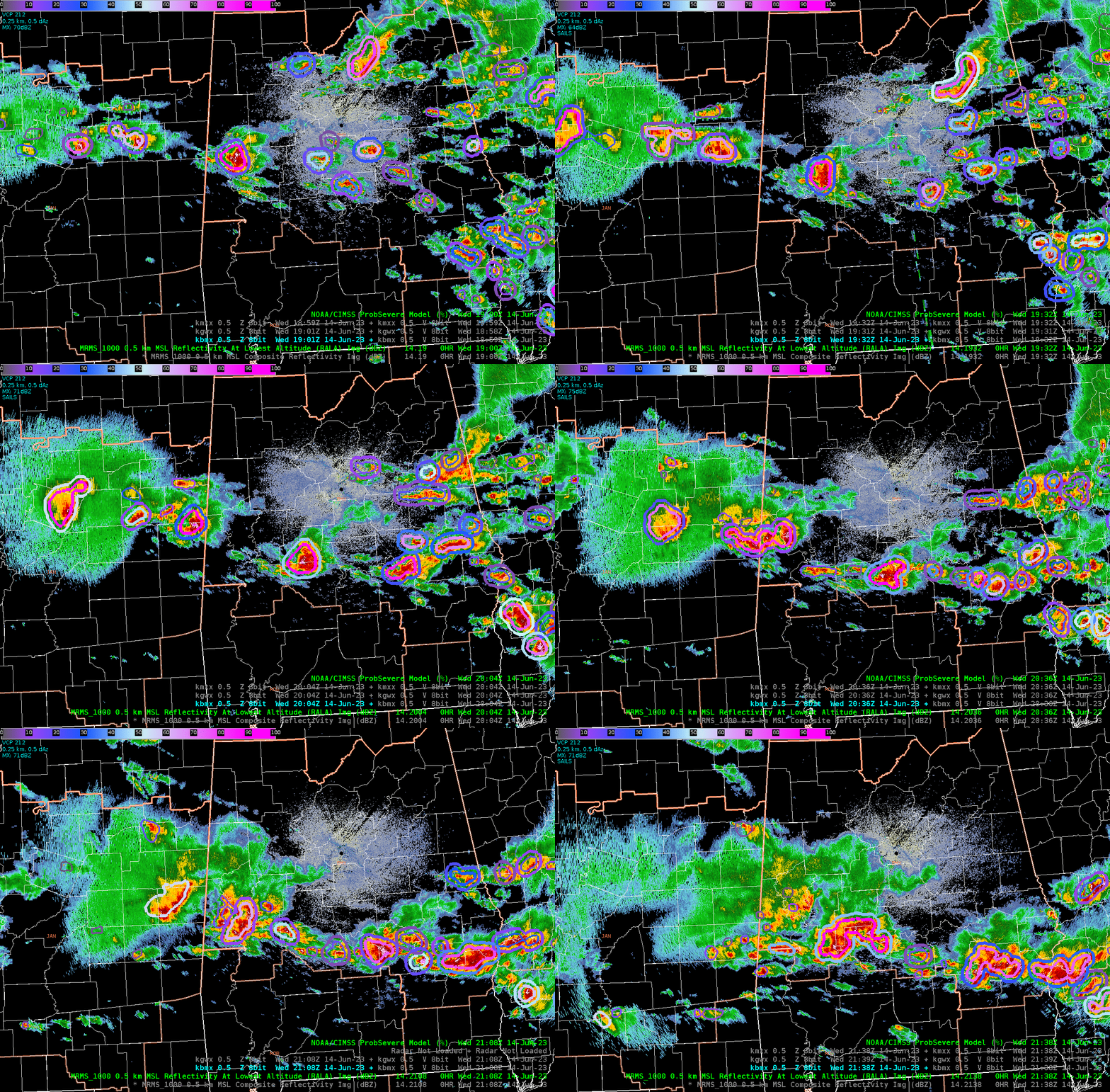
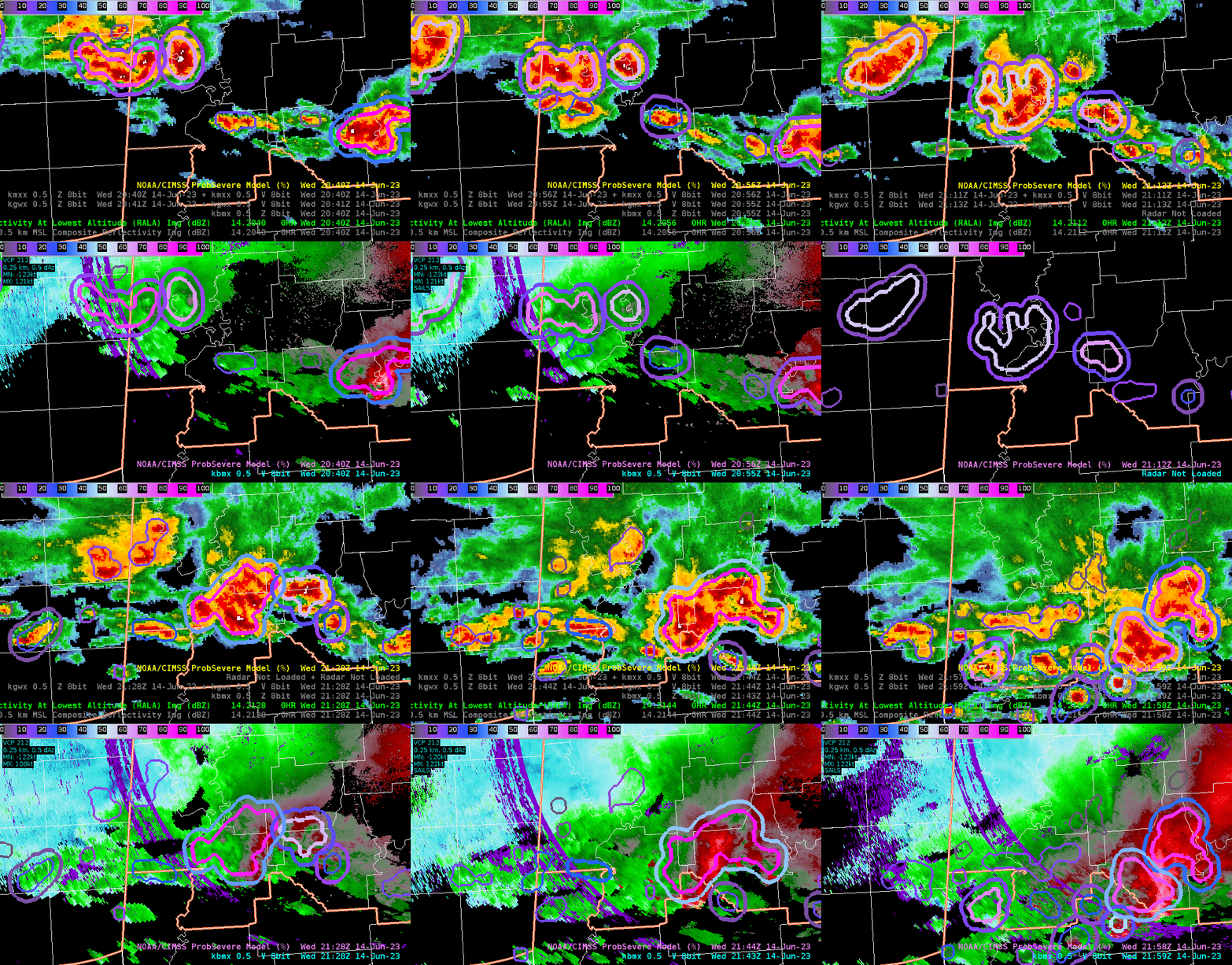
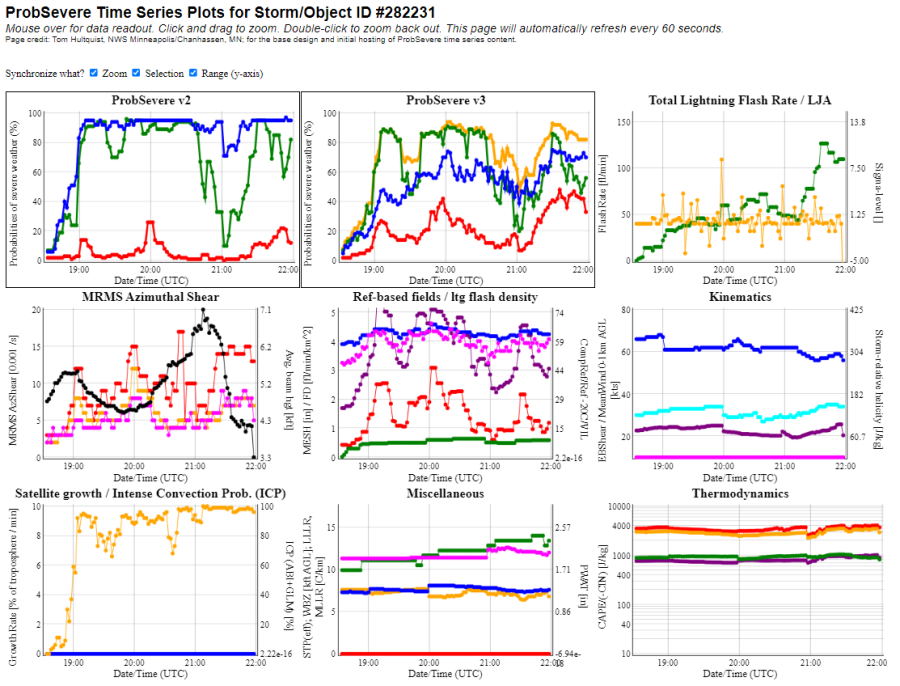
Looking in the southwest portion of the CWA around 20:30 – 22:00 UTC, ProbSevere signaled the diminishing probabilities associated with a bowing segment that earlier resulted in an 82 mph wind gust within eastern MS as convection was decaying rapidly. This helped grow confidence in holding off on a warning as it entered BMX’s CWA.

ProbSevere also pointed at a cluster of storms increasing in potential for severe hazards. This was helpful given the noisy velocity data, higher than desired sample height (closest radar sampled ~5-8kft), and likely complications regarding wind vectors having some orthogonal component to the radar radial. Essentially, ProbSevere provided clarity and continuity in a noisy radar situation increasing confidence in storm behavior.

Having discussion with a developer, I expressed how useful it was to not only have a time series to view trends in overall probabilities of severe hazards, as well as of each hazard (i.e. hail, wind, tornado), but also time series of the data that drives the probabilities like those offered by CIMSS.

The above time series corresponds to the cluster of storms in southwest BMX around 20:30 – 22:00 UTC (link). Notice in the time series the local minima in probabilities within ProbSevere v3 around 21:00 UTC (~47%)  followed by a notable increase in probabilities, exceeding 80% around 20 minutes later. This trend in local minima followed by increasing probabilities was more obvious than ProbSevere v2. Looking at the individual inputs, this was likely driven by an increase in things like Azimuthal Shear, VIL, MESH, Lightning attributes, along with other environmental attributes.

– 0SMBLSN

Tags: None

6/14/23 HWT – SHV

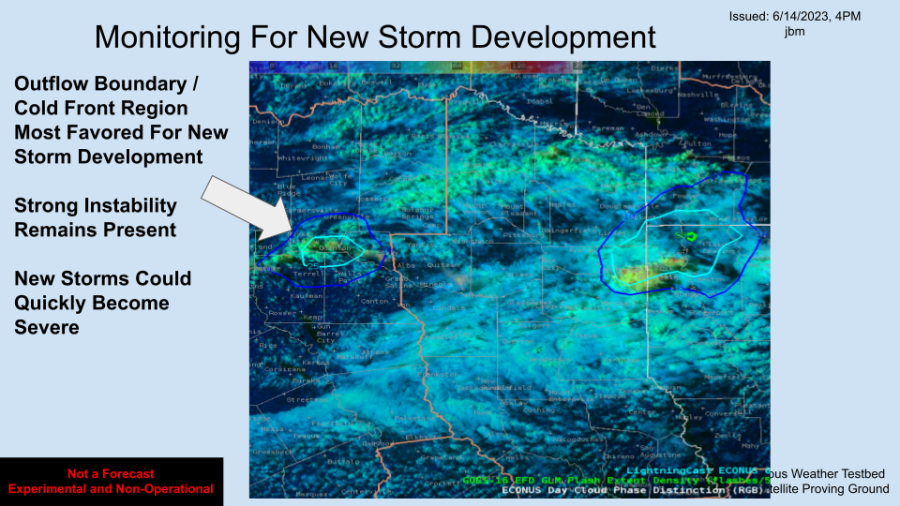
Operational window encompassed ongoing severe storms at the start of the period which moved eastward out of the CWA by mid afternoon. The resultant outflow boundary / cold front intersection to the west of the CWA become the focus regions for potential for renewed storm development.

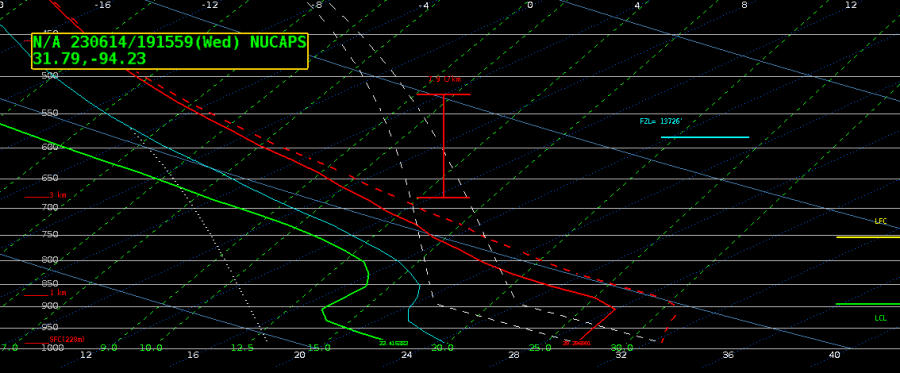
NUCAPS 6/14/23 19z sounding south of the outflow boundary of interest compared to nearby surface observation showed a large discrepancy in observed surface conditions (90/72 at nearby ASOS). This raises considerable questions on how these soundings are to be best utilized in operations.

OCTANE was useful in monitoring the attempted updrafts along the outflow boundary. It seems to show updraft growth more clearly than the day cloud phase product. I would like to see these data incorporated into the LightningCast model as this product is also very good at highlighting potential areas for CI.

OCTANE output was also viewed  in a region of a splitting supercell across western AR. Good conversation with developers on further development of the wind retrievals with observational data constructed hodographs being an operational request.

Utilized LightningCast to highlight the region of concern for new storm development. The storms did develop but it was a more gradual evolution. The highlighted region did verify as the region of development.

ProbSevere did a great  job as a safety net for radar warning operations. The element trend window is a helpful addition.  Talked with the developer on potential marking times along the time series where the element changes ID or grows in area to show when ProbSevere has merged or separated elements as this impacts resultant probabilities.

PHS model output from the 16z run was viewed online and compared to the corresponding HRRR. At the time of the exercise conclusion its solution had verified better on composite reflectivity than did the HRRR. A product in AWIPS highlighted regions where the fusion data is different than a zero hour model output would be beneficial for situational awareness and potentially for model output utilization.

– jbm

Tags: None

Probsevere and Octane

Widespread severe storms have been ongoing over portions of the southeast CONUS nearly all afternoon. ProbTor was doing a decent job with picking up on a couplet in Montgomery county Alabama around 1950Z. Overall it seemed that ProbTor V3 was giving higher tornado probabilities than V2. It was noted that V3 is based off of the HRRR whereas V2 is based off of the RAP. So that was rather interesting to me that the HRRR was potentially picking up on better areas of rotation.

Image of ProbSevere with ProbTor in the bottom left

Loop of tight couplet that ProbSevere V3 was picking up on

The other really interesting feature I noticed on the part of Octane. The Octane vertical divergence fields which is noted by a sharp gradient of blue in the coloring. This was occurring around the same times as cooling cloud tops that were seen on IR imagery. This also seemed to be a precursor to when storms began to intensify on radar. Along with that intensification was when a better couplet began appearing on radar and an increase in ProbTor V3. Overall I thought that those three correlations were rather neat to see in real time. If this correlation does continue to show up then this has the potential to be another important feature of the Octane product.

Loop of Probsevere with intensifying cluster of storms

Still image of Octane showing the “Blue” Divergence aloft features

Loop of cooling cloud tops via IR

– Tor Nader    

Tags: None

Assessing LightningCast in Ongoing Convection

In the Tallahassee CWA, convection was ongoing at about 21z over the western portions of the Florida Panhandle.  In order to get a quick assessment of the convective trends, loading up LightningCast with ProbSevere and MRMS radar is a good start. A loop is provided in Figure 1 below. 

Figure 1: Loop of MRMS reflectivity overlaid with LightningCast and ProbSevere. 

I noticed in southeast Alabama into southwest Georgia that LightningCast was teetering back and forth between the 50 and 75 percentile contours.  LightningCast even went down to the 25% contour for a brief stint at 2041z.  Looking at NLTN data, there was certainly plenty of lightning left within that storm, so I couldn’t quite understand why it went down but then pulsed back up. The other issue I ran into is the contours suggesting lightning, but convection is nowhere near the 75% contour (See Figure 2). 

Figure 2: 2041z LightningCast with ProbSevere and NTLN lightning. 

-Podium 

Tags: None

Strong to Severe Thunderstorms This Evening

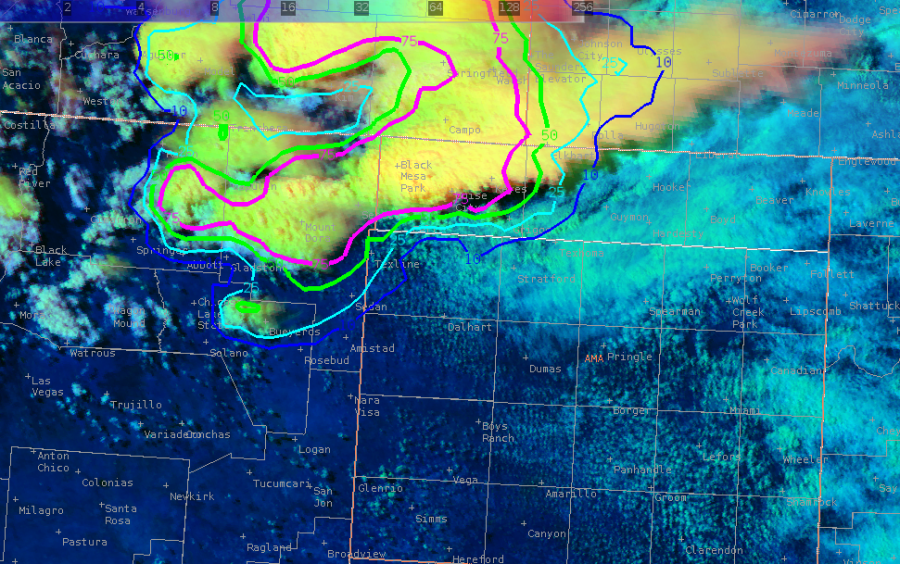
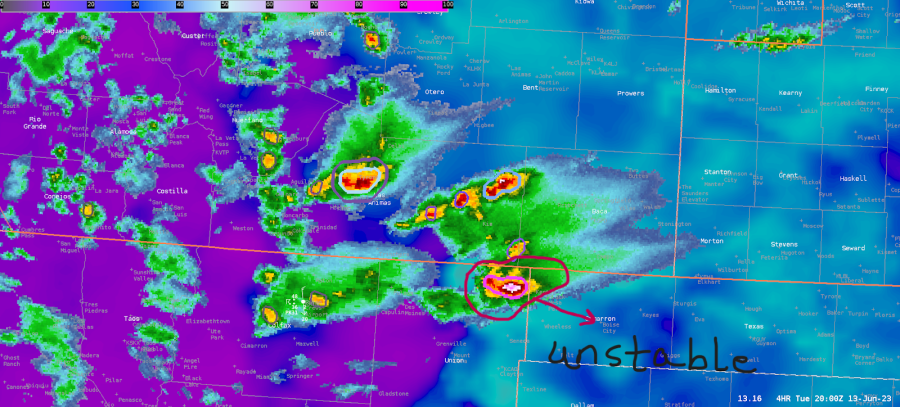
Based on the latest satellite and radar data, a supercell thunderstorm has moved into the very northwestern corner of our cwa (northwest of Boise City). A Severe Thunderstorm Warning has been issued for the Boise City area with the greatest threat being large hail, damaging winds, and maybe an isolated tornado. Echo (cloud) tops are ranging between 40-50 kft. LightningCast data is showing lightning activity increasing over that area as CAPE values have increased to 2,000 J/kg.Based off the OCTANE Motion and Speed Sandwich product, storm top divergence is evident near Boise City with the tight color gradient with winds to the north of Boise City at 234 degrees vs 188 degrees south of Boise City. This activity is being driven by a surface low near the TX/OK state line. As this feature continues to shift to the east-northeast there is the potential for this storm to strengthen and/or for additional showers and thunderstorms to develop across the area.

-SATGLM_84

Tags: None

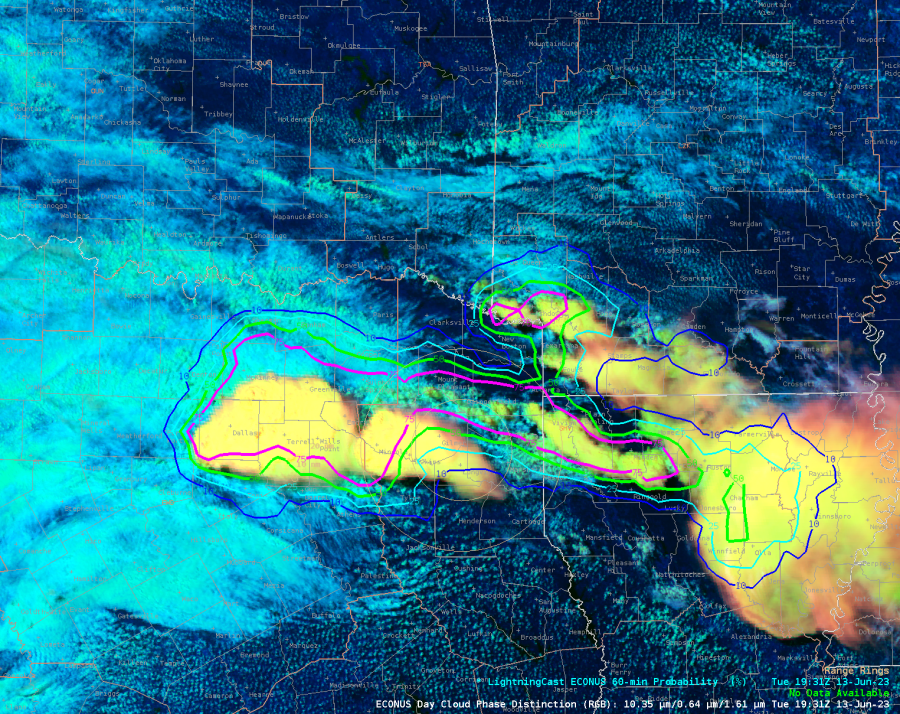
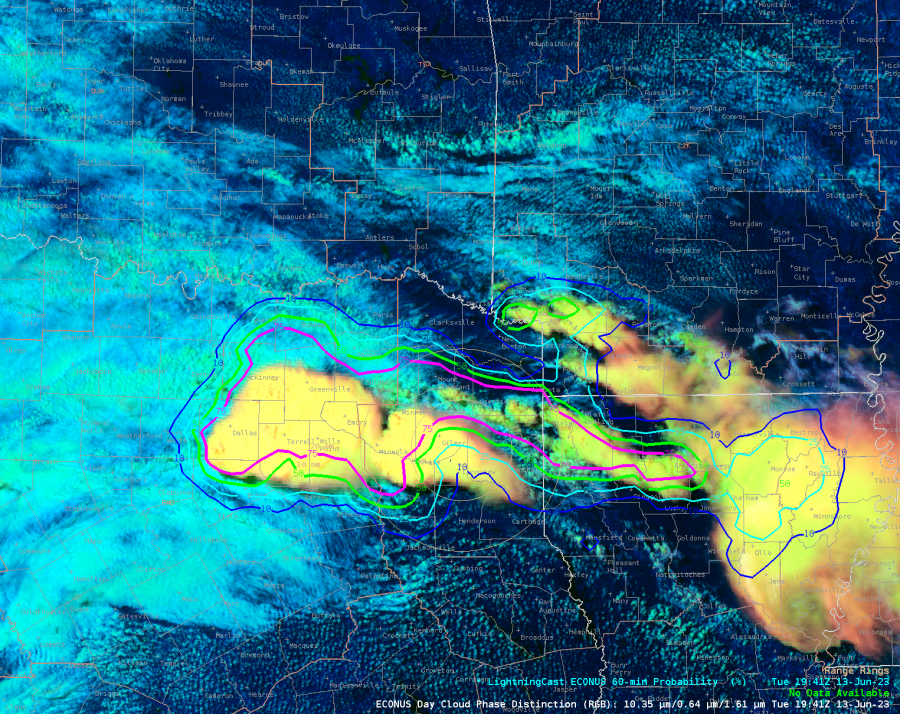
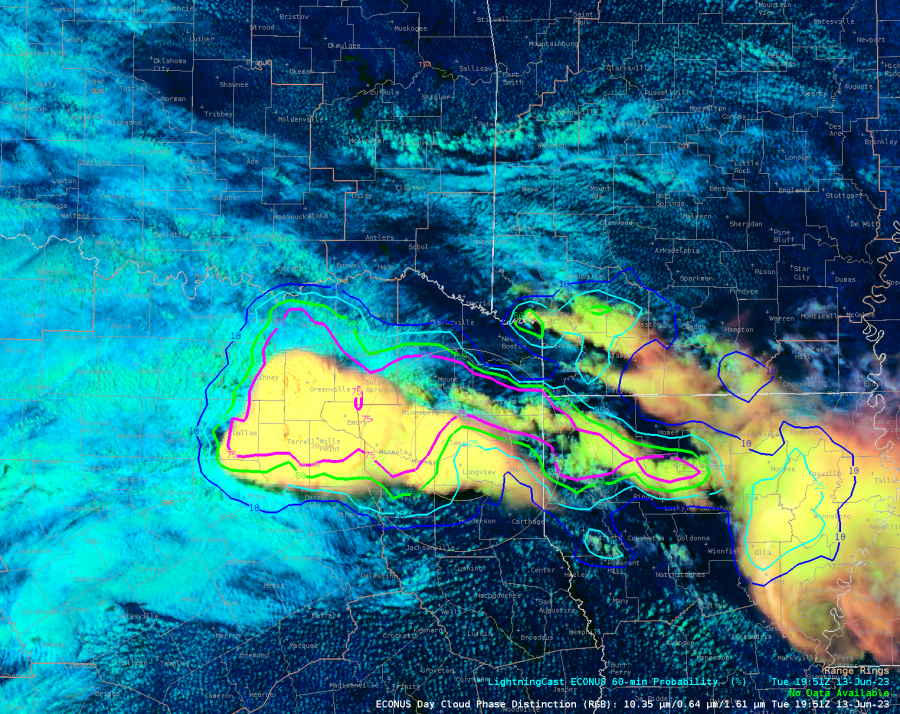
LtgCast Precursor to Storms Diverging

LtgCast gave advanced indication (about an hour) in the FWD region that the northern storms were diverging to the north away from the original track that was more easterly. Below you can see the LtgCast extending to the north into clear skies in the first two images. The next four pairs of images are the LtgCast paired with the radar at about the same time. The last two images are the next 20 minutes of radar.

In the TAE area, the LtgCast wasn’t as effective. Behind the storms, LtgCast kept >75% probs for lightning in clear air as seen in satellite imagery, possibly as much as 50 miles or more. This was odd in that it usually quick to pull in the probs behind the storms. It wasn’t that the storms were slow moving or inconsistent in their motions; they were moving uniformly to the southeast at a constant rate (didn’t measure the speed, but would estimate the line speed 20 kts or more).

– Super Bolt

Tags: None

PHS Blog Post AMA 6/13

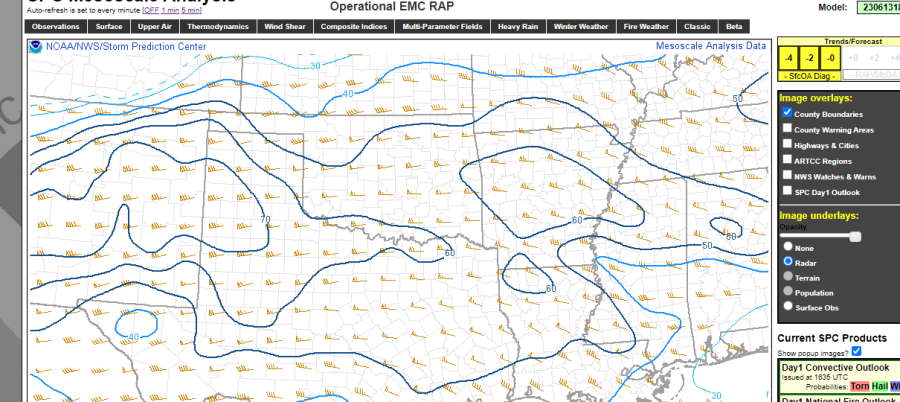
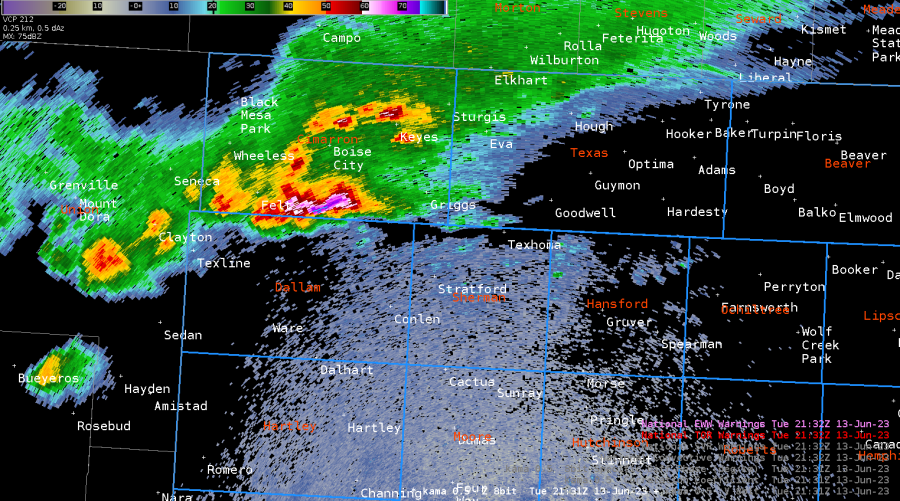
PHS today was interesting given some of the local convective parameters. The main one that caught my attention was the lesser 0-6km bulk shear that it was giving just ahead of an incoming storm in the Oklahoma Panhandle. The PHS was around 20-30 knots whereas other guidance and SPC Mesoanalysis was showing 50+ knots. I did look at other parameters such as MUCAPE and SBCAPE for example and they were in the ballpark of other guidance including SPC Mesoanalysis.  If the PHS was correct then the storm mode would feature more multicell with some organization vs more of a discrete supercell mode so it was going to be interesting to see what would occur. 

What wound up occurring was a persistent long track supercell along with other convection which was anticipated given the PHS wind shear.  Overall, I was impressed with the PHS wind shear forecast as that tailored away any thinking that there may be additional supercells as additional updrafts would interfere with the intensification of other cells. The PHS however was around 1-2 hours slow with convection moving into the AMA CWA, however the composite reflectivity forecast did show more of a cluster of storms developing. The PHS was also showing a corridor of stronger 0-3 and 0-1 SRH which in reality the intense cell did move through and actually wound up producing a few tornadoes. The ProbTor was also showing tornado potential as high as 40% as it was moving through this corridor.  Overall, I was impressed with the PHS today and think that it could create good DSS messaging opportunities along with being skillful in Mesoanalysis.

PHS showing the lesser values of 0-6 bulk shear in contoured form

SPC Mesoanalysis depicting the 0-6km bulk shear at the same time

How the radar wound up turning out at 2130Z with the multiple cells

– Tor Nader  

Tags: None

Day 2 Review of Products & Operational Applications

I took on the DSS role during today’s operational period. There were no afternoon NUCAPS-Forecast runs and the morning runs provided minimal coverage over the AMA CWA. So, I opted for PHS data today (namely SBCAPE) with MRMS 0.5 km Composite Reflectivity and ProbSevere overlaid (Figure 1) to diagnose the environment. Much of AMA was socked in by stratocumulus at the start of the operational period, but severe storms just to the west posed a concern as they tracked eastward into a gradually destabilizing environment.

Figure 1

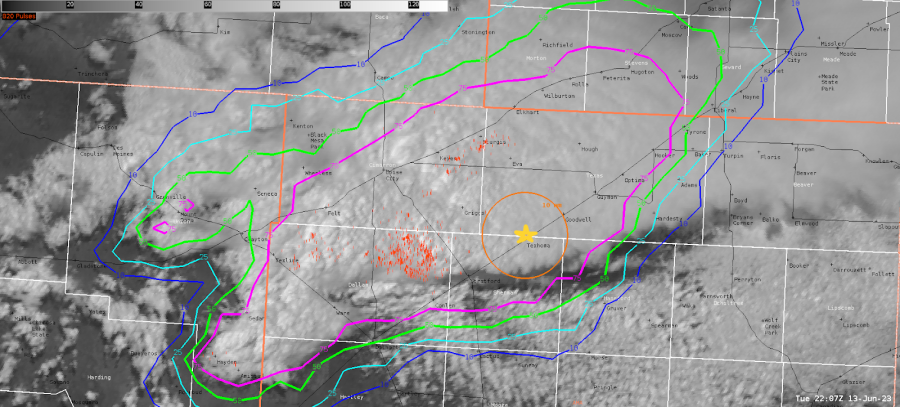
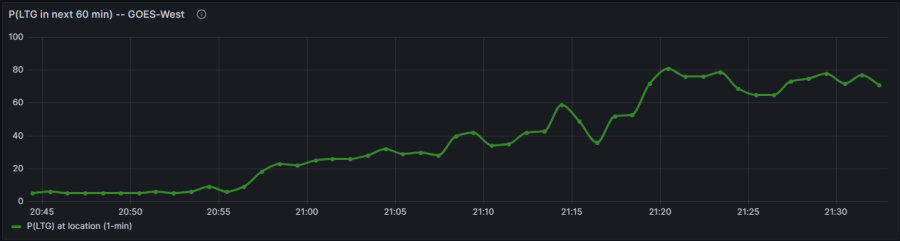
The assigned DSS event was a hypothetical RC plane show at Texoma Municipal Airport (denoted by a yellow star in Figure 2). I was instructed to alert the hypothetical POC for the event when either of the following hazards were expected within 20 minutes: winds or gusts of 15 kts at the airport OR lightning within 10 miles. I used LightningCast probability contours along with ENI 5-minute pulse lightning plots (reddish orange tick marks) to monitor the proximity of lightning to the event range ring (Figure 2). I issued a DSS update with “lightning likely” wording after the LightningCast meteogram depicted a steadily increasing likelihood of lightning at the airport within an hour (Figure 3).

Figure 2

Figure 3

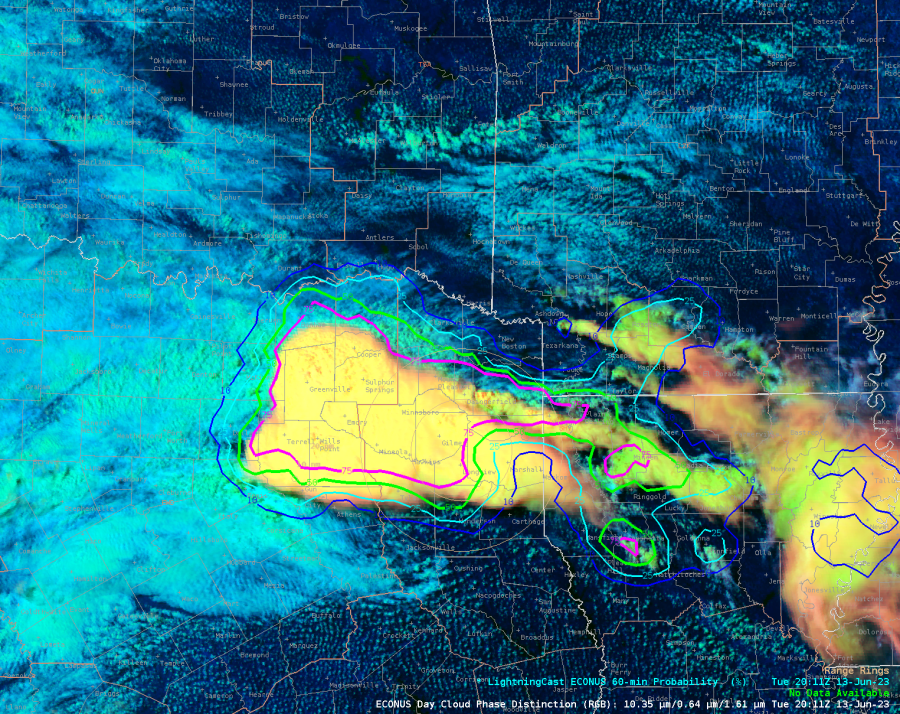
A LightningCast observation: the footprint of the 75% probability contour was much larger than the actual area in which lightning strikes occurred (at least according to ENI 5-minute pulse lightning) mainly in the anvil region. That said, GLM Flash Extent Density did indicate low-value pixels in the anvil region, so perhaps I missed some anvil lightning strikes by looking at just ENI 5-minute pulse lightning.

– Vort Max  
Tags: None