Category: LightningCast
Potential LightningCast limitations under convective debris
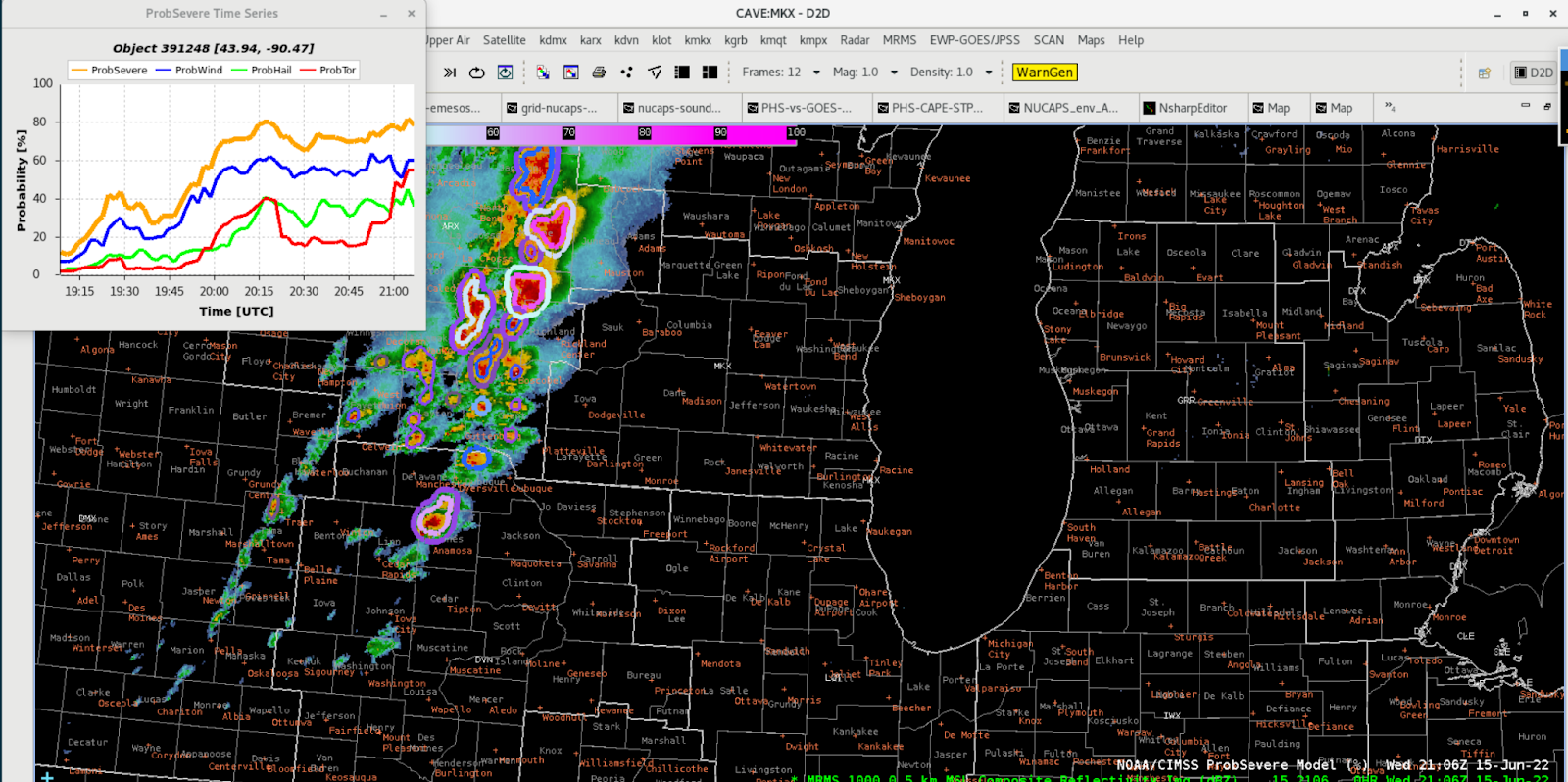
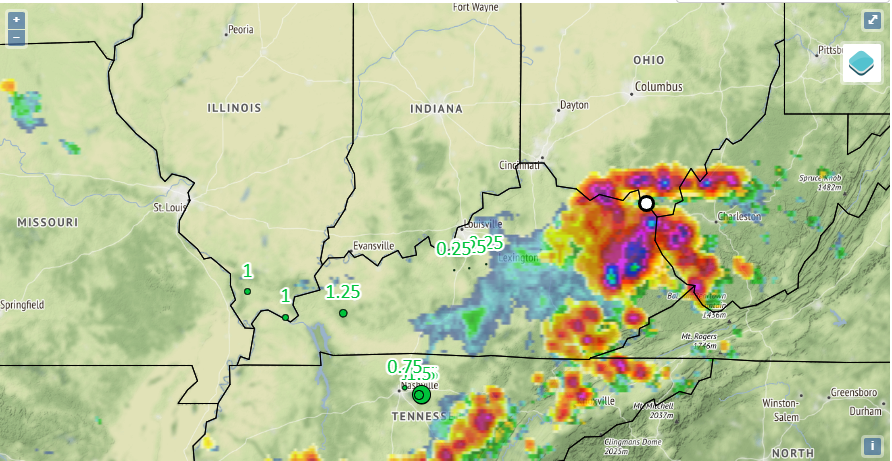
The first day of familiarization with the tools for the hazardous weather testbed and we were assigned the Louisville CWA to test a number of products on. The synopsis of the area’s weather features a line of convection moving in from the west with a Severe Thunderstorm Watch in place and several storms had already been warned on.
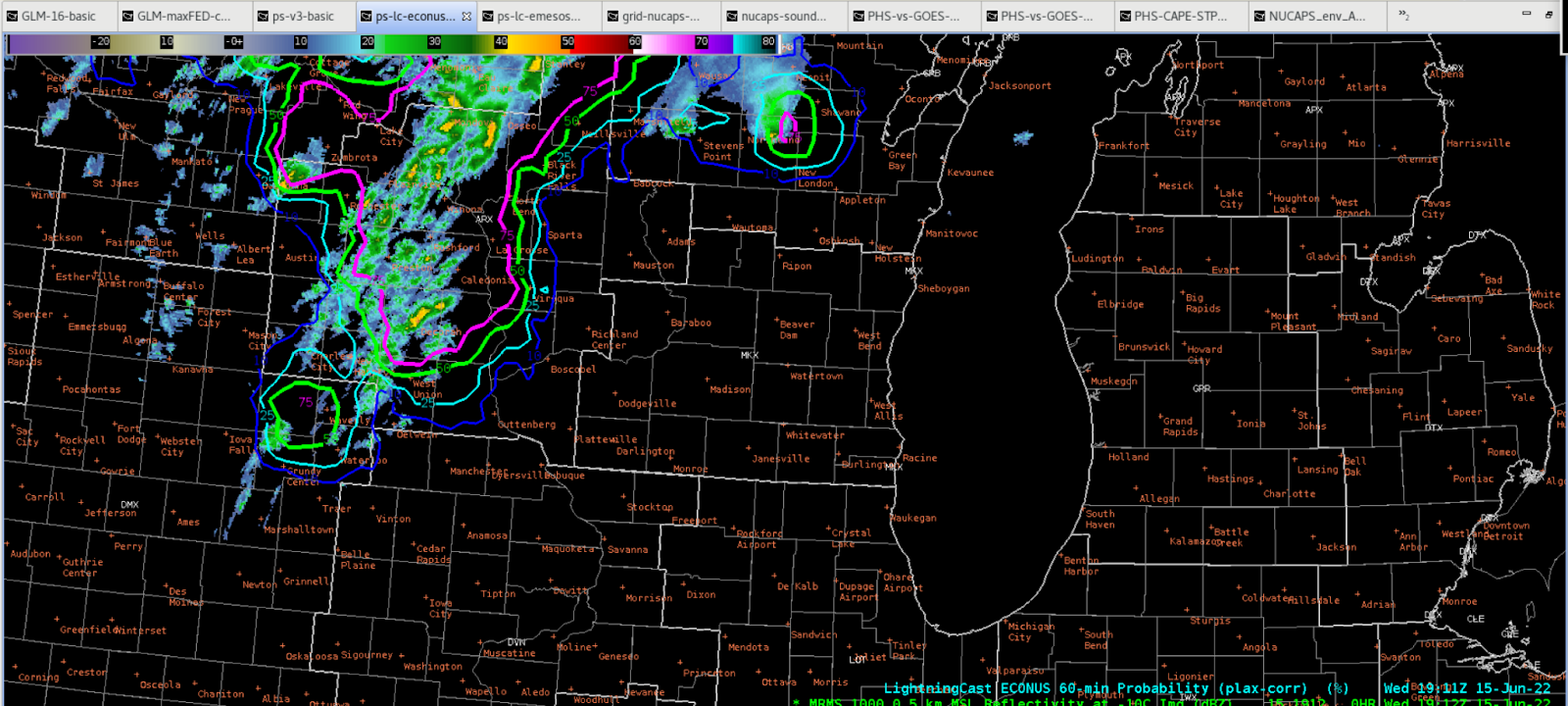
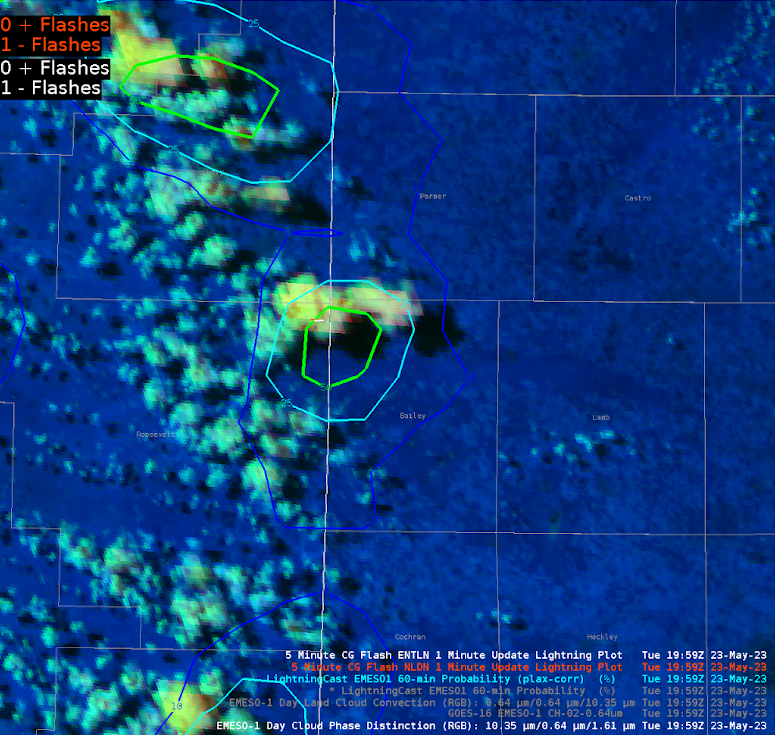
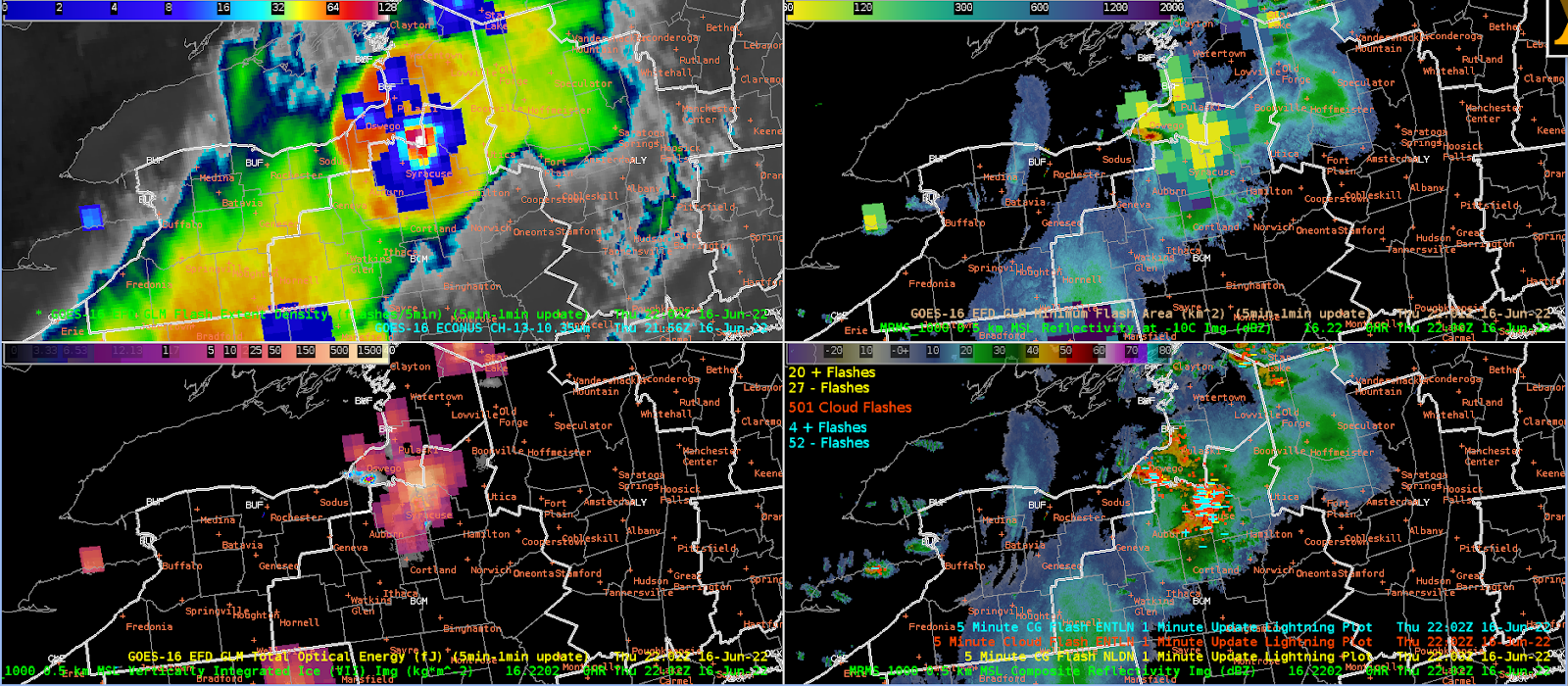
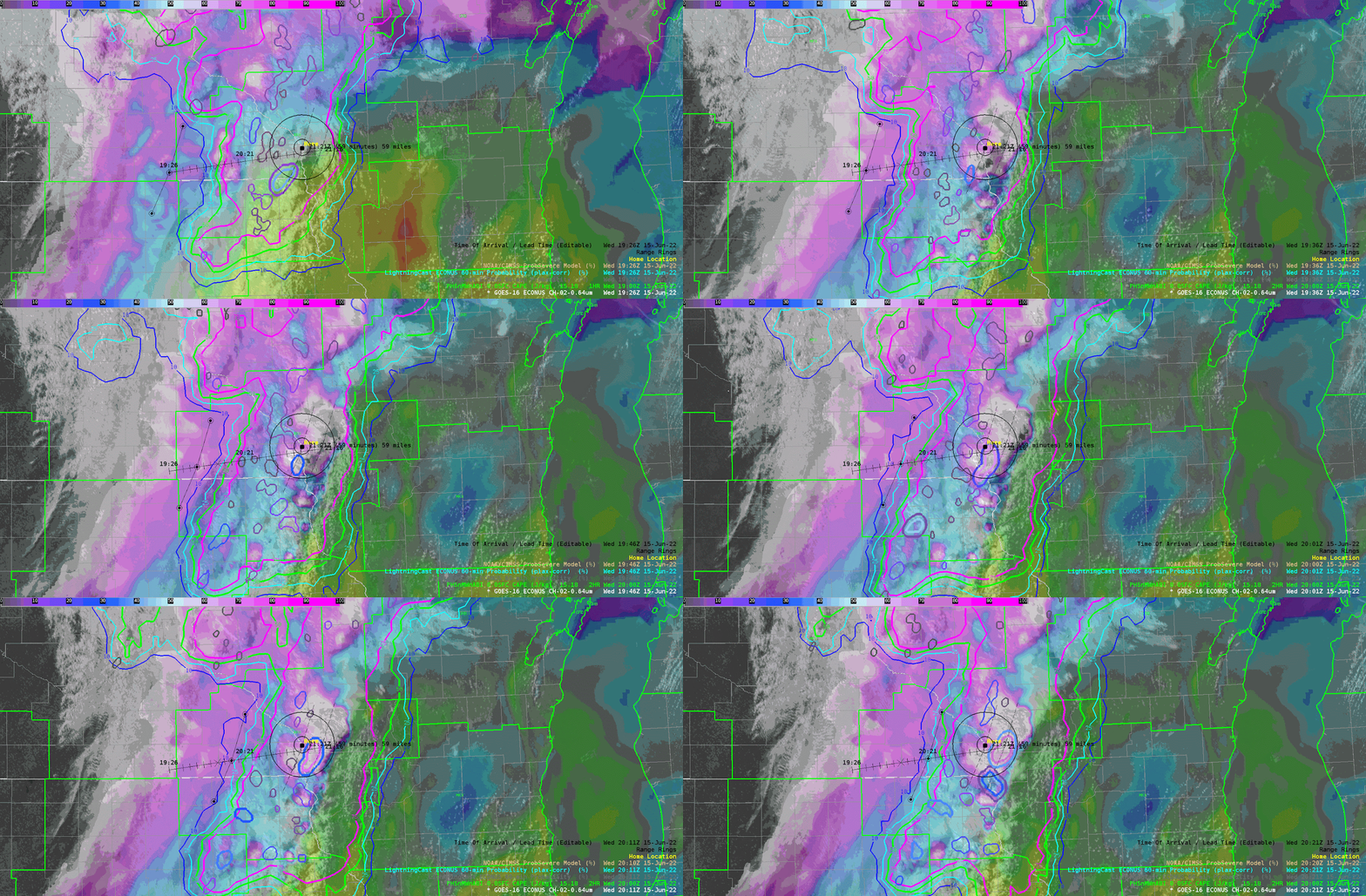
On the other side of the CWA, a few weaker cells had developed under a mix of sun and high clouds. It’s this convection across the eastern CWA that became the focus for today’s blog. We chose to target the LightningCast product because we noticed that although the -10C MRMS data would suggest lightning, the LightningCast data was actually much lower than anticipated (below 10 percent). Why was this the case?
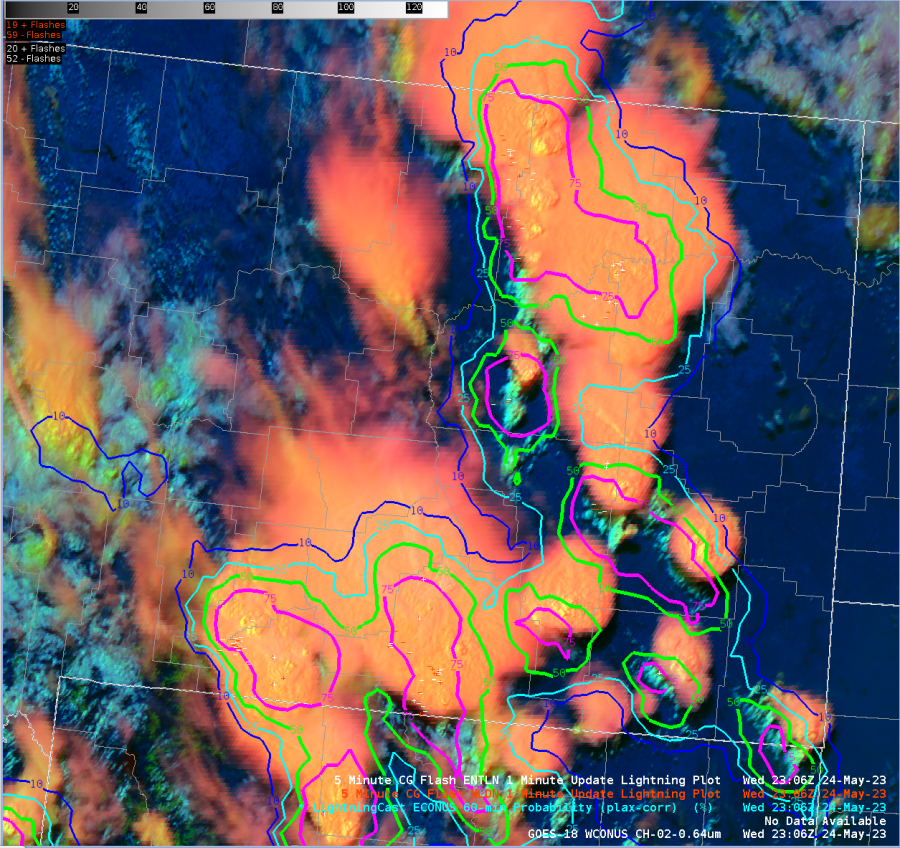
After speaking with John Cintineo about this, and looking at the training that was provided for this testbed, it was surmised that this may be a case where convective debris or high clouds could mask the signal of weaker convection.
Eventually LightningCast did highlight this area with a lightning risk, but this case is relevant because if we are using this tool to aid in DSS to our partners, we must also identify some potential limitations.
Noctilucent/Mr. Bean
LBF Day 1 HWT Blog
Day 1
PHS, ProbSevere
LightningCast
Greenville SC Observations
Synopsis: A deep upper low tracked slowly northeastward across Missouri today. The main cold front associated with this low moved across the Greenville, SC region. Along and ahead of the front, widespread showers and thunderstorms continued over western South Carolina for most of the afternoon and evening hours.
Our DSS messaging was for Softball Tournament Games located at Clemson University.
SPC Convective Outlook: Slight risk of thunderstorms over extreme northwestern SC, with marginal risk elsewhere.
Primary threat was wind flash flooding and wind with a chance of hail and a possible tornado.
Scattered showers and thunderstorms tracking northward across the forecast area.
IR imagery overlaid with lightning data.
Greenville ACARS sounding taken in 1910Z.
NUCAPS Sounding nearby Greenville.
Another NUCAPS Sounding nearby Greenville.
Mesoanalysis – Surface CAPE values ranging from 500 to 1,000 J/kg.
PHS showing similar instability parameters.
Watches/Warnings products issued throughout the day by WFO Greenville.
ProbSevere3: Low probability of severe weather, but sufficient enough for storm warning operations and convective maintenance situational awareness.
GLM Basic – Helped with operations as well as DSS.
GLM
GLM
Lightning Cast overlaid with satellite was helpful for enough lead time and confidence.
Lightning Cast overlaid with radar.
Lightning Cast overlaid with satellite.
Radar overlaid with Polygon Warnings issued throughout the day.
DSS update: A Flash Flood Warning was issued for Northwest South Carolina near Anderson county and remained in effect until 9:00 PM EDT.
Latest update on ProbSevere3 and tracking any nearby storms.
Latest update on GLM.
SPC Mesoscale Discussion. Thunderstorms intensified across northeast GA into upstate SC, near and south of a warm front that slowly lifted northward toward western NC.
Storm velocity showing gate-to-gate or small rotational couplets near Ware Shoals and Spartanburg.
Vortex Power
Louisville KY WFO Observations During DSS
LightningCast
GLM
PHS
ProbSevere v3
Optical Flow Winds
NUCAPS
ILX Ramblings
A comparison of NUCAPS at 19Z with observed/analysis products from SPC showed good comparison for both modified and unmodified data. Below shows the unmodified NUCAPS sounding that was “green” over the north-central portion of the ILX CWA. The MLCAPE was around 500 J/kg, with DCAPE around 690 J/kg, freezing levels just below 10,000 feet, and PW’s around 1.1 inches.
A modified NUCAPS sounding for the same location showed an uptick in MLCAPE to around 600 J/kg, along with similar PW’s, DCAPE and freezing level.
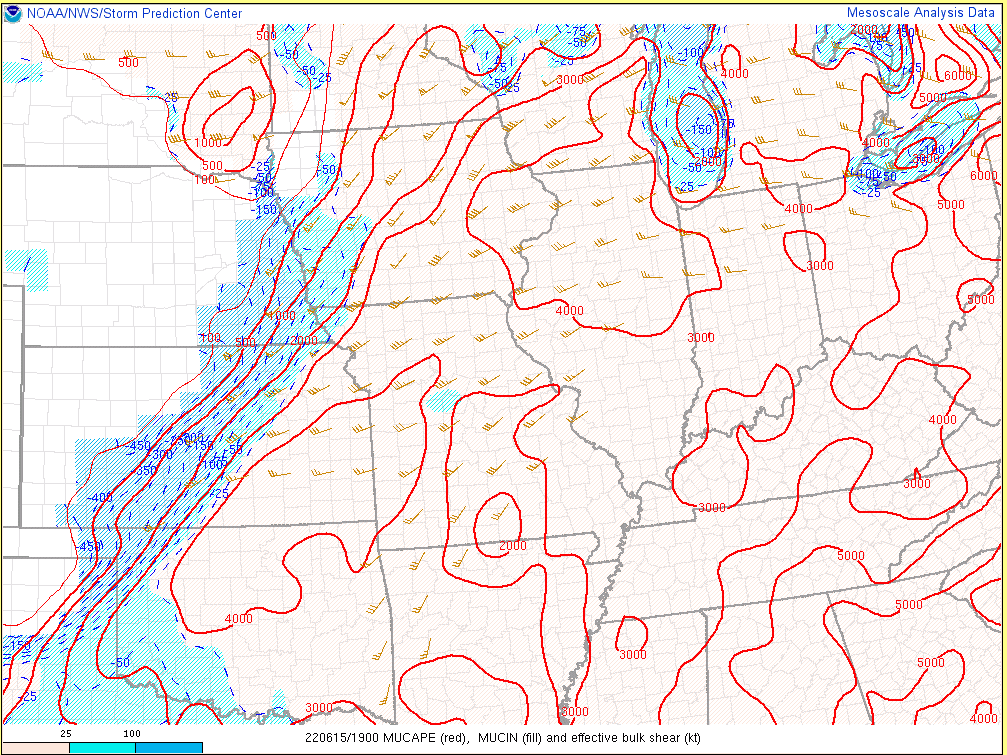
A comparison with SPC mesoanalysis at 20Z showed very comparable PW values, between 1.1 to 1.2 inches over north-central IL, and freezing levels between 10 to 11 kft. As for MLCAPE, it appeared that for both modified and unmodified NUCAPS, the observed was higher than NUCAPS, around 1000-1500 J/kg, perhaps not having a high enough surface dewpoint. As for 850 mb temperatures, they were comparable to those observed, in the 12-14 degC range. DCAPE was also comparable in NUCAPS with what the SPC mesoanalysis page was showing, between 600-700 J/kg.
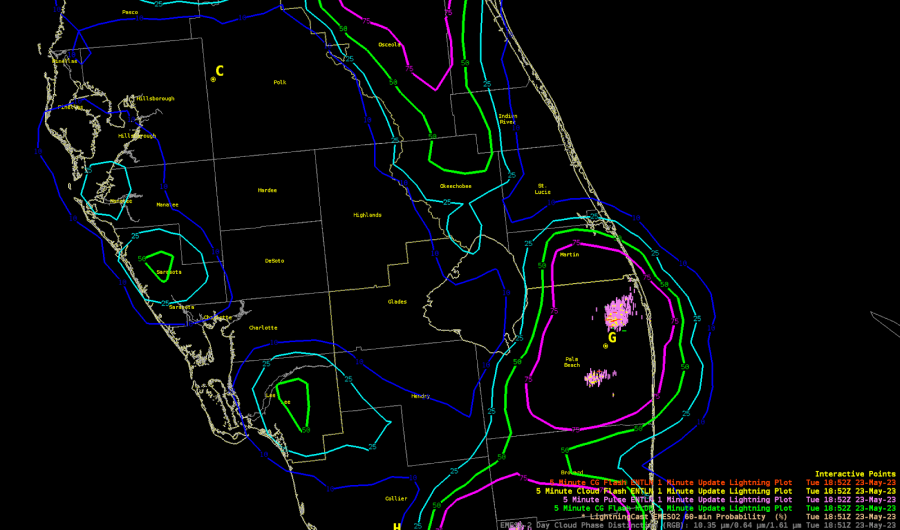
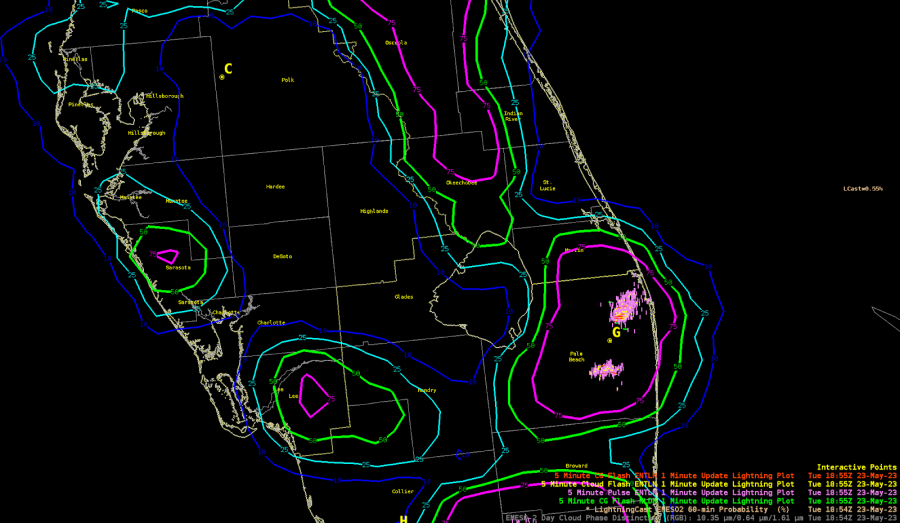
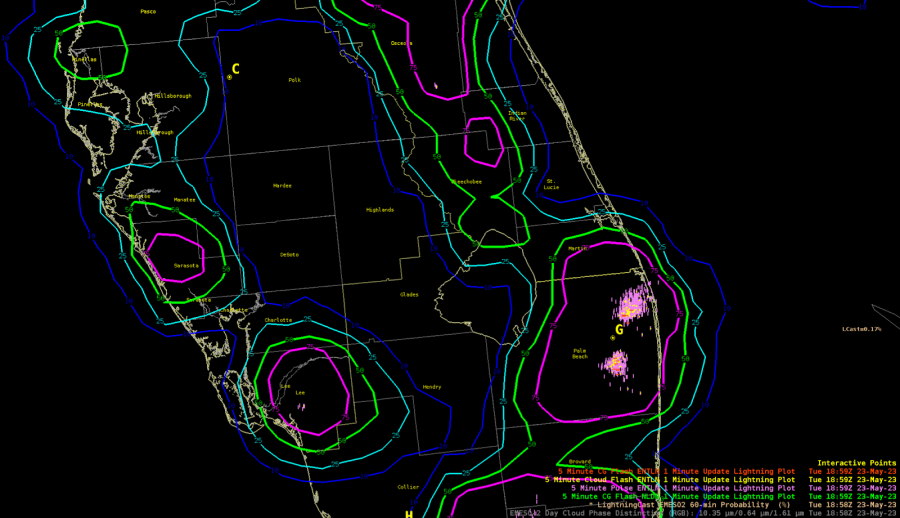
With regards to lightningCAST, ProbSevere, and GLM, around 1932Z, once again the LightningCast was showing good lead time for areas downstream of storms. The main cell at this time I was watching was in the southeast Part of our CWA, which had a nice contour of 75% to the north and east of that cell extending well north of the storm core.
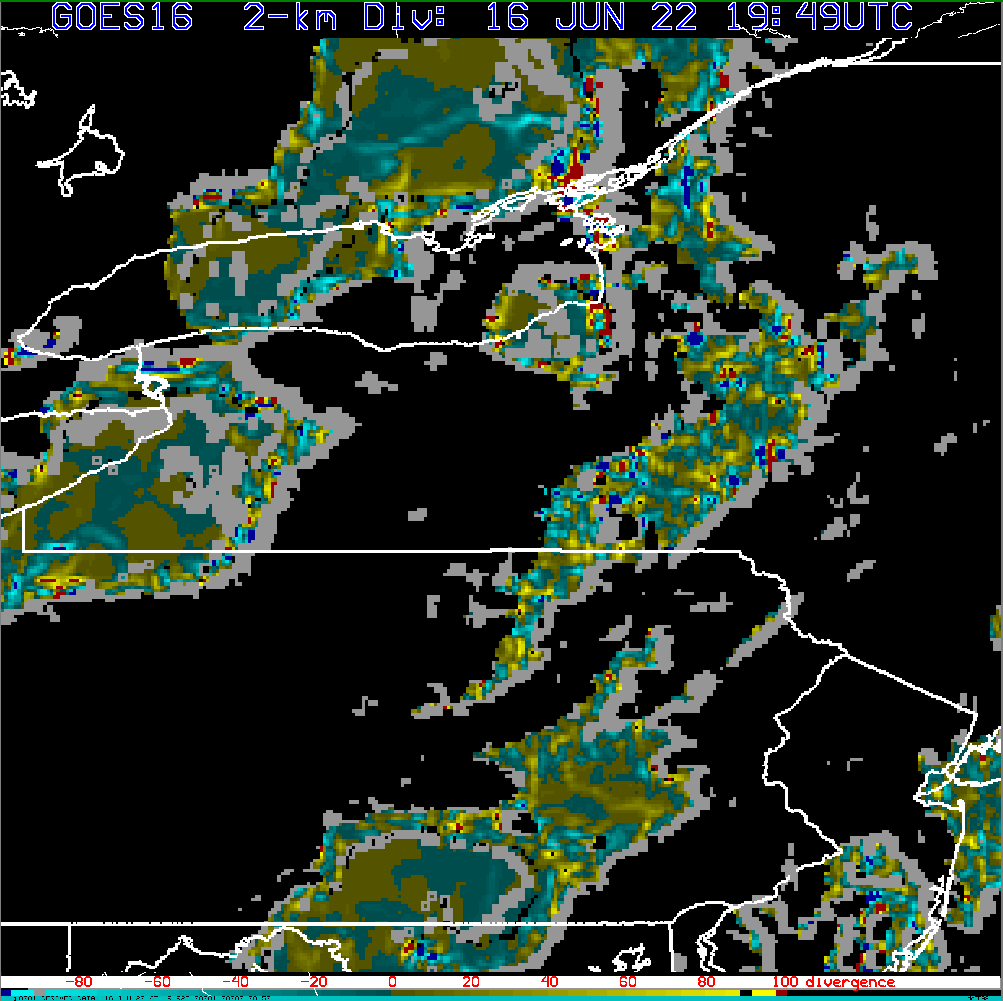
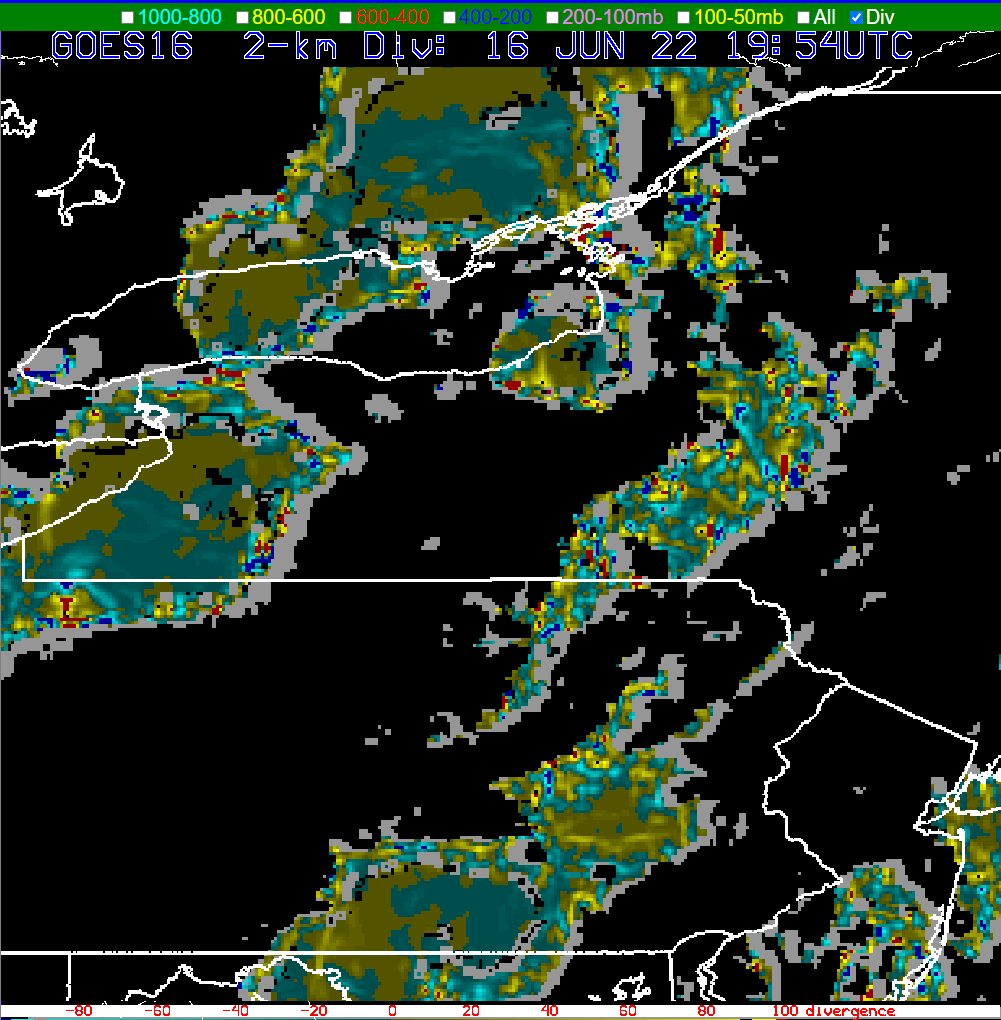
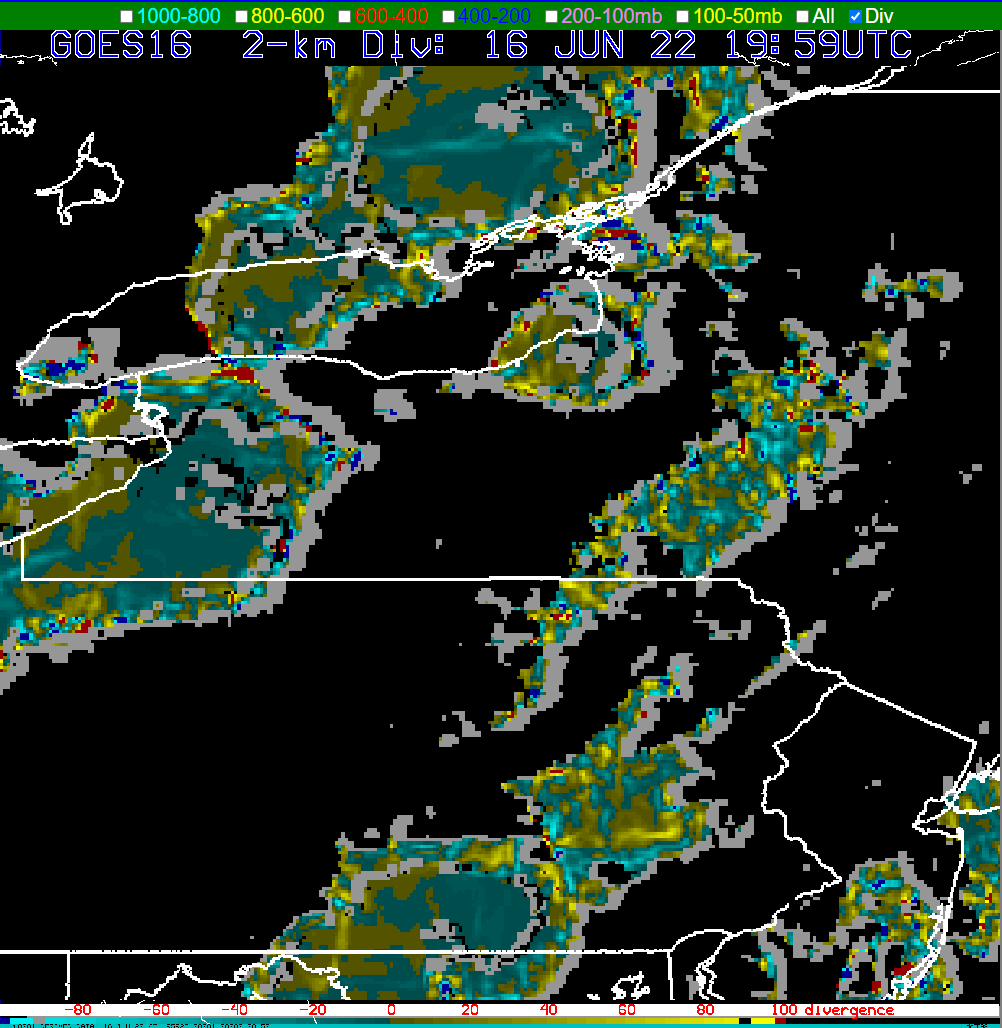
At 20Z, the Optical Flow divergence field appeared to match up well with observed convection at this time. It thus showed quite well with the shear field.
ProbSevere’s time series graph continues to show added value, allowing the forecaster to see the trend in a storm’s severity and probability of severe potential. This image was at 20:40Z.
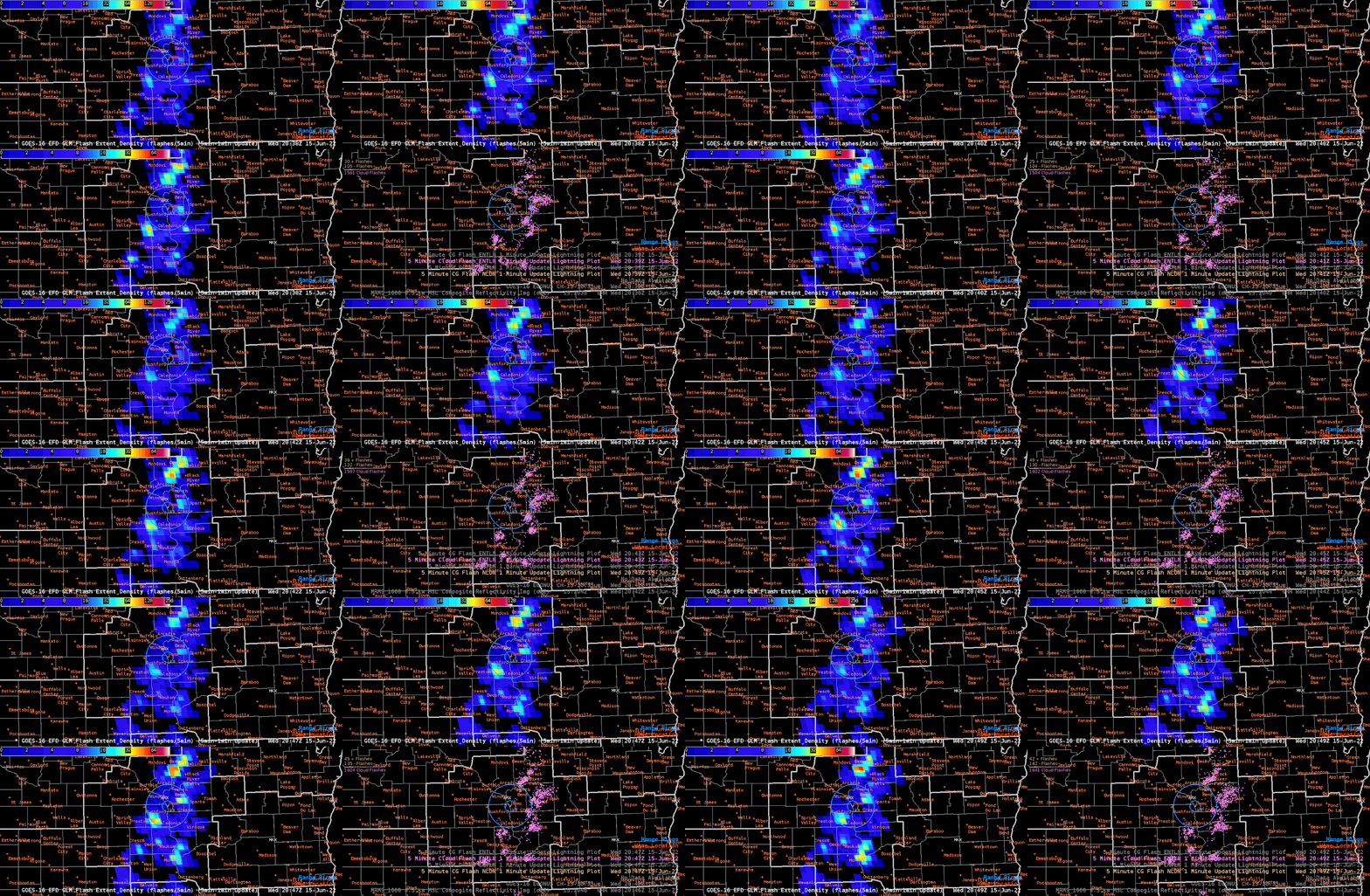
Around 21Z, I noticed a jump in GLM FED for the area of storms in the northwest part of the CWA. Alongside this, the GLM TOE also increased, along with a decrease in MFA with the same storm cell. This area corresponded with increased flash rates in the EarthNetworks. I modified the GLM FED scale to 20-25 as a maximum to see the activity better, as well as lowering TOE to 50 as a maximum.
Around 22Z, the GLM TOE showed a good correlation with the 3 strongest storms based on dBZ and ProbSevere, one to the north, and two in the far southeast, bordering Indiana. For this display of TOE, I lowered the contours to a max of 50, which seemed to work well.
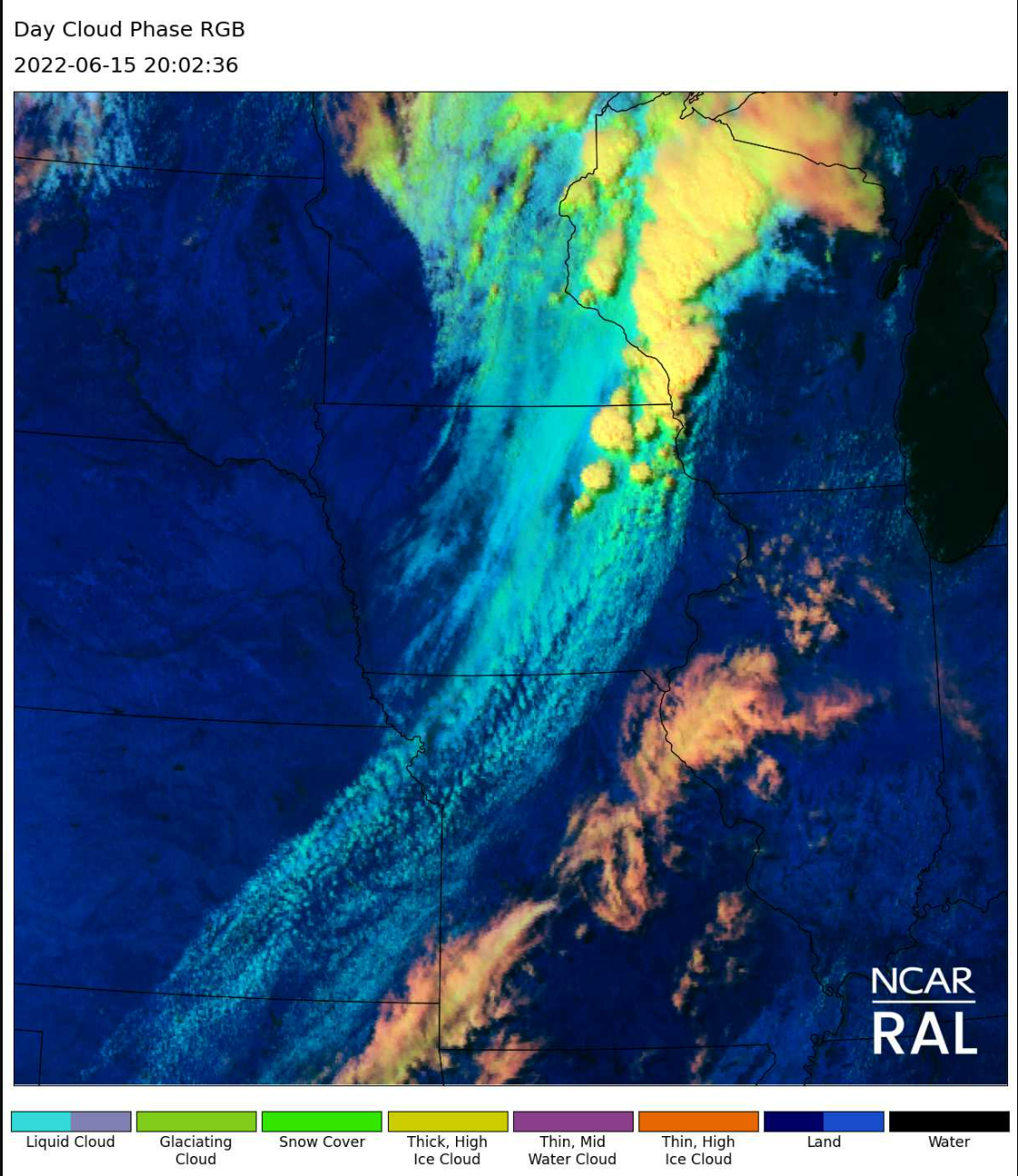
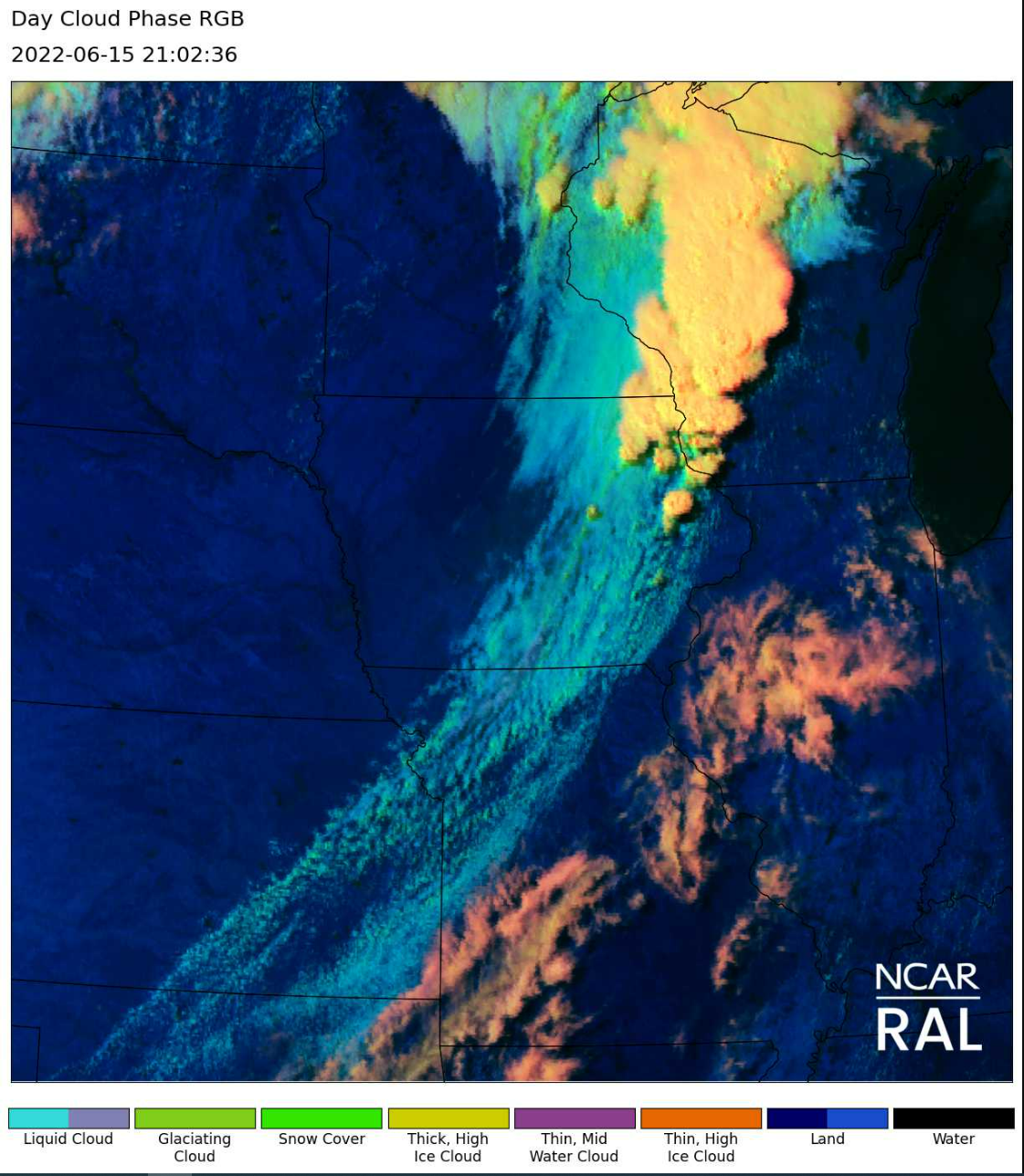
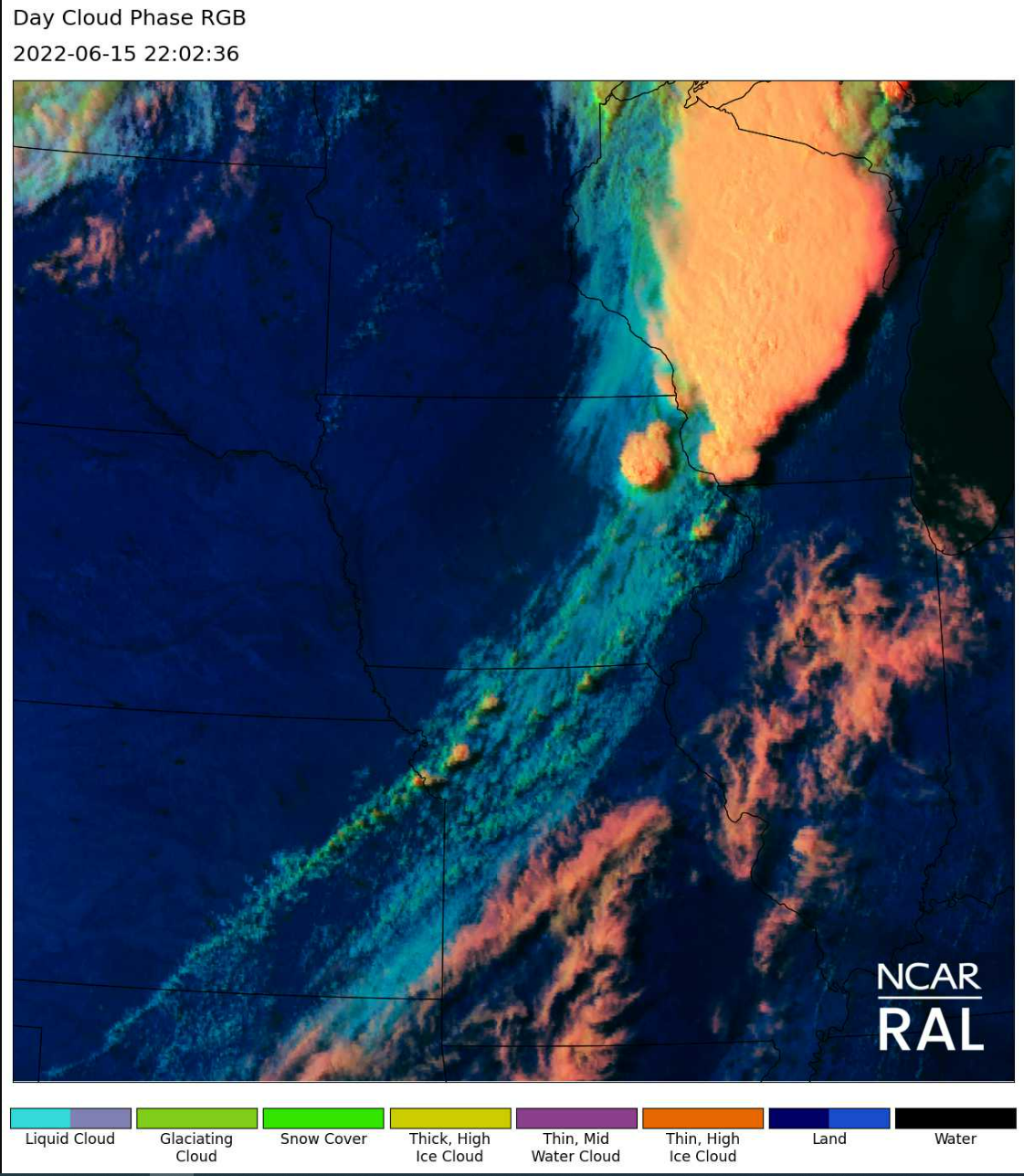
Around 22:12Z, the LightningCast showed an uptick in probabilities of 75% north of a cell that was starting to show towering CU on the day cloud phase. This was before GLM and ground-based radar showed uptick in lightning activity.
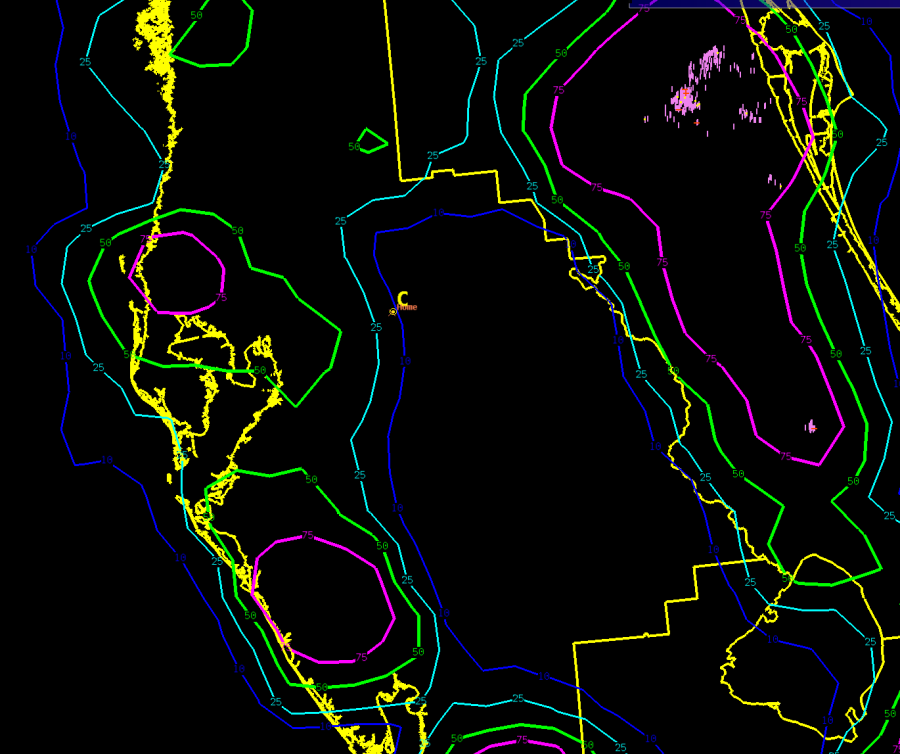
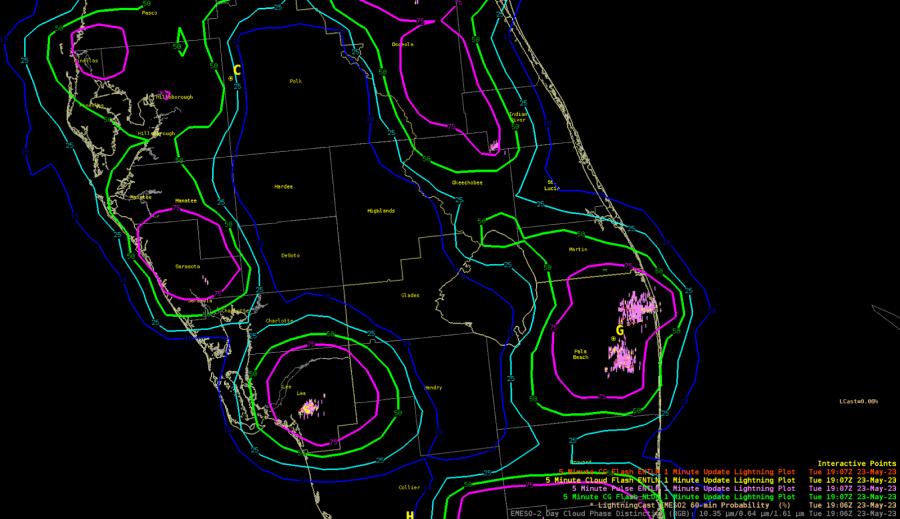
Are the edges of LightningCast contours related to the detection of GLM? See below image…The contours do not close off.
Snowfan
DSS in the Birmingham CWA
PHS
LightningCast & GLM for DSS
ProbSevere v3
NUCAPS
Optical Flow Winds
Analyzing the convective environment prior/during storm activity
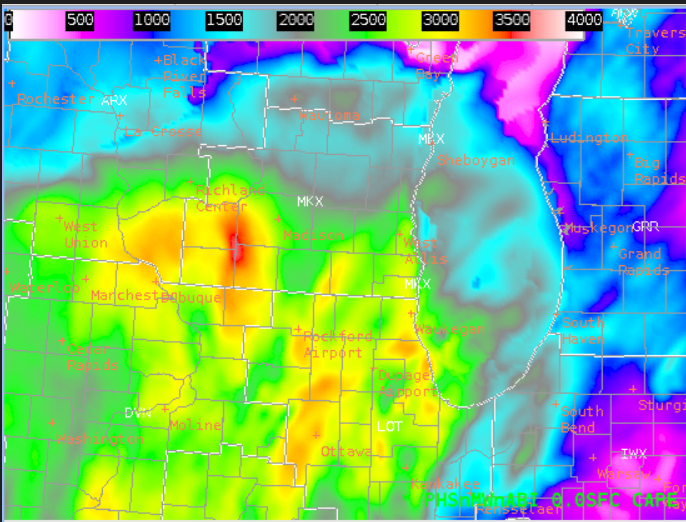
I decided to look at the various parameters prior to storm initiation. When looking at PHS, it appeared our prime time for storm activity was going to be 21-00Z, when SBCAPE was forecast to be high, along with low LIs. I noticed that the STP was also elevated, upward of 3 as the activity moved northward into the southern portion of our CWA.
When comparing this to the SPC mesoanalysis page, the parameters from PHS seemed to agree fairly well with the mesoanalysis. It did appear, though, that the STP was a tad faster than what the mesoanalysis page showed. And the PHS decreased the instability an hour or two prior to 00Z, whereas the SPC page showed that instability remained elevated up to 00Z. The STP parameters in the PHS were a tad higher than the mesoanalysis page as well, with the meso page only 0.5 to 1.
A look at the NUCAPS soundings in SharpPy showed a relatively stable surface layer in observations at 12 UTC. By 1550 UTC, NUCAPS showed the surface layer to heat up from insolation but still remain largely stable.
Looking at NUCAPS gridded data, specifically for mid-level lapse rates, while the gridded data was noisy with some bullseyes, it did show the environment between 3 to 5 degC/km lapse rates, consistent with the SPC mesoanalysis page (which showed around 5.5 degC/km).
Just prior to more storm activity, GLM was picking up on a cell moving north into Wabash County, where a spike in MFA and decrease in TOE was evident. This storm was eventually warned on, where the radar showed a TBSS with a ProbSevere threshold for wind near 28%.
The lightningCast model, at least for KIWX, appeared to do better today in terms of the advection component, with the lightningCast downstream of the cells depicted in MRMS.
This time period was at 21:44Z, showing again how lightningCast was showing better predictive capabilities downstream of current convection.
Snowfan
Monitoring Scattered Convection in northern IN & Tin Caps DSS
I decided to submit a quick DSS briefing for the Fort Wayne Tin Caps with DCPD indicating glaciation and weak echoes on radar. LightningCast was starting to increase over northern IN for that weak developing convection. Additional convection is spreading in from the south, and higher LightningCast contours are also spreading in. PHS shows increased CAPE over the next hour.
Left: DCPD with GLM and LC. Right: Base reflectivity with LC
Loop of base reflectivity and LC from 1938 to 2014Z:
Left: PHS forecast CAPE at 20Z. Right: PHS LI at 20Z
First GOES flashes a little after 20Z. DCPD with GLM FED and LC
However, by 21Z, lightning is limited pretty much to cells to the northwest and E/NE of Fort Wayne.
Happily, LightningCast called the lightning flash east of Fort Wayne about 10 minutes out (small pink circle east of Fort Wayne)
Why is barely anything happening? Convection looks to be “firing” now on an instability gradient. Indicated by PHS at 21Z:
Am I confident that things will ramp up at all for our area within the next couple of hours? So-so. Here is PHS CAPE and LI for 21Z.
And gridded NUCAPS 850-500mb lapse rates at 1730Z, ranging from around 4.5-6C/km
However, zooming out, there is an area of convection across central IN that should begin approaching our southern CWA boundary within the next half hour. Here is the GLM 4 panel with GOES clean IR underlaid with the FED, at 2130Z.
– PoppyTheSmooch
Memphis, TN Synopsis
Synopsis
An upper low and cold front is expected to move across the lower MS Valley. As the upper low moves east today, weak shortwaves embedded in southwest flow will lead to a marginal risk of thunderstorms as they form along and ahead of the front over the Memphis region. The main concern was a moderate risk of excessive rainfall for this afternoon/evening.
IR imagery. Upper low located near the OK Panhandle.
Surface analysis map of the surface low and attendant front.
Surface observations as of 4:00PM CDT.
SPC Day 1 Convective placing TN at a marginal risk.
MLCAPE ~500 J/kg.
PHS displaying weak CAPE/LI values and a well-defined dry line just west of AR.
WFO Memphis headlining excessive rainfall outlook.
WFO Memphis headlining marginal risk of severe storms.
Most of the severe storms were east and south of our area of interest shown here with GLM.
GLM overlaid with Radar.
GLM overlaid with satellite imagery.
LightningCast
ProbSevere3 showing a low risk of thunderstorms.
Optical Flow winds show an area of divergence over eastern and southern AR/TN border.
Vortex Power