GLM – GOES-16 vs GOES-17

Differences between the GLM Flash Extent Density products from GOES-16 and GOES-17 were quite stark for convection occurring over the Cheyenne, WY CWA on June 7th.

The two animated gifs below highlight the difference in lead times for an observed uptick in lightning activity within a cell near Scottsbluff, NE. The first animation is of GOES-17 showing the uptick in lightning activity beginning at 1939Z. The second animation from GOES-16 shows the same uptick in lightning activity, except beginning ~5mins later at 1945Z. Interestingly enough, both satellite perspectives show the downtrend in lightning activity occurring at 1950Z.

GOES-17 GLM FED Scottsbluff 5-min improved lead time.
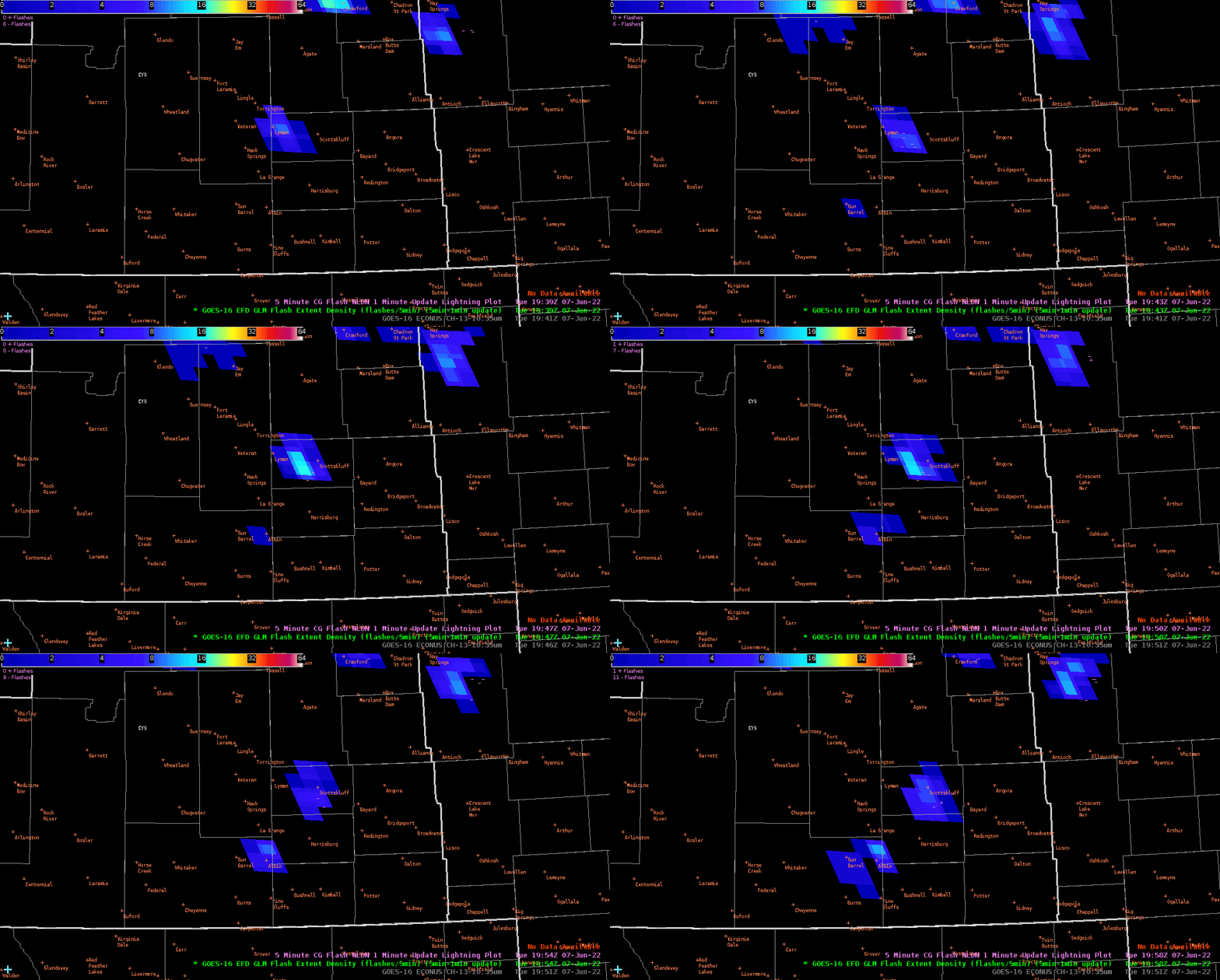
GOES-16 GLM FED Scottsbluff

The next three examples show sharp contrasting GLM FED intensities between GOES-17 and GOES-16 through the afternoon of June 7th. This first example focuses on a warned supercell just southeast of Scottsbluff, NE at 2022Z. The first image shows FED from GOES-17 showing much higher FED numbers, while the second image shows FED from GOES-16 not indicating any increased lightning activity. The third image shows a 4-panel layout of MRMS, MESH, VIL, and ProbSevere version 3 all supporting a supercell occurring. A subsequent report of 1.5” hail was observed from this warned storm.

The cause of this was shared from the investigators running the HWT this week, that GOES-17 had the better angle to see lightning activity in these supercells developing over the high plains of WY and NE. Whereas GOES-16’s perspective from further east had to punch through spreading anvils downstream of the main updraft that likely obscured the light emanating from the lightning, GOES-17 had a more side-on view of the updraft with less to no obscurations of light emanating from lightning occurring in the updraft. Unfortunately, GOES-17 CONUS view and the day’s mesosector from GOES-17 did not reach this far east and there are no satellite images displaying the different parallax views from GOES-16 and GOES-17.

GOES 17 GLM FED @ 2022Z “Scottsbluff Cell”

GOES 16 GLM FED @ 2022Z

MRMS – MESH – VIL – PROBSEVEREv3 @ 2022Z

1.5” hail report from this storm. Max MESH reached 2”.

The next two examples below each showcase three images each, a GOES-17 FED showing higher intensity lightning activity, a GOES-16 FED missing the higher intensity lightning activity, and a 4-panel layout showing MRMS, MESH, VIL, and ProbSevere version 3 highlighting the severe nature of the supercell.

An interesting follow-up to this in the future is to see how these two satellite GLM FED products compare in a low-storm motion environment where the spreading anvils at storm top flow in all directions. This could cause both satellites to have an obscured view of the convective updraft beneath, causing both to miss out on any increased lightning activity.

GOES-17 GLM FED @ 2016Z “Lance Creek Cell”

GOES-16 GLM FED @ 2016Z “Lance Creek Cell”

MRMS – MESH – VIL – PROBSEVEREv3 @ 2016Z

GOES-17 GLM FED @ 2026Z “Scottsbluff Cell”

GOES-16 GLM FED @ 2026Z “Scottsbluff Cell”

MRMS – MESH – VIL – PROBSEVEREv3 @ 2026Z “Scottsbluff Cell”

– Trip

NUCAPS uses in comparison between separate satellite passes

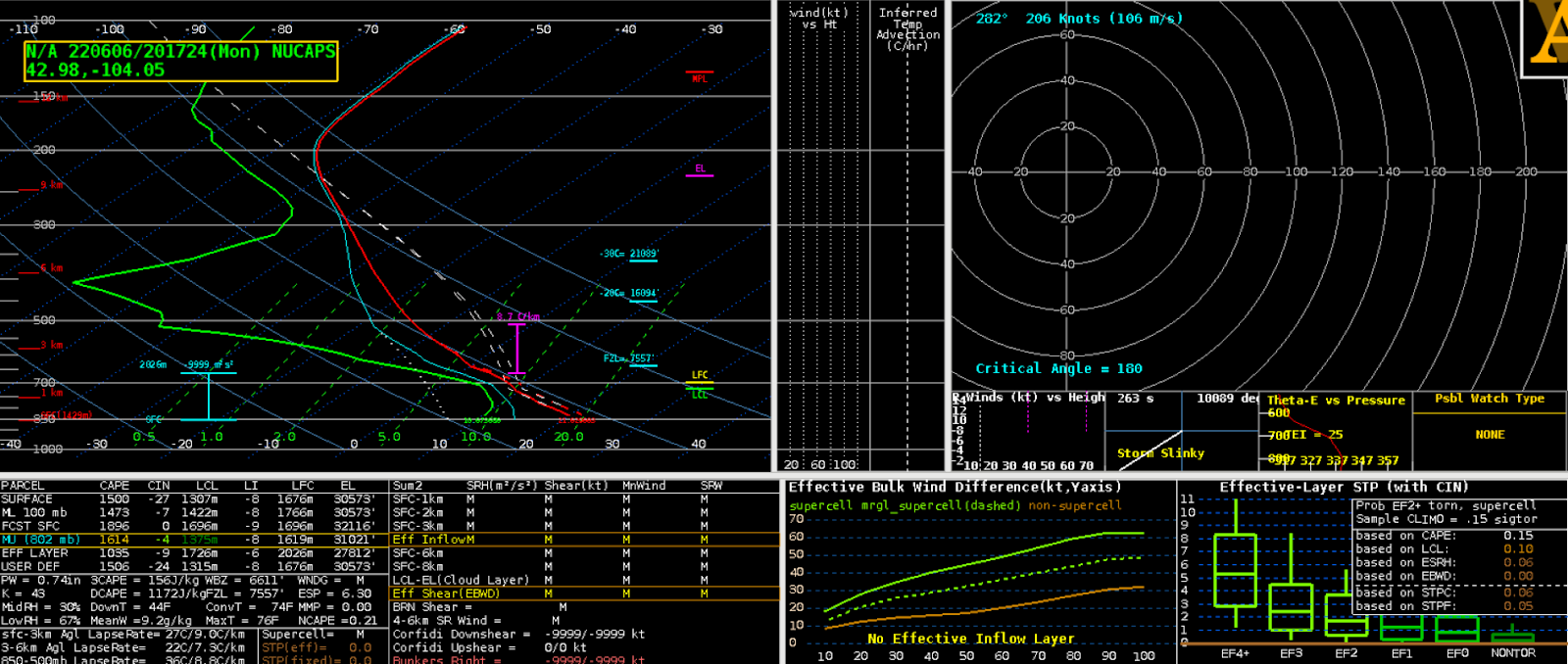
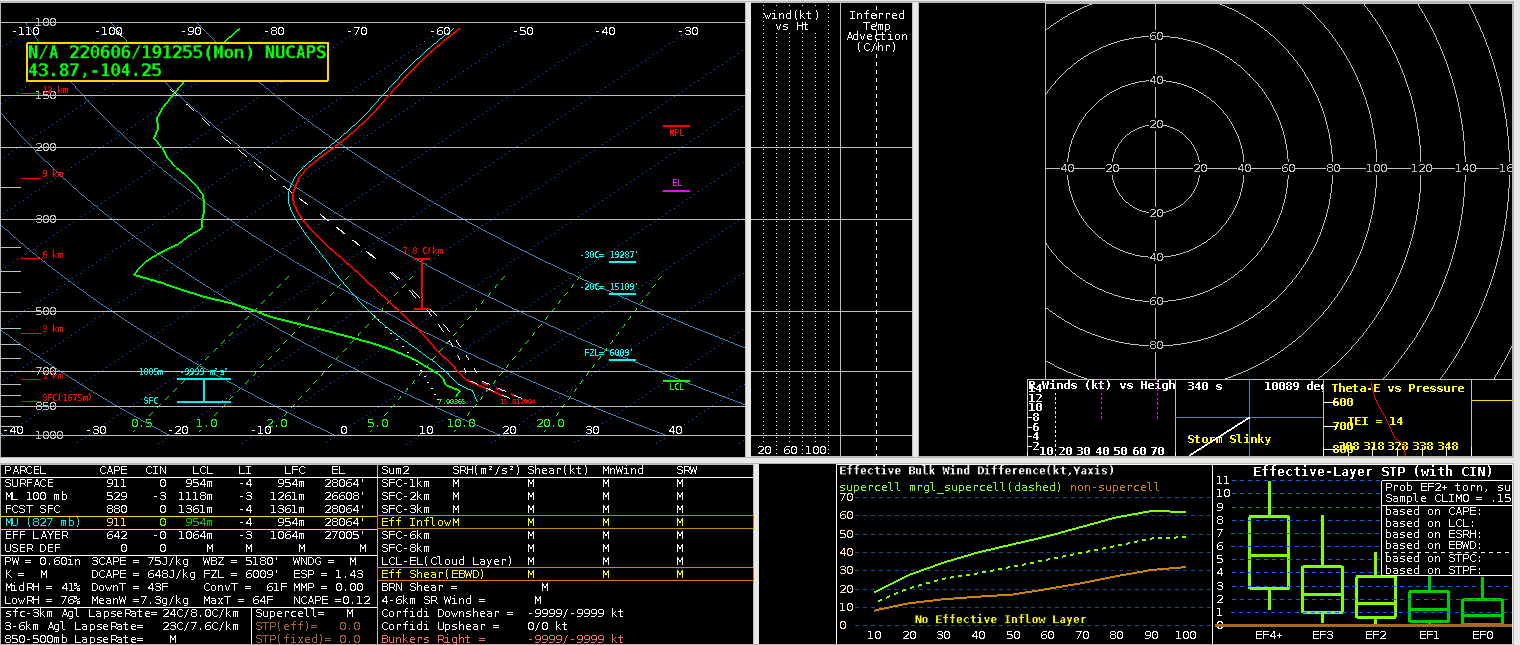
NUCAPS has been quite useful in comparison between previous passes. (Comparing the NOAA-20 modified and the Aqua), shows how an environment is changing to the south and southeast of the storm cell moving through Custer. We noticed a rapidly changing environment when compared to early afternoon convection. Sfc temperatures and mid level instability increased quite a bit as this storm moved off the higher terrain and into a more favorable mesoscale environment.

NOAA-20 Pass from approximately 19Z. On western SD/NE border.

Aqua Pass from approximately 2030Z. Same location. (On western SD/NE border.)

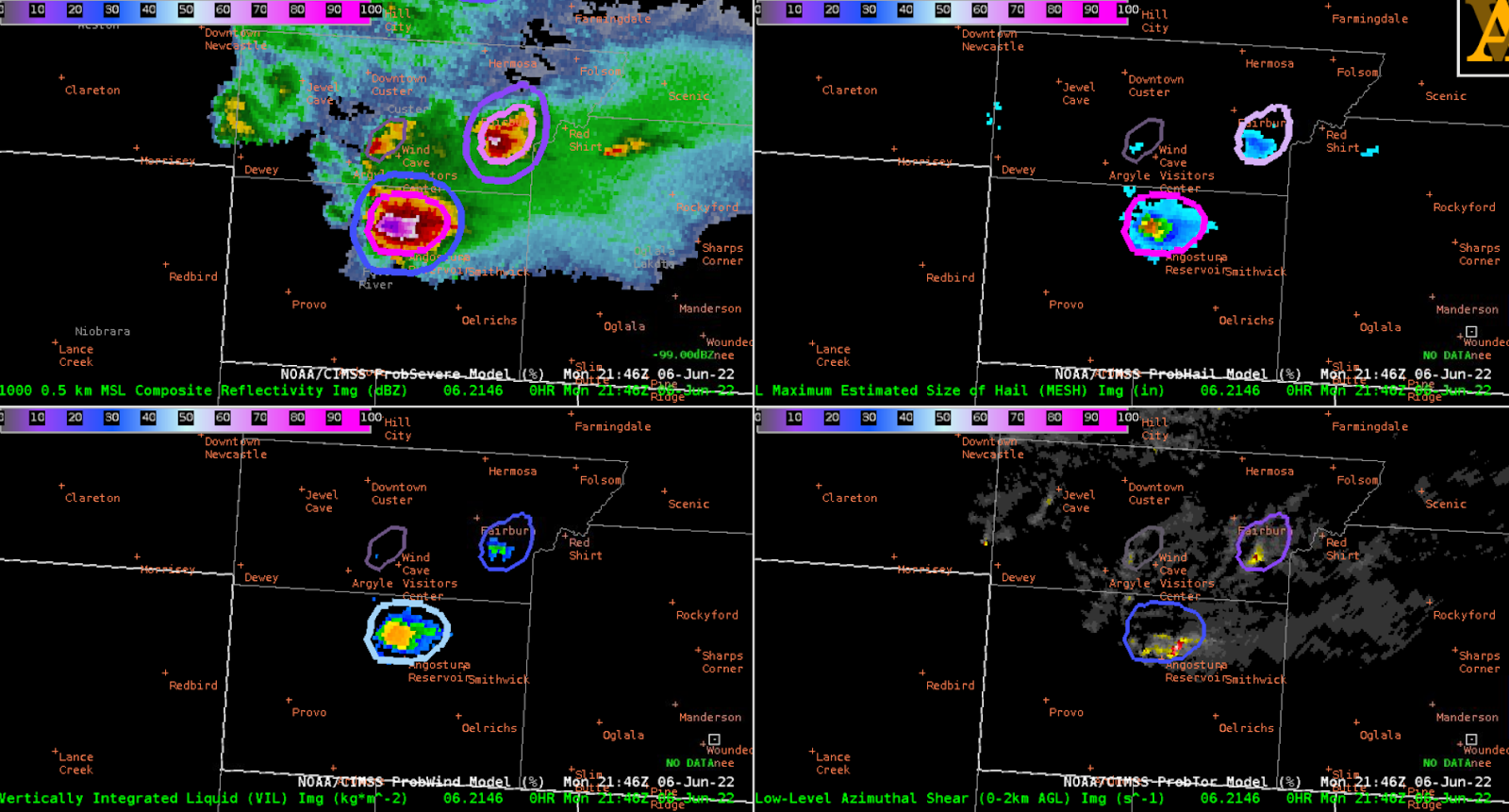
This increase in surface temperatures as the storm moves into a more favorable environment. Notable spike and jump in Hail core and probabilities.

A notable spike after 2130 for prob hail and prob severe.

-David Spritz

ProbSevere v3 and NUCAPS

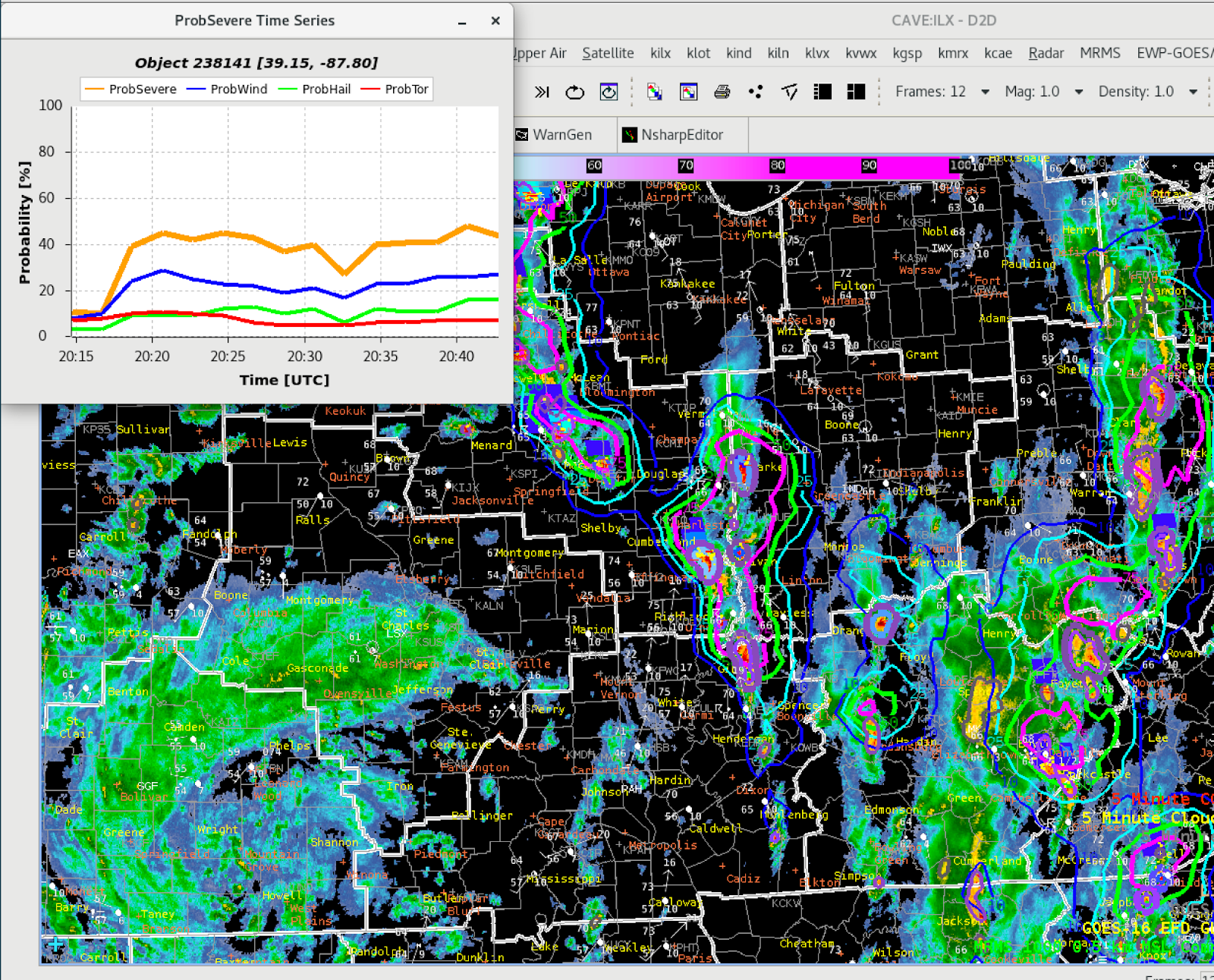
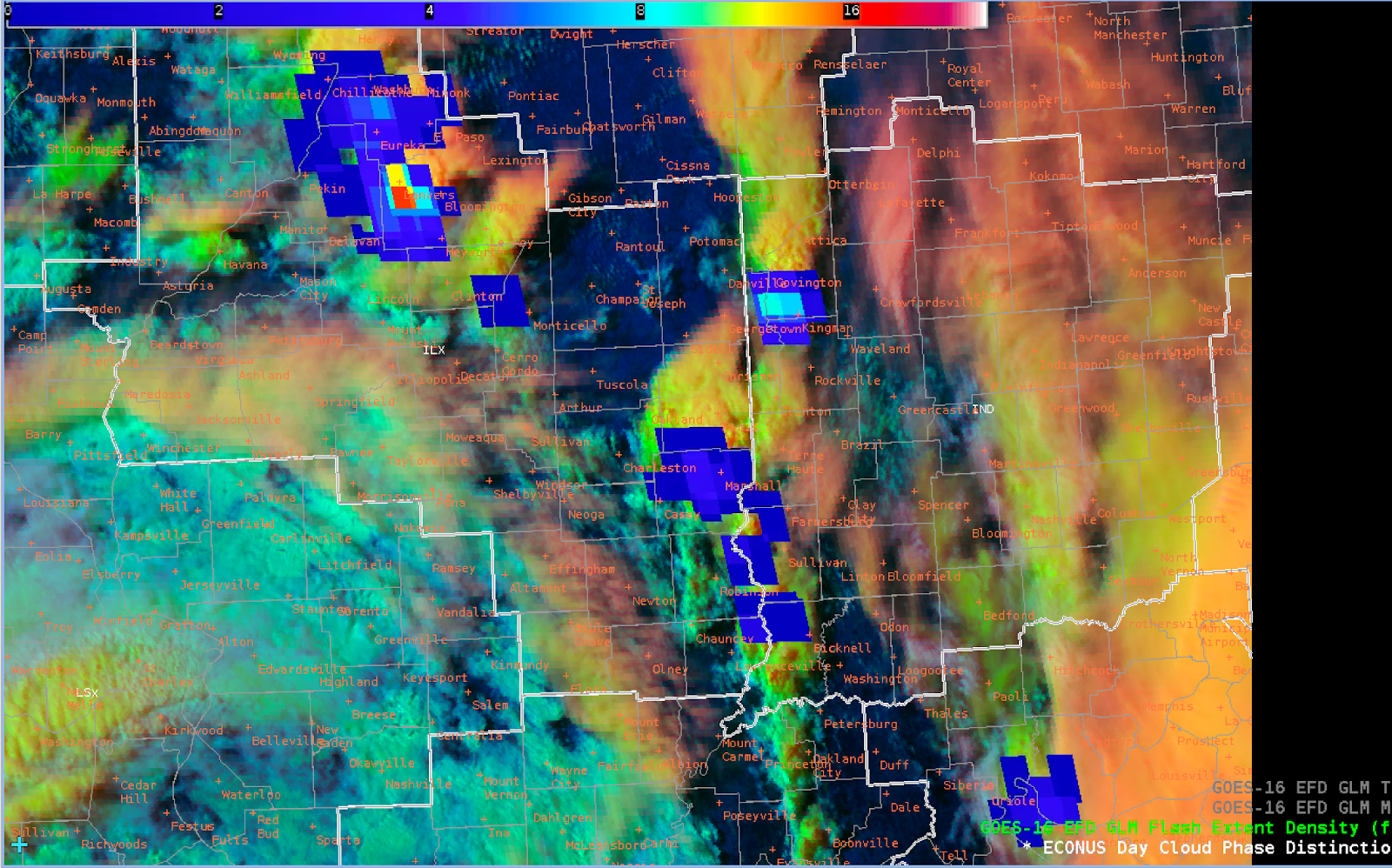
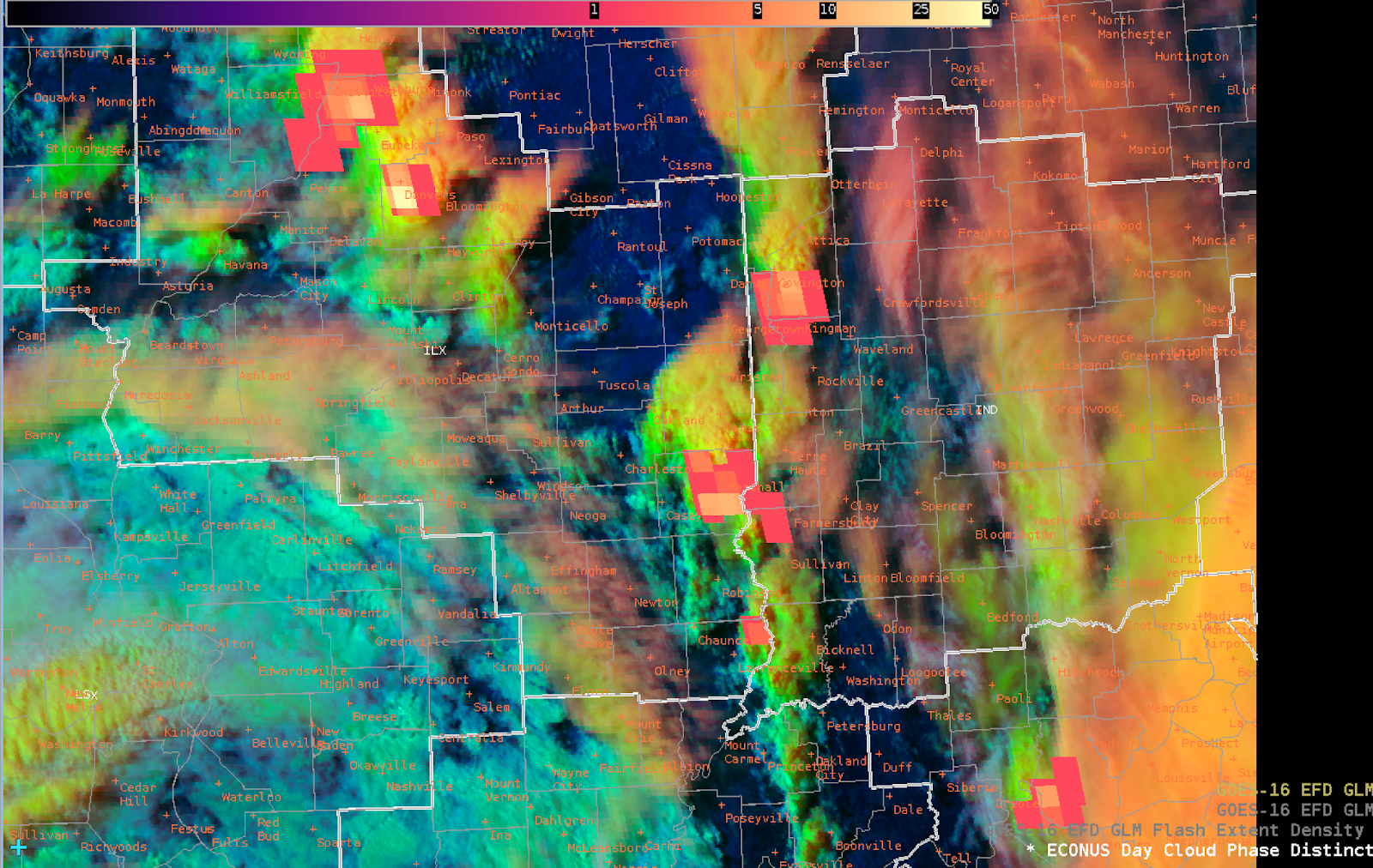
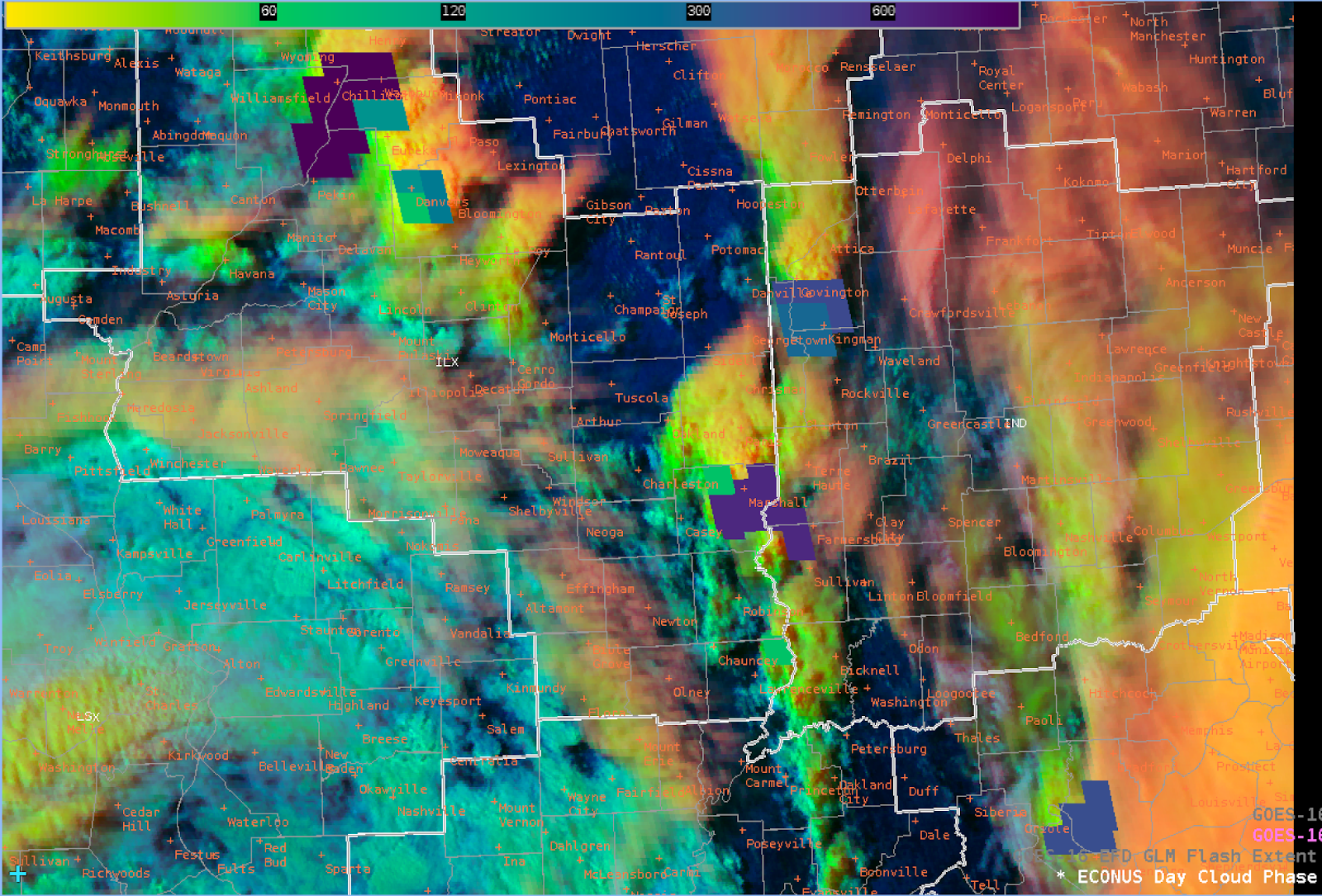
When analyzing a thunderstorm developing over western South Dakota, a noticeable jump occurs near 20:25 – 20:30 UTC as seen on the ProbSevere Time Series. At this same time, there was a distinct uptick in lightning activity seen in the GLM 4 panel. This would correlate with a strengthening of the thunderstorm at this time. A modified NUCAPS sounding from around this time captured an environment favorable for further strengthening encompassed by steep mid level lapse rates and adequate instability. This thunderstorm was beginning to exhibit severe hail potential.

ProbSevere Time Series

GLM-16 4 panel

Modified NUCAPs sounding ~20 UTC

-2%hatched

PHS CAPE Uses

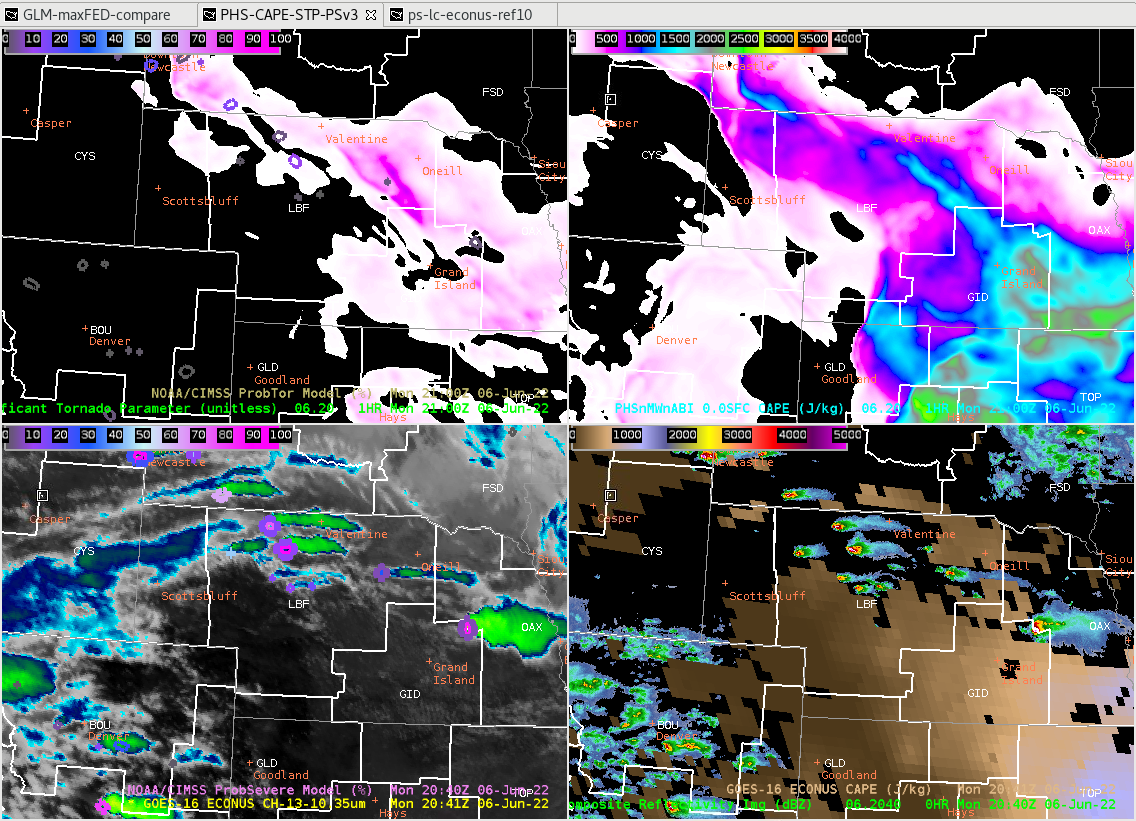
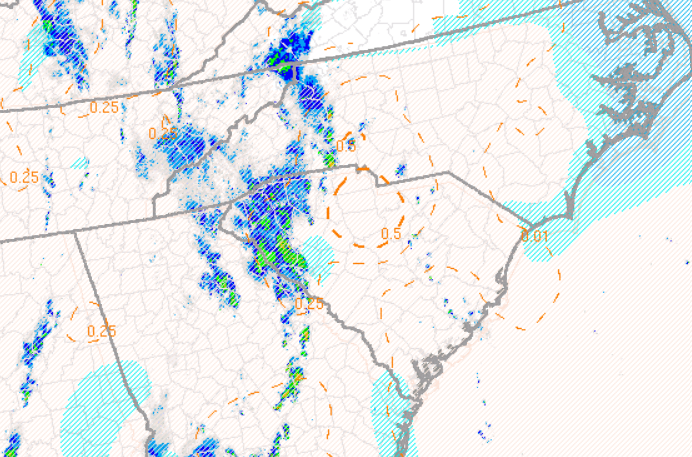
Interesting item to note when analyzing PHS forecast CAPE over western South Dakota. This may be terrain induced, but the sharp gradient of CAPE values noted up and and down the western border of South Dakota.  This correlated fairly well with a strong storm or two in the western UNR CWA.

PHS CAPE sharpening gradient in the top left panel.

Wide view of storms in the area using PSv3.

Close in view of several storms on or near that boundary.

David Spritz

LBF Day 1 HWT Blog

Day 1

Acting as LBF
This image was used in a graphicast to which we then added areas of concern over the next several hours and storm direction.

PHS, ProbSevere

Enjoyed using PHS, especially getting the heads up at the beginning of today’s session to watch along the value gradients for stronger storms. That tip fit the bill for what we were seeing today and higher prob severe seemed to follow the gradient as well. I have not had much practice with version 2 of probsevere, so I cannot not really compare it to version 3. However, I did find version 3 useful today, especially with all the readout information breaking down the threat level for each type of severe hazard as well as mesh values.
2041 UTC
2141 UTC

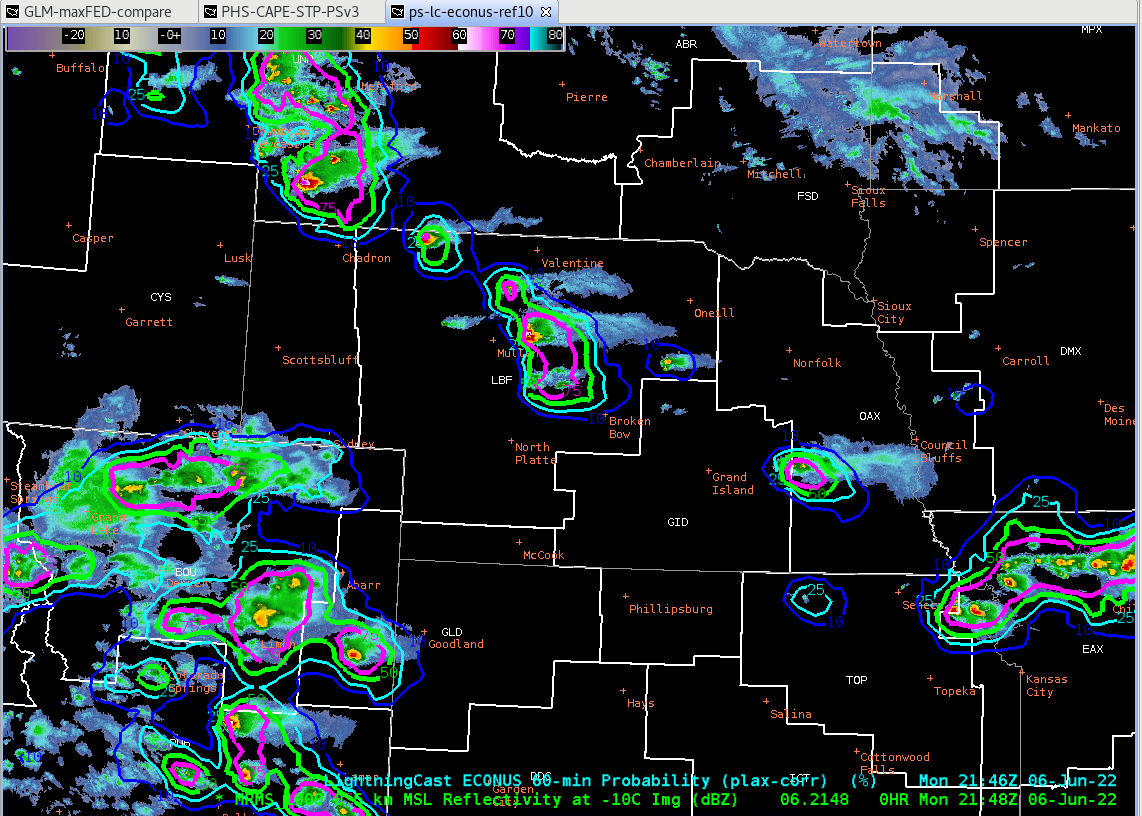
LightningCast

From an IDSS standpoint, the Lightningcast is nice to use to give a heads up and see trends in lightning.
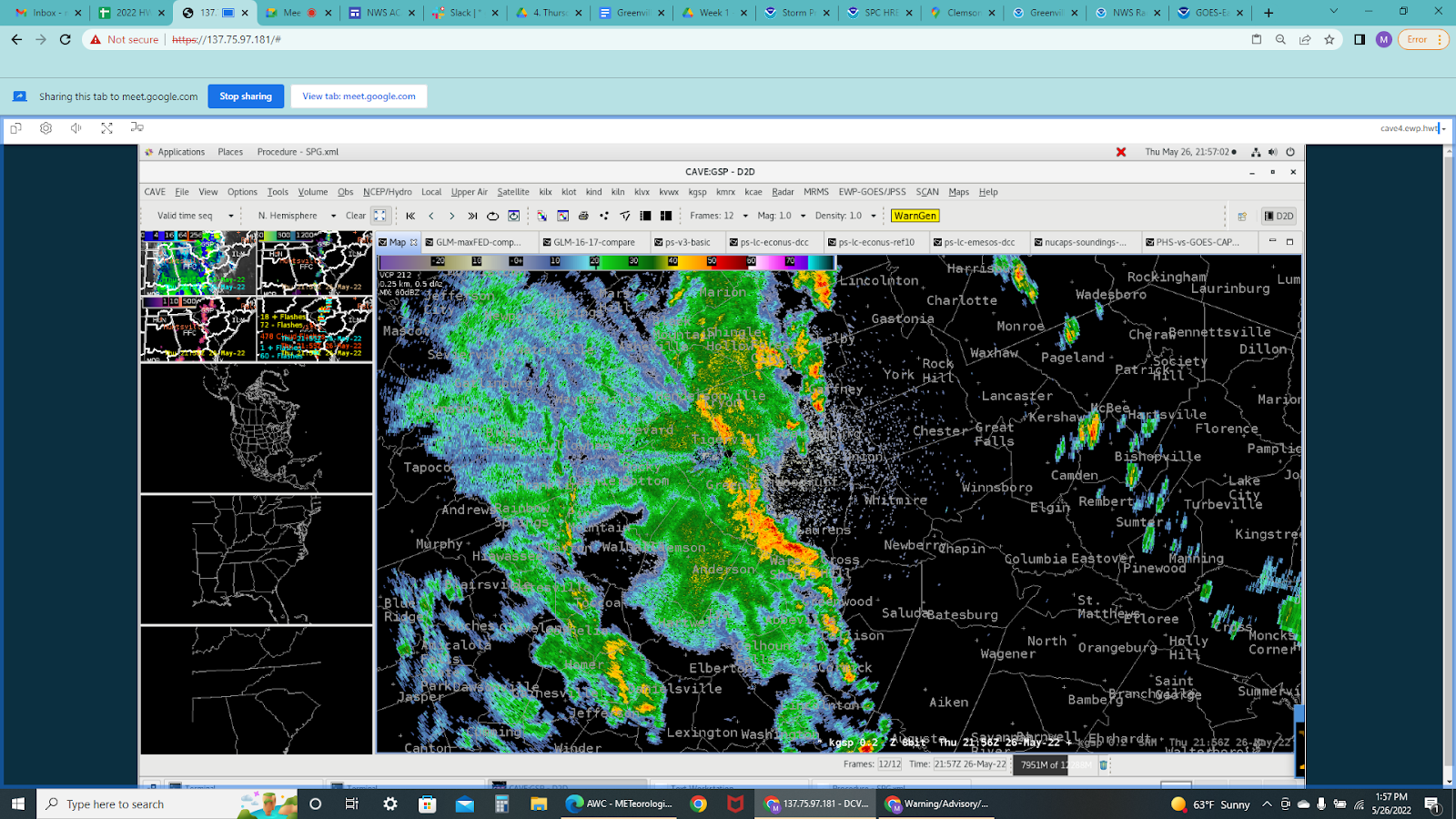
For GLM, I really liked decreasing the max value. Seems to work well in these smaller cells to highlight which cells to watch for.
– Matador

Greenville SC Observations

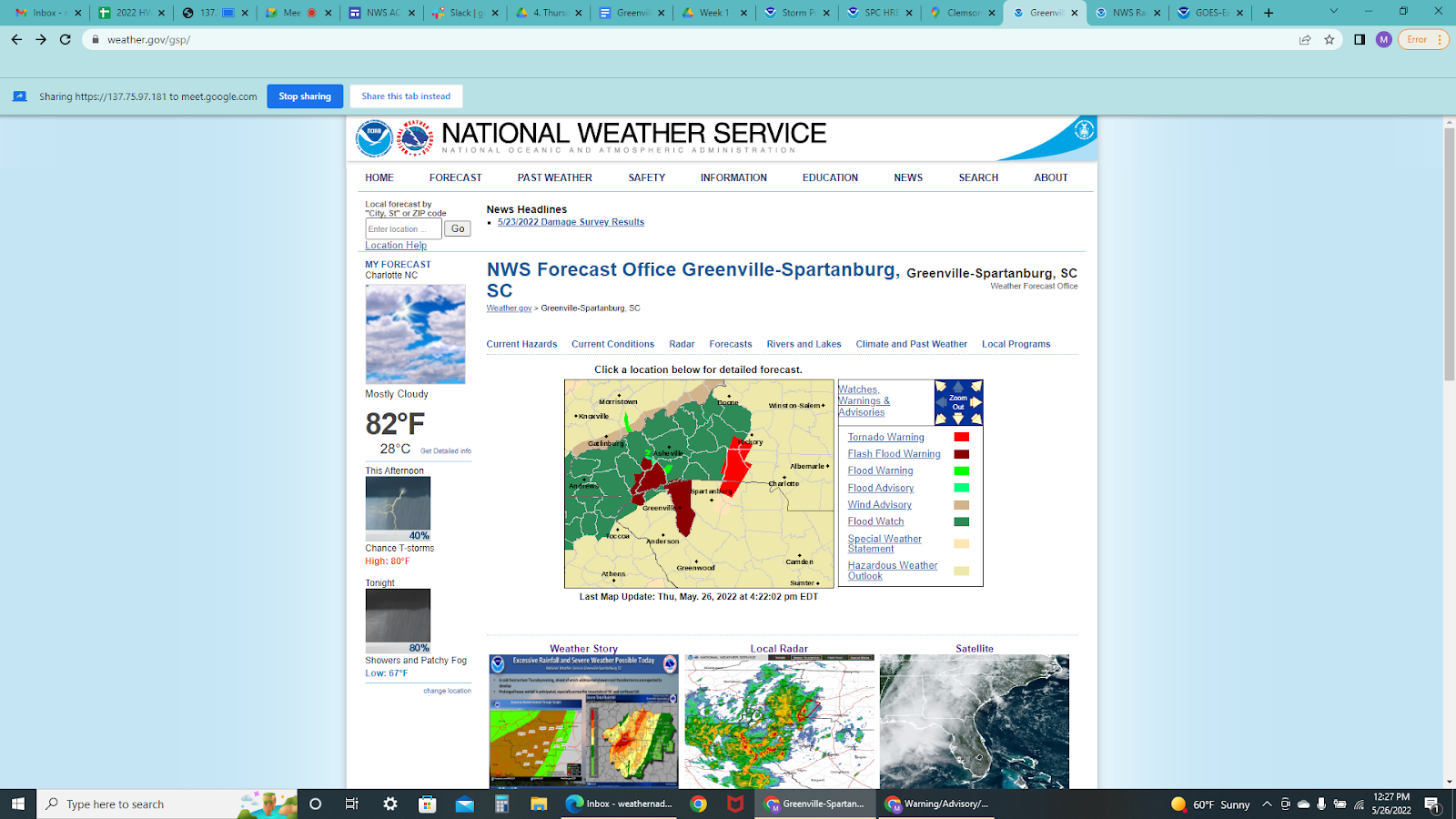
Synopsis: A deep upper low tracked slowly northeastward across Missouri today. The main cold front associated with this low moved across the Greenville, SC region. Along and ahead of the front, widespread showers and thunderstorms continued over western South Carolina for most of the afternoon and evening hours.

Our DSS messaging was for Softball Tournament Games located at Clemson University.

SPC Convective Outlook: Slight risk of thunderstorms over extreme northwestern SC, with marginal risk elsewhere.

Primary threat was wind flash flooding and wind with a chance of hail and a possible tornado.

Scattered showers and thunderstorms tracking northward across the forecast area.

IR imagery overlaid with lightning data.

Greenville ACARS sounding taken in 1910Z.

NUCAPS Sounding nearby Greenville.

Another NUCAPS Sounding nearby Greenville.

Mesoanalysis – Surface CAPE values ranging from 500 to 1,000 J/kg.

PHS showing similar instability parameters.

Watches/Warnings products issued throughout the day by WFO Greenville.

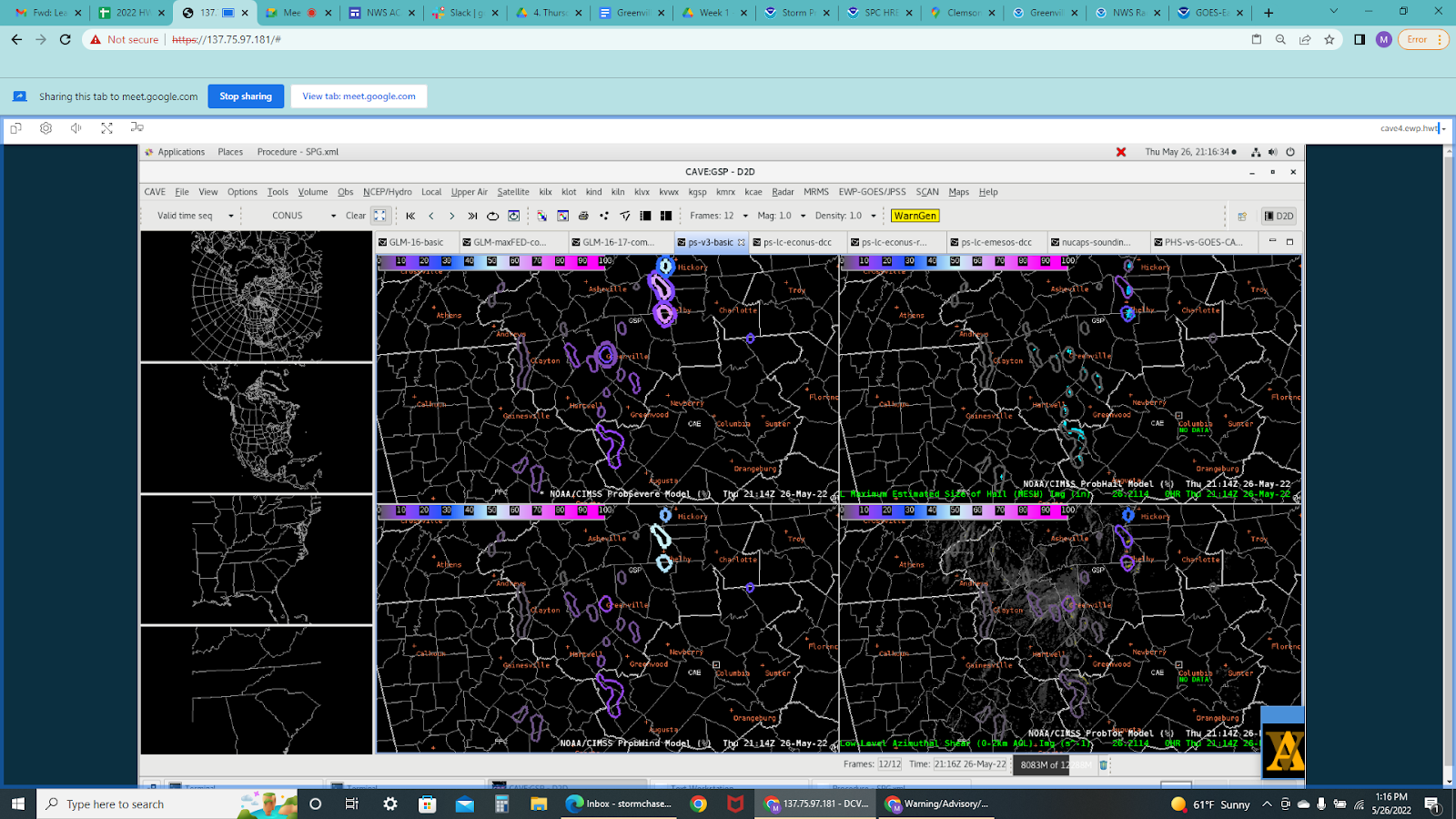
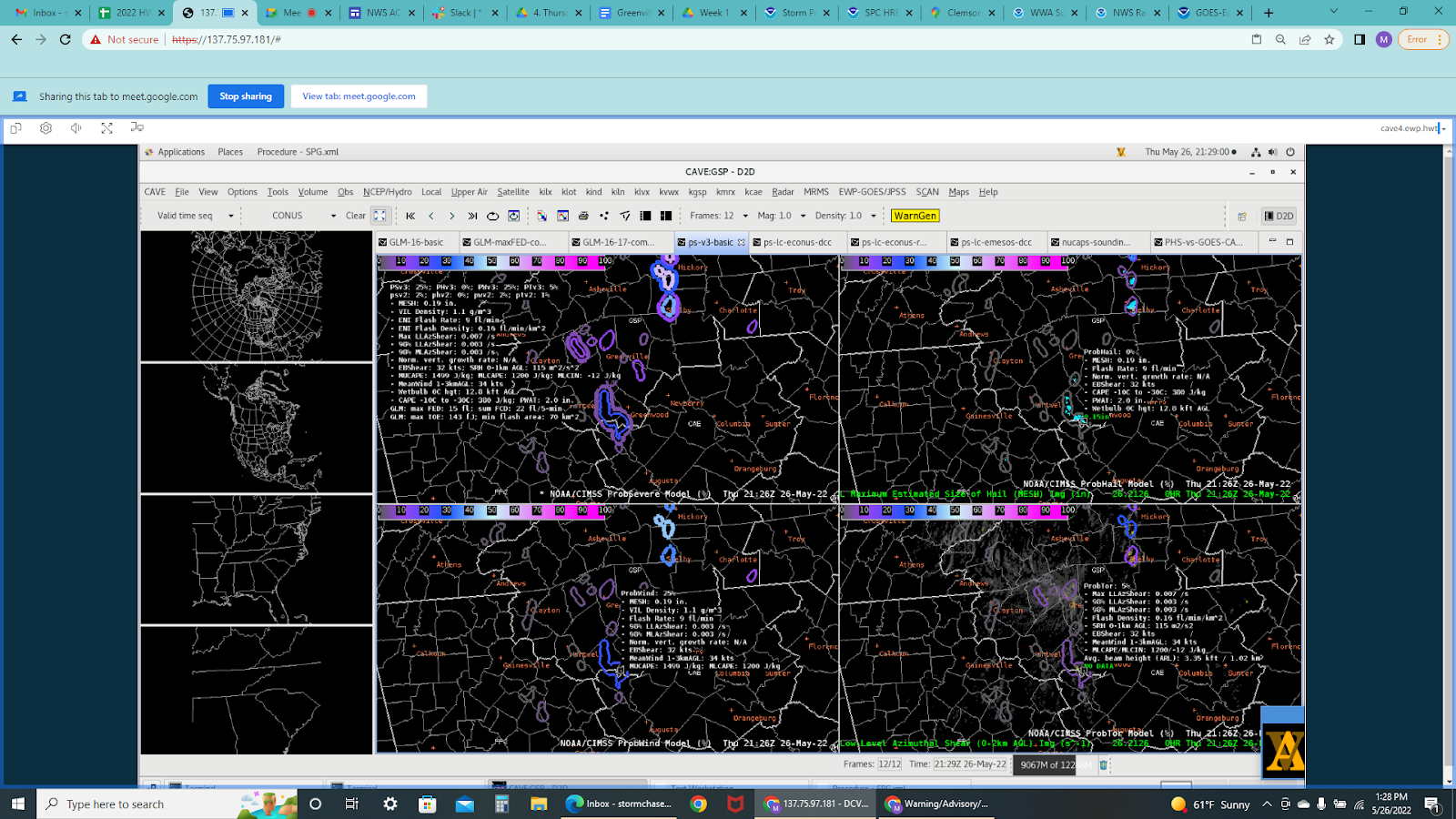
ProbSevere3: Low probability of severe weather, but sufficient enough for storm warning operations and convective maintenance situational awareness.

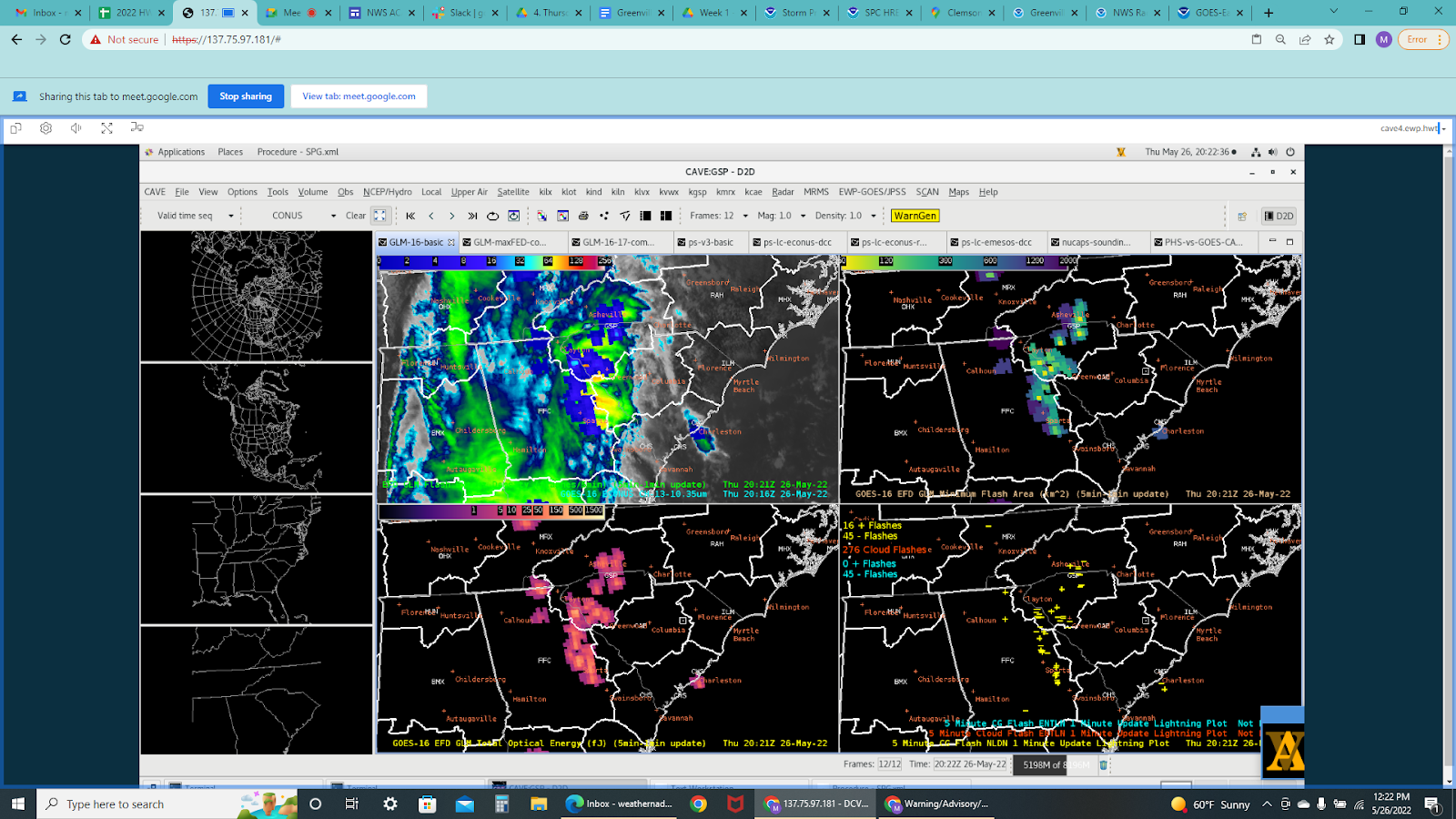
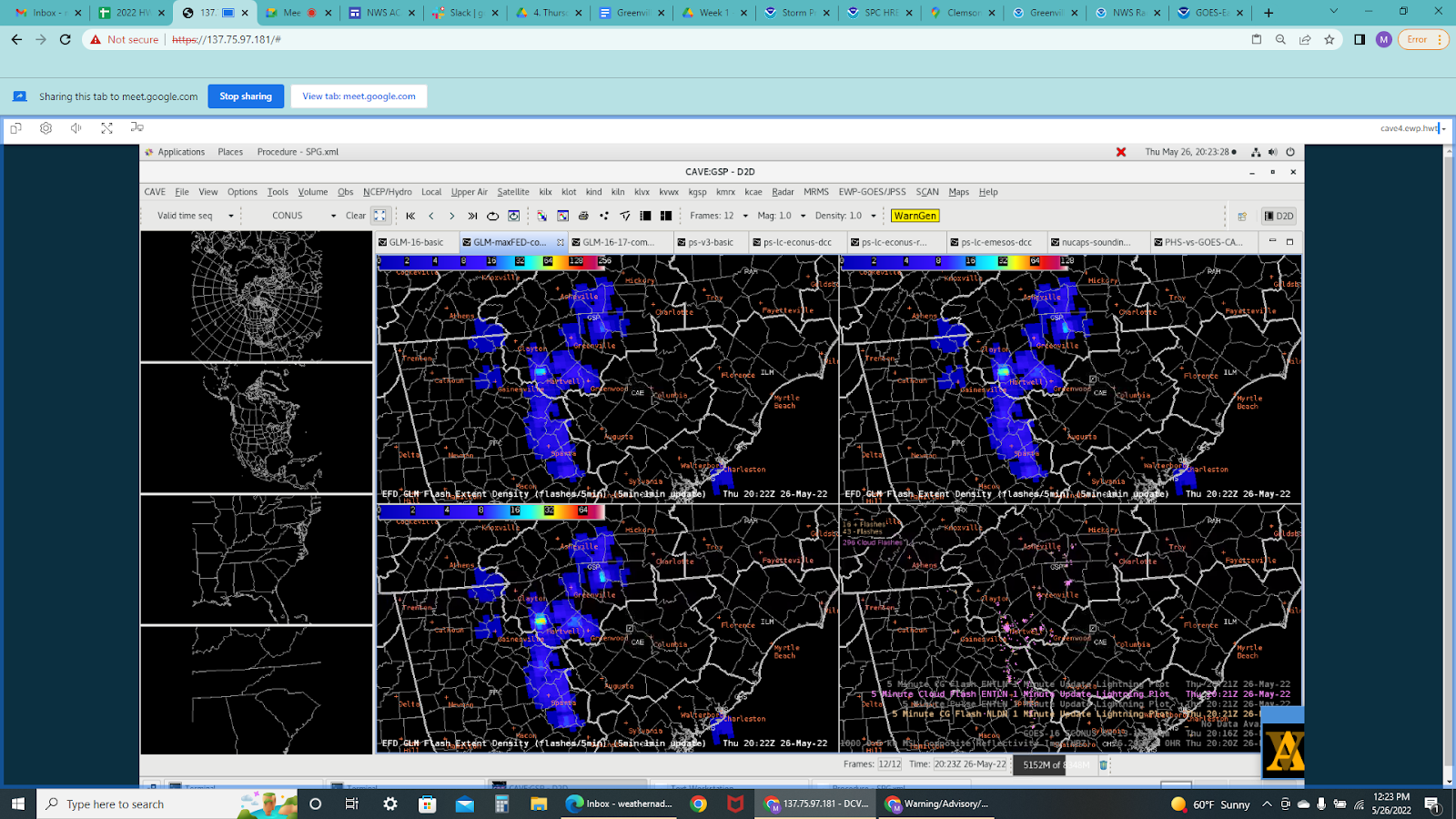
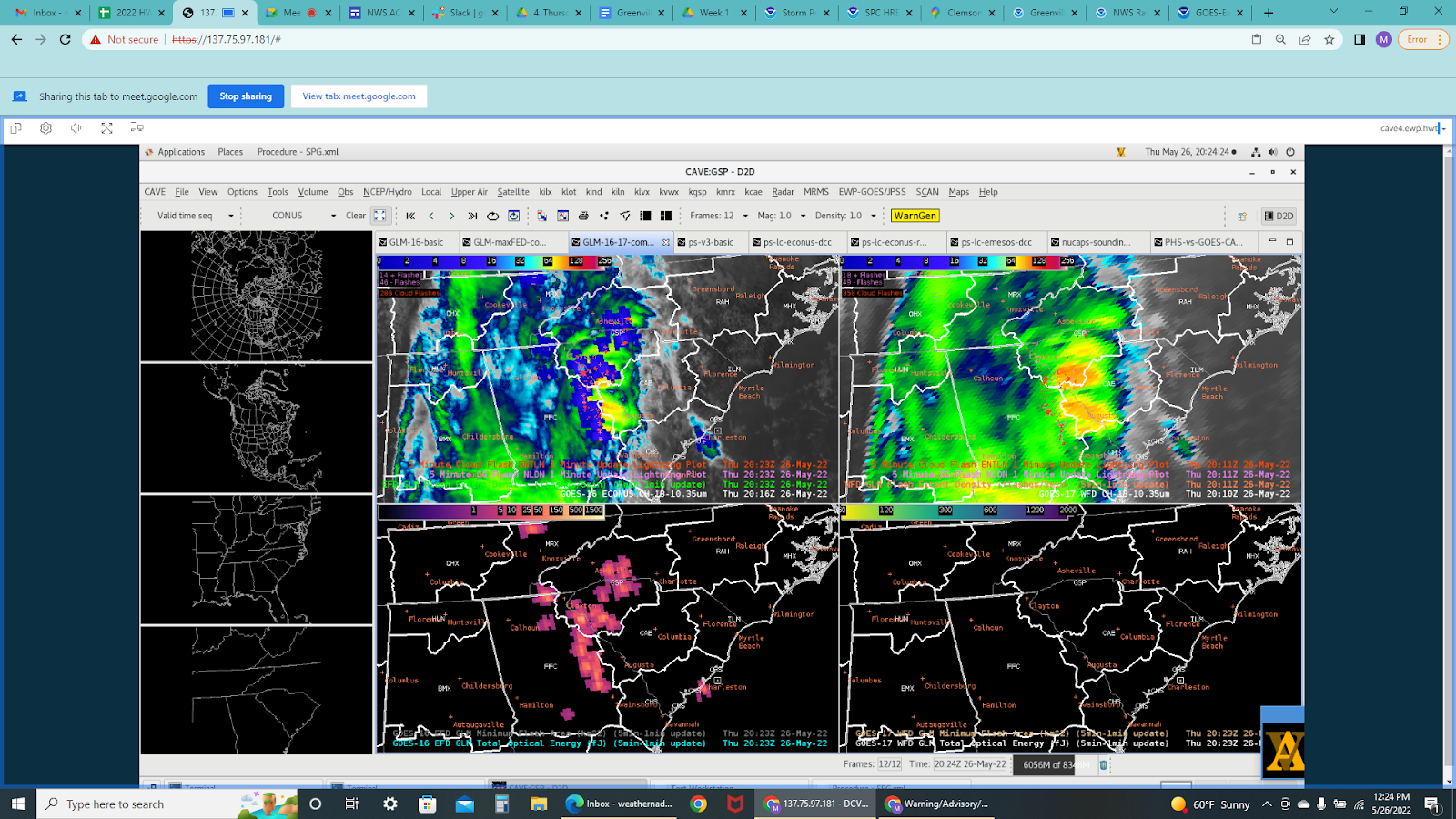
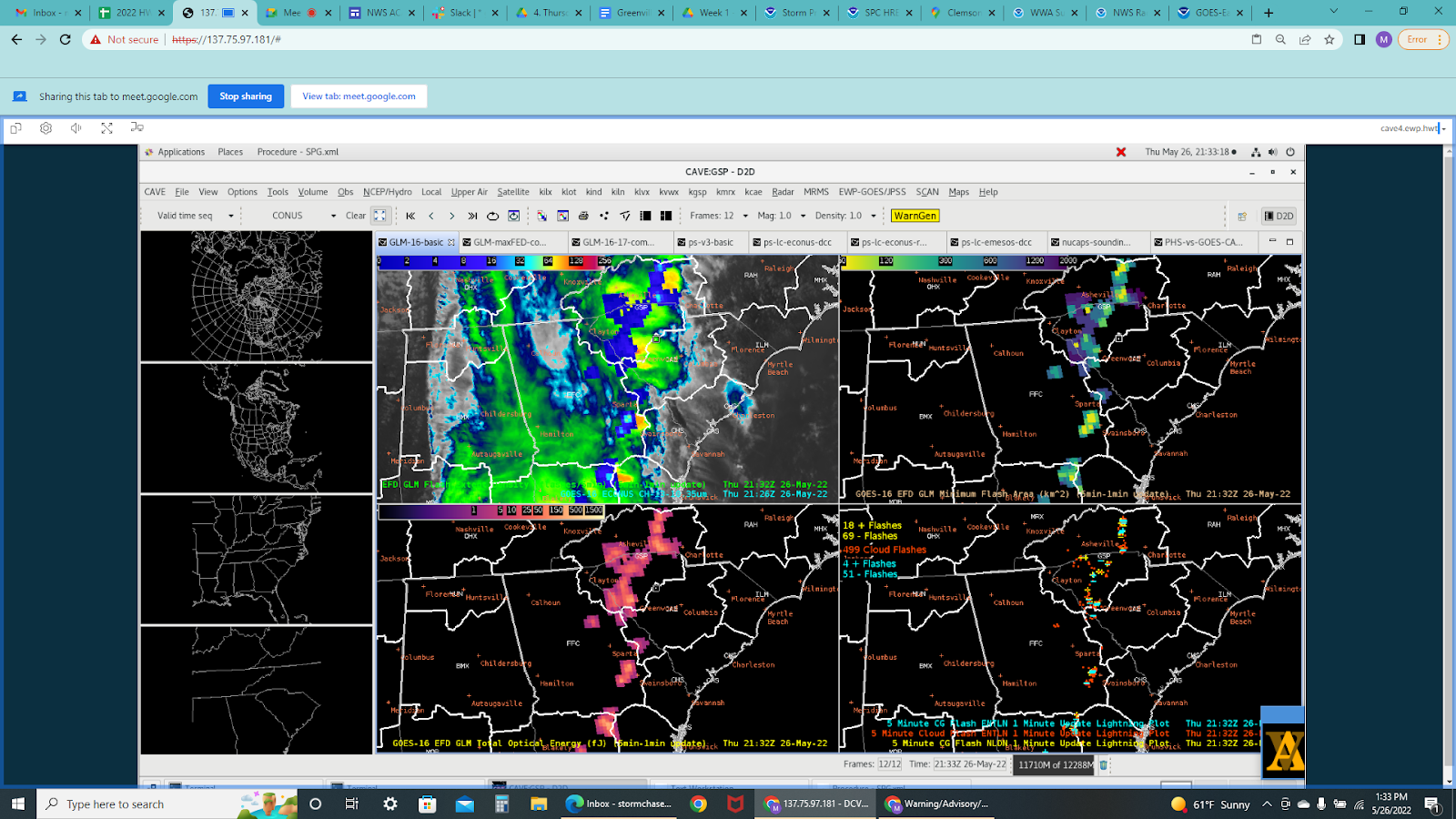
GLM Basic – Helped with operations as well as DSS.

GLM

GLM

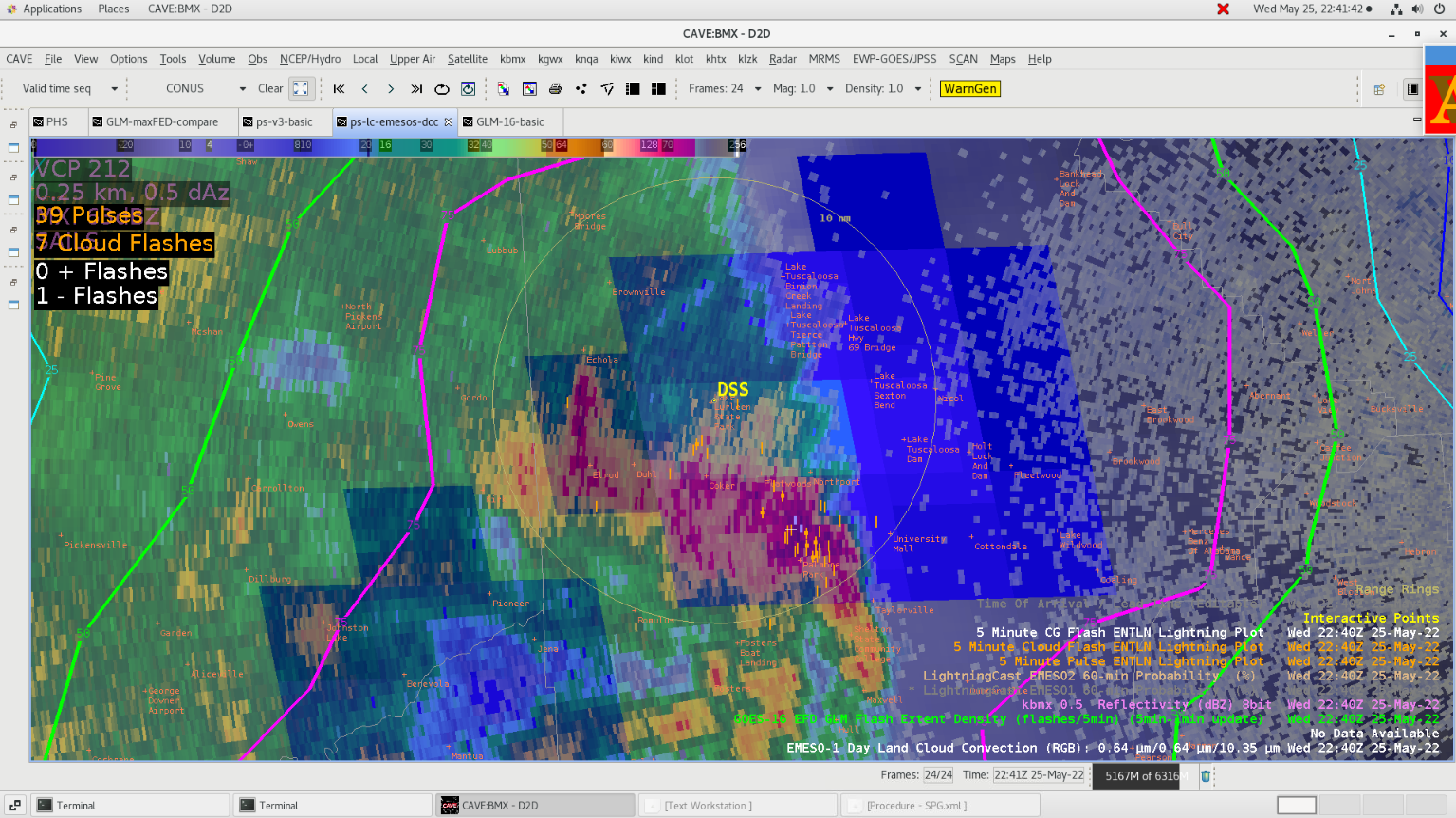
Lightning Cast overlaid with satellite was helpful for enough lead time and confidence.

Lightning Cast overlaid with radar.

Lightning Cast overlaid with satellite.

Radar overlaid with Polygon Warnings issued throughout the day.

DSS update: A Flash Flood Warning was issued for Northwest South Carolina near Anderson county and remained in effect until 9:00 PM EDT.

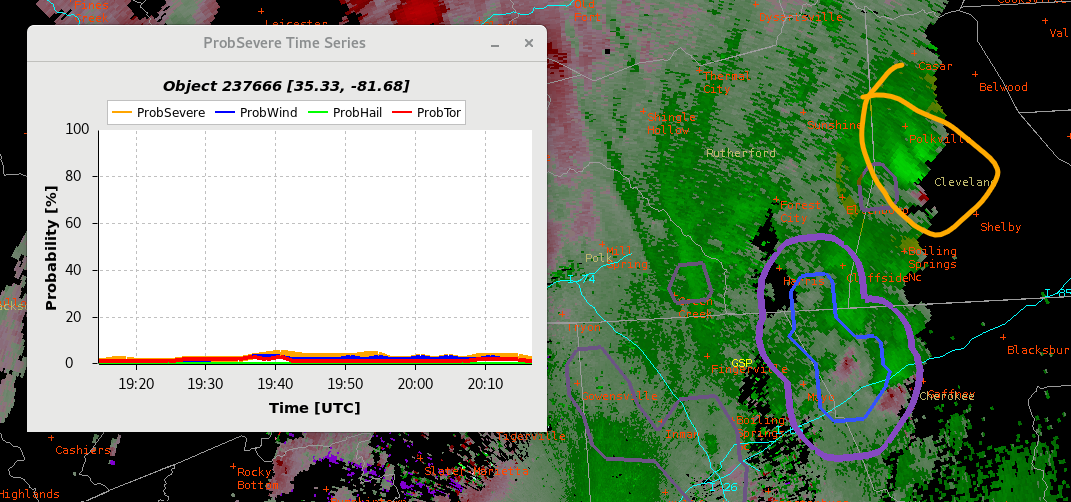
Latest update on ProbSevere3 and tracking any nearby storms.

Latest update on GLM.

SPC Mesoscale Discussion. Thunderstorms intensified across northeast GA into upstate SC, near and south of a warm front that slowly lifted northward toward western NC.

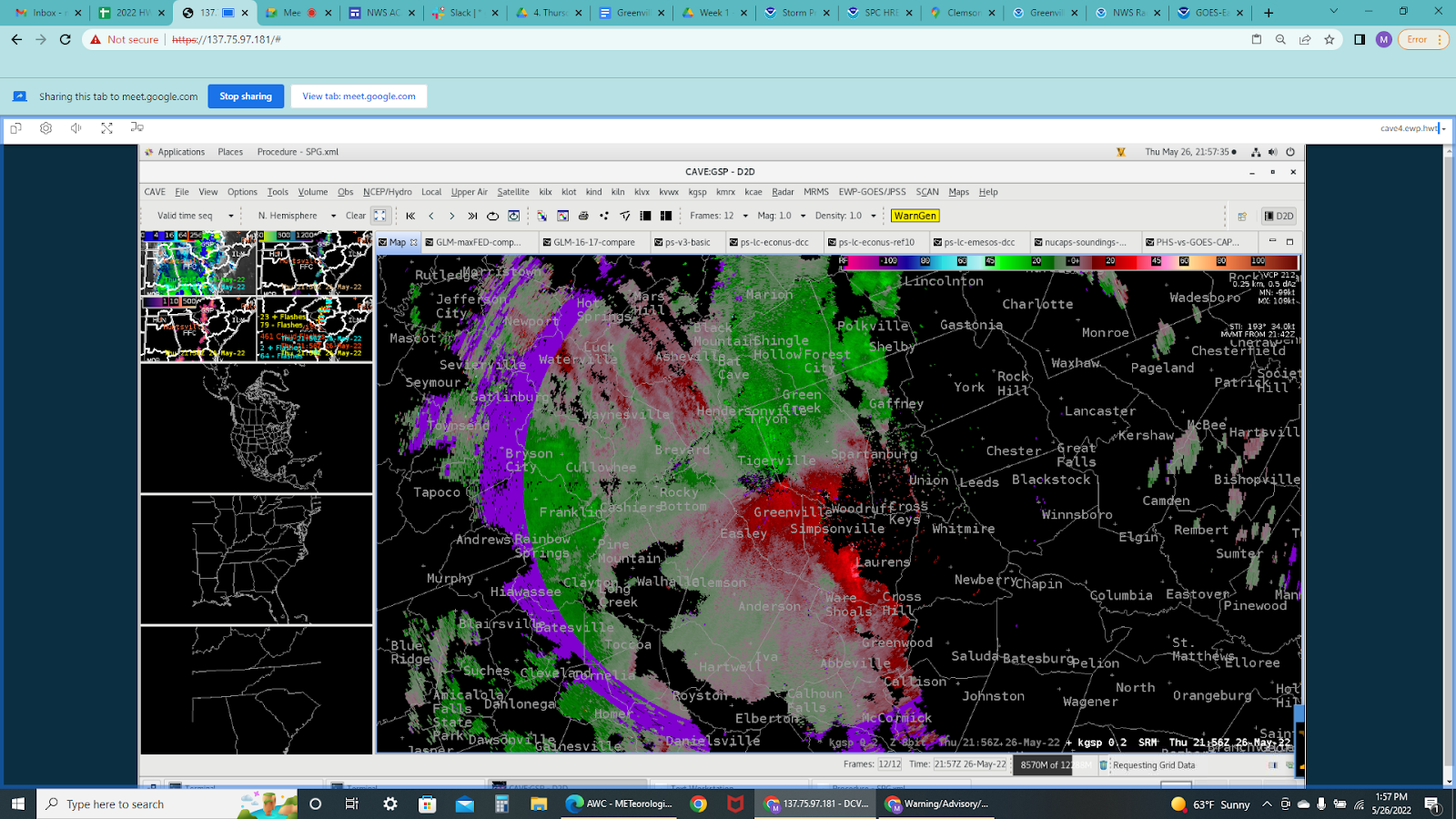
Storm velocity showing gate-to-gate or small rotational couplets near Ware Shoals and Spartanburg.

Vortex Power

Monitoring convection in Louisville, KY CWA

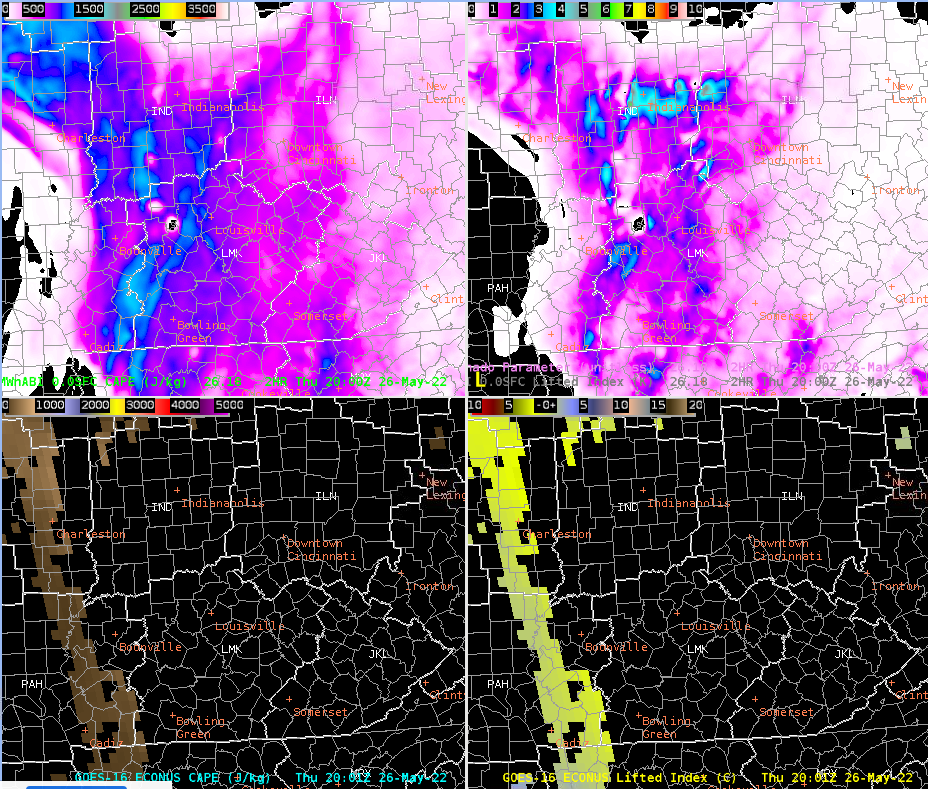
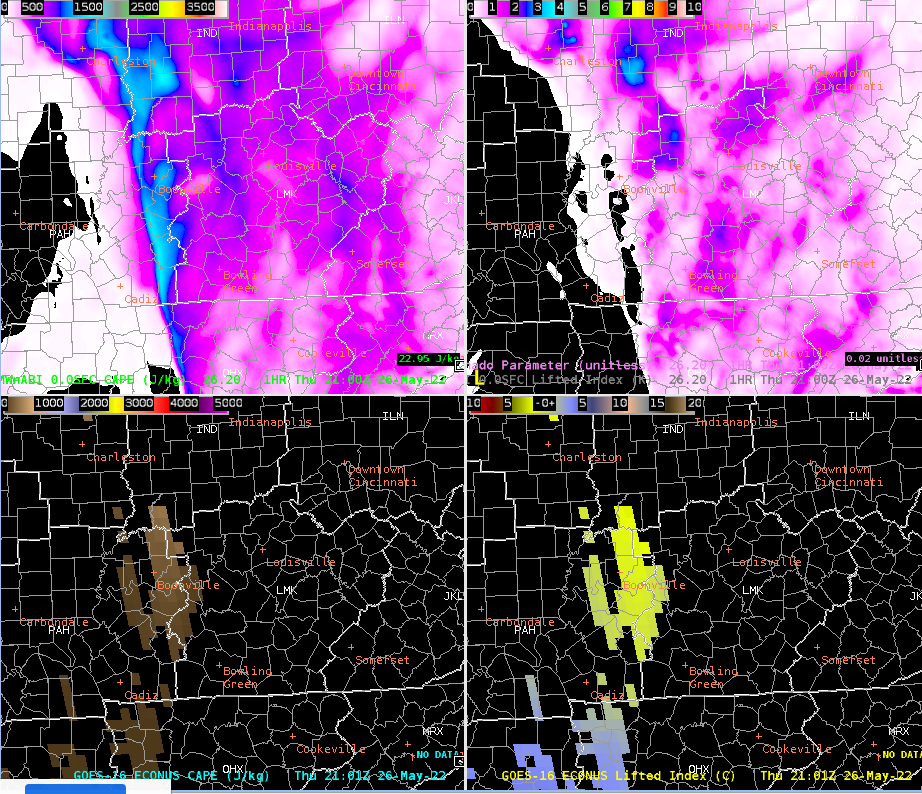
After an initial batch of rain and embedded storms that are continuing to move across the easernt half of the LMK forecast area, there is a narrow corridor of partial clearing, behind which another band of convection is forming. It is somewhat apparent in the PHS fields (both CAPE and  STP) that there is better destabilization across western portions of the CWA under partial clearing.

Top left: PHS modeled CAPE at 20z. Top right: PHS moceled STP. Bottom left: GOES CAPE 20Z. Bottom right: GOES LI 20Z.

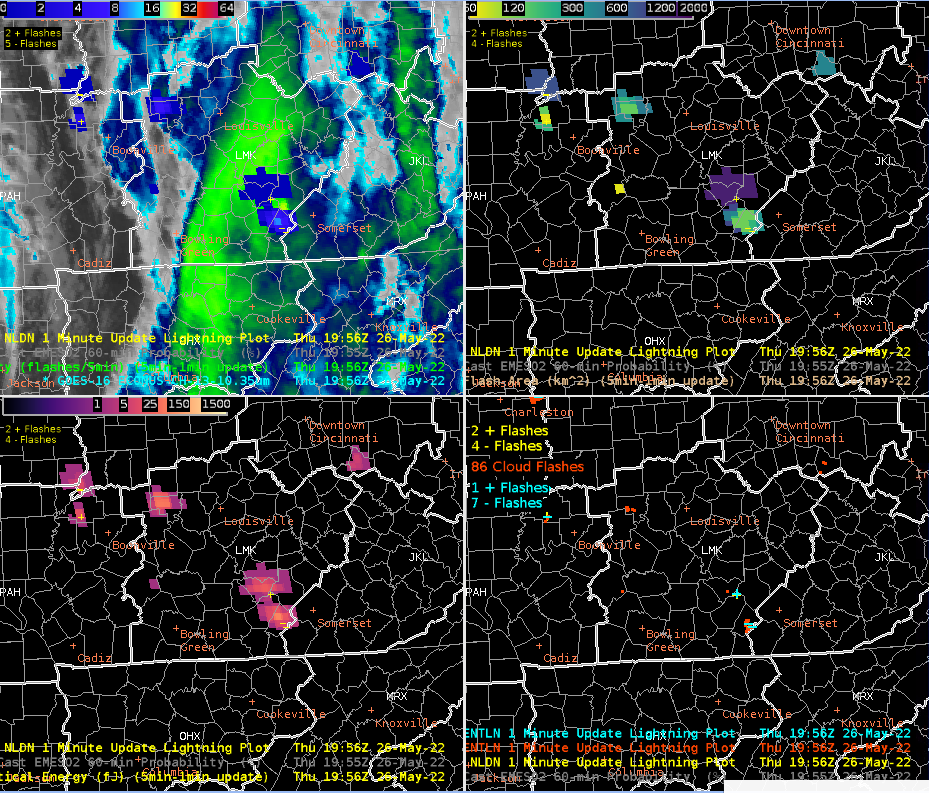
By 20Z, had issued a significant weather advisory for a cell in the northwestern and portion of the forecast area. ProbSevere began spiking, and GLM FED picked up while MFW decreased, indicating strengthening updrafts. Within the next 20 minutes, cells in the southeastern forecast area began exhibiting similar behavior, and I issued another advisory for those.

0.5 degree base reflectivity at 20Z overlaid with probSevere

4 panel GLM over IR at 20Z

ProbSevere was indicating more of a wind threat, and a secondary threat from hail with MESH up to a half an inch. Why did I not go severe? Base velocity was decent, up to 30kts on the 0.5deg tilt. Base reflectivity up to 50dbz was only apparent up through around 18kft. NUCAPS soundings from earlier in the day, courtesy of metop C, indicated a freezing level around 11kft, so I would believe small hail.

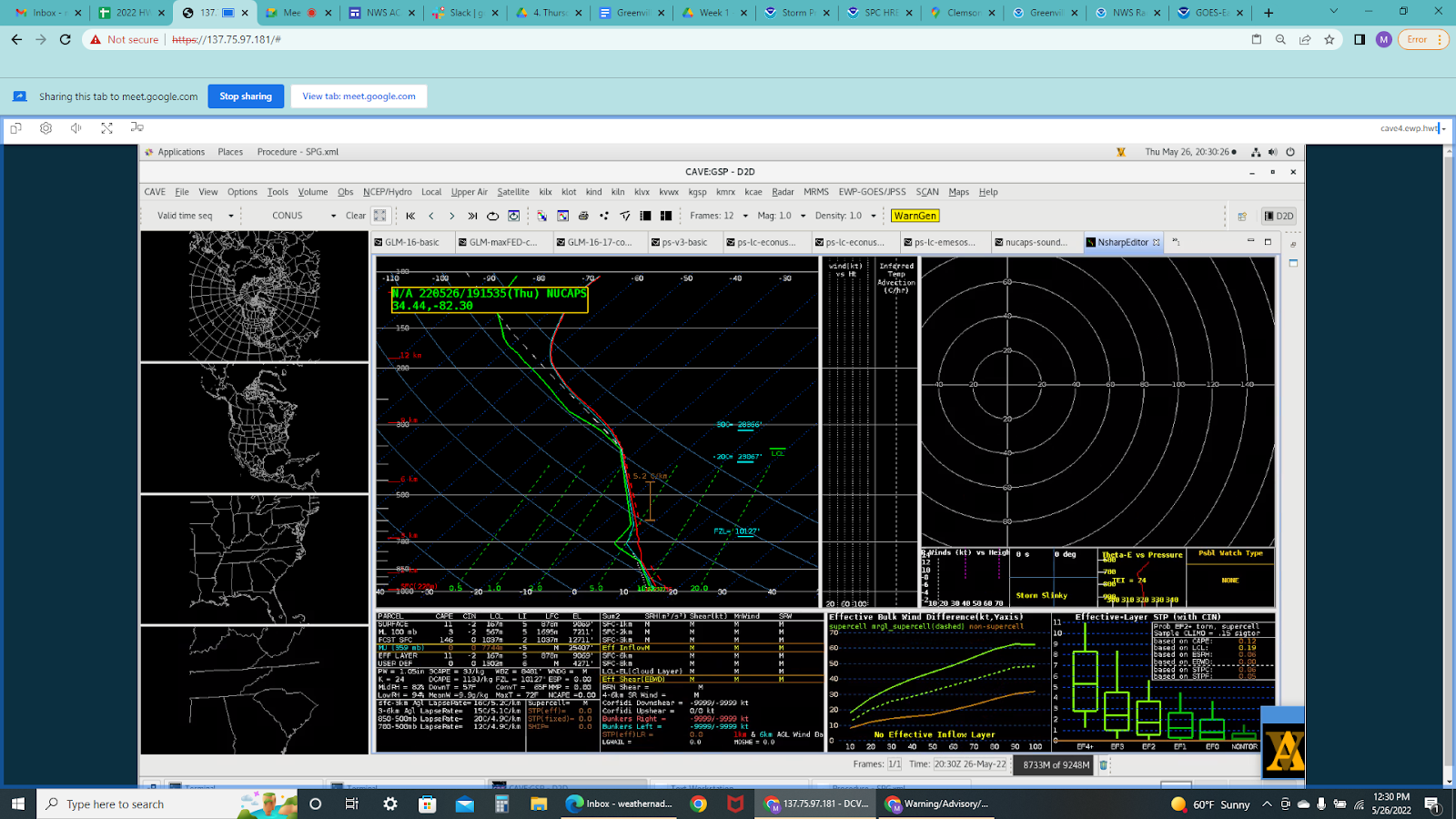
Mid morning NUCAPS sounding over central

By 2130Z, lingering activity is pretty much stratiform with just some embedded storms. Examining Day Cloud Phase Distinction (DCPD), and instability fields courtesy of PHS, we might figure out why. DCPD is indicating thick cloud cover over much of the eastern two thirds of the CWA. Meanwhile, CAPE and STP remain maximized closer to the western CWA boundary, under the area of clearing skies.

21Z DCPD

PHS 21Z modeled CAPE, STP (top) and GOES CAPE, LI (bottom)

19Z NUCAPS soundings (from the NOAA20 overpass) were largely unavailable over the CWA due to cloud cover.

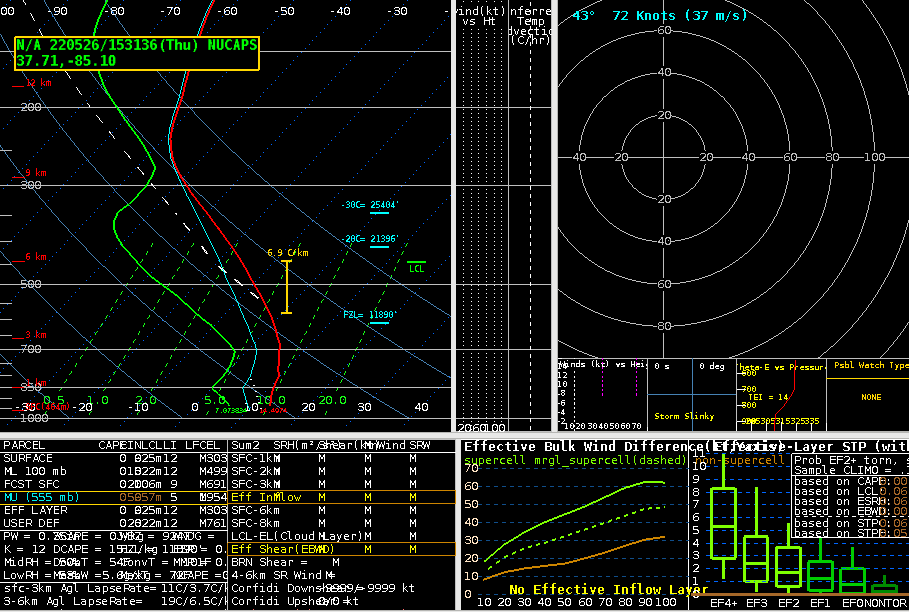
A  Modified NUCAPS sounding out of SW KY indicates quite a bit of dry air at the midlevels, but also decent lapse rates and as much as 1500 to 2000j/kg of CAPE

For comparison, the regular, non-modified NUCAP profile at the same location was far less bullish with the instability.

A look at base reflectivity at 2130 indicates that trend towards mainly stratiform rain with embedded storms. In the eastern CWA, ProbSevere is still pretty enthusiastic about an exiting line of convection with probability ranging as high as 20 to 30%  for wind and even up to 20% for tornadoes. An examination of base velocity did indicate some inflow notches ahead of the line.

Base reflectivity with probSevere around 2130Z

However, with GLM FED remaining steady, and MFA on the larger side, the confidence in any real severe weather is waning.

– PoppyTheSmooch

ILX Ramblings

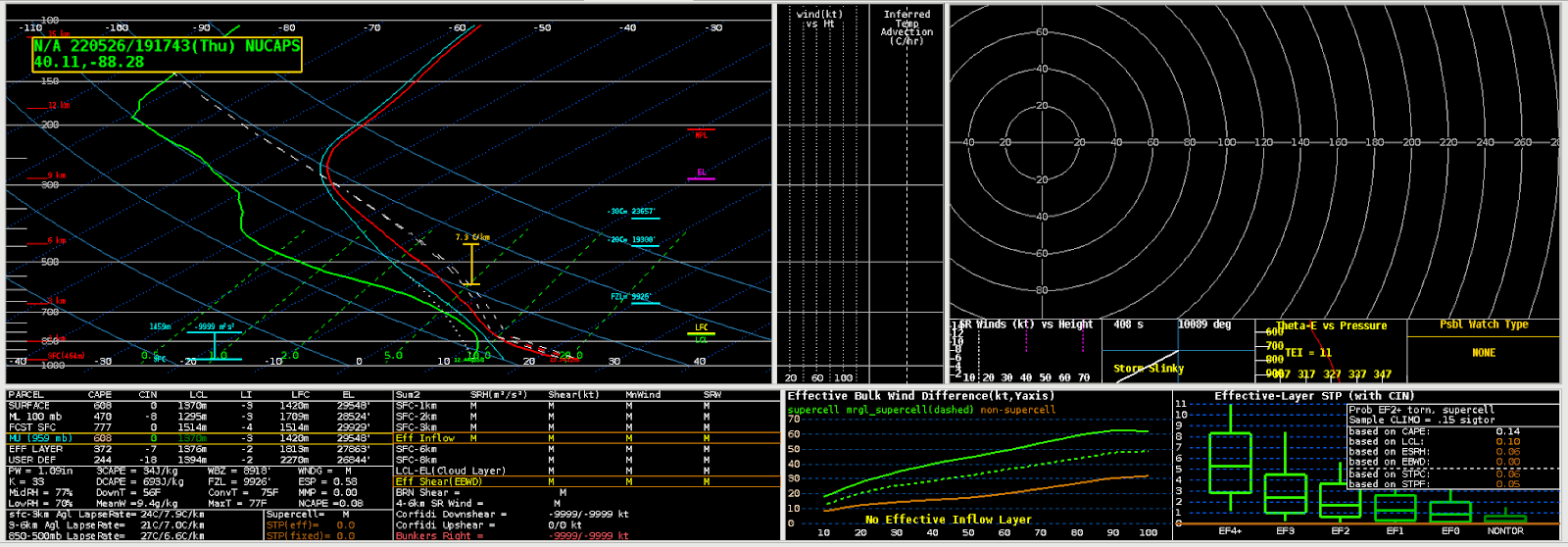
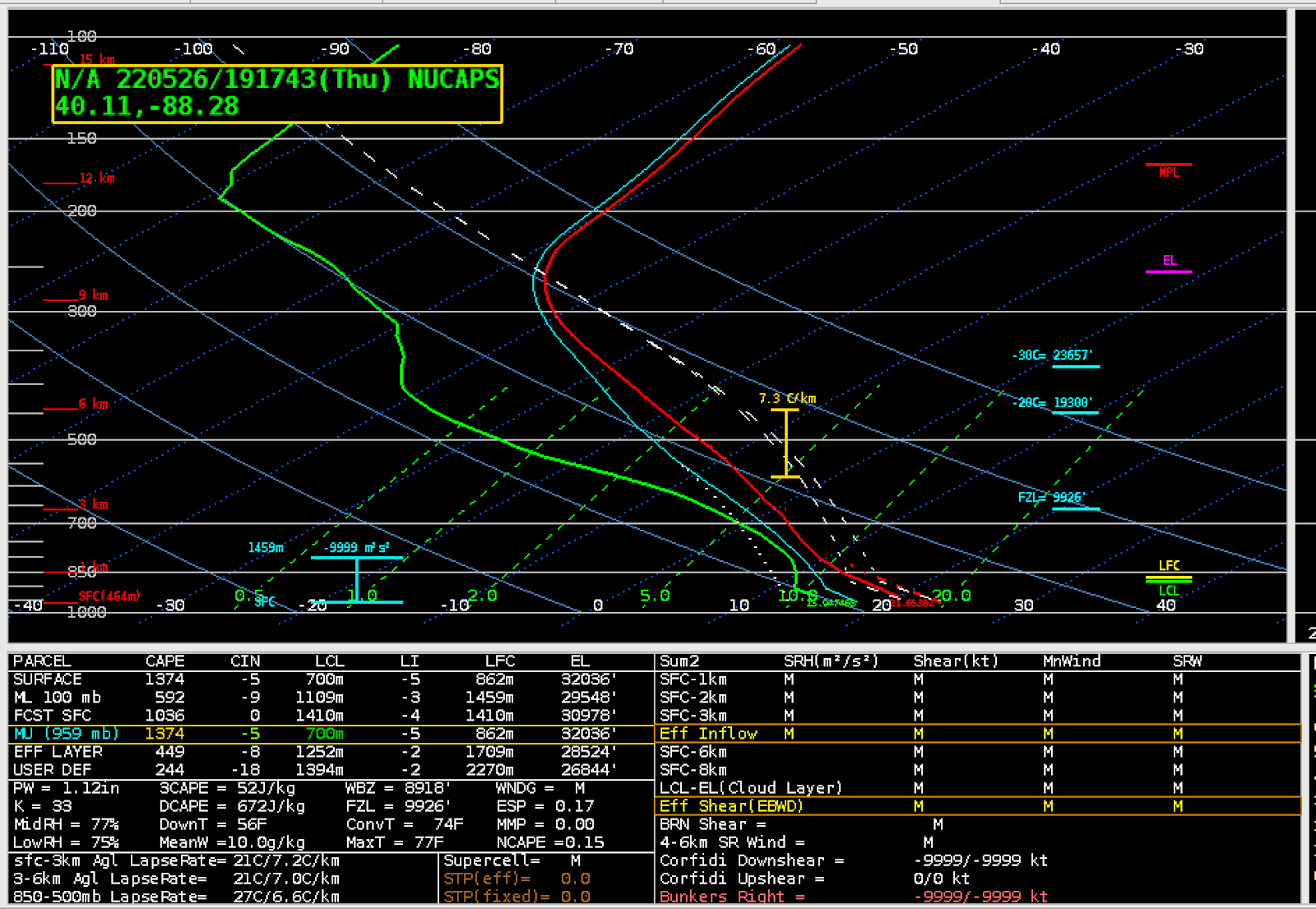
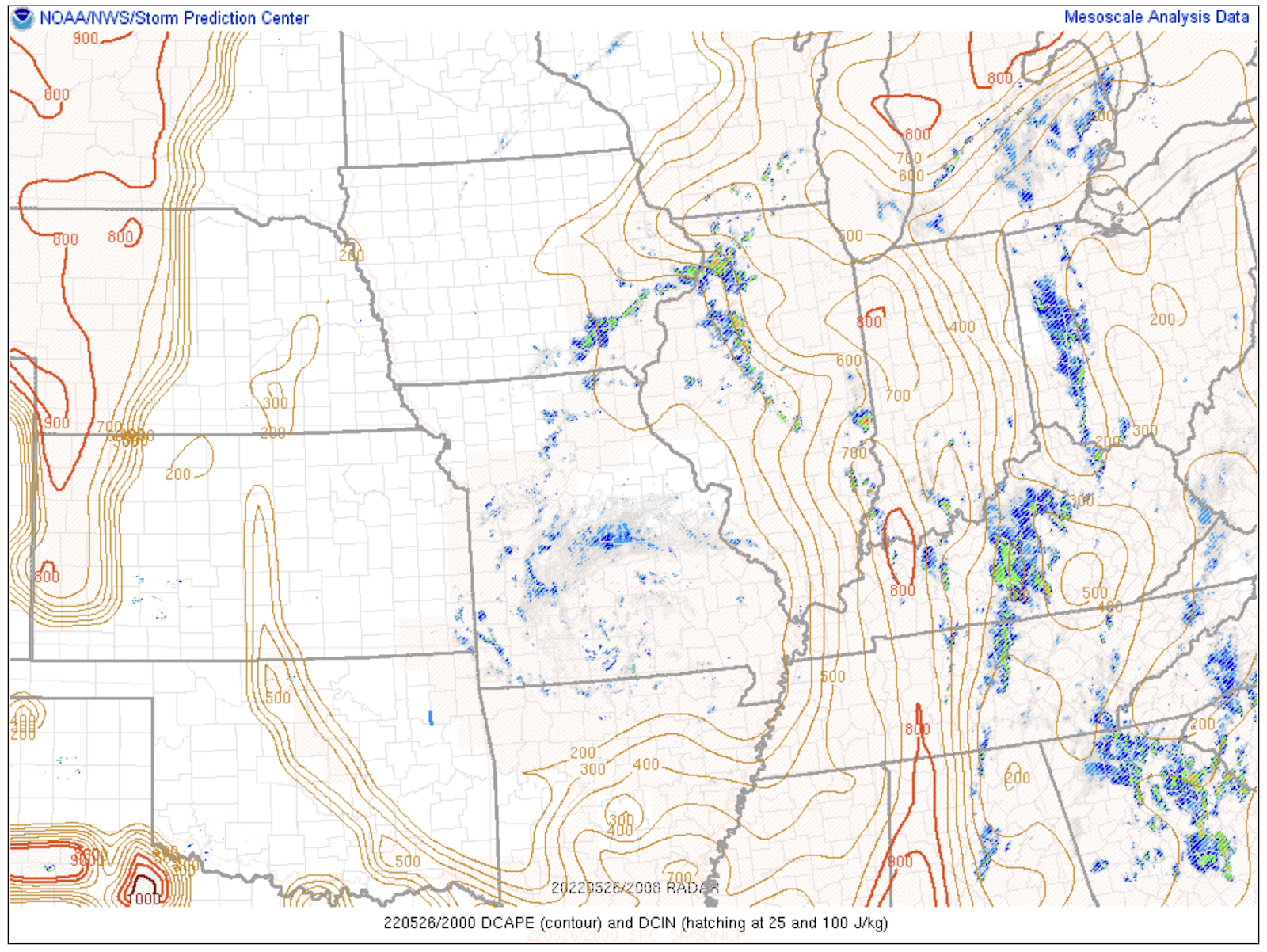
A comparison of NUCAPS at 19Z with observed/analysis products from SPC showed good comparison for both modified and unmodified data. Below shows the unmodified NUCAPS sounding that was “green” over the north-central portion of the ILX CWA. The MLCAPE was around 500 J/kg, with DCAPE around 690 J/kg, freezing levels just below 10,000 feet, and PW’s around 1.1 inches.

A modified NUCAPS sounding for the same location showed an uptick in MLCAPE to around 600 J/kg, along with similar PW’s, DCAPE and freezing level.

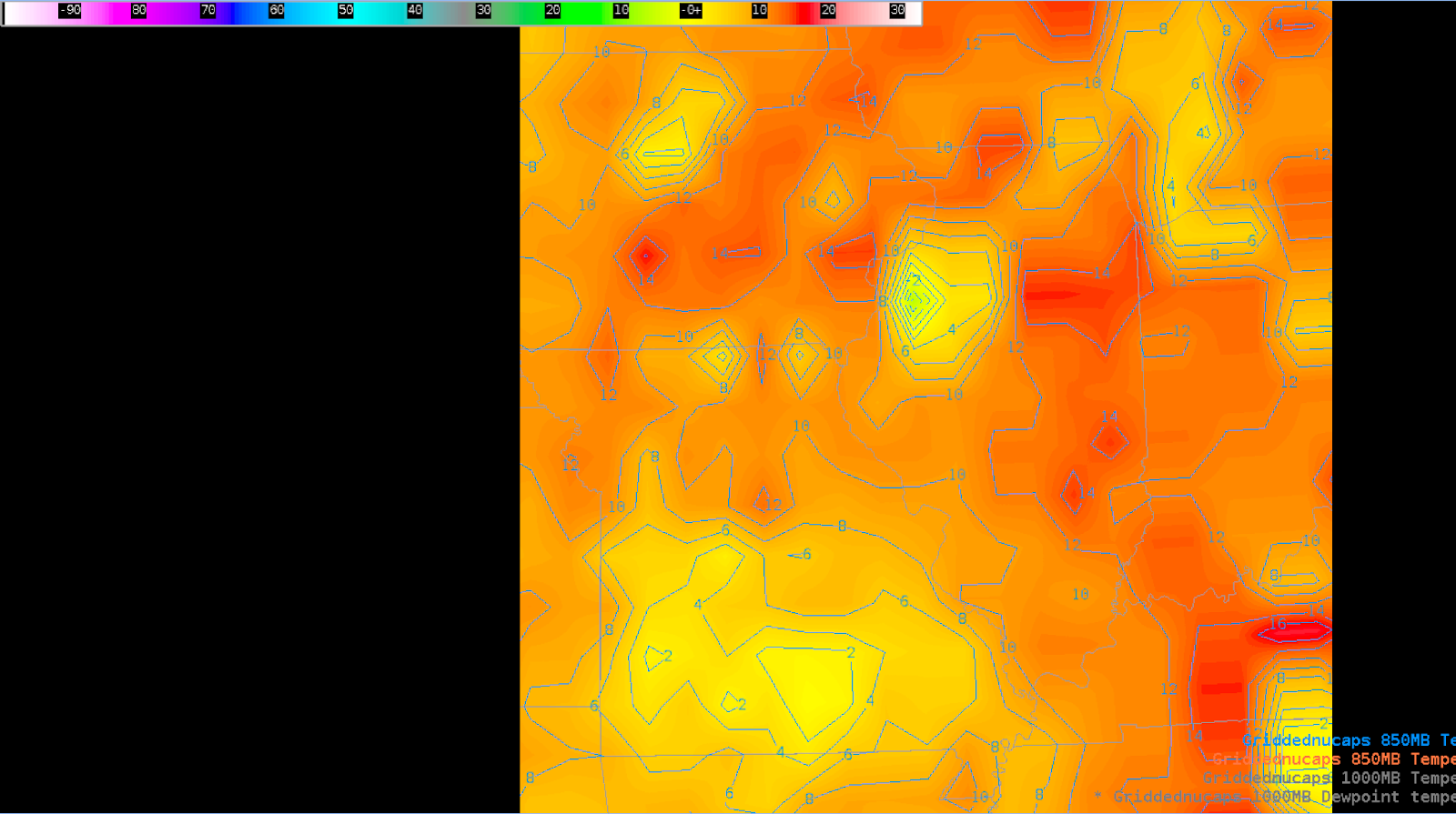
A comparison with SPC mesoanalysis at 20Z showed very comparable PW values, between 1.1 to 1.2 inches over north-central IL, and freezing levels between 10 to 11 kft. As for MLCAPE, it appeared that for both modified and unmodified NUCAPS, the observed was higher than NUCAPS, around 1000-1500 J/kg, perhaps not having a high enough surface dewpoint. As for 850 mb temperatures, they were comparable to those observed, in the 12-14 degC range. DCAPE was also comparable in NUCAPS with what the SPC mesoanalysis page was showing, between 600-700 J/kg.

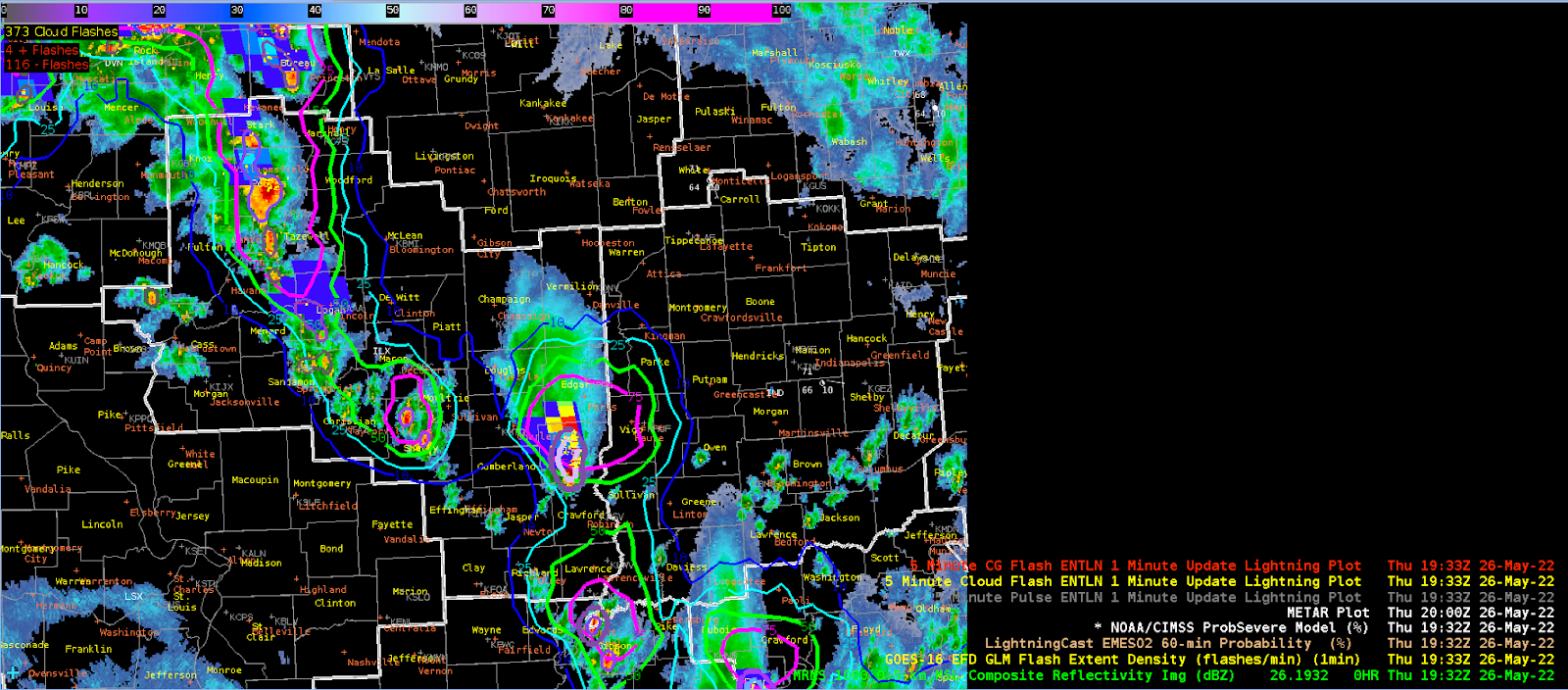
With regards to lightningCAST, ProbSevere, and GLM, around 1932Z, once again the LightningCast was showing good lead time for areas downstream of storms. The main cell at this time I was watching was in the southeast Part of our CWA, which had a nice contour of 75% to the north and east of that cell extending well north of the storm core.

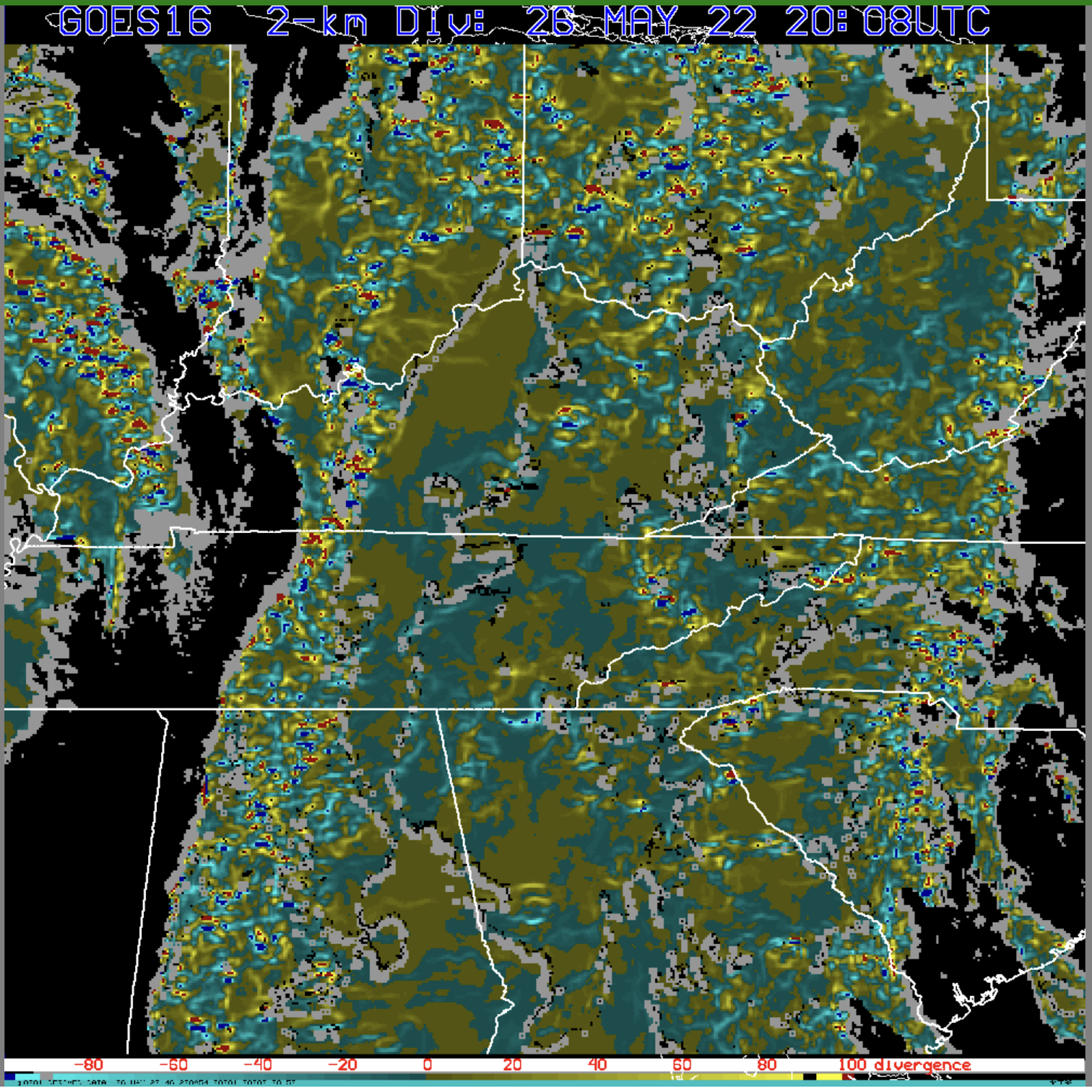
At 20Z, the Optical Flow divergence field appeared to match up well with observed convection at this time. It thus showed quite well with the shear field.

ProbSevere’s time series graph continues to show added value, allowing the forecaster to see the trend in a storm’s severity and probability of severe potential. This image was at 20:40Z.

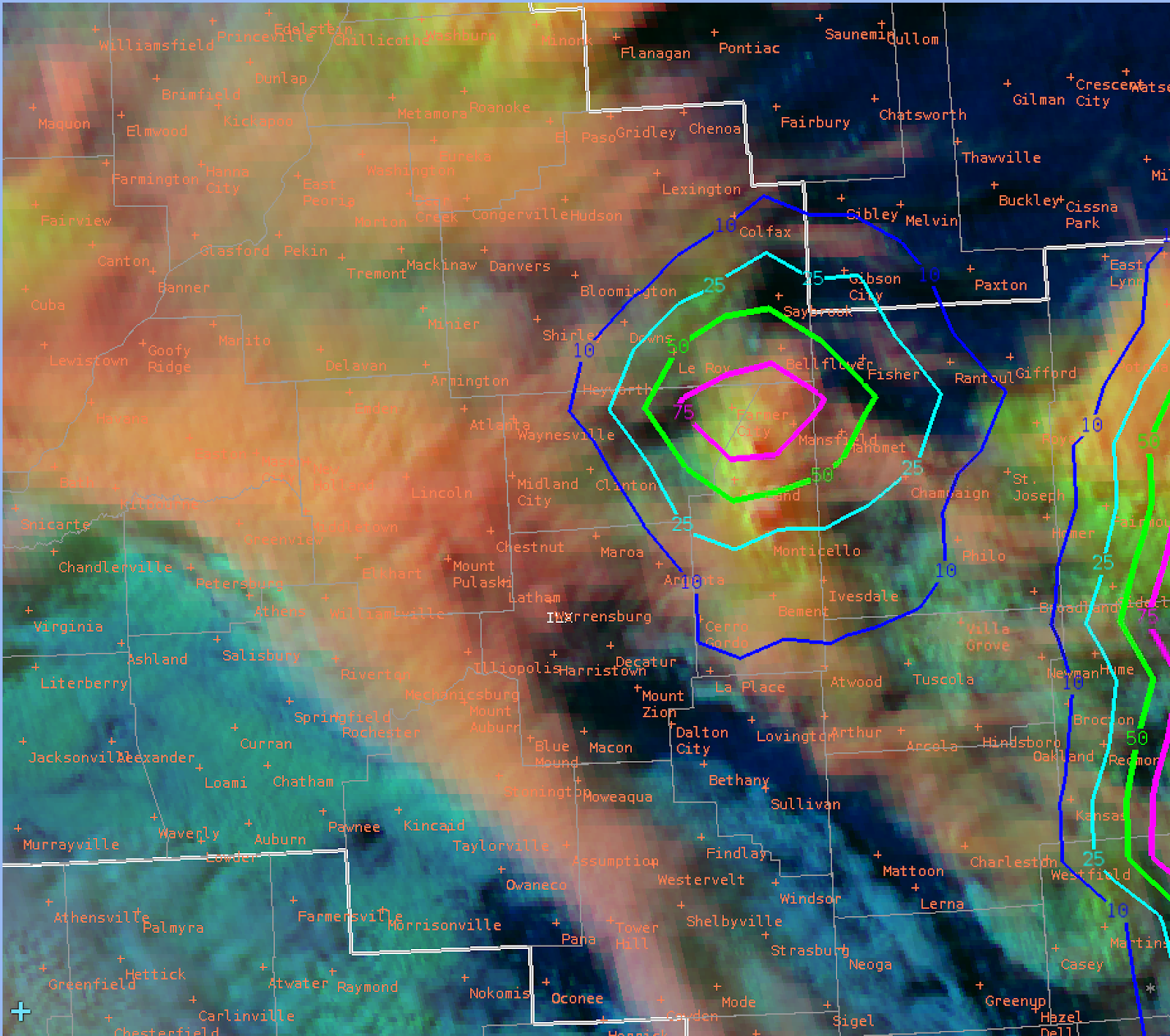
Around 21Z, I noticed a jump in GLM FED for the area of storms in the northwest part of the CWA. Alongside this, the GLM TOE also increased, along with a decrease in MFA with the same storm cell. This area corresponded with increased flash rates in the EarthNetworks. I modified the GLM FED scale to 20-25 as a maximum to see the activity better, as well as lowering TOE to 50 as a maximum.

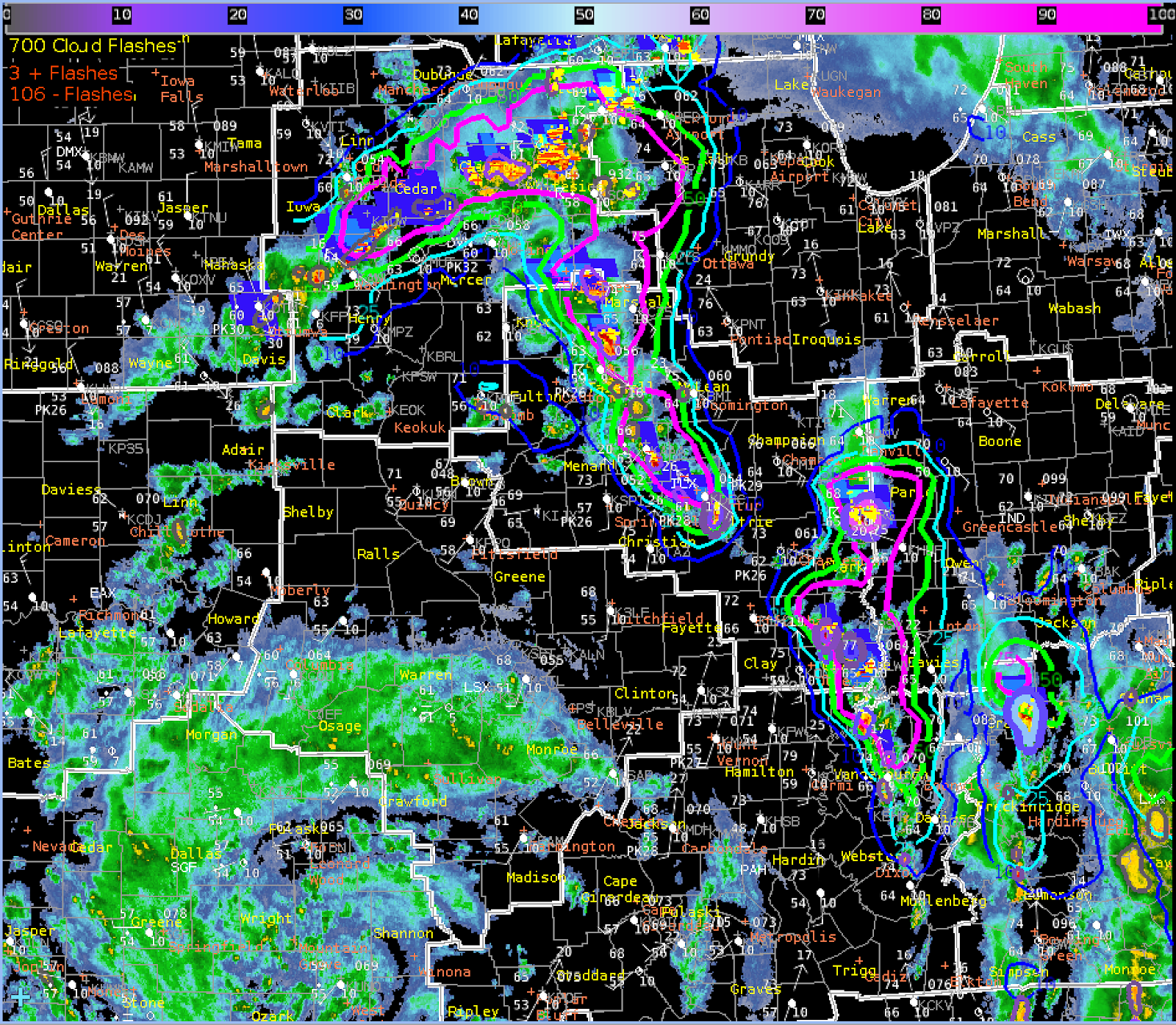
Around 22Z, the GLM TOE showed a good correlation with the 3 strongest storms based on dBZ and ProbSevere, one to the north, and two in the far southeast, bordering Indiana. For this display of TOE, I lowered the contours to a max of 50, which seemed to work well.

Around 22:12Z, the LightningCast showed an uptick in probabilities of 75% north of a cell that was starting to show towering CU on the day cloud phase. This was before GLM and ground-based radar showed uptick in lightning activity.

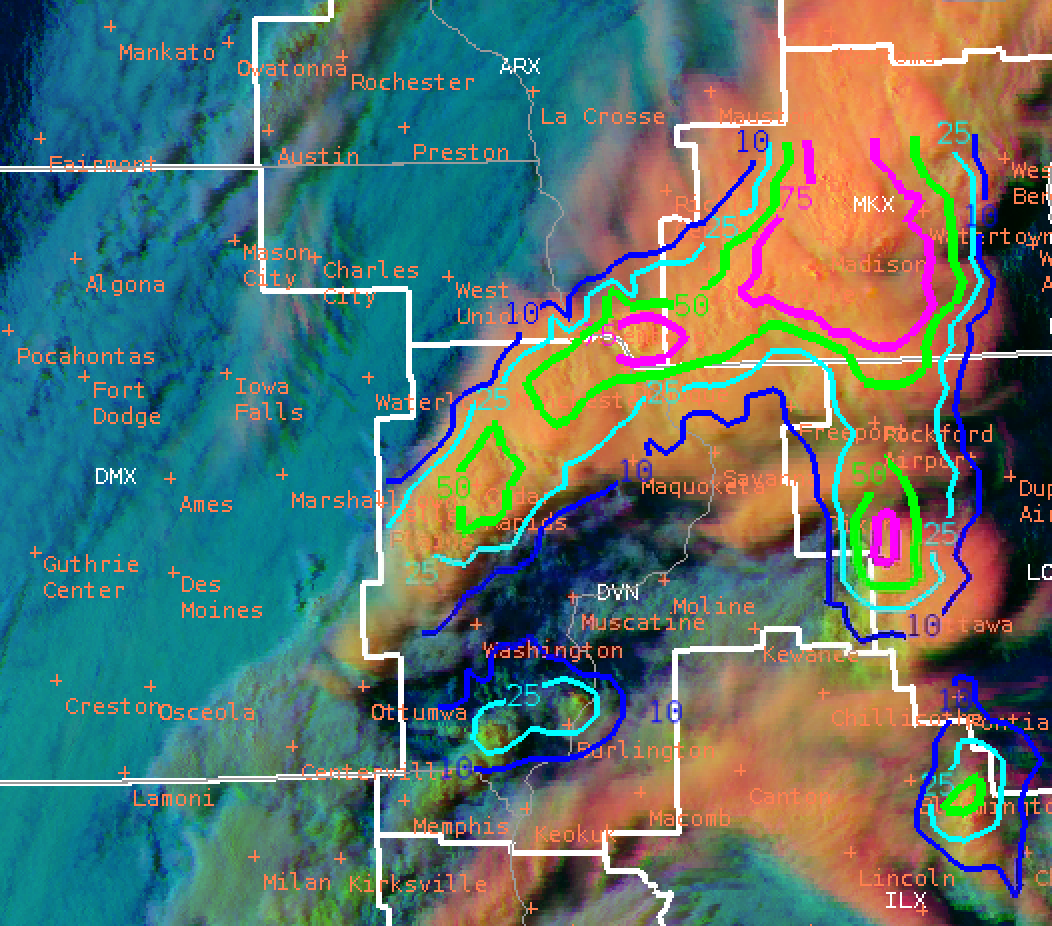
Are the edges of LightningCast contours related to the detection of GLM? See below image…The contours do not close off.

Snowfan

Overview of severe weather and products for GSP

An interesting day today. Initially it did not look super favorable for severe weather, with the primary threat being wind. In the end, there was some of that along with scattered hail, but weak tornadoes were the biggest issue.

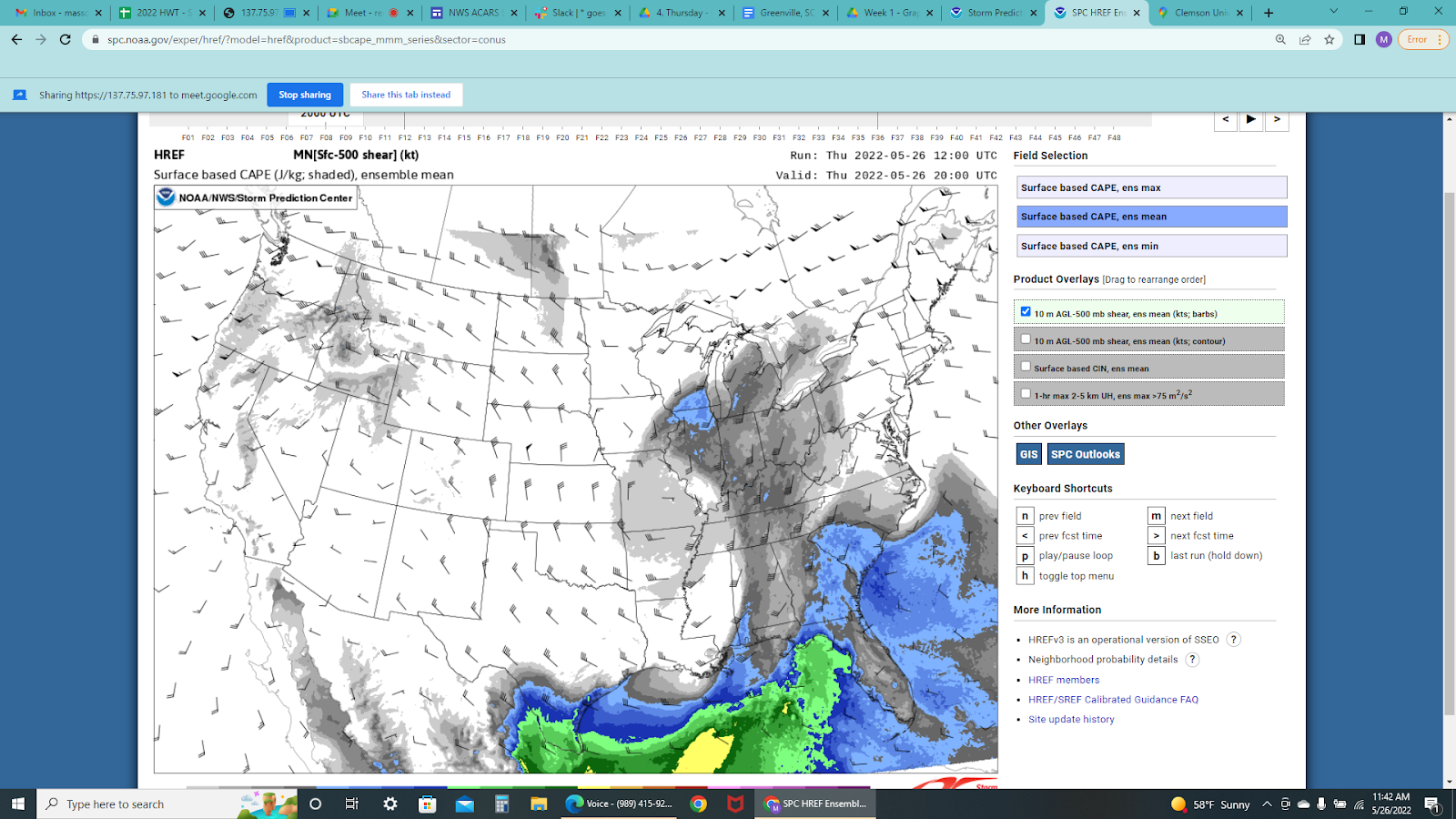
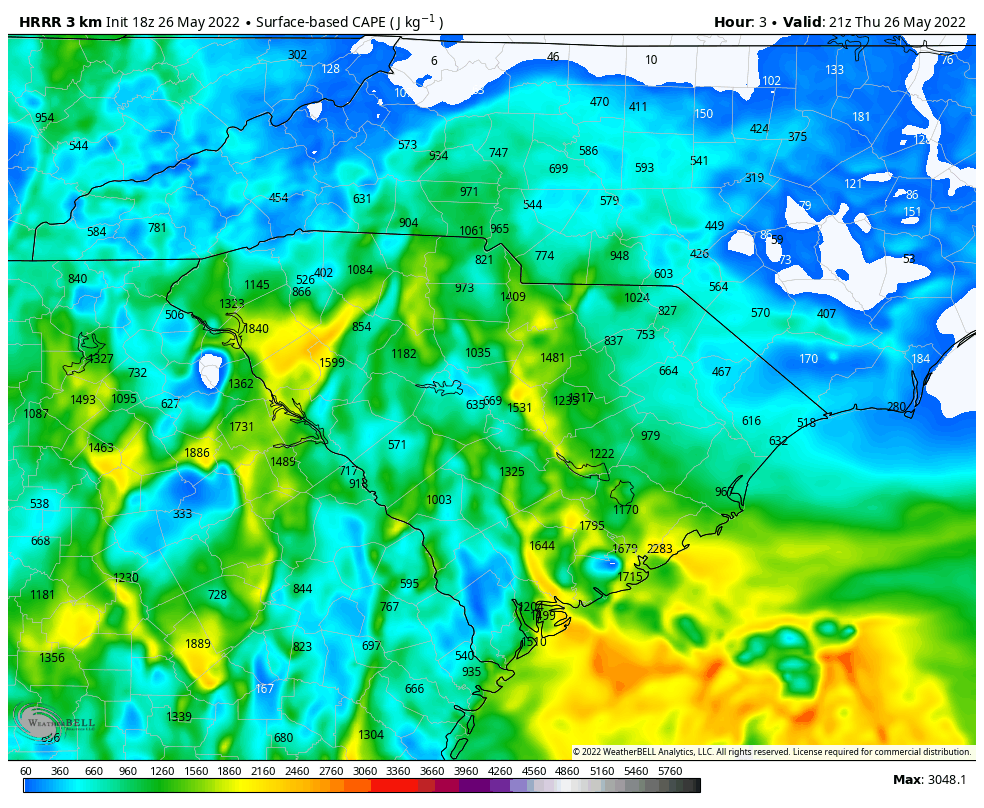
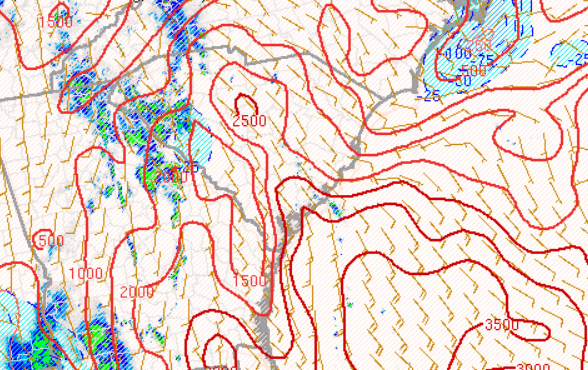
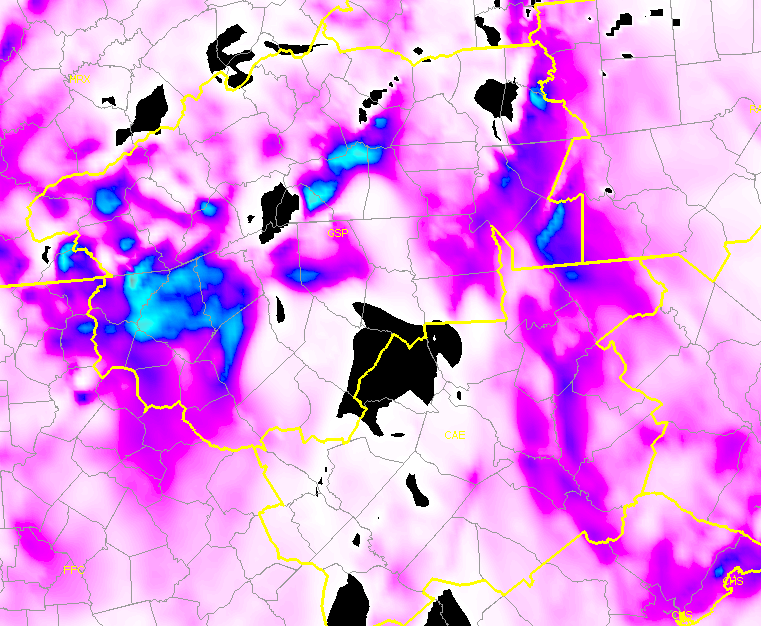
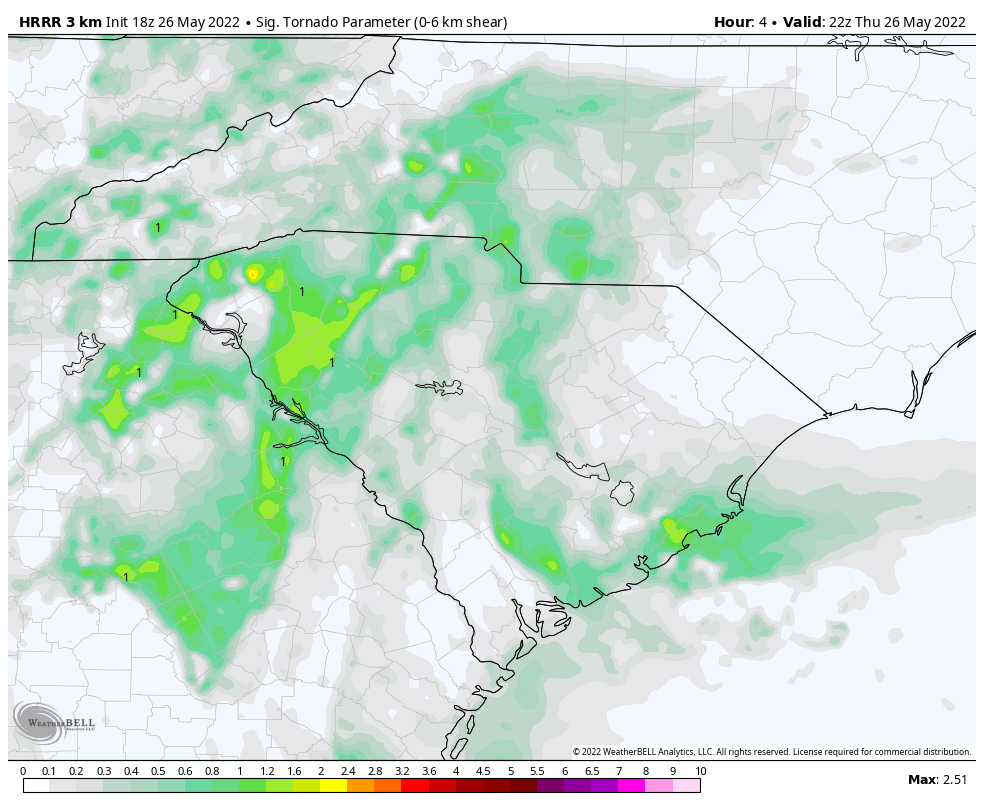
Lets start with some product evaluation. Here are screen shots in order for 21z and 22z. In each case the LHP is shown first, then HRRR, then SPC analysis. This is for CAPE at 21z and STP at 22Z.

22z

You’ll notice that the HRRR and PHS agreed well and had the right idea. The CAPE in the PHS was higher and closer to reality, but the locations were off. In the end the peak was in the middle of the CWA. Still, not bad. Similar obs can be made for STP.

Considering Prob Severe it seemed low on the tornado threat for most of the day but generally did pick up on the emerging tornado threats to a degree. Wind seemed to be running a little hot overall with only 1-2 reports but numerous storms showing decent wind probs.

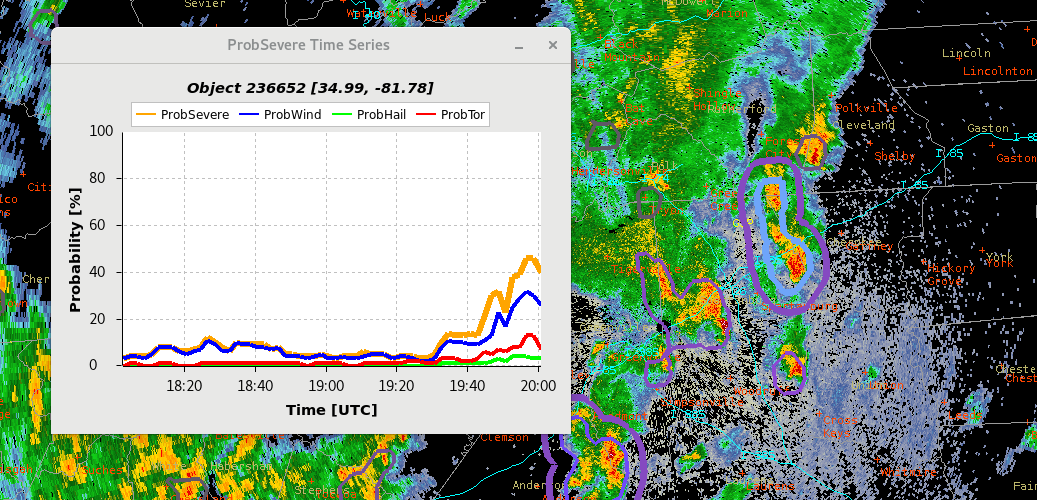
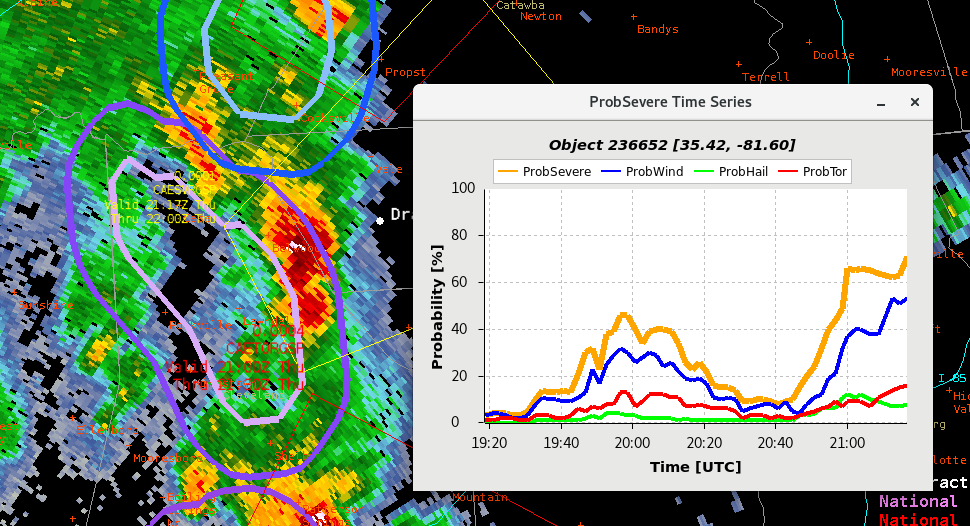
This shows a few of the Prob Severe time series for possible tornadoes that were warned in real life.  Day cloud phase and GLM were useful in seeing these emerging storms before they produced potential tornadoes.

This storm did eventually produce a wind report and had the highest prob wind all day.

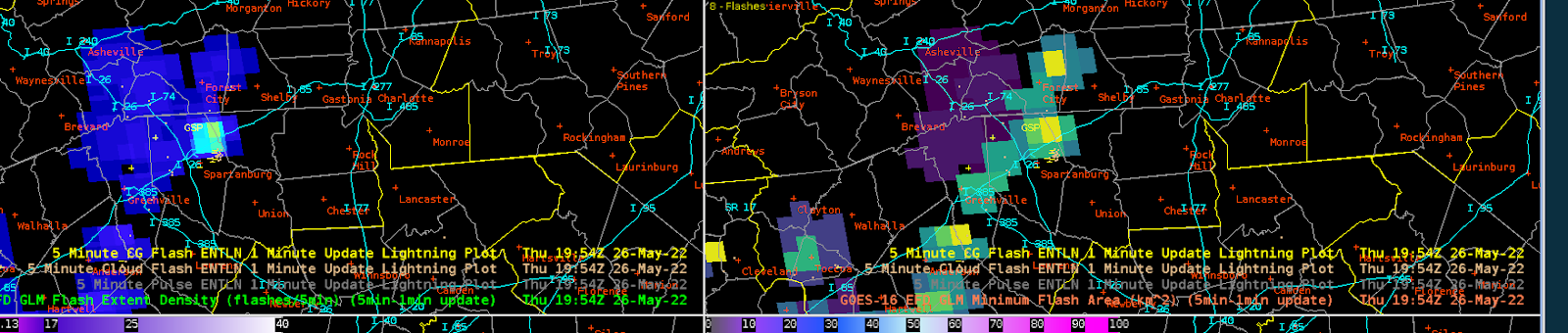
Here is a GLM example showing the min flash area alerting me to threats before FED was showing too much.

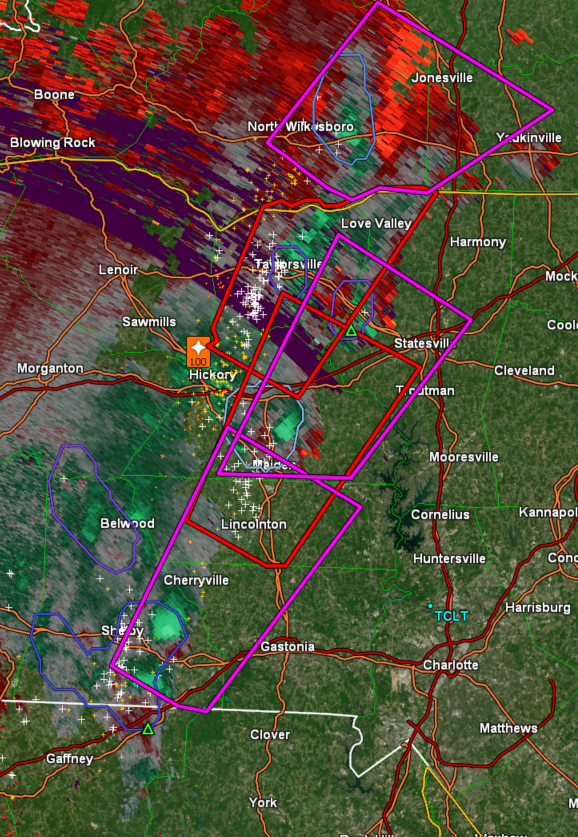
Lastly, it is interesting to consider why we had such a prolific number of weak (potential) tornadoes along the boundary in the middle of the state. It was not particularly impressive of a set up, but something about it was quite favorable in the end. See below with up to 4 circulations at one time. (Real warnings plotted)

Some Random Guy

DSS in the Birmingham CWA

 PHS

The initial outlook on the PHS model shows limited potential in the CAPE and STP in this area around the DSS at 20Z. However, it shows an increased potential for 21-22Z which may be the time of most concern for my DSS area.
The initial 20Z model showing limited instability and the contoured ProbSevere to show ongoing convection.
PHS shows a tongue of instability and associated STP as the main convective line lifts northward. This would indicate that the main concern would occur around 22Z.
Based on the line of storms to the west of our DSS event and the associated shower activity lifting northward ahead of the line, the PHS model was accurately representing the convective potential. LightningCast also shows a decrease during this time period which increases consistency and confidence in what the forecaster is seeing.
“Verification”
 
This lack of convection was observed as showers moved through the area without any lightning or wind potential. There was some redevelopment behind the line and to the south of our event that indicated some concern. At 22Z, you can see the line of storms already being analyzed by ProbSevere lining up nicely with modeled instability and other plotted severe weather parameters.
ProbSevere contours and PHS model line up nicely in the 22Z 2-hour model forecast and show consistency in where the area of greatest concern is likely to be.

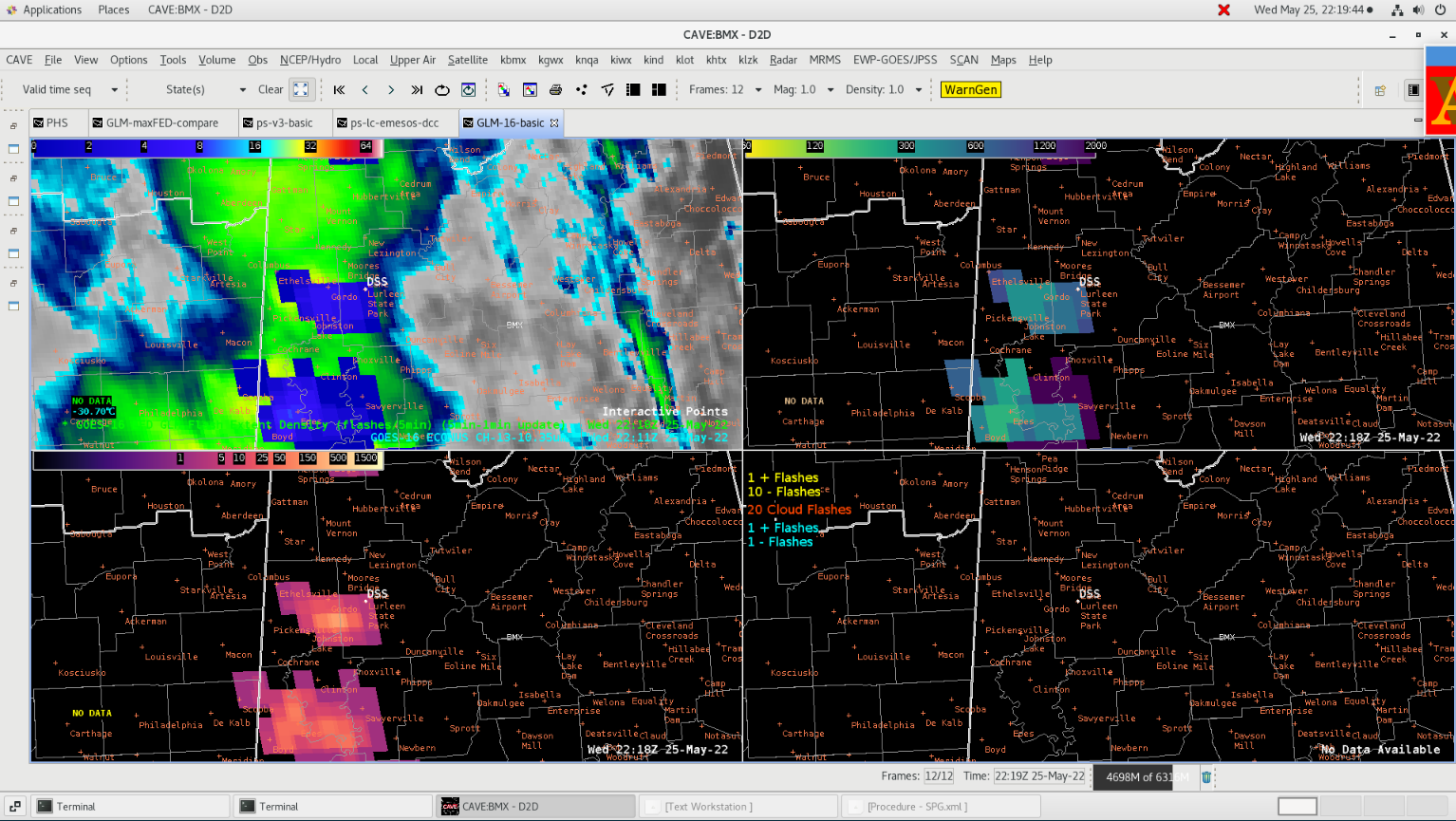
LightningCast & GLM for DSS

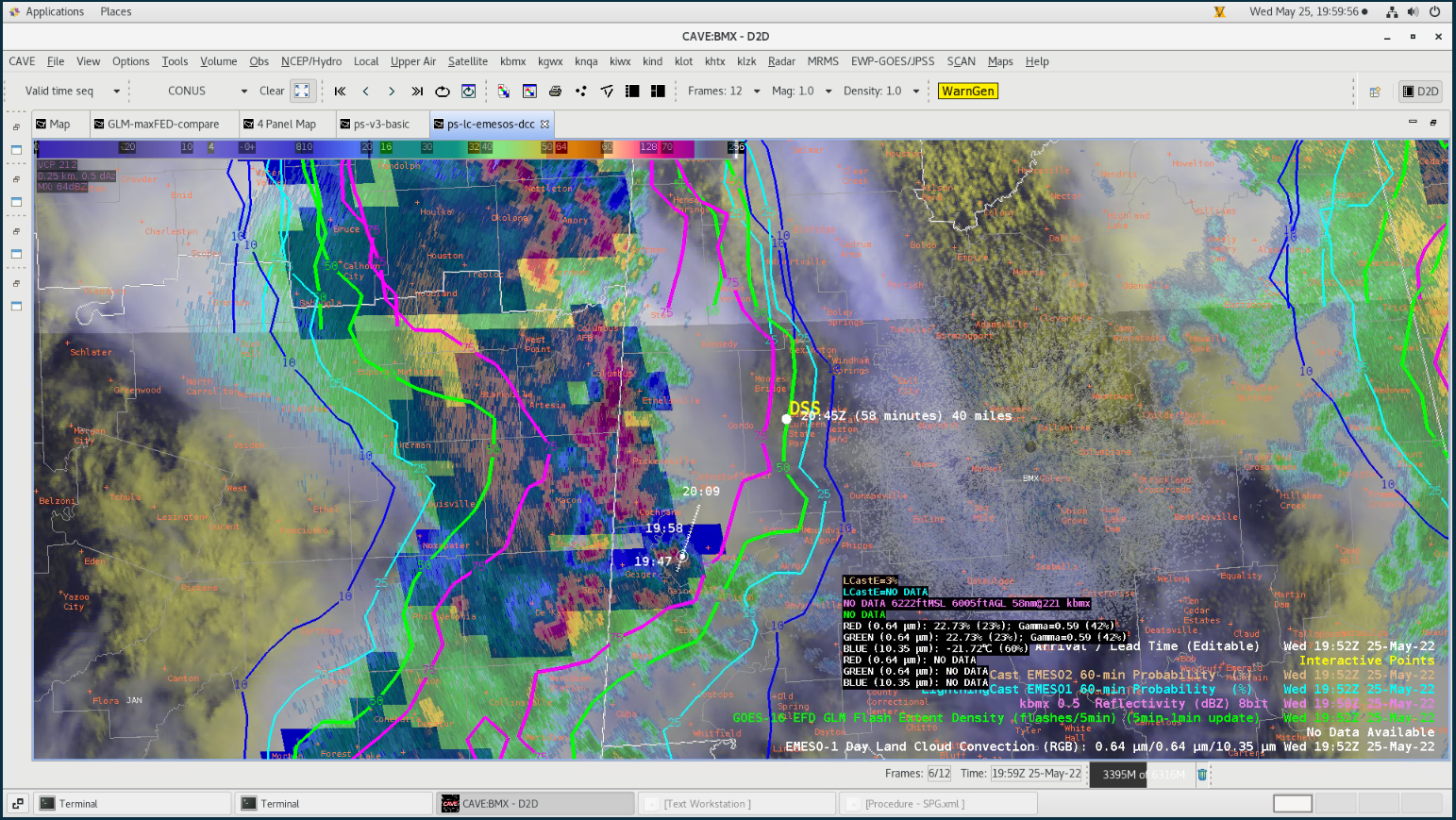
Initially the LightningCast for our DSS event surged to near 50% or slightly above. This was an initial concern for the DSS area.
As these storms weakened, the probabilities of lightning also fell to under 25%. I liked that these probability decreases were not rapid, but a gradual fall after the initial peak. GLM and LightningCast both had a consistent drop in probability and lightning activity as the “storms” weakened.
It is becoming clear that the rate of change of all of these satellite products is the most important information that a forecaster can gain. While an initial picture of the probabilities looks concerning, pairing this with other satellite products for context and seeing the overall trend of this data led to an easy decision to wait for additional data. Taking this at face value would lead to a quick (and potentially unnecessary) reaction.
Initial threat of lightning as illustrated by the LightningCast product.
The showers on the SE side of this line have decreased in intensity and have lost most of their lightning potential. The probabilities have decreased accordingly.
LightningCast, GLM, radar, and satellite showing the decreasing trend in lightning threat and the approach of moderate to light showers on the DSS event.
Showers are expected within the next 30-40 minutes and the trend in lightning appears to be going down consistently. GLM has also been helpful in showing that no cloud flashes have been observed at this stage.
There were some minor inconsistencies that I noticed since the Meso-sectors were both over our CWA. These were mostly minor, but I noticed at one point, a location had a probability of >50% or 0% and did not intersect with GLM measurements.
Inconsistencies in GLM and LightingCast Meso1/Meso2 probabilities. It seems the accurate probability here was 0% based on the lack of ground-based lightning network reporting.
As PHS indicated there was a second and more concerning wave of convection moving from the SW toward the DSS event area later in the afternoon. GLM and LightningCast probabilities both show the strengthening of this pulse and the increased lightning activity as it moved into the BMX CWA.
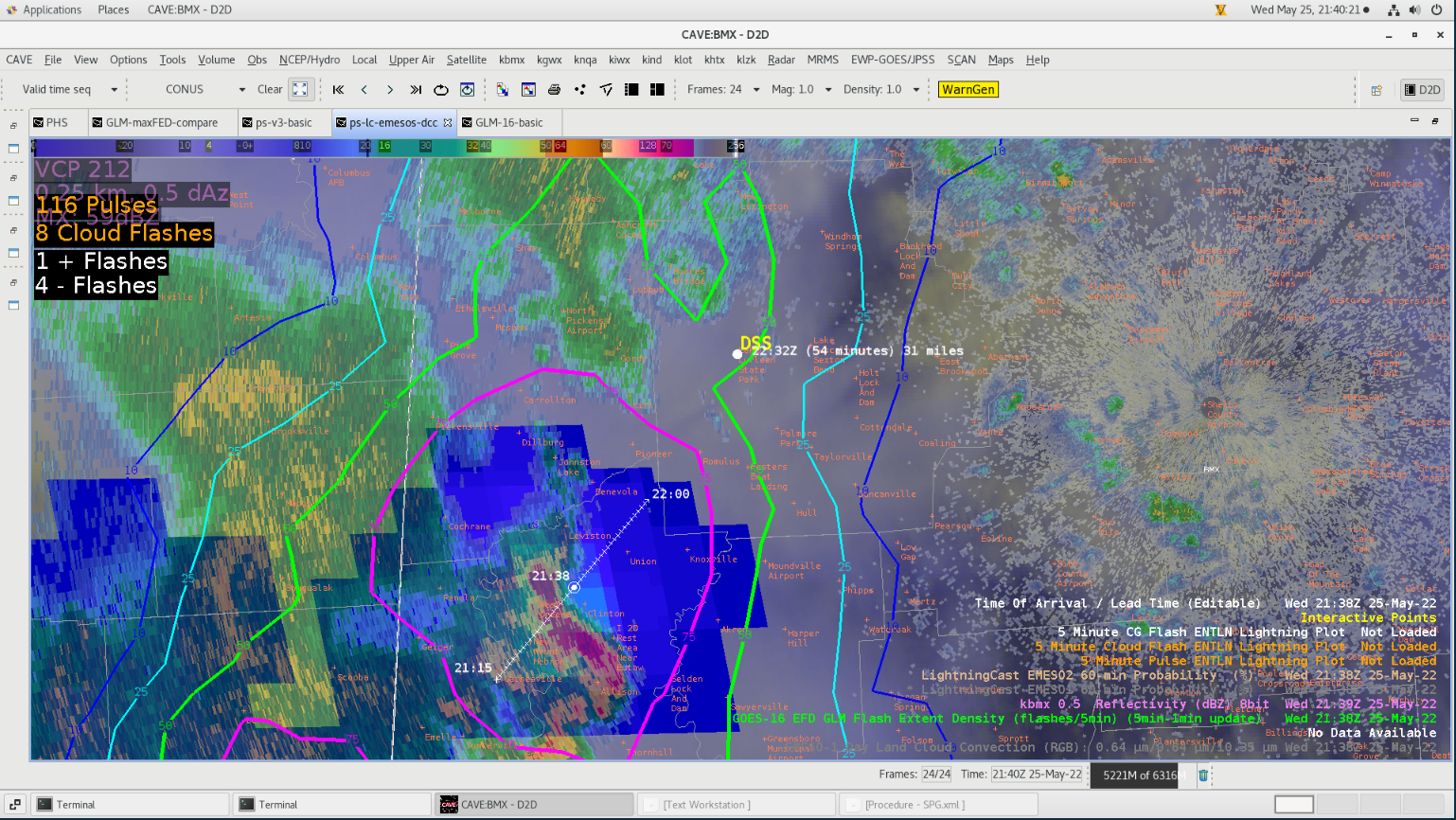
21:26Z, the storm indicated a 10% chance of lightning at the DSS event area.
21:36Z, the storm indicated a 50% chance of lightning at the DSS event area.
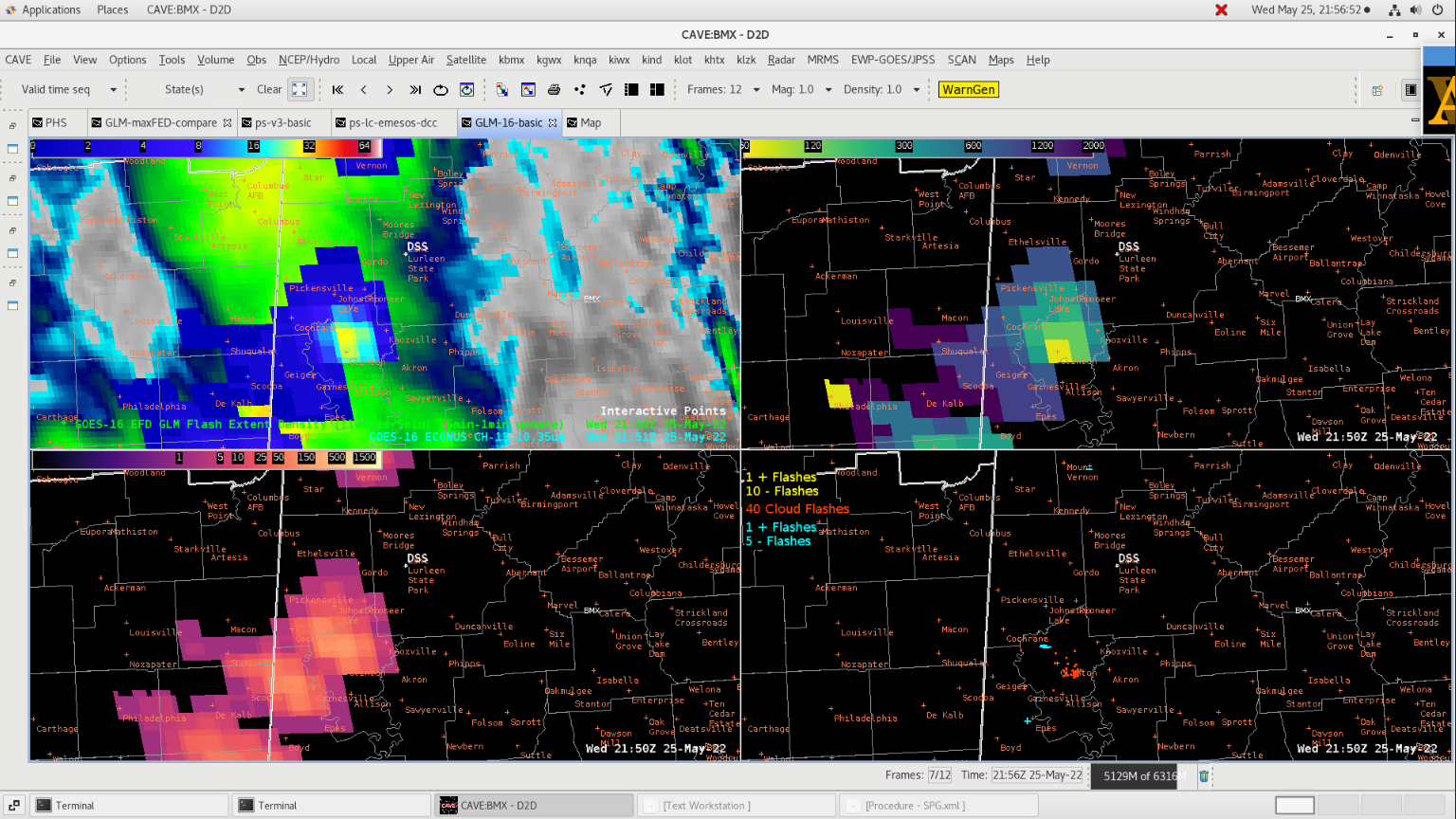
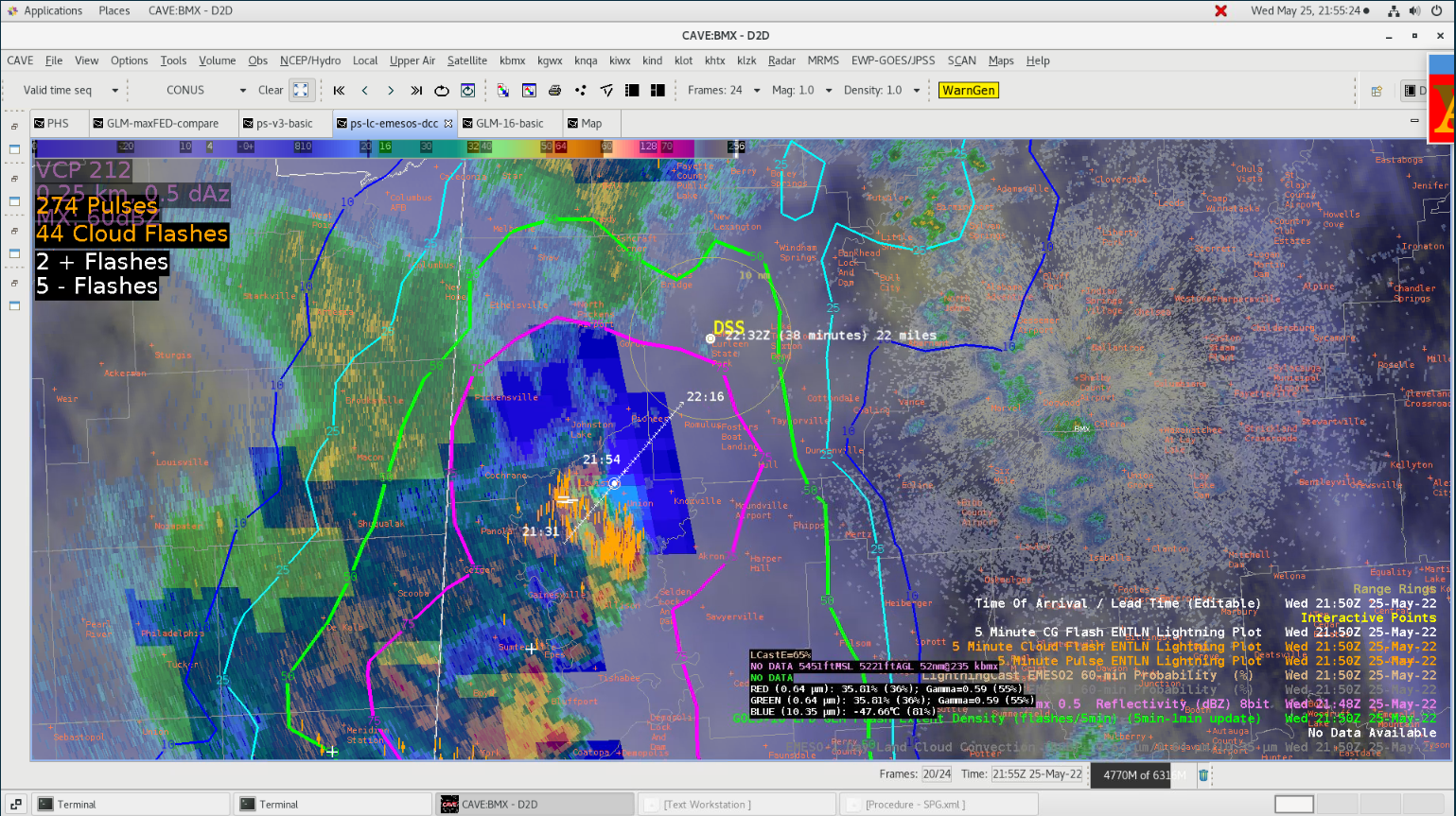
The 45-minute warning was given at 21:50Z to the event coordinator that a storm with the potential of producing lightning and winds in excess of 30 mph was approaching the event area. GLM was a key part in this decision as it continued to show strengthening with lightning pulses indicating that the storm was at least maintaining its strength. The LightningCast probabilities were also increasing as they approached the area with the 75% contour moving into the area by 21:52Z.
GLM (top) and LightningCast at the 45-minute DSS decision point.
The pulses weakened significantly as it approached the area and this was consistently evident in the GLM display and the LightningCast probabilities.
GLM (top) shows the MFA increasing and the FED decreasing. This was consistent with radar data and observed lightning pulses. The LightningCast probabilities also decreased.
Lightning occurred in the area around 22:38Z with GLM showing another pulse beginning as the storm moved through our DSS area.
In general, I found GLM to be much more useful today outside of the supercellular mode with more multicellular convection observed over central and southern AL and especially so for identifying strong cells within a linear structure.

ProbSevere v3

In a DSS setting there isn’t a real reason to use ProbSevere v3 because winds far below the 50-knot threshold could cause problems at our DSS events. That being said, there was great information in the trend graphic as I could see the growth and decay of storms that were already in progress. This allowed me to focus my attention on the strongest storms.

NUCAPS

Ongoing convection ahead of the line of storms limited the NUCAPS ability to produce good data. Availability of soundings was also an issue as the data came in between 19-20Z with storms ongoing near my area of interest.

Optical Flow Winds

For the optical flow winds, there wasn’t much in the way of DSS that I could find a use for. The divergence field again could be useful, but with the suite of GLM I was seeing the divergence and strengthening of the storms in multiple products. Visualization is still the main hurdle with OFW.
Once the anvil for some of these storms developed it was difficult to use. Especially as debris clouds developed and overspread the area in advance of additional convection behind the initial line.
– Overcast Ambiance