


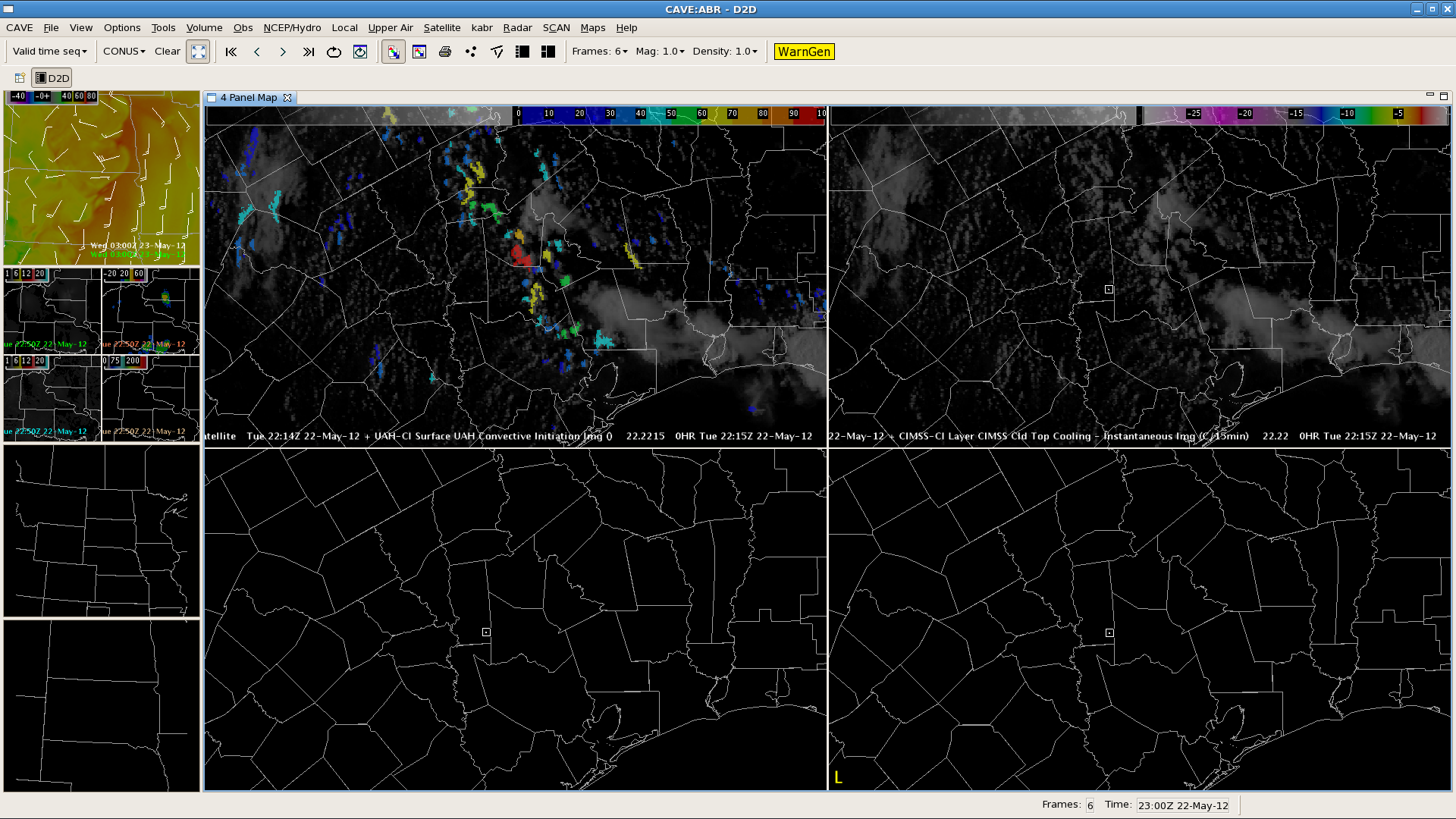
The UAH-CI algorithm produced a strong CI signal (94) across southern Walker County in southeast Texas at 2215z. Over the next several images the Cu over this area continued to build and radar returns increased on the KHGX radar.
Official websites use .gov
A
.gov website belongs to an official government
organization in the United States.
Secure .gov websites use HTTPS
A
lock (
) or https:// means you’ve safely connected to
the .gov website. Share sensitive information only on official,
secure websites.

Real-time posts made during testbed nowcast and warning operations.
The UAH-CI algorithm produced a strong CI signal (94) across southern Walker County in southeast Texas at 2215z. Over the next several images the Cu over this area continued to build and radar returns increased on the KHGX radar.
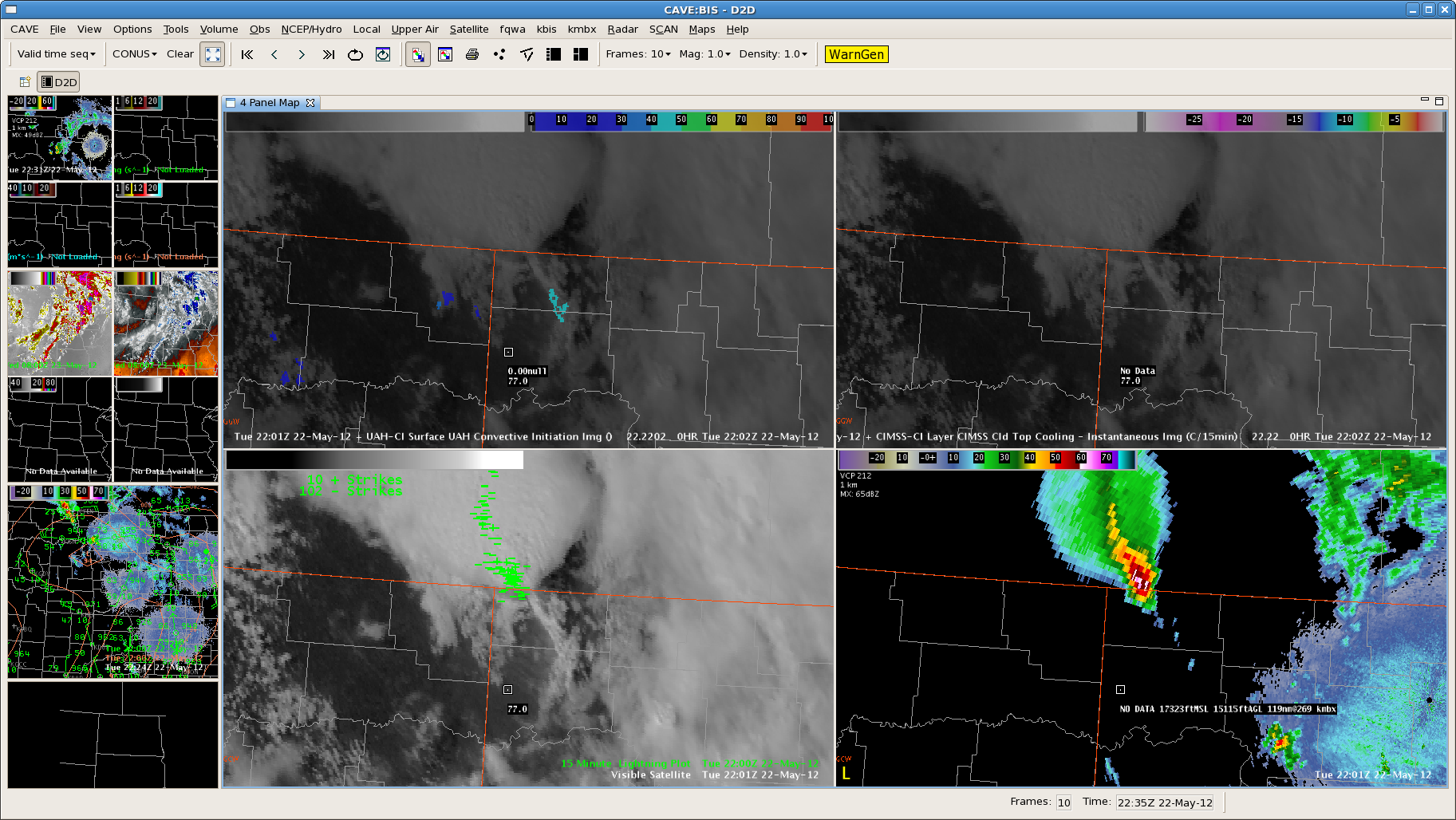
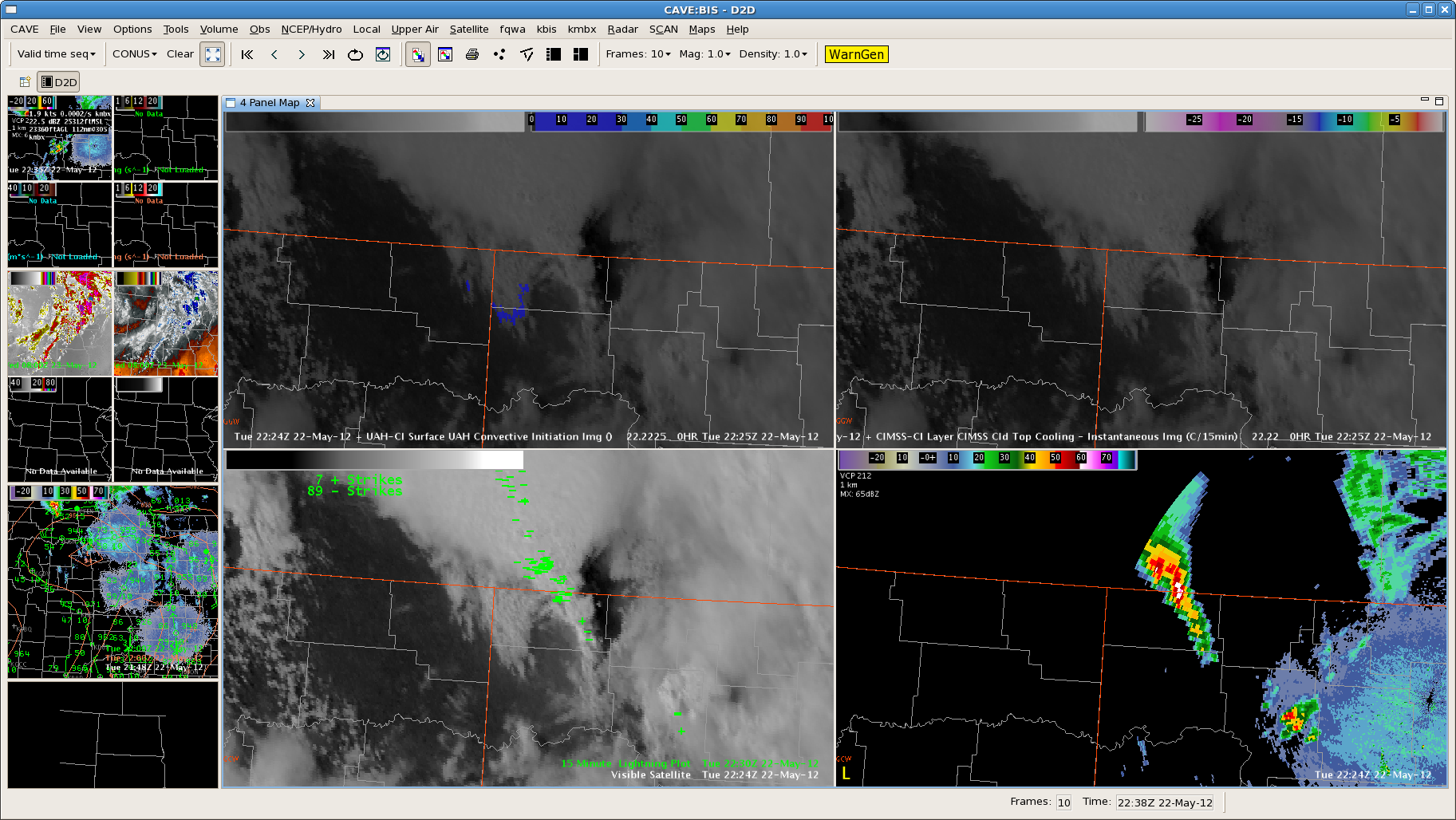
A severe thunderstorm developed over northeast MT and straddled the Canada/ND border. The cirrus had finally cleared south/southeast of the storm, so we were waiting for one or both of the GOES CI products to kick in. Sure enough by 22z, the UAH-CI product indicated about 50% strength of signal along developing cumulus to the south of the severe storm. By 2224z, KMBX radar indicated convection certainly did “zipper down” the cold front/dryline as the UAH-CI product indictated at 22z, giving us a 24 minute lead time for the developing convection.
Isolated thunderstorm development was possible over far SW Texas mainly due to intense diabatic heating (with temperature readings in the lower 90s). Roughly 30kt deep layer shear and 1 kJ/kg SBCAPE overlap were supportive for strong to severe pulsating storms. Rapid to explosive development occurred south of Pecos (isolated in nature) with UAH-CI product showing high probabilities for initiation at 1945Z (not shown) with cloud top cooling of -38K/15 min present at 2010Z. Cloud top cooling peaked at -46K/15 min at 2015Z. Would not be surprised to see an isolated large hail report with that storm (up to 60 dBz present).
 Helge
Helge
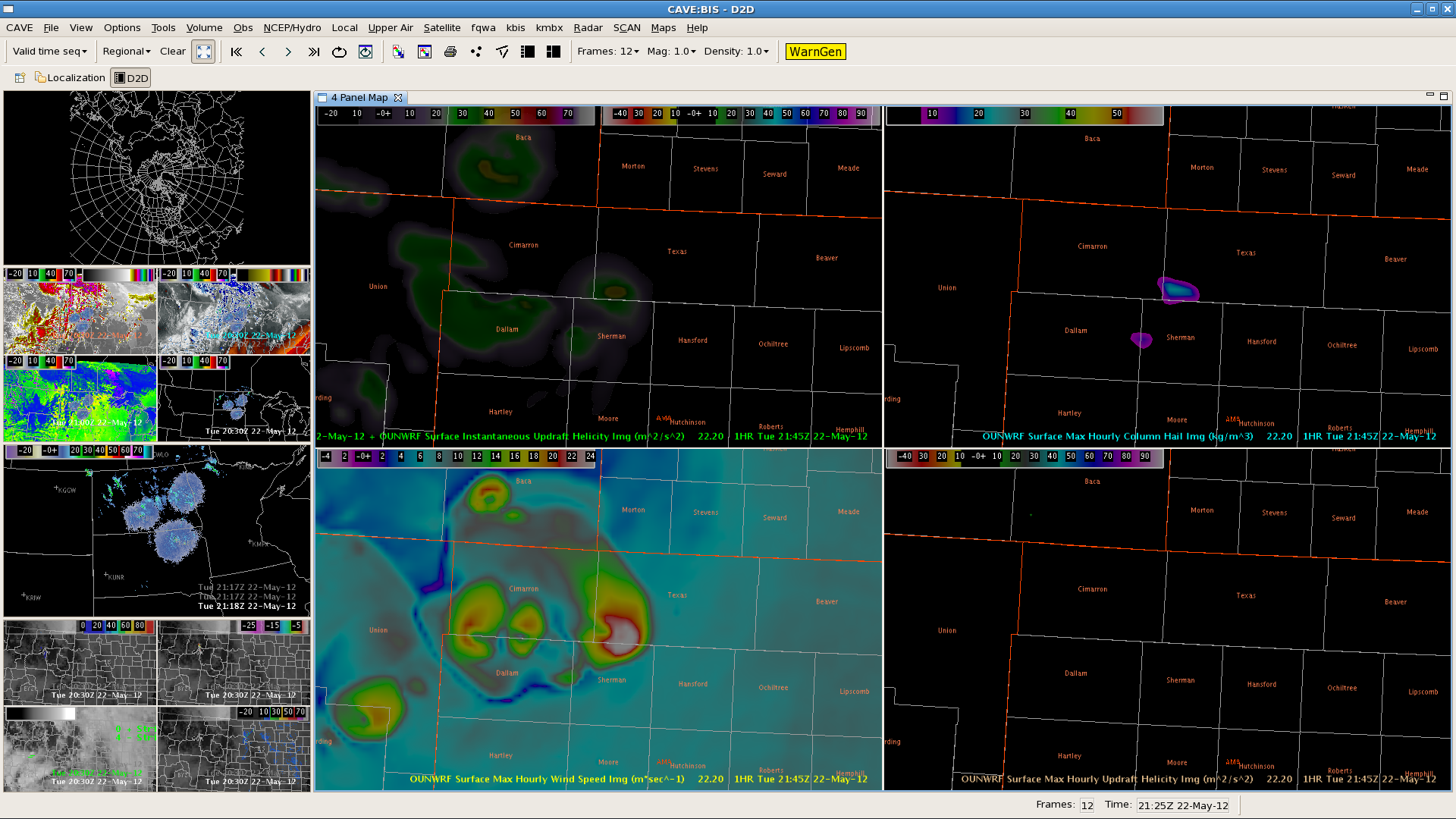
Thunderstorms finally evolved all along the outflow boundary over far NW-TX Panhandle/OK Panhandle into far SW-KS. OUNWRF reflected those storms pretty well regarding timing of initiation (although slightly displaced to the SE regarding location of initiation). It also highlighted the chance for an isolated better organized thunderstorm event with strong to severe wind gusts and marginal/isolated large hail. A few storms temporarily reached 55 dBz. No report yet received.
Helge
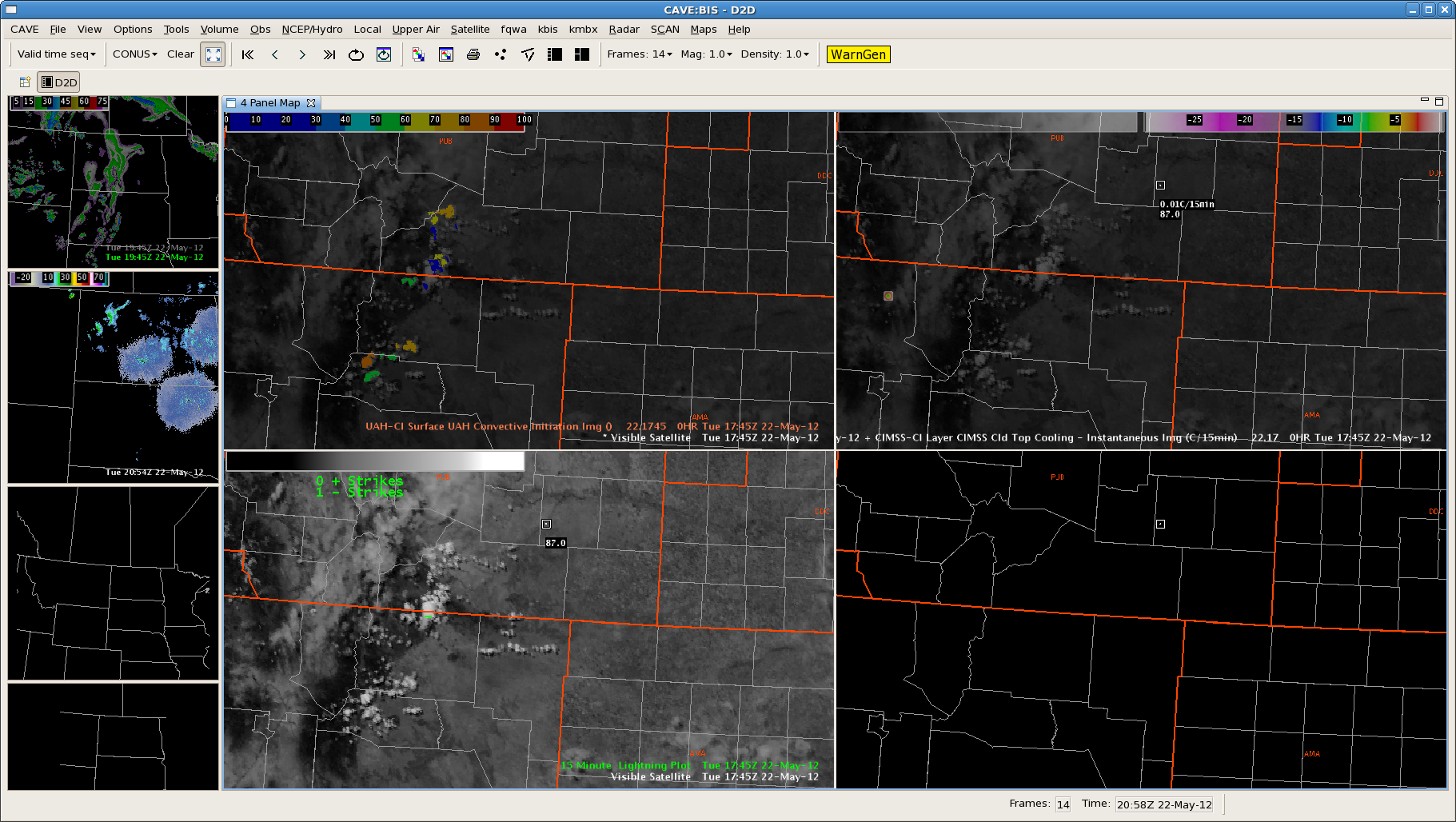
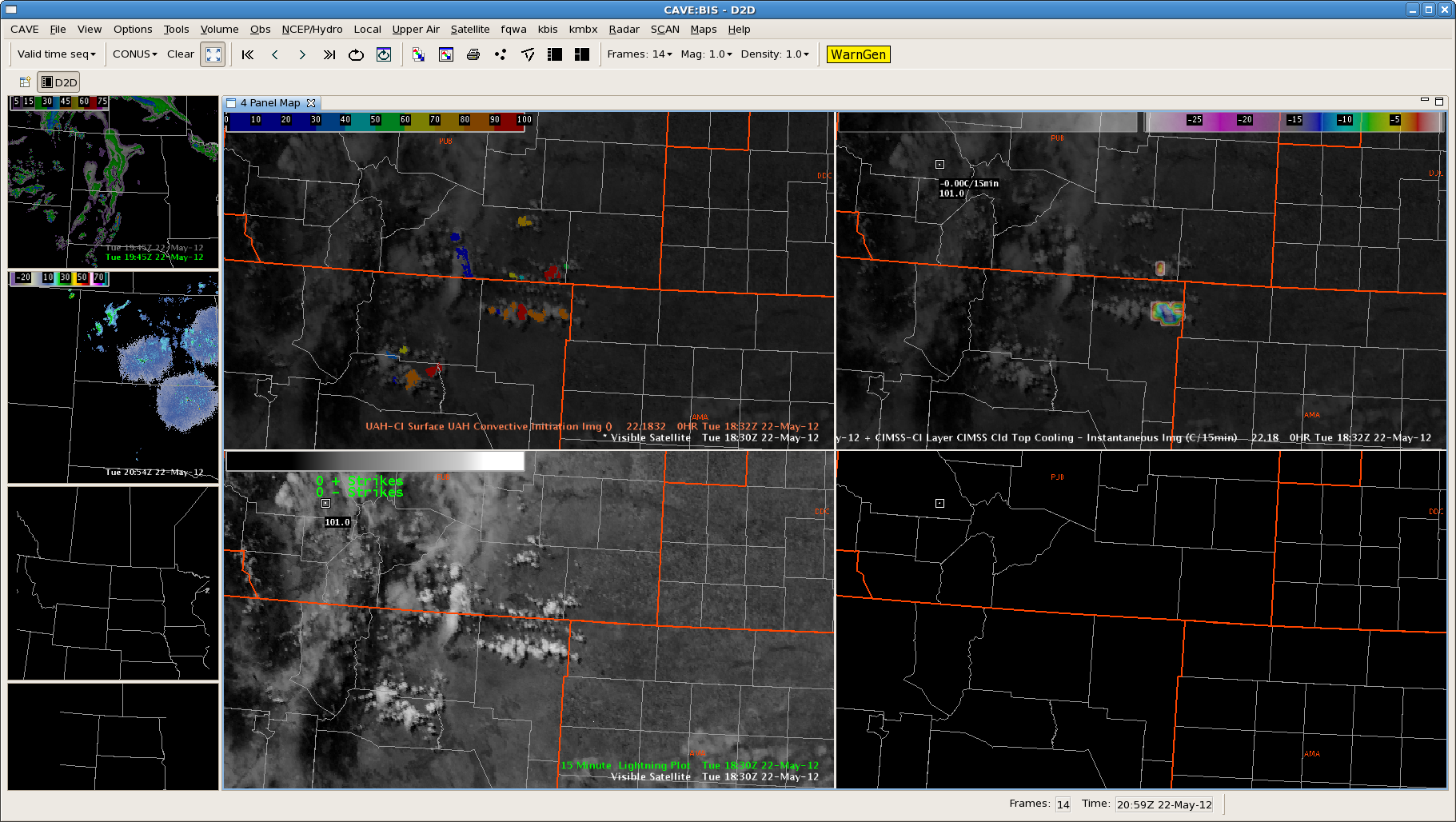
1745z image indicates developing cumulus over extreme northeast NM. In the 1830z image, UAH-CI product indicates a cluster of cumulus with a high confidence of convectively initiating. UW-CTC product also indicates rapid cloud-top cooling with the eastern-most convective element. Given the deeply mixed airmass with minimal cap, this would lend confidence to convective initiation soon. Sure enough, by 1915z the 15-minute lightning plot indicates some CG strikes with the eastern-most convective element, with a lead time to convective initiation of over one hour.

We watched a slowly SE-ward progressing outflow boundary with initiation already underway over far W-OK Panhandle. Northward building of deep convection is closely monitored as CI product indicates high potential with cloud top cooling around -11K/15 min present. Deep and well mixed profiles east of that boundary hint at enhanced downburst / isolated large hail potential as storms also enter a favorable air mass with MLCAPE AOA 2000 J/kg. Shear remains too weak but modest veering present, so a few better organized multicells are possible. Capture was done at 2032Z.
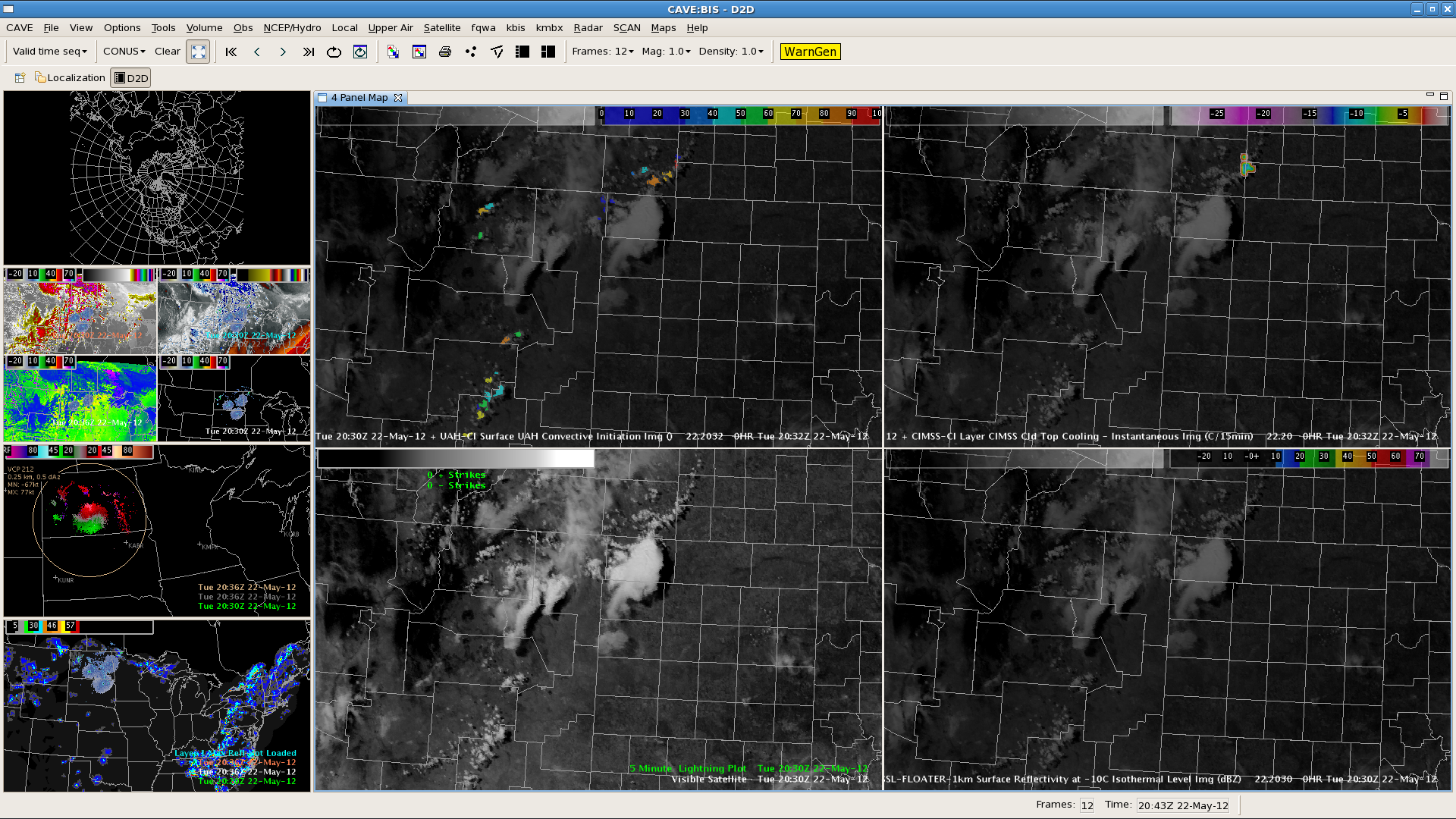
First signals seen in reflectivity fields in the area of interest about 20 min later (2052 Z), which gave a good lead time.
Helge Tuschy
5/22 00z NSSL WRF simulated IR & WV imagery (upper two panels) indicate deep moist convection initiating by 22z over west-central ND, along a strong cold front and ahead of shortwave energy approaching from the west/southwest. This may be a tad optimistic given dense cirrus over the region, although the moderate/strong forcing may be able to compensate for this. Additionally, despite some subtle differences, 20z simulated satellite (20 hour forecast) is very representative of realtime GOES IR/WV (bottom two panels), with regard to shortwave placement and magnitude, and overall spirit of dense high level clouds over the region. 


SVR issued for Oldham county. 3- body scatter spike evident. MRMS MESH showed 2.20 inches. Areas of strong SRMs have been disorganized so far. Updraft helicity near 200 m/s^2. Quarter sized hail reported.
HIRSCH
Thunderstorm cold pools over far eastern NM appear to be consolidating into a forward propagating MCS between 00-01z on 5/22. This was advertised fairly well by the OUNWRF earlier this afternoon.
Per regional radar loop, MCS over far eastern NM appears to be developing on MCV. Latest 5/22 00z OUNWRF is picking up on this, and continues the MCS/MCV well into the evening southeast through LUB CWA.