ProbSevere & Satellite Imagery

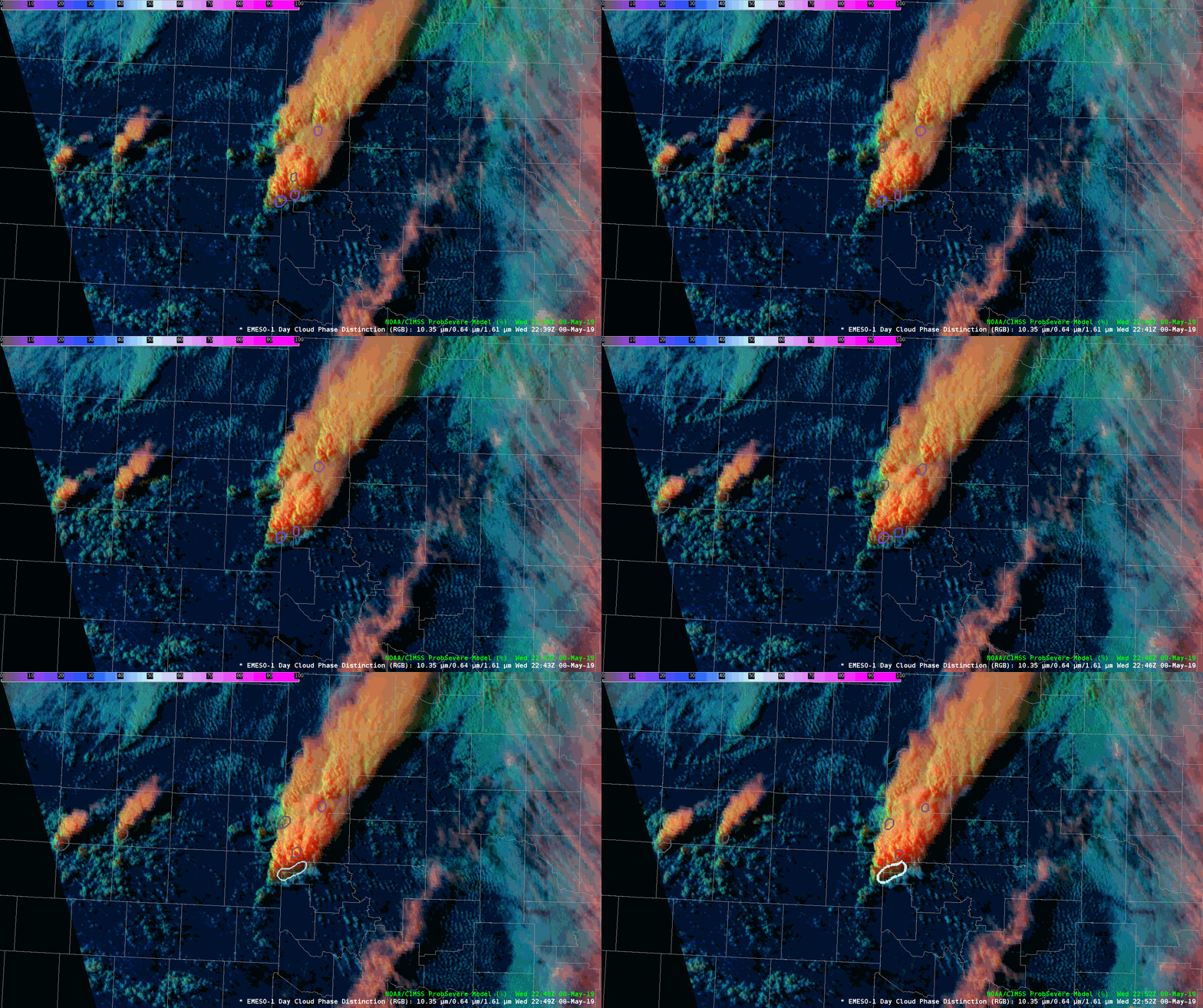
Although ProbSevere products are typically used coincident with radar data, but can also be applied to satellite imagery. Using ProbSevere with satellite imagery can provide a visualization as to where the strongest parts of a thunderstorm may be located .

This loop shows developing & strengthening convection across the Texas Panhandle and far western Oklahoma, via Day Cloud Phase imagery with ProbSevere overlaid.

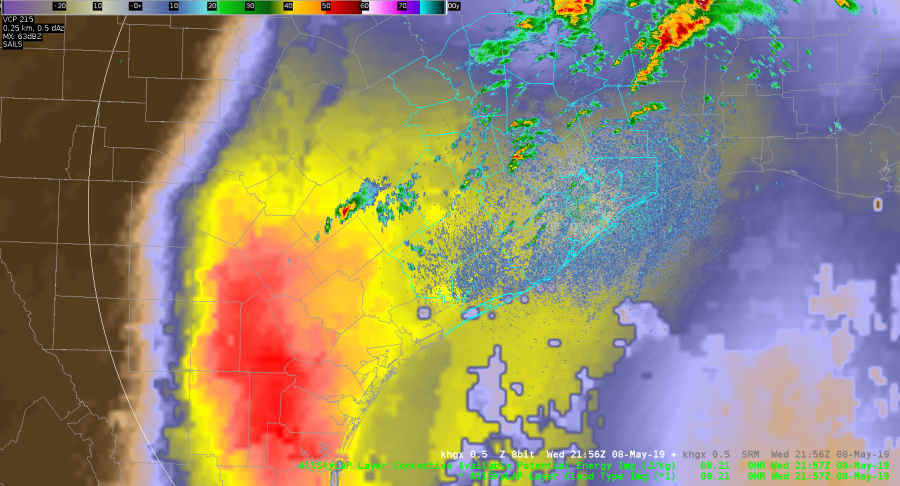
Situation Awareness using AllSkyLAP CAPE gradient

As a good tool for a mesoanalyst, the enhanced gradient for CAPE within AllSkyLAP would indicate an area of focus for discrete convection forming along the southwest flank of the line of convection that fizzled earlier. This area would be a place to focus for future possible convection.

ZDR_Arcophile


Comparison of Modified NUCAPS

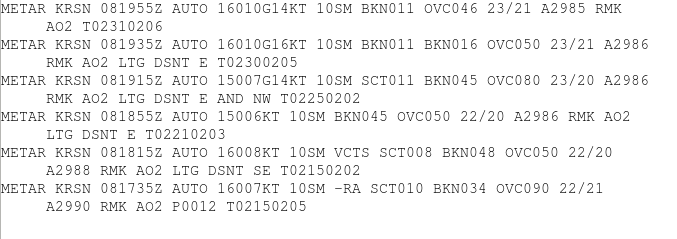
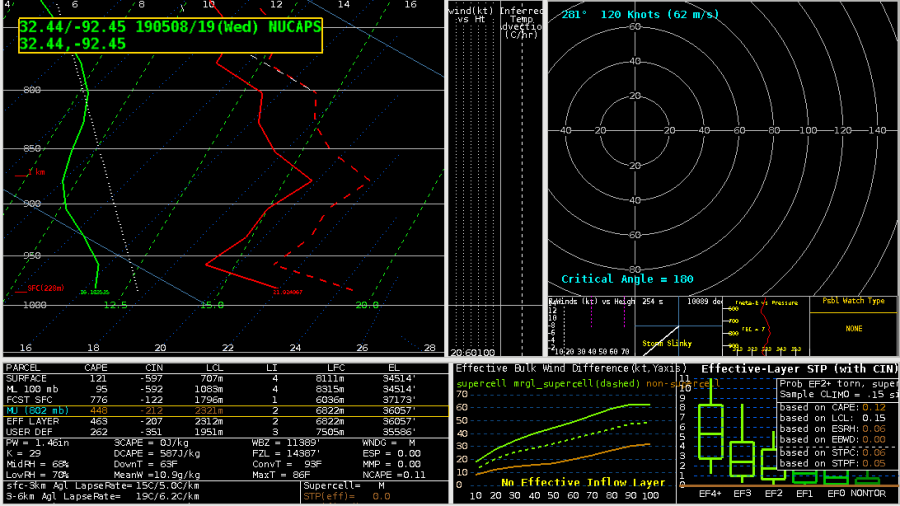
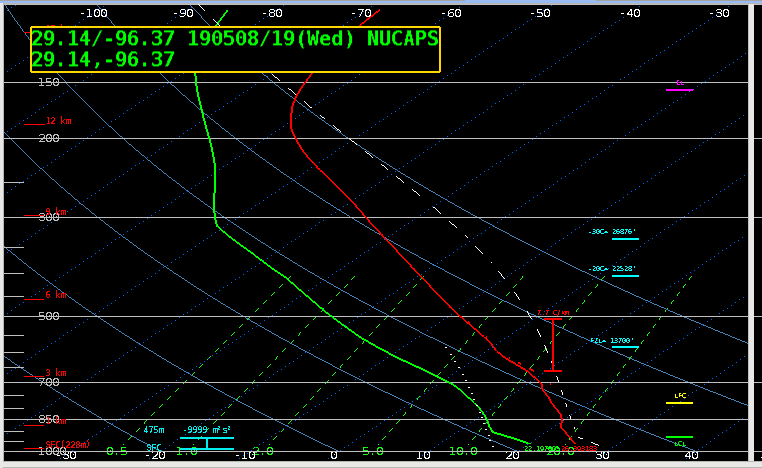
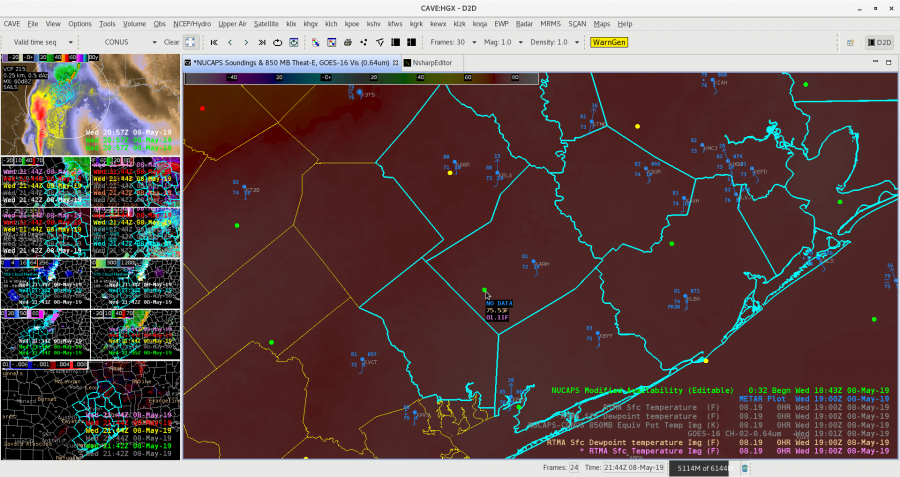
In trying to give due diligence to all of the products I decided to look at the NUCAPS soundings a little deeper today. The location of the sounding point was around 9 mi SE of Ruston Regional Airport in an area that was impacted by a weak line of convection moving across central Louisiana, as shown in the METARS from KRSN.

Both soundings passed the QC checks and were towards the center of the swath. So what did NUCAPS show? Here are the lowest levels of both the NUCAPS and Modified NUCAPS soundings at 19Z…

NUCAPS Sounding at 19Z
Modified NUCAPS Sounding at 19Z

The NUCAPS sounding had a temp of 21.92C (71.47F) and a dew point of 16.18C (61.12F). The modified NUCAPS sounding had a temp of 20.81C (69.46F) and a dew point 17.72 C(63.87F).

For comparison here are the RTMA temp and dew point between 17-19Z at the sounding point and at KRSN…

T/Td @ NUCAPS                  T/Td @ KRSN
17Z           72.65F                                       72.76F
18Z           73.68F/69.49F                     74.08F/69.39F
19Z           71.47F/69.93F                     73.10F/70.40F

It makes sense that the RTMA dew point depression is small given the recent rains, and if the RTMA is suppose to be the ground truth,  it looks like the NUCAPS soundings did a bad job in this case. Temps for the NUCAPS soundings were 2-4 degrees cooler which is okay, but the modified sounding was cooler. It would have probably been better to keep the temp from the unmodified sounding. With regards to dew points, both the modified and unmodified soundings had lower dew points than RTMA, on the order of 6-7 degrees. These definitely affected the thermodynamic calculations, though I’m pretty positive that it was the mid-level inversion that did the most damage. I’m not sure how to fix this since only the surface points get modified.

Anyways, hindsight being 20/20, I probably should have looked at an area that wasn’t recently impacted by rain, but by the time I realized it it was too late and I already gathered all the data. Anyways, both NUCAPS soundings in this case did not accurately represent the environment in the lower levels, likely a result of evaportaive cooling and outflow behind the line of convection. This is a word of caution that despite the soundings passing the QC checks (the points were both green) and being in the center of the swath the data may not be the most useful.

NUCAPS in the Forecast Process

I know, I know; a lot of posts about the GLM.  What can I say…I’m a lightning person.  ANYWAY, let’s look at some other things that we are testing; today it is NUCAPS soundings.  Pretty handy when you don’t have a sounding station nearby and if skies are clear (well, mostly clear…it works with clouds in some situations); you can get a sounding profile for your area.  Nice!  The caveat is that you need to have a satellite overpass across your area and that is the tricky part.  There are only a few satellite overpasses on any given day and you have to be right under the overpass to get the best data but we can make it work.  Here is one from today and we’ll look at the point right on the TX/OK state line.

With a possibility of storms across western Oklahoma along the cold front as it moves east, we need a point somewhere in the warm sector with a close enough METAR site that we can adjust to if needed.  That point along the TX/OK state line should work…
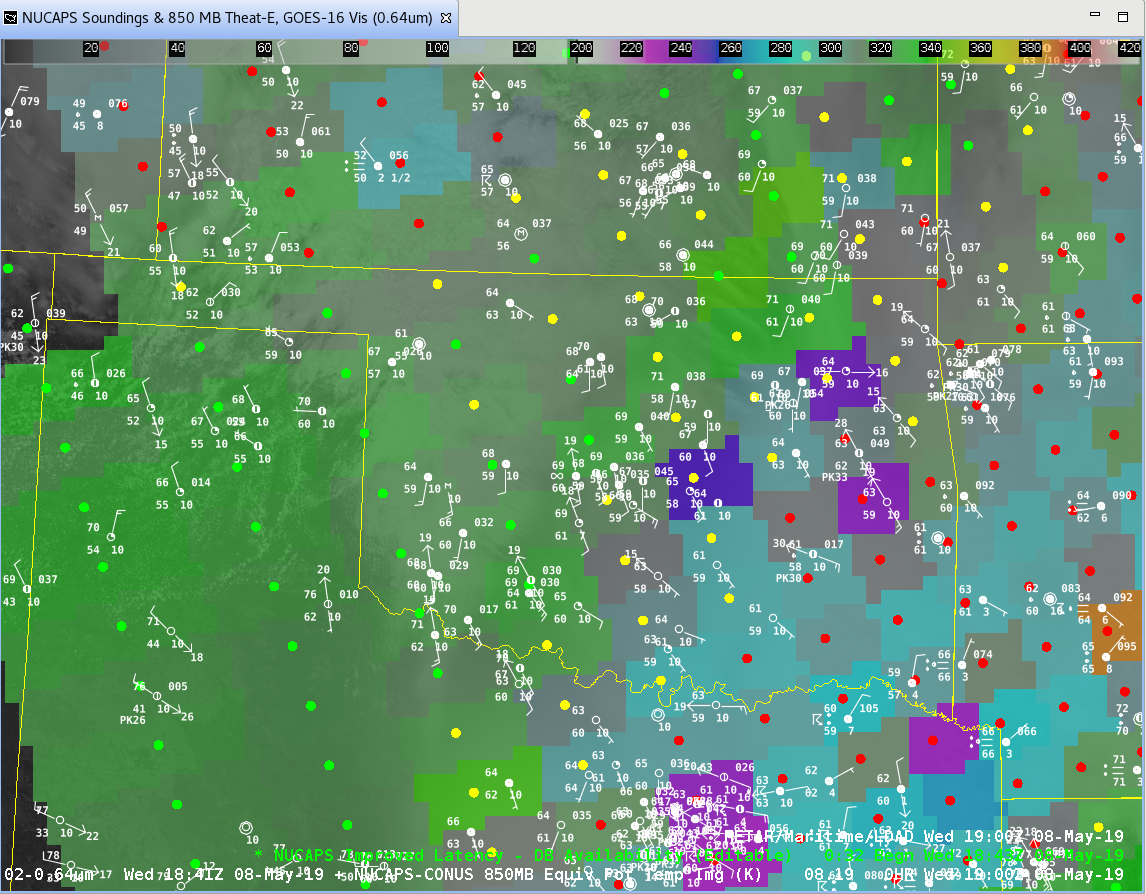
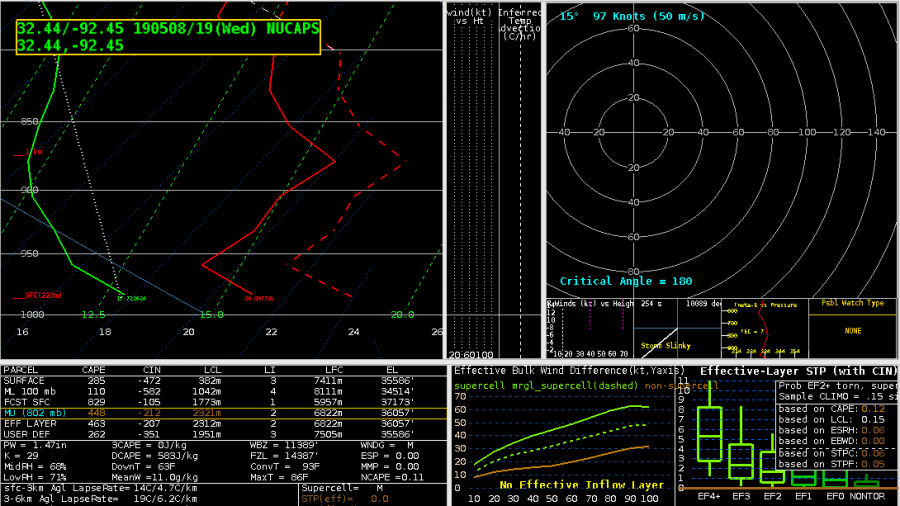
Here is what the original, unedited sounding looks like:
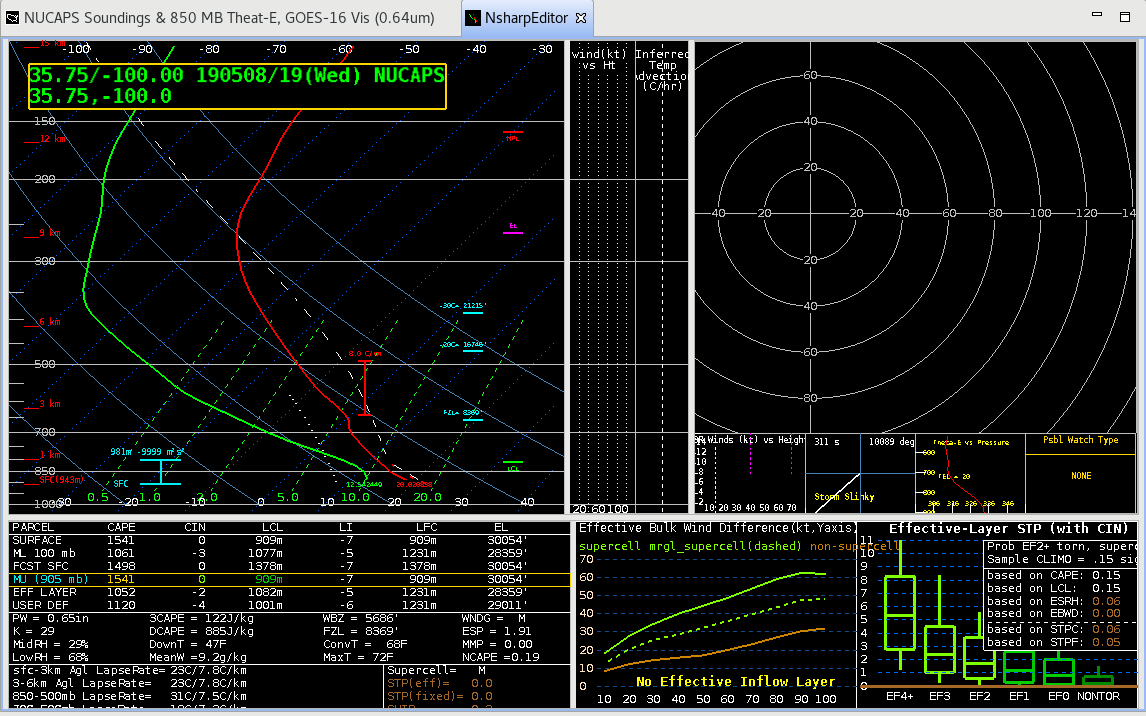
It’s not too bad; comparing to the 12Z Amarillo and Norman soundings (not shown), the soundings do have an EML between 3-4 km  which the NUCAPS sounding temperature profile does hint at although it doesn’t have the dry air associated with it, and the NUCAPS sounding does have the tropopause a bit lower than the actual soundings.  Overall however, it looks at least somewhat representative.  However, the one area it needs some work is the surface.  Dewpoints are a bit low with the sounding around 54 F but the temperature is within 1-2 F of surrounding METARs.  Well, let’s adjust the surface parcel in the sounding to match surface conditions in the warm sector to the east; say a Td of 60 which should advect northward through the day…
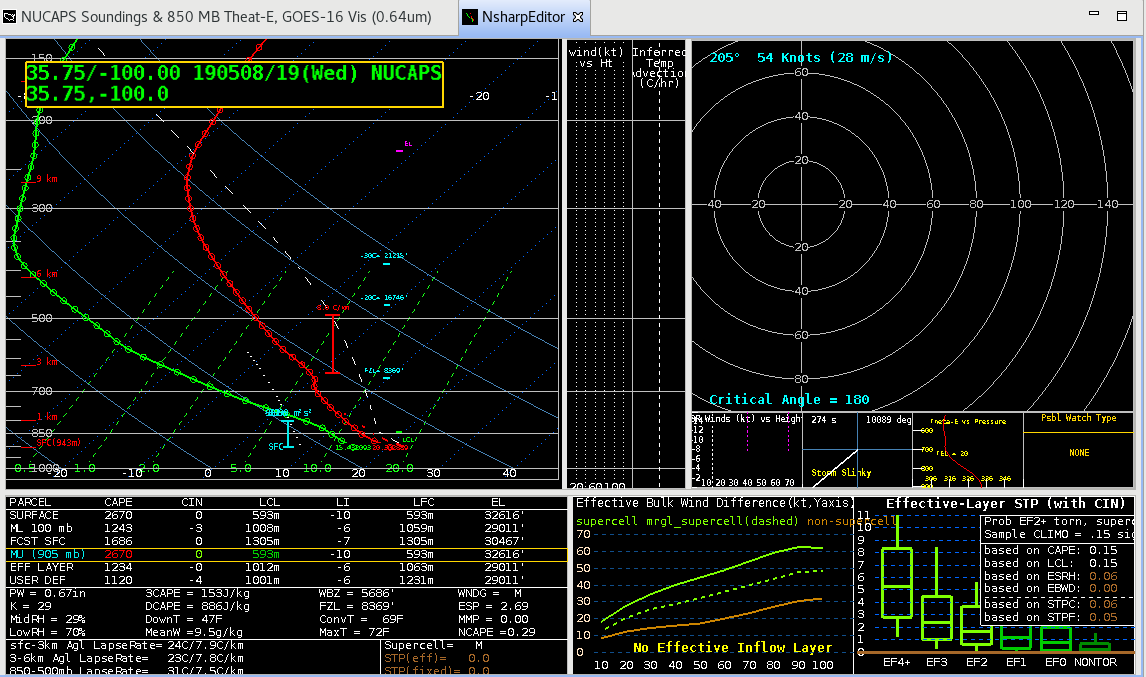
Wham.  MUCAPE values jump by almost 1000 J/kg.  But that’s pretty optimistic so let’s used MLCAPE which is a smaller, but still respectable increase of 200 J/kg.   Not to shabby and should indicate at least the potential for storms to form.  But what does that CAPE value compare to other fields?  Well, fortunately NUCAPS is available in a plan plot so we’ll look at that along with the RAP40 CAPE values.
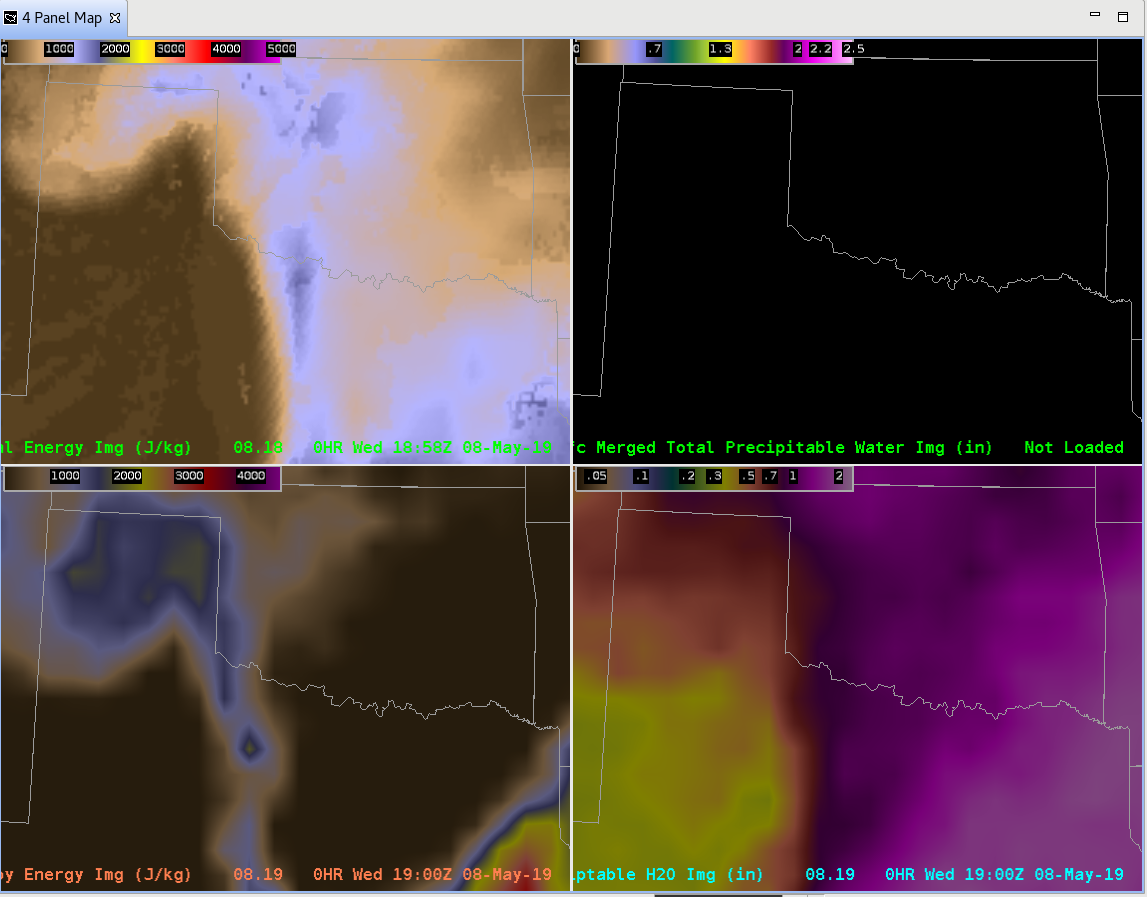
Unfortunately the NUCAPE sounding was a bit fast with the dryline pushing east and had CAPE values along the TX/OK state line around 475 J/kg so…no.  The RAP40 wasn’t too far off with values around 1500 J/kg.

So, if you are looking for some extra “sounding” profiles in and around your area AND you are lucky enough to be under one of the  Polar Orbiter tracks that has a sounder on it, give it a spin.  I think I’ll be looking at it quite a bit more…

-Dusty

NUCAPs Compared to METAR/RTMA

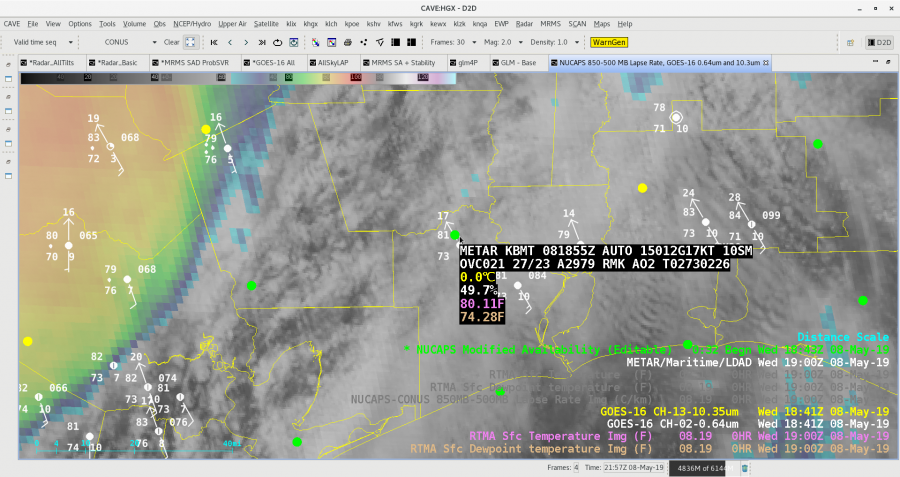
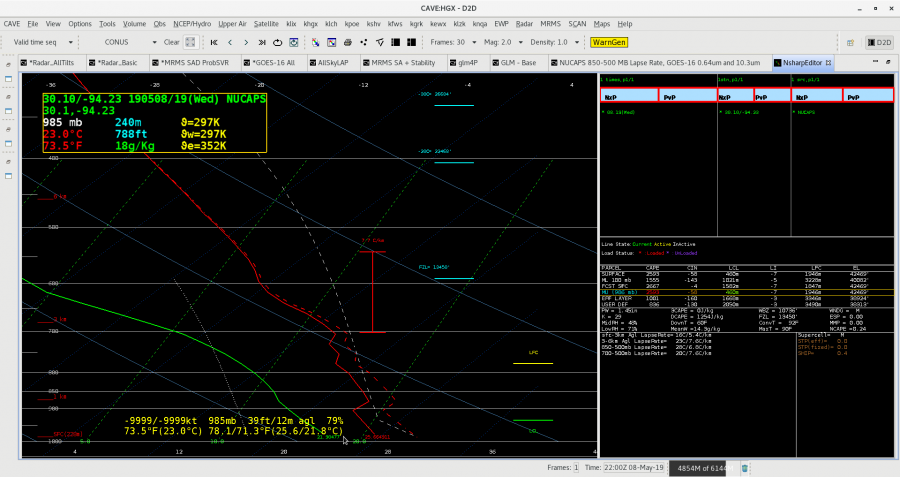
Another attempt at looking at the NUCAPs sounding and comparing to a local METAR and RTMA. This time the modified soundings seemed to do much better. The NUCAPs sounding point was roughly 2 miles away from the BMT METAR which was measuring a temp/dew of 81/73. RTMA was measuring 80/74 at the NUCAPs sounding location. NUCAPs unmodified sounding came in at 74/69 (not shown), however, the modified sounding was adjusted to 78/71.

So the modified sounding was adjusted well from the original, but looks like it may have not been adjusted far enough for this case. Although if there’s a bias throughout the sounding perhaps correcting too far would make the sounding unrealistic. Not sure w/o in situ observations throughout the troposphere.

#ProtectAndDissipate


Scale (and color table choice) is Everything

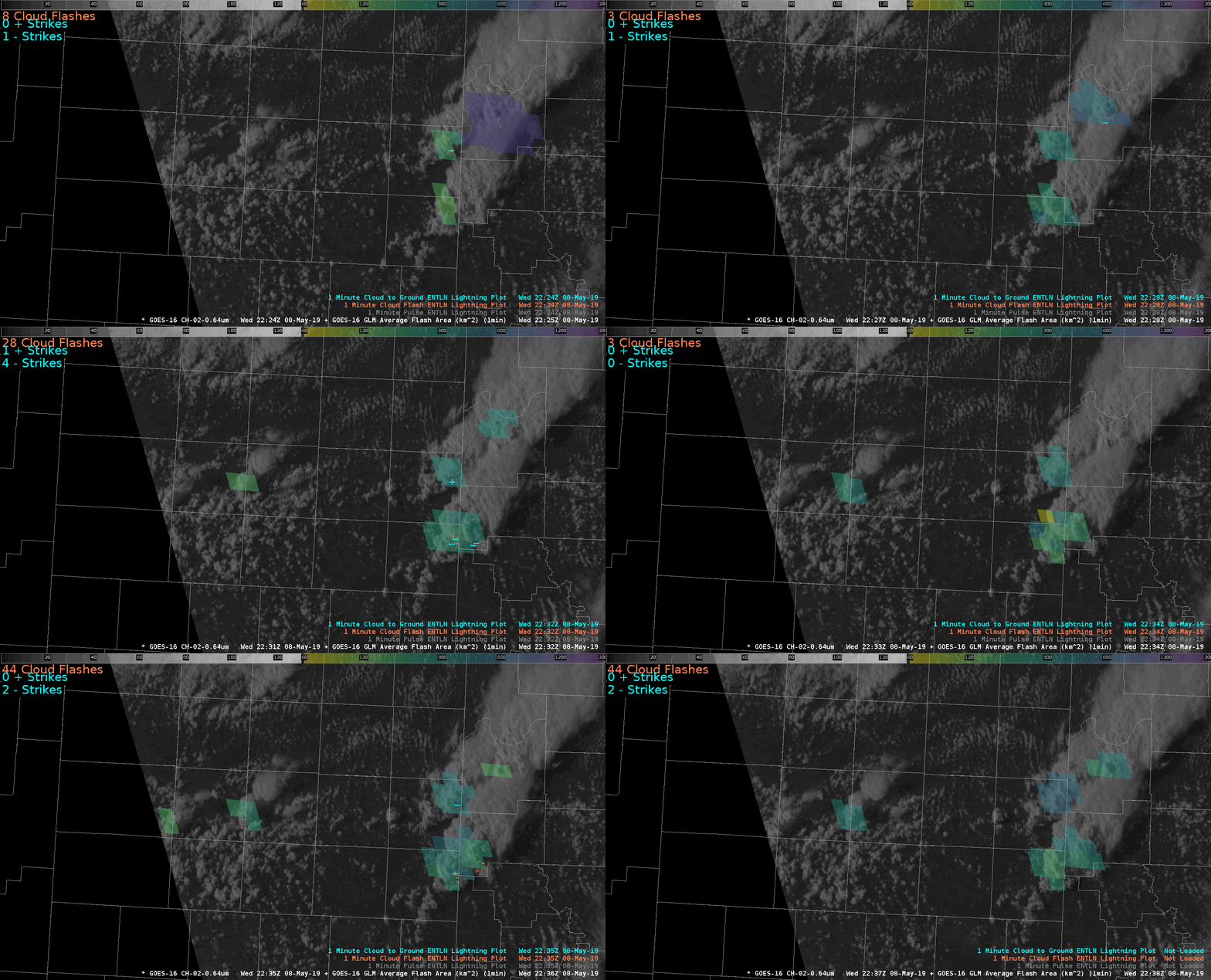
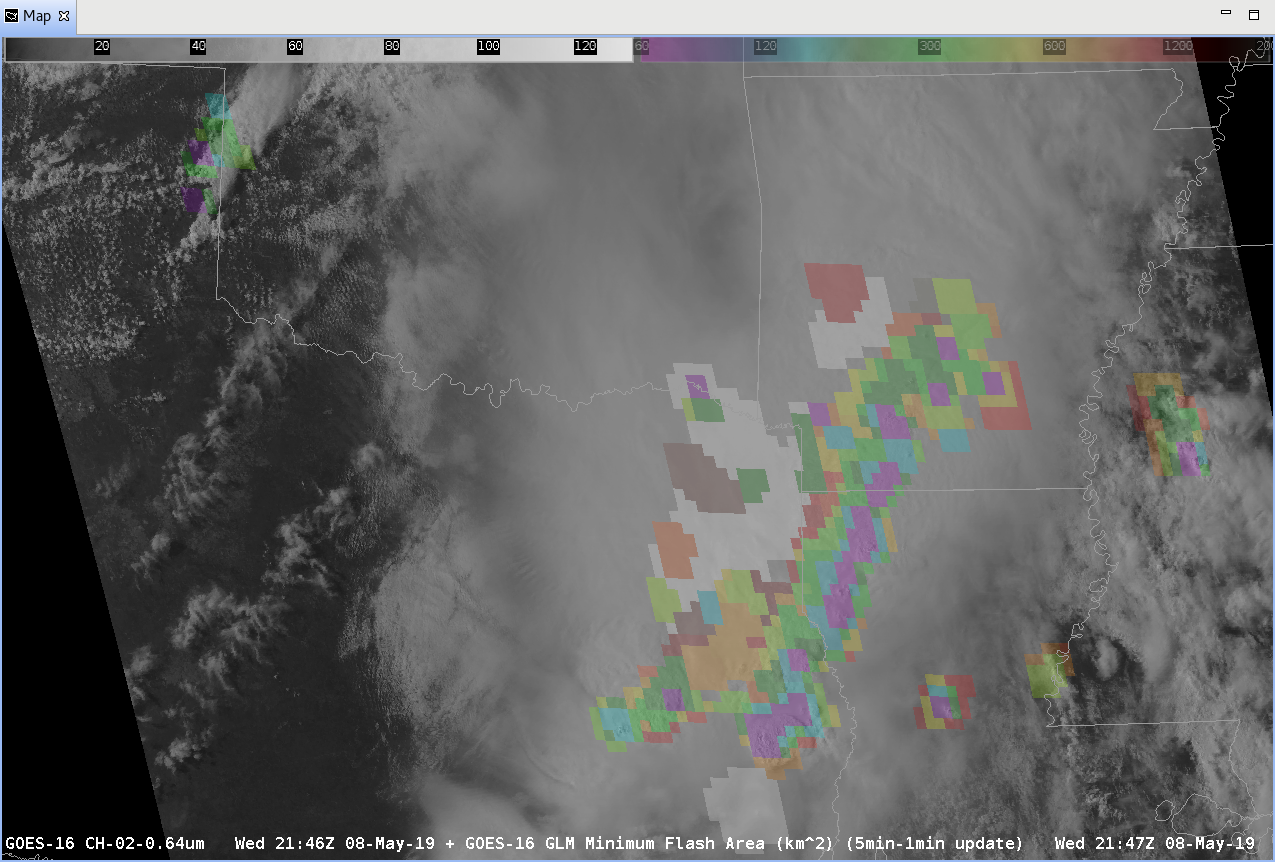
Big flashes taking place in the stratiform region of the departing MCS across the eastern third of Texas.  A LOT of big flashes:

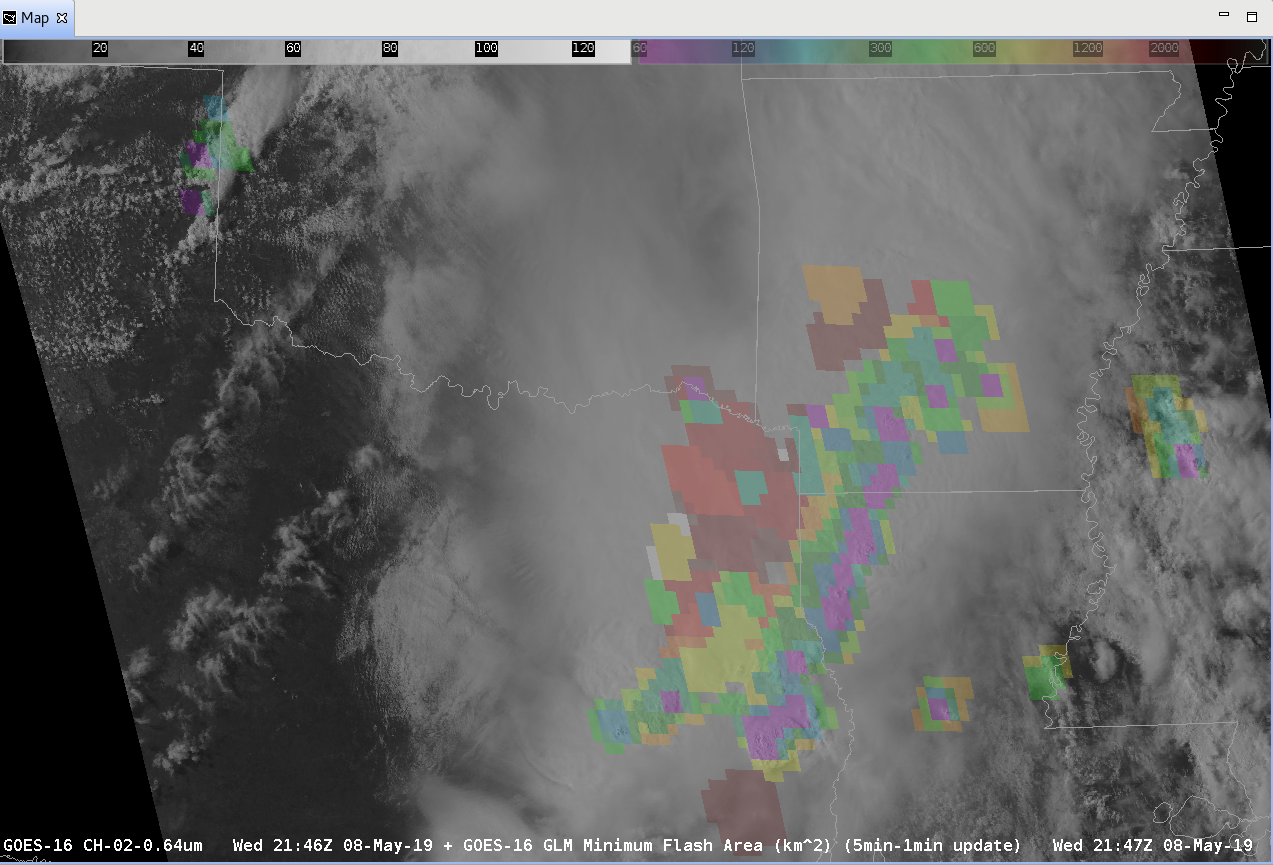
But that doesn’t tell the full story; there are a LOT of big flashes but they are being masked by the scaling of Flash Area.  Right now the scale runs from 64 km2 to 2000 km2.  What happens if we bump that max side up to 4000 km2?

There we go, a bit better discrimination on the big-side of the scale!  It may be hard to see but there is one “white” flash in there; a slightly larger 4600 km2 flash southeast of DFW.

That. is. Yuuuuuuuuuuge.

So, lesson of the day; check the values of flash size (or any flash component).  See if there are values past the end of the current color scale.  Right click on the appropriate product, select Change Colormap , and bump that up some.  May be able to pull out a bit more information than what comes as the default.  Once again however…YMMV.

-Dusty

Modified NUCAPS Sounding

At 19Z, the modified sounding southwest of KARM compared to RTMA was about 2 degrees cool for temperature and 5 degrees cool for dewpoint, presumably due to temporal interpolation issues. Still is a useful tool.


ZDR_Arcophile


NMDA Performance Along Line

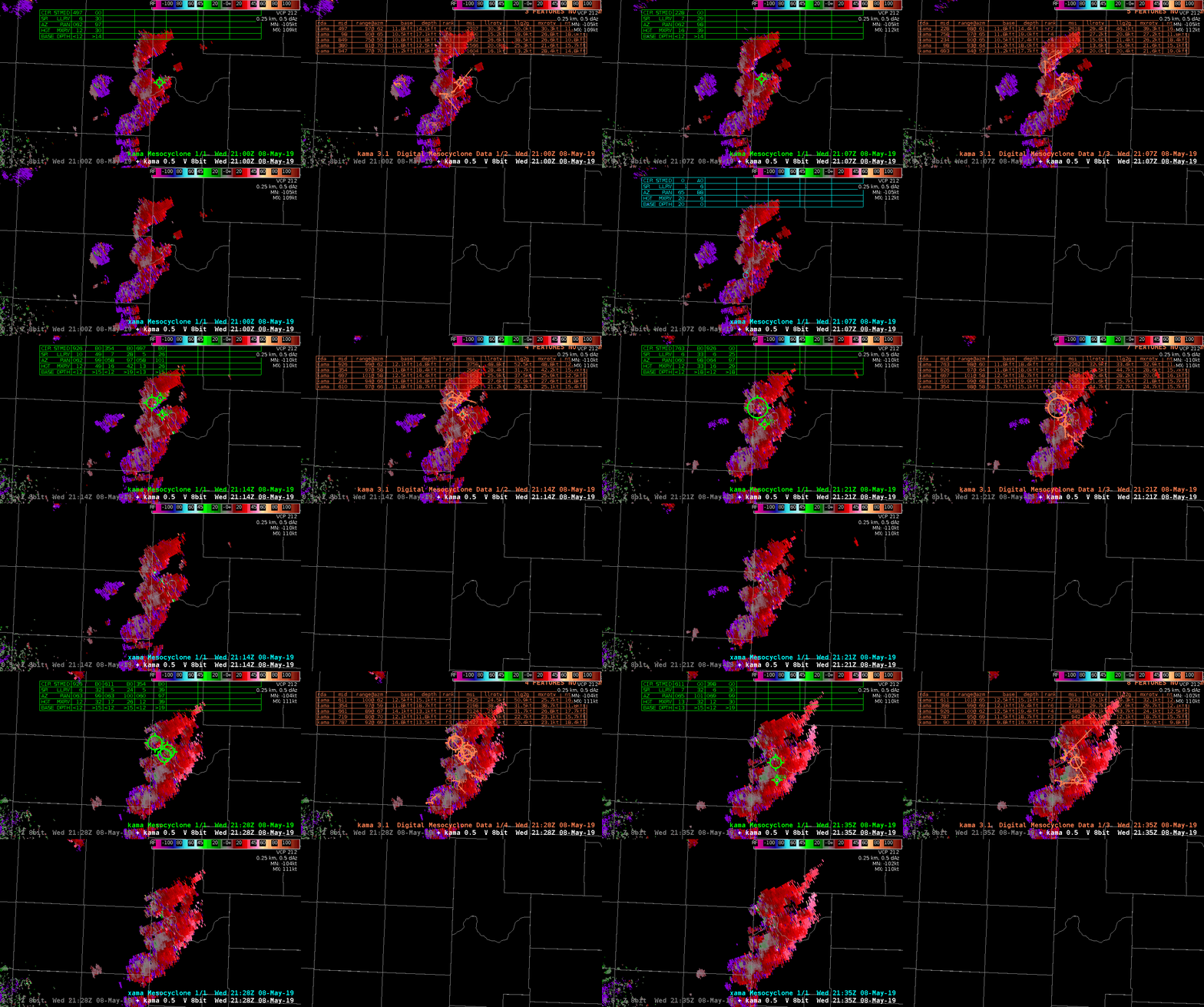
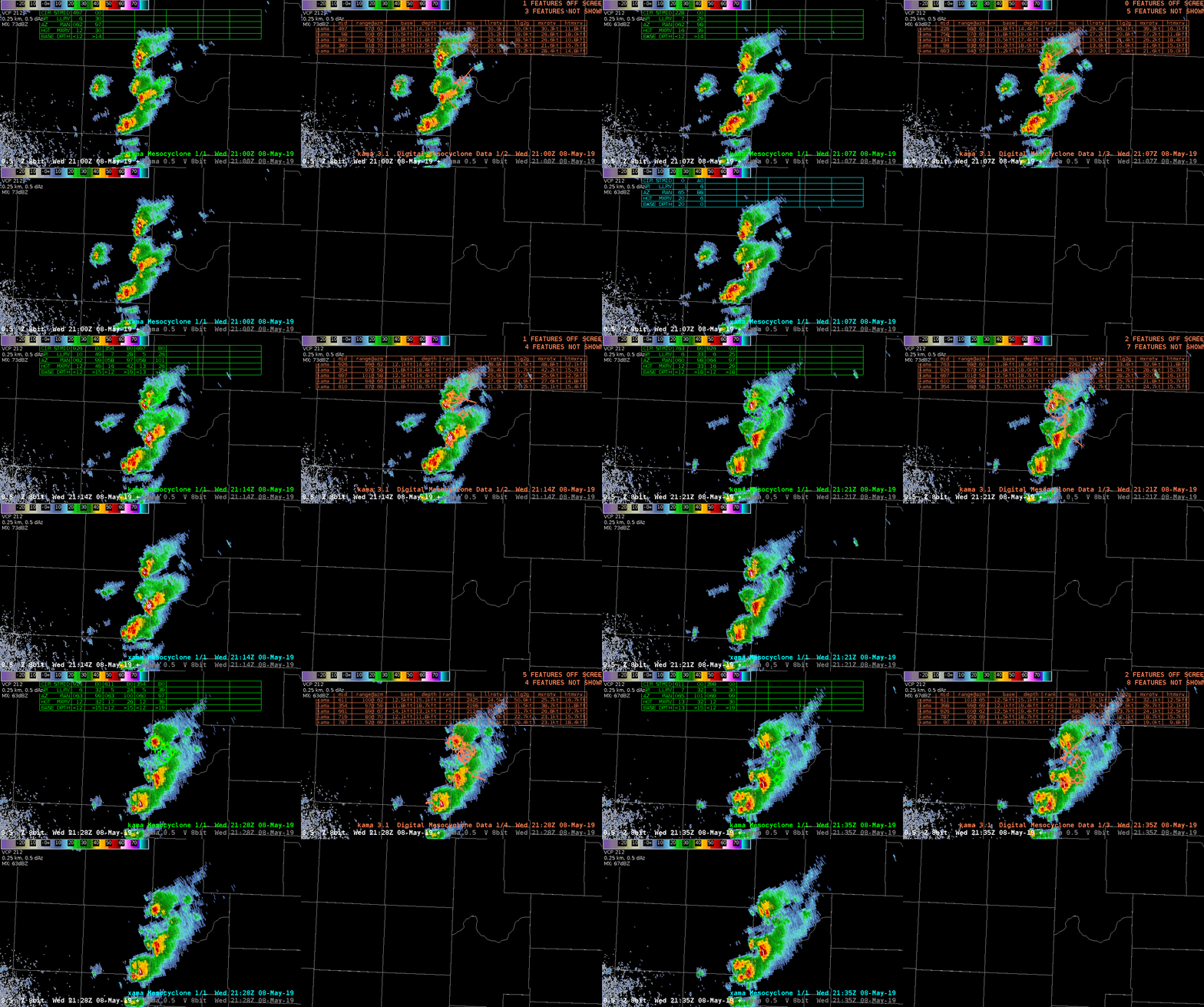
In general, the performance of the NMDA along the thunderstorm line moving across the northern SHV CWA has been superior to both the MDA and DMDA in terms of more accurate detection of greatest, often small,  regions of cyclonic vorticity along the leading edge of the line that I’d likely be issuing TOR warnings for as a warning forecast in the SHV office today.

-icafunnel