Shields Disengaged

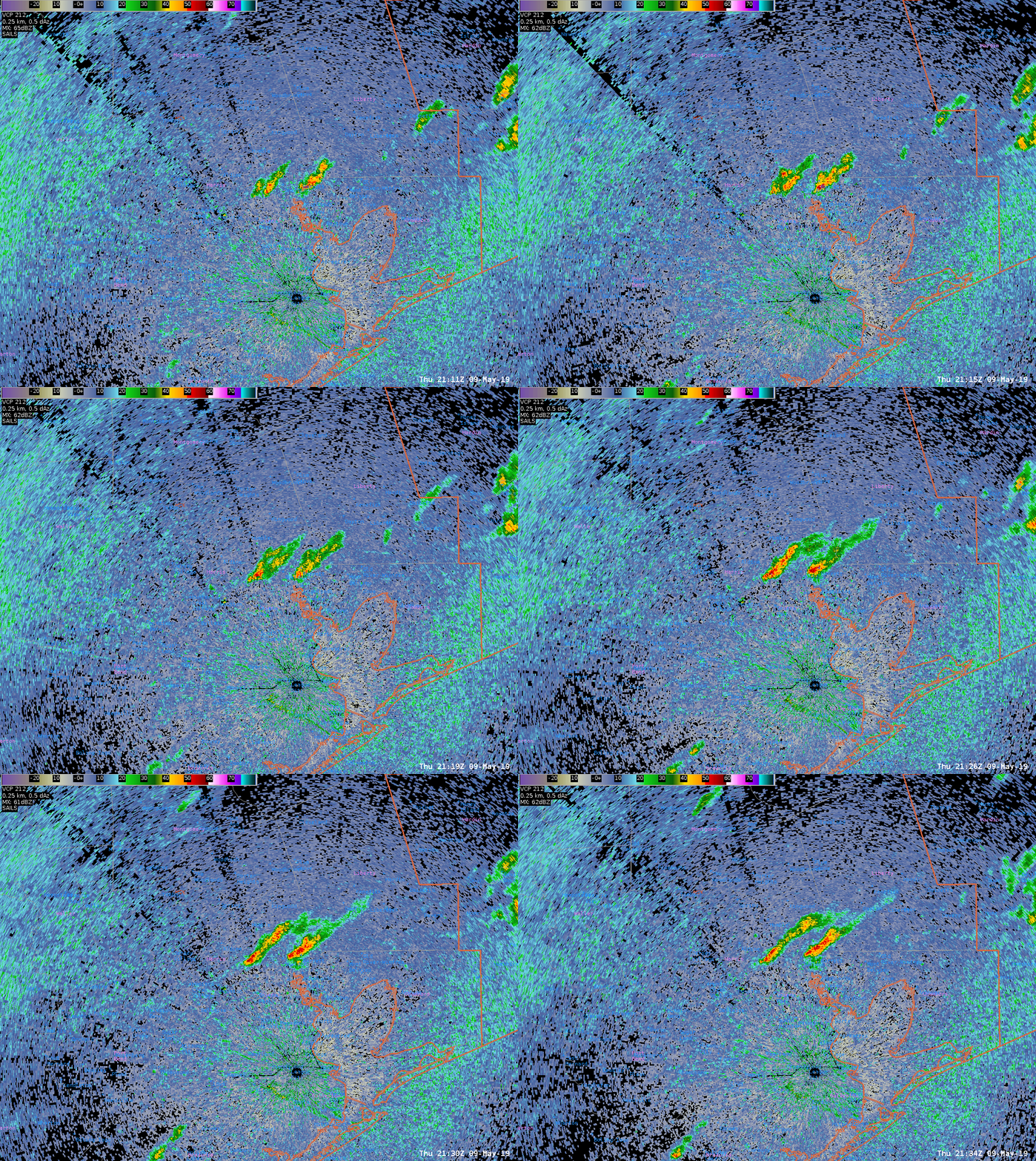
The cap finally broke over Houston’s CWA and we now have some storms to look at. Hopefully, these storms will hold together and become better organized so we can look at other products today. Given that CAPE is generally around 3000-4000 J/kg it shouldn’t be a problem, but we are on borrowed time.

Tags: None

Warning Decision Influenced by ProbSevere

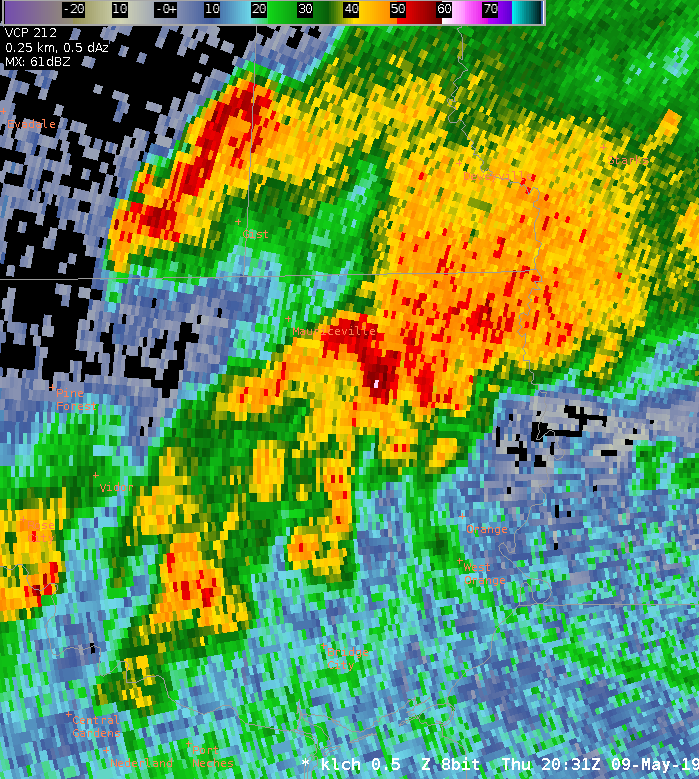
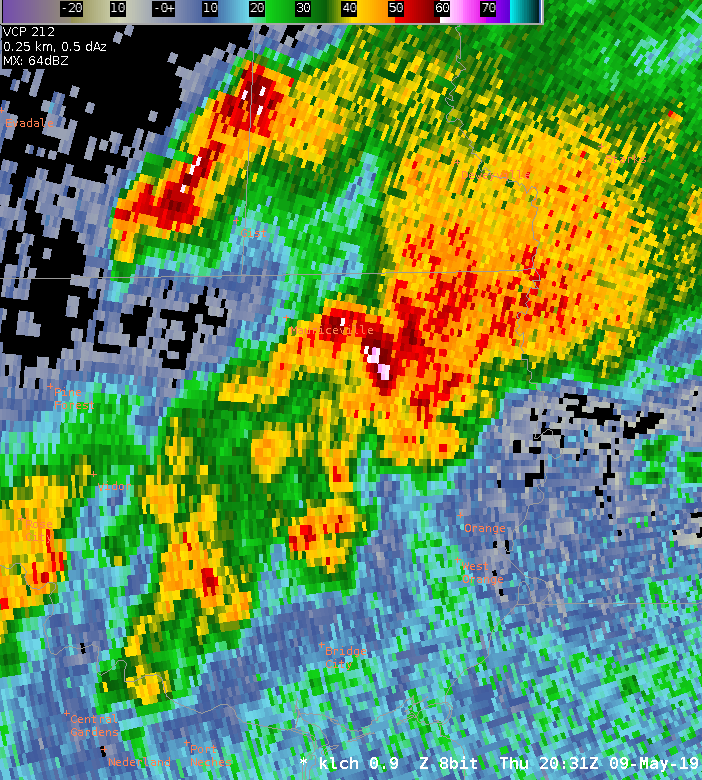
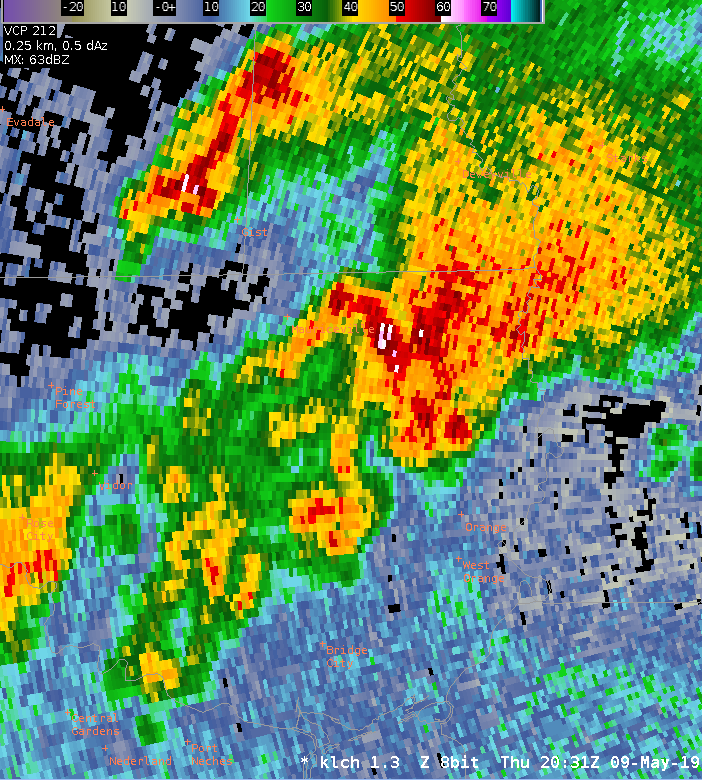
Since our shields have been engaged all afternoon I decided to look at a storm to our east. Below are a series of reflectivity images from the three lowest scans (0.5, 0.9, and 1.3)…

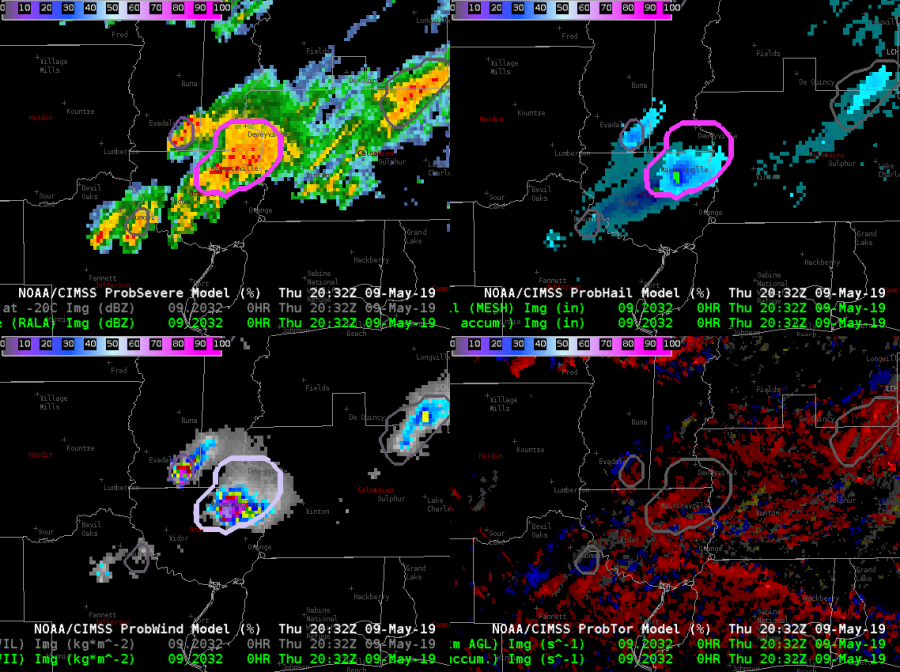
I won’t lie to you, if I were back in my home CWA I would have probably issued a SVR based on these scans, but I decided to hold off on issuing one today until we got close to 90% probabilities to see how ProbSevere did.  So what did ProbSevere show? Here is a sample of various MRMS products overlaid with ProbSevere contours…

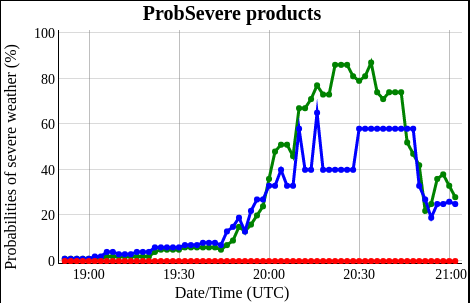
And here is a time series for this storm looked like…

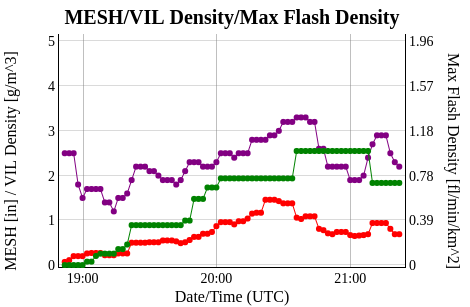
These trends looked pretty impressive, with ProbHail peaking around 86%. The increase in probabilities make sense, with MESH peaking around 1.4 in (below in purple).

We will have to wait and see if my decision to not issue a SVR based on a ProbHail is justified, but based on the lack of any reports, I think it may have been a good call.

UPDATE…The storm in question got one severe hail report.

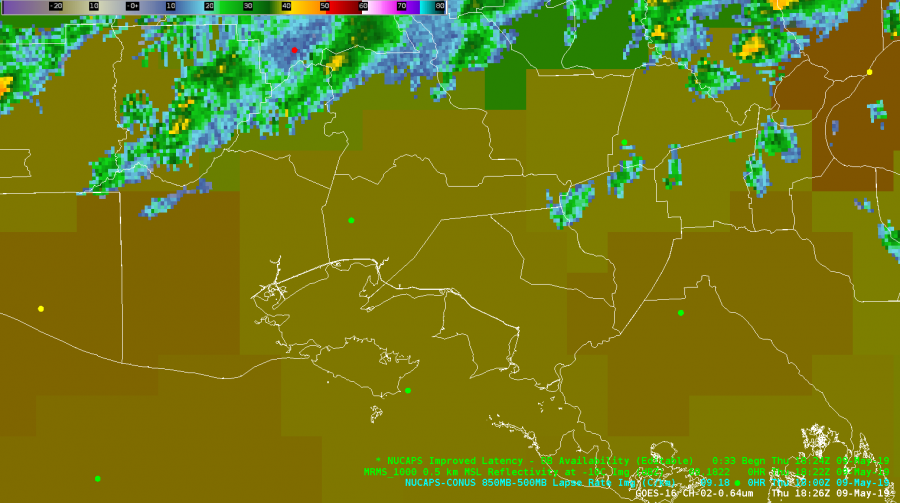
NUCAPS_Ahead of Line

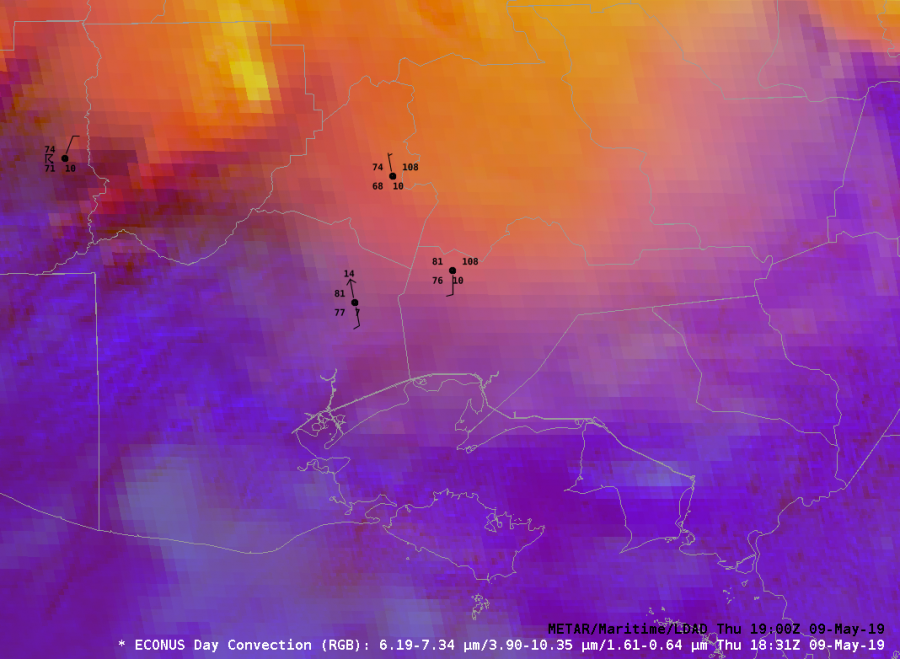
NUCAPS data in advance of convective line today. Iberia County METAR station coincides with NUCAPS operational sounding (modified soundings not available today).


As you can see from the plotted NUCAPS sounding below, the surface values are too low. From the METAR in western Iberia County, you can see in the first image the the T/Td values are 81/76. Sounding surface values are 76/70. Other sounding points in the pre-storm environment are also about 5 degrees too low on temp and dew. While I can modify these, it doesn’t give me confidence in an accurate representation of the boundary layer and on any day expected to be busy I’d likely use other products.

-icafunnel


Four Views of TPW

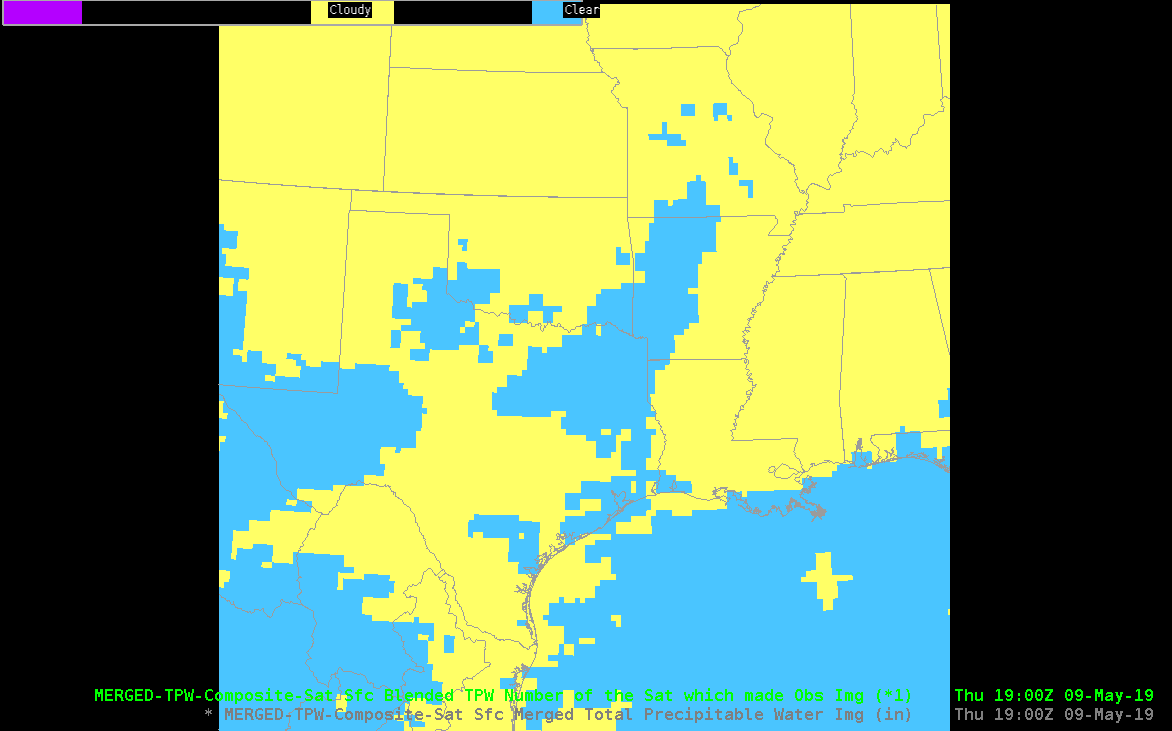
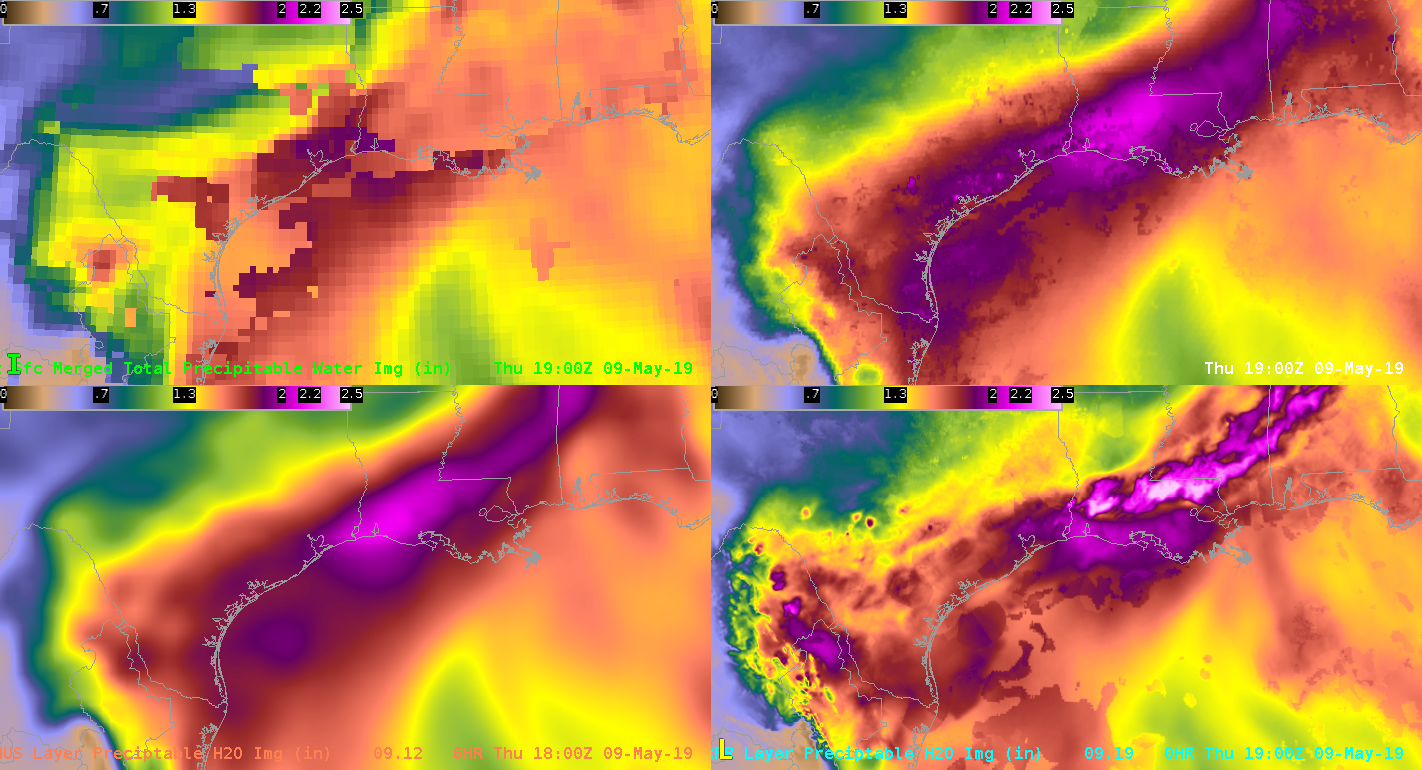
After making some adjustments to the color scaling, we’re able to mix model and analysis products of TPW.   The GOM was mostly clear, while clouds covered most of the land.  A very moist airmass was onshore, the Hammond LA GPS site measured 2.25″ of TPW.

The GFS and HRRR forecasts both indicated this maximum.  The All-Sky LAP also did well, although it’s field is a reflection of the good GFS forecast.  The Merged TPW did not generate these very large purple values (> 2″ of TPW) except in a very small area.  The polar orbiter TPW retrievals used in Merged TPW must not have sampled these large values to advect in.  The operational blended TPW (which relies heavily on GPS sites for the analysis over land) also showed a maximum.  This points to the possibility that including the surface GPS network into Merged TPW and All-Sky LAP might be a way to increase the precision of these analyses.

Cloud Mask from CIRA Merged TPW (blue = clear; yellow = cloudy)


Four Views of TPW along the Gulf Coast at 19 UTC 09 May 2019: Upper Left: CIRA Merged TPW: Upper Right: All-Sky LAP. Lower Left: GFS 6 hour forecast @ 18 Z, Lower Right: HRRR 1 hour forecast @ 19 Z.

Analyses and forecasts all agreed well on the drier air over the central GOM.


JohnF

Prob Severe New Cell Detection

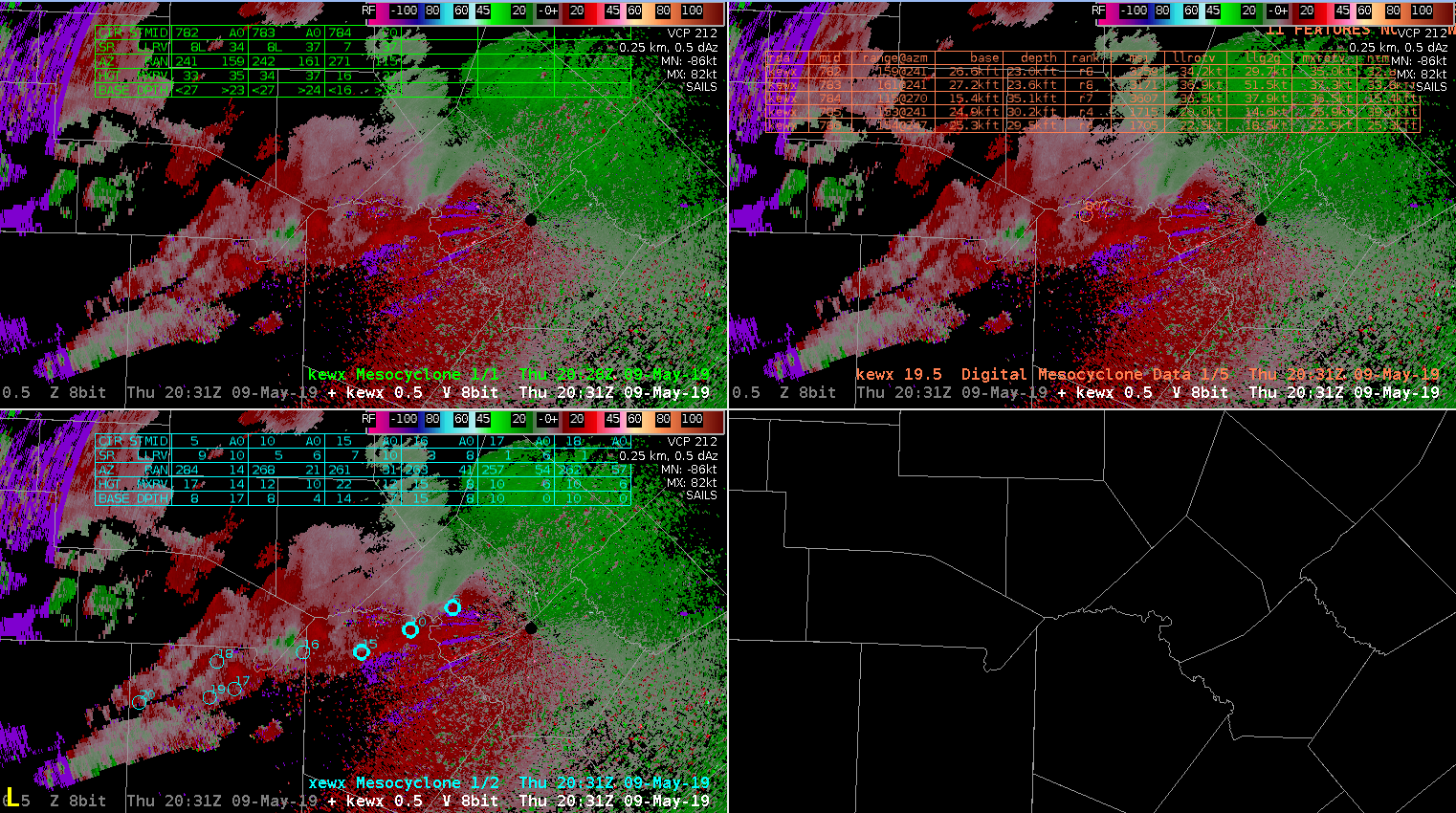
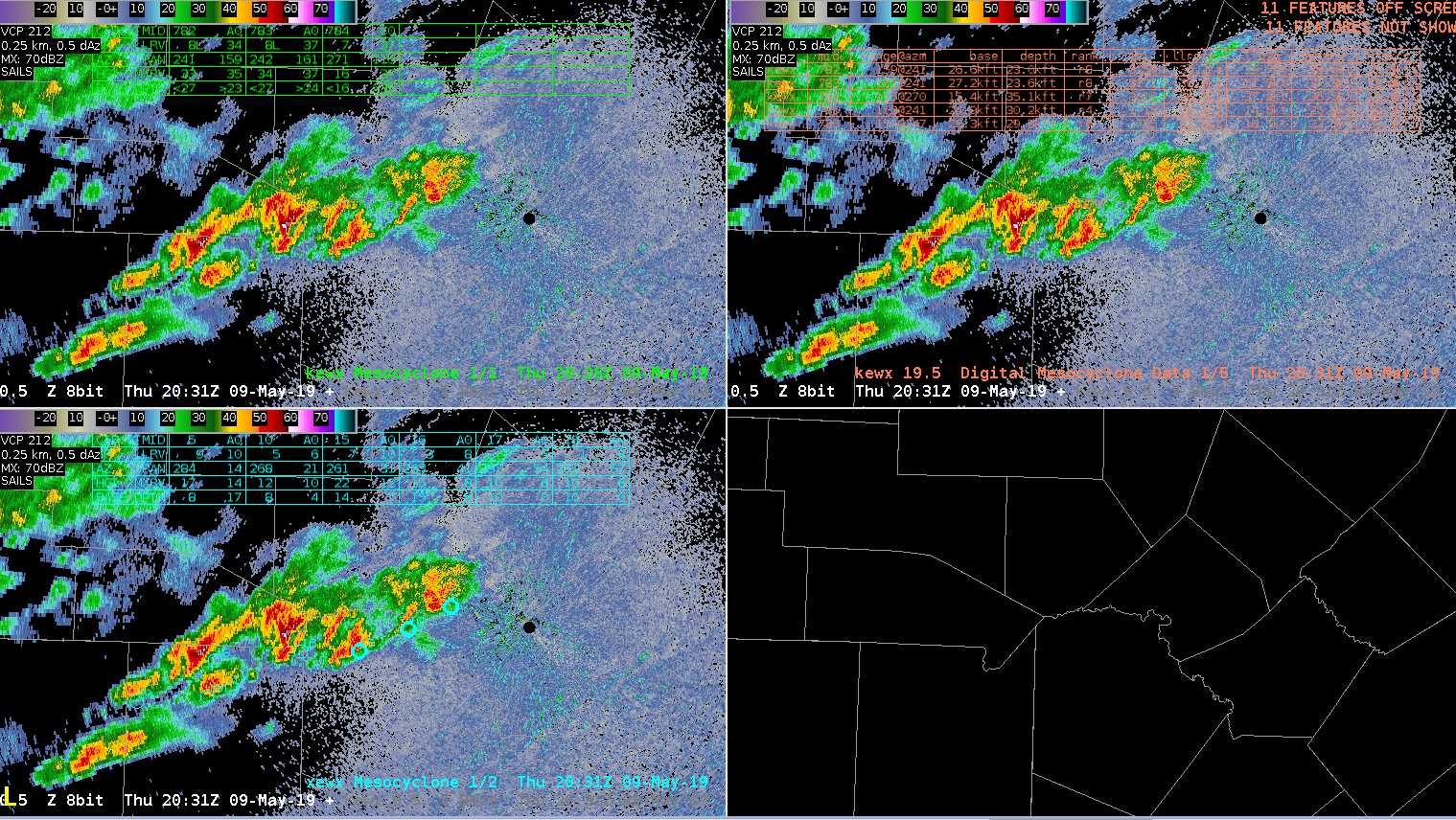
Here’s an example where Prob Severe was slow to detect a new cell on the southwest flank, which is a fairly typical severe scenario.  And when it finally does detect the cell, it is combined with the already large conglomeration of convection.

ZDR_Arcophile

Wherefore art thou Convection?

Two hours in and we are STILLLLLL waiting for convection to fire in the KHGX CWA.  Front is stalled across the northern quarter of the CWA and the sea breeze has pushed inland from the southeast.  Come on storms…really?
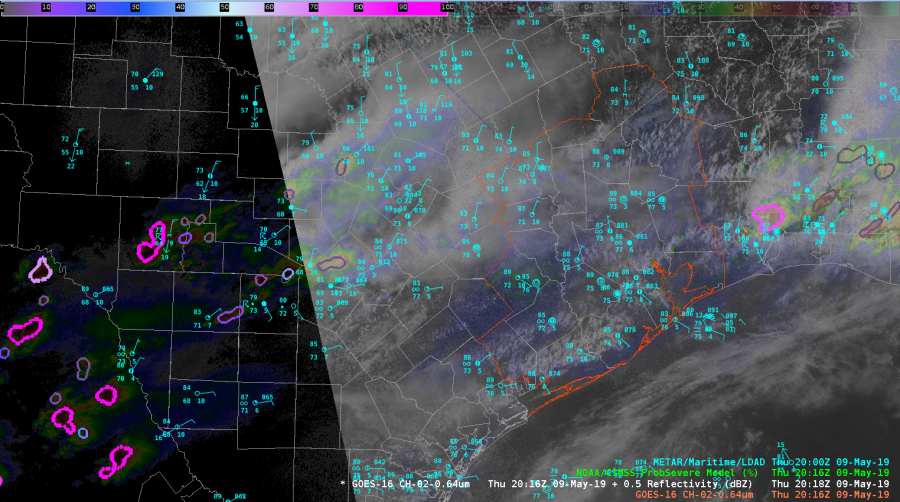
O.K., why no convection?  KLCH launched a sounding at 17Z which looked like this from GOES-E (why this is important in a bit):
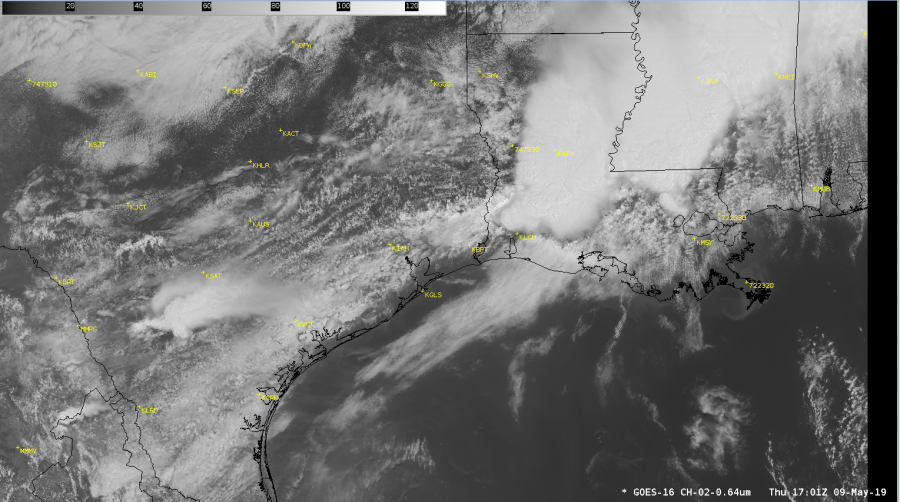
Congrats to Lake Charles getting a special sounding off before those storms arrived!  This is what the lowest half of the sounding looked like with boundary layer conditions guessed from the near the center of Houston’s CWA at KTME (Houston Executive Airport):
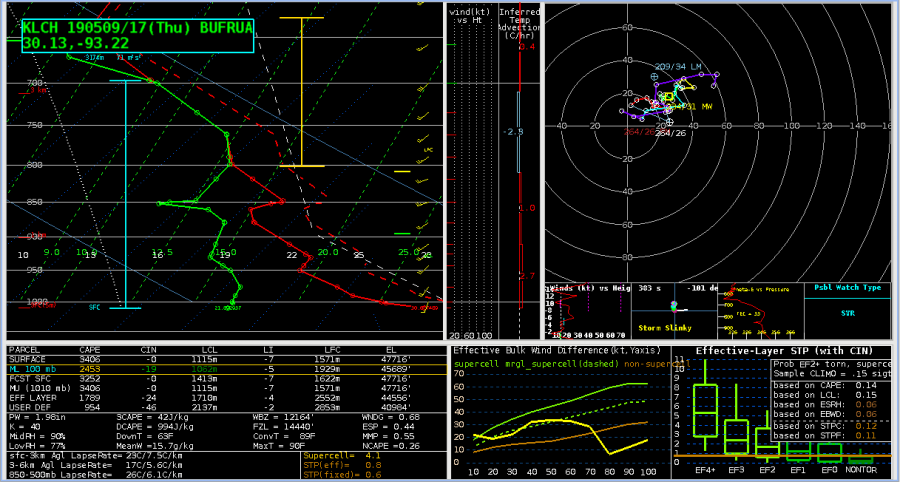
No Cap, ~2500 J/KG MLCAPE, surface moisture isn’t mixing out too much….so, where are the storms?

Let’s take a look at a NUCAPS sounding taken from this point almost an hour after the KLCH sounding:
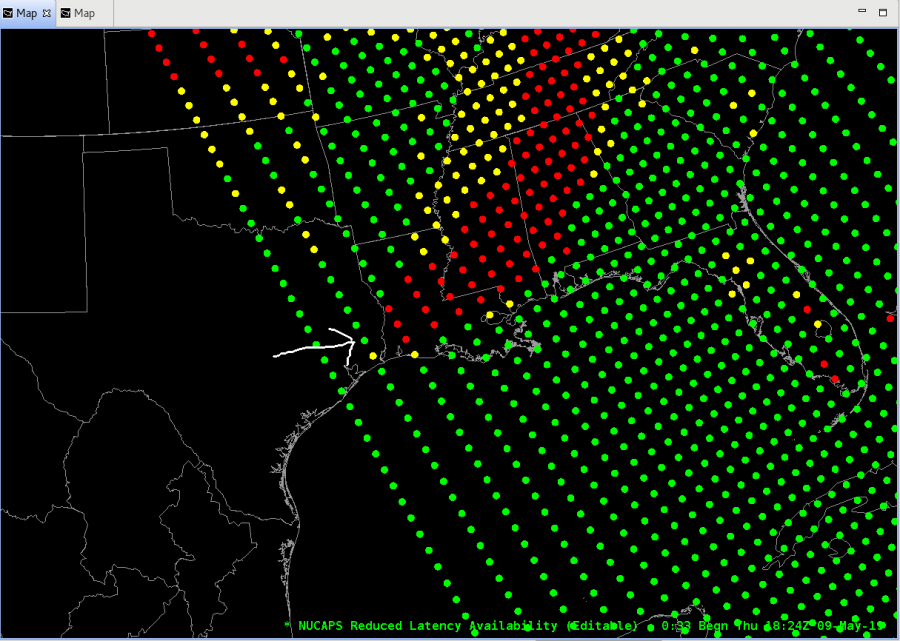
I know you are going to ask…why not the next closest dot further west?  Well, it is on the edge of the instrument swath and that has a whole host of problems.  Second thing is that the soundings along the edge looked…wonky…compared to the next row further east.  The sounding at that point, again modifying the surface conditions for KTME (88/75 T/Td):
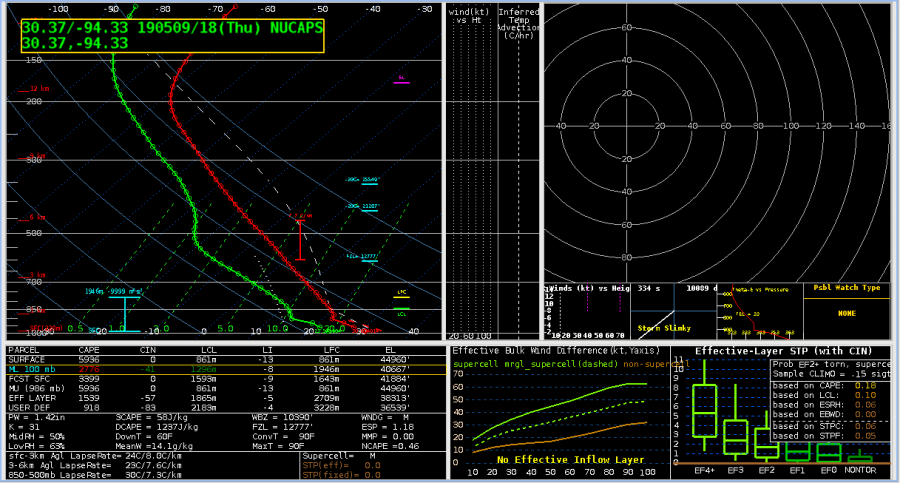
Things that make you go; hmmmm.  Using the MLCAPE profile, the NUCAPS sounding shows that there probably is a residual EML behind the departing storms that the KLCH didn’t capture ahead of the storms.  That may be just enough to keep the atmosphere capped and storms at bay.  There isn’t much of a cap, so hope continues we will get convection over the KHGX CWA.

NUCAPS sounding profiles – thumbs up for helping figure out what is going on.  And get more polar orbiters up and going so we can have more than two soundings per day…preferably on different orbital inclinations for better spatial coverage. Please?

-Dusty

Prob Severe Combines Discrete Cells

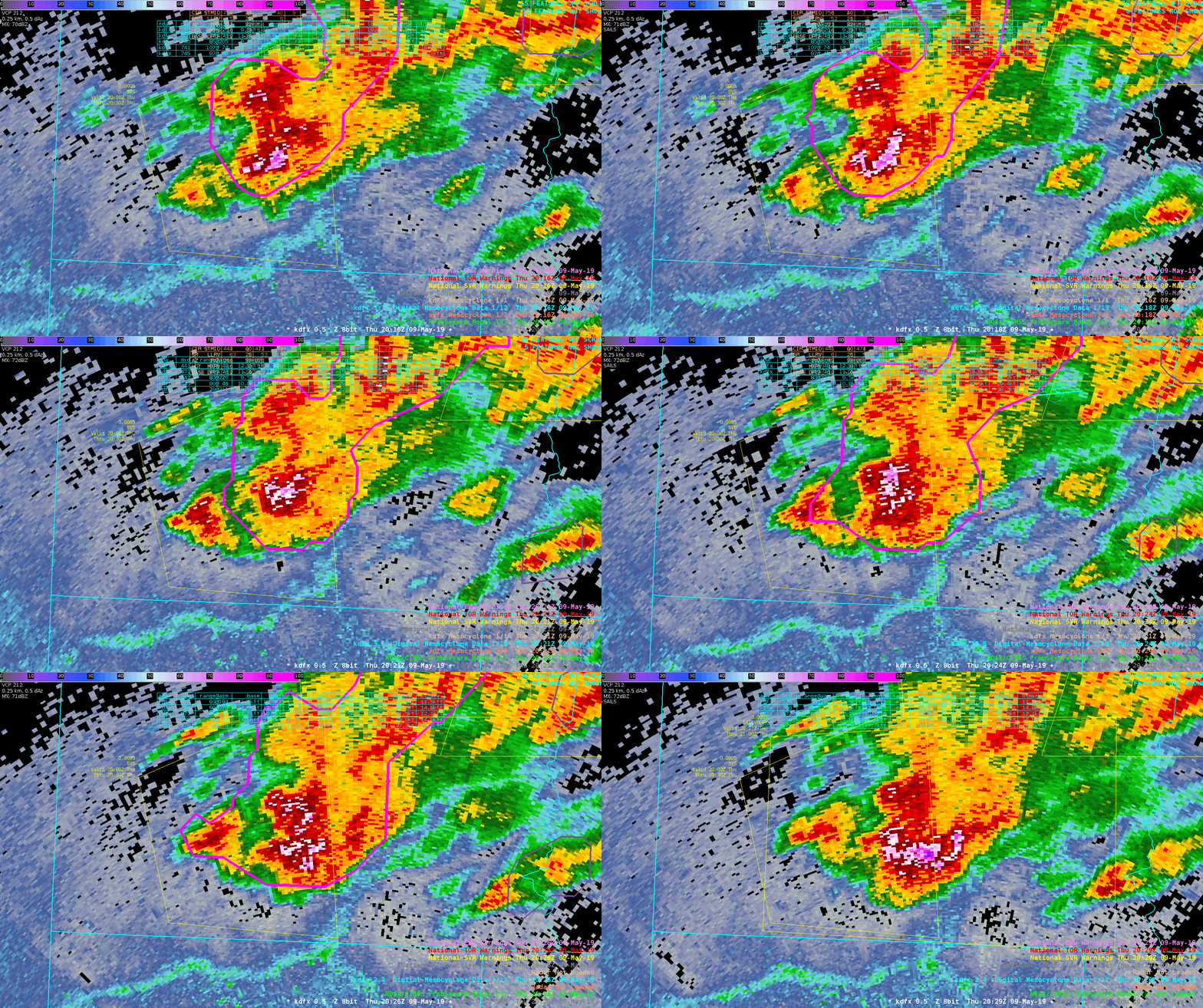
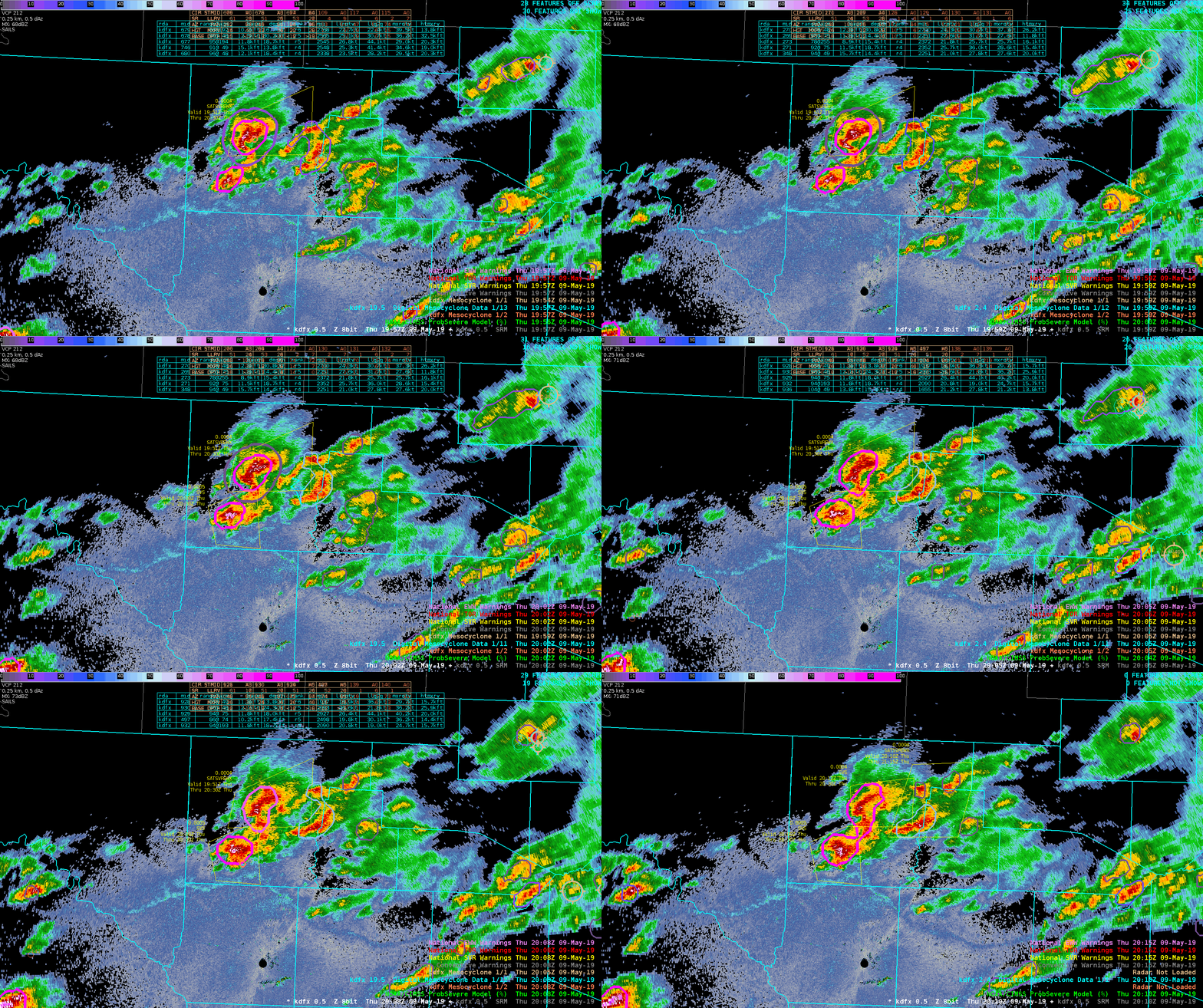
Here is a prime example of two warned storms with distinct updrafts that were combined due to their close proximity to each other. As opposed to being slow to recognize splitting cells, ProbSevere actually took two established discrete cells with separate updrafts and combined them.

ZDR_Arcophile


MRMS and ProbSevere – SAD Match made in the EWP

Wanting a good way to keep up on the environment while also monitoring for storm development?  Give this combo a tryout (and note, I totally stole this from another EWP participant this week.  Why?  Because it works!)

Top left: MRMS Reflectivity at Lowest Altitude (RALA), Reflectivity at -20C, ProbSevere All
Top right: MRMS Maximum EstimatedSize of Hail (MESH), MRMS 60 Minute Hail Tracks (50%             Alpha), ProbHail
Bottom left: MRMS Vertically Integrated Liquid (VIL), MRMS Vertically Integrated Ice (VII,                    100%), ProbWind
Bottom Right: MRMS 0-2km Merged Azimuth Shear, MRMS 0-2km Rotation Tracks 60-minute          accumulation (35% Alpha), ProbTor

The nice thing with this display is that you can quickly sample any of the objects to get details on what is going on with any given storm to keep situational awareness.

Yeah, that’s a lot of text on the 4-panel but each one is specific to the threat in the pane and the ProbSevere (top left) is a bit of everything mixed in.  So far, it has worked with all convective modes we’ve seen so far in the Testbed.

-Dusty


Case Study AzShear

As the case study begins, having had the weather brief of the situation, my initial intention is focused on the supercell east of the surface low ahead of the cold front line. At 2013 I notice in the merged AzShear producing a line of cyclonic vorticty farther west. Looking linear and relatively disorganized on reflectivity and velocity (0.5-1.3) my attention returns to the likely tornadic supercell approaching the GA state line.


However, in walking back through the data a little, I happened to look at the EOXAzShear product at 2016. This view looks much less linear with the updraft on the northern extent of the lint that stretches along the cold front to the low. If I only had the merged AzShear product with the MXX reflectivity/velocity at the time, I’m not sure I would’ve caught this updraft. By 2019, a velocity couplet is becoming apparent in the .5 degree vel data from MXX with the trailing storm.

The merged AzShear product does show an increase in cyclonic vorticity with the trailing cell from 2010 to 2019. Also rotation tracks is beginning to track the circulation center in earnest from 2015-2019. The development of this circulation given the storm  position from the radar makes the circulation difficult to detect to the eye, even increasing vertically in the volume scan, so the suite of shear products, particularly the ability to view the storm differently in the single site AzShear products helped me to detect the developingd circulation in the trailing cell on the northern end of the line that I may not have seen in a timely fashion in real time without that data. 

As the first supercell is crossing the state line, both the single site MXX AZShear product and the merged rotational track products both more clearly show the likelyhood of a tornado compared to the MXX vel data, a trend that  continued as the circulation crossed into western GA. Having the single-site AzShear products likely would have been an important additional to tool to the realtime warning forecasters on this day.

From a situational awareness perspective on the larger view in covering this day, I find for me that the ability to see the single site AzShear products is more effective to me than either the merged AzShear or the rotation tracks to find other circulations of interest that would need at least interrogation from additional warning forecasters in addition to the two main tornadic storms.

-icafunnel