EWP STATUS FOR 8 MAY 2013: 2 – 10 PM SHIFT

EWP STATUS FOR 8 MAY 2013: 2 – 10 PM SHIFT

For Wednesday, we are monitoring the potential for severe storms across the western High Plains.  Model guidance suggests that a weak shortwave trough will begin to impact this area by mid-afternoon.  Storms are forecast to develop by mid-afternoon in southeast Colorado, and expand eastward along the warm front / bent-back region.  Moderate instability and shear will create the potential for supercells, with a transition to a mesocale convective system possible.

CWAs Likely to See Operations: Dodge City, Wichita

-G. Garfield, Week 1 Coordinator

Tags: None

Daily Summary: 7 May 2013

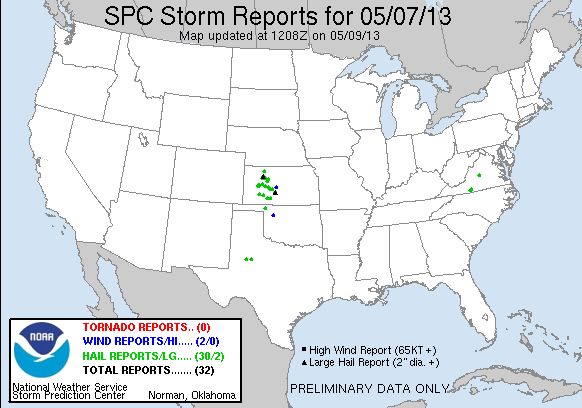
stormreports_0507
On Tuesday, our day began at 1 p.m. in the Development Lab.  We spent 20 minutes debriefing on Monday’s operations, after which we examined the Day 1 forecast.   At the conclusion of the EWP forecast discussion, we joined the EFP in the HWT to discuss their forecast.   Upon further review, we concluded that the Goodland and Dodge City, Kansas County Warning Areas would provide the best opportunities for initial storm development.

We waited for convection to form until 4 p.m., when robust development began in Kansas.  The Goodland crew – consisting of Jonathan Kurtz and Jonathan Guseman – issued 12 severe thunderstorm warnings over the course of the evening.  The Dodge City crew – consisting of Andrew Hatzos and Nick Hampshire – issued 10 severe thunderstorm warnings.  The mesoscale desk – consisting of Hayden Frank and Marc Austin – monitored the mesoscale through late afternoon.   At that time, it became apparent that storms were likely to develop in the West Texas Lightning Network, so Hayden Frank monitored the Lubbock storms.  Geoff Stano (NASA/SPORT) noted that the storms produced less robust PGLM signatures than expected (compared to the Southeast networks).  These assignments were carried through until 8:15, when the forecasters filled out daily surveys to end the day.

-G. Garfield, Week 1 Coordinator

Tags: None

Using MRMS for Storm Over Radome

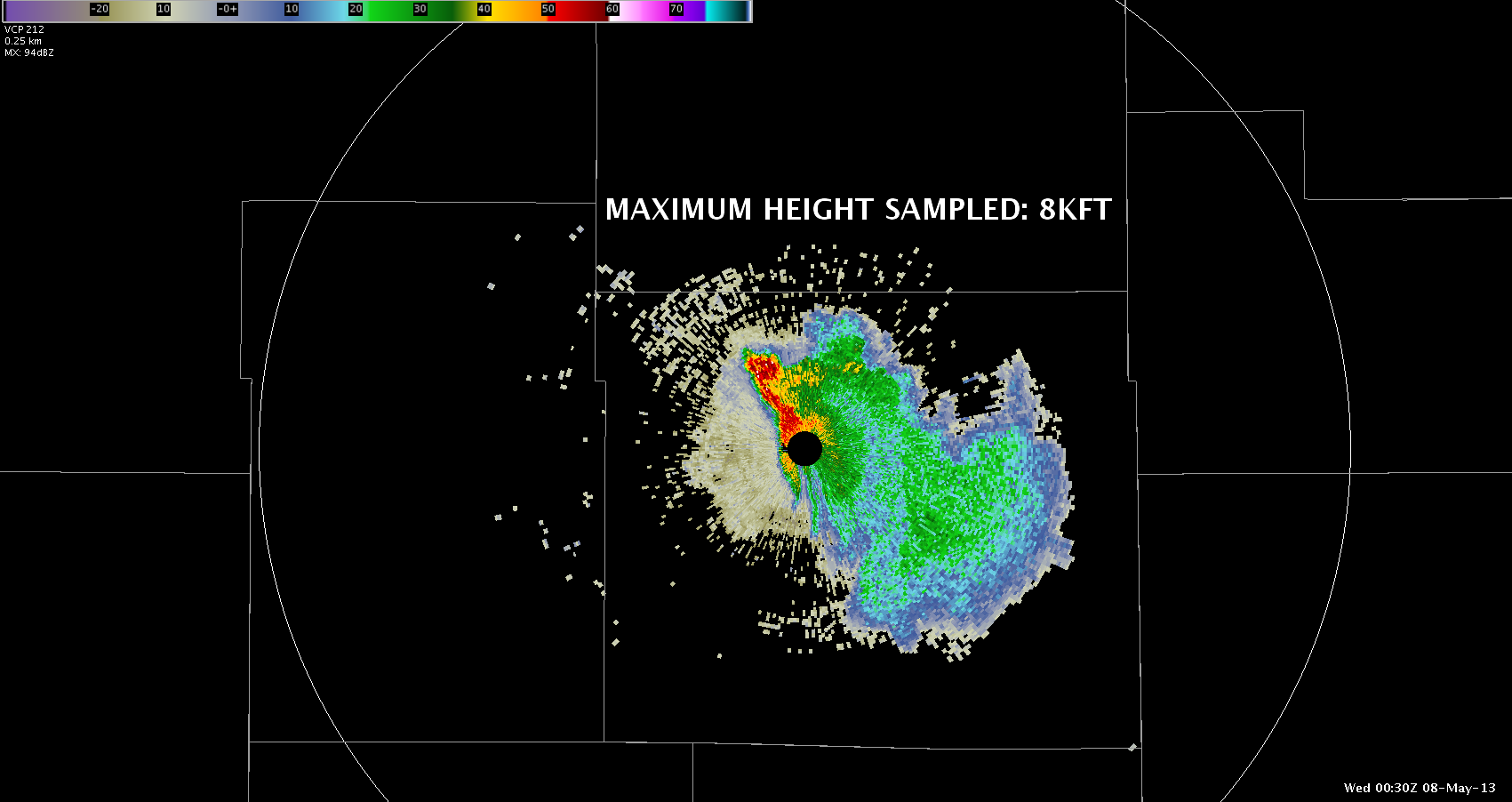
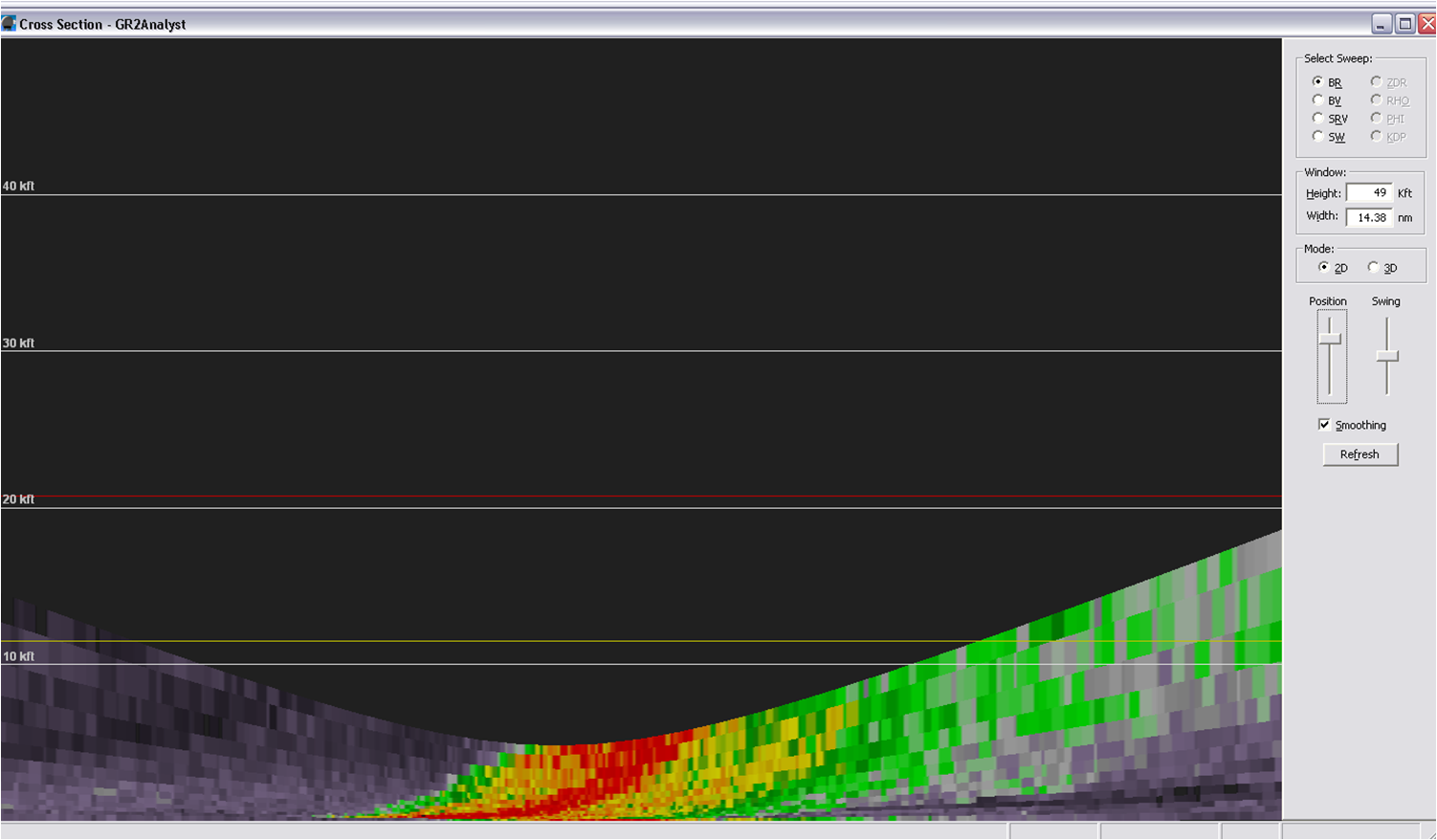
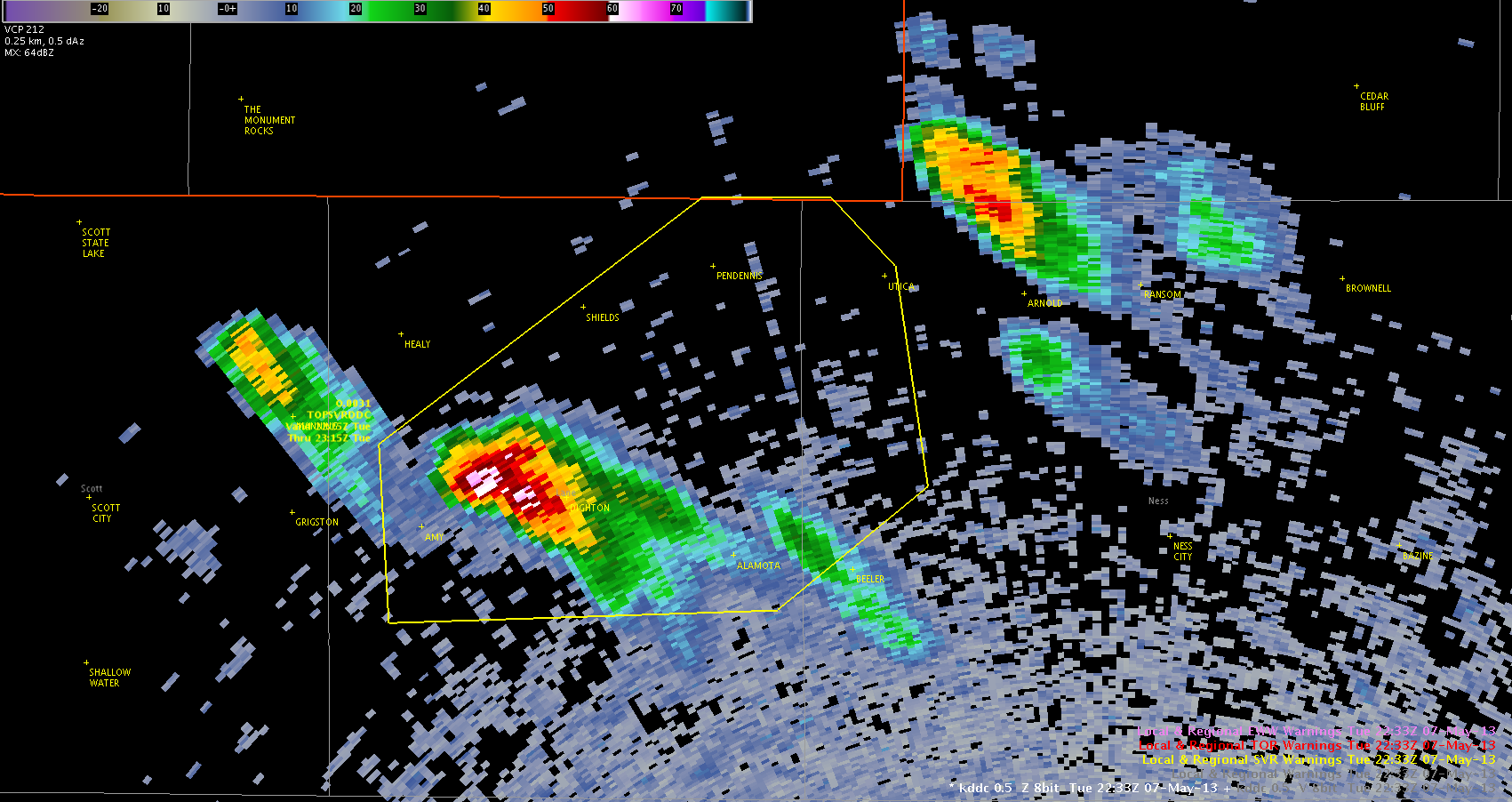
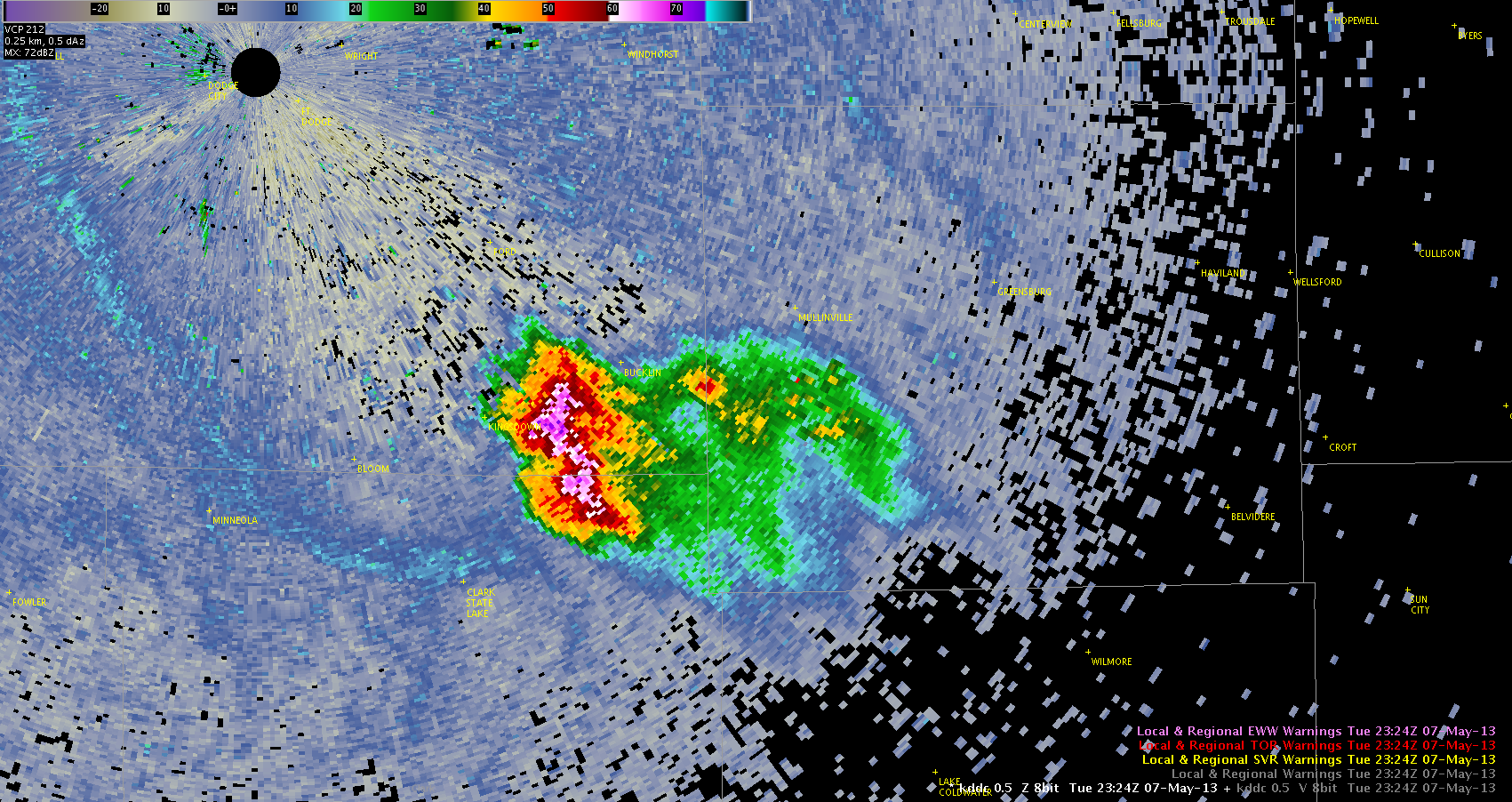
A strong to marginally severe thunderstorm tracked from west to east and passed over the KDDC Radome. If a forecaster were using the single radar, it would be hard to discern the storm’s chances to produce hail due to the highest beam being below the freezing level. MRMS comes into play here because it uses multiple radars to give the forecaster better information about the storm.

The 19.5 degree radar scan showing the storm on top of the RADOME.
Cross-section of reflectivity showing the maximum scan of the storm is not near high enough to interrogate the storm.

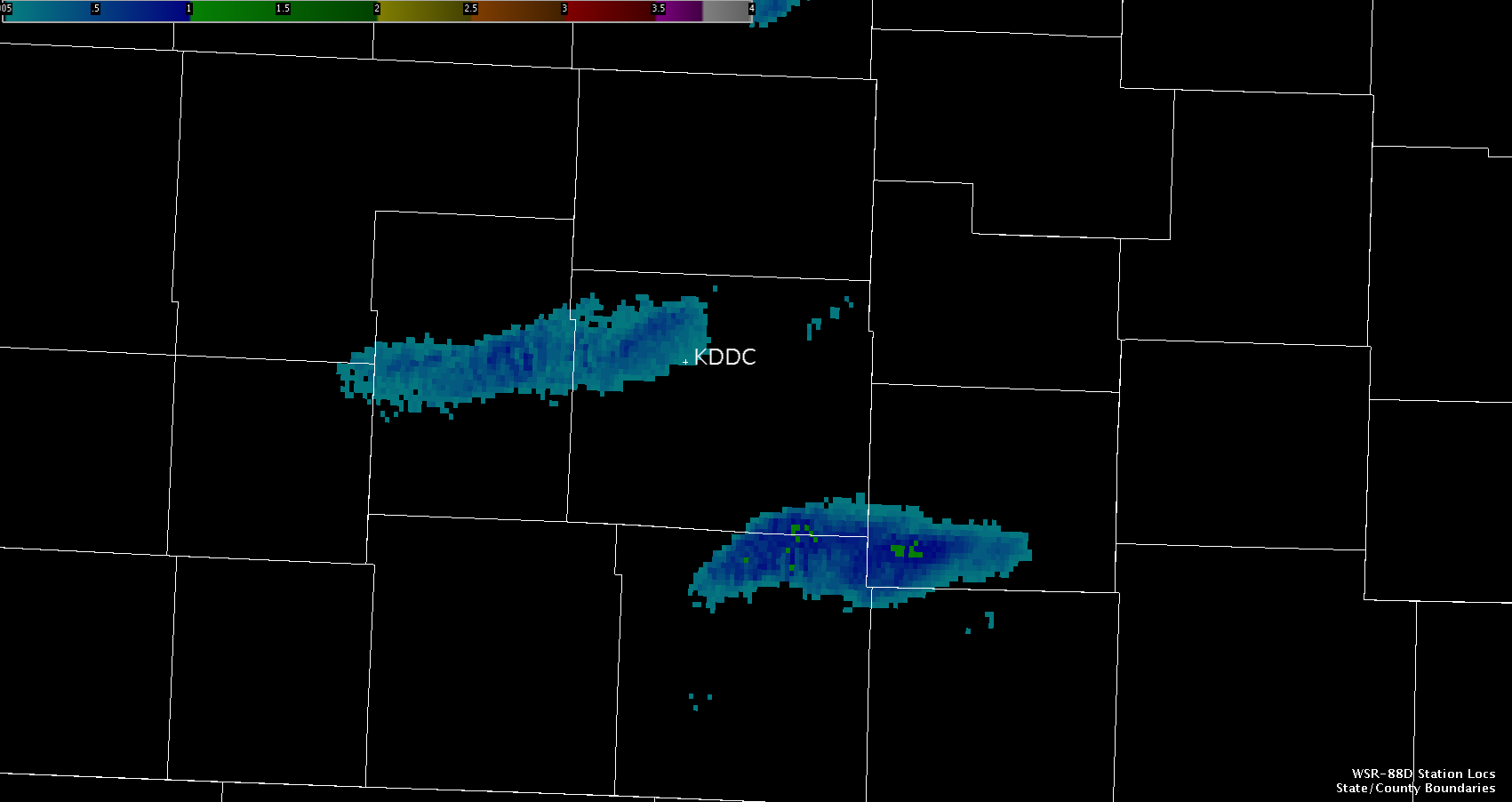
MESH was used to determine the estimated hail size as the storm tracked across the Radome. The algorithm was able to use other radars to sample the storm’s updraft and to estimate the hail size within the storm. This provided forecasters with useful information that would not otherwise be possible without the MRMS.

The 120 minute MESH track showing the estimated hail size did not decrease when the storm moved across the RADOME.
The 120 minute MESH track showing the estimated hail size did not decrease when the storm moved across the Radome.

Hampshire

Tags: None

MRMS 50 dbZ Echo Height Above -20C Product Aids in Dropping Warning

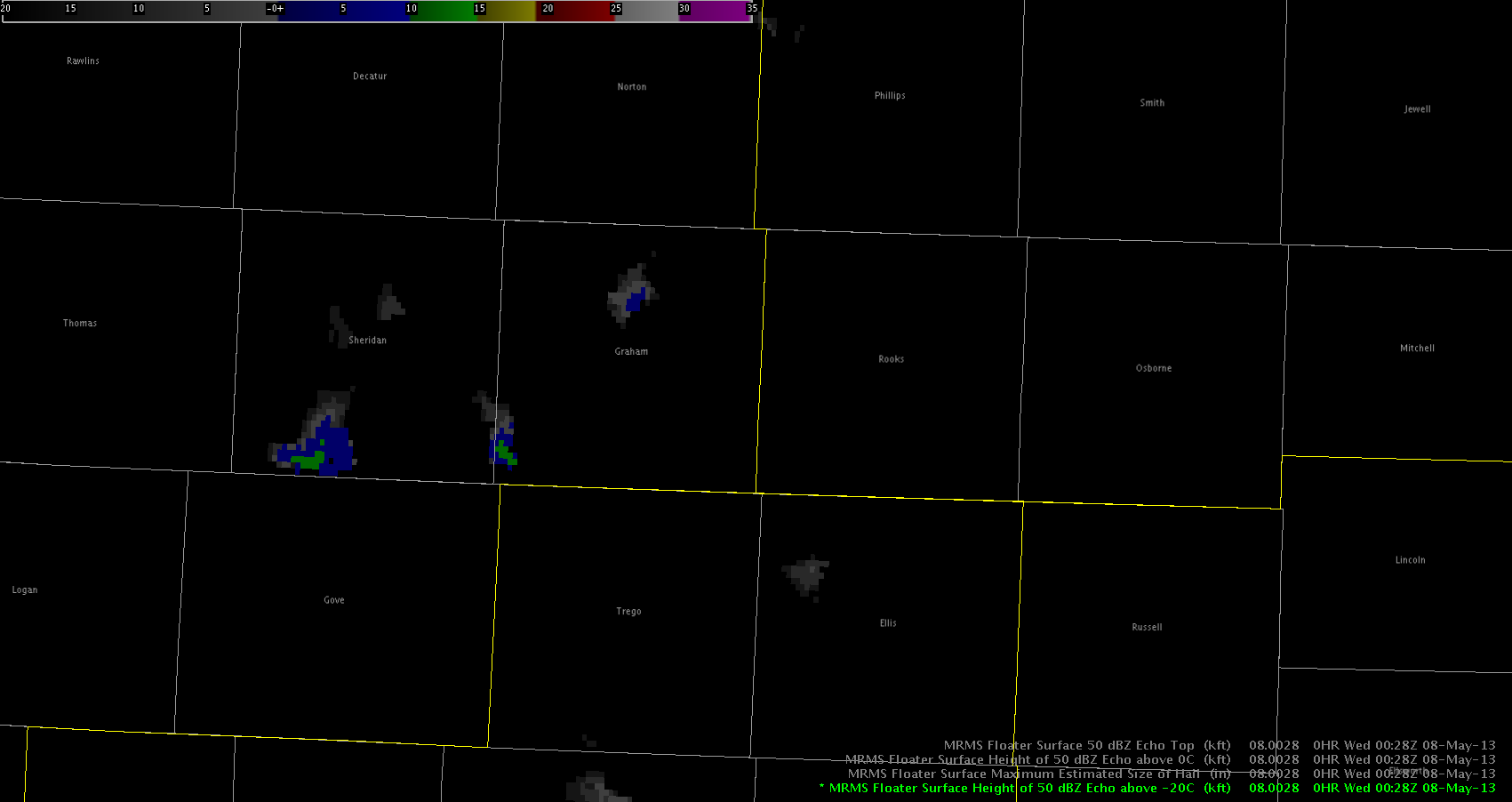
A strong to severe thunderstorm across northern Graham County, which previously warranted a Severe Thunderstorm Warning for quarter sized or larger hail, was replaced with a Significant Weather Advisory. This was due to a spotter report of dime sized hail as well as evaluation of the MRMS 50 dbZ Echo Height Above the -20C Product. The product showed a rapid decrease from near 20,000 feet to 6,500 feet before the warning expired. Subsequent product updates decreased this to 0 feet following advisory issuance.

50DBZ_ABOVE-20C
MRMS 50 dbZ Echo Height Above the -20C product showing a rapid decline in the core of the storm just before warning expiration and advisory issuance.

Kurtz/Guseman

Tags: None

Hail Lead Time from Cloud Top Cooling Products

As several storms developed in the DDC forecast area, and very slowly reached maturity (and severe intensity), the Cloud Top Cooling (CTC) product provided a significant amount of lead time.

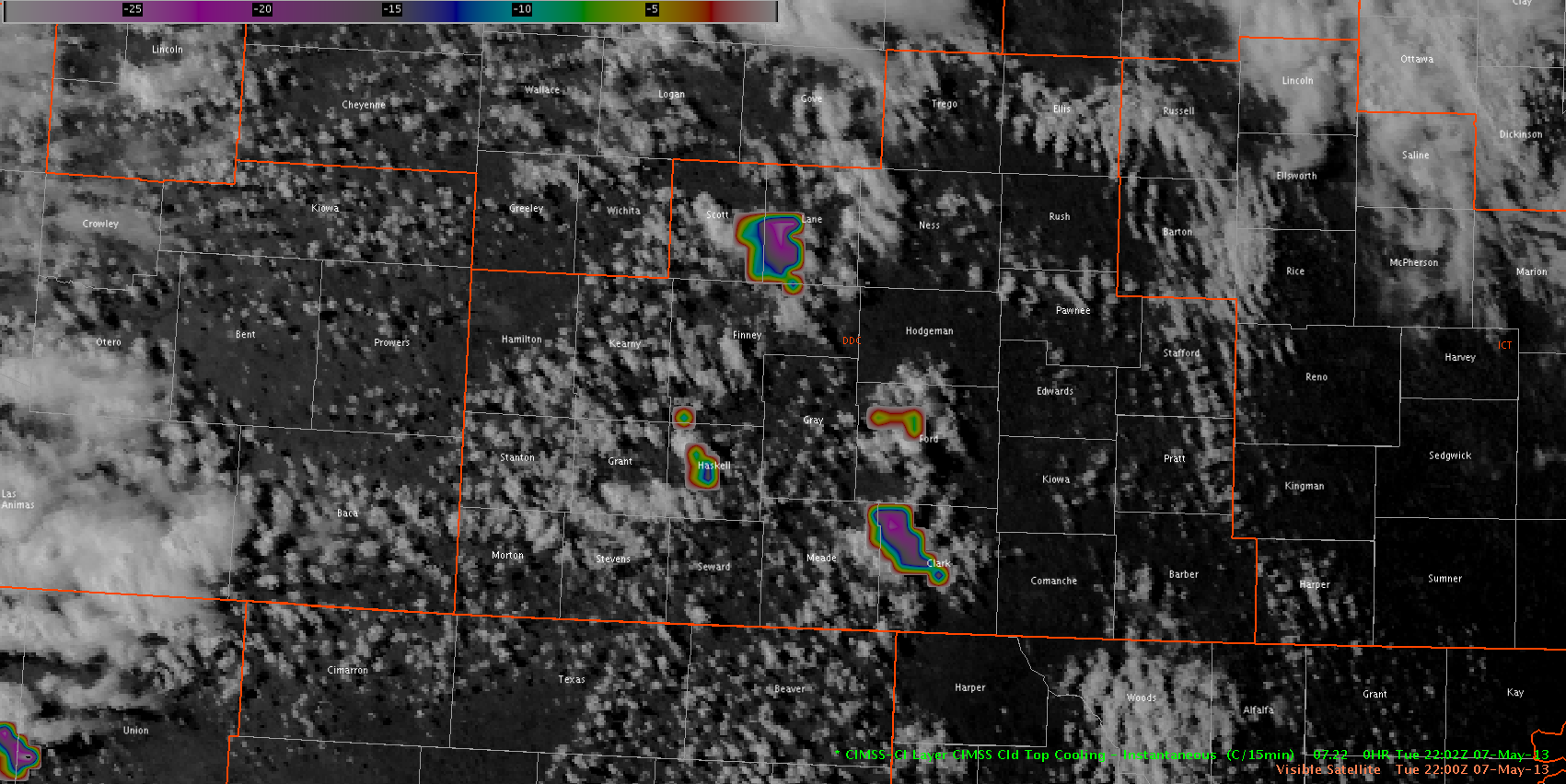
CTC at 2202Z, showing strong indications in Lane, Clark, and Haskell Counties.

At 2202Z, three areas showed strong (20+) indications on the CTC product. The two areas in Lane and Clark Counties went on to produce severe thunderstorms. However, the smaller area in Haskell County did not end up with severe hail reports. All three of these CTC areas continued for several consecutive time steps.

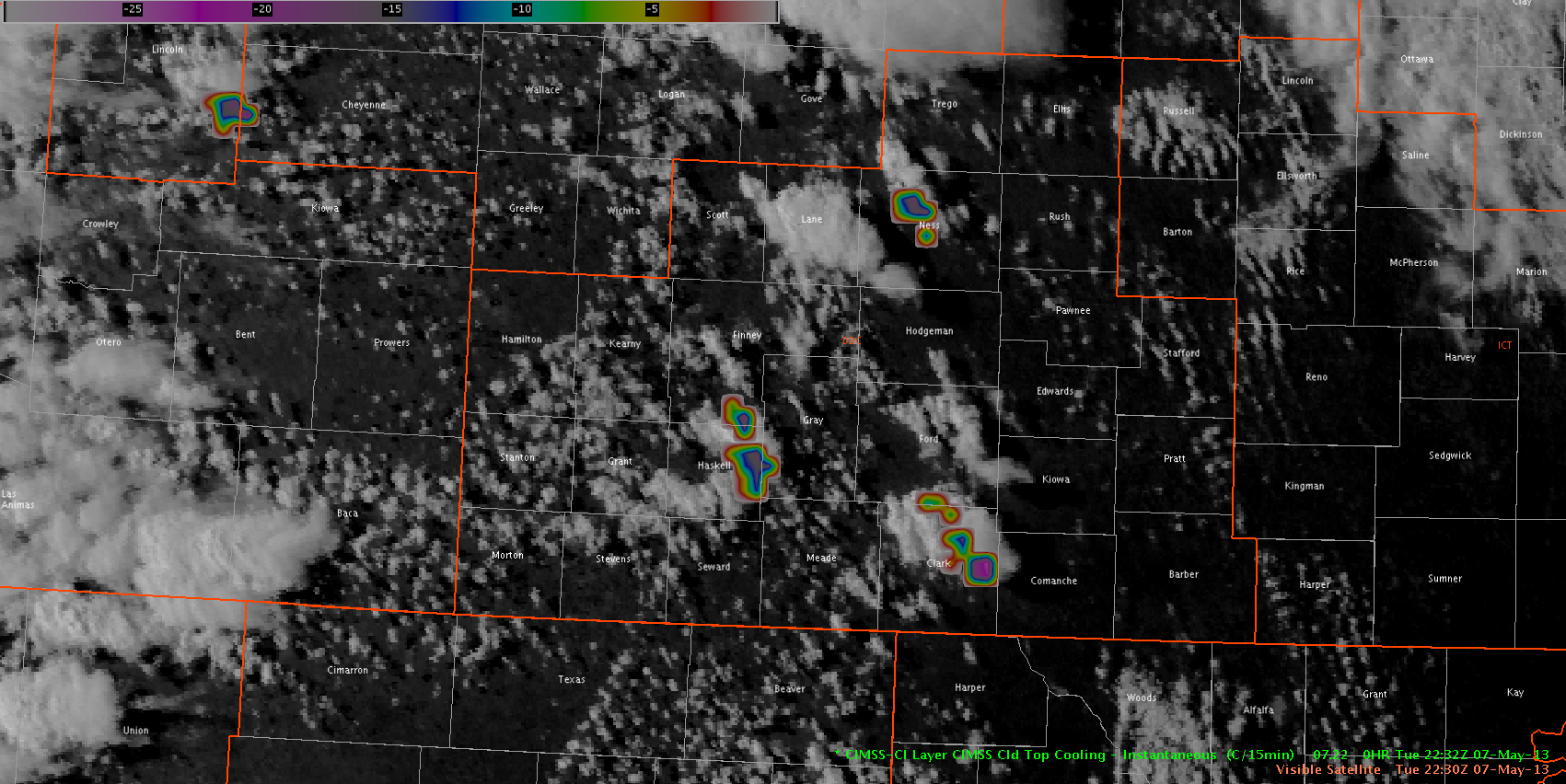
CTC at 2232Z. A new area has developed in Ness County.

An hour and a half later, a new area of strong CTC developed in Ness County. This area also persisted for several time steps, and preceded severe thunderstorm development as the storm moved into Trego and Ellis Counties. The area near Haskell County was associated with the one storm that did not become severe, while the Clark County CTC area was associated with the severe storm moving out of Ford County.

With the exception of the sub-severe Haskell County storm, the other three CTC indications were associated with future severe hail reports.

Ness County Storm. CTC first indicated strong values at 2202Z. Our warning was issued at 2225Z. The first 1" hail report occurred at 2222Z, and the first 1.75" hail report occurrd at 2233Z.
Ness County Storm. CTC first indicated strong values at 2202Z. Our warning was issued at 2225Z. The first 1″ hail report occurred at 2222Z, and the first 1.75″ hail report occurrd at 2233Z.
Ford/Clark County Storm. CTC first indicated strong values at 2202Z. Our warning was issued at 2224Z, and the first severe hail report (1.75") came in at 2325Z.
Ford/Clark County Storm. CTC first indicated strong values at 2202Z. Our warning was issued at 2224Z, and the first severe hail report (1.75″) came in at 2325Z.
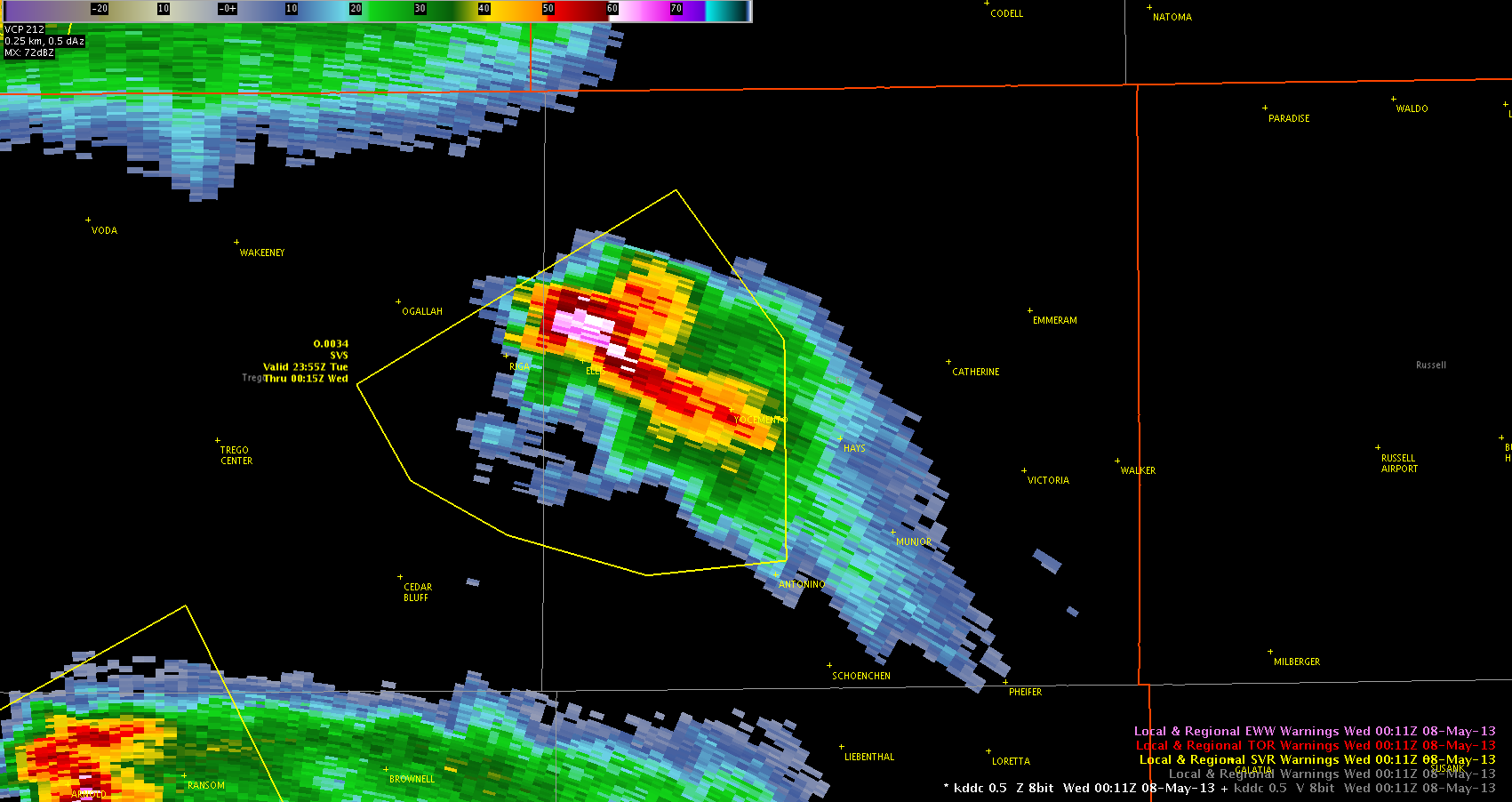
Ness/Trego/Ellis County Storm. CTC first indicated strong values at 2232Z. Our warning was issued at 2331Z, and the first severe report (1.00") was received at 0010Z.
Ness/Trego/Ellis County Storm. CTC first indicated strong values at 2232Z. Our warning was issued at 2331Z, and the first severe report (1.00″) was received at 0010Z.

–Hatzos

Tags: None

EWP2013 7 May 2013 2330 UTC Mesoscale Discussion

We continue to monitor isolated to widely scattered supercells extending from NW KS through SW KS/NW OK, with more isolated activity near LUB.4-panel_MD_Update_05072013
Recent sfc obs show area of backed winds over NW KS on northeast fringe of a broad lee trough drifting eastward from CO. Here, pooling moisture has contributed to modest instability per recent mesoanalysis with impressive wind fields, albeit somewhat weak in the upper levels. Some meager low level rotation has resulted from this area of backed surface flow, with a few reports of weakly rotating wall clouds. As LCLs decrease this evening, a very narrow window for tornadic development will exist, but low level shear will continue to limit this threat.

Further south, large hail and damaging winds have been the main threats with a few reports of up to golf ball sized hail. Deeply mixed boundary layer has resulted in high based storms within impressive steep mid level lapse rates favorable for hail production. Also, with inverted V nature of area soundings, would not be surprised if very strong winds are occurring with the most severe storms.

Even further south, areas in and around Lubbock have seen very isolated storm development this evening. One single slow moving supercell has been located near the border of Garza and Crosby counties. This storm also developed in a very localized area of backed surface winds, with enhanced surface convergence. Also, surface heating likely played a role in convective initiation, with temperatures climbing into the mid to upper 80s. This development was preceded by multiple CI and CTC signals, though they tended to be sporadic and indicated there may be many more storms than actually developed.

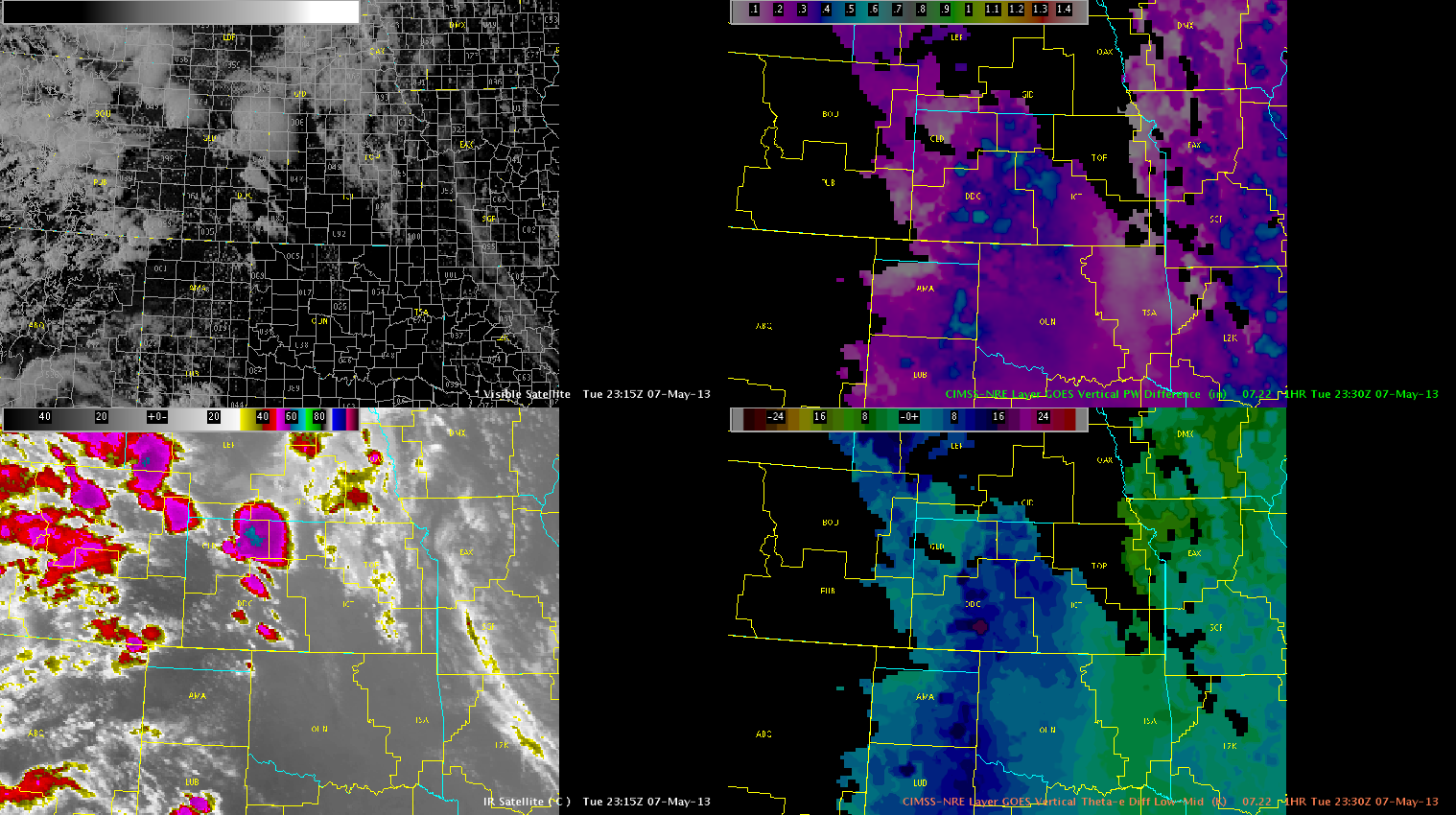
Heading into the evening, expect severe storms will generally persist through around 02z to 03z. Most activity appears to be diurnally driven. On exception to this will be parts of NW/N Cntrl KS, where an eastward propagating cluster may develop later this evening. Taking a look at Nearcast products, we observe that instability has taken a bit of a hit over the entirety of the area with ongoing convection, as has moisture depth. It still appears the most favored areas for persistent severe convection and supercellular activity will be over NW KS in Goodland’s CWA, eventually migrating into Hasting Nebraska’s area of responsibility.Nearcast_050713
Lubbock’s convection has diminished in the last hour, and will discontinue operations there. Will keep operations at DDC and GLD active through end of day as activity is expected to continue.

Austin

Tags: None

Possible impacts to CTC from Cloud Ice in Anvil Cirrus Shield

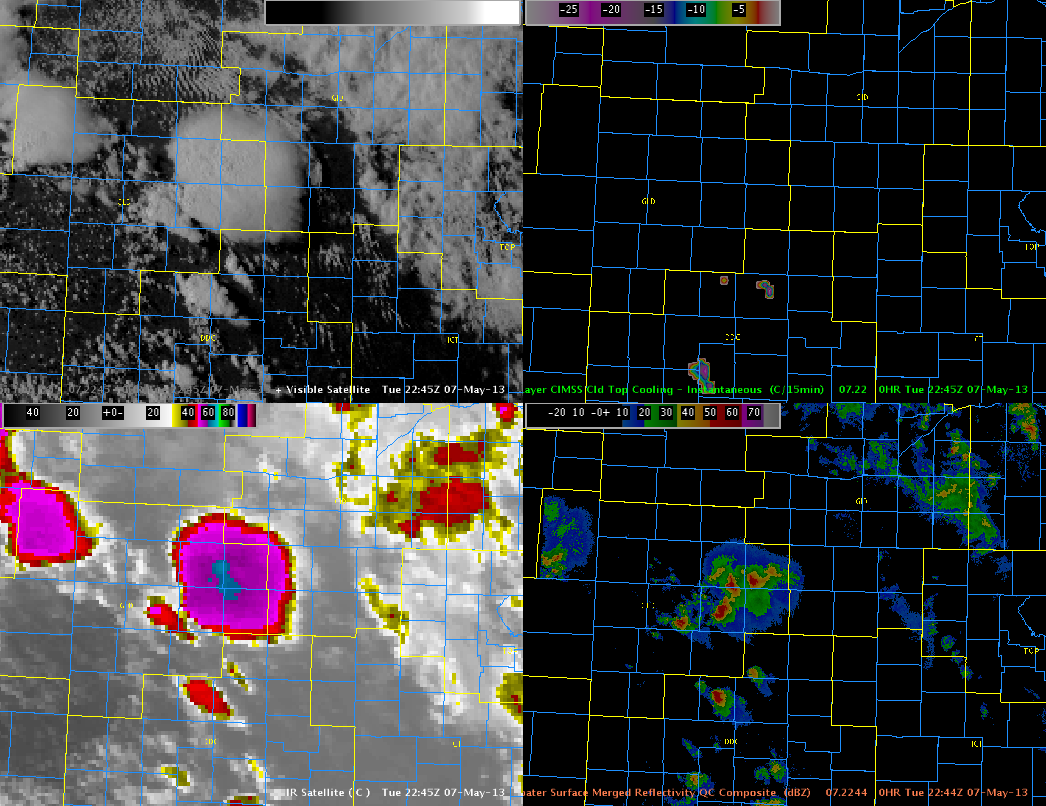
The use of CTC was restricted quickly across the GLD CWA this evening as the cirrus shield from the first updraft quickly contaminated the region due to cloud ice. From this point on, the MRMS products became the primary aids in deducing severe hail development.

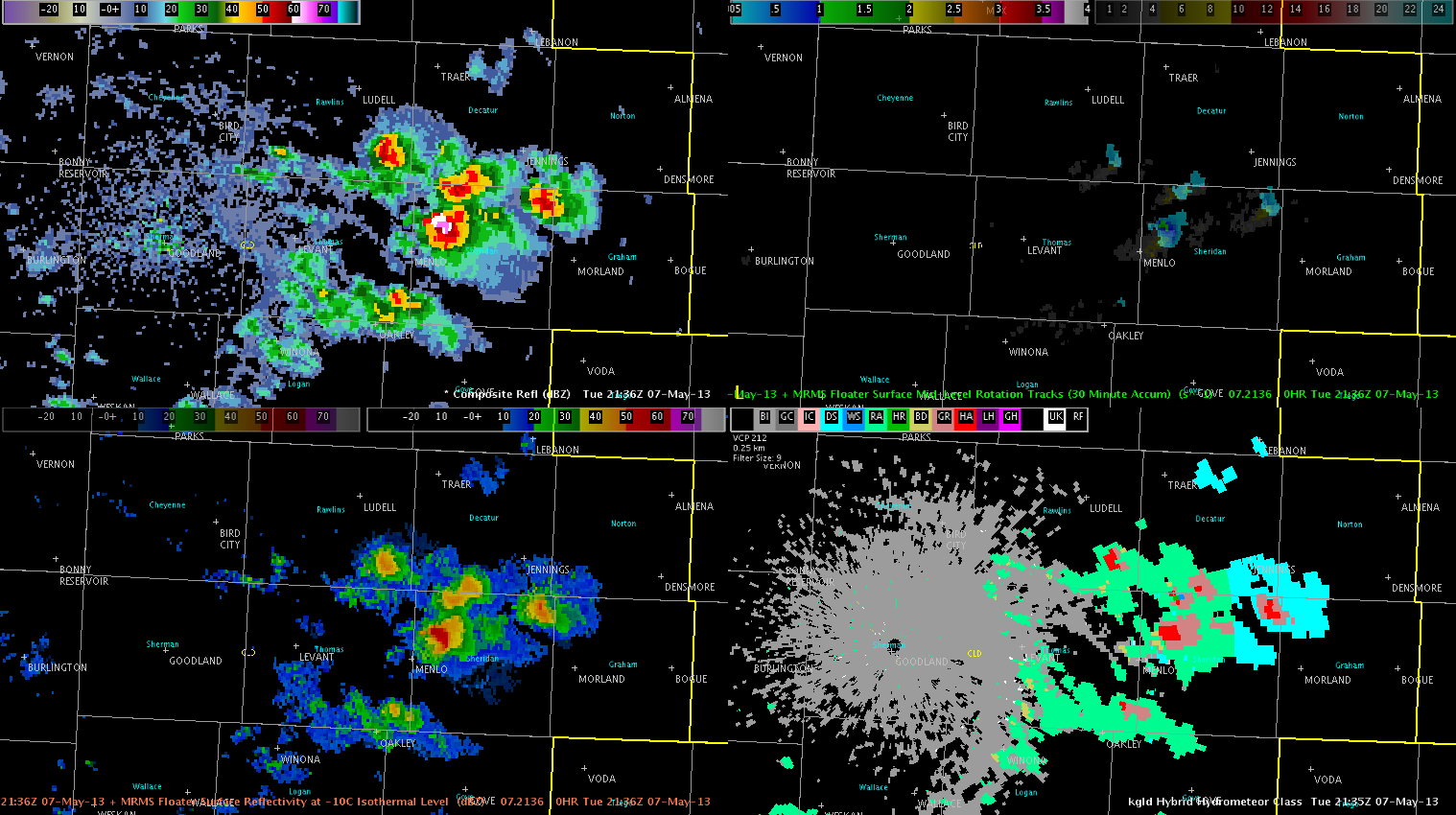
VIS imagery, CTC, IR, and MRMS QC composite reflectivity

Note the lack of CTC within the GLD CWA, while new updrafts continue to be detected by the CTC across the northern portion of the DDC CWA.

Kurtz/Guseman

Tags: None

EWP2013 7 May 2013 2215UTC Mesoscale Discussion

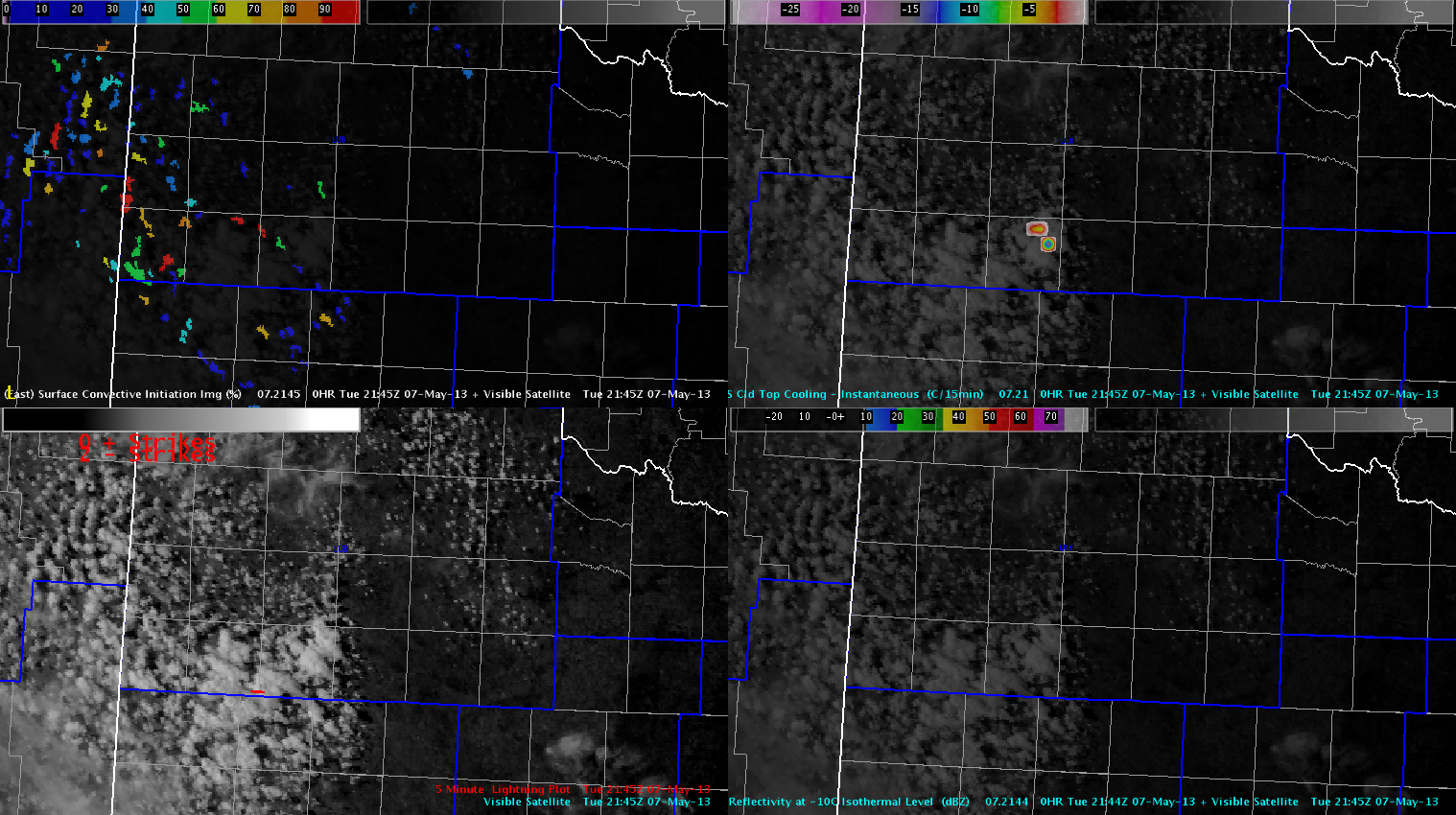
With multiple scans of CI/CTC showing iminent or ongoing convective initiation over Lubbock’s area, will localized one desk at the LUB wfo. This will give the testbed an opportunity to evaluate some of the PGLM products available in the LUB LMA. The image below from 2145 UTC shows where storms are developing in extreme south central parts of the CWA.LUB_CICTC_05072013_2216

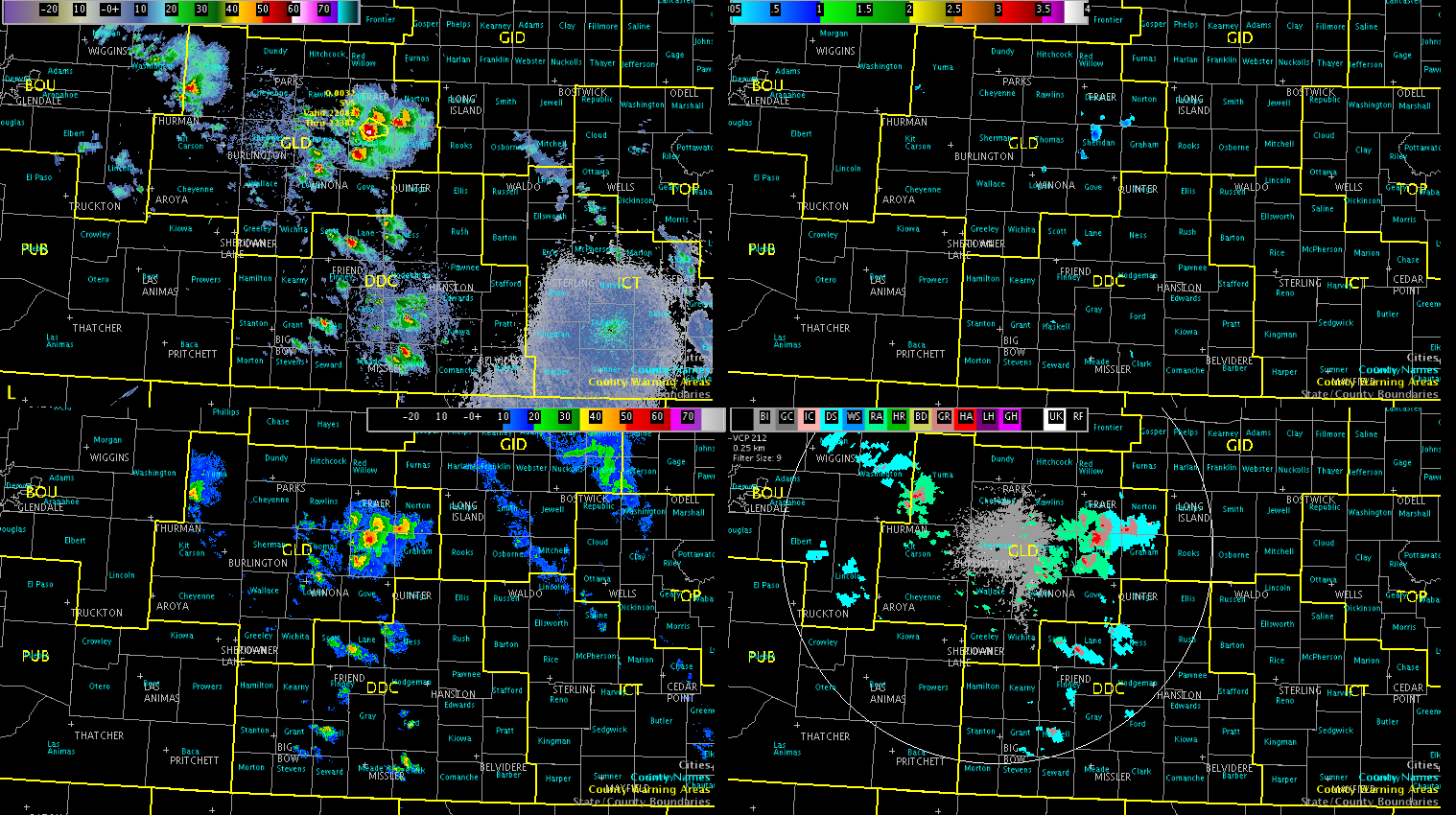
Radar trends show activity is also on the uptick at DDC, with ongoing supercells over GLD’s area. Will keep two teams stationed at these locations to optimize this marginal severe weather setup. The image below is a four panel of MESH products and composite reflectivity over the DDC and GLD CWAs.GLDDDCLUB_05072013

Will continue to monitor trends, but all areas appear to be covered at this time.

Austin

Tags: None

Cloud Top Cooling rate combined with MESH for Enhanced Lead Times

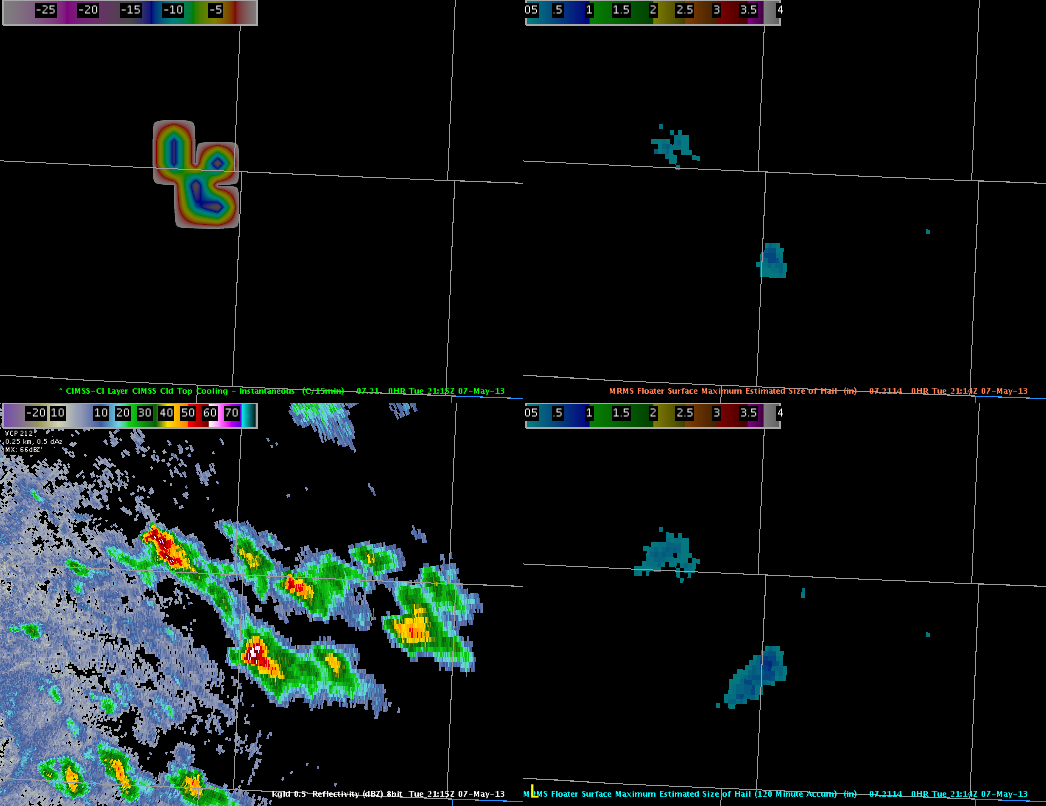
We continued to monitor Cloud Top Cooling (CTC) rates in combination with MESH from the MRMS to investigate a elevated storm in Sheridan County Kansas. CTC was able to provide 15 to 20 minutes of lead time before the MESH indicated .71 inch hail. Below is a four panel at 2115z of the CTC, instantaneous MESH, base reflectivity at KGLD, and 120 min MESH.

Four Panel: CTC, MESH, 0.5 refl. KGLD, 120min MESH

Continuing to monitor the storm, the HSDA has continued to indicate large (LH) to giant (GH) hail. With modest mid-level lapse rates (7.0-8.5 C/km) and decent mid-level shear, these storms continue to indicated mid and upper level rotation, indicative of large hail growth.

Guseman/Kurtz

Tags: None