An official website of the United States government
Here’s how you know
Official websites use .gov A
.gov website belongs to an official government
organization in the United States.
Secure .gov websites use HTTPS A
lock (
) or https:// means you’ve safely connected to
the .gov website. Share sensitive information only on official,
secure websites.
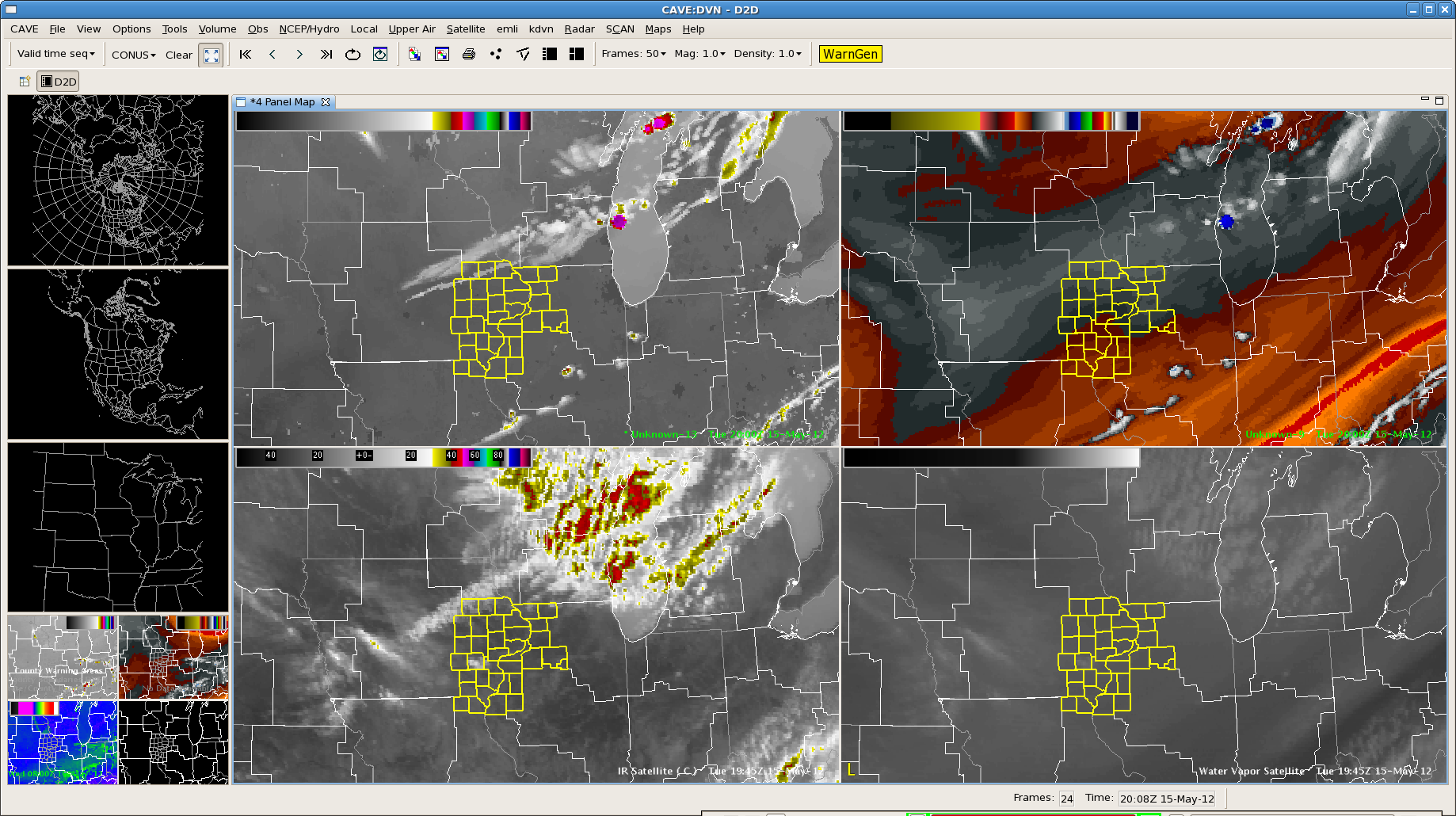
The simulated satellite imagery based off the NSSL WRF is handling a cold frontal passage in the Midwest quite well this afternoon. The 2000 UTC comparison between the WRF “SimuSat” and observed IR image:
NSSL-WRF Simulated GOES-R IR Satellite (top) vs. Observed IR Satellite (bottom) at 2000 UTC 2012-05-15
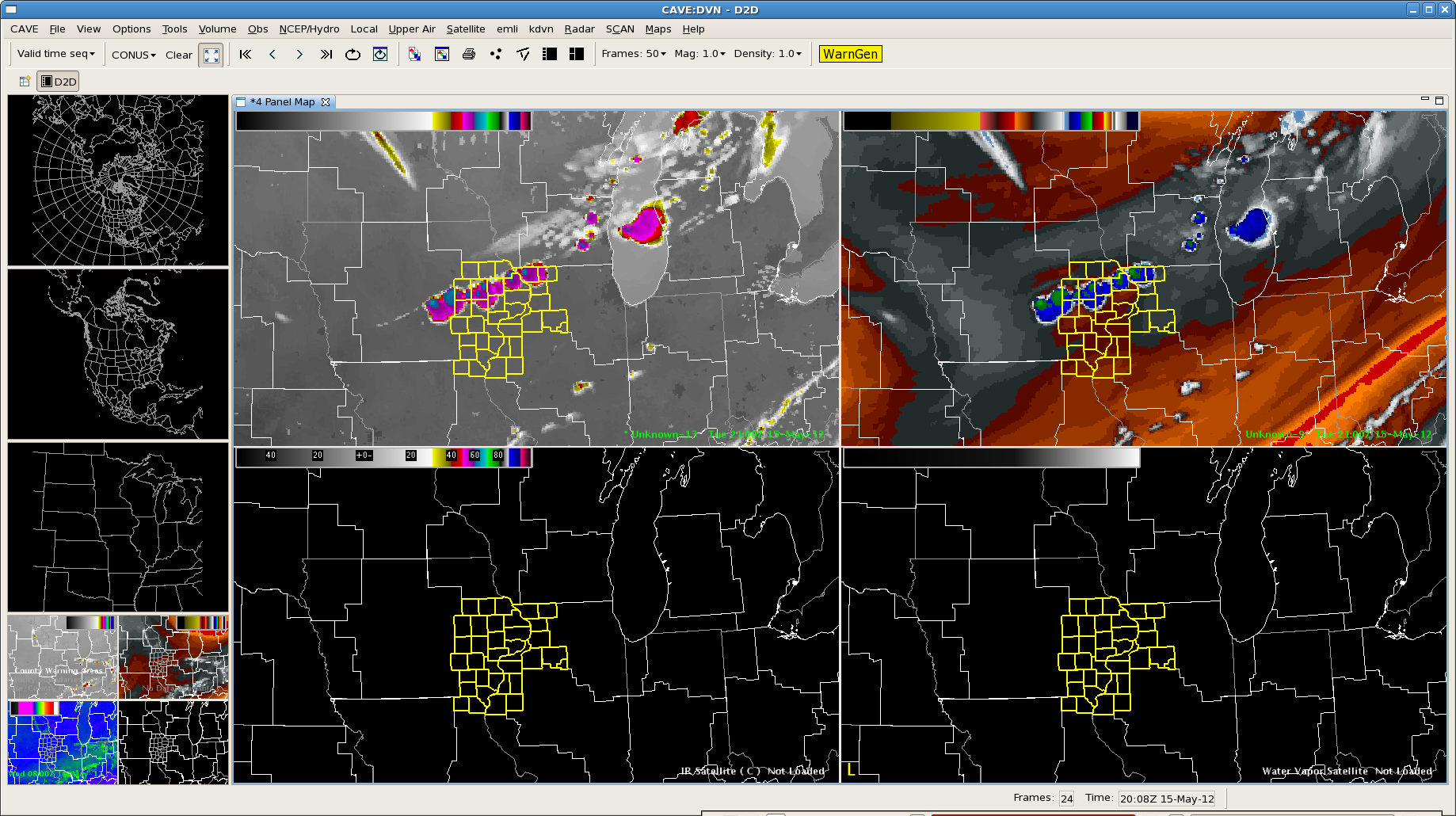
The NSSL-WRF simulated satellite imagery suggests that storms will erupt over the next hour:
NSSL-WRF Simulated GOES-R IR Satellite (top) vs. Observed IR Satellite (bottom) at 2100 UTC 2012-05-15
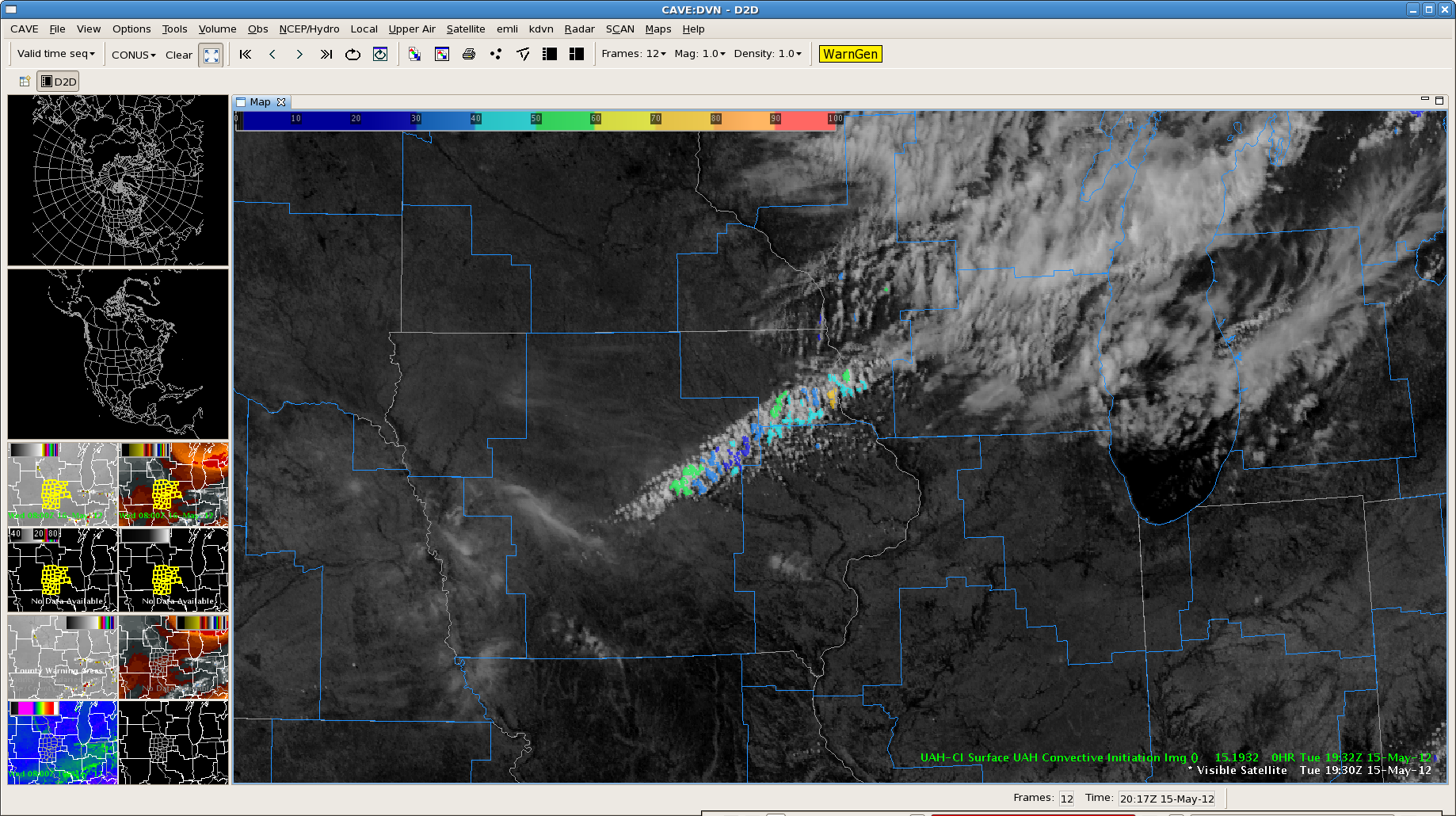
This model output, combined with hits from the UAH Convective Initiation product in the Cu field along the front, has prompted the RNK group to shift domains to DVN for the rest of the afternoon.
Visible Satellite and UAH CI Product, 1932/1930 UTC 2012-05-15
The western target is now growing enough cumulus to have one of the teams move west. Brian and Stephen will be localizing to Davenport, IA CWA to take the best advantage of evaluating CI along the cold front. CAPE is weak but lapse rates are high.
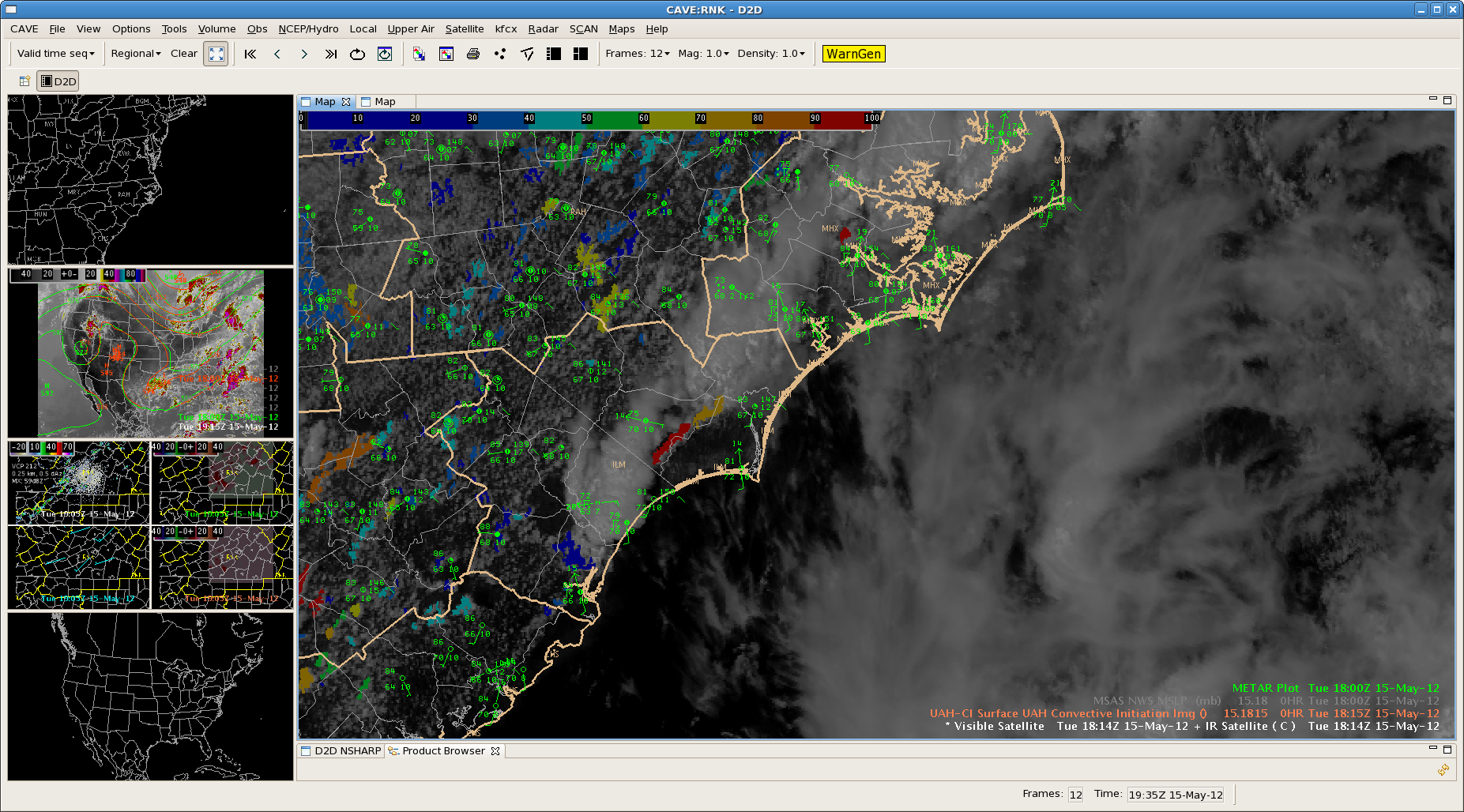
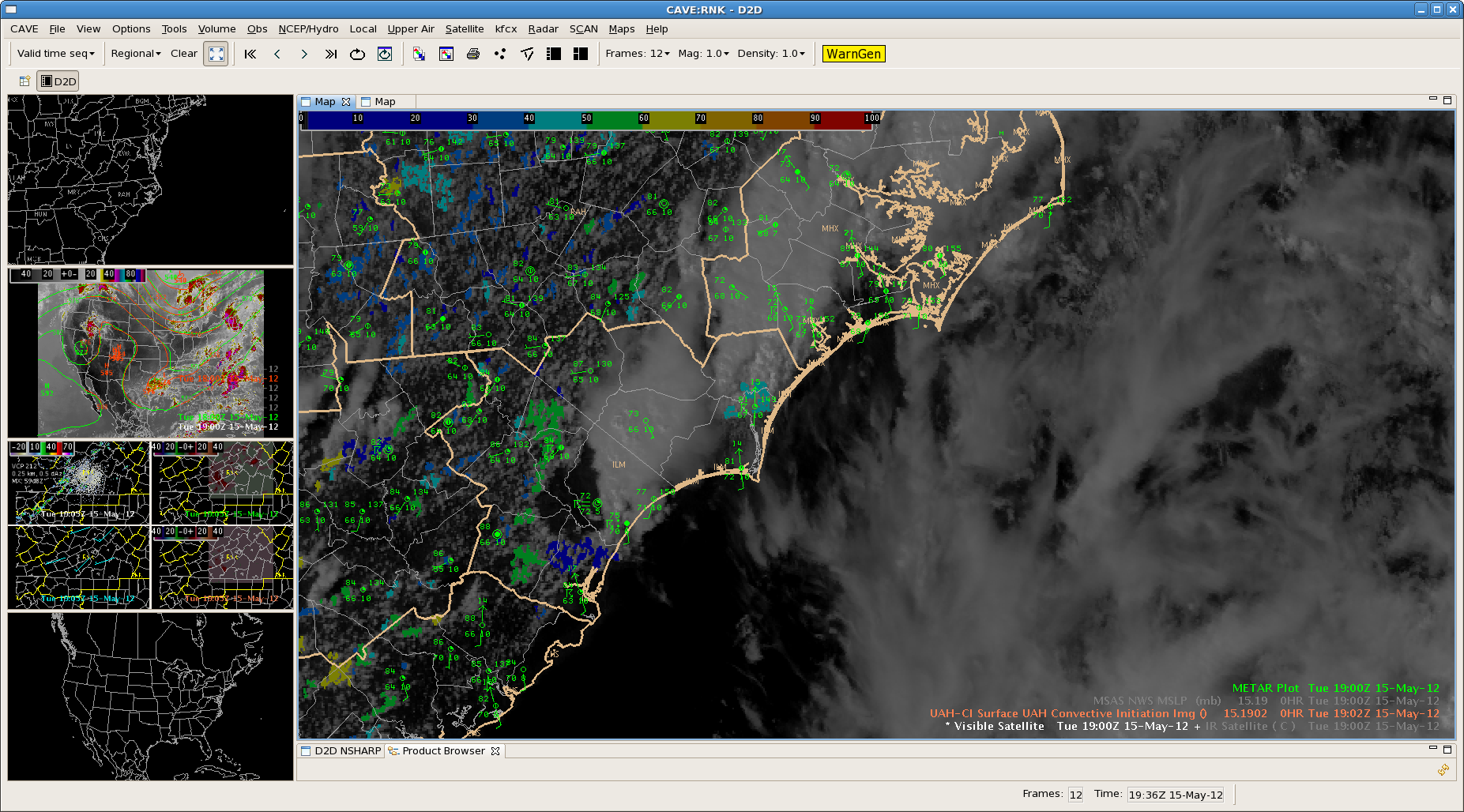
Although this was outside of our CWA, the CI product did a nice job of detecting a developing storm along the sea breeze front on the Carolina coast. At 18:15UTC, CI indicated a 90% (red) area.
45 minutes later, at 19:00, the visible image showed a full-blown storm with a wide anvil.
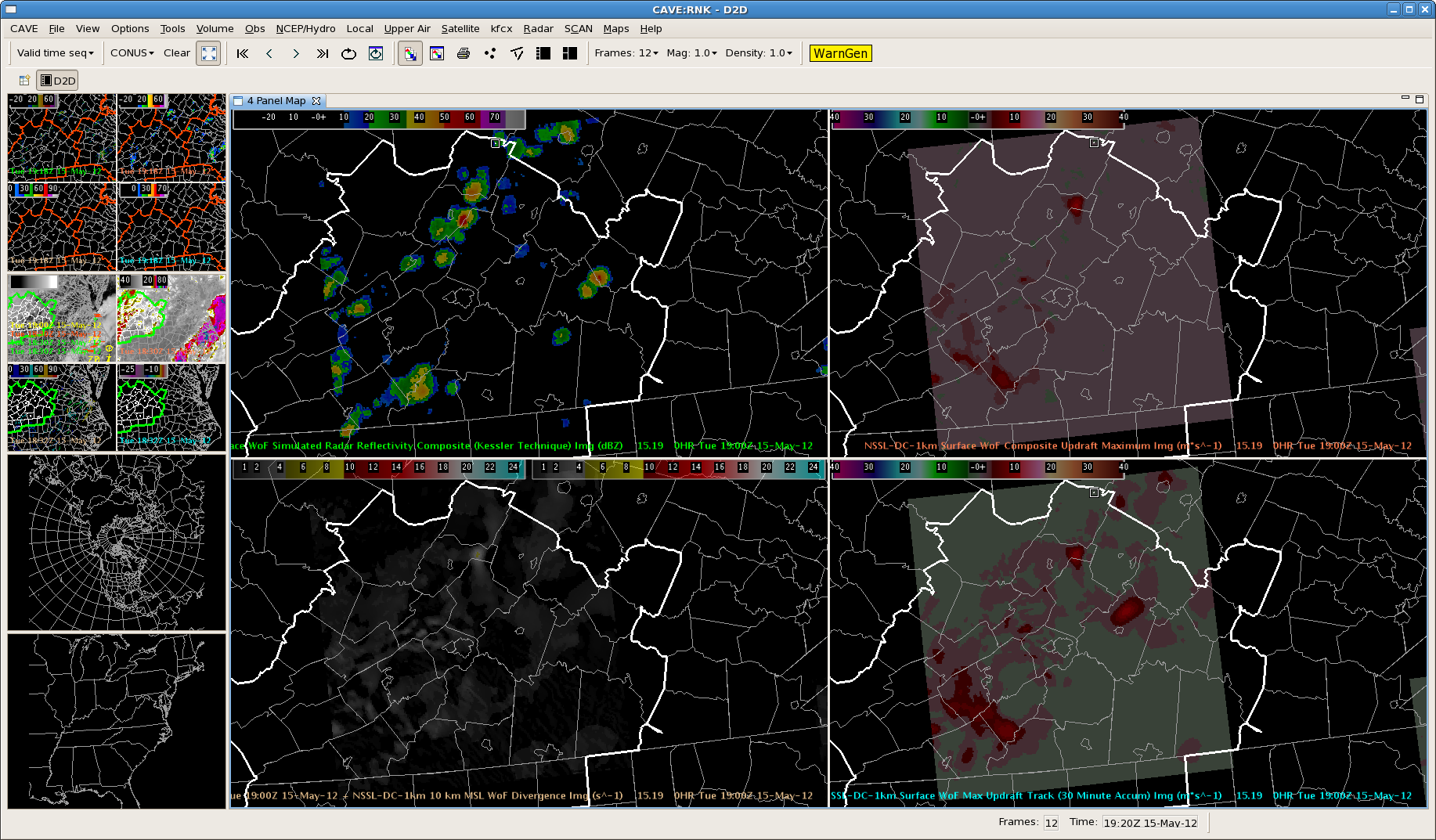
We are monitoring convection in the RNK (Blacksburg, VA) CWA this afternoon, but so far the development has been rather weak.
The 3D-VAR analysis has been useful for monitoring updraft intensity and anticipating possible stronger updrafts (top-right indicates instantaneous updrafts, bottom-right indicates 30-minute updraft history). However, none of the strong updrafts have maintained themselves beyond one “scan”.
RNK 3D-VAR valid 1900 UTC 2012-05-15
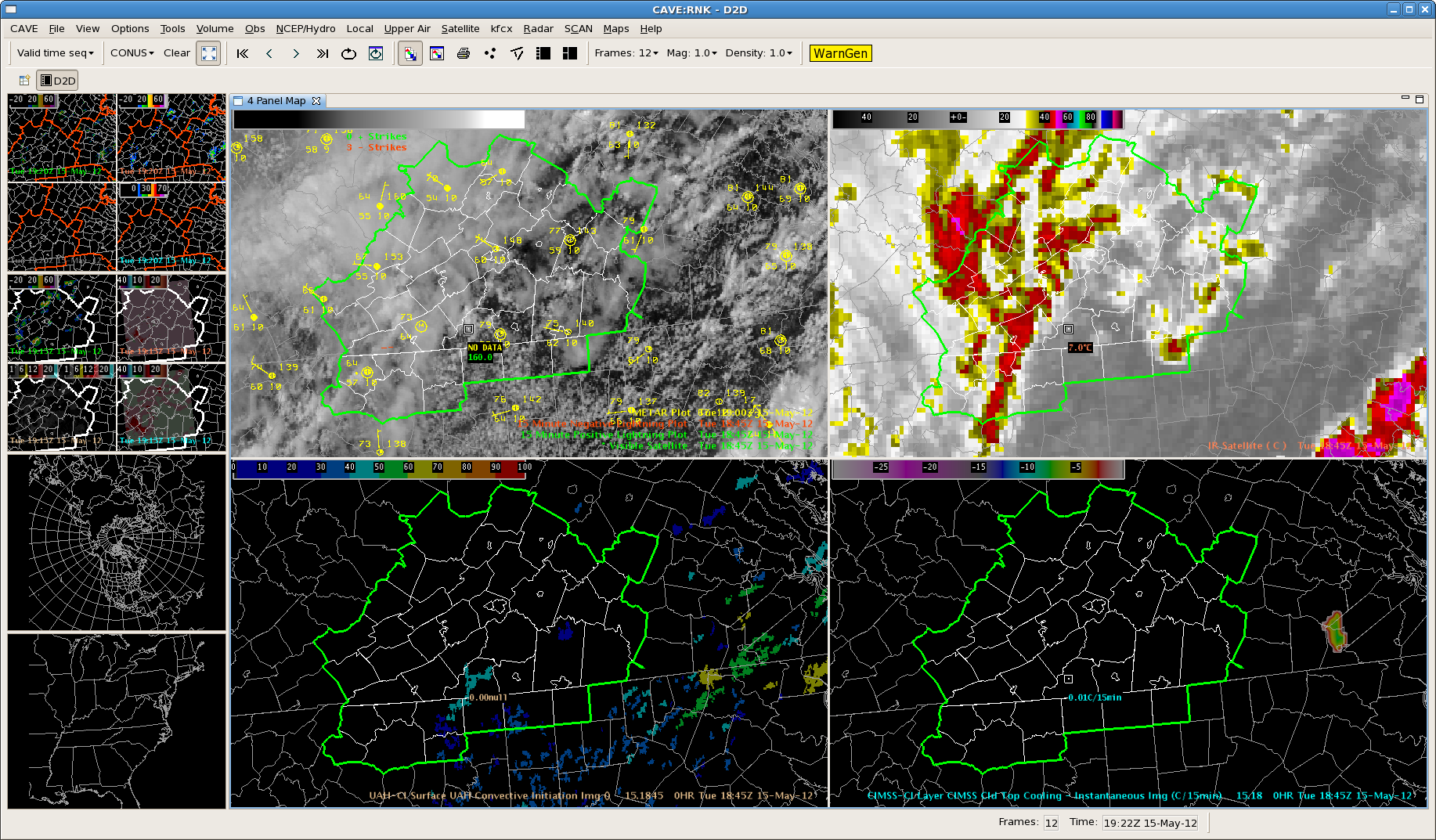
The convective initiation algorithms have struggled due to all of the cirrus blanketing the northwestern half of the RNK CWA, but some clearing in the southeast has produced some CI from the UAH algorithm. Using the new Strength of Signal output, nothing has gotten above ~50 (the included sample is just 46 in the south-central portion of the CWA), and indeed there has been little significant development in those areas. Nothing has triggered the UW Cloud Top Cooling algorithm yet in our area as of 1902 UTC.
Convective Initiation Algorithms valid 1845 UTC 2012-05-15
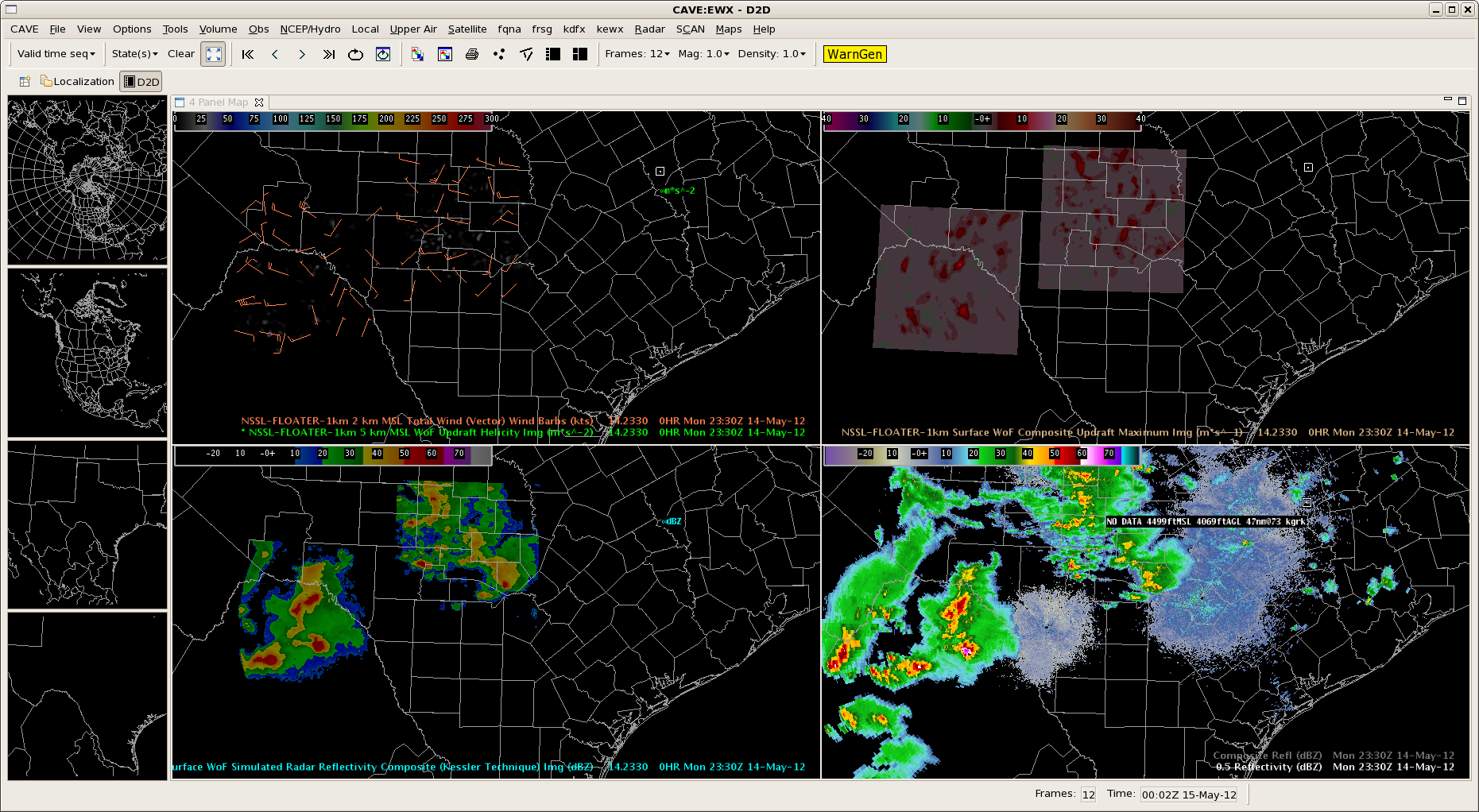
While most of the action is currently taking place south of the Border, it is close enough to be detected on radar and simulated by the 3DVAR WoF model. The Simulated Composite Reflectivity image (lower left) did a nice job of depicting the actual reflectivity (lower right) for the same time.
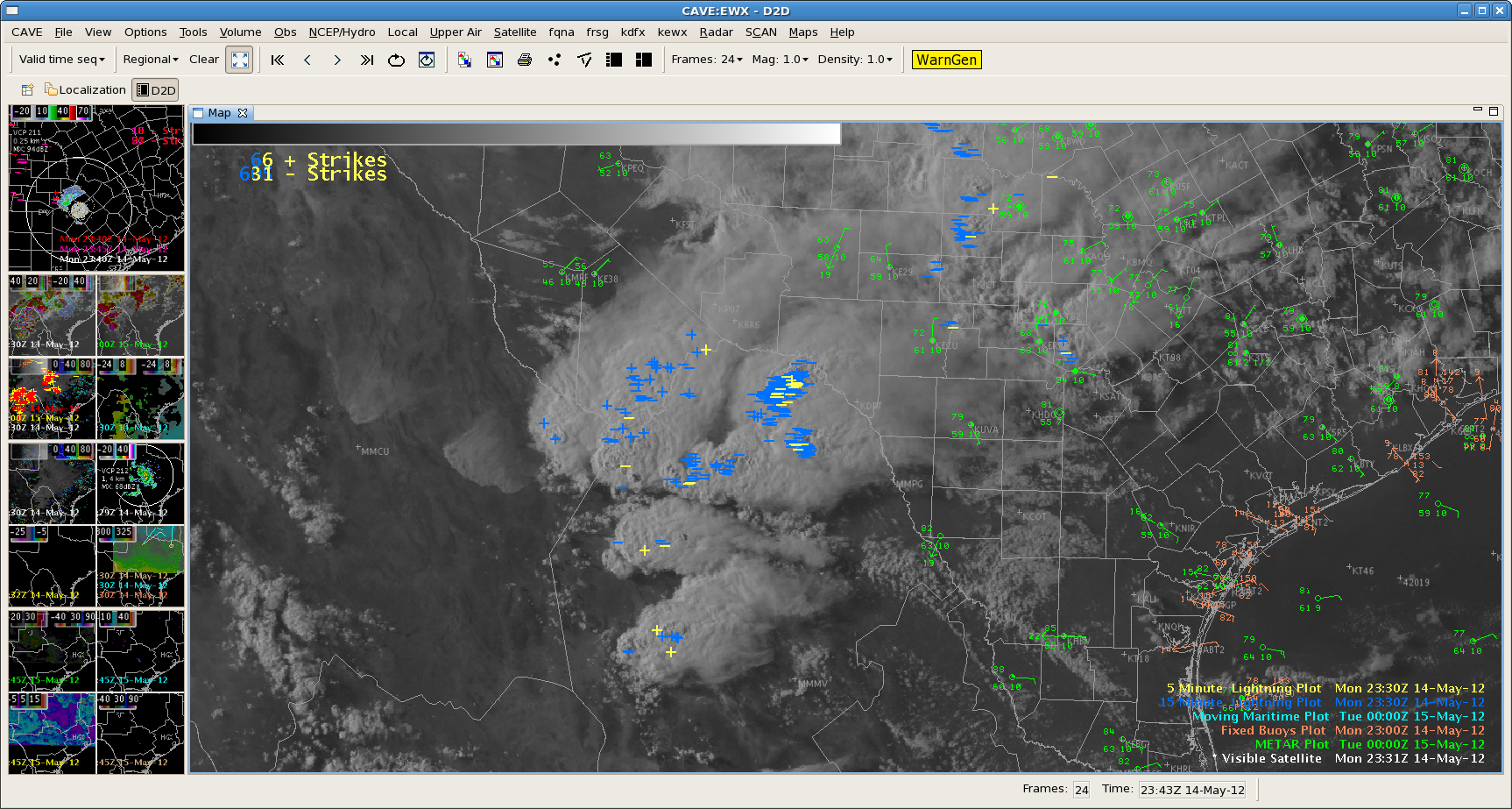
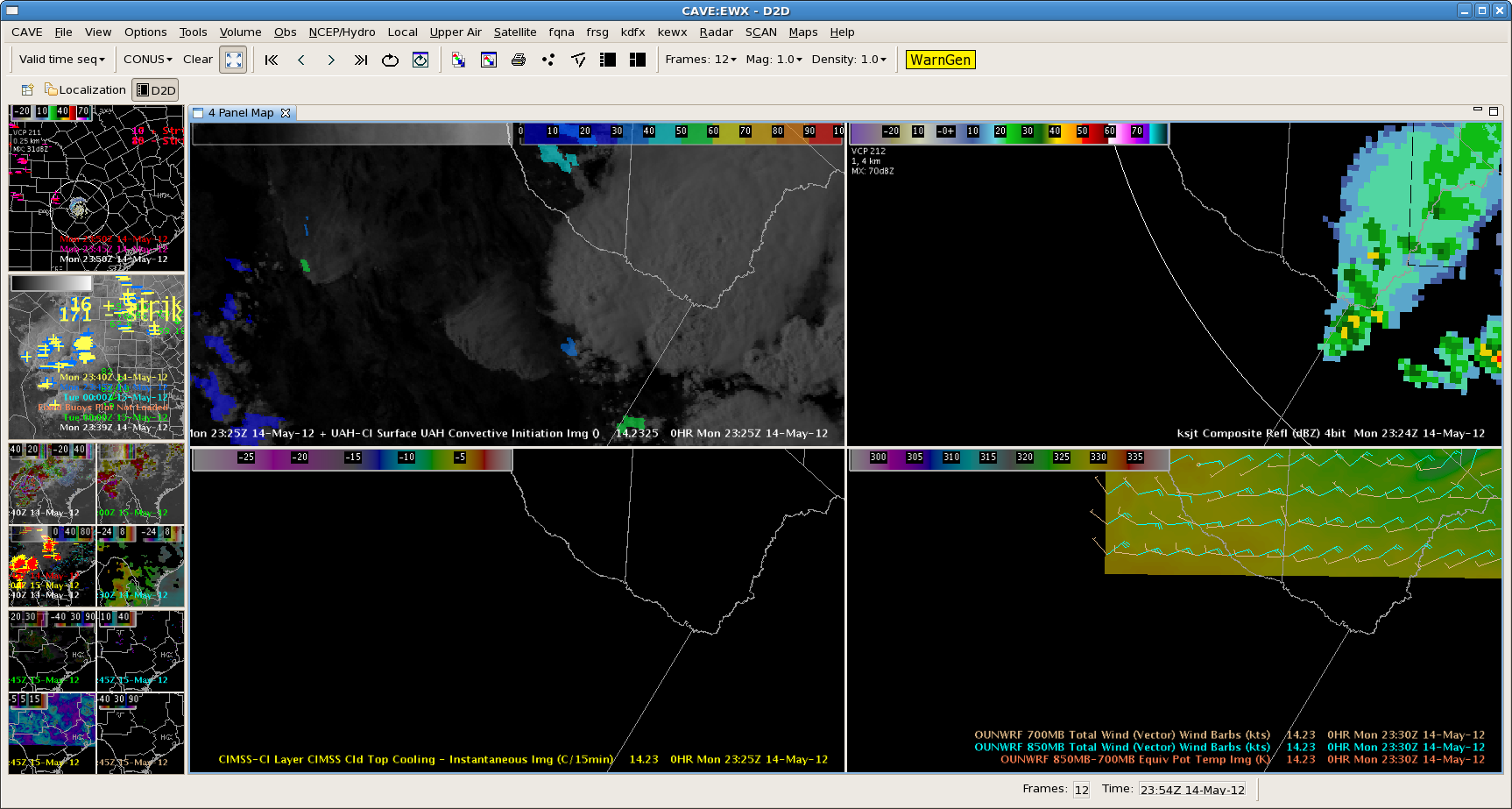
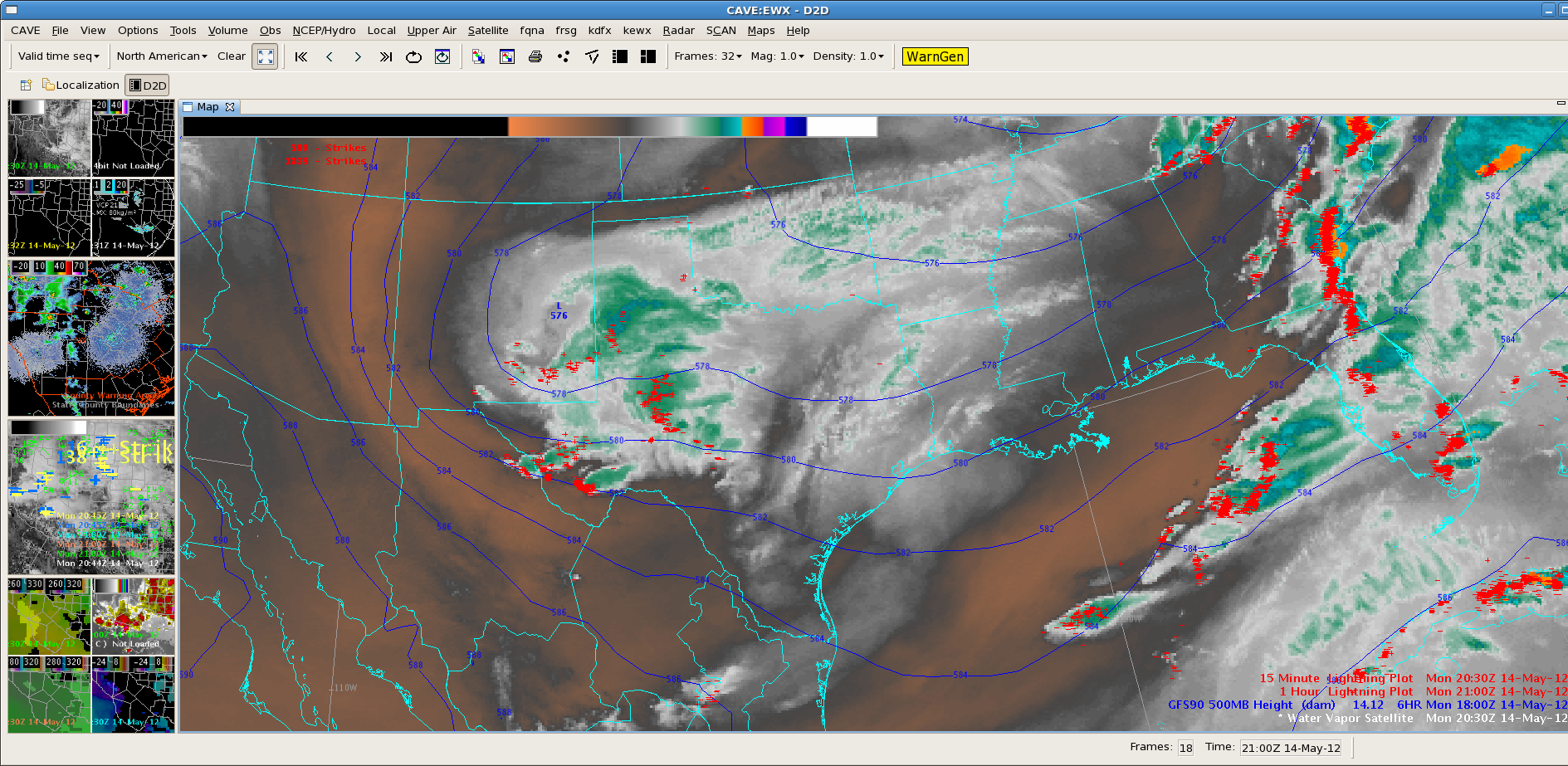
Not much going on in EWX as accurately portrayed by nearcast (theta e difference product) showing max instability just across the border in Mexico. Very nice looking convection over there and an outflow boundary over there kicking up quite a bit of dust.
The boundary/dust storm did trigger a tracked object on the UAH CI product.
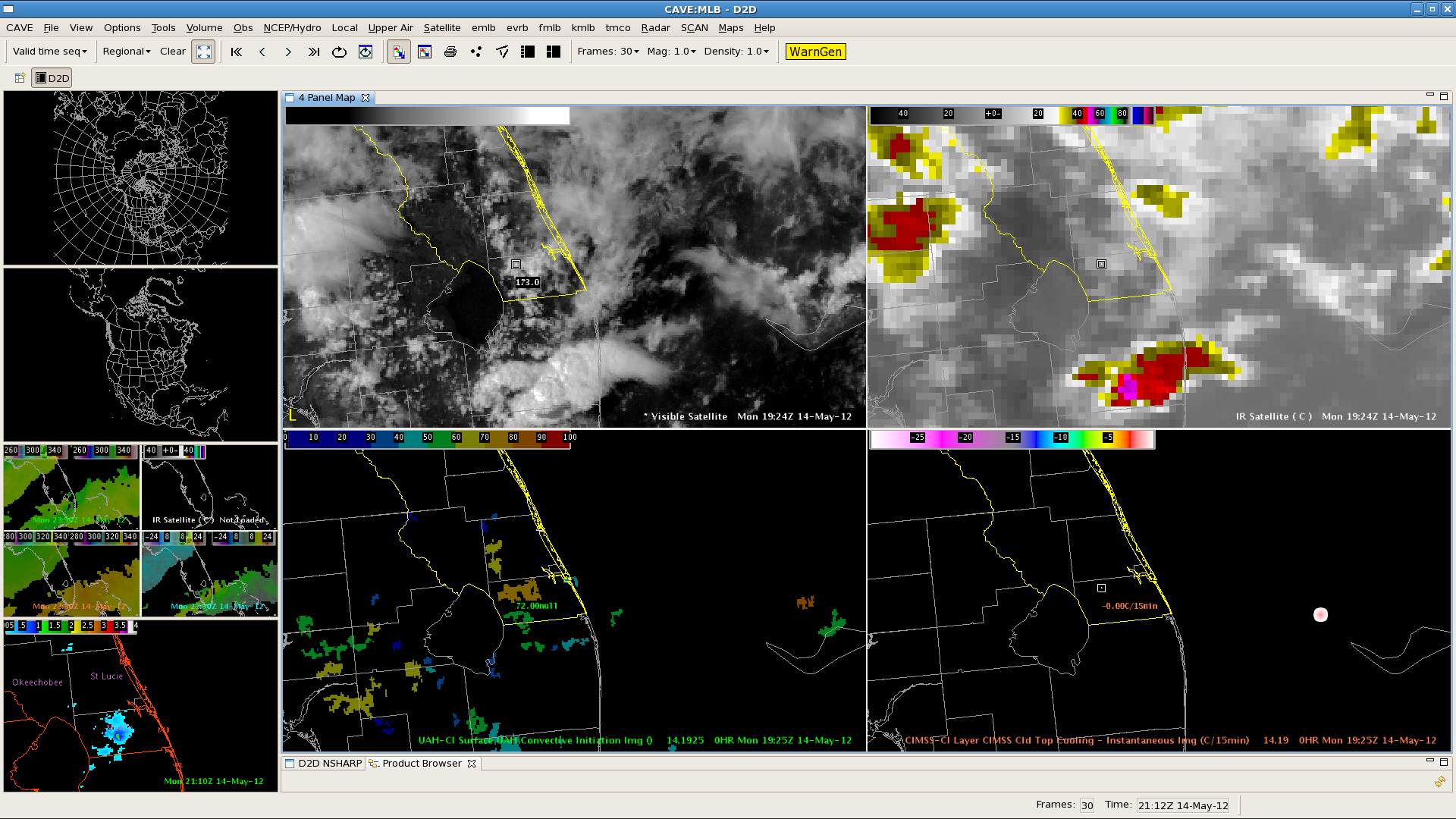
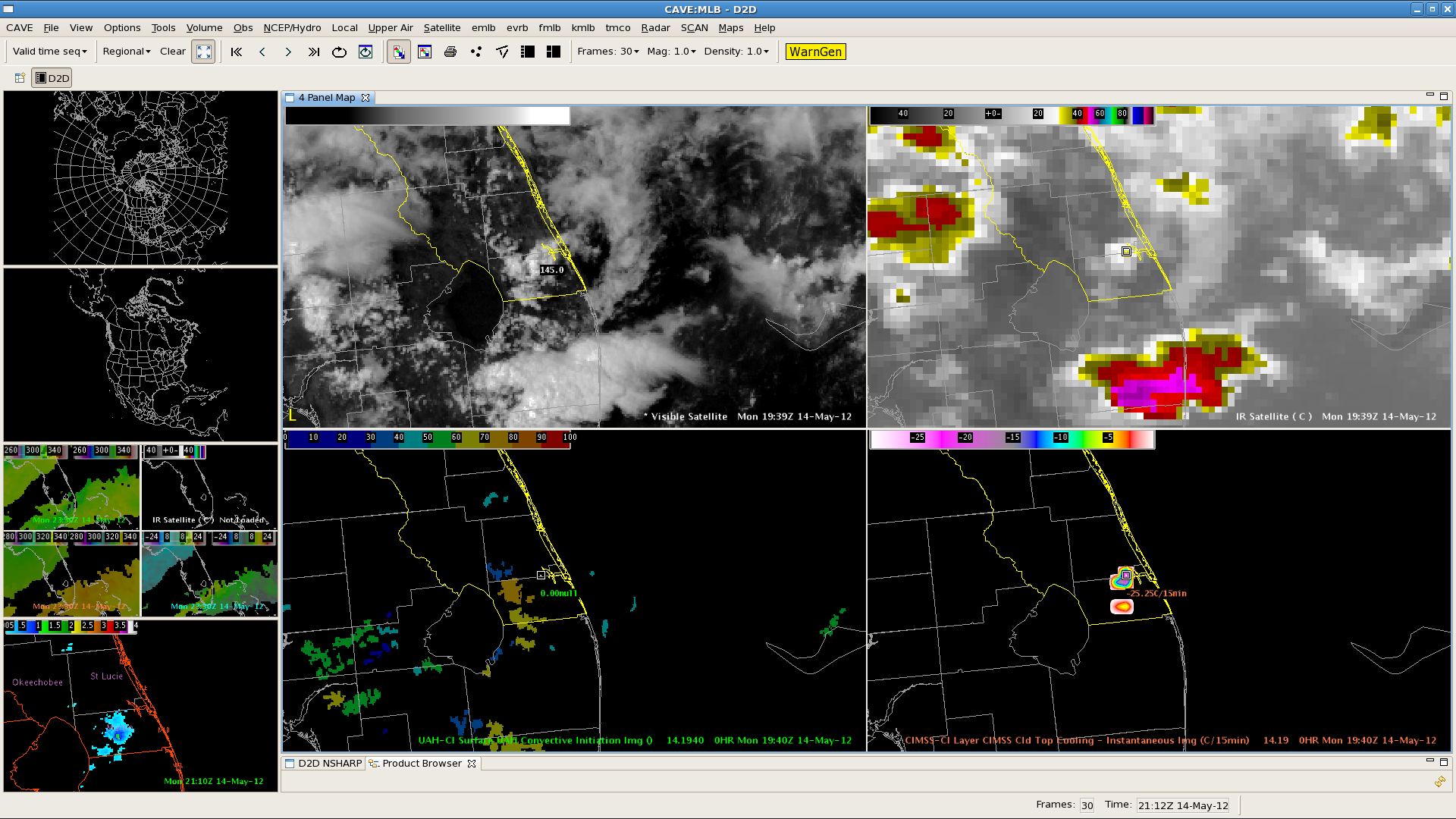
As we were getting started looking at weather in Florida, a good case for the Convective Initiation and Cloud Top Cooling algorithms took place over the southern county of MLB’s CWA. Convective Initiation gave first indication of developing convection at 1925z.
Cloud Top Cooling gave a strong signal at 1940z and 1945z.
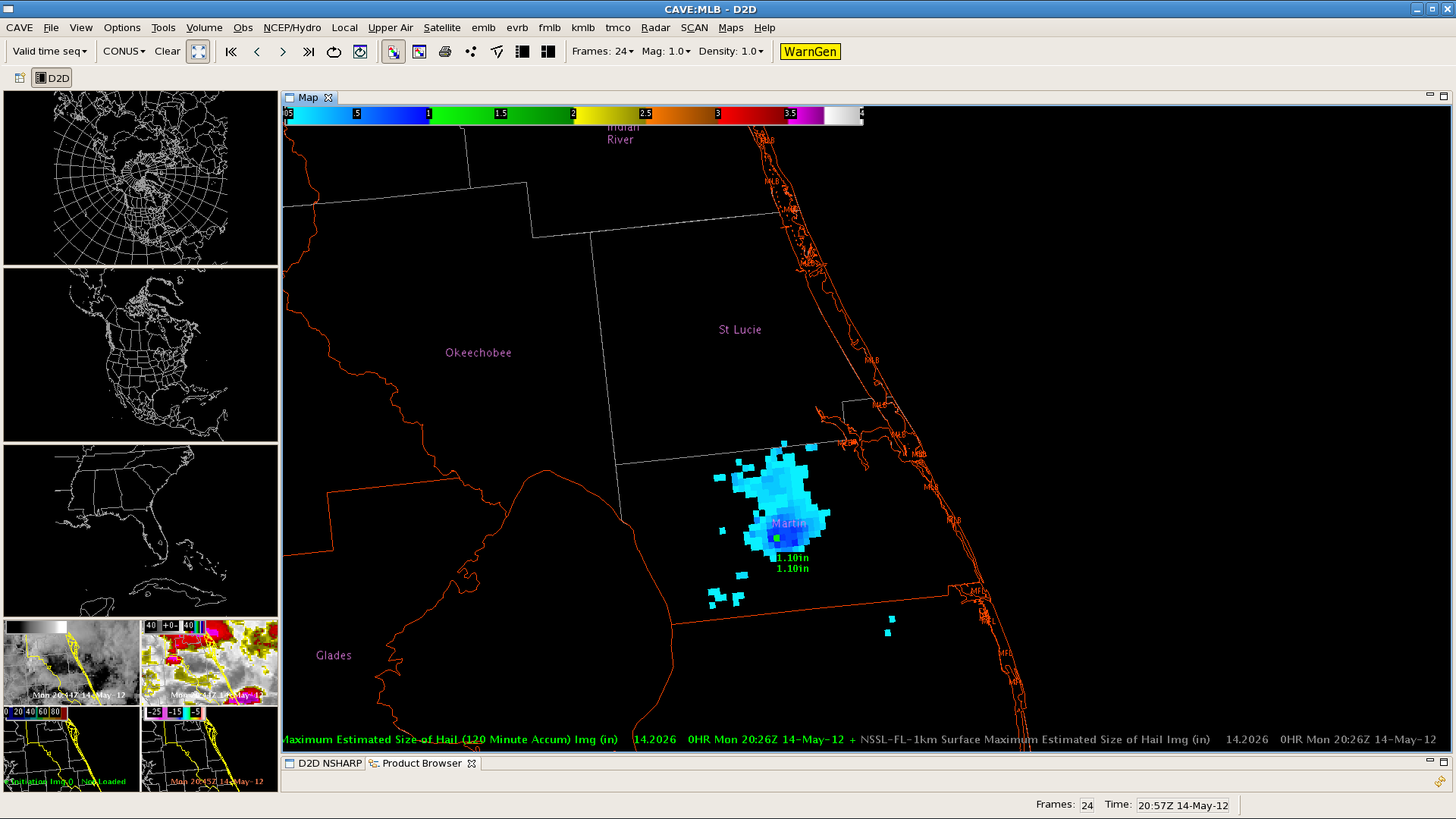
Max Estimated Hail Size (MESH) indicated Hail at 1.1 inch at 2026z.
A combination of the Convective Initiation and Cloud Top Cooling used together could have raised awareness of a possibly severe storm up to 45 minutes ahead of time. TCD/BC
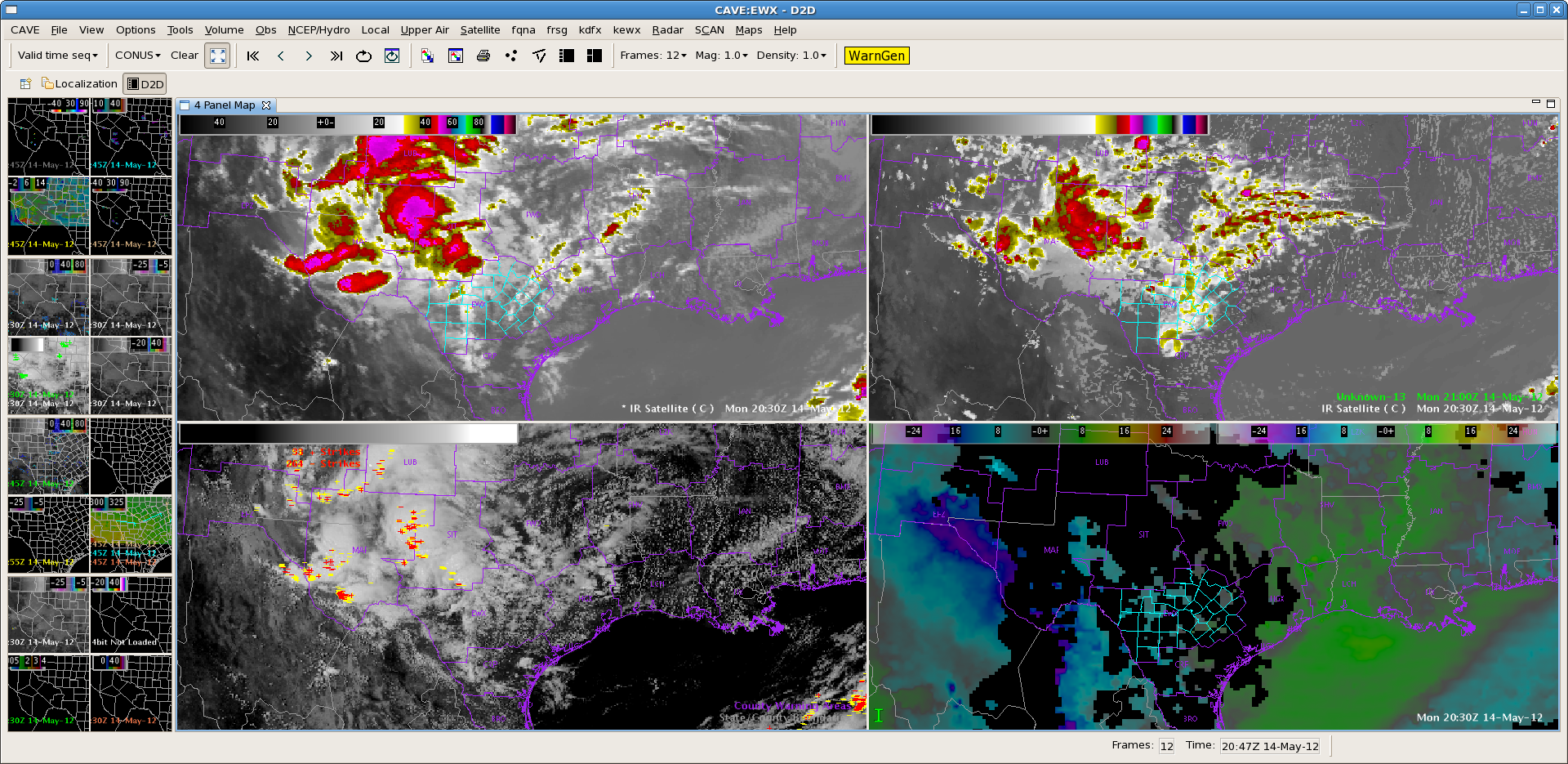
Currently watching the IR(actual) vs IR(synthetic). The synthetic image did a good job indicating where the convection would initiate, but the thunderstorm canopies are underdone.
The CI product indicated it well with a strong red signal. As of this frame, radar detected a 65dBZ core in this storm (not shown here). The theta-e diff product earlier indicated high potential for severe storms in this area.
Team 1: Brian and Todd will be shifting to Melbourne FL due to more convection than earlier expected headed into the CWA from the west. While the severe weather prospects remain low, the storms are headed into the LMA.
Team 2: Stephen and Julie will stay in San Antonio to monitor CI.