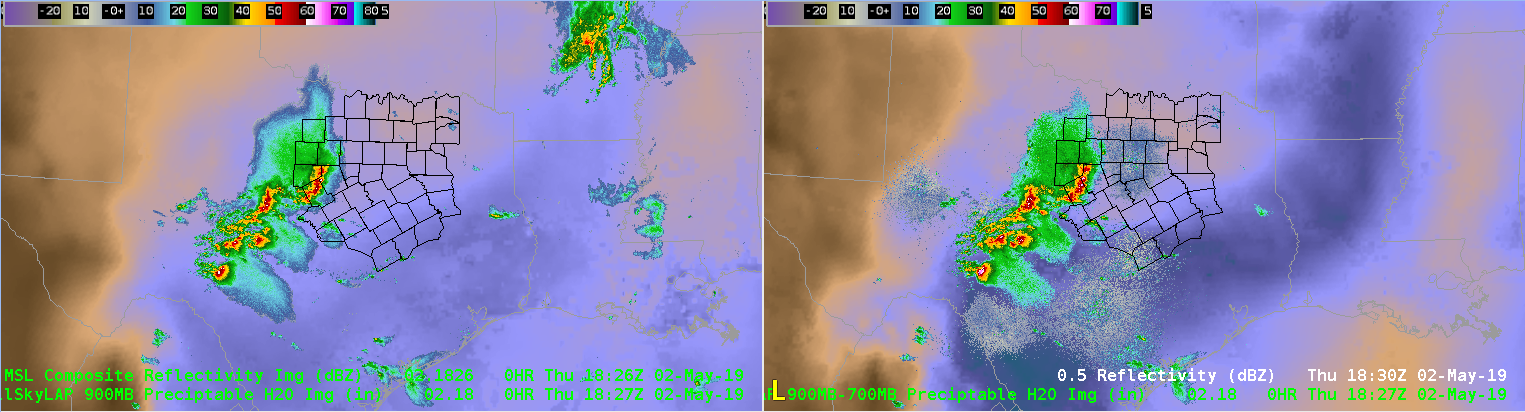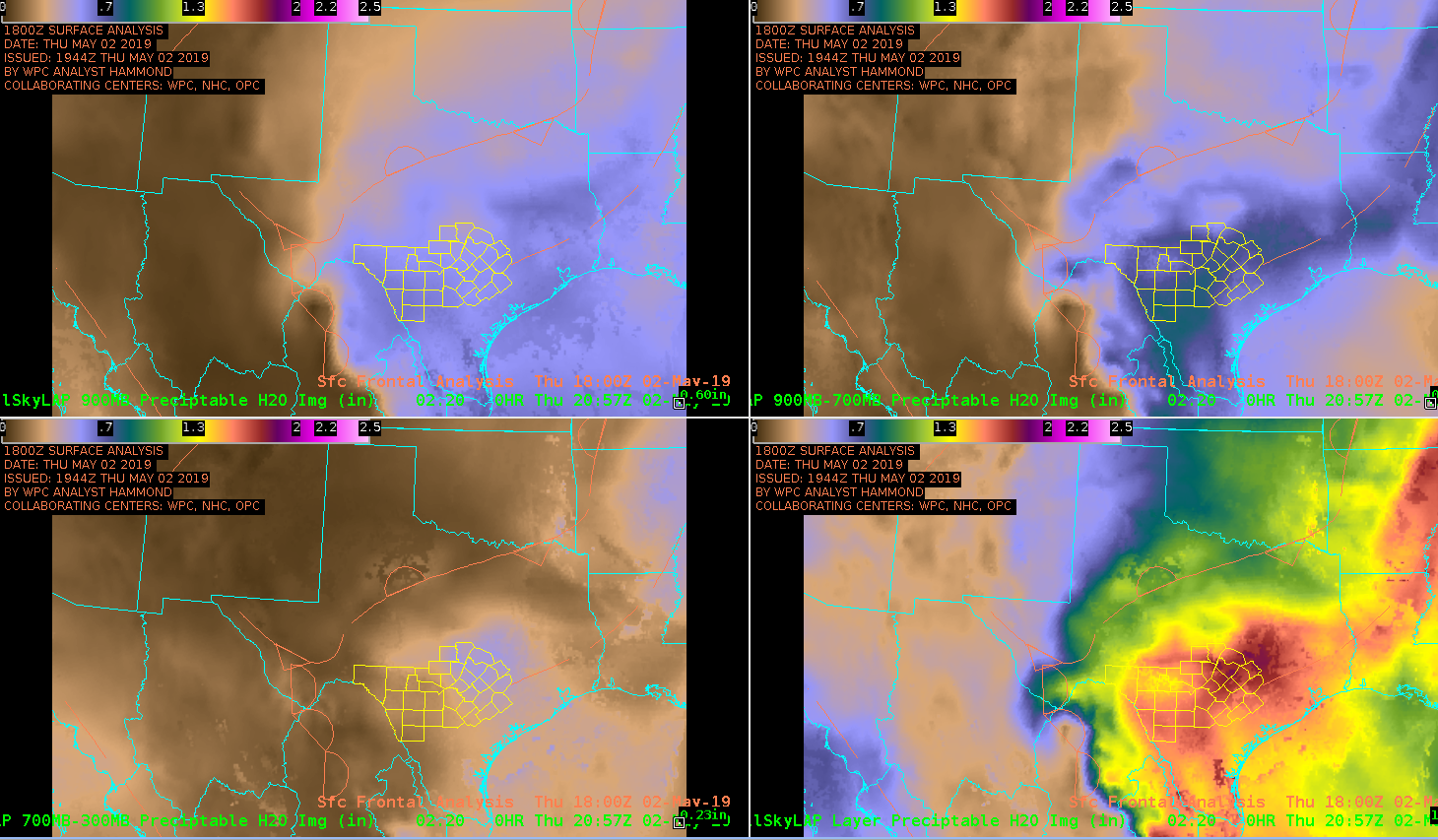
All-Sky PWAT

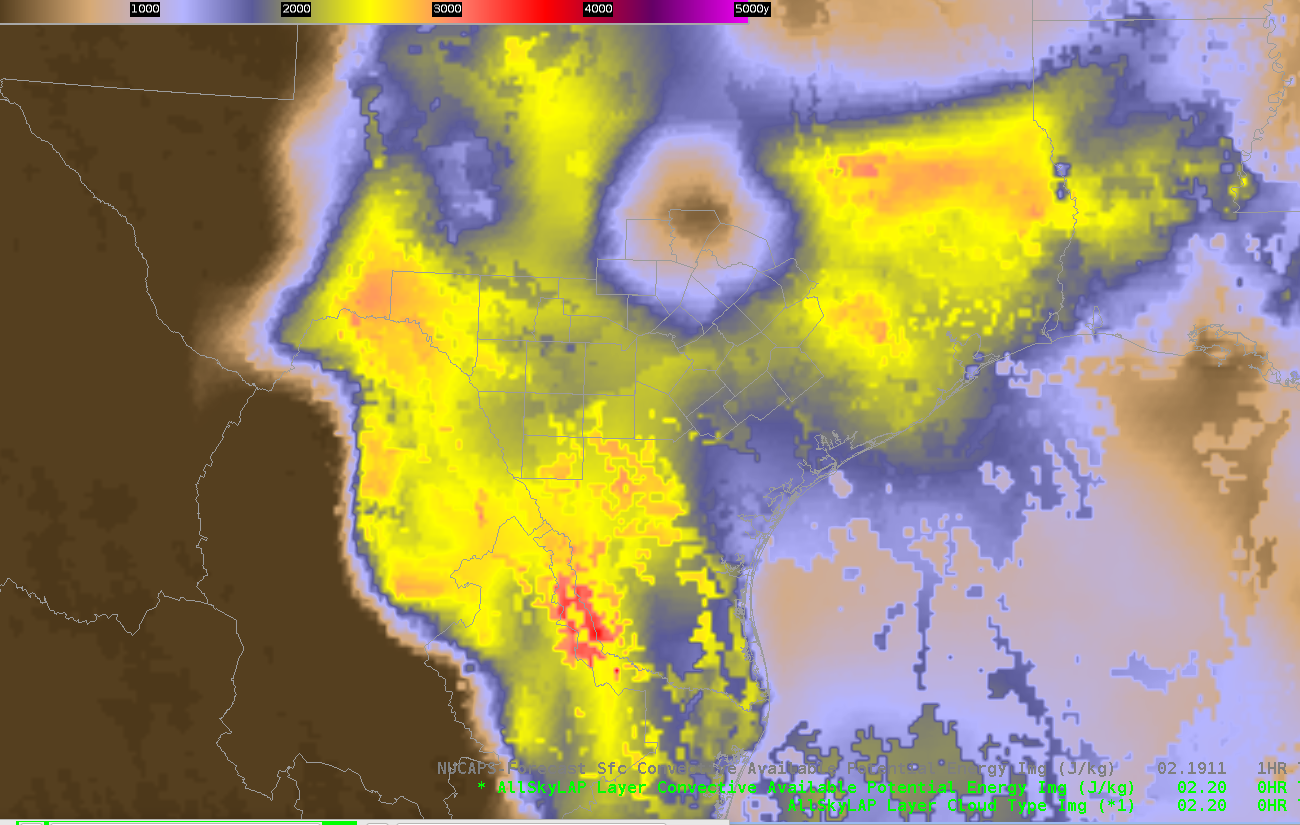
The AllSkyLAP PWAT compared fairly well with surface conditions and the merged product however it struggled in the wake of the front/dryline and was too generous with the PWAT values when compared to earlier UA obs. Values in the warm sector were more representative (higher) than the merged product.

— SCoulomb

NUCAPS soundings comparisons for 5/2

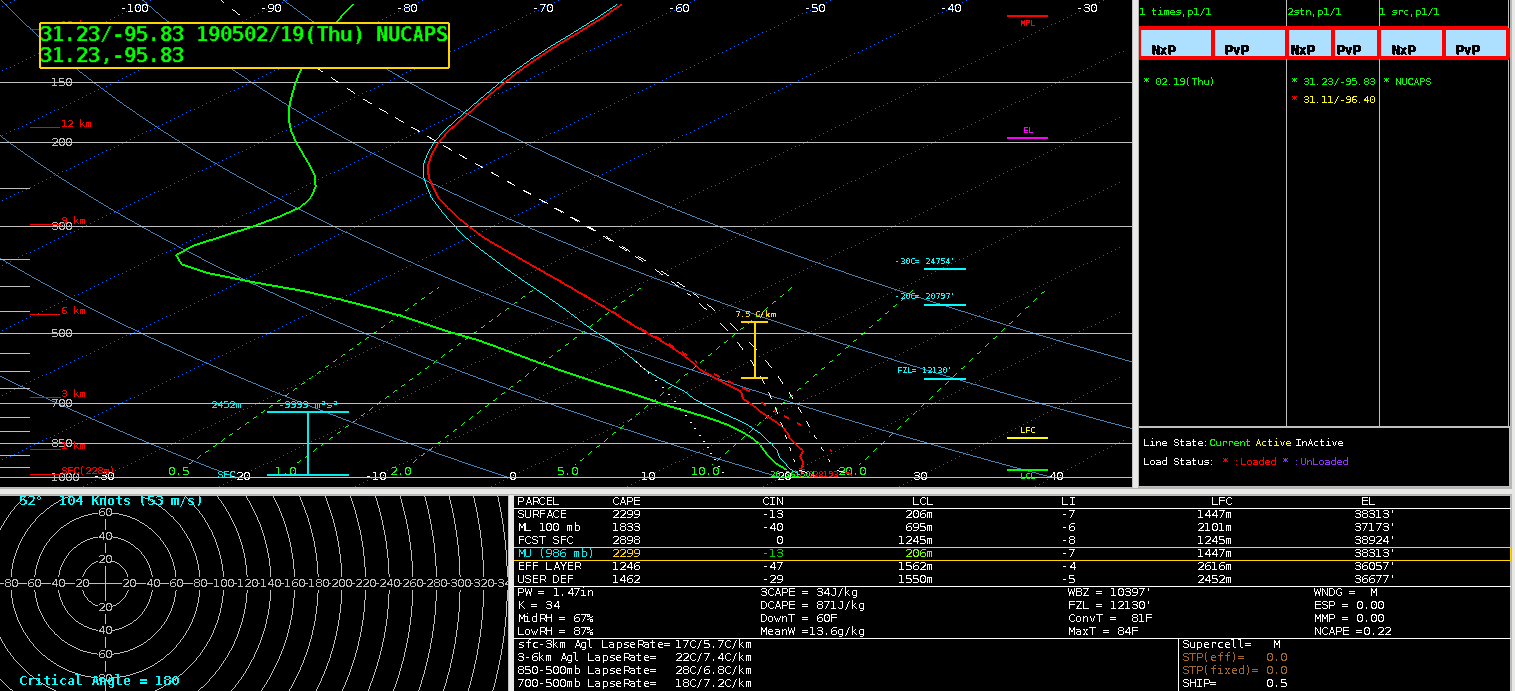
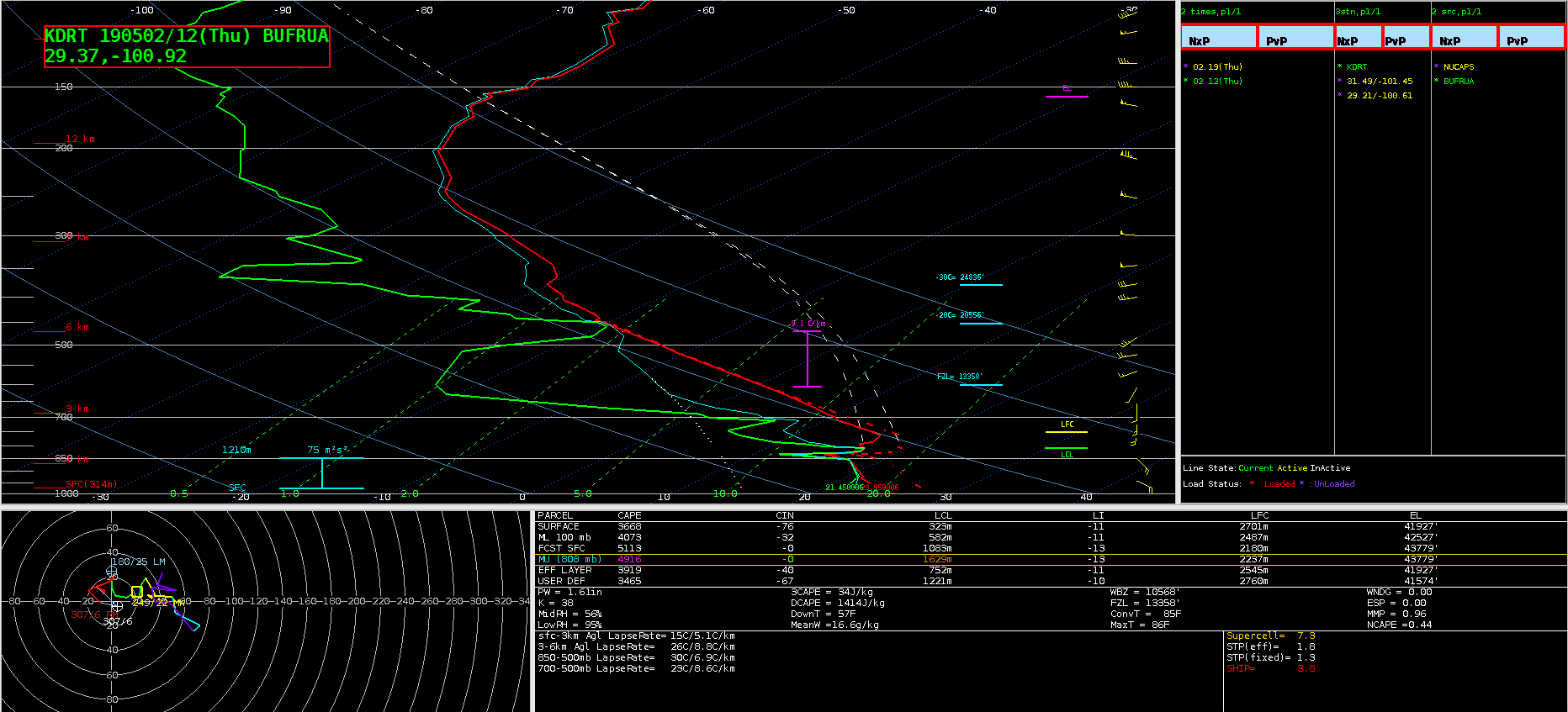
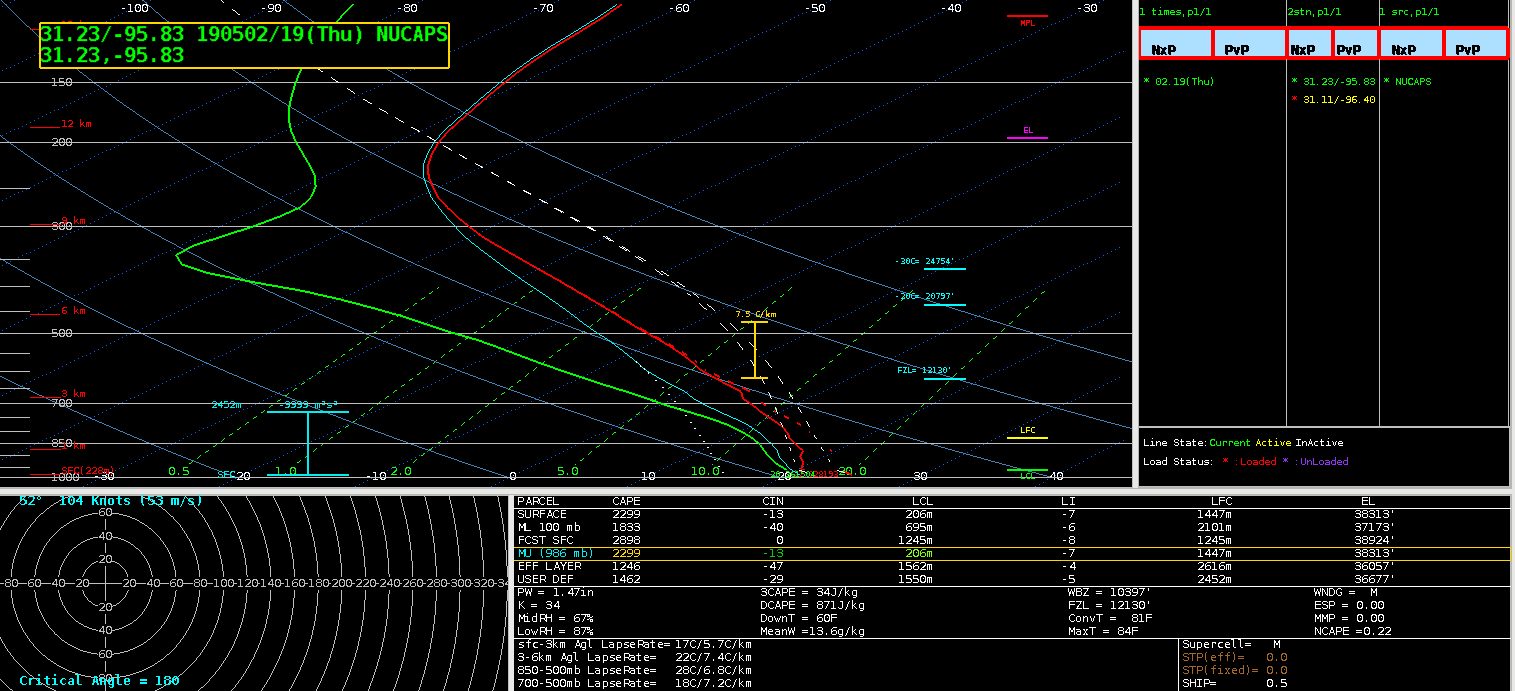
This was the 12z Del Rio sounding.

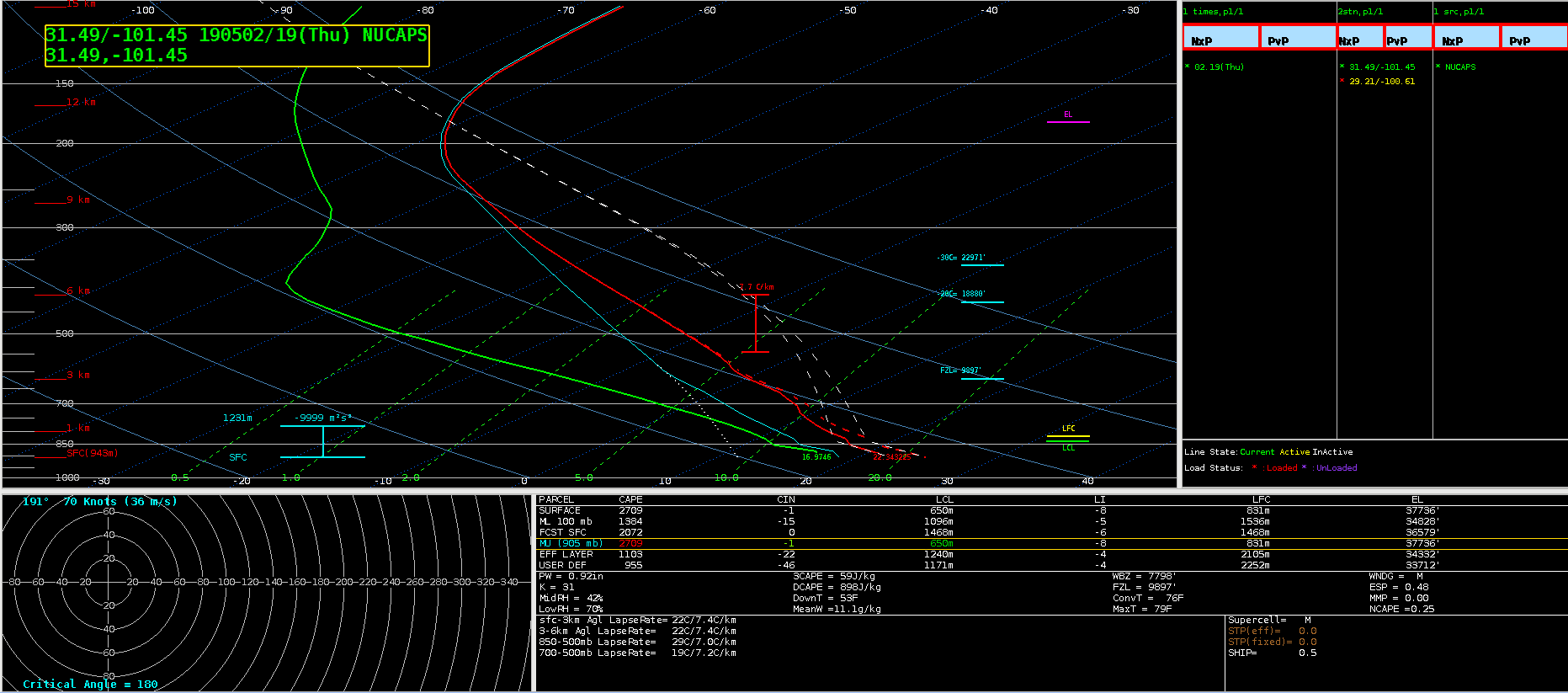
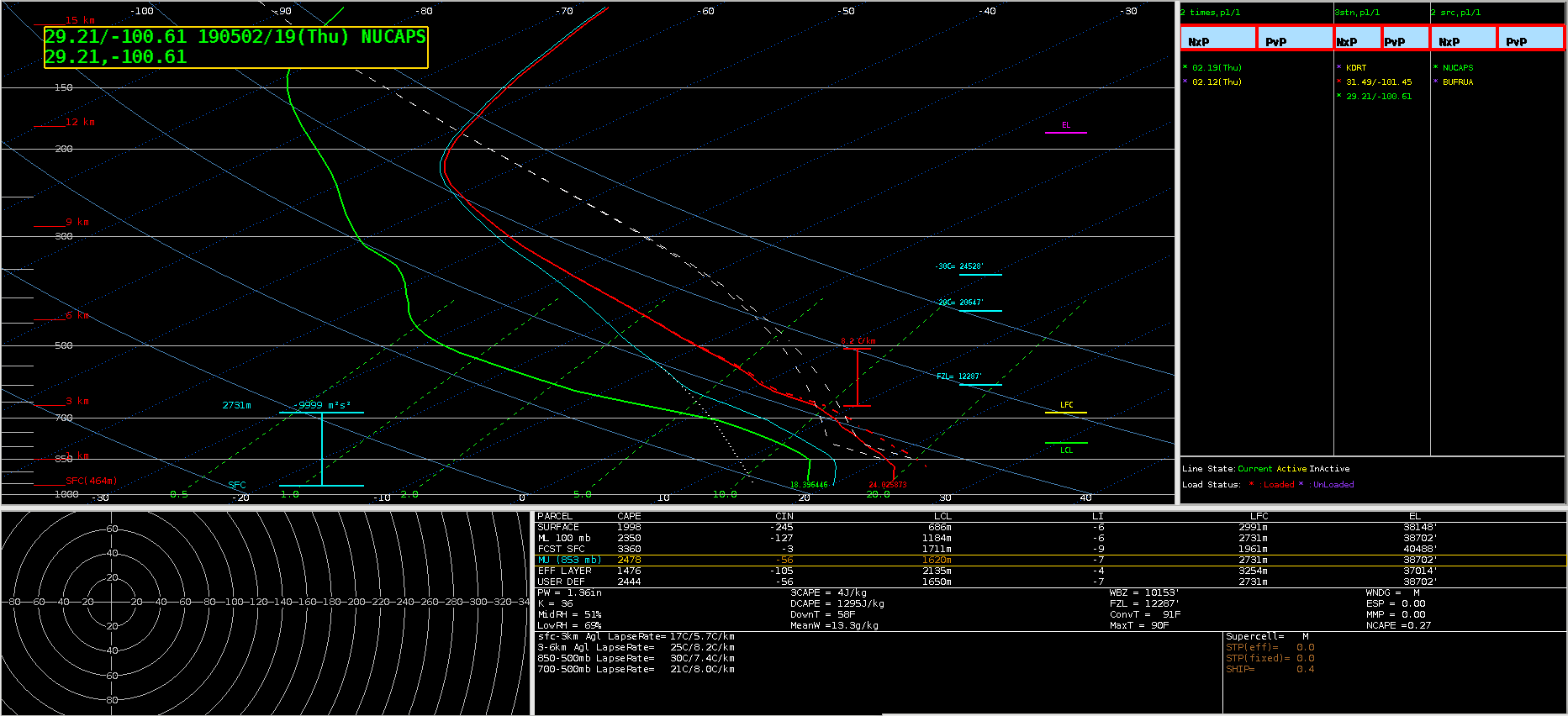
This sounding is a modified NUCAPS near Del Rio. While the lower level structure was a bit different than the actual sounding, the observed sounding was taken several hours earlier before boundary layer modification. This was an unmodified NUCAPS sounding from the same region. Boundary layer moisture is not captured nearly as realistically as the prior modified example. Overall, trust in the modified NUCAPS sounding data has increased dramatically after some exposure to it. I would say many forecasters need more experience learning about the soundings through simulations to trust the data more.

-Dusty

NEW NUCAPS

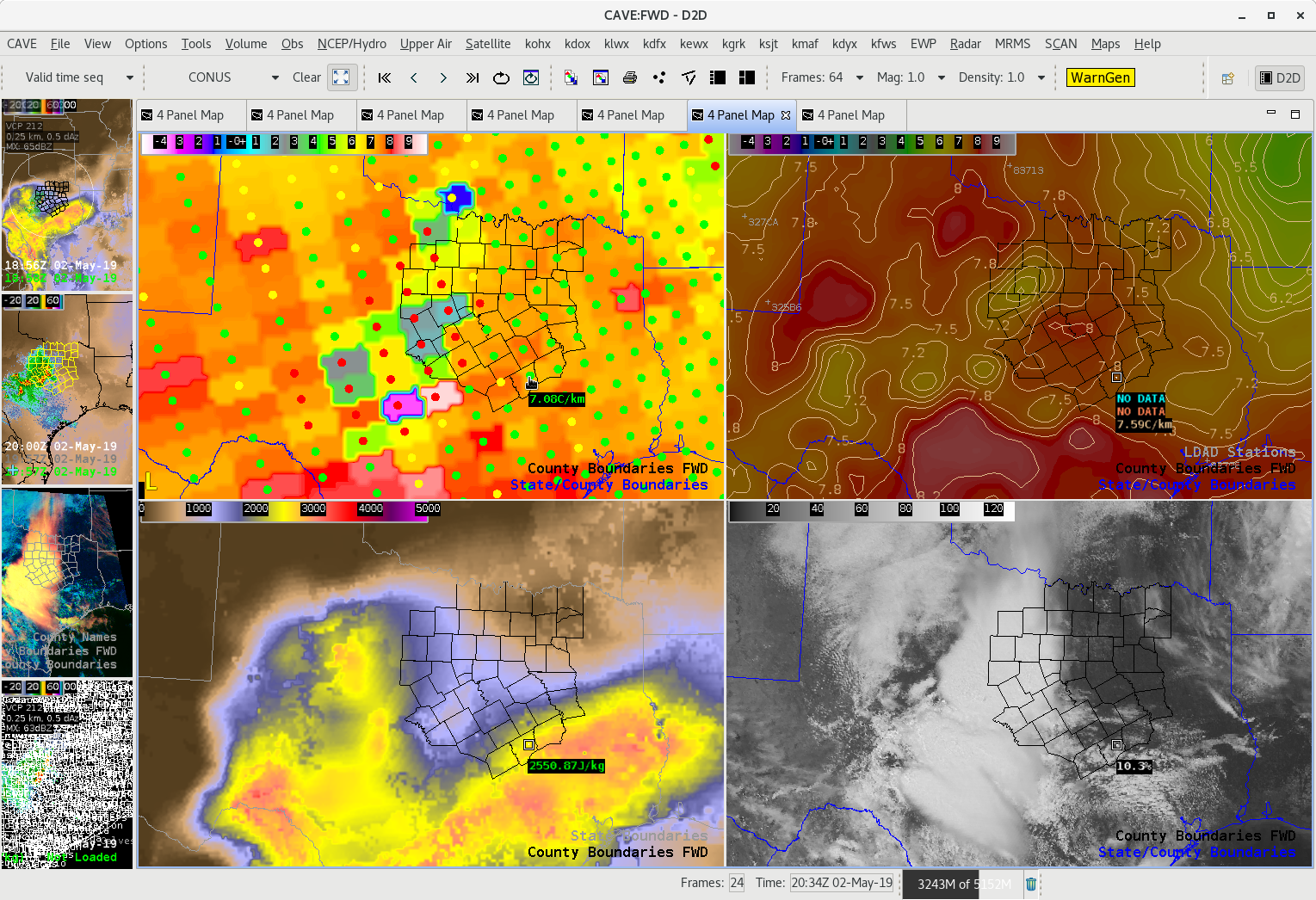
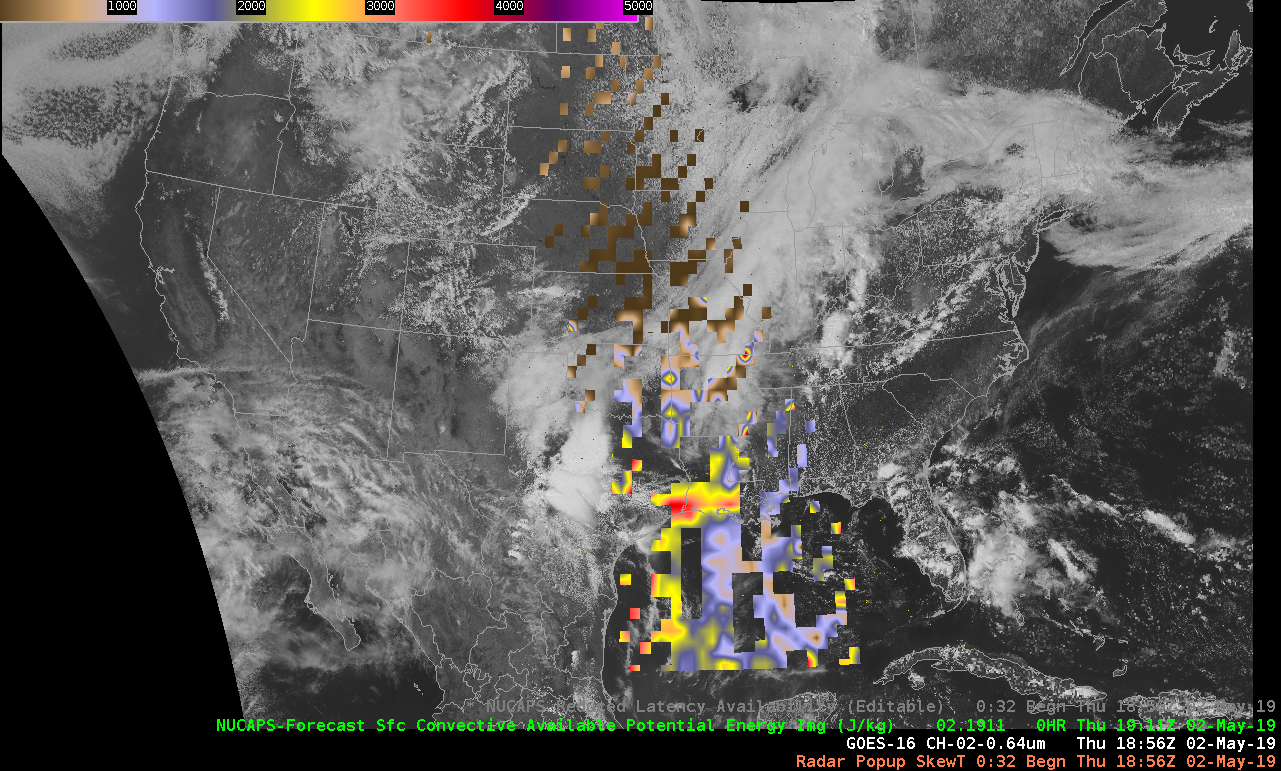
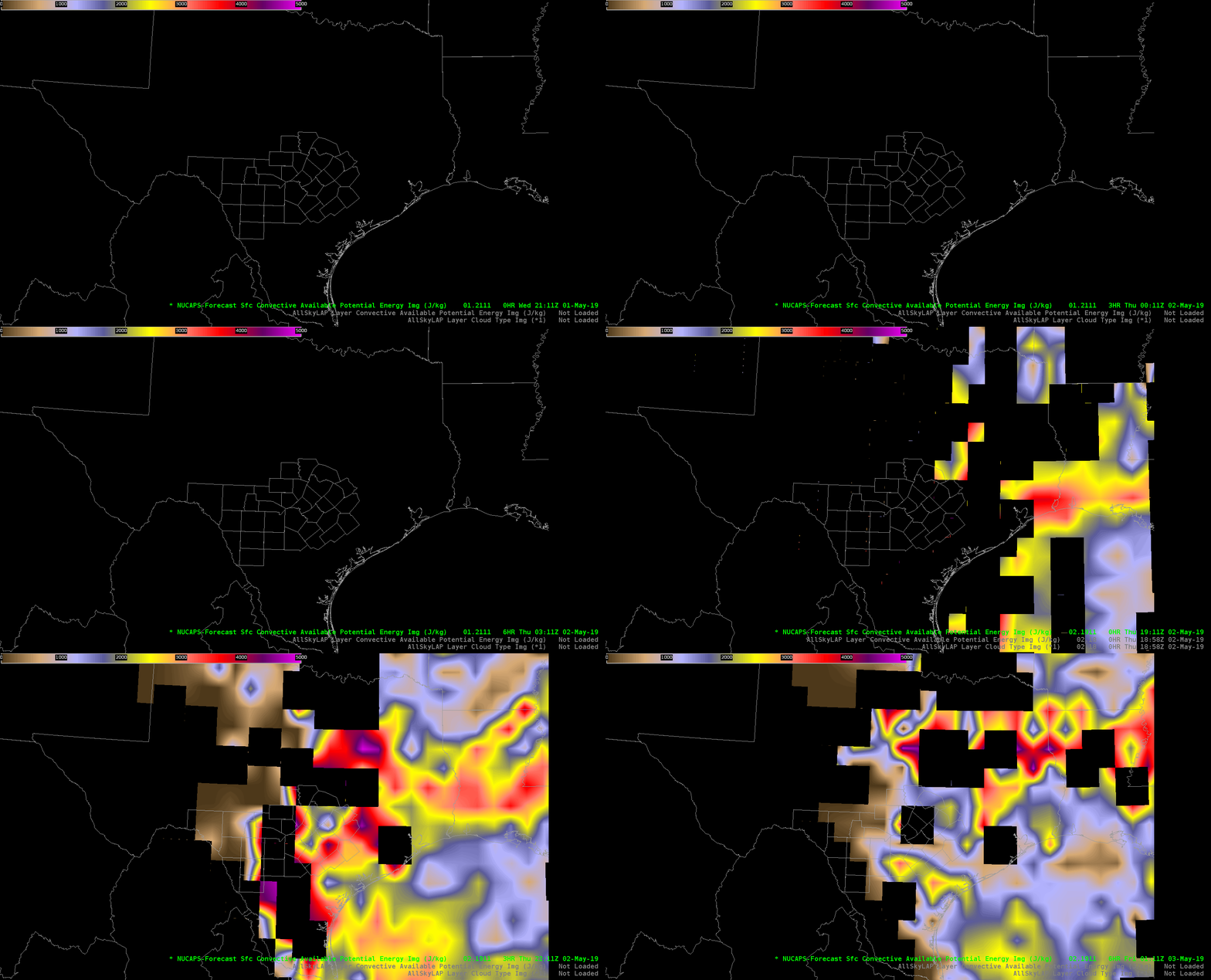
NUCAPS offer a way to get a vertical profile of the atmosphere across the US. However, in areas where soundings were not “retrievable” it can leave many of the products with large holes in them.

Default Output From NUCAPS on w/ vis satellite

A great application would be some type of algorithm that fills in the “data holes” Two ways to approch this would be:

  1.  Linear interpolation between the grids
  2. Use a model such as the RAP to fill in the gaps
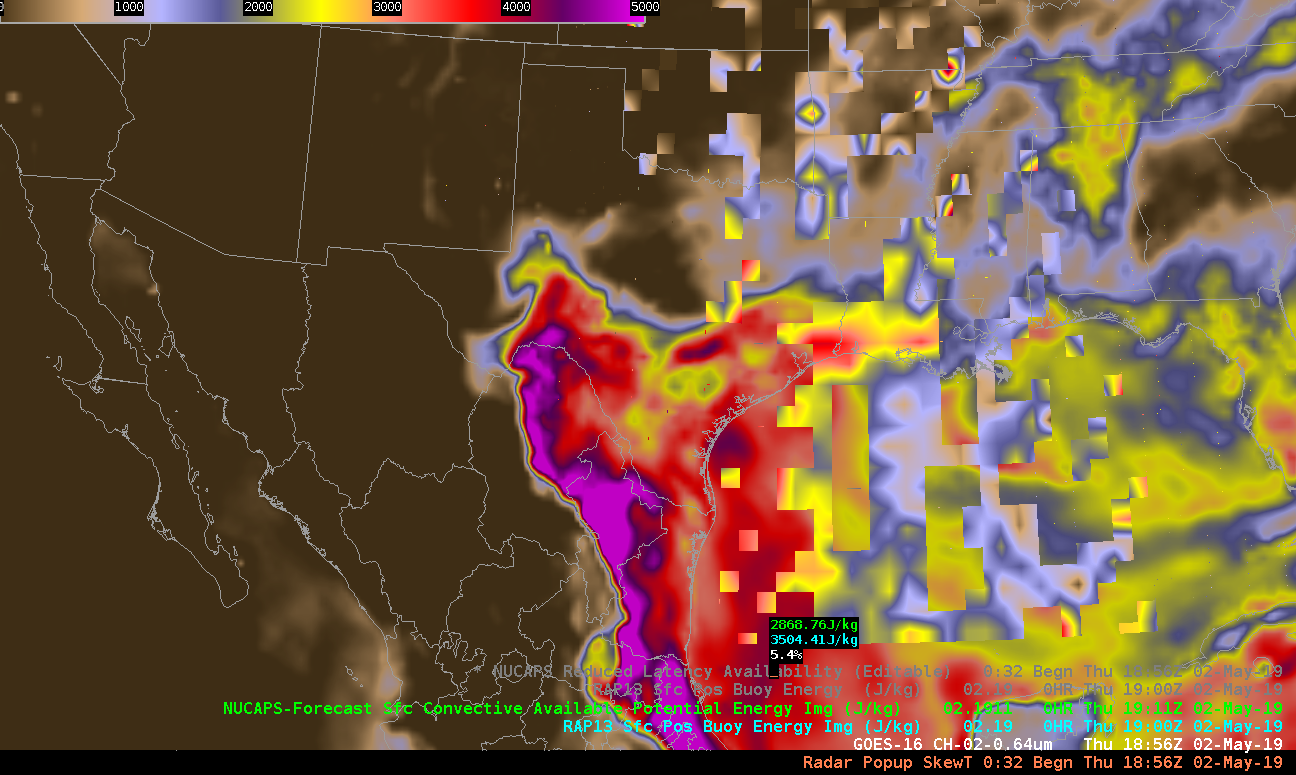
A quick attempt at a combined product with the NUCAPs Forecast and the RAP.

A smoothing of some sort would still benefit the product above, but this would be of great benefit to forecaster’s trying to determine the afternoon environment. (Note: I think it would be beneficial to include a mask that said whether the data was from NUCAPs or a model in each location if a product like this was developed. All in all, this is a useful product, but it needs some further refining.

South Beach

Del Dot CAPE in NUCAPS Forecast

NUCAPS forecast product unrealistically advects the CAPE east through the evening. In reality the CAPE axis extends along and east of the Rio Grande and will likely stay in place but slowly modify toward sunset. Also it might improve the product to interpolate or fill in the gaps with a model (actually Jake’s comment) not mine.

— SCoulomb

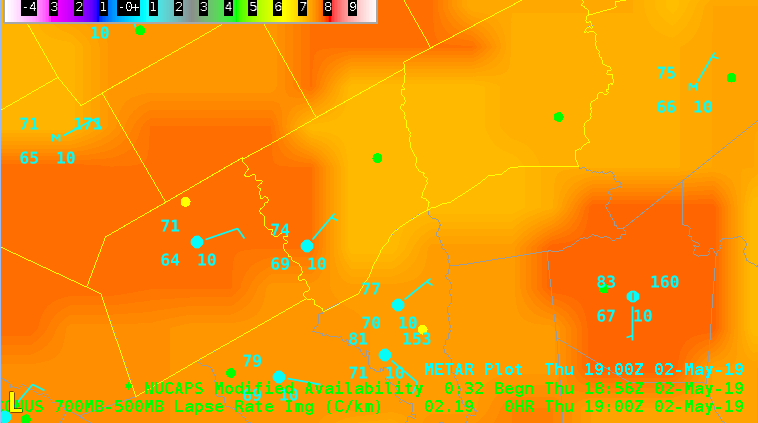
NUCAPS Modified Sounding Compared to Surface Obs

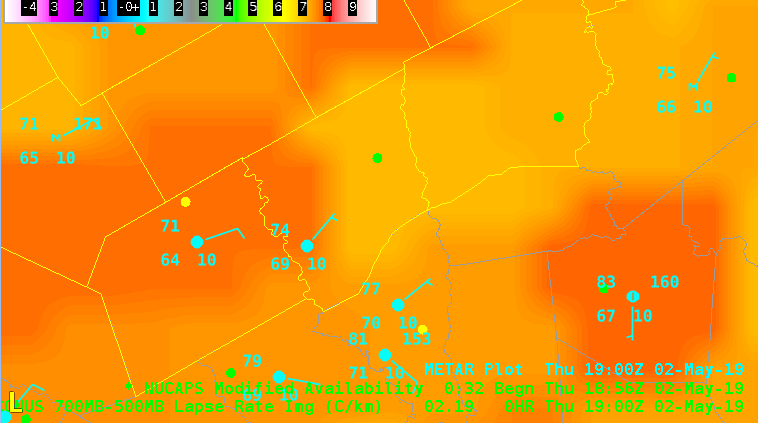
NUCAPS gridded 700-500mb Lapse Rate and Modified sounding points.  Lapse rates are favorable for storm intensification across the southern part of FWS CWA.

NUCAPS Modified sounding had 72/69 (temp/dewpoint), compared to closest surface METAR KLHB 74/69 (temp/dewpoint).  This sounding data showed un-capped and unstable environment supportive of surface based convection in southern FWS CWA. -Jake Johnson

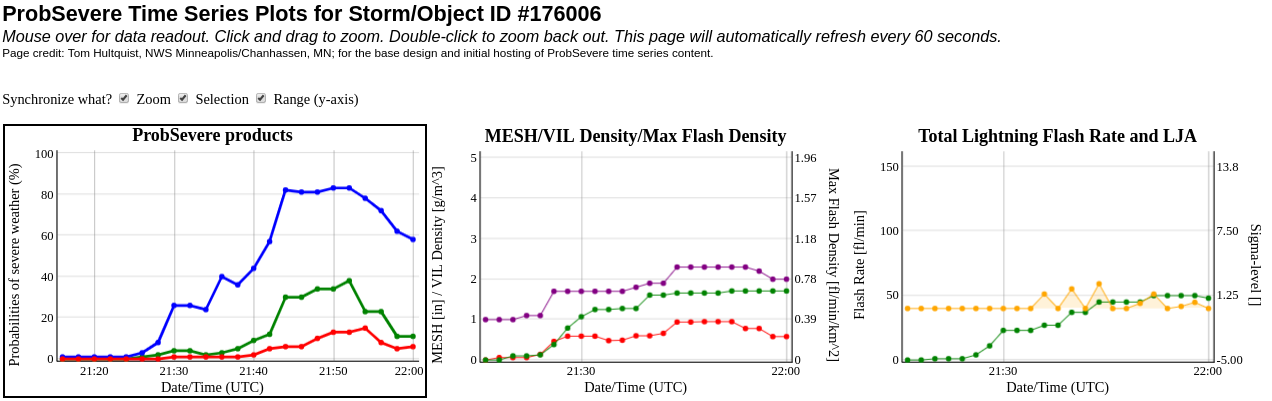
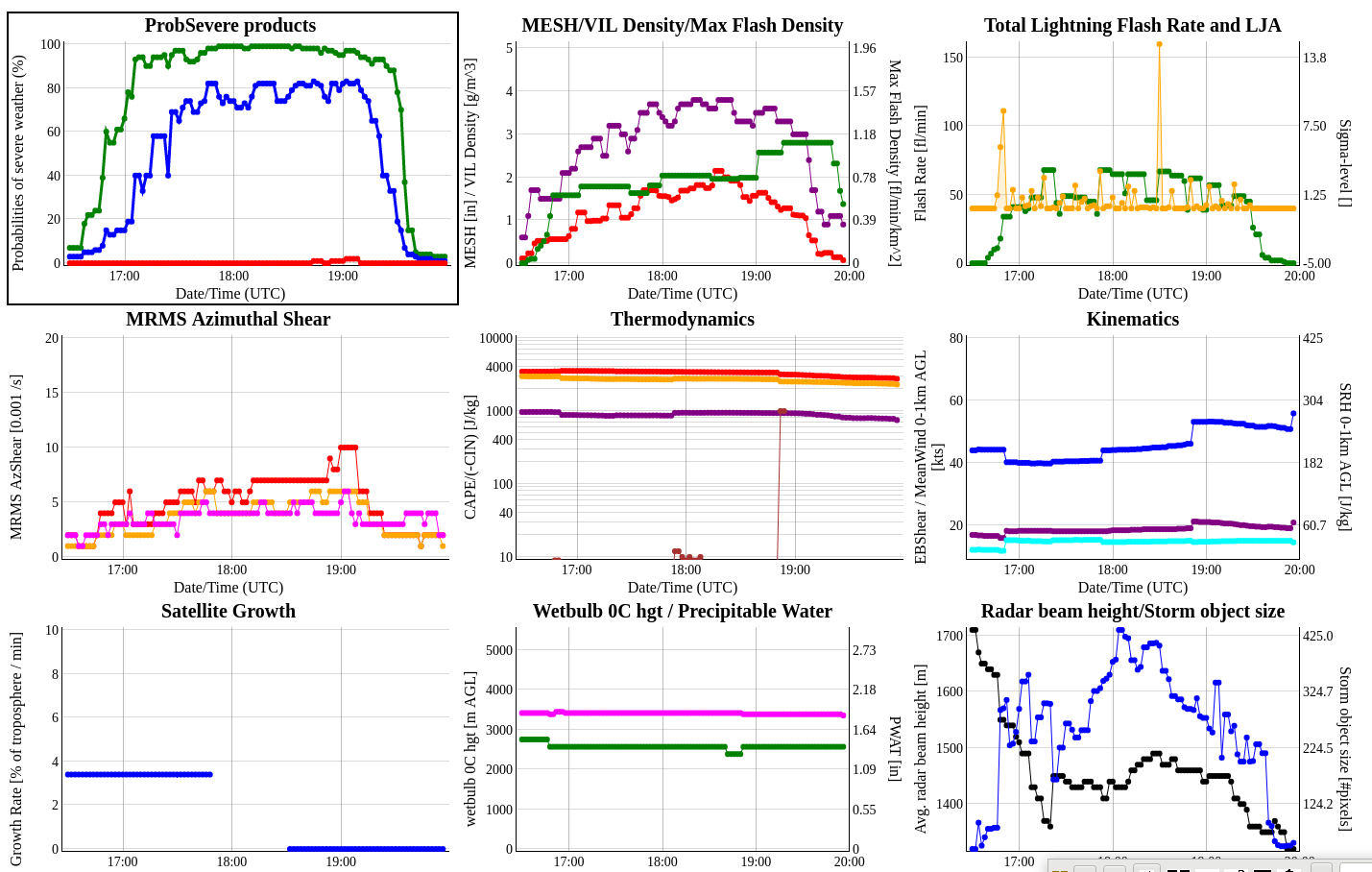
ProbSevere Trendmap for a splitting supercell

Graph of probsevere for splitting supercell discussed in earlier blog entries. These graphs are extremely useful to forecasters looking for trend analysis.

Possibly even more important could be their use in post-event analysis. For example, plotting lines on these graphs when LSRs came in, when tornadoes occurred, can give forecasters an idea of what the trends were showing in MRMS at the time of the impacts. The RealEarth viewer appears to allow you to view these graphs from object IDs back about 24 hours, however only the object ID shapefiles are available before that in time. It would be very useful for forecasters to have access to these time series plots for post event analysis – perhaps consider making them available for any object IDs up to a week old?

-Dusty

GLM behavior, overlaid with +40dbz/vis sat throughout a CI event and storm split

Full loop from CI through storm split. A good practice for GLM users overlaying with radar is to Alpha your color table below a certain range (in this case 40 dbz) to mask out low reflectivity values and focus on storm cores only. Because of the parallax error, the storm cores on GLM are displaced to the northwest of the radar cores – a hidden benefit for storm interrogation!

There are several things to note here. First is the onset of GLM data – this storm featured explosive development. The GLM data here is 5 min/1min update. Because of this, the upward trend is rather sudden – for early stages in deep convection it may be best to use 1 min data. As the supercell splits, the the different cores are most evident in the top left, which is Event density data. FED, AFA, and TOE do not snow this trend nearly as well. I chose not to include a loop of Minimum area, because this data was too low -resolution to capture details of different cores this close.

This is a longer loop of the same event showing the storm through its demise. You can see the Average Flash Area in the storm in the bottom left really increase as this particular supercell diminishes. This is consistent with the idea that shorter length lightning in the core ceases and most of the remaining strikes are longer flash events in the residual anvil.


-Dusty Davis


Mesoscale discussion using All Sky and SPC mesoanalysis page

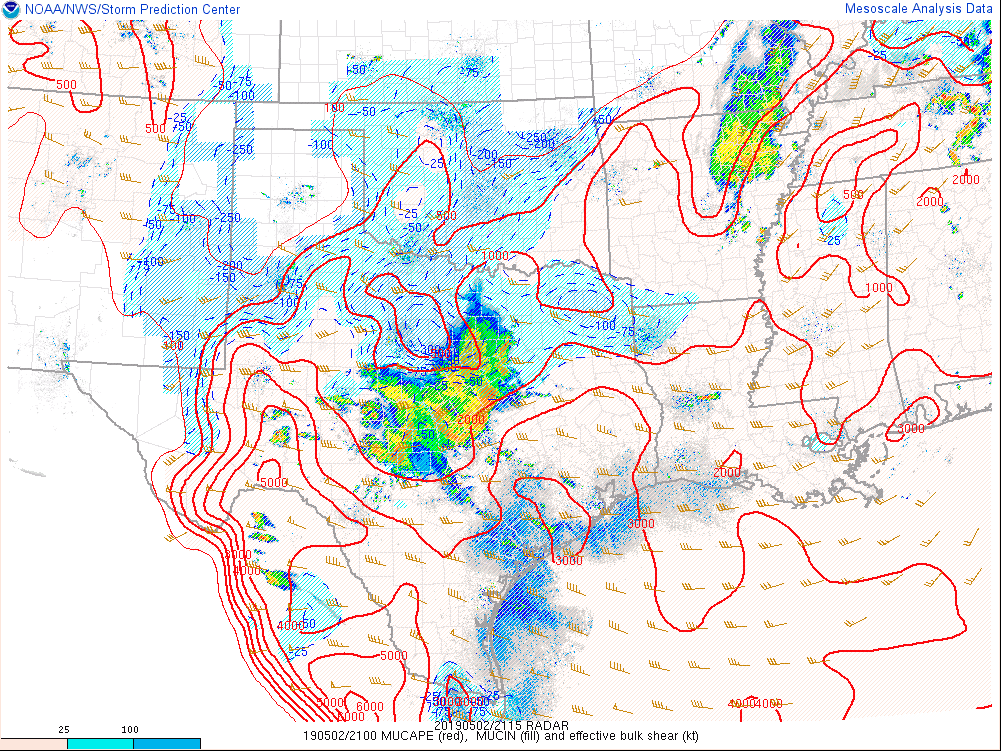
Favorable 0-6km shear aloft from SPC Mesoanalysis page above across FWS CWA
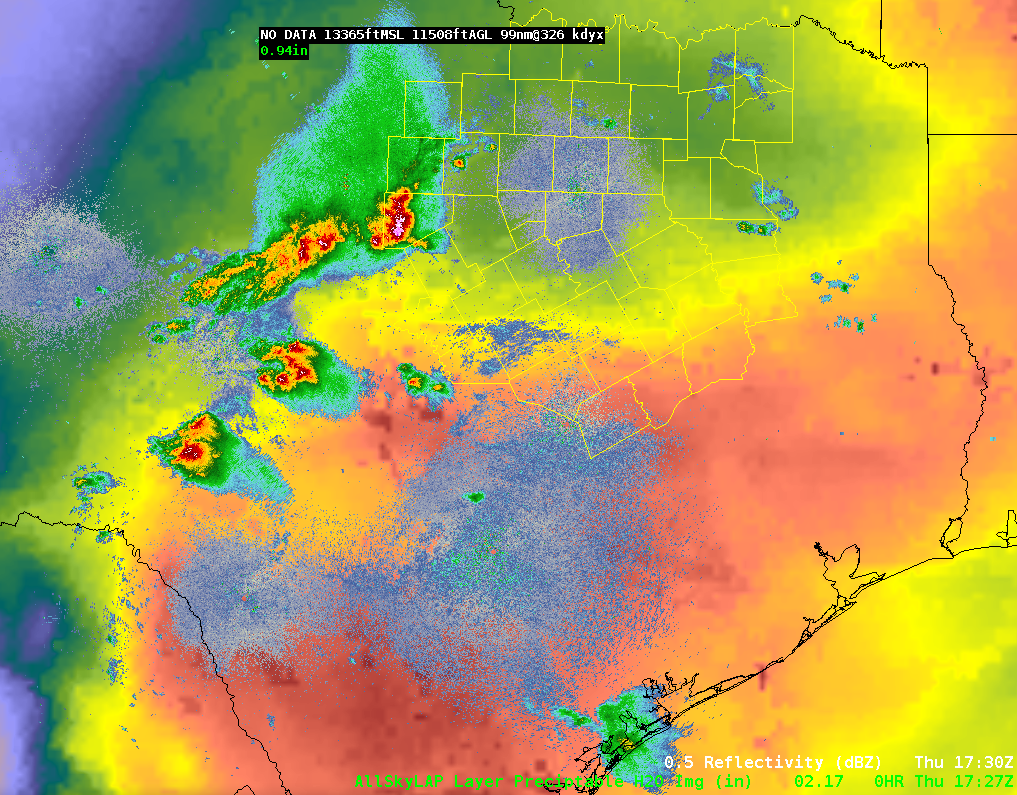
All Sky Total PW above shows deeper moisture in southern FWS CWA.
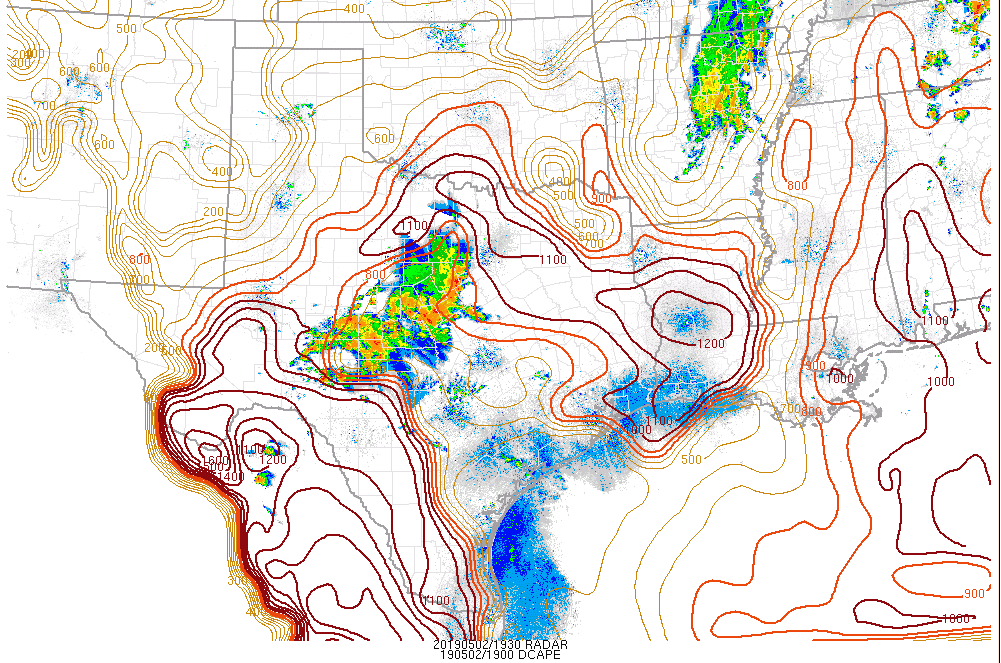
High DCAPE values across the FWS area per SPC mesoanalysis page above
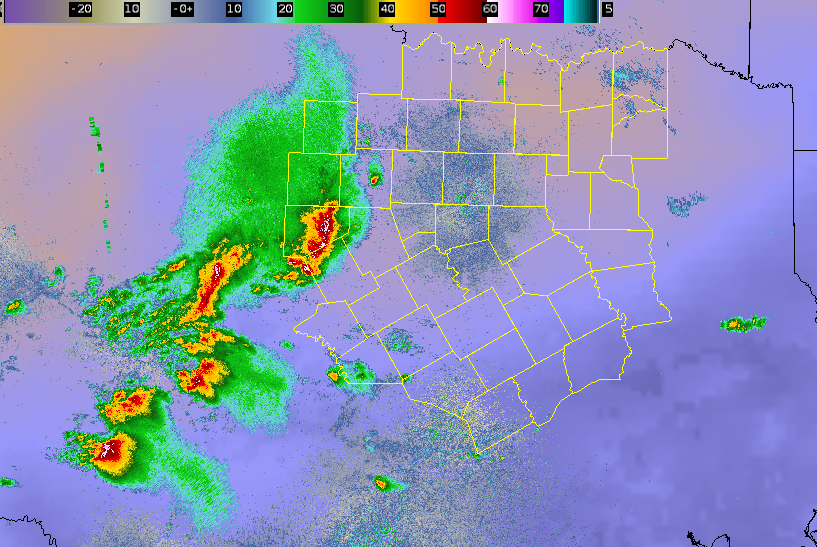
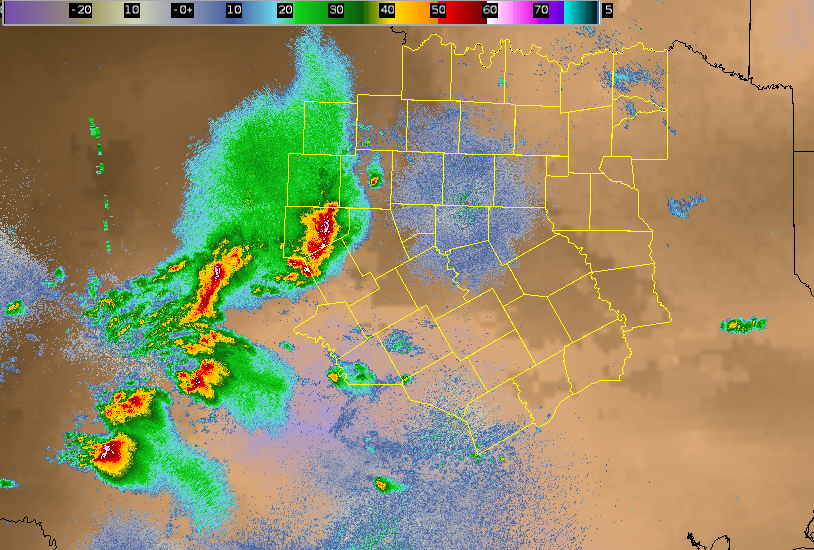
 

Mesoscale Discussion…40-50kts of wind shear aloft and high DCAPE values show conditions favorable for severe winds to occur, mainly for locations where  All Sky total PW shows strong moisture gradient along surface front in southern part of the CWA.

This is a loop of radar and All Sky LAP CAPE.  Notice the higher CAPE values in the southern part of the CWA. This is were linear convection could grow upscale become surface based and capable of produce damaging winds.  -Jake Johnson
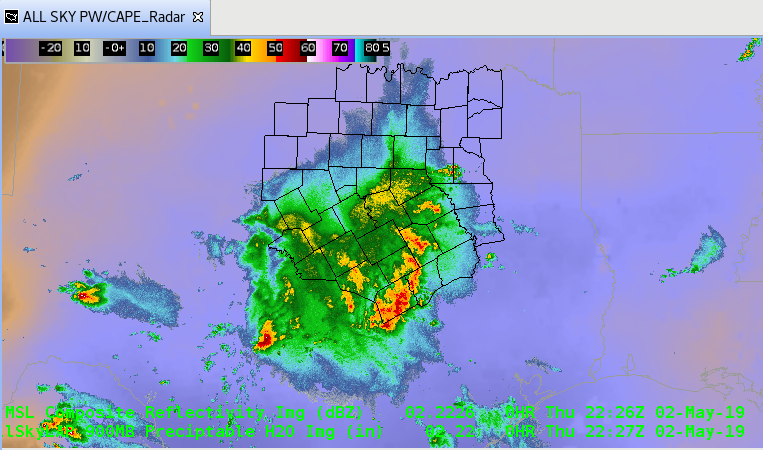
 

The ProbSevere Wind spiked to 80% with a thunderstorm that later moved across southern FWS CWA, which was our area of concern.

AllSkyLaps_sfc900_vs_700-300 Comparison

Monitoring environment downstream of convection entering FWD forecast area around 1830 UTC on May 2.  Top image is the sfc-900 mb ALLSkyLaps PW illustrating higher moisture over southern portion half of the FWD CWA.  Bottom image is the 700-300 ALLSky Laps PW illustrating much drier air above suggesting convective instability.   SPC Mesoanalysis  RAP downdraft CAPE (not shown) also suggests axis of highest DD Cape in this region suggesting environment supportive for damaging winds as line segments moves across the FWD area later this afternoon. – Quik Twip