Afternoon High Plains Convection in Southern Colorado

Today we focused on the Pueblo, Colorado  CWA for afternoon High Plains convection. Scattered convection developed across the CWA leading to large hail and damaging winds. The first Severe Thunderstorm formed on our CWA border with Albuquerque and drifting south into their CWA. A second Severe storm developed and tracked north towards our DSS Event in Pueblo, bringing the potential for large damaging hail and strong winds.

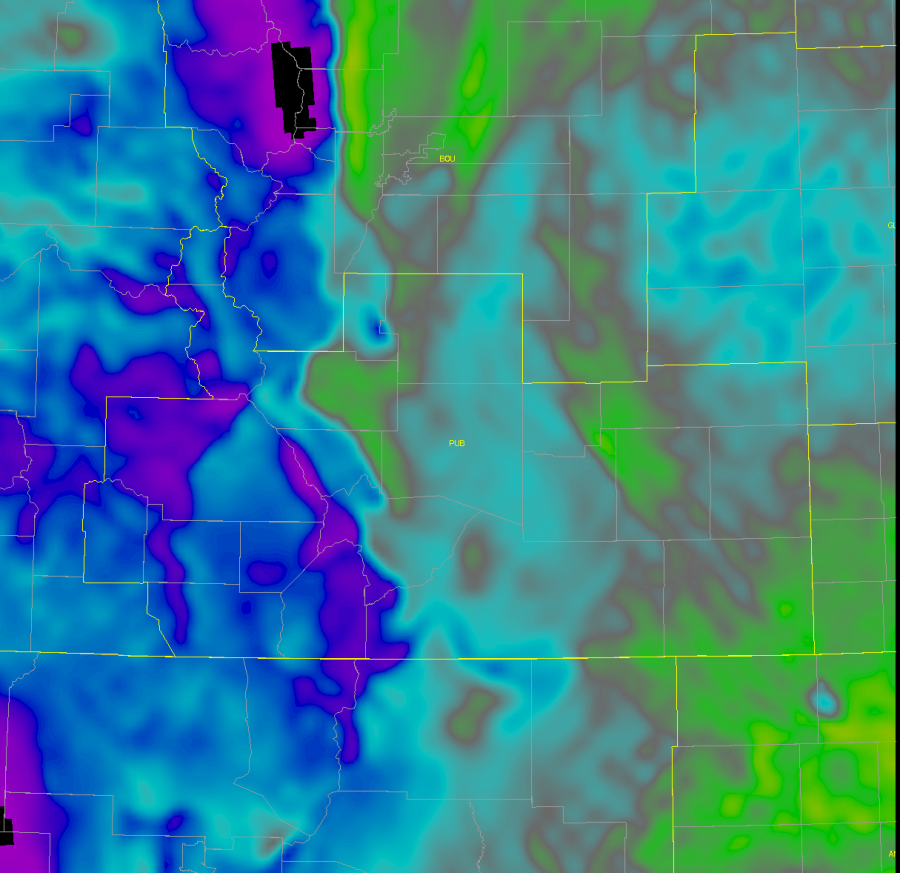
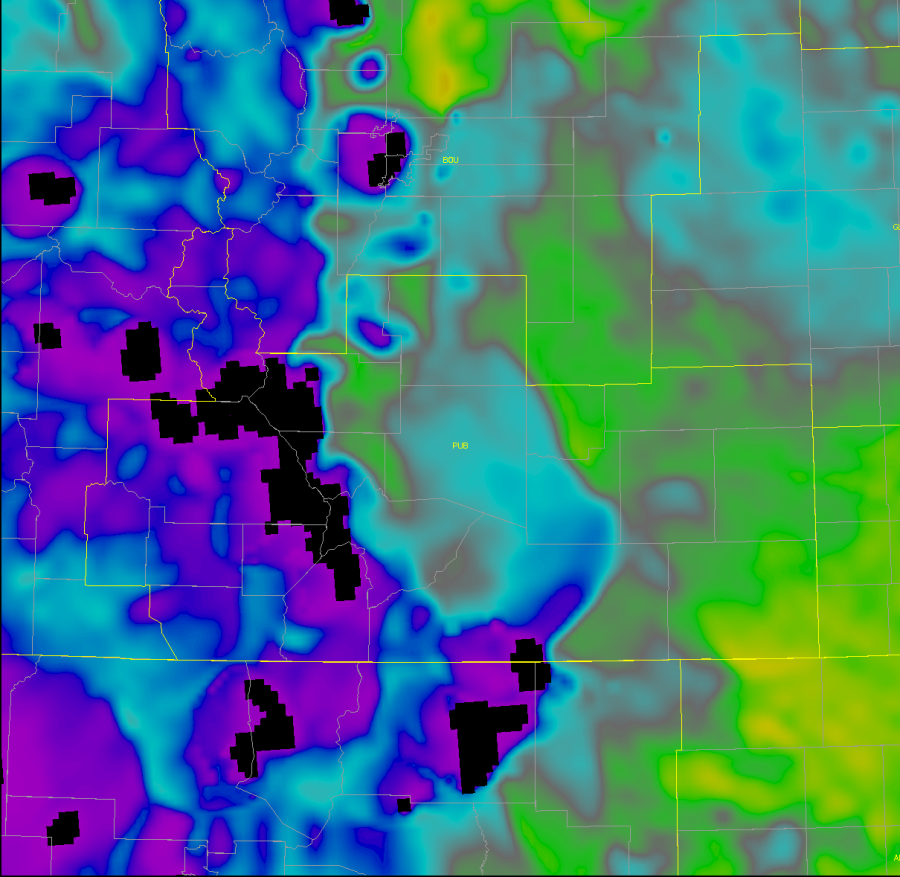
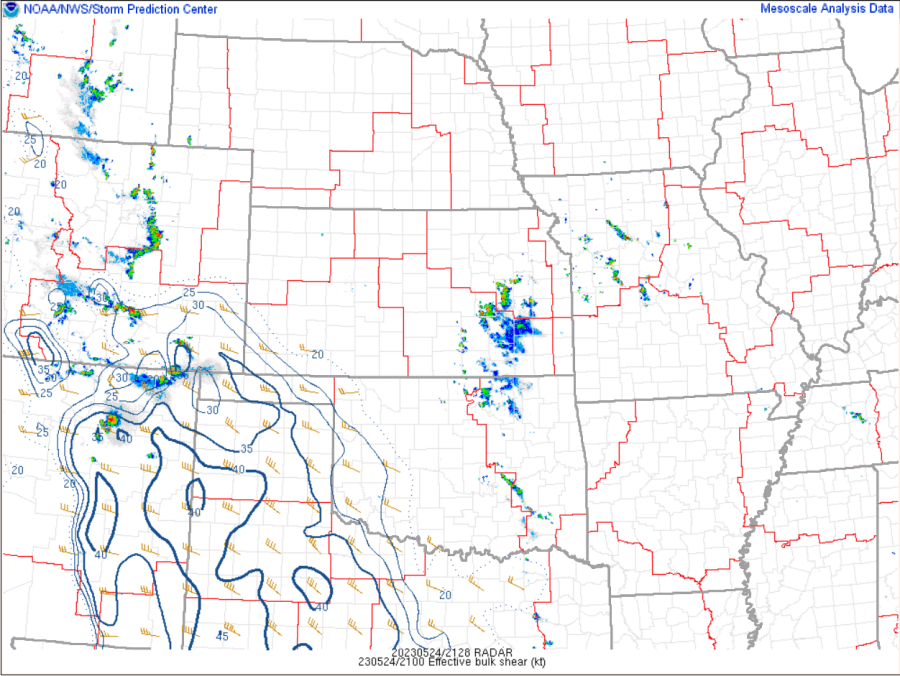
15Z PHS MUCAPE valid at 18Z showed around 2000  to 2500 J/kg for green areas while areas in blue had roughly 1000 to 2000 J/kg.
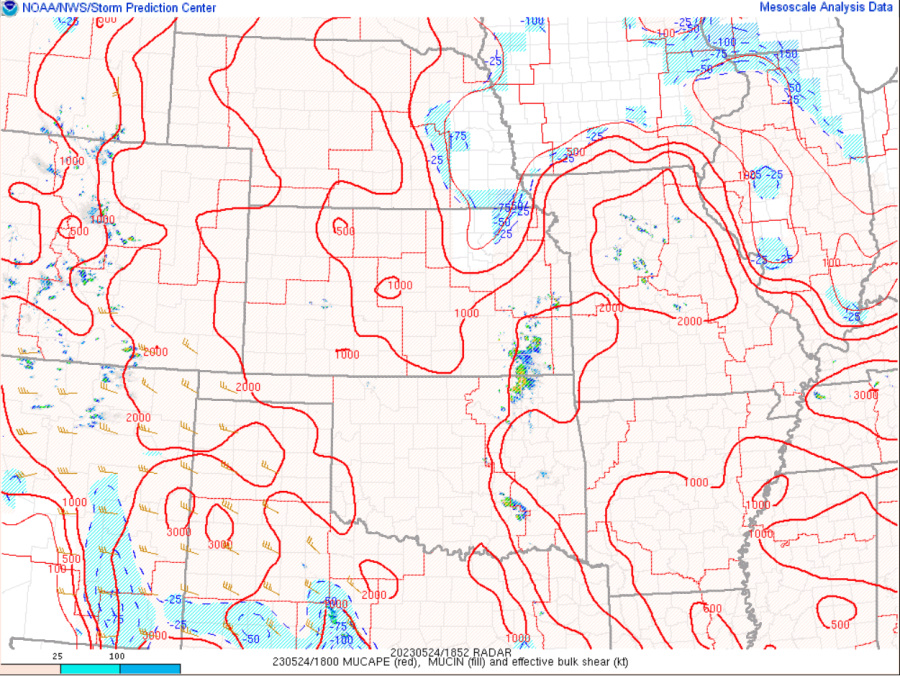
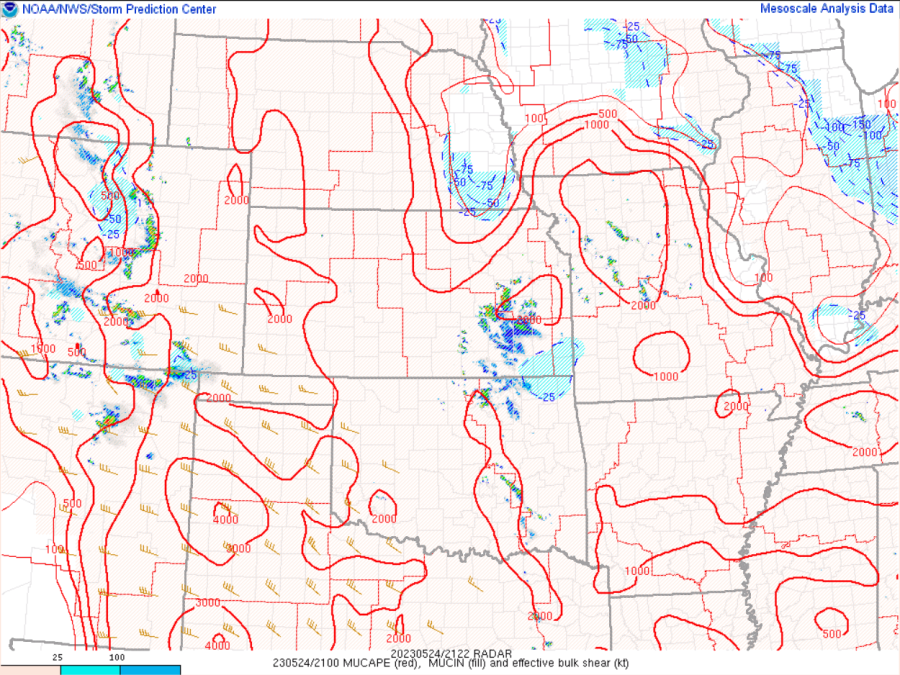
SPC MUCAPE Mesoanalysis valid at 18Z shows similar trends to the 15Z PHS MUCAPE values.
16Z PHS valid at 21Z showed a slight upward trend of MUCAPE in the eastern half of the CWA. 
21Z SPC Mesoanalysis showed increasing values of MUCAPE developing just south-southeast of the CWA, similar to the 16Z run of the PHS shown above. 
 

15Z PHS STP valid at 18Z showing little overall threat for tornado concerns through early afternoon, for the most part values were less than 0.25. 
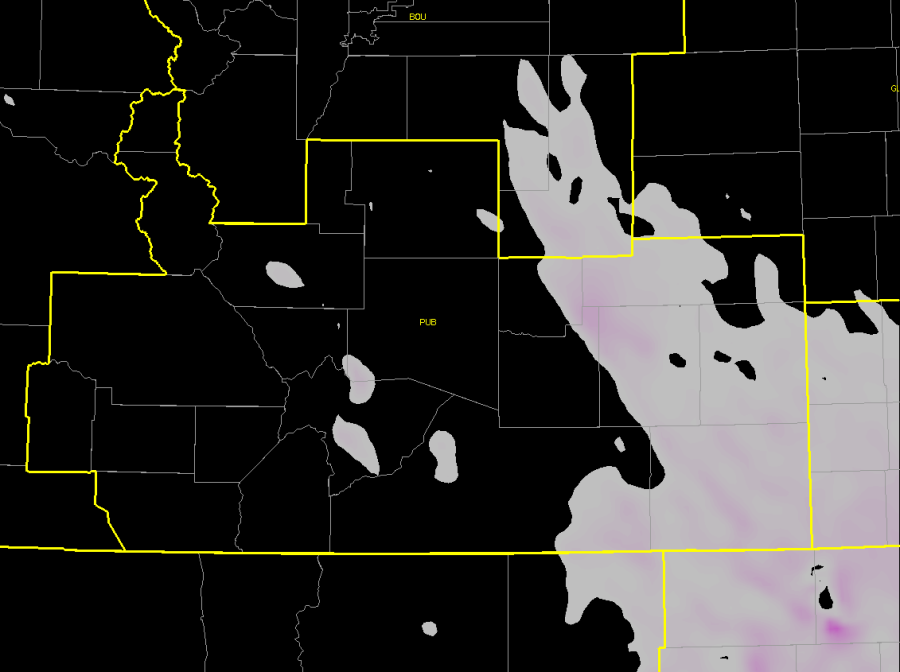
SPC Mesoanalysis page showing 18Z STP values similar to the 15Z PHS forecast. 


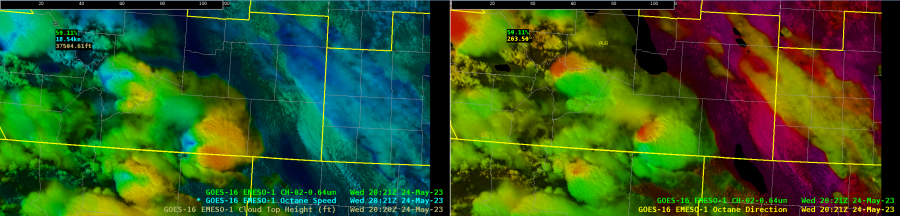
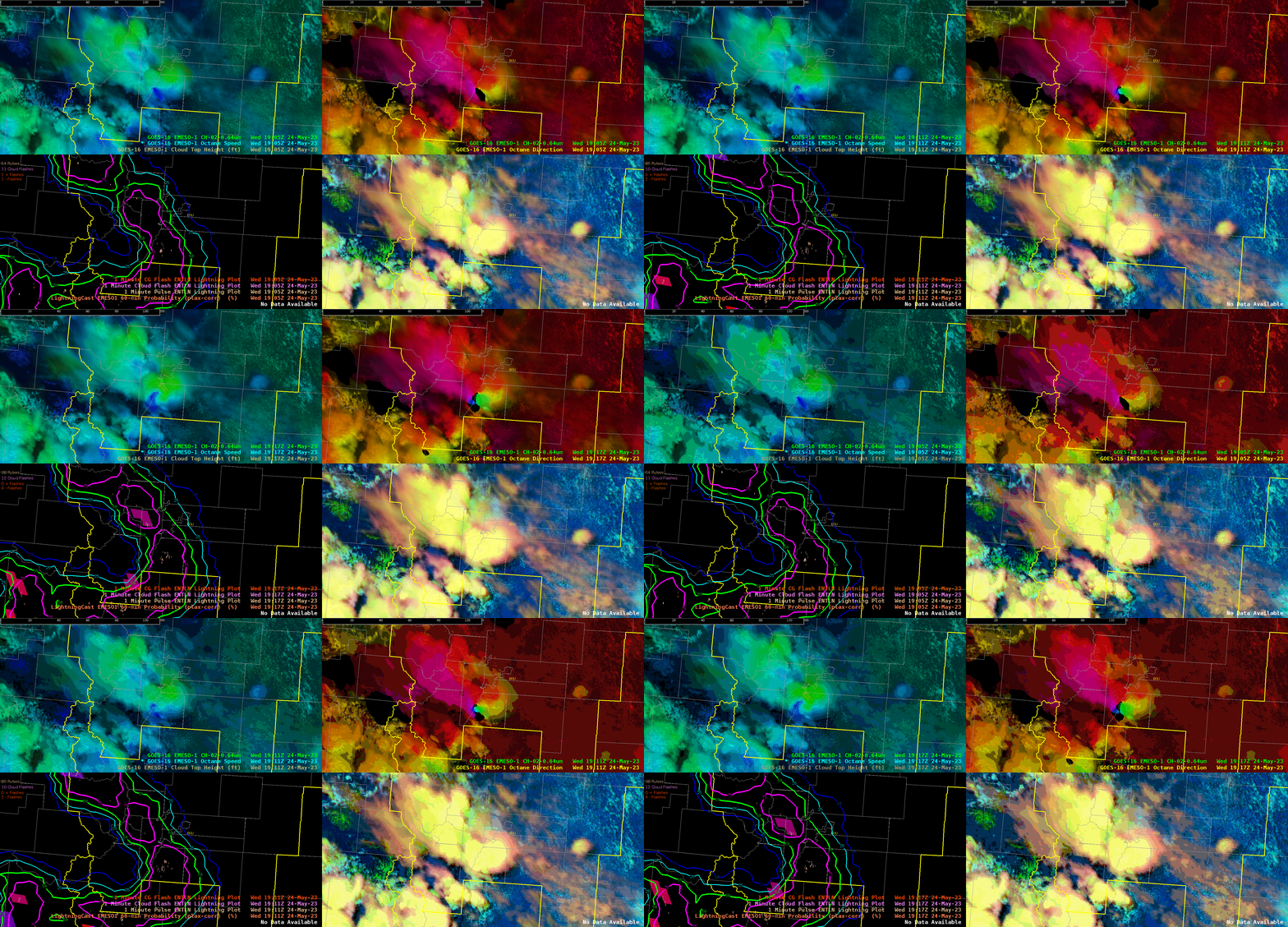
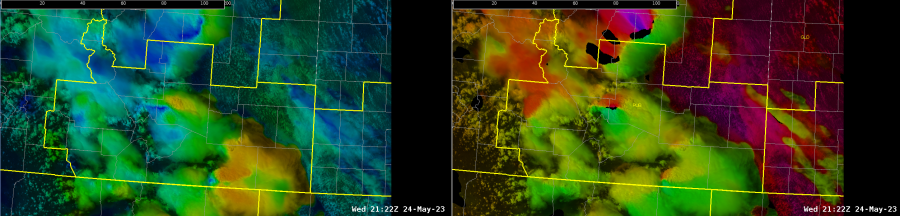
The image below shows the Octane Speed product on the left and the Octane Direction product on the right, focusing on a cluster of activity near the Jefferson/Douglas County line in Colorado. Picked this screen capture as it showed a wide range in values, mainly for the Direction product. The Octane Speed product shows some speed shear present with the lighter speeds (darker blue, ~5 kts) transitioning to brighter green/a bit of yellow (~30 kts). The magnitude of directional shear was higher, showing direction of motion/divergence ranging from ~170 degrees (core of red area) to ~295 degrees (core of green area).
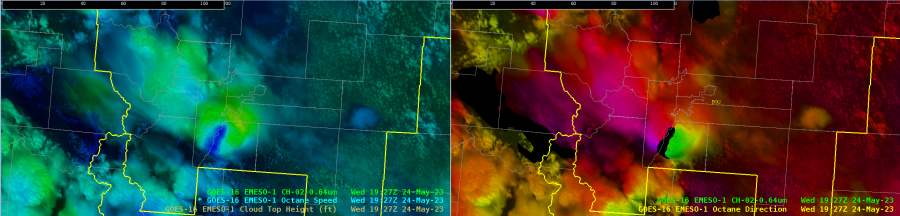
Below is a animated graphic showing the transition in both products. 
———————————————————————————————-

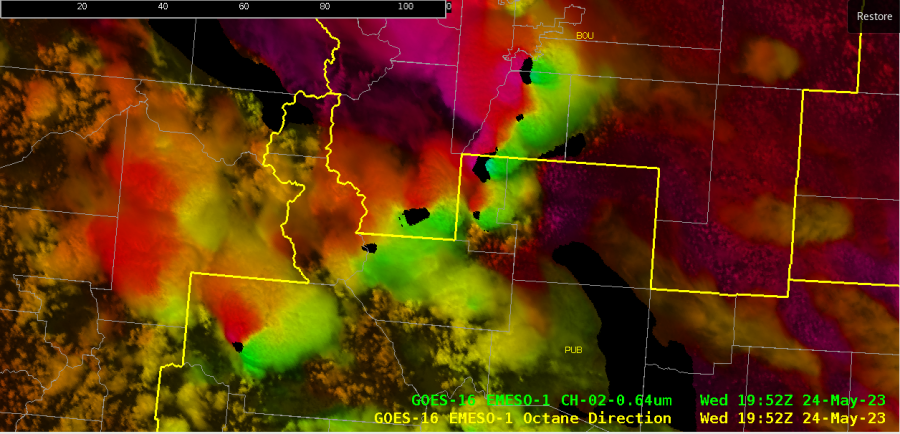
Chose to grab this Octane Direction product screen capture as it shows an elongated area of storm top divergence through central Colorado.  The red/magenta colors show direction generally from the 170-190 degree range, while the green/yellow colors show values from the 275-285 degree range. The black areas are spots of data dropout, which can occur when the speed shear product drops below 5kts.
———————————————————————————————-

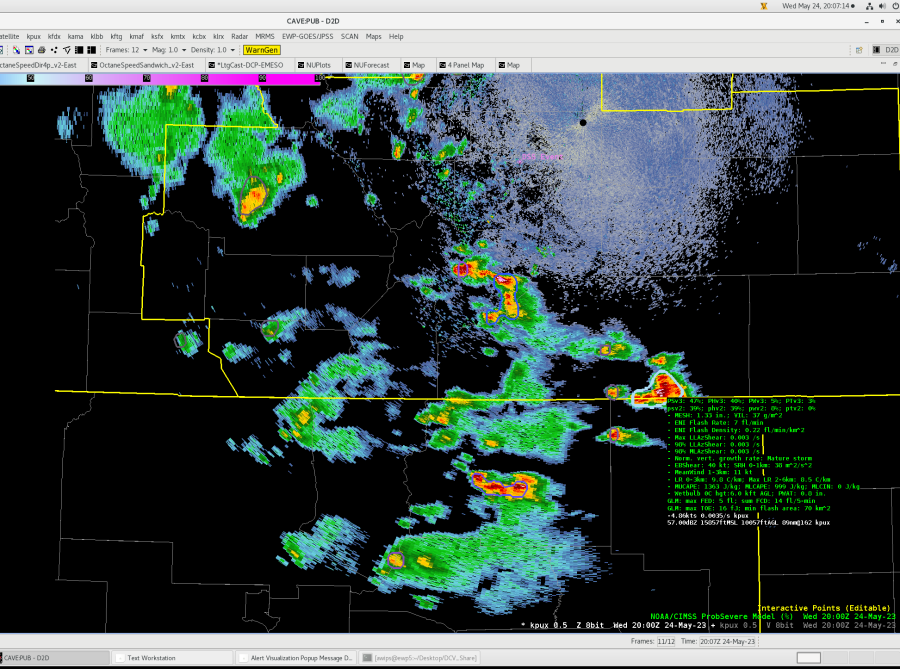
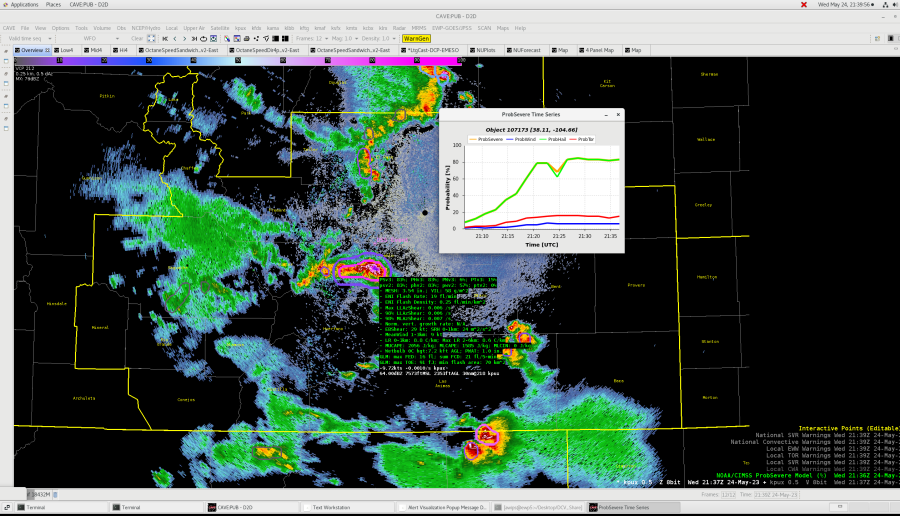
First Severe Thunderstorm Warning issued for this area today came right after 20Z, based on ProbSevere values/time series as well as the Octane Speed Sandwich product.  Probabilities ramped up quickly for both ProbSevere and ProbHail on this storm at the edge of the PUB/ABQ CWA boundary. Octane around “peak” of the storm.Low Level SRM and ProbSvr (0.5 deg slice is about 10.8k ft AGL)Mesh showing 3 inch hail on the border of the Pueblo CWA.
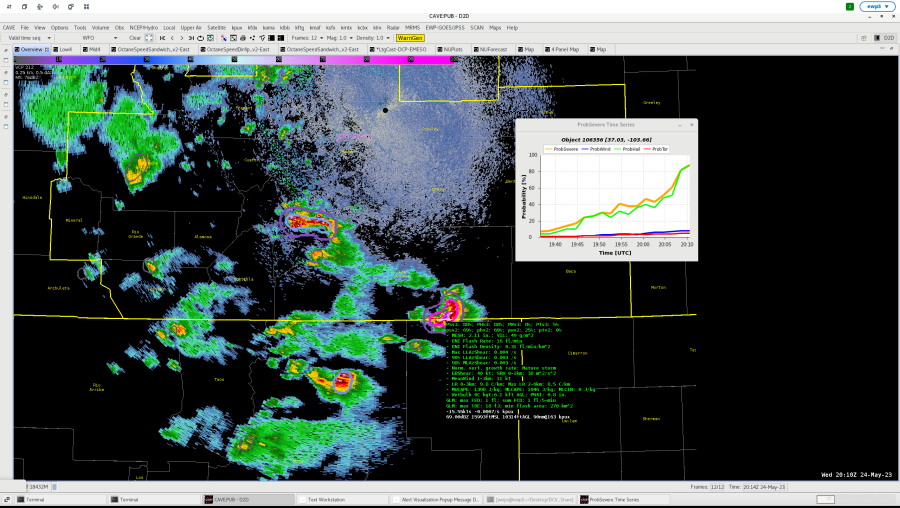
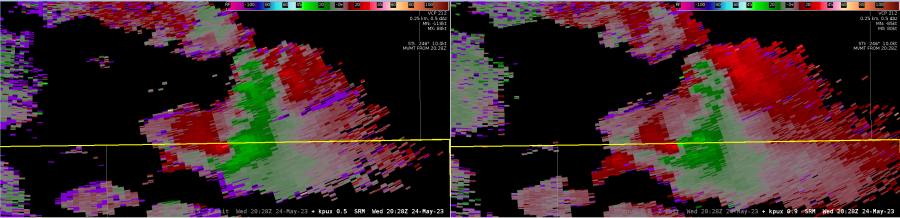
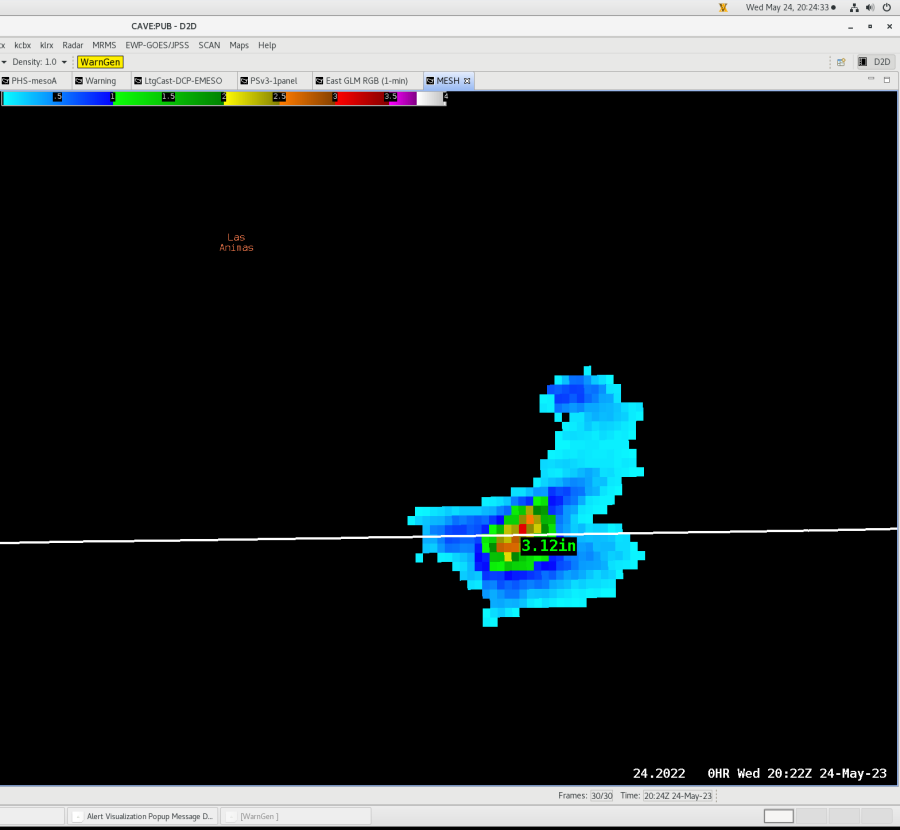
ProbSevere and ProbHail maxed out at roughly 90% while the storm remained severe. This storm eventually moved into ABQ’s CWA.———————————————————-
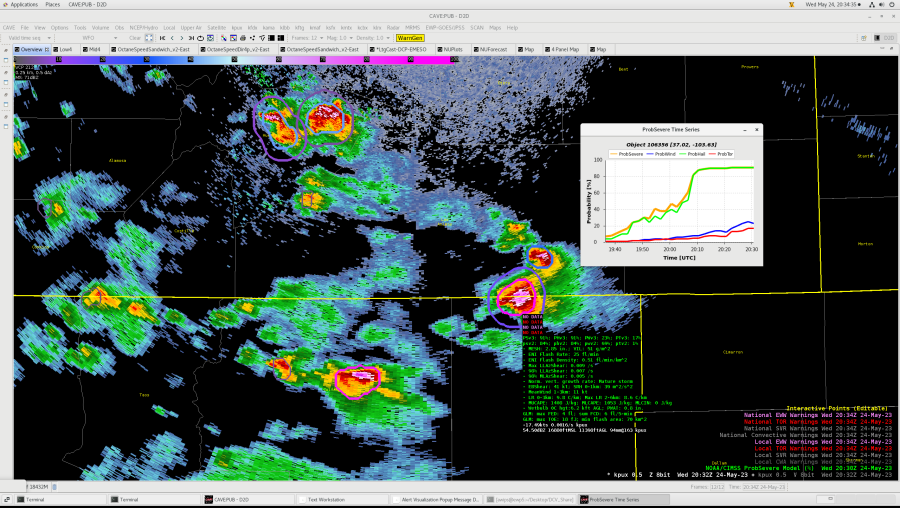
2nd Severe Thunderstorm Warning – Huerfano County

ProbSevere values and time series for 2nd Severe Thunderstorm Warning of the day, readout is at its “peak”…around 2045Z.
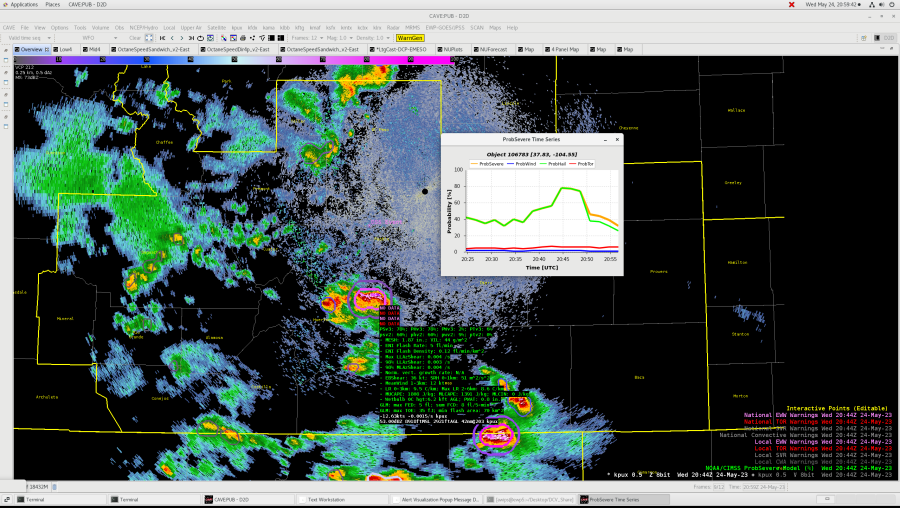
Octane Speed/Direction at “Peak” of the storm,  around 2045Z. Directional shear varied from ~205 degrees (reds) to ~285 degrees (greens).
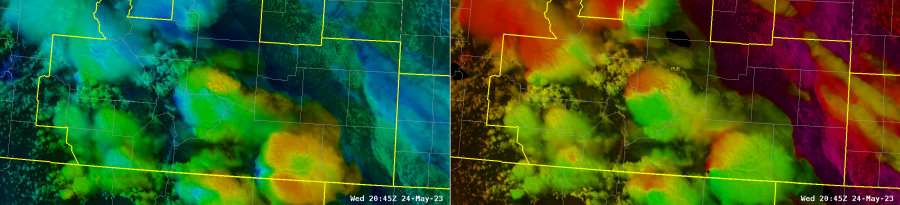
ProbSevere showing the weakening trend of the storm gave us confidence that the storm was in fact weakening.  Octane speed/direction further confirming the weakening trend as colors become more diffuse in nature.
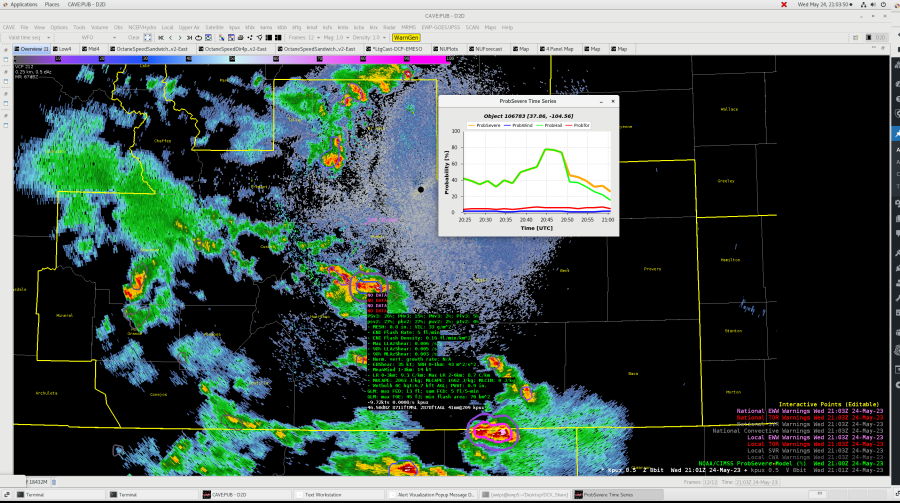
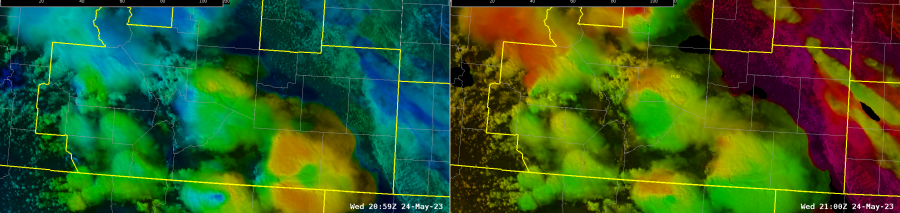
ProbSevere showing continued weakening trend. We decided not to issue another severe thunderstorm warning on this storm based on the trend.
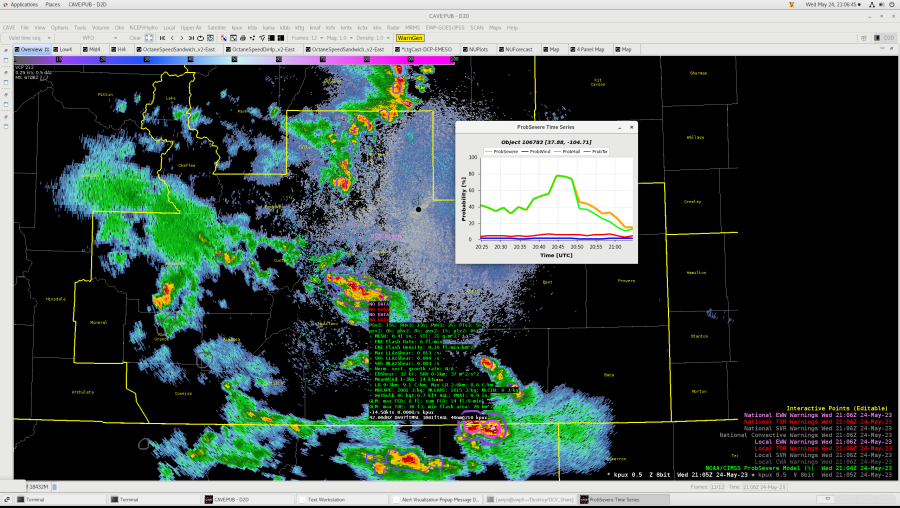
Though this storm showed a weakening trend, it was a short-lived trend, as it still had ~2000 j/kg of MUCAPE and effective shear around 30kts to work with as it tracked farther north.
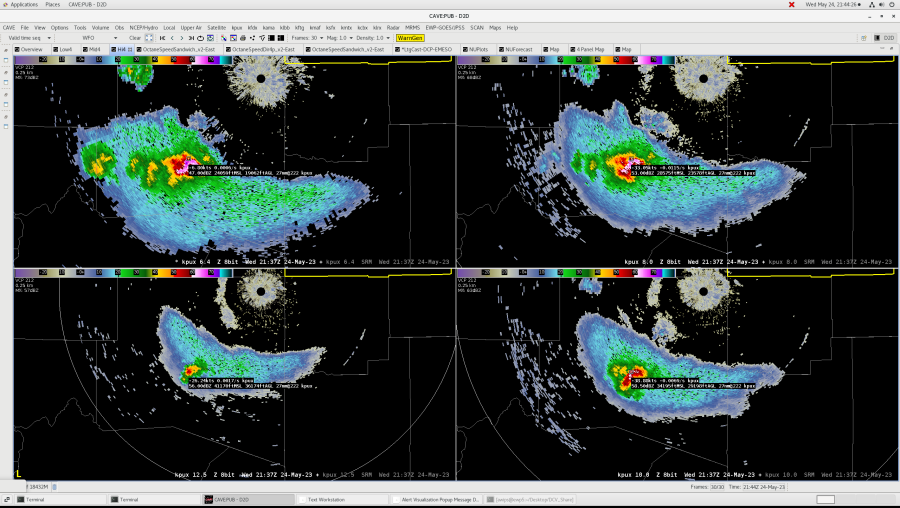
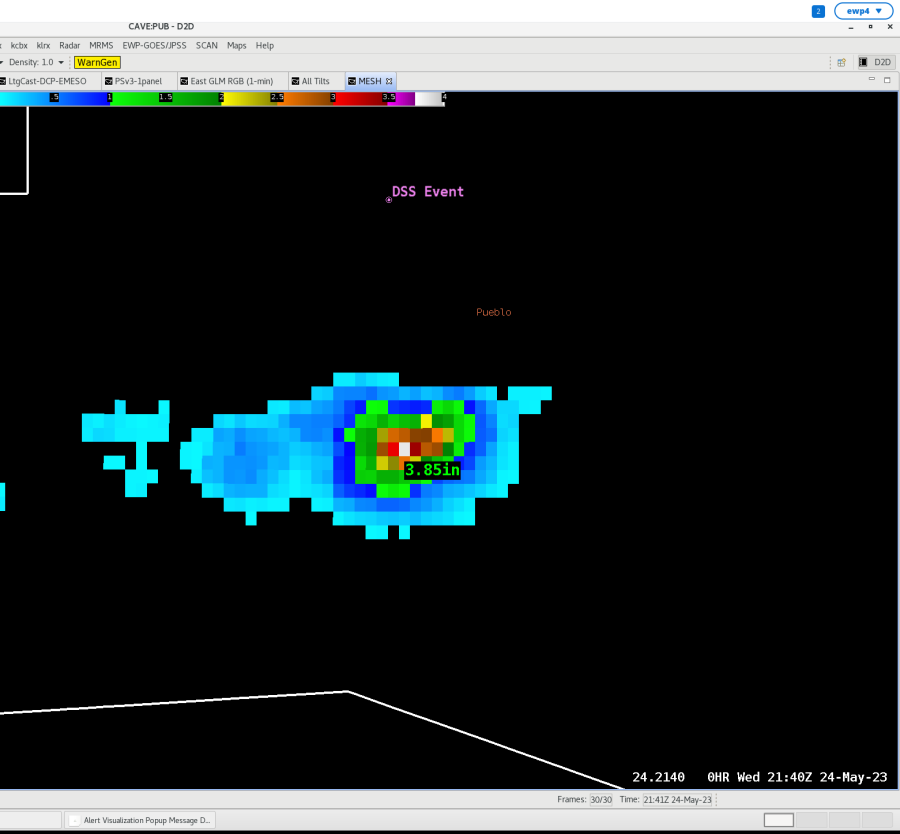
The storm ended up re-intensifying, as shown by the ProbSevere output/time series below. We went ahead and issued another Severe Thunderstorm Warning for very large hail.  An increase in both storm top speed/directional shear was also shown by the Octane product.The level reflectivity images show an impressive core peaking in the 36-40k ft range, shown in the 12.5 deg. slice. MESH showing nearly 4 inch hail south of our DSS event in Pueblo. The event was notified about the potential for large damaging hail.
 

-Dwight Schrute/Bubbles
Tags: None

LightningCast Over Eastern MT

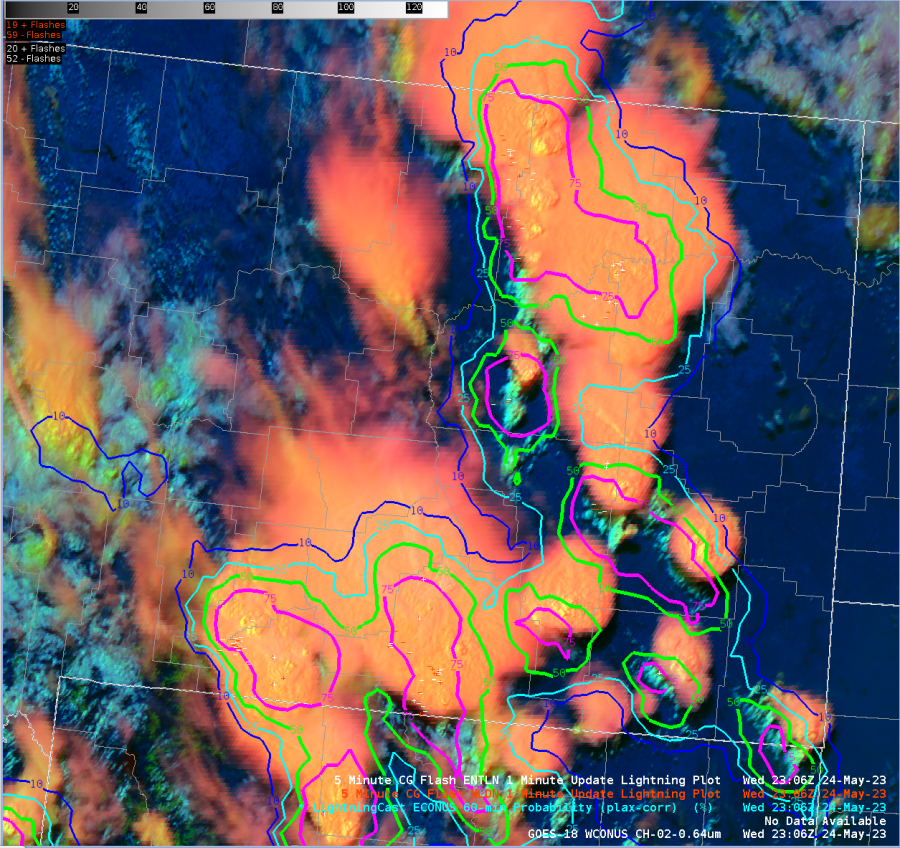
This image shows Day Cloud Phase Distinction, LightningCast, and 5 Minute CG Flash Lightning Plots for NLDN and ENTLN across Eastern MT.  While LightningCast provides a lot of information, it’s easy for it to overwhelm forecasters in situations like what’s shown, especially if other colorful imagery is included.  A suggestion is to give forecasters the option to load LightningCast in 10% increments from 10-90% (10, 20, 30, etc).  Then, forecasters can turn the individual increments on or off depending on the situation (i.e. lots of severe weather can prompt the lower values to be turned off, or partners concerned with the initial start of lightning can prompt lower values to be turned on).  Having the ability to change the color, line style, and line width for each increment would also be nice.

-Champion

Tags: None

Octane Captures Intense Updraft Over NV

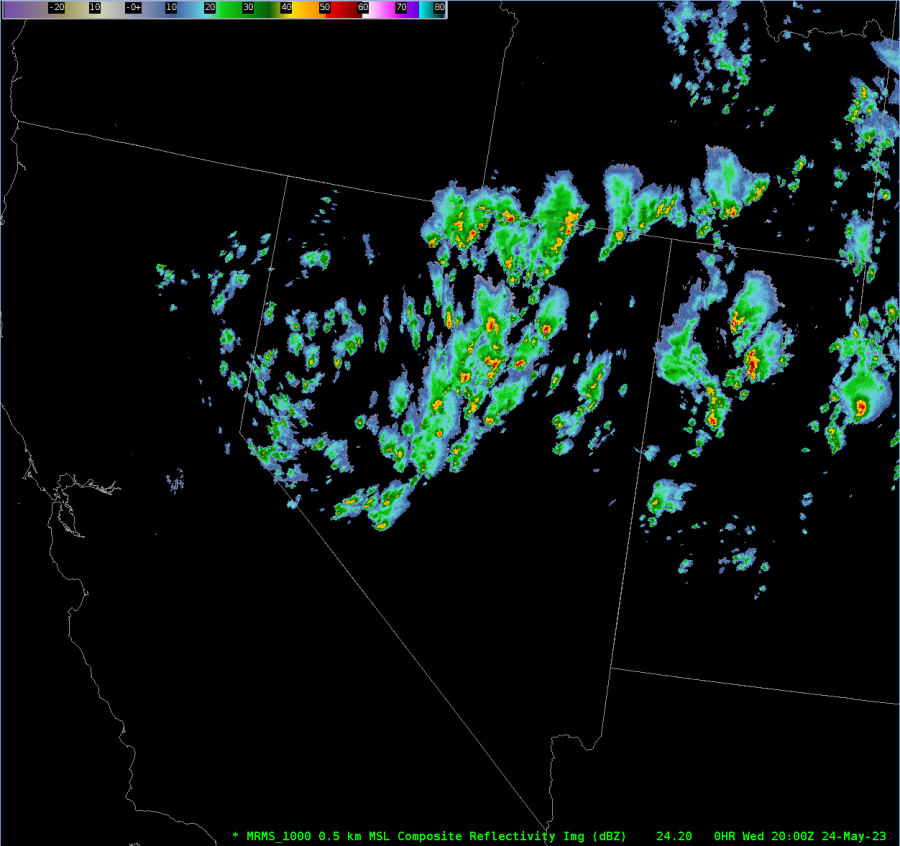
Here is a 1 hour loop (1-minute increments) of strong convection over NV.  The top image is Octane Speed with DMW overlayed.  The bottom image is MRMS 0.5 km MSL Composite Refl.  Notice an intense updraft develop in the center of the screen.  The blue indicates lower winds while green/yellow are higher.  Winds get as low as 2 kt in the anvil, while just downstream of it they are 30-40 kt!!!  The DMW confirm this as they are generally within 5 kt of the Octane speed.  Shortly after this happens, reflectivities rapidly increase.

-Champion

Tags: None

PHS SBCAPE Data in NV

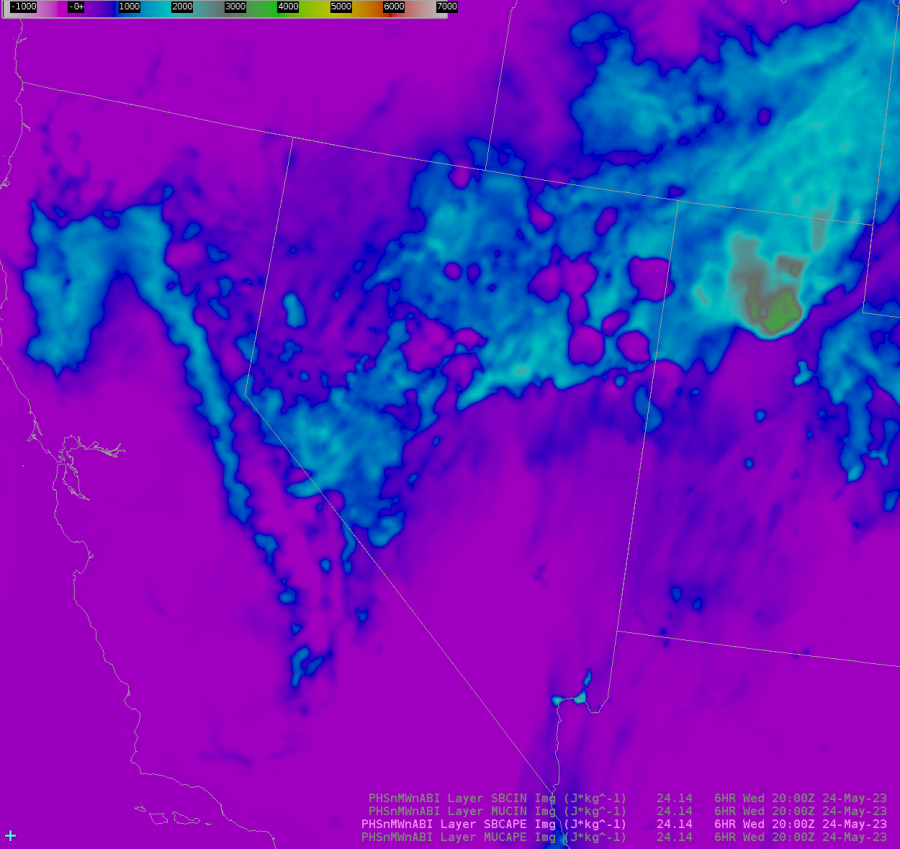
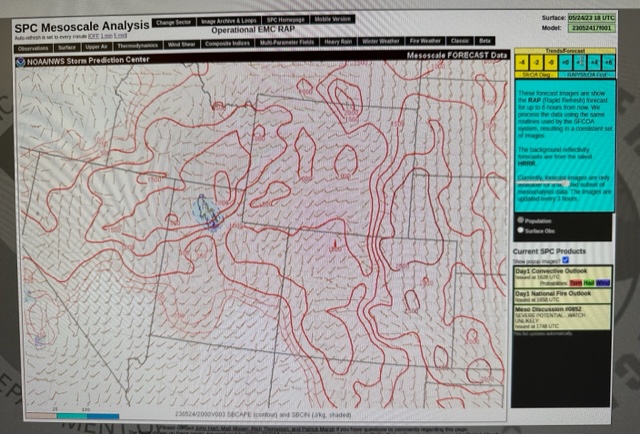
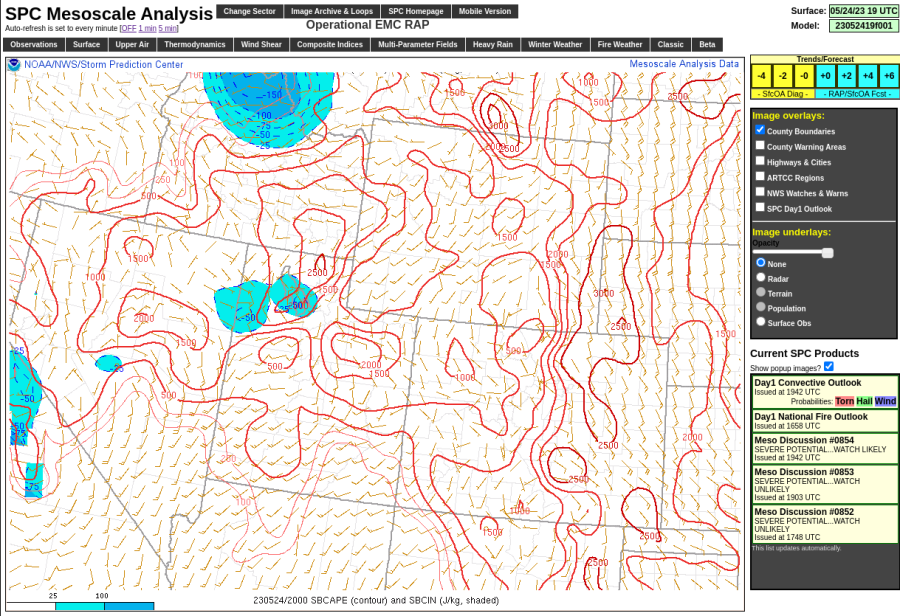
Here is what the PHS SBCAPE forecasted for 5/24, 20Z across NV.  (Some of the purple circles within the areas of blue hinted at ongoing convection).  This matches up well compared to the forecasted 20Z SPC Mesoscale Analysis SBCAPE.  How did it verify?

The 20Z SPC Mesoscale Analysis SBCAPE had an area that was 2,000 J/kg.  However, this appeared to be overdone as there  was widespread convection occurring across this area.

Remember, the PHS hinted at ongoing convection in some of these areas.
-Champion

Tags: None

PHS Comp Refl Data in NV

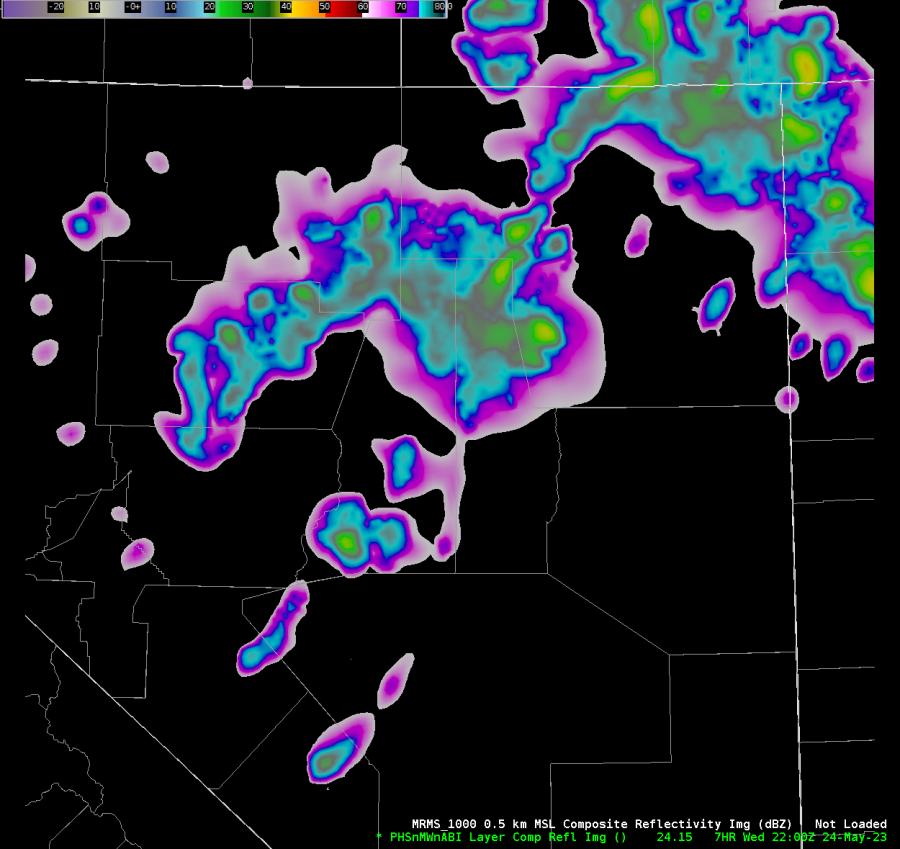
Here is what the PHS Comp Refl was forecasting for 5/24, 22Z across NV.  How did it verify a few hours later?

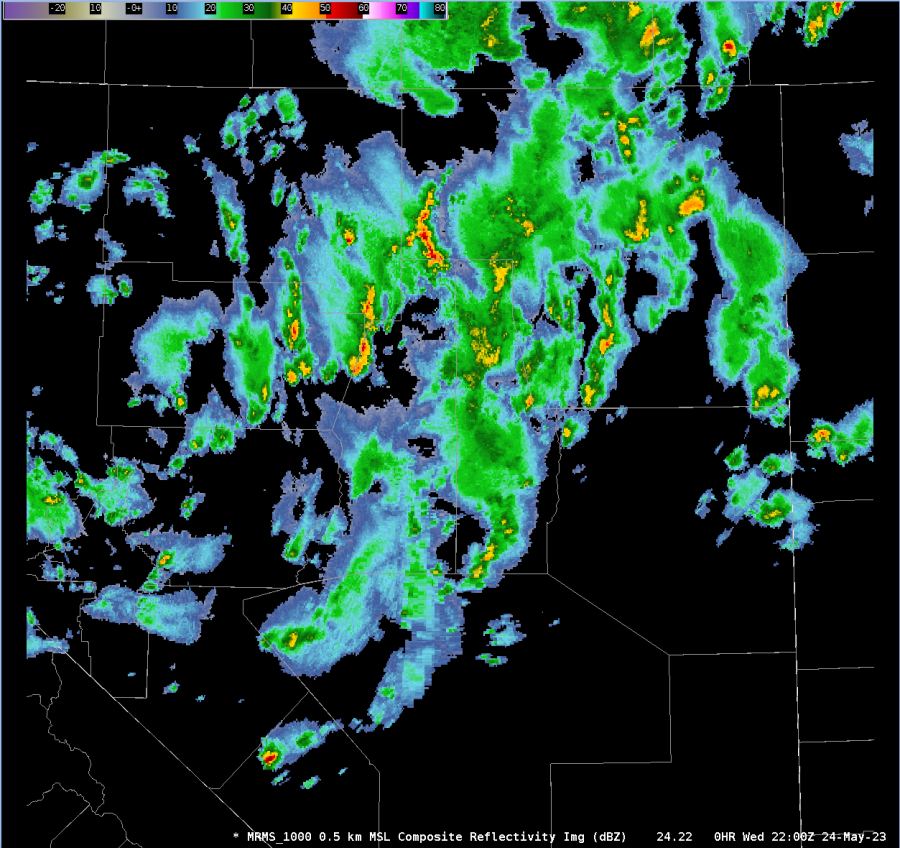
MRMS 0.5 km Comp Refl at 22Z showed a broad area of convection over NV.  What’s interesting is how some of the individual storms were very, very close to the locations where the forecast hinted at there being individual storms.  Keep in mind, the radar coverage in this part of the country is not very dense.

-Champion

Tags: None

ProbSevere_V3 Captures Hail

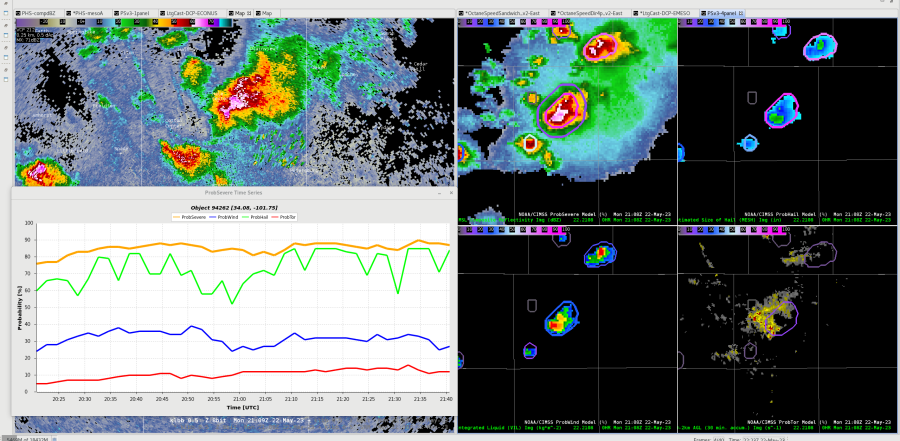
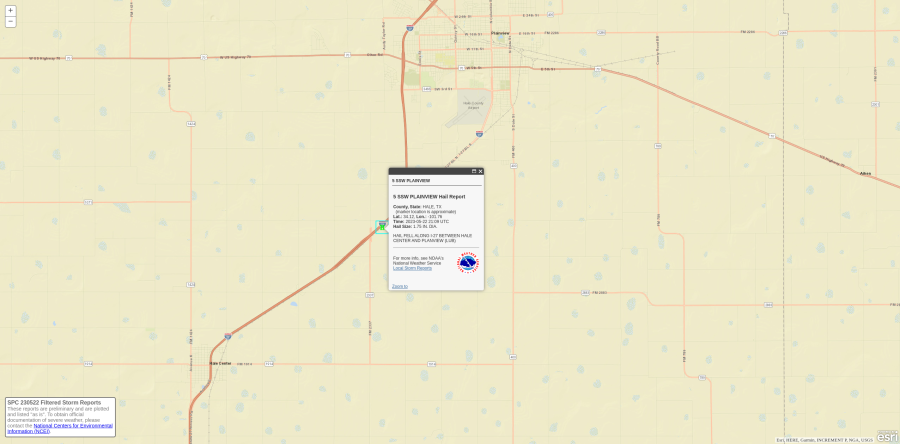
Severe storms developed over Hale County, TX on the afternoon of 5/22.  KLBB 0.5 Z reflectivity at 2109Z (top left image) indicated intense convection, especially just southeast of Hale Center.  ProbSevere V3 (the 4-Panel) did well at 2108Z.  The upper left has the ProbSevere Model at 84% with the MRMS 0.5 Comp Reflectivity peak value of 66 dBZ.  The upper right has ProbHail at 85% and MRMS Maximum Estimated Hail Size (MESH) peaking at 1.85″.  The lower right has ProbTor at 12% and MRMS Low-Level Rotation Tracks.  The lower left has ProbWind at 35% and MRMS Vertically Integrated Liquid (VIL) at 55.  Notice how the ProbSevere Time Series ProbHail was at 60% at 2020Z, nearly an hour before this.  What happened?  Here is the LSR…

SSW PLAINVIEW Hail Report
County, State: HALE, TX
(marker location is approximate)
Lat.: 34.12, Lon.: -101.76
Time: 2023-05-22 21:09 UTC
Hail Size: 1.75 IN. DIA.

HAIL FELL ALONG I-27 BETWEEN HALE CENTER AND PLANVIEW (LUB)

Since forecasters should consider warning with lower ProbSevere values for V3 compared to V2, these high values supported a warning.

-Champion


Tags: None

AzShear Effectively Detects Anticyclonic Rotation

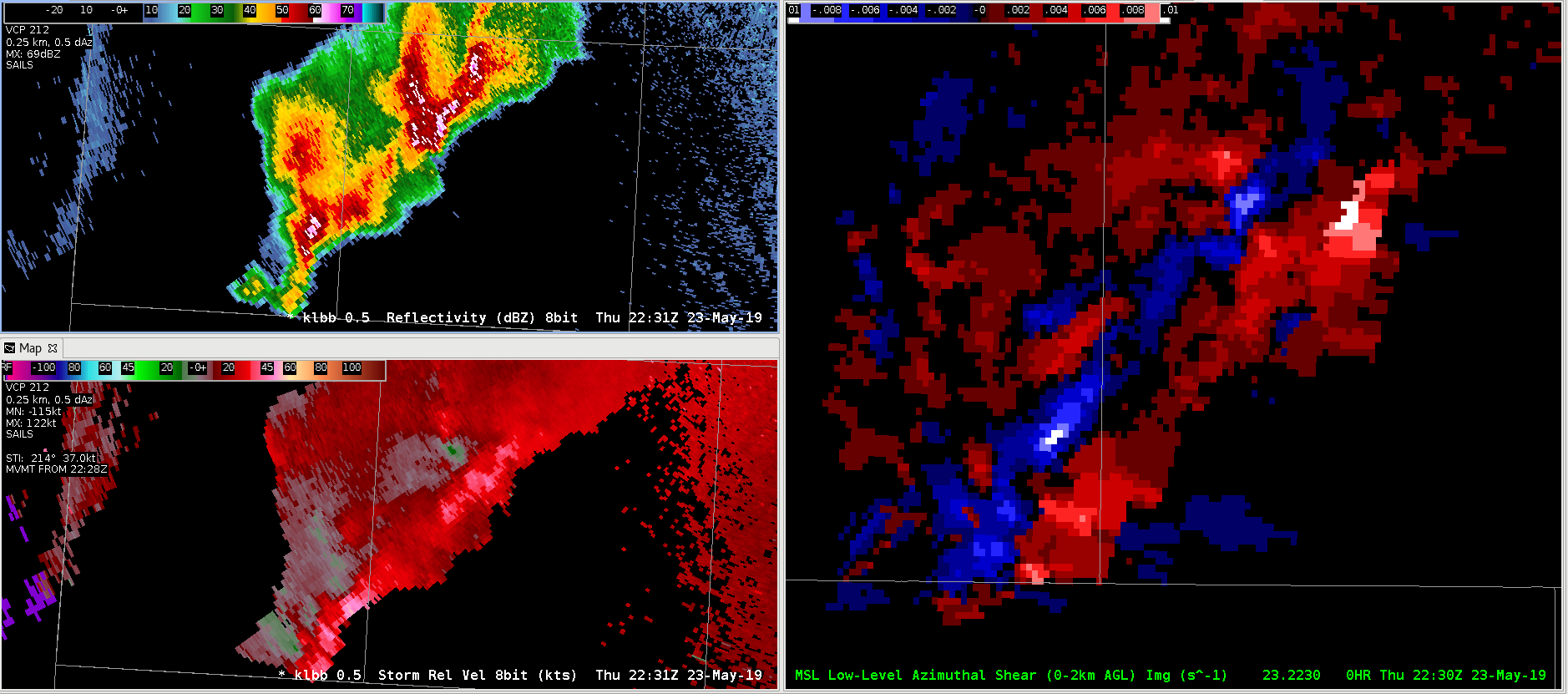
Two supercells southwest of Lubbock produced perplexing base radar signatures with a clear right-mover reflectivity signature but anticyclonic rotation evident in storm-relative velocity. To its credit, the MRMS AzShear product picked up on the anticyclonic circulation effectively and should be able to detect the rare anticyclonic tornado!

None of the mesocyclone detection algorithms picked up on the anticyclonic rotation. Perhaps this is part of their design. The New MDA tried to detect a mesocyclone southeast of the main anticyclonic circulation on the gradient of the strong outbound velocities, but it is incorrect.

-Atlanta Braves

NUCAPS Procedures Usefulness

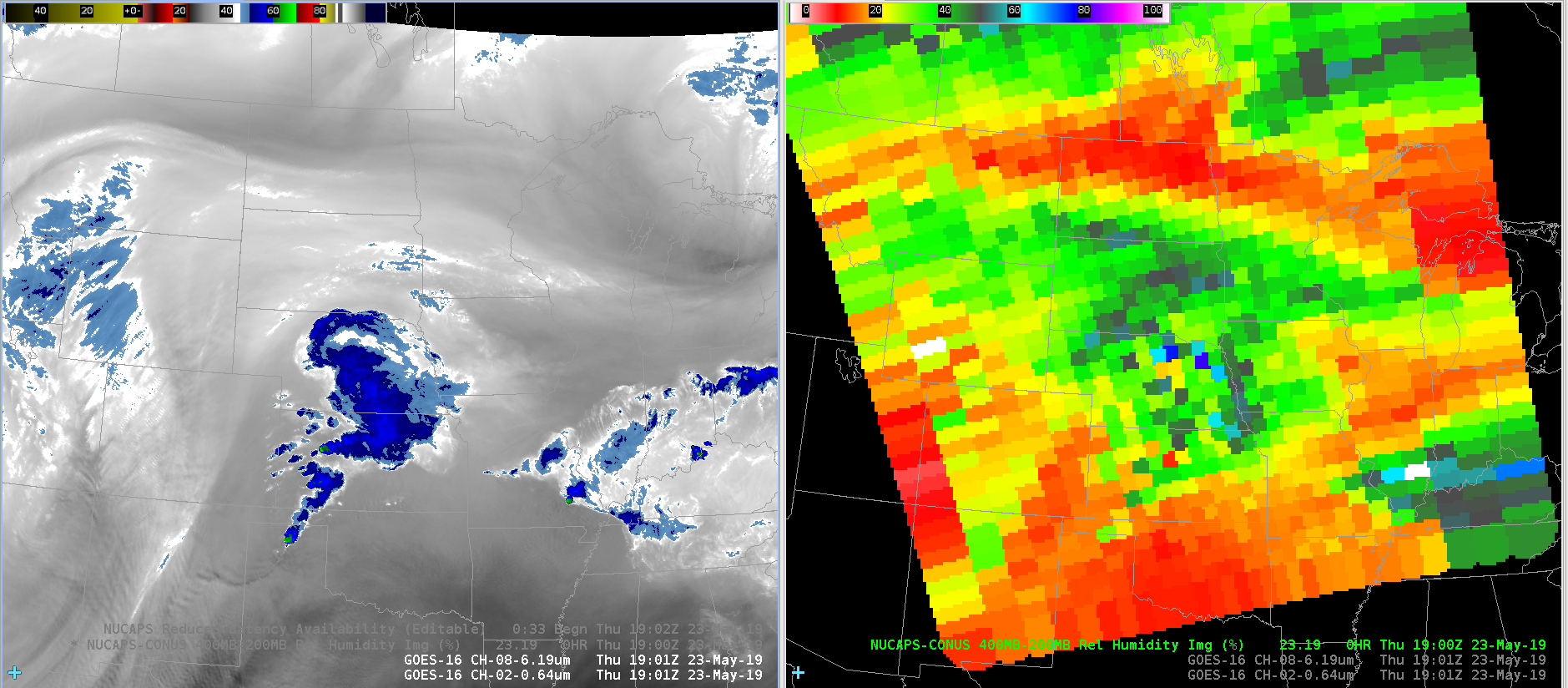
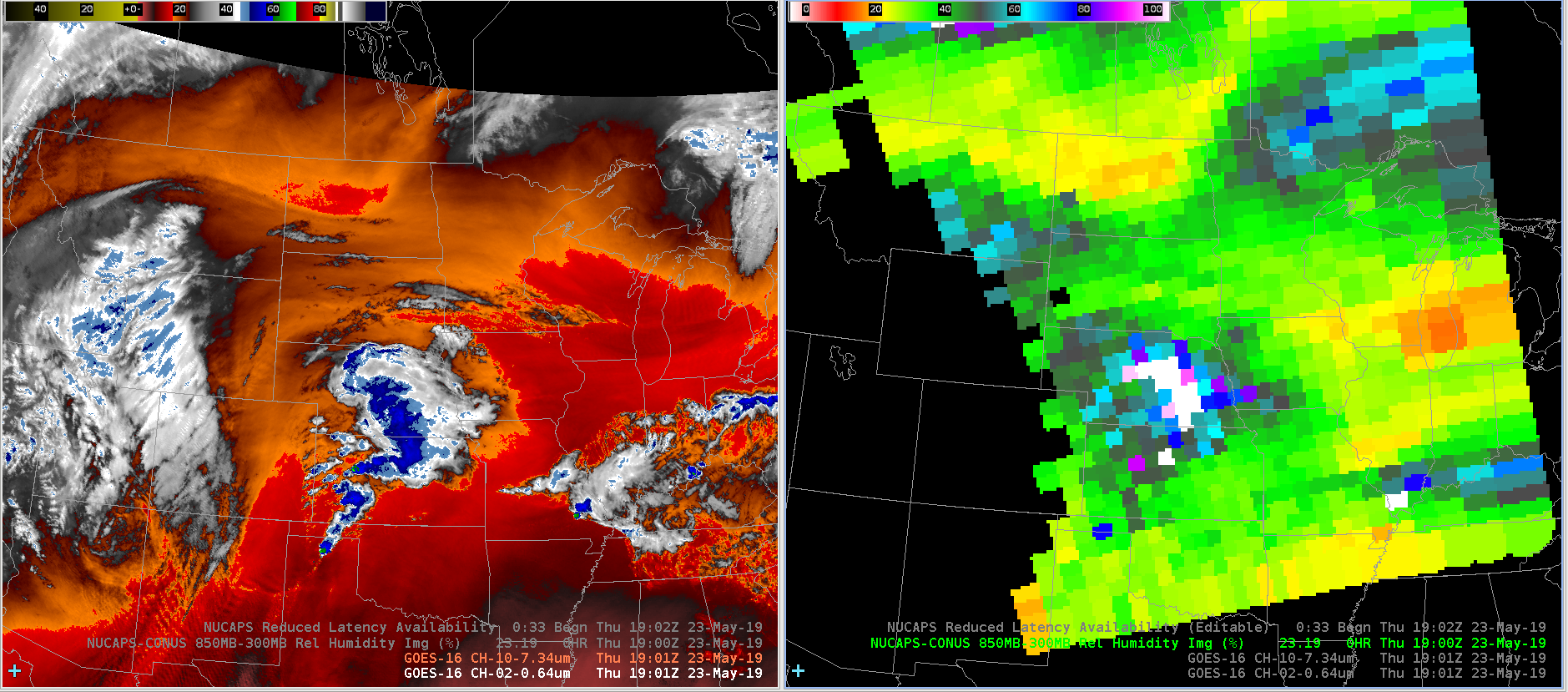
The NUCAPS Quick  Guide from JPSS includes a few procedures. Here I show the utility of a few of those procedures for combining GOES Satellite data and NUCAPS data.

This procedure plots 400-200mb relative humidity and GOES-16 water vapor. You can see the representation of the dry air across the northern US and the systems in the Plains & southeast.

Another procedure compares GFS, HRRR, and NAM lapse rates with the NUCAPS lapse rate info. This is a good check to see if model lapse rates are performing well or where they need to be taken with a grain of salt.

Another procedure plots 850-300mb RH and low-level water vapor. The product shows the system in the Plains and the system in the Ohio Valley. Drying is also obvious in the southern Great Lake and North Dakota.

I like the procedures provided in the JPSS Quick Guide. I am starting to understand the applicability of the NUCAPS data little bit more. These procedures are helpful in contextualizing the provided data fields.

-Atlanta Braves

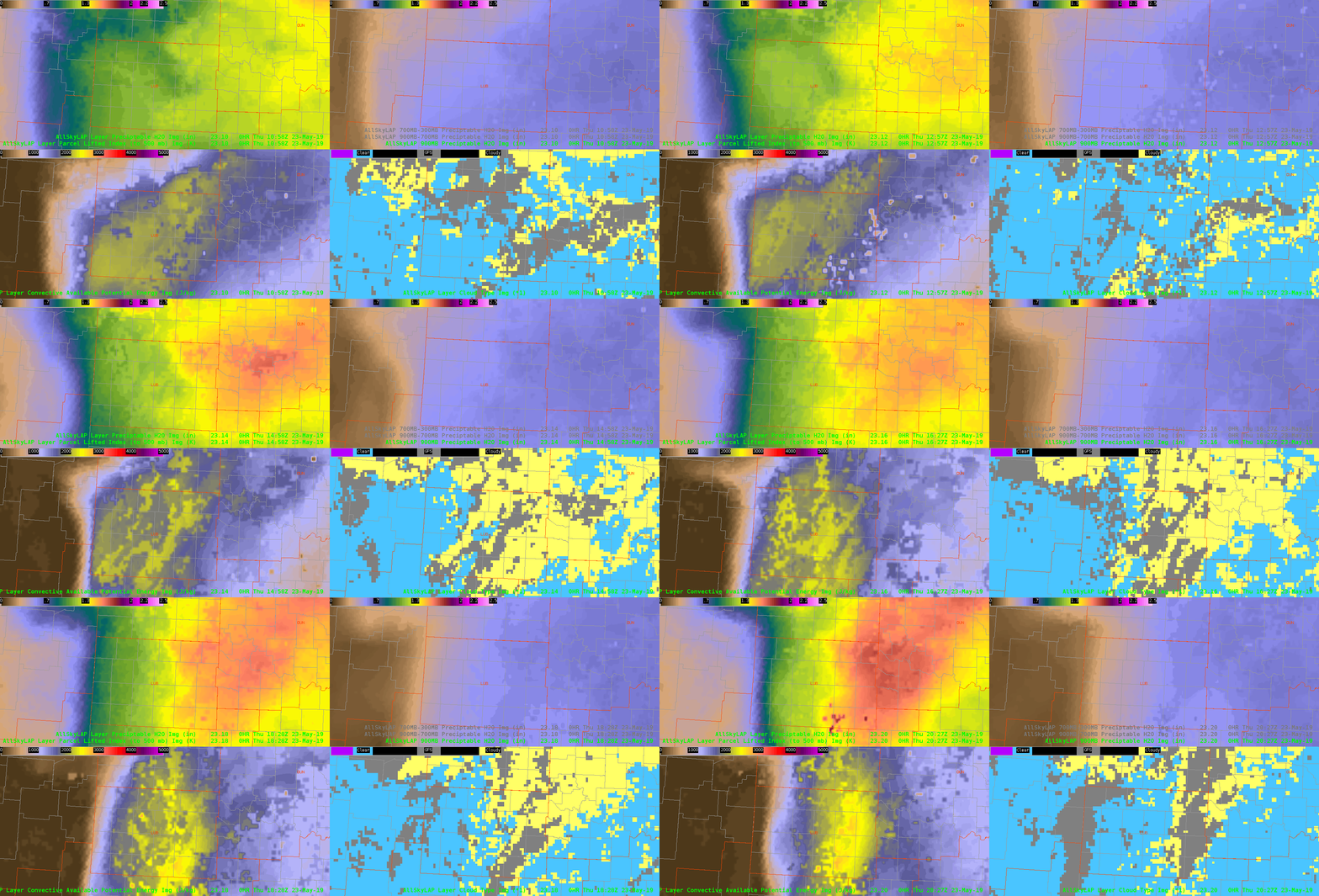
AllSky as a good proxy for dryline location and CI

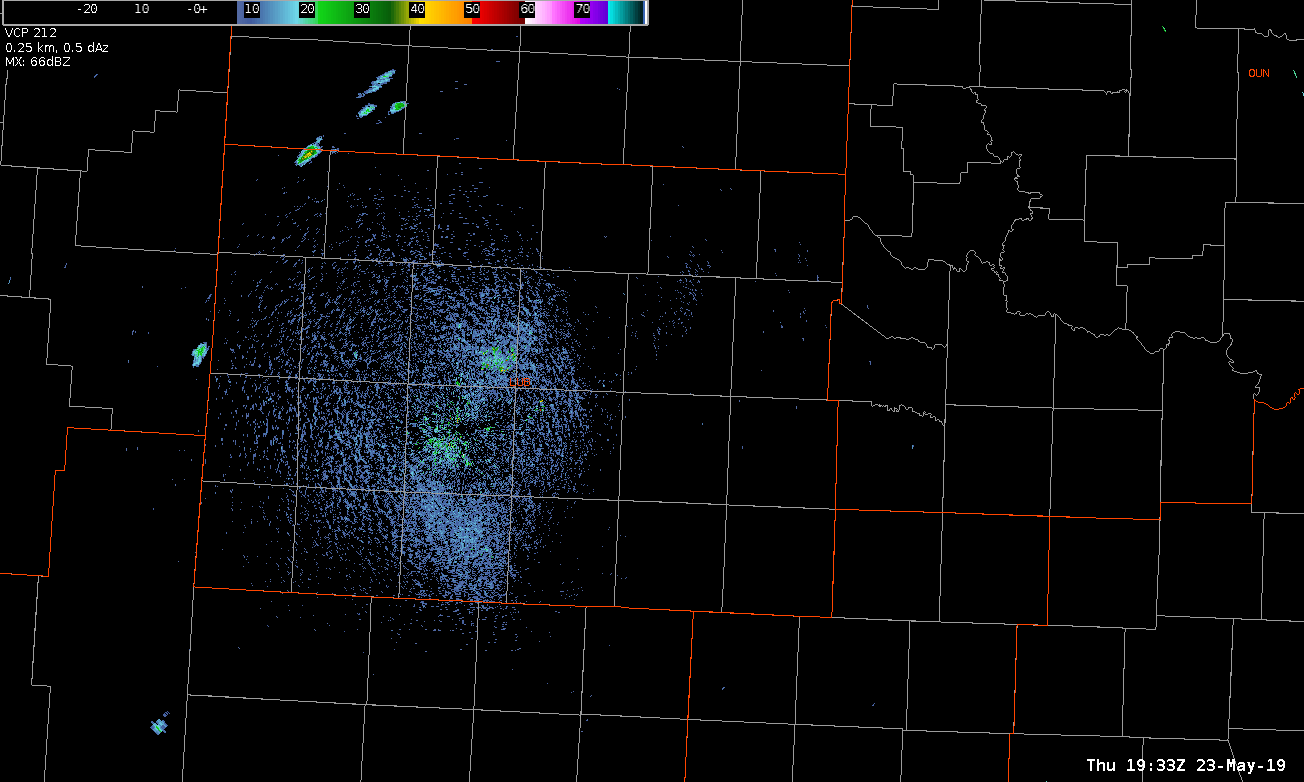
The AllSky Layer Precipitable  Water product showed utility in identifying and tracking the dryline as it moved into the Lubbock CWA. The dryline entered the CWA at about 1930 UTC.

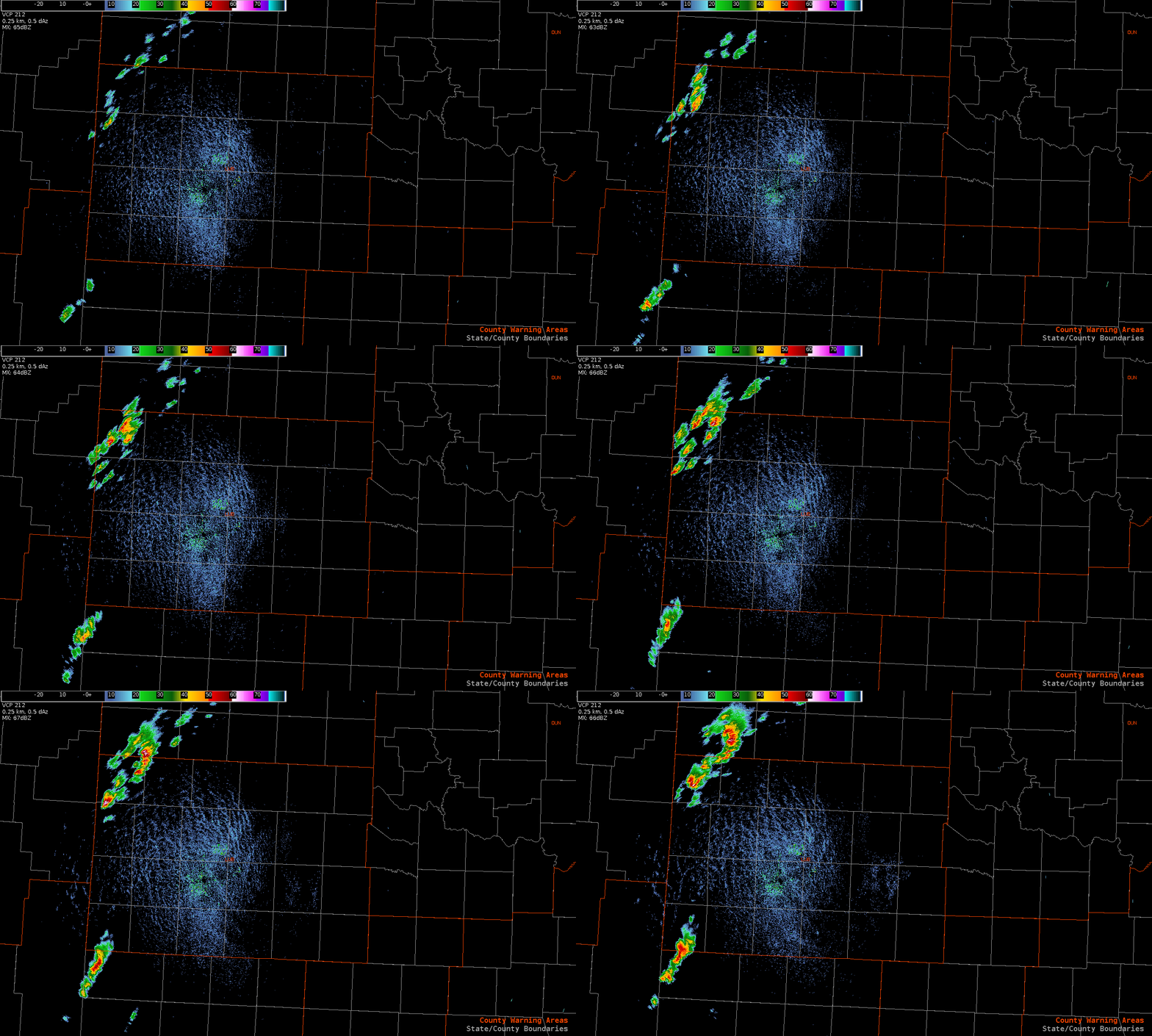
Coincidentally, the KLBB radar shows convection initiation around 19:30 UTC as well.

And the convection continues to develop:

The AllSky product remains a very useful tool for situational awareness and 2-D environmental familiarization.

-Atlanta Braves

Single-Radar AzShear Tornadogenesis Success

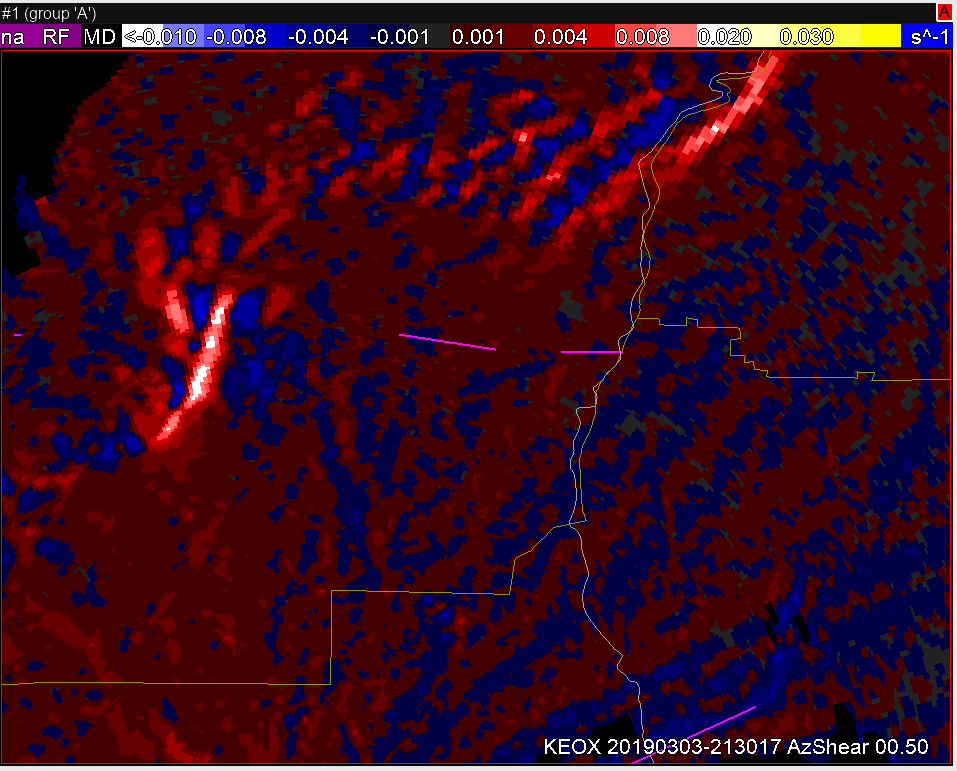
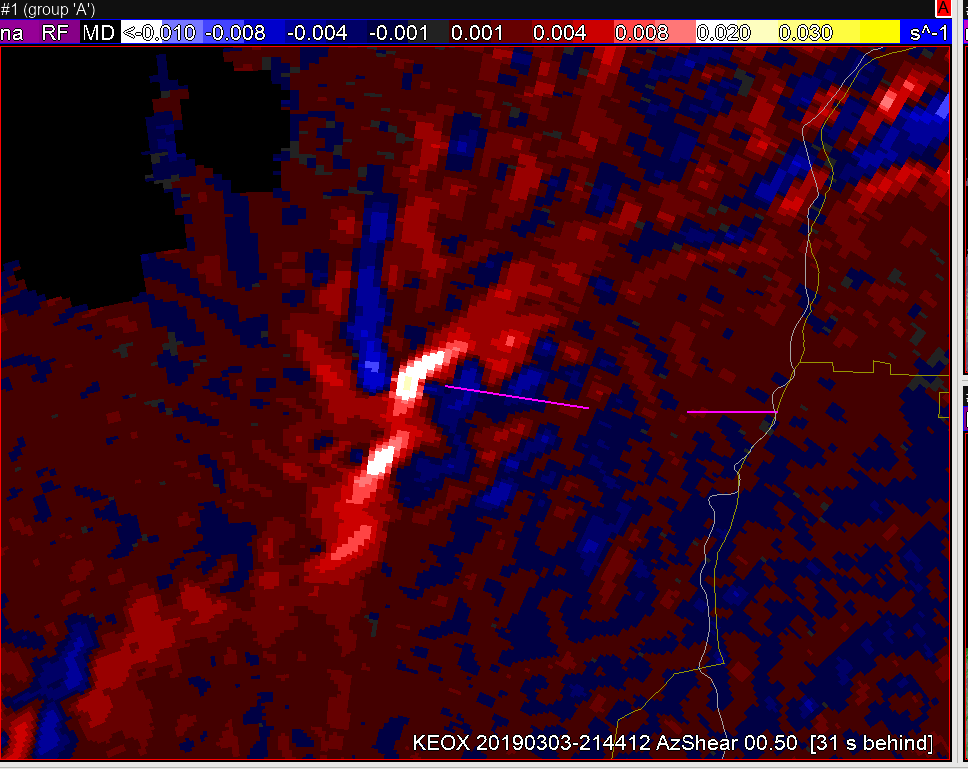
Single-radar AzShear does a really good job of identifying preferred locations of circulation along a QLCS. The bullseye started as an elongated area of enhanced AzShear and then converges into a more concentrated area. This product provides a helpful heuristic for identifying tightening circulations in the midst of noisy velocity data with less-clear signatures.

One can easily see the congealing AzShear bullseye before the circulation tightens the tornado starts.

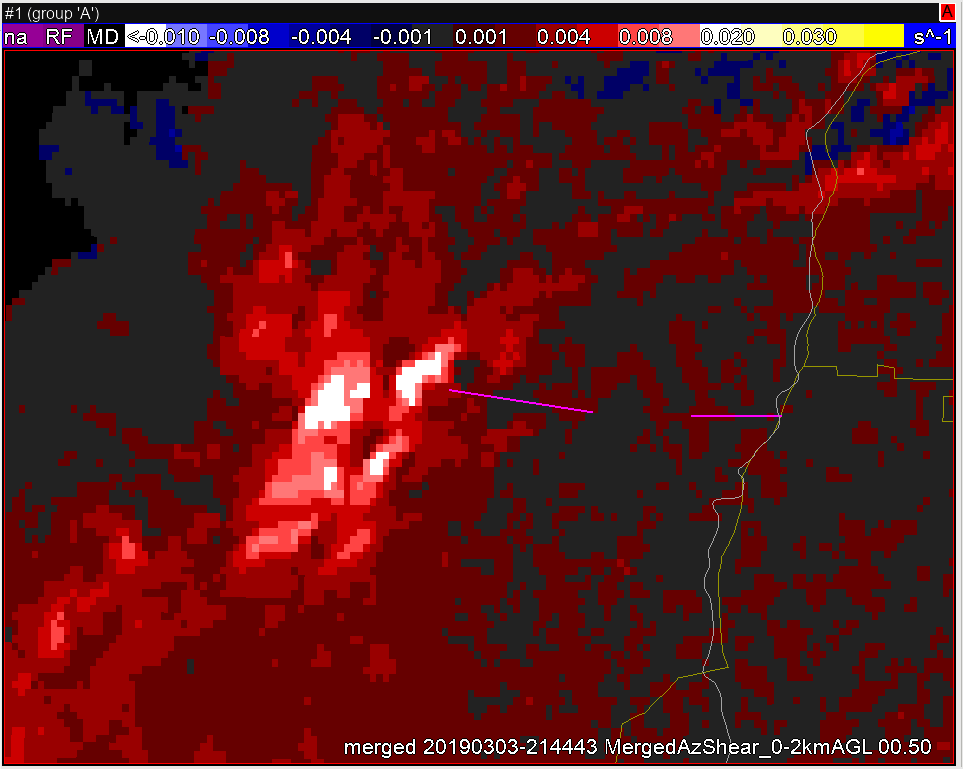
On the contrary, the Merged AzShear product demonstrated some latency issues that would lead to less confidence in circulation tightening.

This image, taken at the same time as the KEOX AzShear product, shows several unorganized areas of enhanced rotation right before the tornado started in the merged AzShear product. The tightening circulation is an important precursor to tornadogenesis and the merged product seems to struggle. -Atlanta Braves