ILX GLM Case


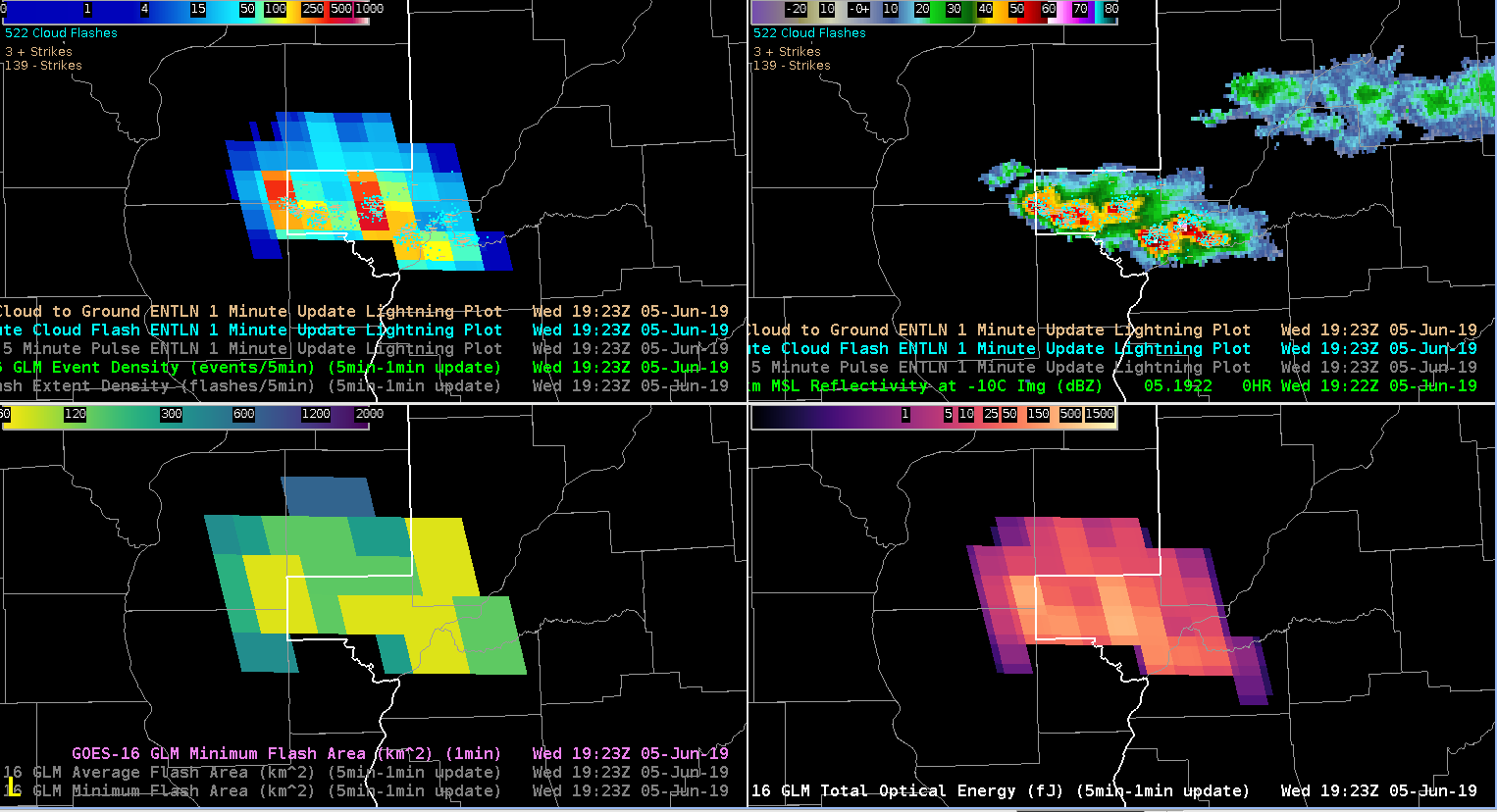
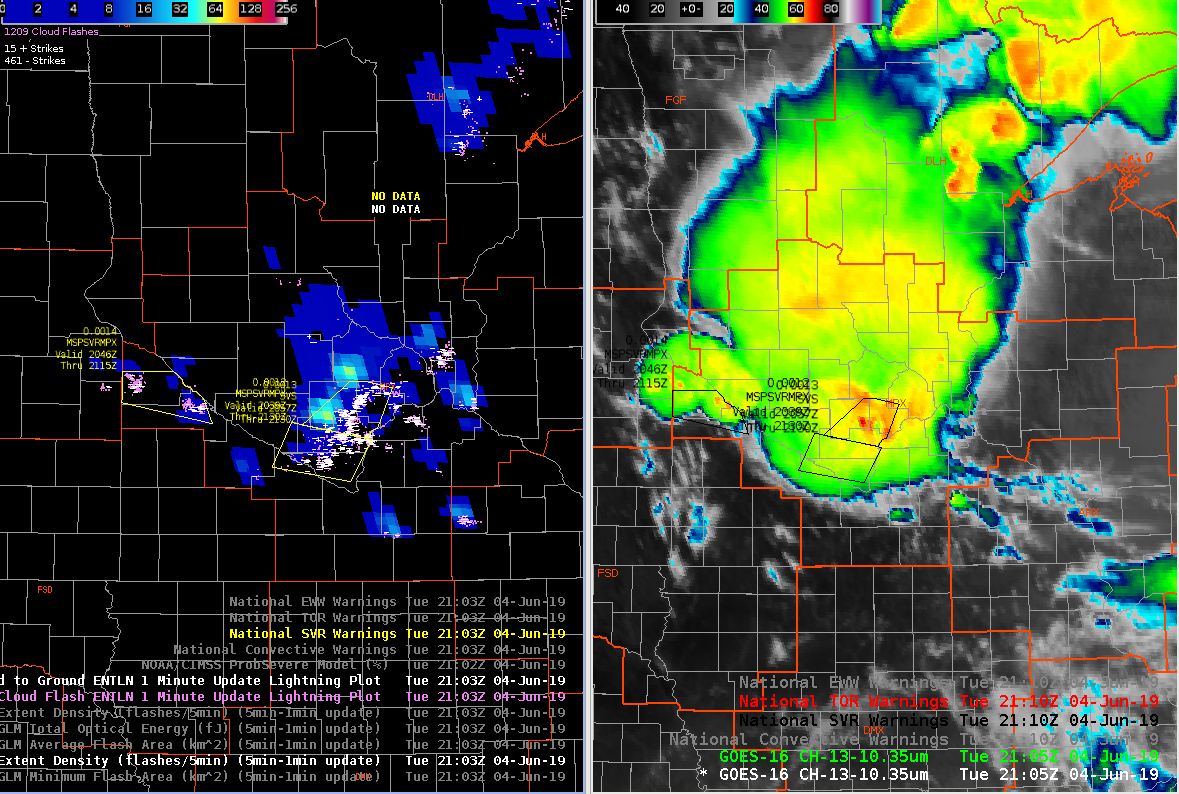
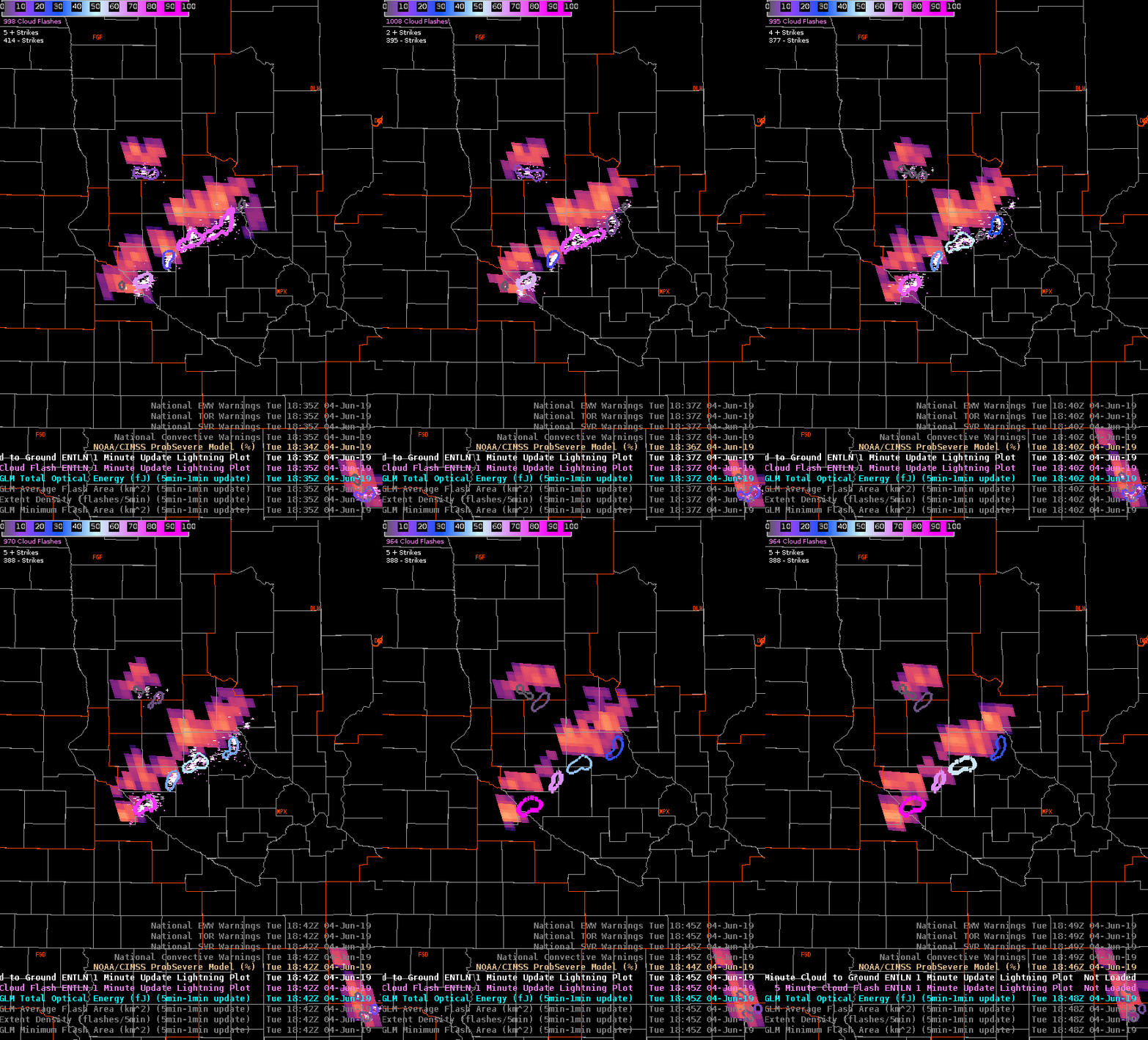
(Top Left): GLM Event Density w/ ENTLN Lightning Data; (Top Right): MRMS -10C with ENTLN overlayed; (Bottom Left): GLM Minimum Flash Area; (Bottom Right): GLM Total Optical Energy

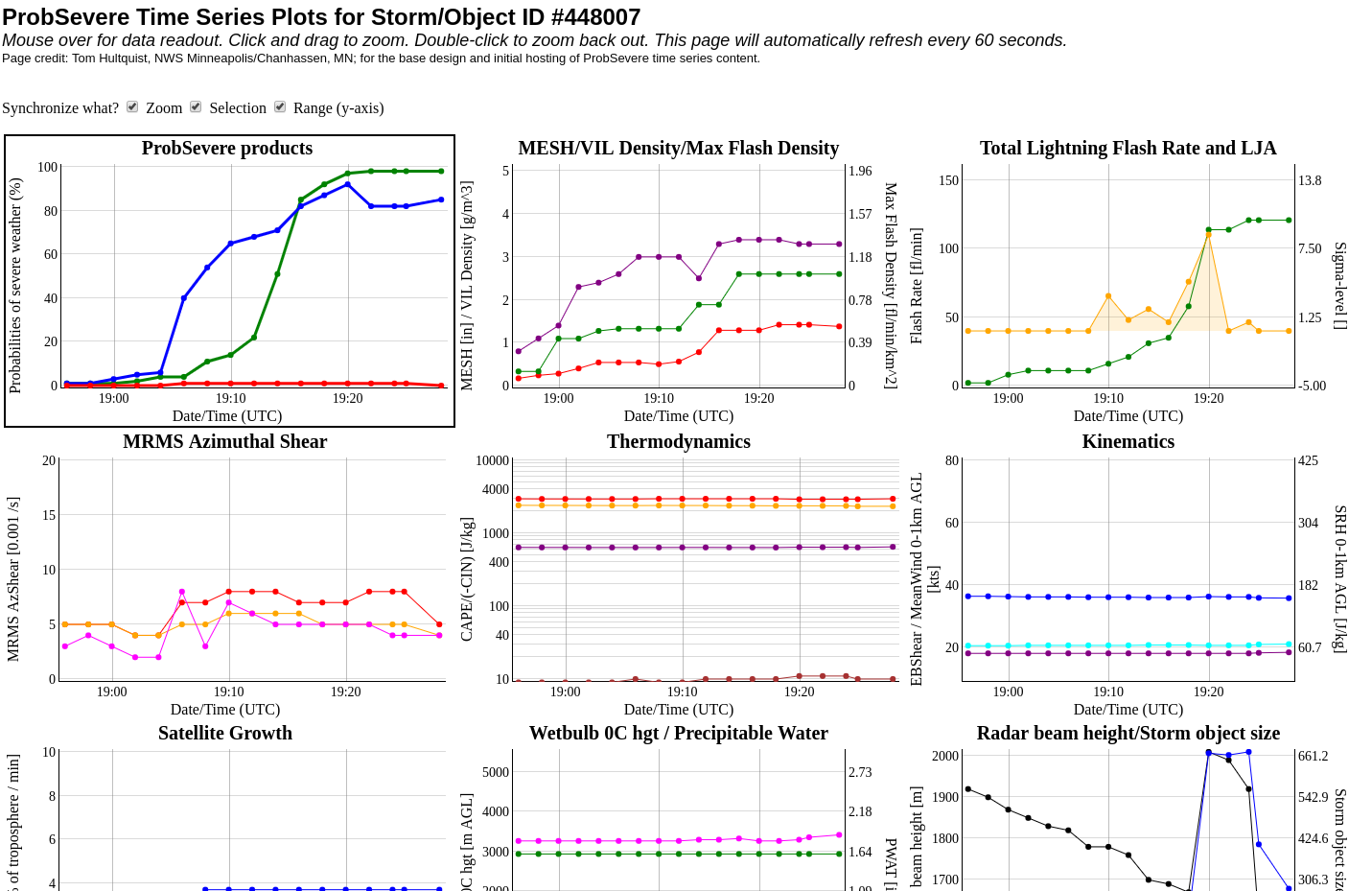
Had a unique opportunity to watch a line of strong to eventually severe storms ignite and strengthen rapidly along an old outflow boundary this afternoon using GLM data. It was interesting using the above 4 panel display to not only witness the ignition, but also the strengthening of each sequential cell along the line. By utilizing the GLM Minimum Flash Area (Bottom left) 1 minute imagery in a loop, we were able to sample the early-onset updraft core strengthening of each sequential cell along said line, and watch the event density jump up in accordance. It was also interesting to utilize the Prob-severe lightning jump data in time-series format to watch in a real-time basis. Suggested best practice would be to make these 4-panel layouts available for events like this.

ProbTor seemed a bit high

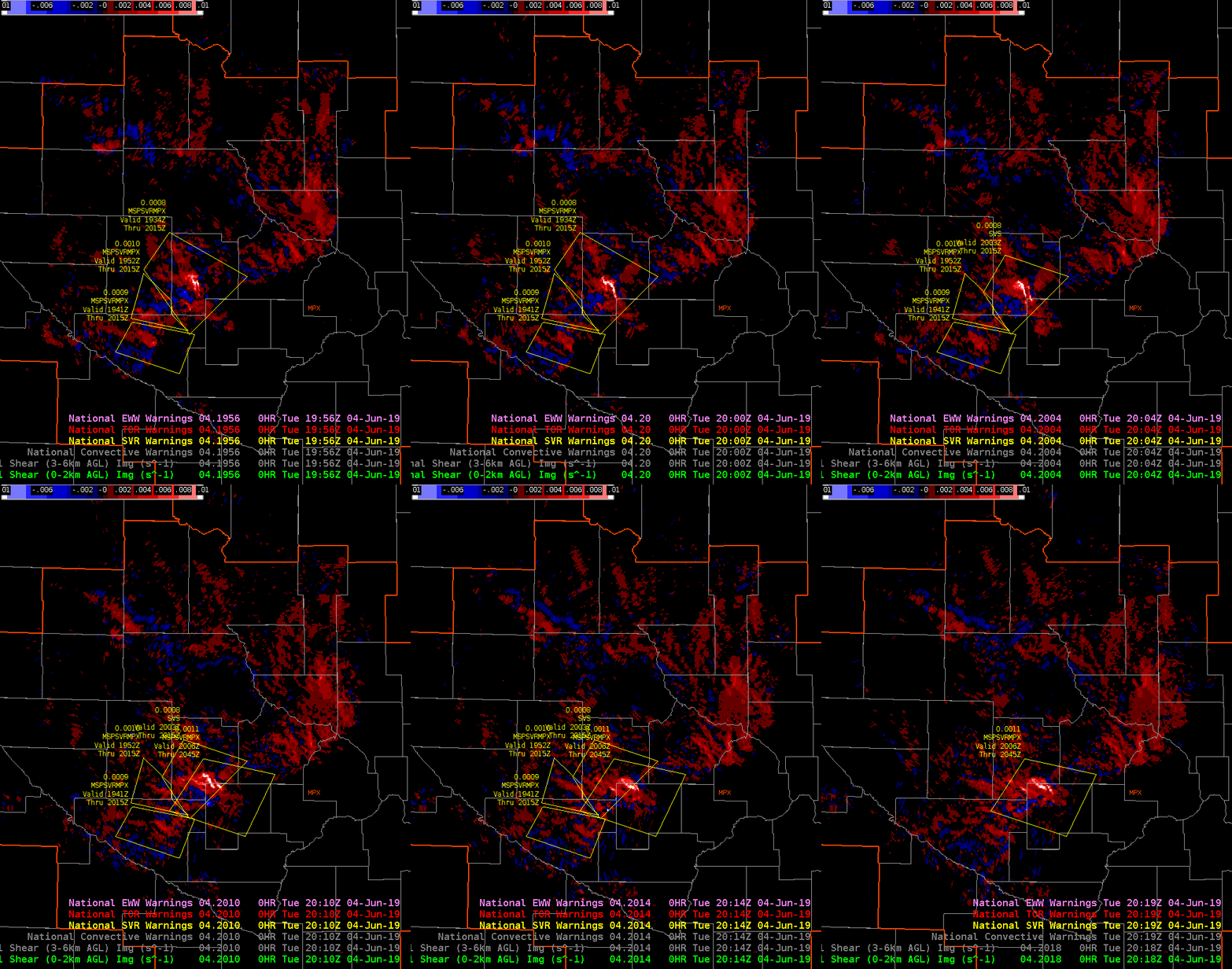
Had a few instances this afternoon where ProbTor seemed a bit high (the extra layer of ProbSevere added on).  NUCAPS soundings showed high LCLs (2-3 km), whereas SPC meso page was on the order of 1.5 km…still pretty high.  Had rotations aloft, and the lowest we saw a rotation was at a point where 0.5 tilt was around 5 kft.  We issued a couple of SVR’s with TOR possible but no TOR warnings.

CHARLEY

Situational Awareness Graphics

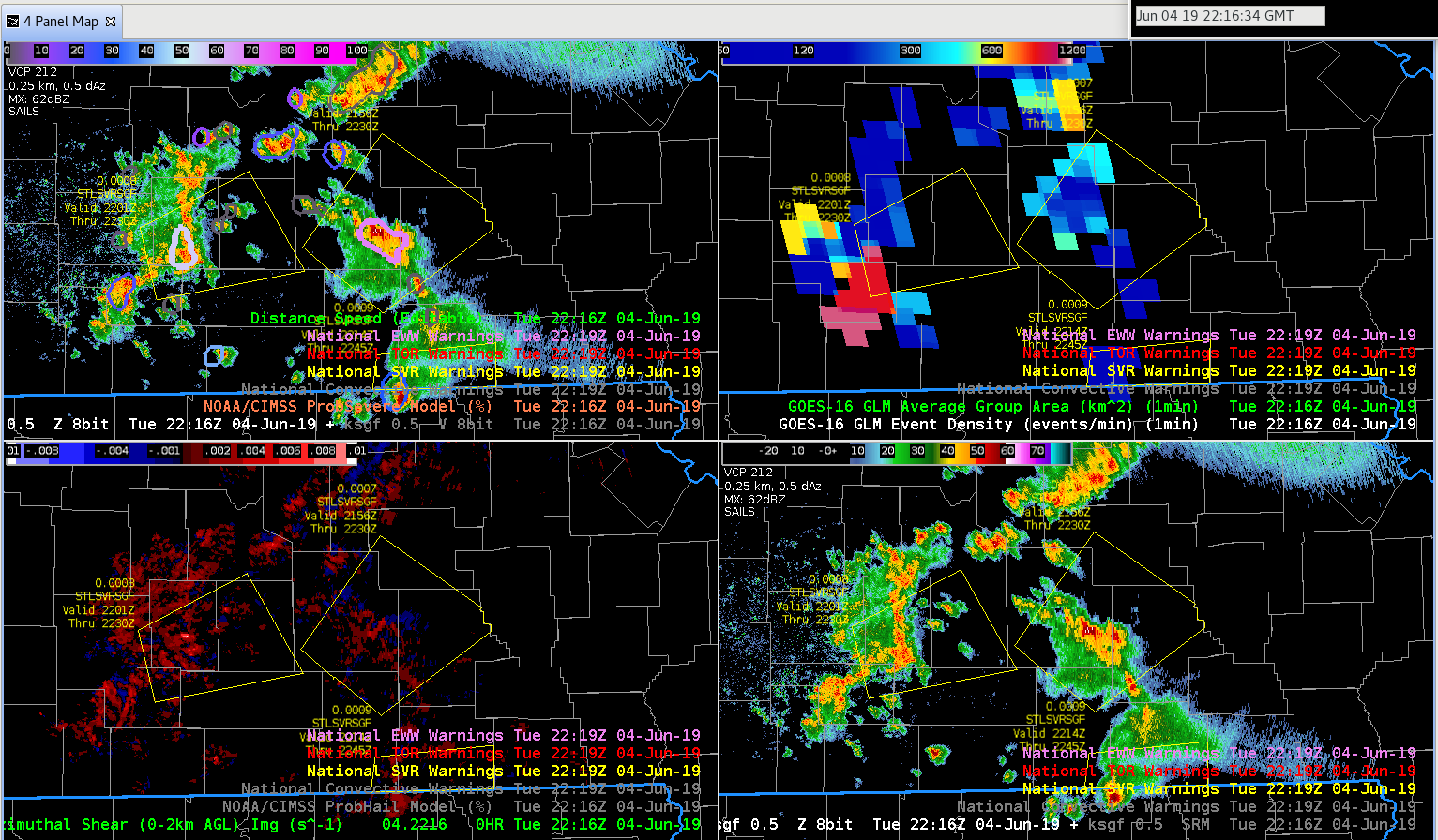
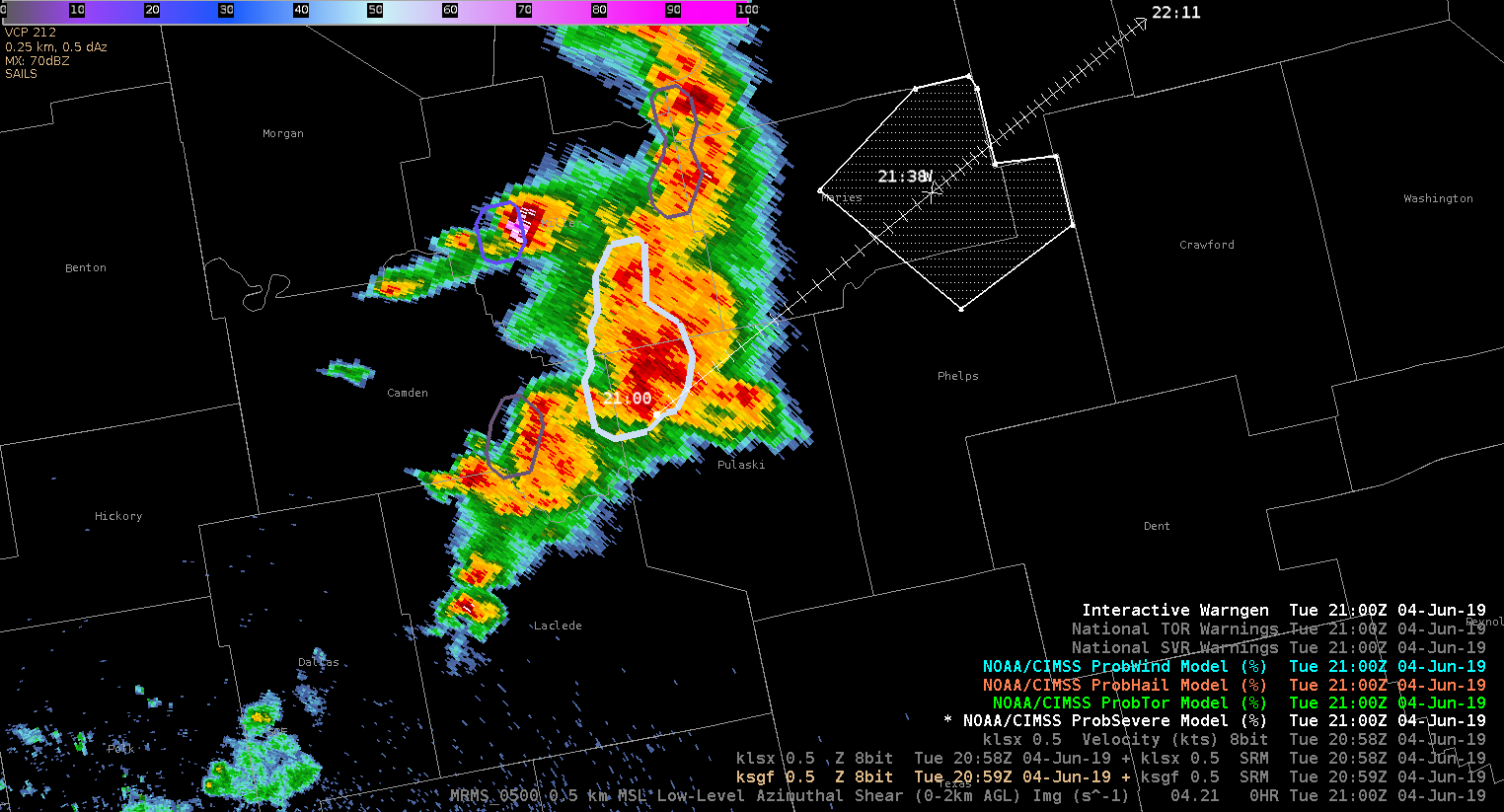
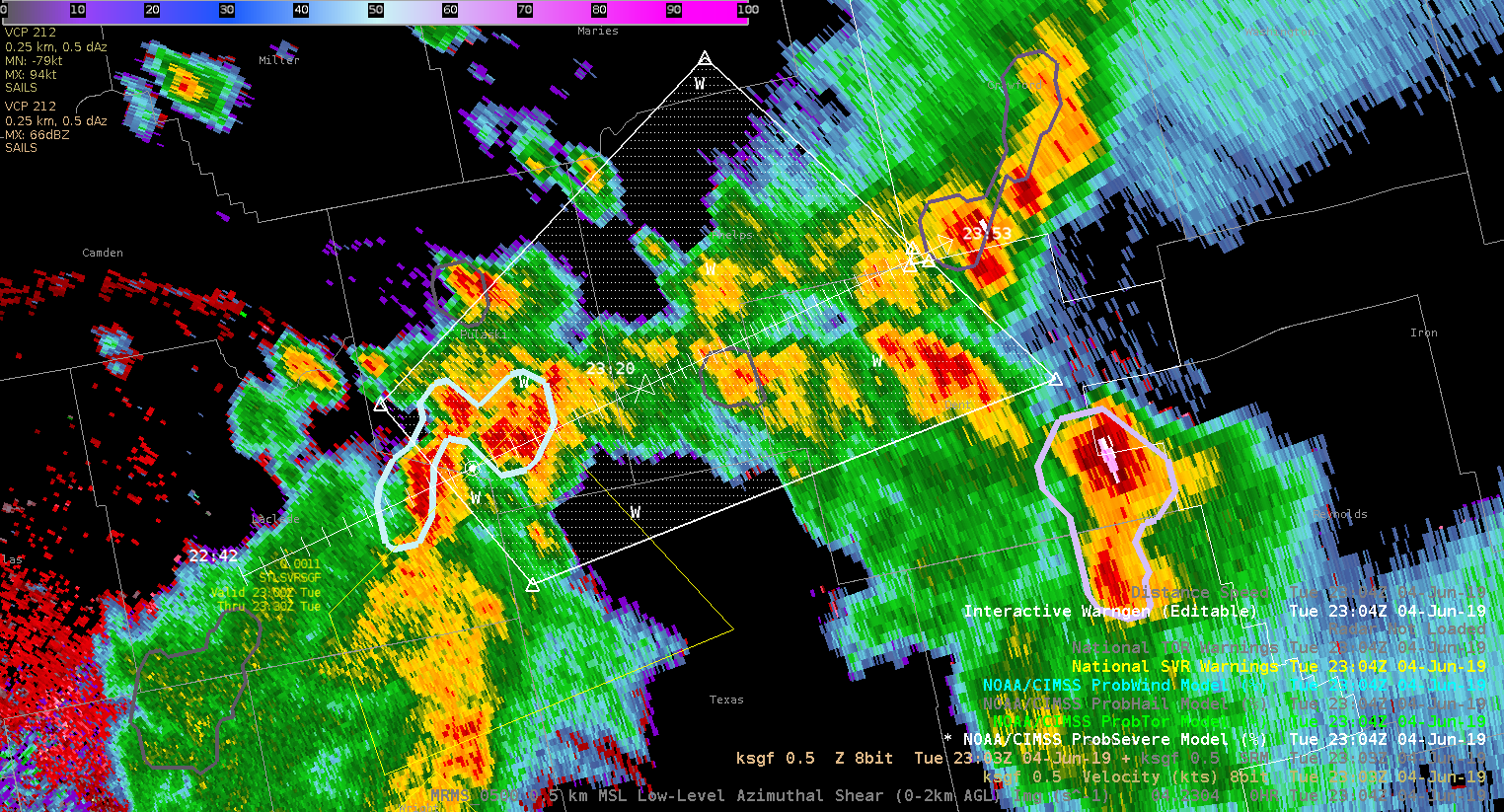
While monitoring convection across southern Missouri, the merged AzShear and ProbSevere have been great tools in diagnosing the primary severe threats: wind and hail.

AzShear has shown a few areas higher in shear, yet the ProbTor has been very low and V data has been unconvincing of the presence or threat of a tornado. ProbSevere has been useful in indicating the severe storm hazards that would be the most probable, and when compared with other data: GLM event density / avg group area, and V data, I’ve been able to issued warnings with higher confidence. GLM data will be increasingly useful with better understanding of what the different data sets mean in relation to convective development or decay.

Tags: None

Springfield Storms

We’re currently analyzing storms developing in the Springfield Missouri WFO.  Right now I’m using various tools to monitor if these storms will become severe.

Right now I’m using a combination of radar, GLM, nucaps, and the All sky products. Currently the most helpful tools on top of what I normally use are allsky and the lightning products.

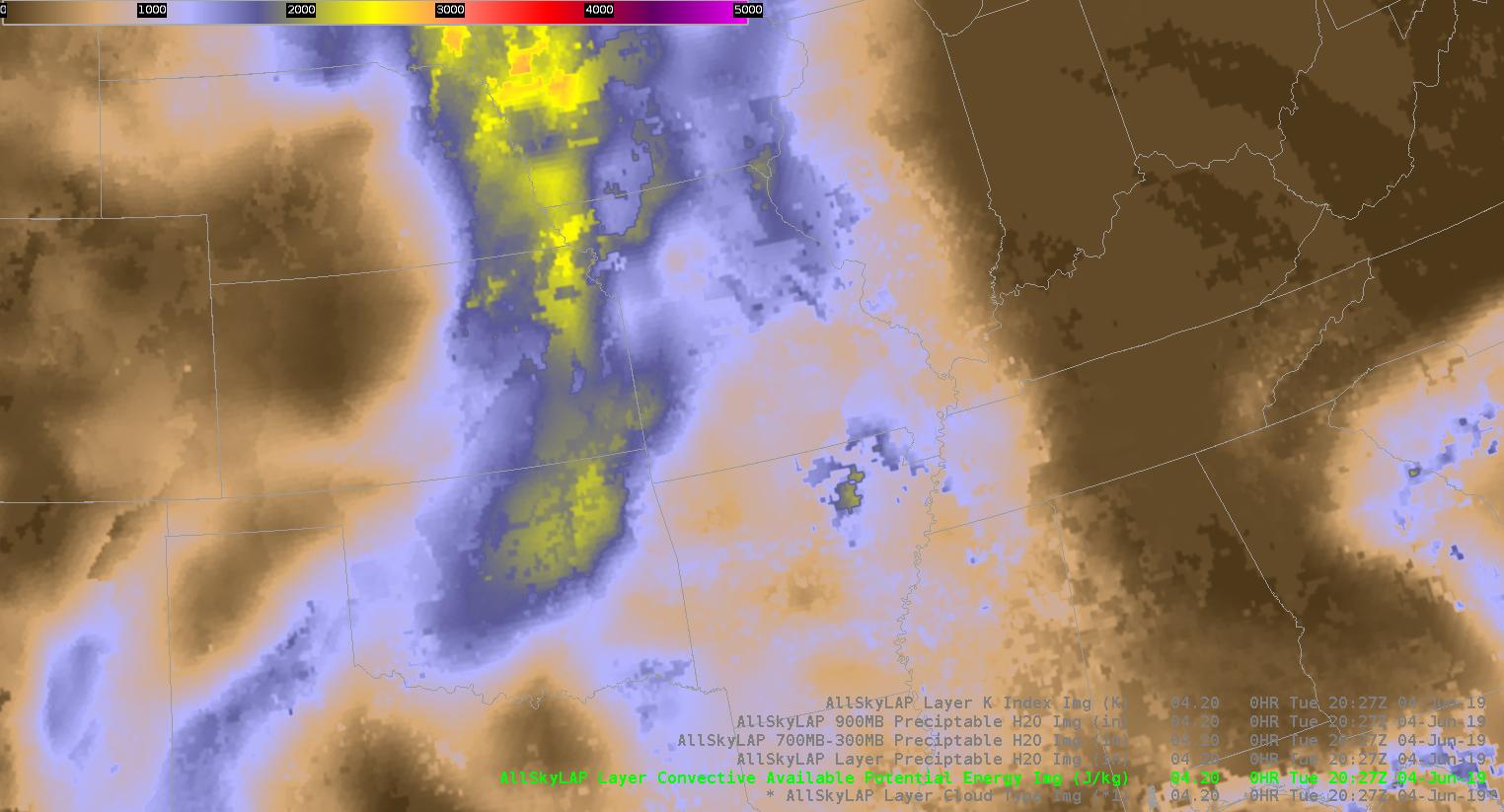
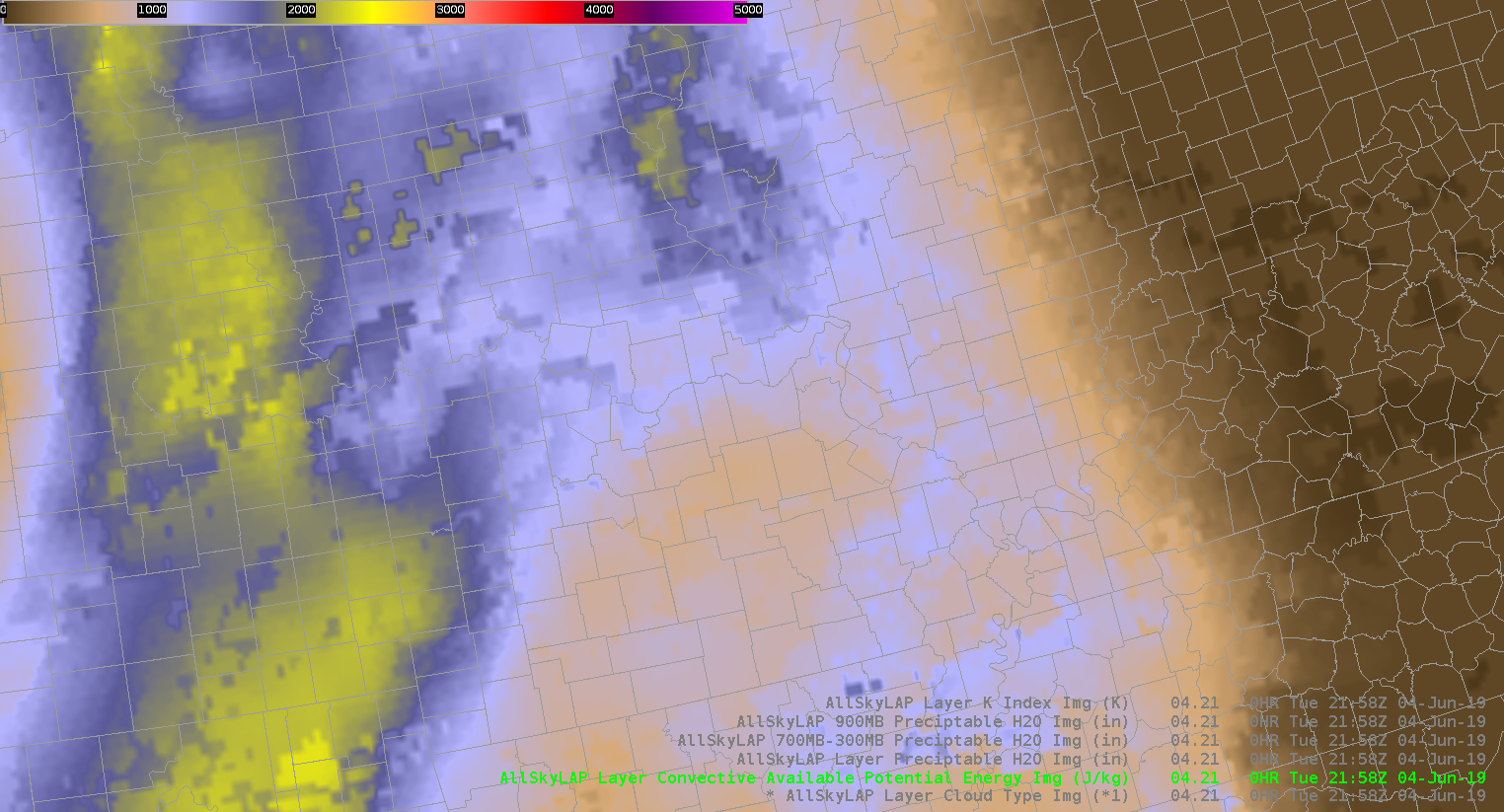
The allsky cape helped to find CAPE gradients and an increase in CAPE. The northern batch of storms were pushing into an area of increasing CAPE and in return they did intensify.
While deciding whether or not to issue a warning I also looked at AFA GLM data to see if there were new flashes developing which can be indicative of growing convection. That flashes aligned with radar and increased my confidence that storms would intensify.
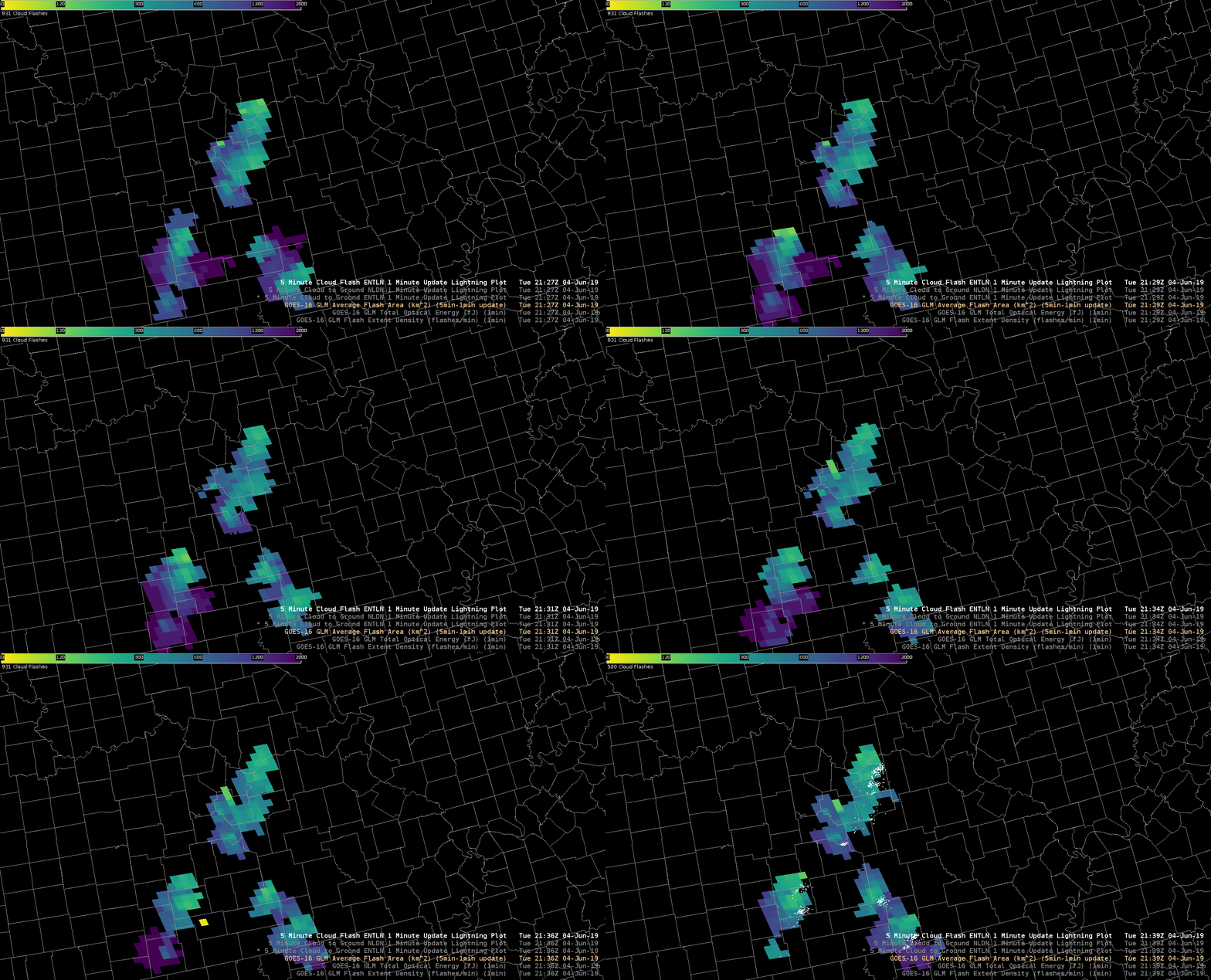
That lead to me issuing a severe thunderstorm warning. The prob severe data also ramped up. So I felt confident about my warning.
I also used NUCAPS sounding predictor to look at the cape during the rest of the afternoon.


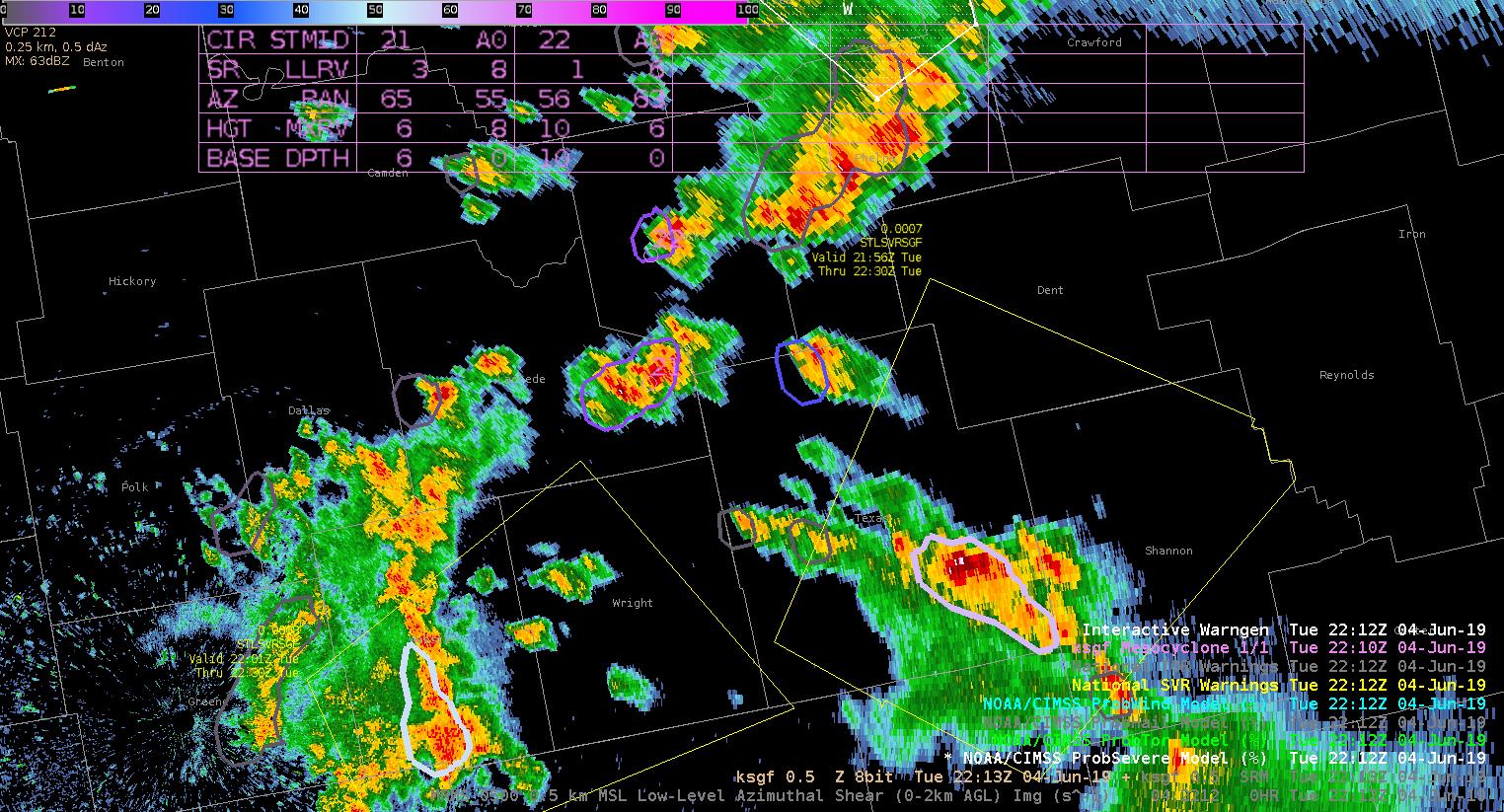
While watching storms in the Springfield area I tried using  NMDA. Even after magnifying the product it was still a bit hard to see. I’m note sure if there’s a way to make the circle bigger or more pronounced. It can get busy on an active day.
As I continue to track storms I’m using Allsky CAPE to see what type of environment they are moving into. The CAPE does increase farther east so that makes me anticipate convection wane over the next few hours. I will though pay close attention to the storm farther north since they will move along the cape gradient.
I also used probsevere to increase my confidence in warning for a cell in pulaski county. The velocity ramped up as well as vil values.
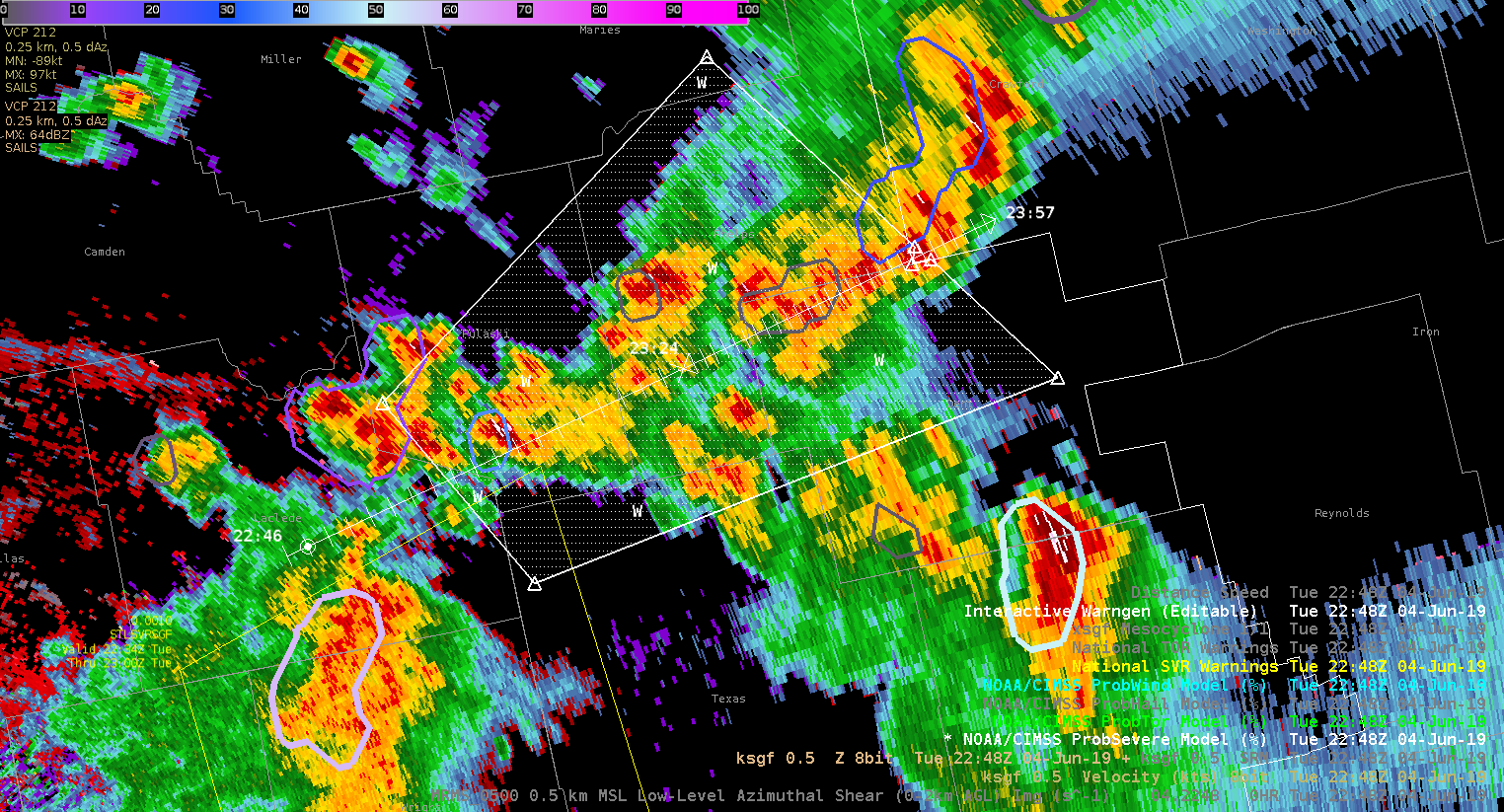
 

The increase in probsevere over a few scans prompted me to issue a severe thunderstorm warning.
Taylor Johnson

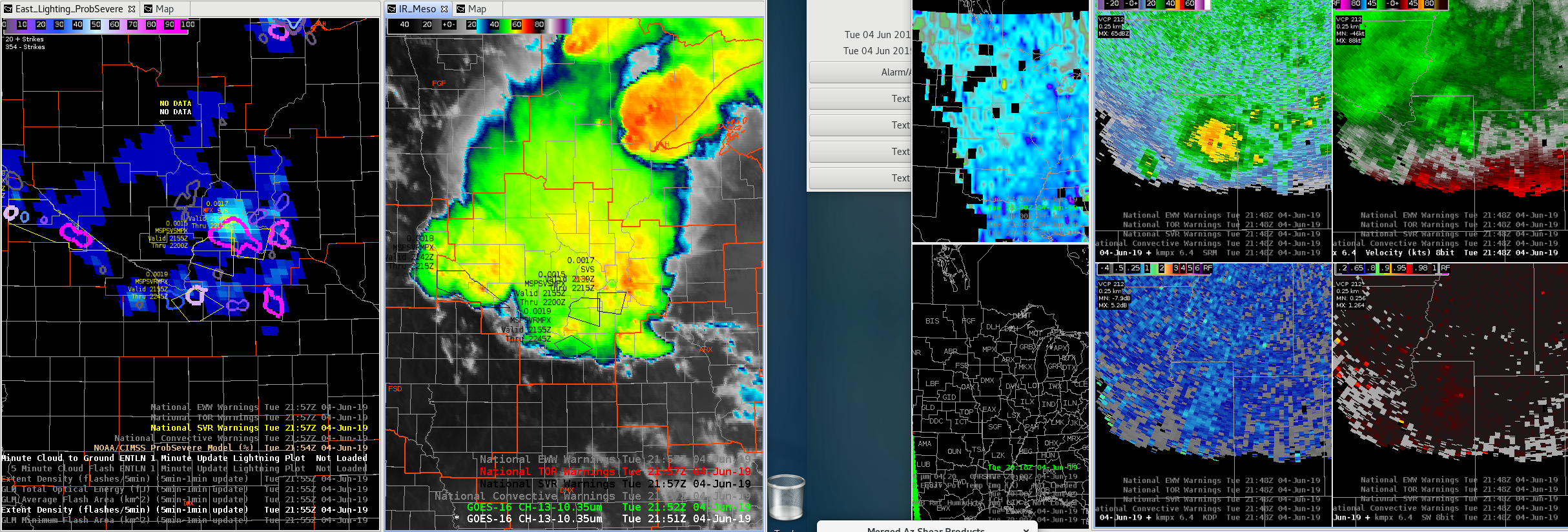
FED, ENTLN comparison

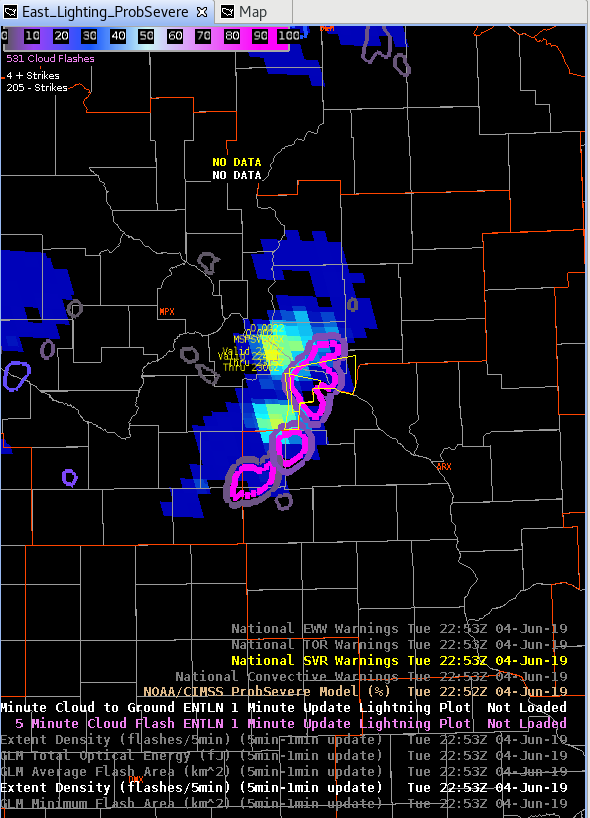
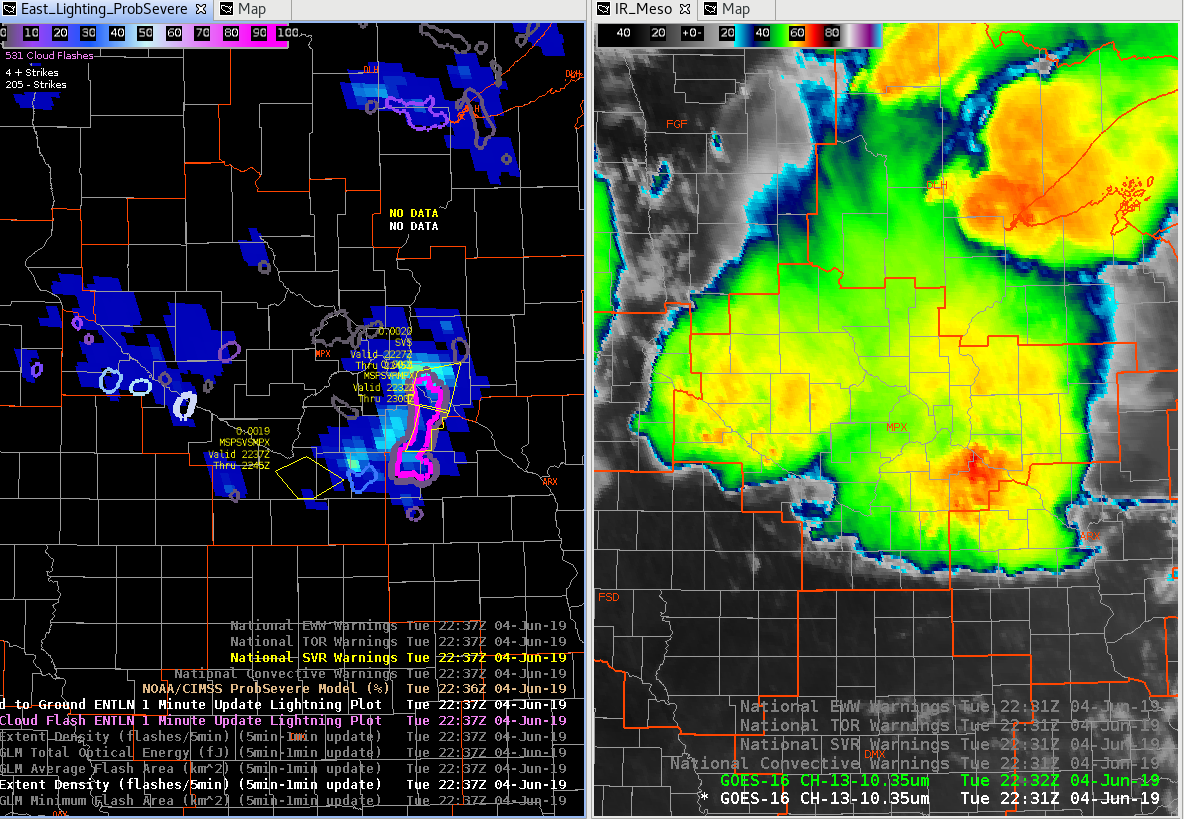
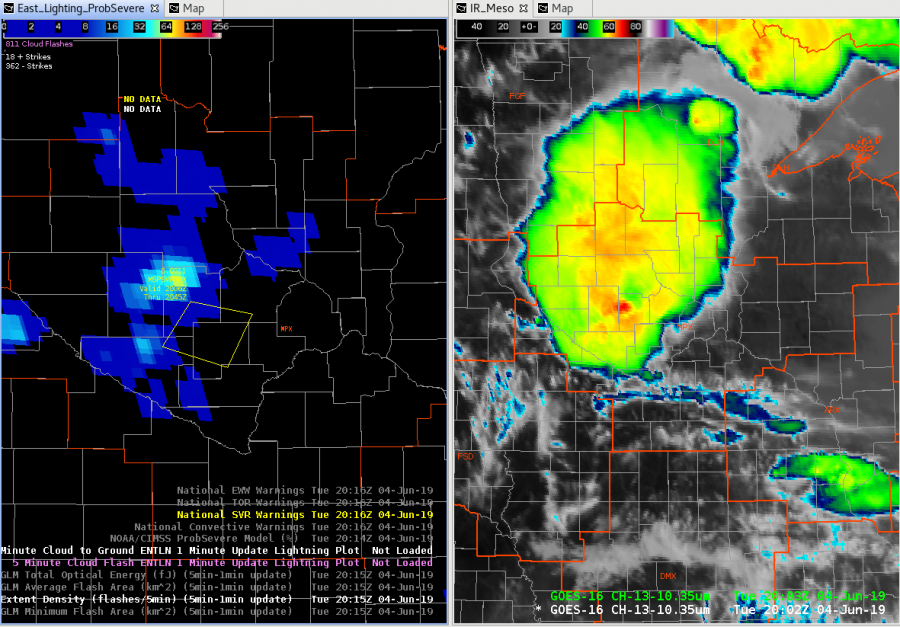
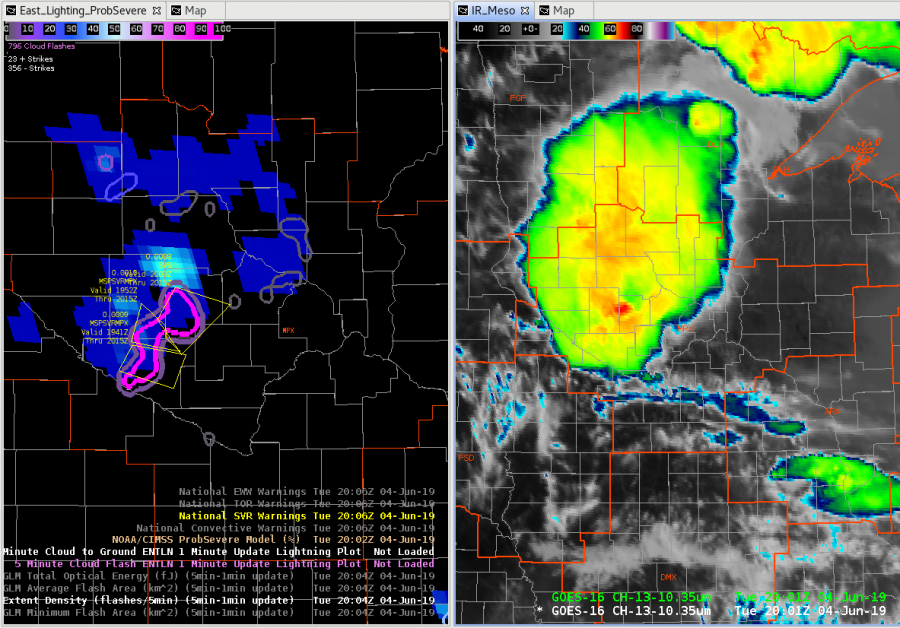
Noticed the FED was matching up well with ENTLN data in our eastern cells, but then the cells to the west should have been electrically active as well.  ENTLN data shows several flashes, but FED from GLM is minimal.


Charley

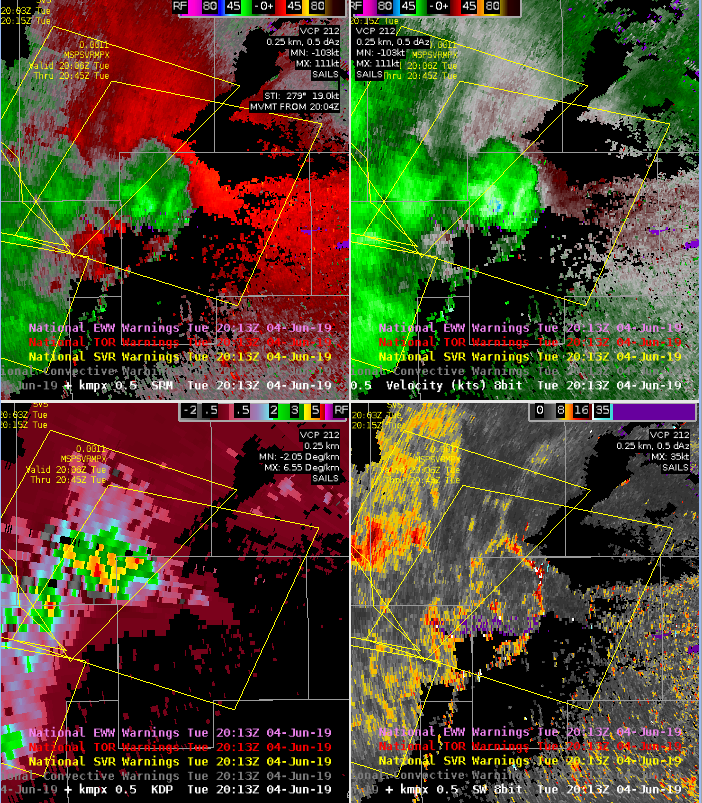
Perhaps tornadogenesis soon?

Lightning on FED starting to go up again, right as cell with rotation starts to meet up with east-west oriented boundary to the east of that cell (see bottom right spectrum width product).

AzShear product following that rotation over time well…watching for increase in intensity there.