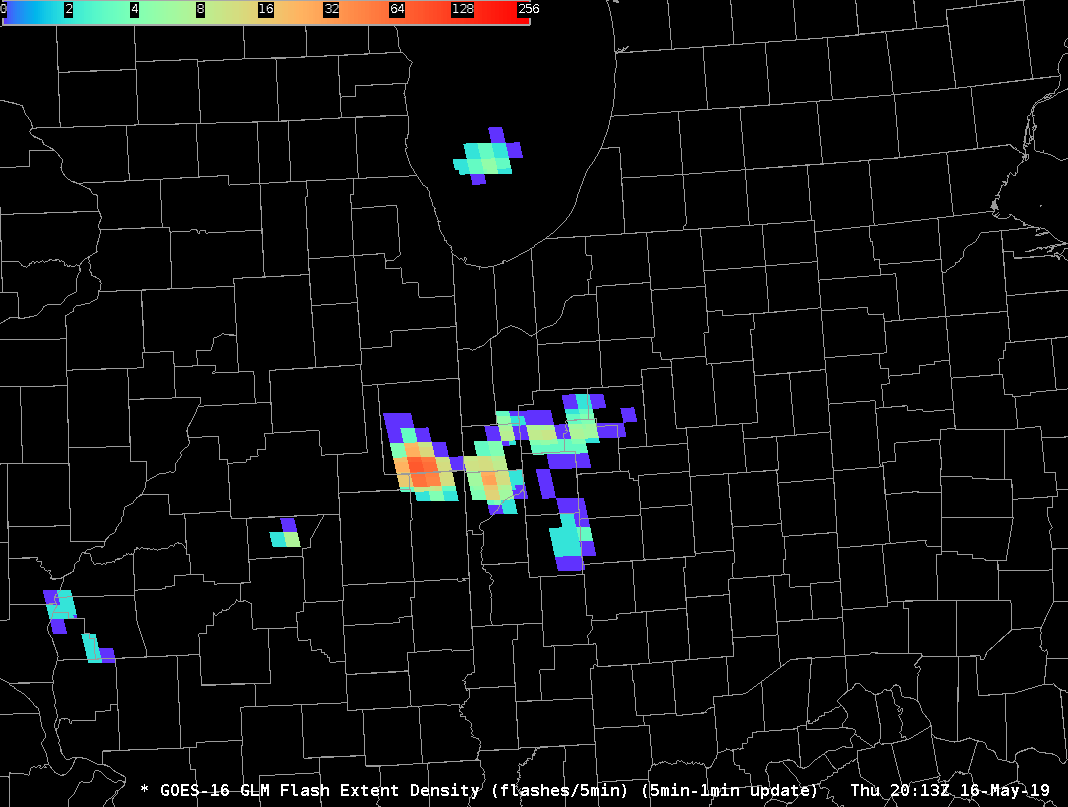
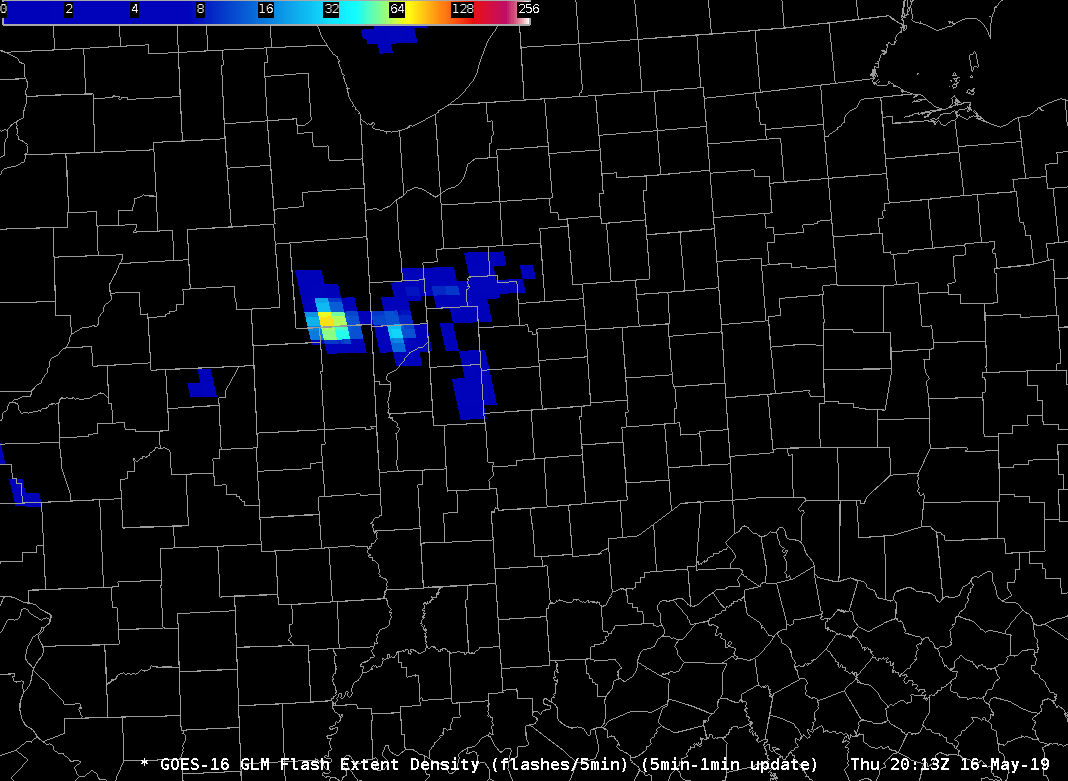
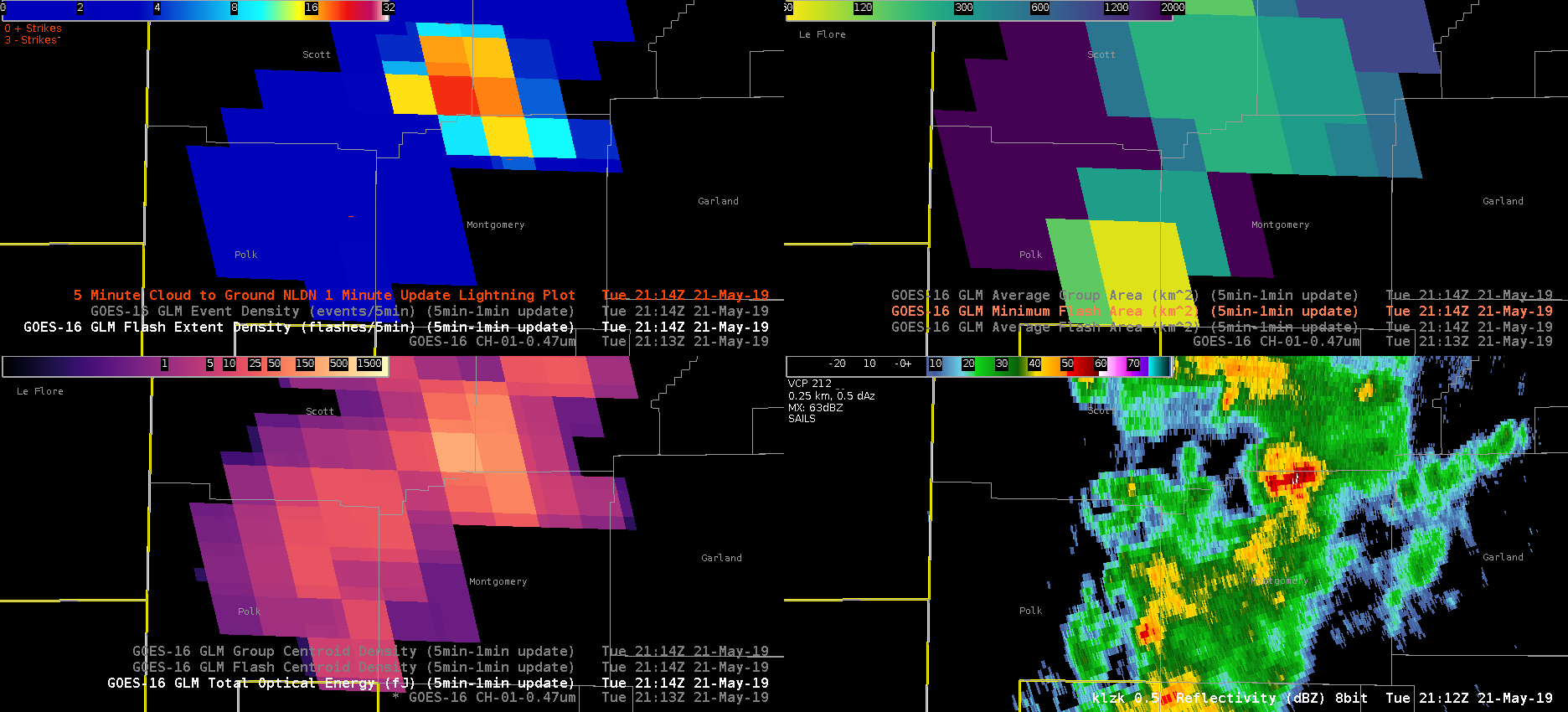
Storms are trending sub-severe across most of our CWA at this hour, but 1 cell behind the initial line started getting its act together. Here is the GLM Flash Extent Density (top left), GLM Minimum Flash Area (top right), GLM Total Optical Energy (bottom left), and KLZK base reflectivity (bottom right) before the cell started intensifying:

The large FED and MFA bullseye imply the updraft is intensifying on this storm. This proved to be a useful proxy because this was the result 8 minutes later:
This suite of products has a lot of utility for pulse severe events and DSS on-site weather events. -Atlanta Braves
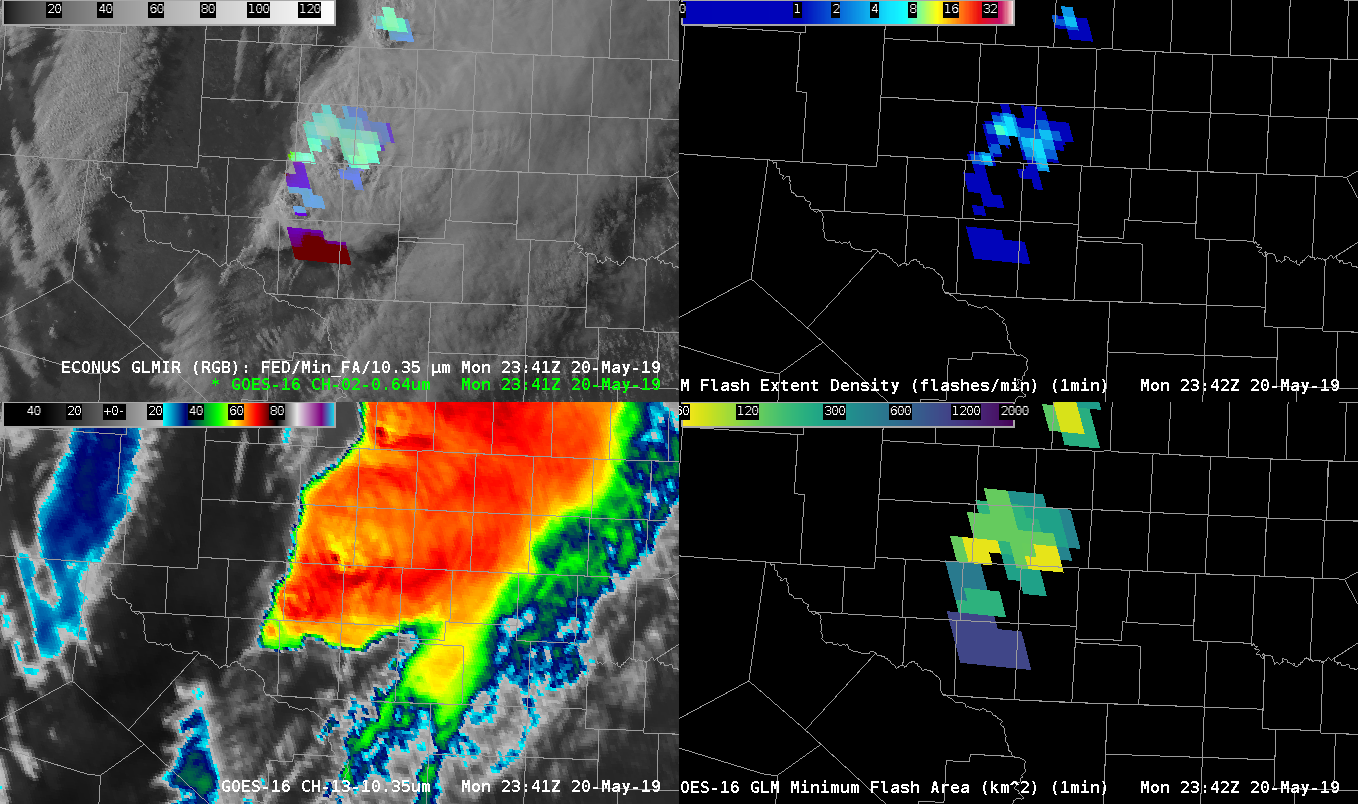
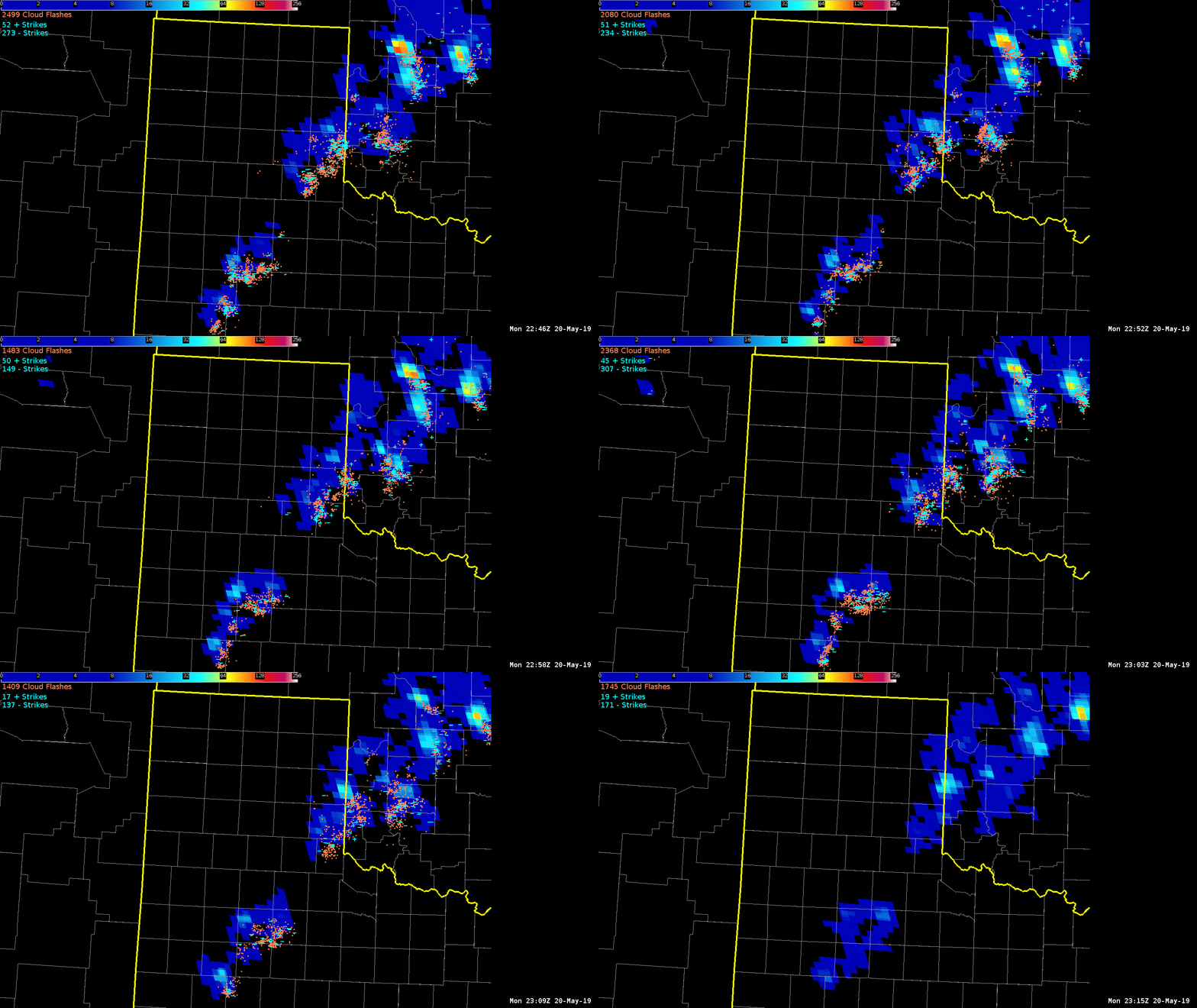 Dave Grohl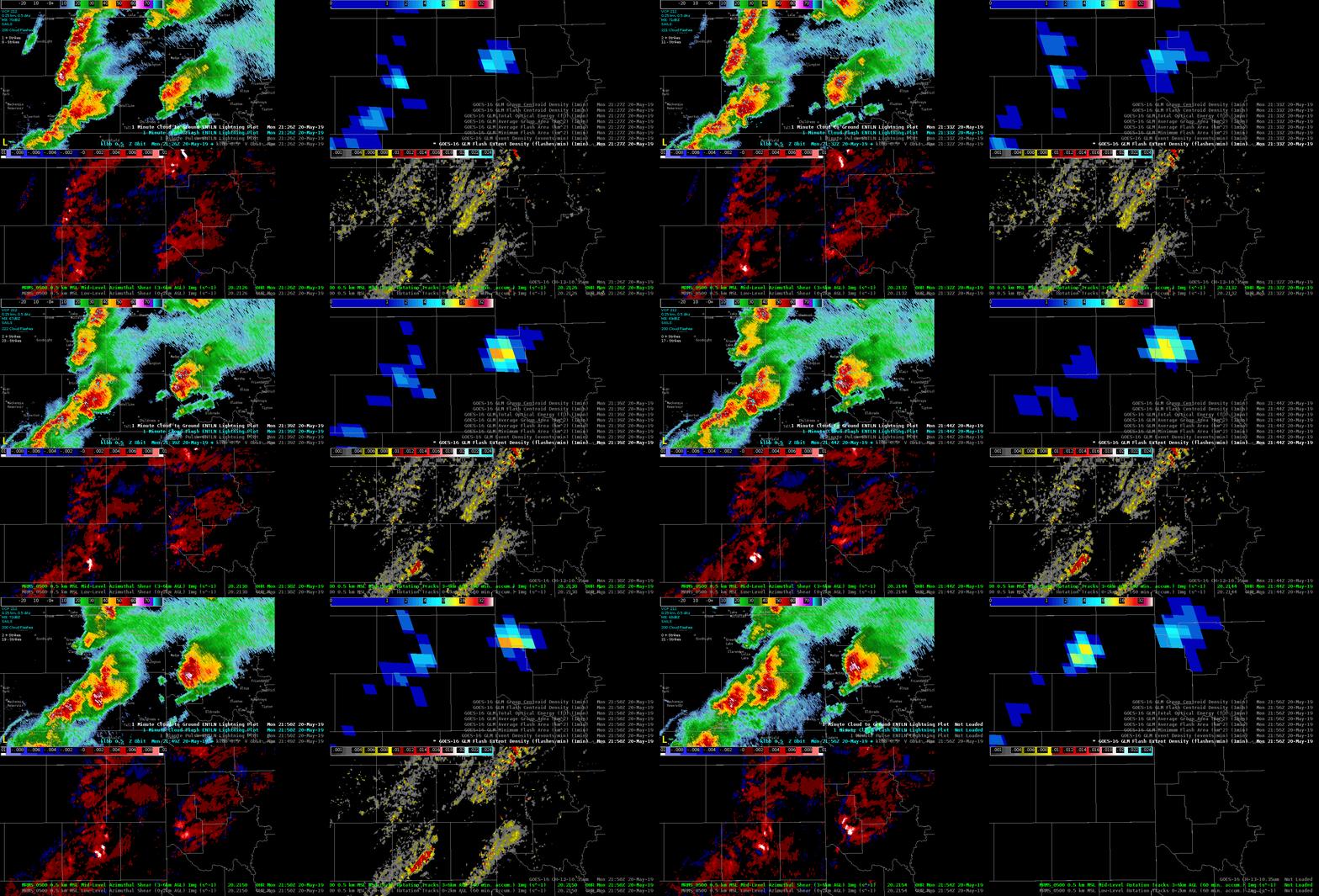
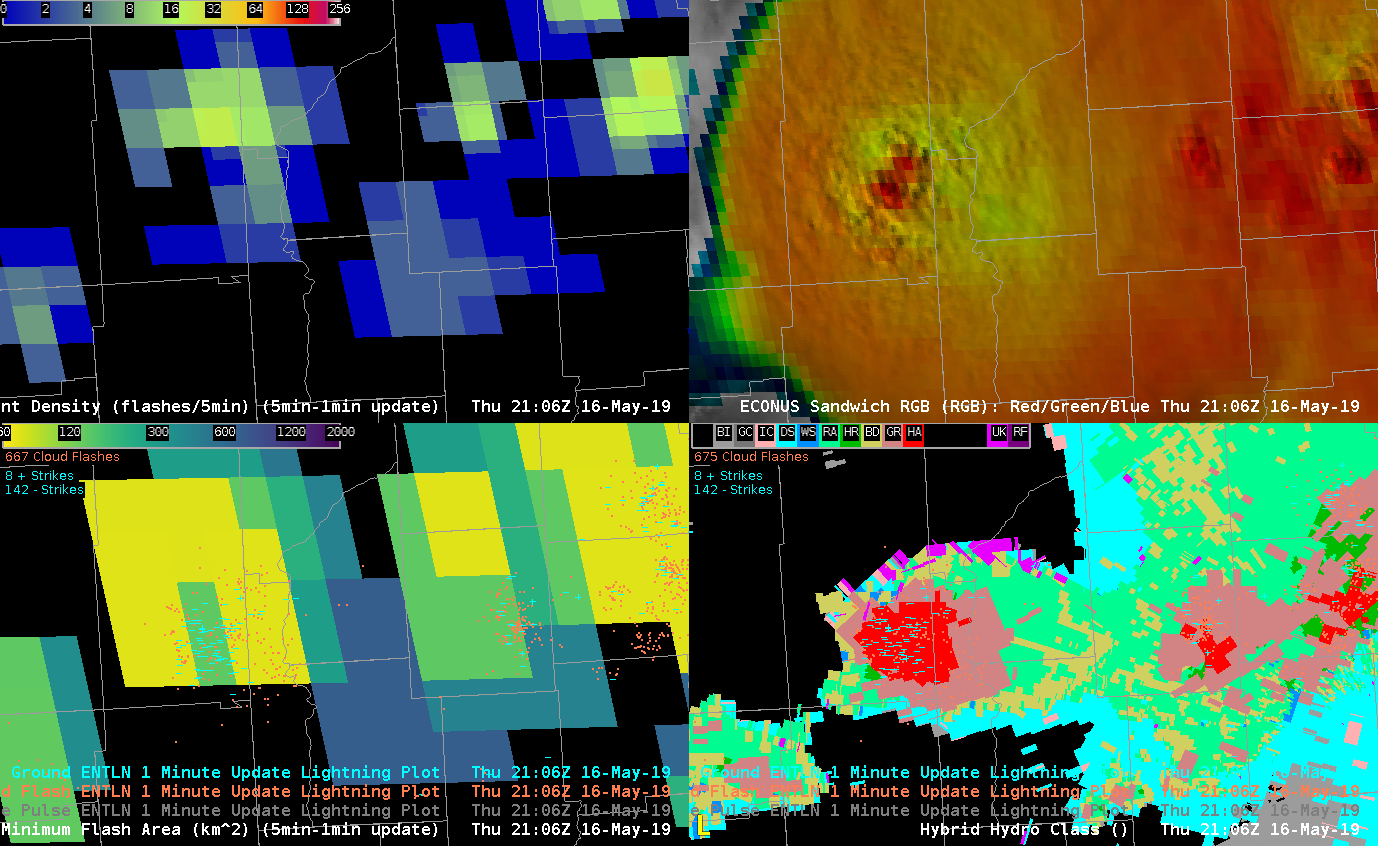
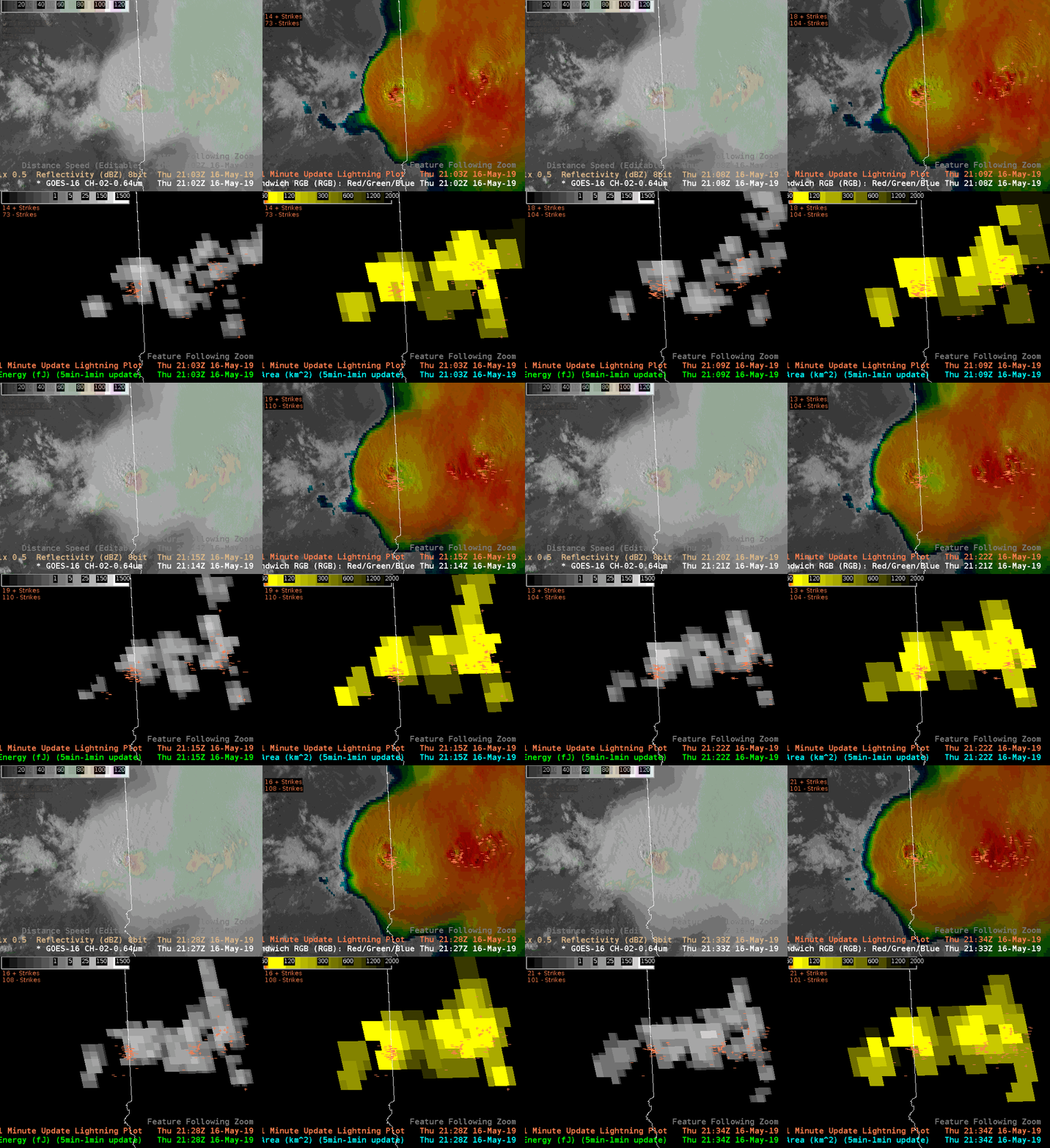
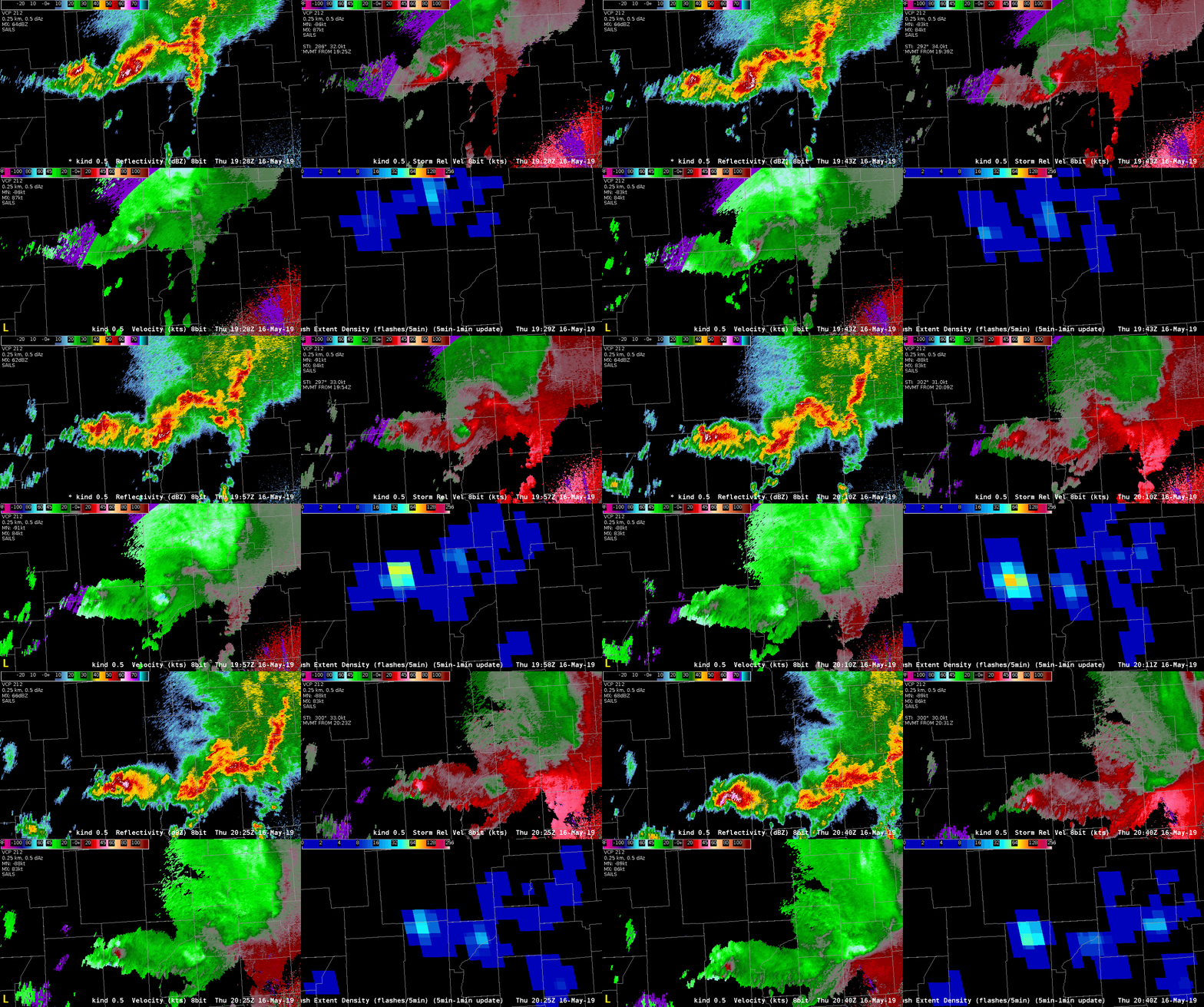
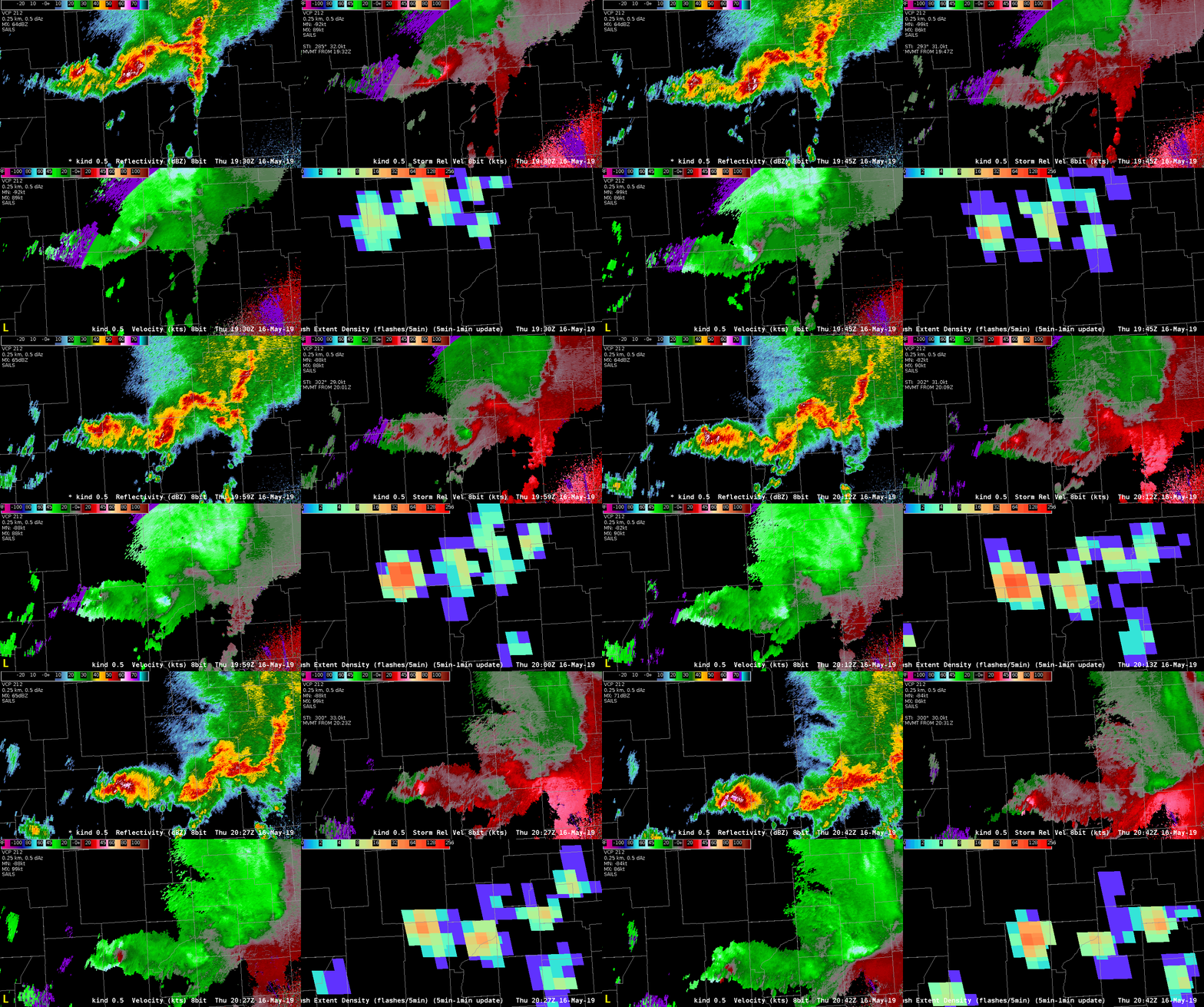
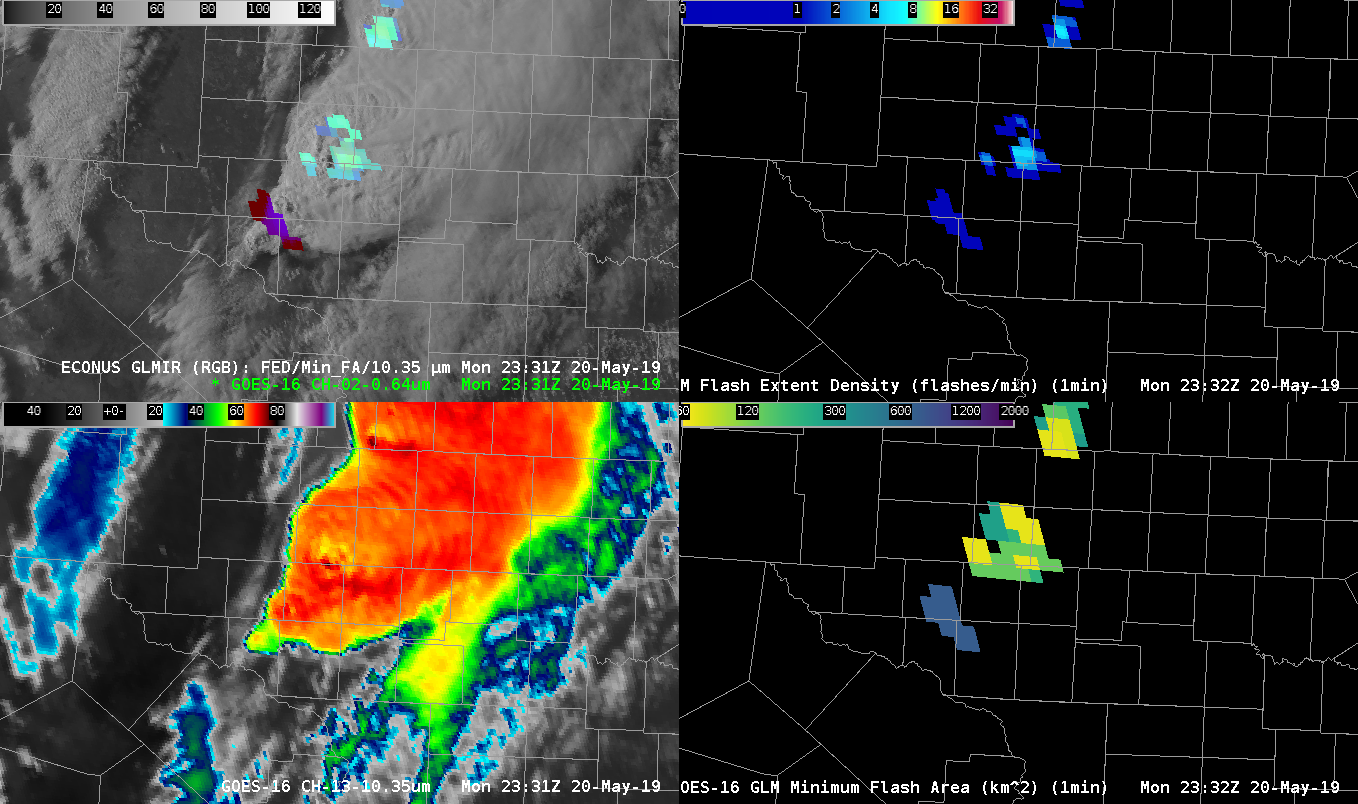
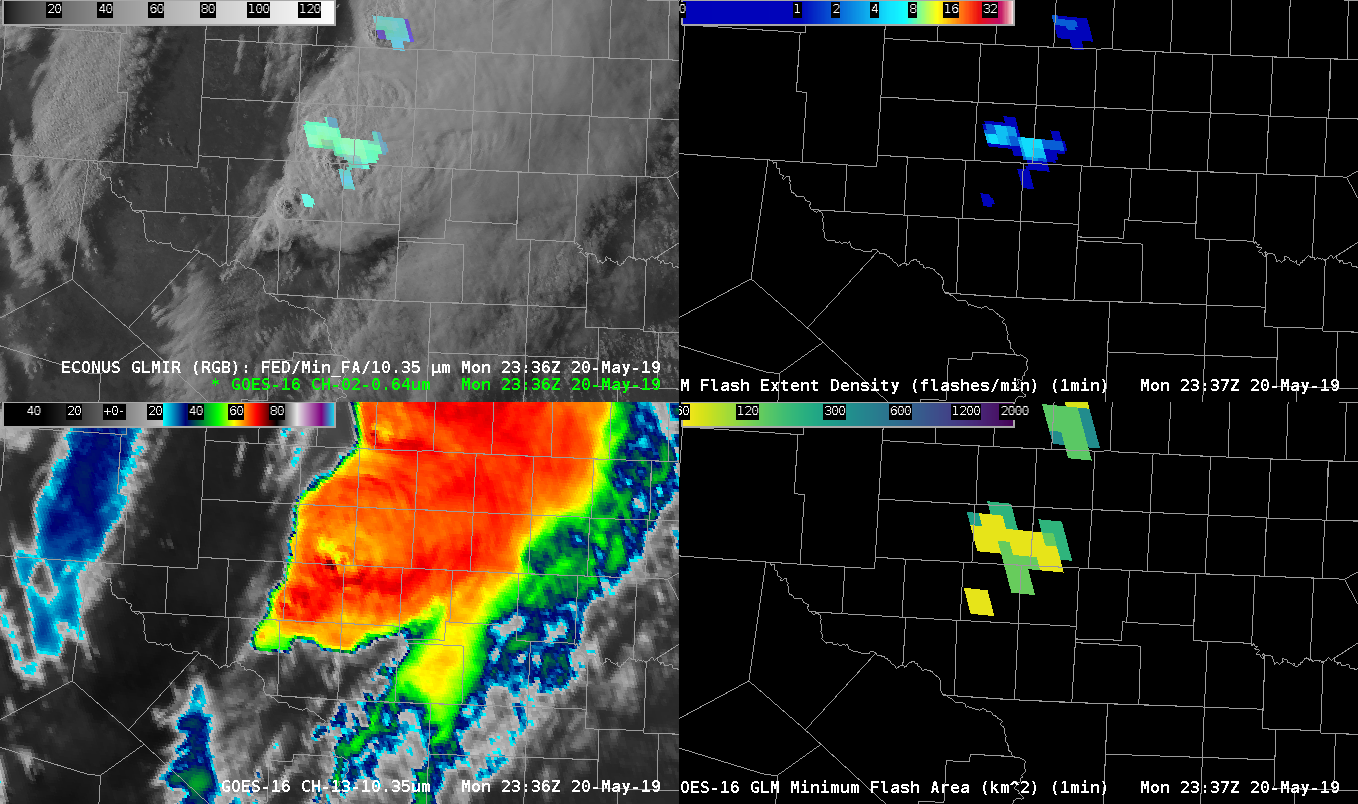
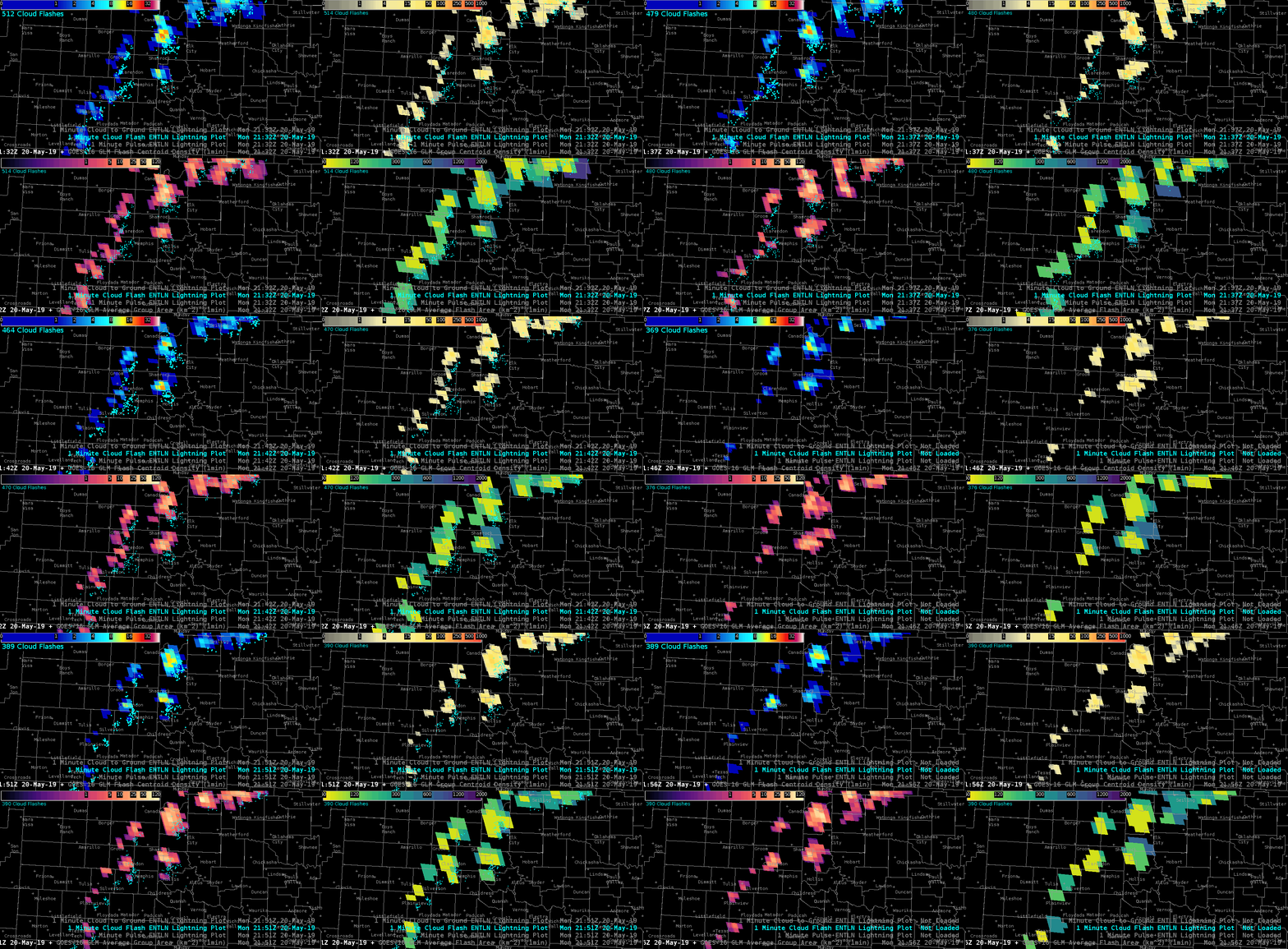 Storm of interest is the supercell NW of Childress, TX. Increase in ENTLN lightning occurred before a substantial increase in the 0-2 km and 3-6 km MRMS azimuthal shear. The signal in the GLM flash extent density product was muted in comparison to ENTLN data. ProbTor went from 12% at 2124Z to 52% at 2130Z. At 2140Z, ProbTor peaked at 91%, which corresponded with the maximum 0-2 km MRMS azimuthal shear (0.20 S-1) associated with this rotation track. I frequently use the ENTLN data in operations and am trying to incorporate GLM products.