Let’s do the wave

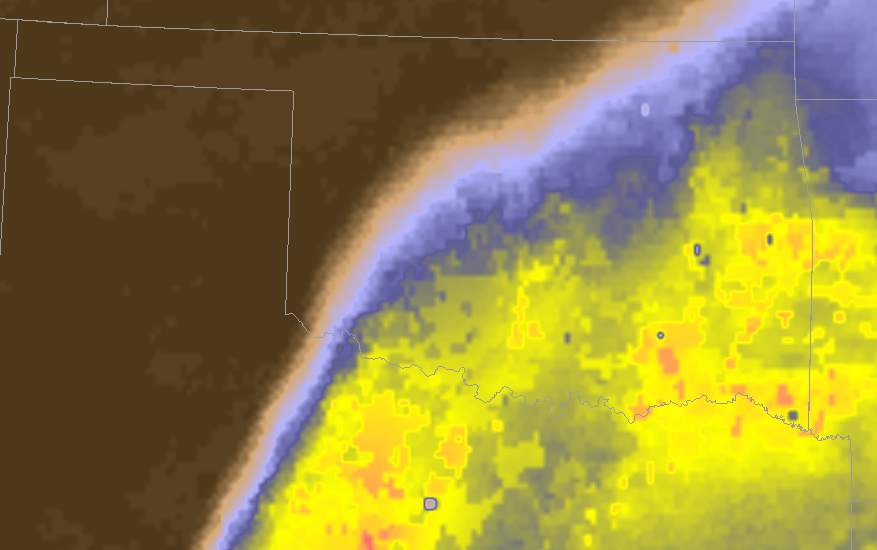
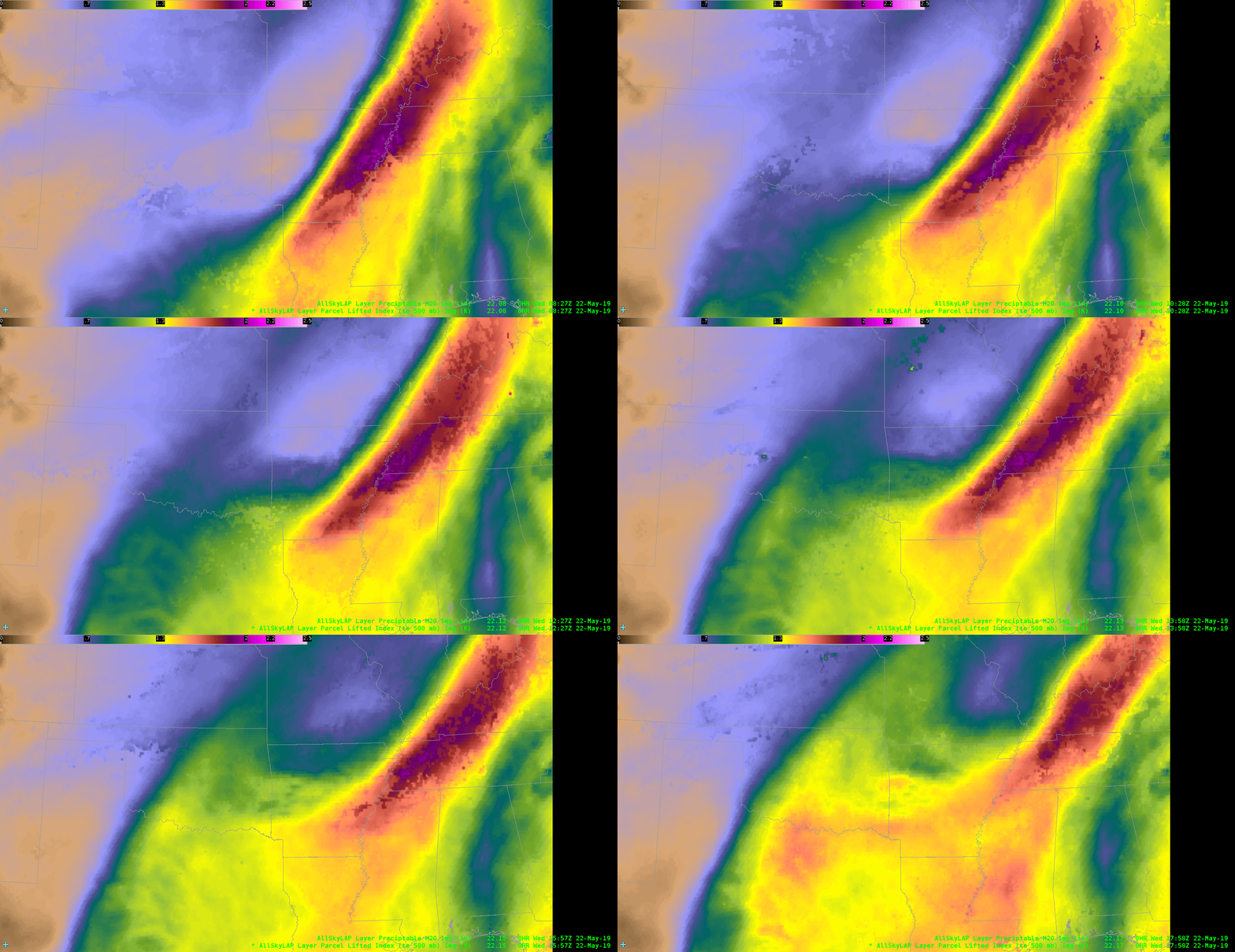
Seeing some interesting waves at different layers on the Simple Water Vapor RGB this evening. As a reminder, the simple water vapor RGB is made up of the low level water vapor image (band  10), the upper level water vapor image (band 8) and the clean window IR image (band 13).

There is one area of east/west waves along the Oklahoma/Arkansas border. The main contribution to those waves is the green channel, so we are “seeing” those waves based on the upper level water vapor.

The other is to the west of the severe convection in west Texas.  These waves have contributions from all the channels.

Thorcaster

AzShear – Great Additional Tool for Tornado Warning Issuance

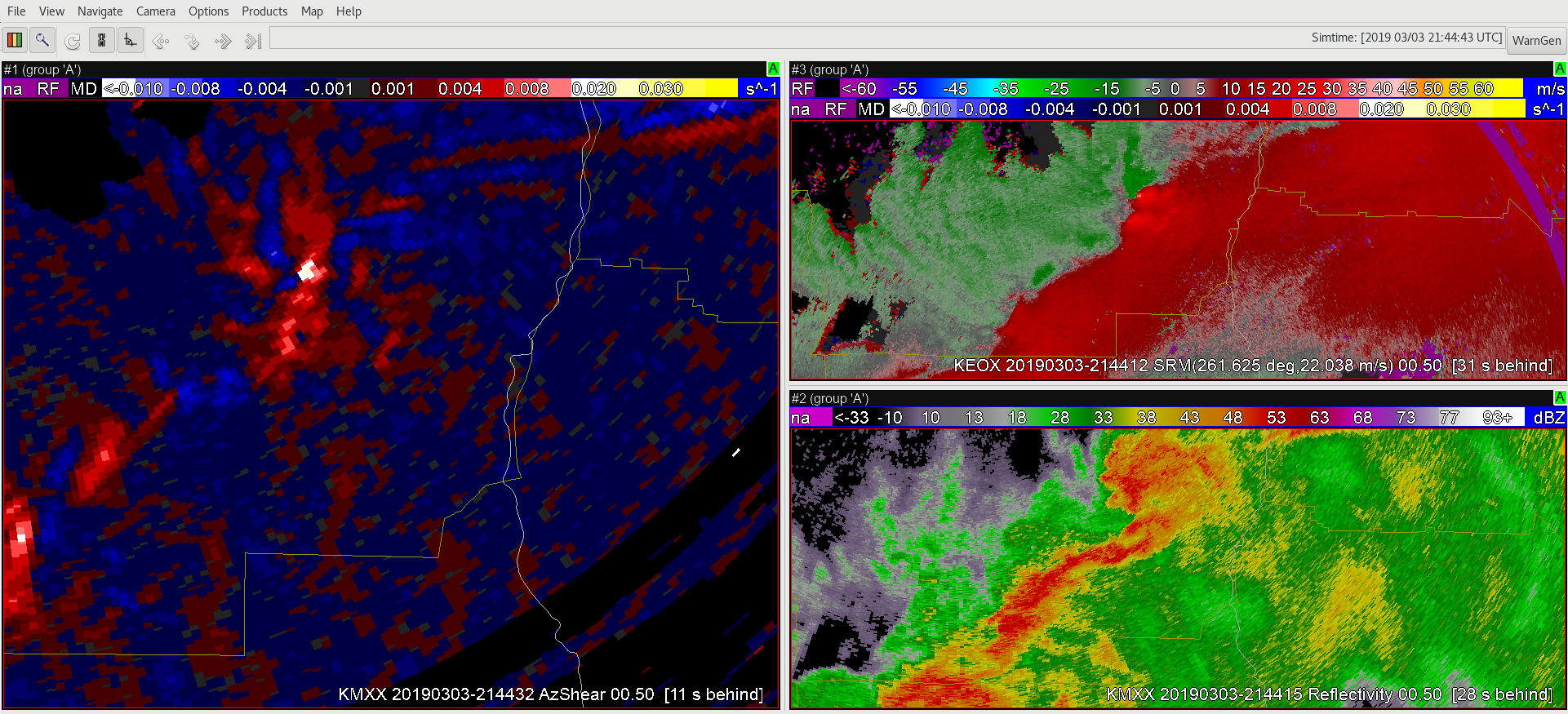
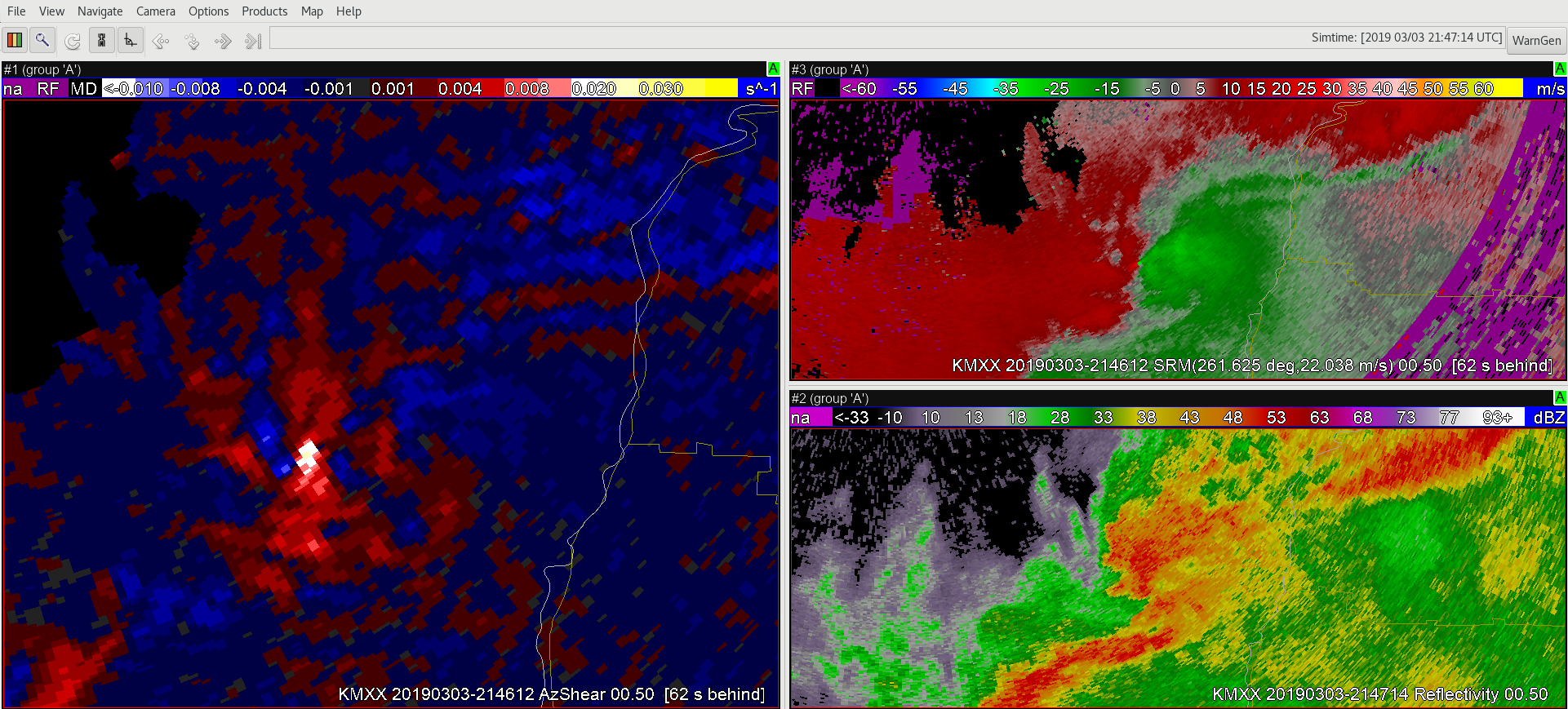
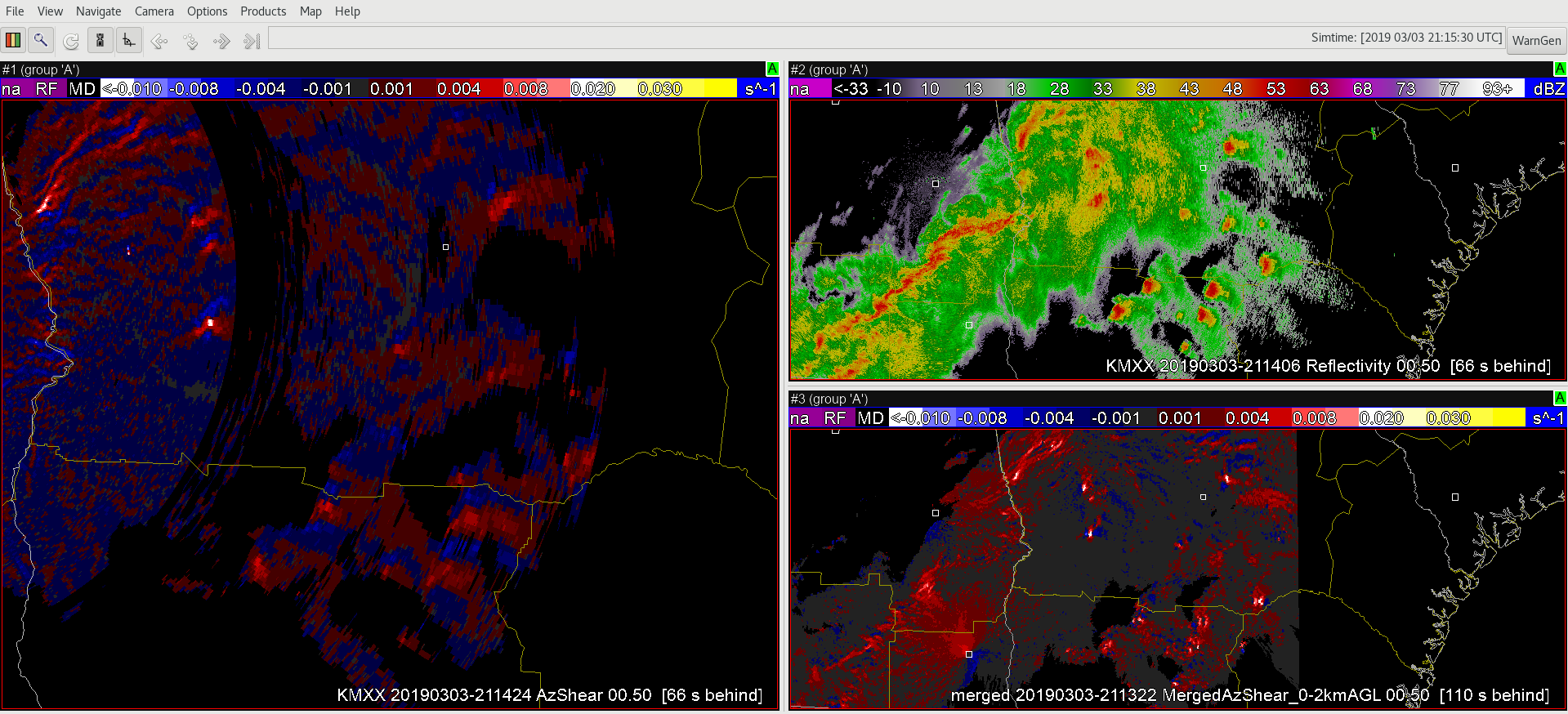
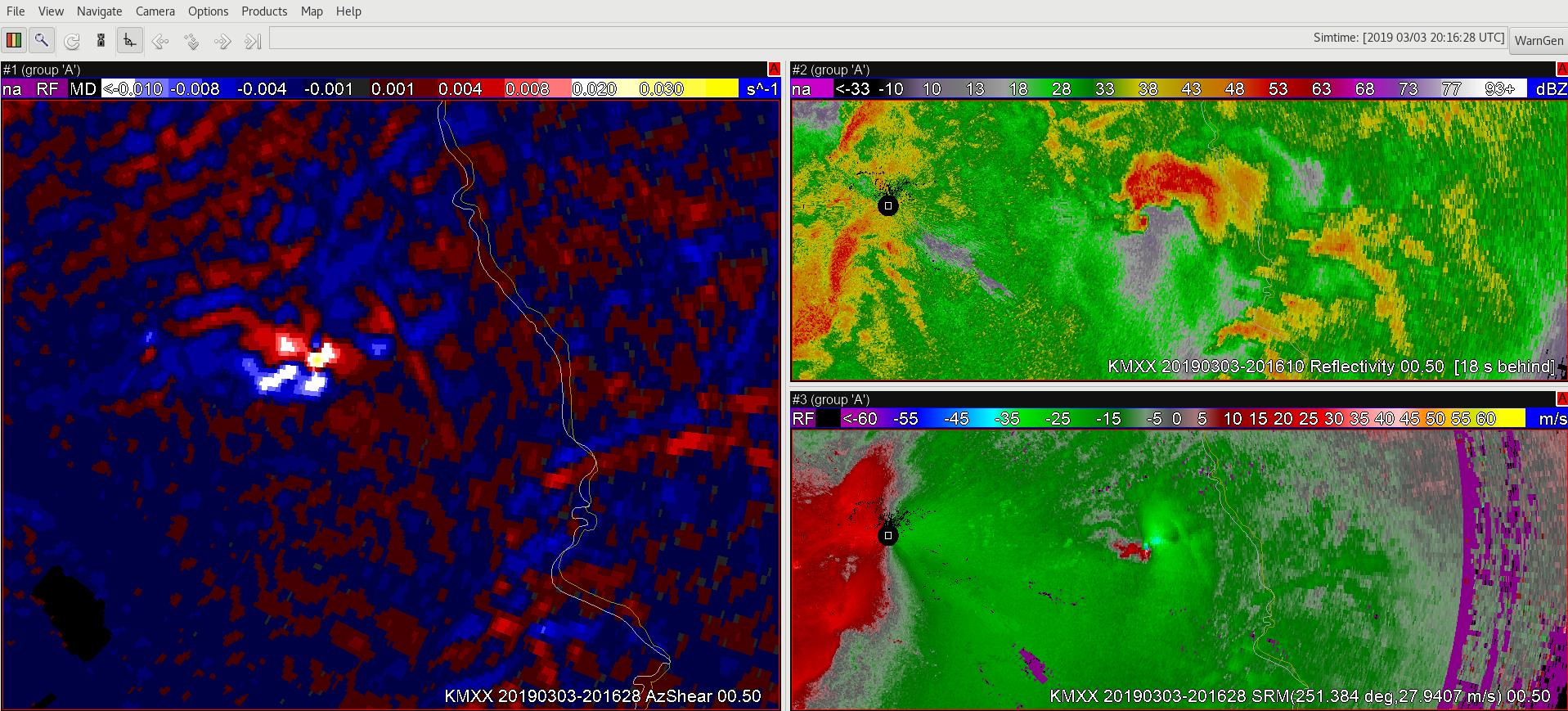
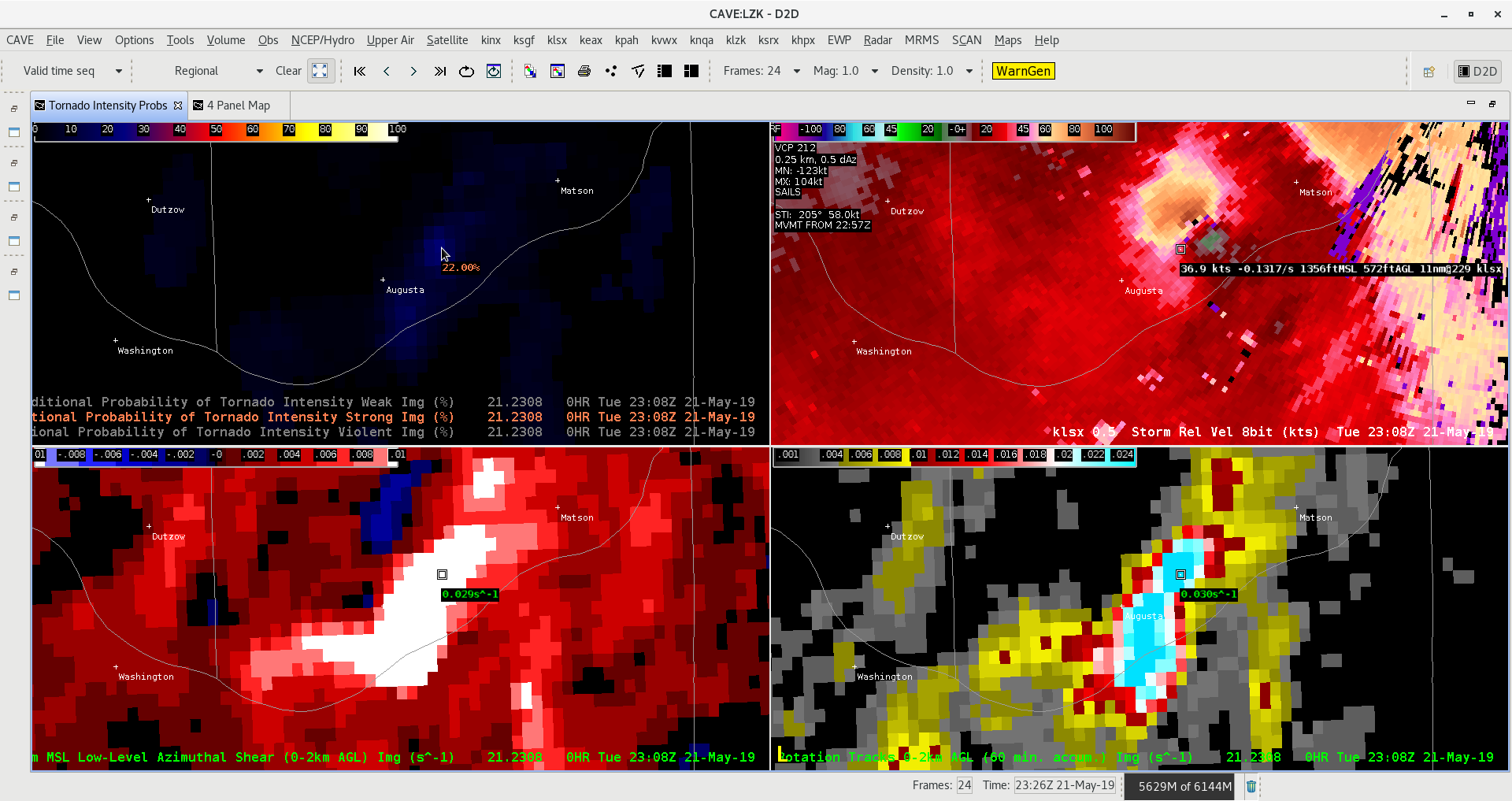
The best storm of the day so far produced a tornado with a tornado debris signature. The AzShear signature was textbook with a concentrated persistent bullseye over the couplet (center of image below):

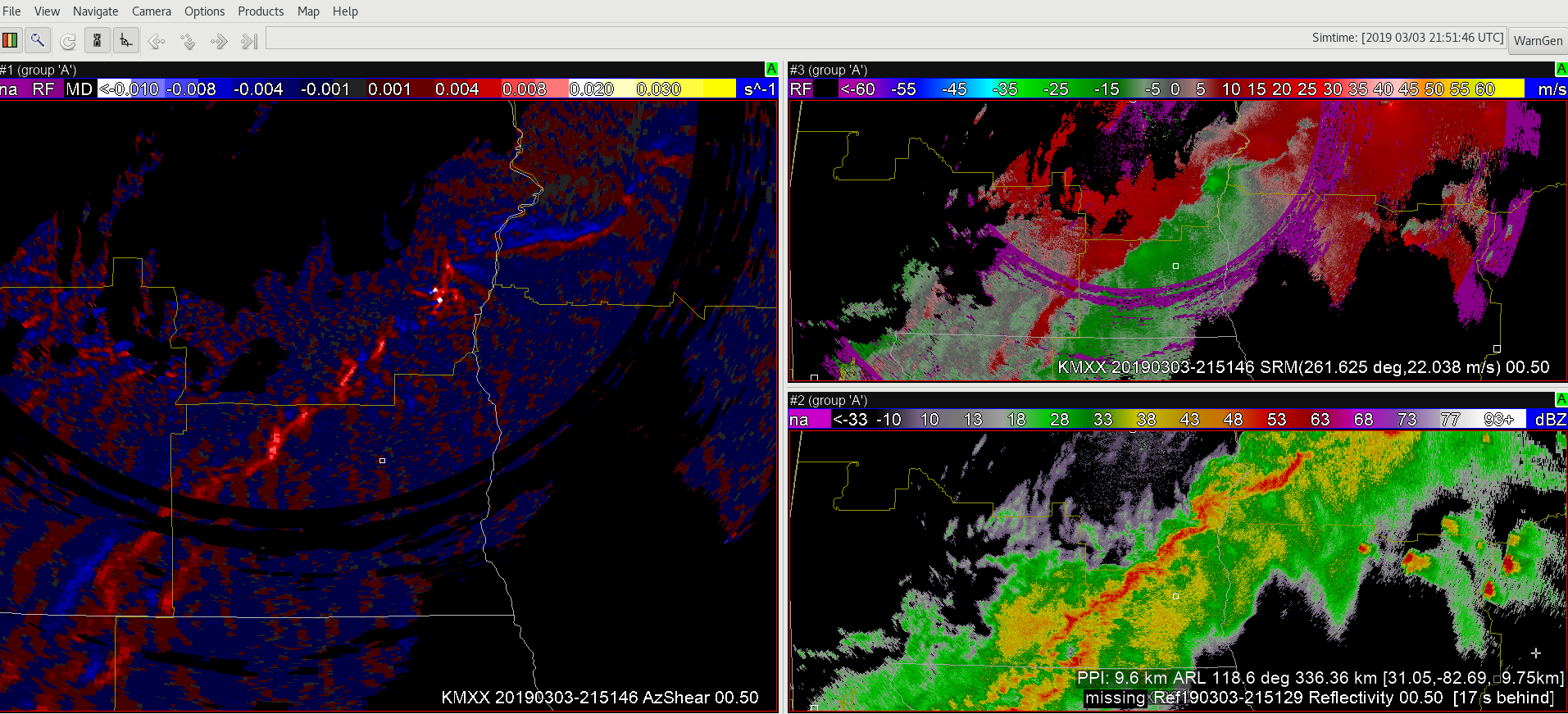
This AzShear product is a great tool to increase confidence in the presence of low-level rotation. It should be used with caution, however, owing to the risk of misleading signatures. The signal north of the Greer storm is a result of convergence and/or bad velocity data: The reflectivity structure is more of a bow echo and the AzShear should be used with caution in identifying velocity couplets potentially associated with tornadoes. -Atlanta Braves

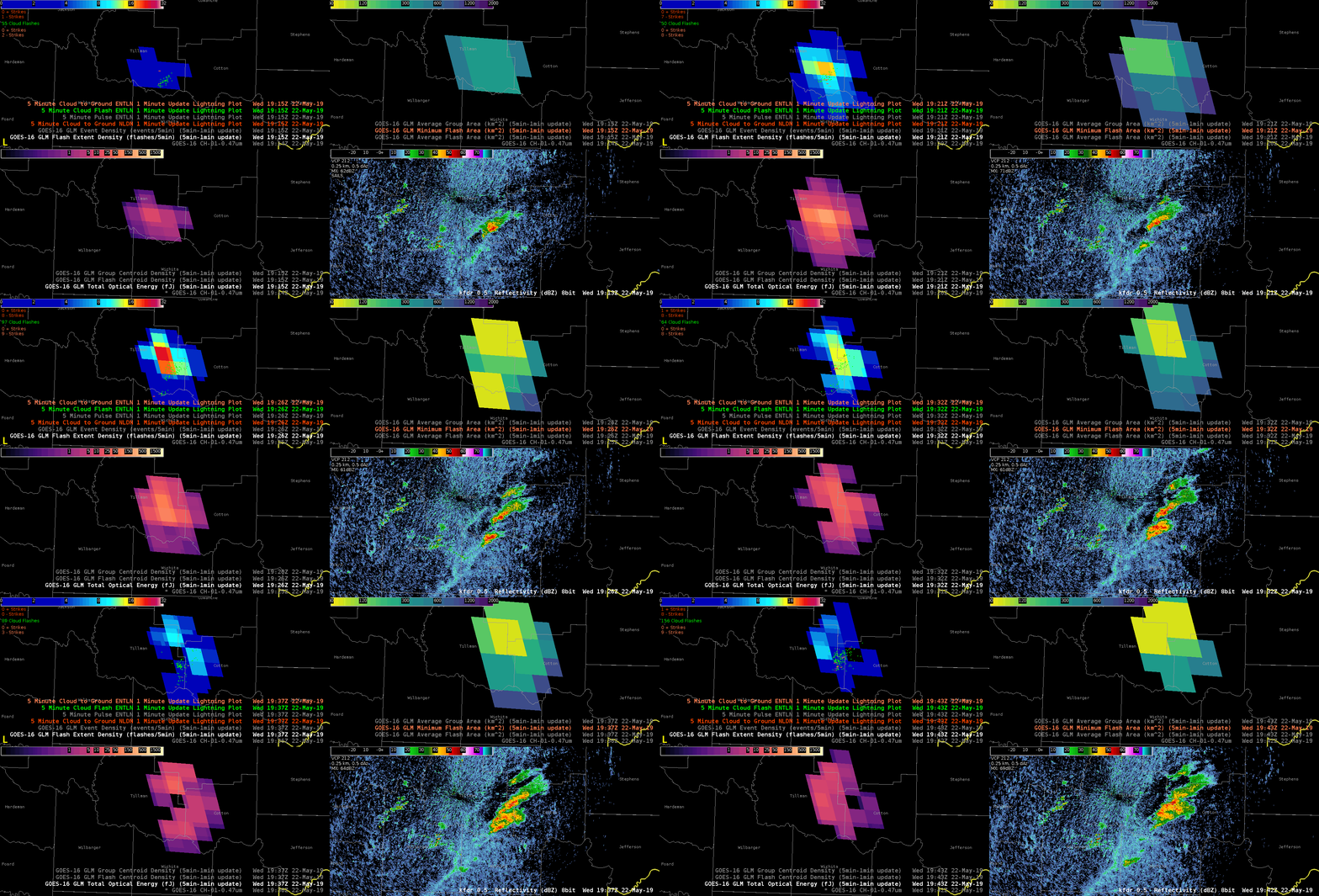
Comparison of ENTLN and GLM Lightning Data

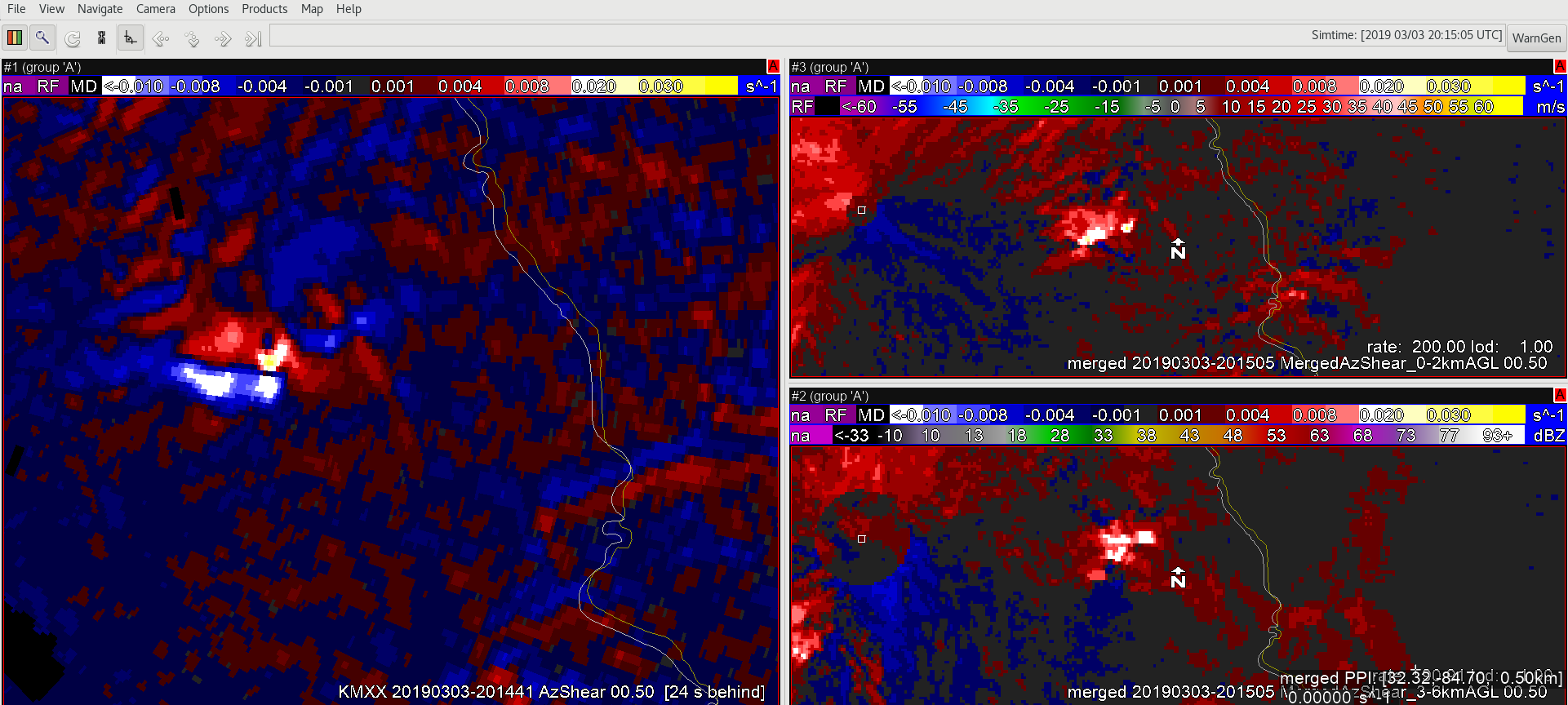
Storm of interest is the supercell NW of Childress, TX.  Increase in ENTLN lightning occurred before a substantial increase in the 0-2 km and 3-6 km MRMS azimuthal shear. The signal in the GLM flash extent density product was muted in comparison to ENTLN data. ProbTor went from 12% at 2124Z to 52% at 2130Z.  At 2140Z, ProbTor peaked at 91%, which corresponded with the maximum 0-2 km MRMS azimuthal shear (0.20 S-1) associated with this rotation track. I frequently use the ENTLN data in operations and am trying to incorporate GLM products.

So far, the most useful GLM components, largely because of their visual representation and relationship to updraft growth rate or intensity, are the flash extent density and total optical energy.  These two products helped me maintain situational awareness on individual storm intensity trends.  Plotting the flash extent density and total optical energy in a four panel with GOES IR imagery and base radar data, I can quickly decipher which storms pose the greatest risk for severe weather.  Roy

Lowest-Level Rotational Velocity Product Comparison

I’ve been trying really hard to come up with some useful observations regarding the three mesoscale detection algorithms, but struggling to come up with anything insightful. A loop all 3 algorithms (MDA top left, DMD top right, NMDA bottom left) is below. The three algorithms are overlayed on SRM and the bottom right panel is base V.

Two persistent mesoscyclones in Hall county are largely well-detected by all 3 algorithms with only minor differences is tracking. A relevant limitation for this storm is range from the radar (>65 nm) and interference from range folding. The New Mesocyclone Detection Algorithm (NMDA) is limited in its latency, making its real-time applicability limited. I rarely use the mesoscale detection algorithms operationally because I find the table difficult to read. It is easier for me to interrogate the radar data than to use the MDA or DMD. Perhaps reformatting the data display would help make the NMDA more usable.

On the contrary, the AzShear product performed remarkably well on this particular cell. It is more visually obvious and helps focus forecaster attention in a very simple way. The loop is below:

For the purpose of identifying low-level rotation, AzShear does a much better job than any of the mesocyclone detection algorithms with respect to low-level rotational velocity. The mesocyclone detection algorithms do not add much value to my warning decision process. -Atlanta Braves

NUCAPS Soundings Observations…Finally a Swath Over our Area of Severe Weather…

Hi all,

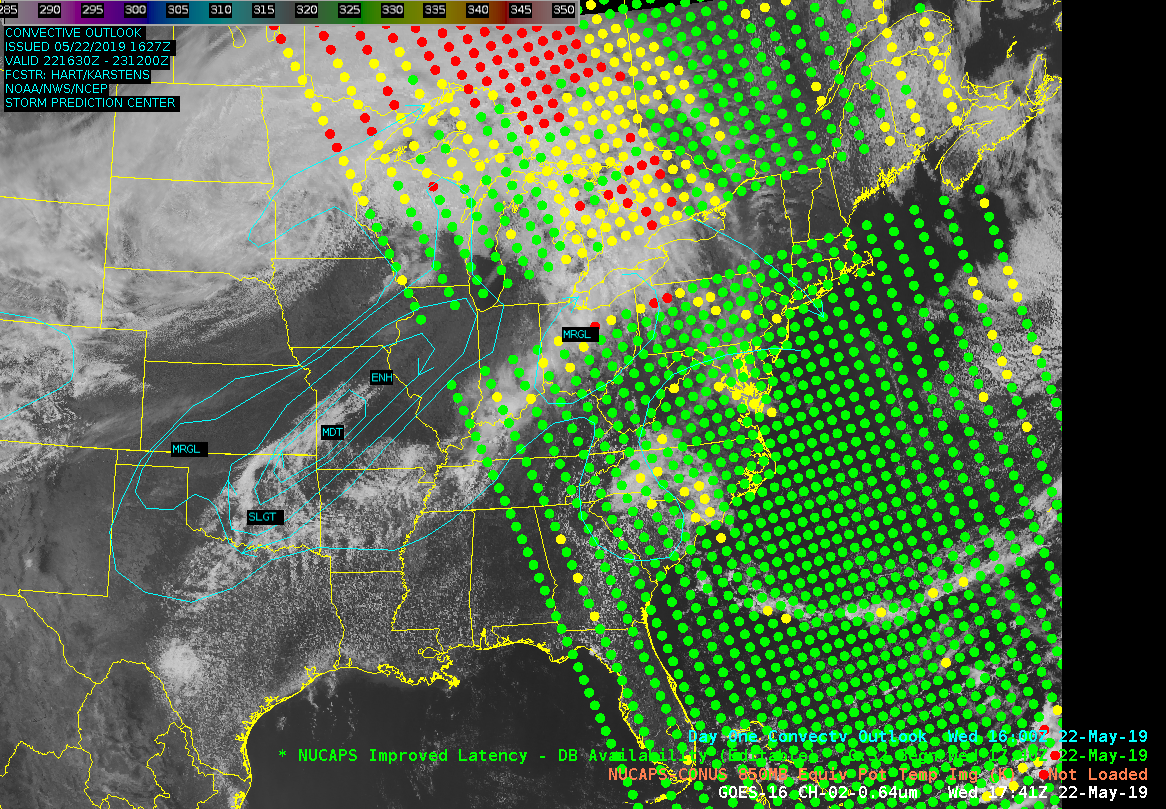
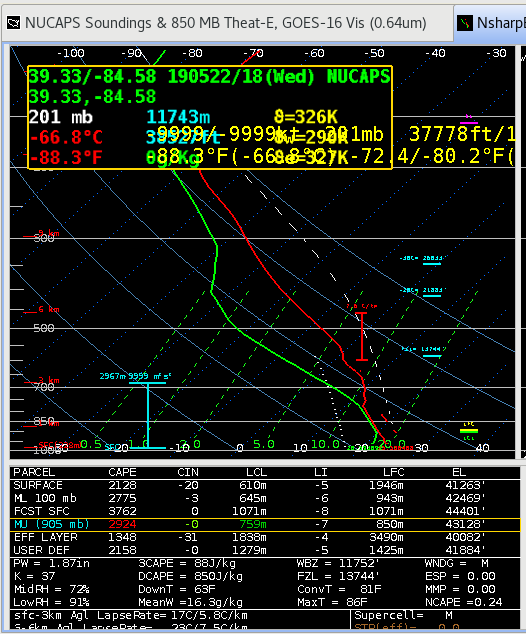
Ok, just a couple of quick observations and comparison of a NUCAPS (direct broadcast) sounding with a modified sounding over an area of interest this afternoon.  The NUCAPS sounding locations and the particular sounding of interest can be seen in Image 1 below.

Image 1: NUCAPS Sounding locations near 20 UTC 20 May 2019.  The Direct Broadcast and Modified Soundings that appear in this analysis were taken from the location of the pointer (notice this is in the far SW portion of the High Risk in north Texas).

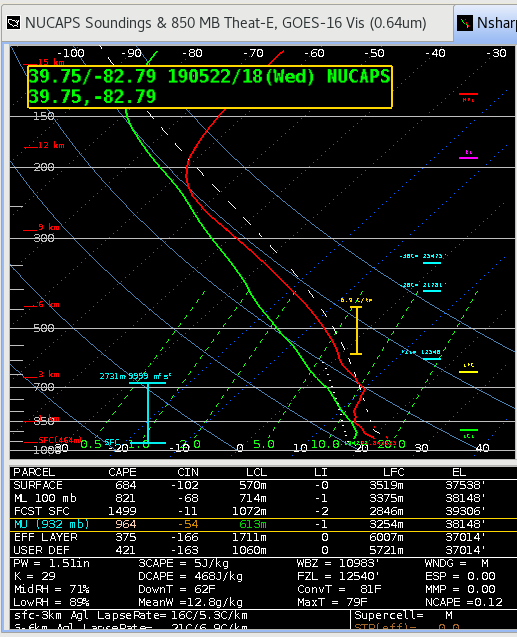
The next image below (image 2) shows the Direct Broadcast NUCAPS sounding valid ~2000 UTC 20 May 2019.   The sounding indicates high CAPE values at this sounding location (~2800 J/Kg MUCAPE, and 2400 J/Kg MLCAPE), and steep lapse rates aloft, in excess of 8 C/km.  This type of atmospheric profile would support severe weather in the area today.

Image 2:  DB Sounding taken in SW corner of High Risk (location shown at pointer above).

The next image is the modified sounding taken at the same location.  Notice the increased CAPE values…

Image 3: Modified NUCAPS sounding from the same location as above.  However, with the modified boundary layer, notice the higher overall CAPE values.

By the way, soundings in this general area, including the yellow soundings indicated high CAPEs with “reasonable” looking values.  However, there was a fairly significant gradient noticed in overall low-level instability noticed in soundings to the east of this location.  This could be a good case for the NUCAPS team to go back and take a further look.

-Kris W

Azimuthal Shear and Lightning Trends Prior to Tornado

Pair of supercells exhibited intensification as they tracked northeast through the eastern Panhandle of Texas. MRMS azimuthal shear ramps up to slightly over 0.010 S-1 near time of a reported tornado from the more eastern of the two supercells. The GLM event density data also increases prior to or near the time of  the tornado between 1950z – 2000z (upper right panel). Comparing to the ENTLN lighting flash frequency (1min data), an jump was noted peaking 1947Z before it dropped off and remained lower through 2000Z (36 count to 15 count). To summarize this data, there was a jump 10-15 min before the tornado, then a drop off, and then another jump 10-15 min after the tornado.

0.5 storm-relative velocity couplet was strongest with the eastern of the two primary mesocyclones. Spectrum width (low right panel) displays a consistently strong signal of wind speed variance with the eastern tornado producing mesocyclone.

The tornado component of Probsevere jumped significantly before the tornado touchdown. At 1944Z the probability was at 7%, then quickly increased to 46% by 1948Z and peaked at 54% at 1952Z.

-Roy

Observations from Hail-Producing Storms in the Panhandle of Texas

Today’s environment is ideal for all types of severe weather. Unsurprisingly, the ProbHail algorithm indicates high probabilities of hail with most of the storms. Here I’ll use dual-pol interrogation to investigate ProbHail performance and include a few  additional observations.

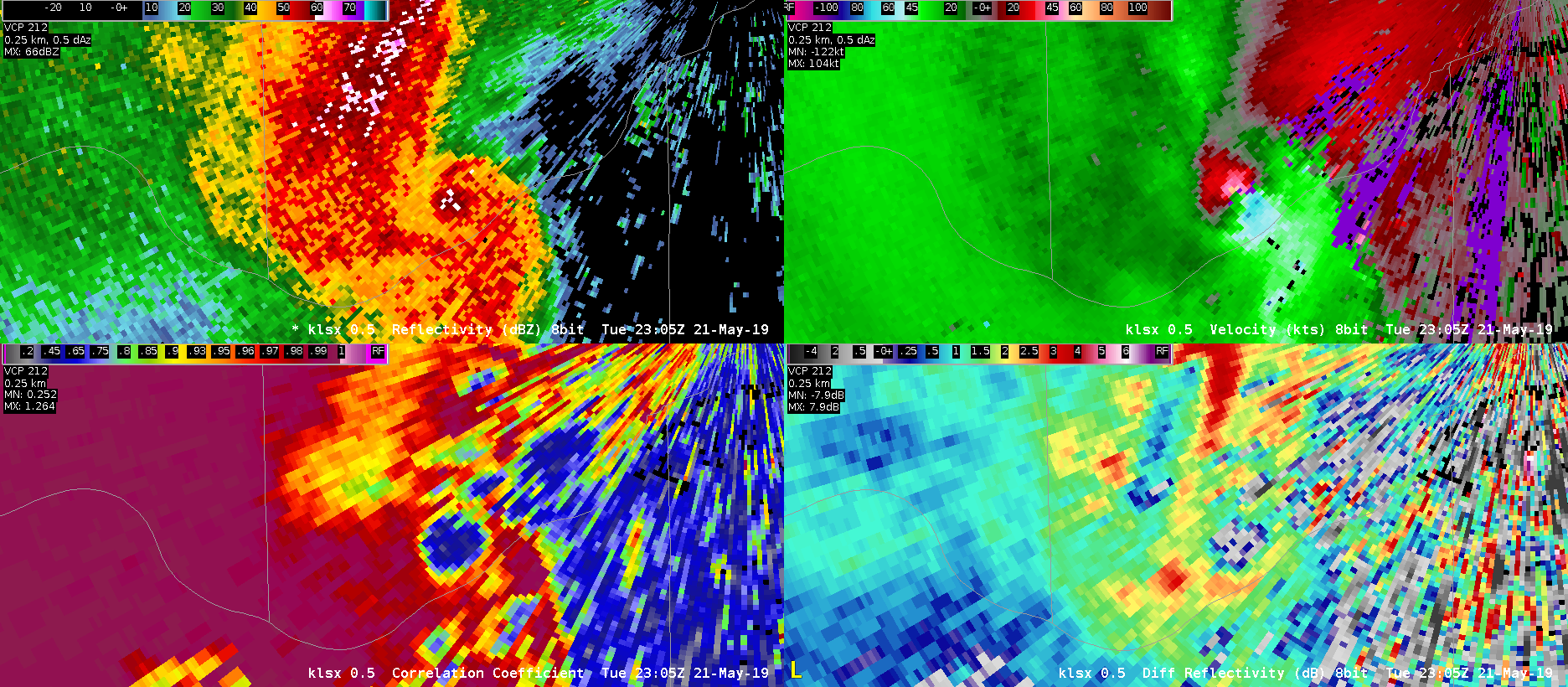
Of particular note is the evolution of a storm object in the mind of the ProbHail algorithm. The algorithm seems to handle merging and splitting remarkably well for both the northern-most storm and the line of storms that results at the end of the loop in the SE part of the CWA. This performance in a highly-complex radar display is promising for more isolated storms. Let’s zoom in on the southeastern storm near Wellington:

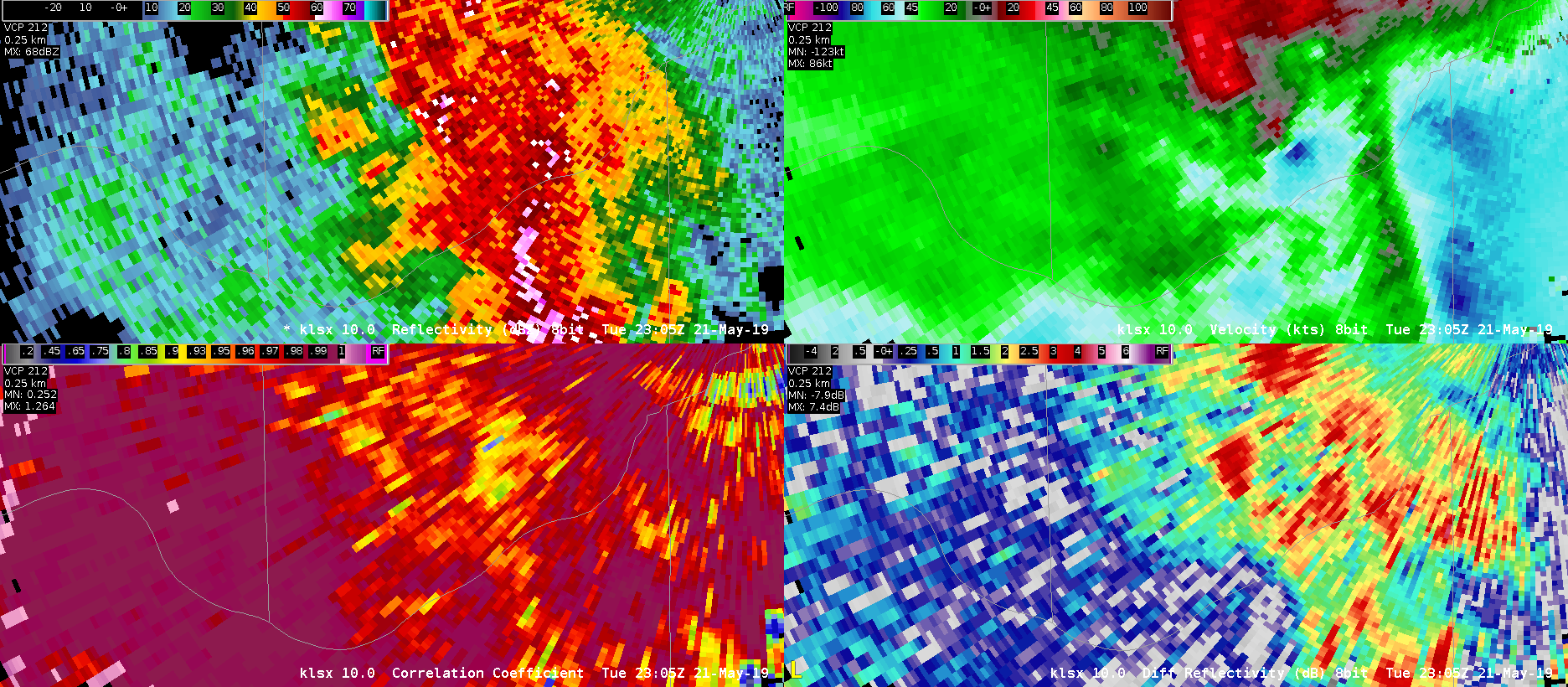
The reflectivity signal in the hail core is not particularly anomalous (~50 dBZ), but ZDR near zero and reduced CC indicate high confidence in hail production at the surface. The ProbHail shows a 98% chance of hail in that storm. We would expect high confidence and this algorithm performs well. Baseball size hail was reported with this storm! -Atlanta Braves