


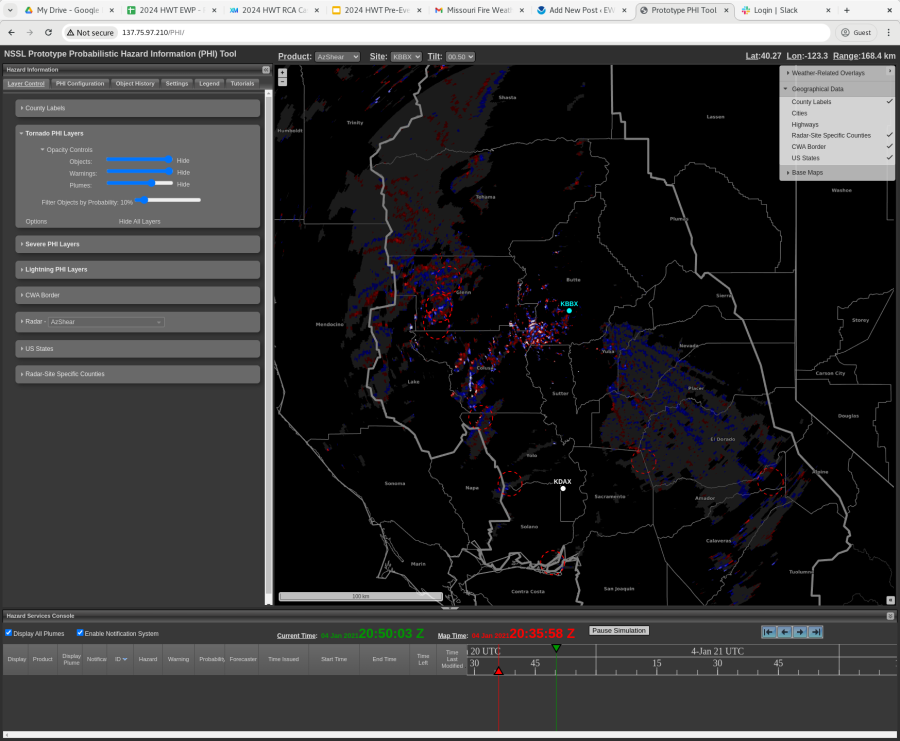
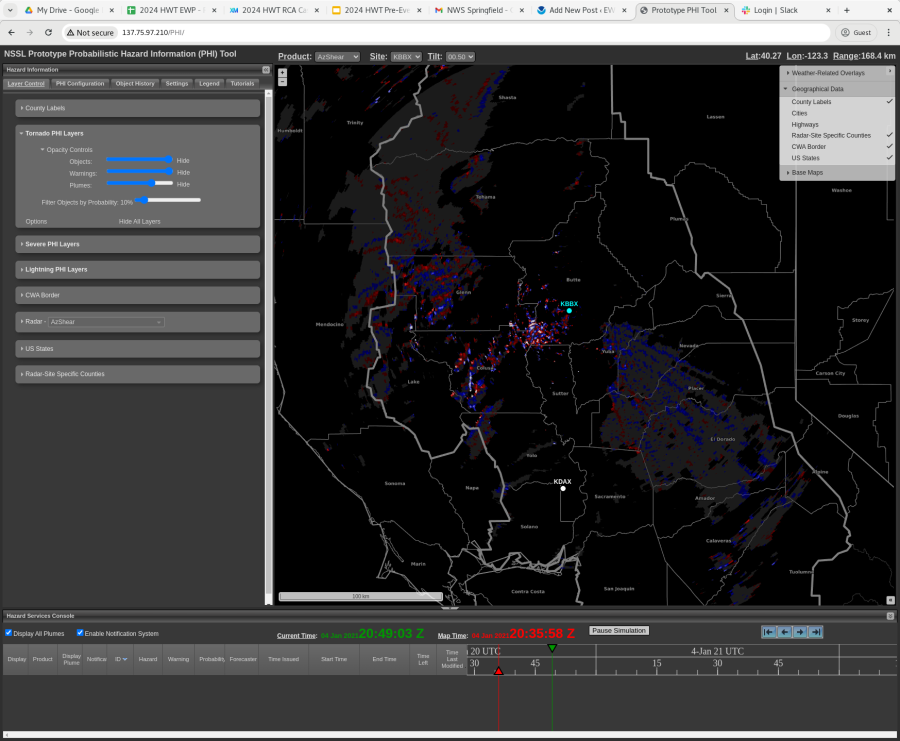
Noting that the aggressive TORP filter is filtering out numerous TORP objects that don’t appear to need them. -Sidney Crosby
Official websites use .gov
A
.gov website belongs to an official government
organization in the United States.
Secure .gov websites use HTTPS
A
lock (
) or https:// means you’ve safely connected to
the .gov website. Share sensitive information only on official,
secure websites.

Noting that the aggressive TORP filter is filtering out numerous TORP objects that don’t appear to need them. -Sidney Crosby
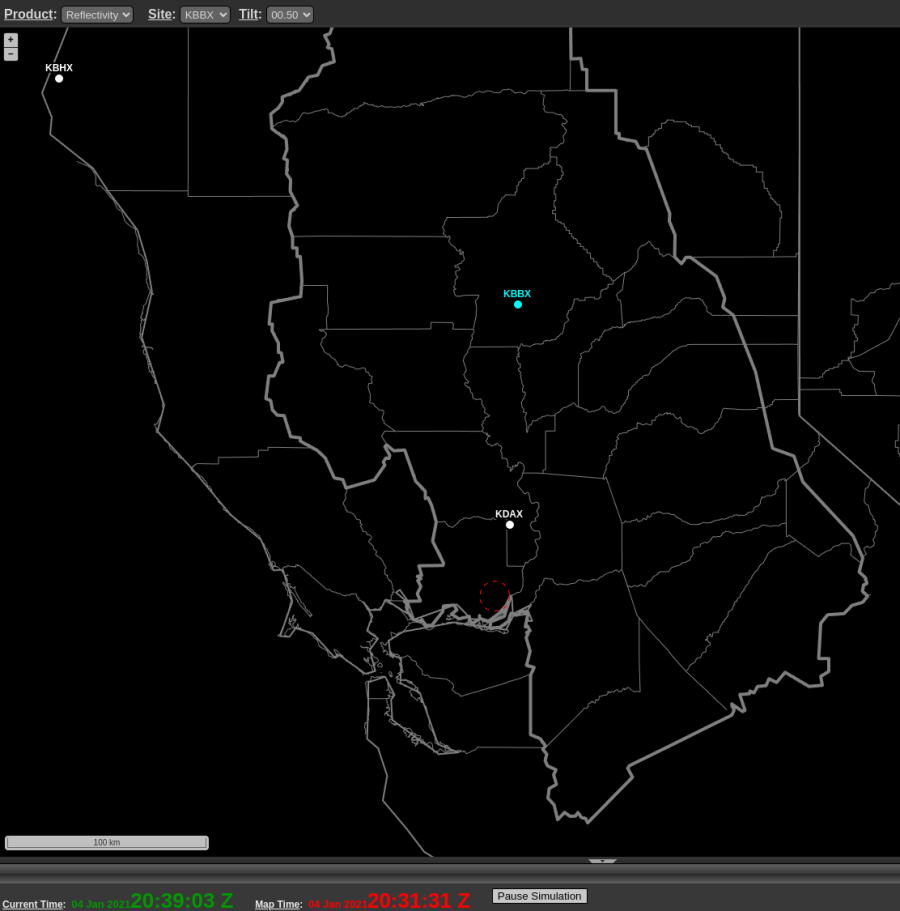
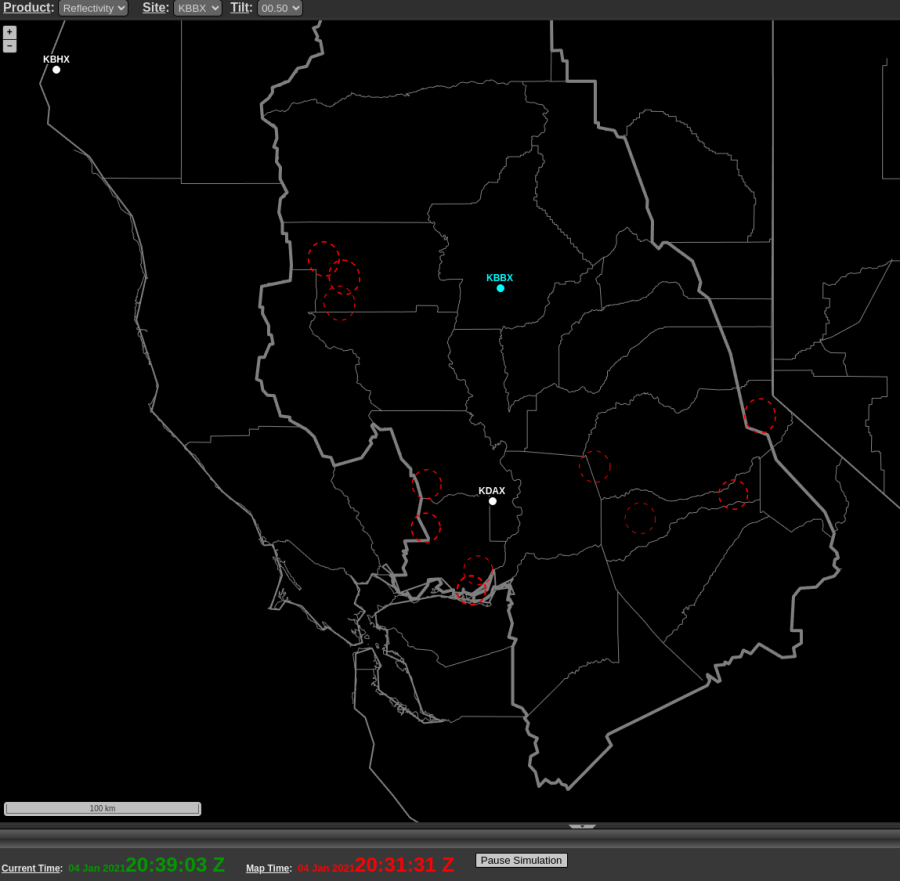
Comparison of TORP object markers in Central California.
First image is the PHI tool with “Display Aggressive Filtered” turned off.
Second image is the PHI tool with “Display Aggressive Filtered turned on.
Most of the object markers align with the edges of the mountains and it’s highly likely terrain blockage clutter is resulting in these erroneous markers.
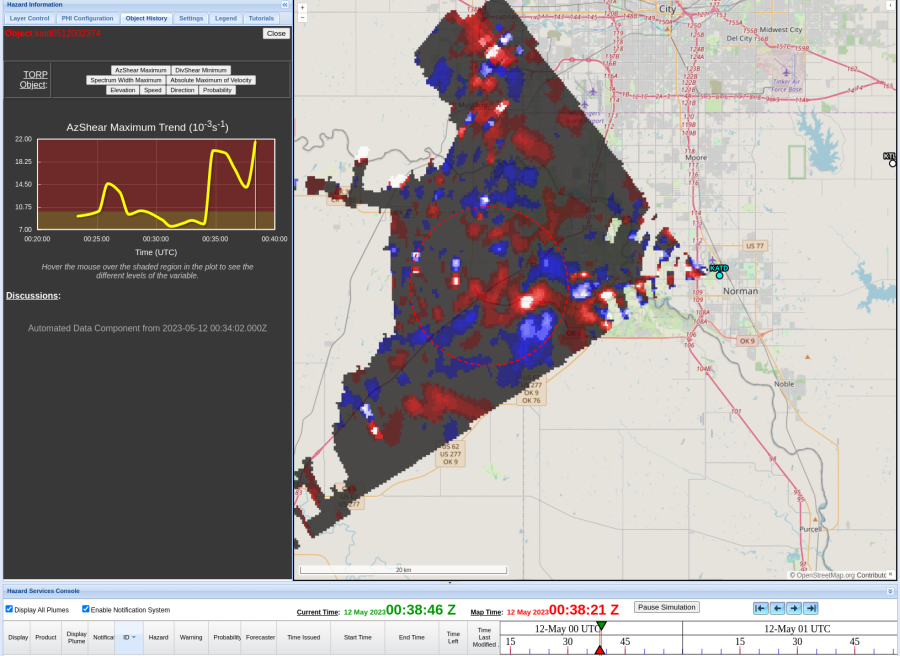
I grabbed these two DivShear/AzShear plots and trend graphs from the PAR to show how they aided my warning decision and result in 10 extra minutes of lead time. While the plots are from right around the time of the first tornado report, and a sharp increase is noted in each field, it was actually the earlier increase just before 0025z that nudge me to issue a warning. The velocity fields also showed increasing storm inflow (not pictured), so this combined with these AzShear/DivShear trends resulted in increased lead time on a tornado warning. 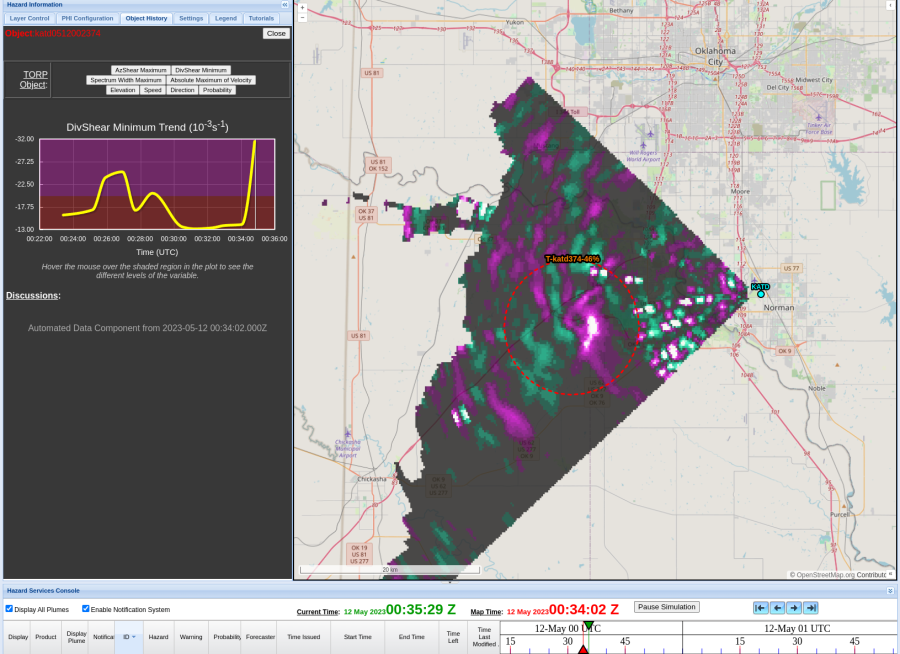
Here is a later example of a clearly tornadic DivShear signature in the PAR data: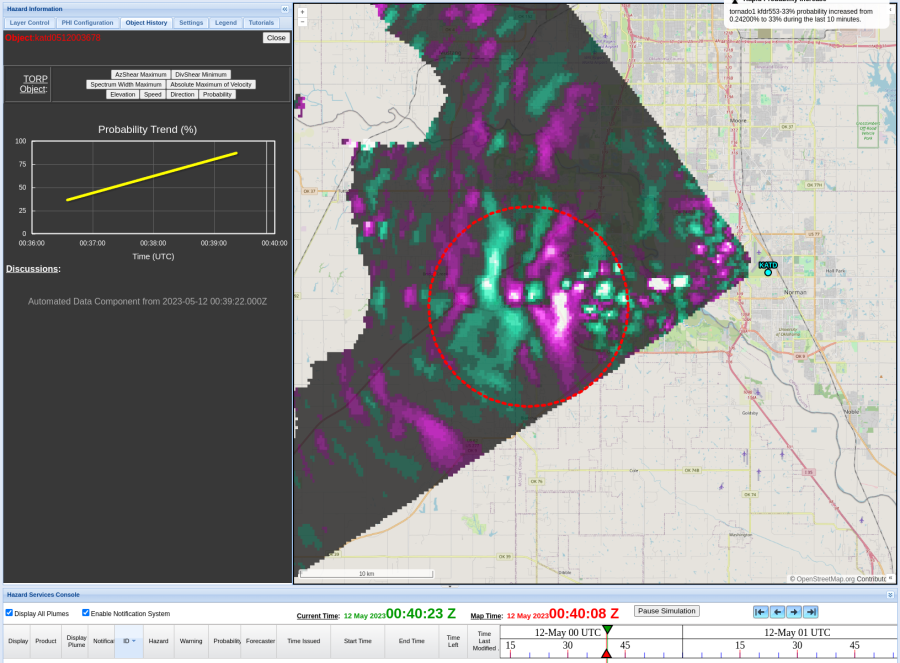
-Orange Lightning
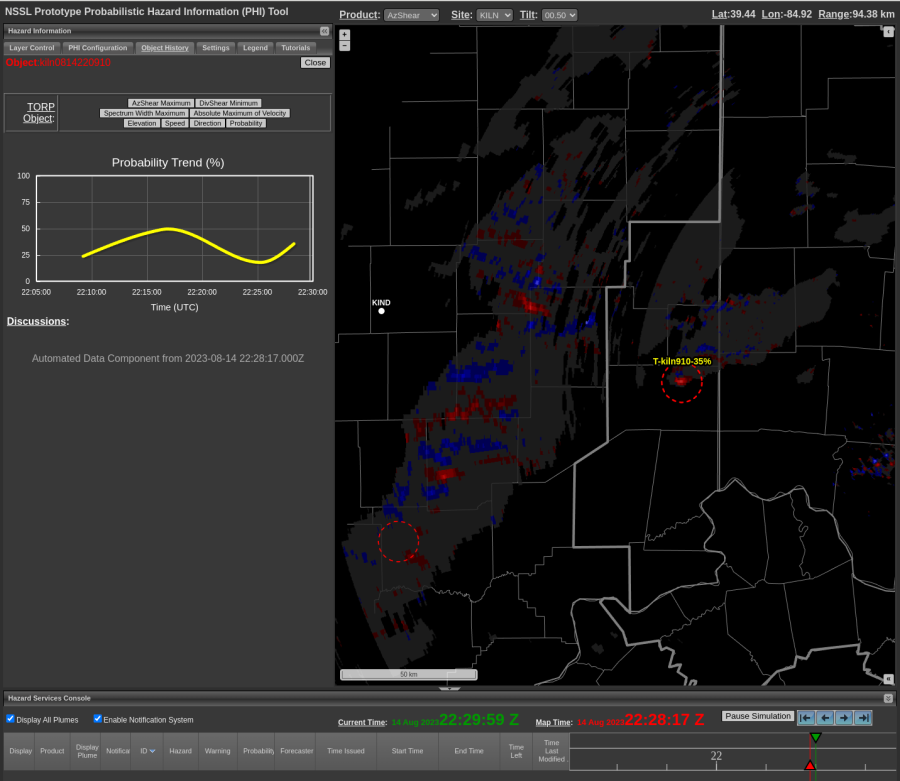
This example is from a shallow supercell case. The cell exhibited weak but grdually increasing Vrot, but Vrot was generally less than 30 knots. AzShear (pictured) and TORP were useful in capturing the uptick in rotational intensity. The decision to issue a tornado warning was made around or just prior to 2215z (but AWIPS hiccups prevented it from going out until closer to 2225z). The decision to warn was aided by a rotational signature in AvShear (the image below is from 2228z, not the time that aided warning decision) and TORP increasing to between 40-50%. A tornado was reported around 2230z.
-Orange Lightning
Looking back through the data after receiving the tornado report at 2232, there was a peak in Torp probability of 50% around 2217 meaning if that threshold was used as a decision point of going with a warning, given other radar data supported a warning, it would have provided 15 min of lead time. VR Shear never got to 20kts and while there was a couplet the values were not that impressive and no strong gate to gate signature. Also of note the DivShear continued to show a stronger signal with higher values than AzShear in this weaker storm case. I think this case also shows the importance of mesoanalysis and knowing that there was a boundary (warm front) this storm was attached to.
Flash
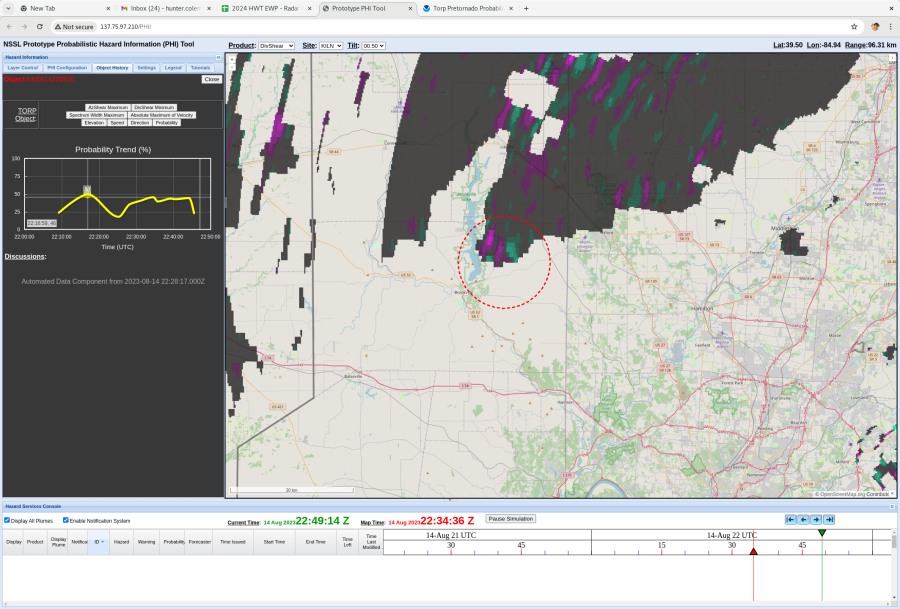
A new plugin was made available to us for this afternoon case that adds pretornado probabilities from 5-30 min at 5 min intervals as seen in the sampling on this image. This is interesting information that I am curious to see how it does through this event. This would be great to have available to warning forecasters if it shows skill.
Flash
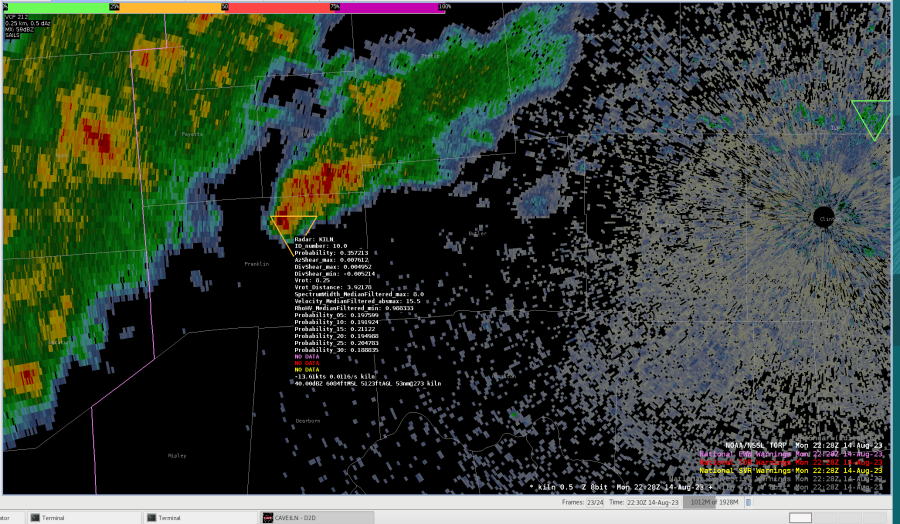
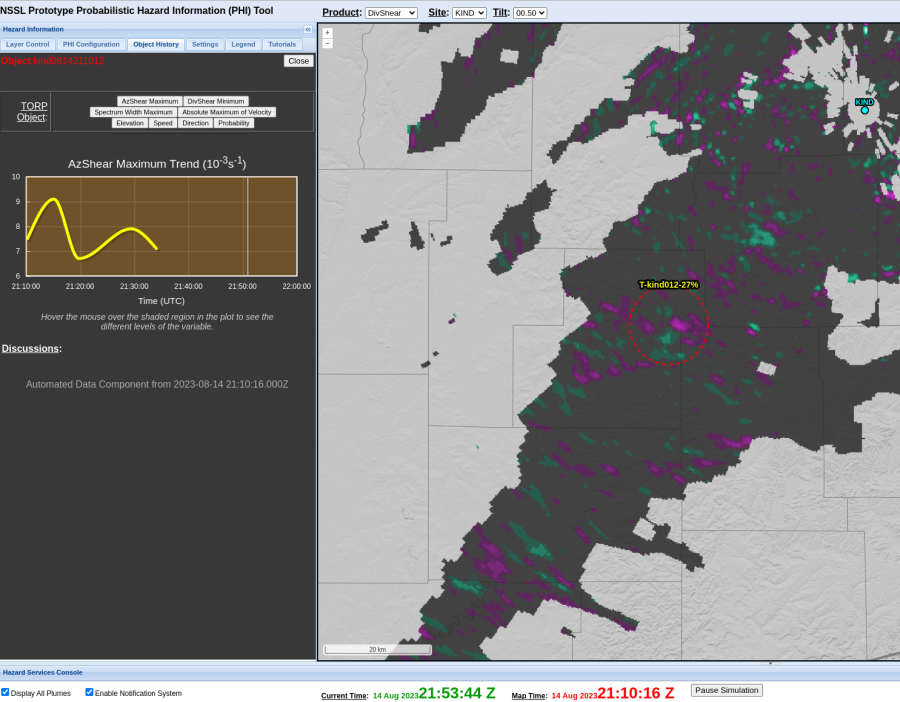
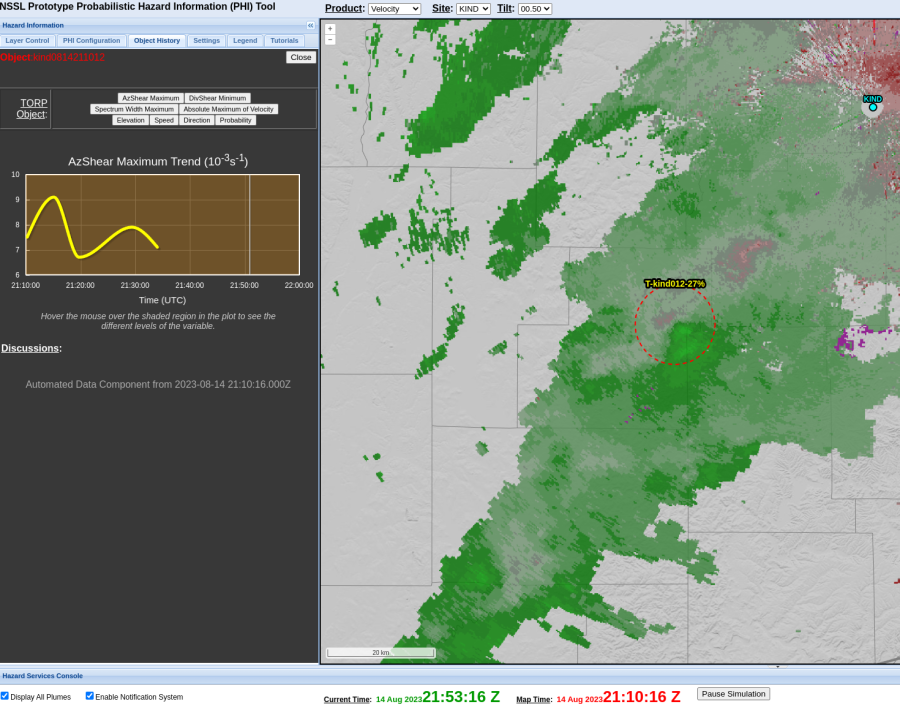
A storm that has been meager to this point along what we believe to be the warm front is picking up strength and signals in the DivShear and to a lesser degree the AzShear caught my eye around 2210 UTC. There is a developing weak velocity signature as well but this might be the first time I have seen the DivShear pick up on a signature more aggressively than AzShear.
Flash
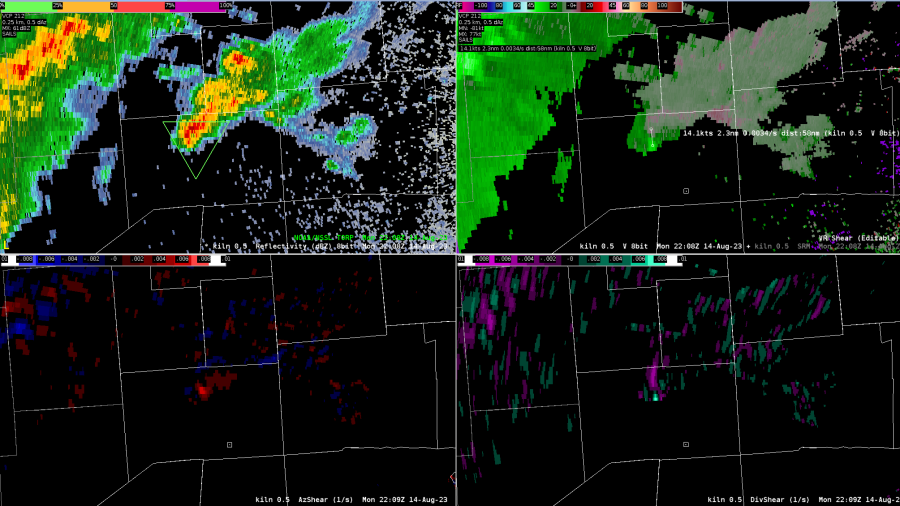
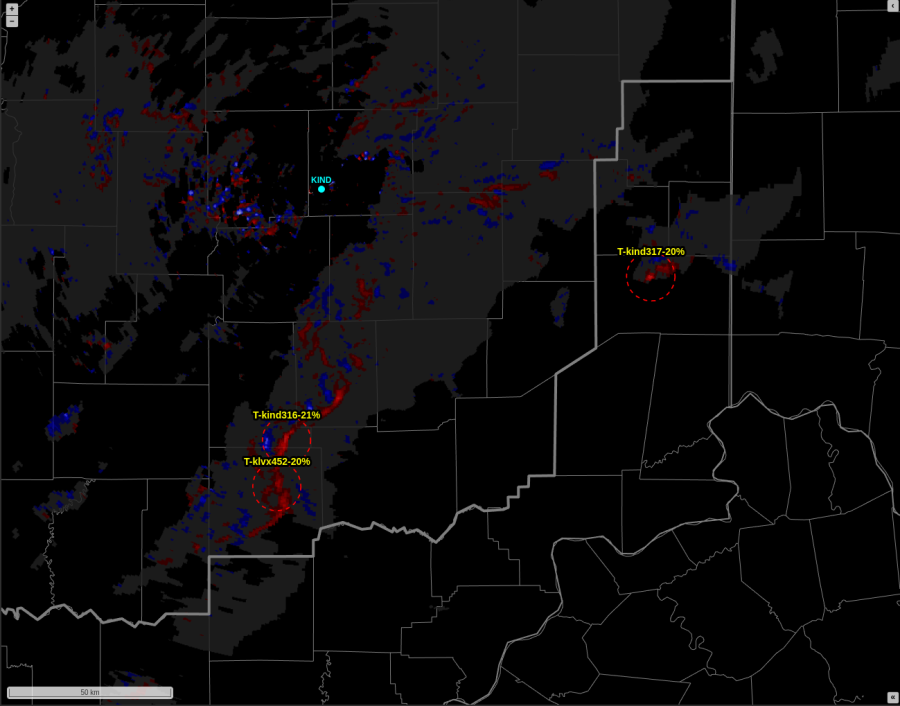
Several weak and broad circulations can be noted on BV/SRM products with this broken line of thunderstorms along an eastward moving cold front. Both the AzShear and TORP products are catching on to these features, but remain largely unimpressed at the moment. The ~20% TORP probabilities match fairly well with my thinking.
Kilometers
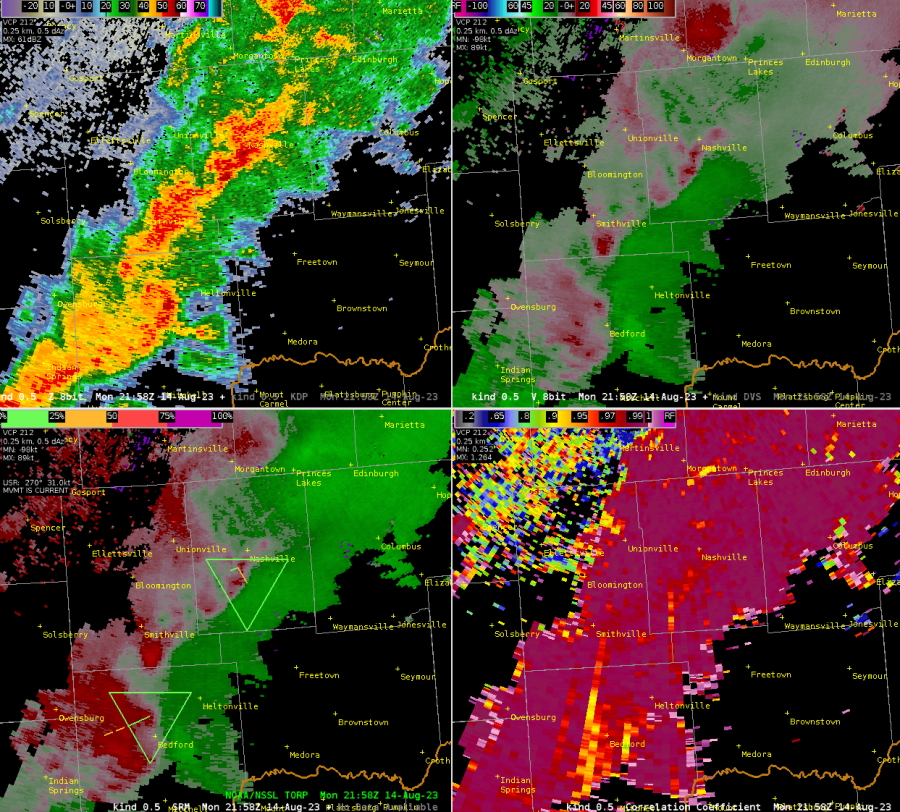
The generally unorganized convection at the beginning of the test case period is becoming more organized with increased Reflectivity values and increased MRMS VII indicated better updraft development as the upper energy from the approaching trough moves into the region. My eyes were drawn to this area from increased values of AzShear and DivShear. Torp values are identifying objects but not meeting my filter criteria of 30% probability.
Flash
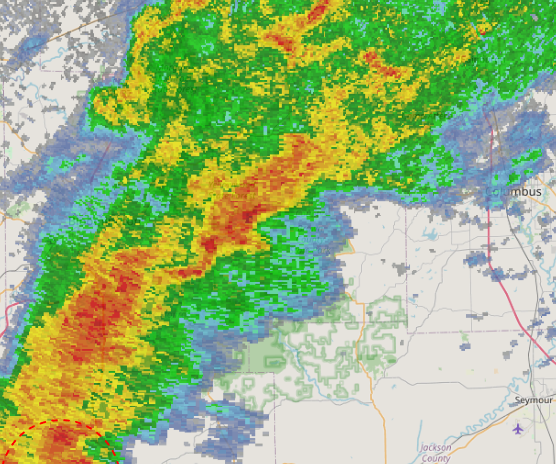
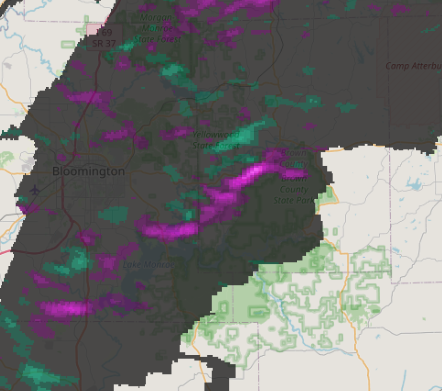
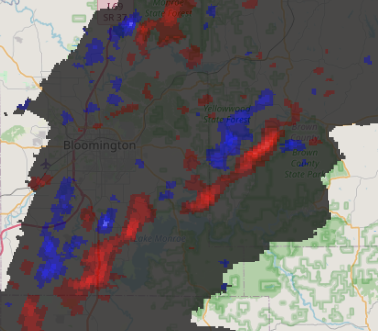
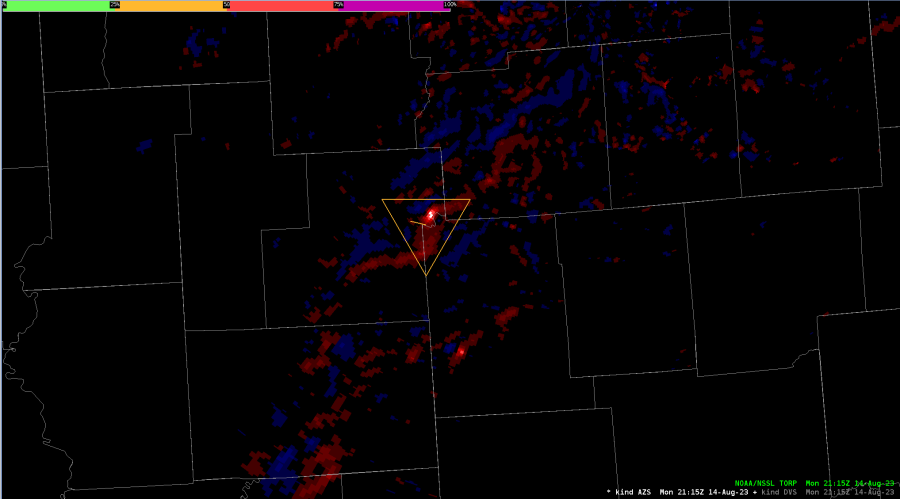
At the very beginning of the scenario, Torp and AzShear were indicating a significant area of concern in the SW portion of IND’s CWA. Velocity data did not indicate a threat, but if I was warning operator I would have issued a warning for this particular cell/area.
-Oppenheimer