HWT Day 2 case blog: Start until 19:10

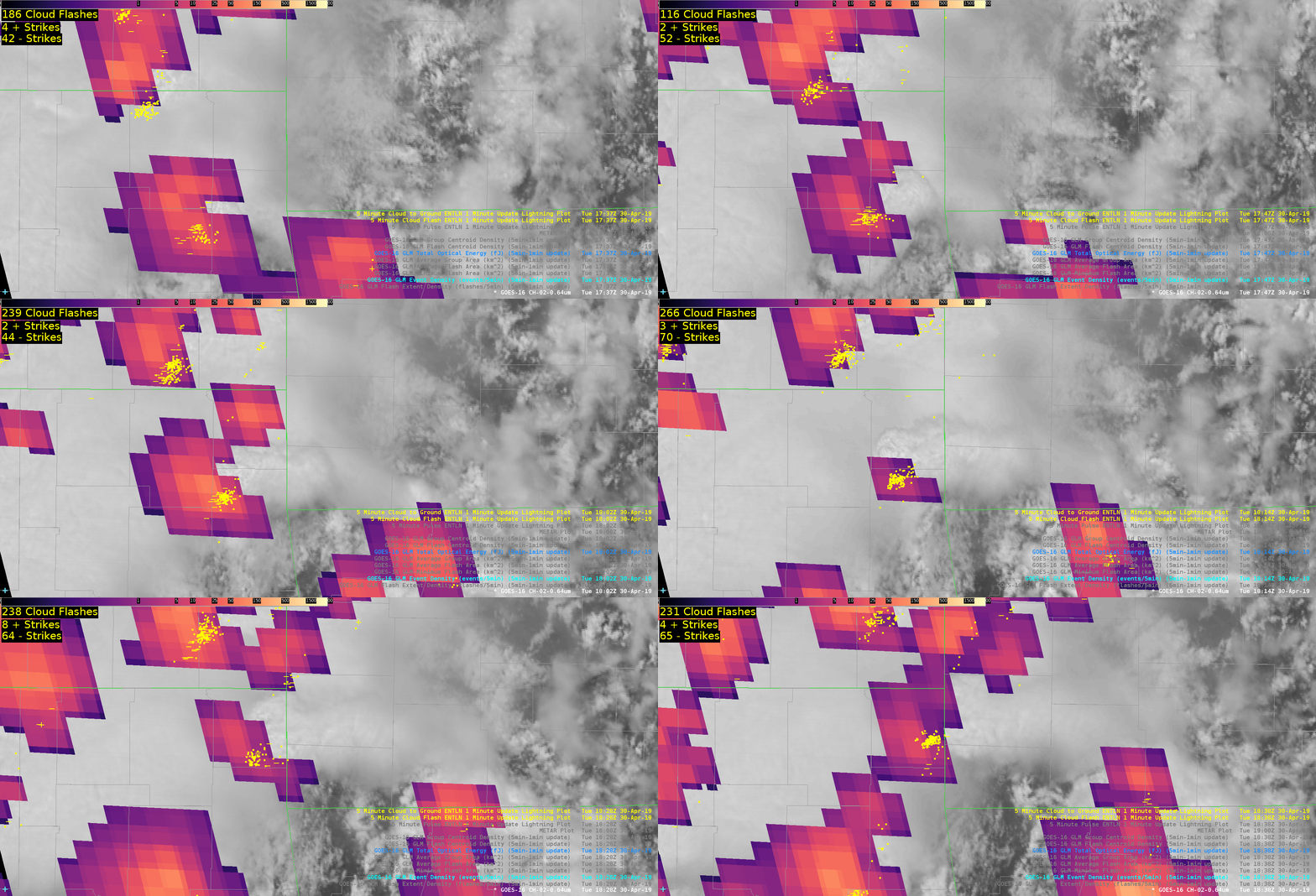
This rapidly developing supercell displayed a GLM lightning decrease as it intensified. This was a good example of optical attenuation due to an updraft core. ENTLN network is displayed, showing that there was a tremendous of CG and IC flashes despite low GLM values. Shown is the TOE product.
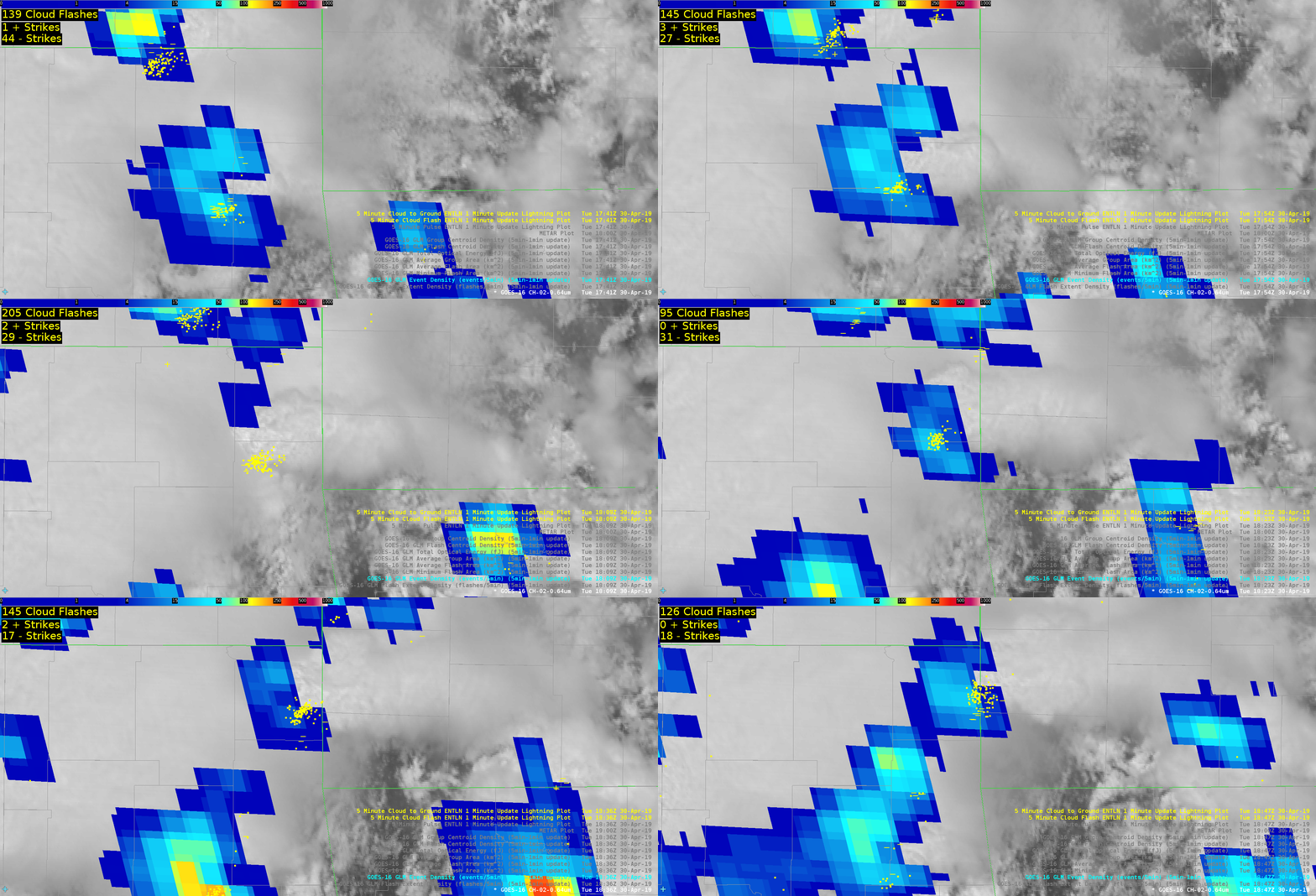
The same storm and lightning minimum shown in Event Density.
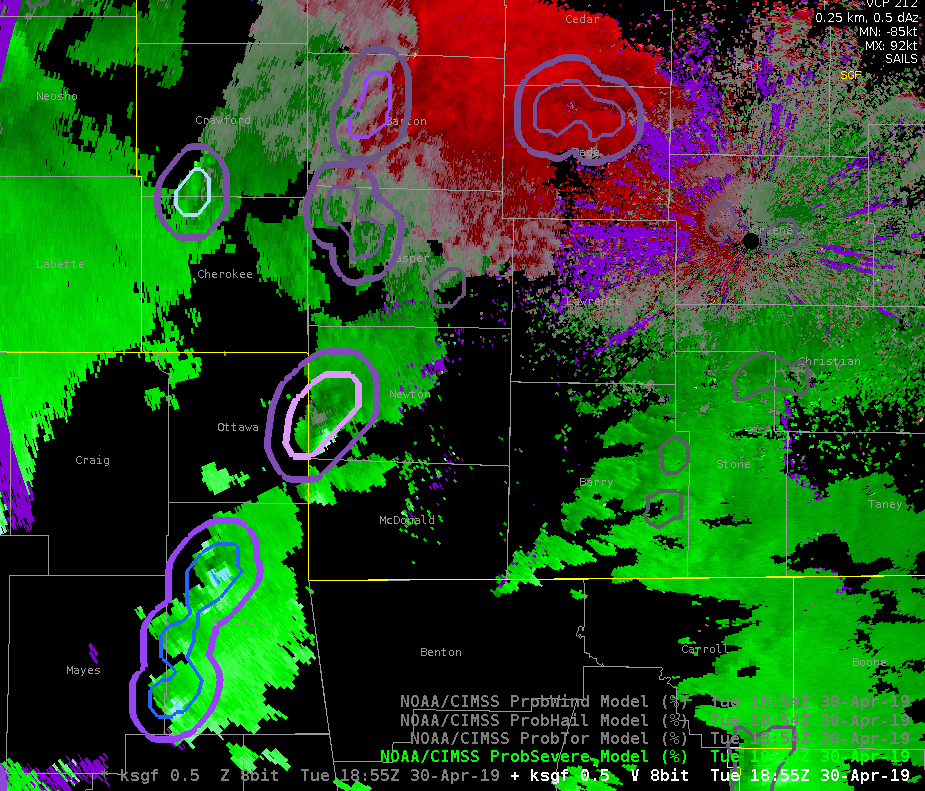
 

ProbTor was occasionally too aggressive. Only one of these storms was really concerning at this time given the environment and radar tilts further up in the volume. On a day like this, it would likely be prudent to increase the probtor threshold above 3%
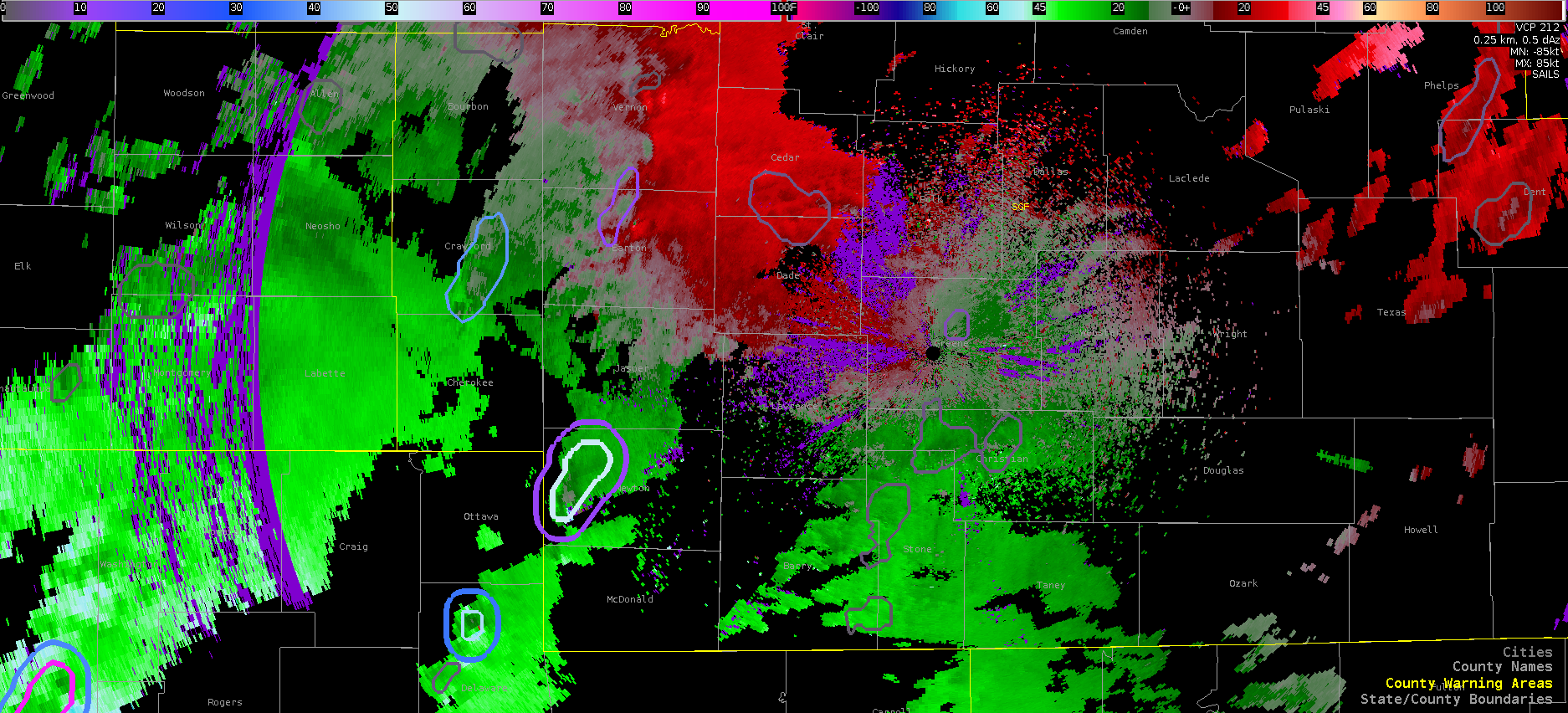
Prob Tor contours showing  a new probtor threshold of 10% instead of 3%. This was edited on the fly in the localization file of the procedure itself. This view shows a less cluttered display given the amount of rotating storms this day.
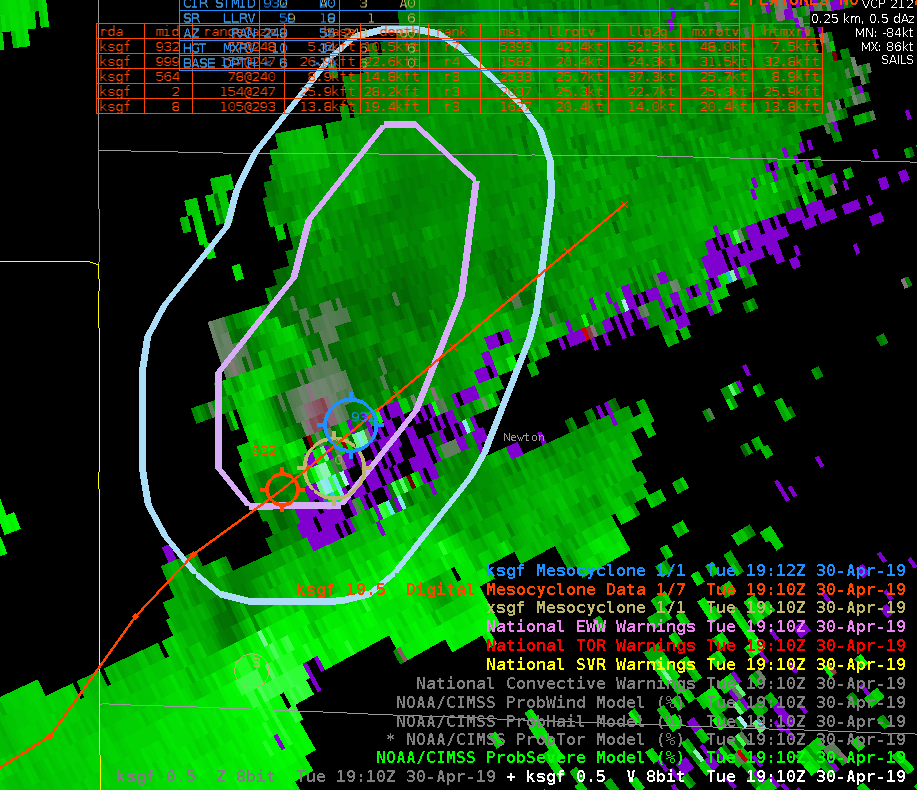
 

Comparison of MDA products over a weak low topped supercell, as well as showing the probsevere contours. ProbTor was at 47% at the time, prompting the issuance of a Tor Warning.
 

THE 3 MARCH 2019 CASE FOR AZSHEAR – #6

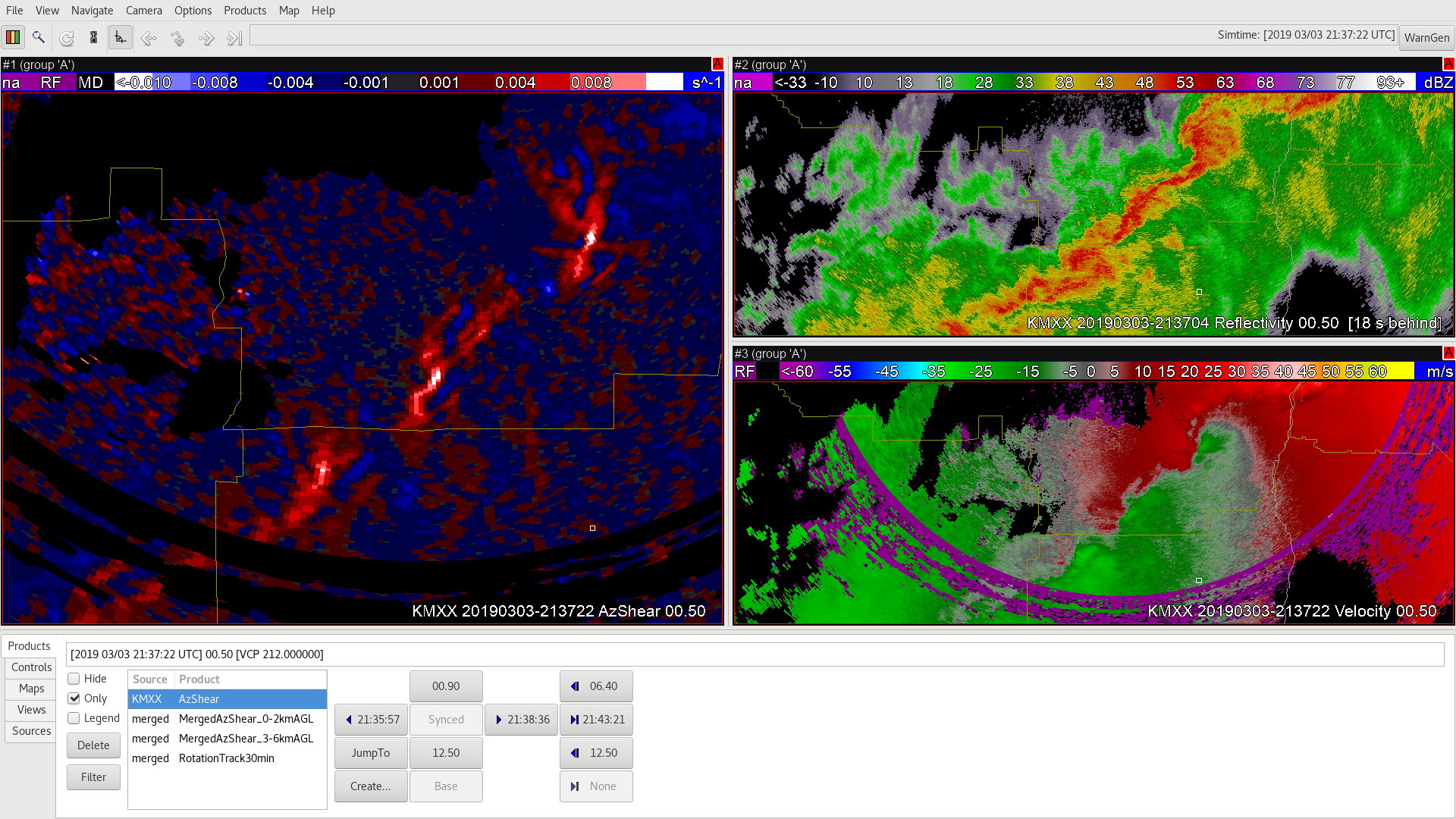
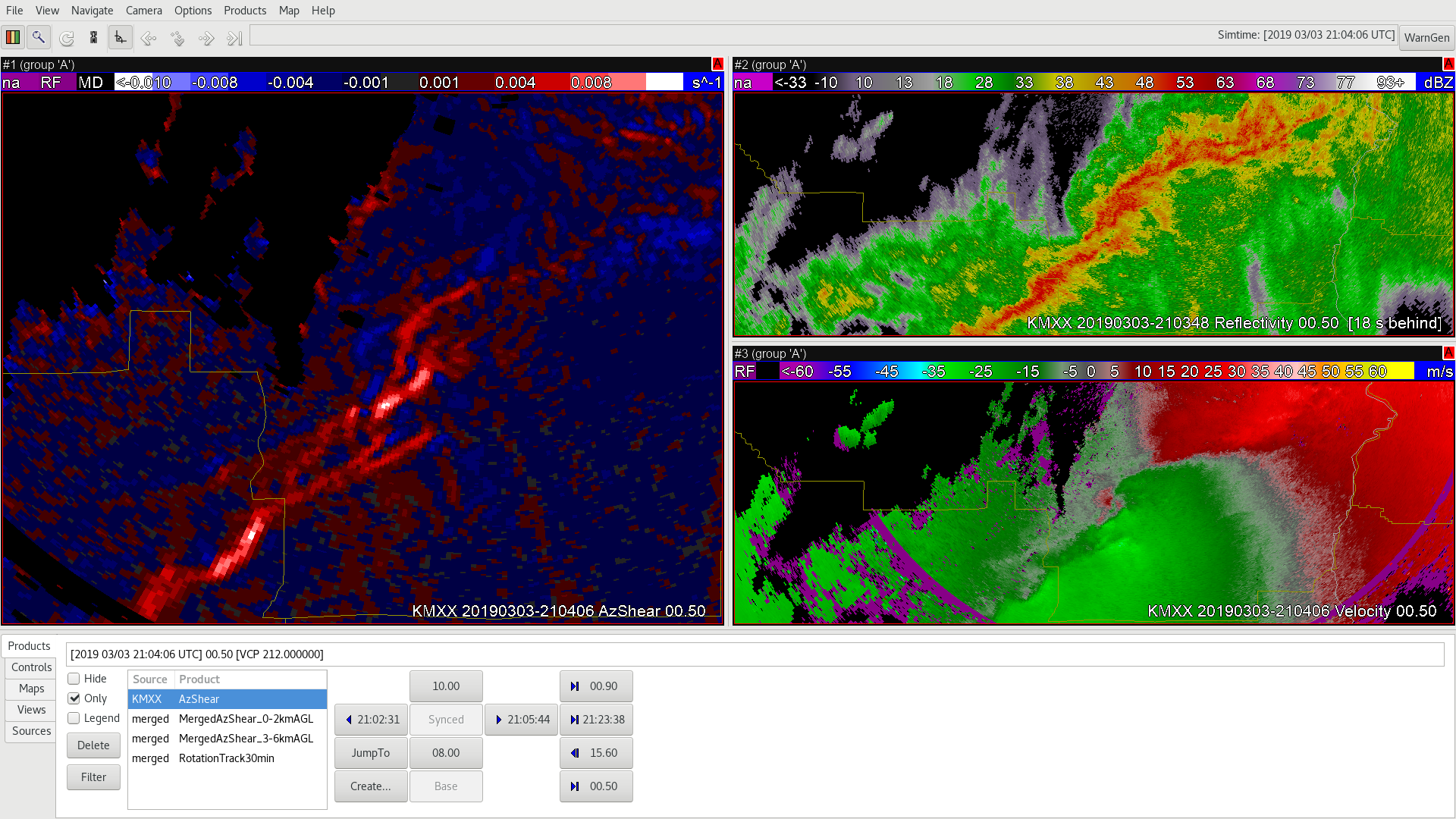
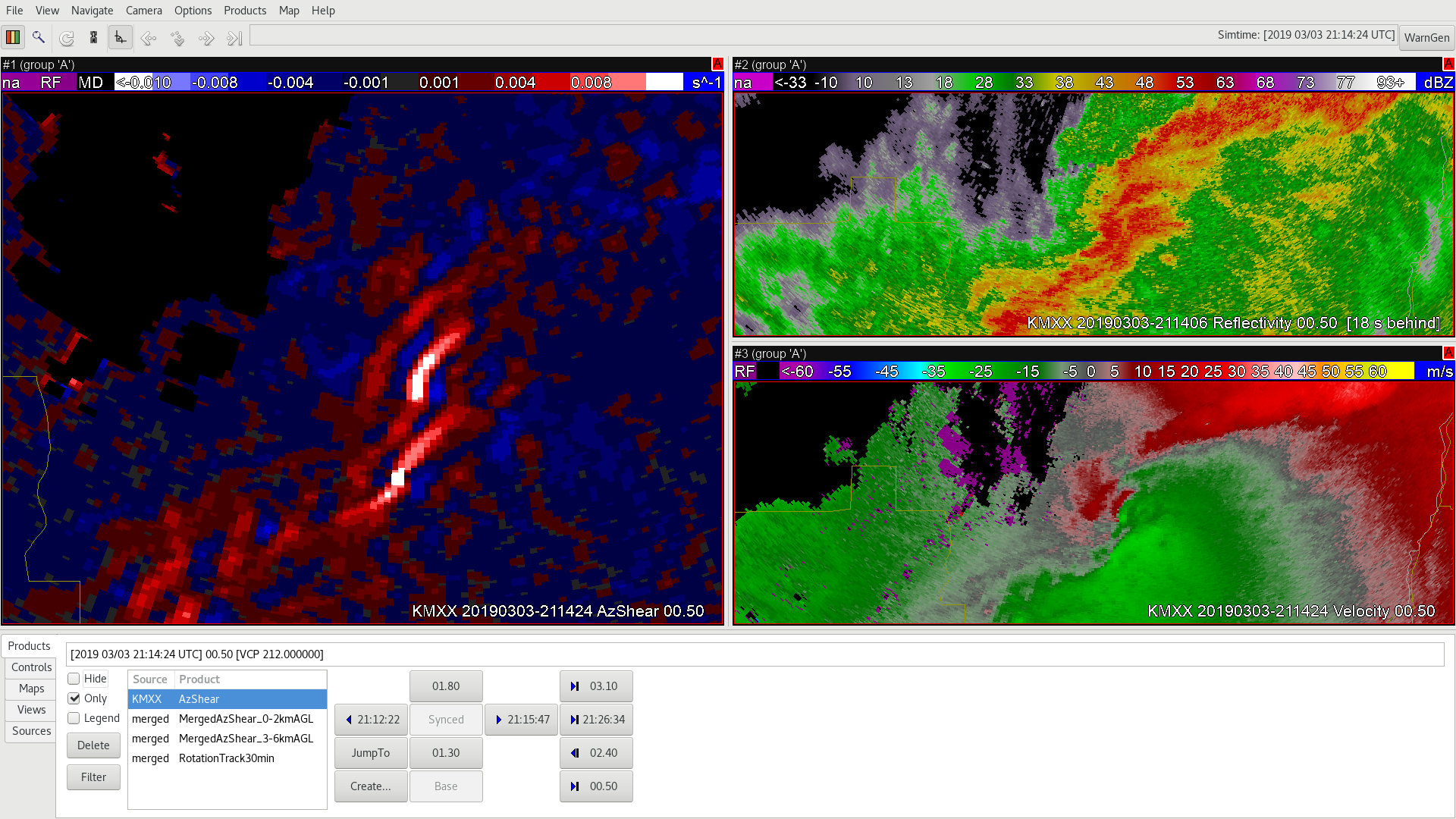
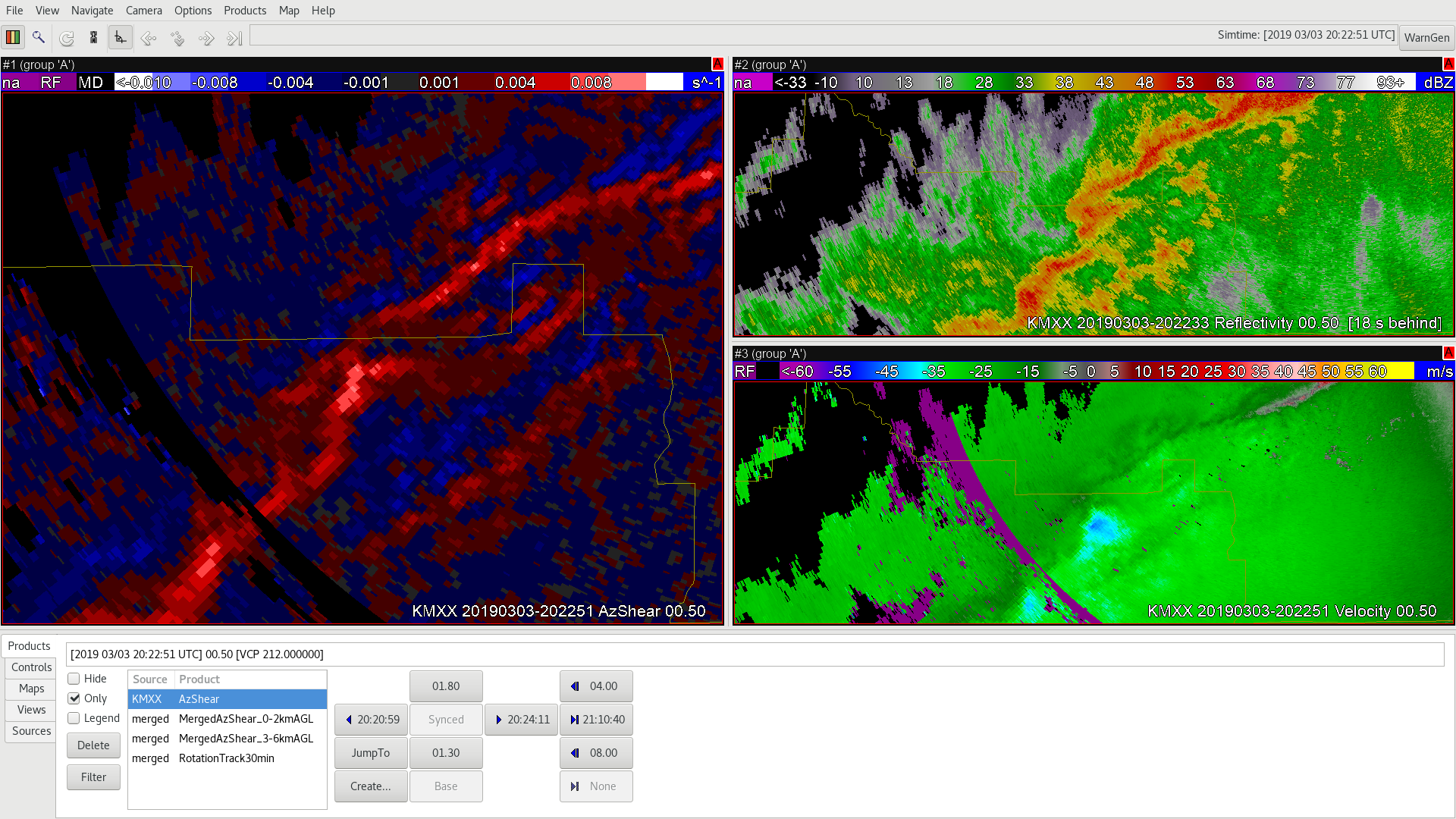
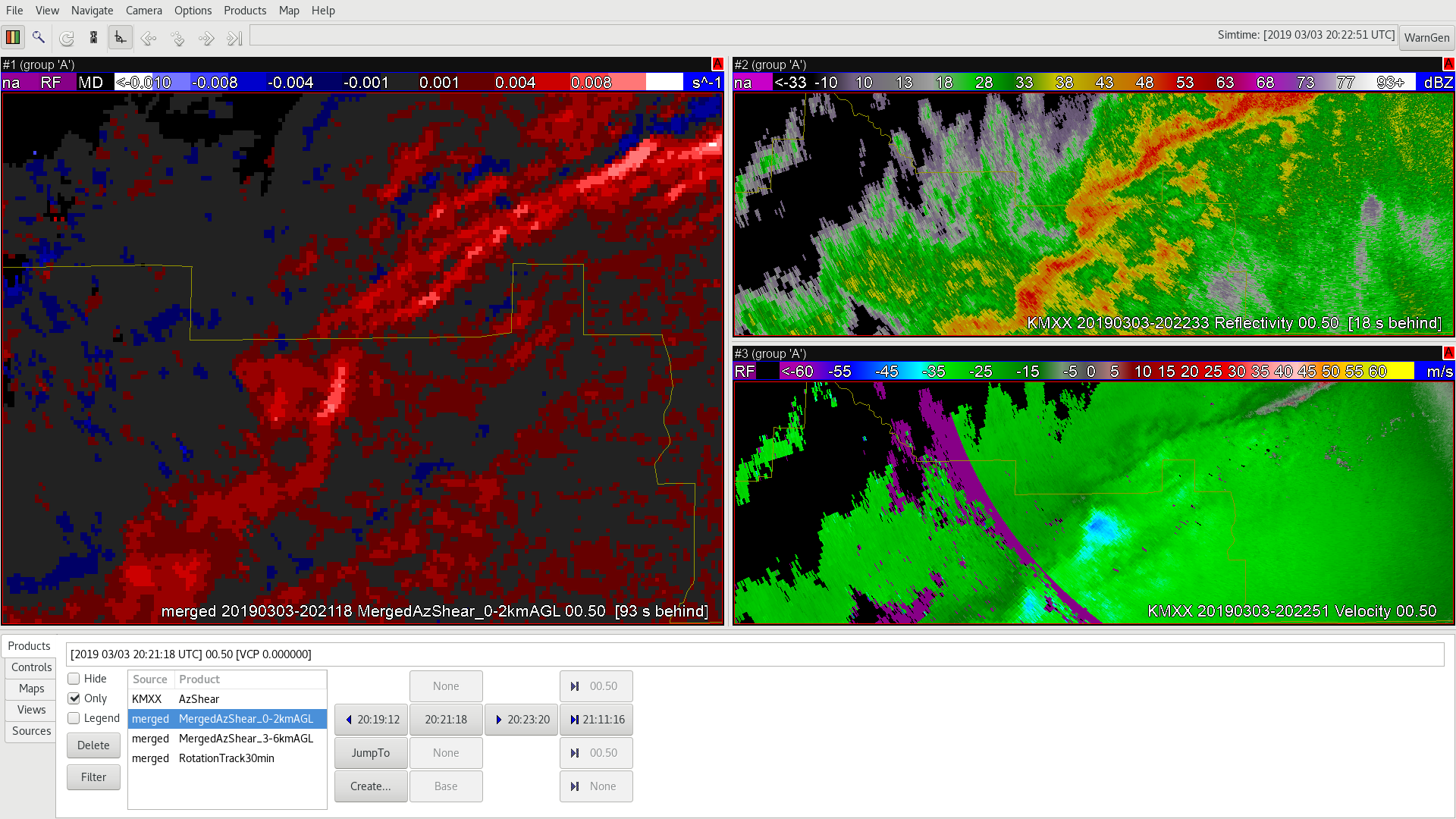
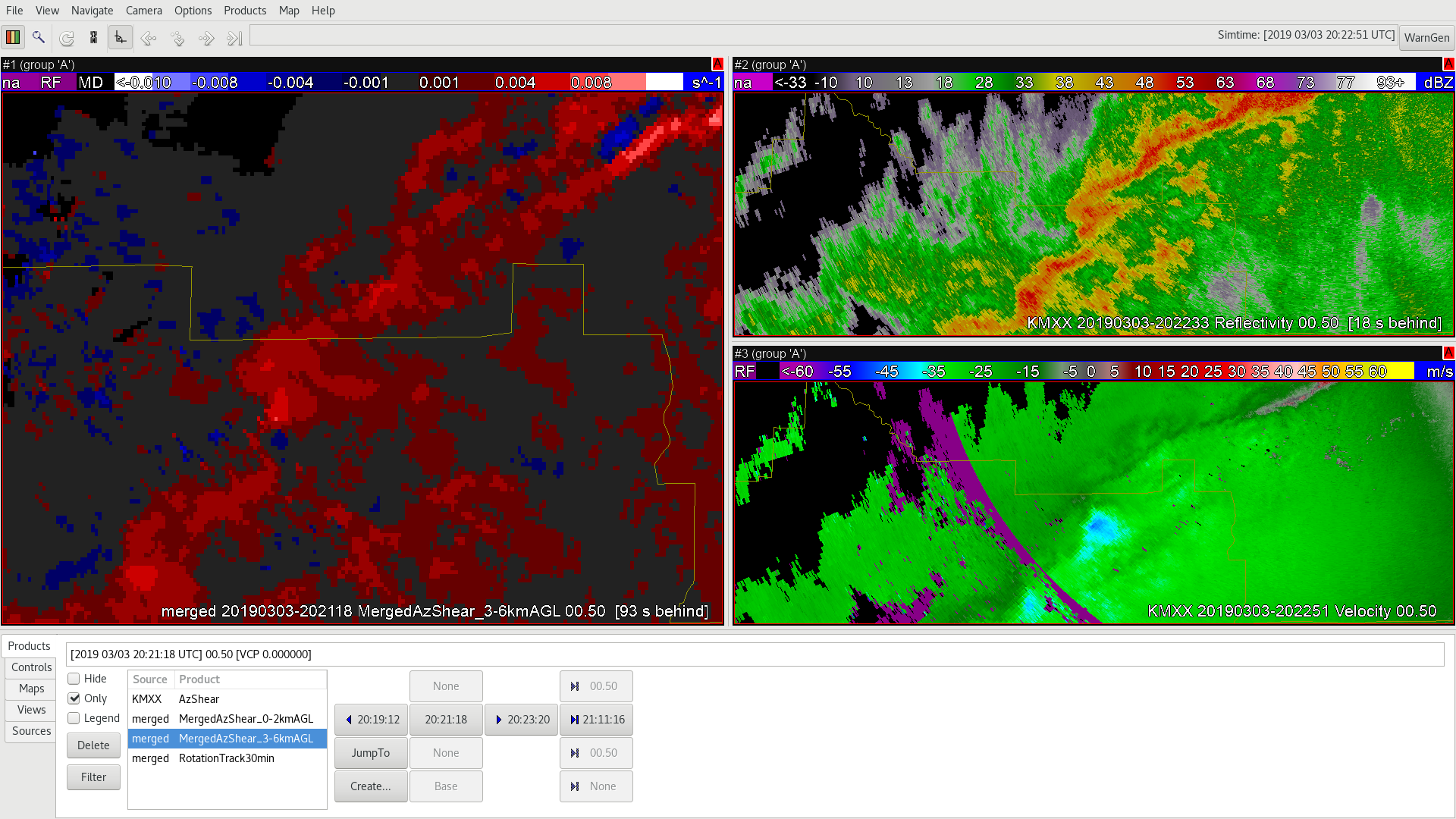
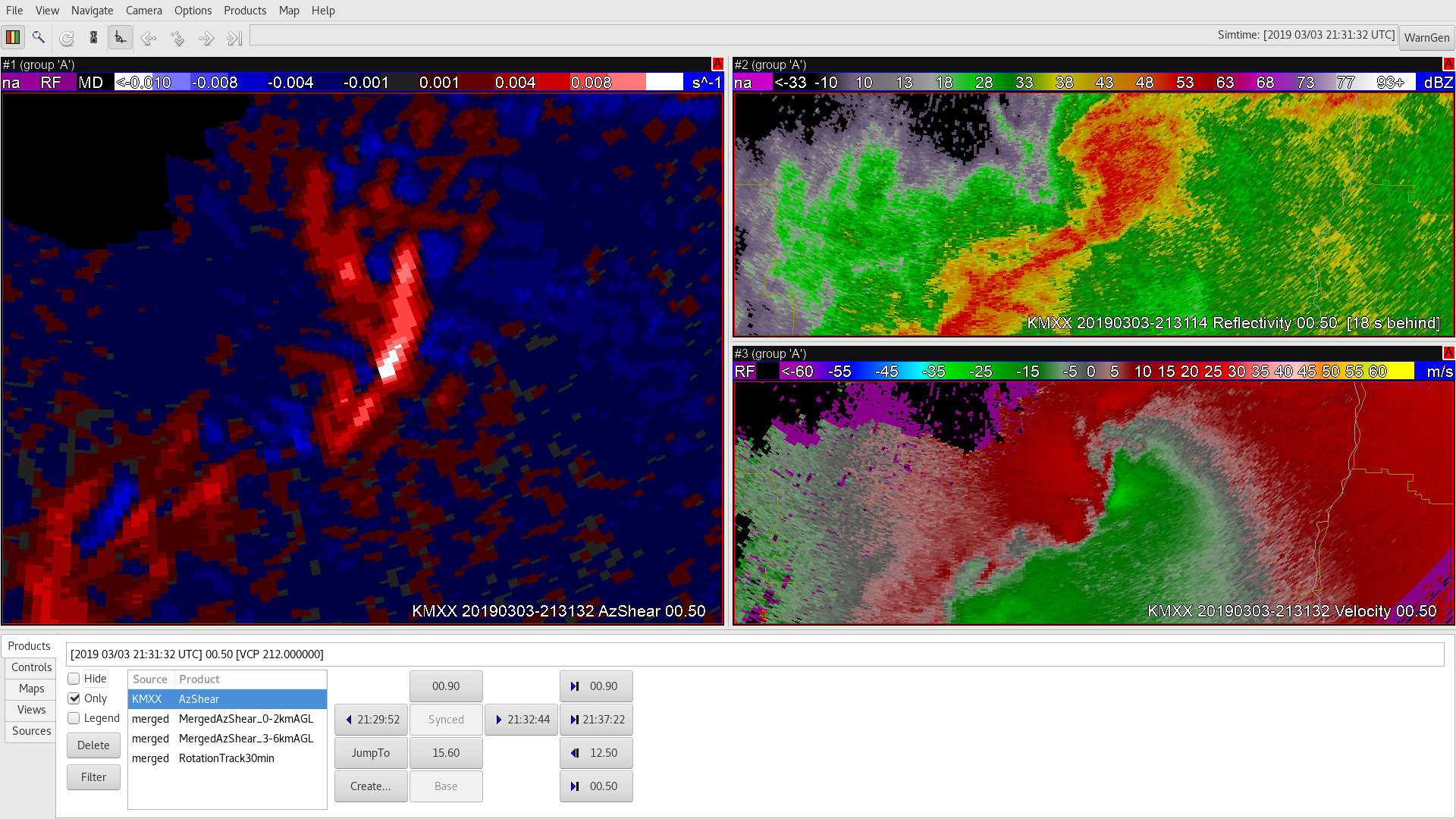
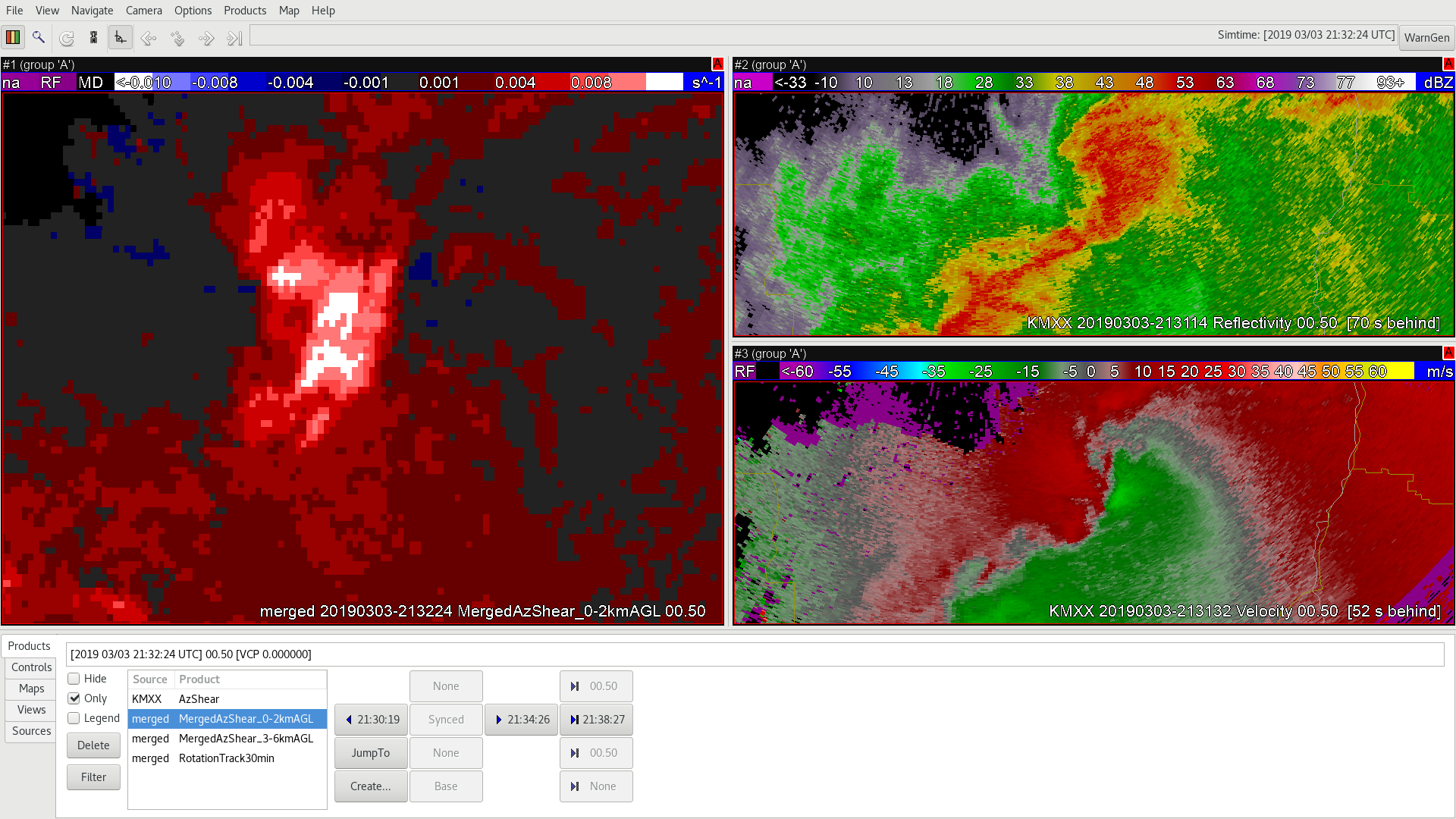
Here’s another example of where the single radar AzShear product may have provided me with some lead time/added confidence in my warning decision making process, with the 0-2km merged product confirming the vertical depth of this circulation (first two images, below).

Further to the south along the line, the kinks within the line are that much more evident/prominent with the single radar AzShear when used in conjunction with other more traditional radar products (last image, below).

~Gritty

THE 3 MARCH 2019 CASE FOR AZSHEAR – #5

Now here is an example of where the single radar AzShear product would have provided me with some lead time with respect to grabbing my attention sooner in further interrogating a tightening circulation embedded within the heart of the QLCS. As for the merged products, I was unable to gain any insight with those products for what appears to be this relatively shallow circulation.

~Gritty

THE 3 MARCH 2019 CASE FOR AZSHEAR – #3

For this embedded tornado, it wasn’t as obvious the circulation that was developing as compared to the supercell from the previous post. It starts out as a kink in the line, which definitely was something that grabbed my attention nonetheless. From there, you can clearly see the evolution of the circulation as it tightens. Would it provide me with additional lead time in a warning? It’s possible by maybe a scan or two, but would like to see more cases using this product first before making that determination.

~Gritty

Merged 3-6 AzShear picking up on mesocyclones early

A

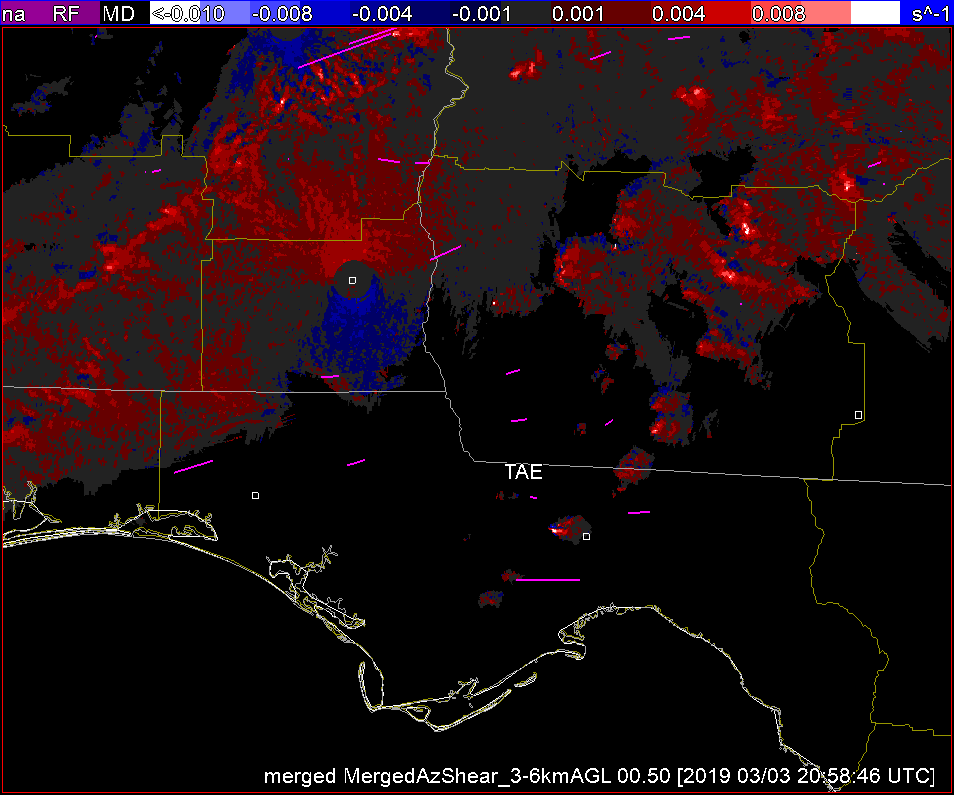
In watching for convection knowing that later in the simulation there will be tornadoes produced in the FL Panhandle, I took a peak at each product prior to convection. Single radar AzShear is a little far away and doesn’t pick up on it but the merged products give an early indication that a supercell is developing and beginning to rotate. Knowing this storm will produce a tornado this is very helpful as a heads up.


— lakeeffect

THE 3 MARCH 2019 CASE FOR AZSHEAR – #2

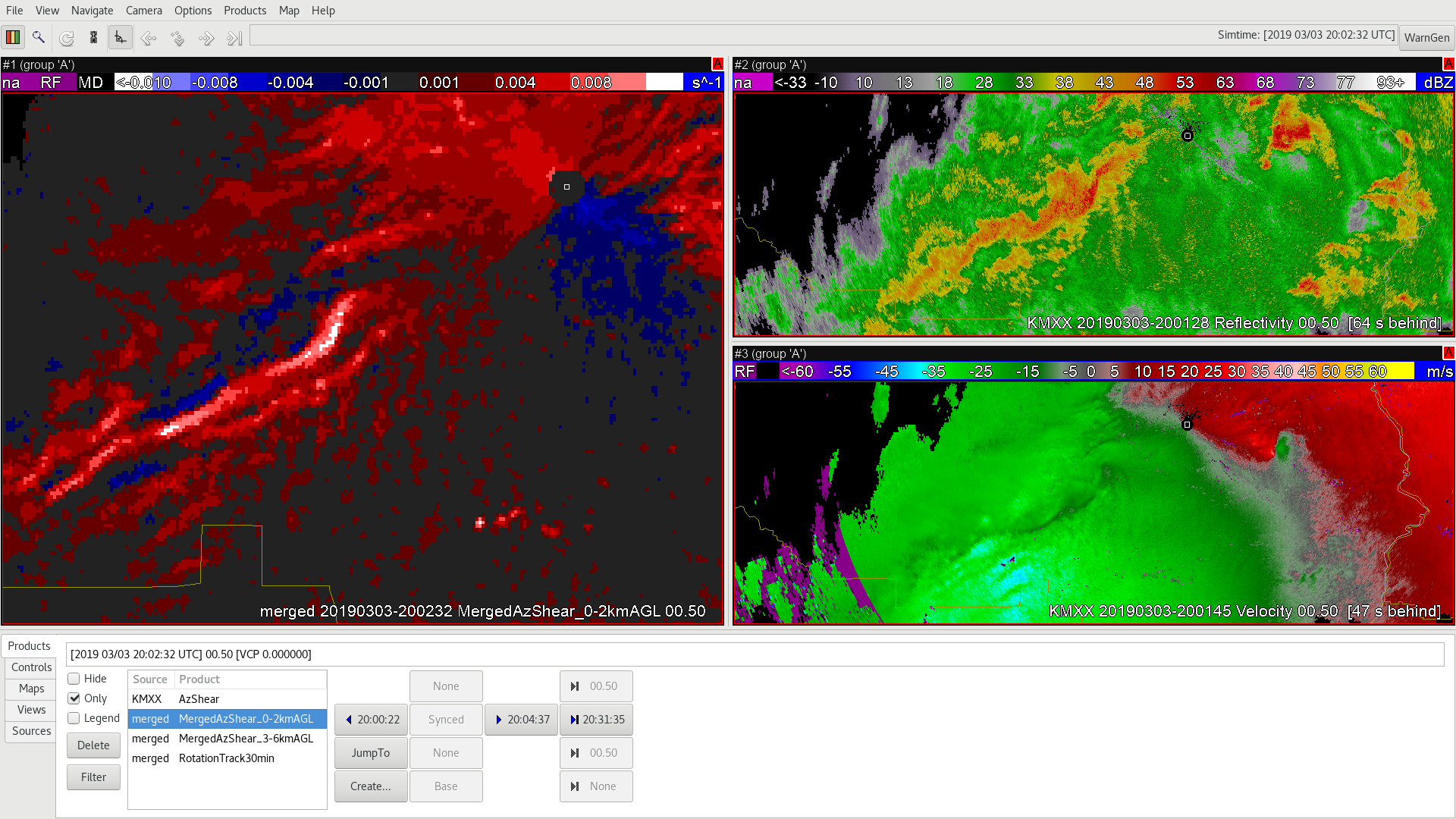
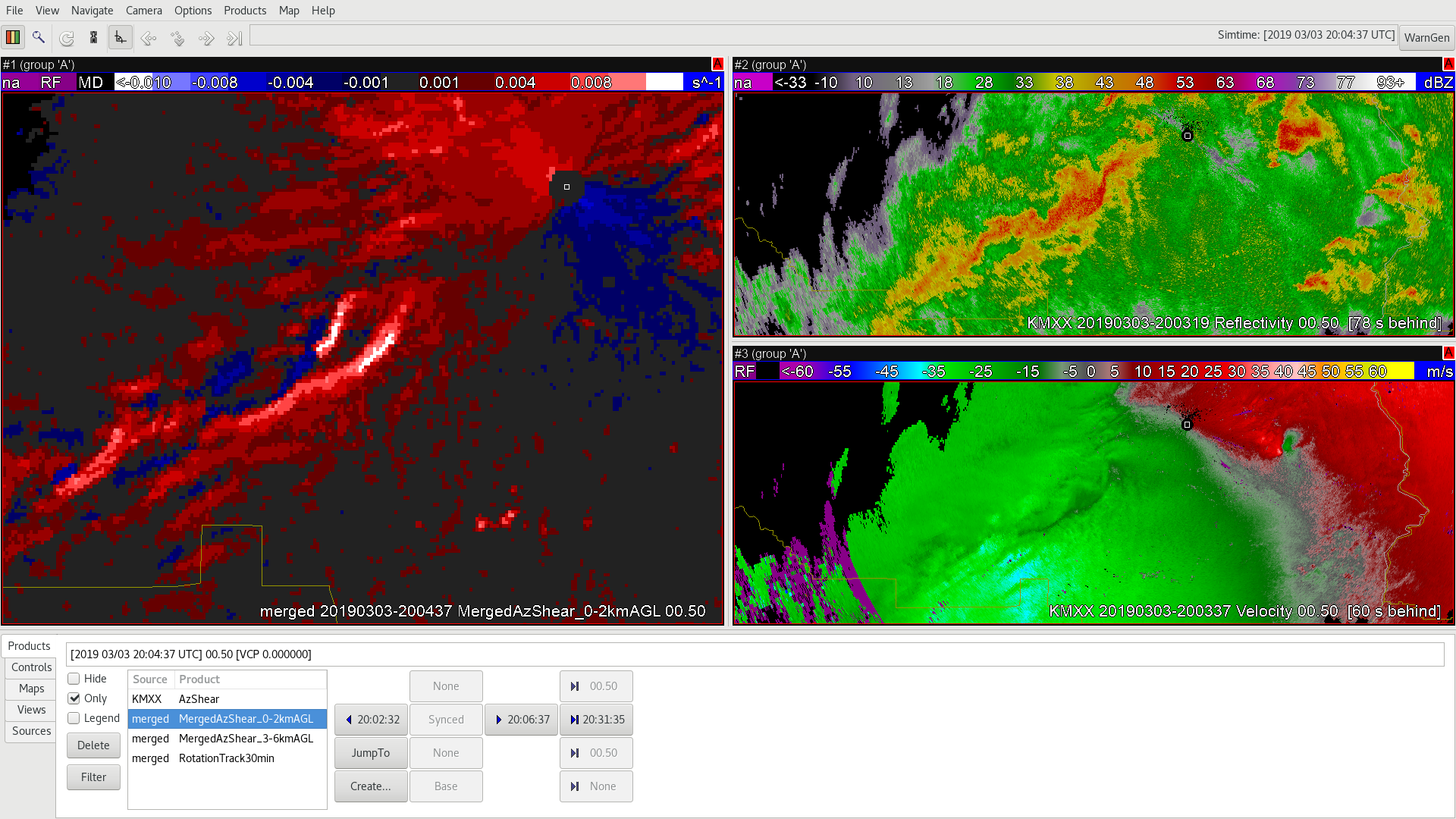
Looking at the 0-2km merged AzShear product, my attention was drawn to the line stretching to the SW of the KMXX radar. While I see utility in using this product more for SA, the SAILS artifact of not having the images lined up properly could lead to false interrogations of what’s actually occurring. In this first image (below), the wind field is apparent. In the second image, it looks like the wind field has separated. In the last image, it’s very clear that a slice being merged into the product shows the wind field significantly separated.

~Gritty

The 3 March 2019 Case for AzShear

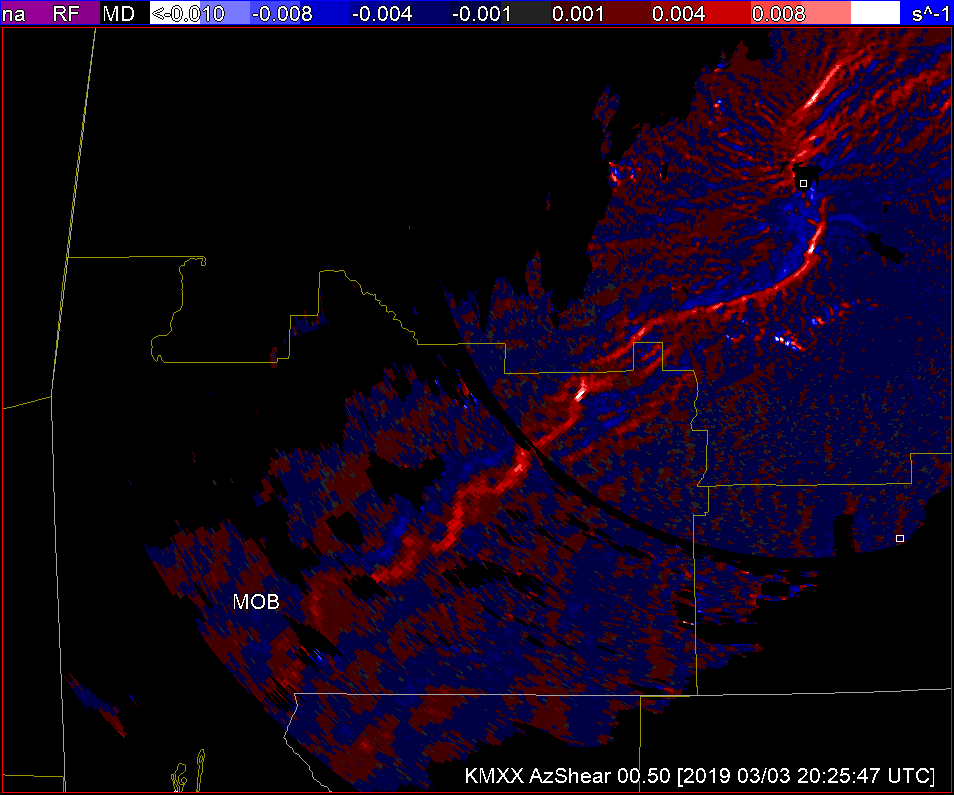
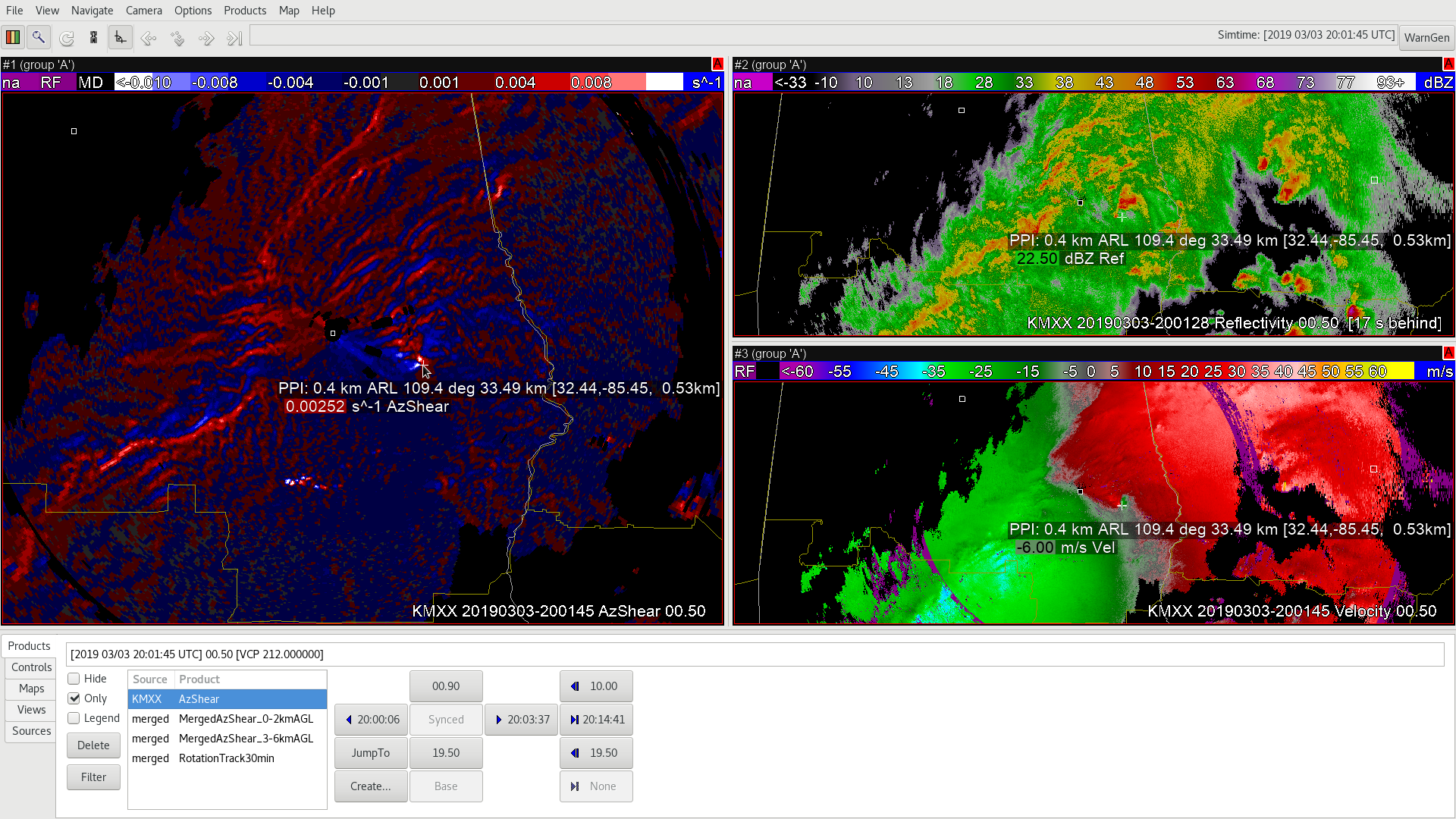
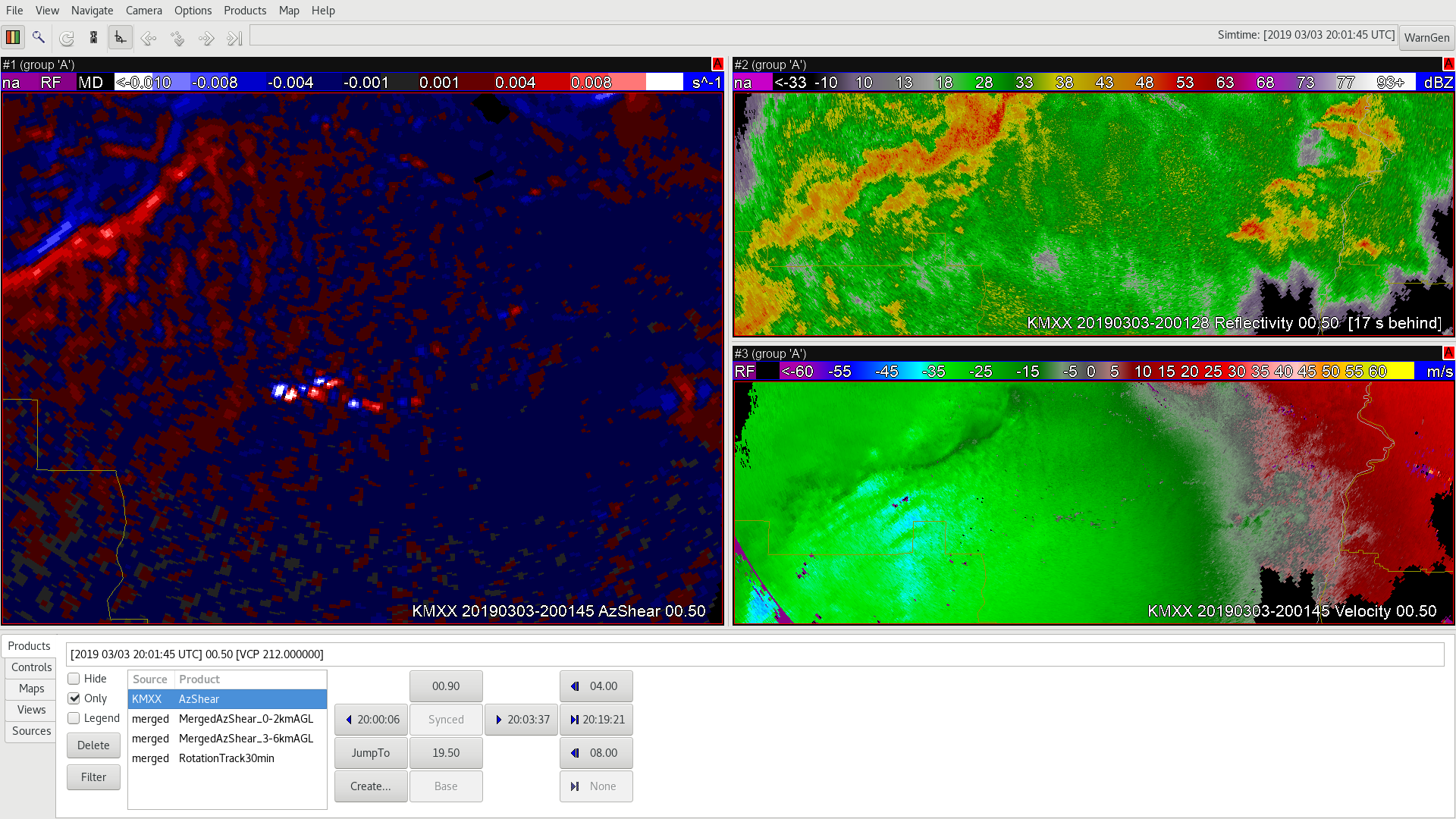
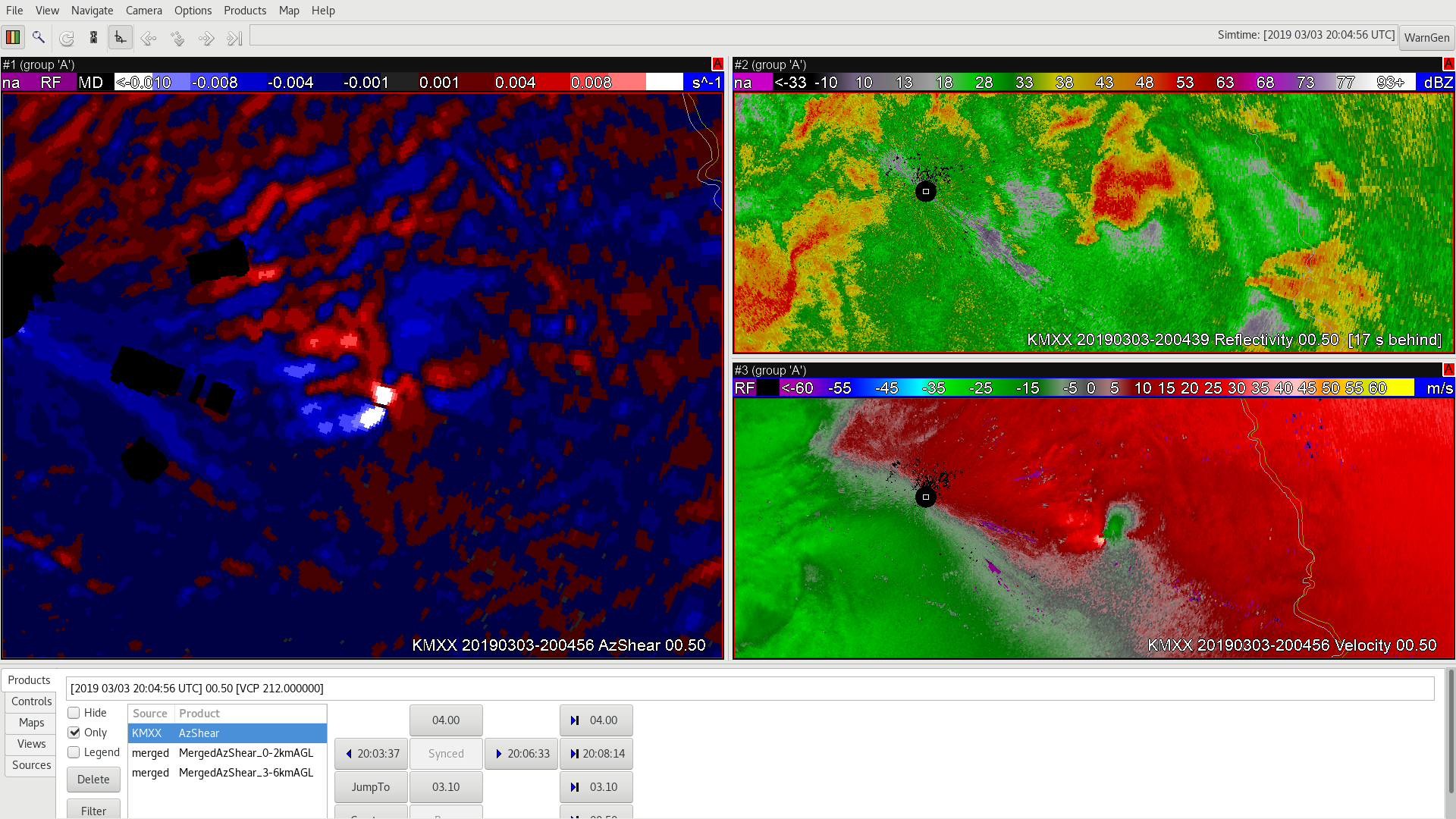
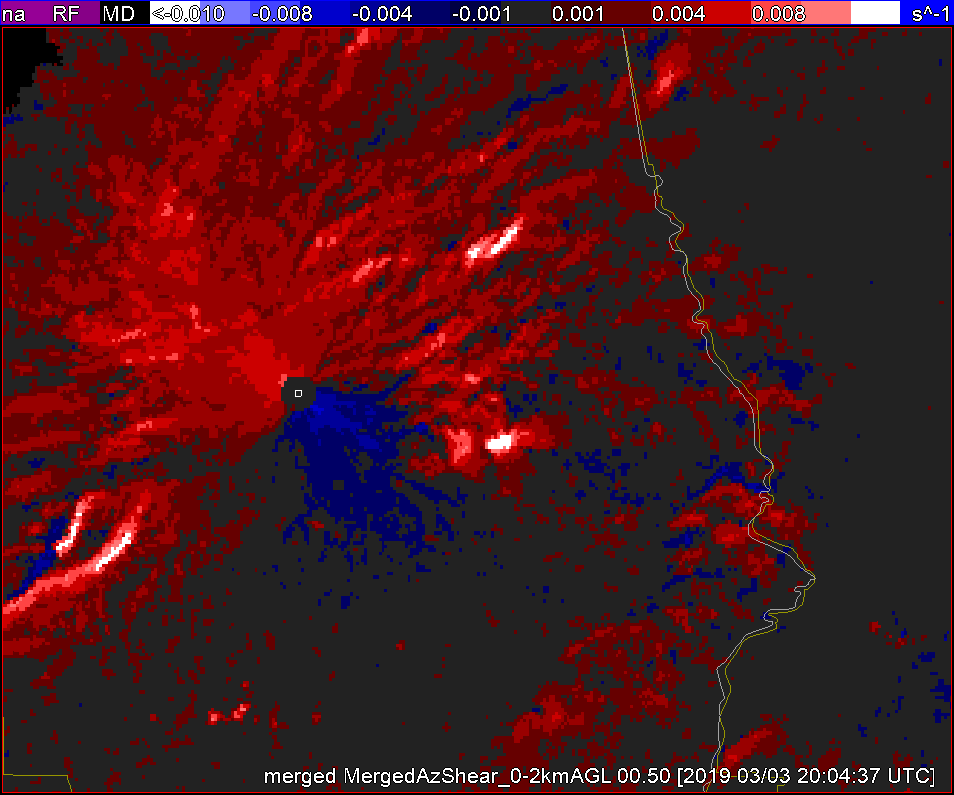
The single radar AzShear product made a rapidly developing tornado very apparent, forcing my attention to be pulled to it (first image, below). Additionally, it was very interesting to see the RFD so clearly (second image, below). However, as noted previously, I do have some reservations about the number of false alarms that it may be picking up, as seen in the last image (below). But, there is a lot of promise for this product to serve as an enhanced SA tool and/or increase confidence in the warning decision-making process.

~Gritty

Single Radar AzShear 3/03 Case

A

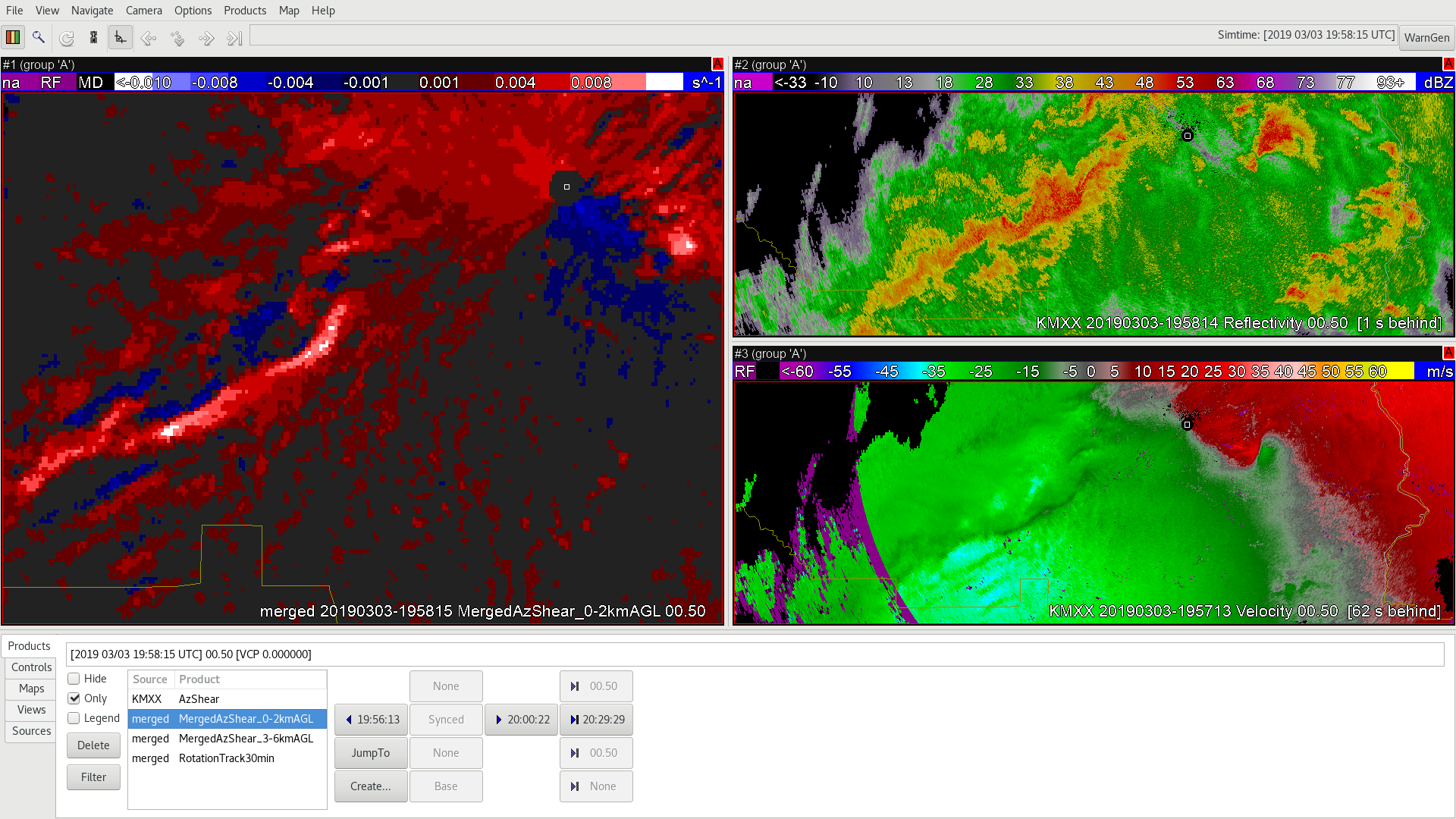
Seconds into this simulation it’s apparent that an embedded supercell is about to wreak havoc. It’s incredible how well you can examine the anatomy of the thunderstorm using the Single Radar AzShear product. It’s still apparent in the merged products that there’s an area of concern, but you can’t quiet examine the anatomy of the thunderstorm like you can in single radar.

B

In B, the merged 0-2km  it’s clear where we should be paying attention, but trying to diagnose the structure of or the maturity of the thunderstorm is much more difficult.


-lakeeffect