An official website of the United States government
Here’s how you know
Official websites use .gov A
.gov website belongs to an official government
organization in the United States.
Secure .gov websites use HTTPS A
lock (
) or https:// means you’ve safely connected to
the .gov website. Share sensitive information only on official,
secure websites.
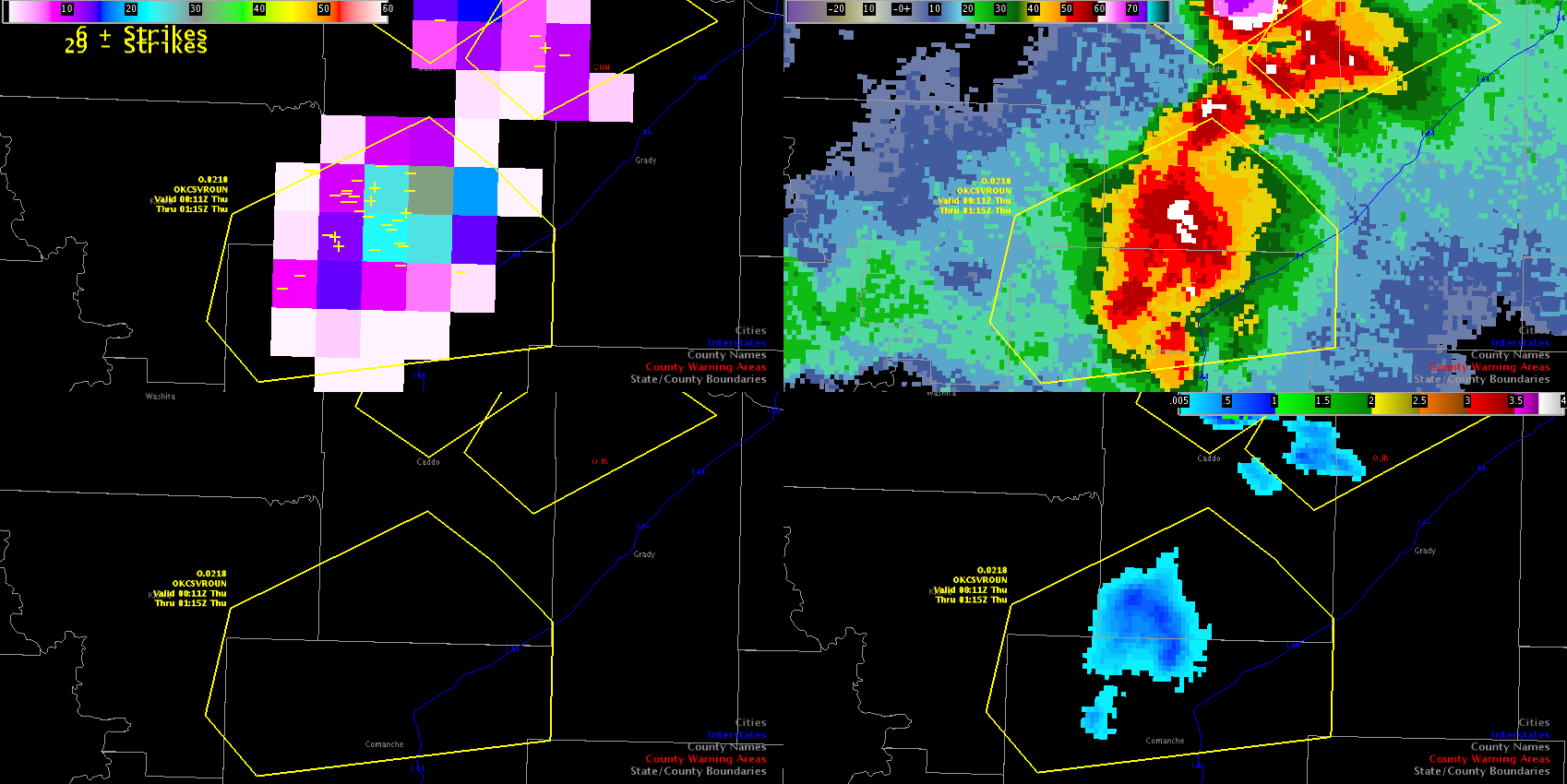
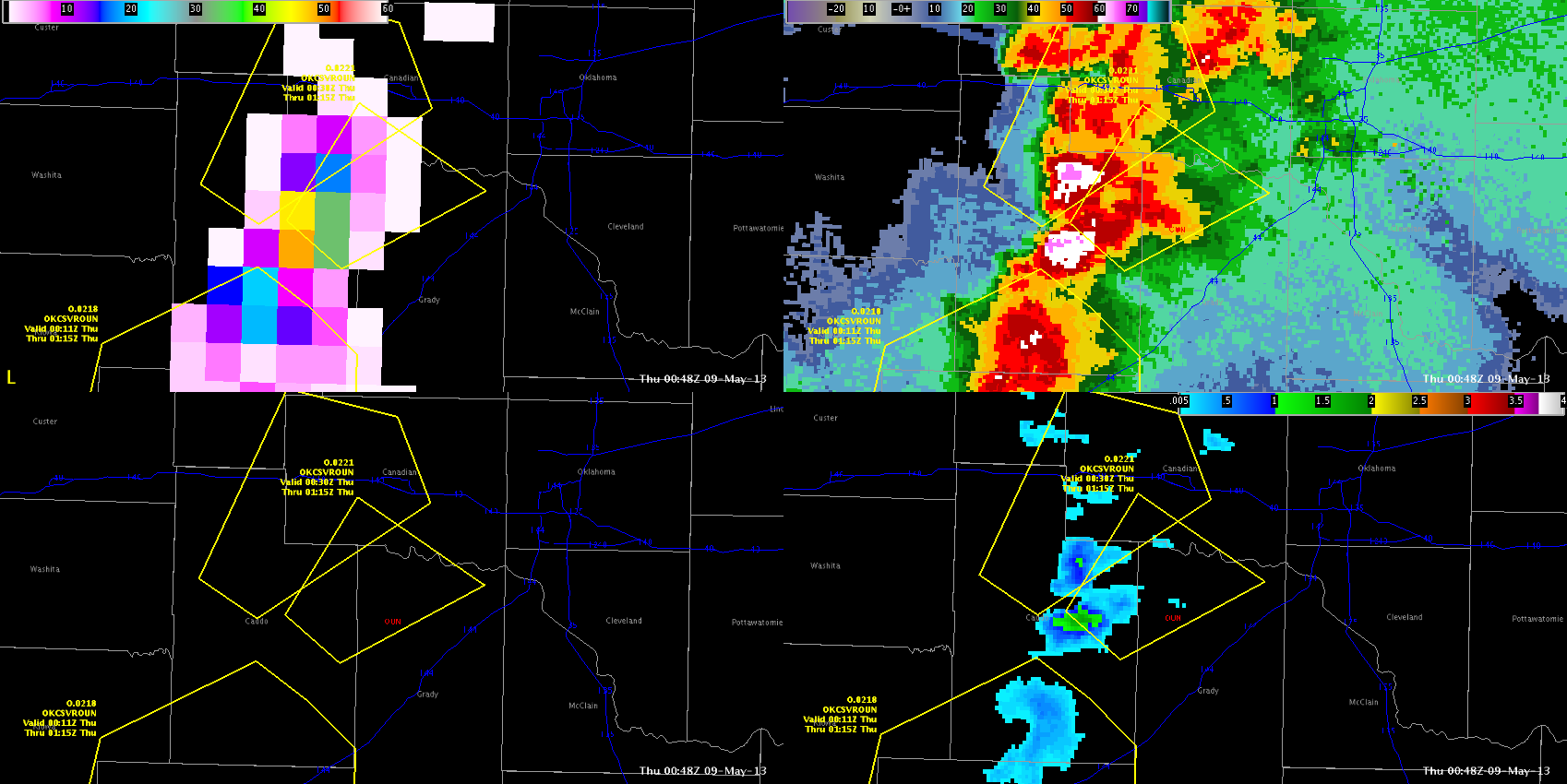
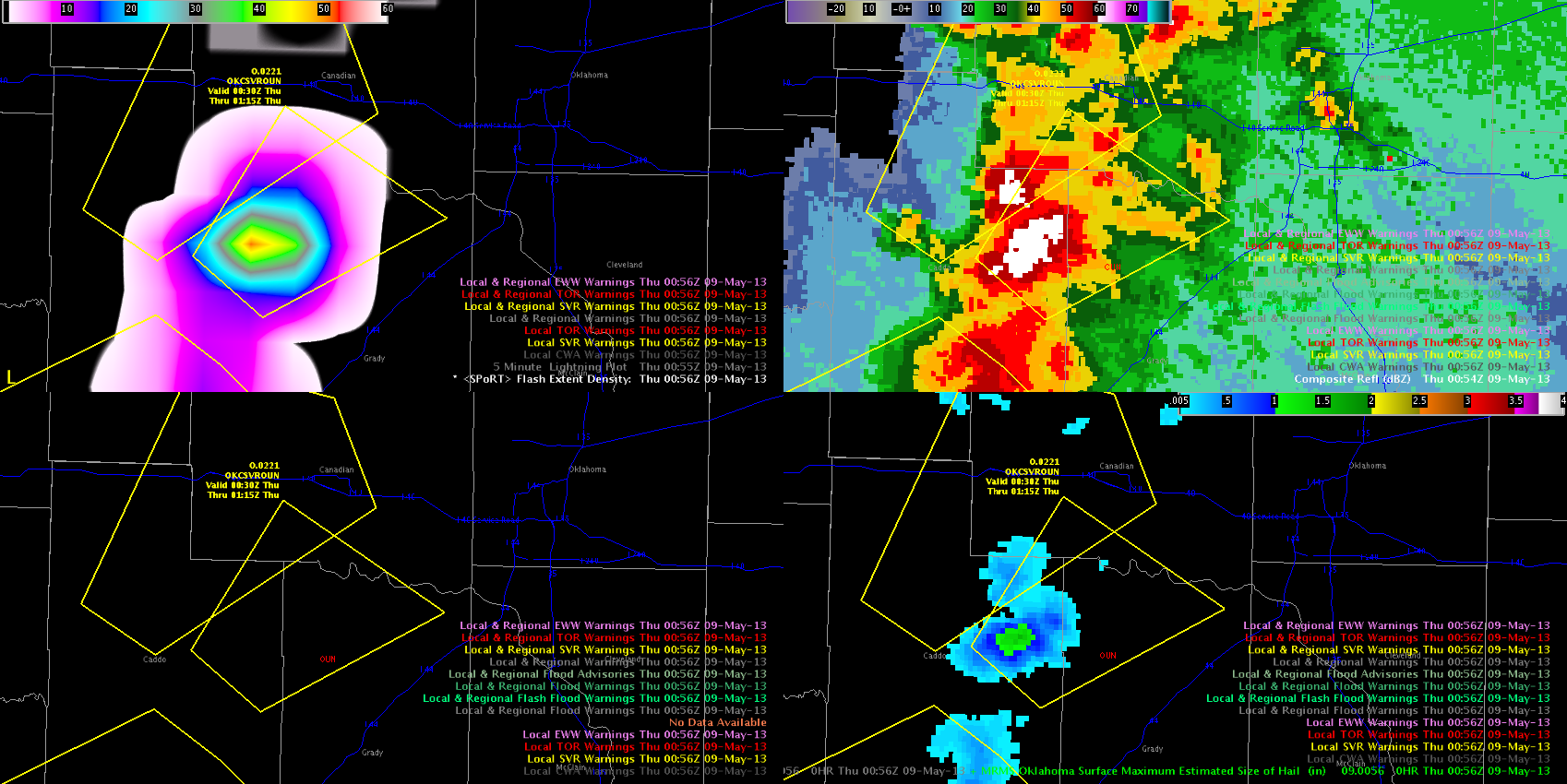
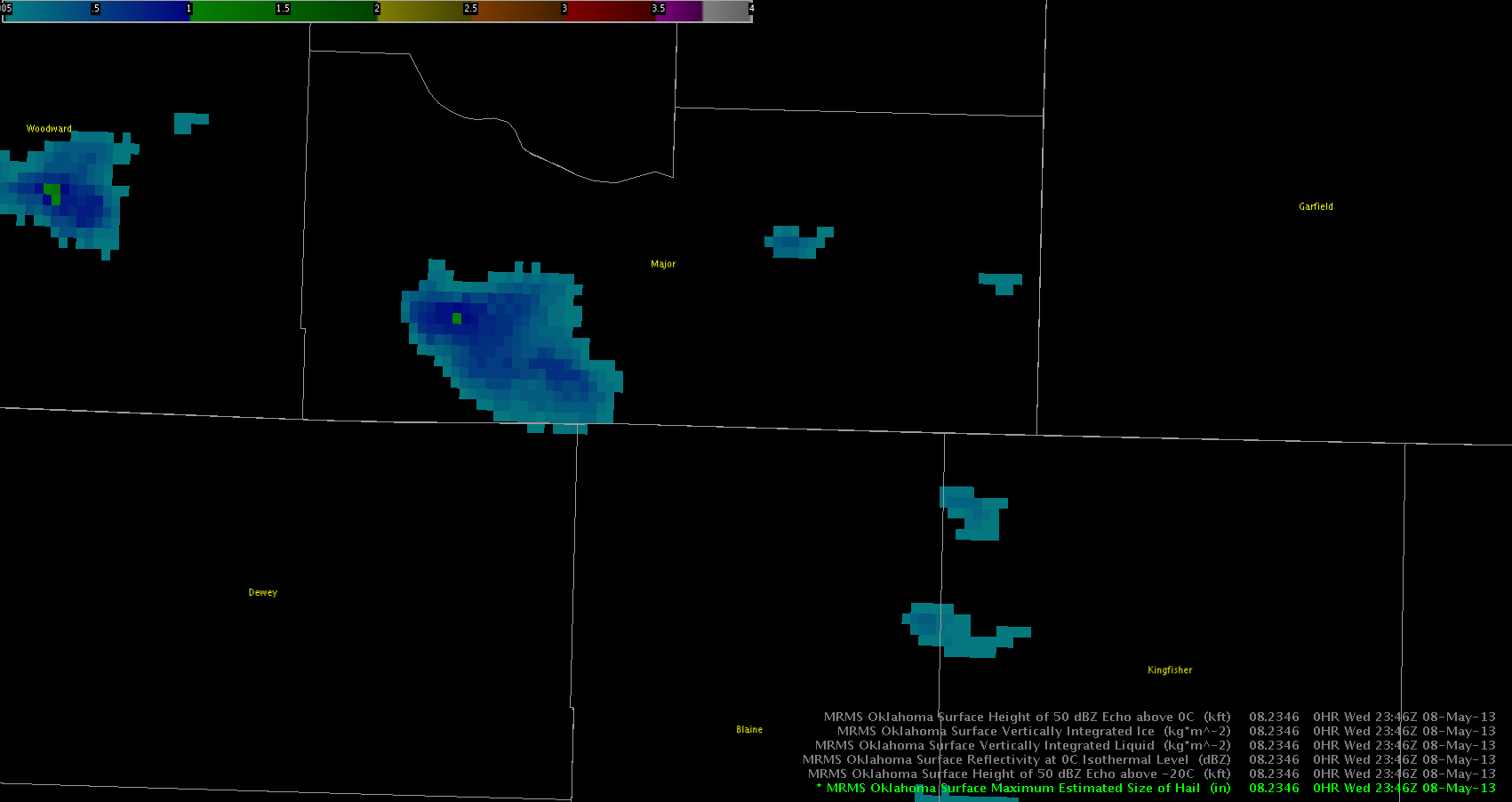
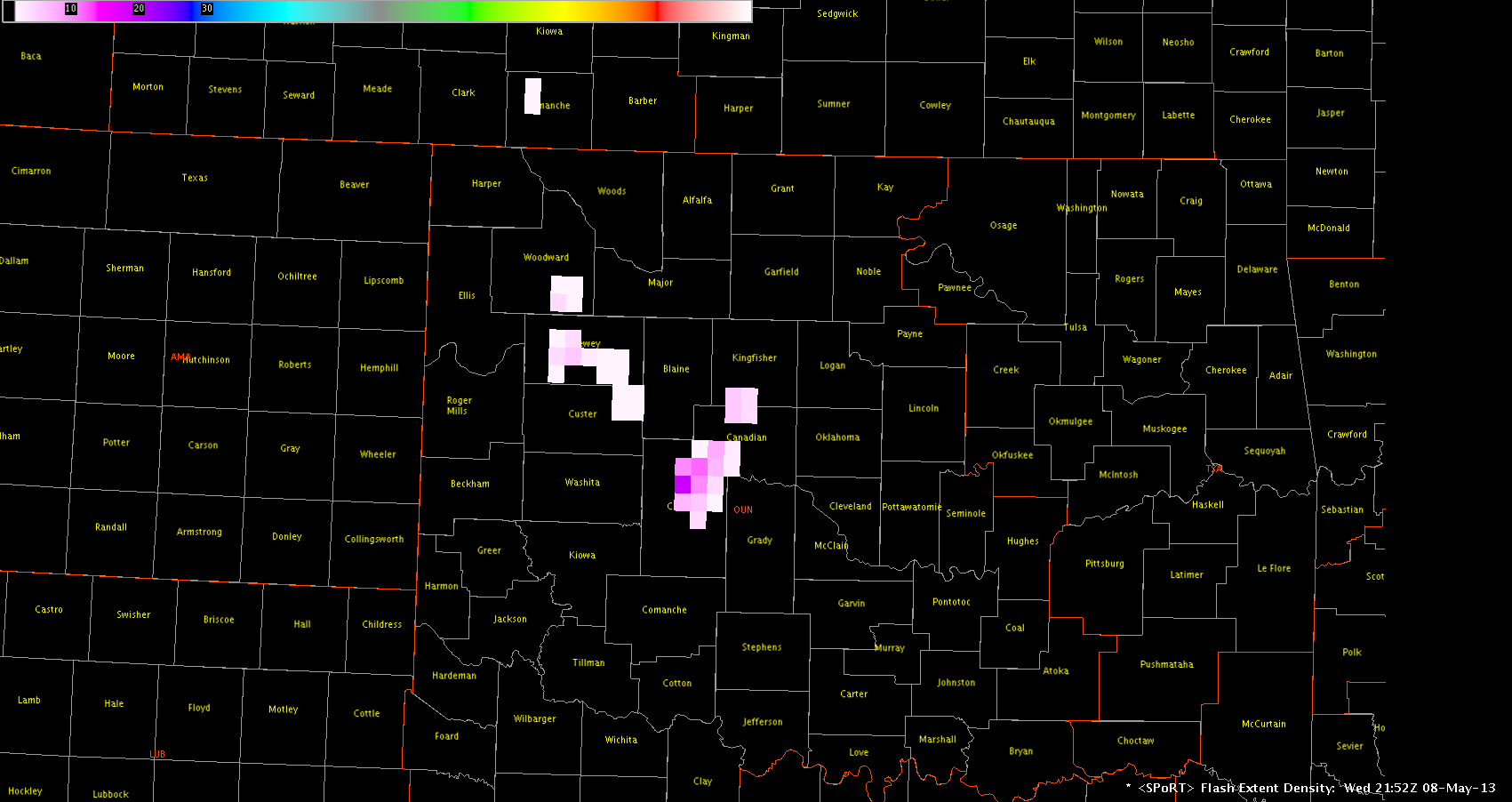
One cluster of storms over southwest Oklahoma produced the most impressive FED signal of the day. While we’ve had a warning out for this storm for some time, no reports have been received, and MESH has kept values generally at or below one inch.
**Update**
One rapidly intensifying cell has shown a lightning jump with up to ~50 flashes/min and is likely producing severe hail per MESH.
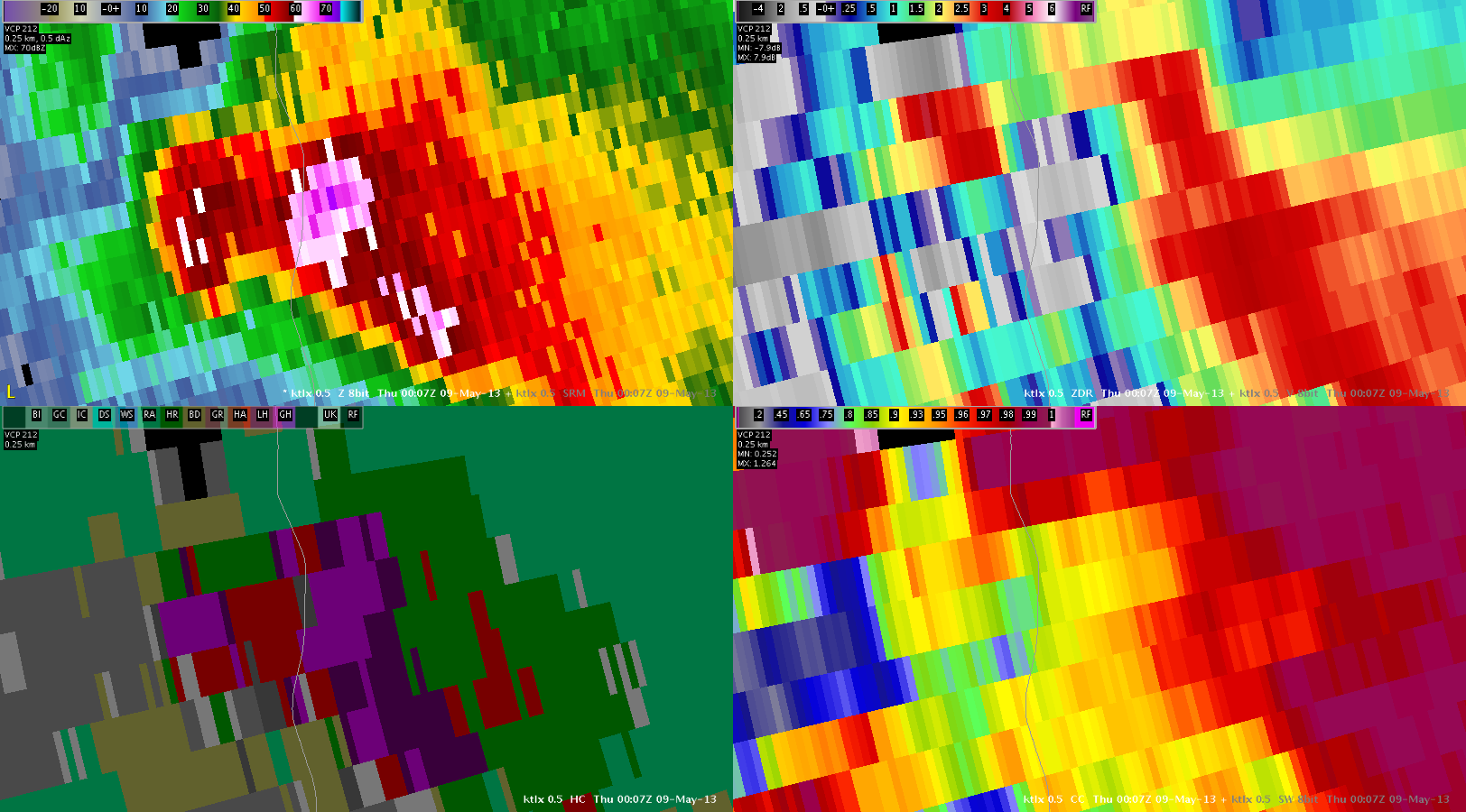
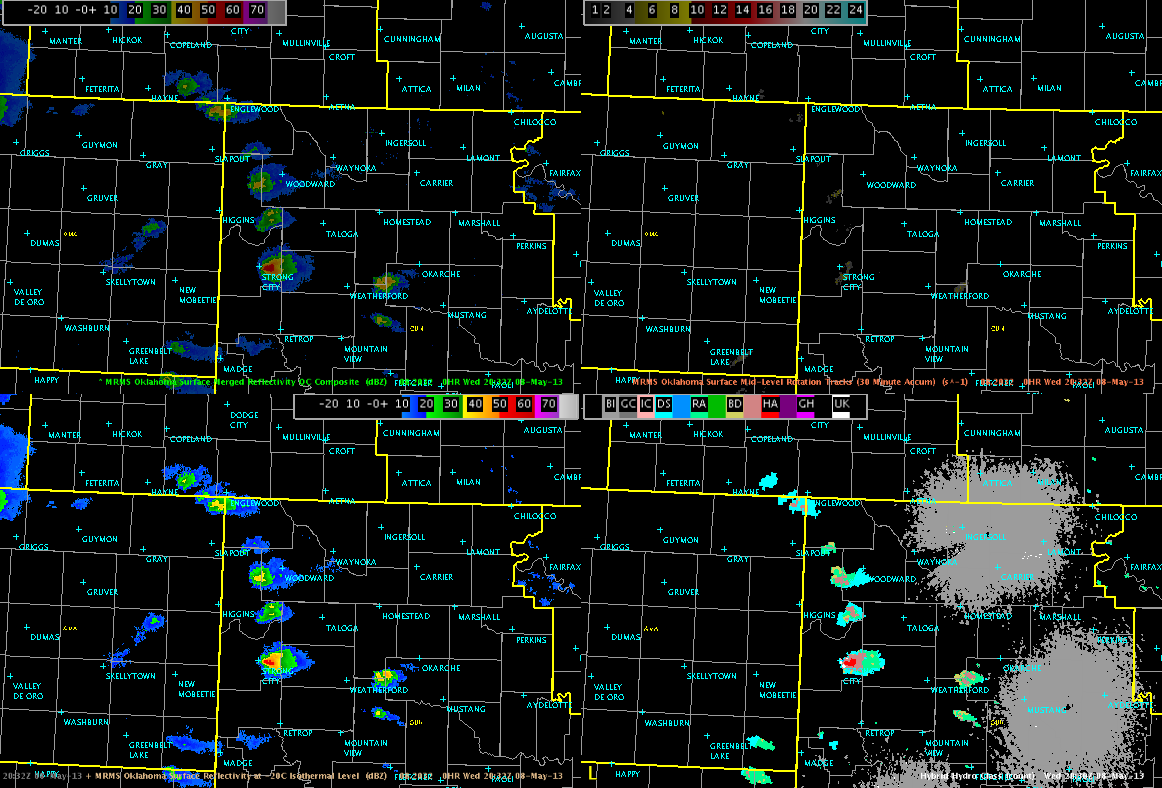
While the HSDA has shown many false giant hail signals, it did perform especially well with one of the storms today. This GH signal also corresponded to a MESH value of over 2 inches. Shortly after these signals appeared, a report of 2 inch hail was received, this was after some melting, so the hail may have actually been larger. It appears that the HSDA performs more accurately when close to the RDA and especially with persistent supercellular storm modes. The four panel below displays Z, ZDR, HSDA, and CC. Areas of GH were well correlated with low ZDR and CC. The second image shows MESH from the same time.
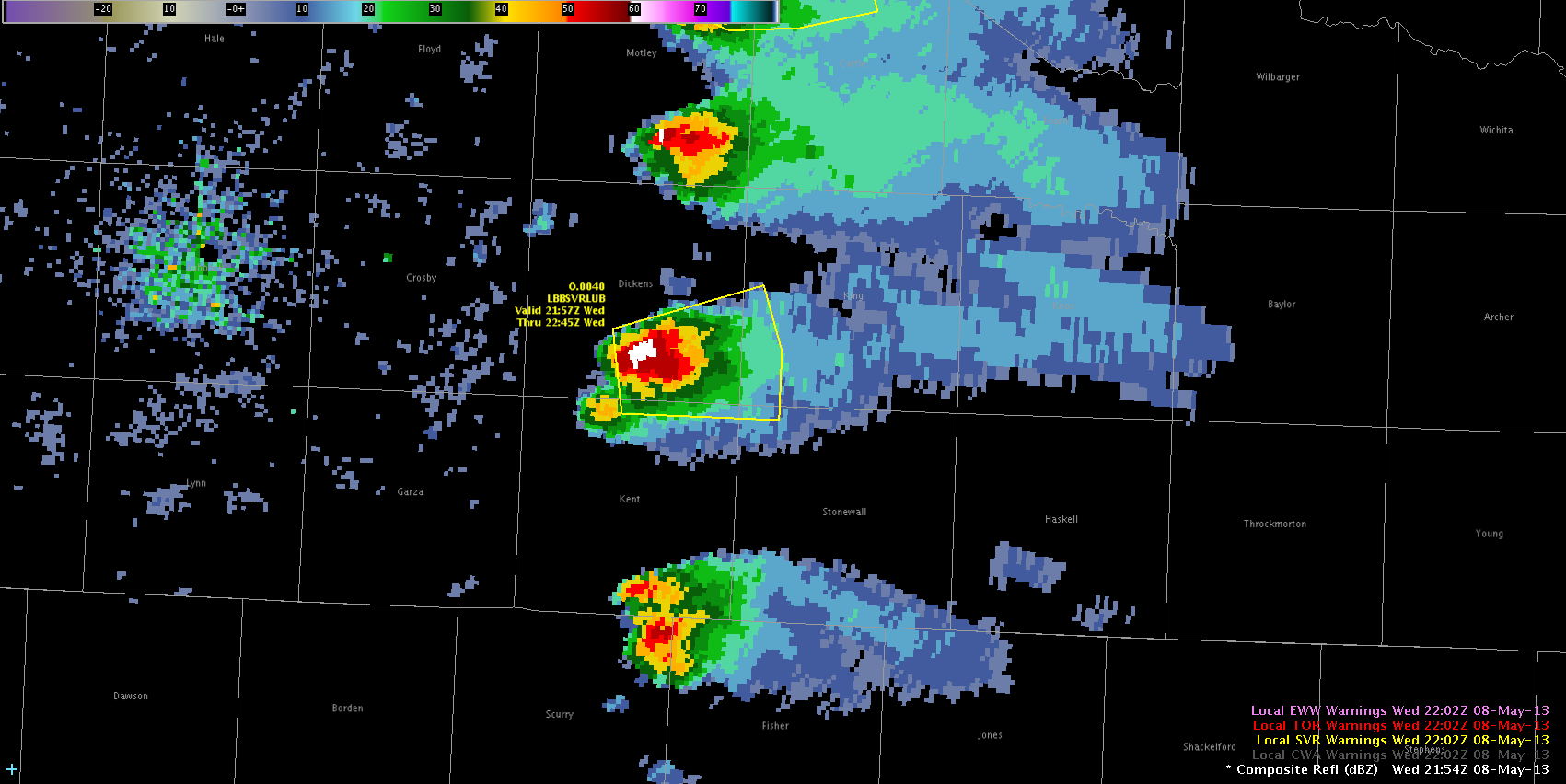
A storm producing reported 2.75 inch hail was estimated by the MRMS MESH product to be dropping only 1 inch hail. This storm was moving right as it continued to develop.
MESH product underestimating hail size by 1.75 inches this evening.
The HSDA algorithm did a good job of keeping a large to giant hail tag on this storm as it became severe and maintained its intensity.
HSDA algorithm diagnosing large to giant size hail for a storm reporting 2.75 inch hail.
A rapid ramp up in total lightning data led to increased lead time for a Severe Thunderstorm Warning this afternoon. The Flash Extent Density product increased to 19 flashes per minute prior to warning issuance.
Flash Extent Density product showing an increase to 19 flashes per minute prior to warning issuance.
Flash Extent Density further increased following the warning as severe hail was reported.
Flash Extent Density product increased to 32 flashes per minute as severe hail was reported.
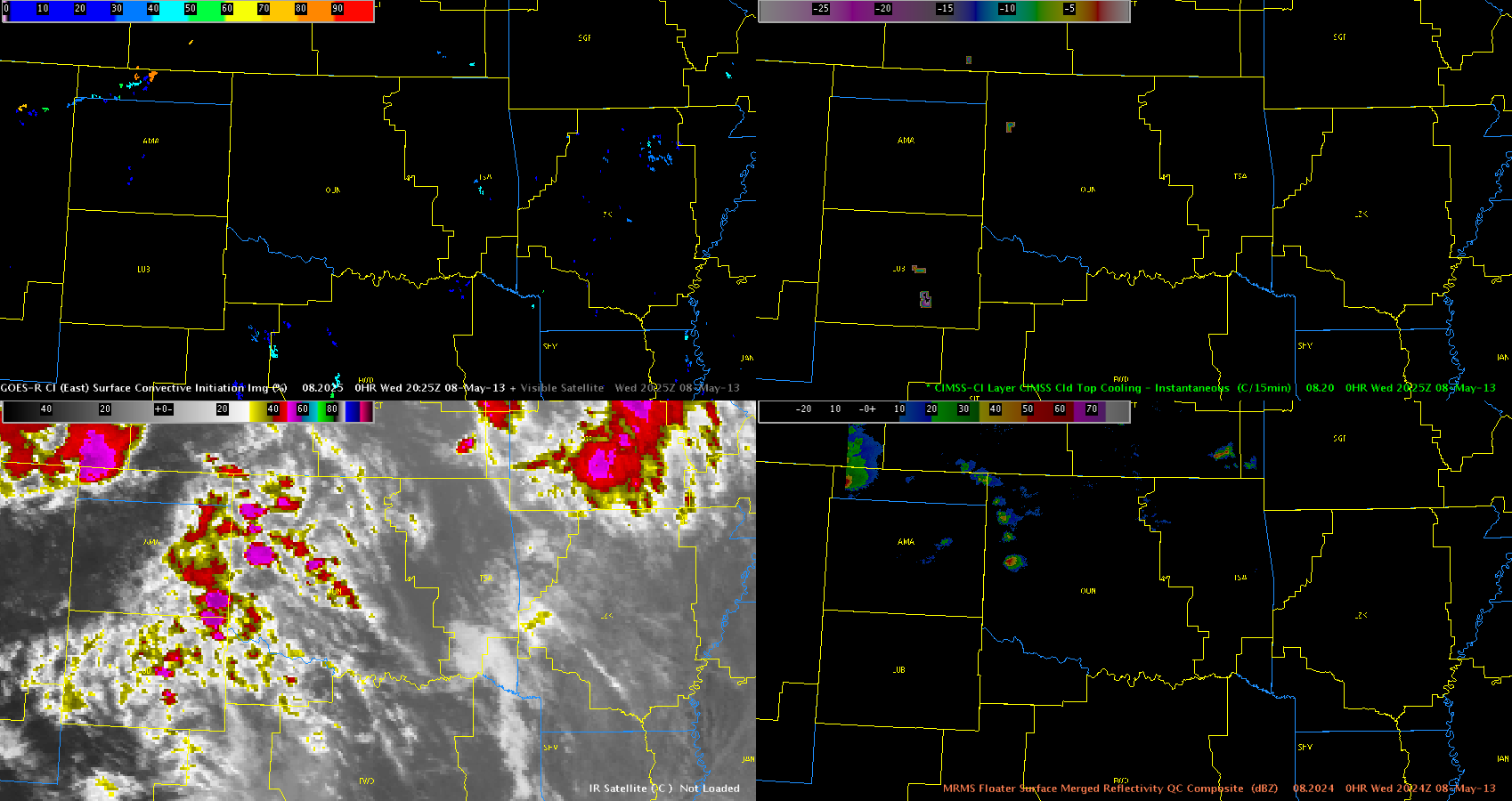
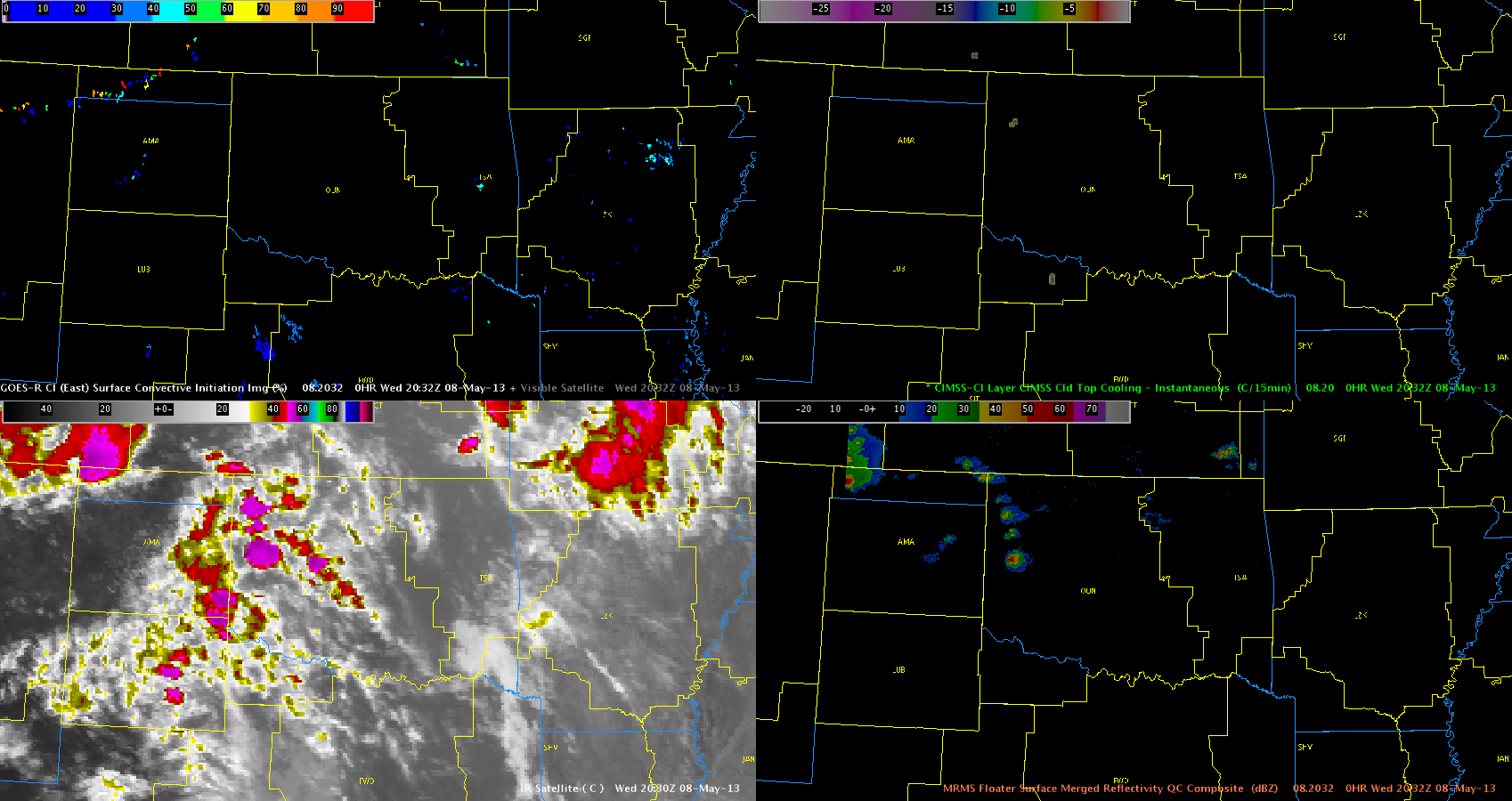
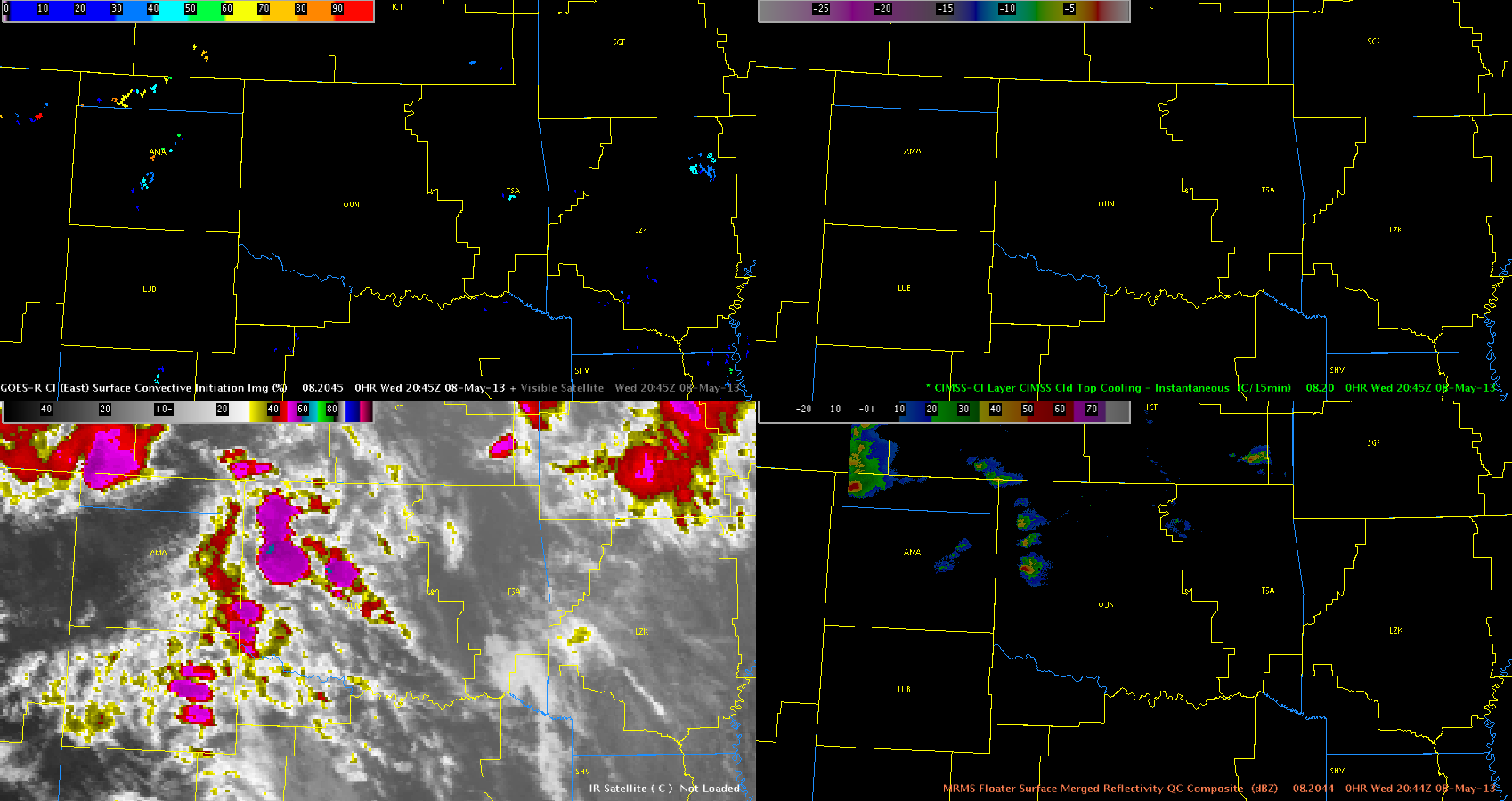
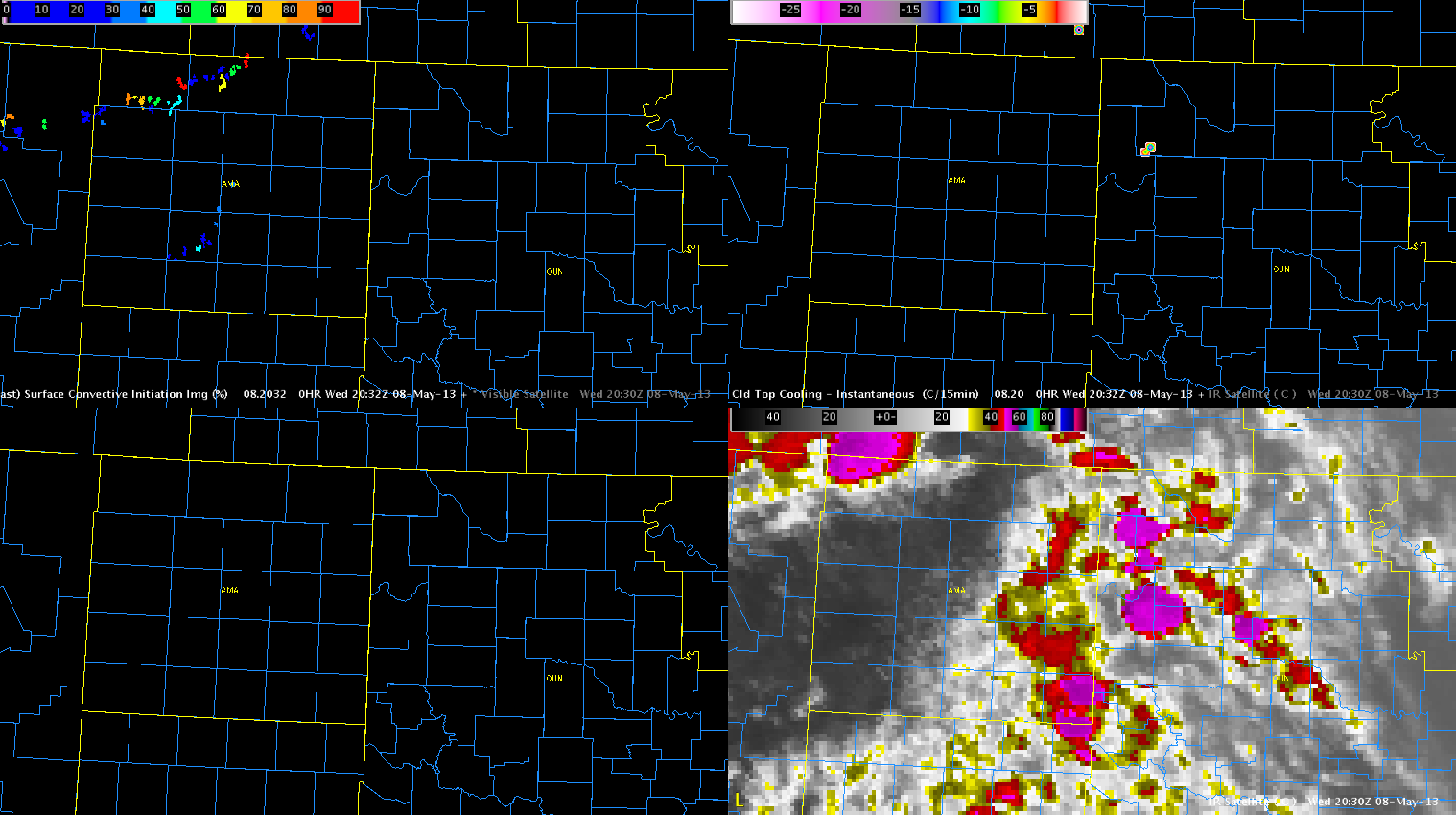
Early high and mid cloud contamination from an approaching upper-level jet limited use of both the UAH CI and UW CTC products across northwestern Oklahoma this afternoon. Storms initiated around 3 pm with the first Severe Thunderstorm Warning issued around 345 pm. The UAH CI product never showed any signs of CI due to this cloud contamination, but the UW CTC product did briefly show some signs of severe storm development as it provided an approximate 20 minute lead time on the first warning issuance. Previous shifts had found longer lead times utilizing the CTC product, but the extent of upper and middle cloud contamination was not as pronounced during those cases.
4 panel imagery showing nothing from the CI product. The CTC product did briefly pick up on cooling rates near 15 C/15 min at 2025Z.Same as above at 2032Z, with CTC showing cloud top cooling rates greater than 20 C/15 min.CTC product continued increasing to greater than 25 C/15 min with storm motion toward the northeast at 2040Z.Both the UAH CI and UW CTC products show nothing as mid and high clouds continue streaming in with mature storms at 2045Z.
Two persistent supercells across the TX Panhandle region have shown signs of strong mid level rotation, but spotters and local observations suggest cloud bases are much too high for tornado formation. Therefore, these MRMS TDS signatures appear to be false alarms. The images below show examples from two storms.
Developing supercells over the TX panhandle became severe appox 30 to 45 min after a significant CTC signal. This signal is shown below in the upper left corner of the 4 panel. 30 to 45 min. after the minimum CTC value of -33, MESH indicated 1 inch or larger hail. This is displayed in the second image below. Of note is how well the CTC algorithm is performing despite a modest cirrus shield.
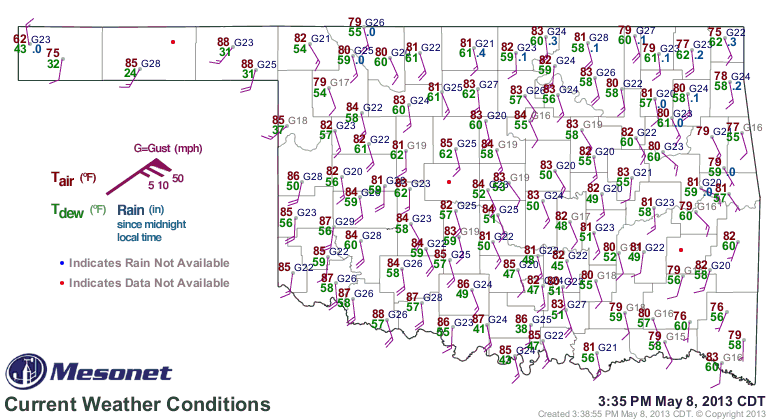
High 50s/low 60s dew points are continuing to pool across western OK as observed on the OK mesonet.
2035z Mesonet
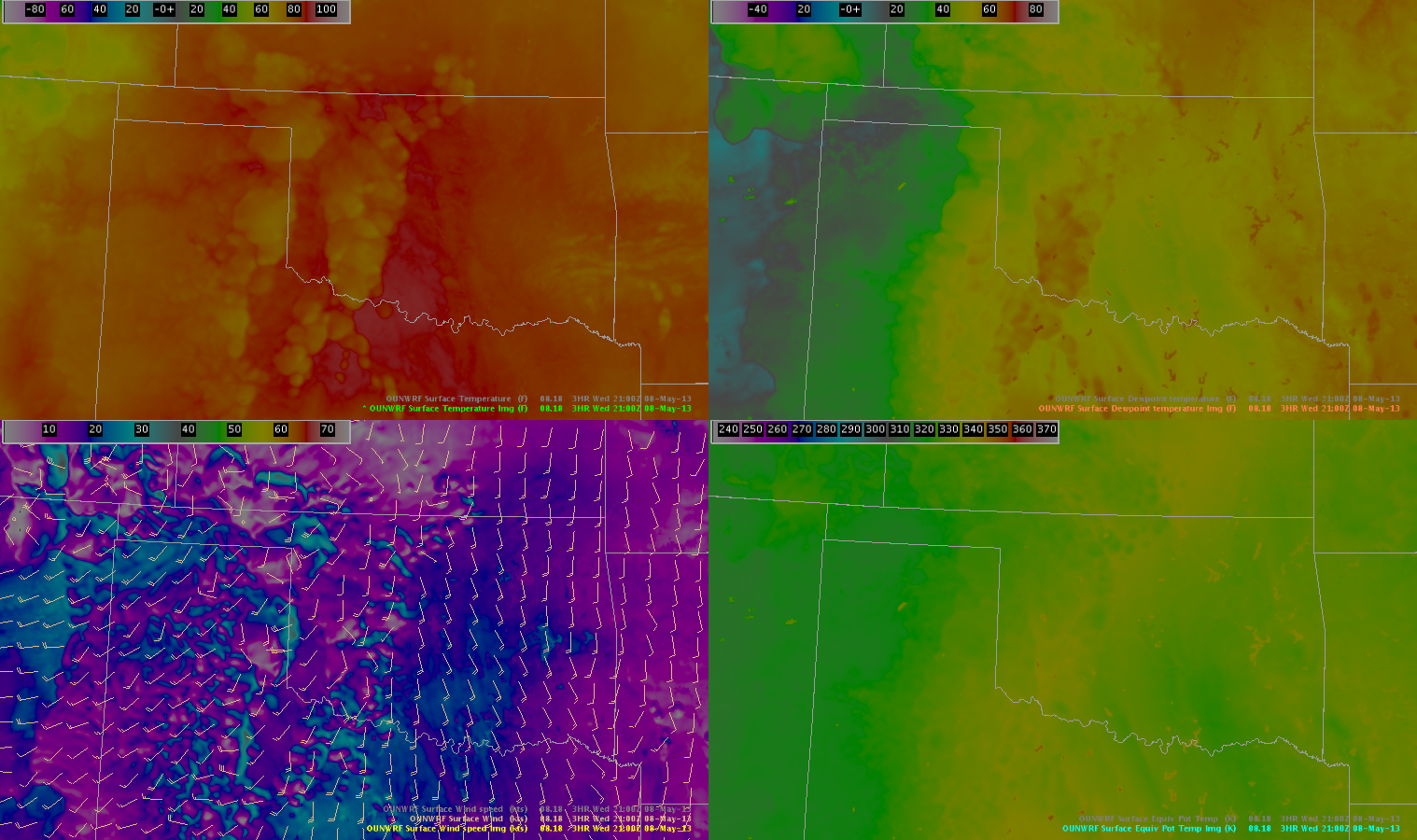
The OUNWRF appears to be capturing the current dewpoints correctly over Oklahoma, especially in the area where convection is developing. However, the temps ahead of the convection appear to be too high on the OUNWRF. It is possible that this is contributing to the over-development of convection on the OUNWRF (as seen spatially on the simulated reflectivity products).
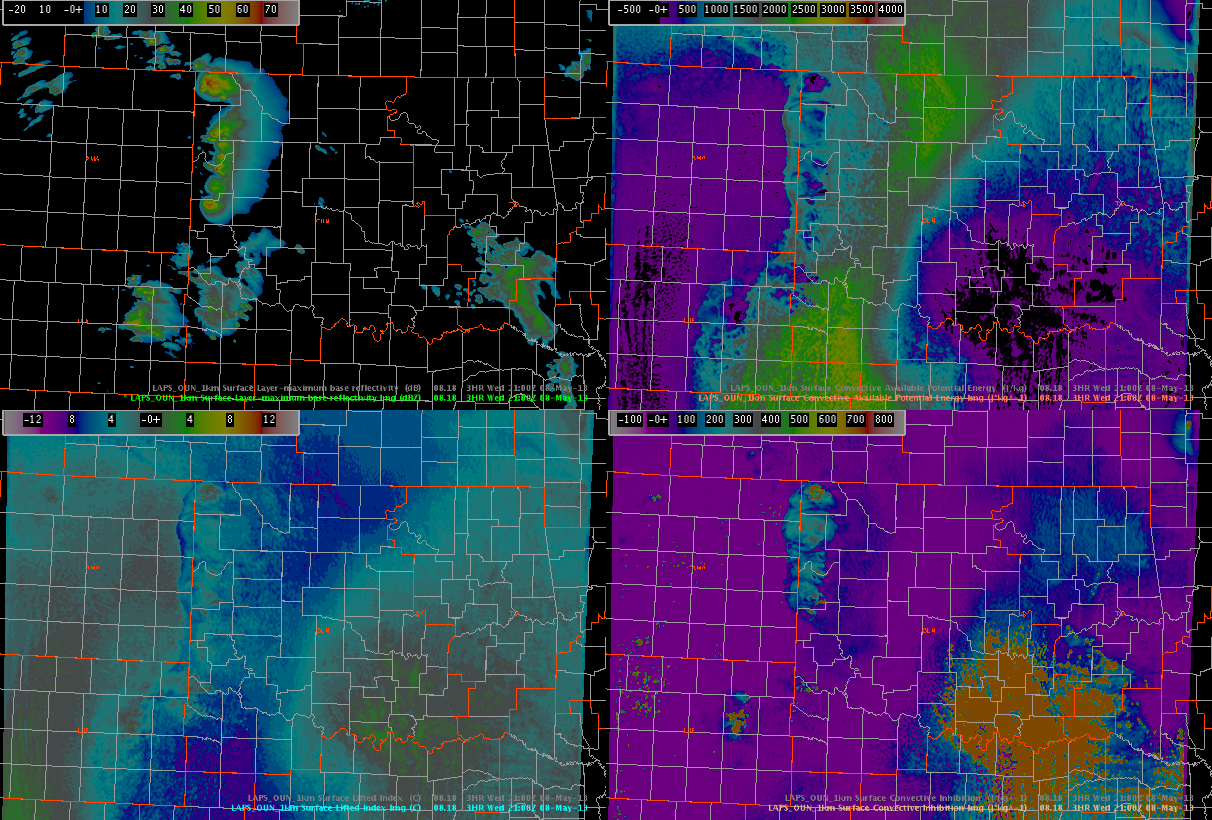
LAPS analysis from the 1 km OUN domain continues to do a decent job with the placement of the composite reflectivity across western OK. Interestingly enought the 21z LAPS shows a clean swath of 2200 to 2600 J/Kg SBCAPE spreading northward across western north Texas, with another pocket of 2000 to 2500 J/Kg SBCAPE near the OK/KS border, which would be nearer the sfc low which continues to churn E/NE across the TX panhandle.
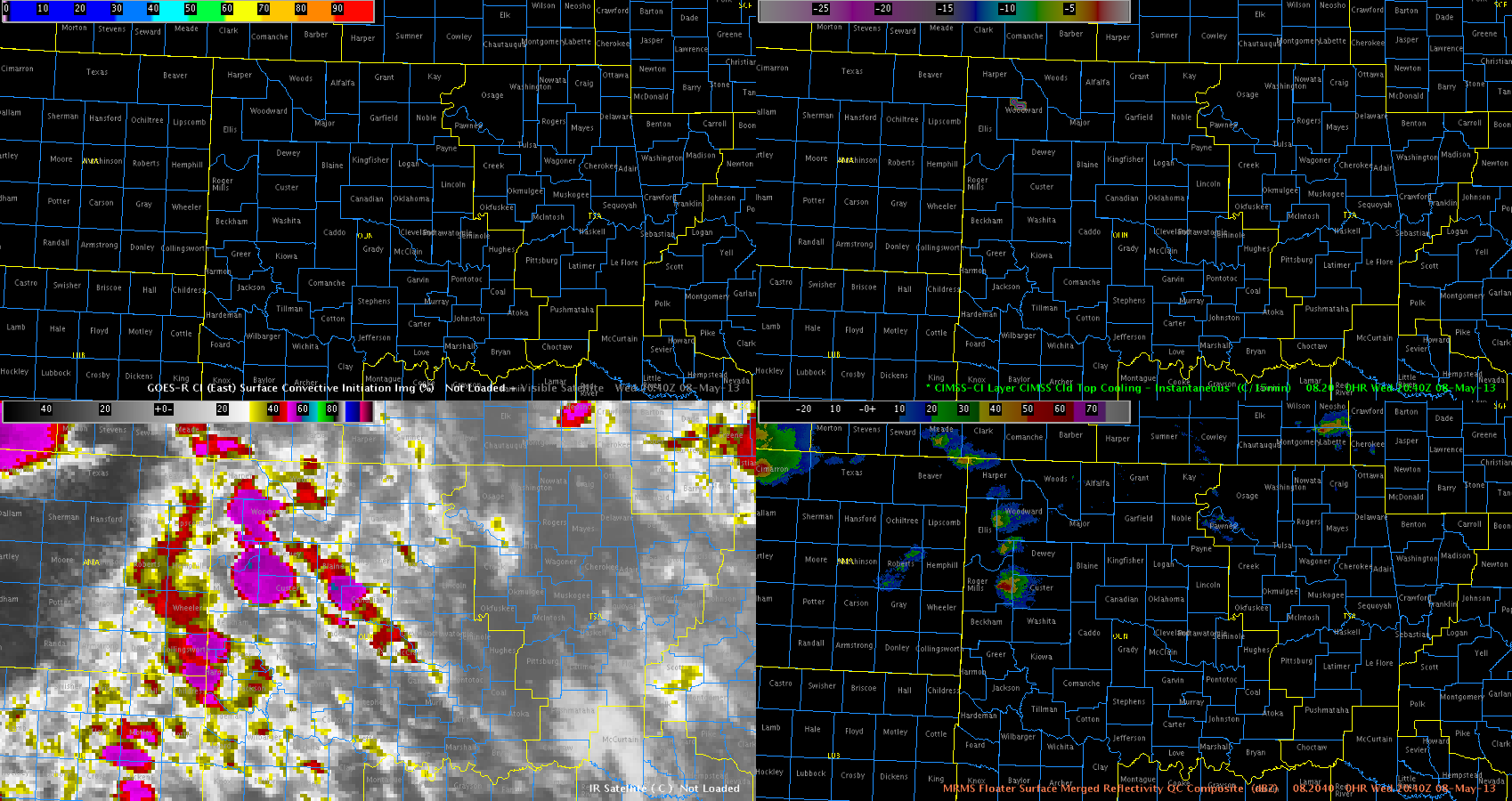
Early convection this afternoon developed in a sct to bkn area of cumulus, with scattered cirrus/stratus spread across Panhandles through western OK. This has resulted in little to no response from the both the GOES-CI and CTC products due to the contamination from the cirrus and stratus. The screen capture below shows the area of intense convection developing over Oklahoma, with little to no apparent signals in the CI/CTC products. This was also the case for several time steps before this image was saved.
CI, CTC, IR
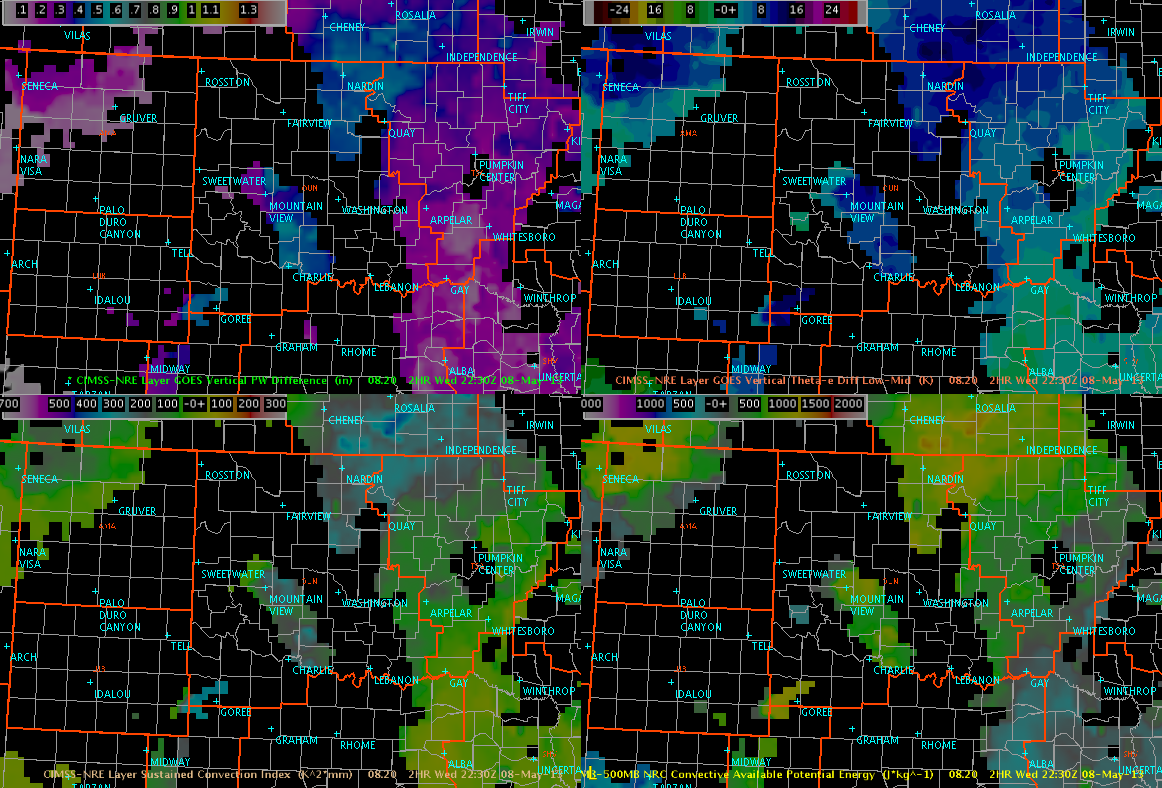
Nearcast products from CIMSS/GOES have also struggled with the presence of clouds before convective initiation. This is evident from loss of data across western OK and the TX panhandle.
PW Diff, Te Diff low-mid, Convection Index (K^2mm), 780-500mb CAPE
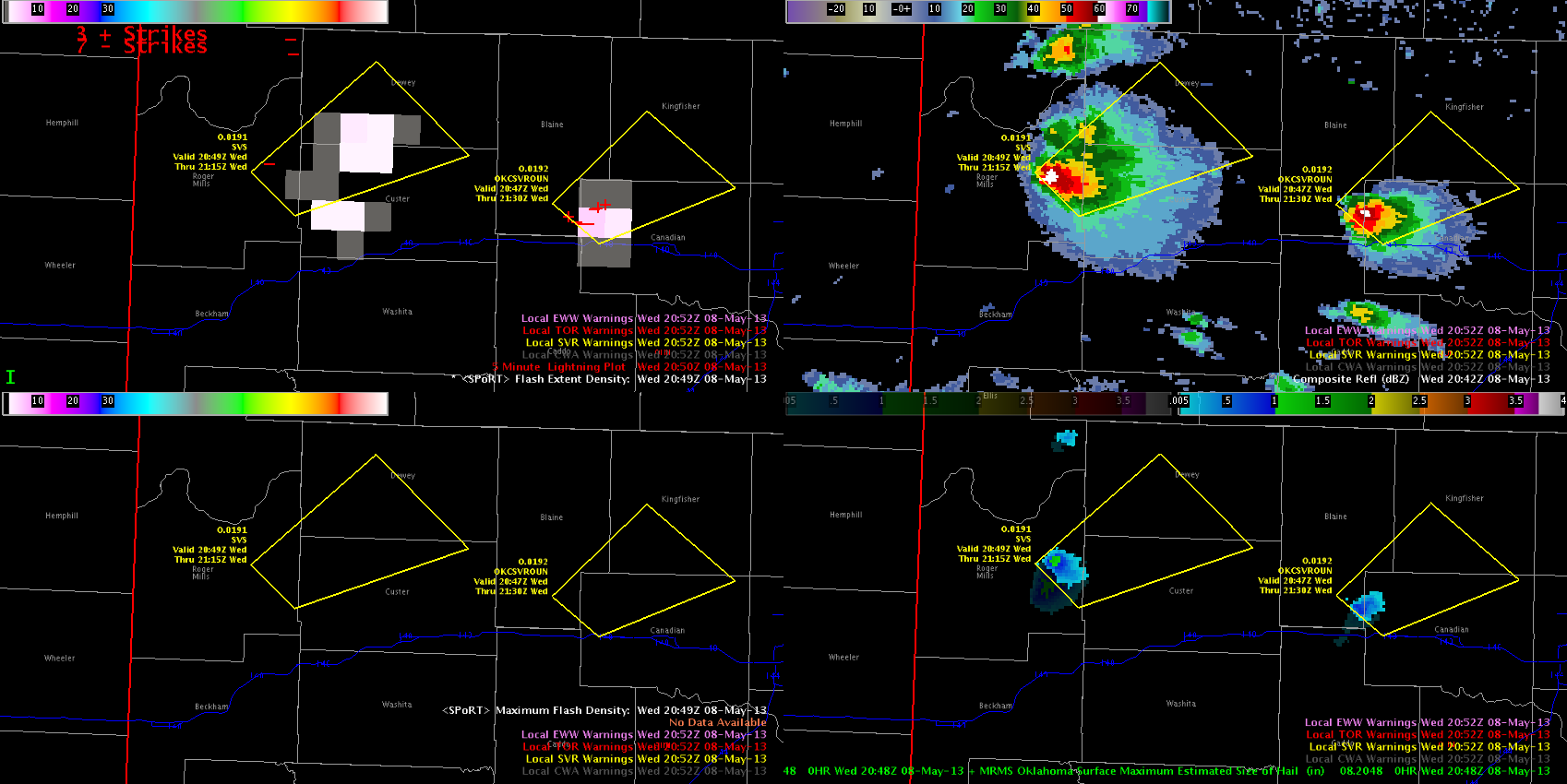
Below is a 4 panel image of Flash Extent Density, Composite Reflectivity, and MESH. With two supercells indicating large hail via MESH, one would expect larger values of FED, which have only maxed out around 5 flashes/min. However, this may have something to do with distance from the LMA centroids. We will continue to monitor. In any case, the PGLM products are very useful for aviation and public safety interests for points downstream.
**Update at 2107 UTC**
Monitoring the storm following Flash Extent Density Trace Tool, it appears many of the storms have entered a period of decreasing lightning activity. This is also apparent in the plan view of FED. This would suggest a downward trend in storm severity, but will monitor to see if this comes to fruition.
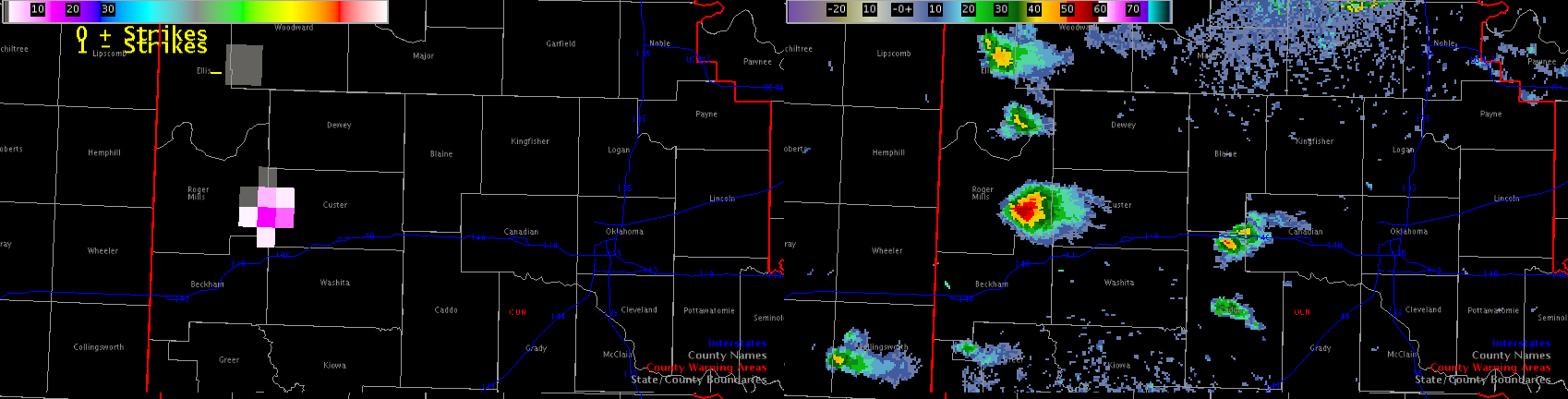
With convective initiation underway, we assess the intensification of thunderstorm updrafts using PGLM Flash Extent Density to determine electrical activity within the storm. The cell below has shown several weak lighting pulses over the last 15 minutes and is showing signs of becoming severe. Reflectivity is on the rise and the lightning activity appears to be foretelling of possible storm severity quite well.
Austin
2 Panel of Flash Extent Density (Left) and Composite Reflectivity (Right)