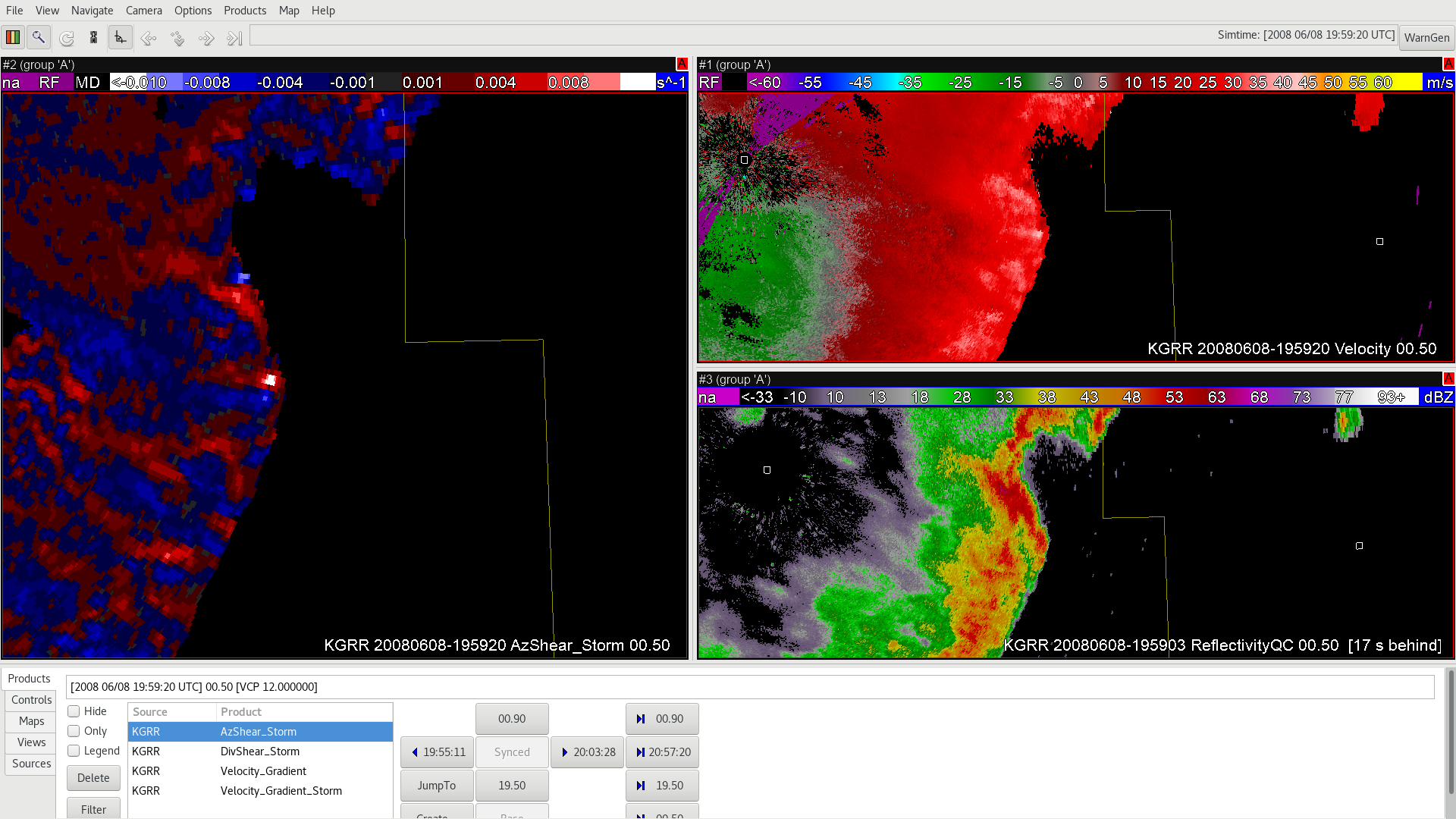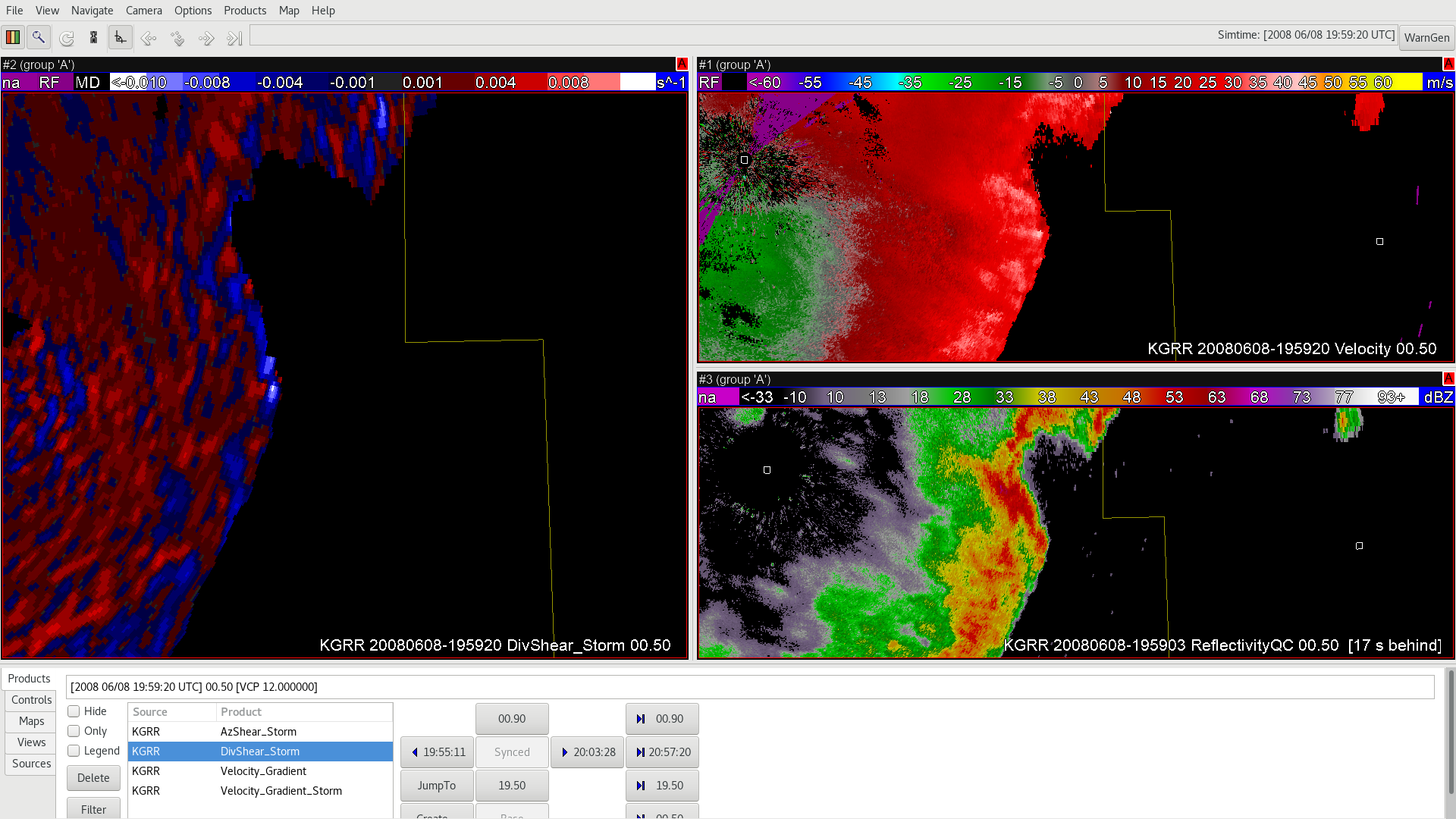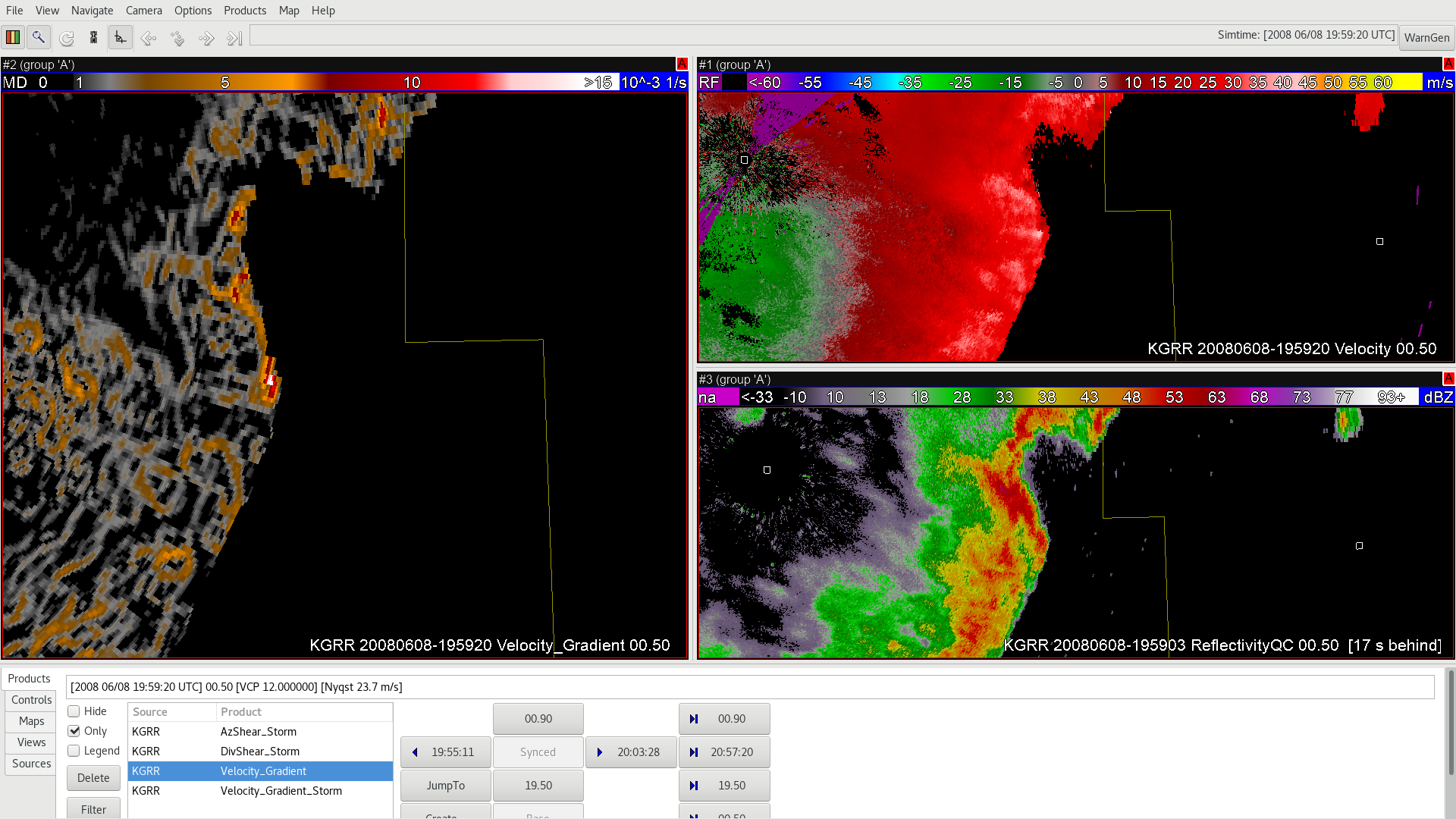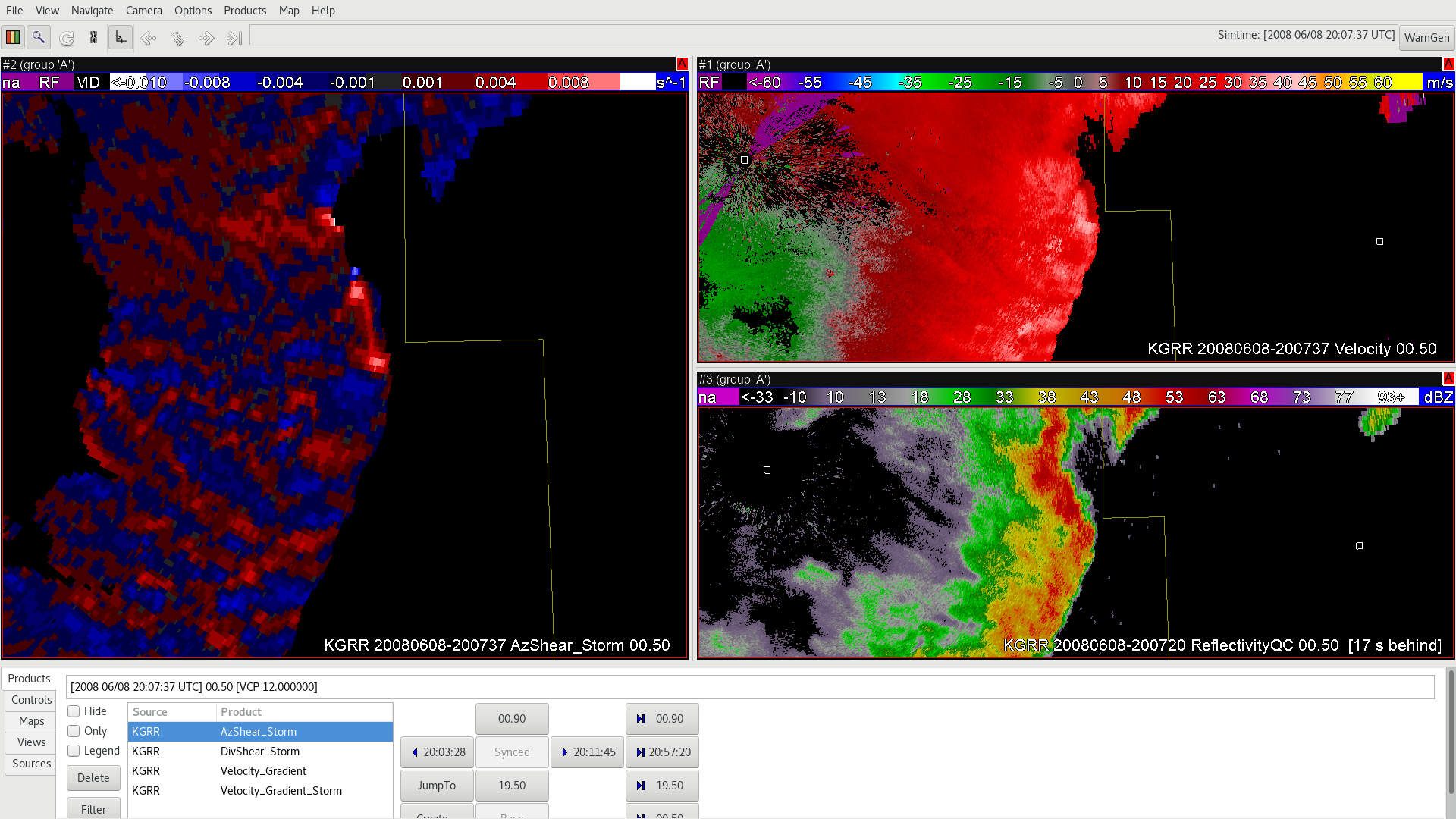
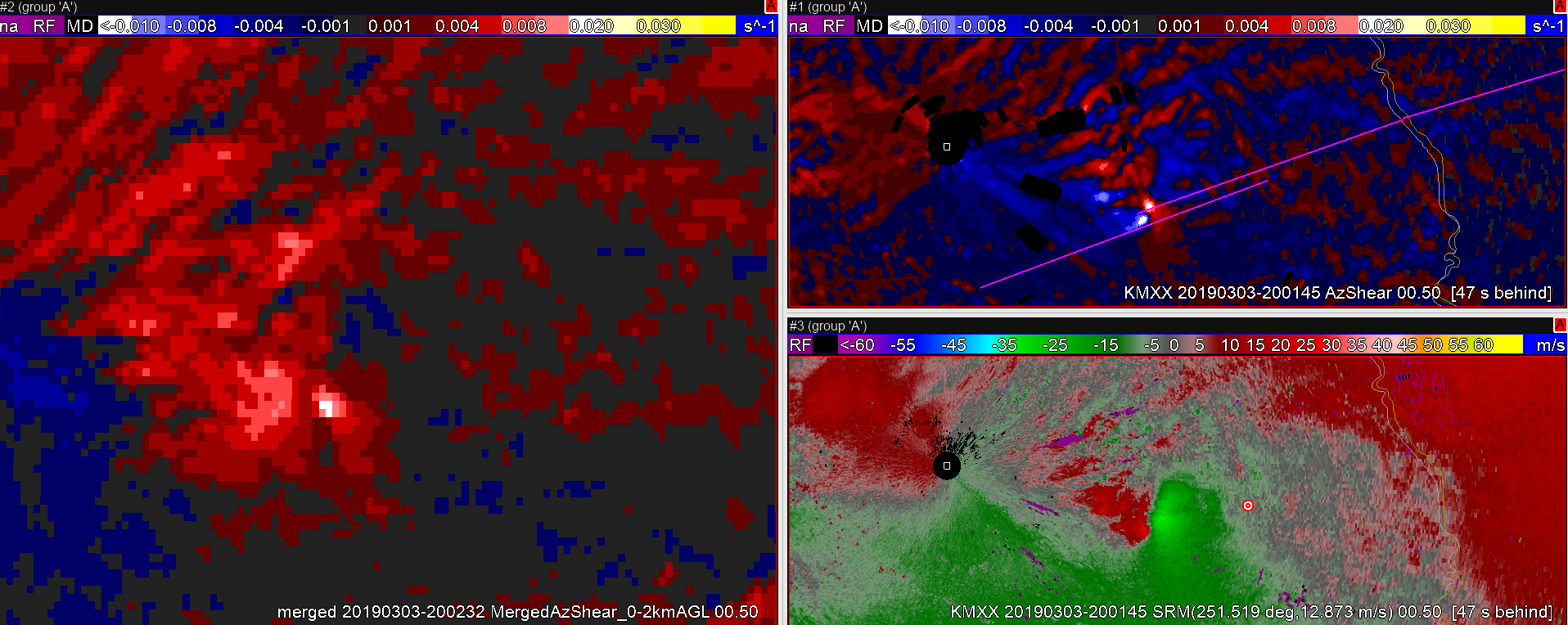
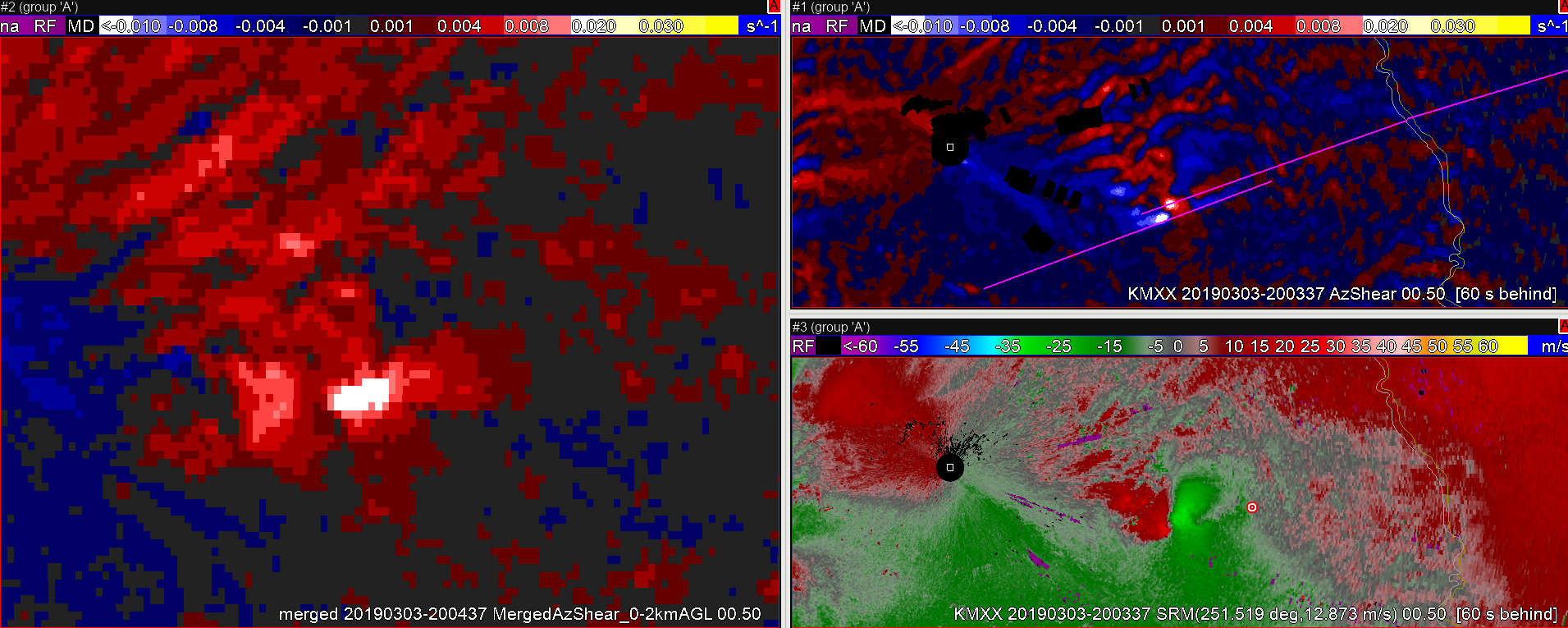
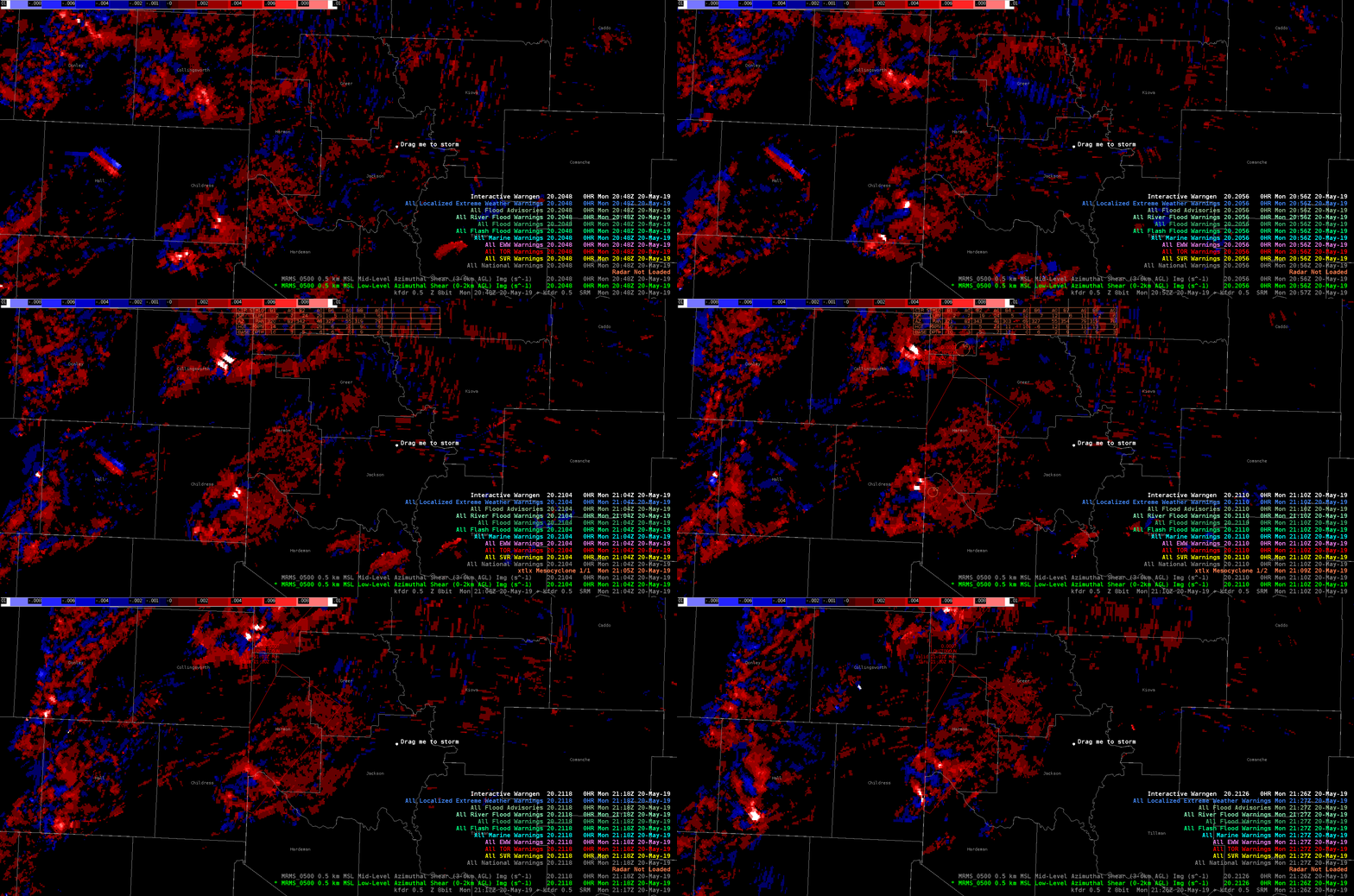
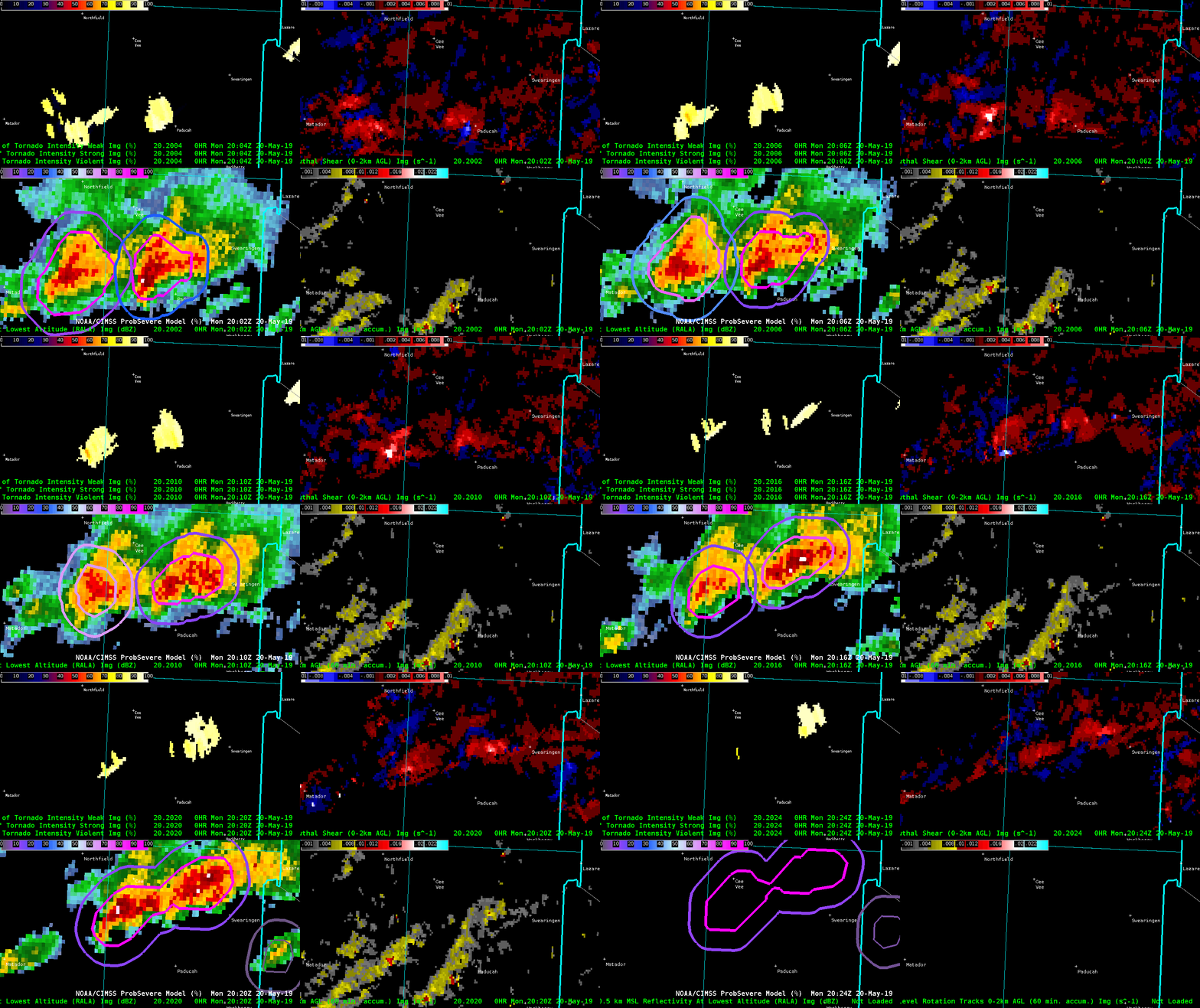
An advantage of single-radar vs. merged az shear jumped out right at the start of today’s simulation: lag time. The single radar product looks to have a 2-3 minute jump on the merged data with respect to low-level rotation, as shown in the time sequence below. The tightening/strengthening rotation couplet begins to jump off the screen in the single-radar data at the 2000 scan further intensifies through 2004. The area of strengthening low level rotation is much more muted in the merged data at 2000. It is more noticeable in the 2002 scan before becoming quite obvious by 2004. This small lag may not be significant, but it could be the difference of a few minutes worth of lead time in warning decisions.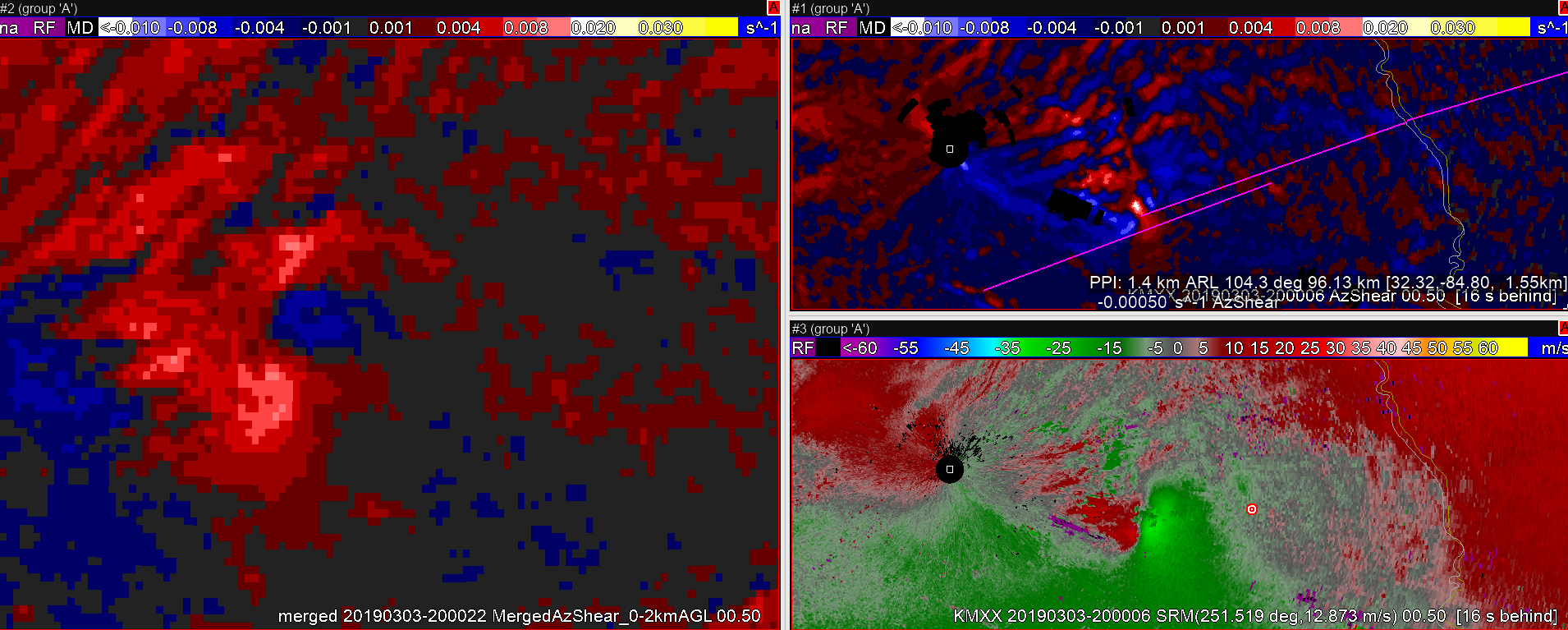
 Dave Grohl

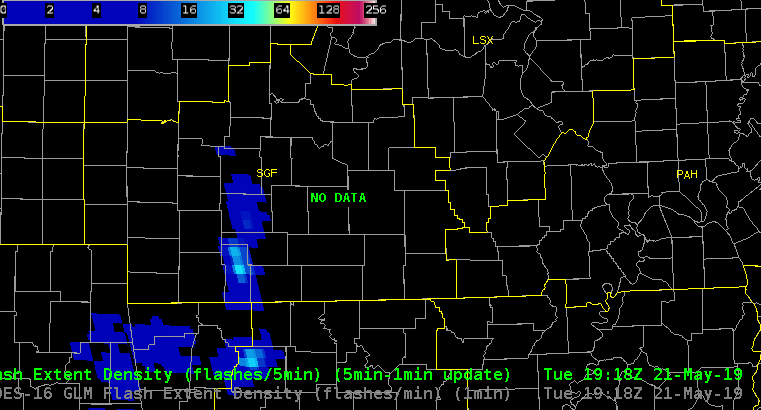
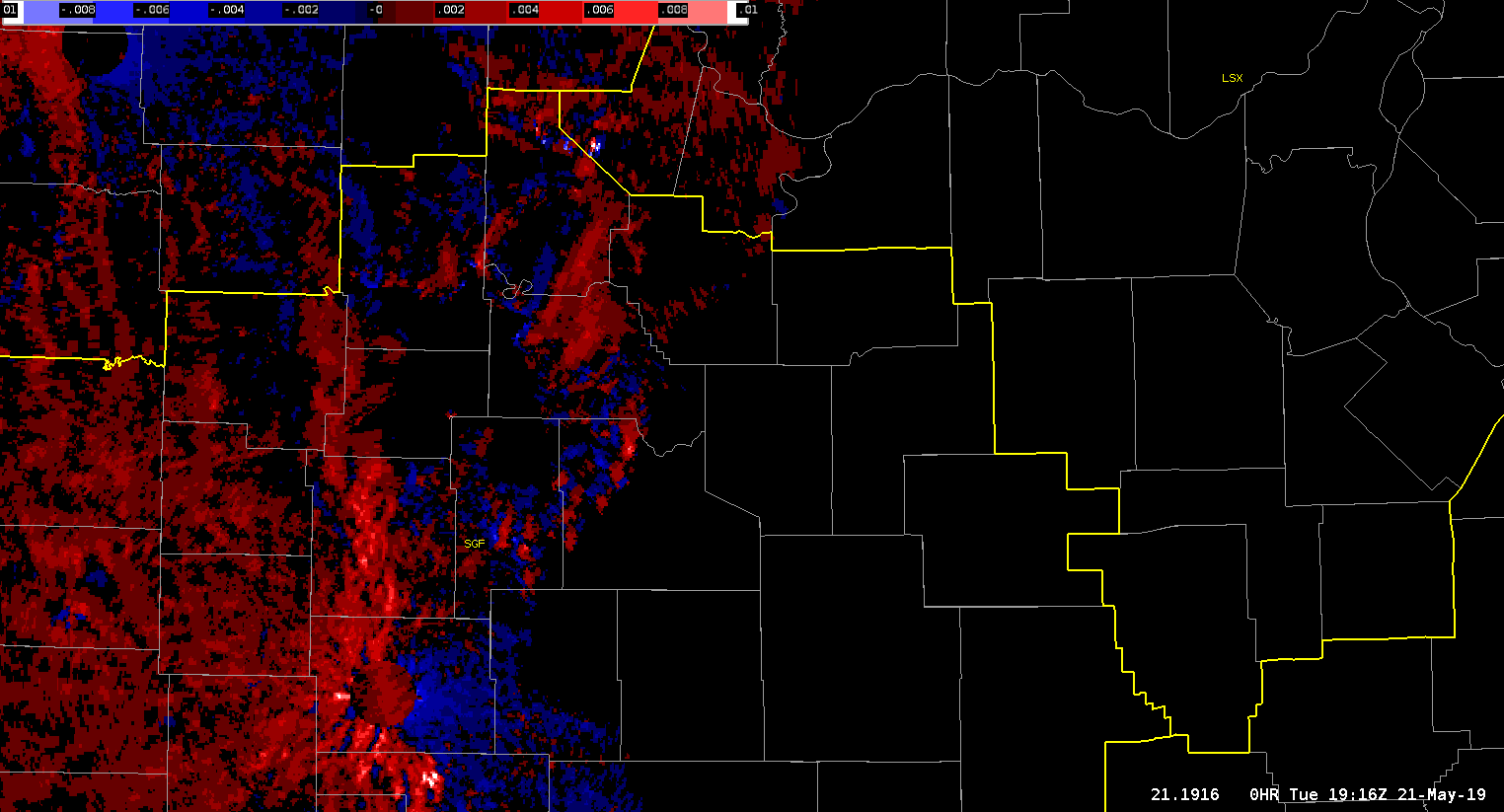
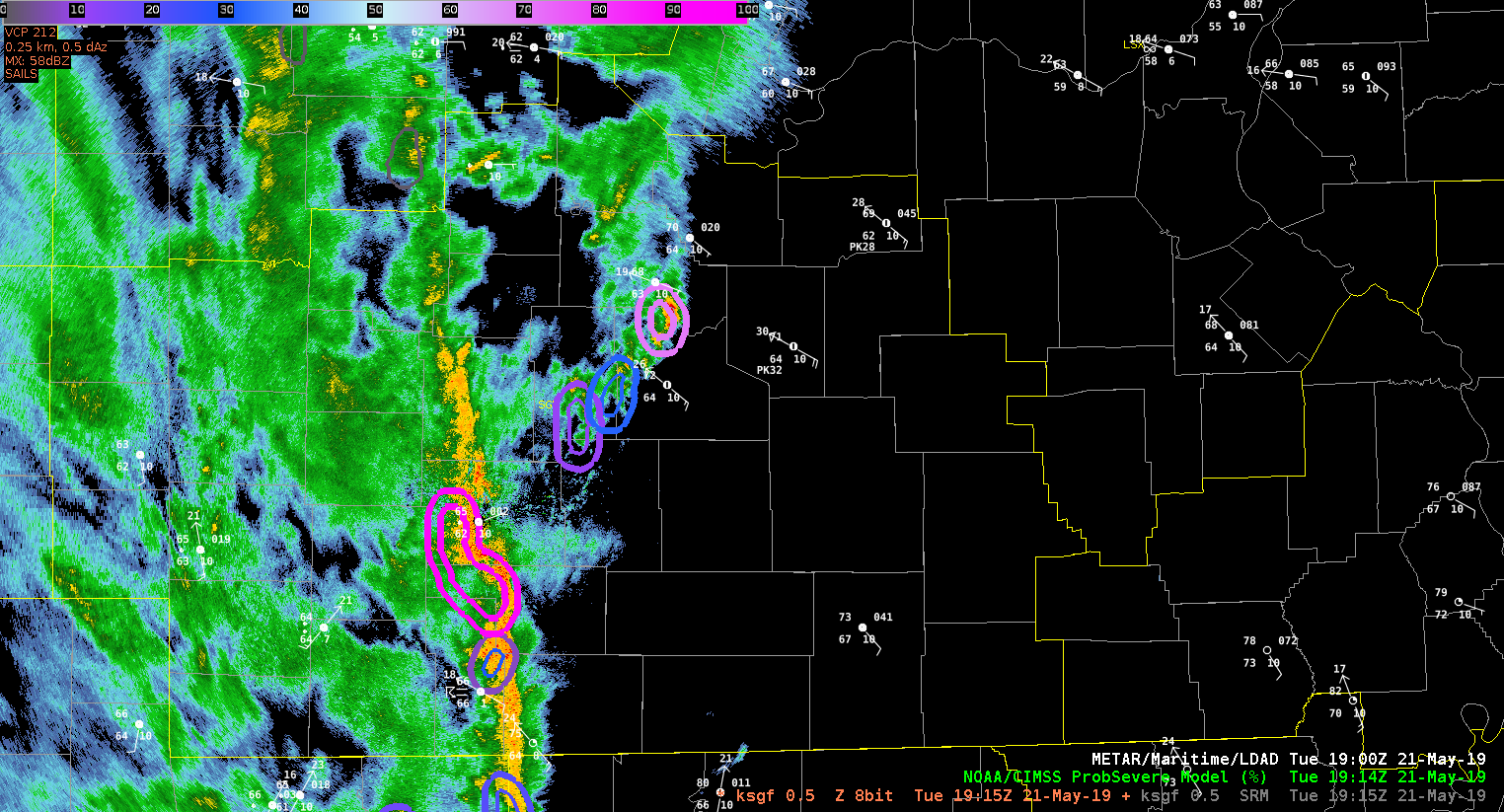
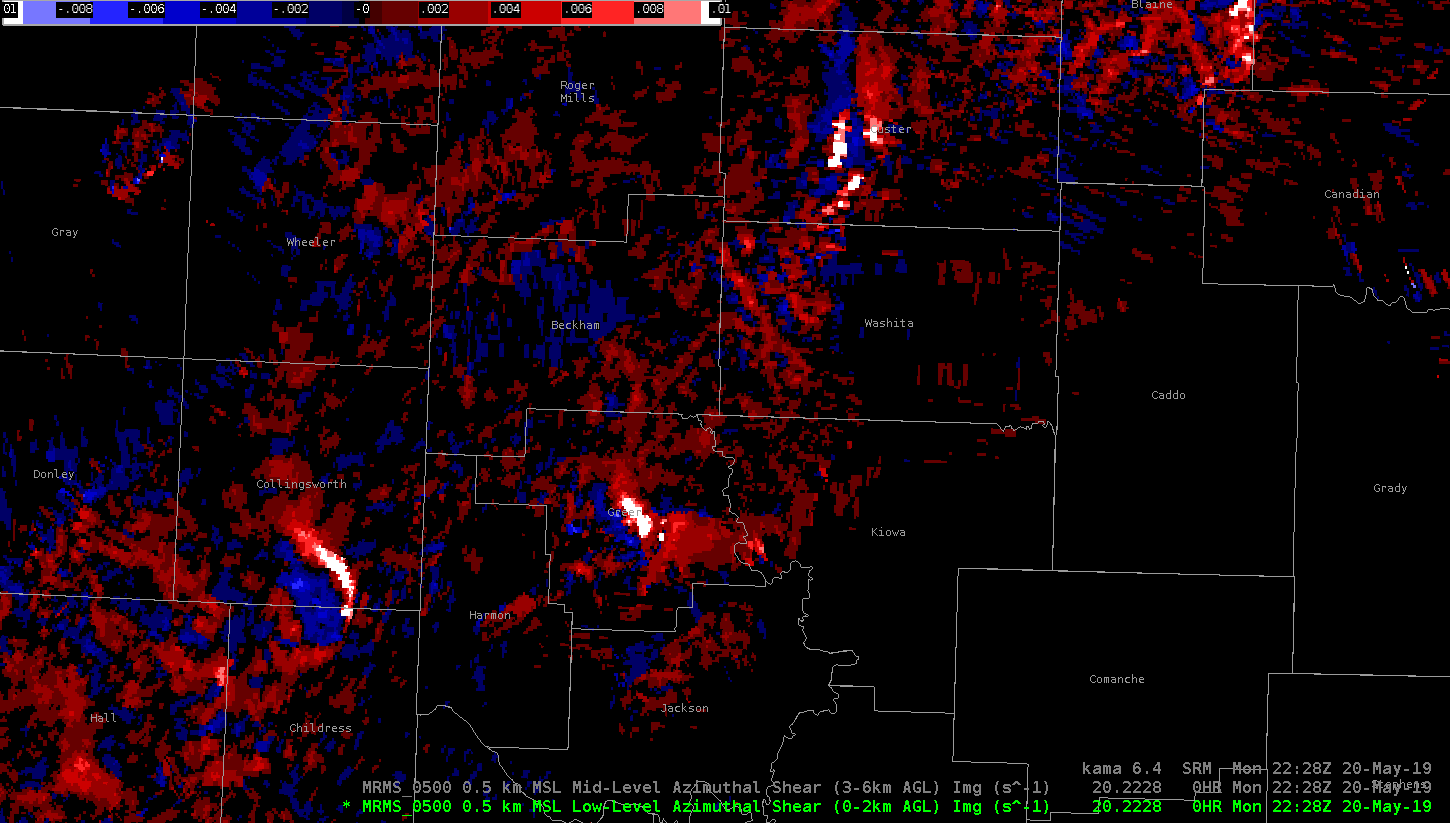
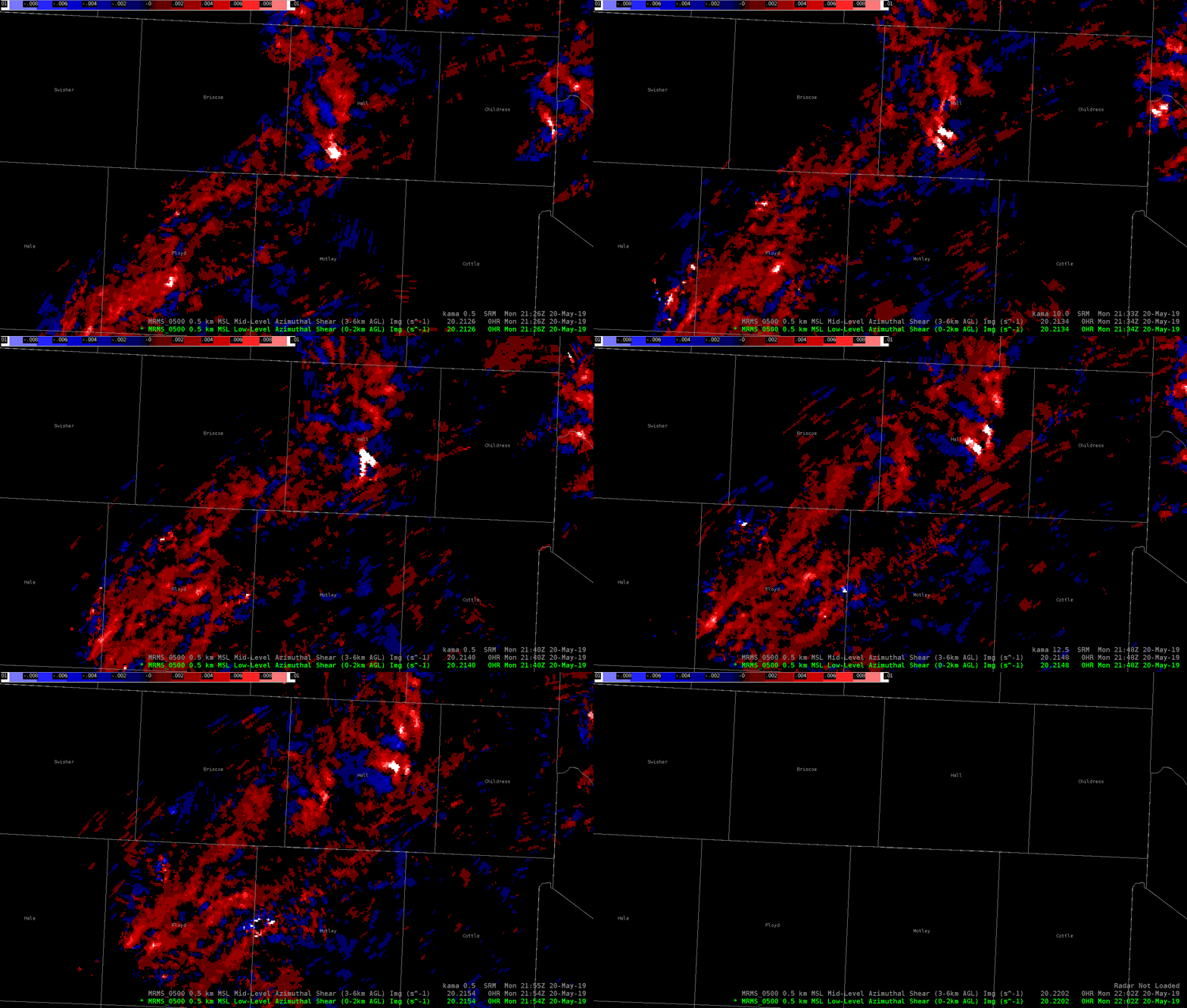
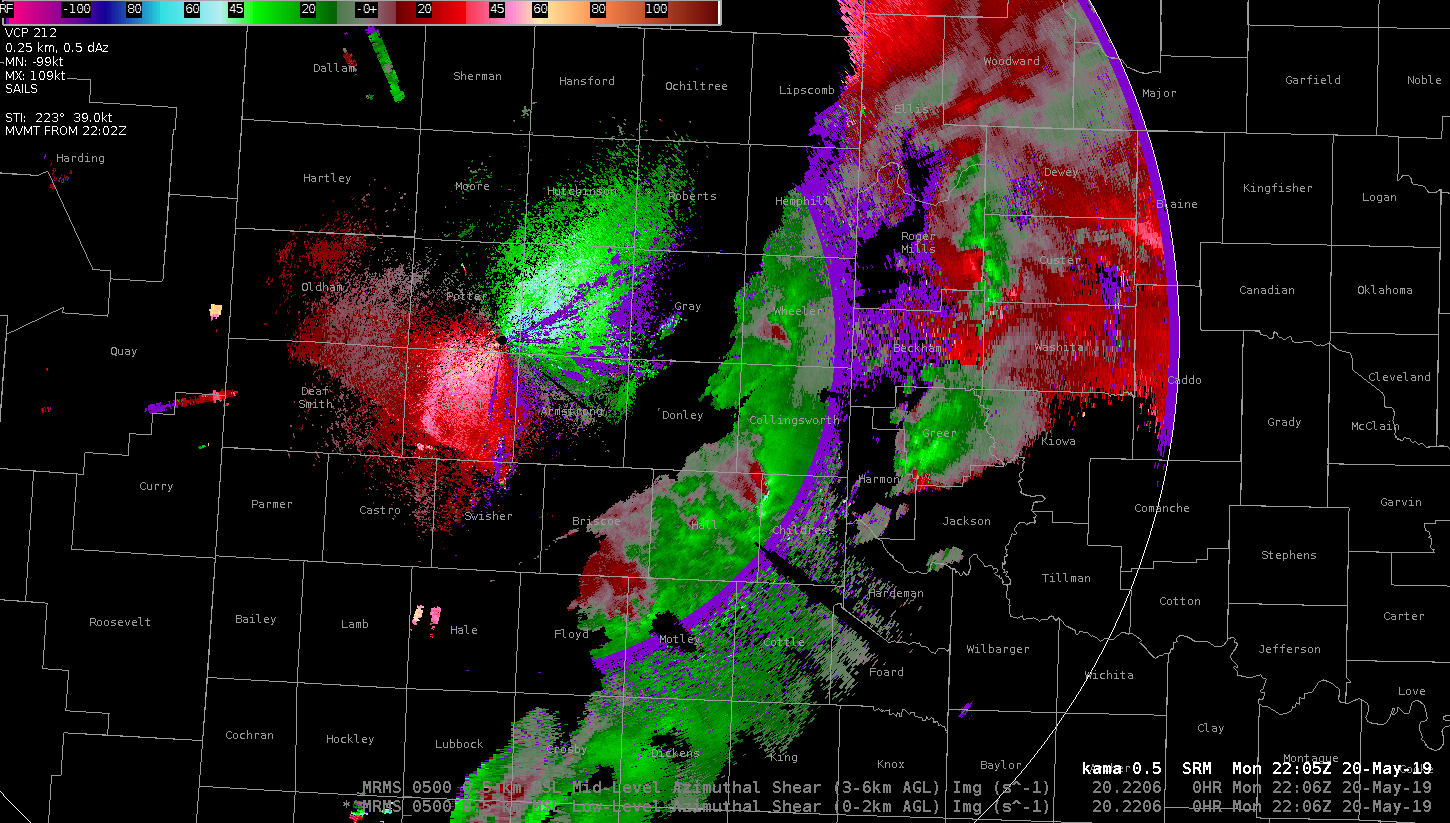 The reflectivity structure is more of a bow echo and the AzShear should be used with caution in identifying velocity couplets potentially associated with tornadoes. -Atlanta Braves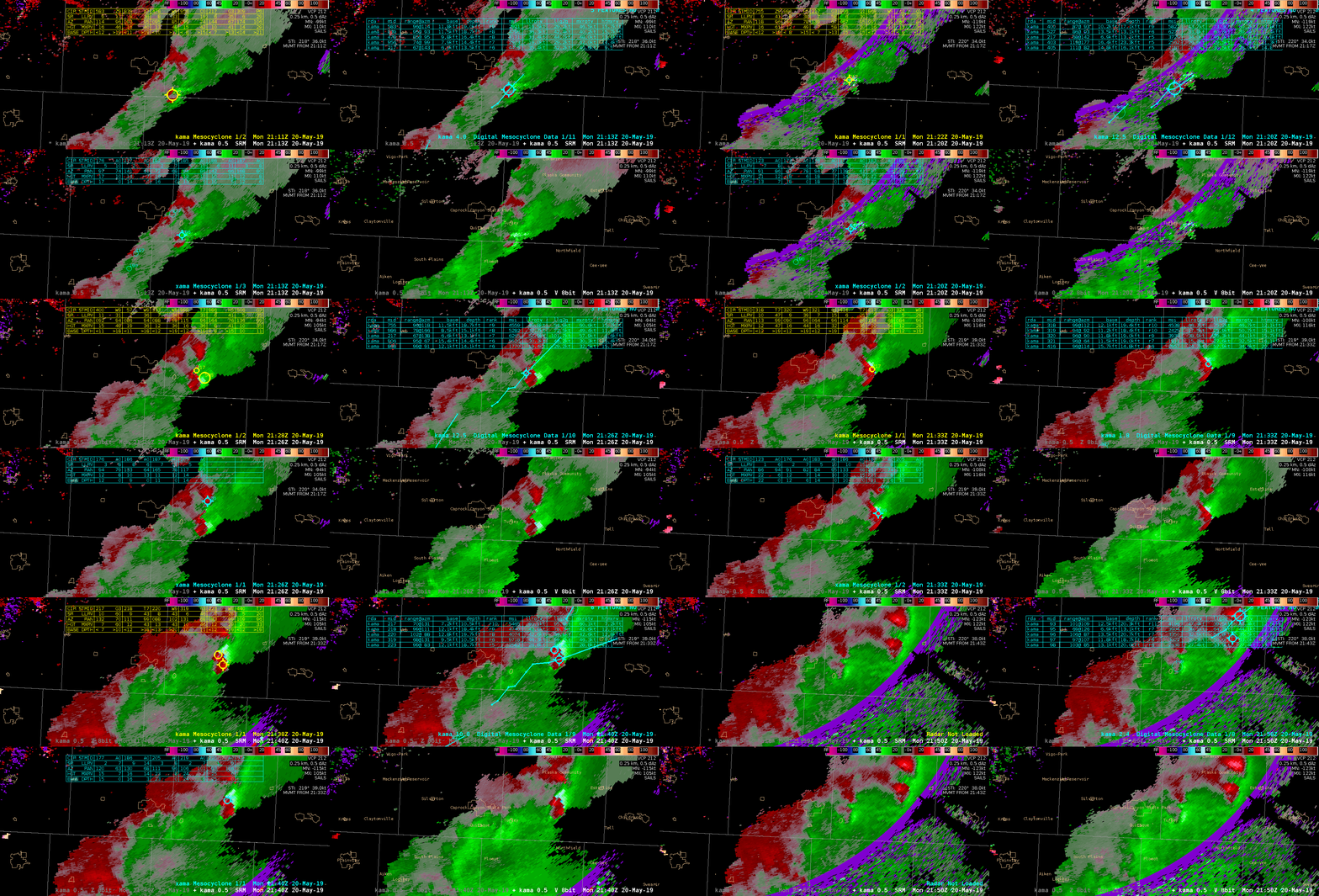
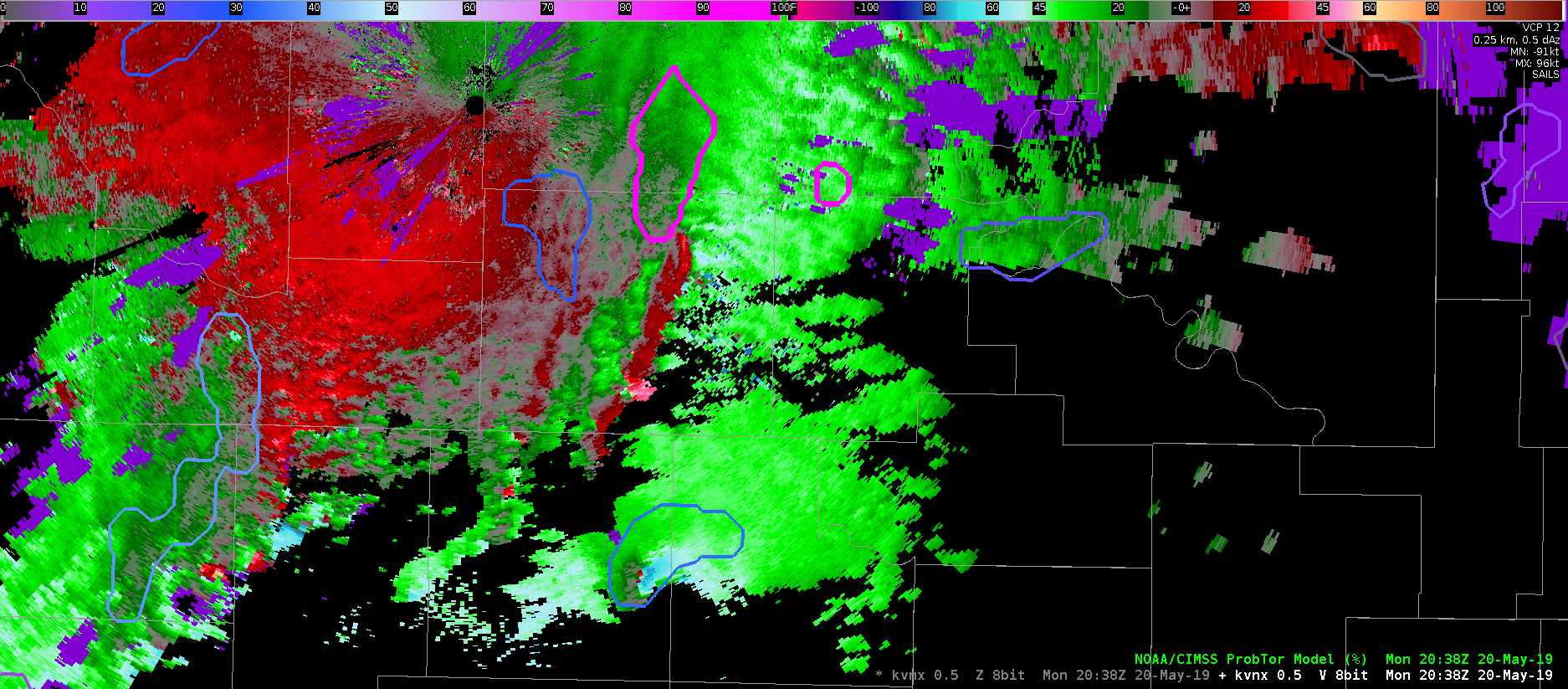
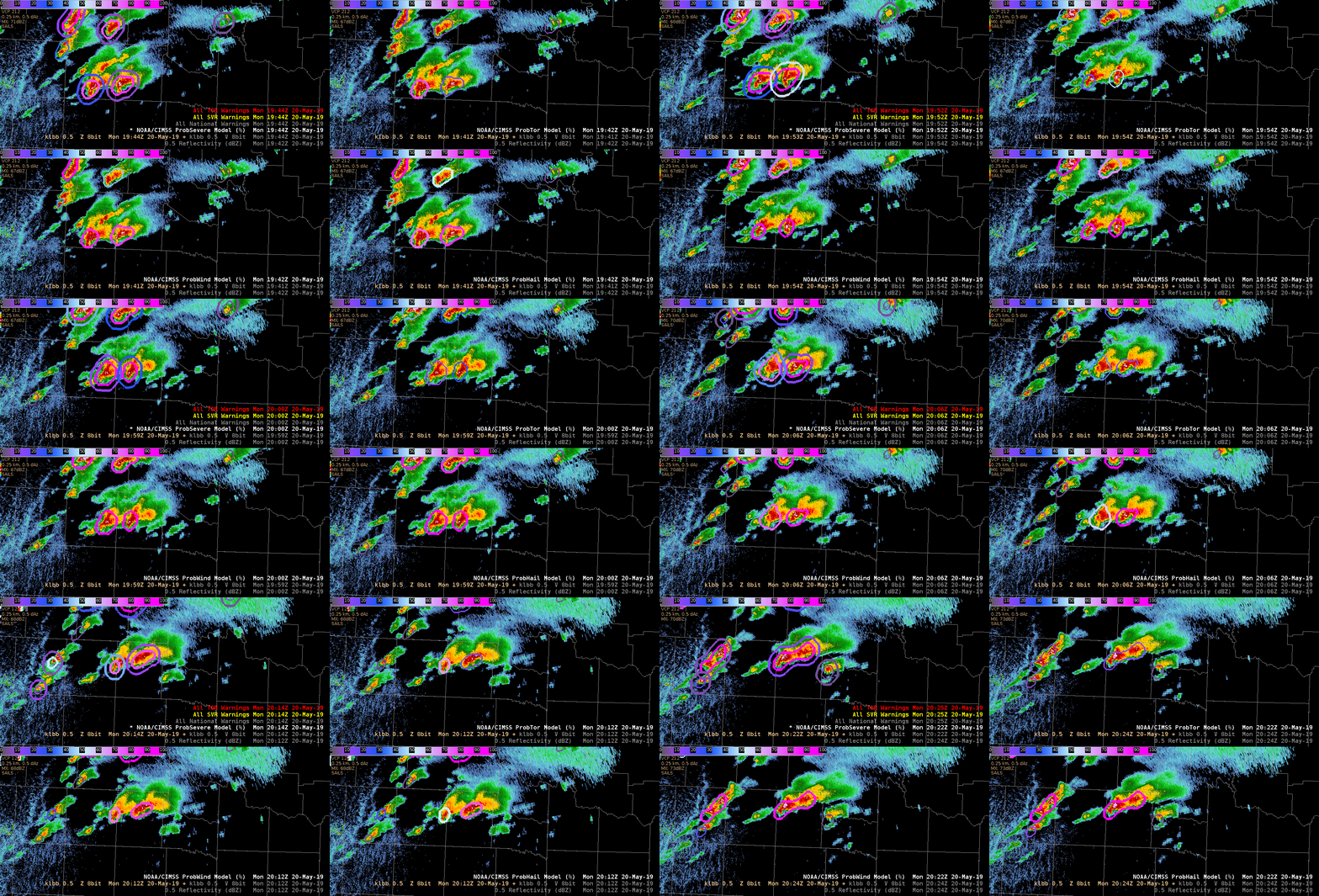 The tornado component of Probsevere jumped significantly before the tornado touchdown. At 1944Z the probability was at 7%, then quickly increased to 46% by 1948Z and peaked at 54% at 1952Z.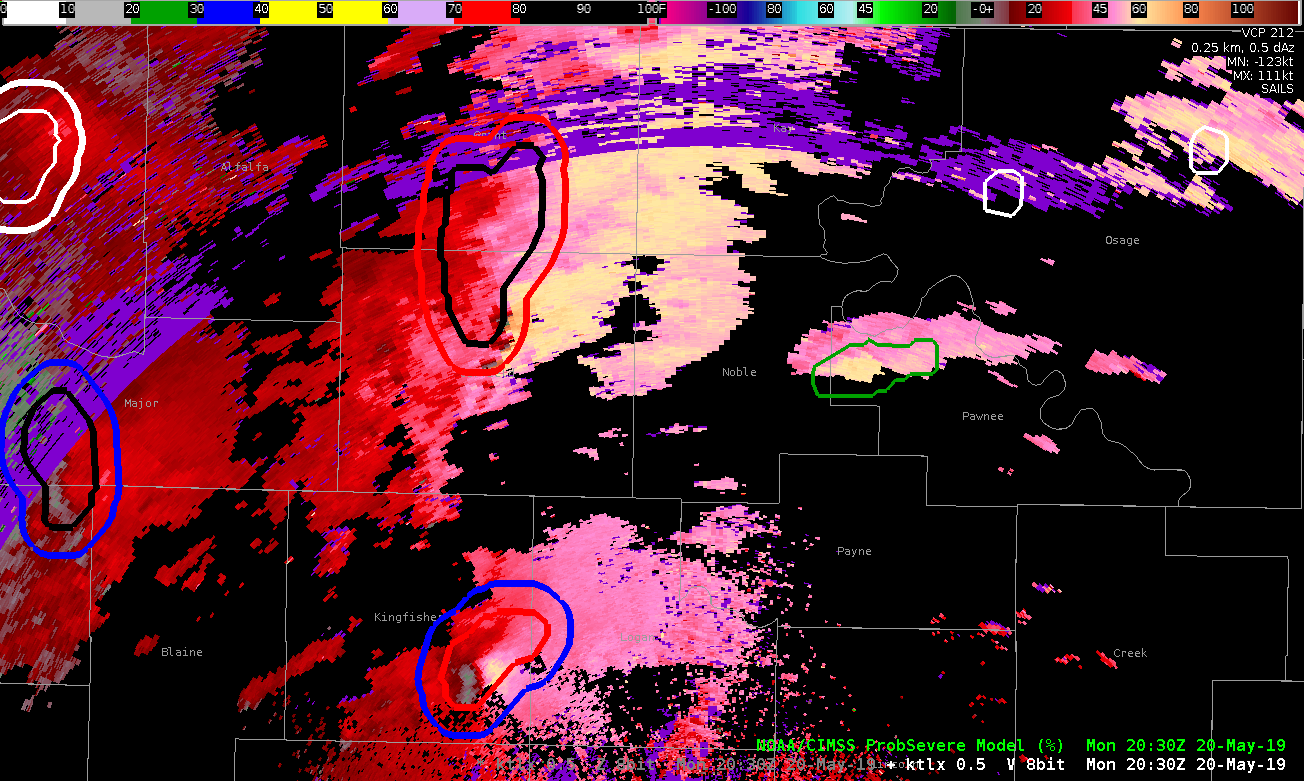
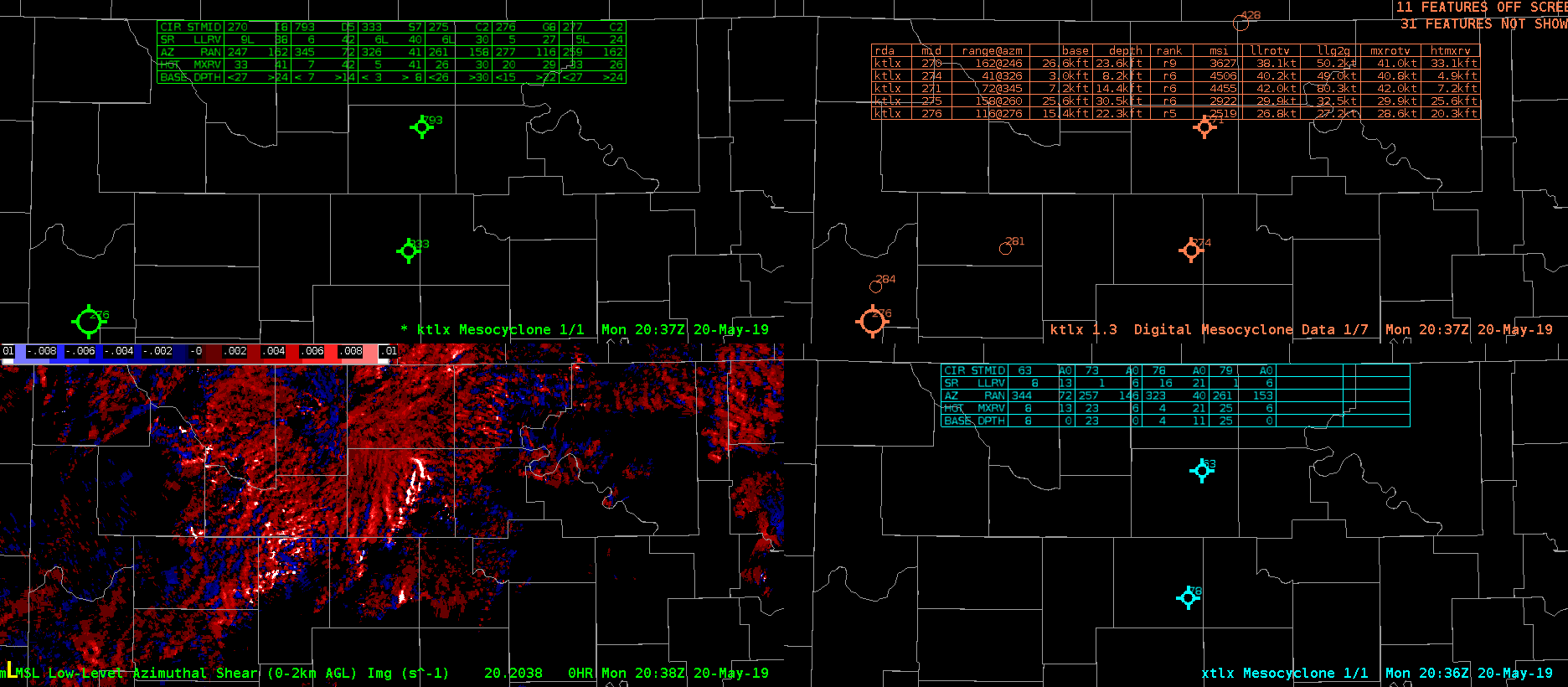
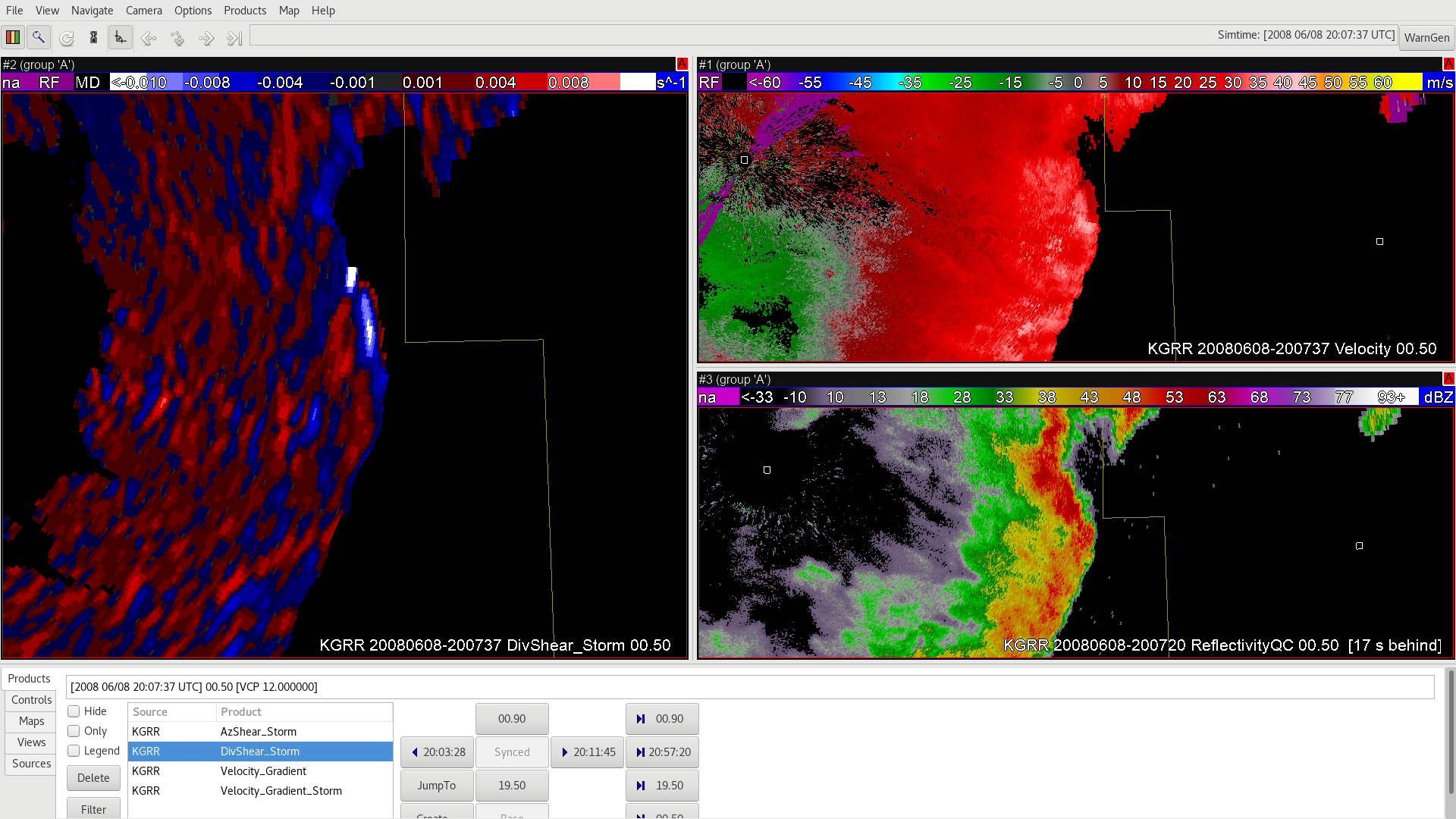
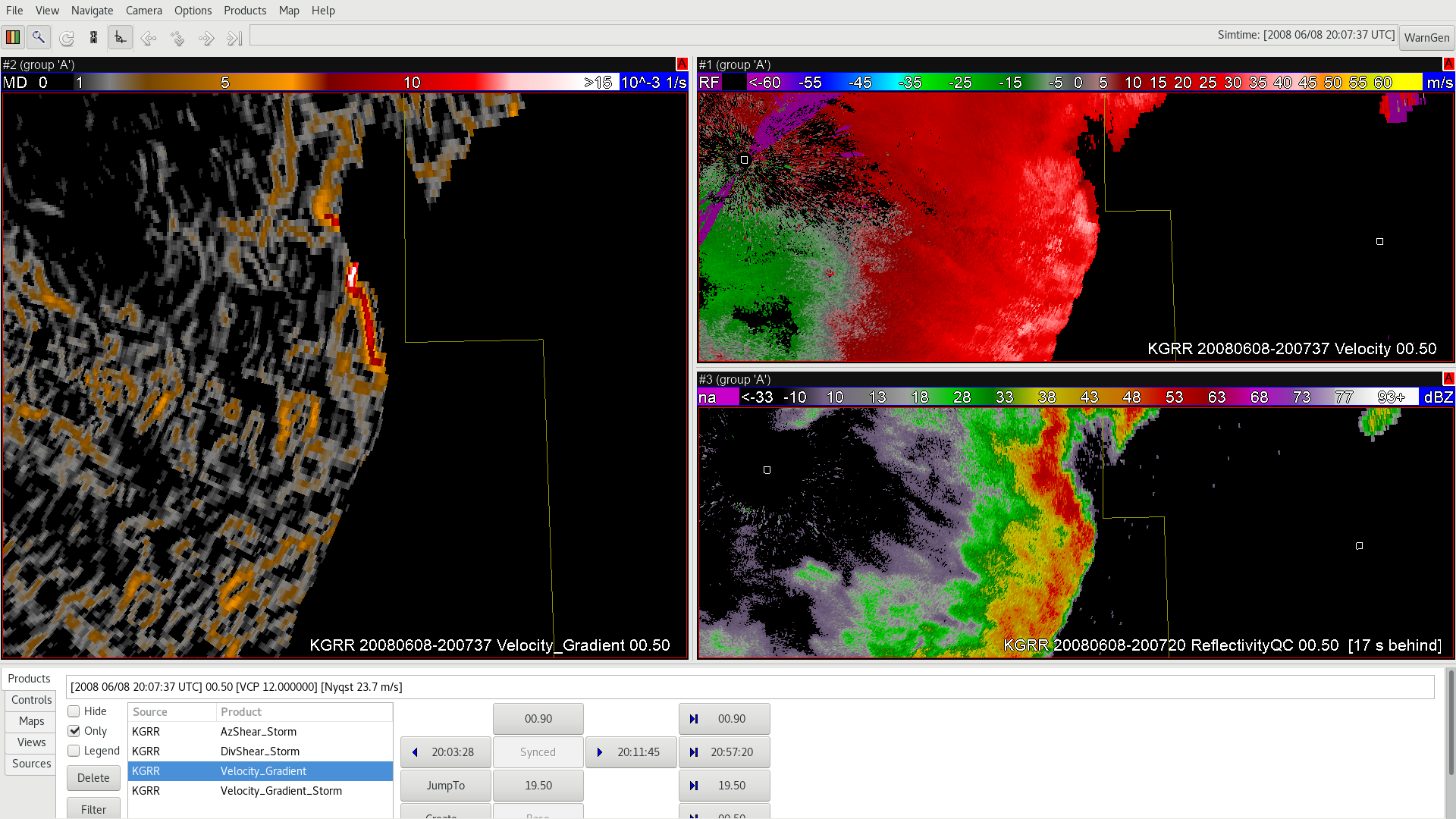
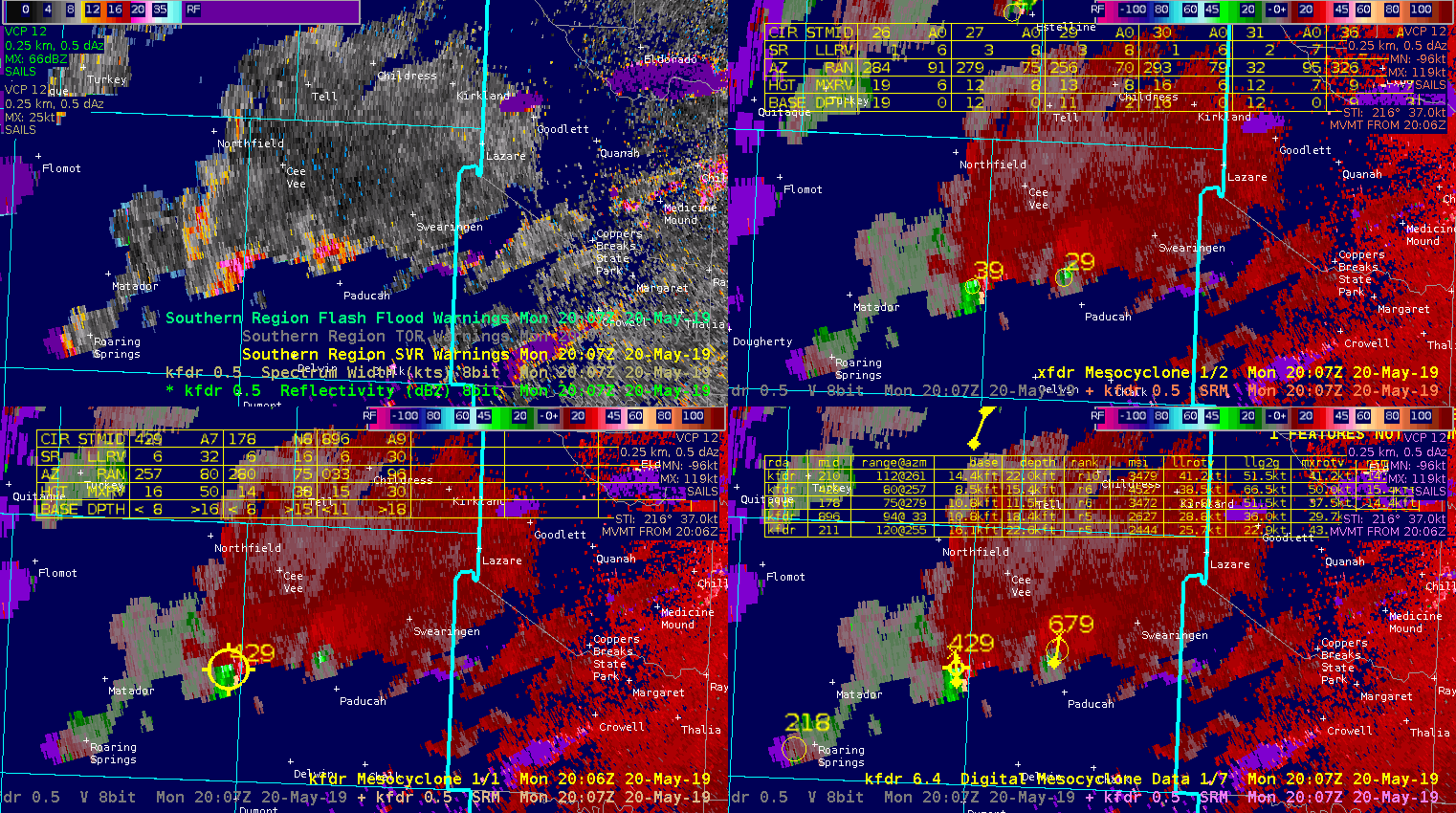 Just after 20z on the eastern fringe of the LUB CWA, the KFDR radar indicated an area of very high inbound velocity. However, this data is in question as the elevated velocity occurred in an area of low Z and high SW, and likely not representative of the actual storm. This may have been caused by a side lobe. This had cascading affects with algorithms being tested which could not filter out the bad data. Low level az shear spiked to over 0.01 in a group of stationary pixels. This caused algorithms that ingest the az shear product to spike including ProbTor which increased to over 90%, as well as CPTI which showed lower end probabilities of a violent tornado in progress.