Overview:
We just wrapped up the first week of the 2009 EWP Spring Program. It was a very productive week, and our visiting forecasters were able to get some experience with all four experiments either through archive cases or real-time events. We had real-time events each of the 4 operations days as broad southwesterly flow, coupled with ample low-level moisture, was present all week.
Participants:
Steve Cobb – NWS WFO Lubbock TX (LUB)
Suzanne Fortin – NWS WFO Pleasant Hill MO (EAX)
IOP Summary:
Monday – Expected to work the PAR and CASA data on a developing line of severe storms in Central Oklahoma, but they died early, and we were left with little significant live data to utilize. Thus, the evening was spent mostly with archive case analysis.
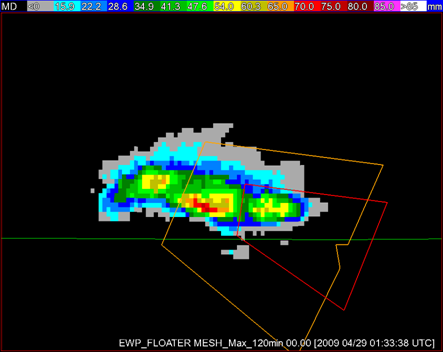
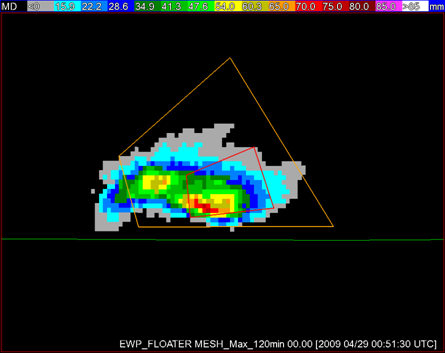
Tuesday – A Multi-Radar/Multi-Sensor (MRMS) algorithm IOP in the latter half of the shift, centered on two isolated supercells in Southeast New Mexico.
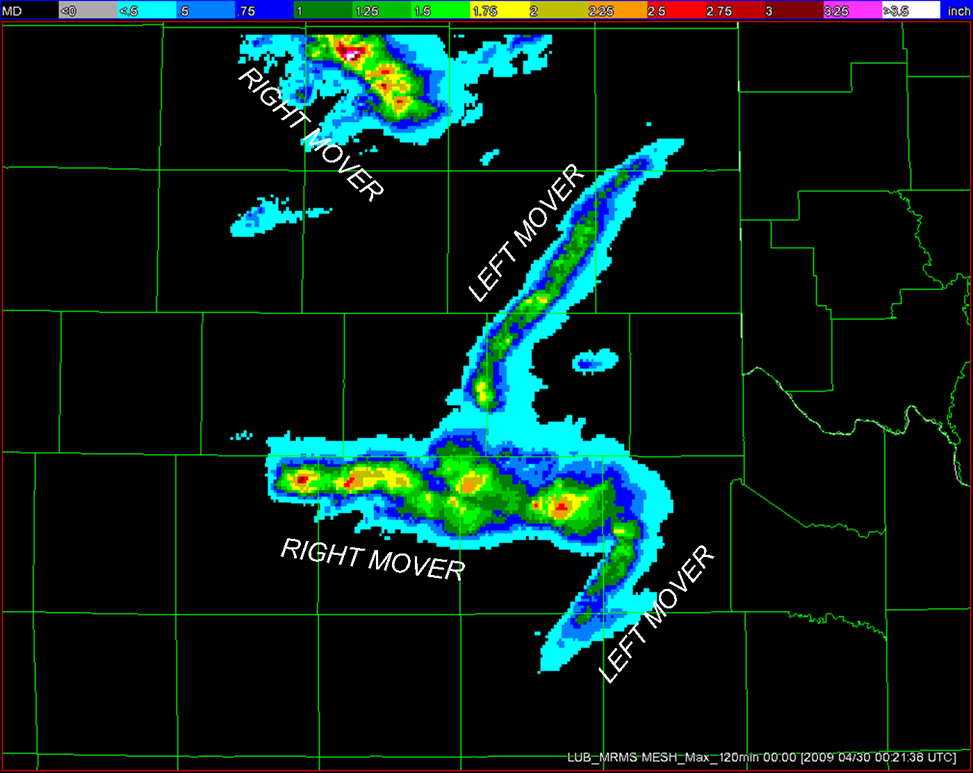
Wednesday – A MRMS algorithm IOP in the latter half of the shift centered on severe and tornadic storms between Lubbock and Childress TX.
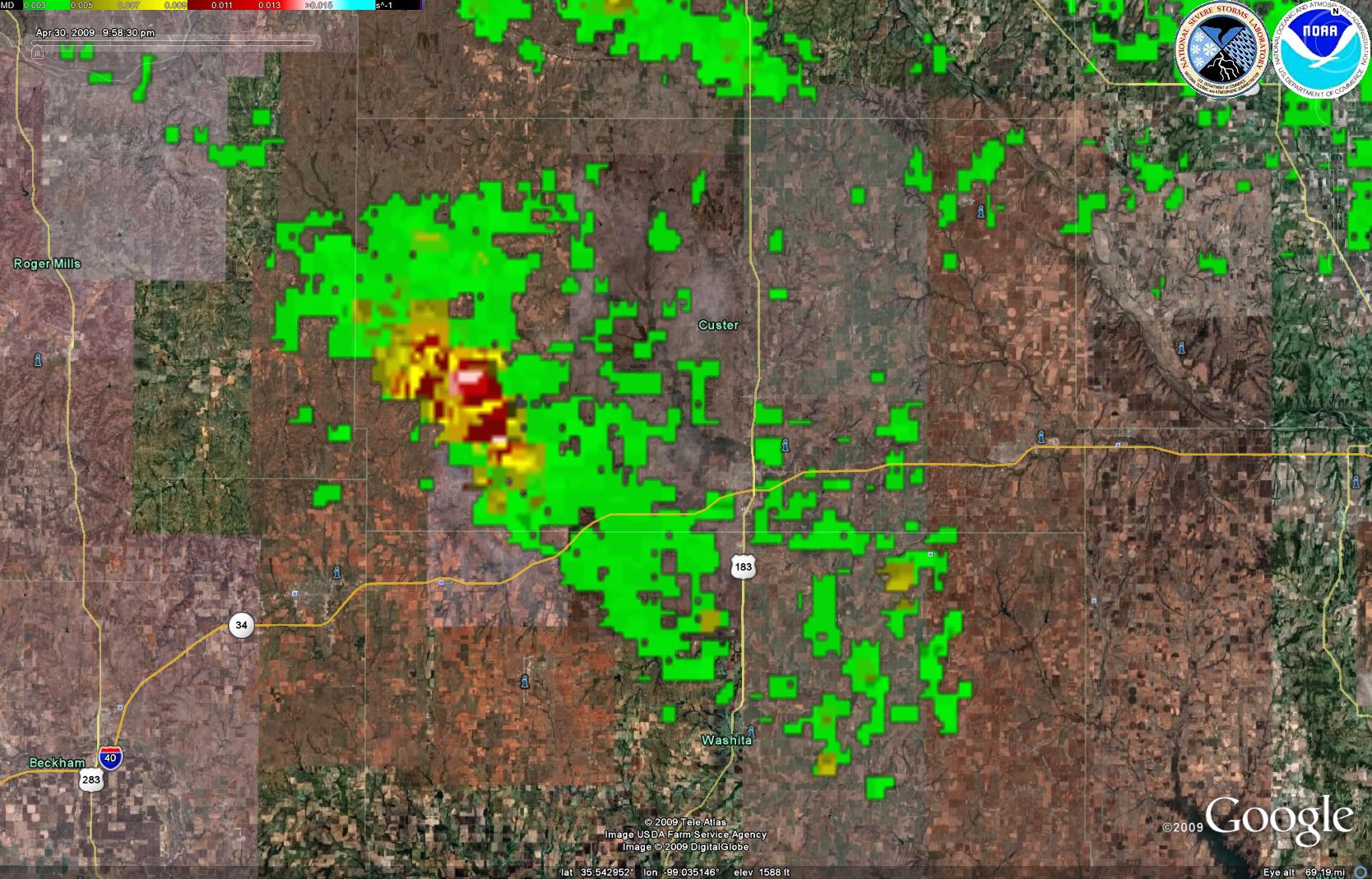
Thursday – A late IOP for a single isolated supercell in Western Oklahoma, as viewed by the PAR. MRMS algorithm products were also used in conjunction with the PAR data to issue warnings.
LMA Discussion:
The forecaster felt it was useful to compare the LMA products to the other multi-radar/sensor products. In fact, the same was said when using the PAR data to issue warnings. The forecasters were more comfortable with an integrated approach – to include all the experimental data.
A comment imitated a short discussion on whether we should be trying to issue experimental lightning warnings.
Multi-radar/Sensor Algorithms Discussion:
The MRMS products increased their ability to diagnose the storms versus using just the base data alone. The forecasters were quite pleased with the hands-on demo of each of the MRMS products that Greg gave on Monday. This greatly helped them understand what each of the products meant, how to use them for warning decision making, and how to properly combine various products. With the latter point being made, the forecasters commented that NSSL should develop a few default AWIPS procedures with multi-parameter and multi-panel image loads available to new forecasters each week. One forecaster felt that it would good if some of the future forecasters got to practice with an event that moved over one radar, with the other radars “filling in” the 3D MRMS grids. Each forecaster concentrated on their “favorite products” and thus did not evaluate each and ever product individually. This is not a bad thing and is good to know!
Finally, one forecaster commented that the introduction of these new products to operations should be done very carefully. If not, forecasters might find that the products put themselves too external to their comfort zones, and will push the new products aside. These first impressions can sometimes last a while.
PAR and CASA Discussion:
There wasn’t much additional discussion on PAR and CASA since they were adequately covered in the Thursday debriefing earlier during our Friday morning session. The underlying theme with both the PAR and CASA data was that the data refresh rate was occasionally too fast to manage, yet that having the more-frequent updates allowed the forecasters to better diagnose the evolution of the severe weather and tornadic signatures.
Project logistics Discussion:
The forecasters noted that having the WDSSII MRMS data in AWIPS helped with the analysis immensely, and they were grateful that we facilitated this in the testbed this year.
They noted that it was nice to be able to use the WDSSIII GUI (‘wg’), which is like peering “under the hood” of the more-familiar (to WFO mets) Four-dimensional Stormcell Investigator (FSI). They commented that some of the ‘wg’ features might be incorporated into a future build of the FSI. There was one suggestion provide linked cursors between the FSI and AWIPS D2D.
One forecaster noted that any forecaster might have a slightly difficult time adjusting to issuing storms in a County Warning Area (CWA) for which they are unfamiliar since there is a wide range of “comfort zones” with each forecaster and/or each WFO. They also suggested asking the forecaster to email their AWIPS procedures ahead of time to load them up on the HWT machines.
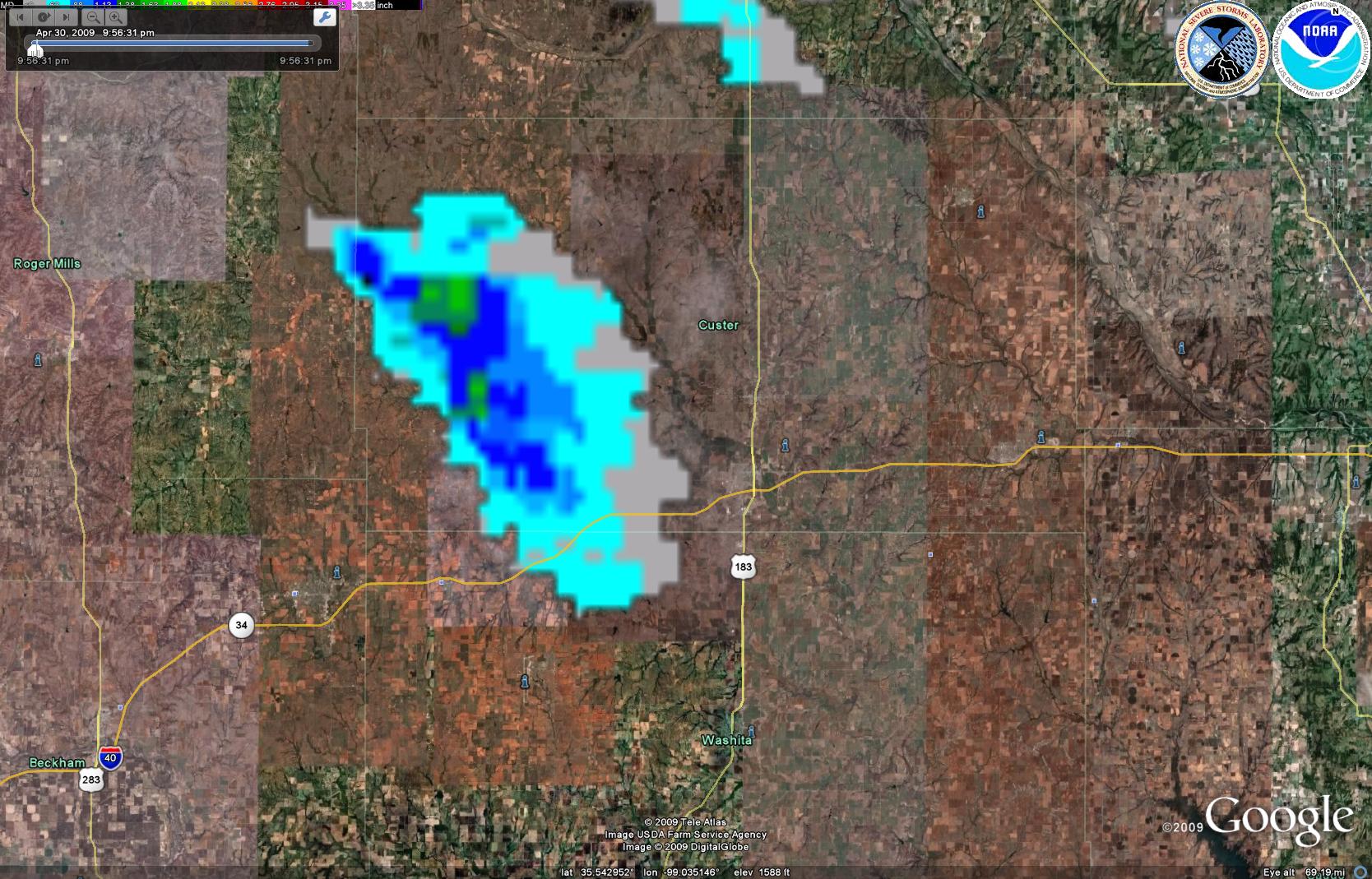
The value of Google Earth to illustrate multi-parameter trends was mentioned.
The forecasters felt the schedule was not too demanding, although hoped that the NWSEO could allow for some flexibility in the shift schedule to accommodate the “storm’s schedules”.
Having the cognizant scientist “mentors” provide another overview of the products during the 30 minute pre-IOP spin-up was found to be very useful. One forecaster also suggested that we provide an “Area Weather Update” during the 30-minute spin-up, to orient the “new forecast shift” with the situation. Also, the forecaster wanted to ability to issue polygon-based Special Weather Statements (SPS) which could be used for Significant Weather Updates.
The forecasters like the discussions, as learning comes best from discussion.
Friday Brown-bag lunch seminar abstracts/titles:
Our visiting forecasters each opted to not provide a seminar this week, and thus the brown-bag lunch was canceled.
Final thoughts from the weekly coordinator:
I’ve discovered that being the overall experiment operations coordinator, plus being the weekly coordinator for week 1, was a little too much – there were many experiment logistics loose ends that need to be tied up and fires to put out. Next year, I will do the weekly coordinator stint a little later in the experiment period. Otherwise, I think we have been much better prepared this spring as compared to 2008, even given our big transition to AWIPS, and we’re ready to roll on for the next 5 weeks of the experiment.
Greg Stumpf (EWP Weekly Coordinator, 27 Apr – 1 May 2009)