Value in GLM data

totallightningbigcrawler

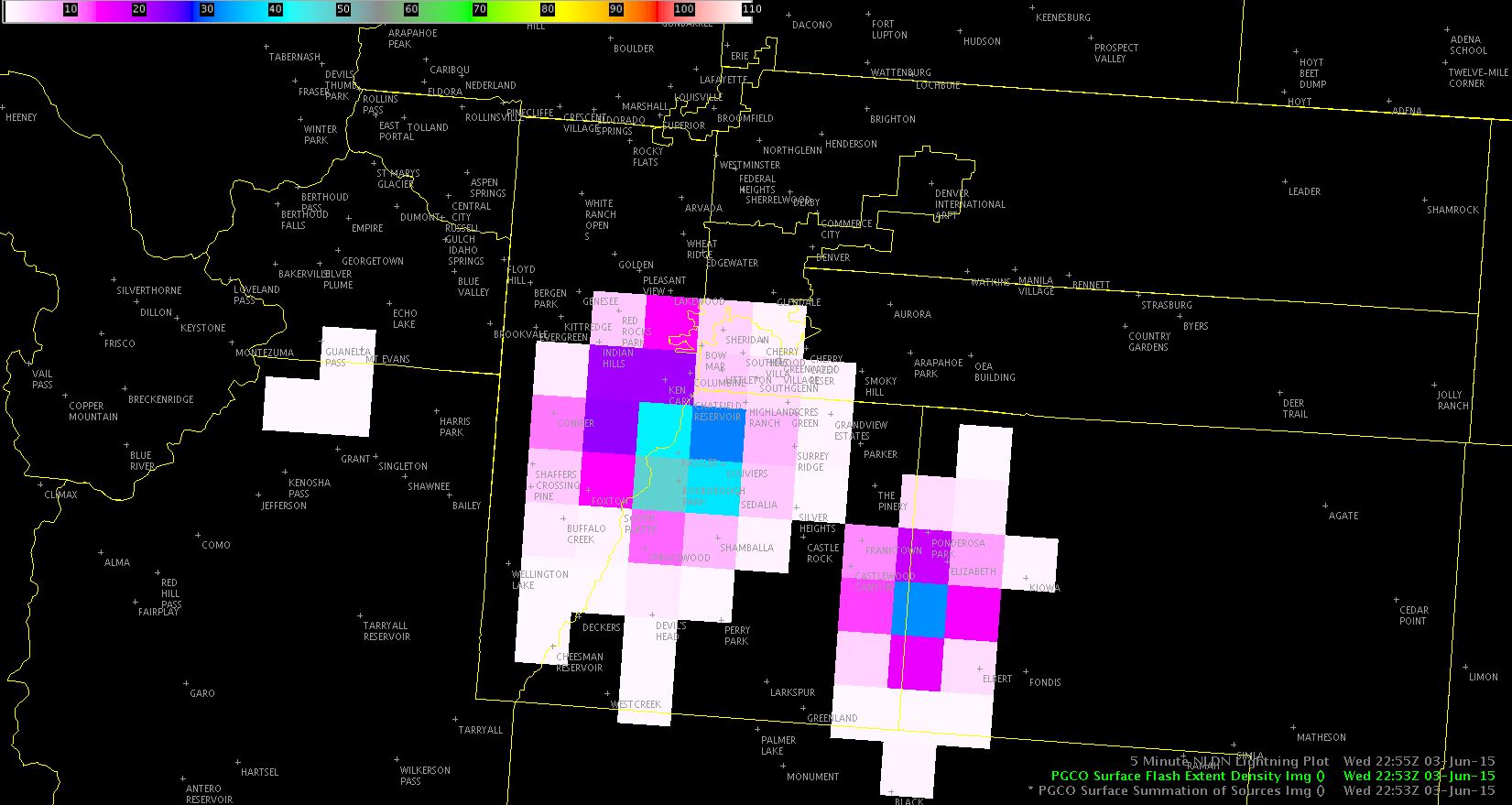
The storm south of DIA has a very obvious core, but of note is how far away lightning is being observed from the parent updraft. NLDN shows a CG in the upper-right part of the lightning field, which is a very long distance from the main storm. In fact, there isn’t even any rain falling at that distance.

Jason Williams
Tags: None

pGLM and Lightning Jump continued benefit for pulsing cell

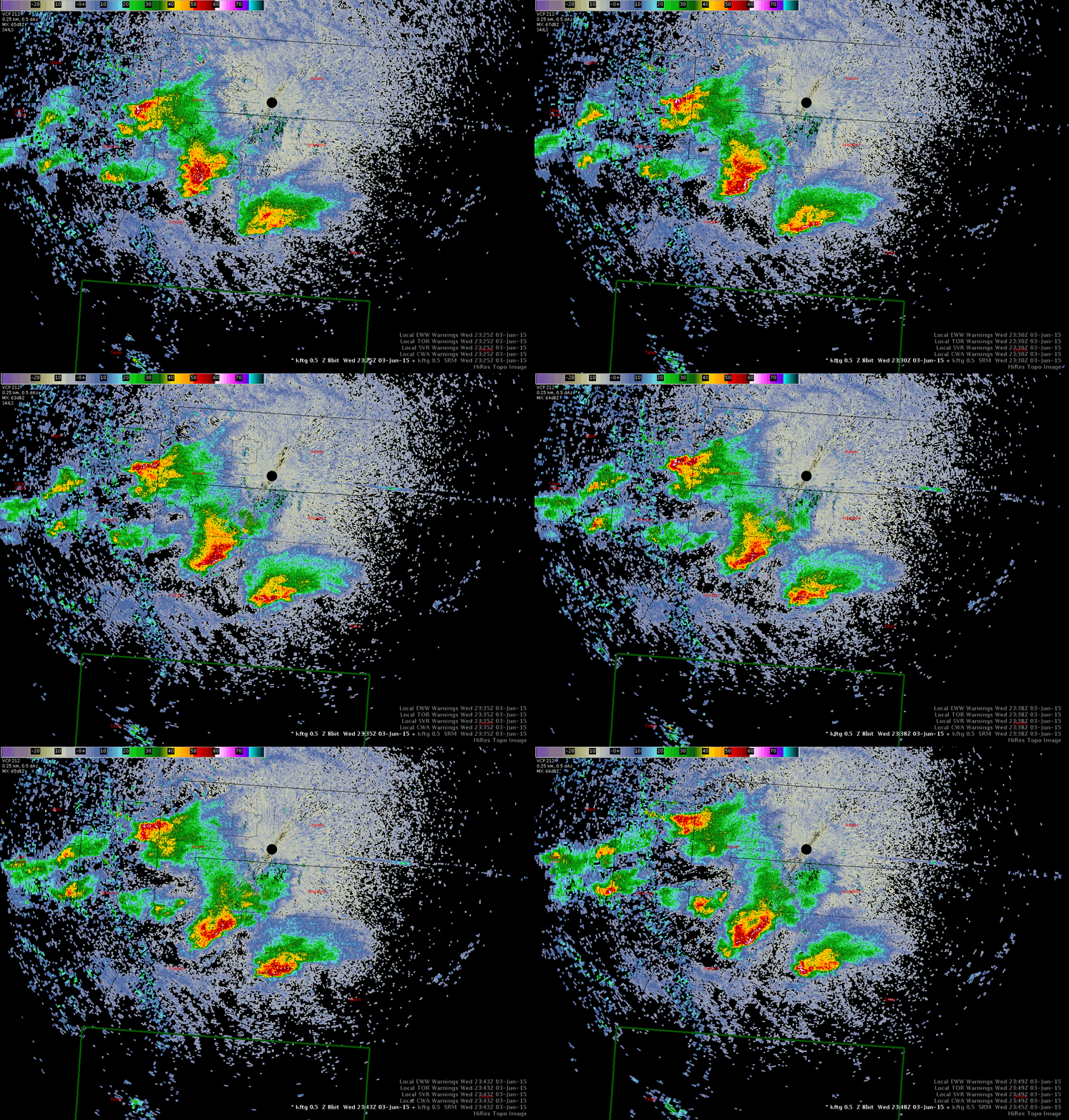
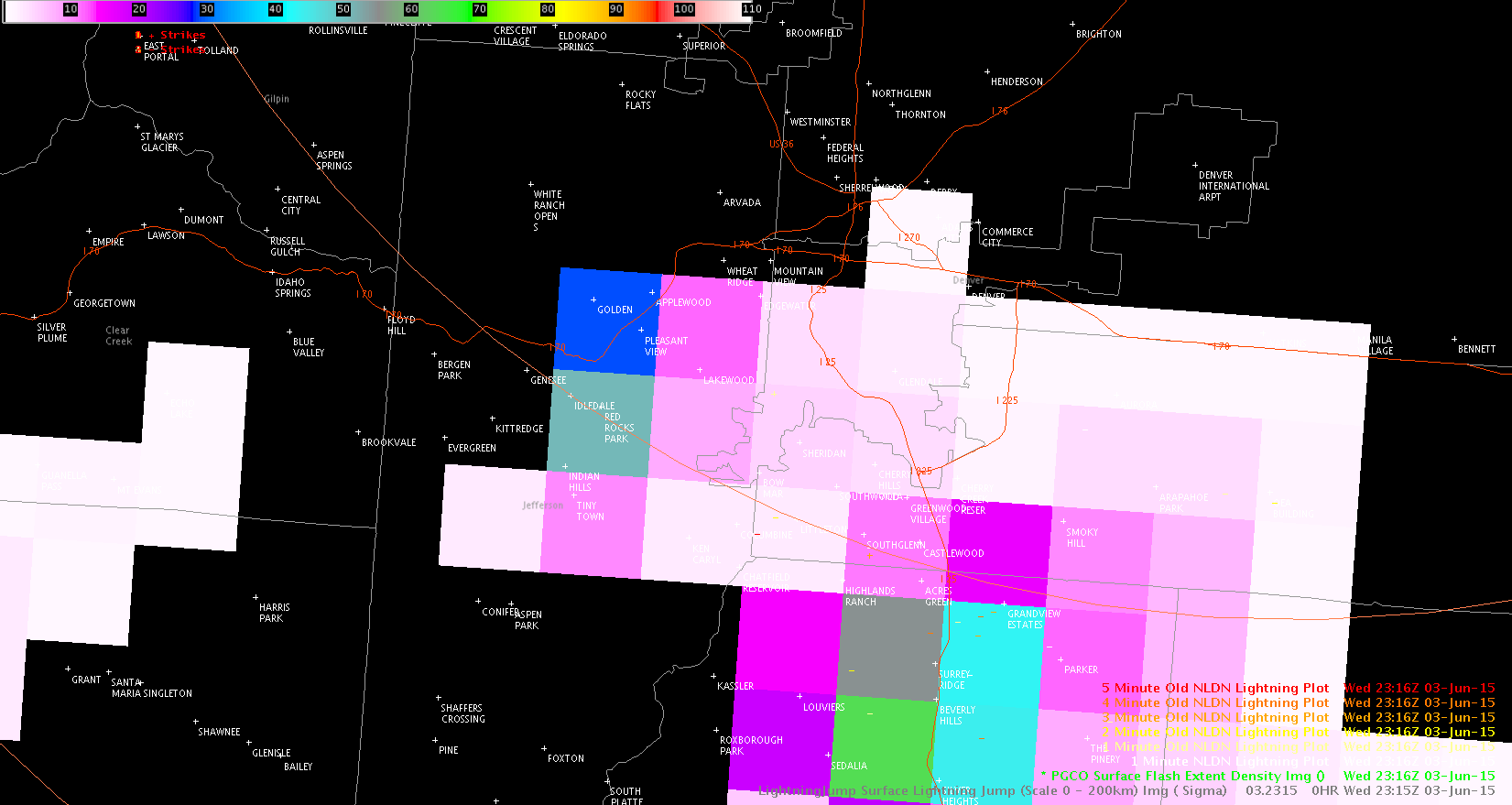
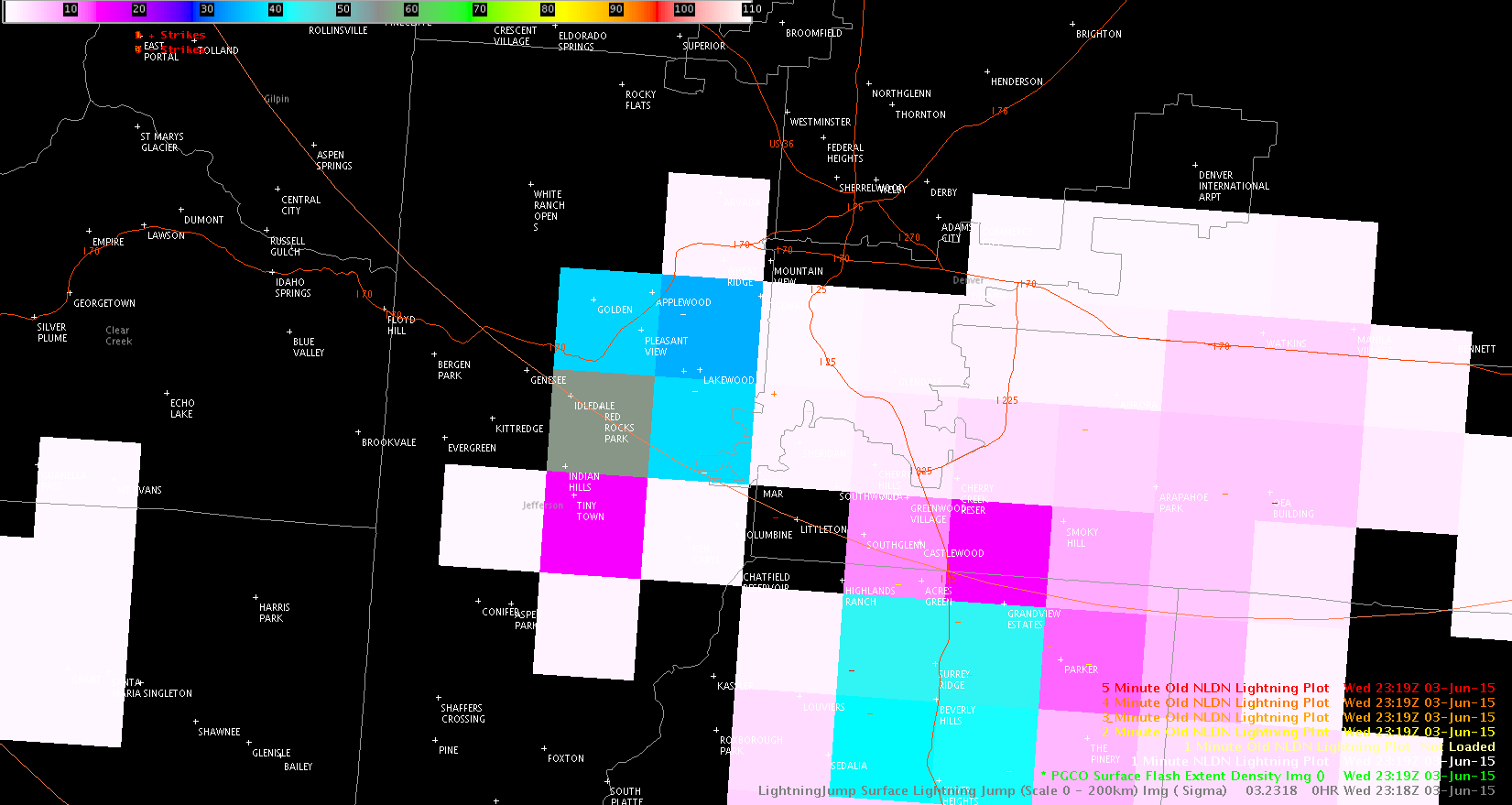
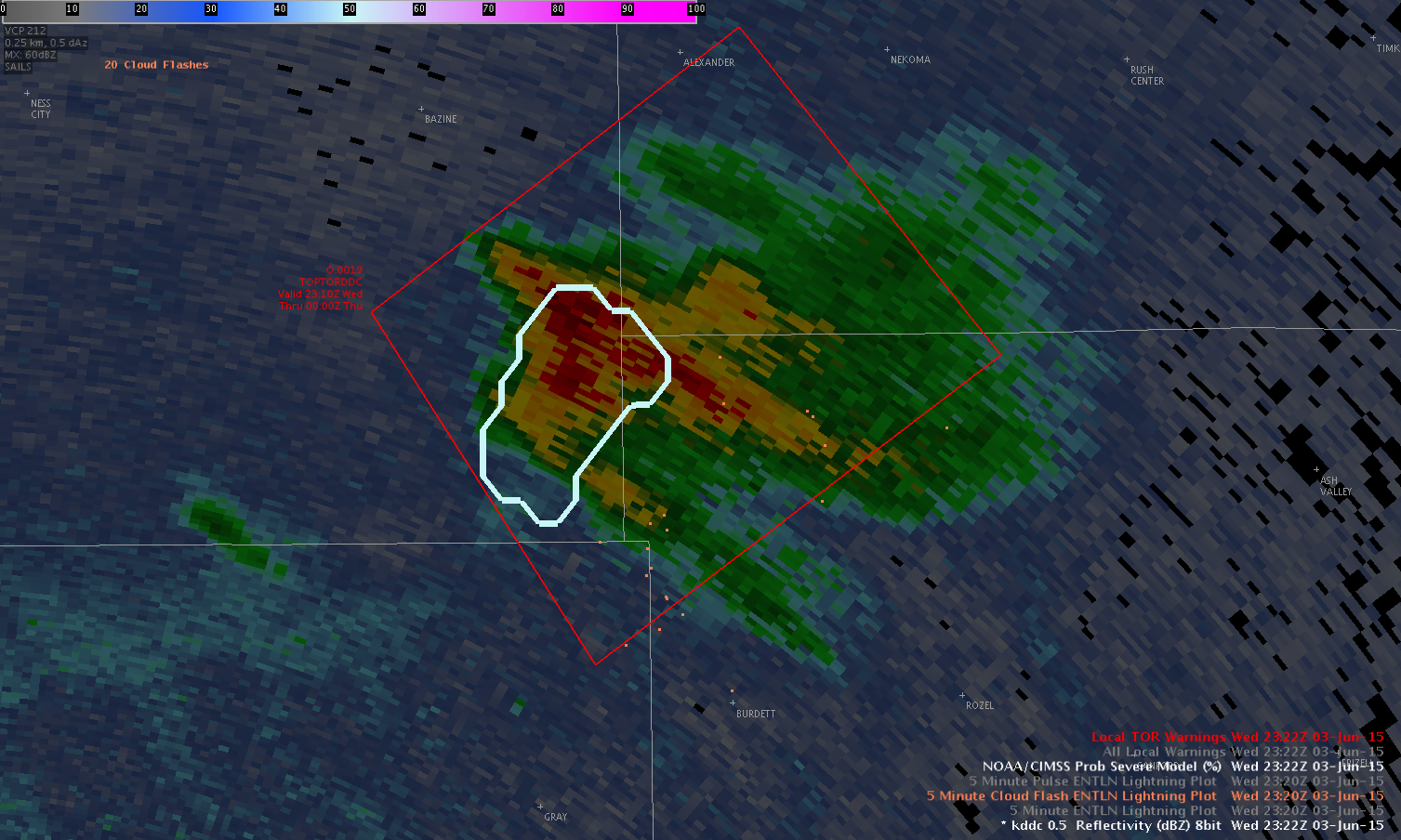
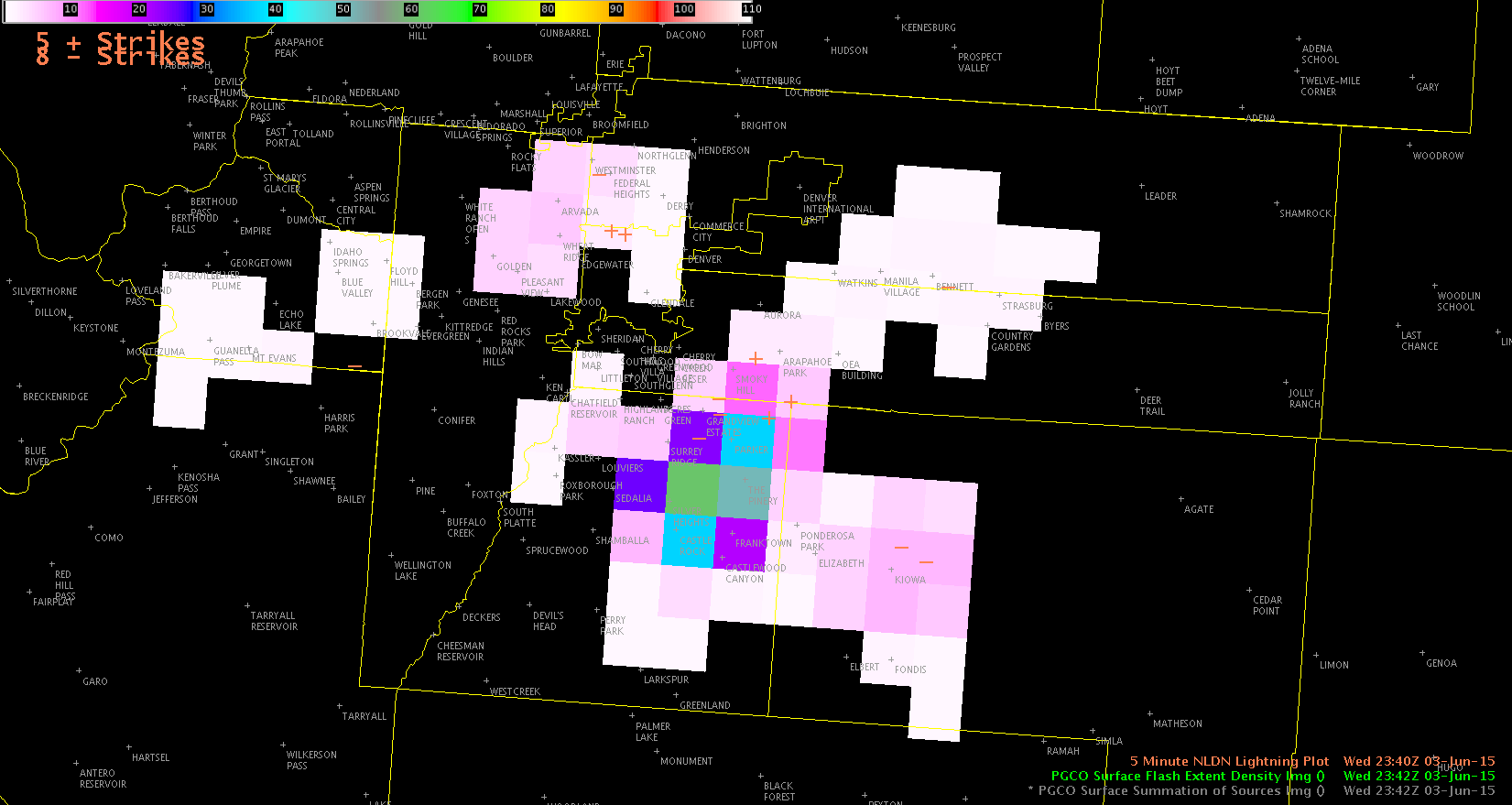
Have been monitoring a long-lived supercell which appeared to finally look like it was falling apart. Had a subsequent increase in lightning on pGLM 2325z (fig 1) over west Elbert Co. coupled with a 2 sigma jump .  Reflectivity then showed an increase with 60+dbz about 10 minutes later (fig 2 – gif loop 2325-2345z). The lightning was the only piece of information which showed the potential for this to occur. Indispensable in this case.  –Cattywampus

pGLM

Fig 1: Increase in lightning near cell core over western Elbert Co. (2325z)

LOOP

Fig 2: Gif loop of increase in reflectivity. (2325-2345z)

Tags: None

Multiple Overshooting Top Examples

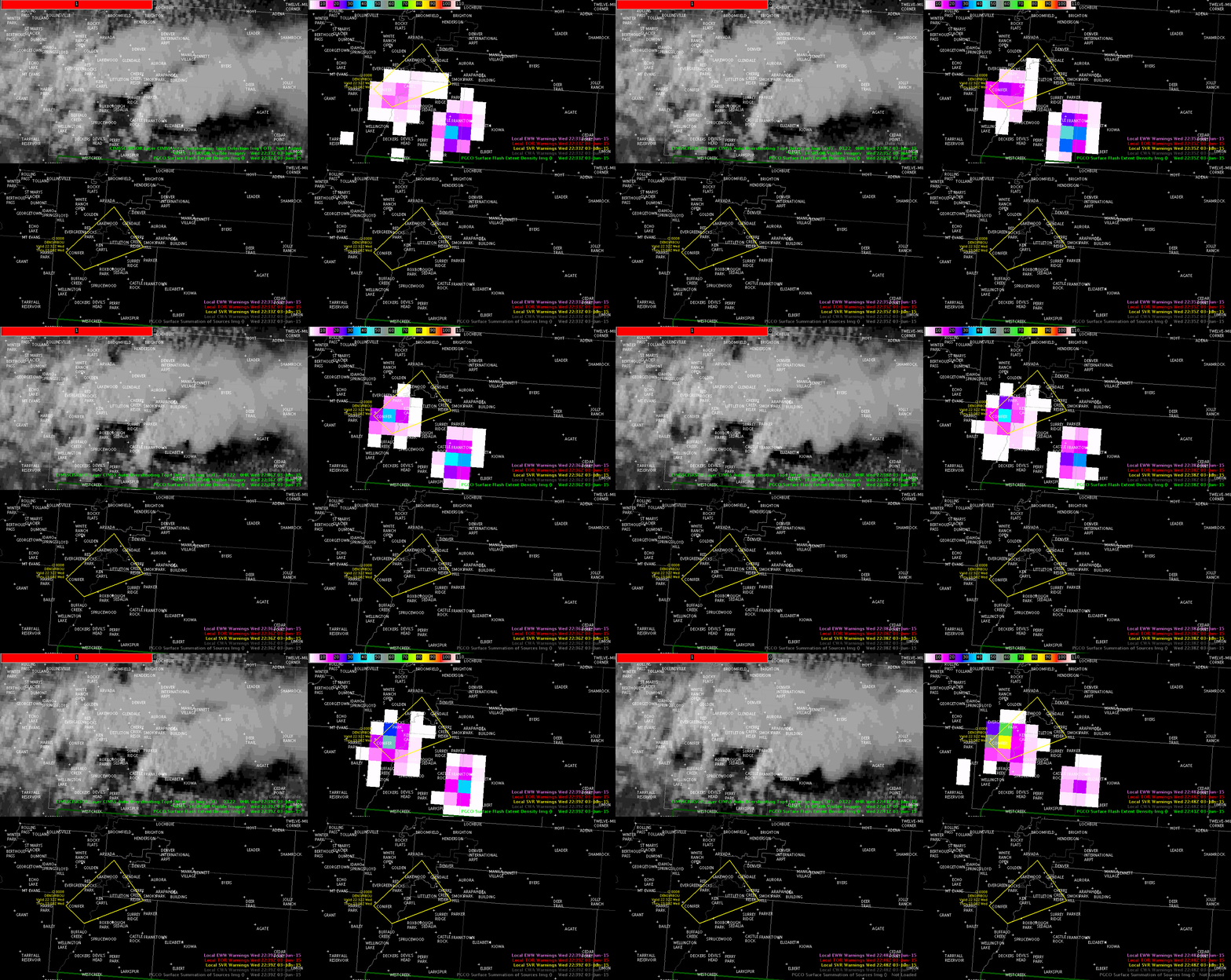
This loop shows a few examples of the overshooting top detection algorithm in action. Even though the overshooting tops were already pretty obvious in visible satellite, the detection algorithm really helped grab my attention.

OvershootingTops(Click image to see animation)

-Helen Hunt

Tags: None

More PGLM near Denver

pglm2302zpglm2306z

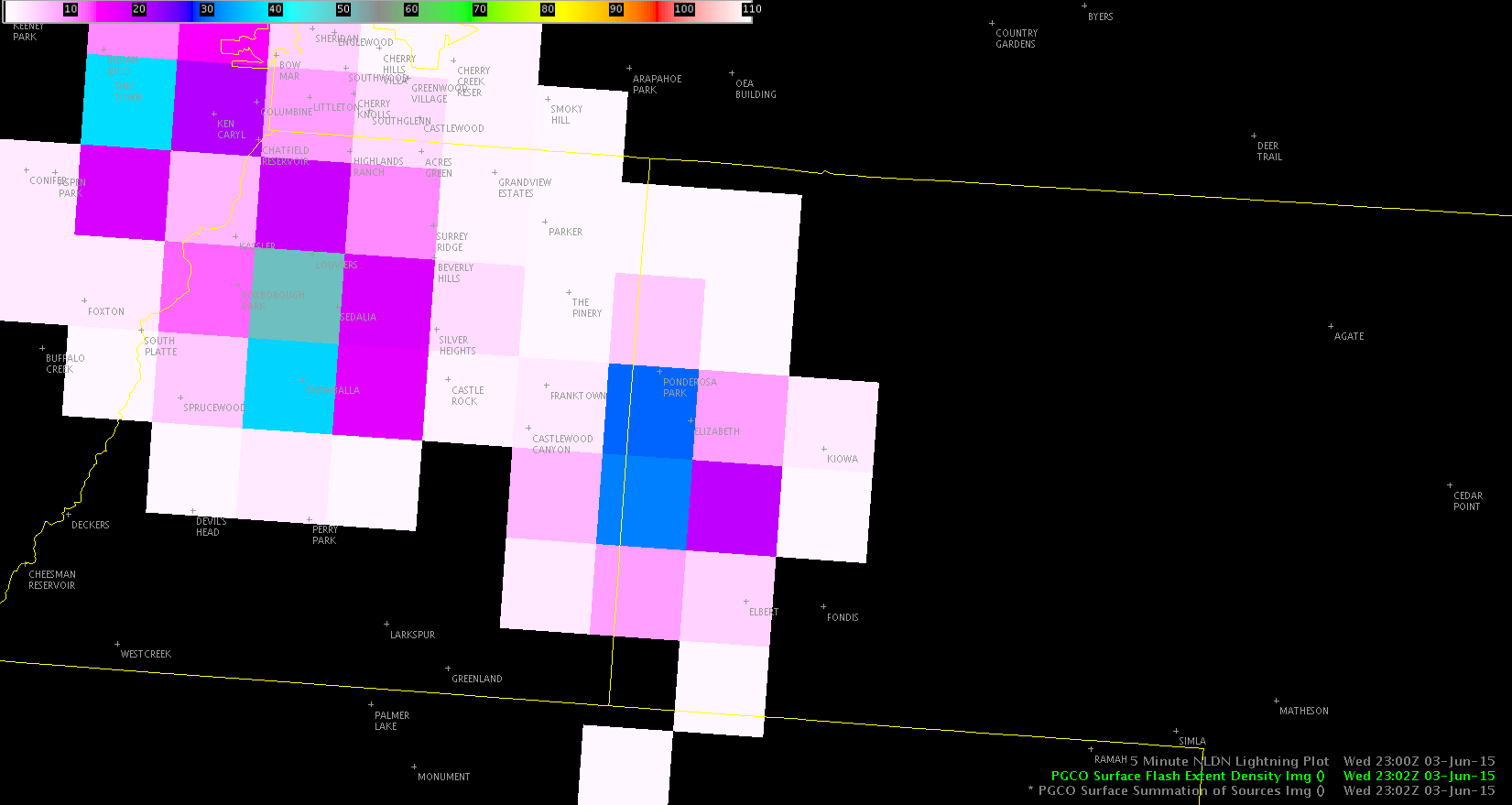
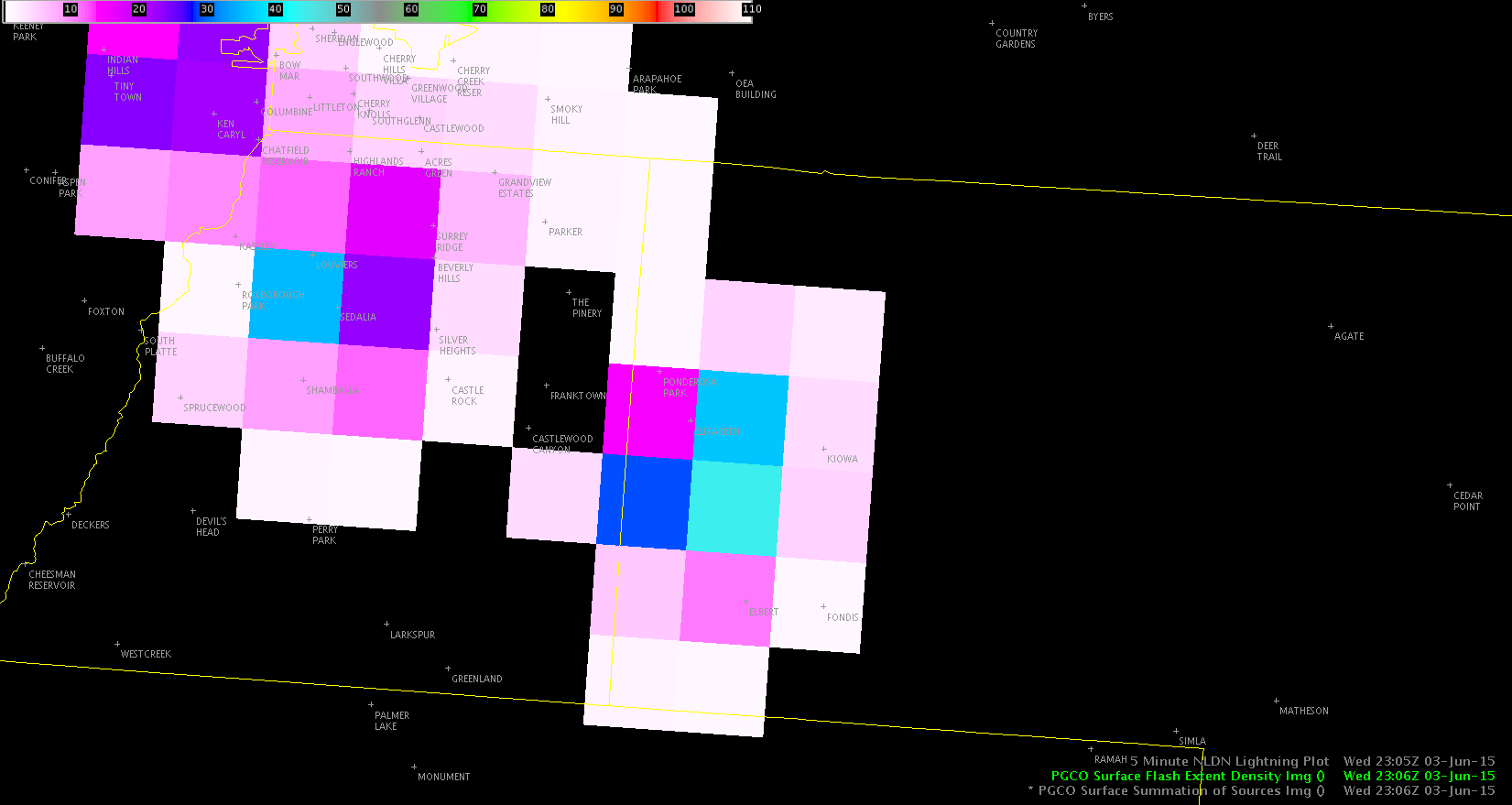
Cell south of Denver had an increase in total lightning (20 to 44). Still waiting for an LSR to see if that intensification resulted in hail reports (there have been a handful from storms thus far). That southern storm had not looked particularly great for a little while but the increase in lightning caught our eye.

Jason Williams

Tags: None

CIMSS CAPE

I decided to take a look at the CIMSS products to see how the environment was evolving through the afternoon. I noticed that the CIMSS CAPE products appeared cellular in nature in the southern portion of the Jacksonville FA and smoother further north at 21Z and 22Z. Initially, I thought that the smoother part was more accurate and that the cellular values further south were some sort of noise associated with the satellite. However, when I compared the CAPE values from the SPC meso-analysis to the CIMSS CAPE, I realized that the cellular values were actually closer to the SPC values (near 1500 J/kg) and were more representative of the actual environment. This is likely due to the cloud cover (seen in IR imagery) that is over the northern part of the FA. The GFS is probably being used in this area, so the data appears smoother and is actually less representative of the actual environment. Further south where there’s less clouds, we’re probably seeing more of the satellite data which may be why it’s more cellular, but more representative.

Screenshot-421Z

Screenshot-222Z

Screenshot-3

-Helen Hunt

Tags: None

Increase in total lightning

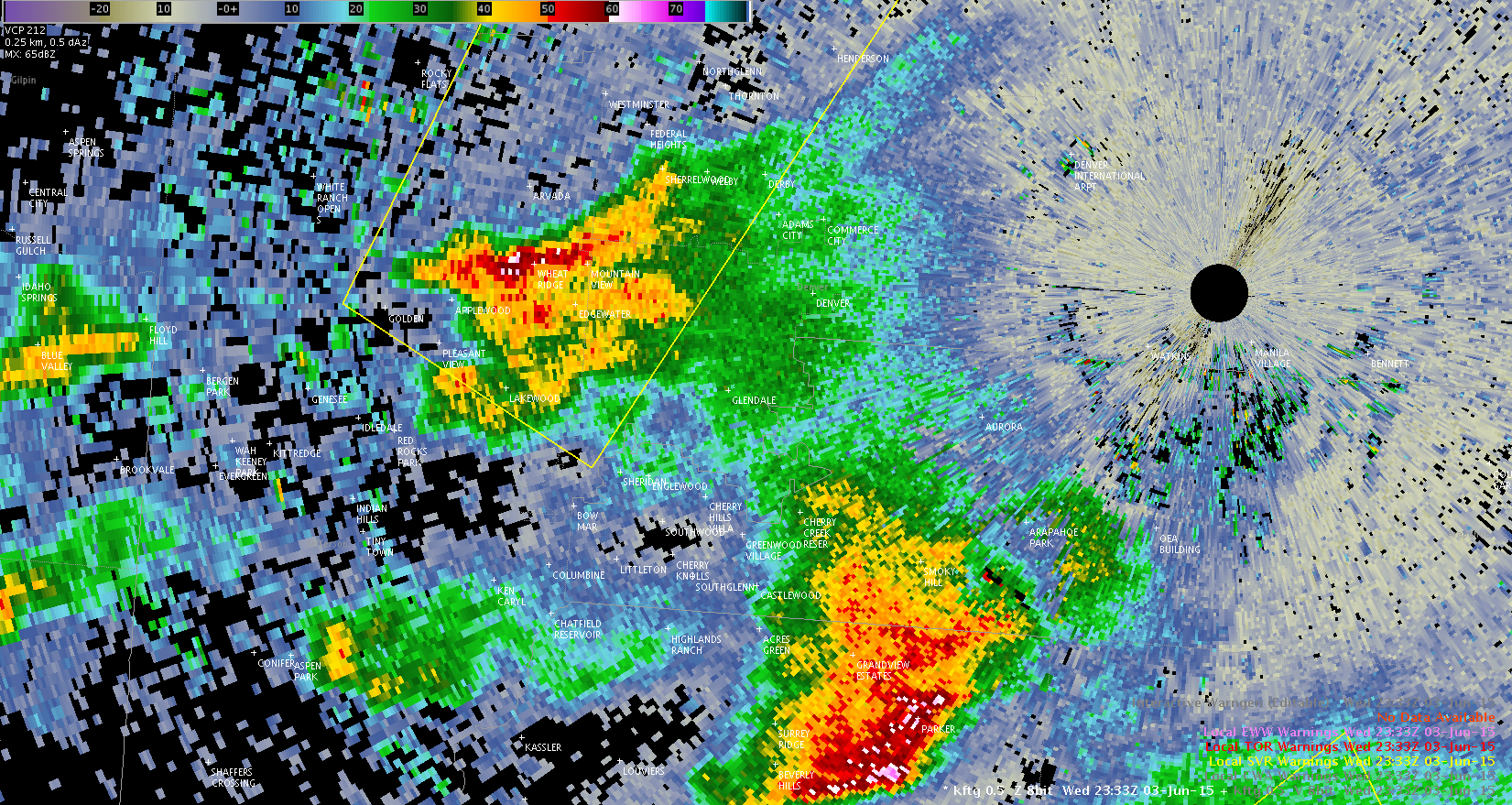
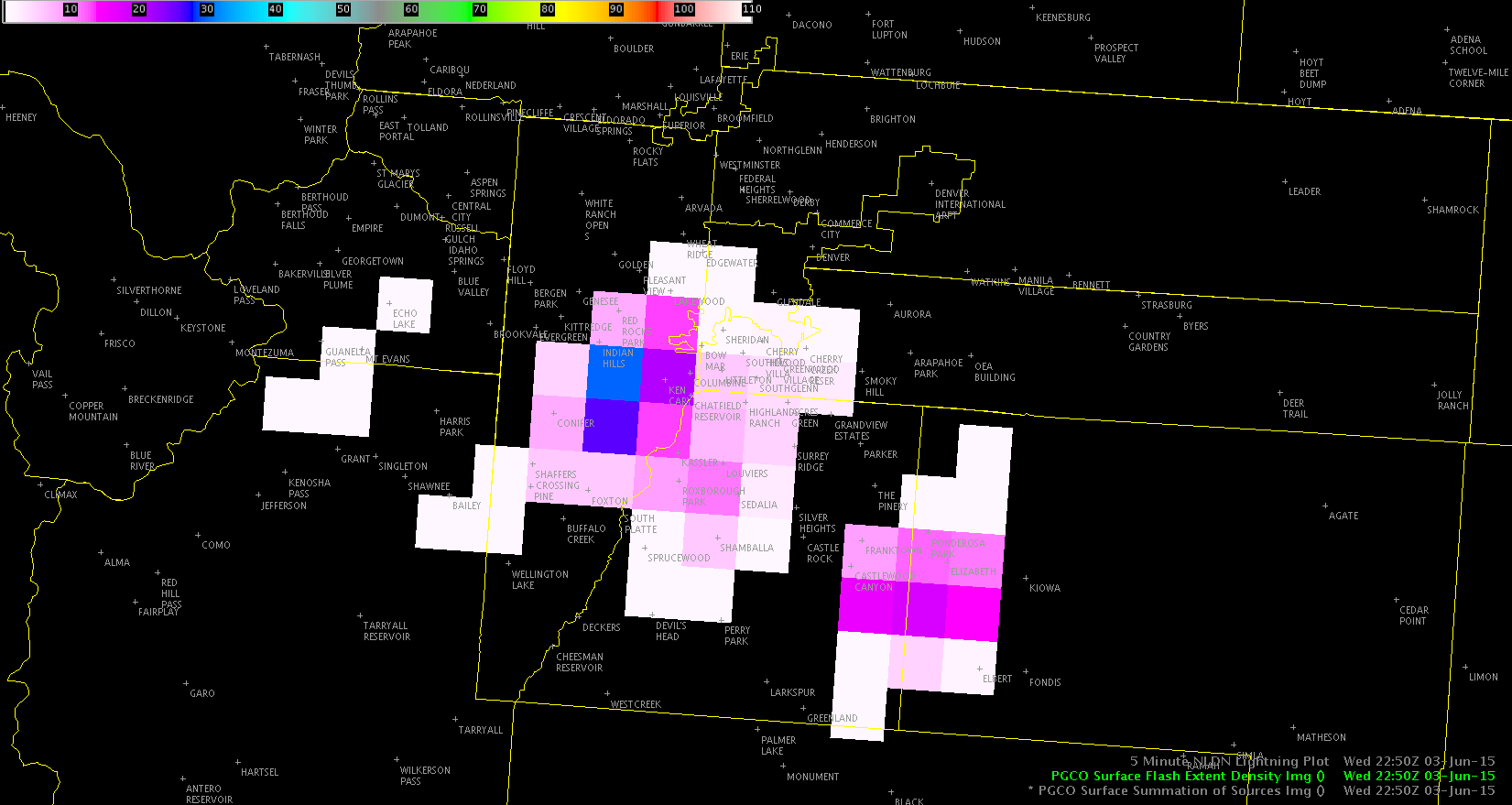
Had a cell split SW of Denver (the larger mass of total lightning; SE of Denver is a separate cell entirely); the northern one had initially had more total lightning, but the southern storm ended up becoming the stronger one. The total lightning dropped in the northern cell while it quickly increased in the southern one. About five minutes later, reflectivity really began to show the intensity increase. Storm chaser video also showed a possible funnel cloud.

pglm_2250 pglm_2253

Tags: None

Cycling Supercell: SRSO and Lightning Jumps.

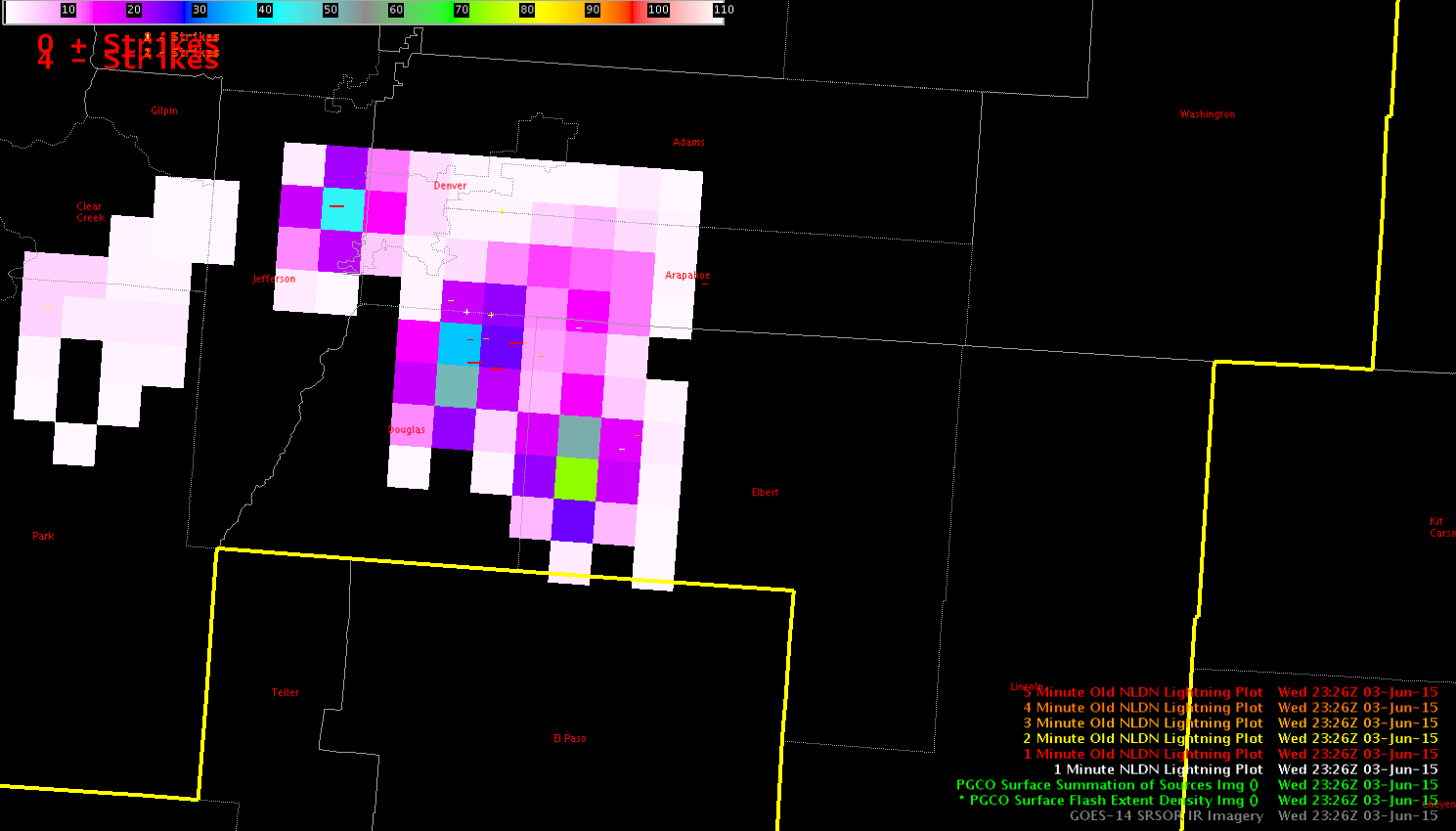
Using SRSO suspected that a supercell would become long lived as it seems to have a continued low-level, moist inflow into the storm visible via low level cu field and surface obs. The storm exhibited a cycling of pulses through Douglas Co which were evident via SRSO (Fig 1) and and  subsequent lightning jumps (Fig 2). This provided some validation that this cell would cycle and it could be seen in the lightning jump pulsing. –Cattywampus.

srso_boundary

Fig 1.  (gif loop) Super-rapid scan, with pulsing super cell through Douglas Co.

jump

Fig 2. (gif loop) Lightning jump with the supercell.

Tags: None