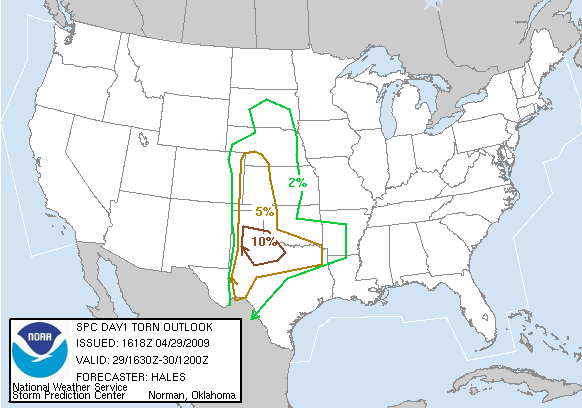
Outlook – 30 April 2009

A few more days of the southwesterly flow over the Southern Plains is expected.  Today, another (small) MCS affected Oklahoma, although this time more centered on the northeast part of the state.  This has laid several boundaries (blue) across central and northern Oklahoma.  In addition, there is ample moisture; for the first time this spring, central Oklahoma dewpoints are in the upper 60s, and CAPEs are progged to be well over 4000 J/kg this afternoon.  A dryline is entering SW OK (brown) and a cold front (dark blue) is sagging into NW OK.

The SPC DY1 outlook has the area in a SLGT with a 5% tornado contour.  With the huge instability, there is also a hatched (> 2″) hail probability.

Since Central OK is outlooked, our plan is to run a PAR IOP.  If storms enter the CASA domain, we will split one forecaster into a CASA IOP as well.  An LMA IOP will not be run today, as the LMA network went down last night, and is not expected to return online until early next week.  Prior to the start of the evening IOP, we will run the forecasters through a PAR archive case.

Greg Stumpf (EWP Weekly Coordinator, 27 Apr – 1 May 2009)

Tags: None

Summary – 29 April 2009

The forecasters began the day by evaluating the 10 Feb 2009 case using the Lightning Mapping Array (LMA).  Some comments included:  coupling the data with the more-familiar NLDN (cloud-to-ground data) help with the analysis; rapid-update of data helped with updraft identification versus just 88D data; the units were difficult to understand (flashes/km^2/s); Observed the “dipole effect” on some of the storms; saw potential value for convective winter precipitation, aviation interests, and transitions from severe to heavy rain.

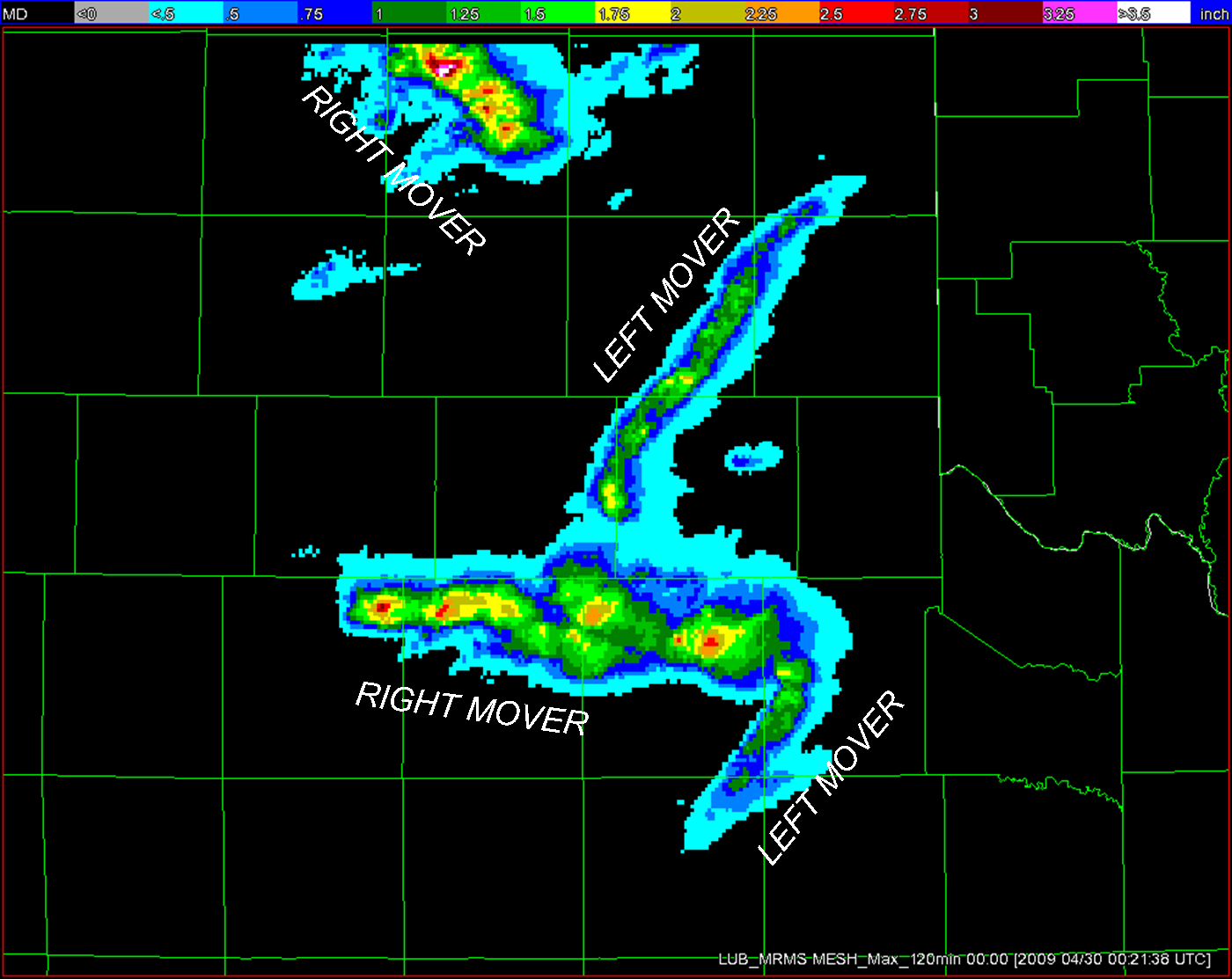
For the evening IOP, we worked a pretty active event in the southeast Texas Panhandle just east of Lubbock today evaluating the multi-radar/sensor algorithms and issuing experimental warnings using AWIPS.  There were a number of supercell storms, one which produced several significant tornadoes.  Large hail and damaging winds were also reported, including a nice example of a left-moving storm which created a hail swath who’s movement was contrary to the rest of the day’s storms.

Figure 1.  MESH tracks, with left and right moving storms annotated.

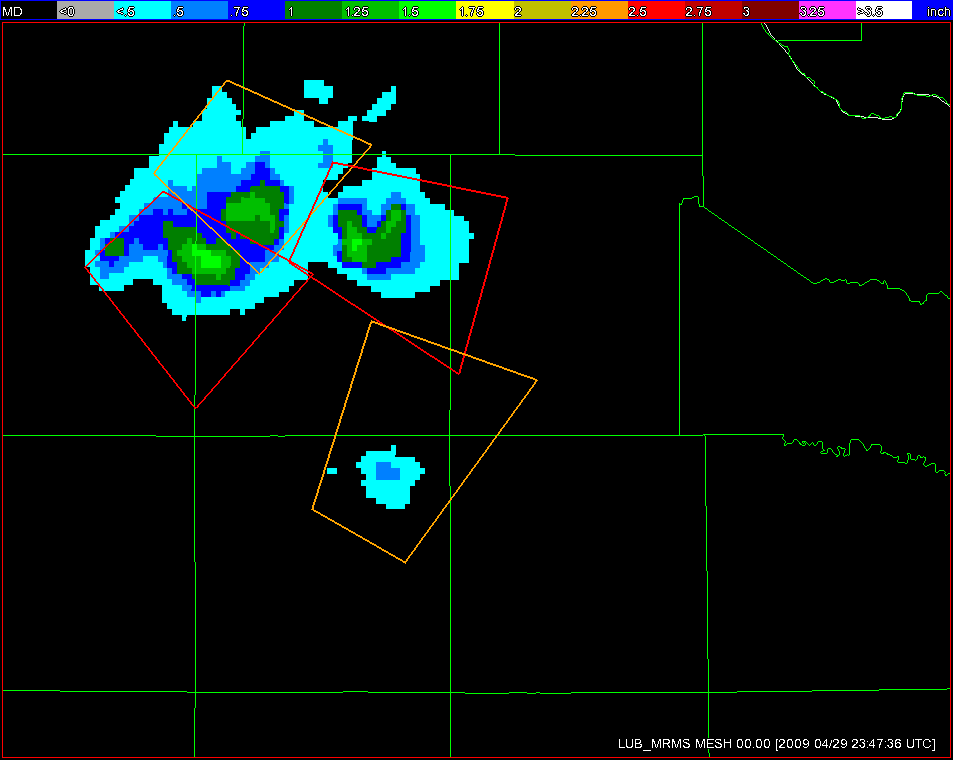
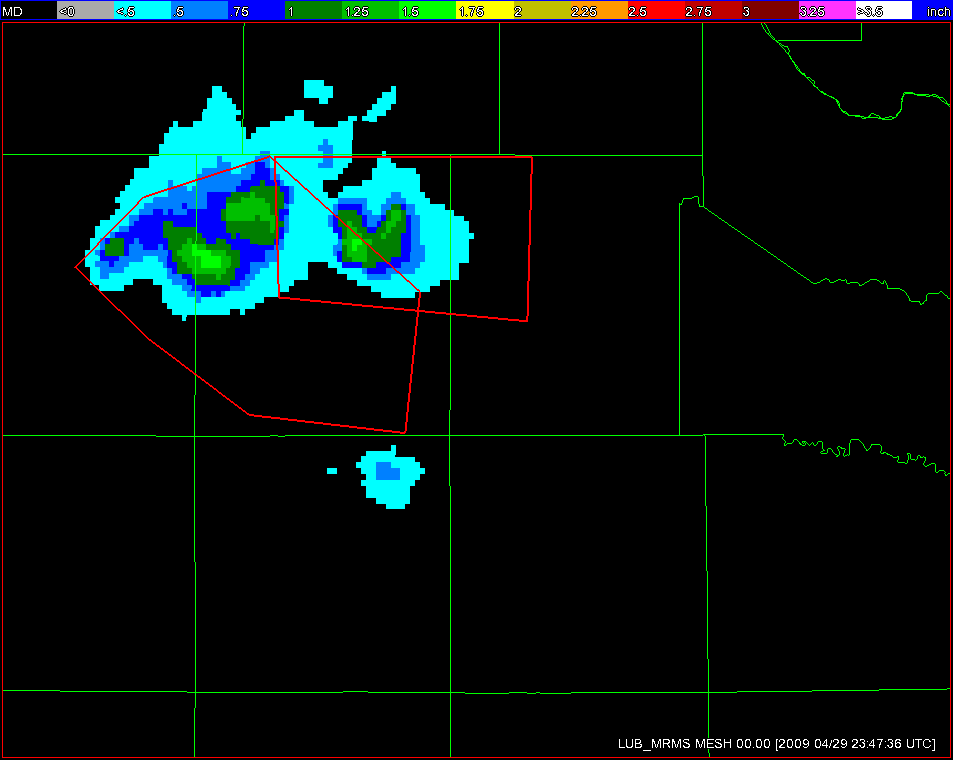
Once again, the multi-radar MESH and MESH swaths were very useful for diagnosing the severity and for the orientation of the warning polygon cones, which appeared more “storm-based” than the official NWS warning polygons.  The forecasters felt more comfortable with the MRMS products today since they already had a day of experience with them, and felt their lead times were improved.  Noted that the MESH estimates on the left-mover were about 50% of the reported hail size – this same observation has also been made by the NSSL researchers.  The other hail diagnostic parameters appeared to indicate smaller hail than was observed with the left-mover.  There was a recommendation to be able to overlay the MRMS data as contours over the base single-radar data.

FIgure 2a.  EWP-generated warning polygons.

FIgure 2b.  NWS-generated warning polygons.

The rotation tracks products were also useful for the diagnosis of the tornado potential, and they also aided in the placement of the polygon cones, however a lack of “threshold guidance” was mentioned.  Something like the WDTB Tornado Warning Guidance statistics for the LLSD algorithms should be considered.  It was again commented that anticyclonic rotation tracks for the left-moving storms would be useful.  In addition, “mouse-over” trends, as well as time-height trends of the MR azimuthal shear products could be useful.

Greg Stumpf (EWP Weekly Coordinator, 27 Apr – 1 May 2009)

Tags: None

Outlook – 29 April 2009

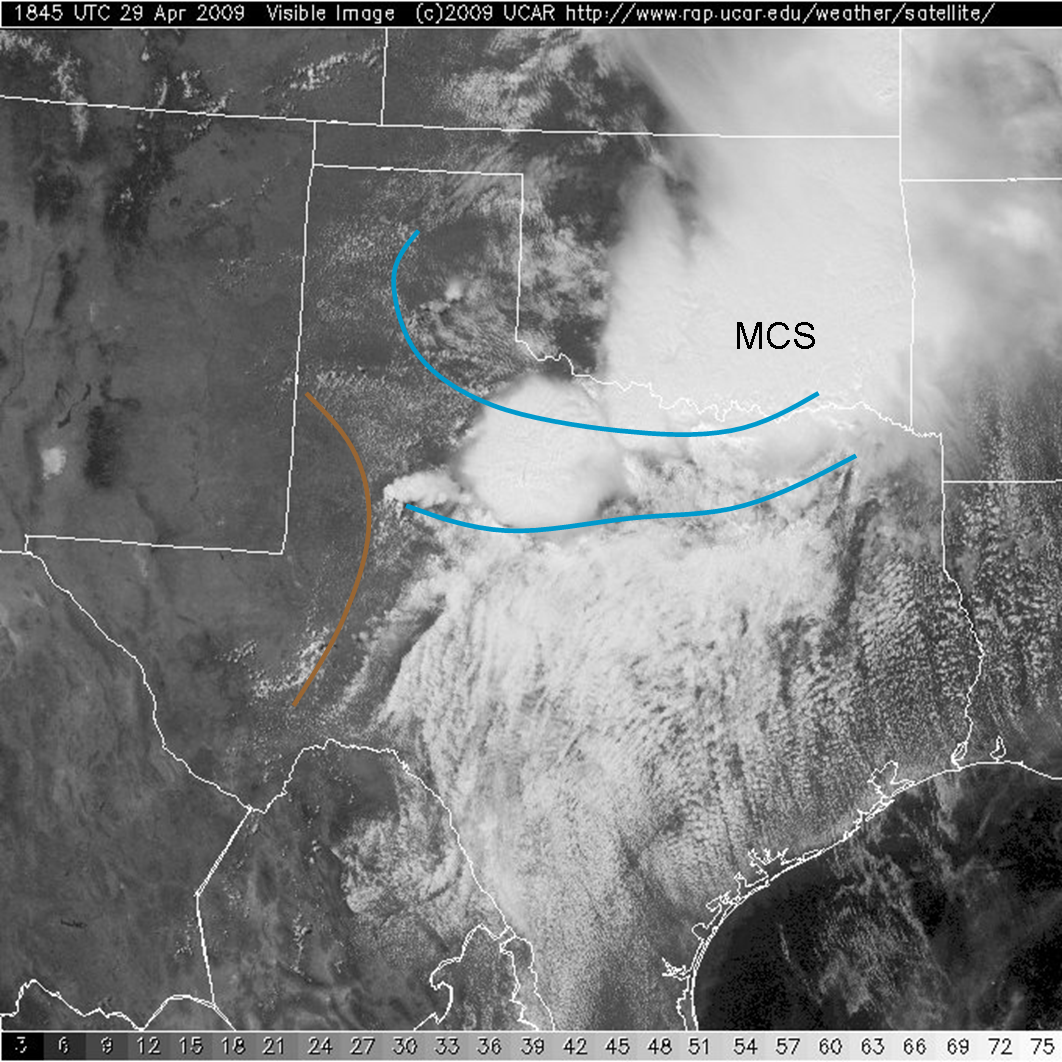
Another day in the pattern of broad southwesterly flow with the western U. S. trough, and ample moisture and instability, will bring a threat of severe weather over the Southern Plains, specifically the eastern Texas Panhandle.  A morning mesoscale convective system provided extreme flooding to parts of southern Oklahoma, with over 11″ of rain reported in areas of Love County (Burneyville, OK).  From the visible satellite image below, this MCS has left behind several outlfow boundaries (blue) that extend westard to intersect with e a dryline (brown) in the Texas Panhandle.

These boundaries will be the focus for convection today.  The SPC DY1 outlook paints this area in a slight risk, with a 10% probability for tornadoes within 25 miles of a point.

We are planning an multi-radar/sensor algorithm IOP today within the 10% tornado risk area during the 5-9pm timeframe, most likely localizing for Lubbock, or perhaps Midland.  Prior to that, the forecasters will be evaluating a Lightning Mapping Array (LMA) archive case.

Greg Stumpf (EWP Weekly Coordinator, 27 Apr – 1 May 2009)

Tags: None

Summary – 28 April 2009

The forecasters started off the afternoon running through two archive CASA cases.  These were the 10 Feb 2009 Central OK tornado case, and the 8 May 2007 mini-supercell tornado case.  A quick summary of the comments relayed during our post-mortem briefing include:

  • Nice having a 4 minute “lead-time” to WSR-88D volume scan updates.
  • Small scale feature evolution is very detailed on single CASA radars.
  • CASA multi-radar merger masked the details seen on the individual radars.  Time synching can somethme cause features to be slightly off in space, and are thus mashed.
  • Attenuation is nicely filled in by other radars in multi-radar merger, however (see above).
  • Still needed KTLX for comparison, especially to determine areas of attenuation.
  • Situational awareness is going to be challenging when trying to analyze more than 2 single radars at a time.
  • For WDSSII GUI:  Add colormap editor, different background colors for each panel/radar; configure placement of legend.

The evening multi-radar/sensor algorithm IOP was for two isolated supercells in SE NM.  The first storm occured just N of Roswell, but was unfortunately trending to weaker intensity just as we started working it.  We localized to WFO ABQ and used the Cannon AFB 88D (KFDX) radar to support warnings.  The forecaters issued several SVR warnings on the cell, but the warning server hiccuped, and these warnings were not saved.

Nevertheless, a second more-severe supercell deveoped just E of Carlsbad, and the forecasters warned on that storm for about 90 minutes, both SVRs and TORs.  We localized to WFO MAF and used the Midland 88D radar (KMAF) to support the warnings.  To support the severe hail decisions, the forecasters used the H50_Above_H253 (50 dBZ above -20C altitude), 50 dBZ Echo Tops, and the MESH products.  The MESH swaths were particularly useful in placing the proper warning polygon angle to capture the storm motion.  The figures below show the differences between the EWP experimental warning polygons (Fig. 1) with the offical warnings from WFO MAF (Fig. 2).  Note how the EWP warnings capture the storm motion better.
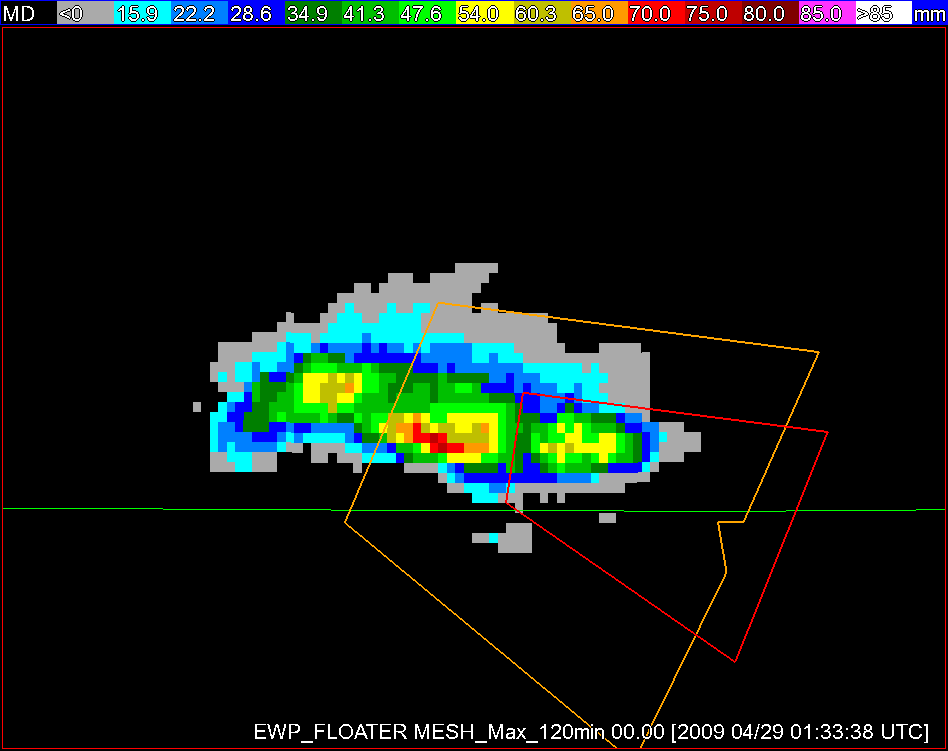
FIgure 1.  EWP Warnings (amber = SVR; red = TOR)
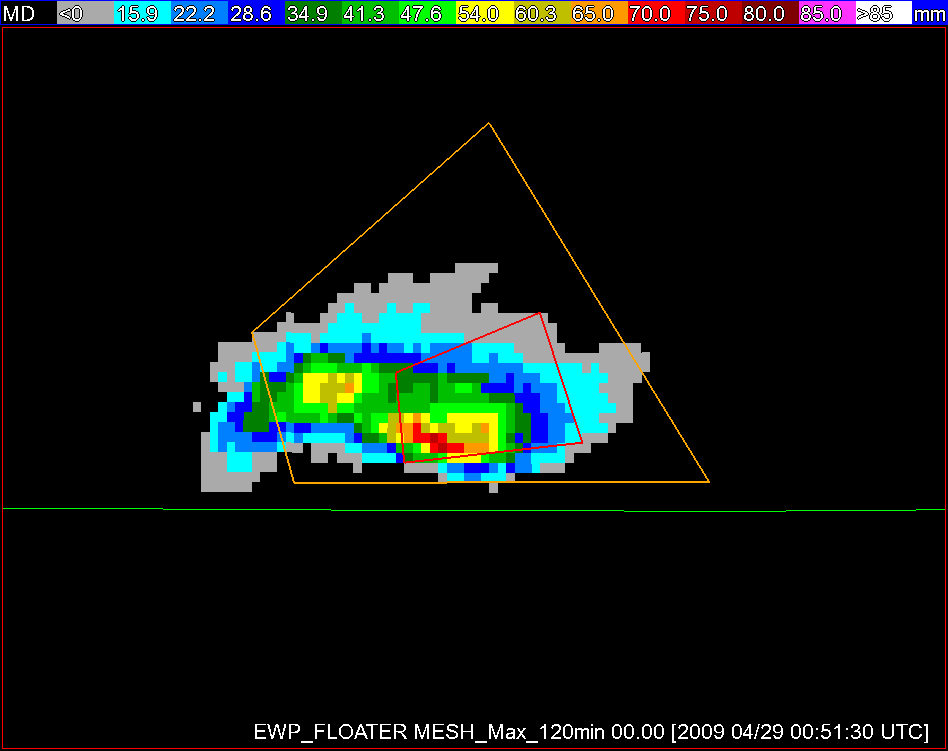
Figure 2.  WFO MAF warnings (amber = SVR; red = TOR)

There was generally good agreement between the MESH estimates and the very few hail reports from these storms.  The forecasdters commented that it would be nice to be able to have a user-configurable Echo Top product so that one could choose the dBZ level on the fly (e.g., 60 dBZ Echo Tops).

The forecasters also issued a TOR on the storm, albeit after the WFO MAF pulled the trigger.  The reasoning for holding off on the TOR was a temporary decrease in the LLSD multi-radar azimuthal shear trends.  When they re-strnegthened, they issued a TOR.

The forecasters recommended the ability to overlay contours of the multi-radar fields over the single radar images.  They also recommended that the EWP have several AWIPS default procedures with the WDSSII grids in place before the new set of forecasters arrive.

Other assorted comments:  The MRMS products saved time by calculating heights and reflectivities within hail growth regions, versus traditional analysis methods.  The 18 dBZ Echo Top color scale needed to be improved.  The 1-3 minute latency on the MRMS grids sometimes impeded the full comparison to 88D data.  Anticyclonic rotation tracks would be useful.

Greg Stumpf (EWP Weekly Coordinator, 27 Apr – 1 May 2009)

Tags: None

Live Blog – 28 April 2009 (8:40pm: wrap-up)

MAF started issuing TORs at 7:35pm (CDT).  EWP started at 8:35 CDT.

First take-away – the MESH and ROT tracks giving a better handle on the storm motion, and thus the EWP warning polygons were more to the rifght than the MAF polygons.

For SVR – went from holfball hail to baseball hail, influenced the MESH and the H50_above_H253 (went from 16 to 20 kft).  Ref -20 up to 61 dBZ.

Felt that these products were useful over alltilts – so they looked at WDSSII products more, versus the confort zone of the all tilts analysis.

There were notificaiton issues that affected our SA this evening.  Also, at first, the warnings were not being transmitted – we fixed that later for our MAF exercise.  We didn’t archive any of the ABQ warnings.

Will post images soon…

Greg Stumpf (EWP Weekly Coordinator, 27 Apr – 1 May 2009)

Tags: None

Live Blog – 28 April 2009 (8:30pm)

Issued TOR on storm in Eddy County NM.  Based on rotation really ramping up.  WDSSII was not corroborating it, but base KMAF data was showing strong LL shear, continiuty.

Turns out the 3-6 km 120min rotation track showed an increase.  But the 0-2 shear (what they were looking at) showed decreasing trend.  TORpedoed it nonetheless.

Greg Stumpf (EWP Weekly Coordinator, 27 Apr – 1 May 2009)

Tags: None

Live Blog – 28 April 2009 (8:05pm)

Did some analysis of the azimuthal shear, but decided to hold off on TOR.  Considering updating their SVR as the storm is right turning some more and the hail numbers are staying up.

SVR was sent to replace original polygon.  Original polygon might have covered it, but it was more right-turning.  MESH track, right turn in MESH track.

Greg Stumpf (EWP Weekly Coordinator, 27 Apr – 1 May 2009)

Tags: None

Live Blog – 28 April 2009 (7:45pm)

Issuing SVR on Eddy storm now.  Strong mid-altitude rotationat 14 kft.  Over 60 dBZ @ -20degC.  16 kft H50_above_H253.  MESH > 1.5″  MESH history for continuity.  MR helped refine the warning.  Helped to contruct polygon.  MESH track revealed the right turn, and polygon was adjusted for that.  Spotter report alone might have messed up track.

Greg Stumpf (EWP Weekly Coordinator, 27 Apr – 1 May 2009)

Tags: None

Live Blog – 28 April 2009 (7:15pm)

Issuing an SVS now based on M1.25″ hail report 15 N ROW.

It appears that our first warning did not get transmitted to the px1 server.  We’re looking into it.  We’re also expecting bugs – it’s our first time doing this!

Greg Stumpf (EWP Weekly Coordinator, 27 Apr – 1 May 2009)

Tags: None