Daily Summary: Week 1, Day 1

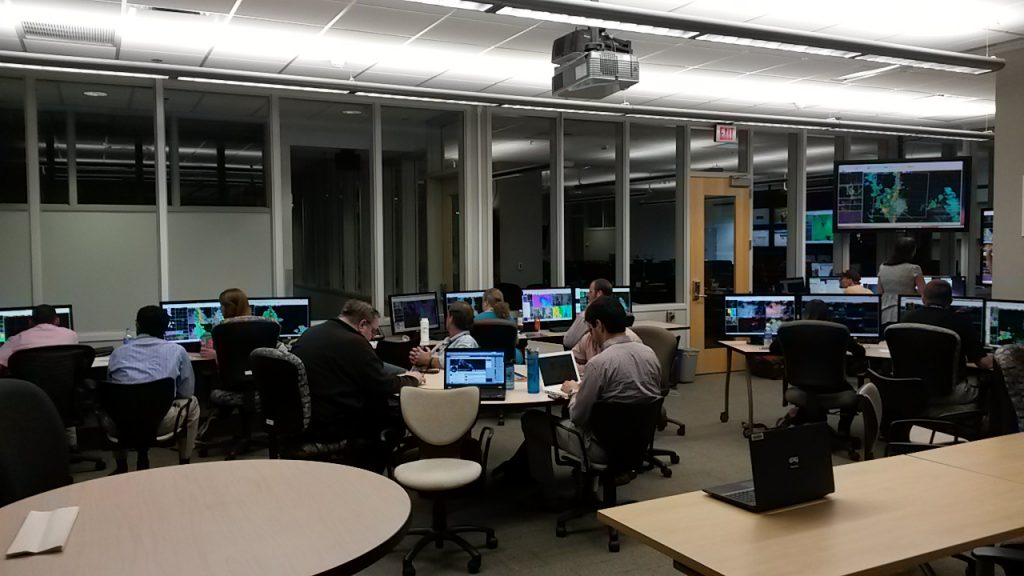
Today marked the first day of the EWP Spring Experiment in the Hazardous Weather Testbed in Norman, OK. This year, 5 NWS forecasters and 1 broadcast meteorologist will evaluate various GOES-R and JPSS algorithms, as well as Earth Networks total lightning products. Participants, working in pairs, will use the experimental products to issue area forecast discussions and severe thunderstorm/tornado warnings for their designated CWA. All of the products being demonstrated are available in AWIPS-II.
20150505_184843

Much of the focus for the first day of the week was hands-on training for each of the products under evaluation. After some initial familiarization with AWIPS-II and procedure building, the various PI’s worked with forecasters on how to interpret the products, and what to look for during the week. Forecasters also became familiar with saving images, and posting to the blog. By the end of the day, participants had already made several informative blog posts.

We began today’s operations in the Topeka, Omaha, and Midland CWA’s. As activity subsided in the Omaha CWA, that pair moved operations to the Wichita CWA. Participants were able to utilize all of the products today, including the PGLM total lightning from the West Texas LMA.

Tomorrow, we will start activities at 12:00 pm in the Dev Lab for the daily debrief before moving to the HWT for the 12:45 EFP briefing. Operations will likely take place in West Texas.
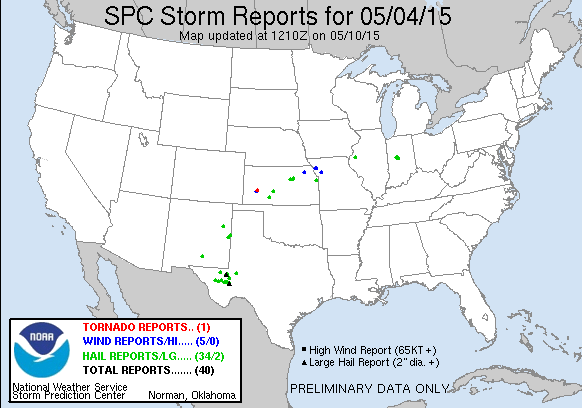
150504_rpts

– Bill Line, SPC/HWT Satellite Liaison and Week 1 EWP Coordinator

Tags: None

Convective Initiation in Southwest Kansas

Looking at the Convective initiation product over southwest Kansas in an area where the earlier cirrus had cleared out showed some enhanced probabilities in the 60-70% range at 2000 UTC over Hodegman county, KS.

SW_KS_CI_2000utc

At that time there was not any radar returns showing up in that part of the county where the CI was identified.  When looking at the radar imagery at 2045 UTC there was new convection that had developed across northeastern Hodgeman county.  I think this is a great example of the benefit of the CI product and how it does especially well in environments where only cumulus cloud development is occurring.

SW_KS_CI_2045utc

I think this can be a very useful product in the WFO, especially in offices where pulse convection can be a problem, such as the eastern United States.

Jack Bauer

Tags: None

Another CI Case

Just another brief example of using the GOES-R Convective Initiation Algorithm.

CZ (left) and GOES Vis and CI (right)
CZ (left) and GOES Vis and CI (right) at 1830Z. The orange areas show 81% probability of CI.
Click to animate.
Click to animate.

Convection did indeed initiate soon after, becoming severe by 20Z. There were several reports of golf ball sized hail associated with this storm between 20Z and 22Z.

LSR2

As of  2312Z this cell is still going strong. A pair of weak cells has popped up just to the south and the CI algorithm is showing two more 80% areas with these cells.

MAF CI 2

We’re about to start wrapping up for the day, but it’ll be interesting to see how these cells evolve over the next 30 minutes or so.

-V. Darkbloom

Tags: None

Earth Networks Lightning Time Series for 3rd SVR in Topeka

The time series lightning plot for the 3rd SVR in Topekas area is below. Note the peak close to 125 flashes/min around 2245Z which coincided with another hail core development aloft, 60 dBZ to around 22k ft/-25 C. This area is also tricky because it at the western tail end of a line of thunderstorms, so the centroid designation may be off since it is close to several other centroids, thus skewing the point values.

ETN_pointAnalysis_OttawaKS

Brick Tamland

Tags: None

Lightning Jump and Cell Intensification

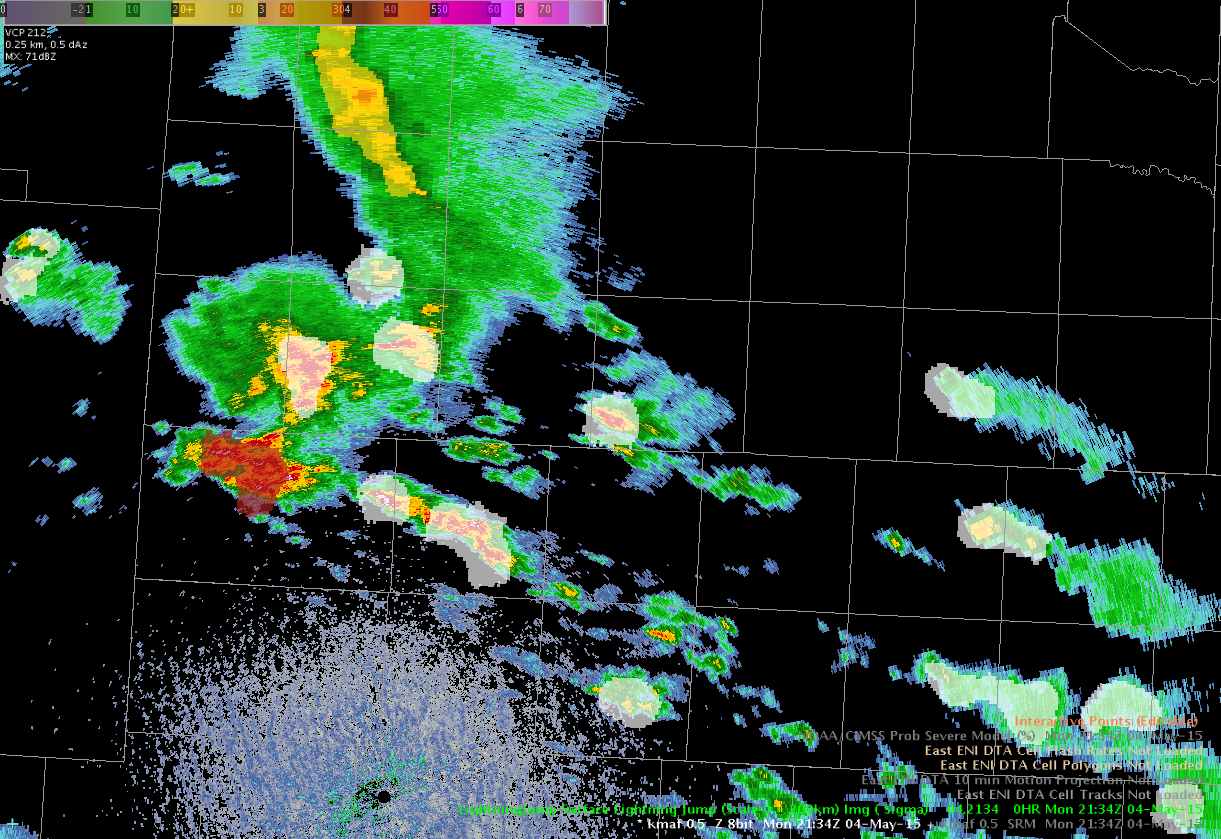
Another significant lightning jump occurred in west Texas (Midland CWA) around 2134Z (434 PM CDT). The jump was 4 sigma – shaded red below.

MAF 4 sigma jump

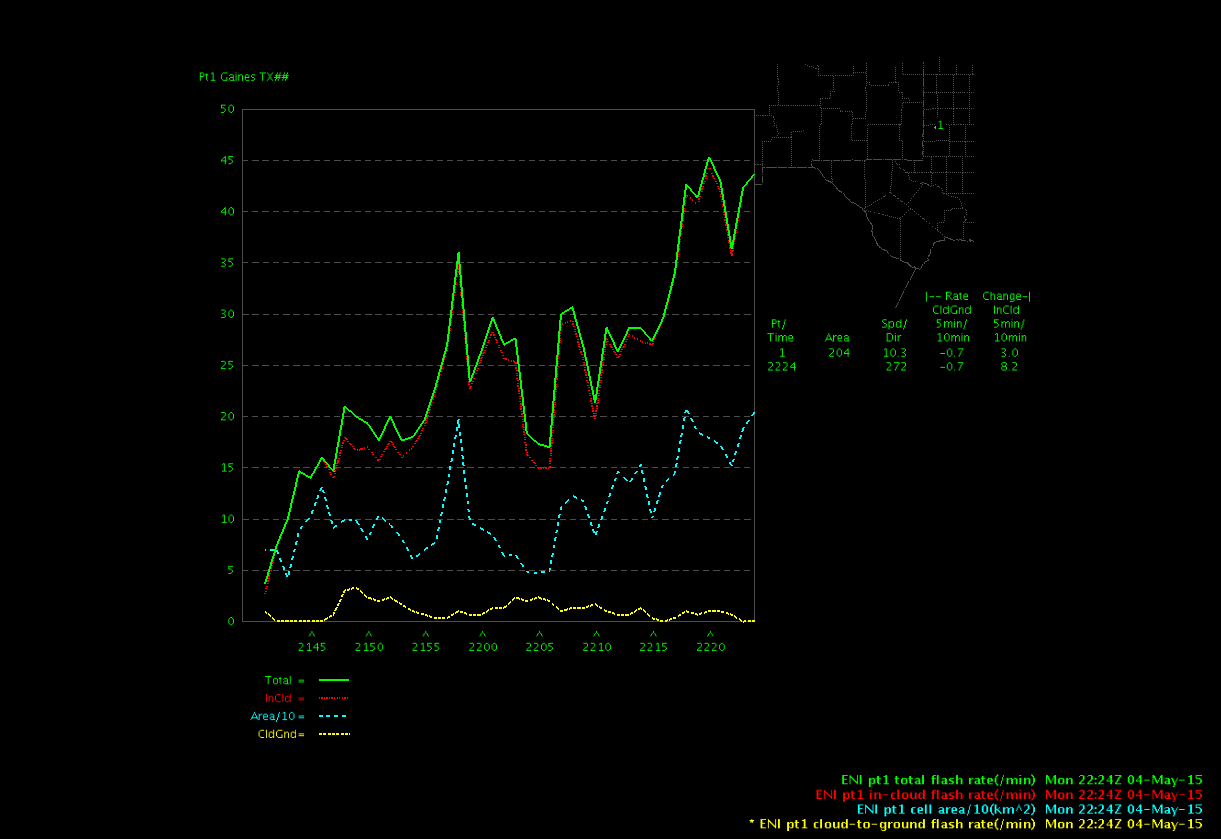
A time series reveals this was the first in a series of jumps.

MAF 4 simga time series

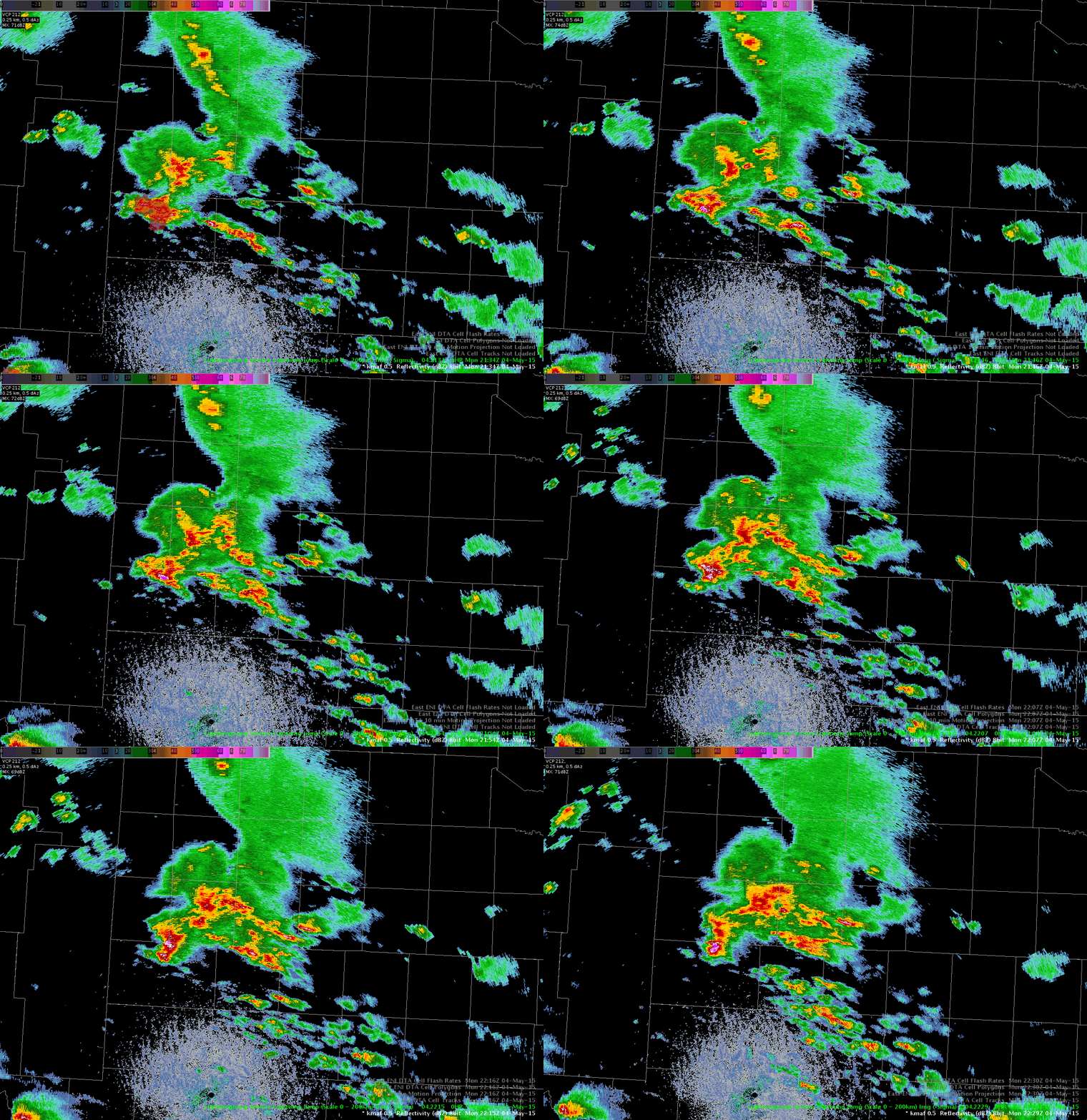
The second jump around 22Z was 2 sigma. A loop of the 0.5 deg reflectivity shows the cell intensifying after the lightning jumps occurred. The max Z at the 0.5 deg tilt increaed from around 63 dBZ to around 71 dBZ in 8 minutes, or two volume scans.

radar_loop

(click image to animate)

In this case, the lightning jump is a good indicator of imminent storm intensification.

-V Darkbloom

Tags: None

All set up

Procedures and perspective displays set up. Time to start watching current storms.

Warned on this storm with a 5 sigma lightning jump. It appears to be a right-mover. Lightning Jump 2236z May4

Lynford


Tags: None

3rd SVR for TOP area

3rd severe warning for a hail core over southwestern Ottawa county, moving northeast. Lightning Jump Algorithm jumped over 4 sigmas around the time when the hail core aloft looked the best. ProbSevere jumped from 69% to 92% with MESH building to over 1.50 inches. DTA came out well in advance though it overlaid with a 2nd, more appropriate DTA, related to the more intense storm approaching from the south. Although fairly large area of 60 dBZ above -20 C, and MESH at 1.50 inches, only used 1 inch hail in warning due to lack of large hail reports during the afternoon.

SVRTOP3

Brick Tamland

Tags: None

A Limitation of Prob Severe Algorithm

While observing the Probability of severe throughout the event today, I have noticed that it seems to do well when there are discrete or individual convective cells and was useful in the warning operations when combined with the base data we were looking at interrogating the storms.  The storm we originally warned on seen in the image below had high prob severe values and verified with a 60 mph wind gust report.

ProbSvr_isolated

However, later in the event the convection became linear and looking at the base data interrogating the storm there was not evidence supporting a warning along the line as the 50dbz cores were relatively low and the line of storms had become outflow dominated with the outflow boundary pushing well away from the storms.  The probability of severe though was showing values near 85% along the entire line.

ProbSvrLinear

So I think it is important to note for the users of this product that when the convection becomes linear the probability of severe may not be as useful and should not be as relied on compared to individual convective storm environments.

Jack Bauer

Tags: None

ProbSevere and Lightning Jump – Great Match for Warning Confidence

Another cell developing to the east of the two previously warned cells provided another opportunity to use both ProbSevere and Lightning Jump Detection Algorithm in conjunction to issue a Severe Thunderstorm Warning.

Really started to see an increase in the mid level reflectivity on the storm and during that time the ProbSevere increased from 8% at 2204Z to 64% at 2208Z.

20150504_2208Z_ICT_ProbSevere_LJ

At that point, we were starting to think about issuing a SVR and as we were making that decision, there was a 5 sigma lightning jump noted. That data arrived before the next version of ProbSevere arrived but tied in with the increase shown in the previous couple scans. At that point, we decided to issue the SVR and our thought was confirmed by the next version of ProbSevere increasing to 84% with a MESH value of 1.25″.

20150504_2212Z_ICT_ProbSevere_LJ

The warning was issued at 2217Z and the ProbSevere value reached 94% with a MESH of 2″ as the warning was issued.

20150504_2218Z_ICT_ProbSevere_LJ

Although the experience with these two products has been limited thus far, they have shown to work well in conjunction with the radar analysis to lead to increasing confidence on issuing a warning during rapid intensification.

-SRF

Tags: None