An official website of the United States government
Here’s how you know
Official websites use .gov A
.gov website belongs to an official government
organization in the United States.
Secure .gov websites use HTTPS A
lock (
) or https:// means you’ve safely connected to
the .gov website. Share sensitive information only on official,
secure websites.
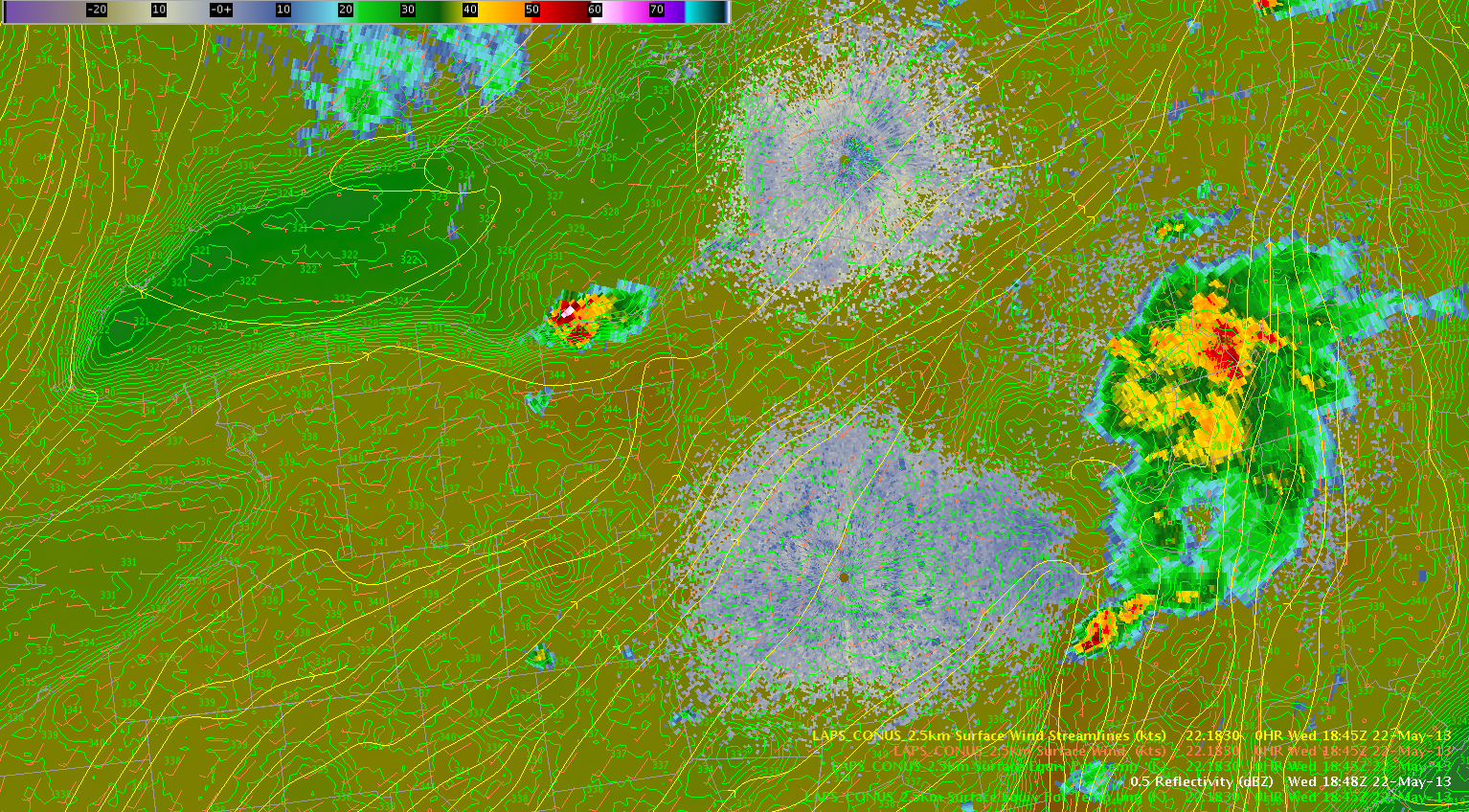
Convection has developed to the east-northeast of Buffalo along the moisture gradient to the north of dryer air shown on various LAPS products. The convection has struggled somewhat to maintain itself and a previous hail signature has diminished, perhaps feeling the influence of the dryer air to the south.
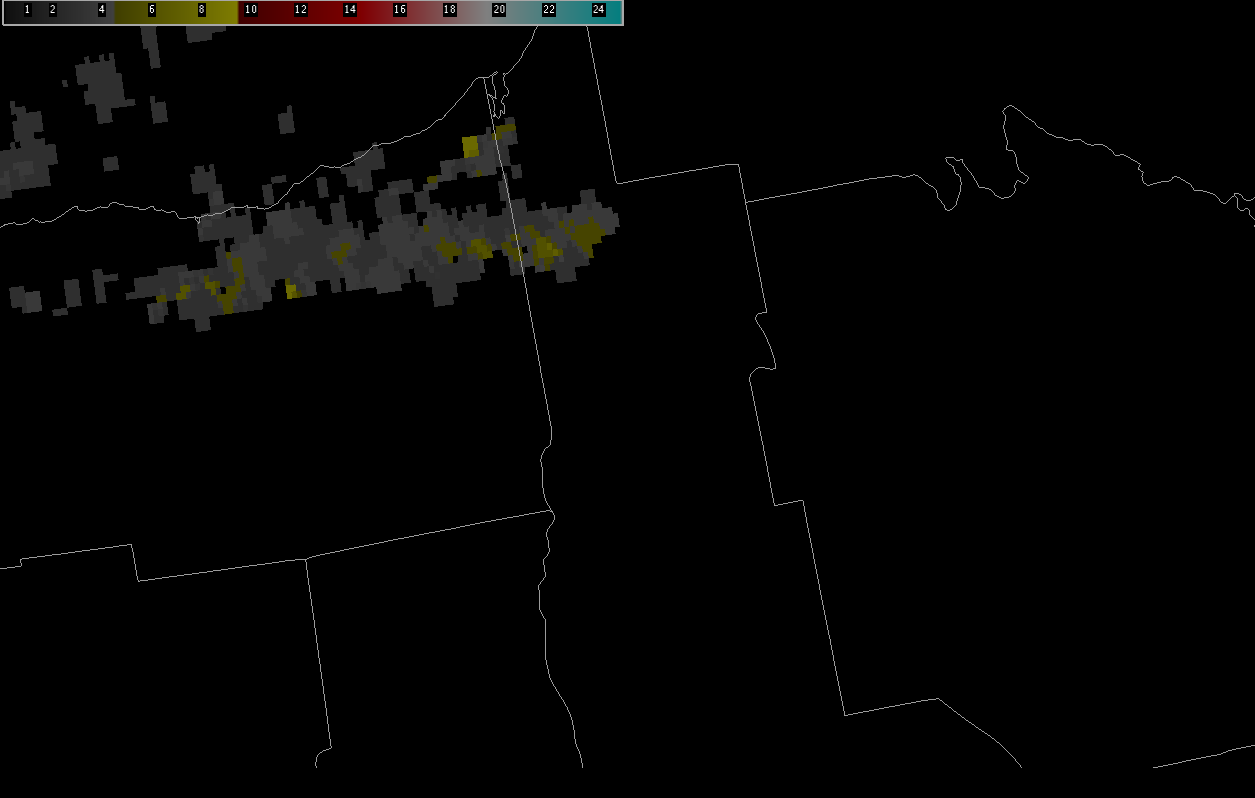
The image below shows the following: Height of 50 dBZ above -20C upper left, height of 50 dBZ above 0C lower left, height of 60 dBZ above -20C upper right, and height of 60 dBZ above 0C lower right. This image was taken at 2028 UTC 8min prior to the report (note the height of these cores lowered by the time of the report). At this time the height of the -50 dBZ above -20C was ~13k ft.
Okay, we just got a delayed hail report from Wayne County…golf ball size hail at 1936 UTC! So, what did some of the same data show at this time? Here’s a look…
This first image is a four panel of the MRMS data, containing the KBUF HSDA (lower left). At this time, the MRMS reflectivity values at -20 C were 65 dBZ. MESH values were as high as 1.65 inches (2 minutes previous it showed 1.73 inces). However, the HSDA still indicates sub-severe hail.
Image 1. MRMS data valid at 1936 UTC and KBUF radar data valid at 1937 UTC. Upper left – MRMS merged reflectivity QC composite, upper right – reflectivity at -20C isothermal level, lower right – MRMS MESH, lower left – KBUF Hybrid Hydrometeor Class
The next image contains the MRMS and KYTX radar data at about the same time. Notice here again, the sub-severe classification of the hydrometeors.
Image 2. MRMS data and KYTX radar data valid at 1936 UTC. Upper left – MRMS merged reflectivity QC composite, upper right – reflectivity at -20C isothermal level, lower right – MRMS MESH, lower left – KBUF Hybrid Hydrometeor Class
Also worth mentioning is the 2-minute temporal resolution of the MRMS data, which can be advantageous in warning situations and could potentially keep forecasters from switching back-and-forth from radar to radar and saving time from looking at all-tilts so much…as is my primary current warning strategy.
Southwesterly winds are noted to be advecting dryer air into the southern portions of western New York. Minimums of SB and ML CAPE are noted with this air mass as it moves into the area. The only healthy storm so far in western New York was located on the northern side of this air mass, and every echo closer to this air mass has struggled to develop. Convection is likely only to thrive if it develops on the moisture gradients noted in the previous mesoscale discussion and moves away from the dry air, at least until better upper level forcing arrives.
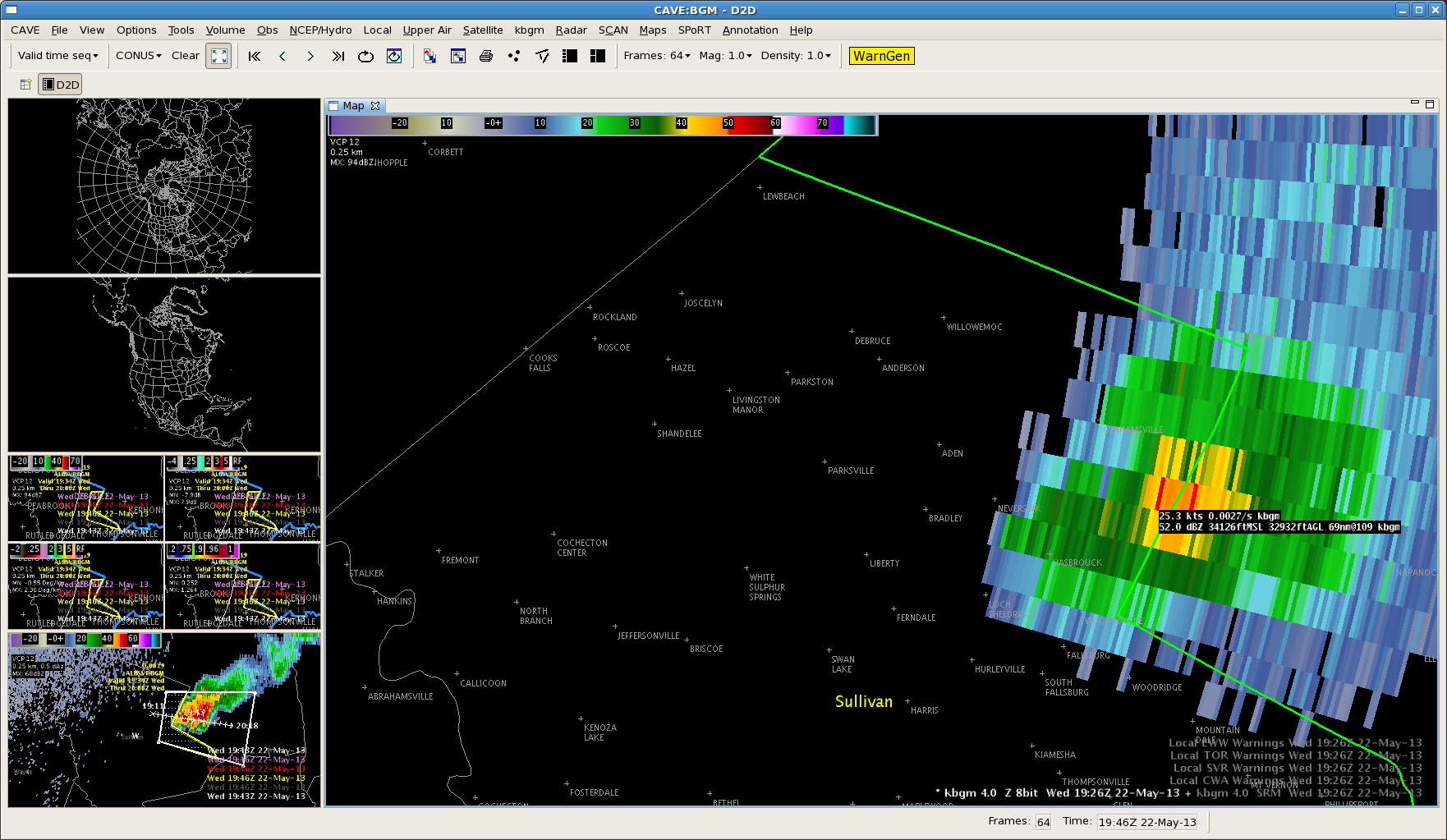
Based on the SRM radar data combined with a few MRMS products, Eric decided to issue a tor warning for the strengthening cell in Cayuga County at approx 1959 UTC. Whether or not this storm has produced or will produce a tornado remains to be seen. Nevertheless, here are some of the imagery which helped with the warning decision process…
Figure 1. KTYX SRM imagery valid at 2000 UTC indicating the broad rotation in this cell aloft.
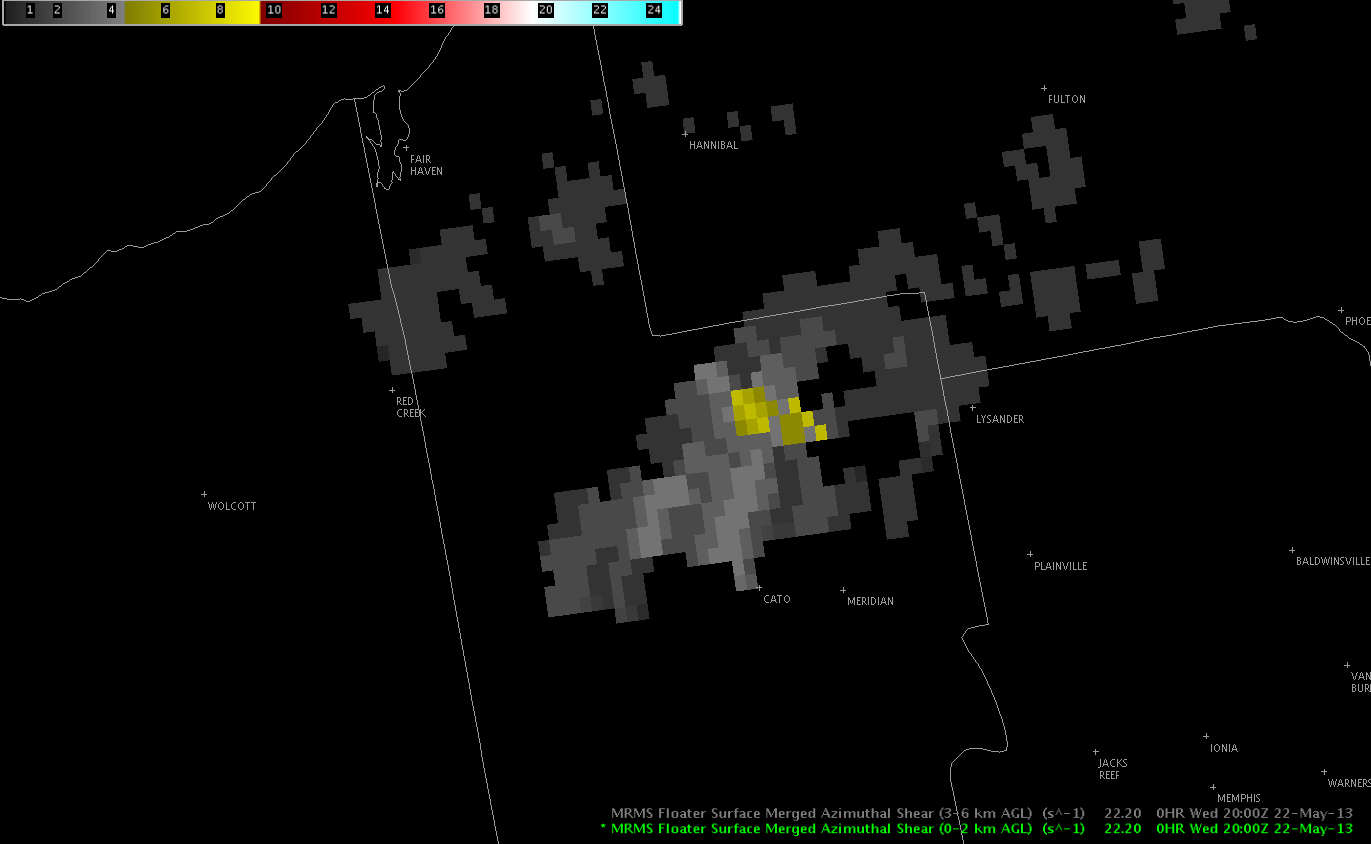
The next image is the MRMS 0-2 km azimuthal shear product valid at approx 2000 UTC. Notice the higher values in NE portions of Cayuga County coincident with the broad rotation noted on the KYTX radar.
Image 2. MRMS 0-2 km azimuthal shear valid 2000 UTC.
Lastly, here is the MRMS low level 30 minute rotation tracks data valid at 1957 UTC.
Image 3. MRMS 30 minute rotation tracks valid at 1957 UTC.
Granted, there is still some product familiarity and pattern recognition needed with these newer types of data.
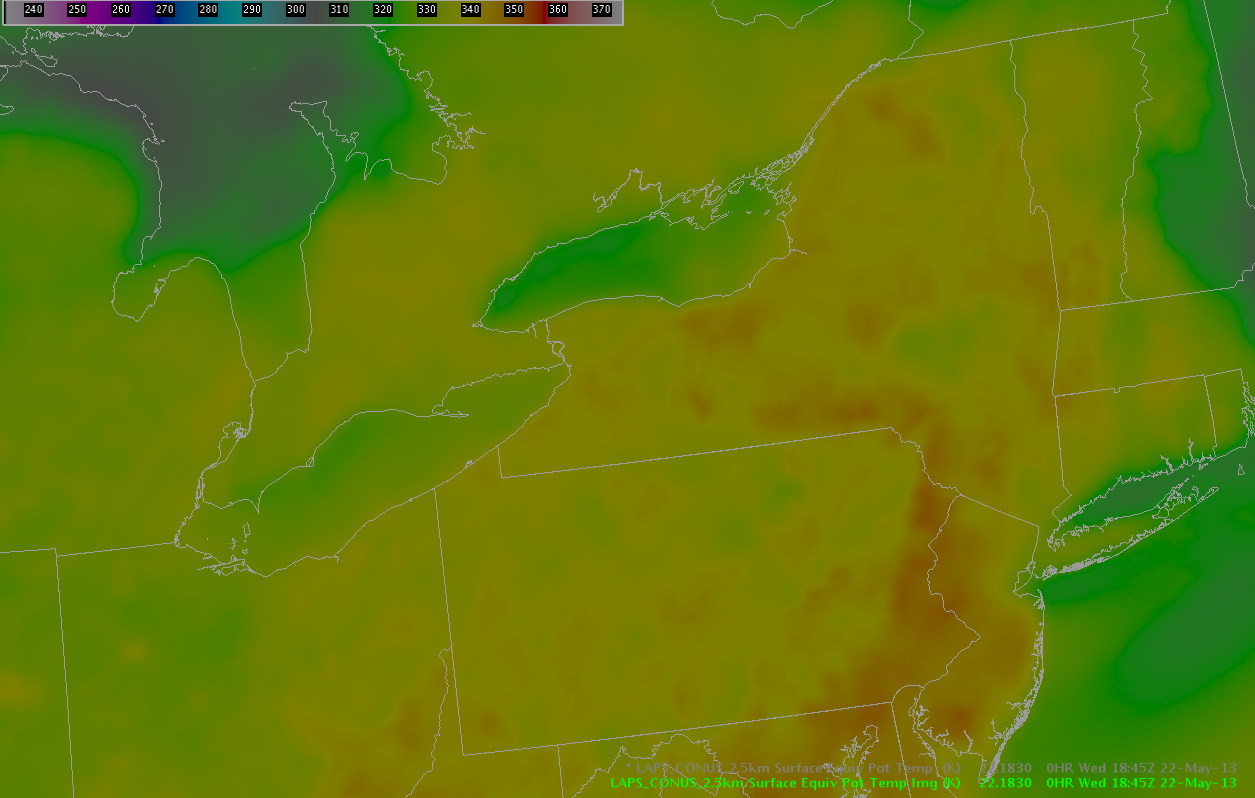
At the current time, one convective complex pushes to the east into New England from New York, with a stronger storm noted moving into Ulster County NY. Behind this complex, a stable layer is noted with lower Theta-E values shown on LAPS imagery.
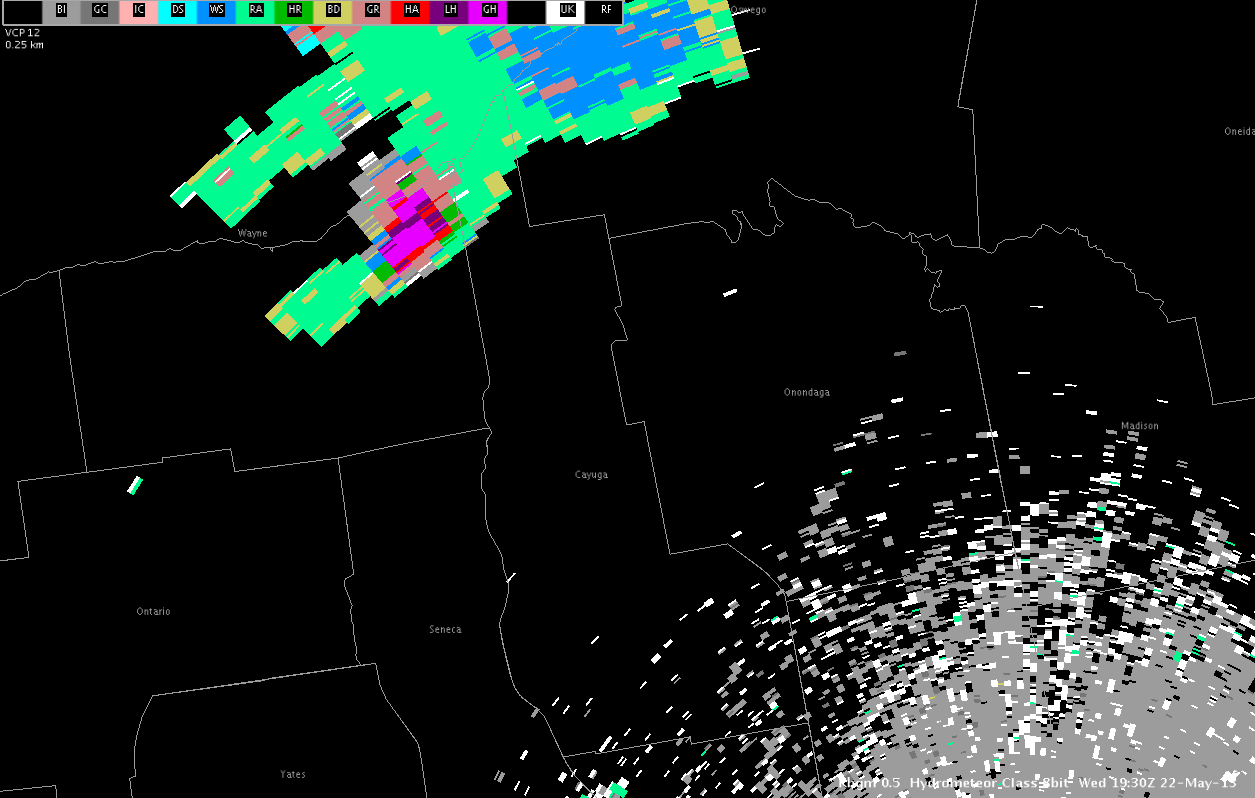
An isolated storm is also noted in northern Wayne County NY. This second storm continues to exhibit severe potential with an HSDA signature of large hail and MESH values exceeding 2 inches.
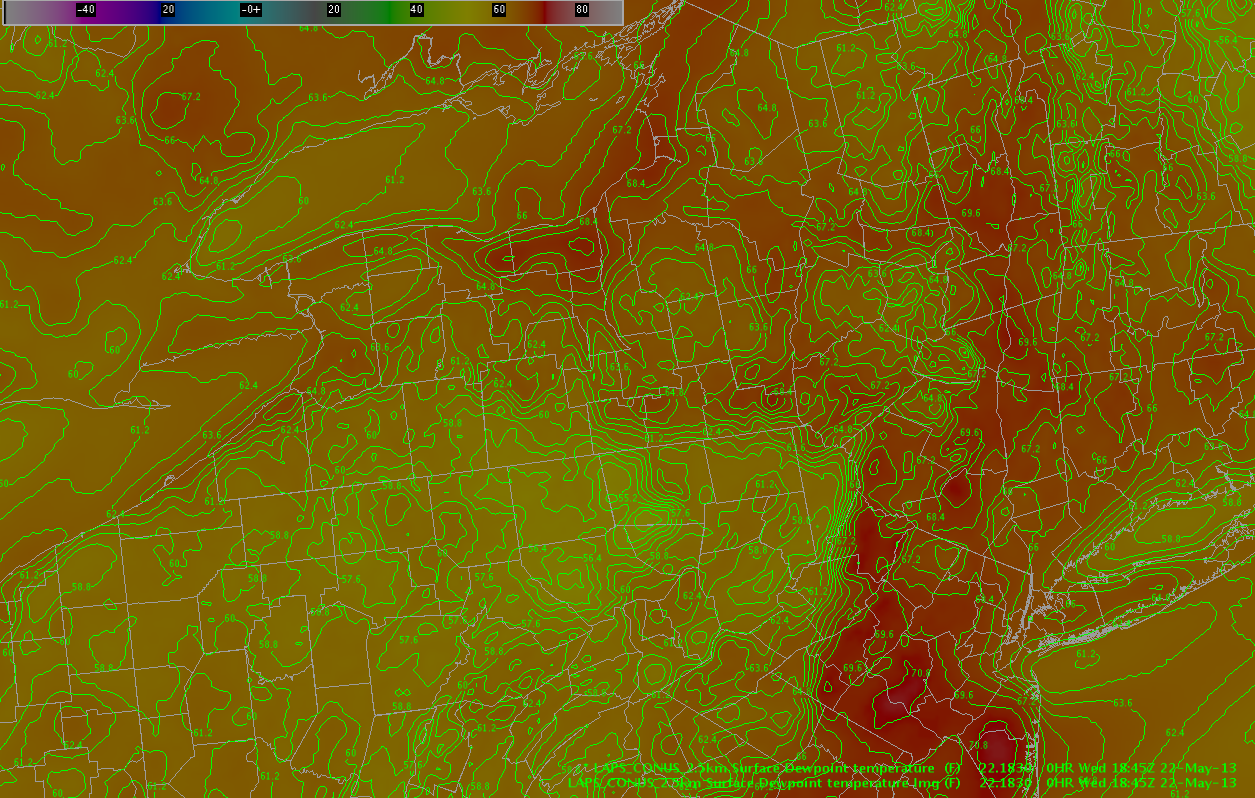
This storm is located along a convergence boundary well noted in LAPS forecast fields, with dew points in the mid to upper 60s noted south of the lakefront.
This supercell storm is expected to continue to pose a threat of severe hail and perhaps a tornado or two as it moves to the east in an environment characterized by rich moisture and unseasonably warm temperatures that have reached the low 80s, even in the presence of modest 6 km shear of 30 kts. The environment to the south is moderately unstable, characterized by RAP indicated instability values of SBCAPE approaching 2000 J/KG. In addition, a gradual increase in mid level rotation has been noted in recent scans, with storm splitting noted and both storms showing mid level rotation.
Farther to the south, in areas of weaker deep layer shear, convection is expected to increase in coverage through the afternoon hours along two particular moisture gradients noted on the LAPS dew point fields. The first boundary is located from north to south from Wayne County NY to Bradford County PA. The second boundary is located from west to east southeast from Erie County NY to Bradford County PA. Cu clouds are increasing in coverage across western NY with a few echoes beginning to appear. One of these echoes is located in Erie County NY, another two are located in Chemung and Tioga Counties. The main threat through the evening hours should be large hail… with some gusty winds in stronger storms.
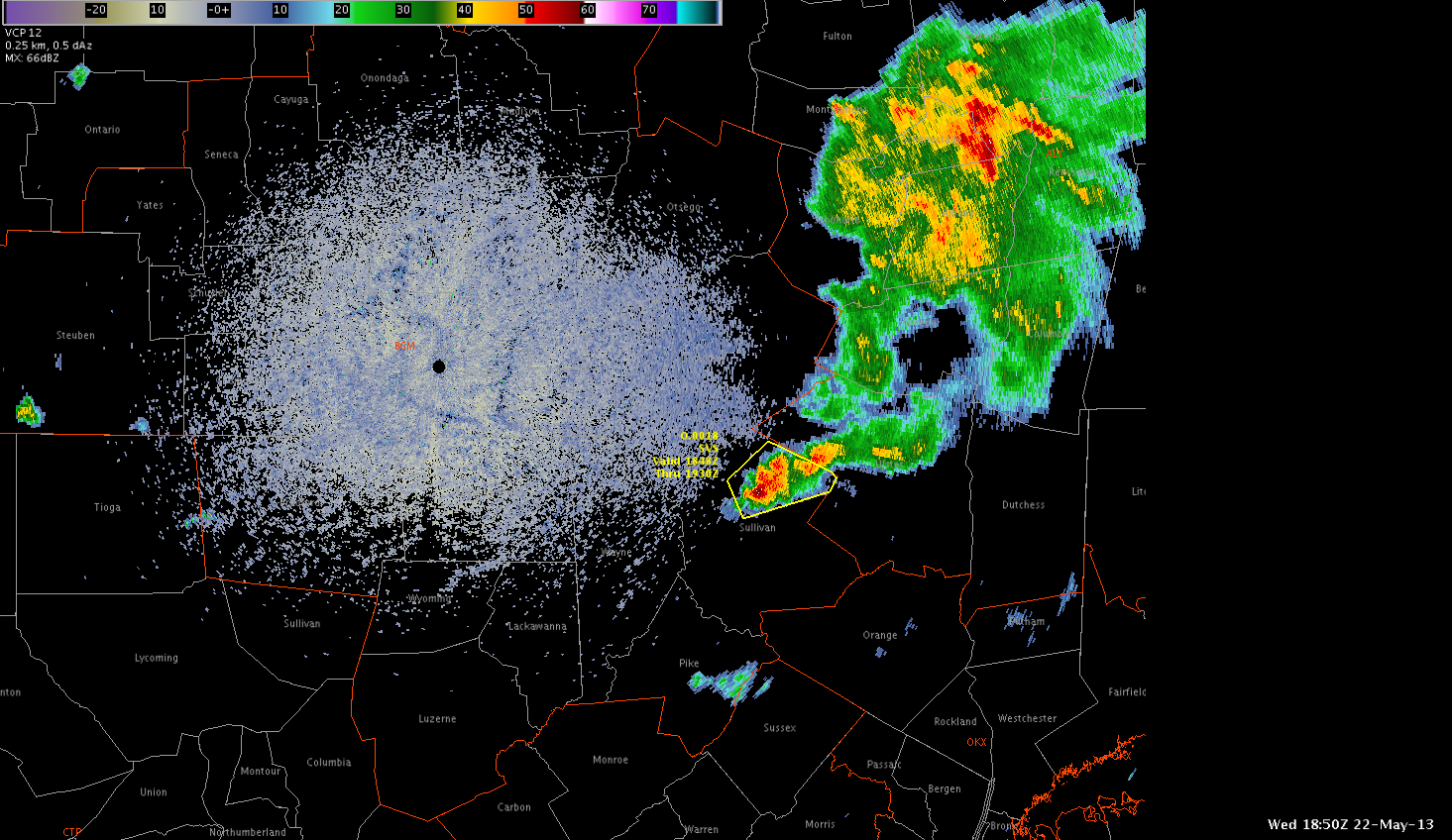
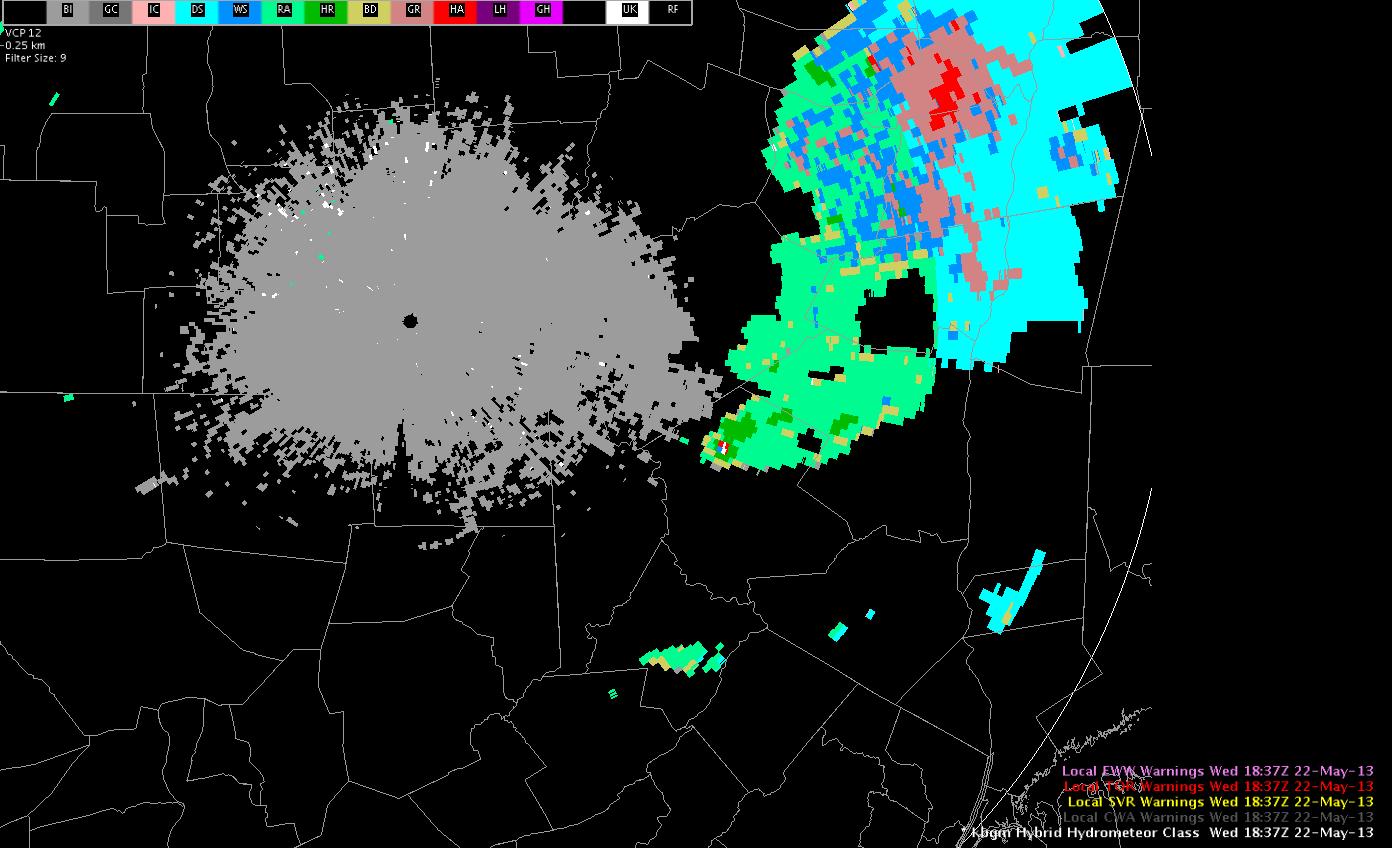
Use of the Donovan method would result in the issuance of a severe thunderstorm warning on this cell in eastern Sullivan County when the 50dbz core reached 28,000 AGL. This cell actually had a small by high 50dbz core of over 30,000 ft. The MESH also spiked up to indicate 1.4 inch hail. The HSDA indicated hail but not large hail. This storm had a history of severe hail. No actual verification since the spike was over open county and not over any towns. But the trend we saw yesterday of HSDA indicating lesser chances of svr hail continues today thus far.
Okay, today we’re in the same region we left last night…back in NY baby! Well, it’s upstate NY, but the baby still applies. =) Anyway, here we are nearing 330 pm EDT, and MRMS data are already suggesting severe hail in a storm moving just south of Lake Ontario in Wayne County. Notice the MESH in the four panel in the image below (lower right). This cell showed very quick development with >1 inch hail beginning at 1914 UTC as shown below. At the same time, reflectivity values of 59 dBZ were colocated with the cell. However, the HSDA data only indicated hail and rain (red colors, lower left).
Figure 1. MRMS imagery valid at 1914 UTC and KYTX imagery valid at 1913 UTC. Upper left – MRMS merged reflectivity QC composite (dBZ), upper right – MRMS surface reflectivity at -20C (dBZ), lower right – MRMS surface MESH (in), lower left – KTYX Hybrid Hydrometeor class
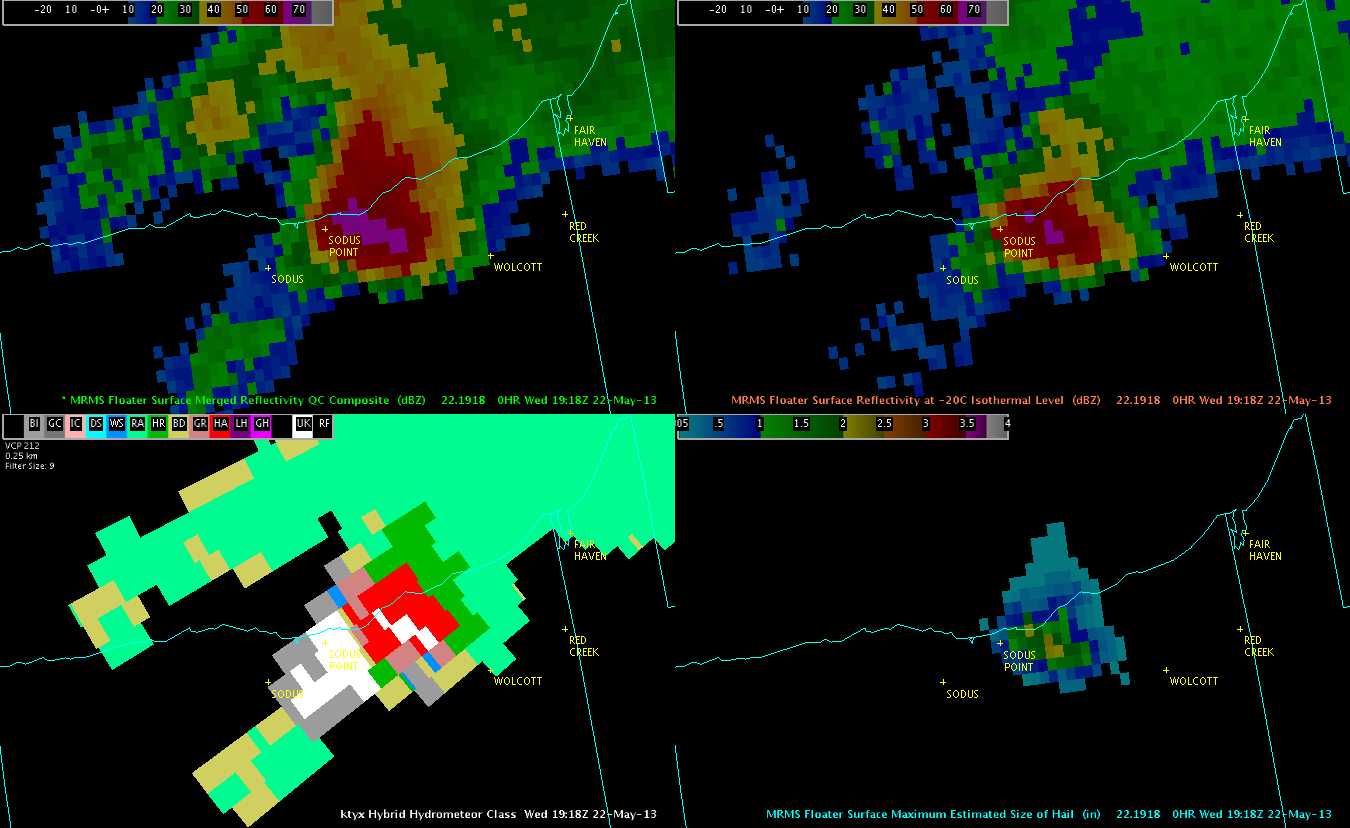
MESH Values over 2 inches then appeared at the 1918 UTC MRMS product update. Notice that 65 dBZ values were indicated by the MRMS -20C reflectivity product. However, the KTYX HSDA product still just indicated a sub-severe hail/rain combination.
Figure 2. MRMS imagery valid at 1918 UTC and KYTX imagery valid at 1913 UTC. Upper left – MRMS merged reflectivity QC composite (dBZ), upper right – MRMS surface reflectivity at -20C (dBZ), lower right – MRMS surface MESH (in), lower left – KTYX Hybrid Hydrometeor class
Based on these data above, we issued a Severe Thunderstorm Warning for hail at approx 1930 UTC, although we may have been a little late getting out due to still setting up and “getting oriented”. Although it’s not shown here, the KBUF HSDA data also did not indicate large or giant hail. The MRMS data appears to be performing fairly well so far, but we’ll watch for these trends into the afternoon.
So, what happened? Well, we just got a report of quarter size hail valid at 1918 UTC, 2 miles east of Lake Bluff in Wayne County. So far, it appears that the MESH may be overestimating the size of hail slightly, with the HSDA from the KTYX and KBUF radars are underestimating a little. Nevertheless, we’ll continue to monitor for reports.
Kris and Eric
UPDATE!! We got a delayed report of golf ball size hail from Wayne County at 1936 UTC. Perusing back through the data, it looks as though the MESH product did quite well, indicating 1.73 inches at 1934 UTC and 1.65 inches at 1936 UTC. However, the HSDA still showed just rain and hail without the large and giant hail mention.
Mid day convection progressing over eastern NY has been producing severe hail reports. Issued first warning based upon current reports as well as MRMS guidance. Image 1 below shows the reflectivity and the warning polygon, indicating the higher dBz indicative of the possible hail. Image 2 shows the MRMS guidance, with MESH values between 1 and 1.5 inches. Reports being received from the public were within this range. Probability of severe hail values had pixels between 70 and 90%. HSDA was having a bit more difficulty capturing the severe hail and even any hail development, with only rain being noted.
Slight Risk for portions of the upper Ohio Valley and the northeast, with the highest probabilities of severe centered over Ohio. The upper level trough continues slowly eastward, and at least one notable wave is progged to swing around the base. Low to moderate instability is expected as a surface cold front moves through the area. Expect convection to develop by early afternoon, and peak in severe potential during the late afternoon and early evening hours, after which it should tail off in severity. Expecting marginally severe hail (up to 1.5″) and possible wind damage up to 65 mph.