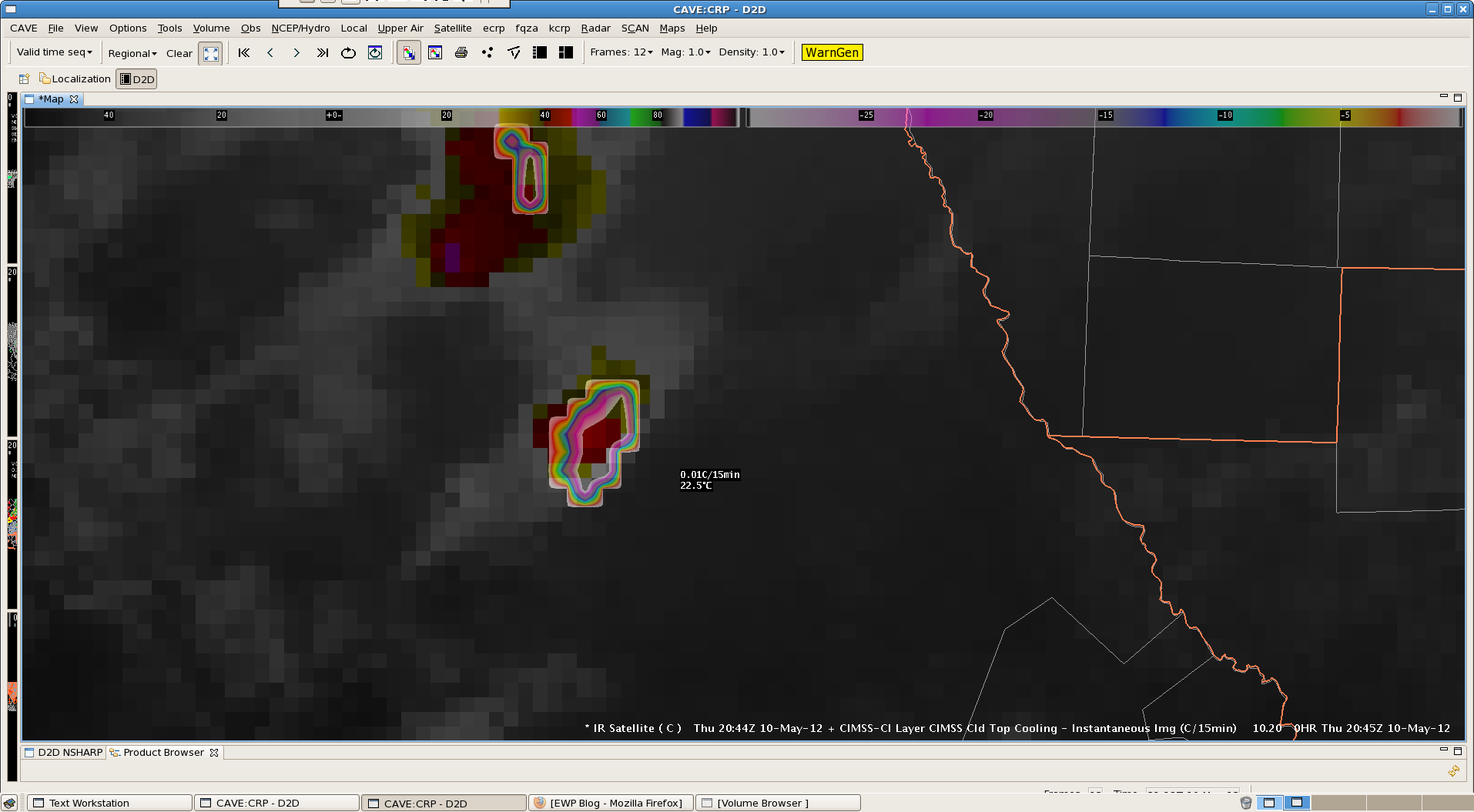
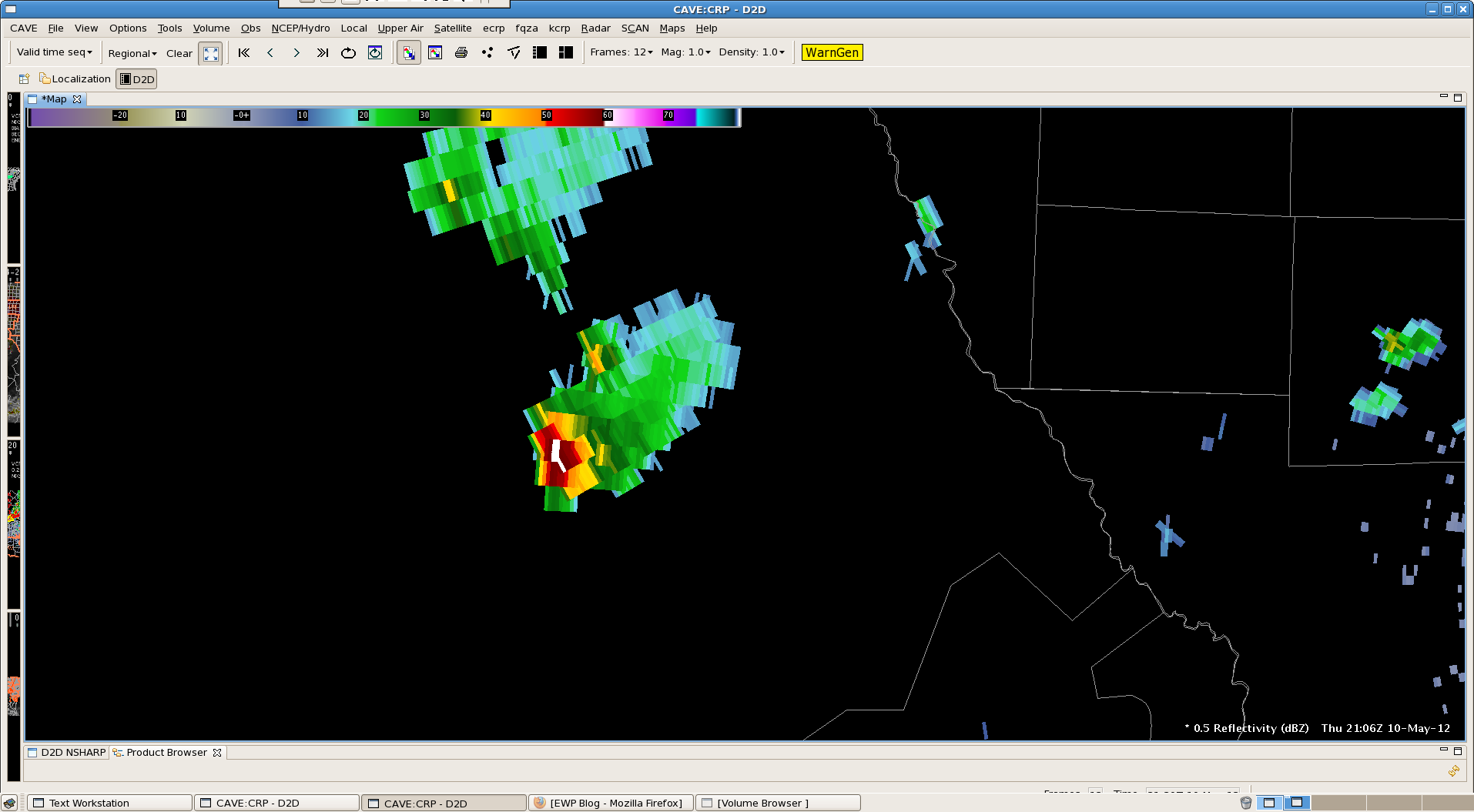
Severe storm west of SW Webb/NW Zapata counties continue to paint a CTC -20 to -22C/15min between 2210Z-2255Z as the storm tracks east. rn/ams


Official websites use .gov
A
.gov website belongs to an official government
organization in the United States.
Secure .gov websites use HTTPS
A
lock (
) or https:// means you’ve safely connected to
the .gov website. Share sensitive information only on official,
secure websites.
Severe storm west of SW Webb/NW Zapata counties continue to paint a CTC -20 to -22C/15min between 2210Z-2255Z as the storm tracks east. rn/ams
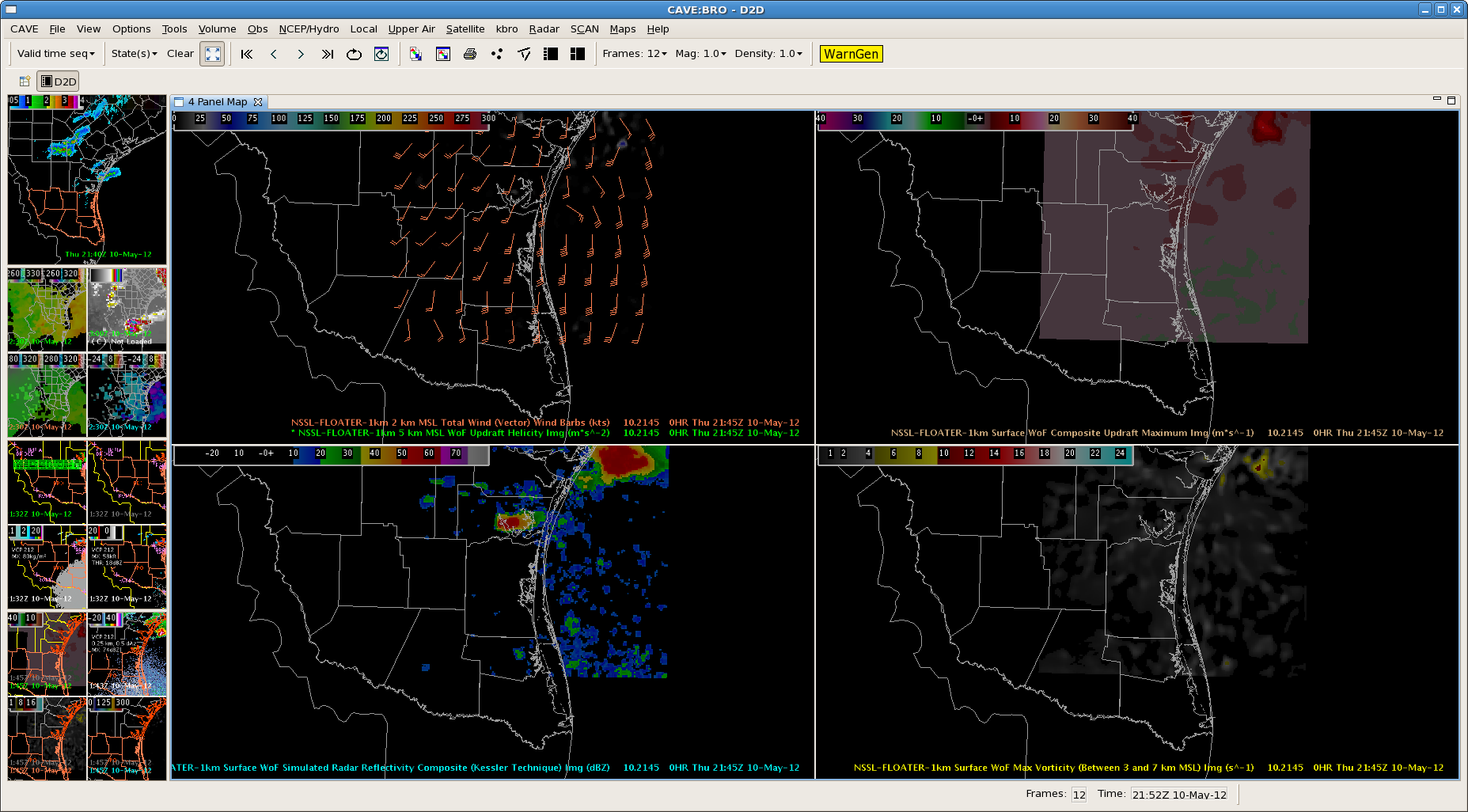
The image below shows the 1km composite updraft maximum (top left), 0.5 z, 1km surface maximum vorticity (bottom left), and the 1-5km updraft helicity (bottom right). Although the 0.5 velocity data is not shown, it is contaminated and not very useful. This makes the 3DVAR data extremely useful in identifying where the strongest low level rotation is located and the potential for a tornado.

CI continues to show promising results in terms of providing significant lead for strong/severe t-storms.
The first image below at 2115Z shows a strength of signal around 99 (red) in UAH-CI in the upper left pane for a developing storm west of Laredo.

The next image at 2125Z depicts -14C/15 min UW-CI (lower left) for the developing storm.

Radar imagery continued to show storm growth and the storm reached 50 to 55 dbz at 2208Z as shown in the upper right pane of the image below. Also, MESH reached 1.18 inches at this time as well.

With these figures in mind, the lead time from initial CI detection on UAH-CI was around 55 min. and the lead time from UW-CI was around 45 min. It would be great to put a product out conveying the possibility of strong storms when we first see these CI signals with an actual warning coming later.
AMS/Nunez
We noticed a good comparison of the CTC at 2210Z occurring 18 minutes before the 1″ hail indication by MESH. rn/ams


Focusing on the newly developed storms over Mexico and west of Laredo, the synthetic satellite appeared to capture the progression of these storms as they move east. Projections have these storms moving into Texas between 00Z-01Z. Latest radar trends may be a bit faster though. rn/ams


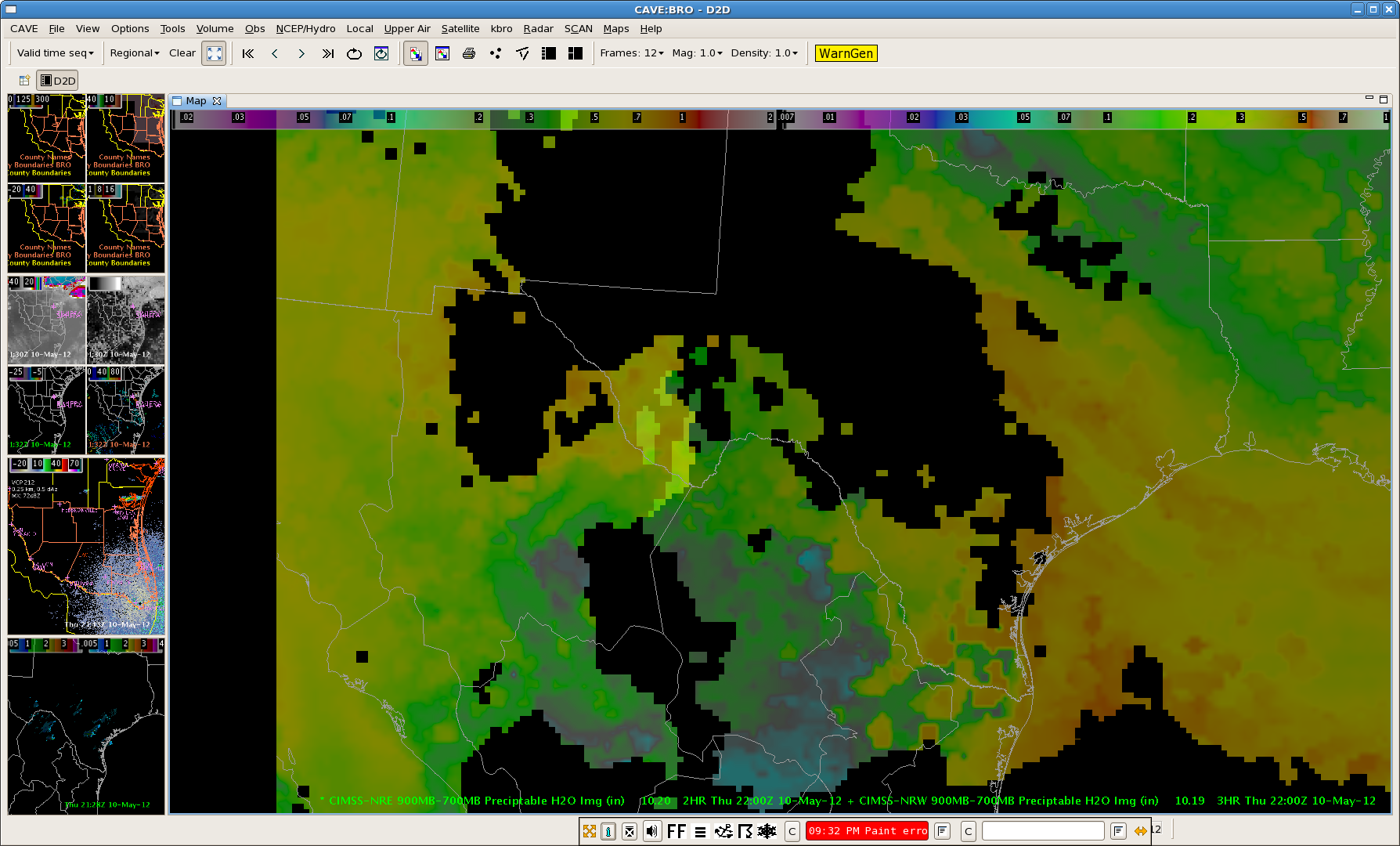
These two nearCast screen captures depict the main axis of theta e/PW that was translating east of the BRO. Ample moisture remains over the eastern and southern parts of the BRO CWA and support thunderstorm development. Sadly, convection continues to be inhibited and is reflected on the 3DVAR sim. comp. reflectivity. RN/AMS
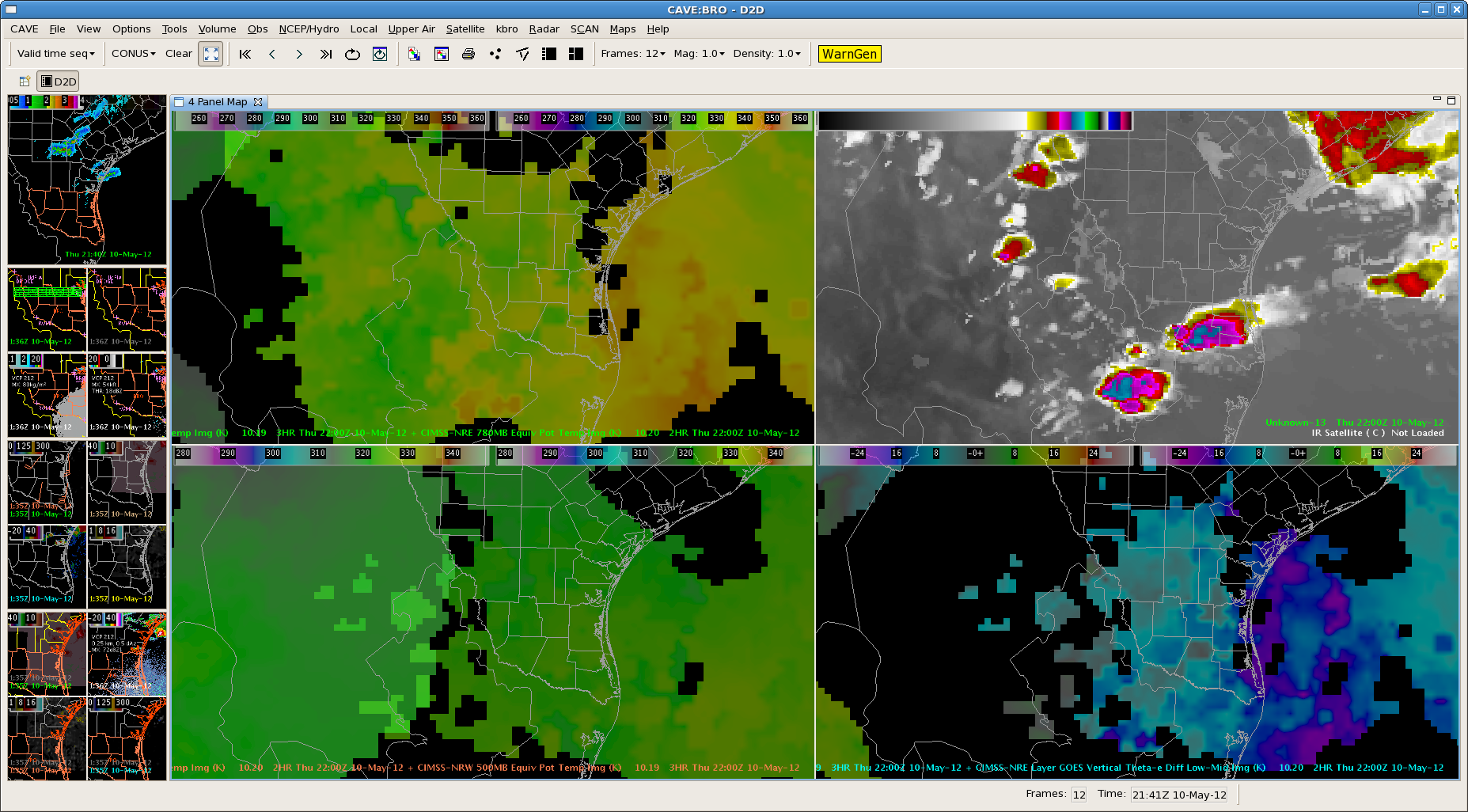
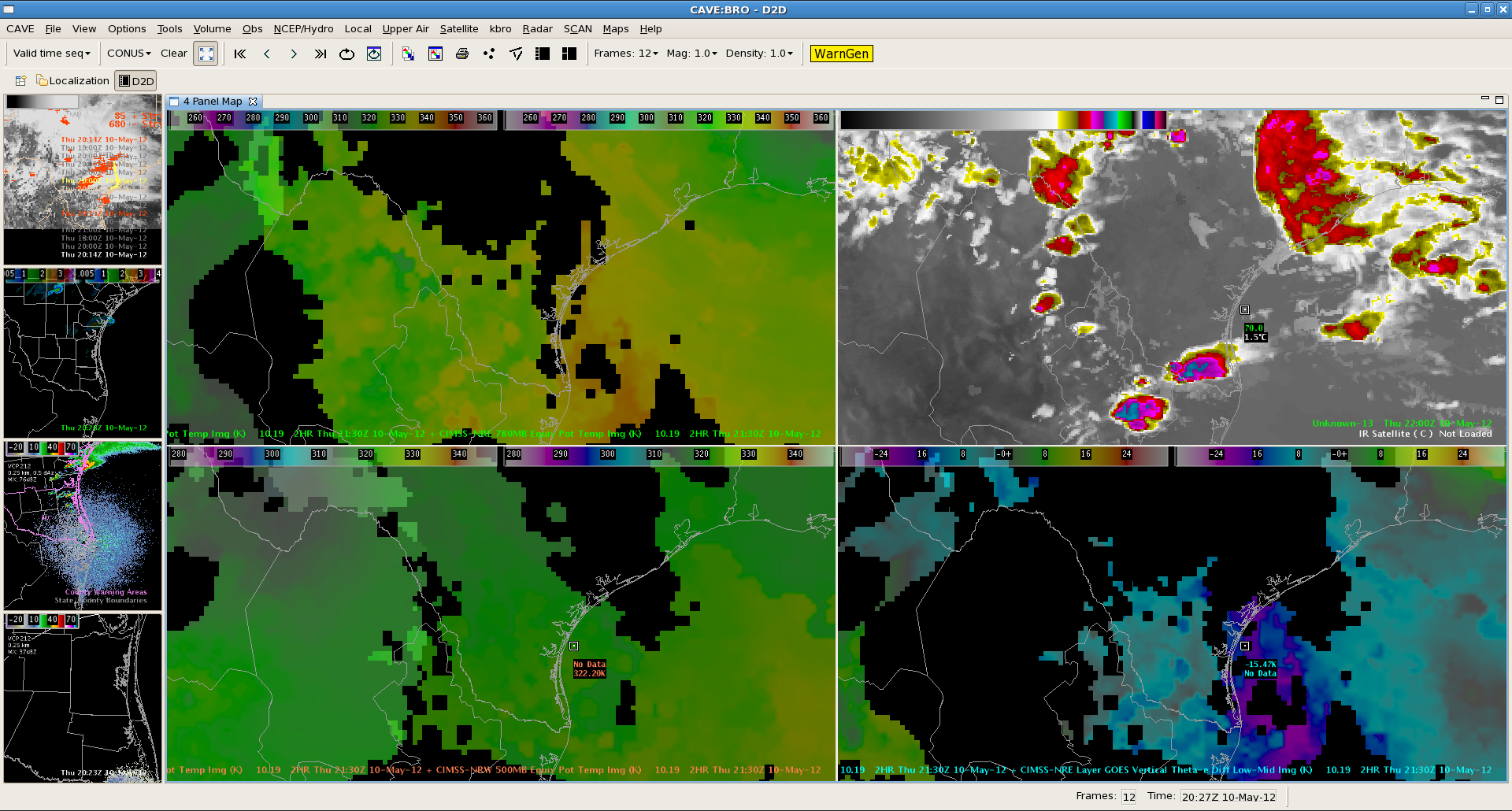
The below image at 22Z depicts nearcast theta-e at 780 mb in the upper left pane, synthetic WRF IR in the upper right, nearcast theta-e at 500 mb in the lower left, and nearcast vertical theta-e difference low-mid in the bottom right.
Looking at the 780 mb theta-e, it shows areas in yellow of best moisture/instability predicted for this afternoon which matches up with storms predict in synthetic IR imagery. Because the 2 products derived off of different model projections are in decent agreement, this lends more confidence to this convective scenario for this afternoon.
AMS/Nunez
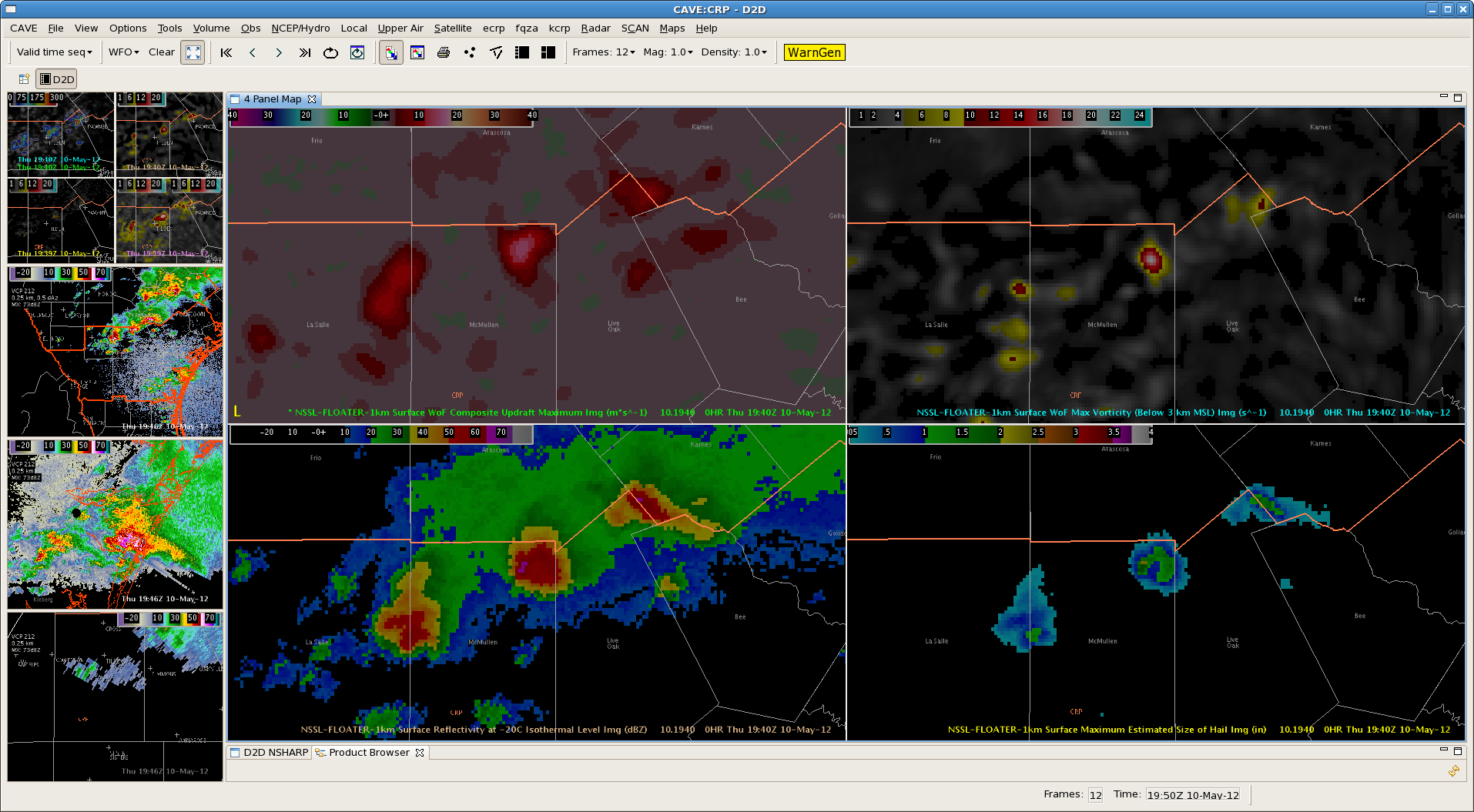
3 training supercells are currently moving across the northern counties of the CRP CWA. Ryan & Jeffrey have issued TOR warnings on all 3 of the storms & have been interrogating a number of 3DVAR products and integrating them with base CRP radar data.
The maximum updraft product has quickly become a go-to for situational awareness and quickly evaluating which storms strengthening/weakening…
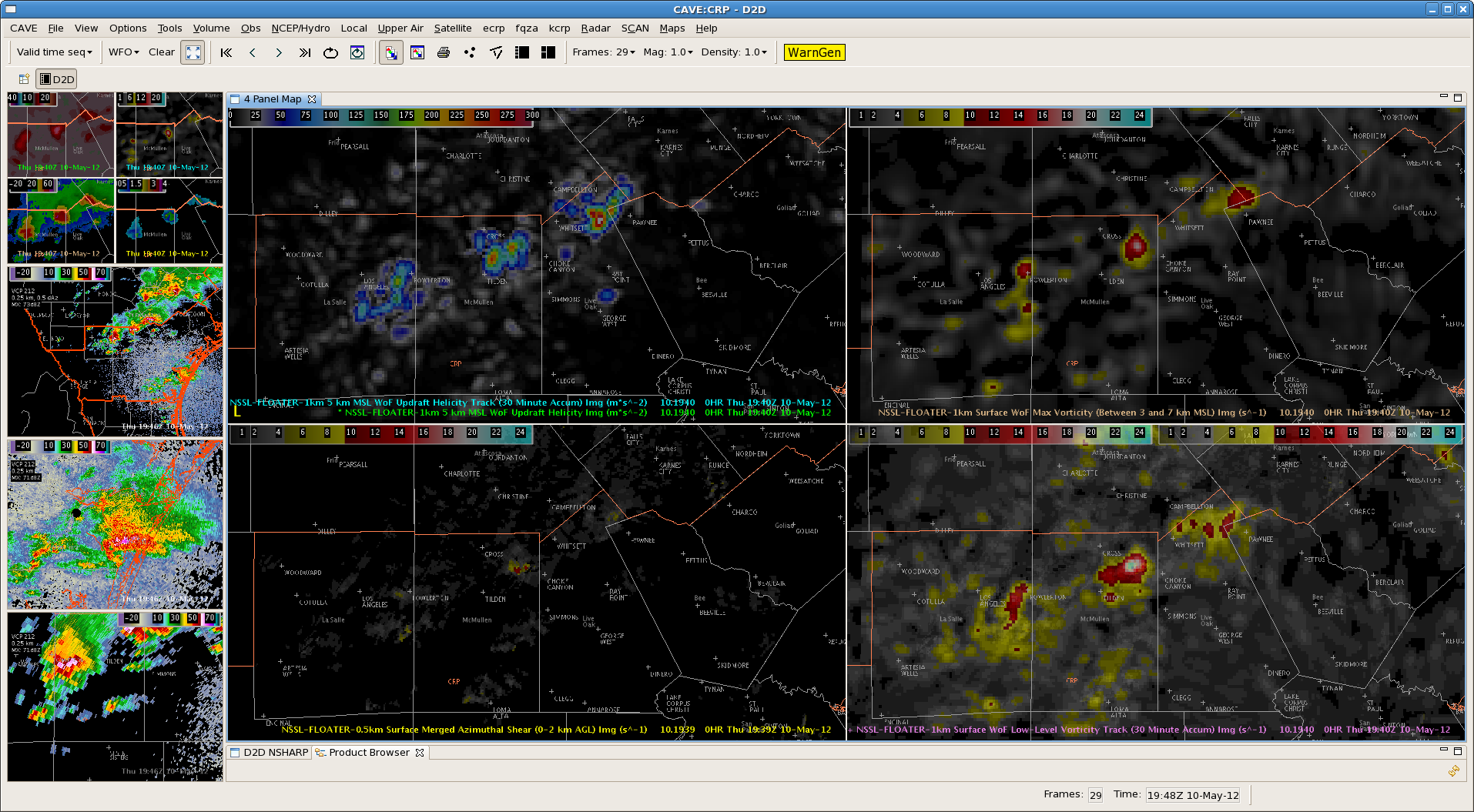
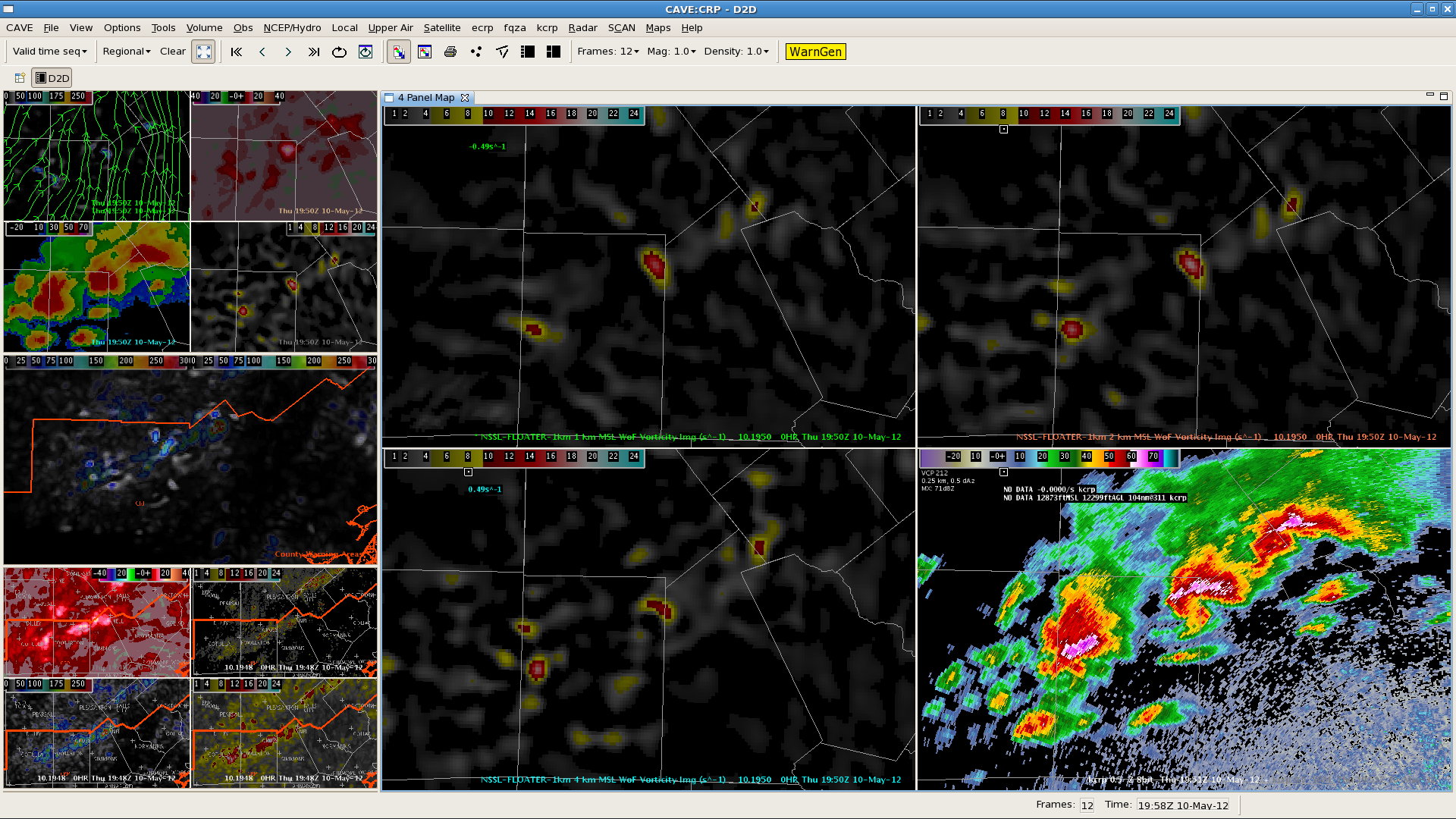
Local storm reports and trained spotters have reported a number of funnel clouds and a couple of tornadoes with the storms over the past hour.
-Kristin C.
…added Raymondville to the line position…
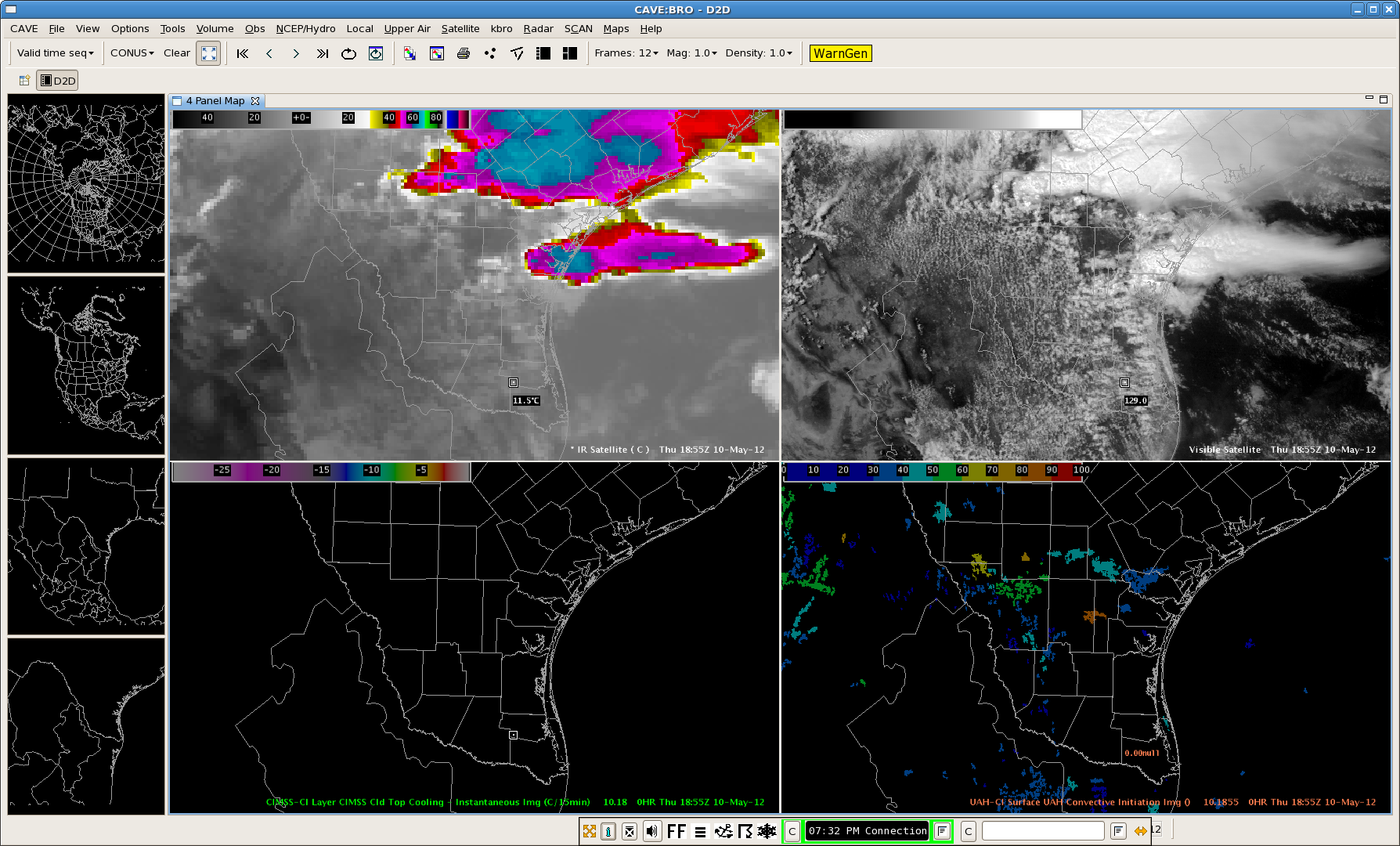
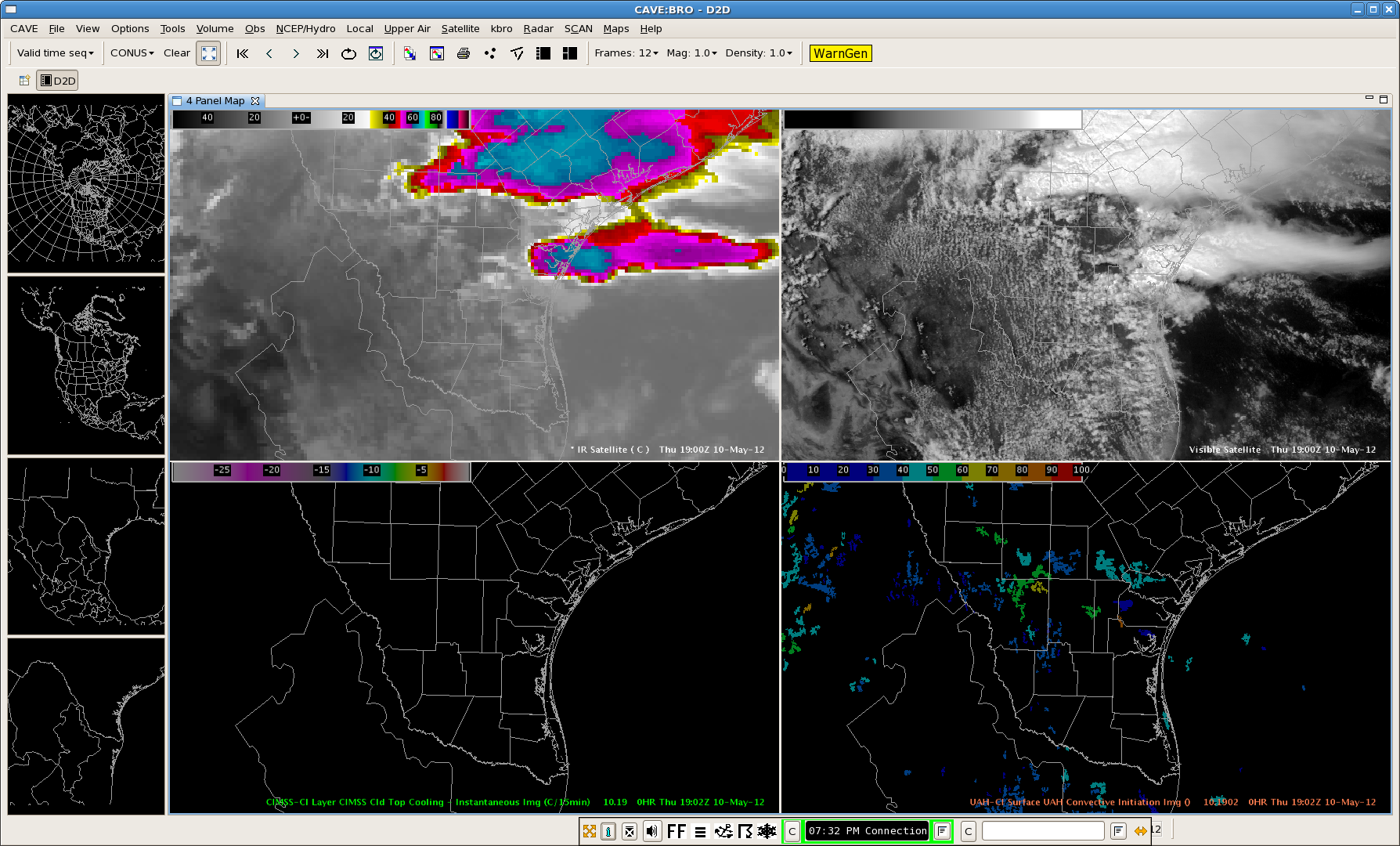
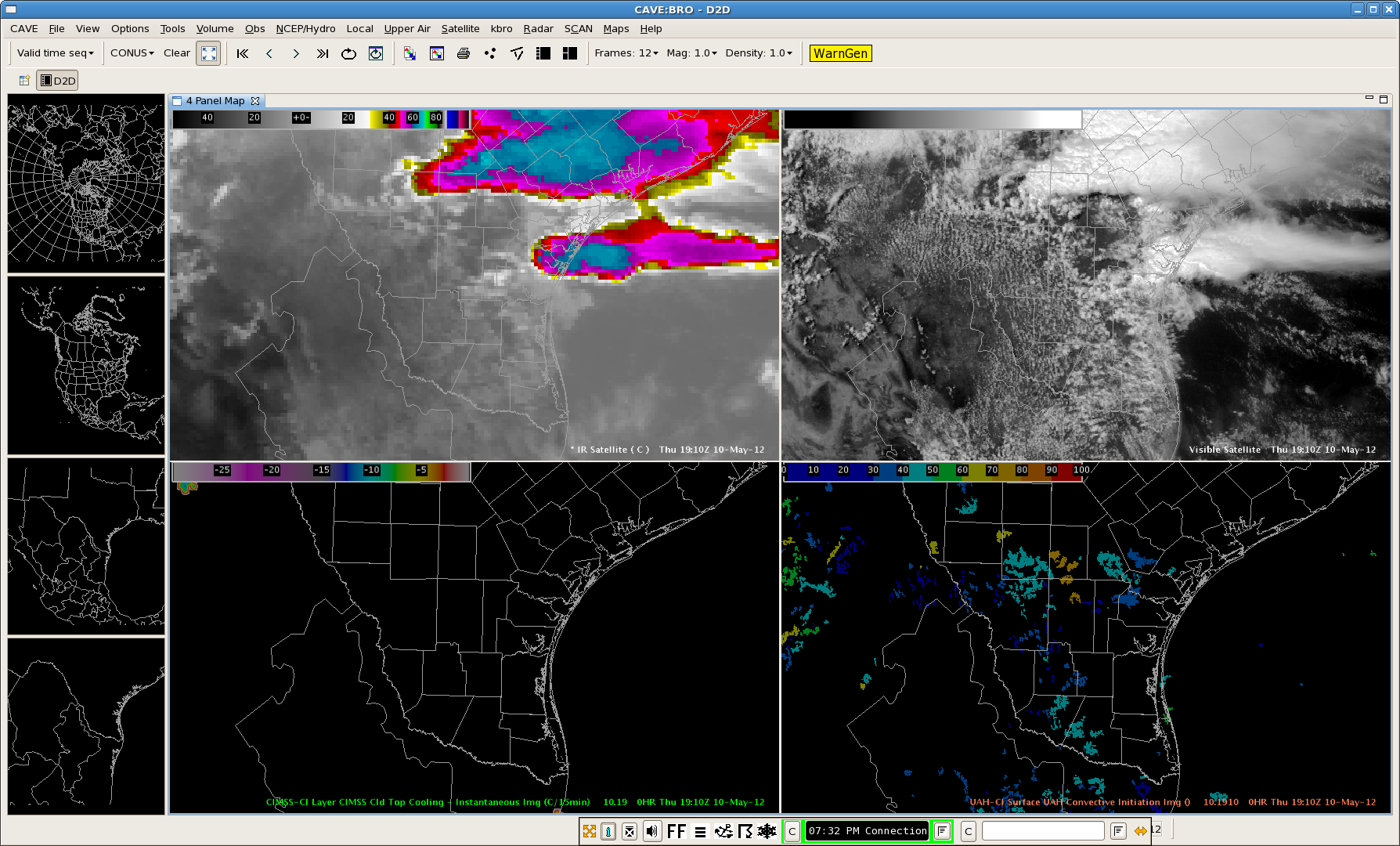
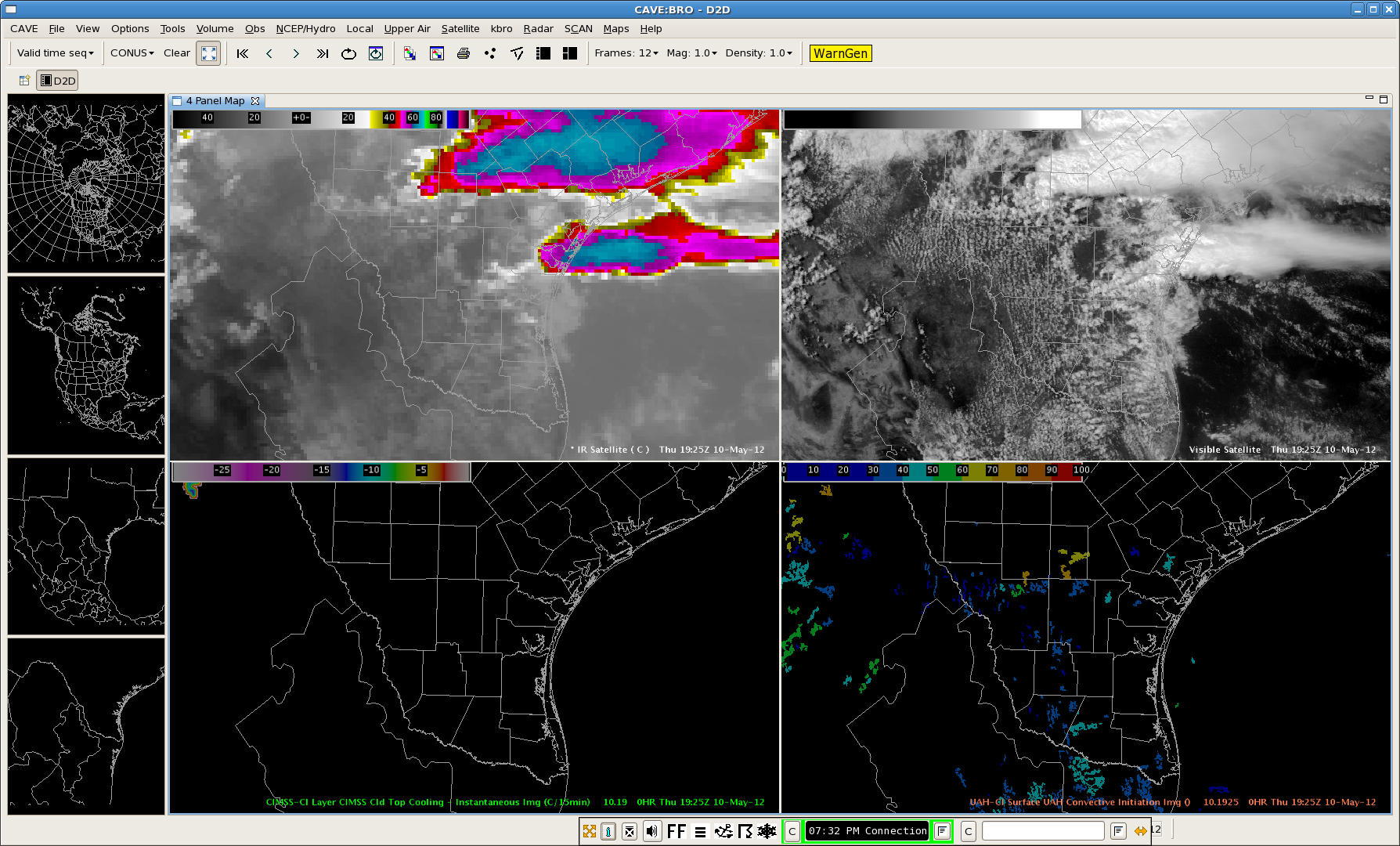
The following four screen captures depict several favored areas of UAH-CI strength of signal along the outflow boundaries that exist immediately north of CWA and north-south along a line from Los Angeles-Realitos-Encino-Raymondville. Knowing were the boundaries were located, UAH strength of signal allowed us to focus on the most favored areas between 20Z-21Z. (Synthetic Sat showed the most likely CI would take place between 20-21Z, particularly with storms along the Rio Grande. It didn’t capture any activity over the northern extent of the outflow boundary.) Nunez