An official website of the United States government
Here’s how you know
Official websites use .gov A
.gov website belongs to an official government
organization in the United States.
Secure .gov websites use HTTPS A
lock (
) or https:// means you’ve safely connected to
the .gov website. Share sensitive information only on official,
secure websites.
Began using the 3DVAR and MRMS data. The max updraft jumped over Monroe county to 17-19 m/s. This is along the leading edge of the MCS over the higher CAPE over eastern AR. A nice swath of 0.5-1.25 in MESH along this NW to SE oriented path is associated with this cell. Now that this cell is crossing into the MEG warning area, have issued an SVR for 60 mph winds and hail to half dollar size, based on the history of MESH, and a favorable, high CAPE environment. If the warning had a longer time period (1-3 hours), we might “draw” a longer-duration polygon based on the swath with larger hail potential (1.5-1.75 in).
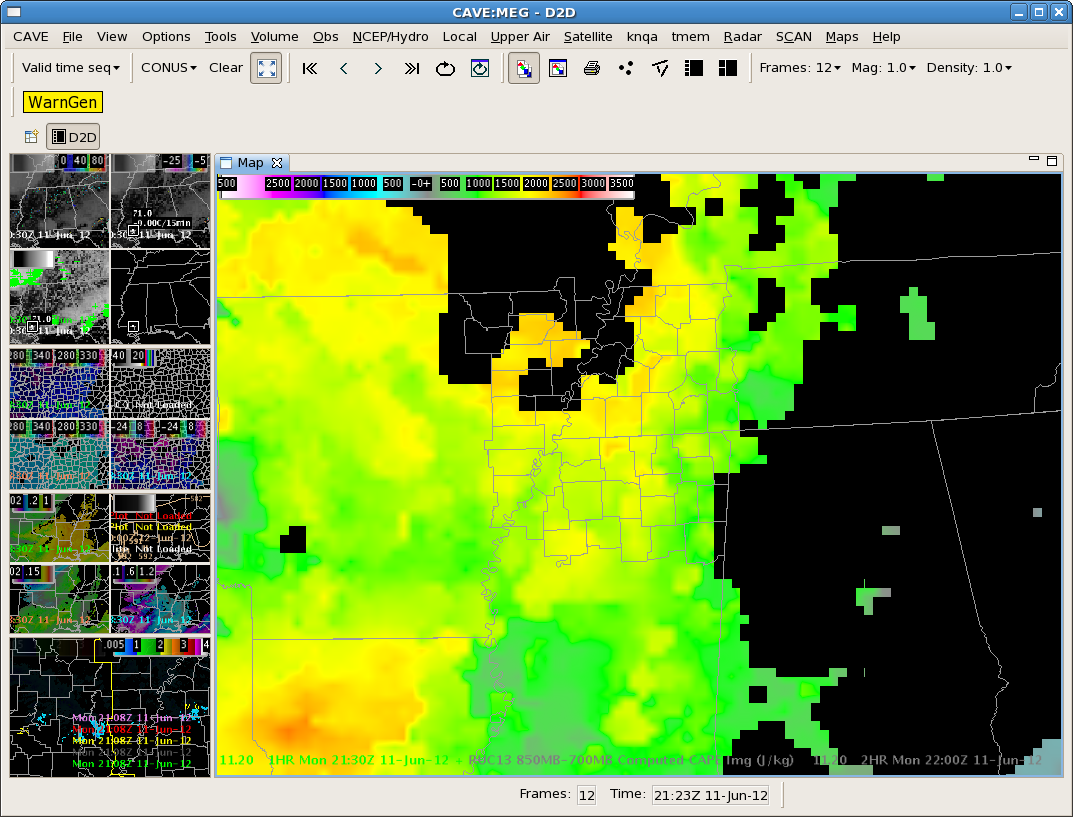
Started looking at NEARCAST 780-500mb CAPE vs RAP13 (aka RUC13) 850-700mb computed CAPE. 2hr fcst valid 2200UTC. Realizing that we cannot compare these two fields 1-for-1, the NEARCAST CAPE seems more accurate compared with the location of the MCS precip and cloud field.
See the vis satellite image and obs from 21Z for more “truth”.
We expect the storms along the leading edge and flanking edge to the west of Memphis along I-40 to continue to intensify. Will continue to watch the NEARCAST and CI images for new trends.
Sometimes you blow a forecast and convection fires up hours ahead of “schedule”. So TMU (Traffic Management Unit) comes running over and wants to know a few things…
1) How tall are these storms going to get?
2) Are these isolated supercells going to turn into a cluster….broken line…solid line…or remain isolated to widely scattered? And What jet routes are going to see the largest impact? Are some going to be completely compromised? Some planes are already deviating – is this going to get worse?
3) Where are these storms going?
4) How long do we have until they impact the arrival gates at [insert airport name here]?
So you can see that days like this can be extremely stressful for the CWSU meteorologist as well as the TMU and controllers. Satellite data has been great with respect to timing and location of convective initiation…but once those storms blow up – those satellite products are not necessarily useful as the event continues….
So what can we do with MRMS and 3DVAR data?
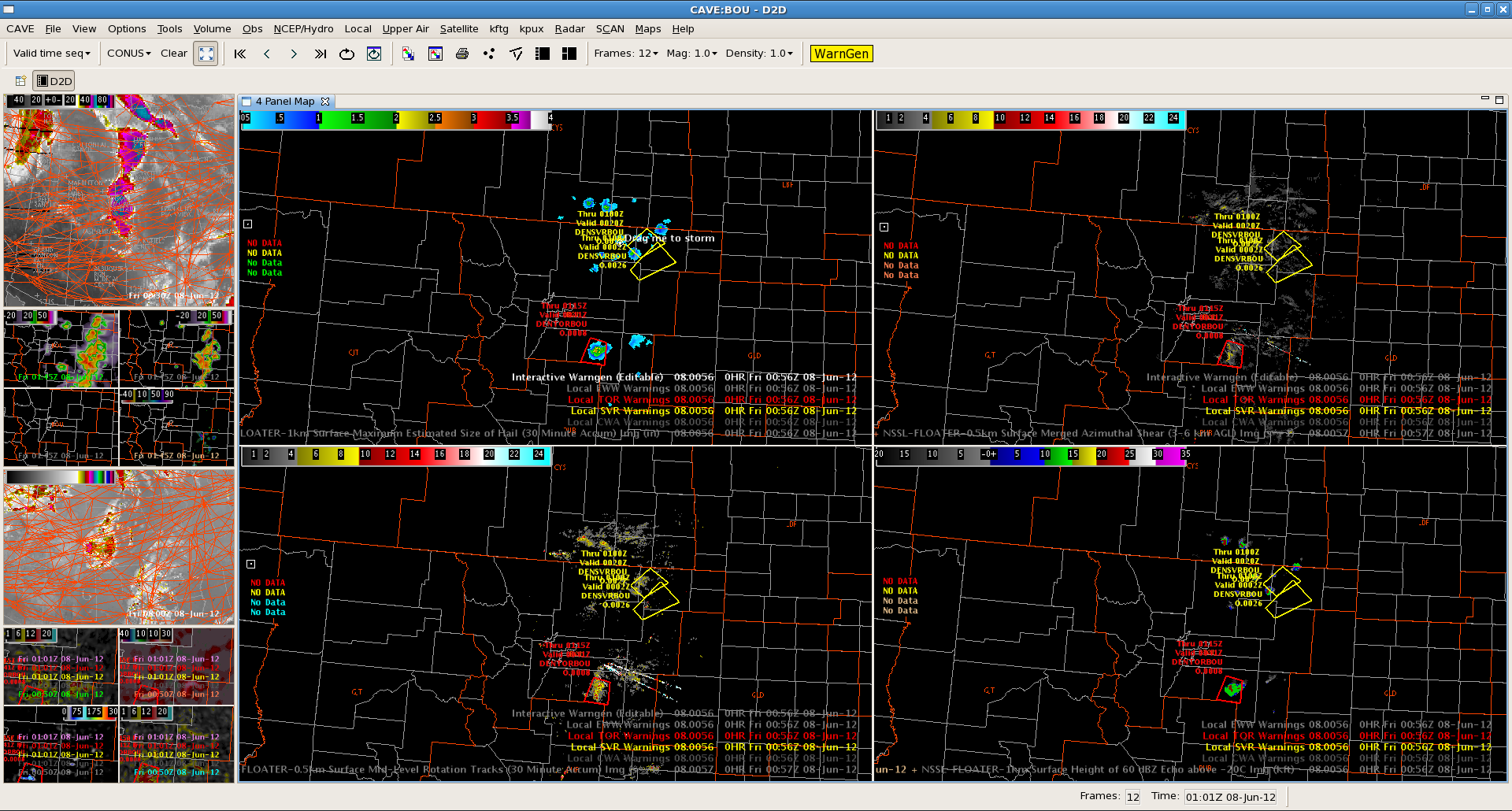
Figure 1: MRMS Products
Figure 1 shows the MRMS products, including MESH, Azimuthal Shear, Mid-Level Rotation Tracks, and Height of 50dBZ and 60dBZ Echos above -20C.Sometimes pilots like to deviate as little as possible, and you’ll be asked if they can actually get thru the gaps between the thunderstorms. the MRMS data can really help you to visualize the true strength and areal extent of the thunderstorms. Overlay the jet routes and perhaps this information can be used to see if new playbooks truly need to be implemented at that point in time…or if air craft can remain on their routes and utilize those gaps between storms.
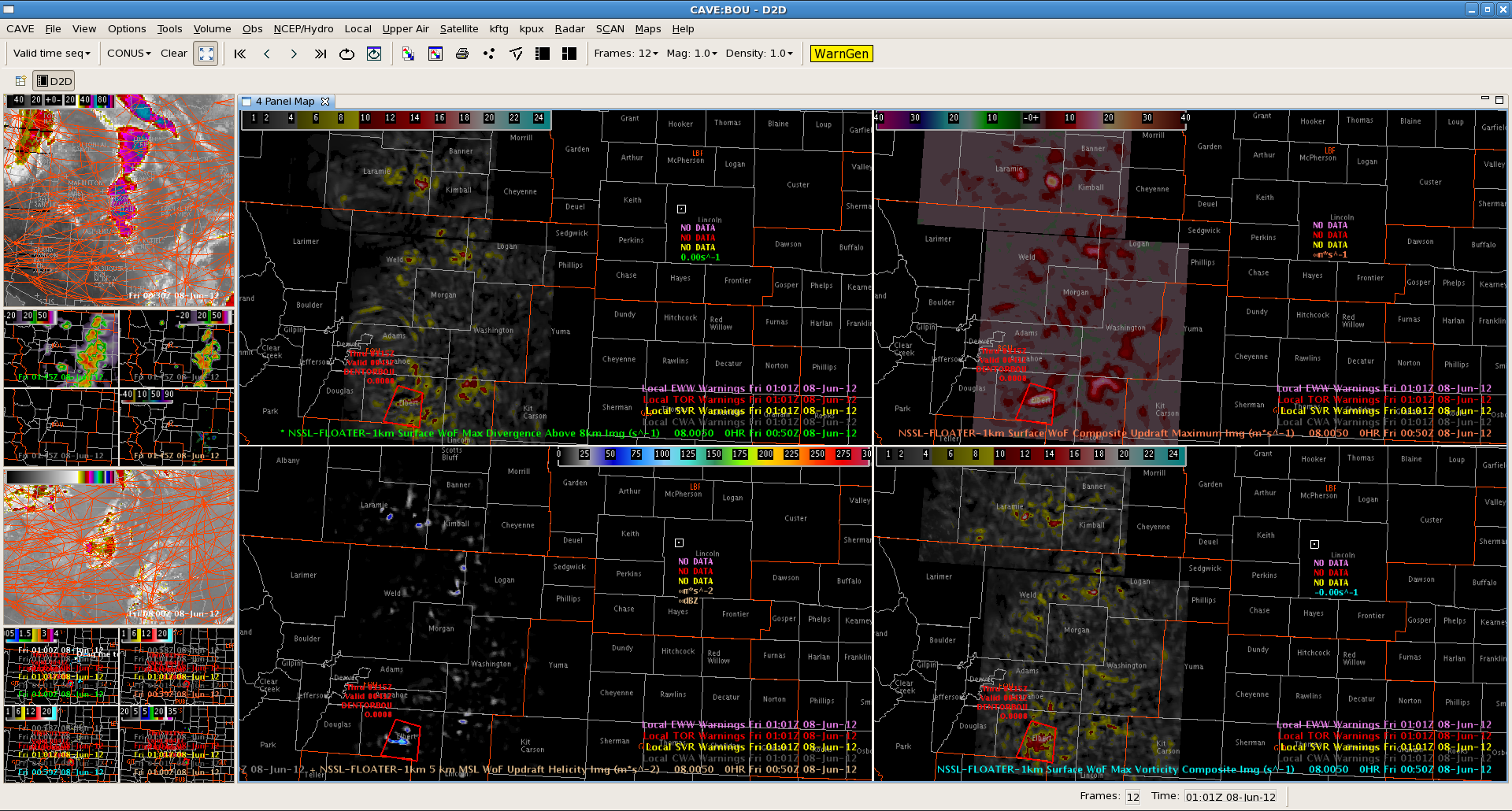
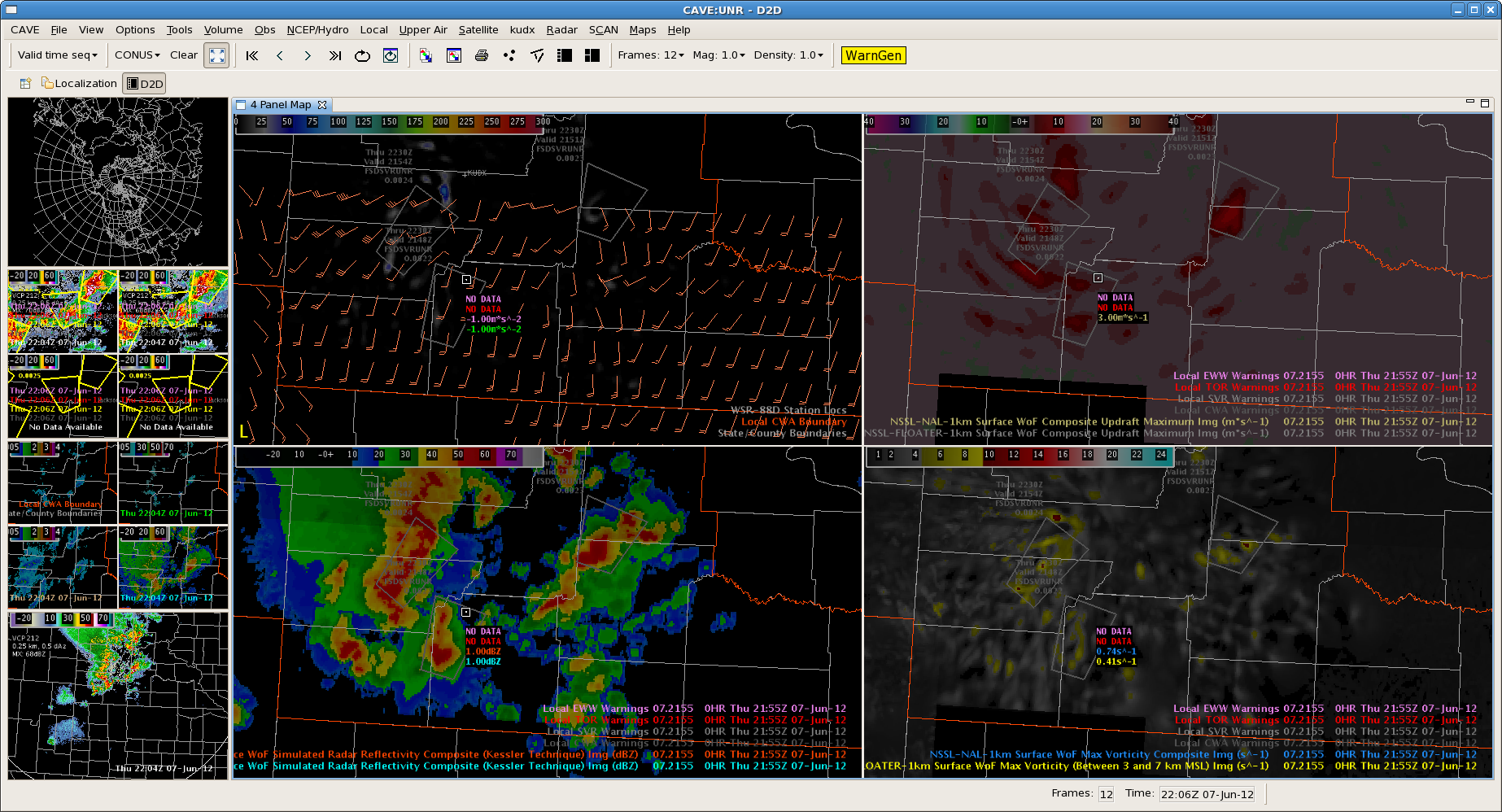
Figure 2 shows the 3DVAR data, including storm top divergence, updraft intensity, helicity, and vorticity…perhaps these products can also be used to identify the true impacts to different jet routes across the NAS.
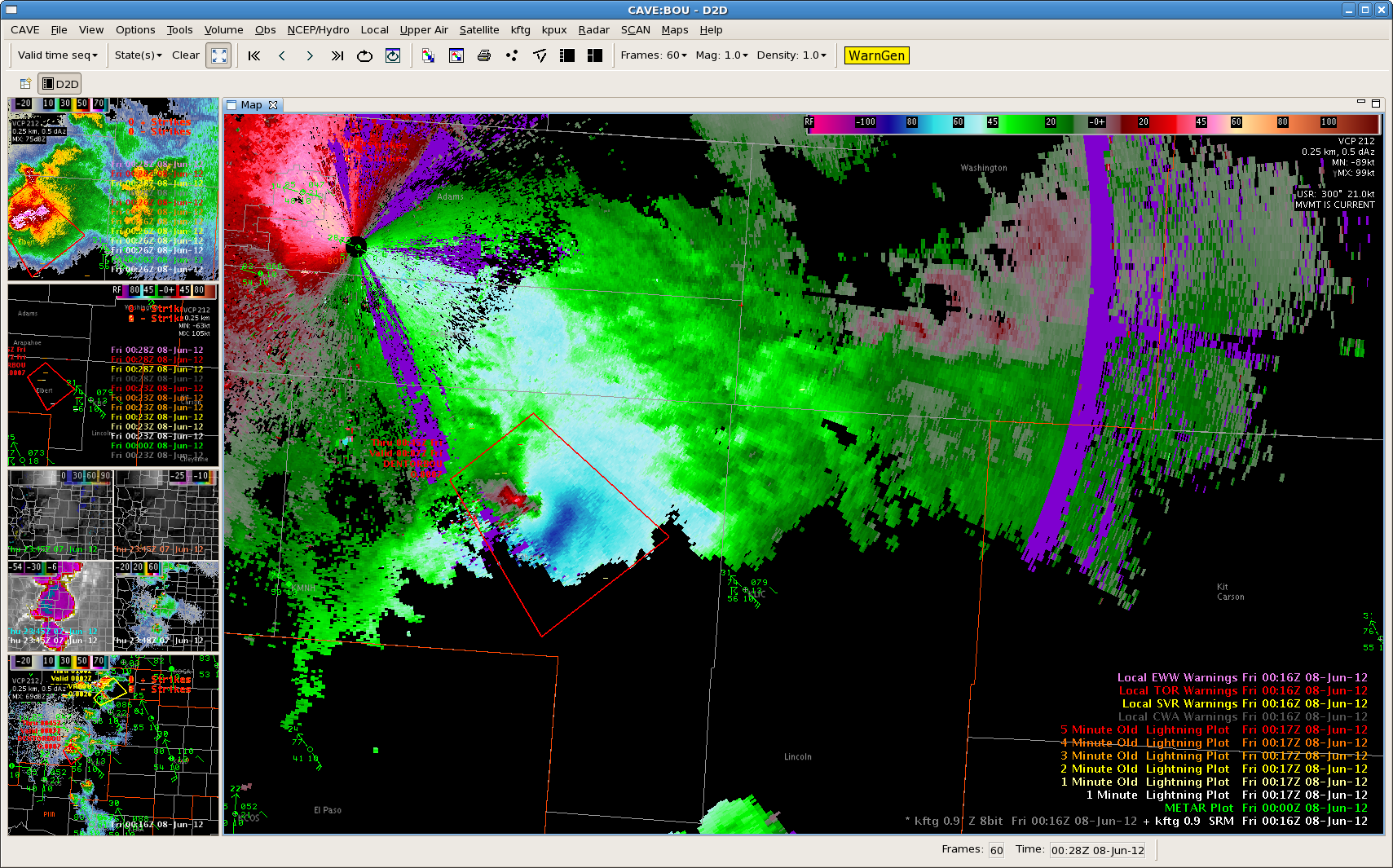
Images taken around 00:15Z on Thursday evening. 3DVAR products showed a strong updraft, divergence about 8 km, and mid-level rotation. Not shown, the low level rotation was lacking in the 3DVAR products. The FTG reflectivity and velocity data was quite impressive at the same time.
Finally another updraft that exceeded the 11 m/s “threshold” that we found earlier, however, the MESH has only indicated hail sizes around 0.5 inch. This particular updraft peaked at 17 m/s near Oglala, SD at 0005z. Earlier a severe thunderstorm warning was issued based on the 11 m/s updraft, but so far, no reports.
UNR updrafts (upper right) and MESH (lower right) at 0005Z
Update: The next updraft falls within the “normal” range for a strong storm, and MESH agrees. A 15 m/s updraft on the tail end charlie and a MESH value of 1.02 inches. Waiting to see if there is a report…
UNR updraft composite (upper right) and MESH (lower right) at 0030z
Here’s a velocity cross section from the Four-dminesional Stormcell Investigator (FSI) of the supercell near Byers, CO perpendicular to the convergence boundary. This is a classic Les Lemon Deep Convergence Zone, transitioning to a storm summit divergence.
After seeing weak updrafts most of the day, we finally see an updraft that is worth mentioning! Starting at 2300z and continuing at 2305z, our strongest updraft of the day occurred at 21 m/s, but whoops! Someone forgot to tell the MESH! After MESH had been saying hail in the 1 to 1.65 inch range for the last few volume scans, it came down to sub severe levels at 2305z and severe hail was never again reported by the MESH.
UPDATE: Golfball size hail was reported with the 21m/s updraft at 2254z (since 3dvar data is delayed one volume scan this is approximate time of the first 21 m/s updraft with MESH at 1.65 inches). Quarter size hail was reported in a nearby area earlier with an 11m/s updraft.
UNR updraft composite (upper right) and MESH (lower left) at 2305z.
Watching for CI in CO. We have noted moderate to high SOS hits on the higher terrain of CO west of DEN (1930Z and 2015Z images shown). Up to this point this activity has yet to convect. Conditions are ripe so we will see when it does take off.
Low freezing (8500ft) and -20C (19900ft) heights are leading to efficient hail producers across the southern portion of the CWA. However, 3DVAR data have been less than exciting. Max updraft composite have only shown updraft strengths in the 7 to 9 m/s range near the time of warning issuance. This is quite different than what was shown in the marginal severe cases of previous days, when maximum updrafts were generally on the order of 11 to 15 m/s. In any case, the MESH was showing 1 to 1.5 inch hail in the severe storms (polygons noted by the gray outlines).