


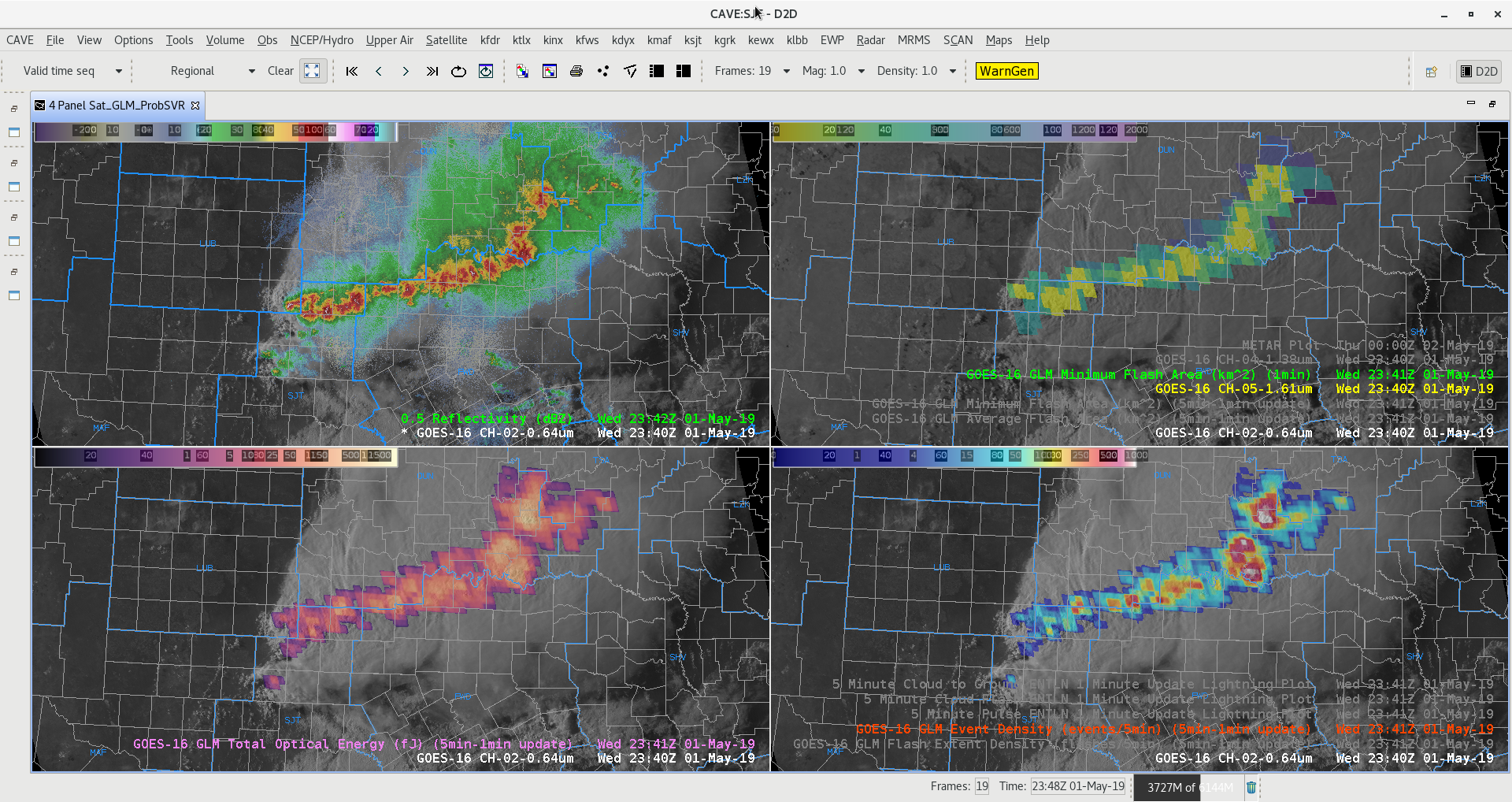
Image 1
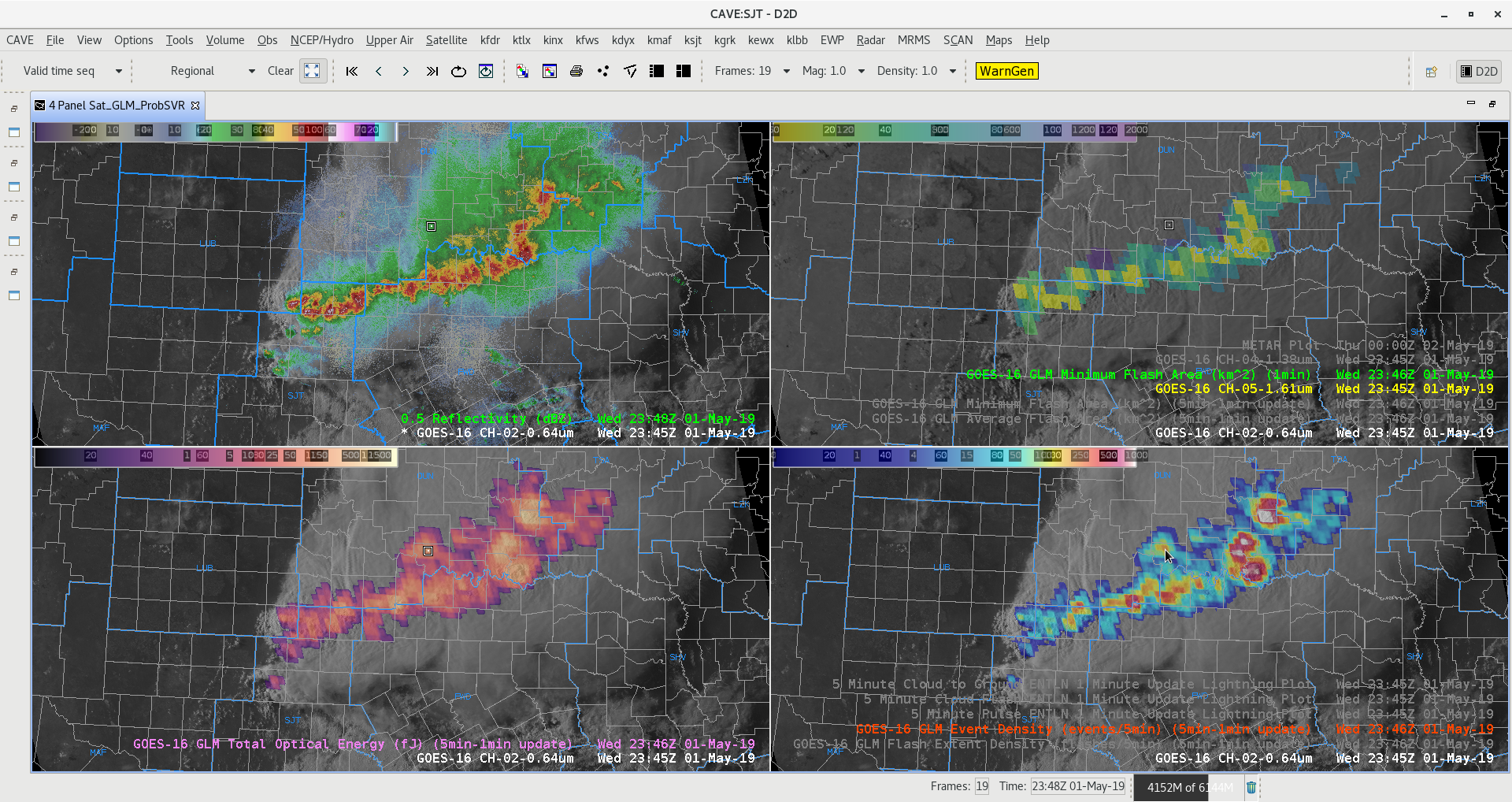
Image 2
GLM detects lightning flashes in cirrus plume in light rain area north of main convective line. See cursor location in (Image 2) for the cirrus flash spreading northward. -Jake Johnson
Official websites use .gov
A
.gov website belongs to an official government
organization in the United States.
Secure .gov websites use HTTPS
A
lock (
) or https:// means you’ve safely connected to
the .gov website. Share sensitive information only on official,
secure websites.

Real-time posts made during testbed nowcast and warning operations.
Image 1
Image 2
GLM detects lightning flashes in cirrus plume in light rain area north of main convective line. See cursor location in (Image 2) for the cirrus flash spreading northward. -Jake Johnson
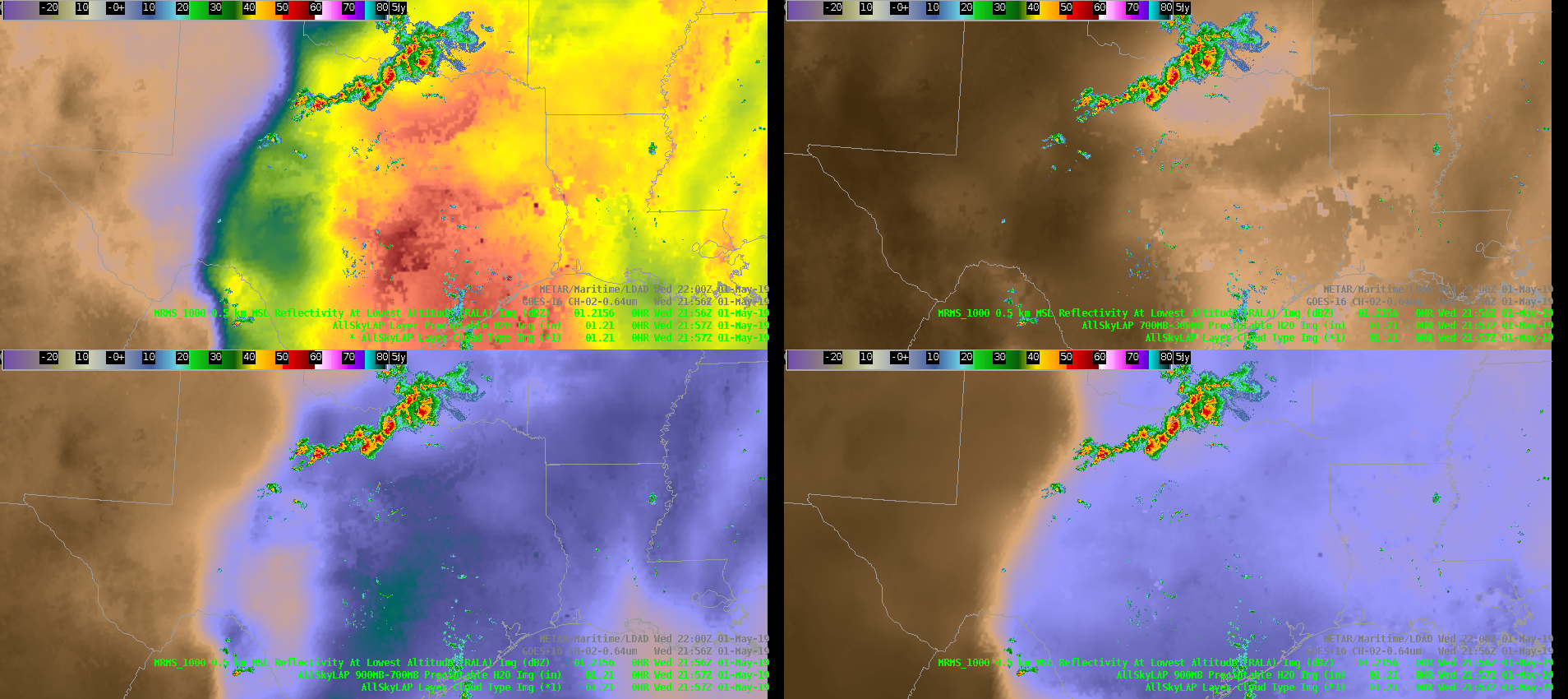
The storm cluster across N TX began to gust out late in the afternoon. Line motion was ~43kt as the storms surged across Montague county just south of the Red River. There was a report of wind damage in Texas (power poles blown down) and in Oklahoma (estimated 60-70 mph winds) associated with the storm cluster. ProbWind was as high as it has been the past couple of days in the 92-95% range during this time. Of note, the Flash Rate was very high with the identified object, at times nearing 150 fl/min and the AzShear was ‘strong’. This combined with the environmental parameters helped increase the wind probs throughout the life of this cluster as it moved ENE. ProbWind was equally high with other objects to the northeast and southwest of the featured storms yet no wind reports were received from them. Interestingly though, ProbTor was ~30% with the Montague county object at this time helping draw attention to it.
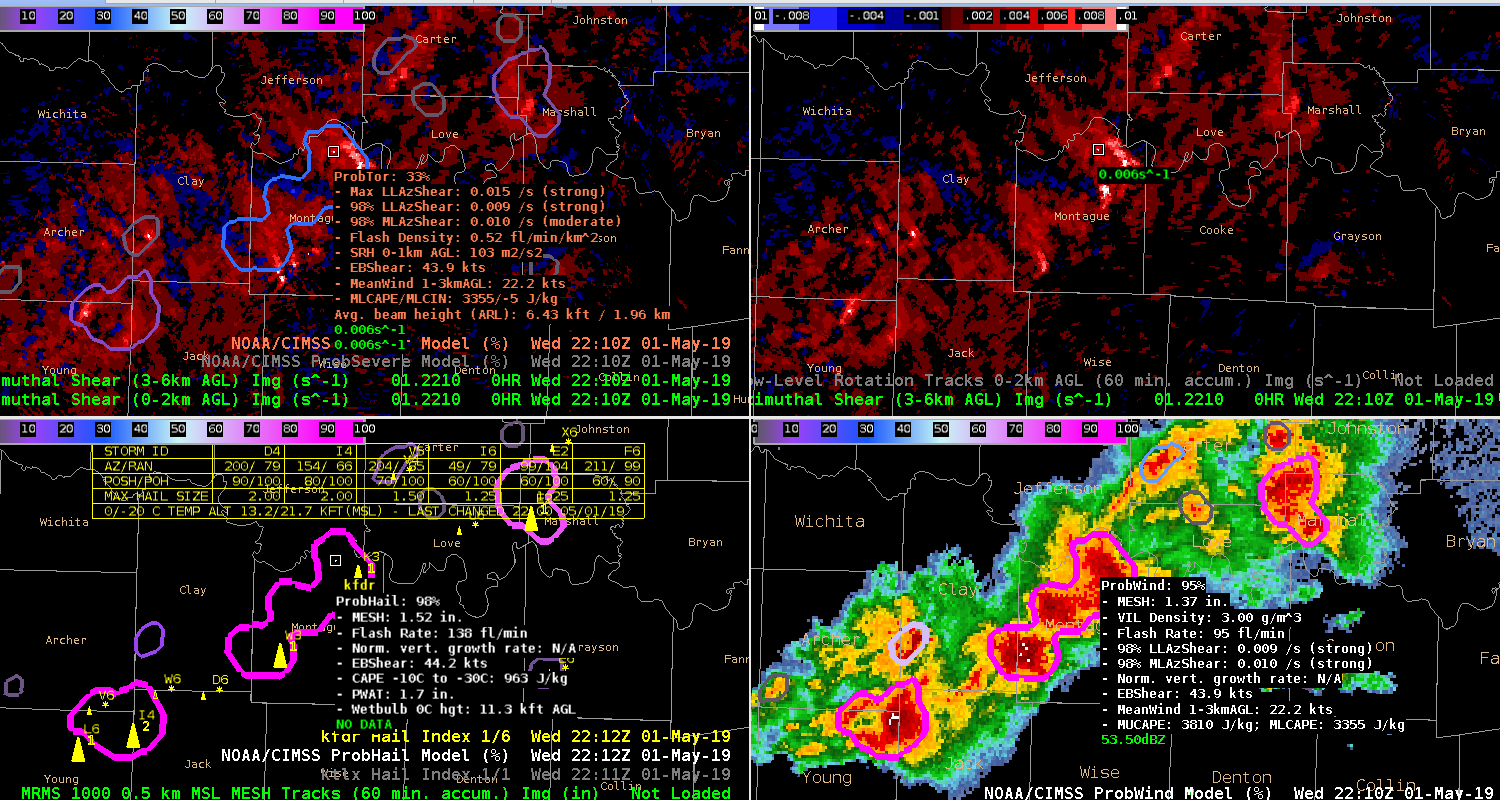
Low Level AzShear (UL), Mid Level AzShear (UR), ProbHail (LL), ProbWind (LR)

NMDA shows several false meso’s which can be a little too sensitive at times for the weaker meso’s. -Jake Johnson
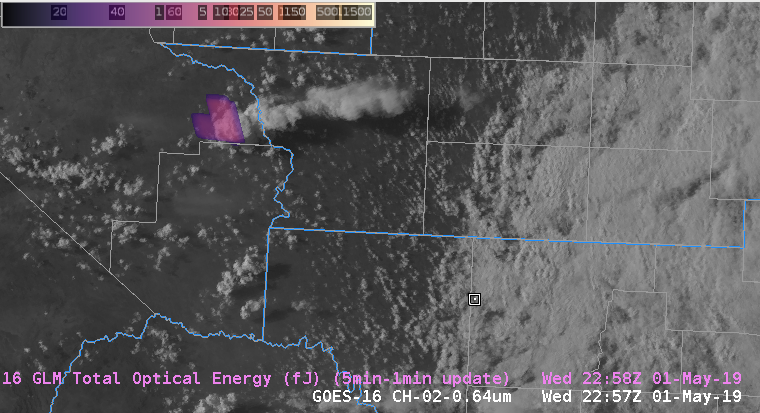
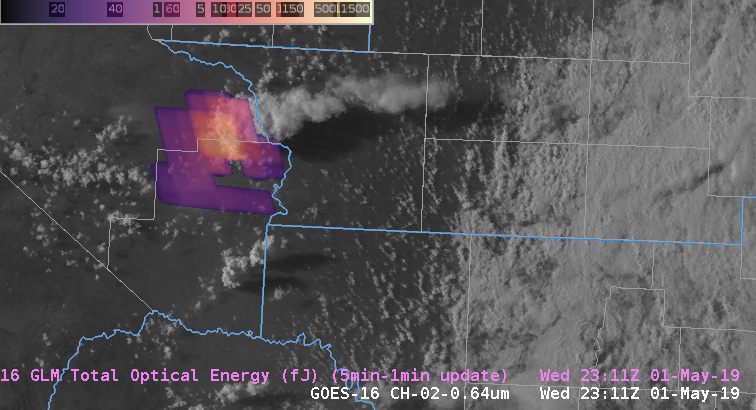
GLM Total Optical Energy product shows rapid increase of lightning in a 14 minute span for a developing thunderstorm in southwest Texas. This is useful information to forecasters for diagnosing storm intensification which usually precedes a response on radar. -Jake Johnson
As many have already mentioned, the new All-Sky LAP layered PW and CAPE products are very useful tools for mesoanalysis and quick identification of key meteorological gradients (I bet my grandmother could ID the dryline below…). Earlier today, these products seemed to pick up on the outflow boundary that stretched from SE AR into southern OK/northern TX. It was extremely subtle and slightly offset from the actual boundary, but if you looked just right you could see it (tried to get a good animation, but the contrast is lost so you’ll have to take my word for it…). The color table provided for these products, specifically the PW products, make identifying key/obvious boundaries easy, but the more subtle things are easily missed. I would caution anyone from using them for anything other than IDing the main players, unless the color table could be tweaked to enhance those low-to-mid range values (~0.4 to 0.8). I’m not sure it’s worth exploring given these products are 6km resolution, I was just surprised to see the subtle reflection of the outflow boundary. Perhaps I’ll play around with the color tables now…
–Stanley Cupp
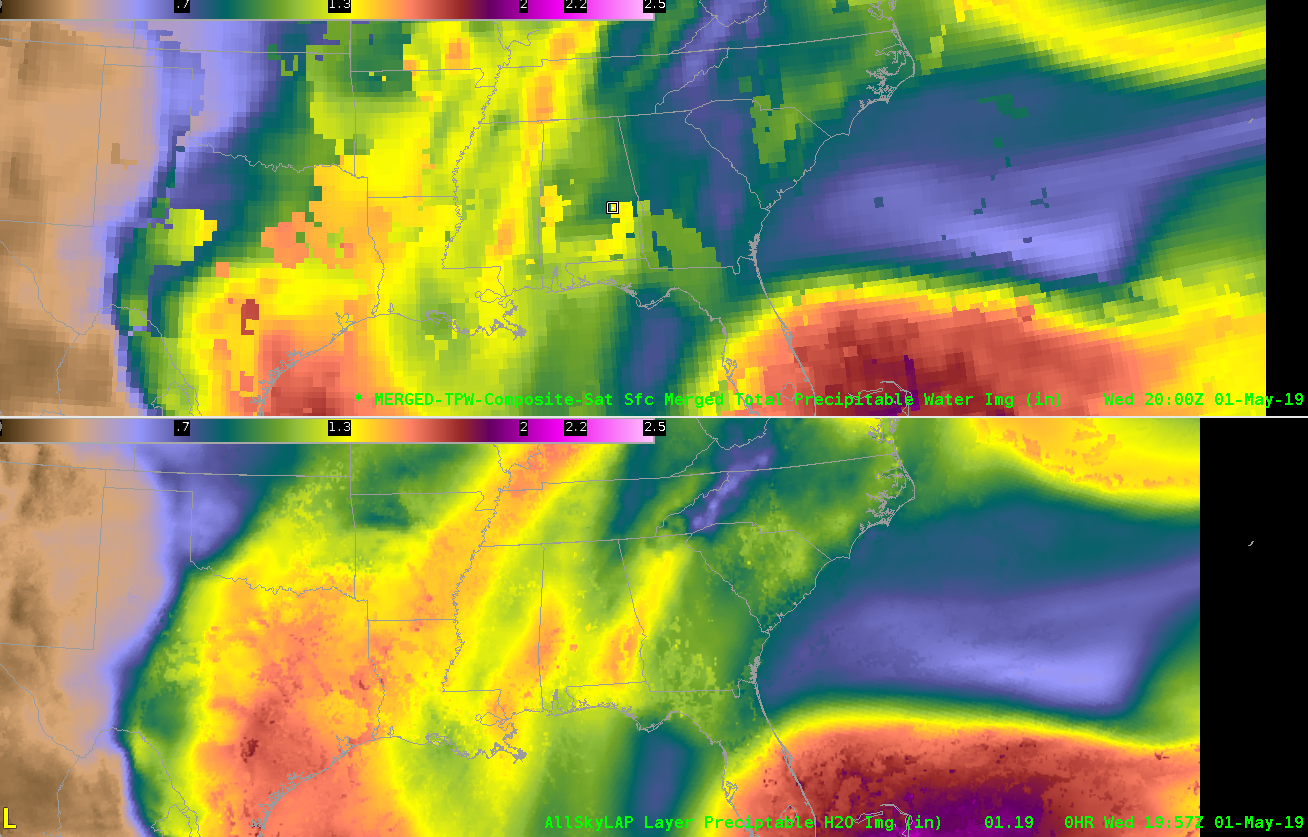
The AllSkyLAP Precipitable Water Product continues to be my favorite of the two options. There are too many unrealistic gradients that form within the composite merge. In this case notice how Texas seems to be especially prone to the errors where numerous sharp & and unrealistic gradients exist east of the dryline.
South Beach
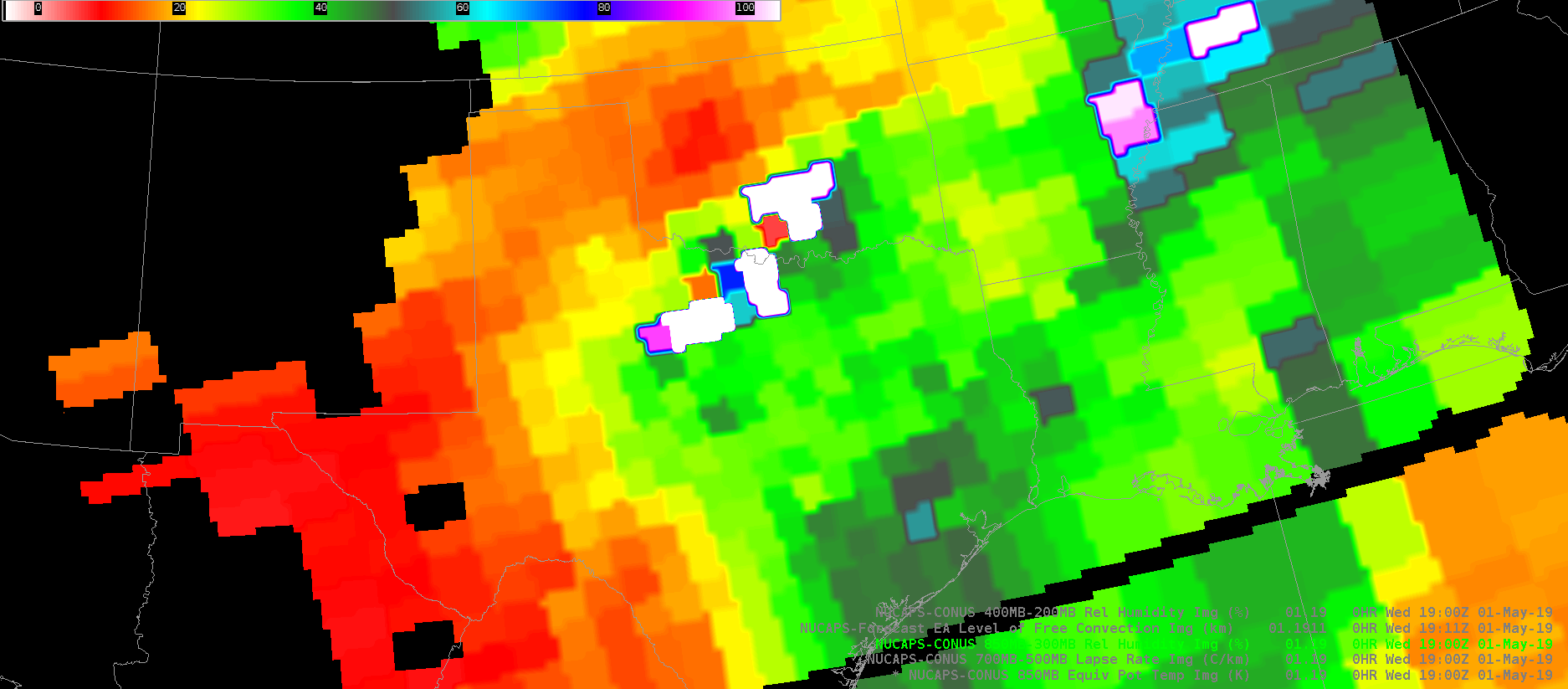
An example of NUCAPS gridded data over Texas. Convection was already underway at this time, as seen by the very high pixels in south OK and north TX. This field is 850-300mb RH. The dryline is evident, however the usefulness of this and other NUCAPS gridded data is questionable for operations because of the poor resolution. With so many other much higher resolution surface and gridded data sources available, I doubt I would be using these products much at all in operations.
-Dusty Davis
Investigating the MDA algorithms, it continues to seem as though the NMDA (shown in light blue) continues to do a better job at identifying mesocyclones compared with the “normal” algorithm. Its performance may be comparable with the DMD (yellow).

South Beach
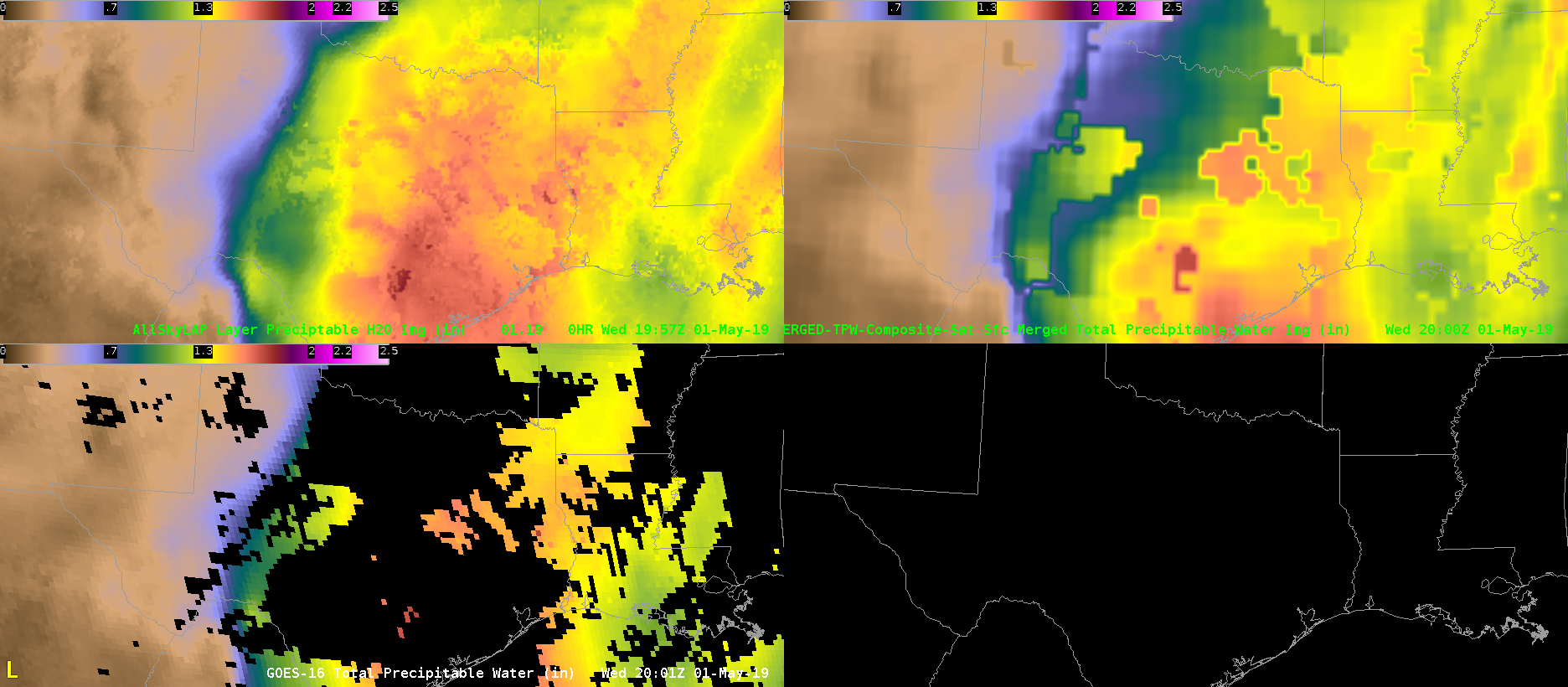
PWAT comparison. Allsky LAP is on the top left, Merged TWP is on the top right, and data from GOES that we see in AWIPS in our offices on the bottom left. The blotchyness of the merged product renders it mostly useless for operational purposes. Additionally, the Allsky LAP depicts a much more realistic PWAT spread in north central Texas where convection is ongoing.
-Dusty Davis
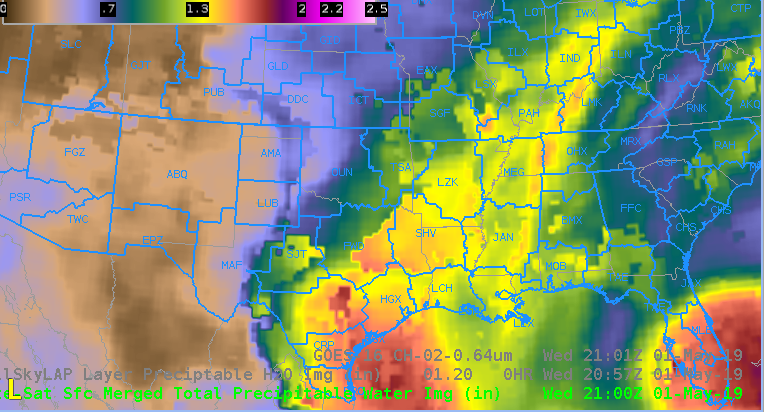
Figure A (CIRA Merged PW)
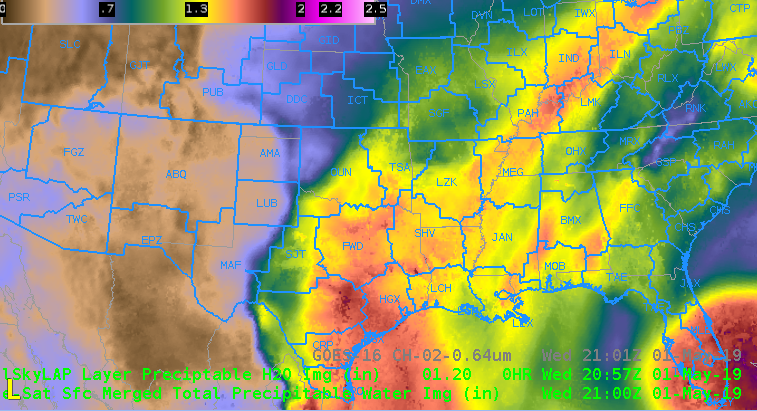
Figure B (All Sky Total PW)
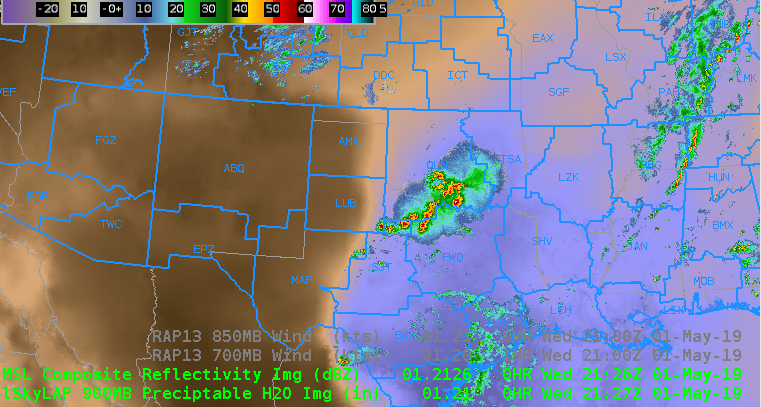
Figure C (All Sky Sfc-900mb PW)
Notice the big difference in Figure A compared to Figure B from DFW to OUN coverage area, Figure B with All Sky Total PW was handling the plume of moisture streaming northward much better. This also correlates well to area of deep convection in Figure C in the deeper moisture region. -Jake Johnson