DSM area analysis

Models agree on low pressure lifting NE or NNE form eastern NE into MN through the afternoon.  As of 19Z, all of IA was in the warm sector, with a cold front expected to cross form the west during the afternoon/early evening.  the 12 Z NAM puts the front near DSM at 0Z; the 12Z GFS still has it just to the west.

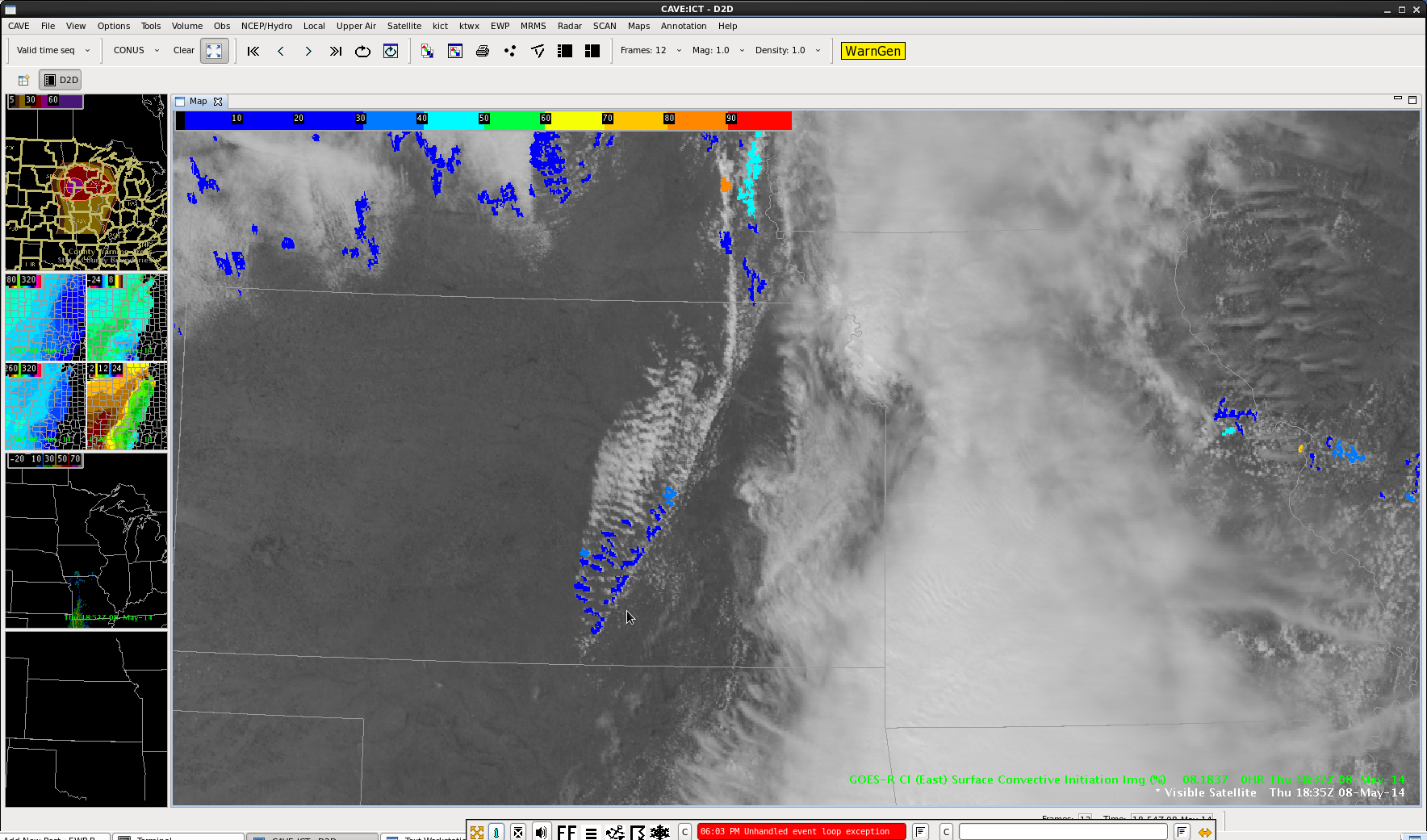
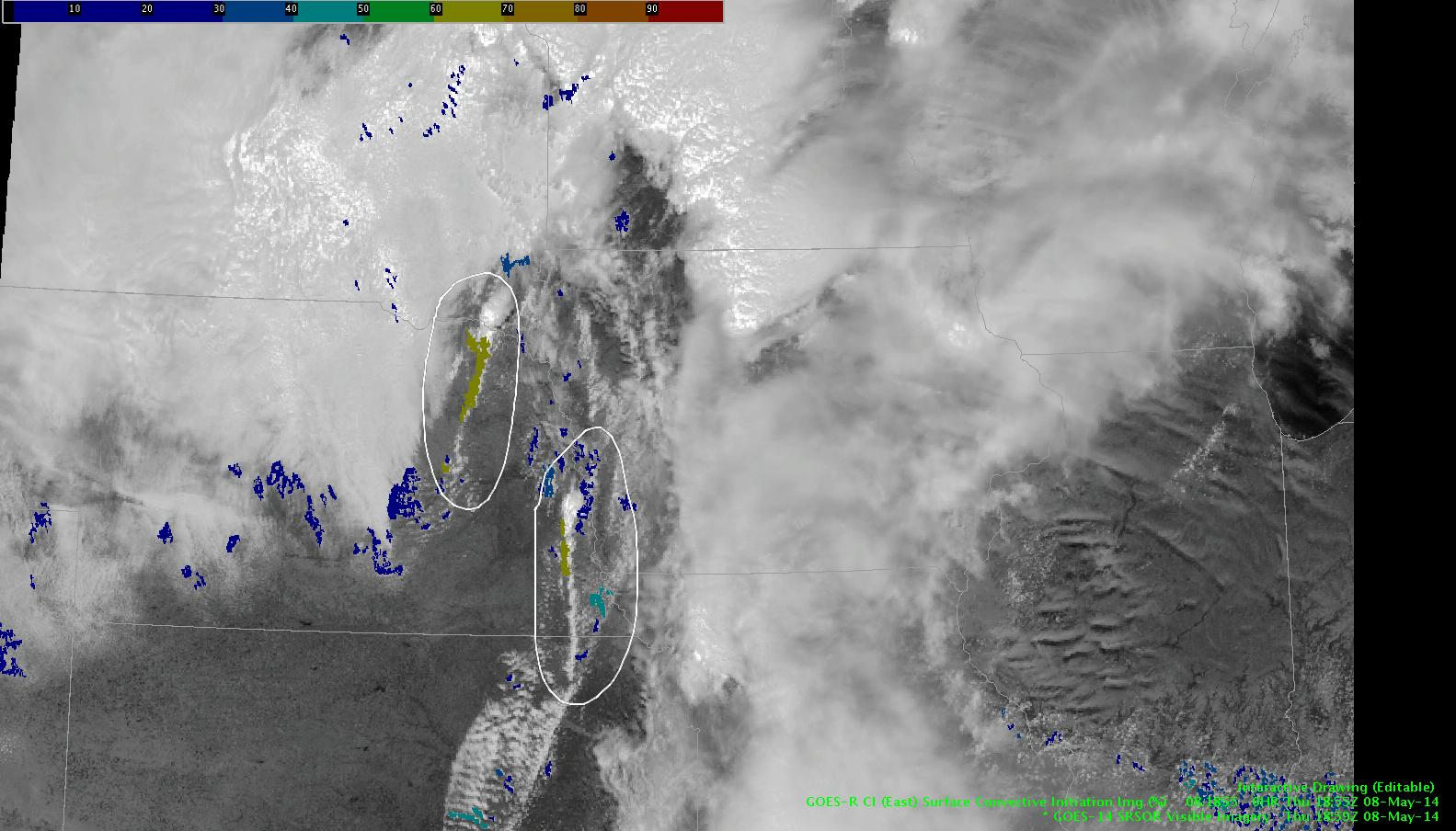
Earlier convection is exiting stage right, and some clearing is taking place in western IA.  We’re getting rapid scan GOES data today, so we’ll be monitoring the boundary structures that are evident on the imagery.  Below is the CI product superimposed over the visible image…we’re seeing 67% probability of development of 35 dbz returns in the next hour or so along these boundaries.
SatDrawing

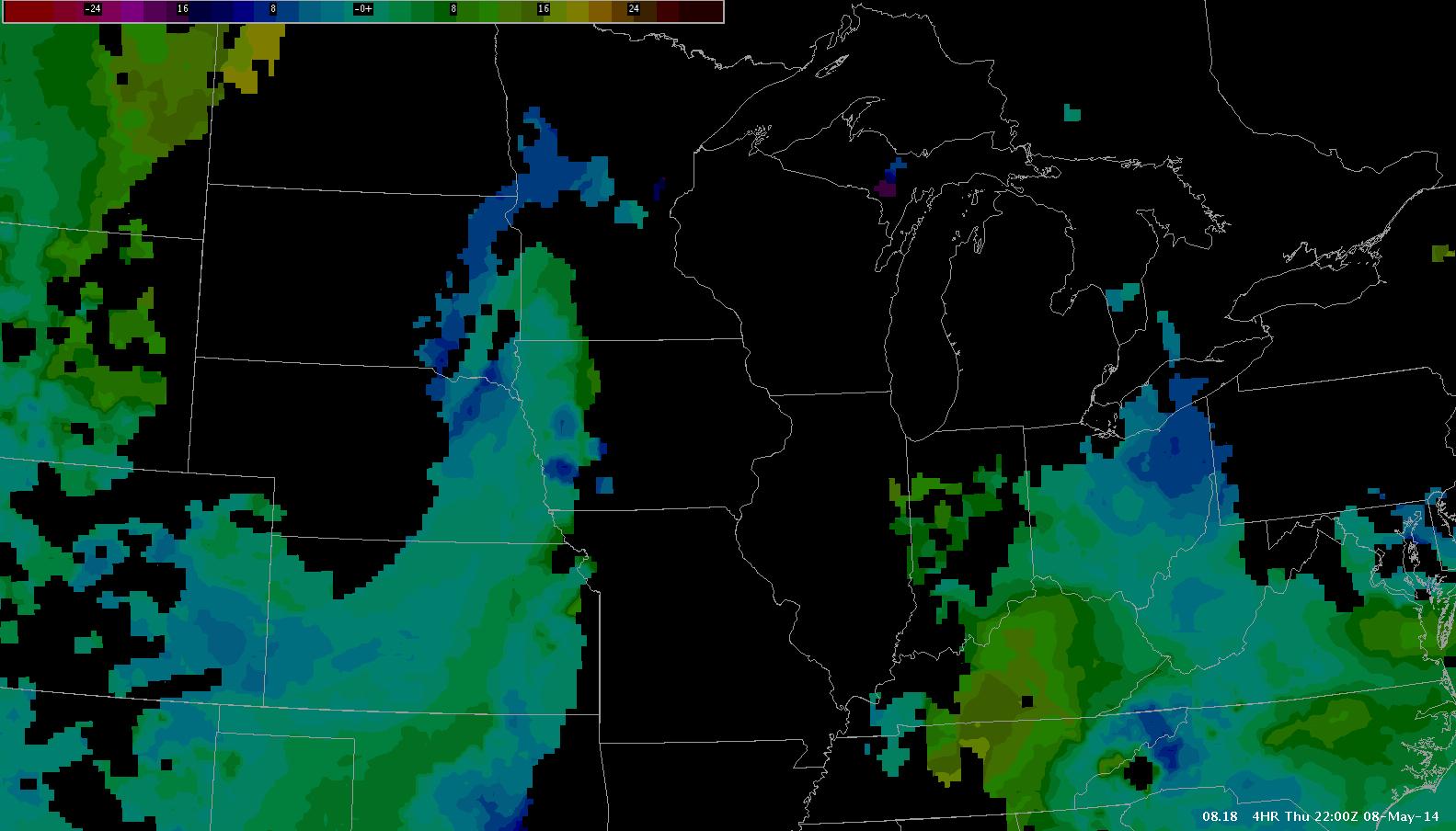
As this activity develops and moves eastward, Nearcast forecast theta-e difference by 22Z would indicate pockets of instability (in an area of closer to neutral stability) moving in over the next few hours from the west.  Will be interesting to see how this translates into storm coverage, or even storm mode, as the front moves in.
eekDrawing

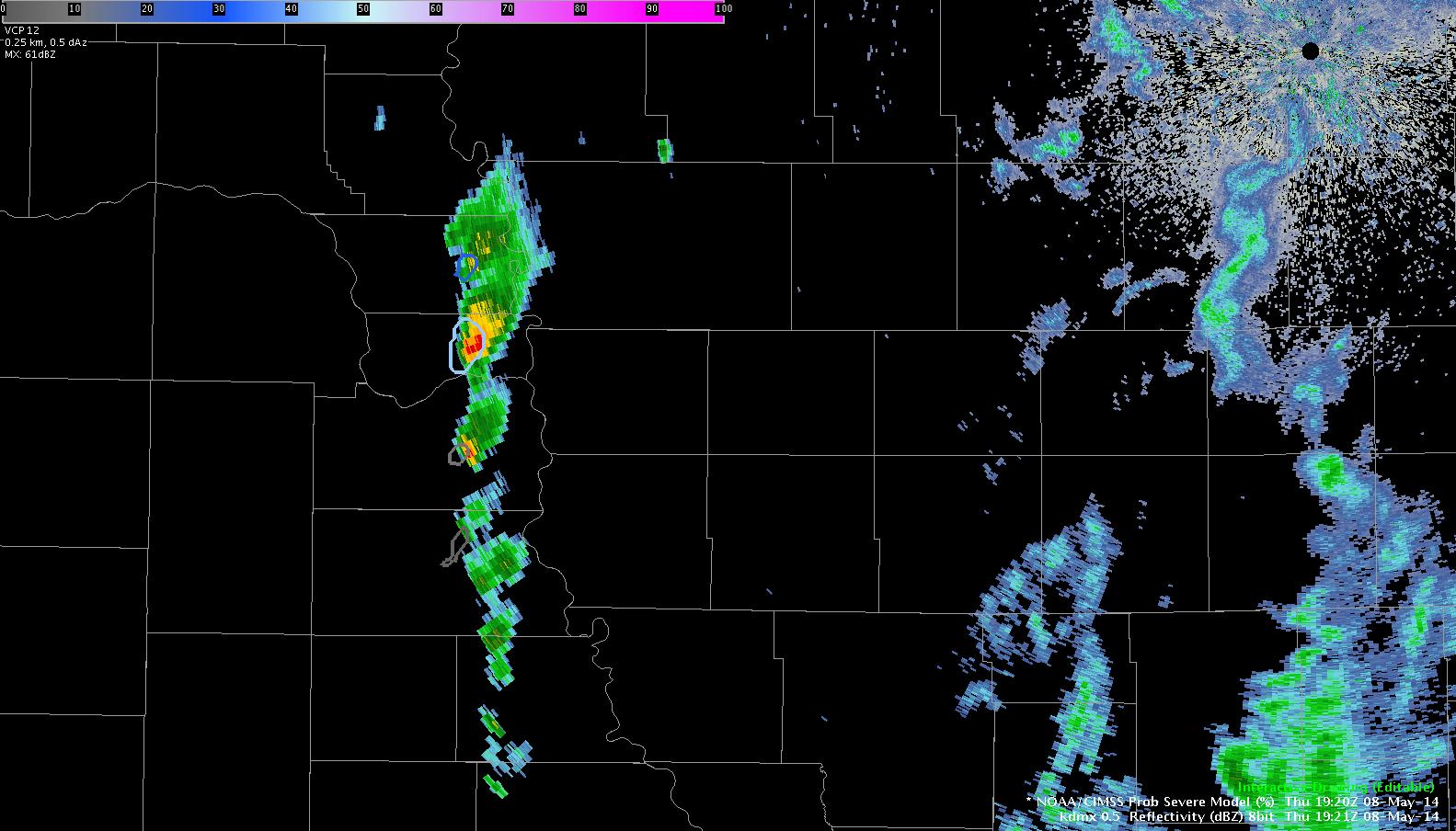
And in the time it’s taken me to work on the above…we’re seeing gradually developing convection marching to the NE/IA border in an area marked by the CI earlier.  Only low to moderate hits on ProbSevere (45% or less by 1930Z).
arghdrawing

Do have LAPS data today, but a late realignment of the domain has the model playing catch-up.  Will comment later.

Wx briefing indicated increasing chances of UH tracks in our area, especially in our northeastern counties…watching for supercells with tornadoes and hail…and some severe wind

db


Tags: None

2.5km LAPS Hot Spots

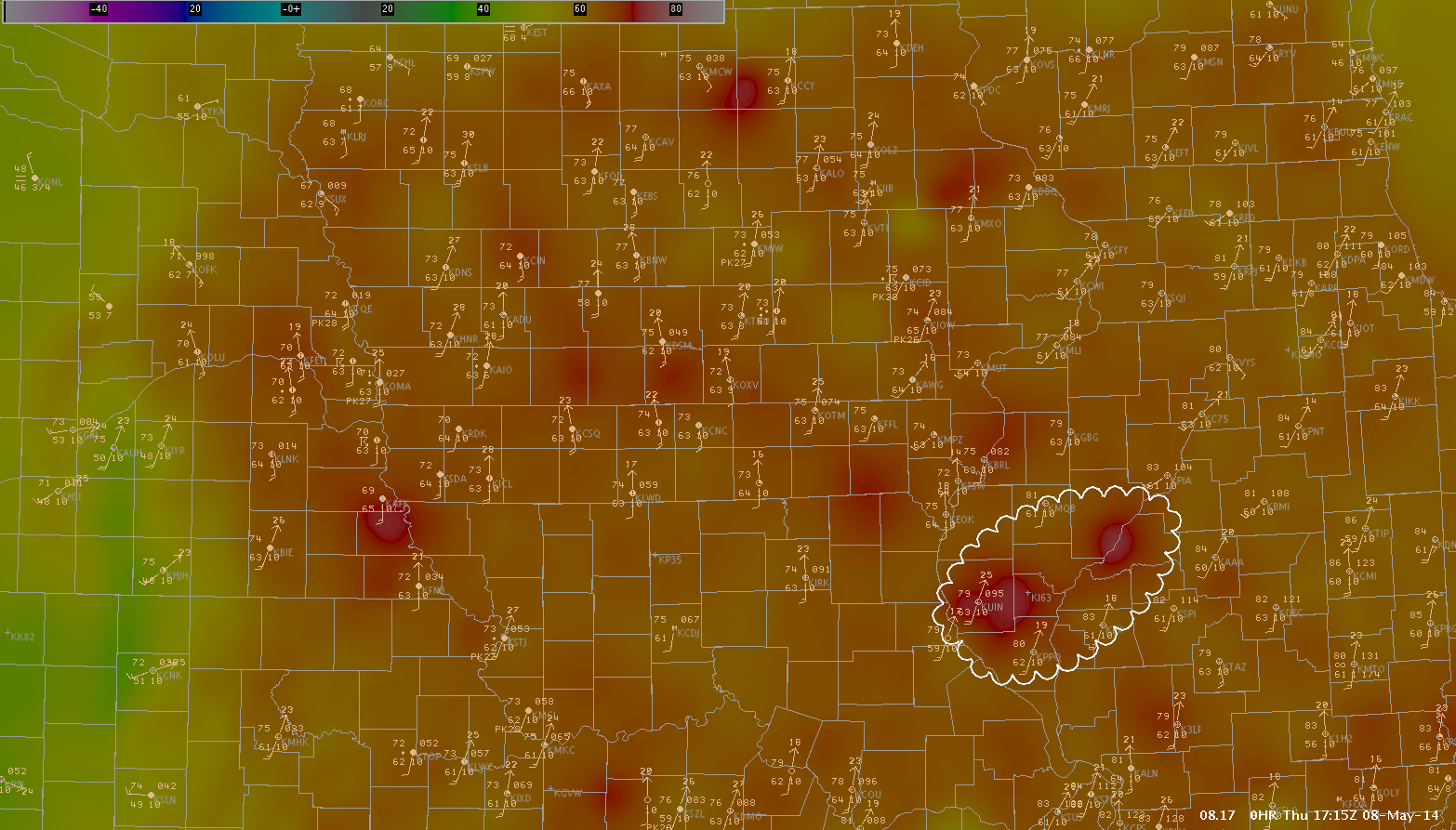
8May14 2-5km LAPS 1700z8May14 2-5km LAPS 1715z

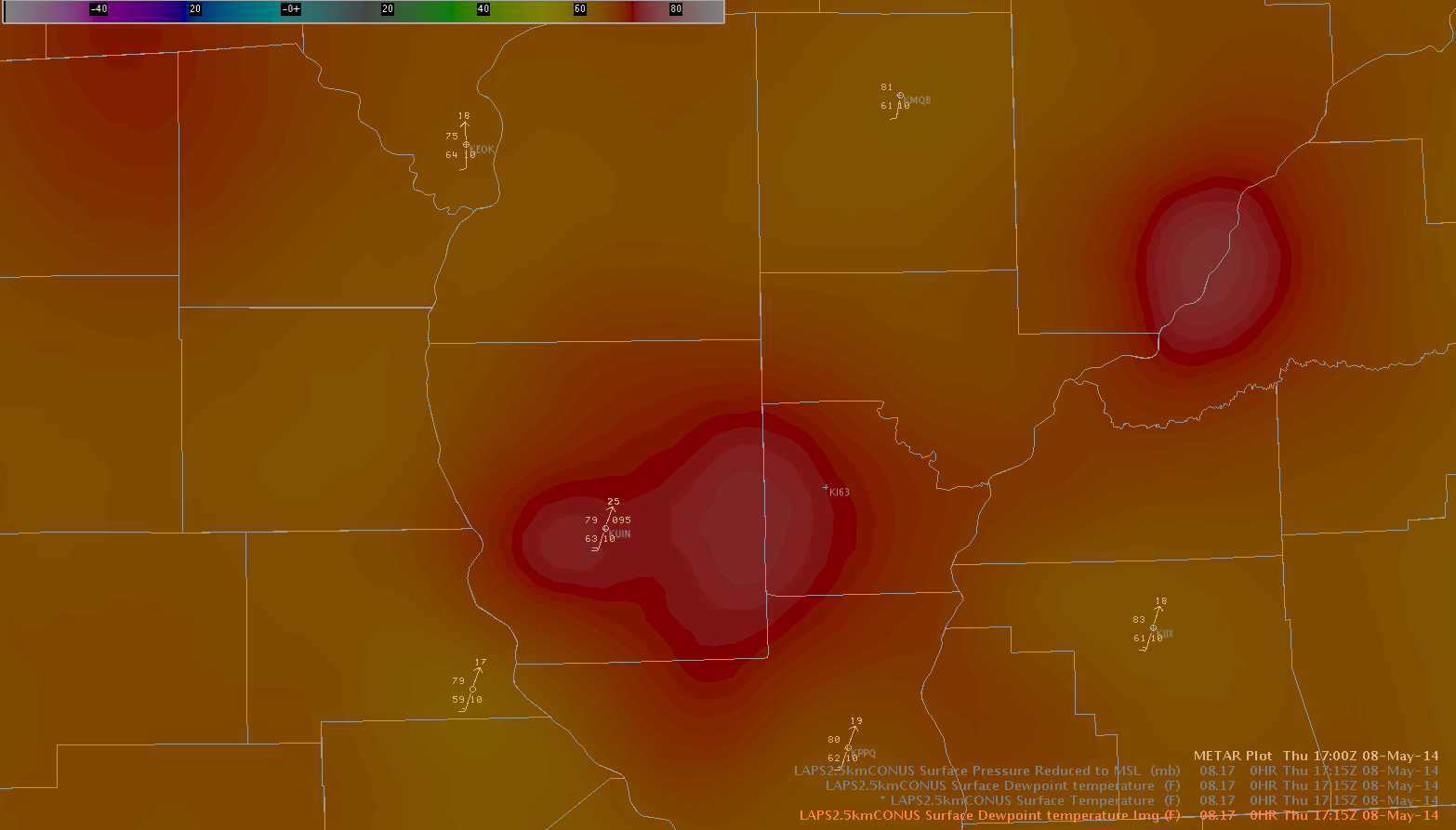
8May14 2-5km LAPS 1715z2

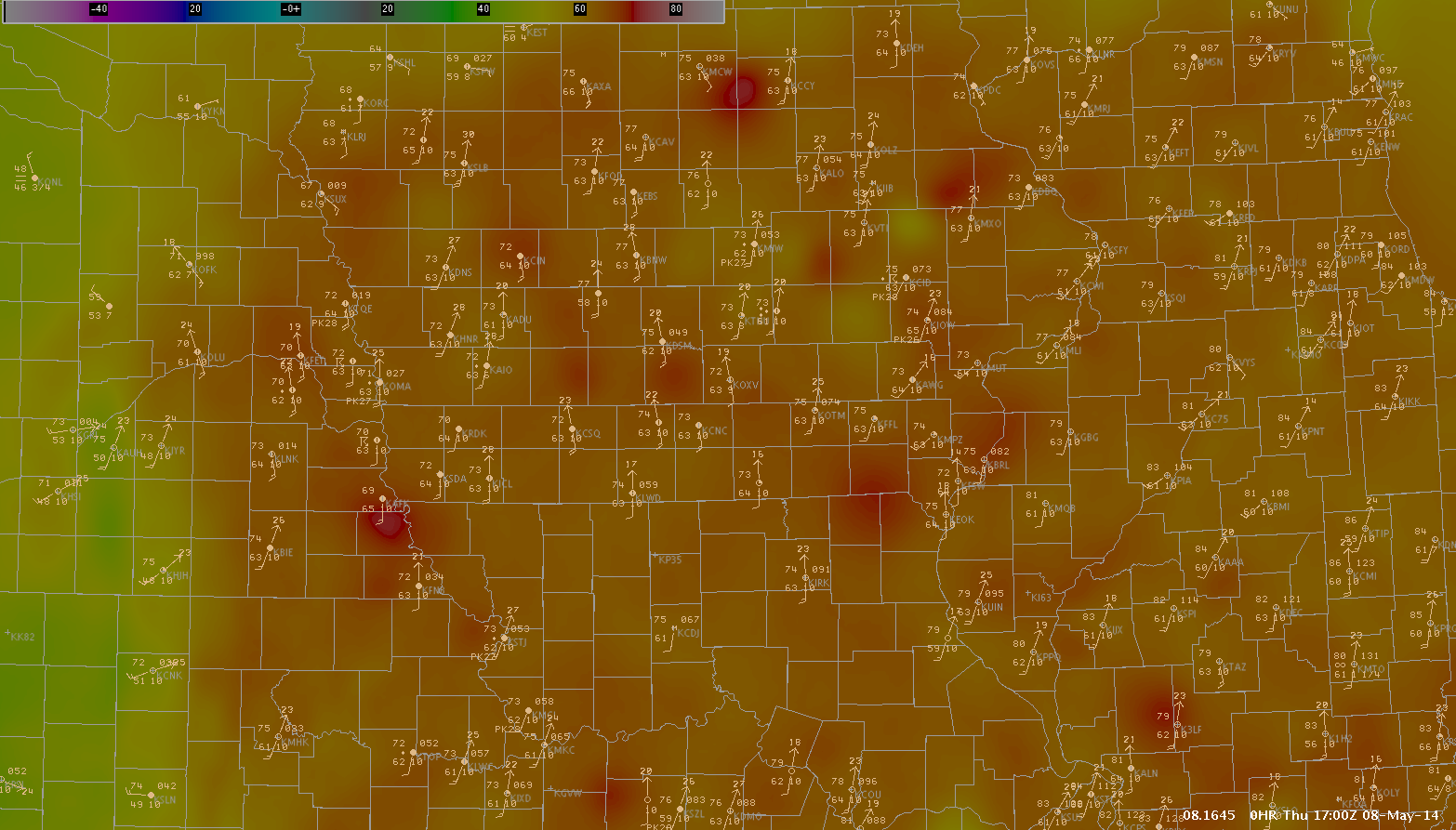
The images above are 2.5km LAPS taken at 1700z and 1715z, respectively. The third image is just zoomed in to the area of interest.

Station observations were overlayed onto LAPS model data to compare the model performance. A general bias of about 1-3 degrees existed in the LAPS data through the region. However, there were more notable departures in portions of Iowa and Illinois. The second image illustrates two of these locations in West Central Illinois, just east of Quincy and southeast of Macomb. In these areas, the model data departed from the station plots by about 8 degrees.

Jared Maples


Tags: None

EWP Day 4: Operations Update

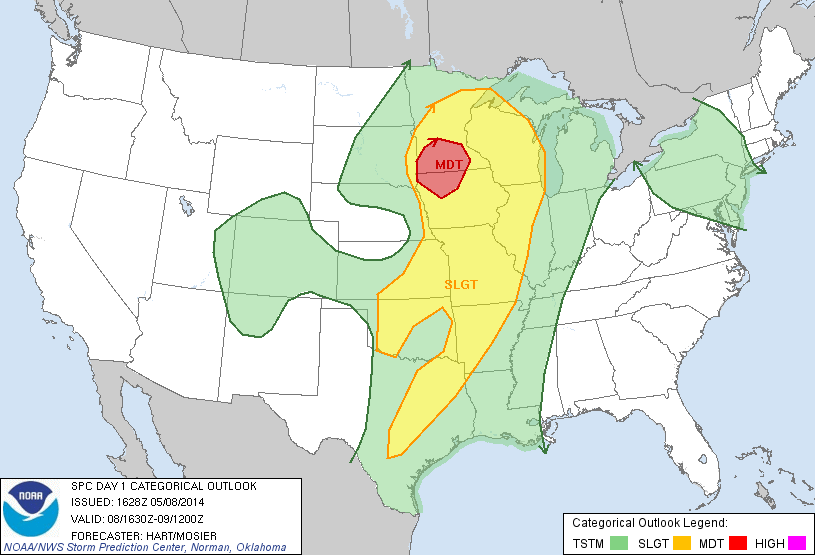
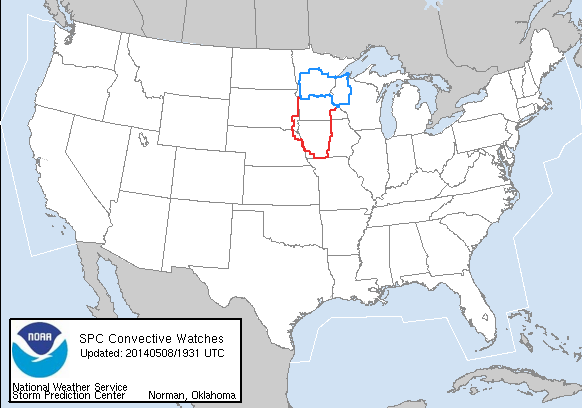
The final day of week 1 is already in progress and a complicated forecast it is (due primary to overnight convection).  Our initial thought was to play in the moderate risk associated with the low pressure and warm front, but with the presence of ongoing convection and the desire to utilize many of the GOESR products meant for the pre-CI and CI environment we decided to shake it up. One group of forecasters (Rudge/Bickford) remains in the moderate risk in Des Moines (DMX) CWA while the other pair (Maples / Thoren) is operating in the Wichita (ICT) CWA and looking for possible development ahead of the surface cold front/dryline.  While some convection is already ongiong in the north and eastern DMX CWA, expectation is that supercell storms (and tornadoes) will develop in the area clearing farther west.  Severe activity in the ICT CWA is a bit more uncertain and timing is likely a later this afternoon and evening if it were to occur.

SPC Day 1 Outlook
SPC Day 1 Outlook
Current Watches over operation domain
Current Watches over operational domain

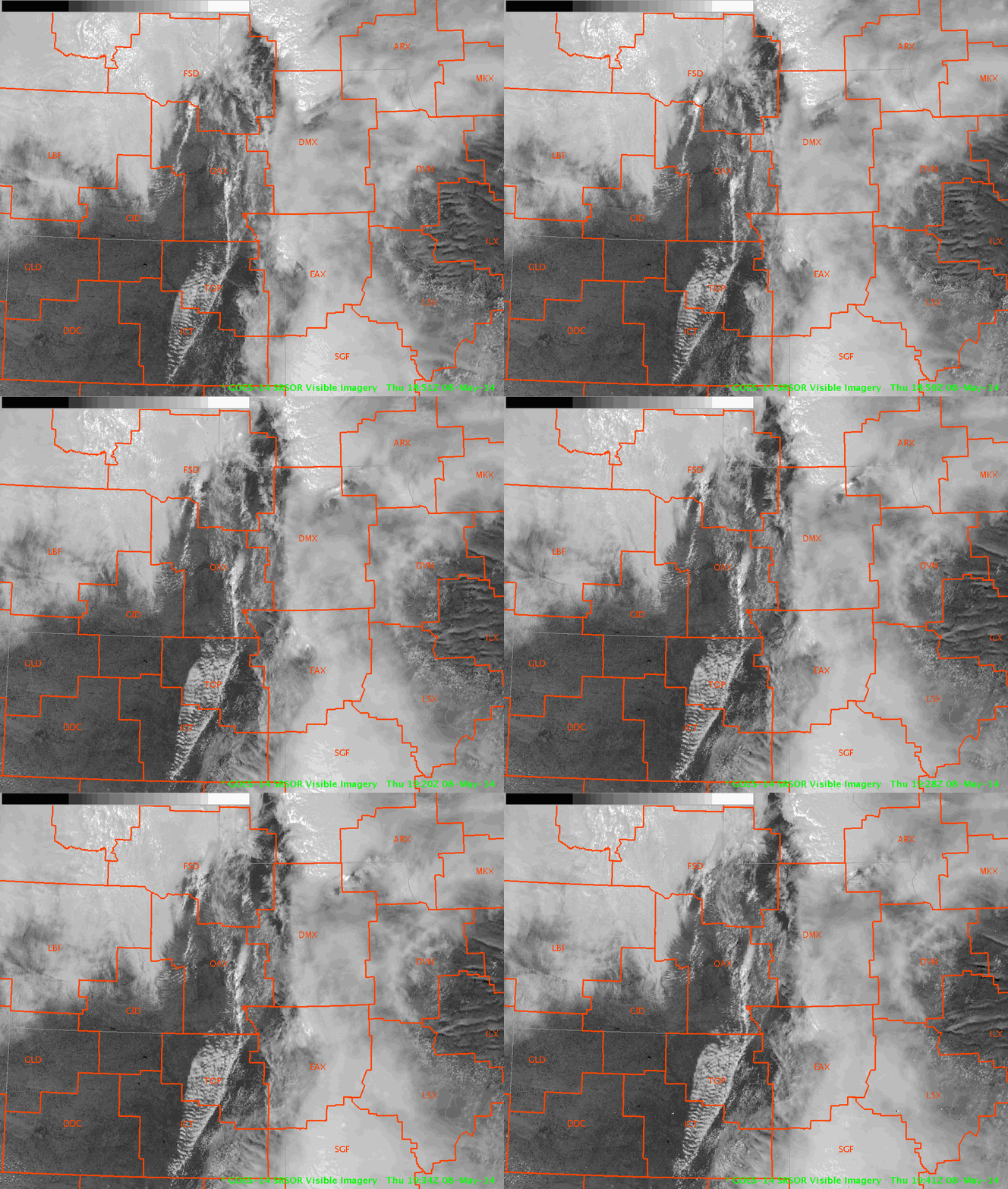
Super-Rapid Scan (1 min imagery) is in it’s first day of operations.  The animated gif (click to show animation) below shows the Cu development along the cold front into the ICT domain and clearing in the western DMX domain.

Super-rapid scan visible satellite on 8 May 2014

-K. Calhoun, Week 1 Coordinator

Tags: None

EWP Status for 8 May 2014: 12:30-8:30 pm Shift

EWP Status for 8 May 2014: 12:30-8:30 pm Shift

A second day in a row of significant severe weather is possible for EWP operations tomorrow. A number of possibilities for locations exist extending from Minnesota / Iowa associated with the surface low pressure and cold front to farther south through Missouri and Arkansas in the warm sector.  Severe storms including supercells will be possible during our shift.

Exact timing, nature, and location tomorrow may be somewhat contingent upon convection overnight tonight.

We will begin in the DevLab at 12:30 pm and move to the HWT at 1pm for the map discussion.

-K. Calhoun, Week 1 Coordinator

Tags: None

CYS SVR threat decreasing

The line of storms that has produced a TOR in NE CO and SVRs in our CYS area has shown a slow weakening trend.  Many of these cells are now outside the CO total lightning coverage area so we can not view this.

Of  interest is an area of stronger storms with multiple SVR and TOR form NE CO into the North Platte, NE CWA…

eekawing

These cells developed in a much more favorable environment…heating into the 60s and 70s today.  Areas under the “old” convection in WY/CO are in the 40s and 50s.

Also of interest:

CAVED1rawing

The deeper Nearcast instability is now mainly centered in NE.   Best threat for further convective development and more strong to severe storms looks like it will be mainly focused just to the east (and to some extent southeast into NE CO) of the CYS CWA for the duration of the afternoon/evening.


db

Tags: None

CI Picking Up in Radar Void Area

7May14 2300Z Sat-CI7May14 2302Z Radar-CI


I am watching a void area on the radar (bottom image) to see if there is any additional development northeast of Denver. CI values have picked up a bit (top image) in this general vicinity with some 70% probabilities. In that last few minutes probabilities have dropped. Waiting to see the outcome…

Update…Radar did not fill in at all here. The earlier probabilities did not translate into any additional rainfall/development.

Jared Maples

Tags: None

Experimental warnings over southwestern Oklahoma

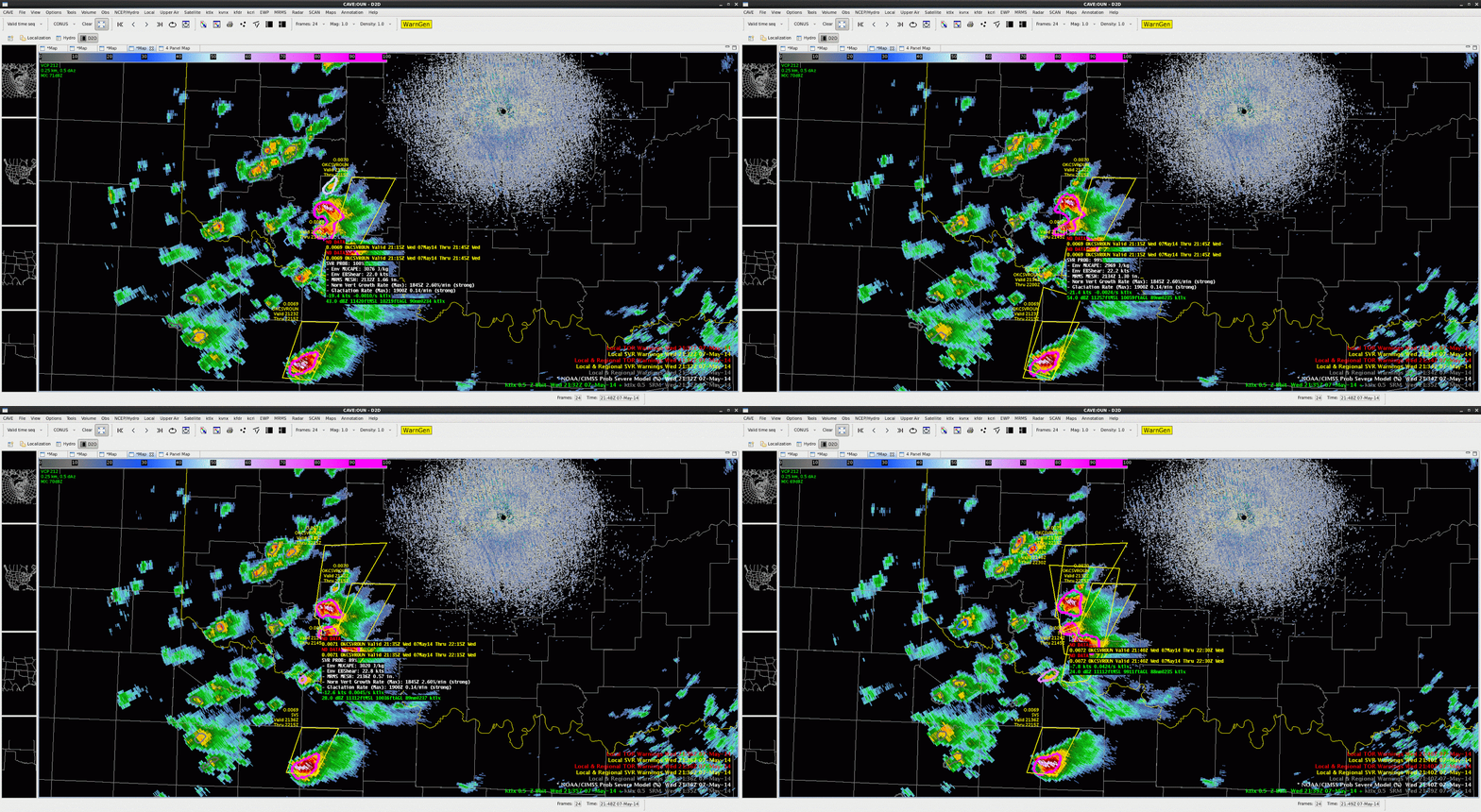
The storms over southwestern Oklahoma have recently increased in intensity and have warranted NWS and EWP severe thunderstorm warnings, with multiple reports of quarter to golf ball sized hail.  The ProbSevere values for these storms with golf ball sized hail are well in excess of 90%–even some at 100% for times.  The evolution of these storms and the generation of severe thunderstorm warnings is demonstrated in Figure 1.

Figure 1.  NOAA/CIMSS ProbSevere, 0.5 degree KTLX reflectivity, and NWS/EWP warnings valid 2132 - 2140 UTC 7 May 2014.
Figure 1. NOAA/CIMSS ProbSevere, 0.5 degree KTLX reflectivity, and NWS/EWP warnings valid 2132 – 2140 UTC 7 May 2014.

A question was posed to the forecasters on the KOUN desk within EWP today, “There have been a number of storms with ProbSevere values in excess of 50% today, some of which seem to be false alarms, is this hampering the use of the product?” The forecasters replied,

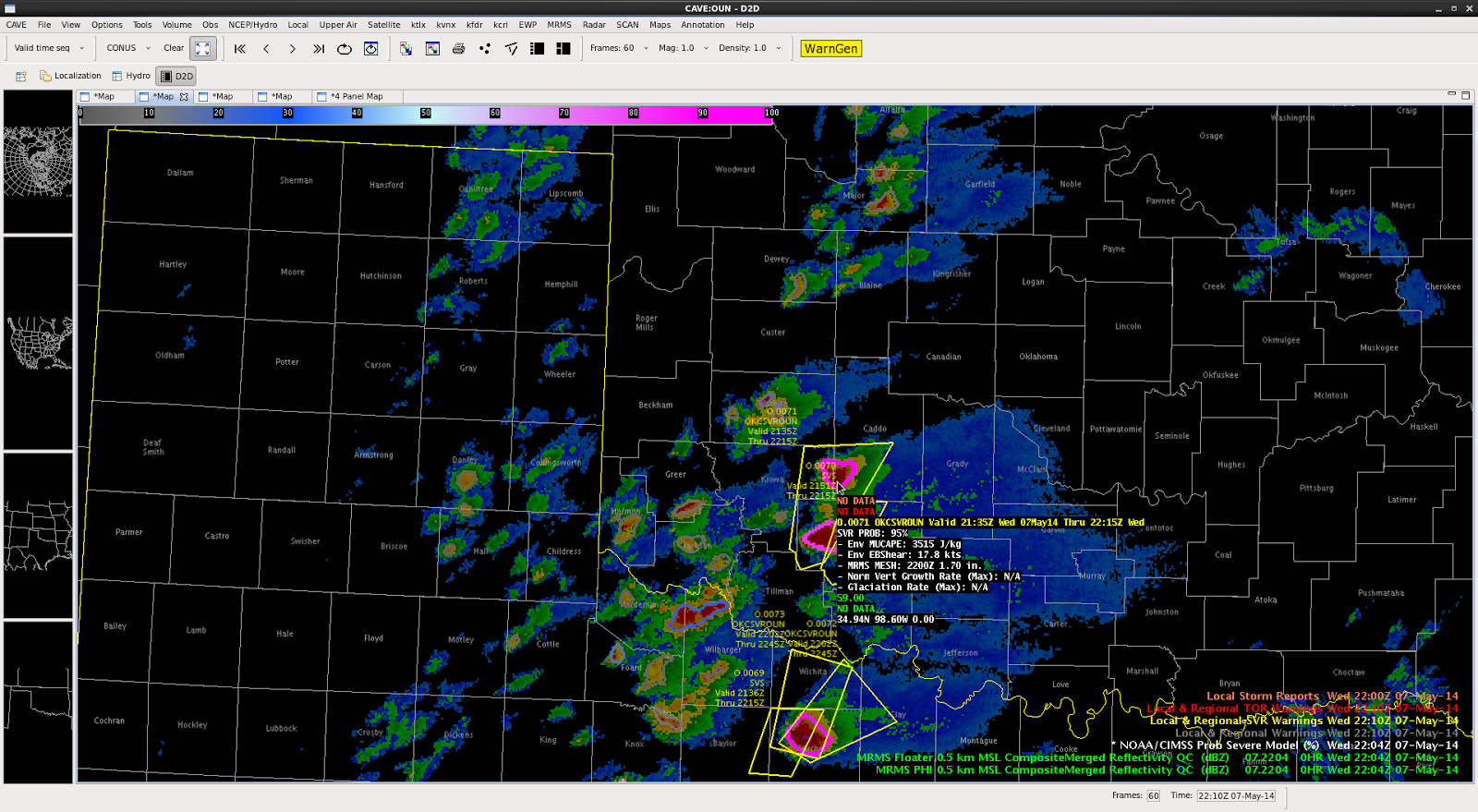
“No I like that the storms with the highest ProbSevere probabilities are in excess of 90% and these are the ones producing golf ball sized hail–these are not marginal hail stones. The ProbSevere is drawing me to which storms are likely to need severe warnings in the near future. The false alarm storms, while they have high probabilities today, are in the 70-85% range–which makes them different than these with 90+% probabilities. I’ve easily been able to adjust to the probabilities and use them appropriately. Also I know the ProbSevere model has not been validated as a tool to reissue severe warnings, but I like how the probabilities diminish a bit when the radar intensity decreases and then come back up if the storm re-intensifies. If you look at this display (Figure 2) it has high probabilities on the right storms, but the ones further west are only (correctly )10-20%”

 Figure 3.  NOAA/CIMSS ProbSevere and MRMS composite reflectivity valid 2204 UTC 7 May 2014.  This was the display the NWS forecaster in the EWP was referring to when he was discussing the ProbSevere continuing to identify the severe storms, but had much lower probabilities for the storms further north and west.

Figure 2. NOAA/CIMSS ProbSevere and MRMS composite reflectivity valid 2204 UTC 7 May 2014. This was the display the NWS forecaster in the EWP was referring to when he was discussing the ProbSevere continuing to identify the severe storms, but had much lower probabilities for the storms further north and west.

-Sieglaff, Week 1 ProbWarn PI

Tags: None

Expanded Lightning Jump View: 2234 UTC (CO/WY)

A wider look at the lightning jump grid at 2234 UTC of the NE Boulder CWA… All tracked storms (with greater than 10 flashes per min and within the 150 km LMA domain) are shown.  Three tracked cells show some type of sigma jump at this same time.  Two in green – 1-sigma (or standard deviation) and one smaller cluster, orange, with a 3-sigma jump.

LtgJump_2234utc_7may14

The three-sigma jump storm corresponds with a ProbSevere 92% and MESH of 1.65 in.

-K. Calhoun, Week 1 Coordinator & Lightning Jump PI

Tags: None