pGLM and Lightning Jump continued benefit for pulsing cell

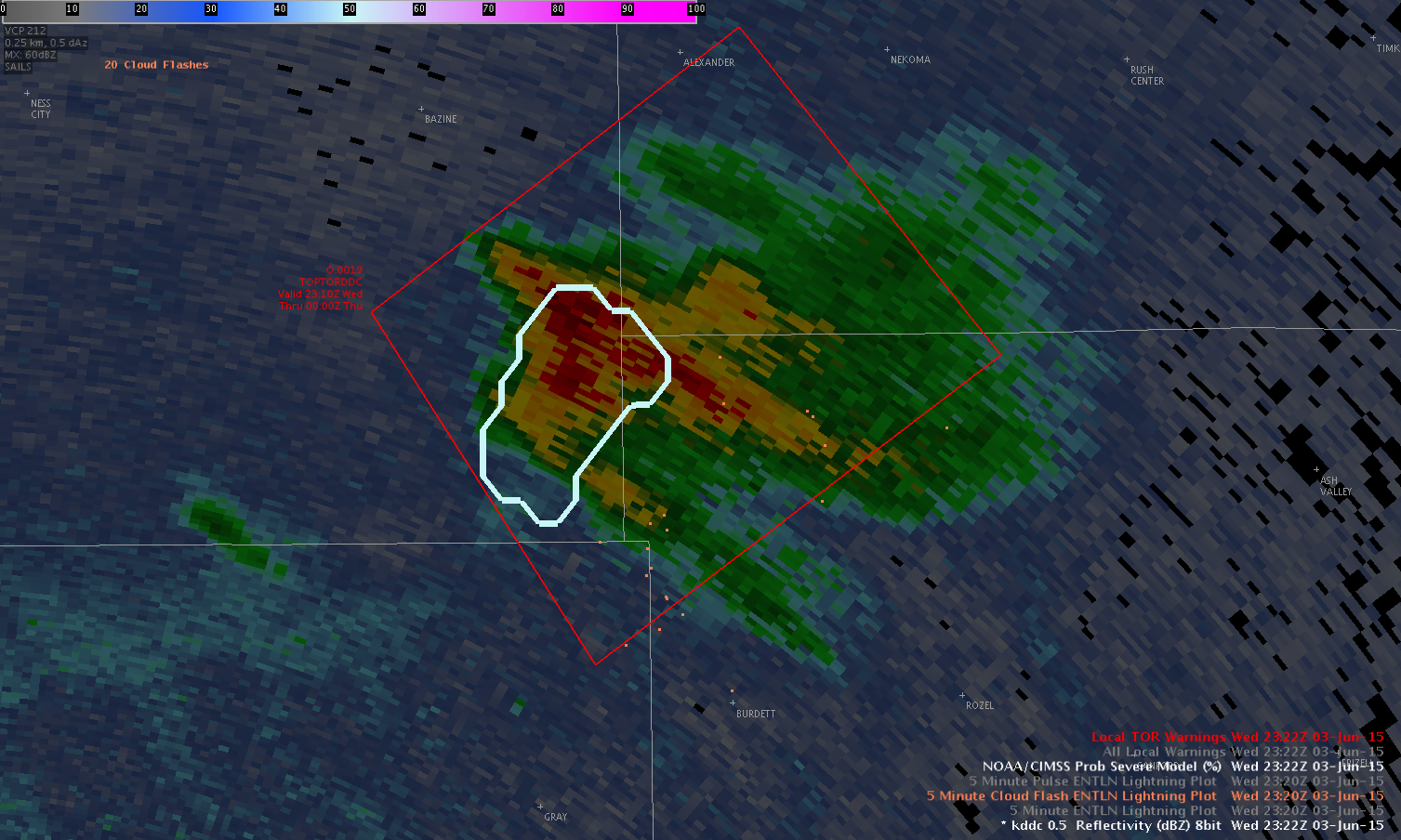
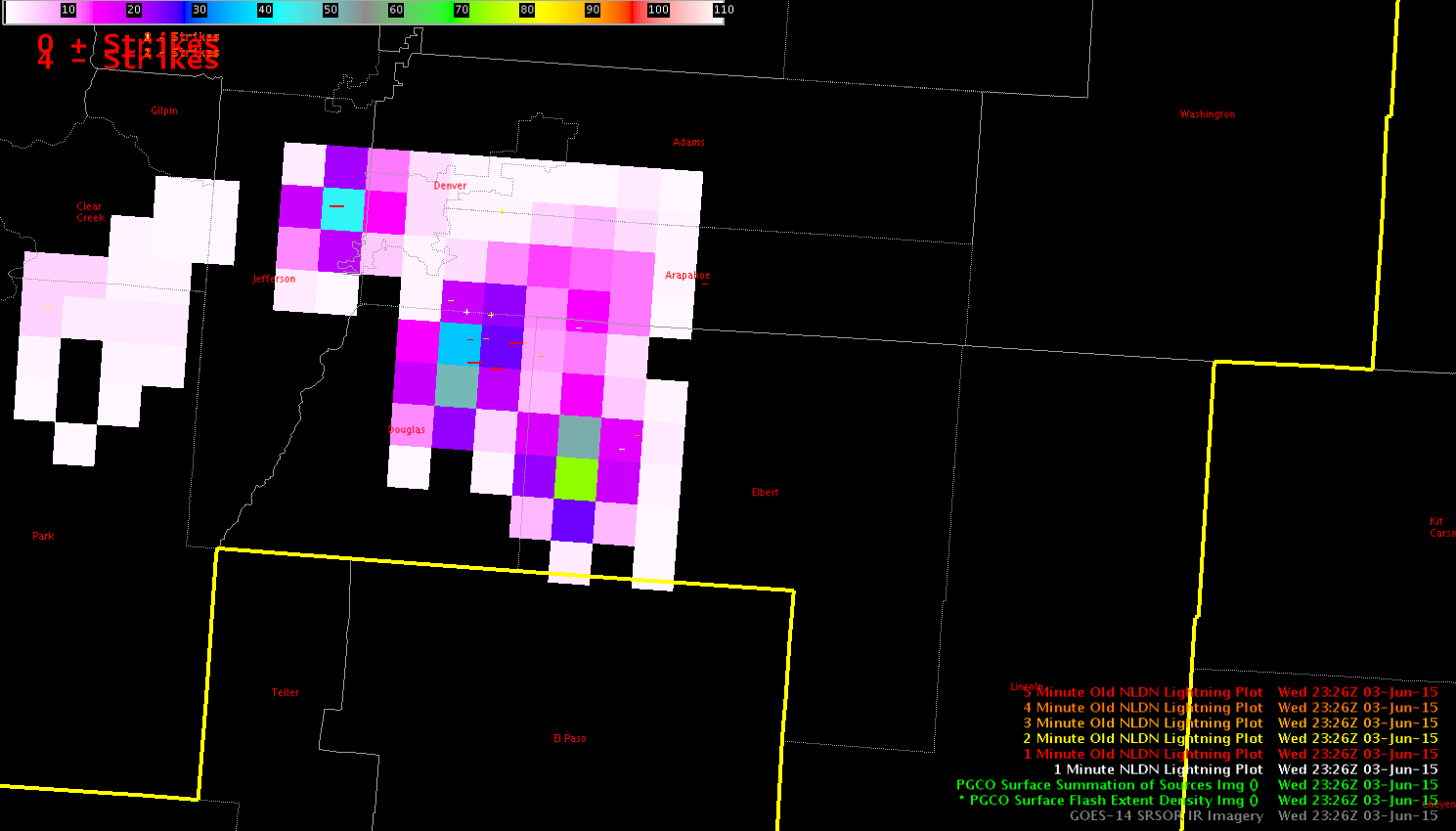
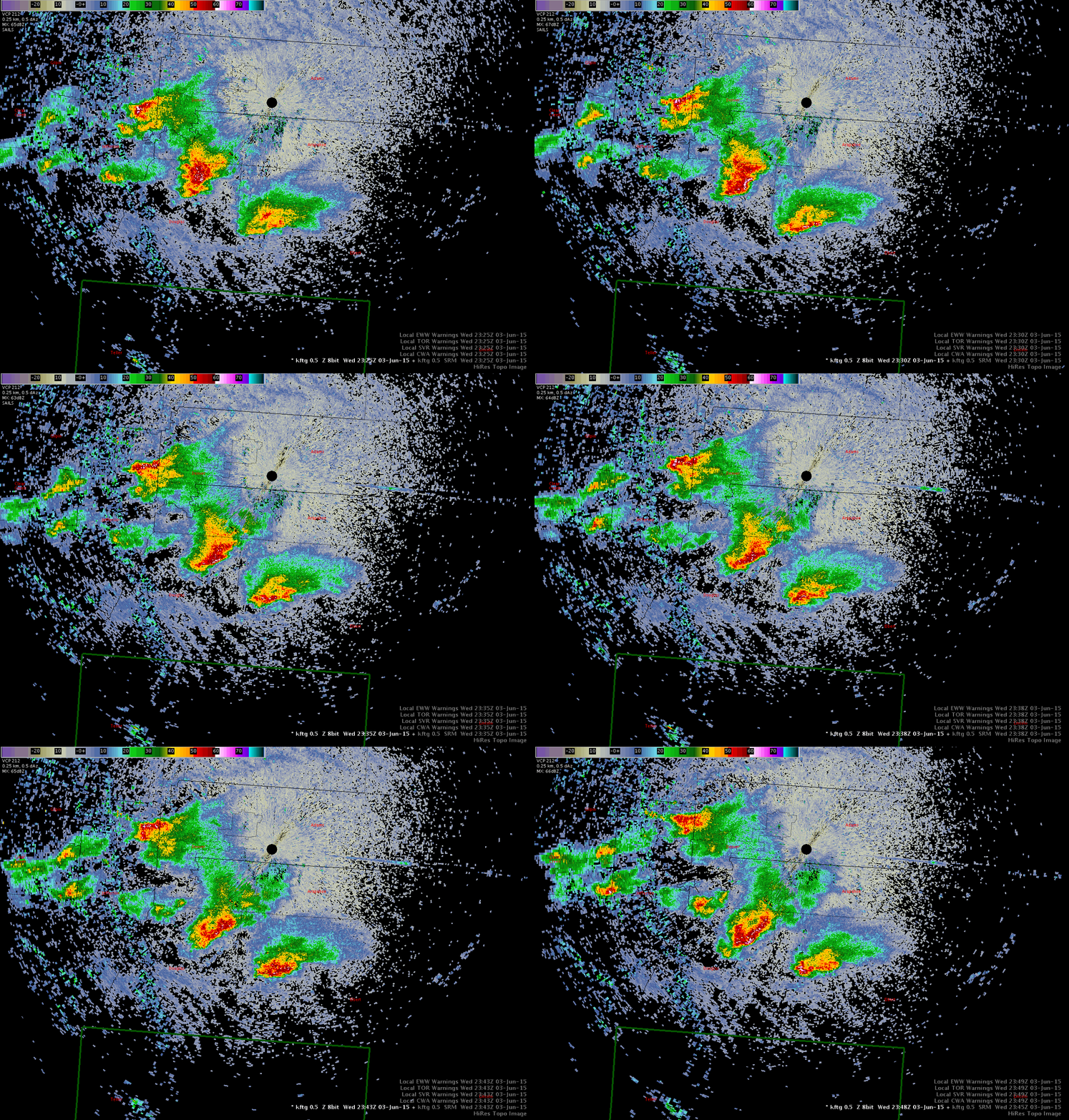
Have been monitoring a long-lived supercell which appeared to finally look like it was falling apart. Had a subsequent increase in lightning on pGLM 2325z (fig 1) over west Elbert Co. coupled with a 2 sigma jump .  Reflectivity then showed an increase with 60+dbz about 10 minutes later (fig 2 – gif loop 2325-2345z). The lightning was the only piece of information which showed the potential for this to occur. Indispensable in this case.  –Cattywampus
pGLM

Fig 1: Increase in lightning near cell core over western Elbert Co. (2325z)
LOOP

Fig 2: Gif loop of increase in reflectivity. (2325-2345z)

Tags: None

Multiple Overshooting Top Examples

This loop shows a few examples of the overshooting top detection algorithm in action. Even though the overshooting tops were already pretty obvious in visible satellite, the detection algorithm really helped grab my attention.

OvershootingTops(Click image to see animation)

-Helen Hunt

Tags: None

CIMSS CAPE

I decided to take a look at the CIMSS products to see how the environment was evolving through the afternoon. I noticed that the CIMSS CAPE products appeared cellular in nature in the southern portion of the Jacksonville FA and smoother further north at 21Z and 22Z. Initially, I thought that the smoother part was more accurate and that the cellular values further south were some sort of noise associated with the satellite. However, when I compared the CAPE values from the SPC meso-analysis to the CIMSS CAPE, I realized that the cellular values were actually closer to the SPC values (near 1500 J/kg) and were more representative of the actual environment. This is likely due to the cloud cover (seen in IR imagery) that is over the northern part of the FA. The GFS is probably being used in this area, so the data appears smoother and is actually less representative of the actual environment. Further south where there’s less clouds, we’re probably seeing more of the satellite data which may be why it’s more cellular, but more representative.

Screenshot-421Z

Screenshot-222Z

Screenshot-3

-Helen Hunt

Tags: None

Cycling Supercell: SRSO and Lightning Jumps.

Using SRSO suspected that a supercell would become long lived as it seems to have a continued low-level, moist inflow into the storm visible via low level cu field and surface obs. The storm exhibited a cycling of pulses through Douglas Co which were evident via SRSO (Fig 1) and and  subsequent lightning jumps (Fig 2). This provided some validation that this cell would cycle and it could be seen in the lightning jump pulsing. –Cattywampus.

srso_boundary

Fig 1.  (gif loop) Super-rapid scan, with pulsing super cell through Douglas Co.

jump

Fig 2. (gif loop) Lightning jump with the supercell.

Tags: None

High amounts of CG lightning across central Wayne Cty (JAX)

A strong thunderstorm moving slowly across Wayne county has had a history of high amounts of cloud to ground lightning.  Once the ENI algorithm were able to focus on a specific polygon, the amount of total lightning was as high as 180 flashes/minute. You can see the CG lightning at 2150 UTC.

ENLTN_ENI_3Jun15_2156Z

The ENI cell polygon focused on high amounts of lightning flashes and CG lightning (L). Once a point was determined, I ran to see the growth of total lightning on the ENI Time Series (R).

CoonieCatEye

Tags: None

Concerns with CI Product

This is an example where I feel like there is so much going on with the CI product that it’s difficult to draw many solid conclusions. Looking at the zoomed out image, you can see just how many different individual areas that the CI product has picked up on. The product appears much too cluttered in this situation to really be helpful in my opinion. Even when I zoom in and focus on the highest area of CI (94% shown in red), I feel like it’s still difficult to track the development of that individual area and the nearby yellow and green areas. This is probably because the CI product and satellite imagery are every 15 min. When we get the 5 min data, I think the CI product will be much more useful.

CIproductZoomed Out (Click image to see animation)

CIZoomZoomed In (Click image to see animation)

-Helen Hunt

Tags: None

Early cell splits have shown left dominant cases as most persistent

Mid afternoon radar interrogation on CYS radar has shown left moving cells the most dominant cases in splitting situations. A cell exiting the CYS county warning area to the north has shown high reflectivity aloft along with high total lightning flash rate.  CIMSS probability of severe earlier peaked at the highest value so far today over 80 percent with MESH of 1.05 inches.

John Pendergrast


Tags: None

Boulder, CO: 1st SVR.

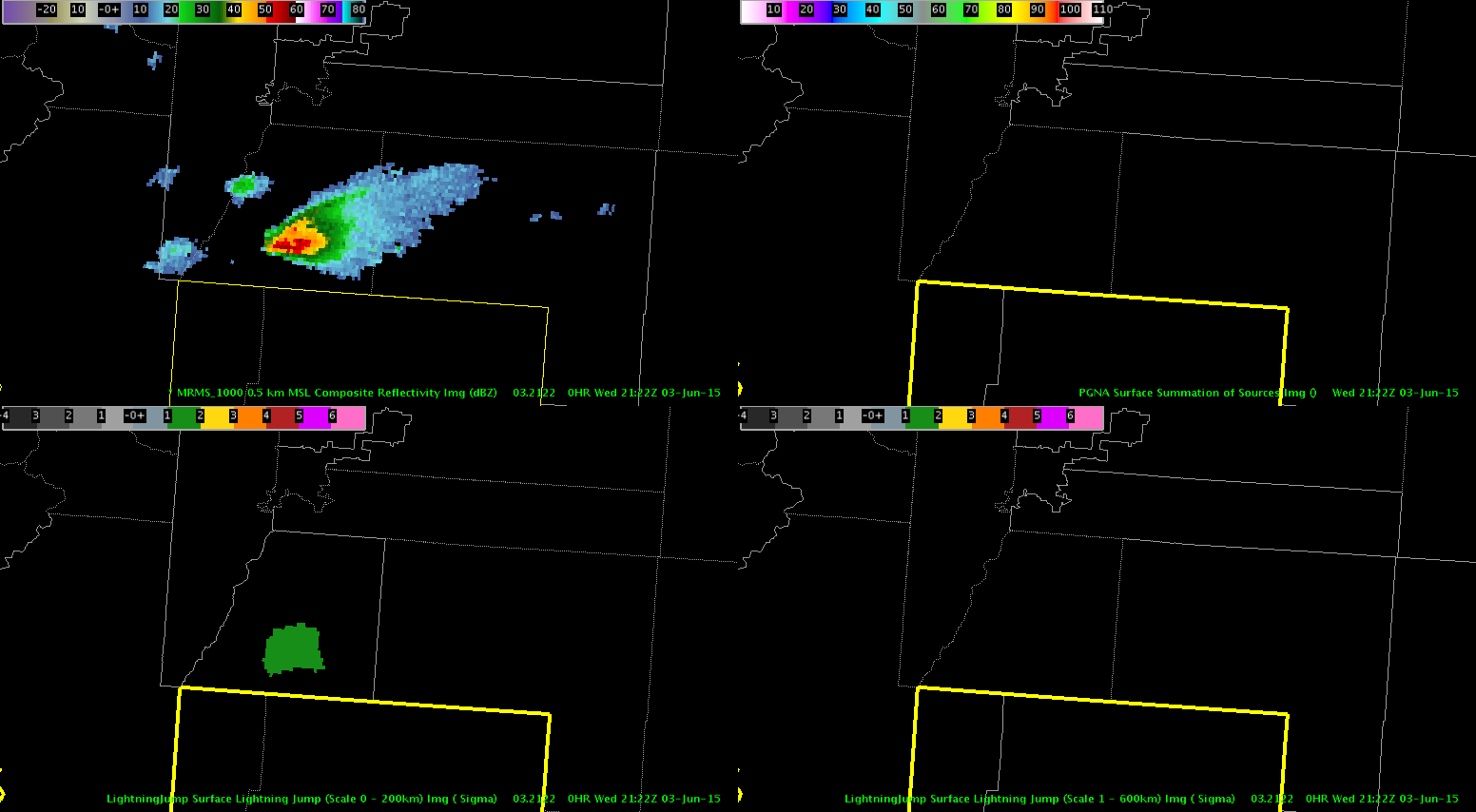
Issued 1st SVR for Boulder, CO.  CI did not show any indication that this cell would develop. Have a feeling that it may have been identified earlier as weaker pulse cells tried earlier in the day to form but did not re-identify it (Algorithm possibly thought convection already occurred?)

Basis for warning was made solely from traditional radar interrogation (mid-level meso, TBSS (fig 1), 55dbz above 30kft, supercell shape). ProbSevere only showed impressive values after the warning decision was made. (ProbSevere=82%, MESH=1.0, Lightning Jump 2.0 sigma (fig 2)). We were not using ENI at this workstation. Overall, only 5 CG strike were shown on NLDN during the intensification. In this case, the experimental products served as a confidence builder.  The pGLM data was not working at this time. Did receive a report of half-dollar size hail at 2135z. –Cattywampus

DP_SVR

Fig 1: 2120z TBSS visible w/ super-cell shape developing.

LJUMP_SVR

Fig 2: 2122z Sigma 2 jump occuring

Tags: None

Convective Development Along Outflow Boundary

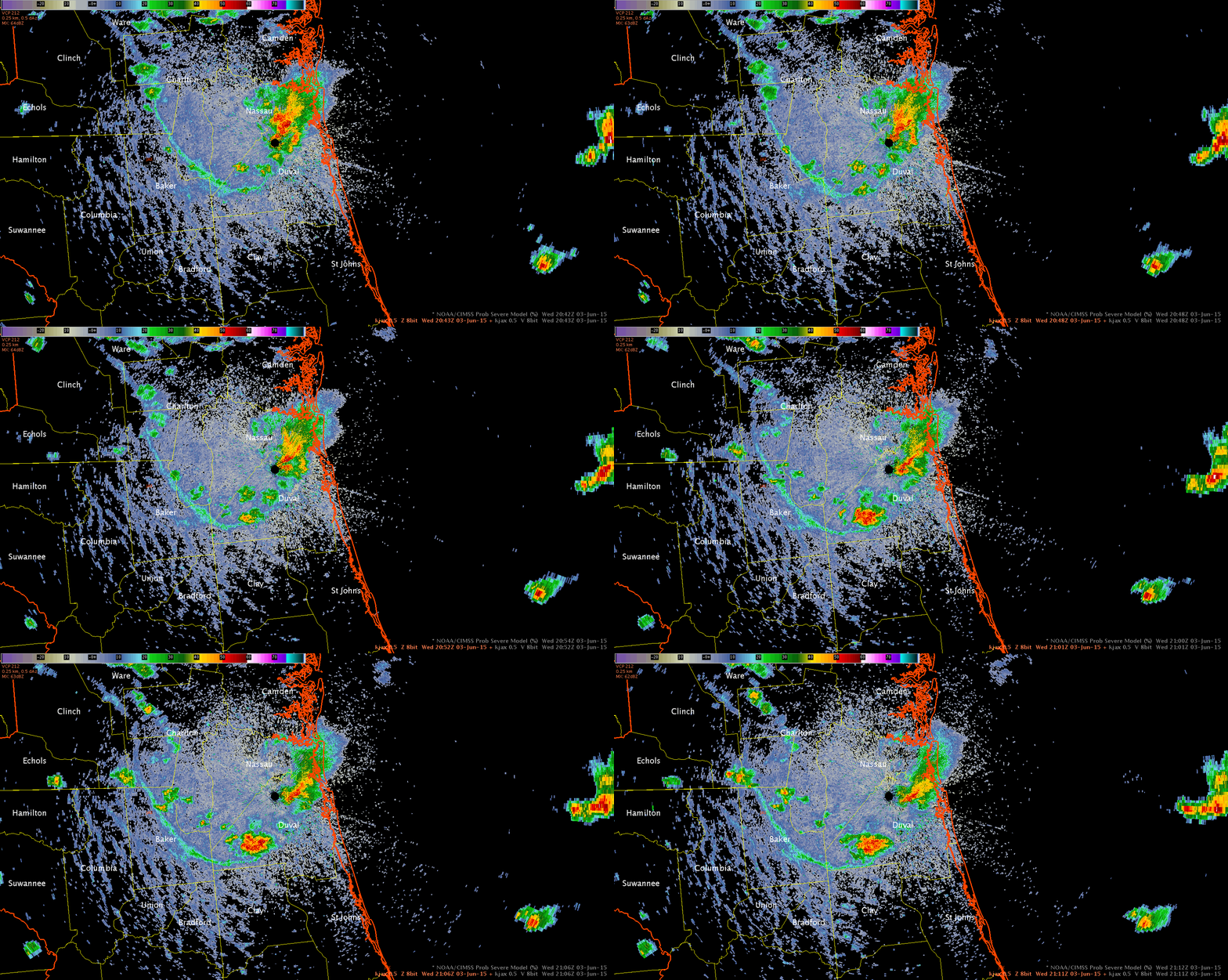
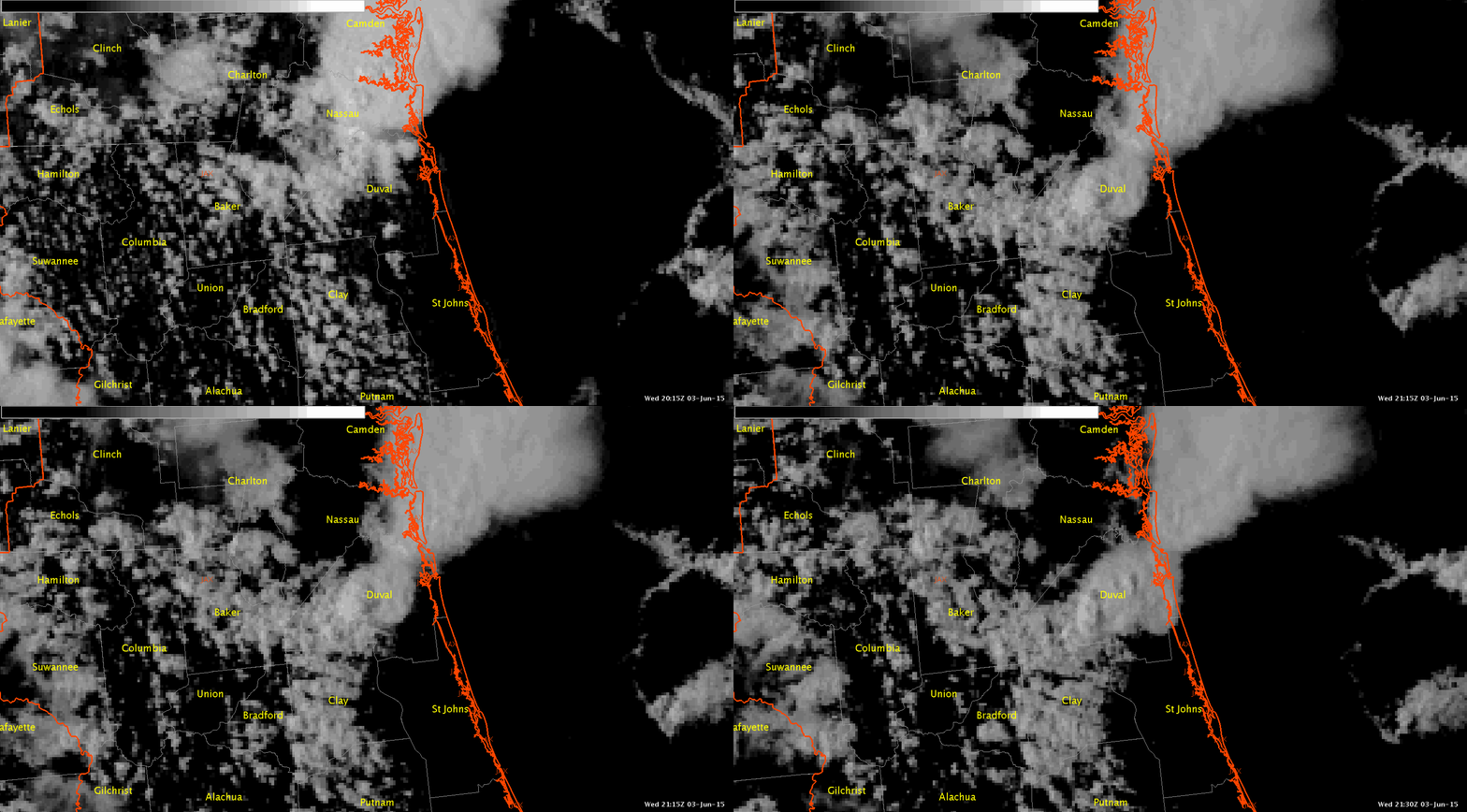
This is a case where having the 1-min satellite imagery would have been beneficial, but unfortunately it was unavailable in the Jacksonville FA. The radar reflectivity loop shows how convection developed along the outflow boundary in southwestern Duval County. Looking at the visible satellite imagery that was available, I really couldn’t gather much information because of the large time gaps. The gaps between satellite images were even larger than the normal 15 minutes in this case due to a problem with AWIPS2. If I had the 1 minute imagery, I probably would have been able to see the growing cumulus and would have better anticipated the cell that developed over southwestern Duval County.

RadarReflectivity(Click image to see animation)

VisSat(Click image to see animation)

-Helen Hunt

Tags: None