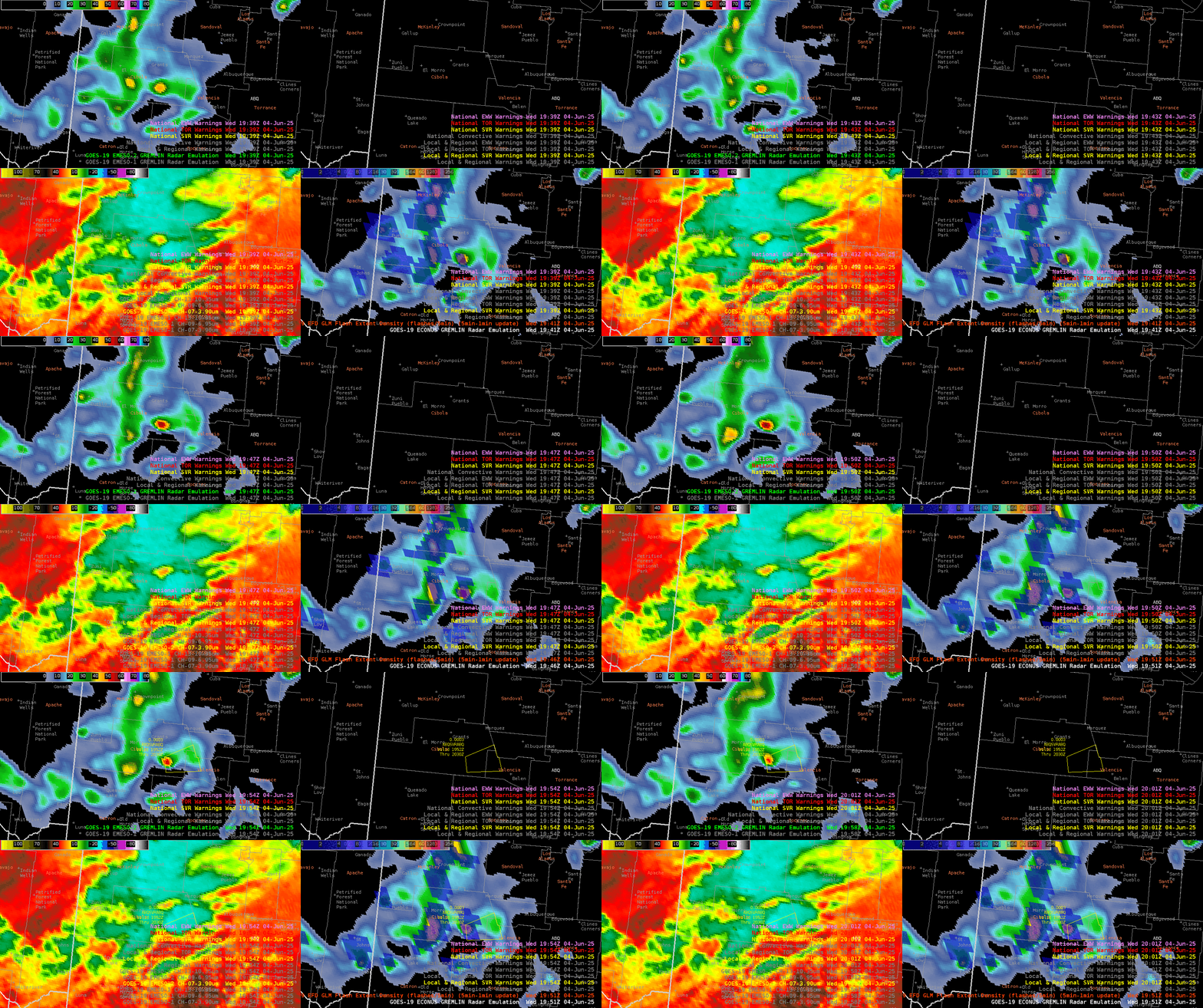
GREMLIN struggles with low-topped convection

For today, we were assigned to the Central Illinois (ILX) CWA, close to the low pressure center. CAPE wasn’t as robust, but there was already ongoing convection that was expected to further strengthen during the afternoon with a bit of additional heating in some clear skies east of the low.

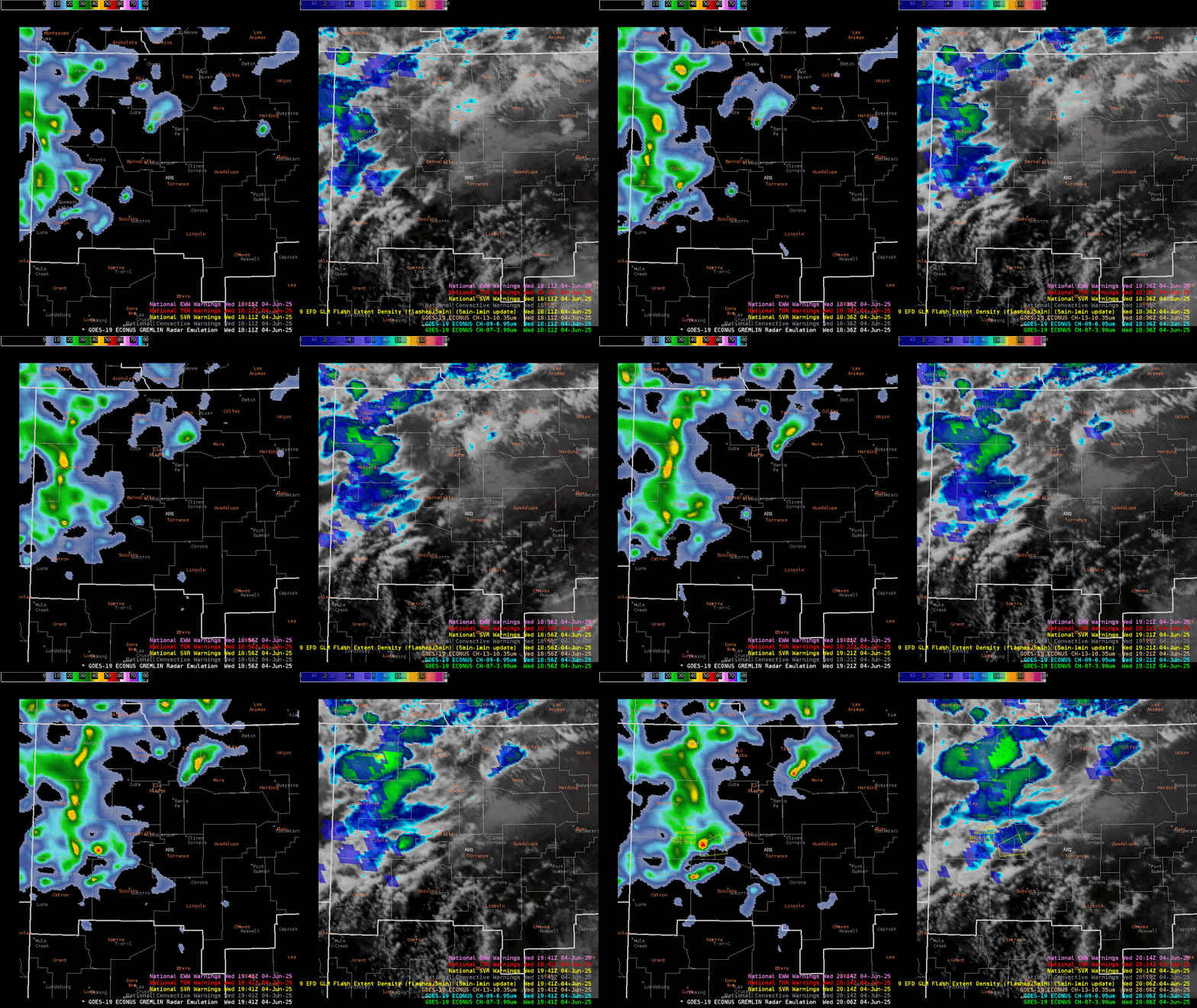
One feature that was very noticeable for our area compared to further south in the warm sector was the low-topped nature of our convection. Even our supercells were fairly low-topped. As a result, that influenced some of the satellite-based tools. Most notably, GREMLIN returns were much weaker than one should have expected, even once lightning production got going in a cell.

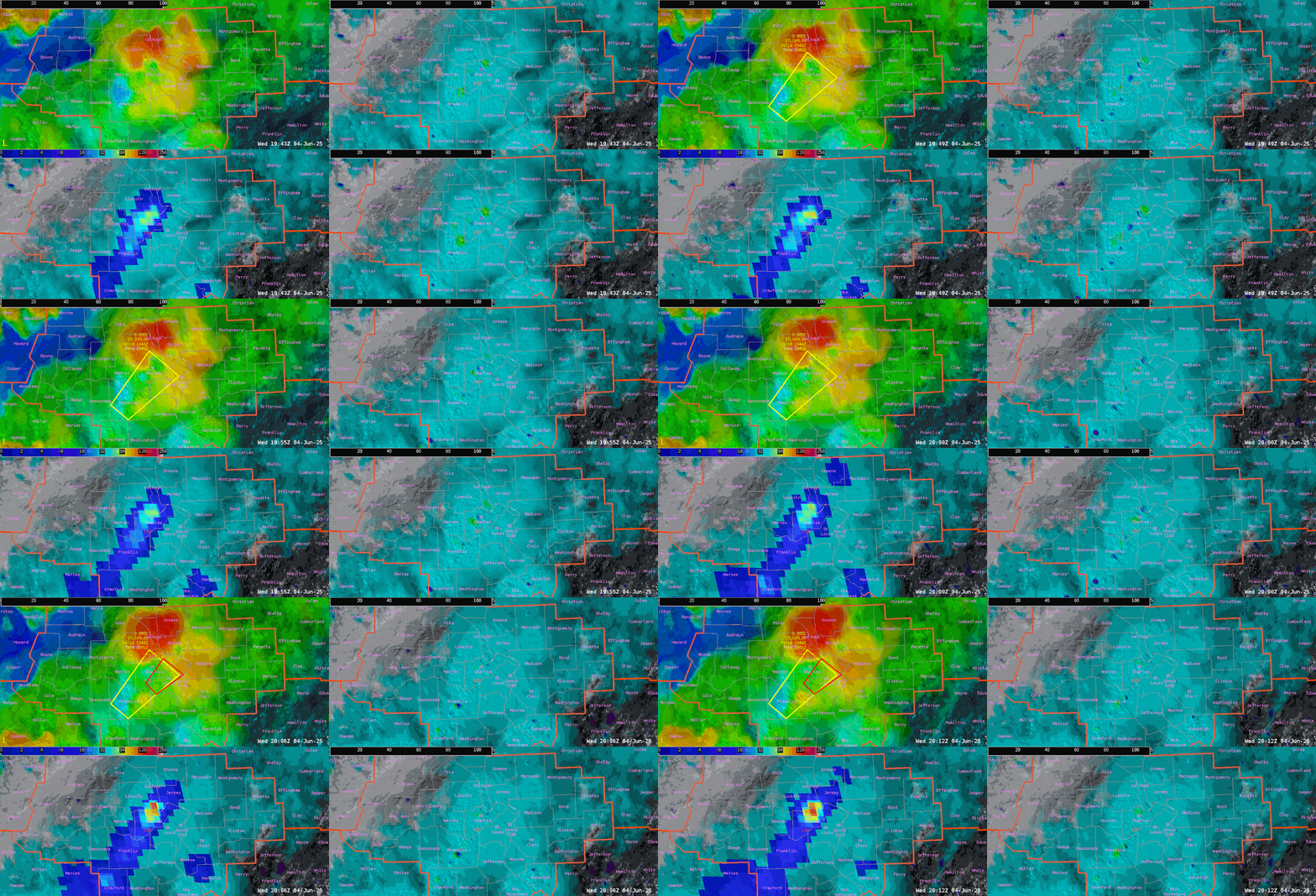
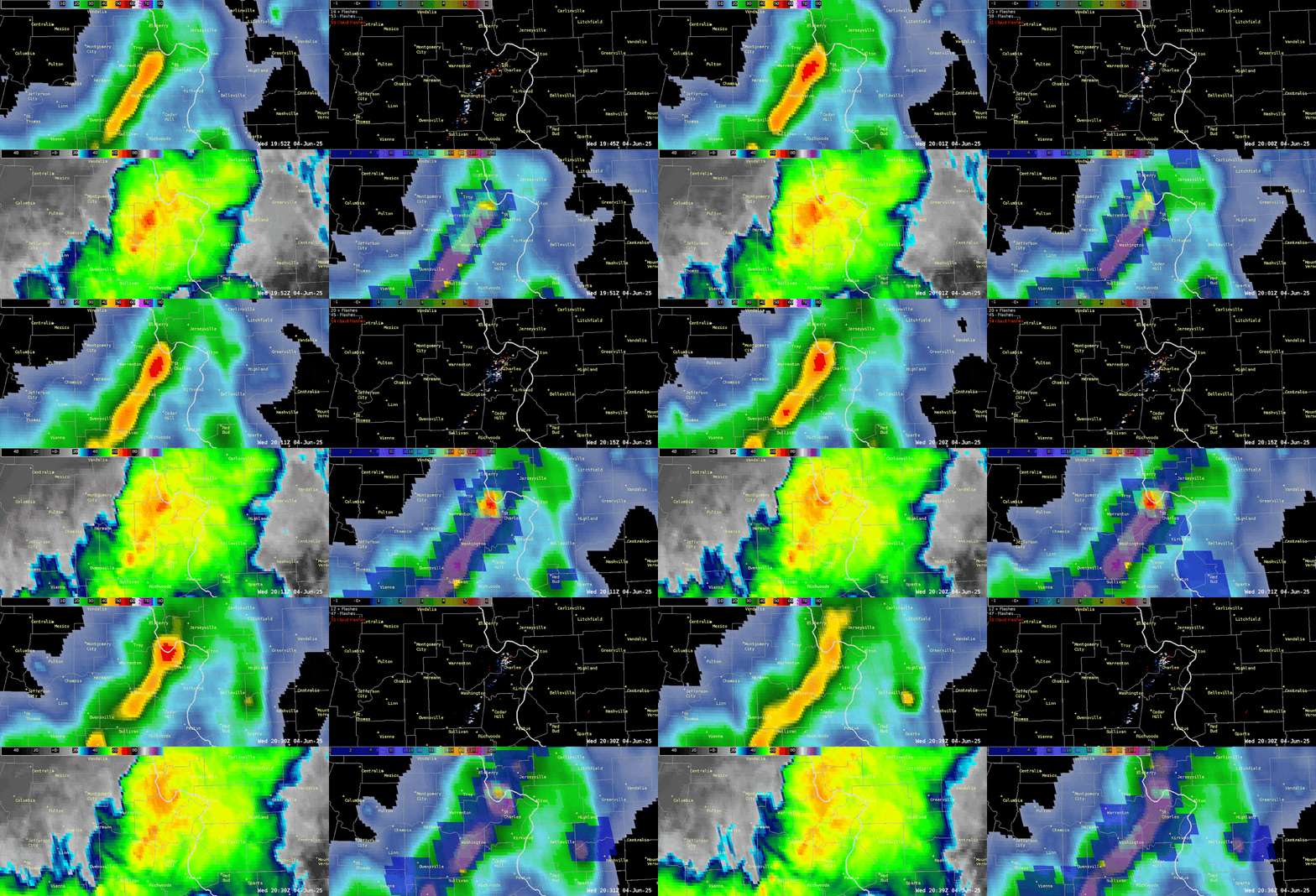
Fig. 1: 4-panel loop of GREMLIN data from 2025z to 2105z. Counterclockwise from top-left: GREMLIN East Meso-2; GREMLIN East Meso-1; GREMLIN CONUS; MRMS -10C Reflectivity.

As you can see in Fig. 1, the two Mesosector-based GREMLIN simulations on the left show very weak returns compared to the -10C returns. The CONUS-based GREMLIN (bottom right) shows stronger simulated returns, including some that get into the red above 50dBZ, but it still generally underdoes ‘reality’.

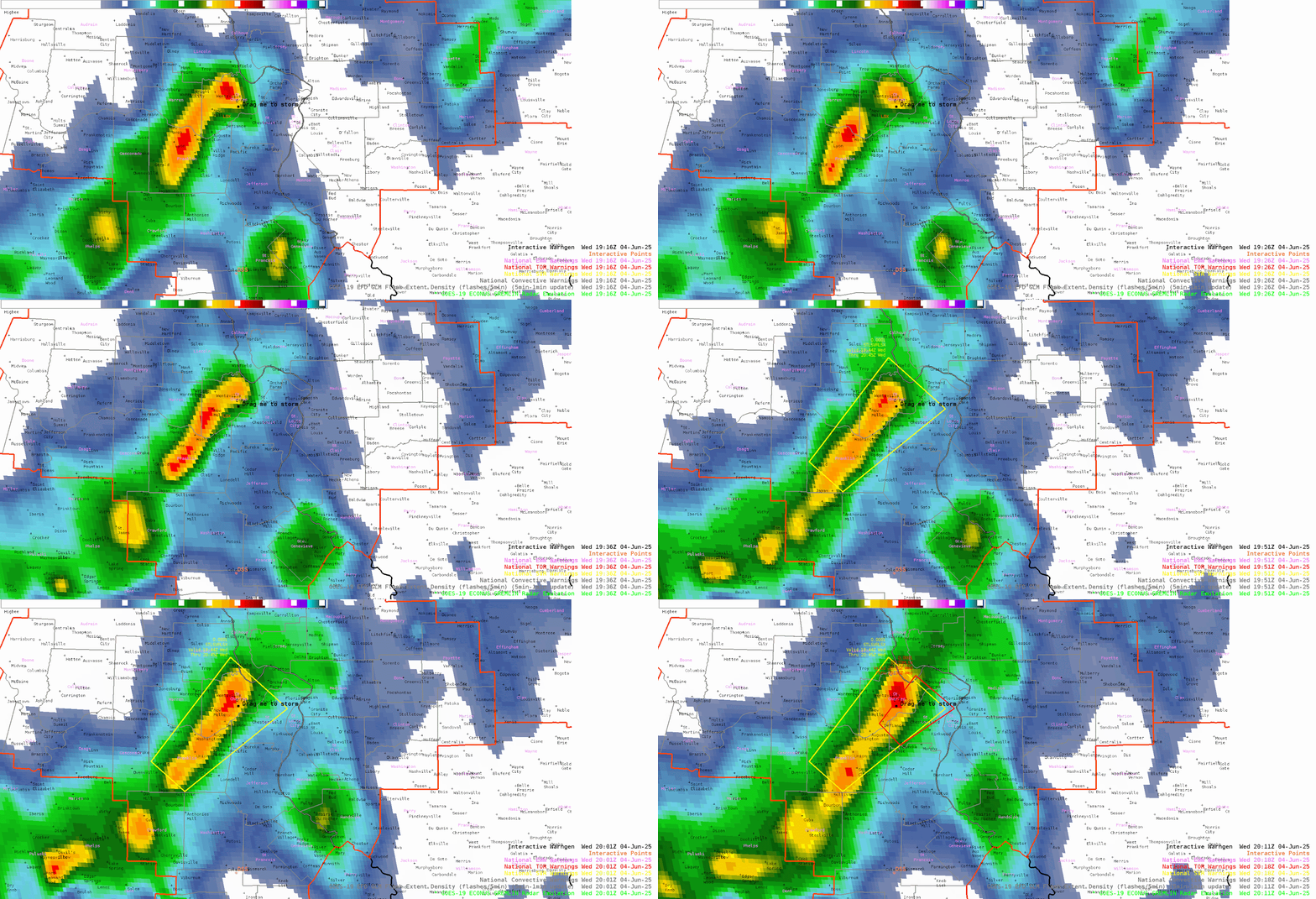
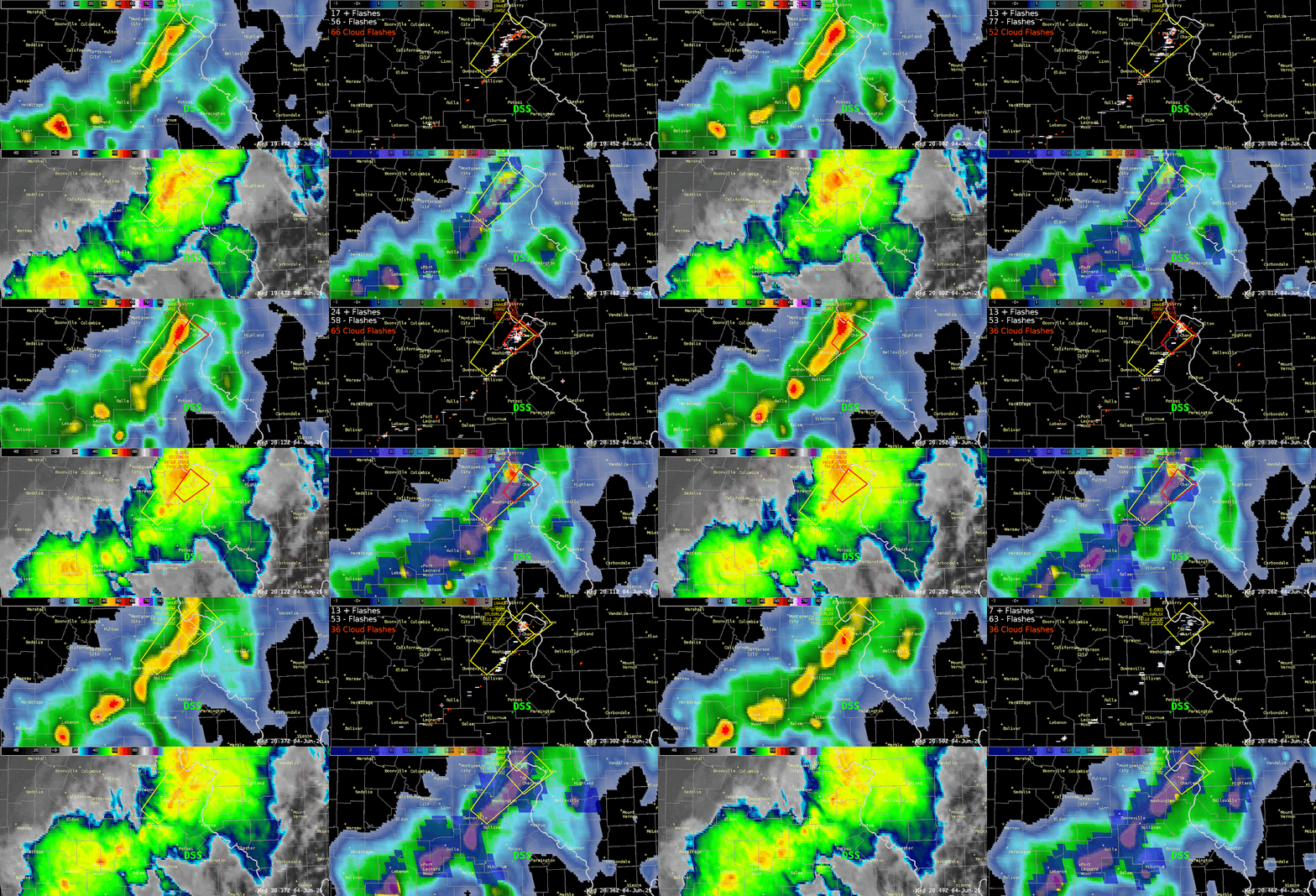
Getting a bit later in the day, this would become even more pronounced at times, as seen in Figure 2. Returns over 60dBZ (whites and pinks) are frequently evident on the MRMS Composite Reflectivity, but the East Meso-2 GREMLIN essentially never showed anything over 50dBZ. And while the CONUS GREMLIN does better, as noted above, and shows returns over 50dBZ a bit more frequently, it still largely is undergoing the strength of the storms.

Fig. 2: Loop from 2005z to 2200z showing, clockwise from top left: GREMLIN East Meso-1, MRMS Composite Reflectivity; GREMLIN CONUS;  GOES East Meso-1 Band 13.

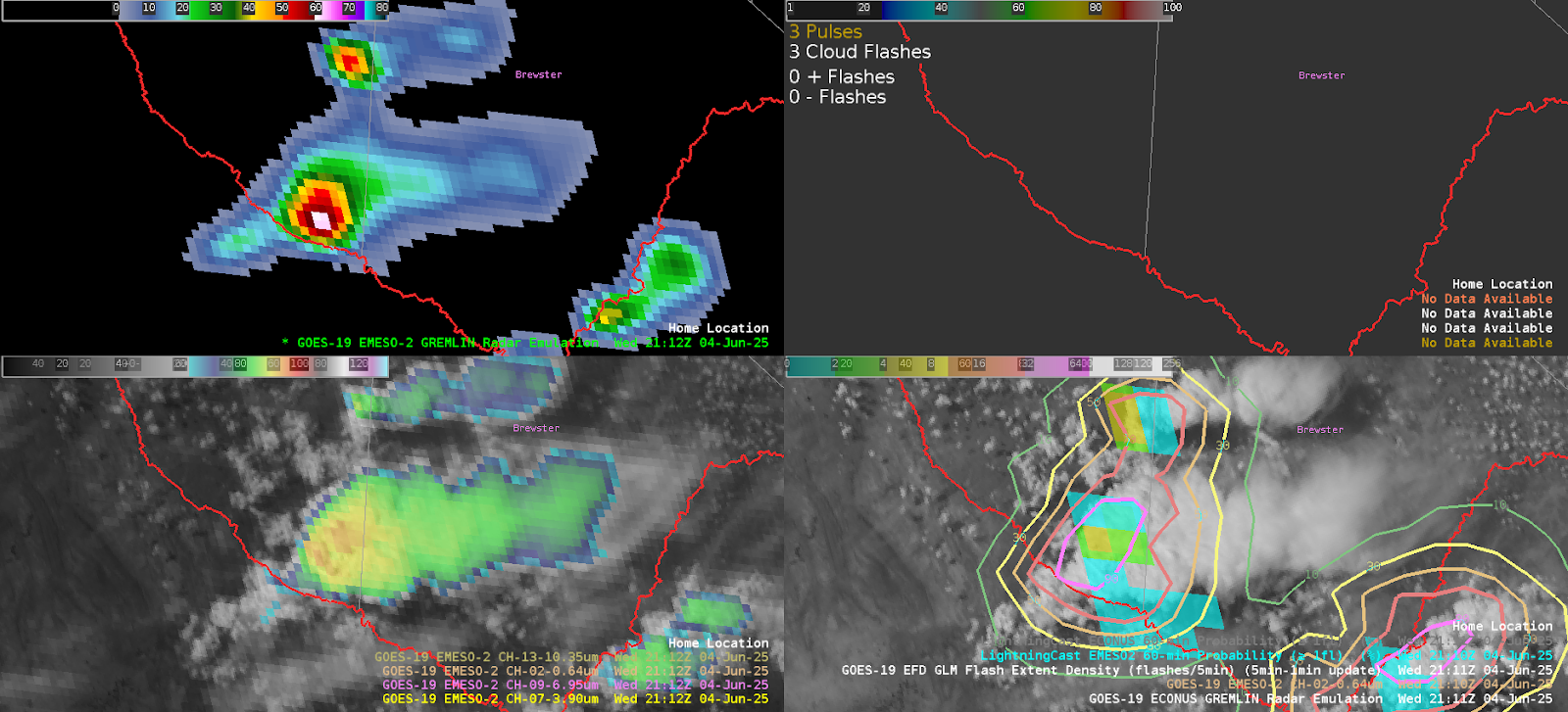
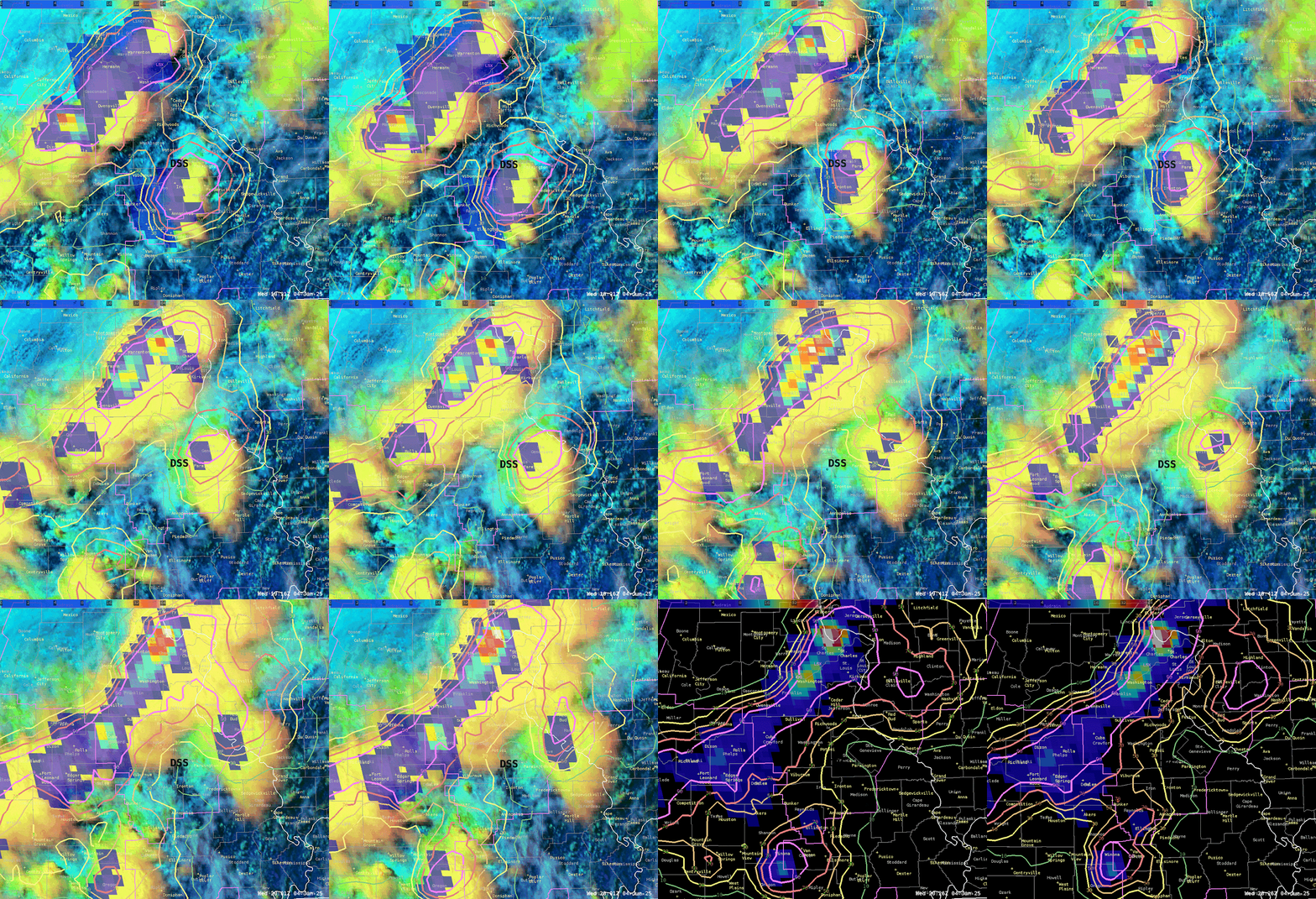
Contrast this to further south (Fig. 3), in and around the Memphis (MEG) CWA where the other team was focused for the day. Here, cloud tops are much higher and colder. The East Meso-1 GREMLIN shows simulated returns over 50dBZ much more frequently compared to in Illinois. It is much closer to the CONUS-based GREMLIN, and in some cases shows simulated returns higher than the latter, and both are much closer to the reality shown in the MRMS data.

Fig. 3: Loop from 2015z to 2210z showing, clockwise from top left: GREMLIN East Meso-2, MRMS Composite Reflectivity; GREMLIN CONUS;  GOES East Meso-2 Band 13.

Returning to the case in Illinois, it is not entirely clear why the CONUS performed marginally better than the Meso-based GREMLIN simulations, but perhaps with the algorithm having much weaker influence from the IR satellite data, having 5 minutes of lightning data was weighted a bit more heavily vs. one minute of lightning data. It seems like the low-topped convection and warmer cloud tops rather significantly hindered the performance of GREMLIN. There is likely no easy fix or workaround for that, so forecasters using the product just need to be aware of that limitation, and know that a day with low-topped convection may make GREMLIN less useful than some other tools.

– Marko Ramius

Tags: None

Storm Top Divergence During Low Topped Storms

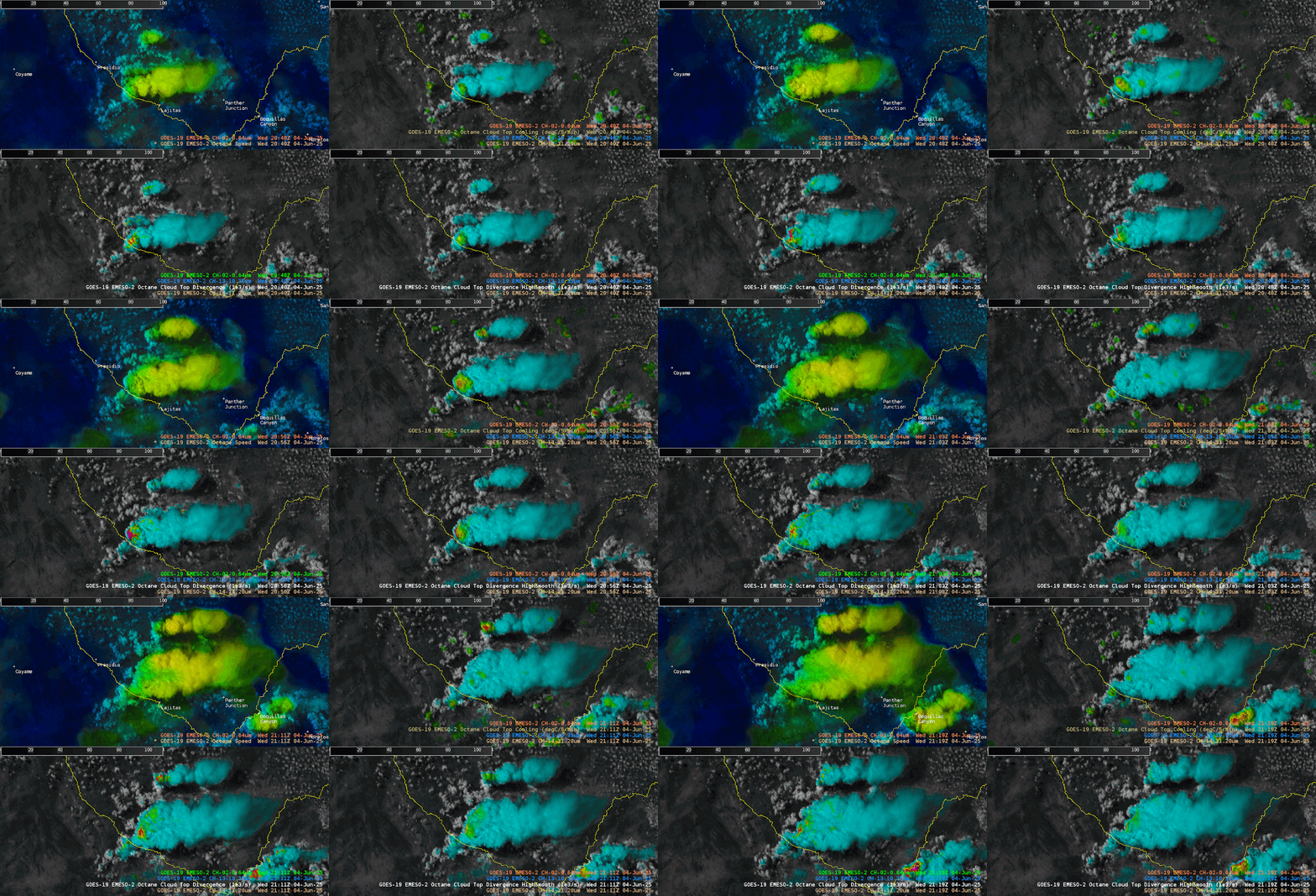
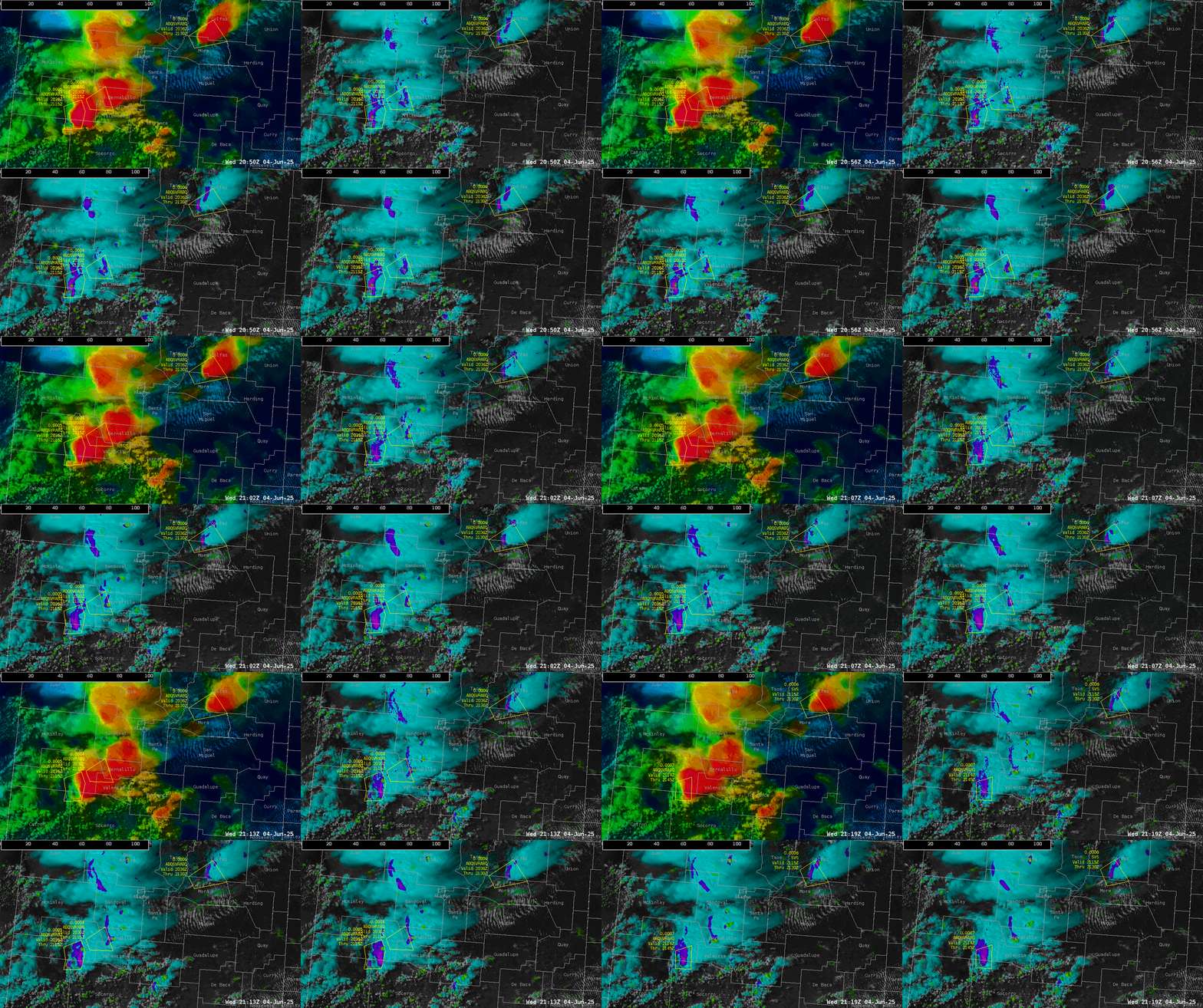
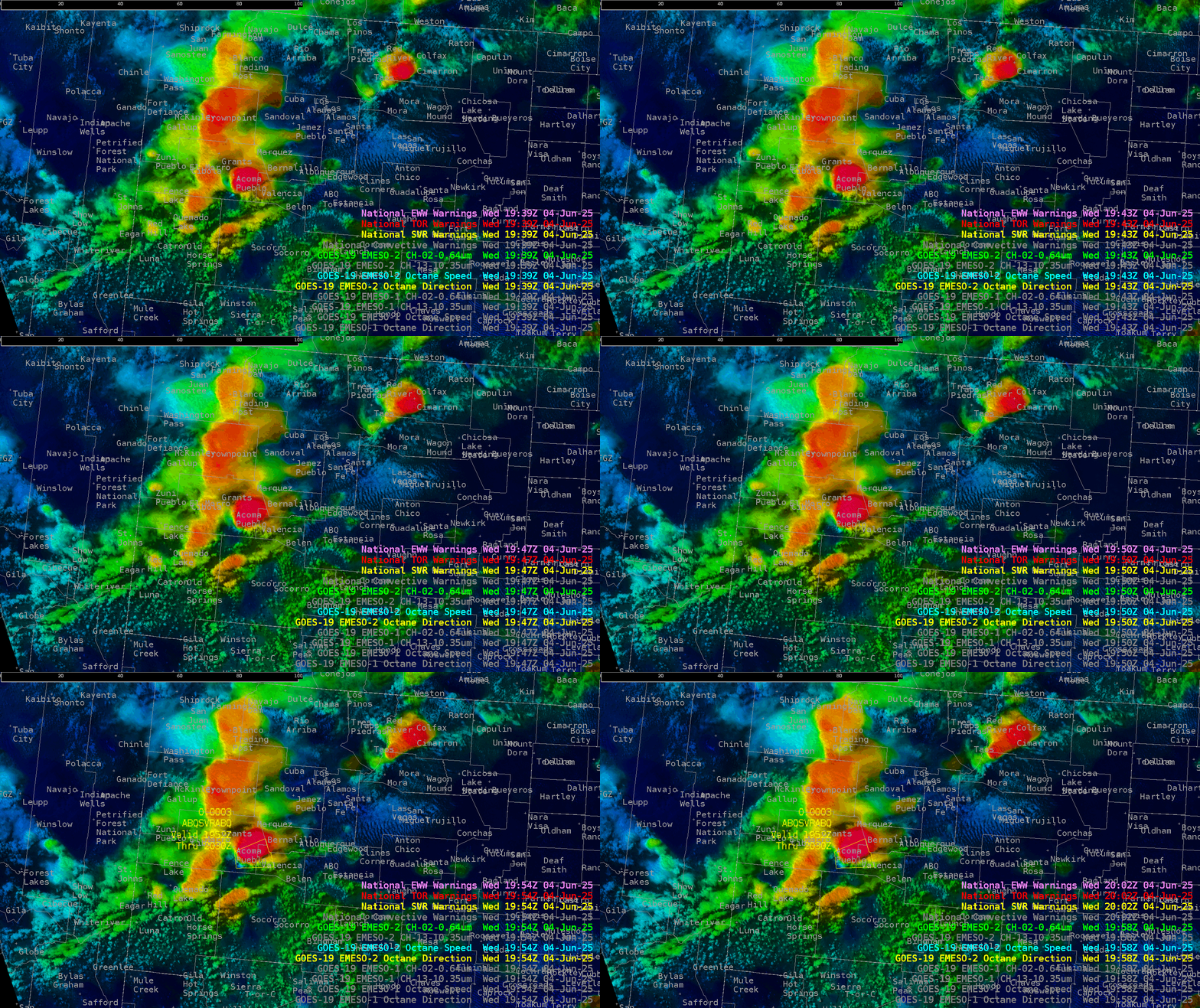
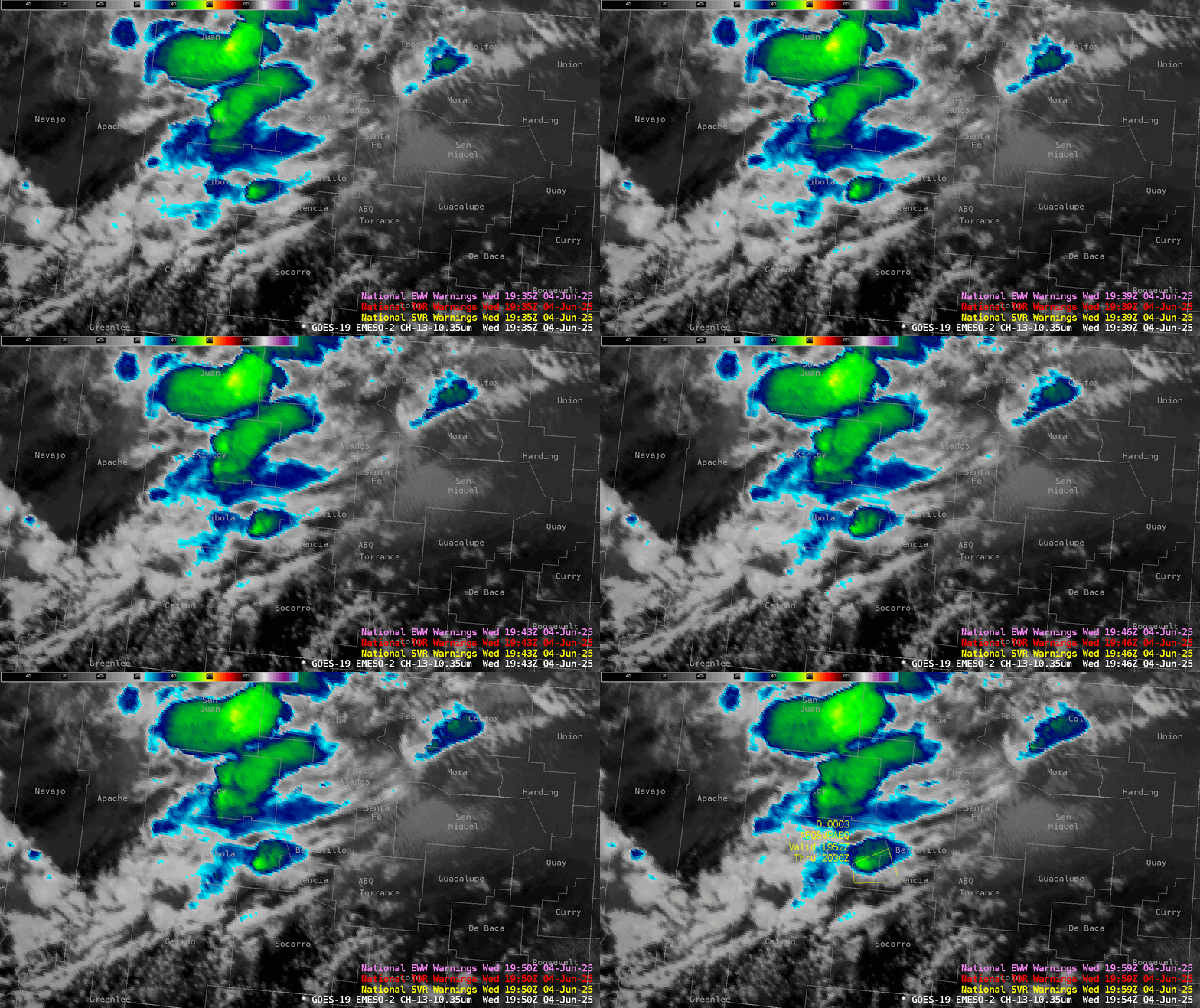
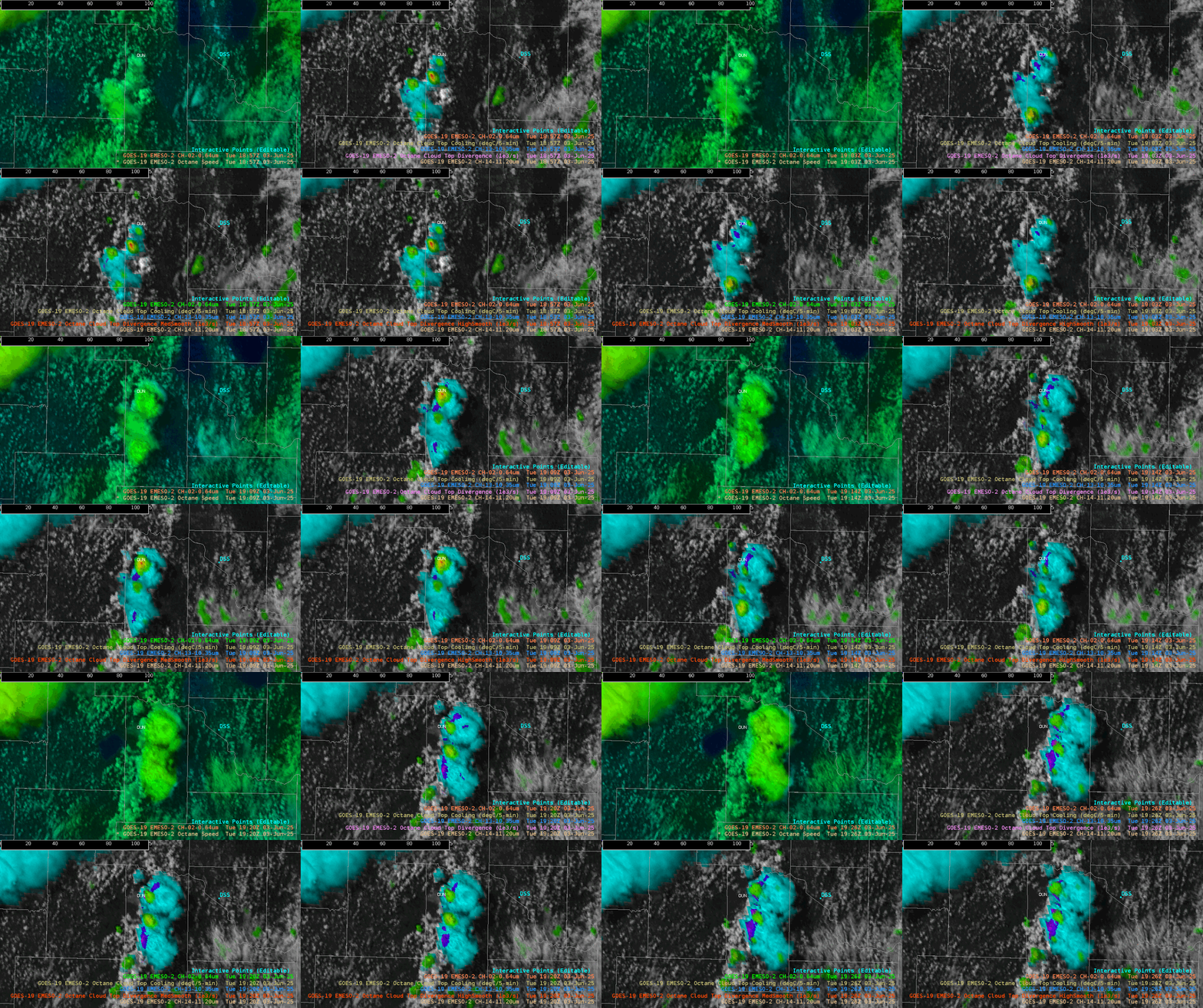
Storms in the area this afternoon were mainly low-topped supercells with neutral values of speed (green) with a weaker sheared environment. The main thing that was noticeable was the threshold for CTD was not very strong with the storms this afternoon in the area (Figure 1). Thus, adjustments were made to the colorbar maximum thresholds with CTD for each smoothing technique (see Figure 2). The highest smooth CTD is normally 4, so it was maintained. Meanwhile, the medium smooth CTD was lowered to 3 as the colorbar maximum value and the regular CTD (non-smoothed) colorbar maximum was lowered to 2. The intensity of CTD becomes more notable in the lower thresholds, which may be needed/more helpful in these low-topped storm modes where the updrafts and cloud tops are not going to be near as cold (higher in altitude) as other convective modes. More research may be needed to look into whether the storm that originally created subtle CTD values (before the adjustment to the colorbar) ended up going on to become severe and/or produce hazardous weather. Therefore, local calibration may be needed by offices when it comes to different convective modes.

Figure 1: OCTANE Speed/Direction and CTC/CTD.

Figure 2: OCTANE Speed/Direction and CTC/CTD with adjusted colorbar maximum values for CTD across all smoothing levels.

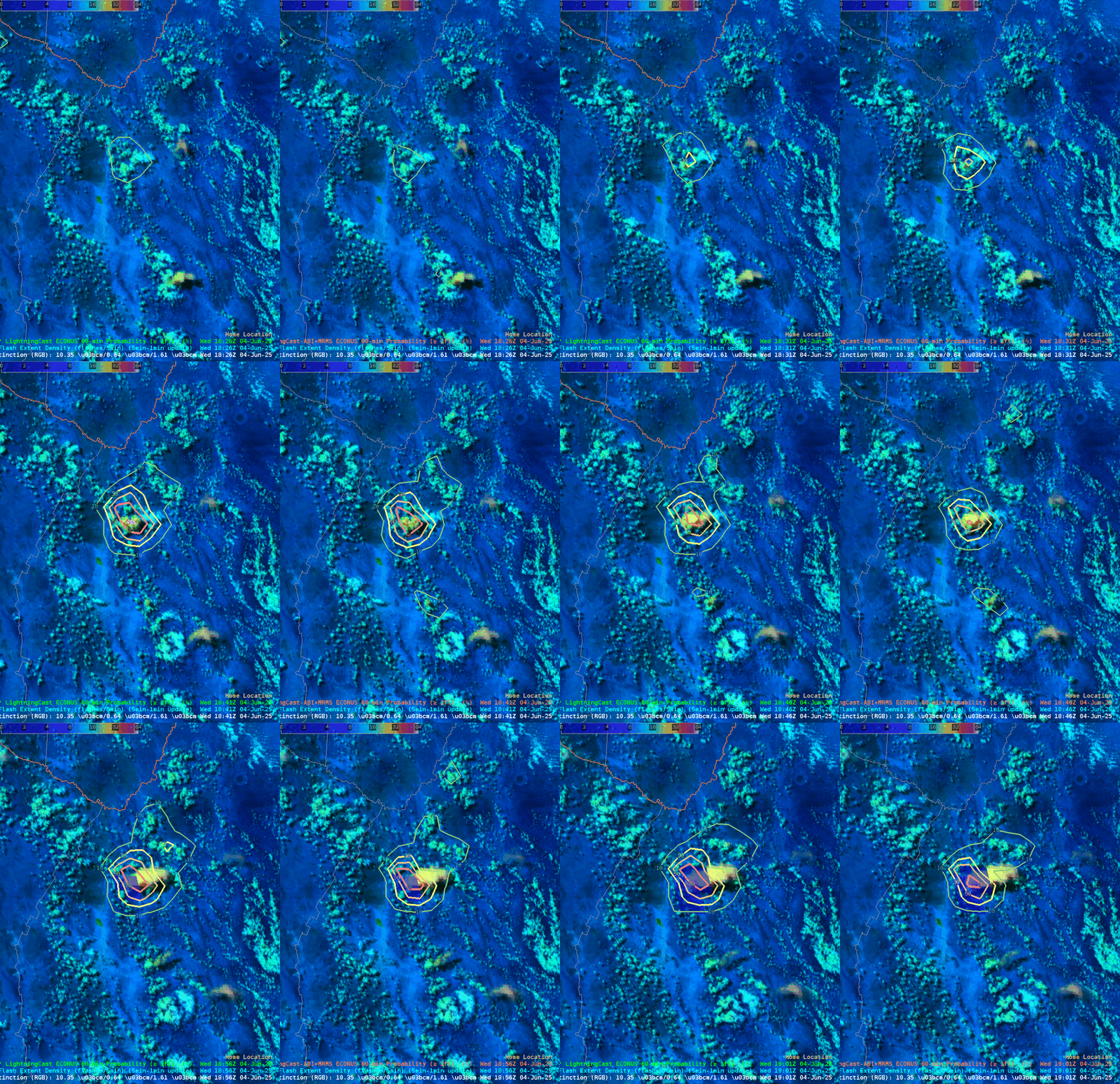
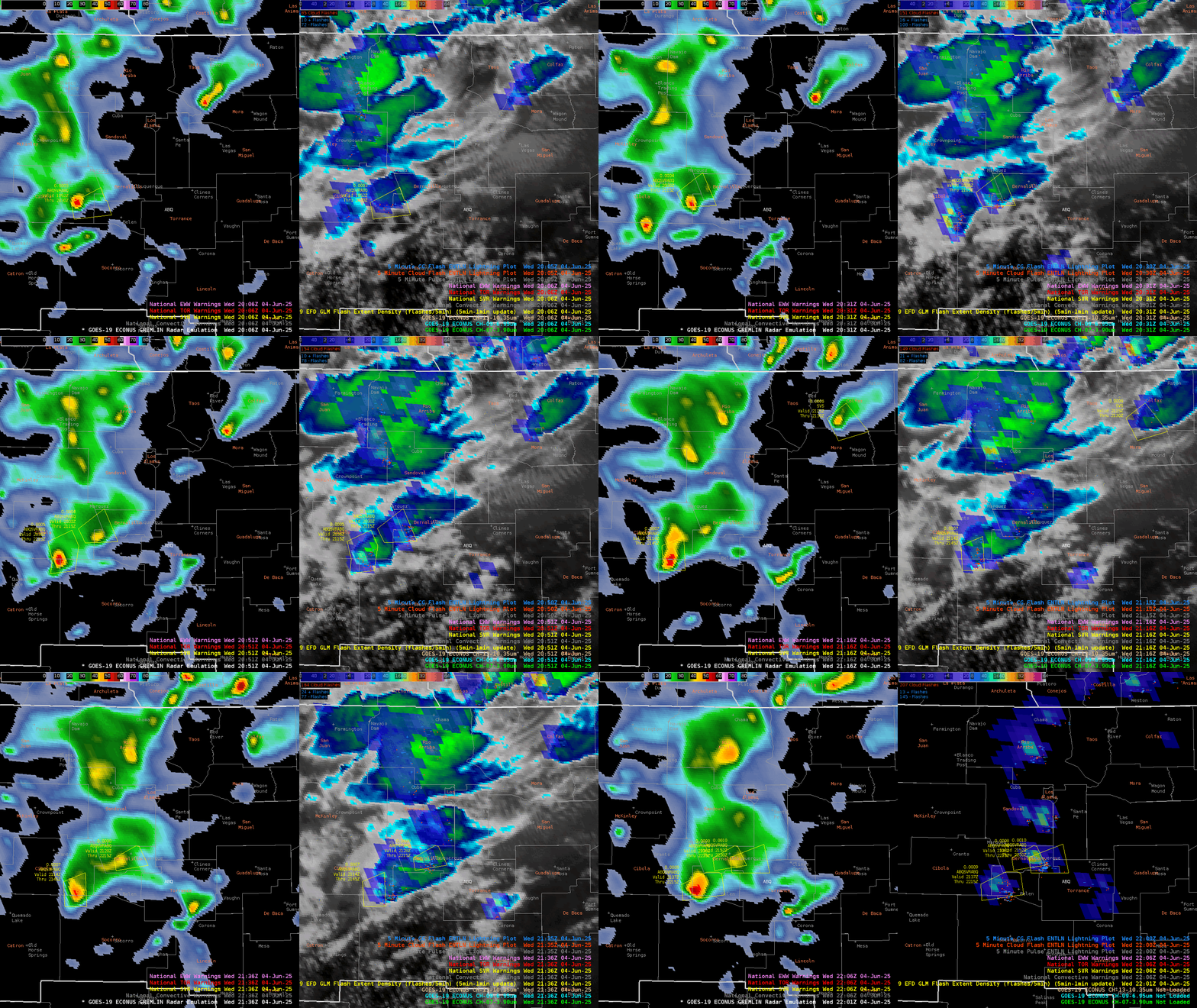
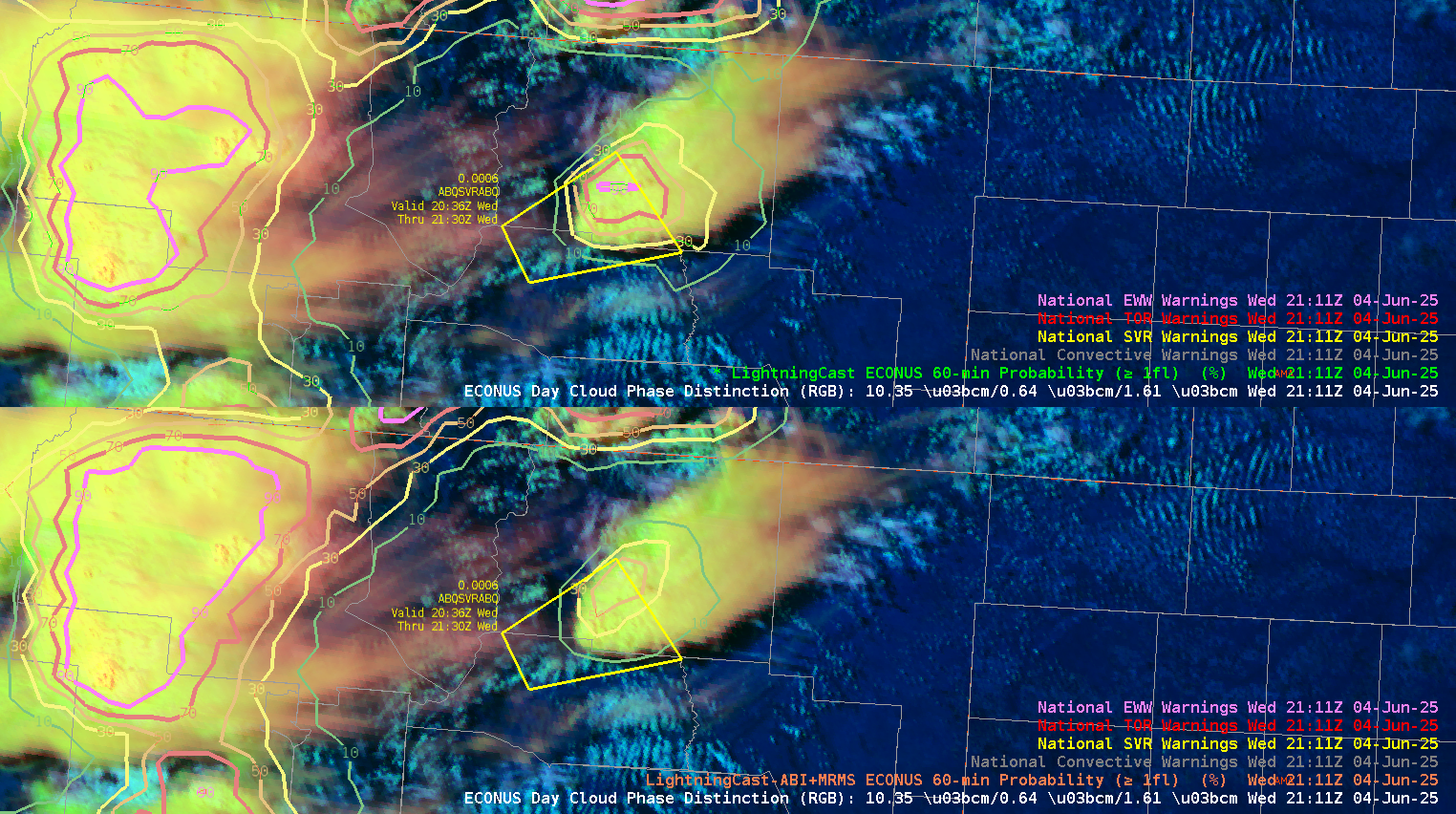
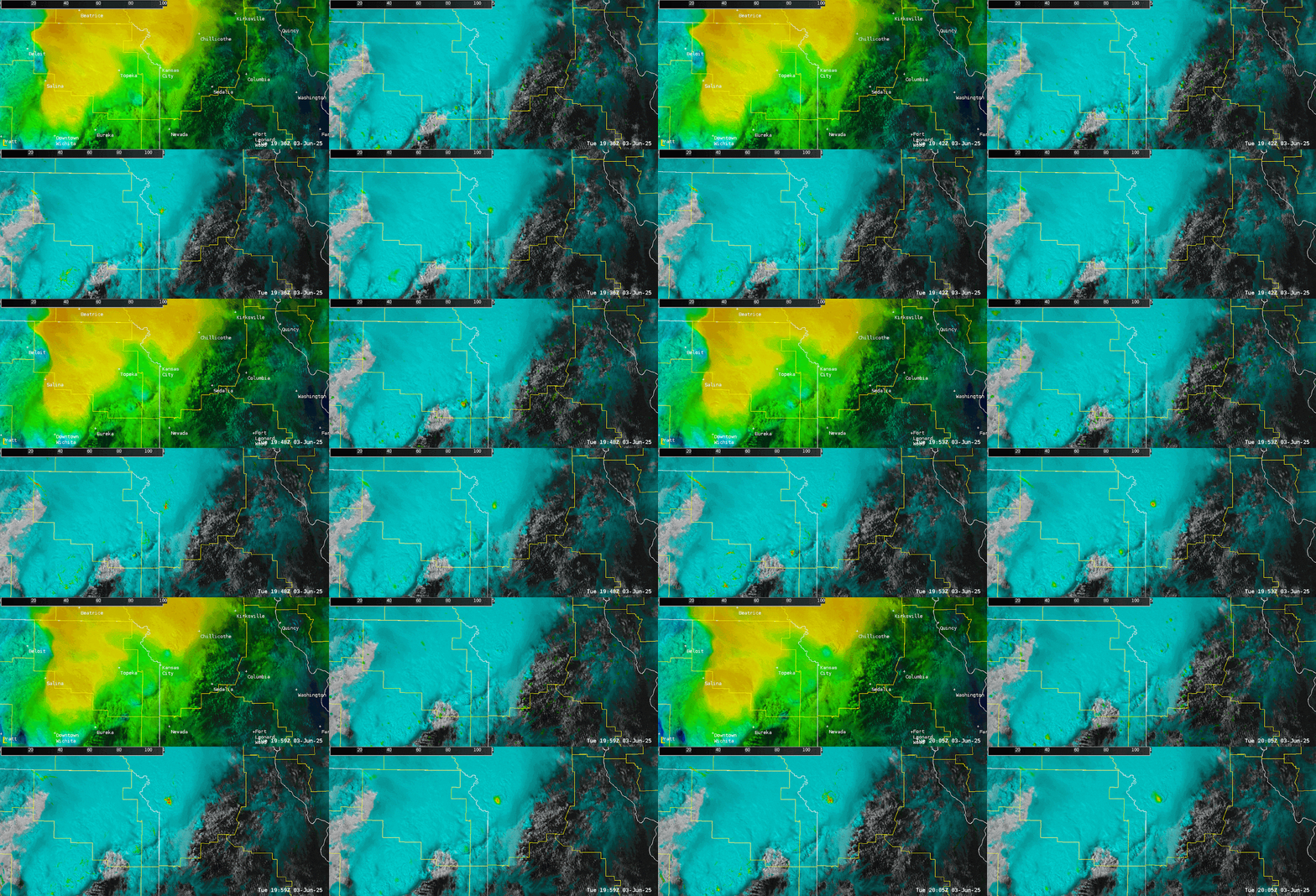
Lightning cast V1 showed slightly lower probabilities than V2 for the convective initiation mentioned above.

Figure 3: Lightning cast V1 (left) and V2 (right) with GLM Flash Extent Density and Day Cloud Phase Distinction RGB.

– Aurora Borealis

Tags: None

Gremlin-EMESO 4 Panel

Noticed a very interesting Jump in the Gremlin products reflectivity near Hughes County (upper lefthand panel) which matched up very well with the cooling cloudtops (lower lefthand panel) which to me signals at least a short term strengthening trend in that specific cell within the clusters of storms in northeastern Oklahoma. Given the environment across the area this could lead me to at least consider a warning if not issue a warning for that cell.

– StingJet

Tags: None

GREMLIN and Low Topped Convection

GREMLIN seemed to really struggle with the low topped convection in the ILX CWA today. Our group was wondering if this was because there didn’t seem to be as much lightning activity.

About 30-40 minutes later, it seemed to recover some. Could this be because the convection was more established?

– Lightning McQueen

Tags: None

Utilizing OCTANE to Determine Failed Convection

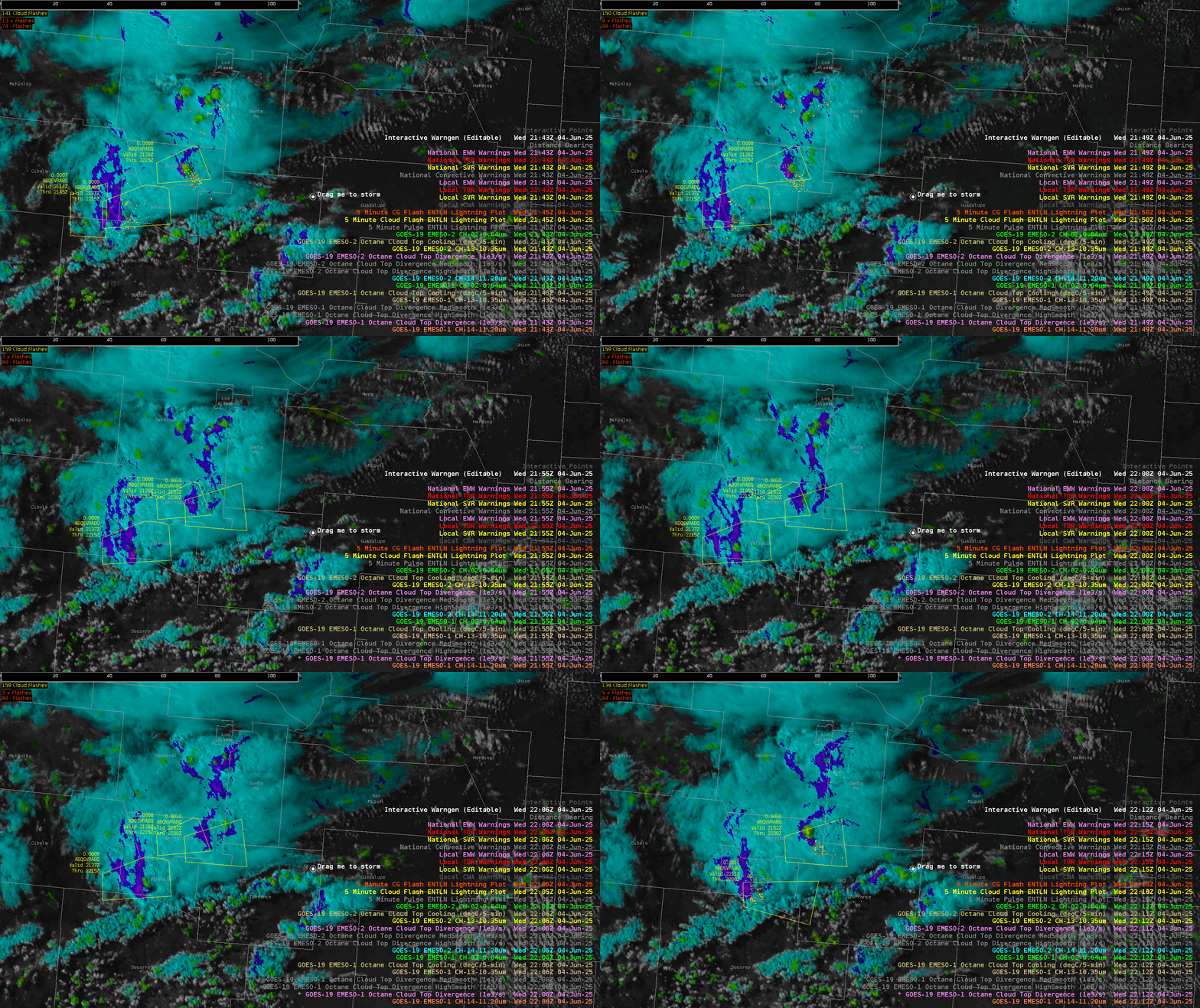
Typically forecasters will utilize cloud top cooling and glaciation for an initial look into convective initiation. OCTANE cloud-top cooling clearly depicts the rapid intensification of an updraft with the quick change of colors (green to red). However, the OCTANE divergence component of this product helps to signify mature convection and a strong persistent updraft. Notice how there is no signal for cloud-top divergence (CTD) in the animated loop below (Figure 1). No signature for CTD and warming cloud-top temperatures became an apparent signature for failed convection.

Figure 1: OCTANE cloud-top cooling and divergence. Notice a rapidly developing updraft initiating south of the cluster of storms before it quickly warms as the storm fails to maintain strength.

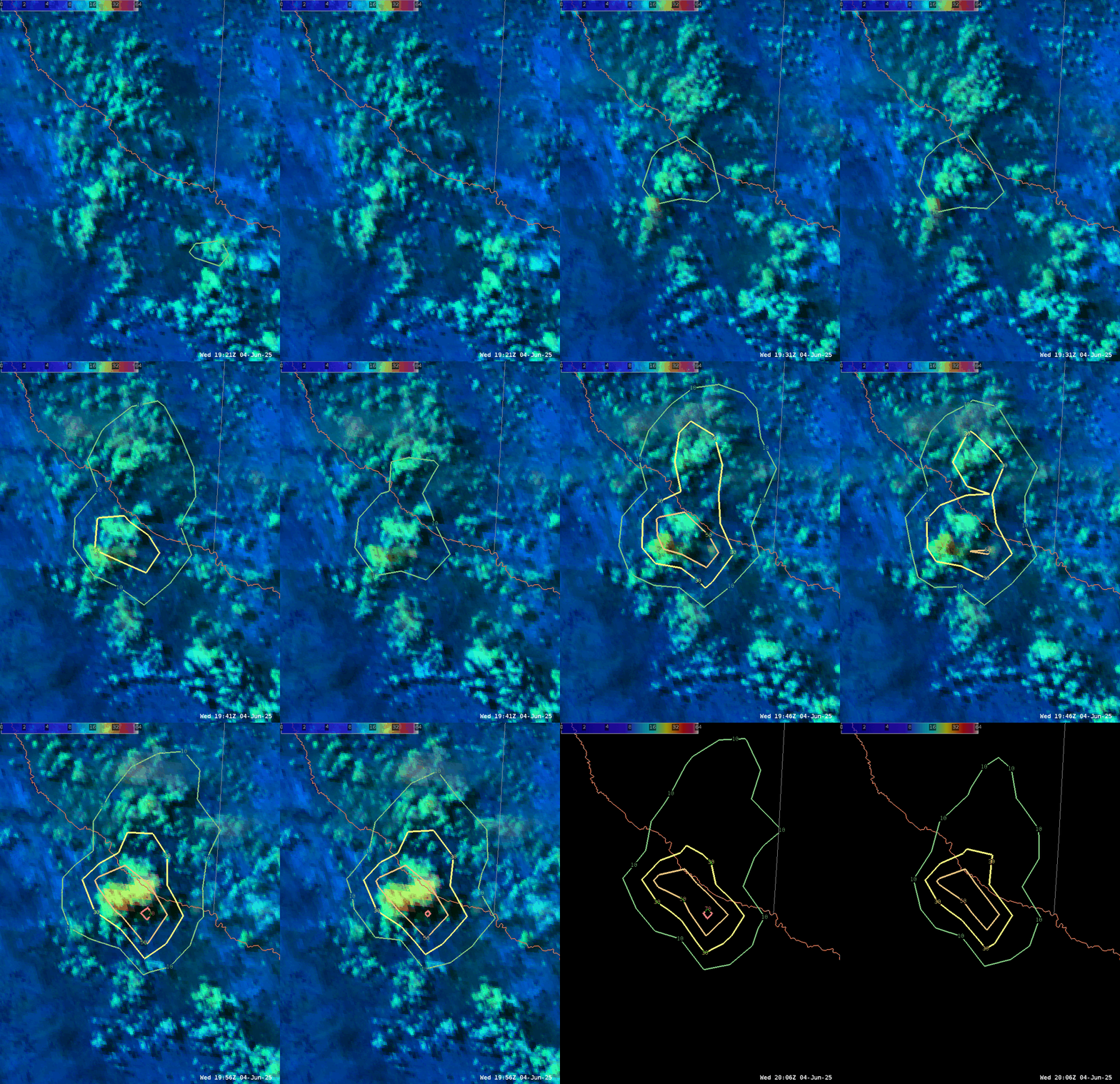
Lightning cast clearly signifies a low probability for convection developing south of the main cluster. Additionally, day cloud phase distinction reveals an orphan anvil present in the storm that showed a quick signal for cloud-top cooling in the OCTANE product. Thus, failed convection led to no signal for a storm at the base reflectivity scan on radar.

Figure 2: Lightning cast V1 (left) and V2 (right), along with GLM Flash Extent Density and Day Cloud Phase Distinction RGB.

Figure 3: Local radar KILX base reflectivity at 0.5 degree tilt.

– Aurora Borealis

Tags: None

OCTANE Cloud-Top Cooling Prior to Hail Report

OCTANE detected appreciable cloud-top cooling prior to a 1.25” hail report in Mississippi County, Arkansas. This cloud-top cooling indicated a strengthening updraft, which can be associated with an increasing hail threat in a favorable environment. The most substantial cooling rate was approximately at 2005 UTC, which was 14 minutes prior to the hail report at 2019 UTC.

2005 UTC Image of OCTANE Cloud-Top Cooling and Divergence 14 minutes Before Hail Occurrence

– Vrot

Tags: None

DSS messaging with the Lightningcast Dashboard

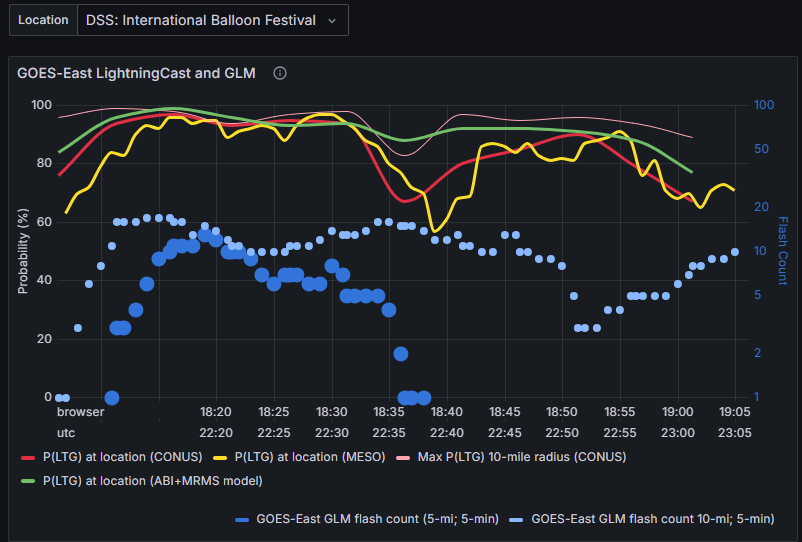
While doing the DSS for our event in Memphis (the Memphis Firework Preview Show 2) noticed a rather quick uptick in the Lightning V2 and eventually V1 probabilities about 45 mins or so prior to lightning strikes occurring near and around the site. This would give valuable lead time to any partner that was concerned about an outdoor event. It was made slightly easier to have confidence in this decision to mention an increased lightning threat especially looking at the line in satellite and on radar data.

– Sting Jet

Tags: None

Gremlin-EMESO 4 Panel

Noticed a very interesting Jump in the Gremlin products reflectivity near Hughes County (upper lefthand panel) which matched up very well with the cooling cloudtops (lower lefthand panel) which to me signals at least a short term strengthening trend in that specific cell within the clusters of storms in northeastern Oklahoma. Given the environment across the area this could lead me to at least consider a warning if not issue a warning for that cell.

– StingJet

Tags: None

LightningCast Dashboard

Being this was my first time using the Dashboard, It took me a minute to figure out what I was looking at and which was V1 vs V2. But I believe the green line was V2, and it performed comparatively to yesterday in that it was quicker to react to the threat.

– Lightning McQueen

Tags: None

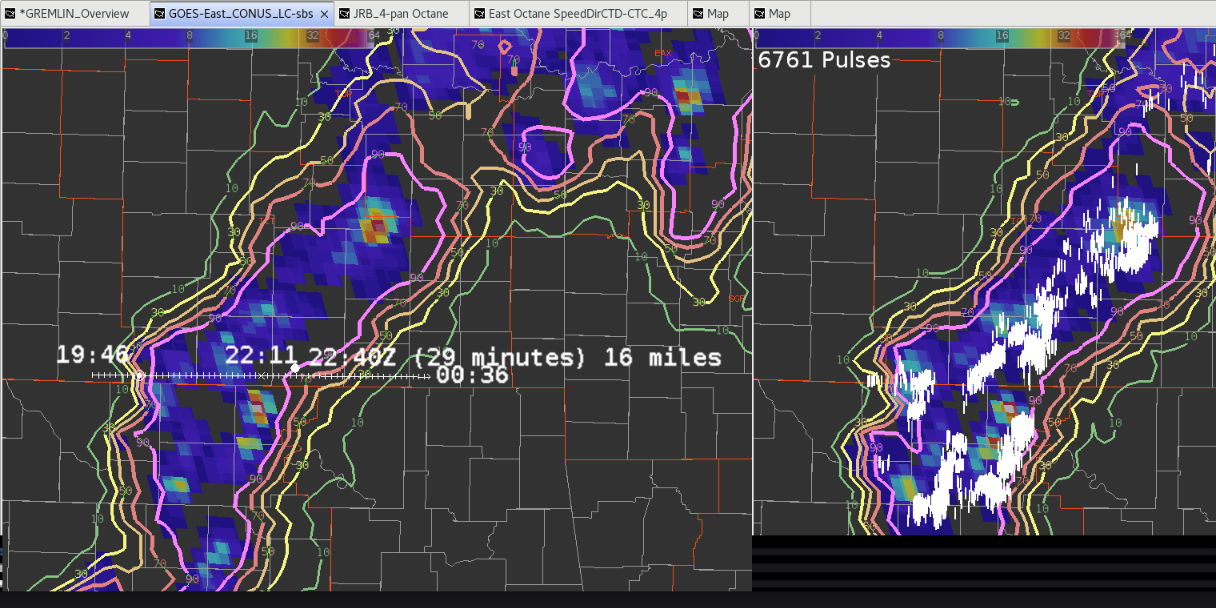
LightningCast and GREMLIN Identifying Threats Fast w/ OCTANE Being Great with Initiation

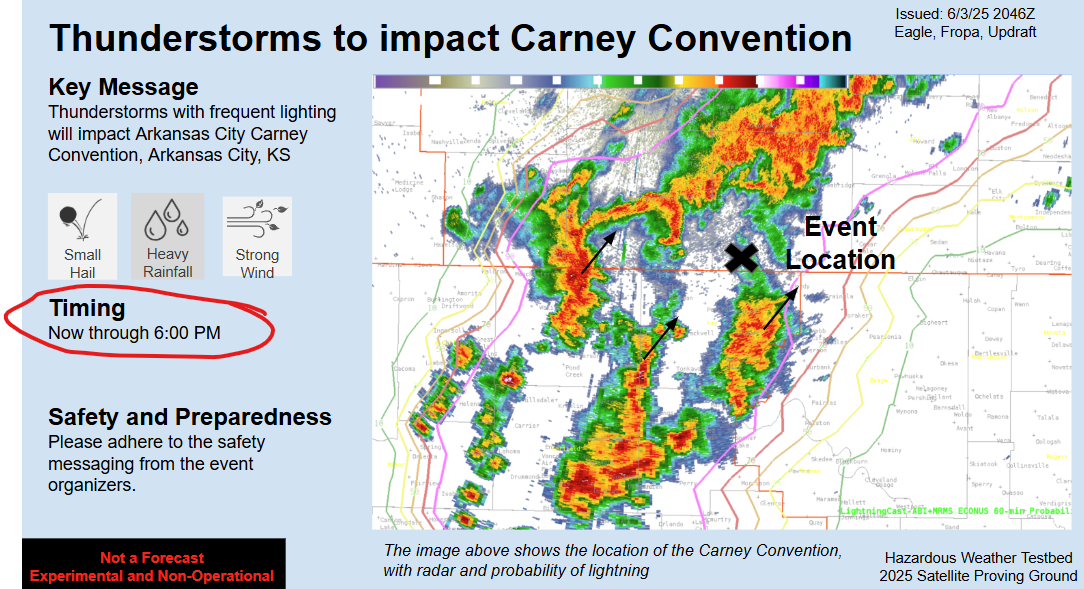
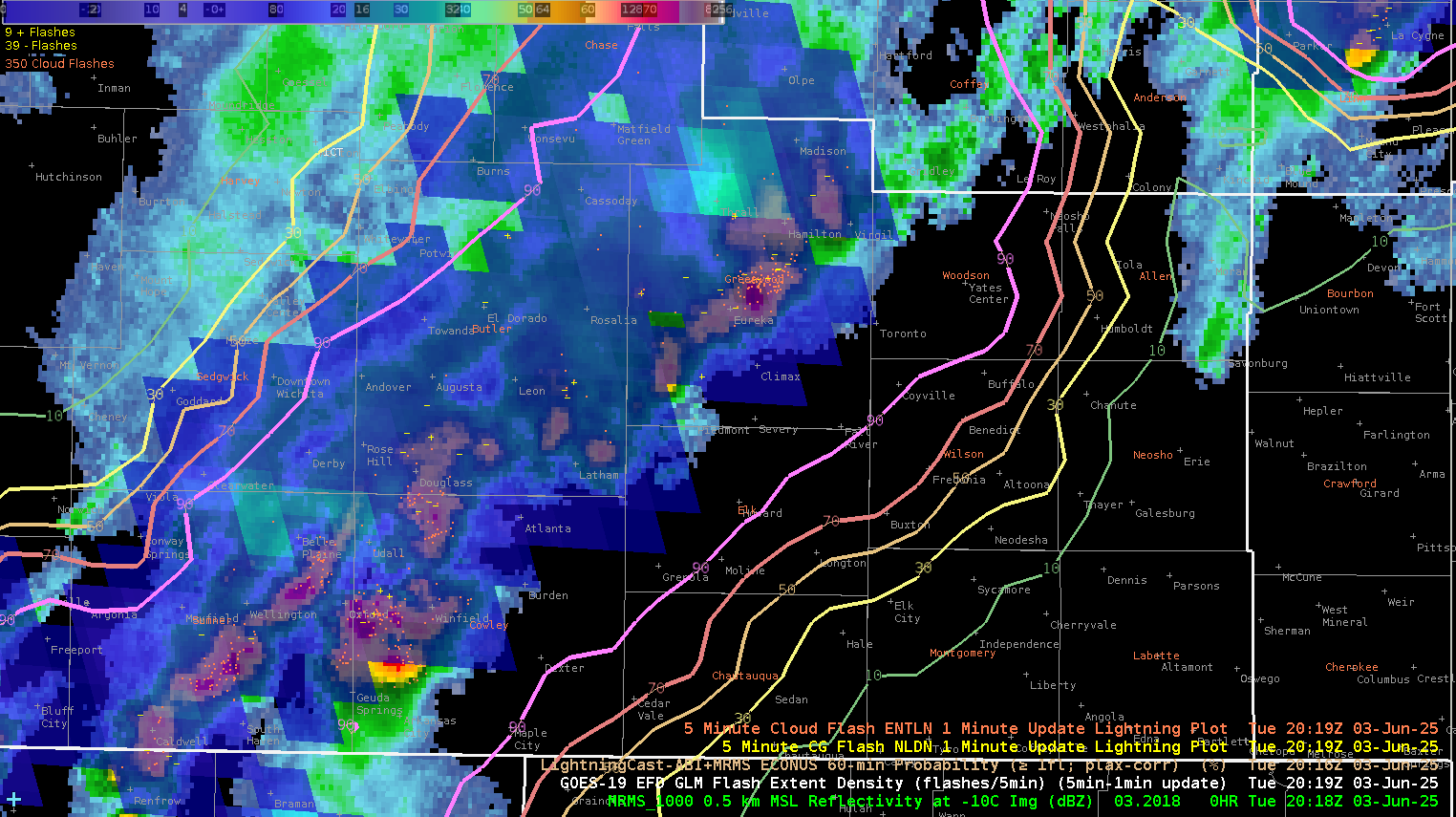
LightningCast seems to be doing its job quite well as it honed in on a small area in southeast KS with ample lead time (2042Z with more strikes appearing at 2056Z west of Jasper). This would be extremely useful for event deployments and getting ample lead time for our partners as seen below.

Regarding GREMLIN, it does a spectacular job identifying CI along boundaries (in this case, the dryline), somewhat ahead of time compared to MRMS reflectivity.

In this case, it appears to have picked up on more robust CI well ahead of time in TOP’s area. However, it does not appear to be super consistent later on with really capturing how robust some of these cells ended up later on, likely due to overall resolution of the product as well as lightning activity as these cells matured.

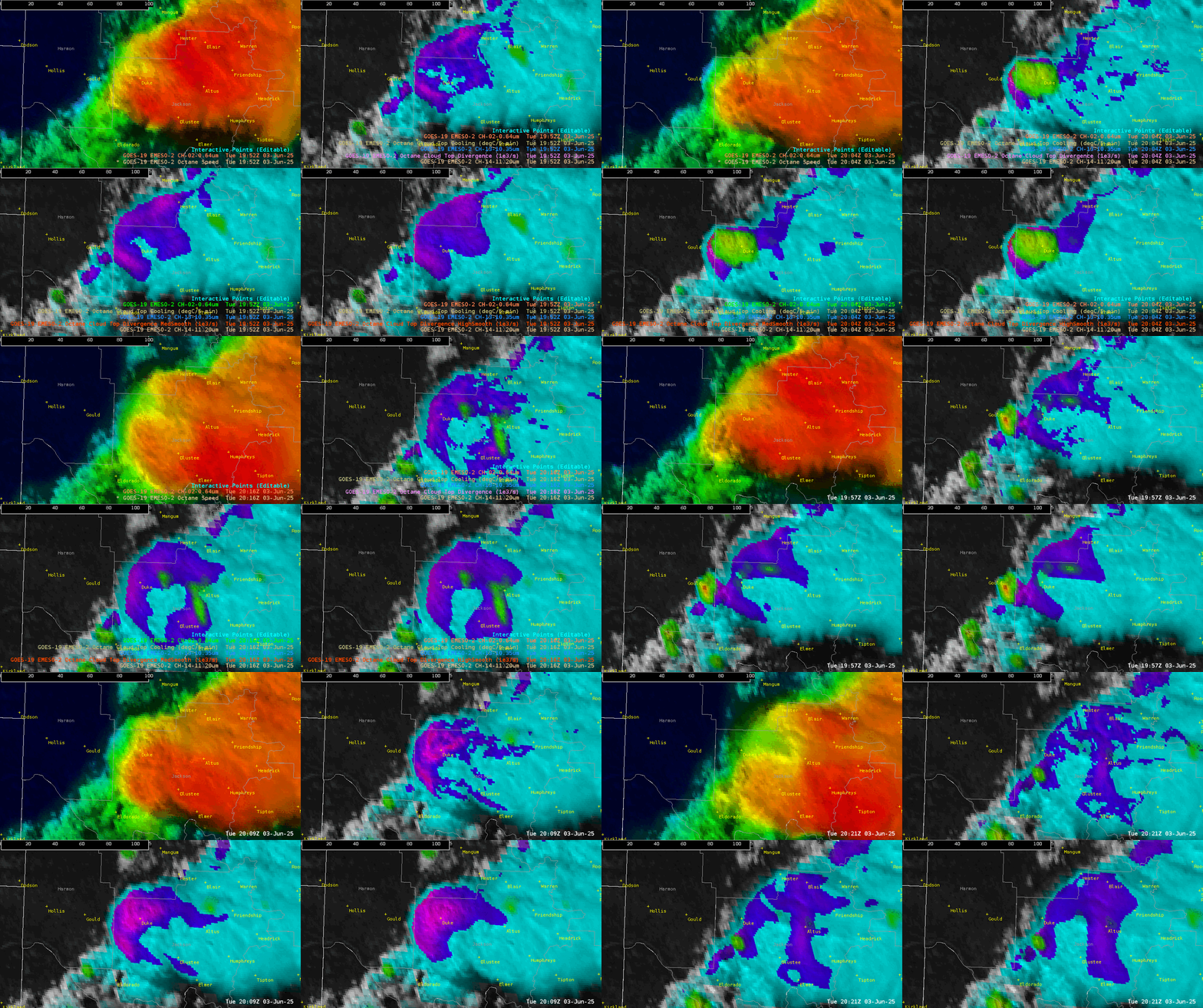
Lastly, regarding OCTANE, it did a great job on picking up a cell with ample cooling initially (reds and yellows) followed by strong divergence aloft (purples and pinks). This storm would go on to further intensify down the road.

This cluster of storms would then go on to produce multiple 60mph+ severe gusts.=

– Ryan Cooper

Tags: None