SUMMARY:
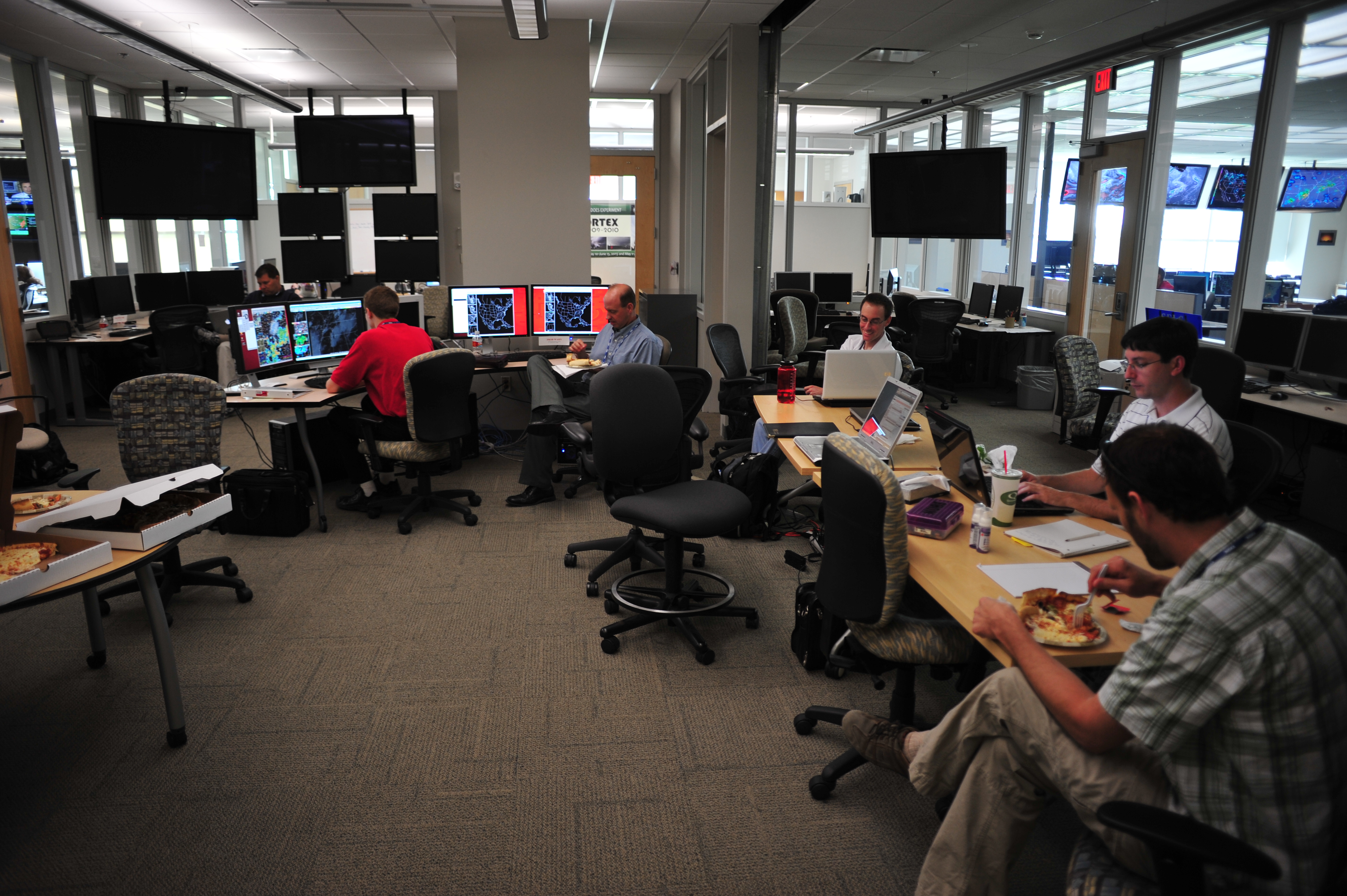
Week #8 of EWP2010 wrapped up the first week of MRMS and GOES-R experimentation. We spent a lot of time in the High Plains this week, however we were able to get one event over the Alabama Lightning Mapping Array. During this week, NSSL and the GOES-R program hosted the following National Weather Service participants: Frank Alsheimer (WFO Charleston, SC), Dan Darbe (WFO Atlanta/Peachtree City, GA), Daniel Nietfeld (WFO Omaha, NE), Pat Spoden (WFO Paducah, KY), and Andy Taylor (Norman, OK).
REAL-TIME EVENT OVERVIEW:
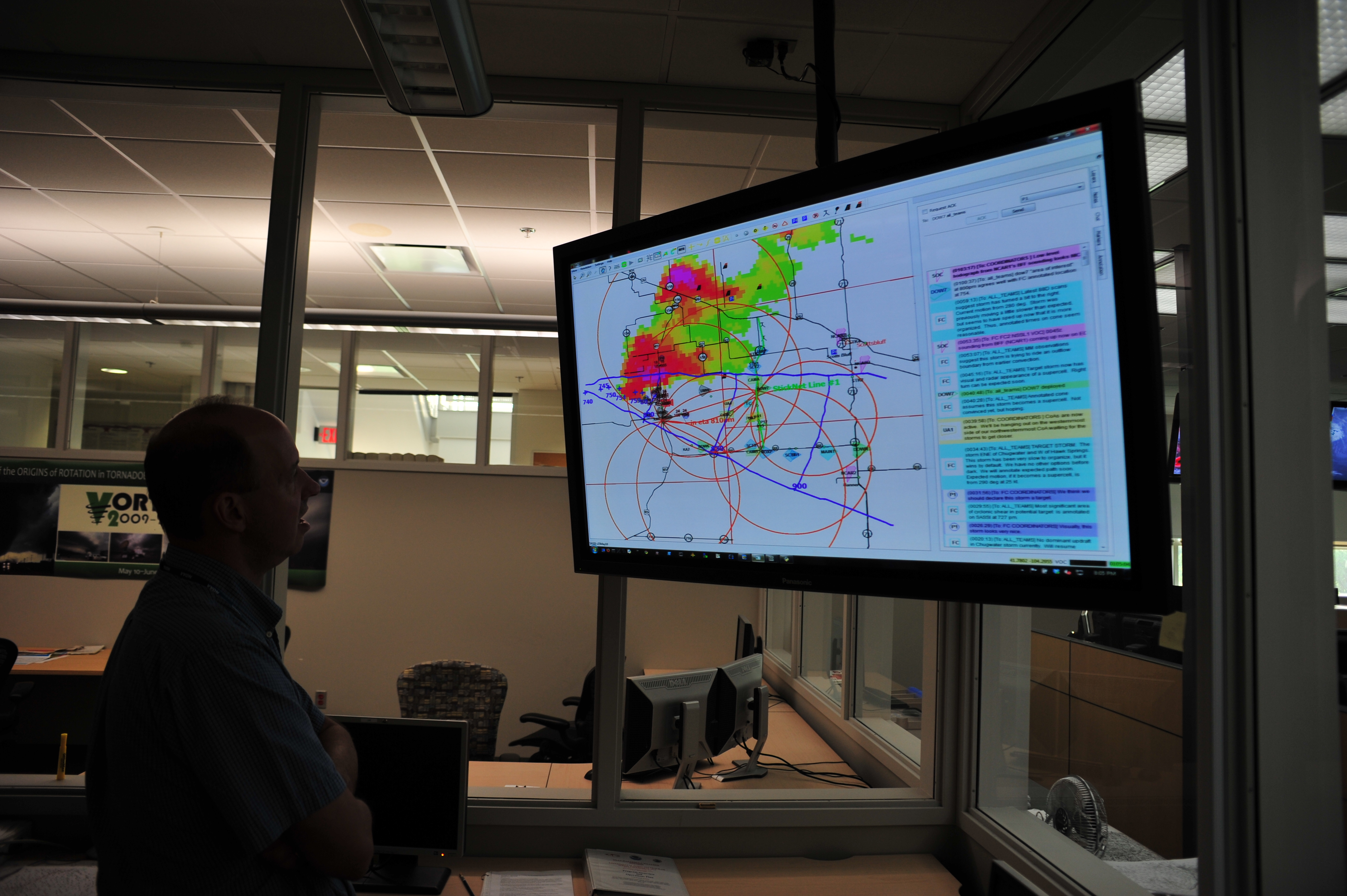
7 June: Evening “practice” IOP for southeast Wyoming and western Nebraska, including Scottsbluff tornado that V2 was on.
8 June: All day IOP over Kansas.
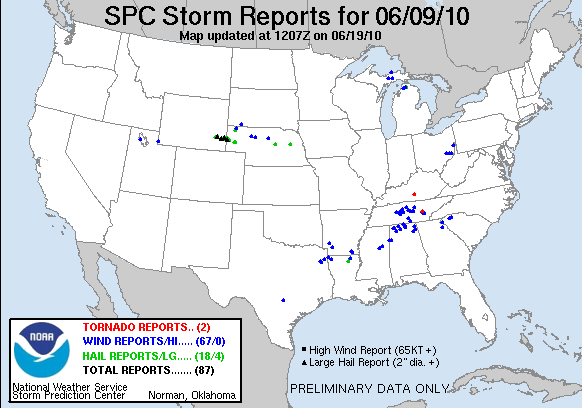
9 June: IOP for the Northern Alabama Lightning Mapping Array area today.
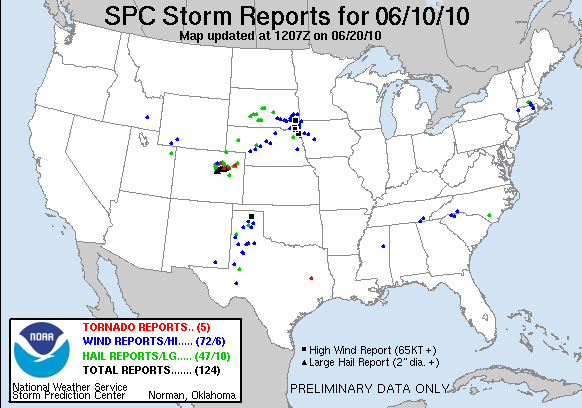
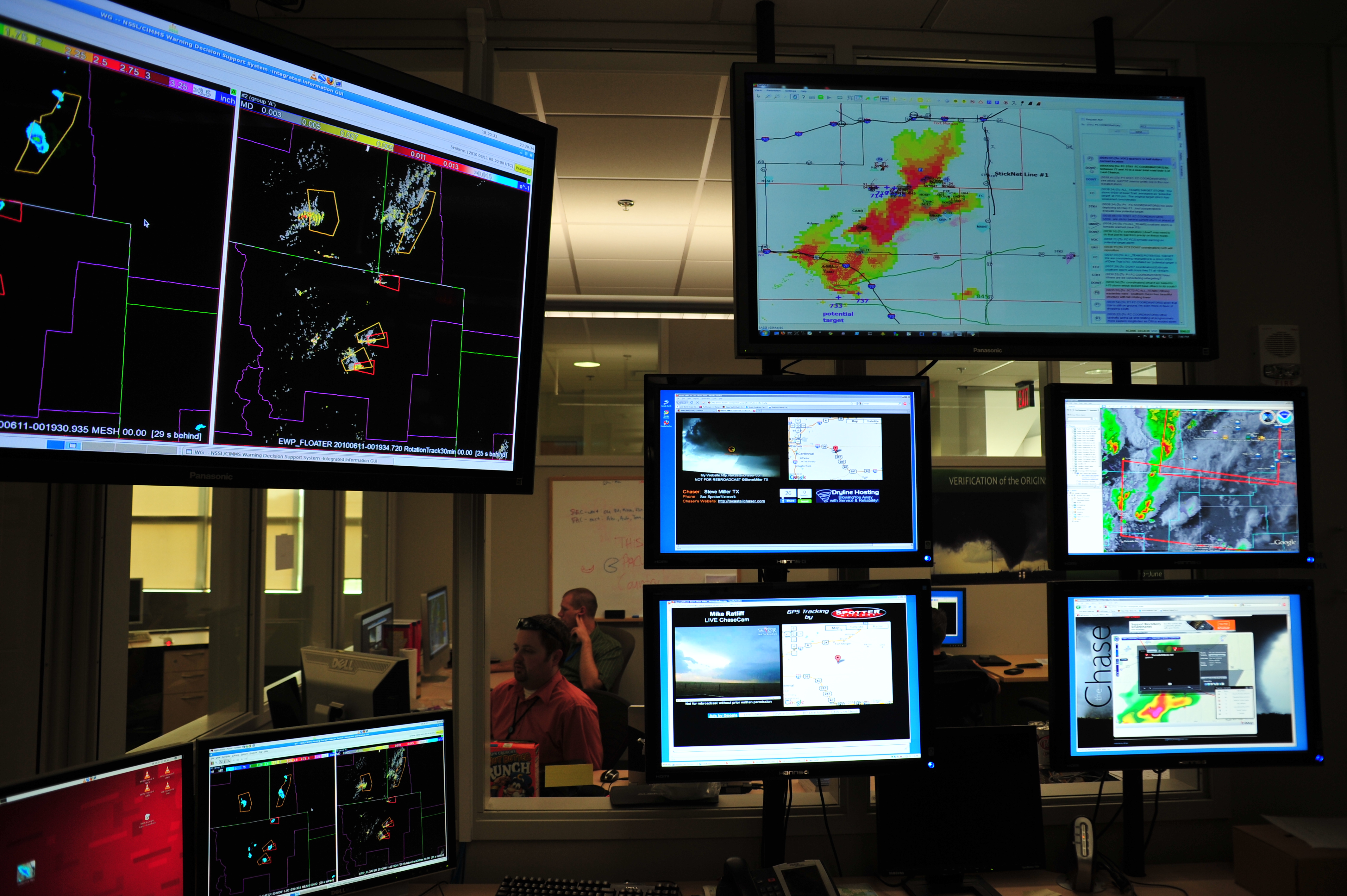
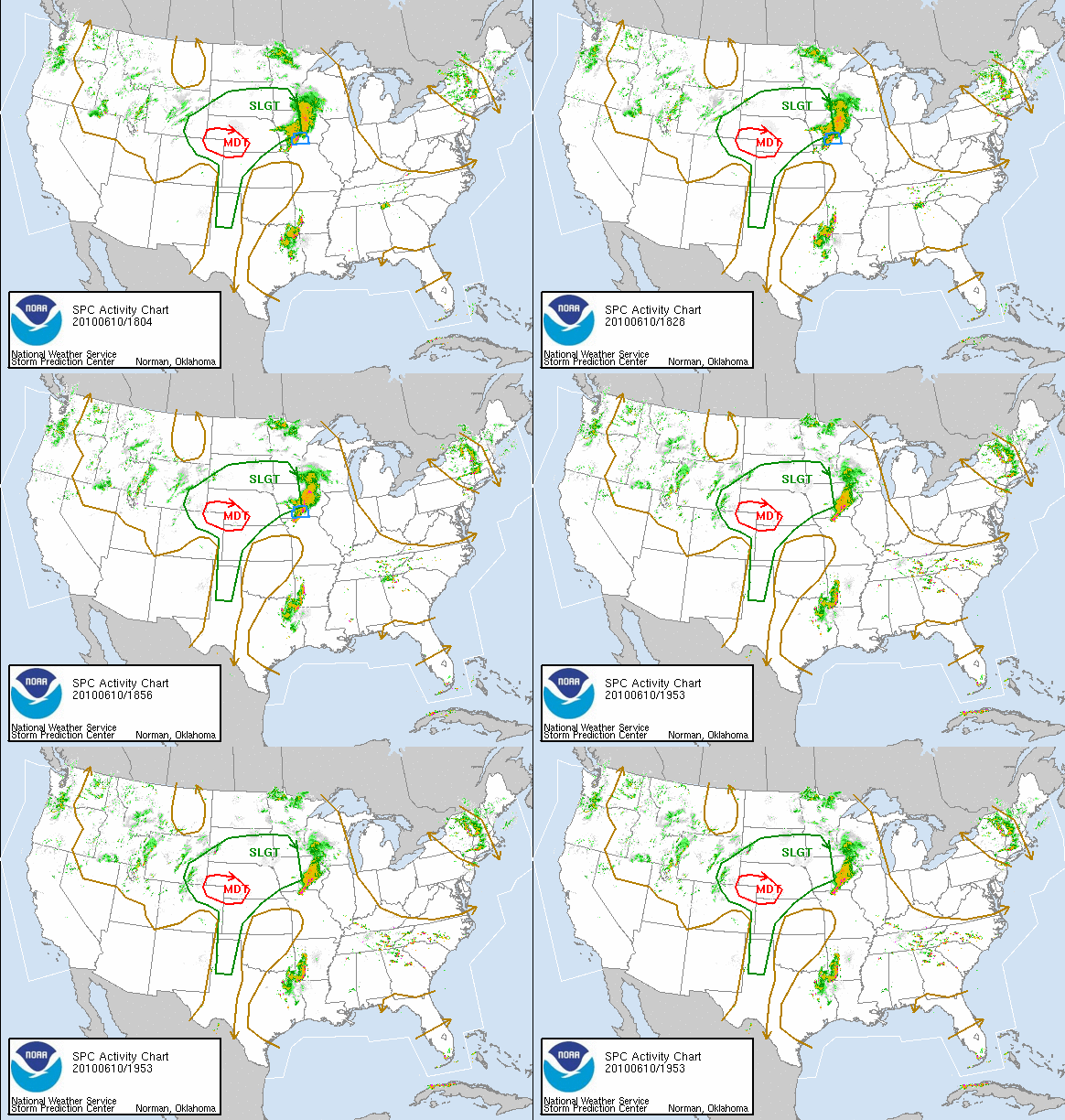
10 June: Front Range IOP today, including a tornadic supercell near Deer Trail Colorado that V2 was on.
MRMS:
One forecaster felt that the MRMS products helped add confidence to his decision making, but there was not enough time during the one week period to warm up to them. However, another forecaster felt the rapid updates and multi-radar nature helped with quick identification of the severe storms, and then sparse grid products made the big cores really stand out from the rest.
As the week wore on, they became more comfortable with the MRMS products, and started to hone in on the specific products that worked best for their decision making. They wanted to note that on the first few days, they weren’t as concerned about getting the warnings out sooner than the official warnings, knowing that there was no risk in a late warning. [NOTE: We’ll need to take that into account, hence why we’re doing some of the day-of-the-week composites in our analysis.]
They noted that there were big benefits that these were multiple-radar products. They spent less time having to do an all-tilts analysis on all storms from each radar sensing the storm, or choosing the “correct” radar.
One forecaster commented that he was a firm believer in using MESH or another sparse grid designed for hail diagnosis to really narrow down the hail threat and make the polygons slimmer to avoid overwarning.
The rotation tracks really helped hone in on which storms to watch for tornado warnings.
Suggested improvements: Add height information to the isothermal reflectivity products (could do multi-parameter sampling); an on-demand MRMS system where forecasters could create their own products (e.g., Reflectivity at -12 degC for winter precip) would be very beneficial.
GOES-R:
All agreed that cirrus presents major problems for the Convective Initiation (CI) product. They also mentioned that the CI products do best in the first 10-15 minutes of an event. Once warnings are starting to be issued, it was rarely looked at again. CI would be useful on pre-dawn low-level jet warm advection situations to determine location of first convection, but that there needs to be some kind of alarm/trigger to notify the forecasters who might not be paying close attention. A nighttime WES archive case was suggested for future experiments. These forecasters also commented that there are too few CI detections, and wouldn’t mind lowering thresholds and adding uncertainty to get more detections. There were concerns that CI, OT, and TC are too sparse sometimes to see, and better alerting/icons would help. But some others abhor the bells and whistles of SCAN and GUARDIAN, and would want another way to alert. Also, there might be need for separate day and night CI products.
Forecasters felt that the OT products were not needed when you can see them in the visible data, but it certainly adds more confidence about the storm being severe.
Regarding the PGLM products, suggestions included a cell table concept to plot trends, adding a lightning jump algorithm, a wintertime total lightning app, combining lightning data with other sensors, and rate of change products. A discussion also ensued regarding short-term lightning threat products, or advisories for frequent cloud-to-ground lightning.
There are more details on the GOES-R HWT Blog Weekly Summary.
OVERALL COMMENTS:
Some comments echoed by former participants, including pre-made default AWIPS procedures (don’t like using others’ procedures), and fixing the MRMS loading issues with better hardware. It was noted that the recommended hotel (Country Garden Inns & Suites) has taken a major turn for the worse this year and should no longer be used. Not only did our software have bugs….
A LOOK AHEAD:
Next week will wrap up the 2010 spring experiment. The pattern looks favorable for continued severe weather, mainly shifting into the Northern Plains by the end of the week.
Greg Stumpf, EWP2010 Operations Coordinator