Increasing GLM activity in a dying storm

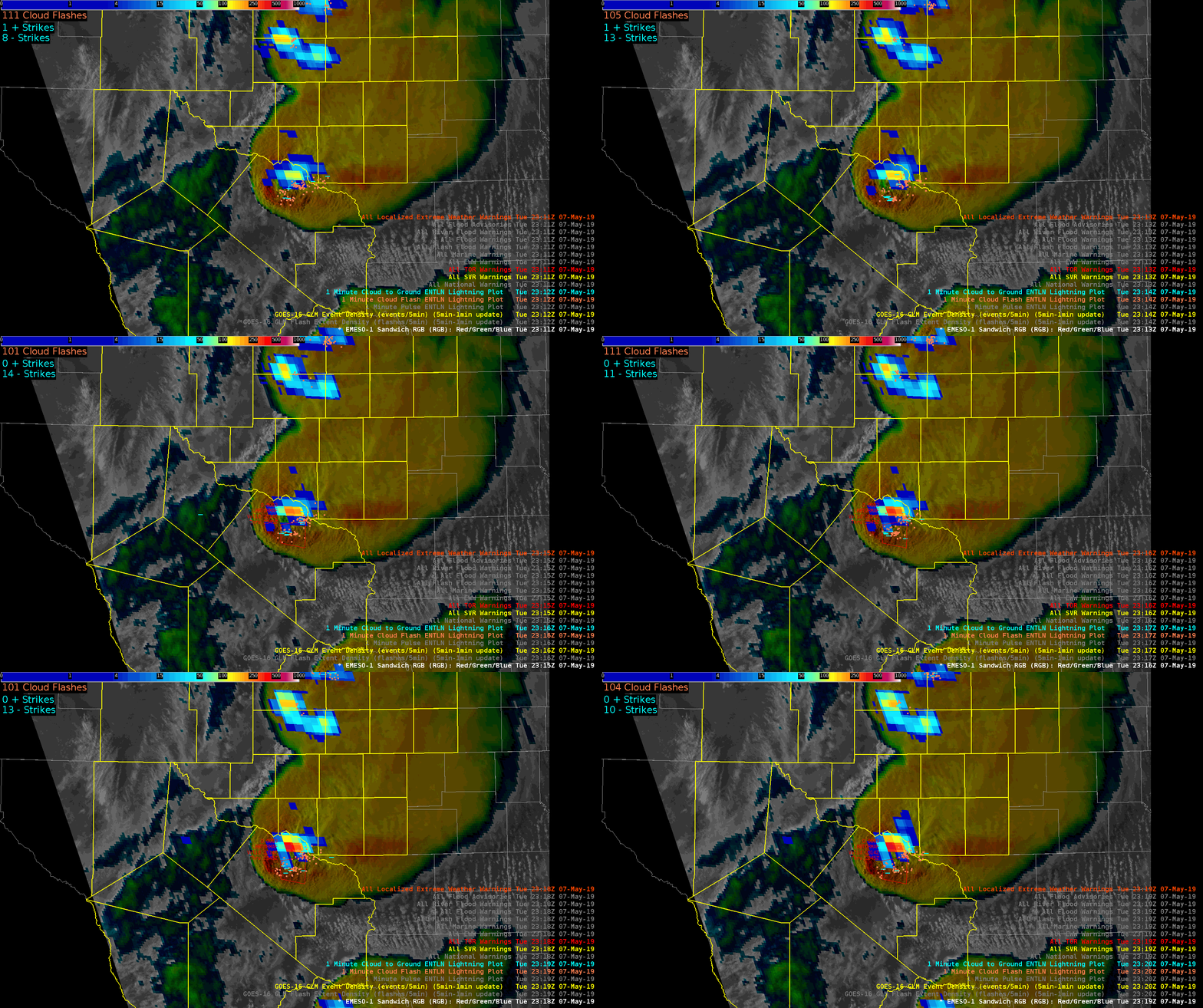
At 2330Z, GLM began picking up a signal of increased lightning activity with a storm moving into the LUB CWA. At the time the core was strong with a spike in value in the MRMS VII product, though real-time radar had started to show a weakening storm. (Left panel shows GLM Event Density)

10 minutes later, at 2340 UTC, the storm was deteriorating, yet GLM Event Density continued to increase in this area while ENTLN Total lightning data was decreasing.

After another 10 minutes, at 2350Z, GLM lightning activity continues to breanch eastward despite little reflectivity aloft and ELTLN lightning continuing to decrease in the area.

Finally, at 2352Z, 2 minutes later there’s a rapid decrease in the lightning activity on GLM in the easternmost storm. The Event Density data was the 5min-1min update, and it looked like 1 minutes worth of data was the result of the eastern extension.

#ProtectAndDissipate
Not issuing SVR because of ProbSevere performance

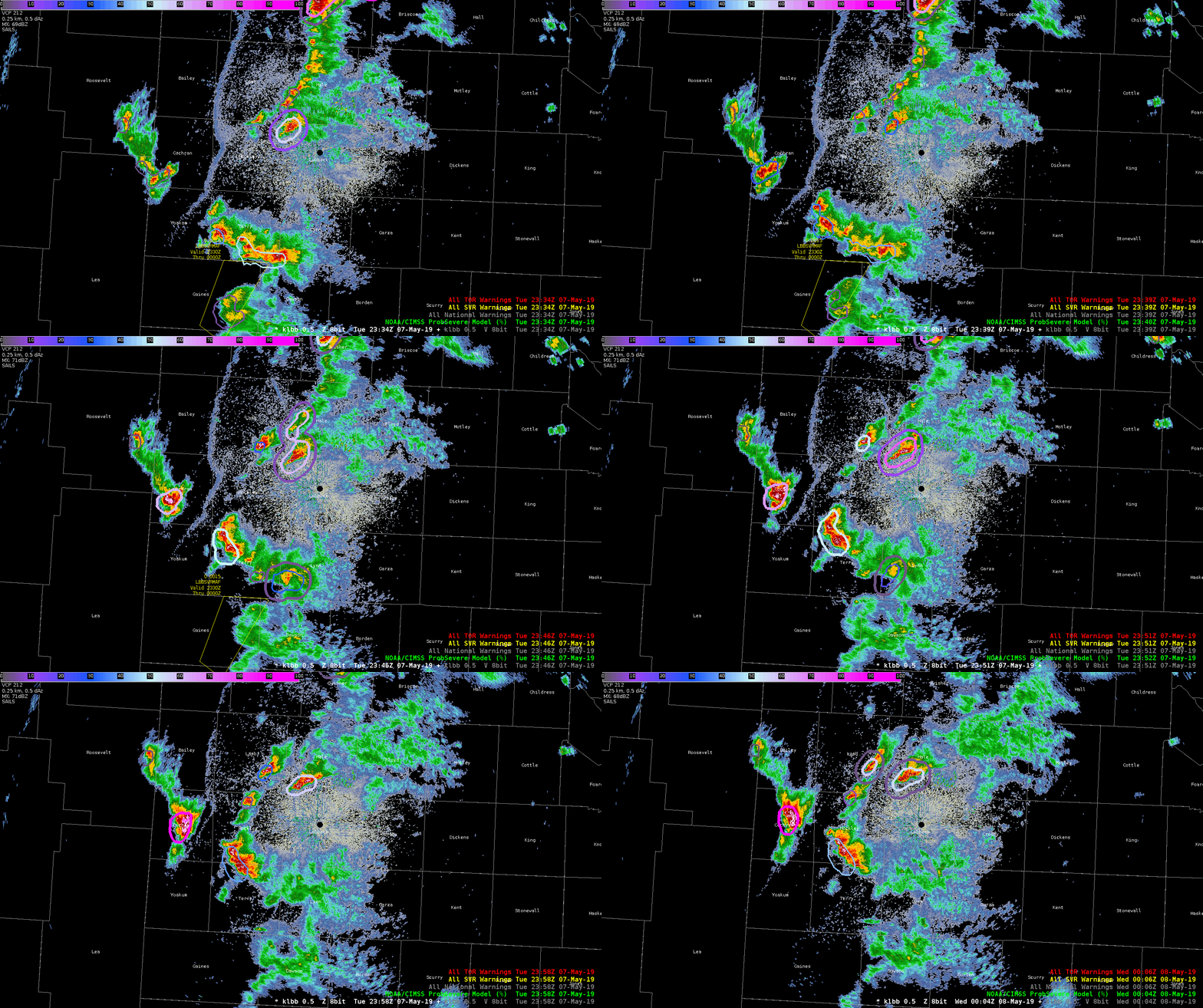
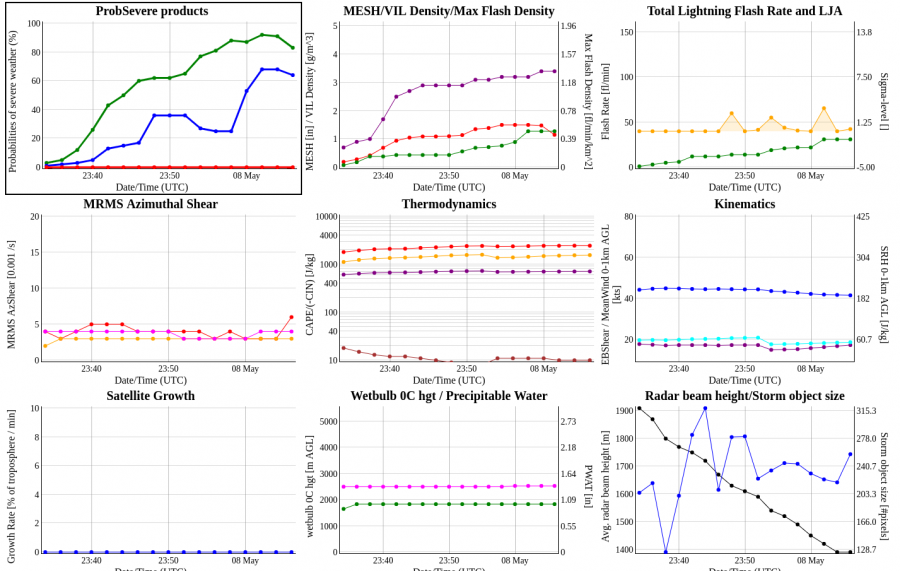
I’m pretty confident that a few of these cells given core heights and storm environment probably have real world warnings on them at the moment, but I’m holding off due to the performance of prob severe hail and tor through the day today. We’ll see….Particularly the northern storm in the CWA as it is more discreet than the storms near Lake Meredith.

-icafunnel

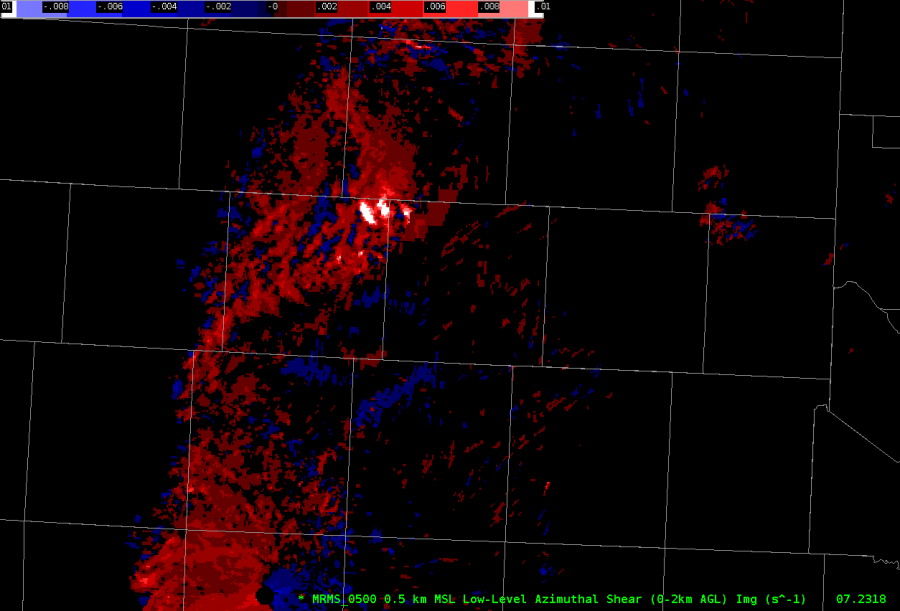
Low-level AZ Shear continues to do well

The Low-level AzShear Product continues to do well, increasing significantly in areas where tornadoes were reported, and showing value in areas where looking at Doppler Velocity alone may not show the best picture of the vorticity within the storm (which was pretty messy at this time). However, some limitations I was seeing was 1) latency issues with short-lived circulations which I would hope the single-radar product would mitigate and 2) possibly due to SAILS cuts, the same features are often captured multiple times in the same image (i.e. vorticity along gust fronts and low-level rotations).

#ProtectAndDissipate

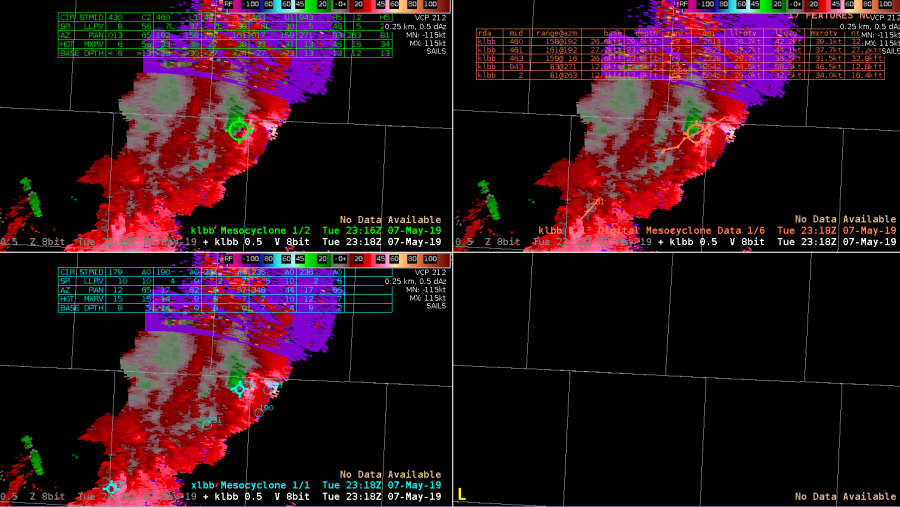
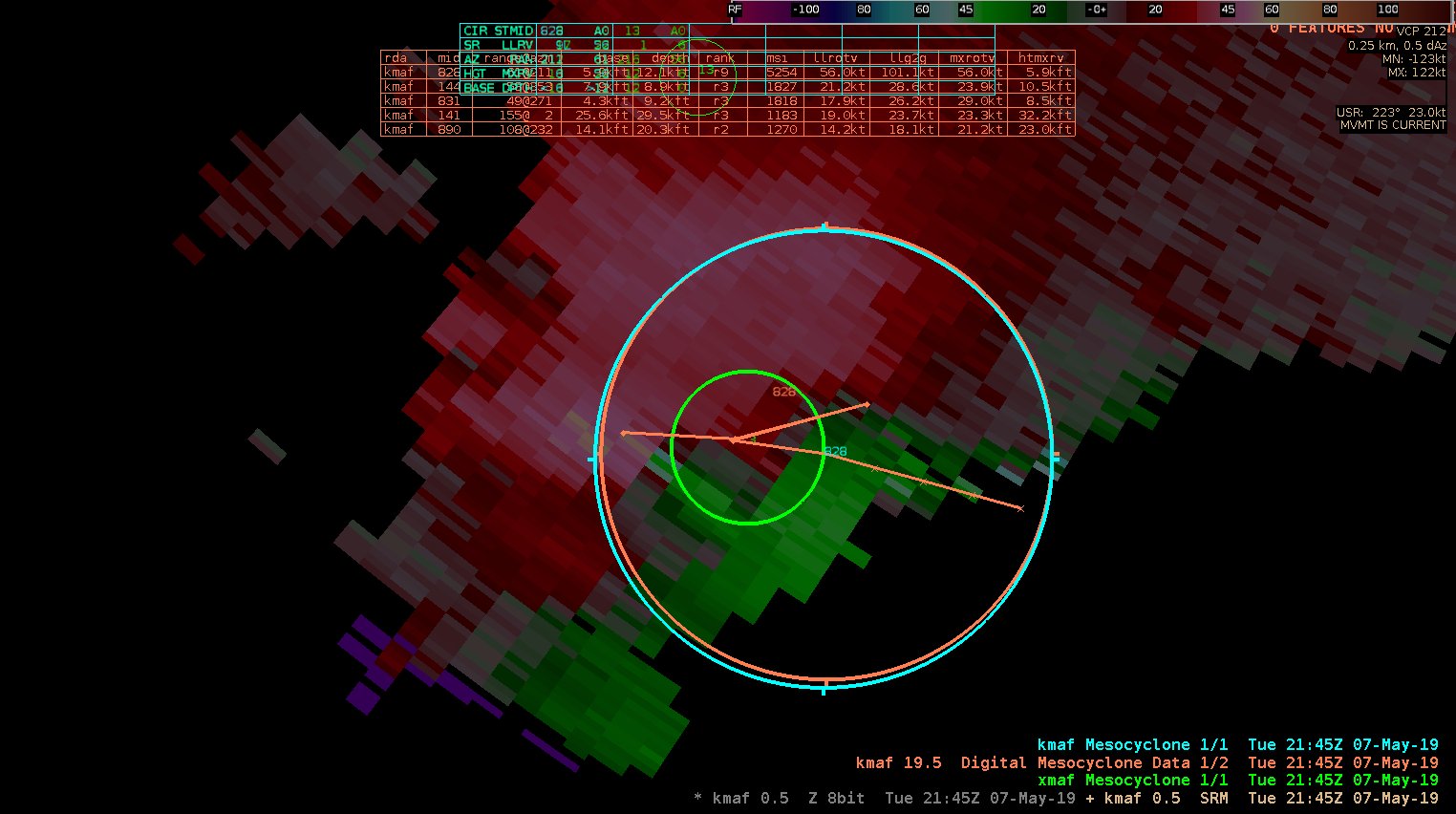
NMDA vs MDA vs DMD

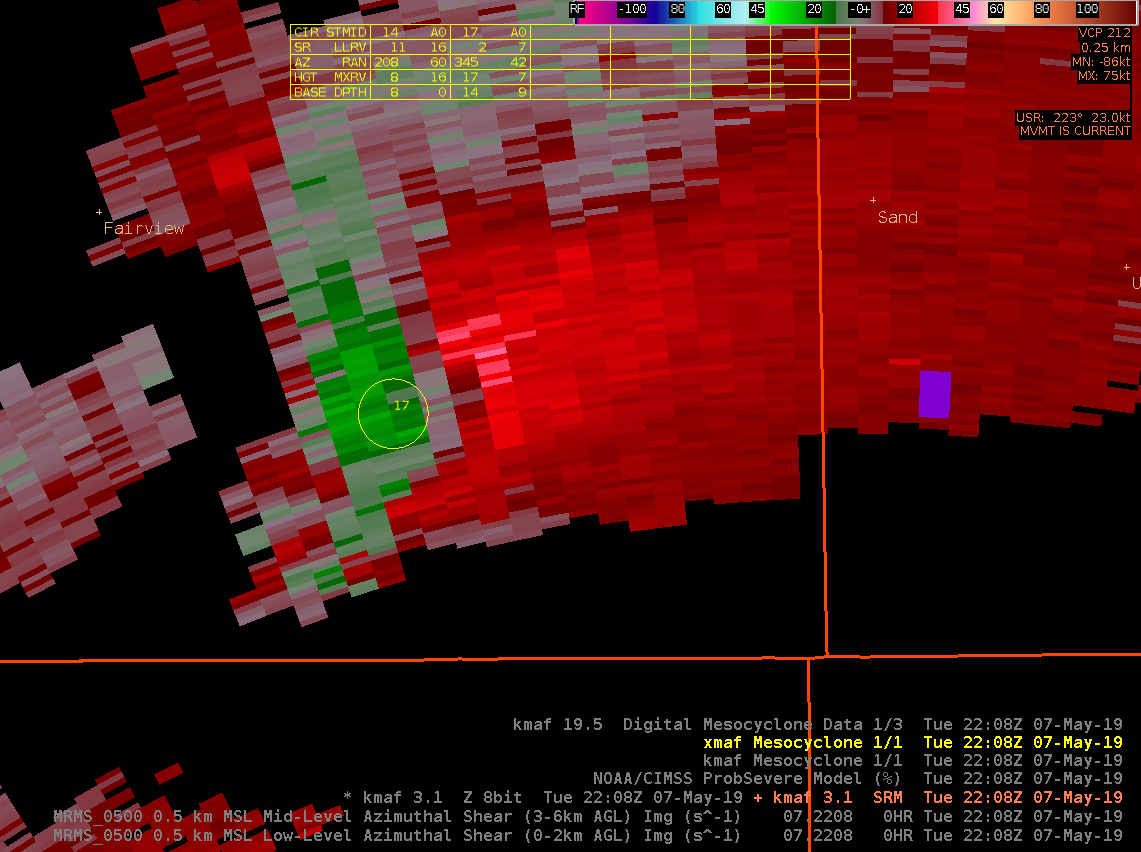
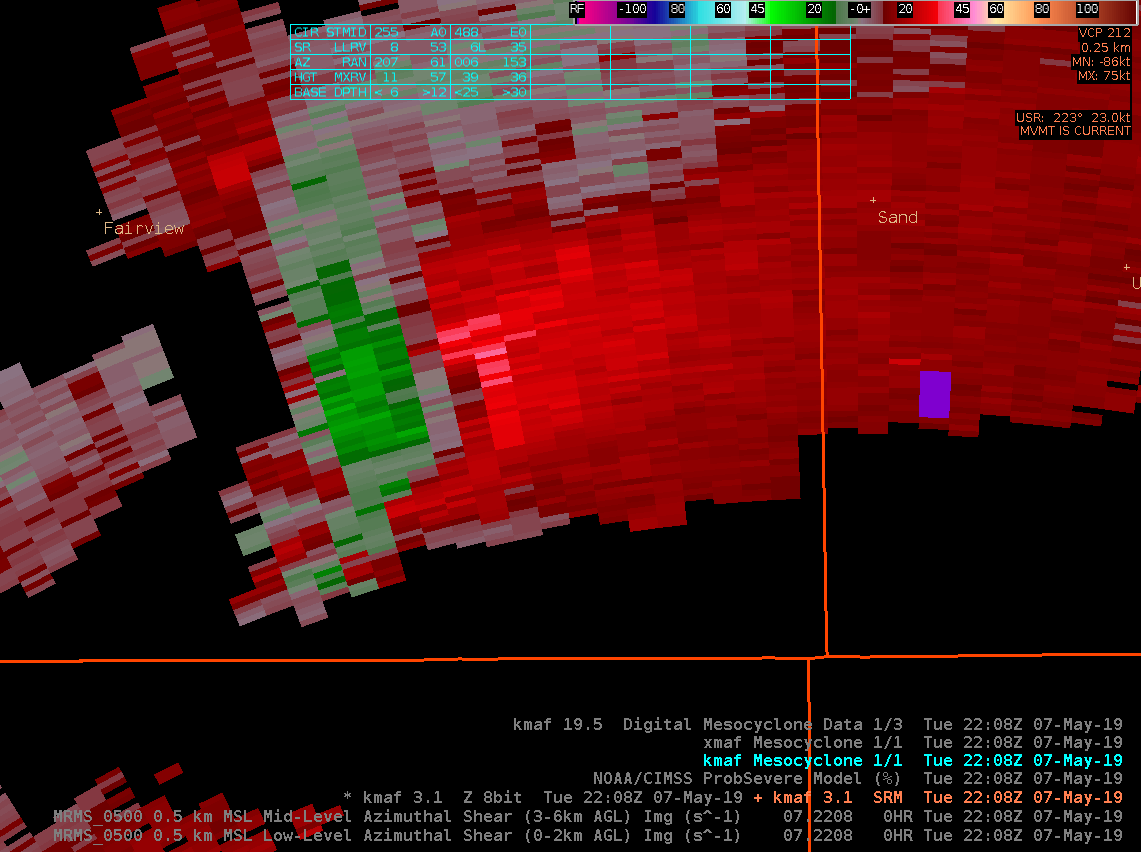
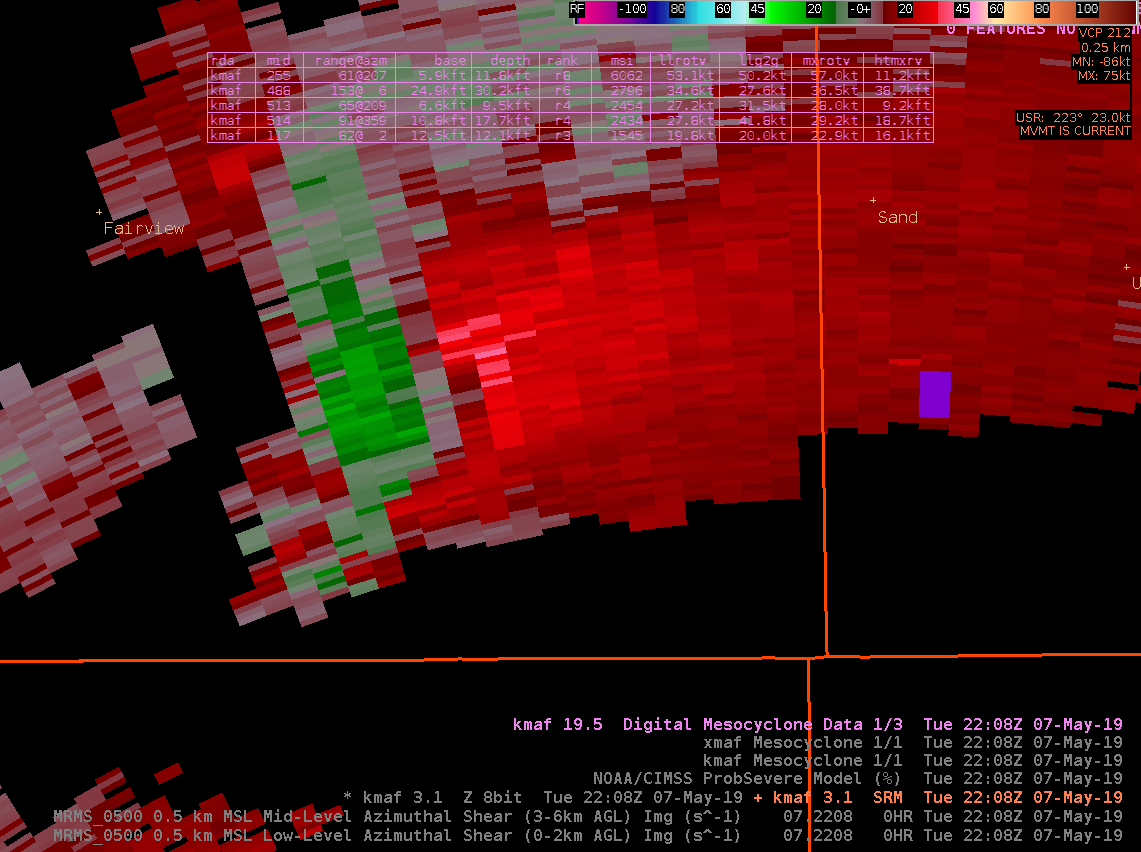
Not gonna lie, it took a while to digest what was being displayed by the various meso detection algorithms since we don’t get a lot of meso in the Pac NW. However, here is an example when NMDA picked up on broad mid-level rotation while the MDA and DMD didn’t for a storm in the northern portions of MAF’s CWA. (Also displayed is SRM around 17,000 ft from KMAF)

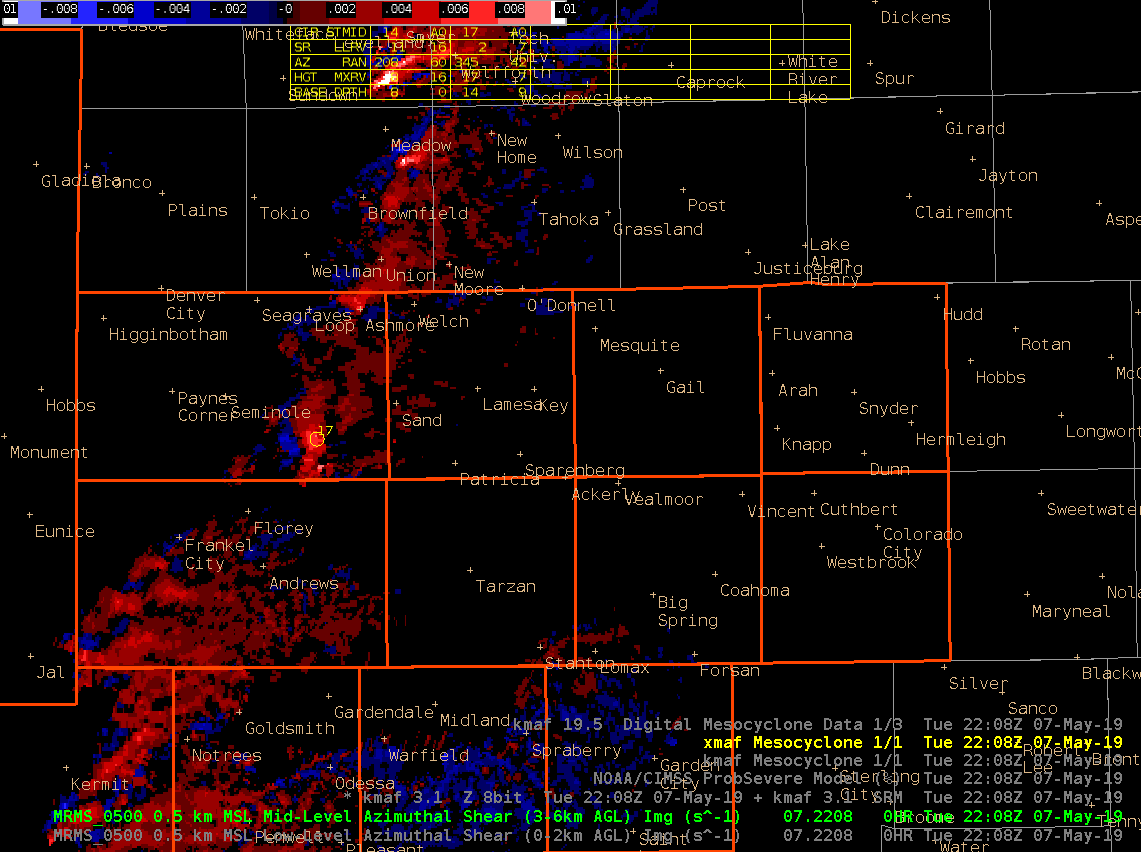
For good measure, here is a look of the 3-6km Merged AzShear.