CI GOES-W vs E again

CIwest2030 GoesEast_CI_2030zThis is another example of GOES E vs W seeing CI. In this case, GOES-W showed a fairly large area of 79% while goes east showed little if anything. These clouds did end up developing into echoes well over 35 dBz within 30 minutes after these images were taken.

jca

Tags: None

Pseudo Lightning Data

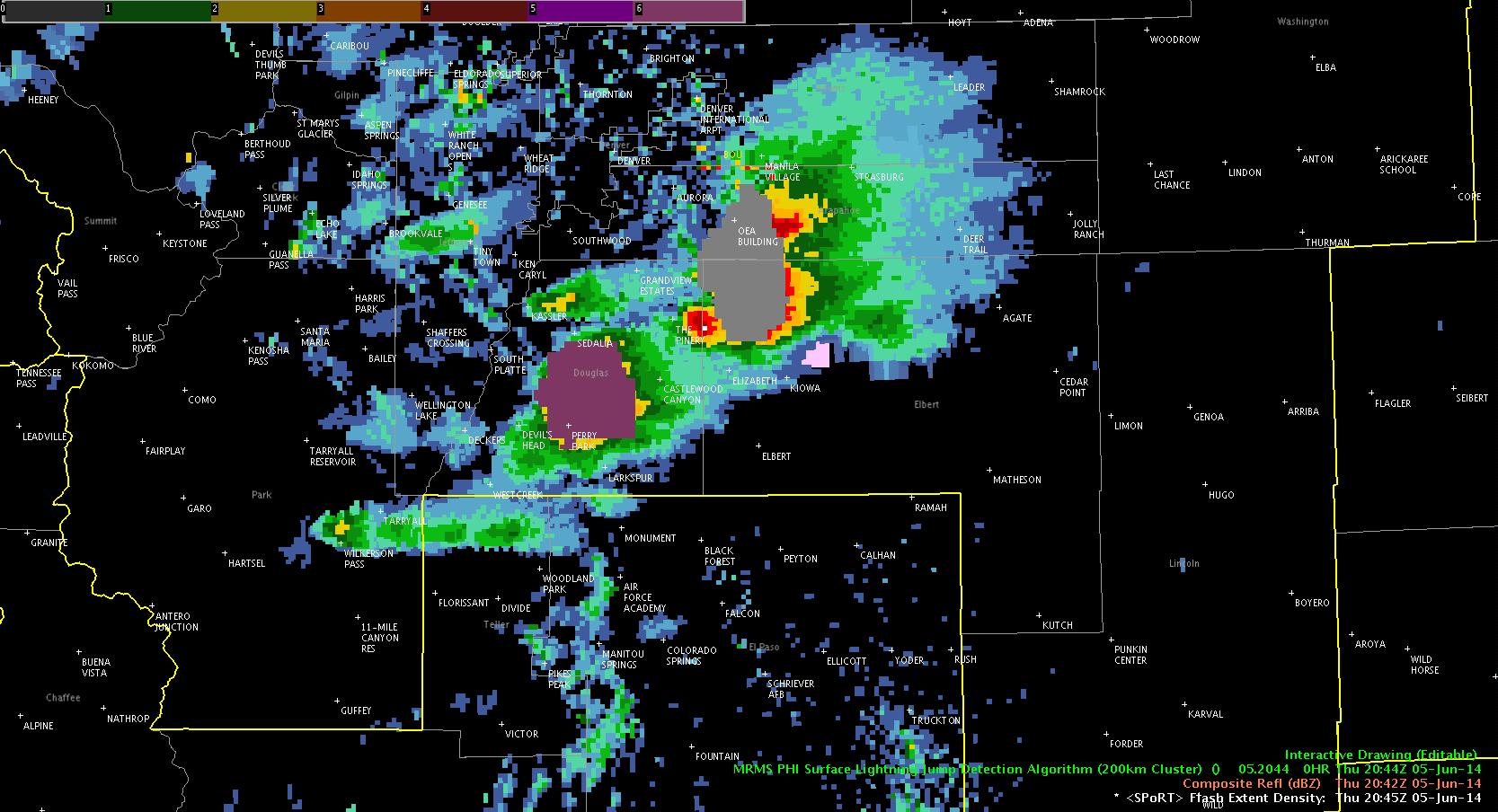
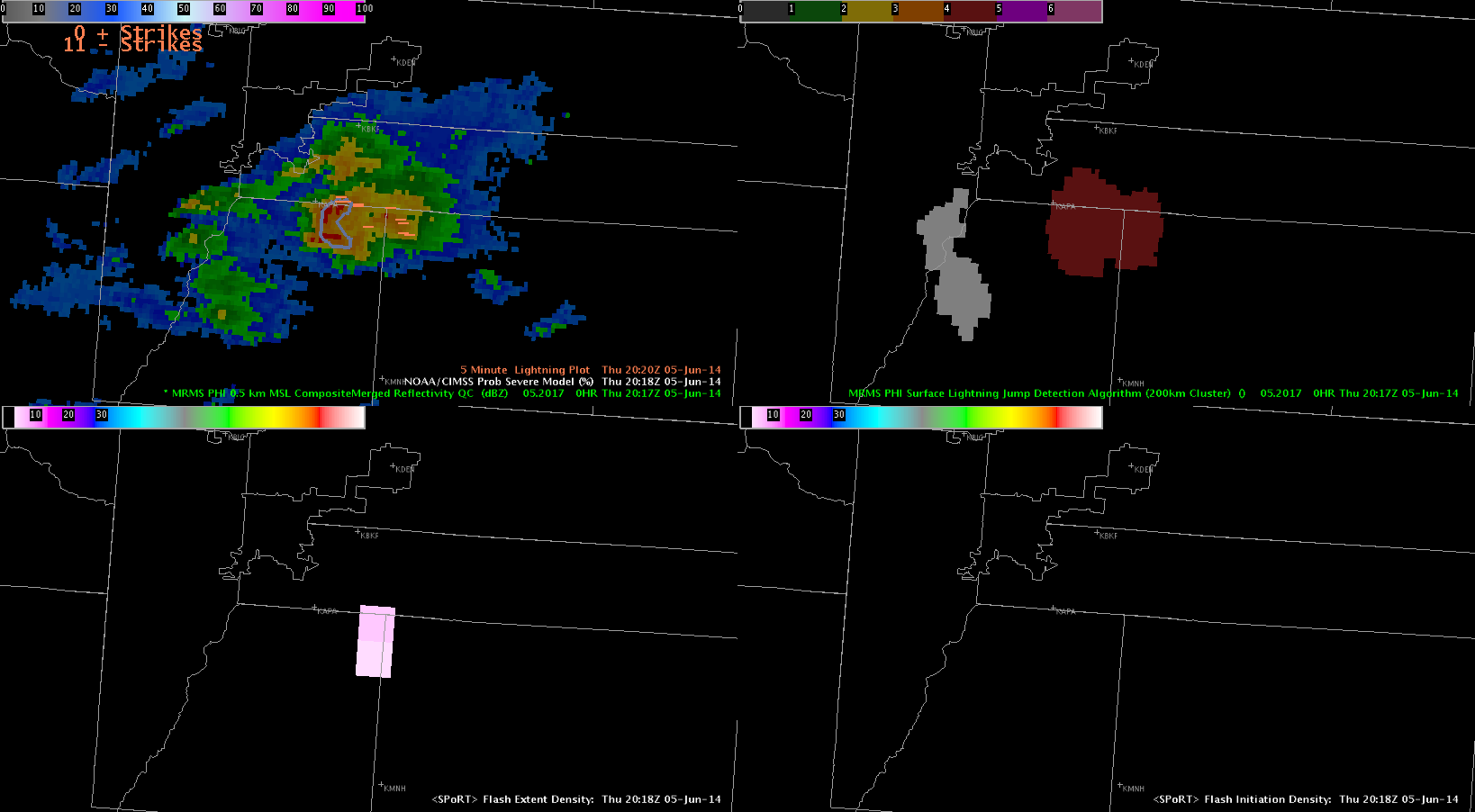
Today was the first day I had a chance to examine the pseudo lightning data.  We were watching storms just to the south of Denver.  The first lightning jump we saw occurred at 2017Z and jumped 4SD.  Still learning exactly how to use this – but was expecting an increase in storm intensity afterwards (based on the training) and this did occur.  ProbSevere gradually trended up as well – and using a combination of ProbSevere and the lightning jump data – issued a SVR at 2050Z.  Did not really examine the base radar data until after this – and based on dual-pol radar data – there was definitely hail falling by 2055 or 2100.

LightningJump_BOU

Thus – I considered the lightning data valuable.  It is another tool assess future storm intensity – i.e. which storm do I need to pay attention to.


Fowle


Tags: None

EWP Operations Update – Thursday 6/5 – 2:45 pm

Today, we started operations in the Boulder and Pueblo CWAs, anticipating the development of severe storms in upslope flow in the lee of the Rockies.  Our hope is to have the Boulder group (Anderson and Fowle) monitor the Colorado lightning mapping array during the event.

Given the paucity of cumulus clouds in the Pueblo CWA, we believe that convective initiation will hold off until later.  Also, lightning activity is increasing in the Huntsville lightning mapping array as an MCS approaches from the west-northwest.  Thus, we have decided to re-localize the Pueblo group (Pelczynksi and Satterfield) to Hunstville.

-G. Garfield

Week 4 Coordinator

Tags: None

CI GOES E vs GOES W

CIwest CIeastTaking a look at the highlighted areas, the top image is from GOES-E showing CI values of 46% in an area that developed into decent convective towers. The bottom image is from GOES-W with the same area showing CI values of 92%. Why such a difference?

jca

Tags: None

NearCast ThetaE Diff

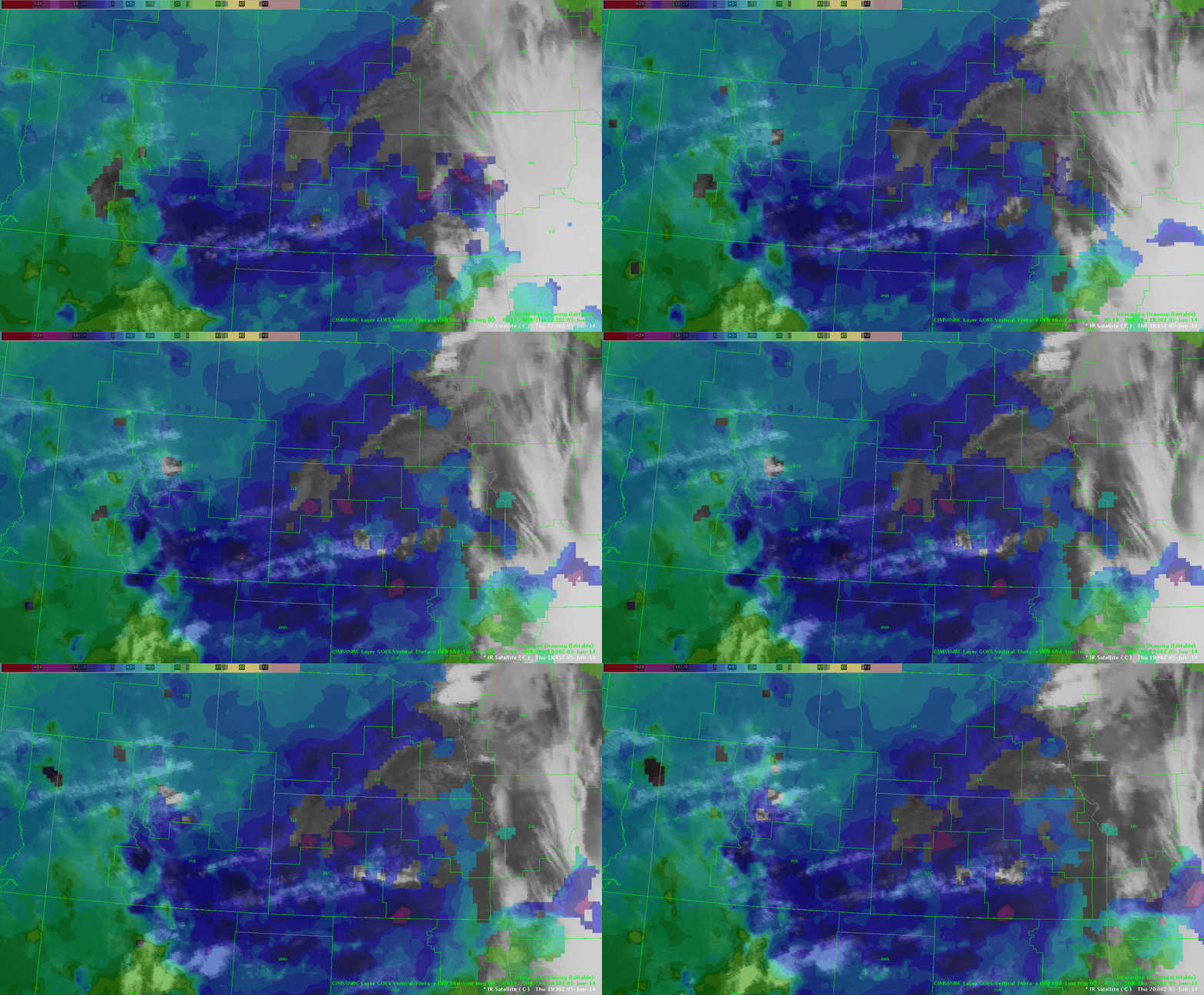
Examined the ThetaE difference at 19z.  From a qualitative perspective – the ThetaE difference is greater over PUB than BOU.  Thus – you would expect it is more unstable over the PUB CWA – and thus more vigorous updrafts.  We shall see how this verifies this afternoon.

ThetaE_Diff_Thu

Tags: None

OUNWRF analysis

Comparing the OUNWRF to the current radar as of 1915Z on Thu shows the model is too slow on initiation since there are already echoes. But, the placement of the echoes as you move ahead in time looks almost spot on. The other issue with the model is that it takes 1.5-2 hrs for radar echoes to develop into a mature supercell. Based on what happened yesterday with a similar environment, it would take no more than an hour for a supercell to evolve.

Tags: None

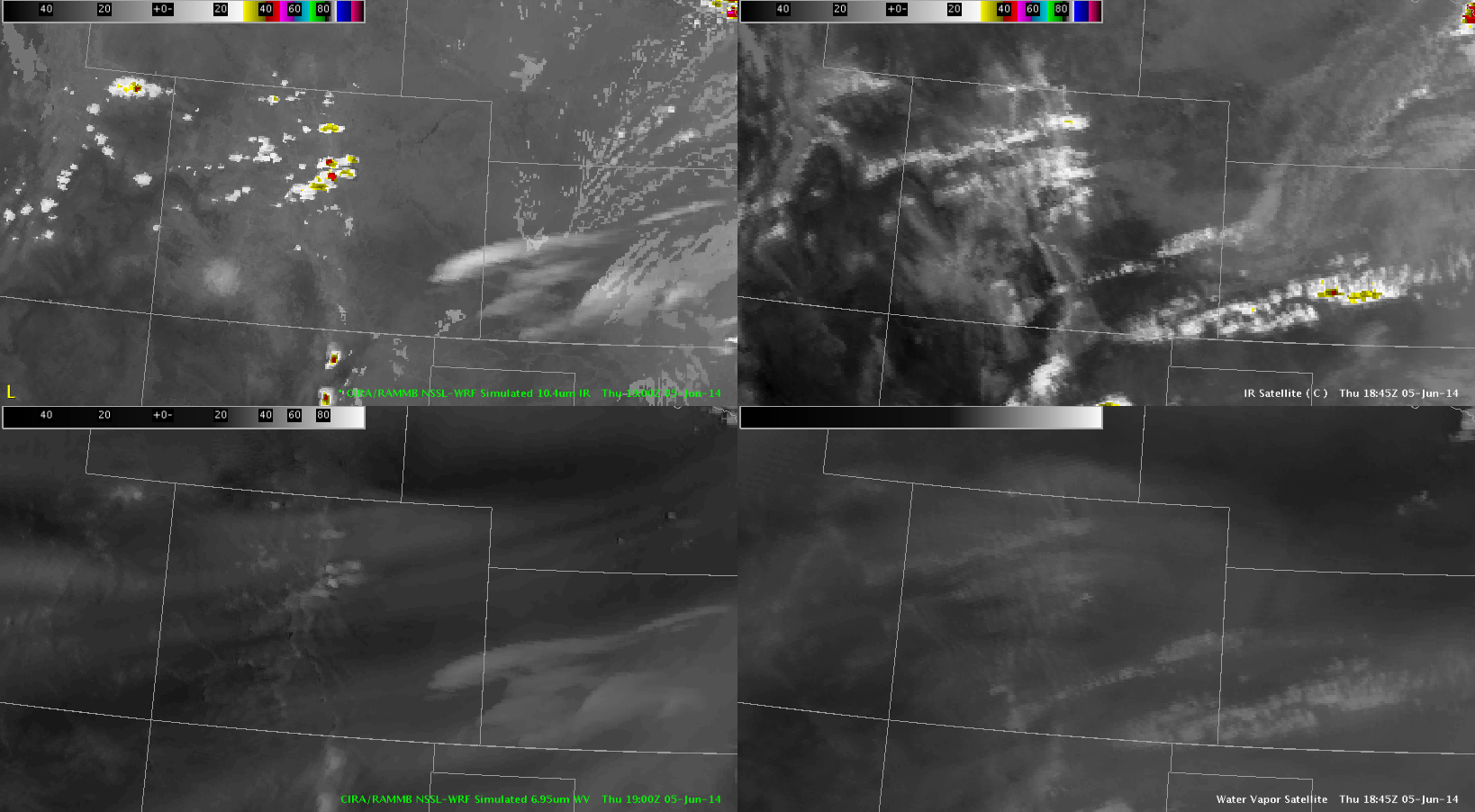
Simulated Satellite – Thursday

Started off the day by examining the Simulated Satellite products.  Overall – they provided a good starting point over CO.  It showed the stratus burning off in eastern CO in about the right time.  Plus – CI initiates around 18-19z which is evident in the actual satellite obs.  Thus – the NSSL WRF should provide an accurate depiction of overall convective evolution.

18z Top – 19z Bottom

SimSat_Thu_18z SimSat-Thu19z

Tags: None