


AzShear has come up a little on a broad scale with that northern cell.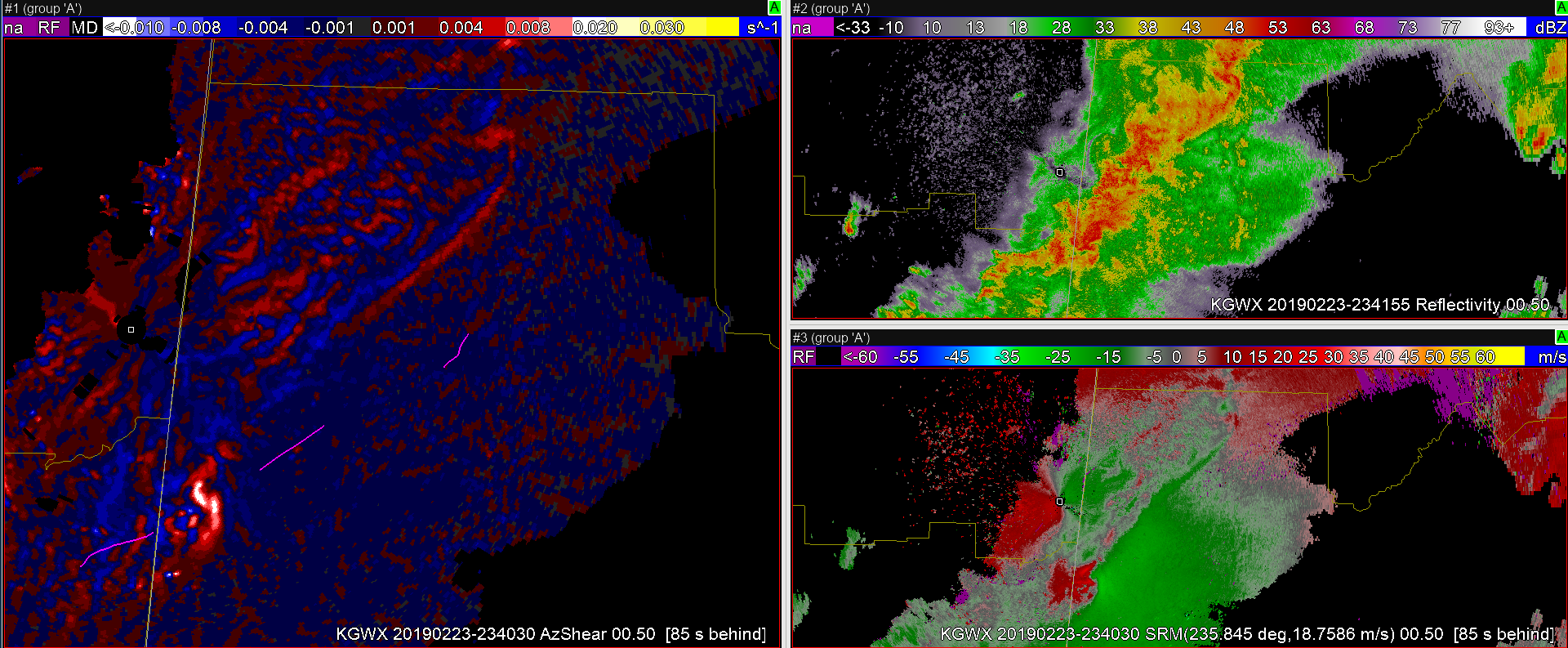
Reflectivity coming down on the south side of that broad circulation…possibly indicating a rear inflow jet pushing into the system.
Charley
Official websites use .gov
A
.gov website belongs to an official government
organization in the United States.
Secure .gov websites use HTTPS
A
lock (
) or https:// means you’ve safely connected to
the .gov website. Share sensitive information only on official,
secure websites.

AzShear has come up a little on a broad scale with that northern cell.
Reflectivity coming down on the south side of that broad circulation…possibly indicating a rear inflow jet pushing into the system.
Charley
AzShear not as high with this cell earlier. Has a similar reflectivity nub to maximize that 0-3 km shear from the southwest. Will have to watch that area.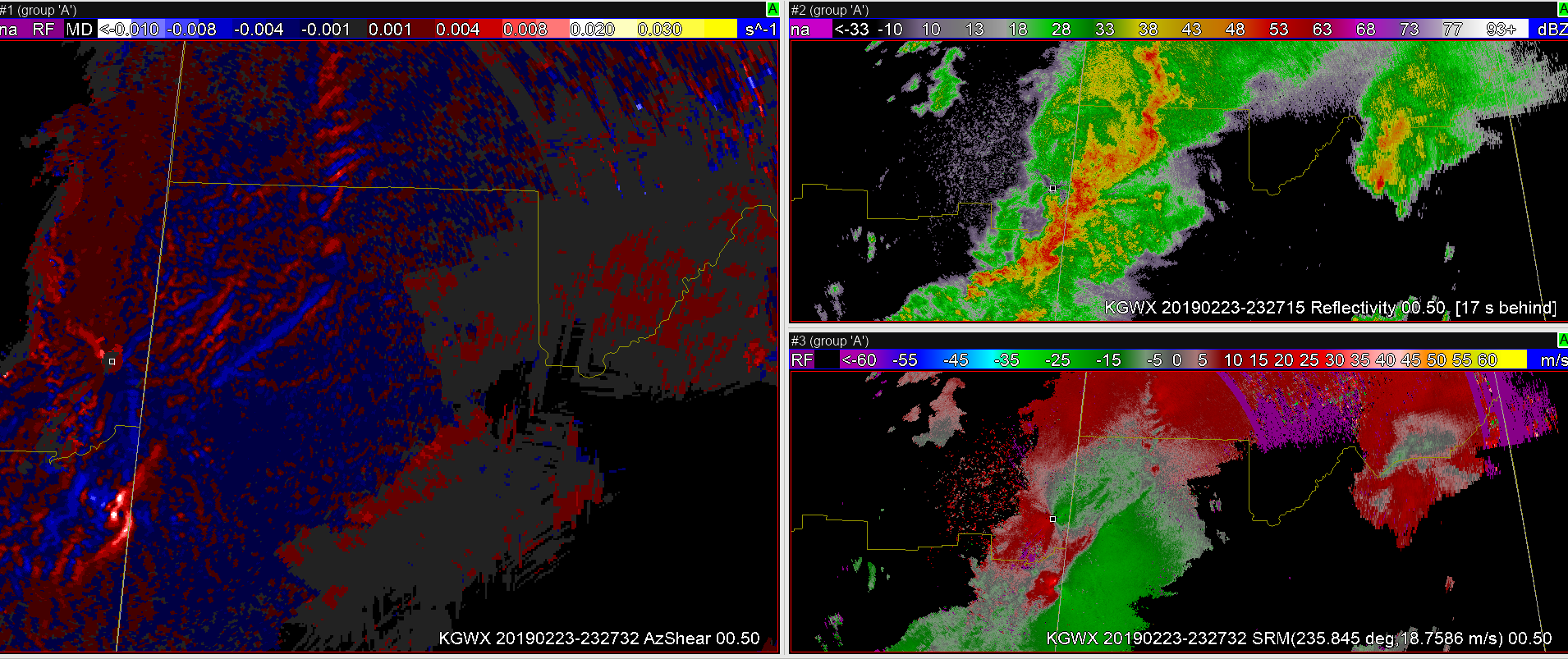
Charley
We’re comparing AzShear to velocity, SRM, and reflectivity data. I started off focusing on the cell with the longest touchdown near the Mississippi Alabama border. If I was forecasting this event real time the AzShear would help to increase my confidence in length of the period the tornado was on the ground. That’s due to the comparison between the AzShear and SRM.
The rotation signature on the SRM alone appears to weaken as the cell gets closer to Alabama.

Meanwhile, the AzShear holds onto a stronger signature longer aligning more with the actual touchdown. In that case it’s more helpful. 
The only difficulty for me is reprogramming my brain to not look at AzShear the same way I look at velocity. I’m accustomed to finding the couplet, and it’s tempting to do the same with the AzShear product.
AzShear was also helpful in analyzing the southernmost cell that was also showing rotation. Since it was farther from the radar site my confidence in a possible tornado was increased due to the max in the AzShear.
It stands out more in comparison to the velocity data. The cell doesn’t have your typical look of a supercell so reflectivity wasn’t as helpful.

Taylor Johnson

Right in the middle of the reflectivity curl is a gate to gate circulation…also a peak in AzShear.

TDS showed up too.
Charley
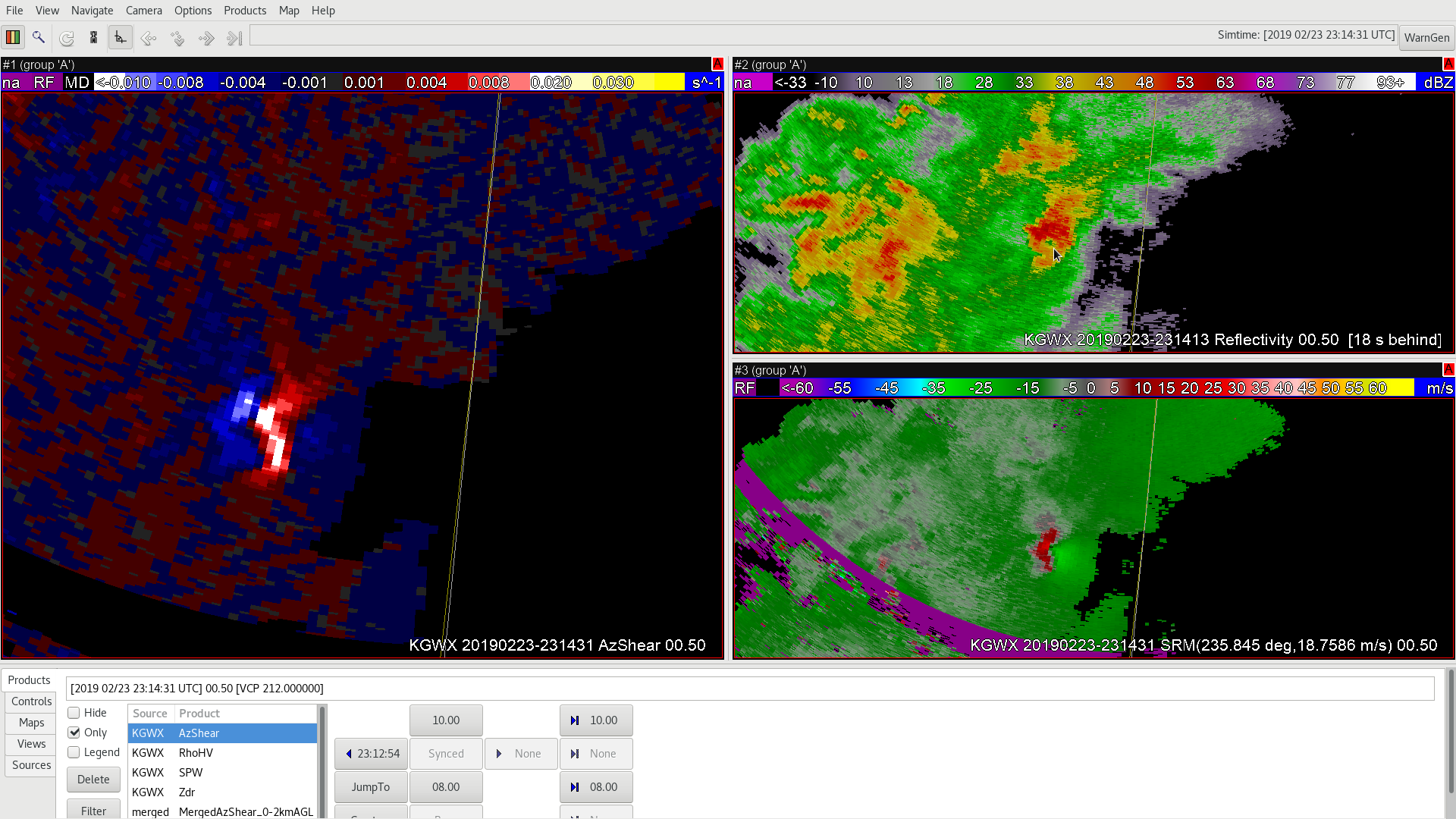
Southern discrete cell has a BWER on the 0.5 degree tilt. AzShear way up to 0.018…cannot believe a stronger/longer-tracked tornado wasn’t found with this cell.
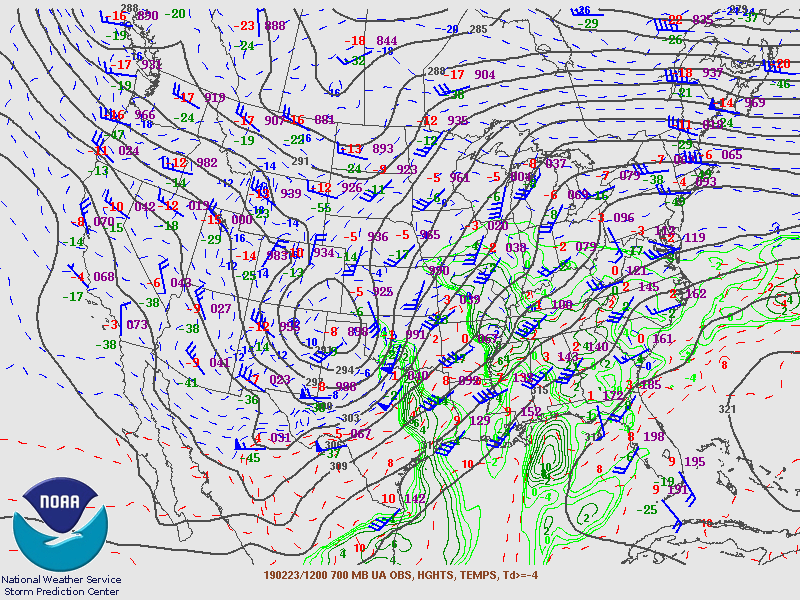
Front end nub showing on QLCS…with 700 mb winds from the southwest…that part of the line is going perpendicular to the 0-3 km shear (~45 knots). AzShear has persistently shown a high value for that part of this track as well (.009).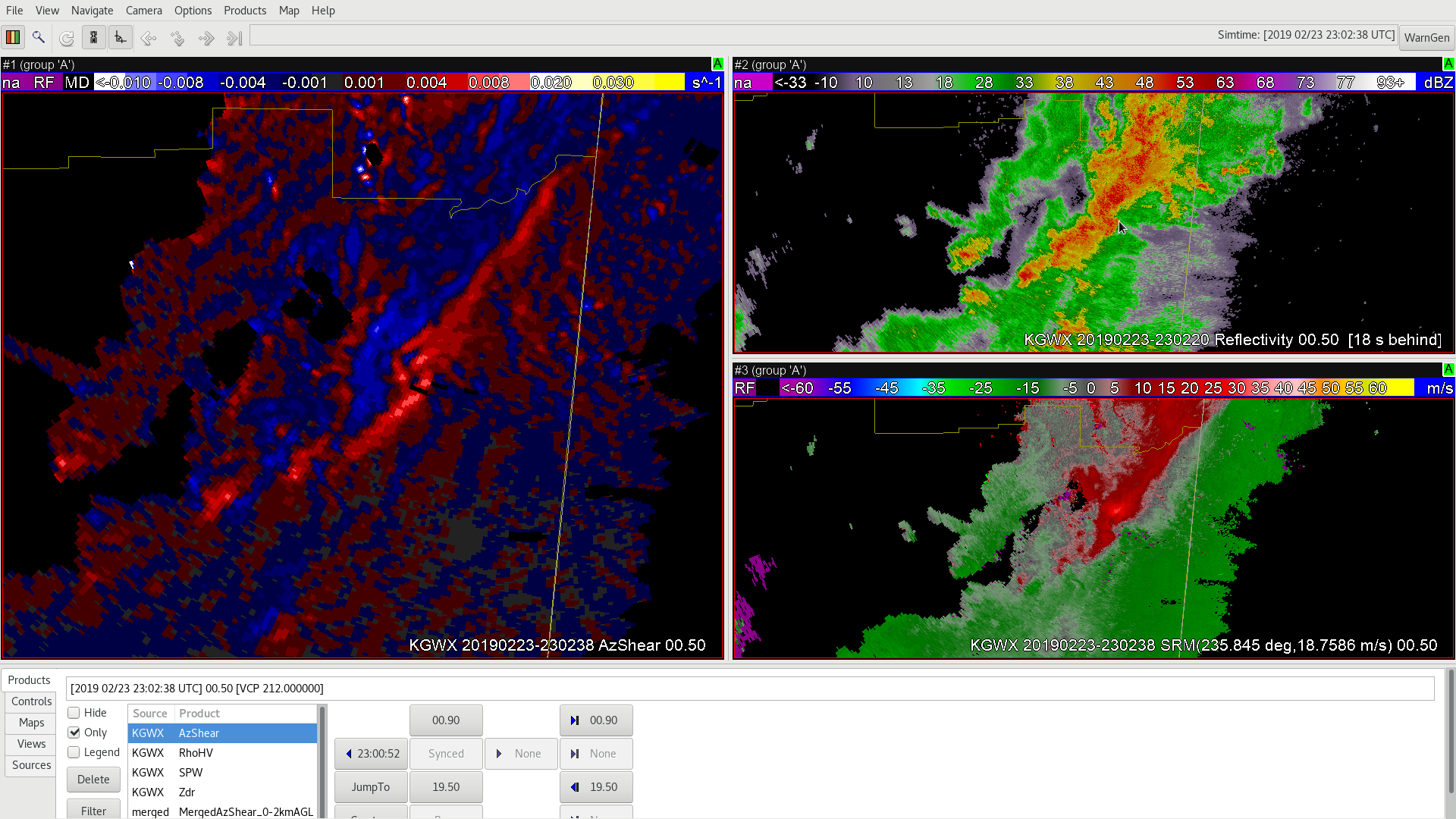
Charley
At first exposure the single radar AzShear product appears to highlight mesoscale regions of interest. Looking at the 2/23/19 ern MS/wrn AL case beginning around 2308z there is a broad area of reflectivity with some evidence of an embedded supercell in east-central MS. The AzShear product shows a linear region of positive values with enhanced values around the potential circulation. Advancing to 2312z the linear AzShear feature has now taken on an S-shape, with enhanced values immediately northern portion of the S. At this time there is a broad low-level circulation.
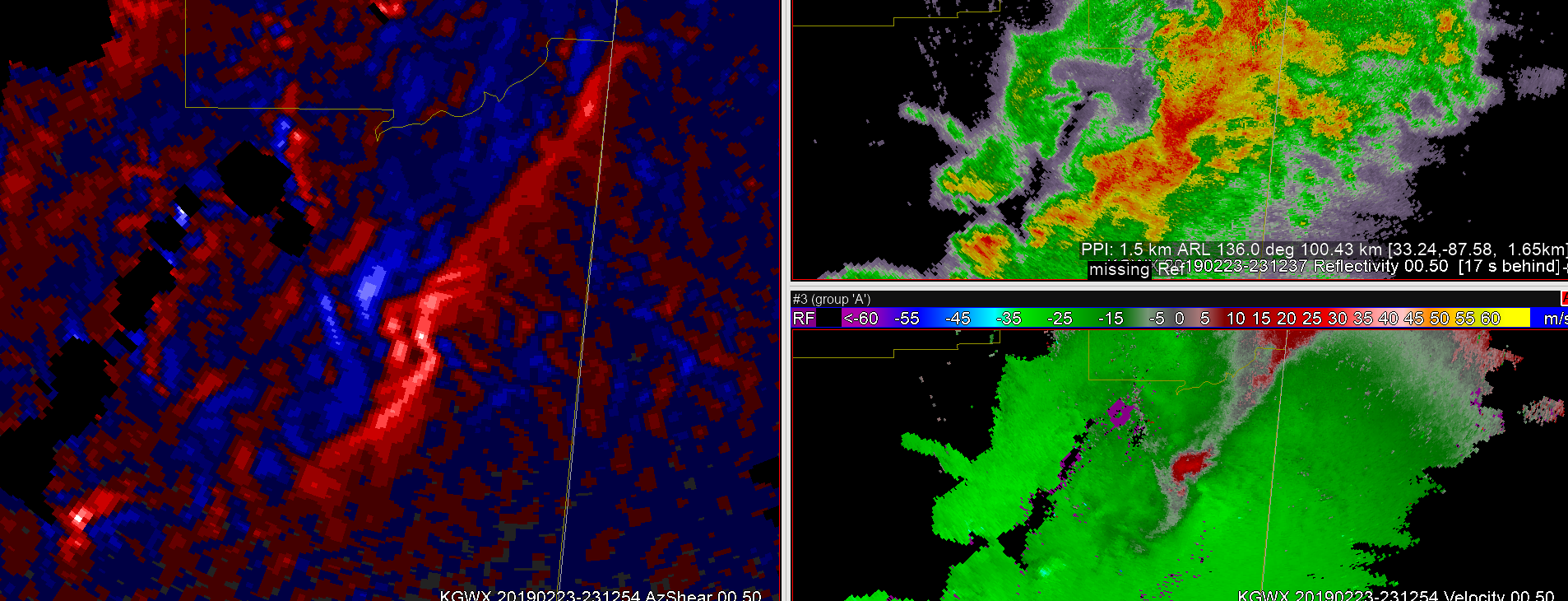
By 2316z, there is now a break in the ‘S’ in the AzShear, and at this time the low-level circulation is tightening as a supercell is apparent in the reflectivity.
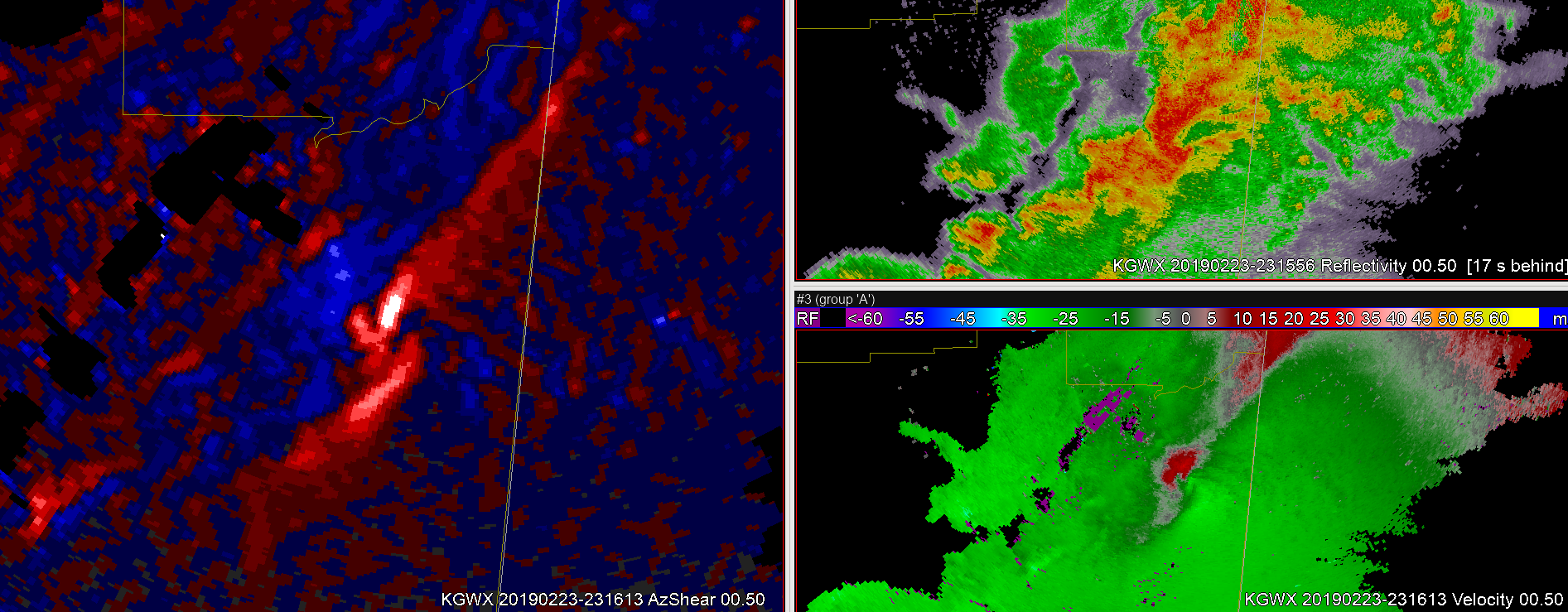
About two minutes later the low-level 0.5 degree circulation is now gate-to-gate. AzShear values are high at the circulation, but also highlight shear along the interface of the FFD and the inflow, as well as along the RFD region.
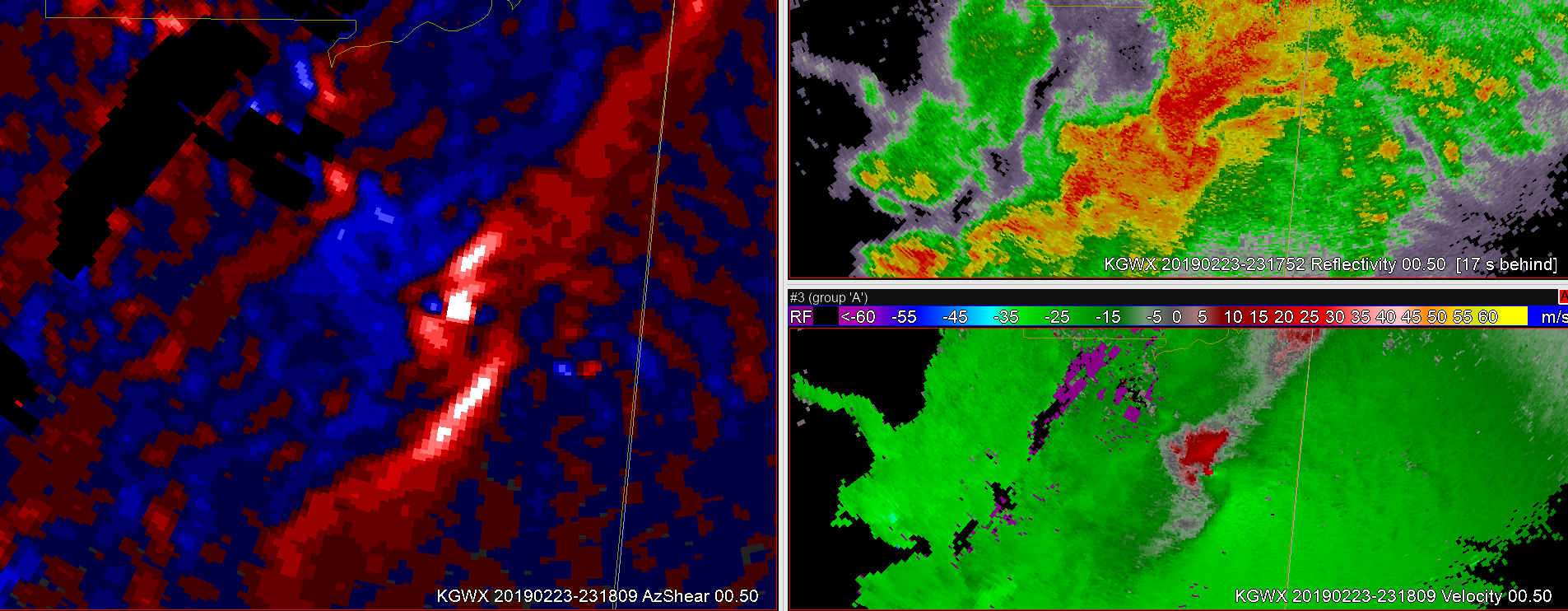
This same general pattern would continue for the next several minutes. However, by 2324z the trailing RFD or mesoscale cold front pushes ahead of the main circulation and merges with the FFD/inflow interface as the storm appears to mature and the main circulation becomes occluded.
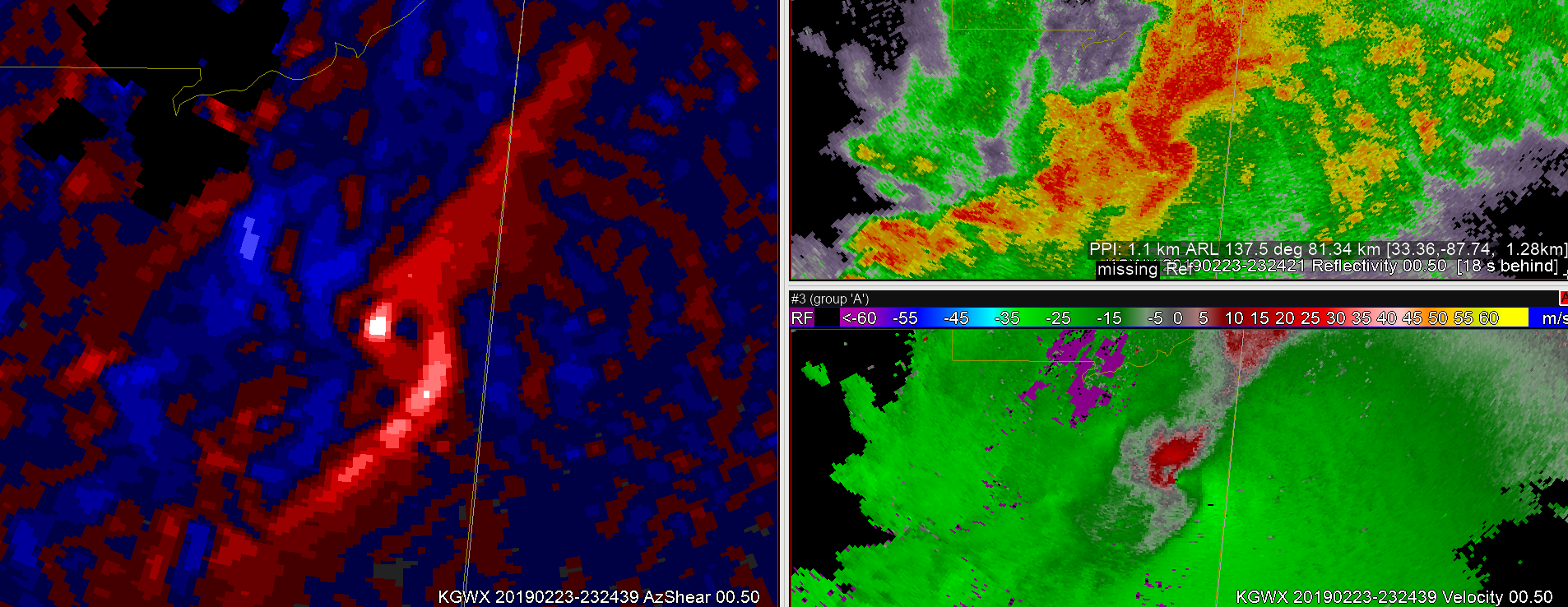
After this time the main circulation fades and the convective organization appears to either transition or recycle. In summary, the single radar AzShear product appears to highlight other regions of interest where shear is present outside the main circulation. These features are important in tornado development and supercell life-cycle, but are not always apparent in reflectivity or in velocity. Of note, the detail in the single radar product has a tendency to become lost or muted in the merged product.
One challenge would be color scales for different portions of the country. Would a color scale for the southern plains be sufficient for the mid-Atlantic, or would smaller weaker features be less noticeable?
The single-radar AzShear product is quite useful in grabbing my attention to areas of high shear that could indicate the presence of tornado or higher level rotation. While not the best in indicating the location of the tornado (Velocity provides more precision), the AzShear helps identify those areas within the storm cell with strong shear, see Fig 1 below.
Figure 1: Single radar AzShear on left, Reflectivity top right, Velocity bottom right. The cursor indicates the center of the tornado based on Vel, but is more in the center of the highest shear on the AzShear product. 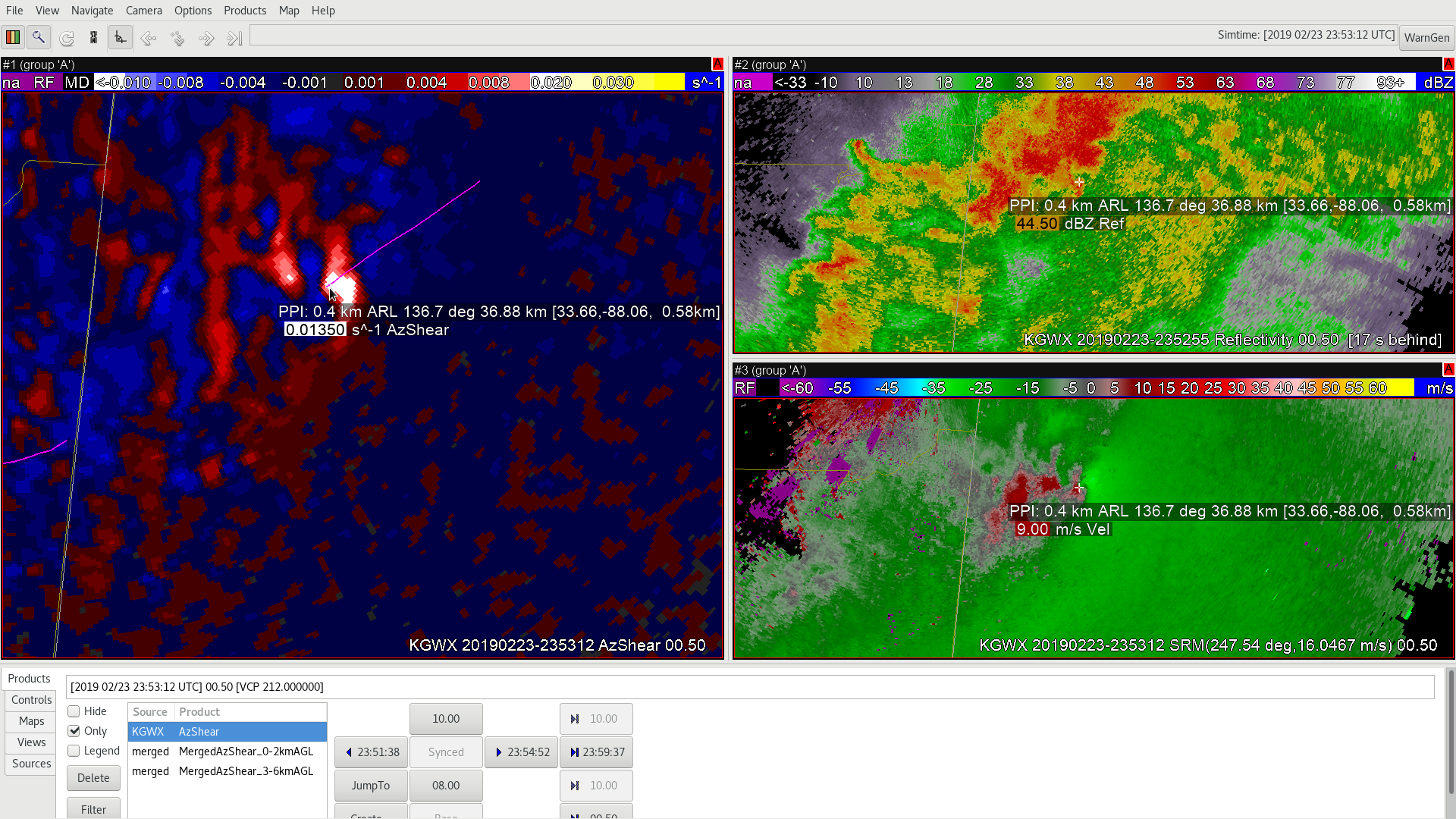 Other ‘hotspots’–whites/light blues in the AzShear product may send forecasters on wild-goose chases, looking for tornadoes, but having velocity data on hand quickly helps toss out the non-tornadic areas.
The MergedAzShear (MAS) product is useful in a broader sense of scale, but probably not as useful as the single radar AzShear. An MAS couplet often becomes distorted with the blending of multiple radar cuts from different radars. Sometimes a single couplet could show 1 or 2 echoes that will resolve into 1 couplet after another scan. For short-fused monitoring of a tornadic storm cell, its position could be misleading. Higher-level MAS, while useful in a broader storm environment seems less likely to depict a tornado, although it will indicate a broader area of high shear and changes in the wind fields. (See Fig. 2).
Figure 2: MergedAzShear (MAS) 3-6km AGL on left, Reflectivity on top right, Velocity on bottom right. The computer cursor is placed near the center of the Velocity-indicated tornado center.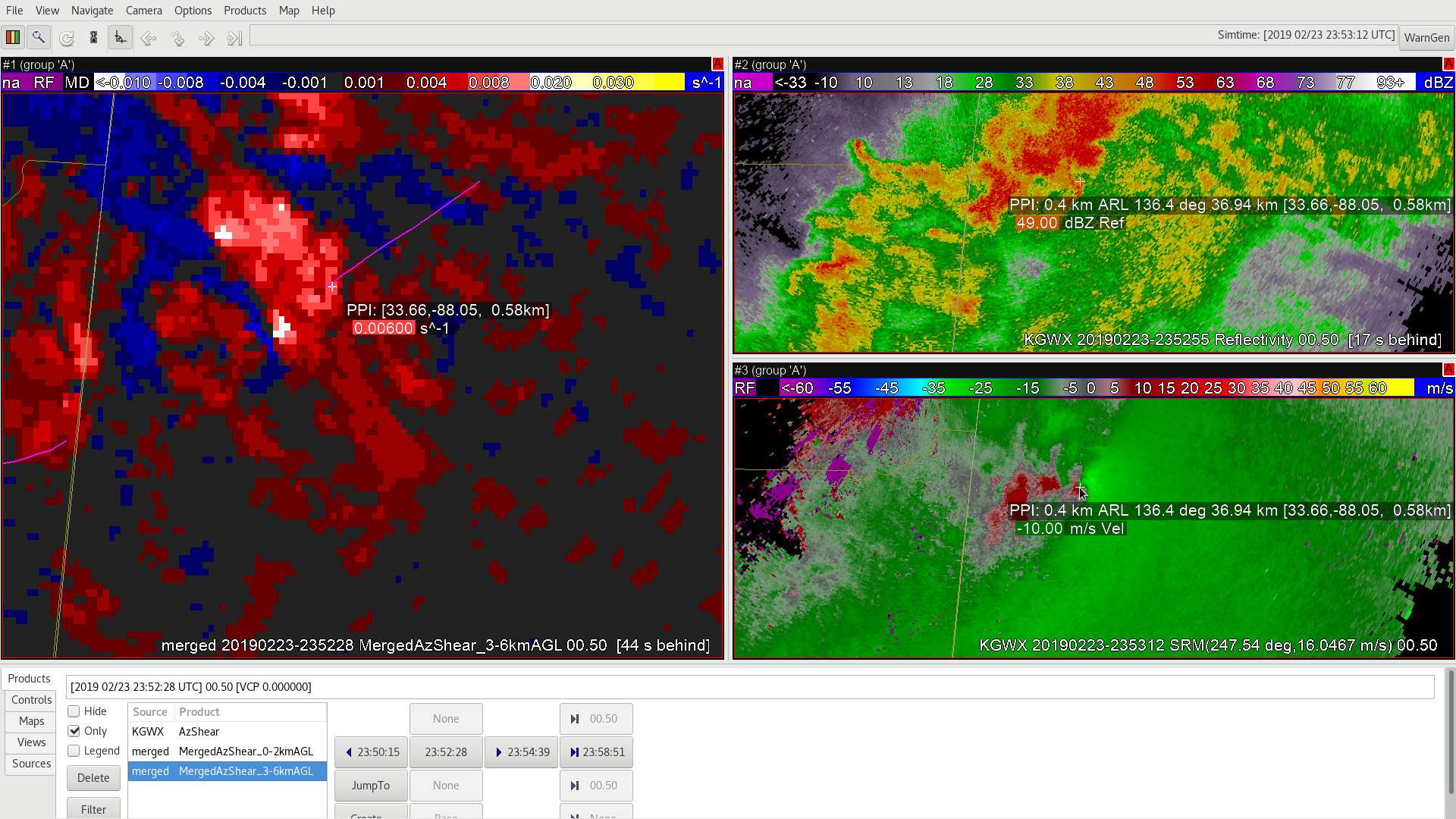 Ultimately, the AzShear is a good tool to use along with Velocity data to get an overview of what is going on within the atmospheric layer (0-2km or 3-6km), even when there is no tornado on the ground, but should be used in tandem with other radar data to help weed out false signals that may be due to ground clutter, etc.
For the first HWT exercise, I’ll be taking a look at the AzShear products, including a single radar AzShear product and two (MRMS) merged radar products at the ranges (0-2km) and (3-6km). This is my first time as a forecaster seeing/evaluating these products, and the case was mainly used as to build knobology on the local evaluation platform while also discussing potential conceptual uses for said products. Thus far, the single radar AzShear product seems to help illuminate areas of enhanced rotation nicely in an easily depict-able manner. It doesn’t, however, seem like it should be considered as a replacement for a velocity/SRM display in the near-term environment. This was proven true in several cases where it was hard to pinpoint exactly where the center of rotation was in the display (See image below).
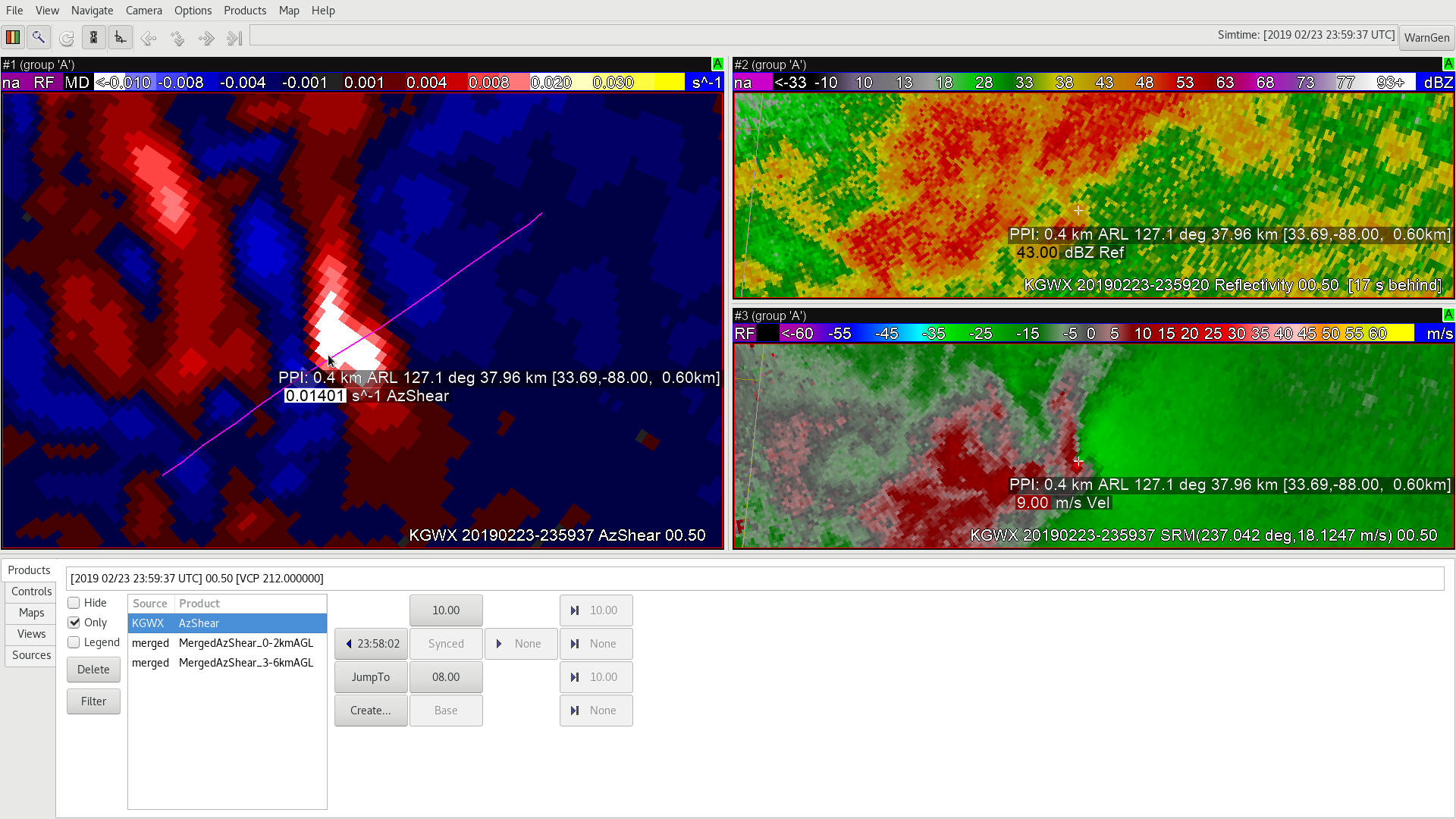
If I was a forecaster trying to draw a tornado warning polygon, I wouldn’t necessarily want to do so using the AzShear product alone, the use of SRM/BV would allow for a more finite tornado warning polygon to be drawn, which would result in a lower FAR with respect to those within said area who have the best chance of encountering a tornado on the ground. Also, I feel that this product will need a rather extensive color table to make it useful, and I’m just not convinced that there is enough precision to allow that to be possible knowing the resolution and reliability of the input.
With that being said, I do see some utility in this product, specifically as a supplement/tool for a radar operator in the near storm environment. Being able to pick out and follow areas of highest shear through the evolution of an event could be extremely useful, especially in linear or a cluttered storm type environment where picking out couplets using SRM/BV could be more difficult.
Briefly evaluated were the merged AzShear data-sets within the case. Generally, even more features which would be beneficial to a warning forecaster are being lost in the process of creating this product. On a CWA scale, the primary benefit for this would be for situational awareness purposes, or possibly through the use of the (0-2km) product in a tropical-type environment where low/mid-level rotation may indicate a pre-cursor to a short-lived weak tornado. A huge downside at this point is the incorporation of the “Sails” slices, which tends to make the product rather messy in-between. A suggestion would be to try to eliminate the sails slices, even if that ultimately limits the amount of time between new data production.
—————————————————————————————————– Mountain Bone