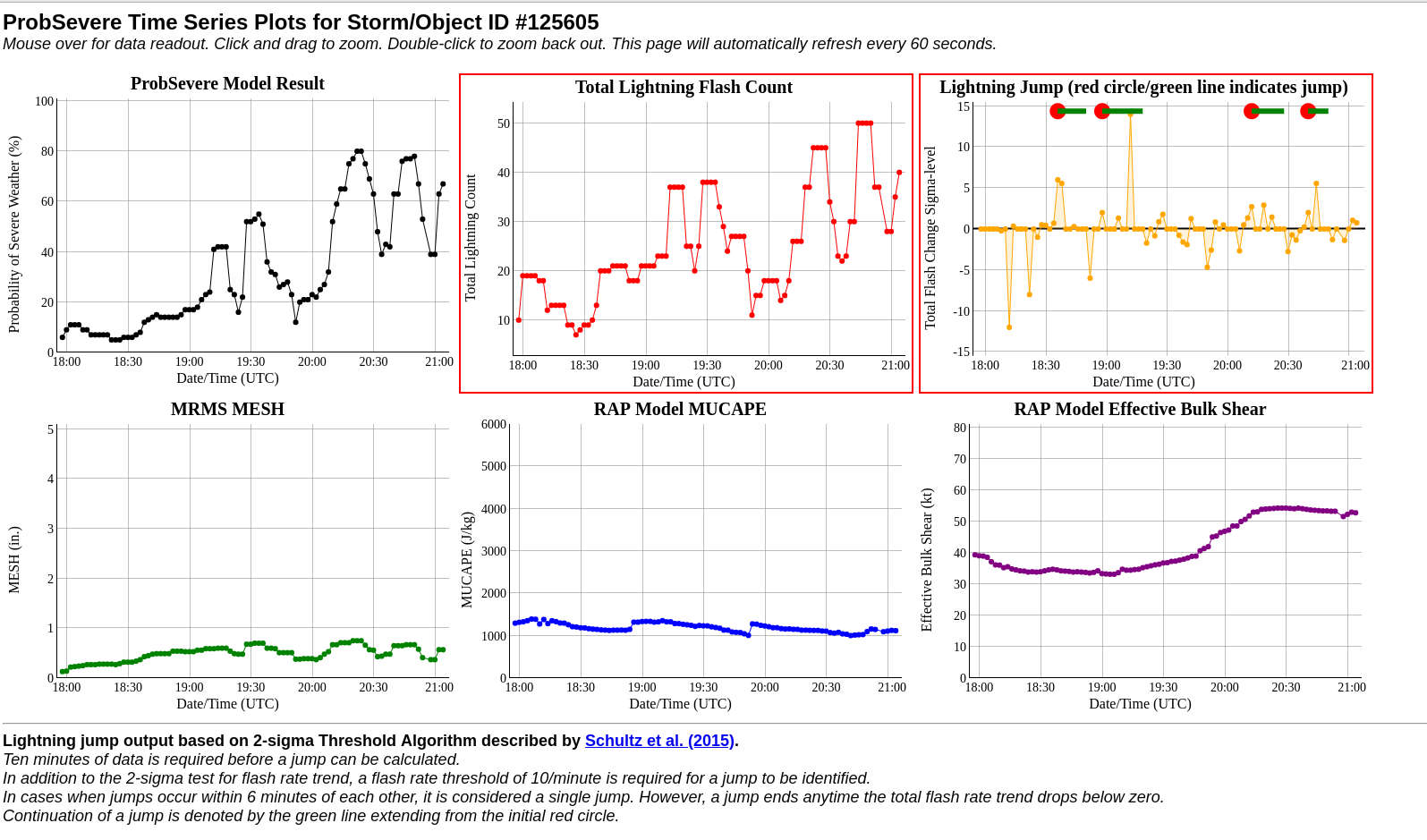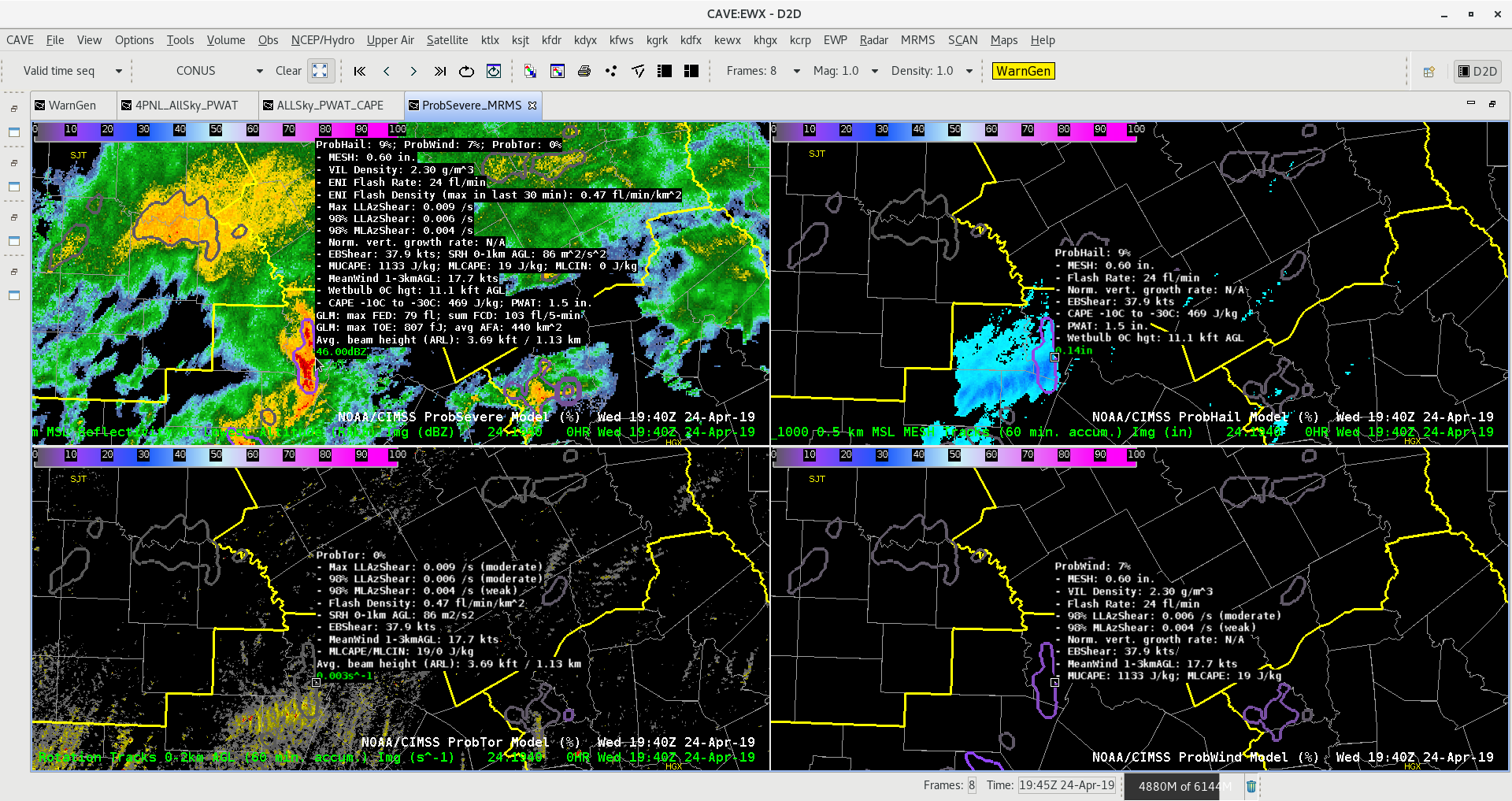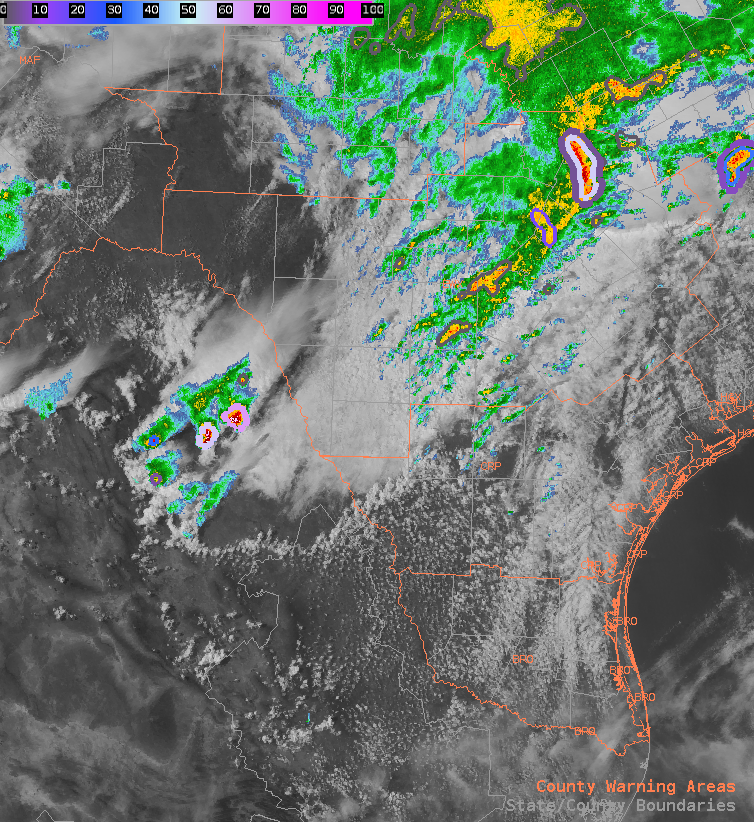
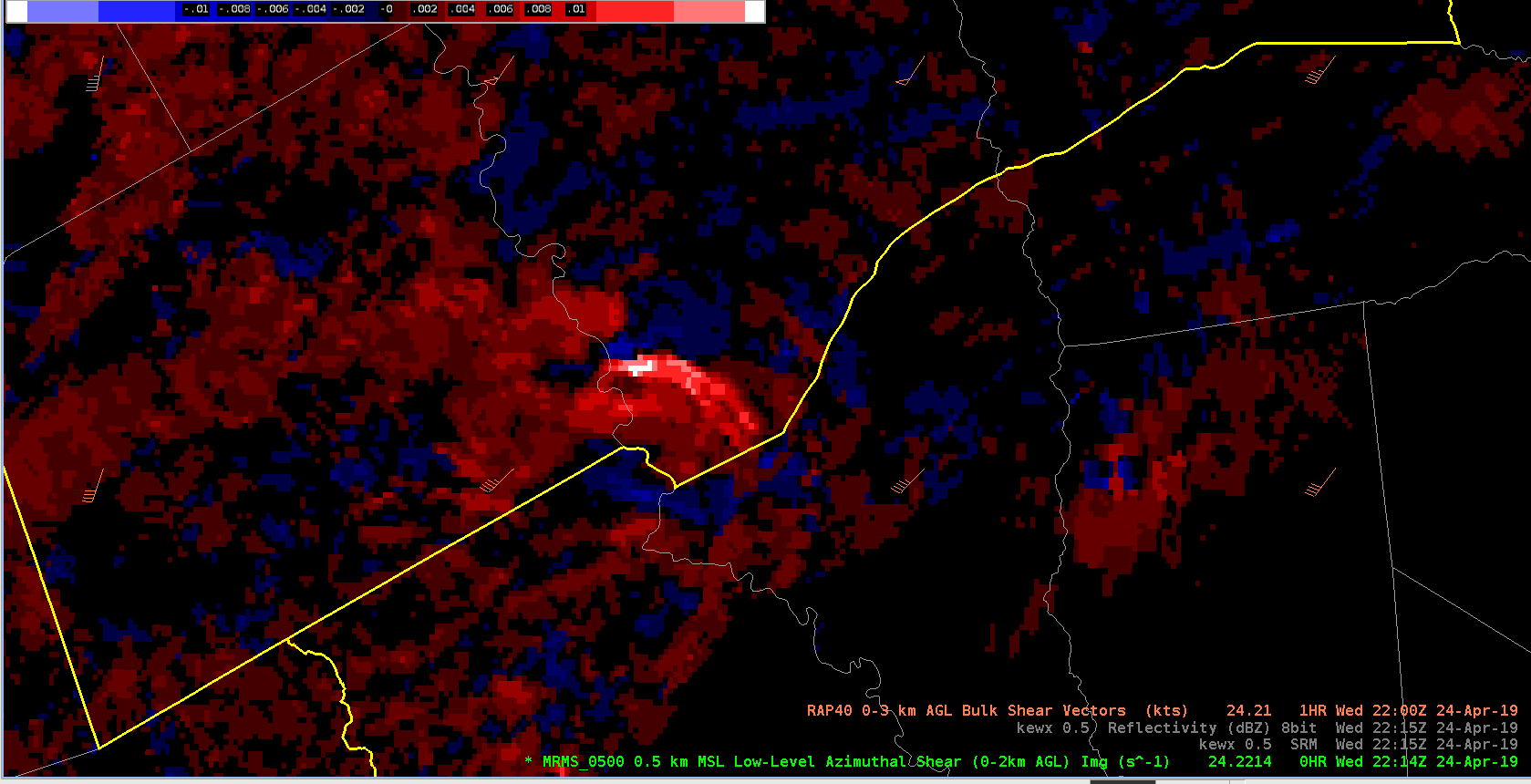
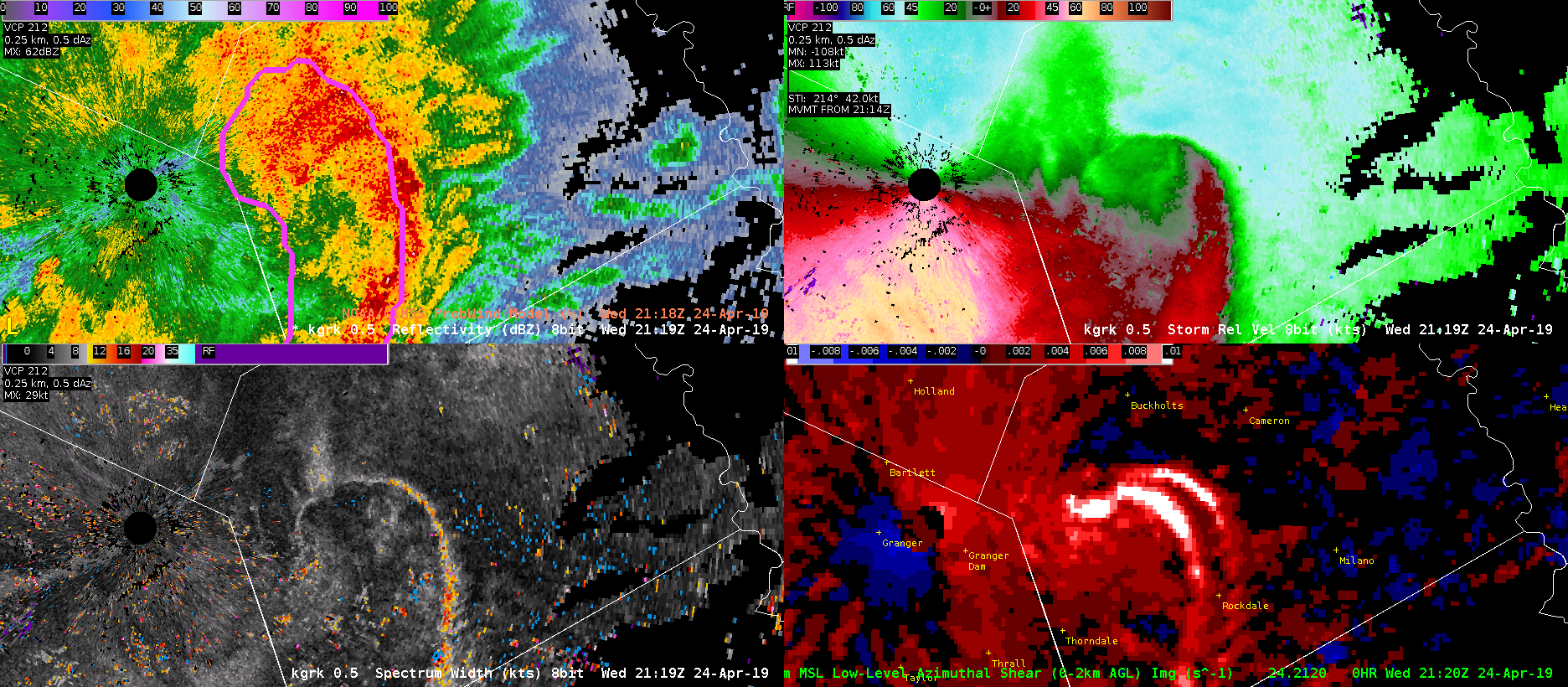
Watched the trend in CPTI on the storm in the far southern section of WFO FWD. This was associated with a cell that straddled the FWD and HGX CWA. Velocity data showed broad cyclonic rotation that tightened up periodically – including decent GTG.
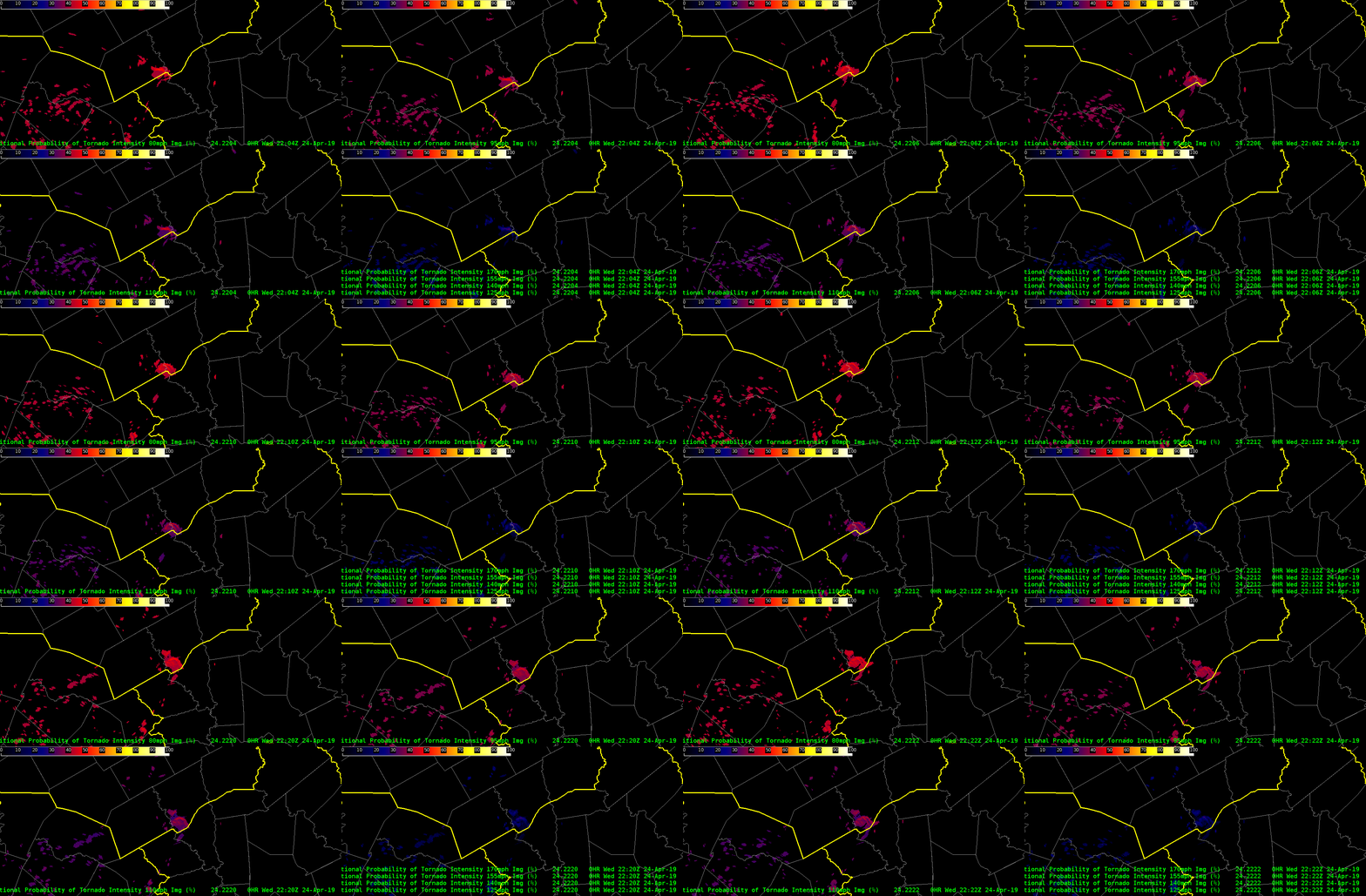
In terms of CPTI – the probability of the lowest range (80 mph) ranged from 40 to 50% between 2015Z and 2230Z. As wind speed thresholds increased, the values at 95 and 110mph did not differ much from 80 mph – generally around 40 to 45%. The highest values of CPTI also remained higher than I might have thought in this case with even the 170mph+ as high as 25%. This seemed a bit high to me (did not like like an EF4 event) – but maybe statistically this is true???
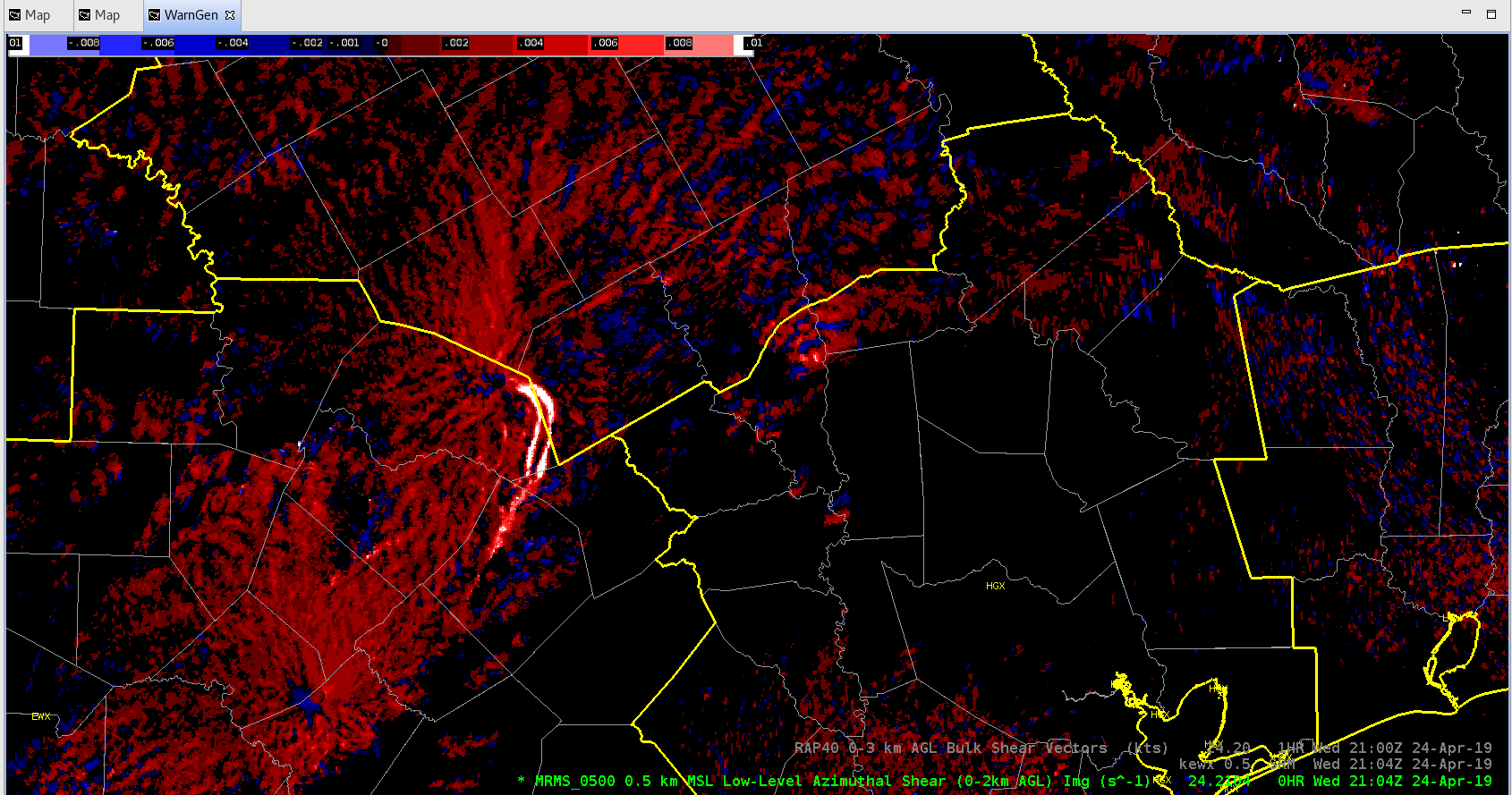
The merged 0-2km AzShear highlighted this area nicely. Note, I adjusted the default color table – to cooler colors – e.g. bright white is > 0.015 s-1. I wouldve loved to view the single radar AzShear product as well!
See AzShear plot at the trends in CPTI below.


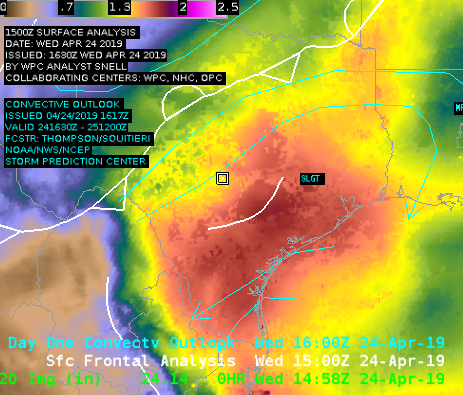
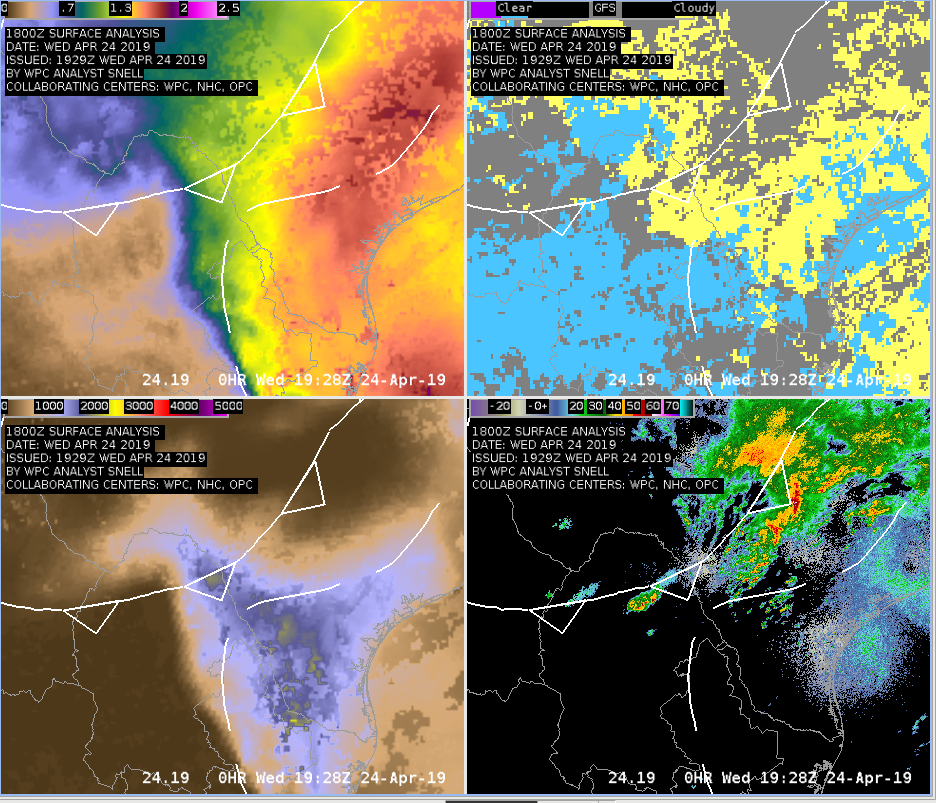
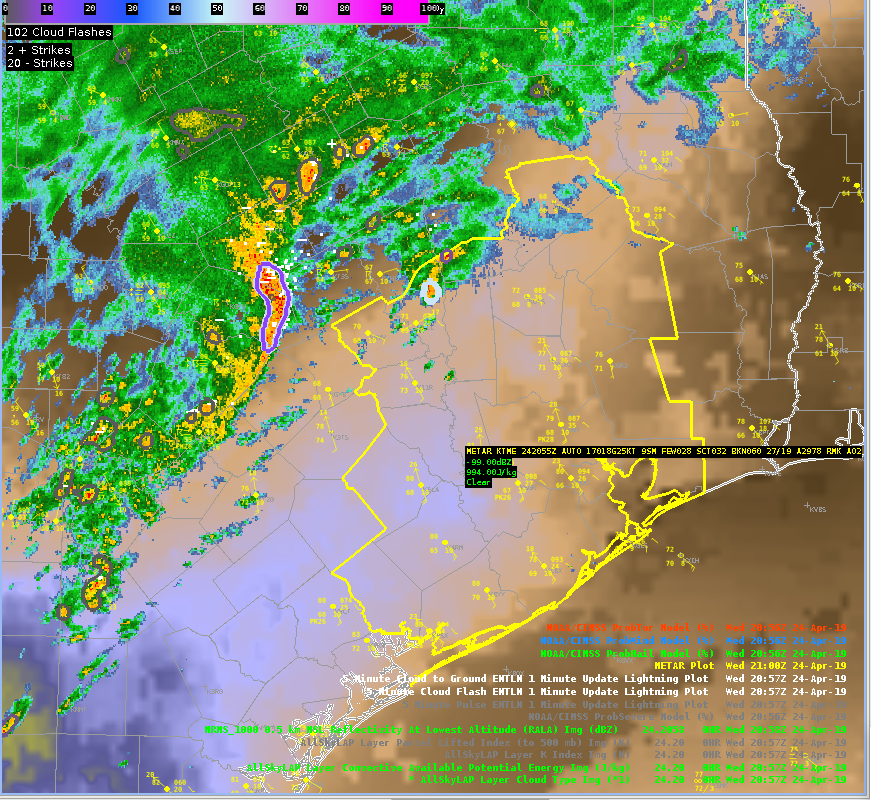
 All Sky LAPS retrievals indicate ML CAPE just shy of 1000 J/kg, but with this environment, I would expect instability to be higher.
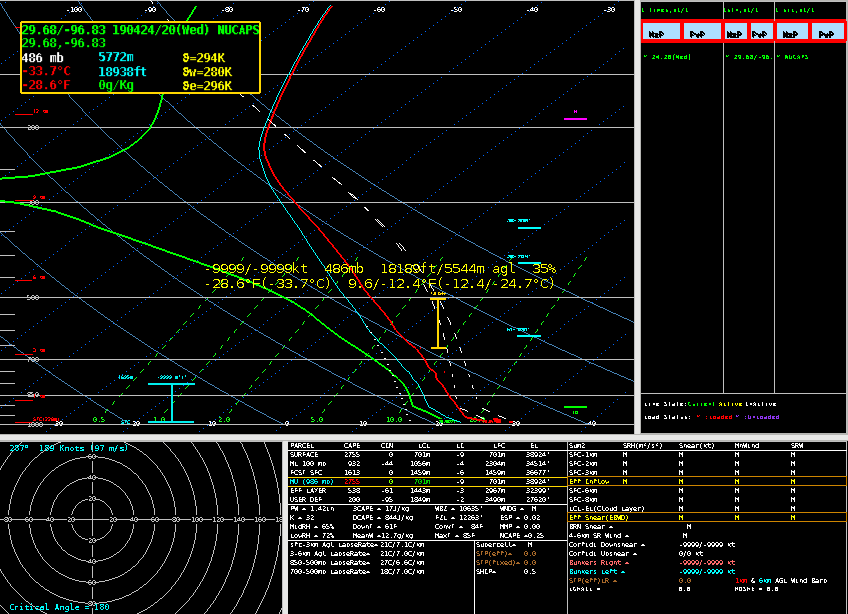
  The modified NUCAPS shows a profile more in line with what I would expect to see. In this profile, the surface dew points were close to what surface obs show, but the surface temp did need to be adjusted up a bit. This sounding, coupled with analyzed deep layer shear, leads me to think severe weather is a possibility in this area.
 Sandor Clegane
 Sandor Clegane
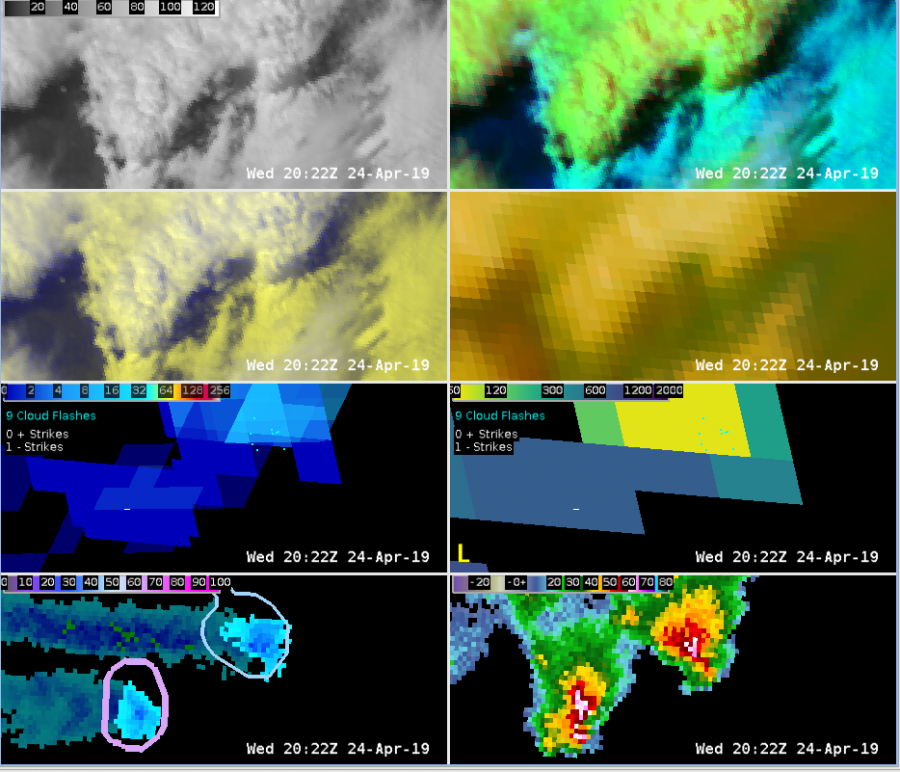
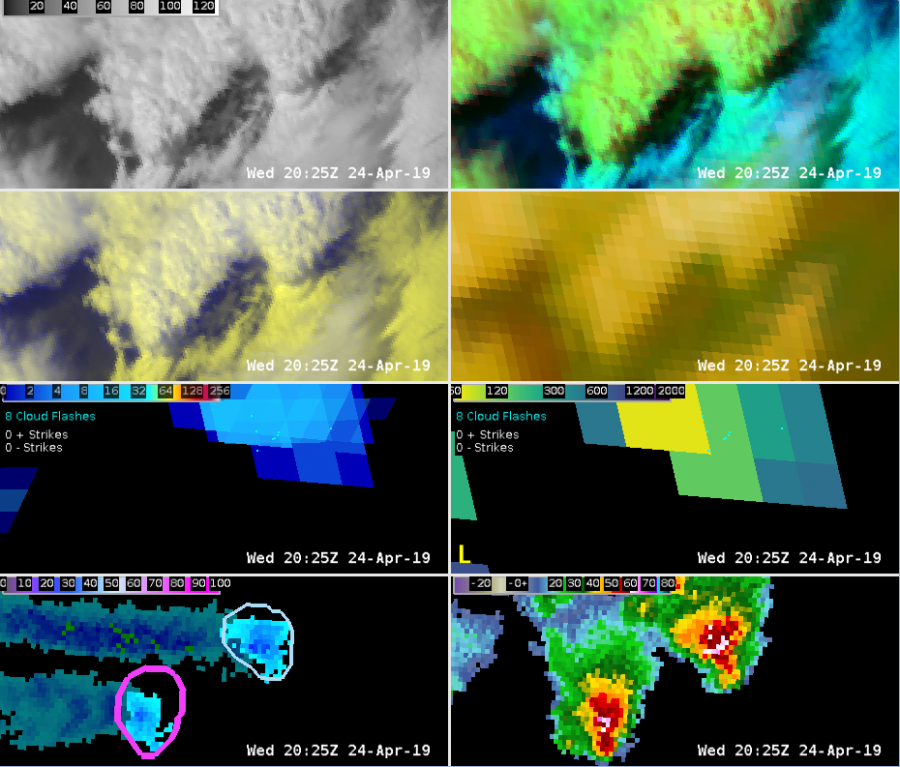
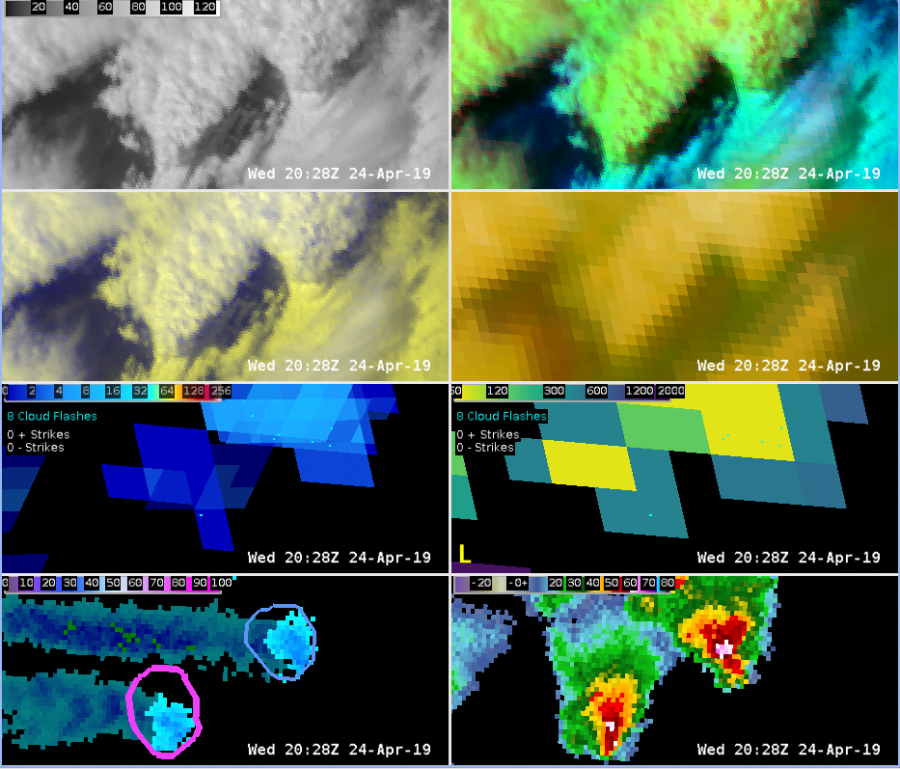
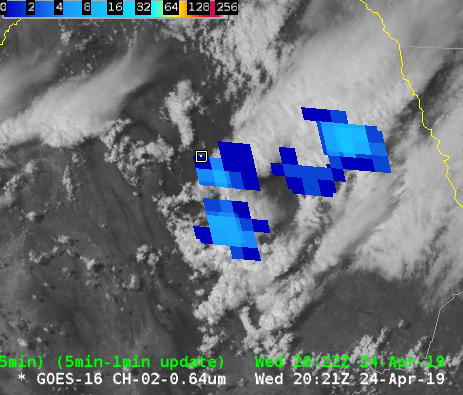
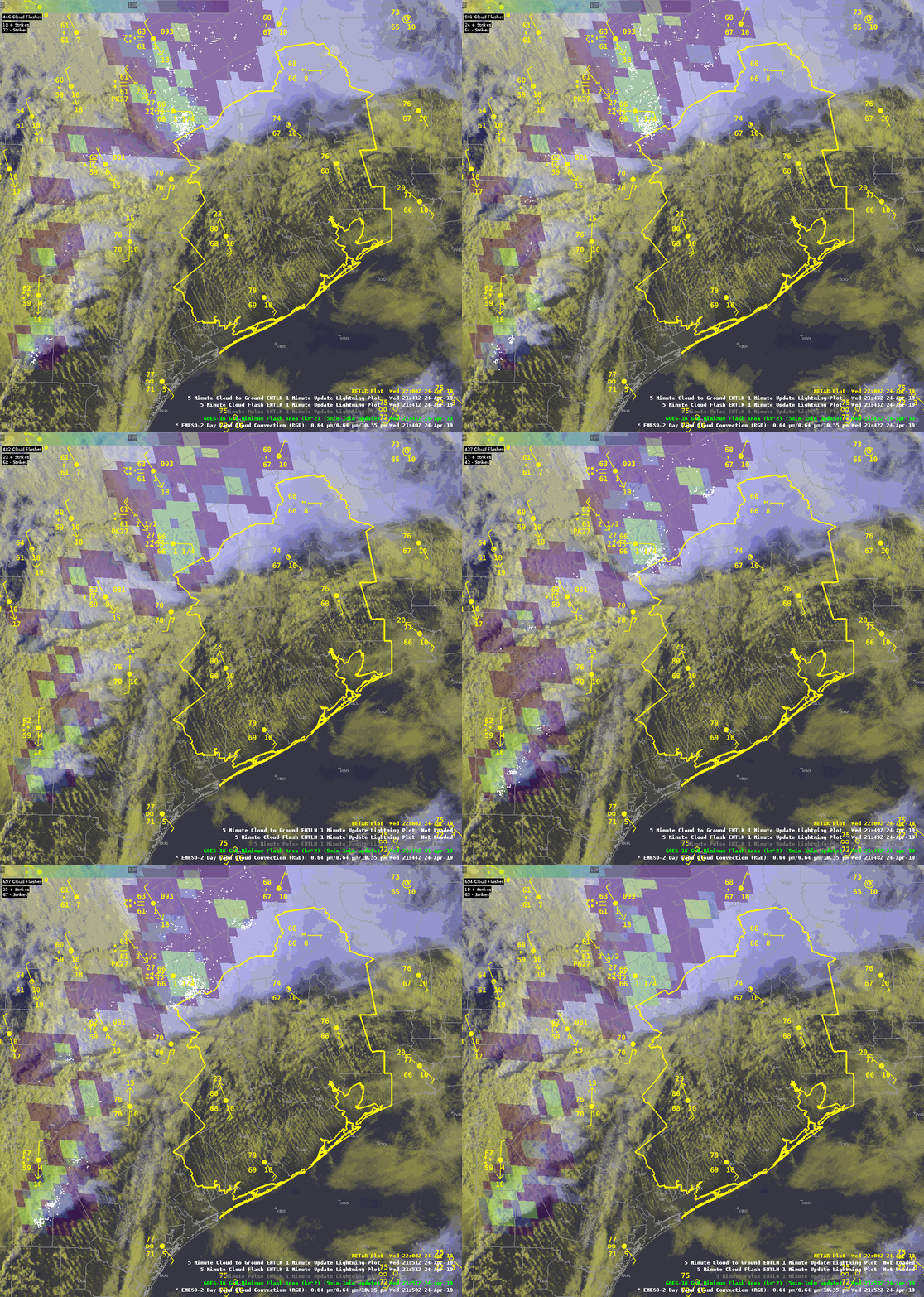
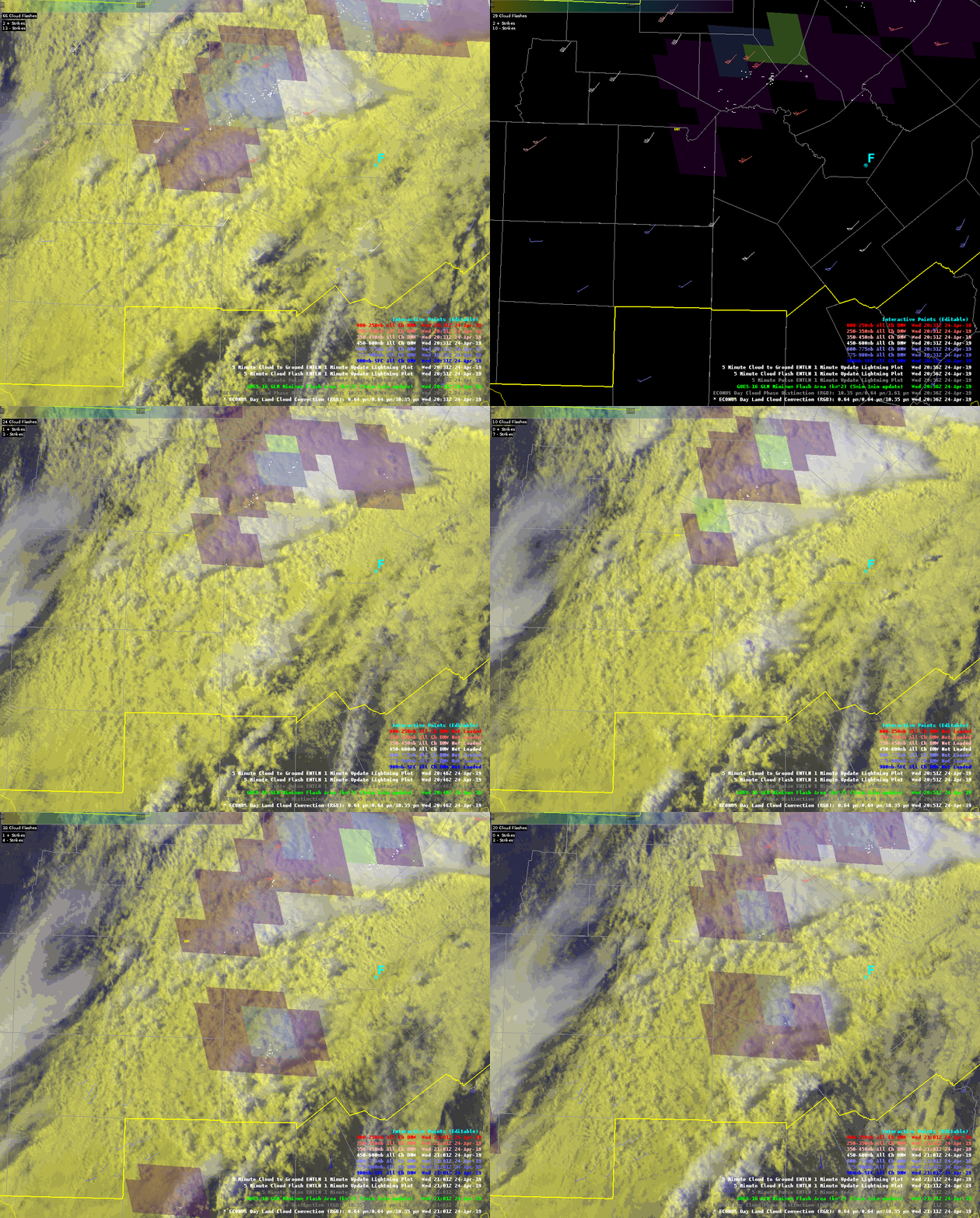
 Minimum Flash Area showed some utility in boosting lead time for storm re-generation. The storm in the center of the first image had started to weaken a bit after moving off of the outflow boundary that initiated it.