18Z vLaps Run

laps 18The 18Z vLaps initiated with the one cell but unfortunately did not produce the cluster of storms that developed across central Indiana behind the original one (upper left).  You can see the Maximum base reflectivity (upper right) also produces some convection too far south and west.  The surface simulated brightness temperature (bottom left) shows the one storm but doesn’t account for the other ones as you can see on the actual IR Satellite image (bottom right).  We will see if the 19z run does better!


Tags: None

Simulated Satellite vs. Actual

Below, I overlaid IR satellite with the NSSL-WRF simulated IR imagery and there seems to be a spatial difference in the placement of the building convection across central Indiana. If you adjust for this, the product is otherwise trustworthy and allows for me to gain confidence in using it for forecasting in the near-term. With that being said and given the environment, it appears that these smaller clusters of storms will coagulate into an overall larger, mutlicellular convective event that will continue to drop south and east throughout the afternoon/evening.

13Z-12ZThu_IR&Simulated~Linda

Tags: None

Prob. Severe Today

Prob Severe


I normally really lean on the Prob Severe product and think it is useful.  However, today with all the storms popping up, I found it more difficult to differentiate which cell I should be looking at more intensely for severe criteria. ~Vollmar

Tags: None

To tornado warn or not, using MRMS rotation tracks to help

Storm in Champaign County OH gained supercelluar structure and showed signs of low level rotation on velocity.  However, I kept the warning as a severe warning because MRMS low level rotation tracks never seemed to indicate strong low level rotation (at least as of 2010Z).  I wrote up tornado warning text when area of interest was north of the town of St. Paris but had yet to issue the TOR.  21May2014-2010Z-LowLevelRotationTracks


Tags: None

Meteogram Tracking Want

tracking_tool

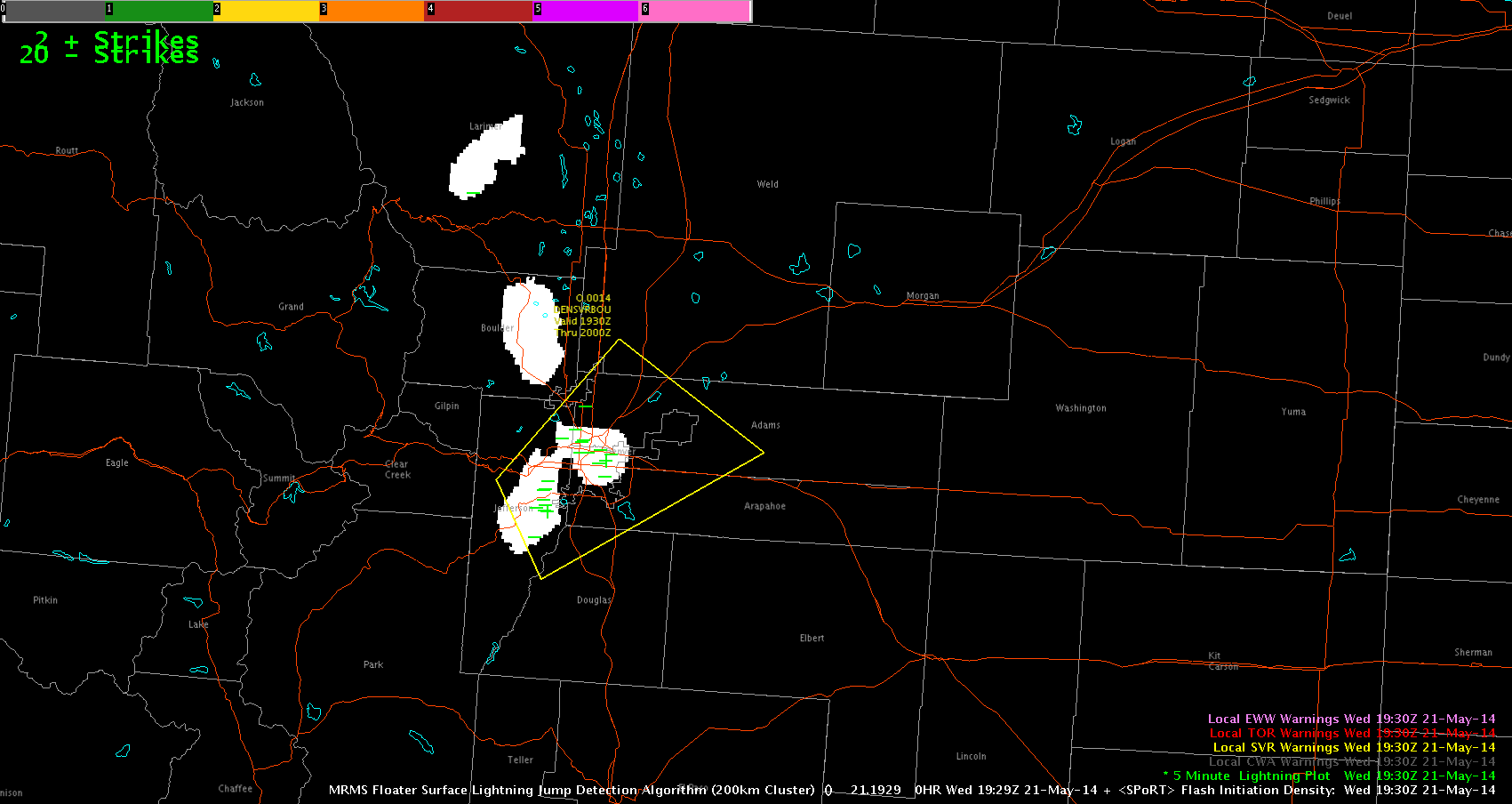
I was using the Tracking Tool Meteogram and it was very useful to track the changes in the lightning density and jumps, but when i closed out of the tool by clicking on the X it didn’t take away the rings. It would be nice if you excited out of the tool it also removed the Tracking Meteogram circles from the panel as well.

-JB

Tags: None

How’s the overshooting top detecting doing?

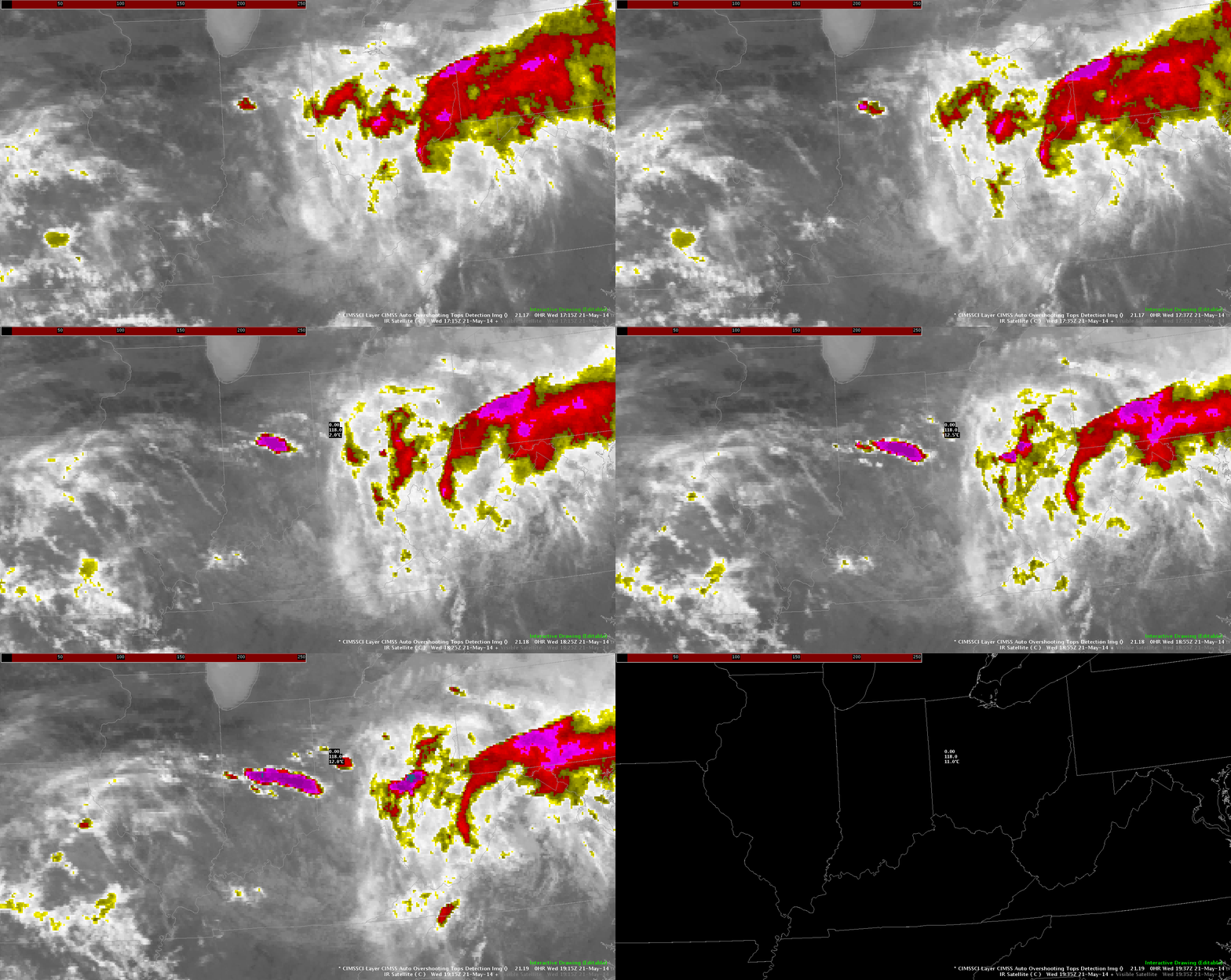
So far, no detections have been identified. Storms are still developing across central Indiana so I’ll continue to monitor this to see if something gets detected this afternoon. Here’s a loop of the OTD product overlaid on IR (there’s nothing detected in this loop).

1715Z-1930Z_IR&OT~Linda

Tags: None


NearCast


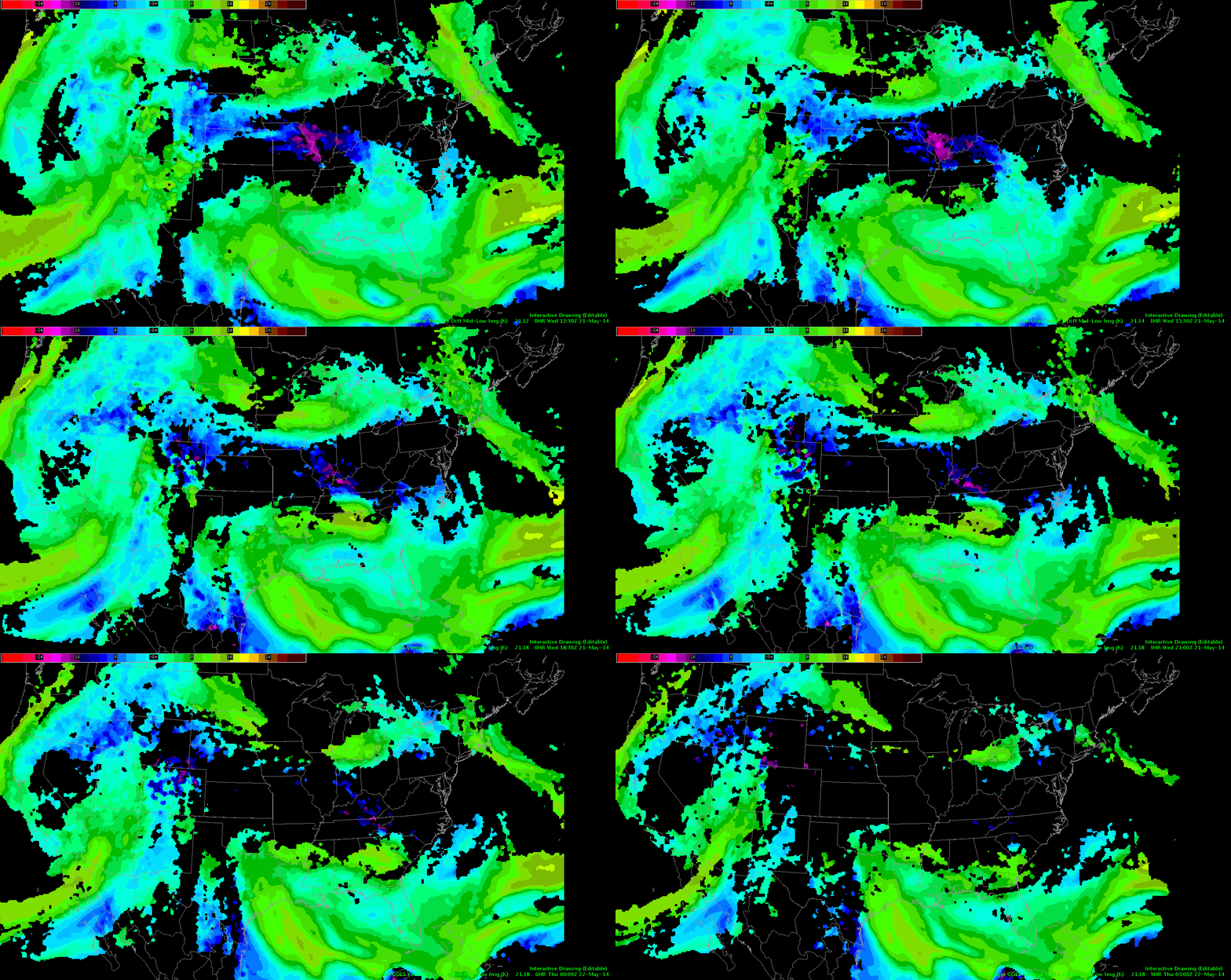
I was looking at the NearCast Theta E Diff Mid-Low and unfortunately there was a lot of black on this map in the area where I am looking for the potential for convection.  I was able to go back in time and see more data and based on the movement I would say that the area on instability is moving in the same area of the convection so the environment is good to sustain the storms that have formed in Indiana.  However, I wish we could have more data instead of the blank areas because I never like to assume things.  One thing we discussed is using model data that is contoured to fill in the blanks and I do like that idea.  ~Vollmar


3..2..1..INITIATION – EWP Operations Update – Wednesday 5/21 – 2:10pm

We were greeted post-EFP briefing with an explosion of development across across the Ohio Valley and out west in Colorado. Forecasters were quickly allocated to work out of the Indianapolis, IN (IND) to diagnose the rapidly developing cumulus field from Montgomery Country westward.

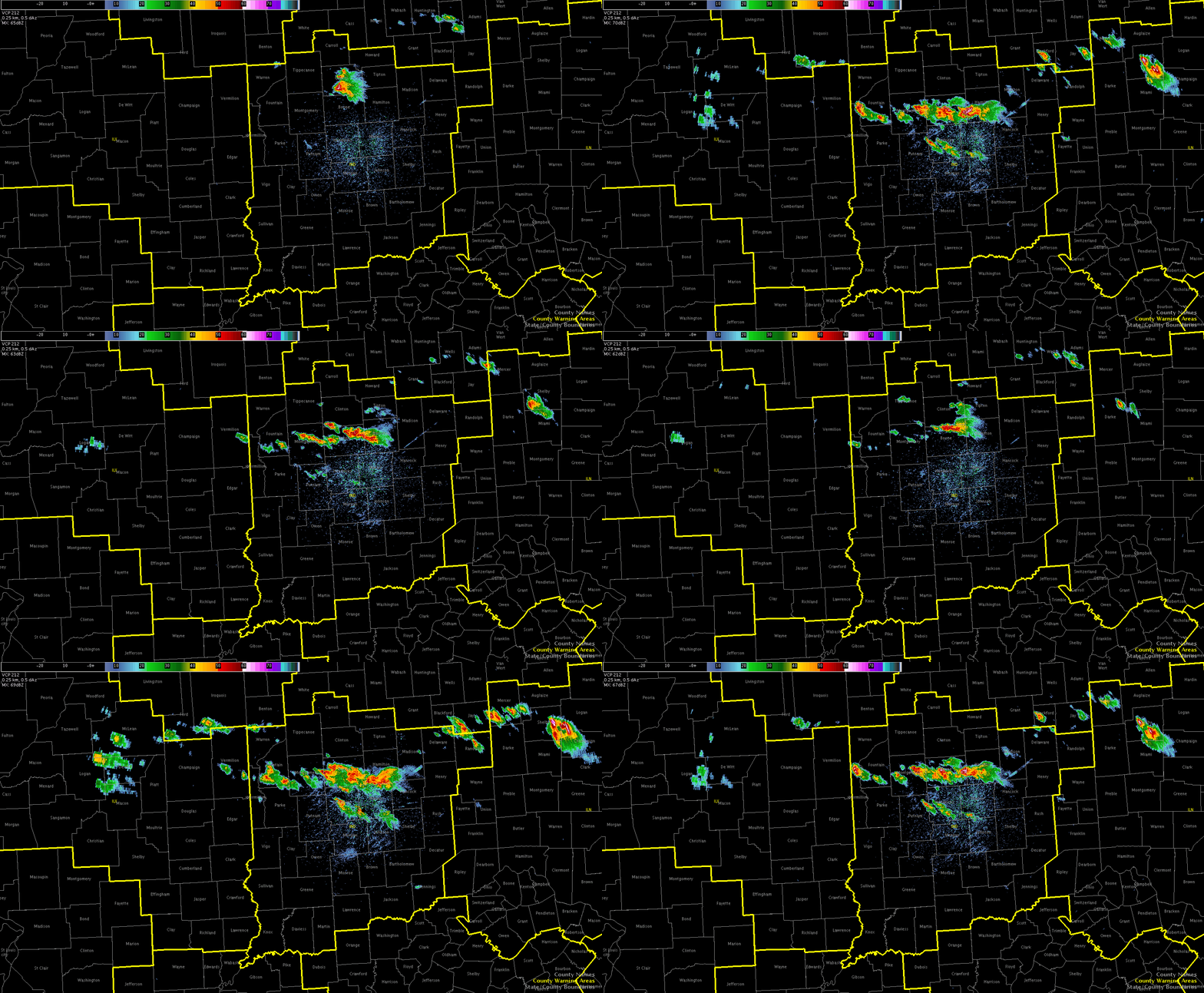
0.5 deg reflectivity from KIND from 1813z - 1929z on May 21, 2014
0.5 deg reflectivity from KIND from 1813z – 1929z on May 21, 2014

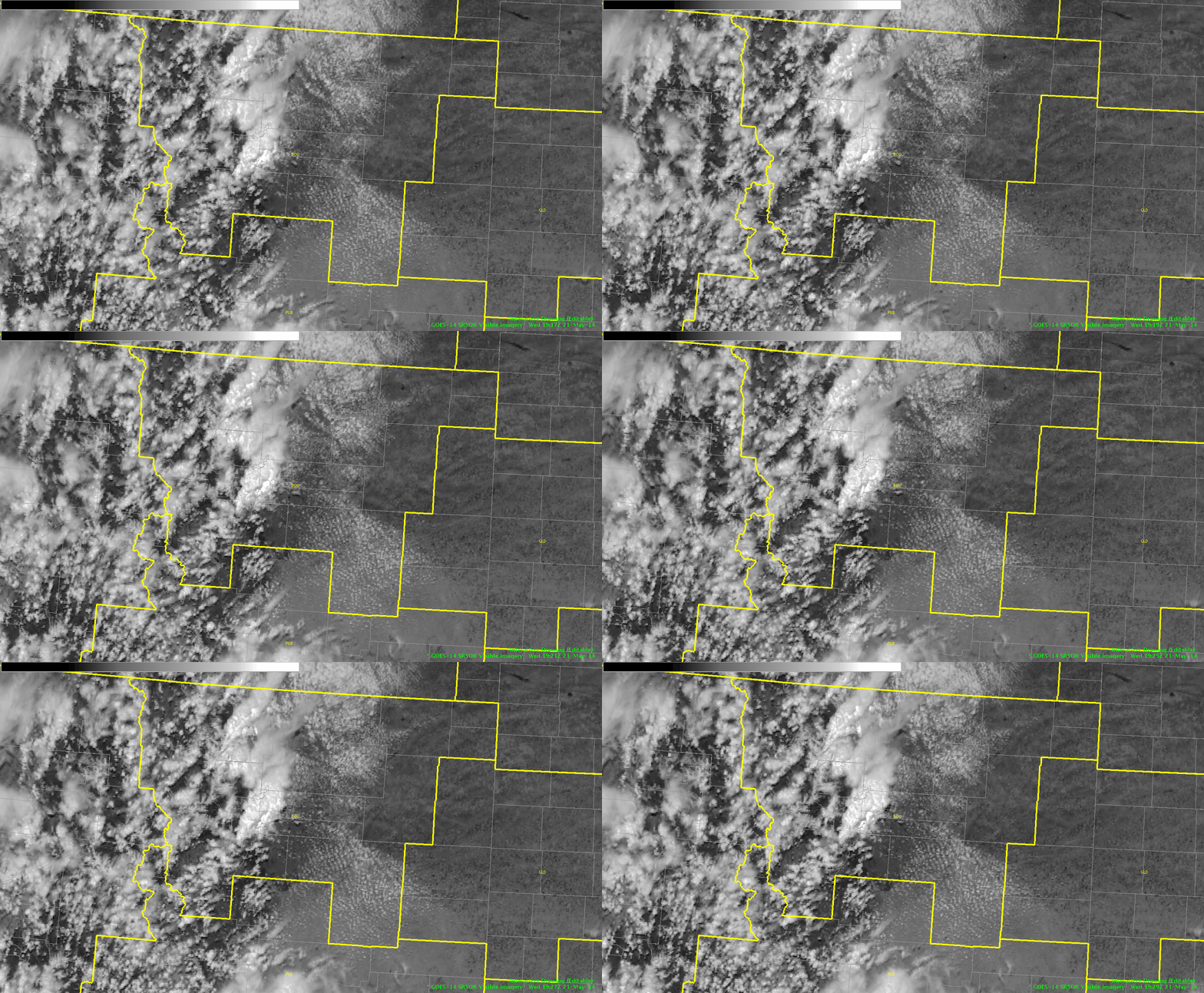
Our second team is working out of the Boulder/Denver, CO (BOU) CWA diagnosing the rapidly developing convection from N/S near the Front Range Mountains.

Super-Rapid Scan visible imagery from 1917z-1929z

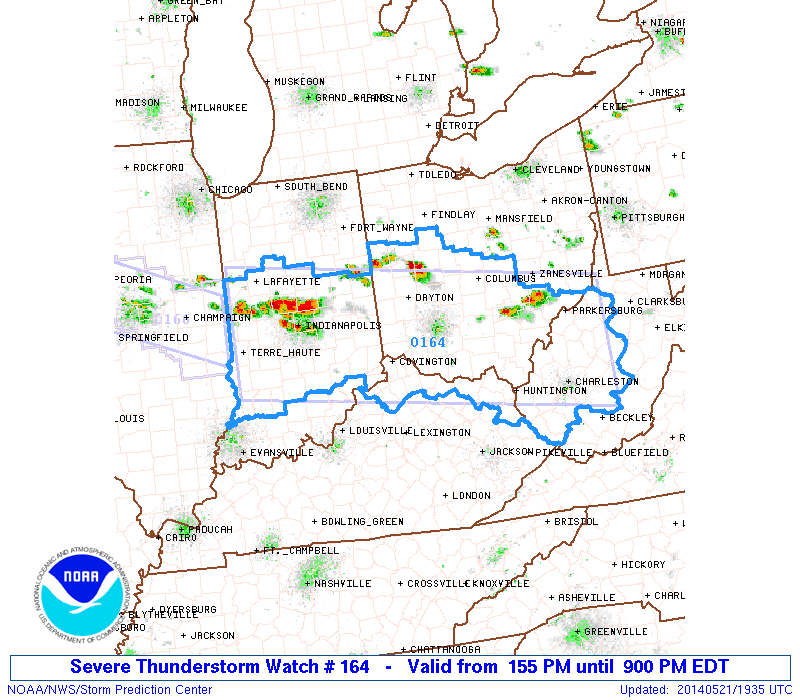
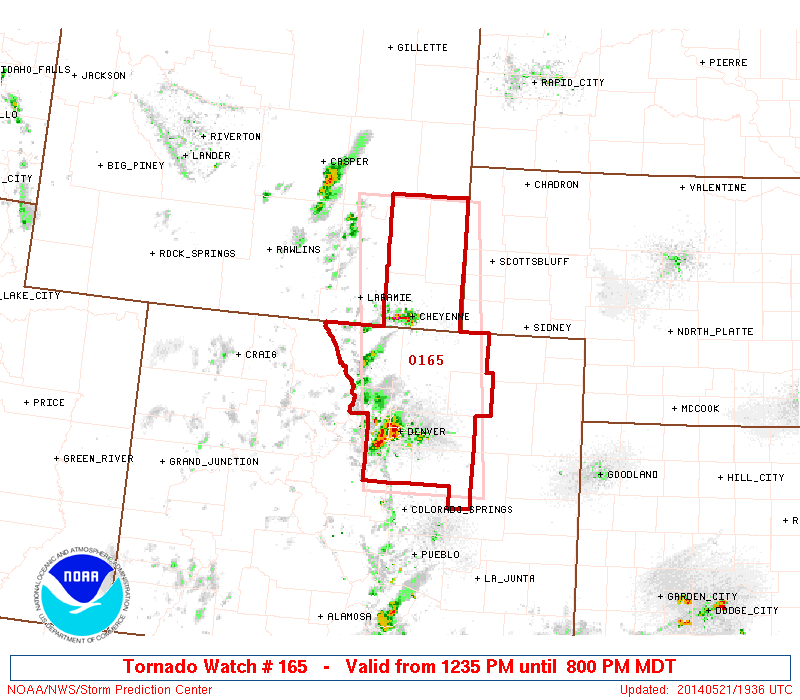
With a Severe Thunderstorm Watch issued for the Ohio Valley and a Tornado Watch issued in CO/WY region until 9pm, it looks like a busy afternoon ahead.

WW #164 from the Storm Prediction Center.
WW #165 from the Storm Prediction Center.

-Darrel Kingfield
EWP Week 3 Coordinator

Tags: None

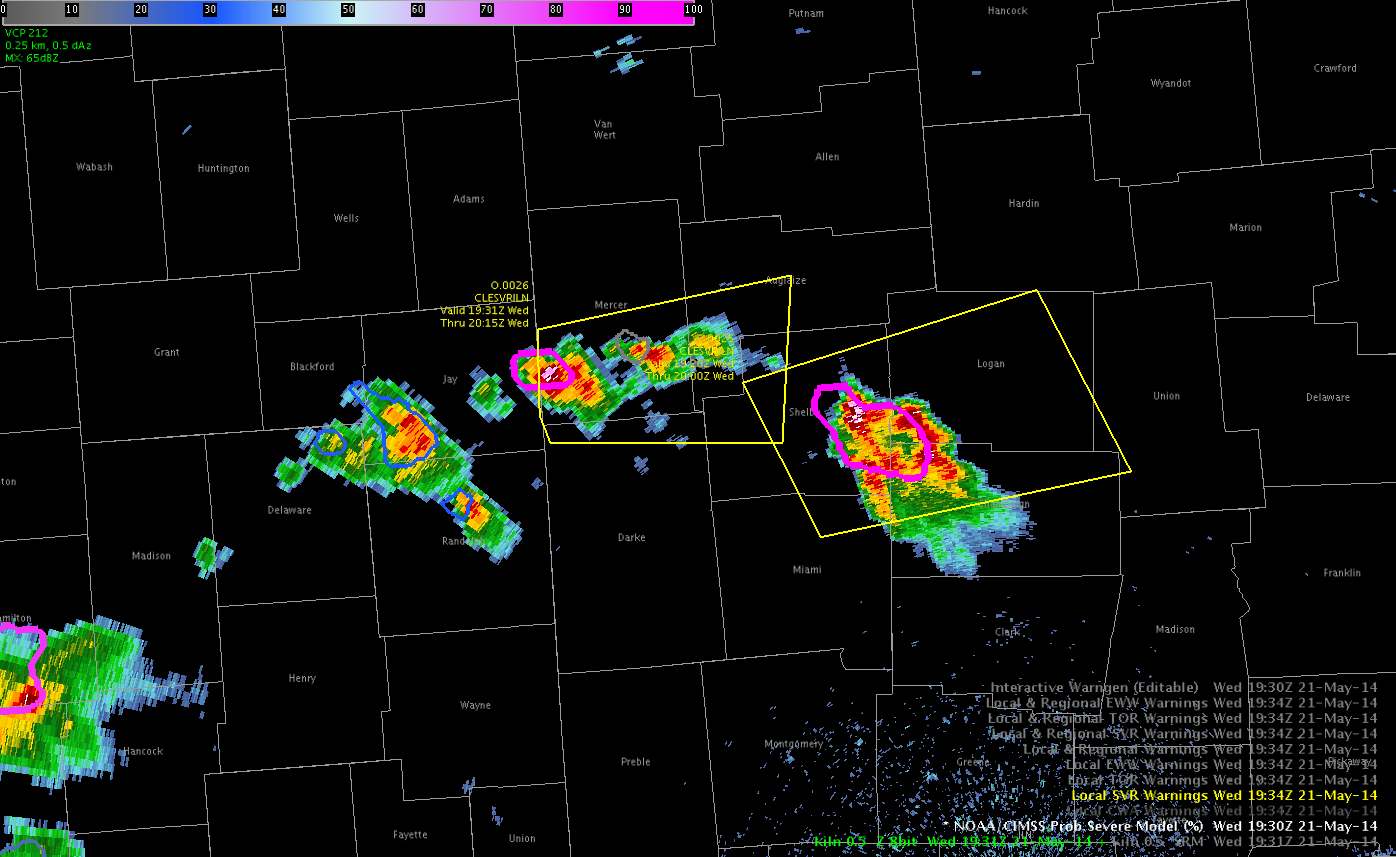
PROB-SVR and MRMS Products in Western Ohio

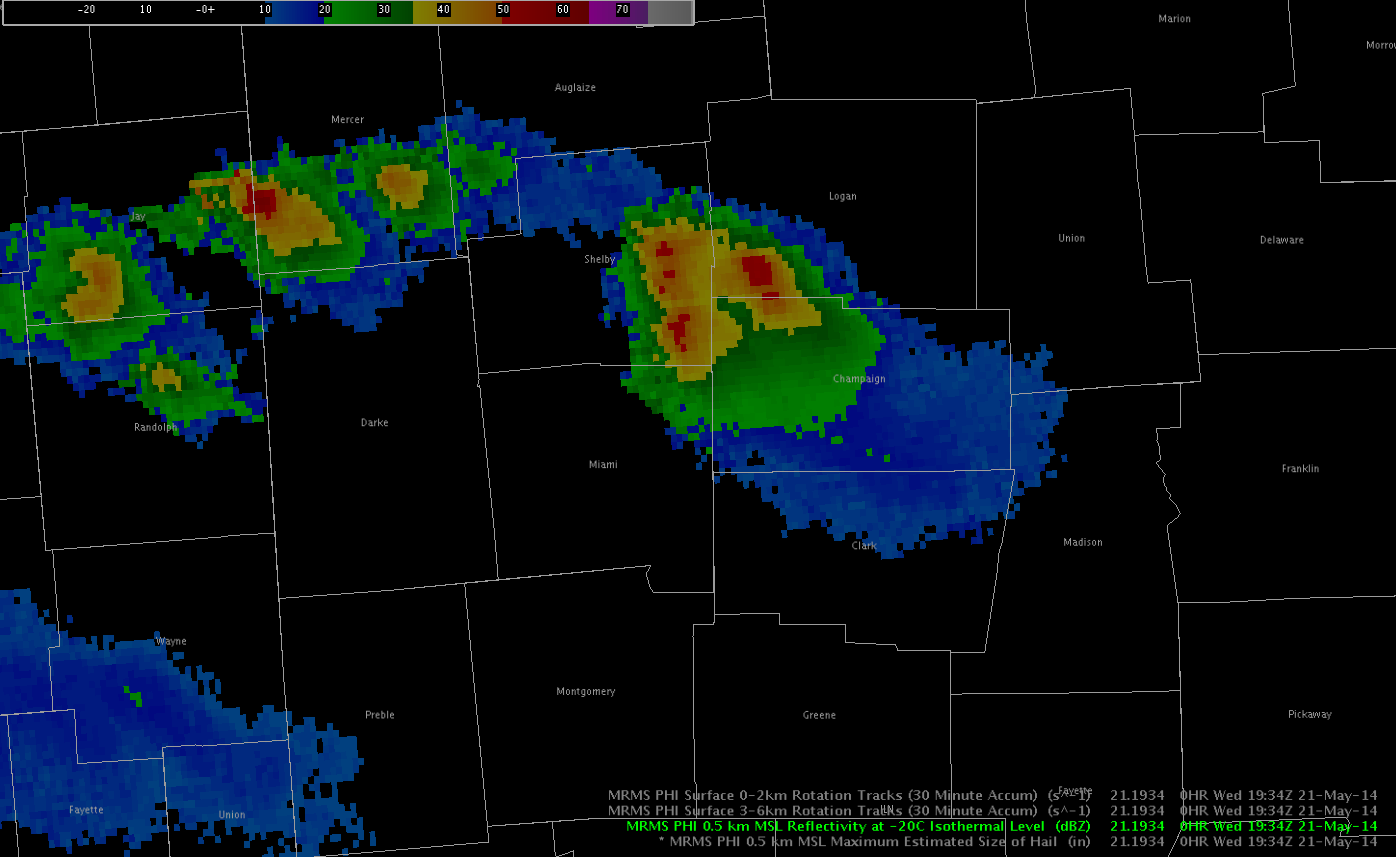
Two early severe thunderstorm warnings have been issued based on MEHS, Reflectivity Above -20C, and Probability of Severe Products.  MEHS increased rapidly with each storm increasing confidence that storm was rapidly developing.  Used previous analysis of LAPS information to increase confidence that storms in this area could be supercellular.

21May2014-1934Z-ReflectivityAboveM20 21May2014-1934Z-PROBSVRBR

– JRM

Tags: None