Flash Initiation Density product and updraft strength

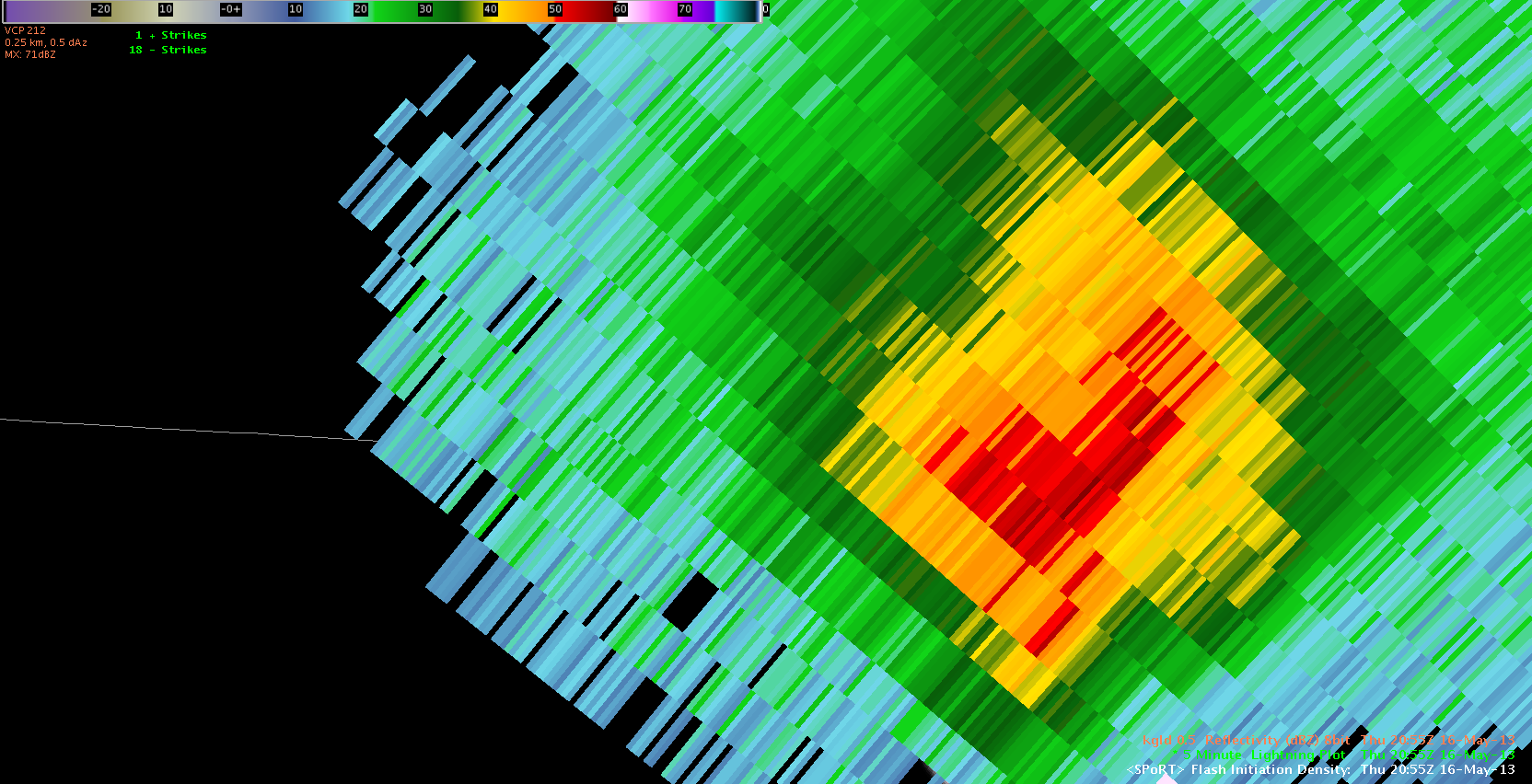
Playing a bit with the SPoRT flash initiation density product and the evolution of an  updraft. Although it’s not a serious storm, it represents the ongoing pulsating activity very well which could eventually gain strength when entering a more unstable air mass to the east. Below you can find the ‘Flash initiation density product’ at 2035Z and 2040Z, showing a marginal increase in lightning activity. Reflectivity at the same time showed a core with 35-40 dBz and only a few isolated lightning strikes occurred.
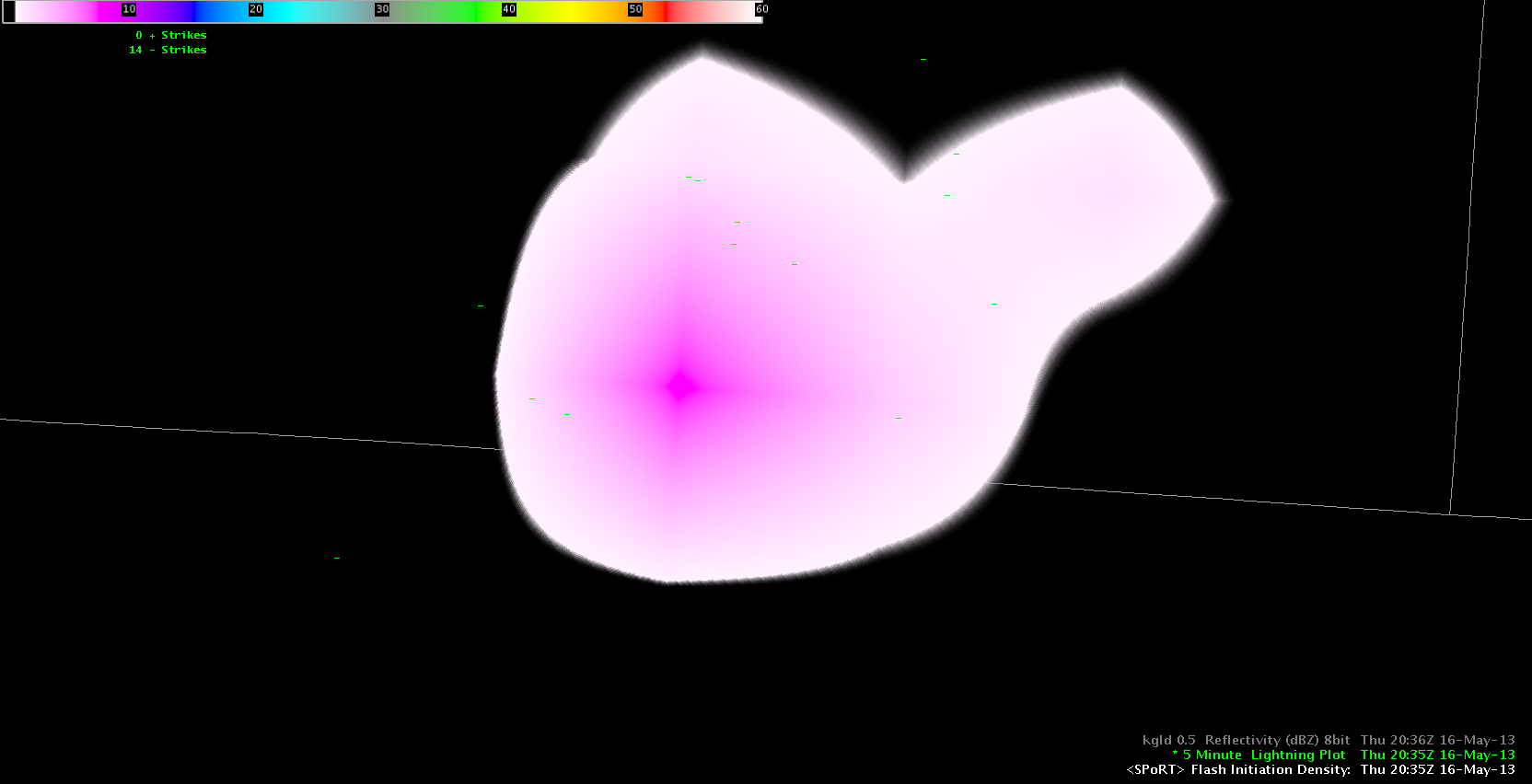
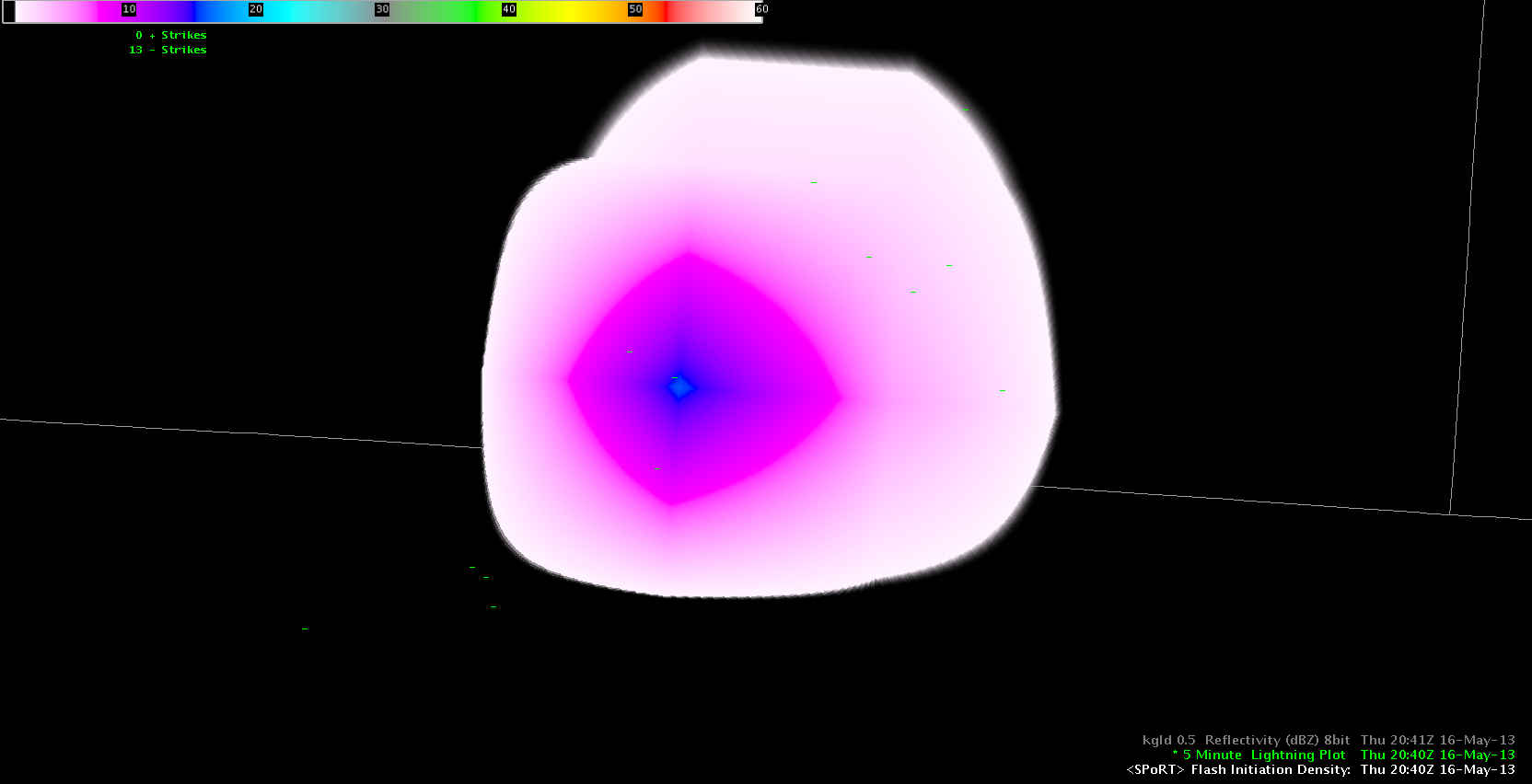
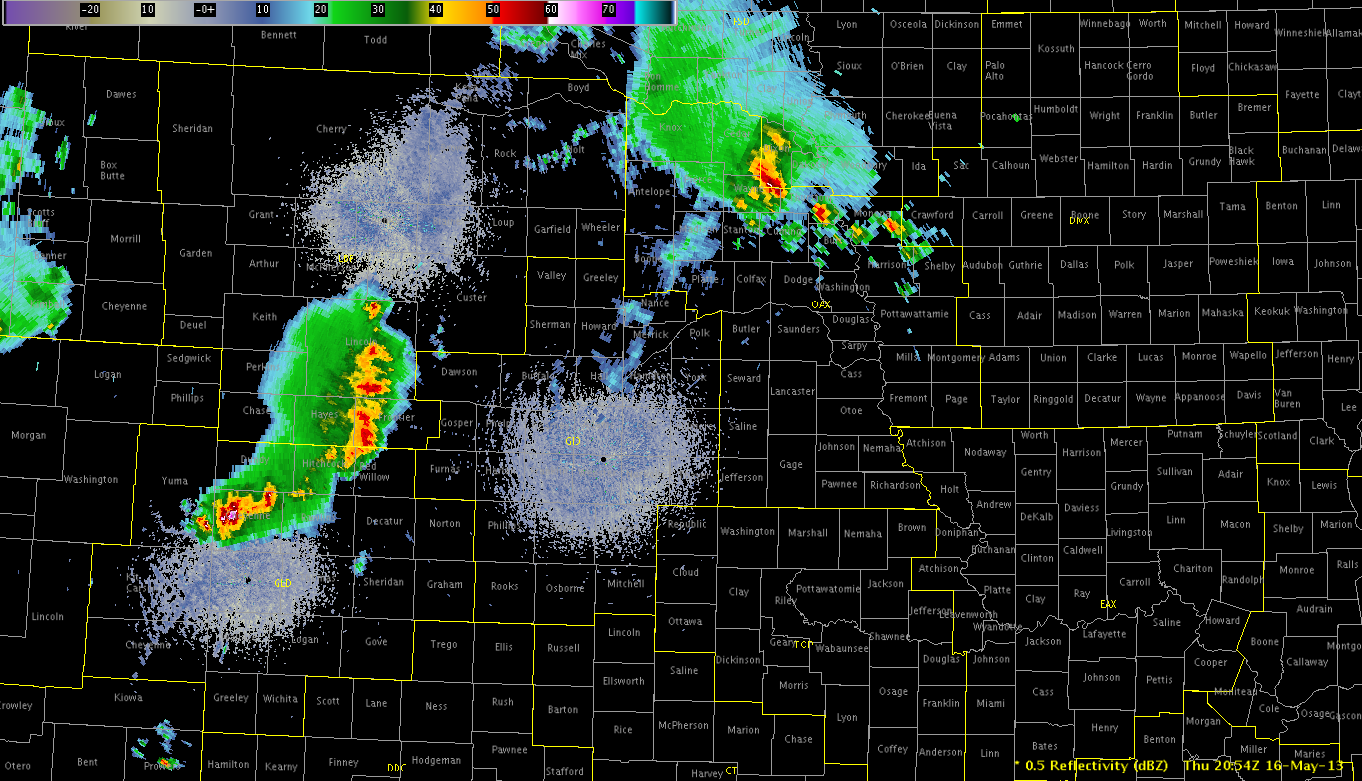
pglm_2035Z pglm_2040Zradar_2055ZAt 2055Z, the storm finally strengthened in reflectivity fields (the core peaked at near 60 dBz) . Although that was just a temporal strengthening trend of that storm it is great to see the lead time you get with that lightning product before the updraft eventually strengthens. Helge
Tags: None

Comparison of OUN-WRF / 3km LAPS / Actual Reflectivity

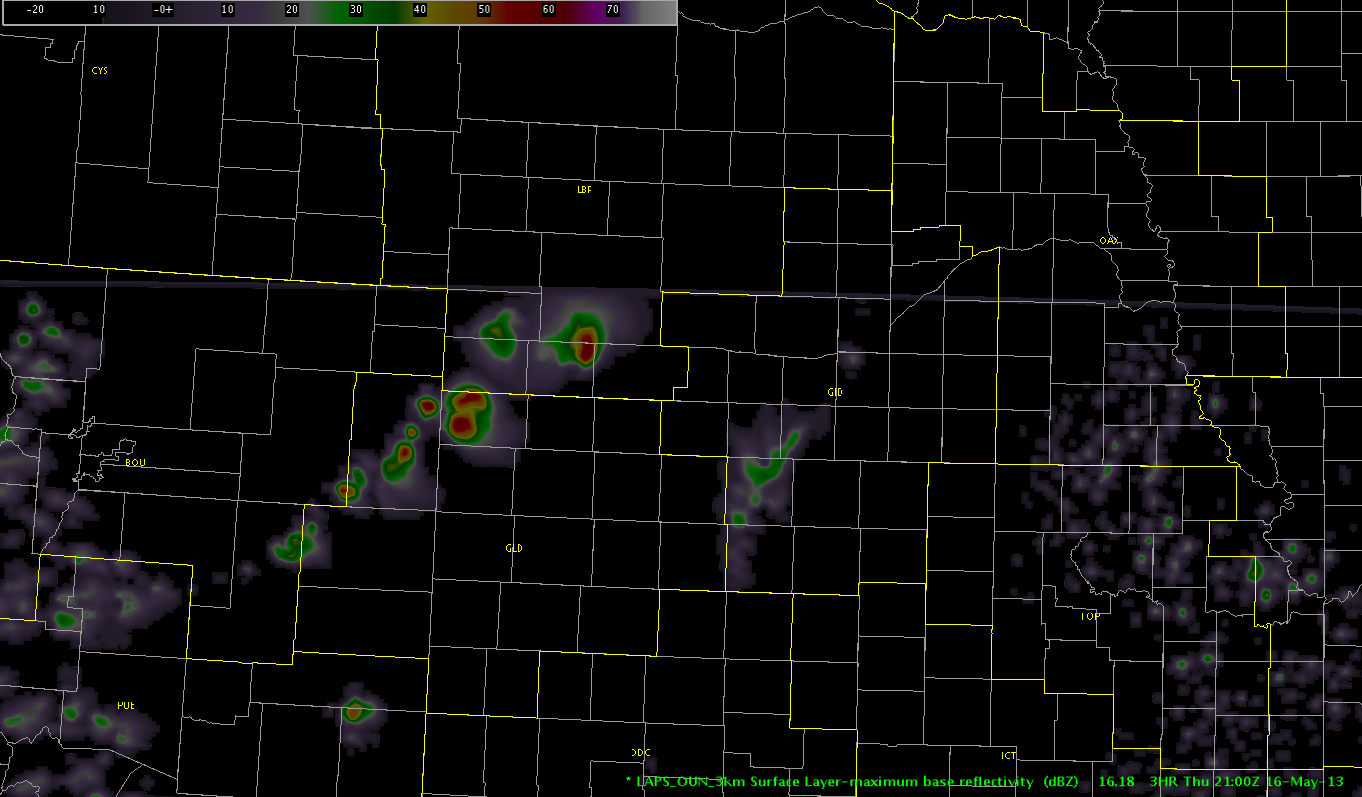
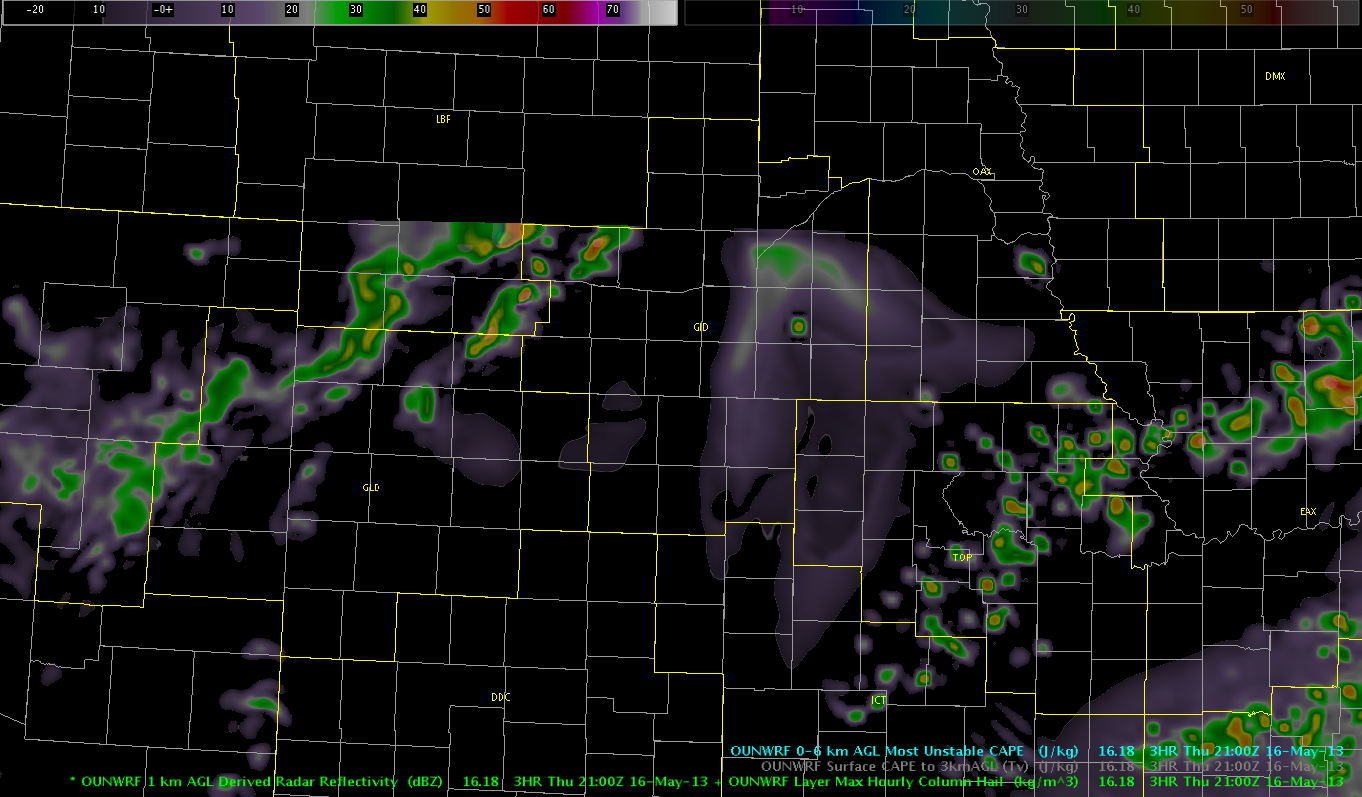
Setting up shop in North Platte, NE today. Quite a marginal setup with relatively low instability / higher based storms based upon Nearcast, higher res LAPS, and more conventional data. Enough shear to organize structures into small line segments at present. Here’s a comparison of some of the higher res model Z output and actual Z at 2100Z. Neither have reality nailed perfectly, but it looks like the OUN-WRF has a slightly better idea of the structure, whereas LAPS has more discrete cells.

Actual Reflectivity

mosaic

OUN-WRF

ounwrf_simzLAPS

laps_oun_sim_zPicca

Tags: None

Close, but not quite…GLD CWA and MESH/CTC

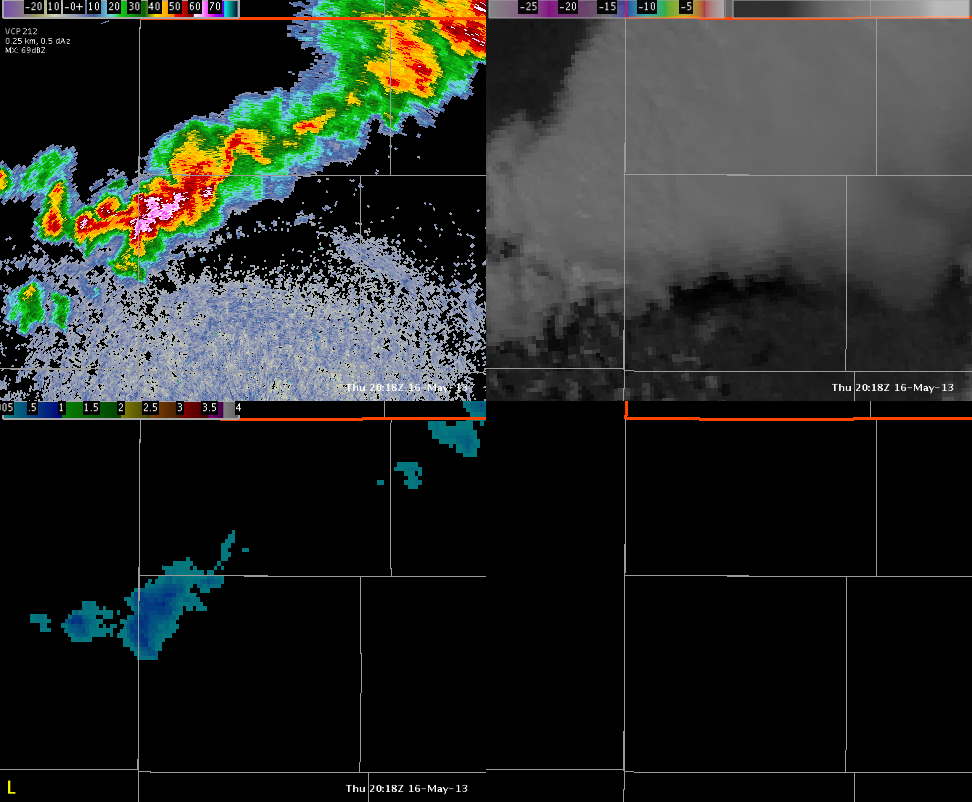
Setting up in the Goodland KS CWA today.  A small cluster of storms is ongoing and certainly producing a lot of rainfall and lightning…note the 0.5 reflectivity on the upper left.  To the upper right is CTC on top of the visible.  No detections here…likely due to anvil cirrus hinderance.  On the lower left, we have MESH from MRMS.  Nothing at one inch or above here either.  Reports from the area have consisted of small hail lately…0.75″ and less.  This seems to reinforce the marginal nature of the storms depicted by MESH and other experimental products.

CL

ref_ctc_mesh_051613_2018

Tags: None

GOES Sounder Air Mass

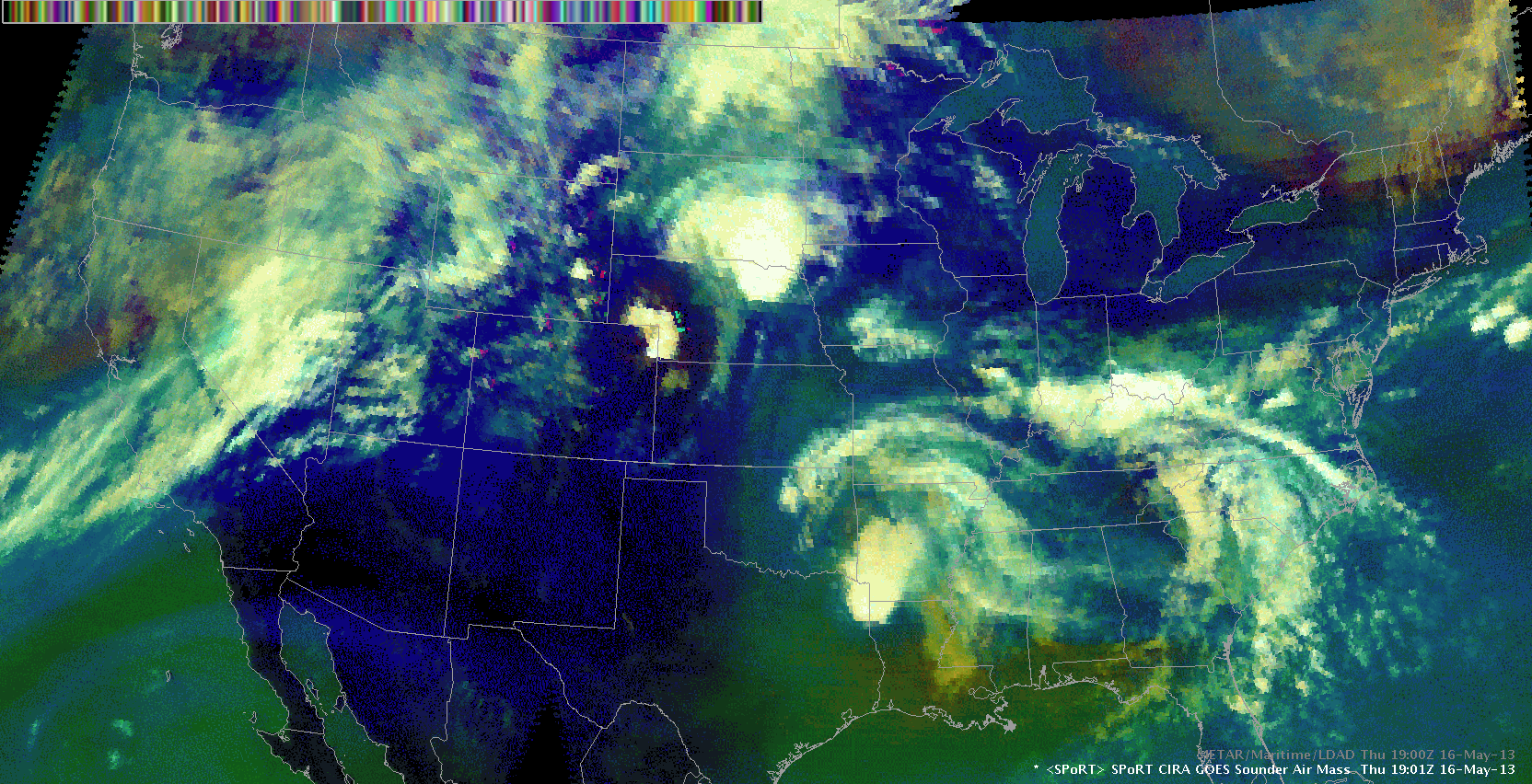
RGB_20ZThe GOES Sounder Air Mass image is very useful in highlighting the different features of interest for today. First of all the compact disturbance which is about to leave NE Colorado to the east/northeast is well visualized by mid-level drying in the image. Weak forcing ahead of that feature already caused some initiation over N/NE Nebraska with another round of storms evolving over extreme NE Colorado. Of interest is a southward extending and weakening vorticity lobe which is about to enter Kansas from the west right now. Also, the dryline is well recognized by that product, showing warm/moist air ahead of the dryline advecting to the north (green-ish colour). This correlates well with mid-level moisture, seen in latest RAP output. A gradual transition from ‘green to blue’ occurs when moving westward (e.g. towards the  TX Panhandle). This corresponds well with some residual low-level moisture f.ex. in the lowest 850 hPa, which gradually mixes out. We will monitor both the dryline and the eastward moving but weakening PVA lobe for some kind of interaction during the following hours and eventually for sporadic CI.  Helge

Tags: None

Examination of MRMS Products During Quarter Hail Event in SW NE

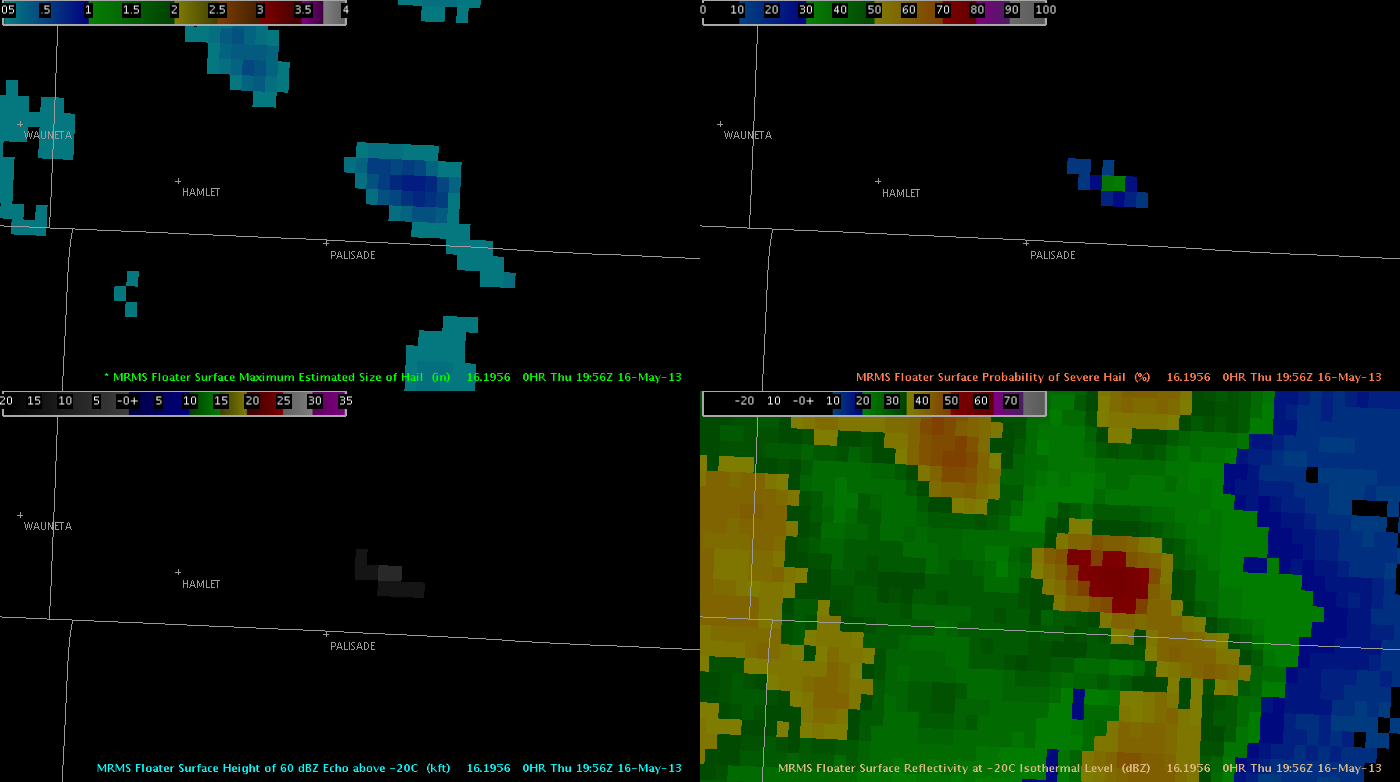
HaysCenterHail1954UTC051613The following images occurred at 1954 UTC on May 16, one minute before quarter size hail was reported 9 S of Hays Center, Nebraska.  MESH slightly underestimated the hail size with a value of 0.79 inch.  Severe hail probabilities had a maximum of 36%.  The 60 dBZ echo was -13.12 kft below the -20C level, due to possible underestimation due to the lack of nearby radars.  There was a maximum of 57 dBZ at the -20C level.

Tags: None

HSDA Update

A quick look at how the HSDA performed around the time 4-4.5″ hail was being reported west of DFW…

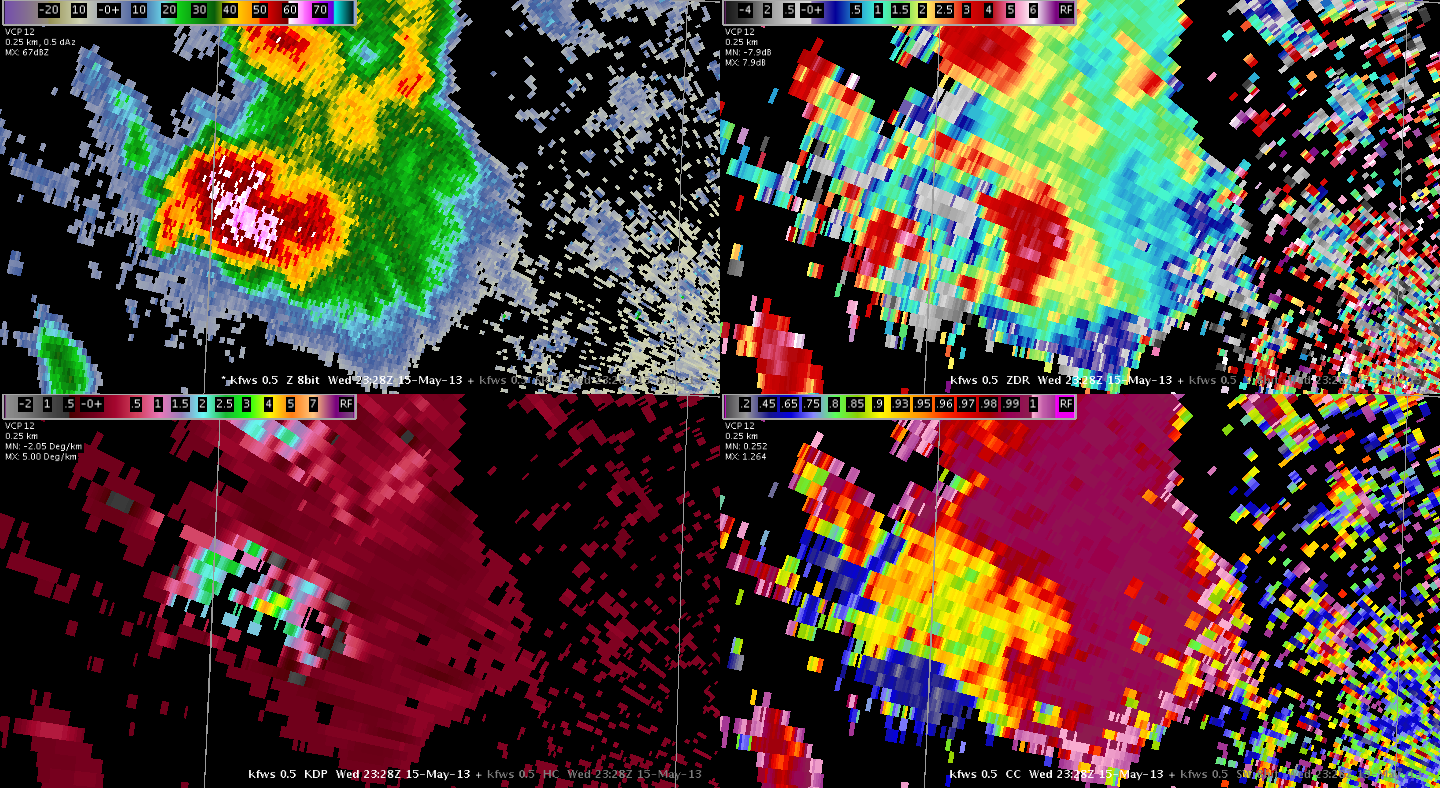
Dual-pol base data showed very low ZDR / CC near the surface within the high Z core. Some elevated KDP in spots.

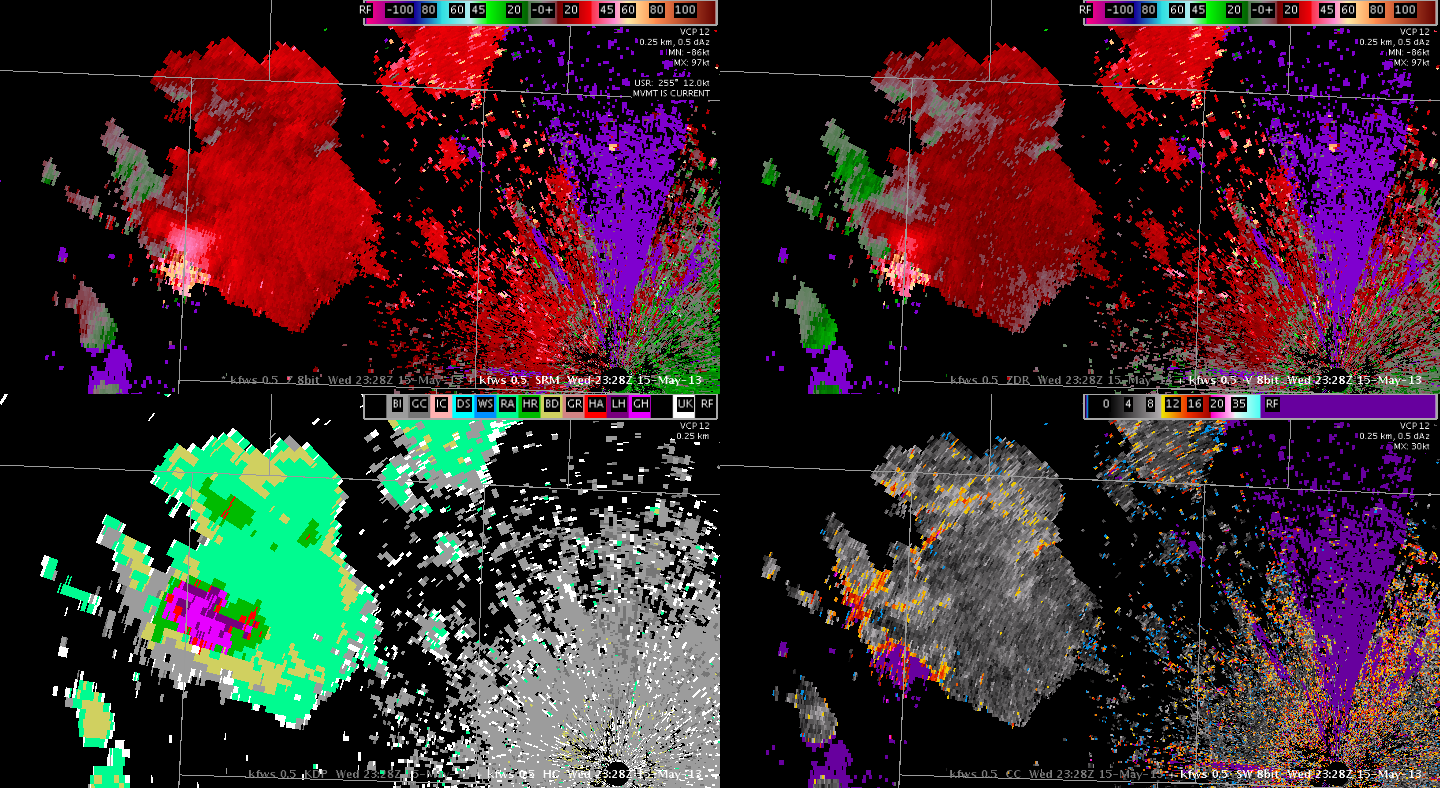
Note the large region of Giant Hail classifications. While the HSDA has been overdoing the region of GH class, this storm did have a sizeable swath of very large / giant hail.

4PANEL_05

4panel_hsda_05

Picca

Tags: None

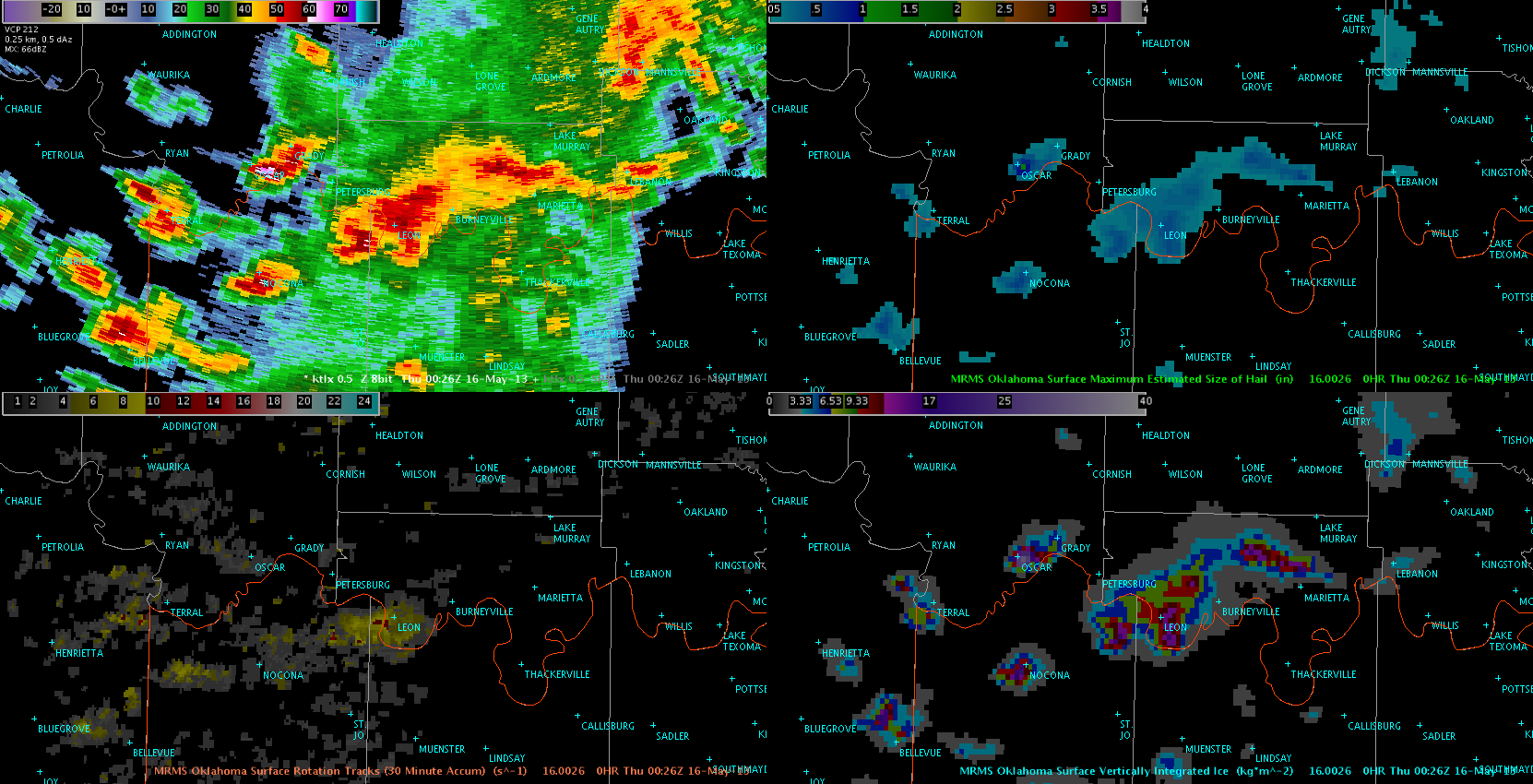
Flash Density Trace for Tornadic Storm Near Leon, OK

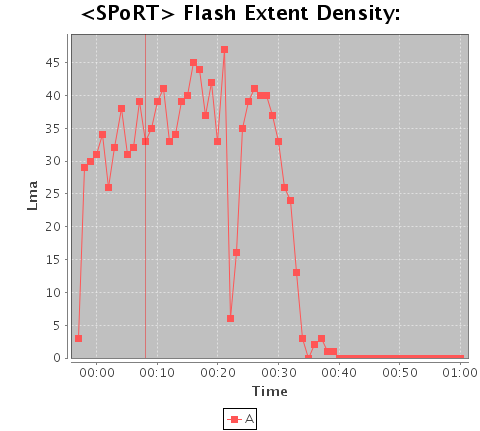
A tornado was reported at 0022Z near the town of Leon in OK. The associated flash extent density trace from the parent storm is below. Focus on the time frame between 00Z and 0031Z. Notice a consistent trend upward in flash extent rate…with a peak value of 48 at 0021Z. Unfortunately…the trace was not created soon enough to capture the flash rate as the storm was intensifying prior to 00Z but the upward trend in flash rate correlated well with the pre-tornadic organization phase.

tornadic_trace

Here is a look at the storm near Leon at the time of the tornado report. Rotation tracks peaked at 11 s-1, MESH was maximized at 0.47″ and the vertically integrated ice peaked at 16 kg/m-2.

storm_at_tornadotrack

Tags: None

Tornadic Debris Signature

Earlier this evening, the dual-pol base data did indeed indicate a TDS, as seen in low CC/ZDR co-located with apparent debris ball. The location matched the SRM couplet very well. However, it was not enough to set off the TDS algorithm.4PANEL_TDS

Picca

Tags: None

Numerous couplets in supercells just west of Fort Worth/Dallas

couplet_0036ZUpper left: reflectivity, upper right: velocity data, lower left: CC

Right and left moving supercells just west of Fort Worth/Dallas repeatedly produced significant rotation signals. In fact at 0030Z, the southern one had its rotation along its northern fringe although this signals was a very transient one (it survived for roughly 15 min). During that time, the northern supercell produced a pronounced hook echo and what looked like a debris ball in the lowest reflectivity scans (no signal in the tornadic debris signature). Helge

Tags: None

OUNWRF Hinted at Possible Tornado Development in TX with 1-3 Hr Lead Time

OUNWRFSurfaceMaxHrUpdraftHelicty01UTC051613The 22 UTC run of the OUNWRF hinted at surface max hourly updraft helicity maxima over central/north Texas 2330-02 UTC where a few tornadoes were occurring, but generally seemed to be a bit too far south and west with the maxima.  The 20 UTC depicted fewer surface max hourly updraft helicity maxima with similar displacements too far west and south. Michael Scotten

Tags: None