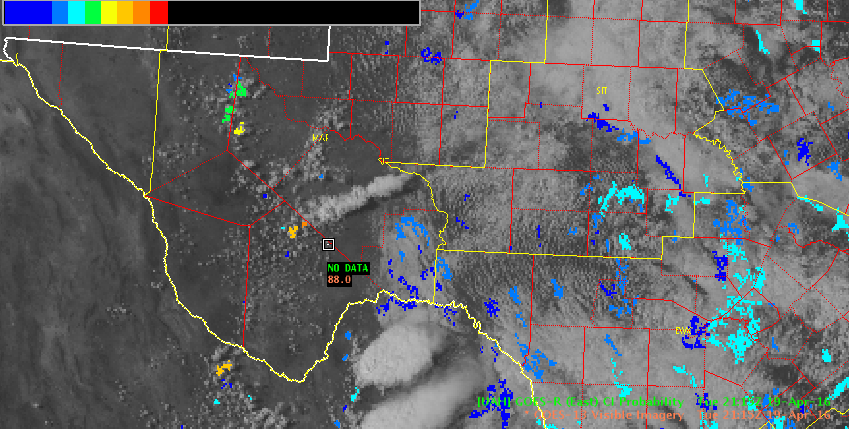
Mesoscale Analysis as of 1830z

J-Money Mesoscale Analysis as of 1830z:

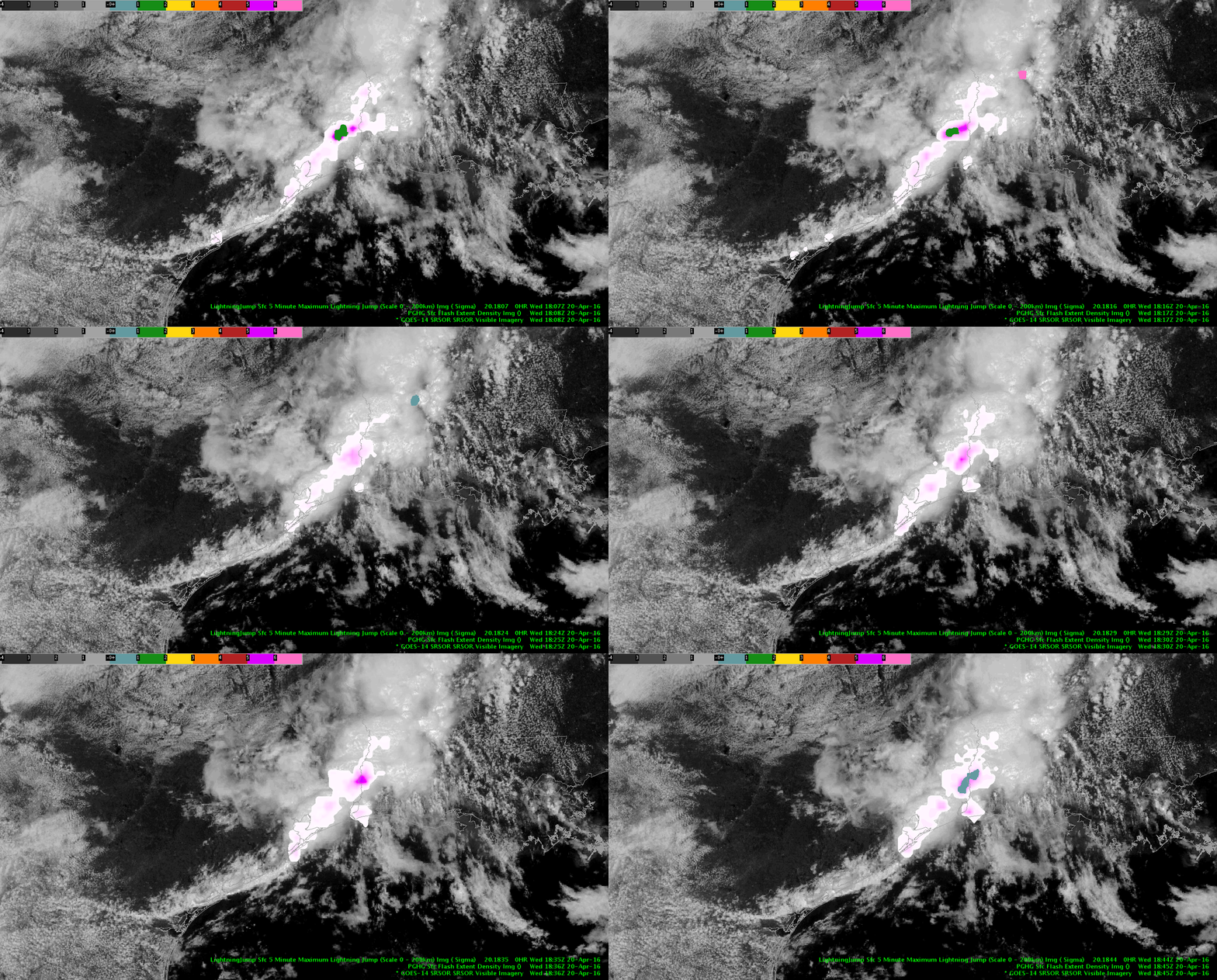
Two regional short-wave features to note in the 700-500 mb layer this afternoon, as per water vapor imagery and meso-analysis data.  The leading system was near the TX/LA border and pushing east, with associated storms being heavy rain producers, given saturated, weakly sheared environment.  Houston LMA and flash rate density products show a fair amount of lightning as well.

Through 19-22z, better convective potential may shift to central/south TX, as a subtle 700 mb short-wave over west TX moves in.  This may interact with a decelerating outflow boundary in the vicinity.  Layered PW data depicts the leading edge of mid-level dry air and presumably steeper lapse rates as well.  Main question is can strong 700 mb cap shown on 12z KDRT sounding be overcome.  Time will tell.   Maybe 19z NUCAPS could help later today?
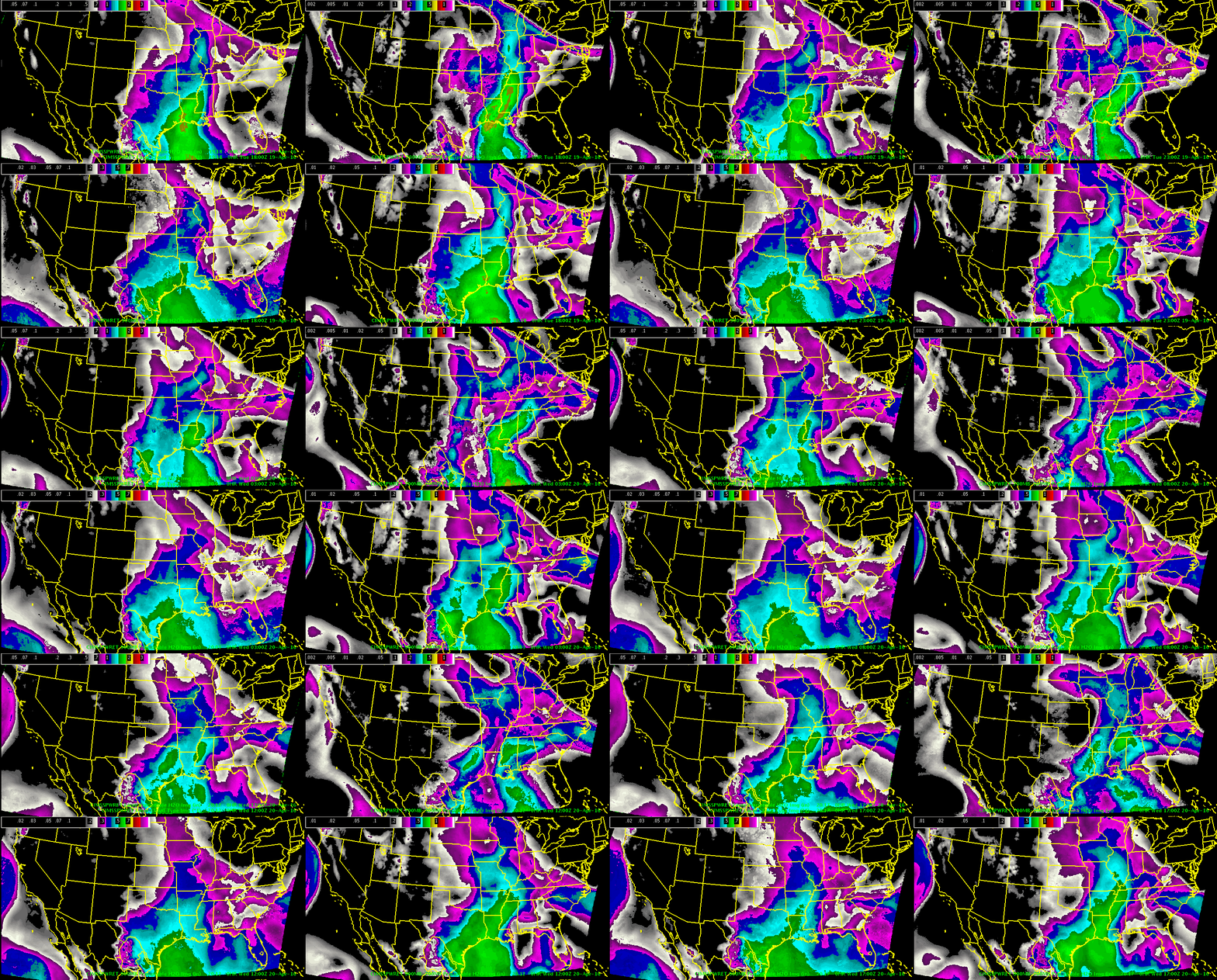
LayeredPW_CentralTX

1-minutevis_lightning


Tags: None

18z Meso Update

Large-scale upper low continues to spin across the Central Rockies this afternoon with broad cyclonic flow prevailing over much of the Southern Rockies.  On the mesoscale, latest data from the SRSOR 1-km visible satellite imagery shows along diffuse outlow boundary remnant of last night’s convection slowly sagging south across southern Texas. To its north, notable clearing ongoing this hour across much of central Texas into the Texas Hill County. Prevailing through with respect to today’s convective potential involves to possible areas, with the first likely kicking off sometime around 21z as isolated cells begin to develop across the Hill County in aforementioned clearing, while another round of shwrs/storms is expected to develop across the northwestern TX panhandle after the 02z time frame as shortwave energy slides across the region. After development, high-res models to include the HRRR and 3km TTU-WRF show this secondary area of convection congealing and forming into a forward-propagating MCS as it dives southeast across the Red Rvr Vly into northeastern TX during the early morning hrs.

In terms of severe potential for the experiment, the prevailing through going forward has been swayed to the Texas Hill Country area as latest rapid-refresh soundings show a gradual erosion of the cap by mid-afternoon as shortwave energy approaches and boundary layer heating continues.  If cap is able to erode, effective bulk shear of roughly 40-45 kts will support supercell structures with large hail and damaging winds being the main threats.  Latest All-Sky LAP layered precipitable water data showing low-level moisture surging westward into the Hill County and Concho Valley regions of central Texas this afternoon.  Combine this increased low-level moisture along with better forcing for ascent and the gradual erosion of the capping inversion, this region should see an increased liklihood for developing convection later this afternoon.

torman1

Tags: None

Mesoanalysis for Lake Charles Area

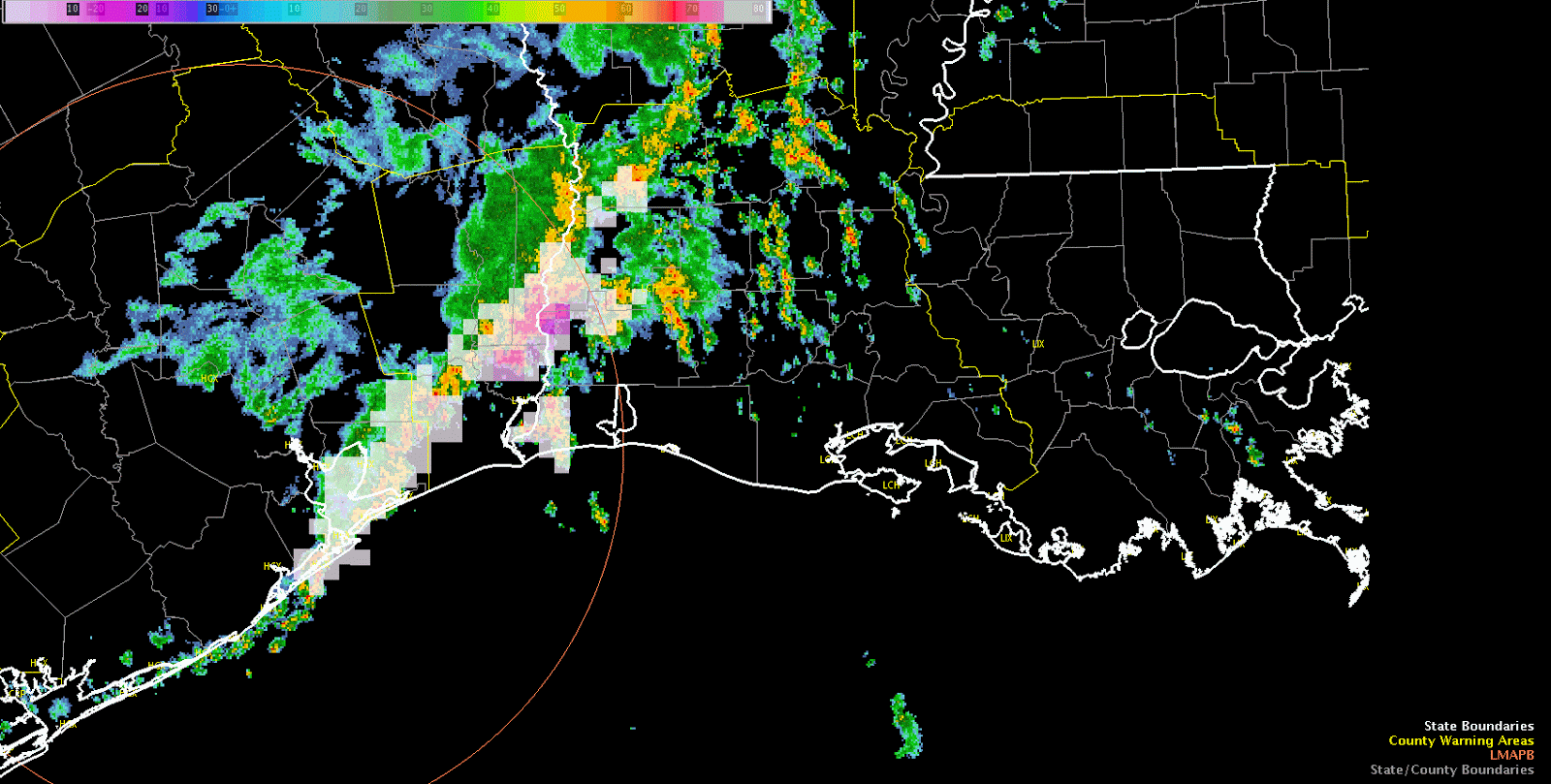
Latest IR loop shows a tendency for warming tops through mid morning in the MCS followed by a reinvioration of convection with cooling cloud tops evident over the past hour. This is occurring as the convective complex moves toward a low-level theta-e axis evident in RAP mesoanalysis and Layer PW extending from Southwest Louisiana north-northeastward into Central Louisiana. As diabatic heating continues over this area an increasingly unstable enviornment is developing with MLCAPE ~1,000 J/KG as of this writing. Convection has developed in this area east of the MCS this morning so far. The severe threat will be limited given loose storm organization at best due to weak deep layer shear. Isolated marginal damaging wind events may occur, but significant hail size will be difficult to acheive given tendency for short duration updrafts, limited CAPE in the hail growth zone, and limited complex storm interactions/mergers. For this experiment we will be particularly interested early on PGLM lightning data from Houston, CG lightning probability, and lightning jump since severe thunderstorms may be hard to come by. A move to another area is being discussed for later this afternoon once we examine lightning for a little while longer in Lake Charles’ area.

Houston PGLM (and range ring) overlaid on regional low-level reflectivity

-dryadiabat


Tags: None

Prob Severe May Provide Better Lead Time

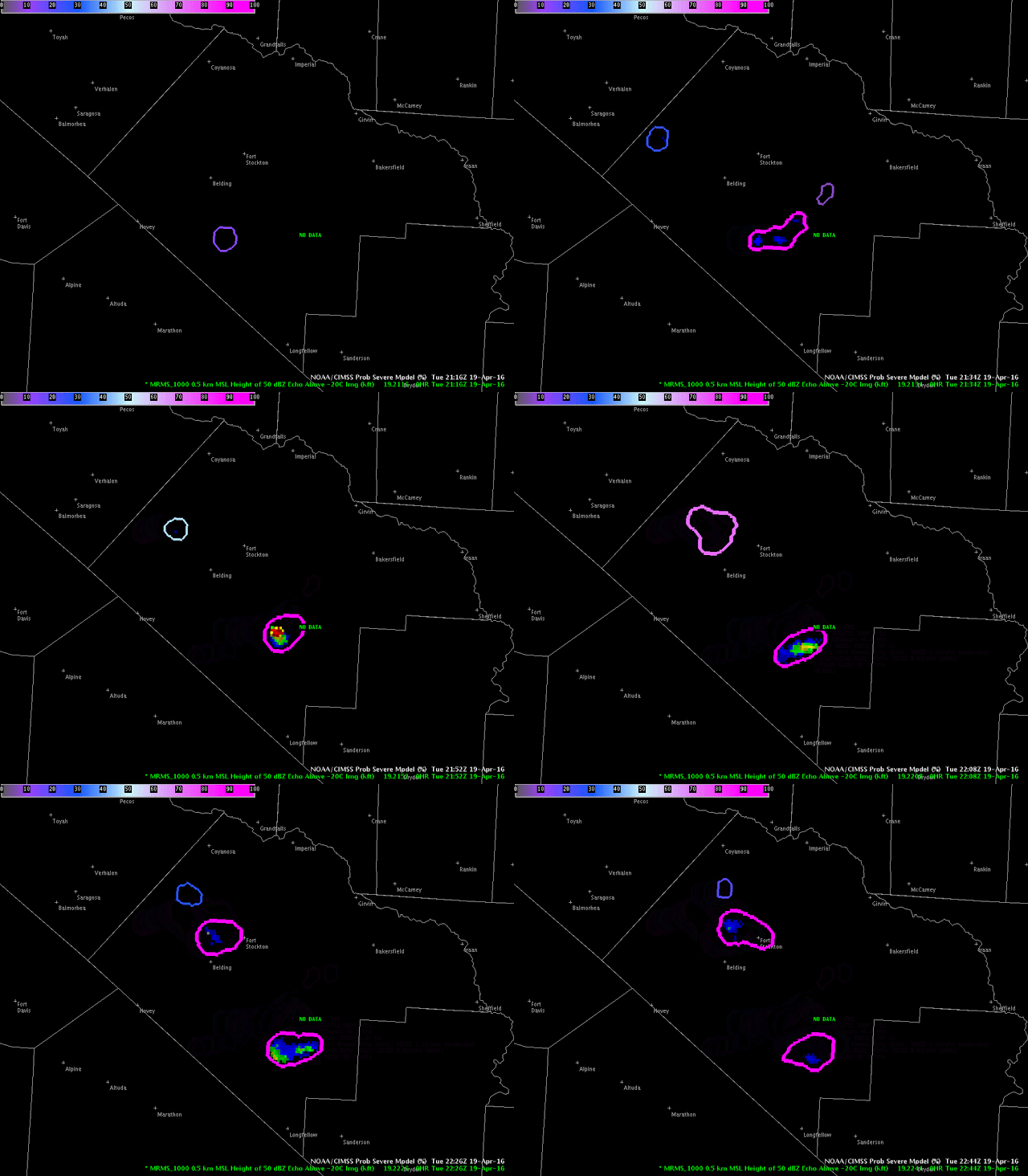
On the storm south of Fort Stockton, the prob severe values increased to >70% before significant depth of the 50 dBZ core above -20C was seen on radar. In the loop below the prob severe circles the MRMS 50 dBZ echo height above -20C. Notice the higher values in the pink color show up before significant 50 dBZ depth above -20C does. This suggests that the prob severe product may be able to provide lead time over legacy severe detection techniques such as the Donavon criteria for severe hail. Prob severe values are quite high on the storm to the north which had much less 50 dBZ core depth above -20C, although may still have met minimum severe thresholds.
probsvrani
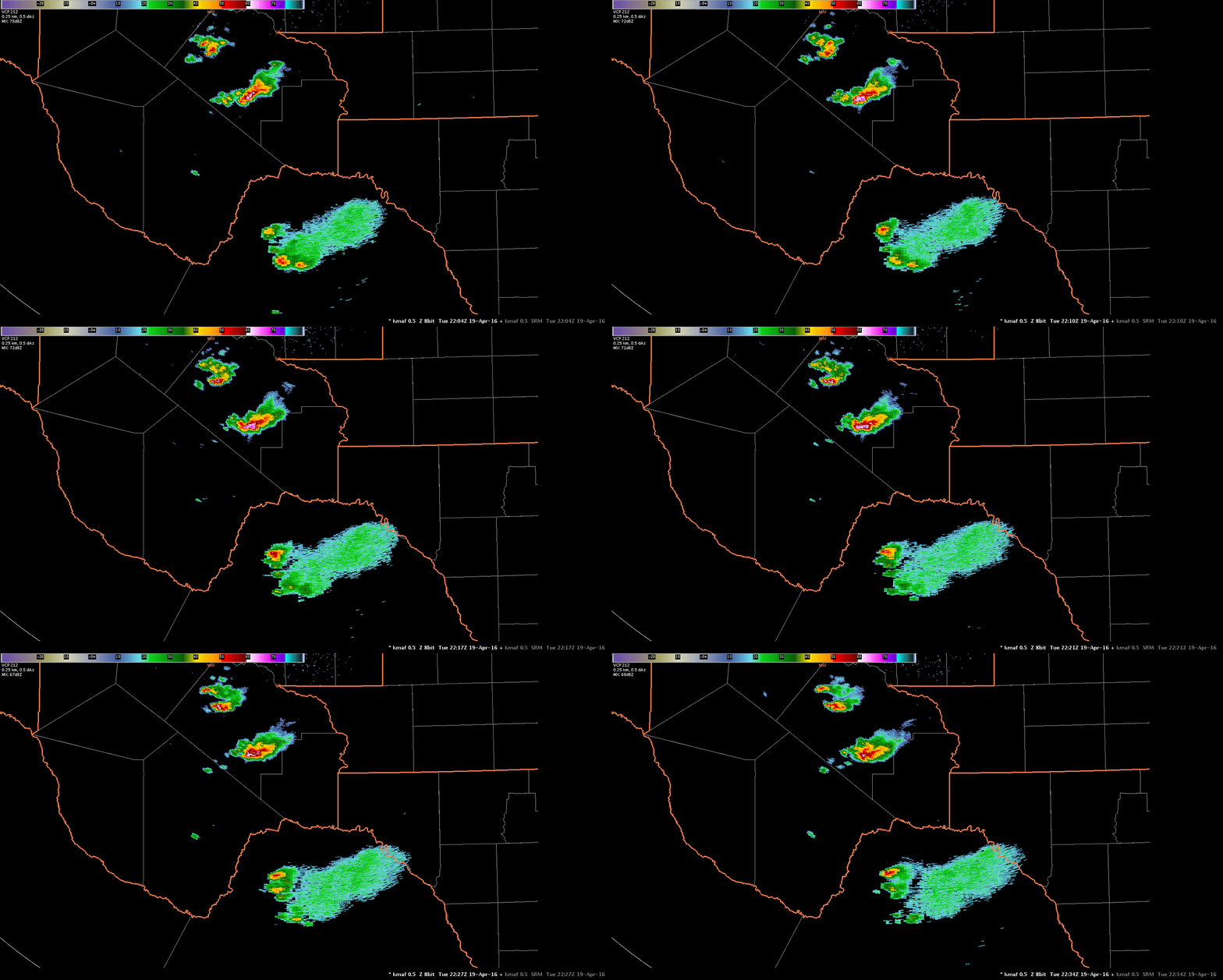
UPDATE: At 5:50, golf ball size hail was reported with the northern storm. This encouraging. Perhaps the false alarms from prob severe are relatively minimal. This is something that I am particularly interested in assessing throughout the rest of this experiment. Prob severe reached >70 approximately 16 minutes before my warning threshold was reached using MRMS 50 dBZ depth above -20C. If assessing with All-Tilts on a single radar I may have caught it and decided to warn a few minutes earlier though. Still, two cases suggest prob severe offers better lead time. Another cell was clearly non-severe based on radar assessment in eastern Ward County moving into Crane County. Prob severe values remained low with this storm, further supporting the suggestion that prob severe may offer better lead time with relatively low false alarms. Prob severe seems to be performing much better in this environment characterized by stronger deep layer shear as compared to yesterdays low-shear / high-CAPE environment in South Texas.

-dryadiabat

Tags: None

The Value of High Temporal Satellite Data

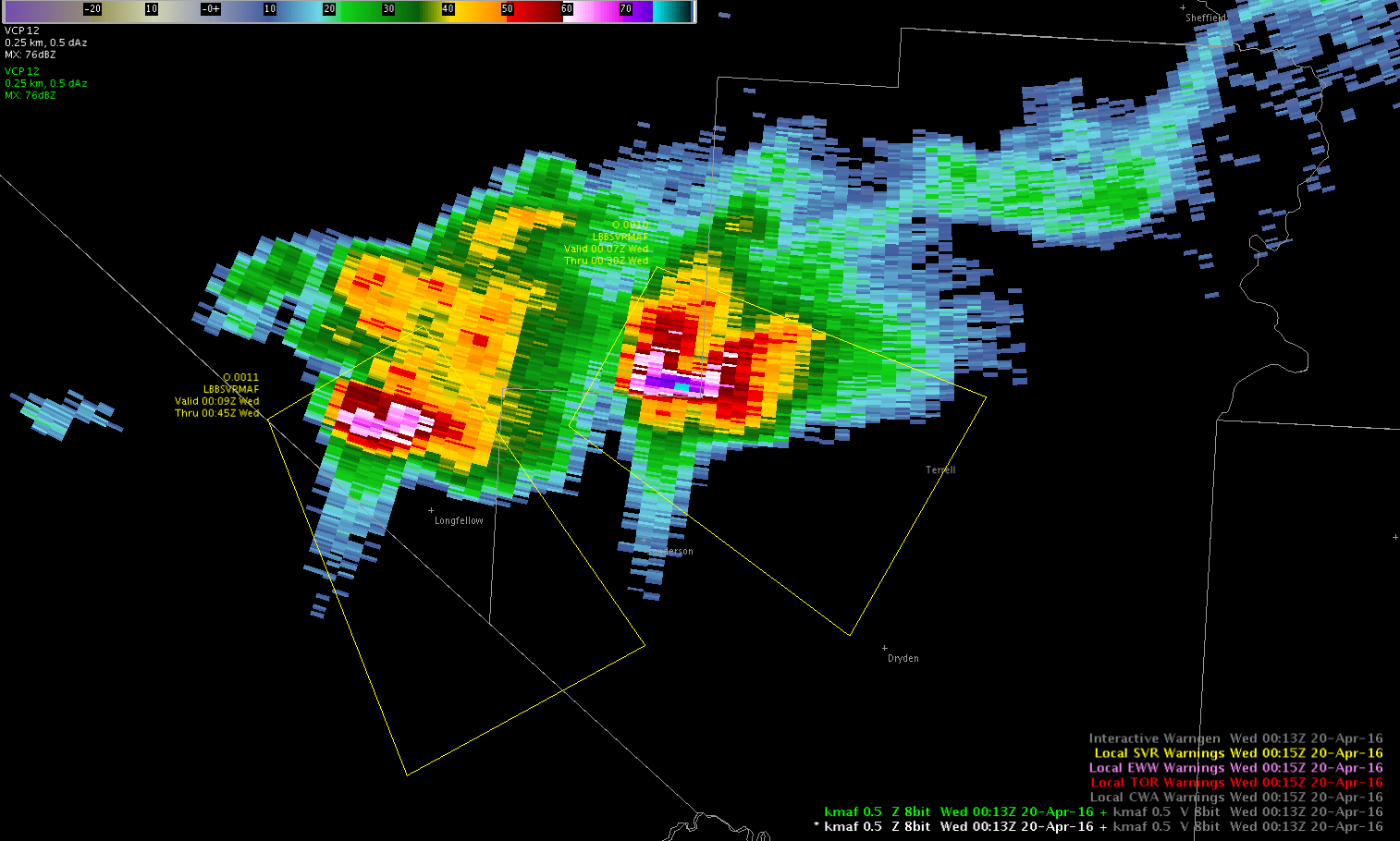
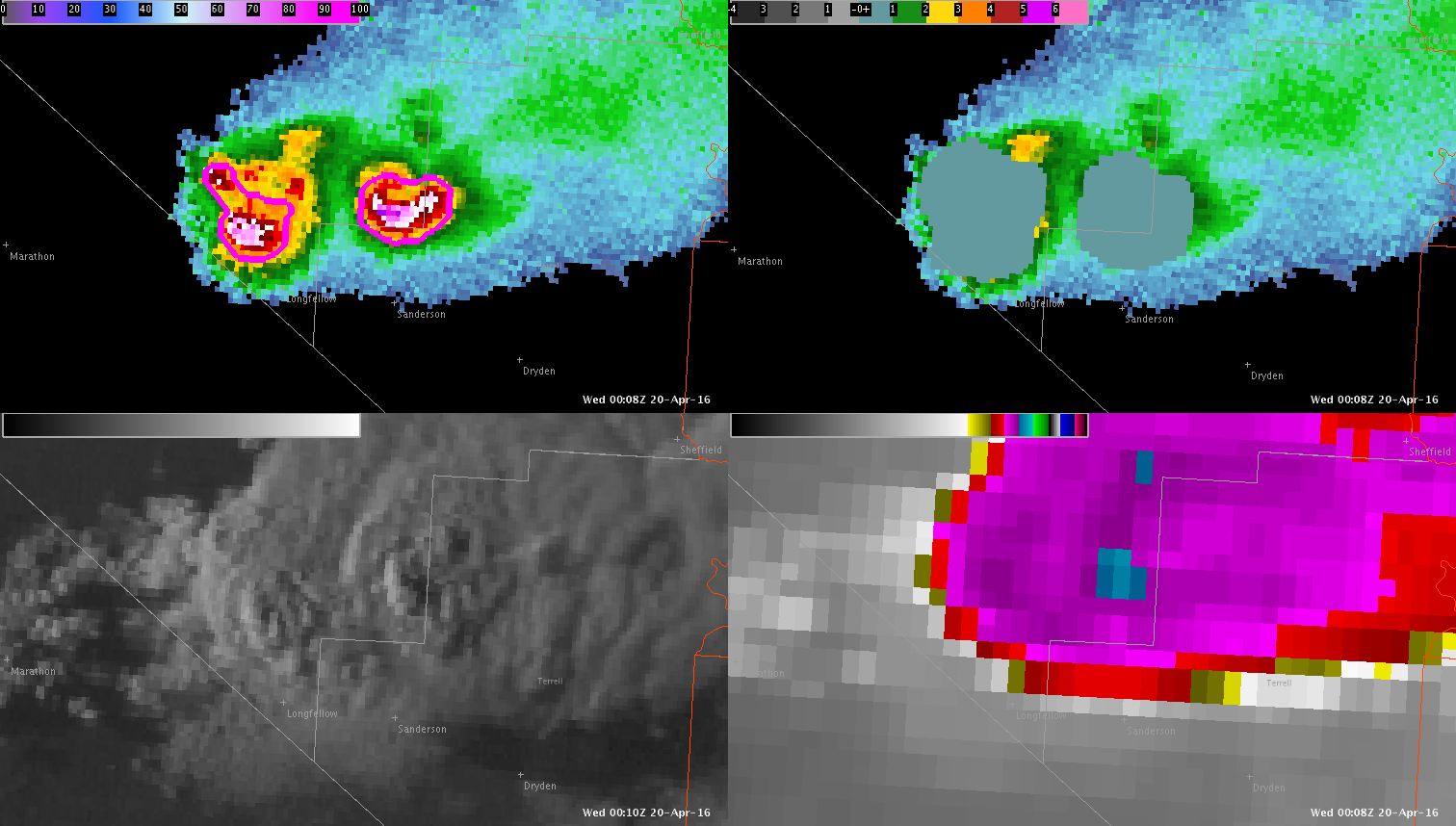
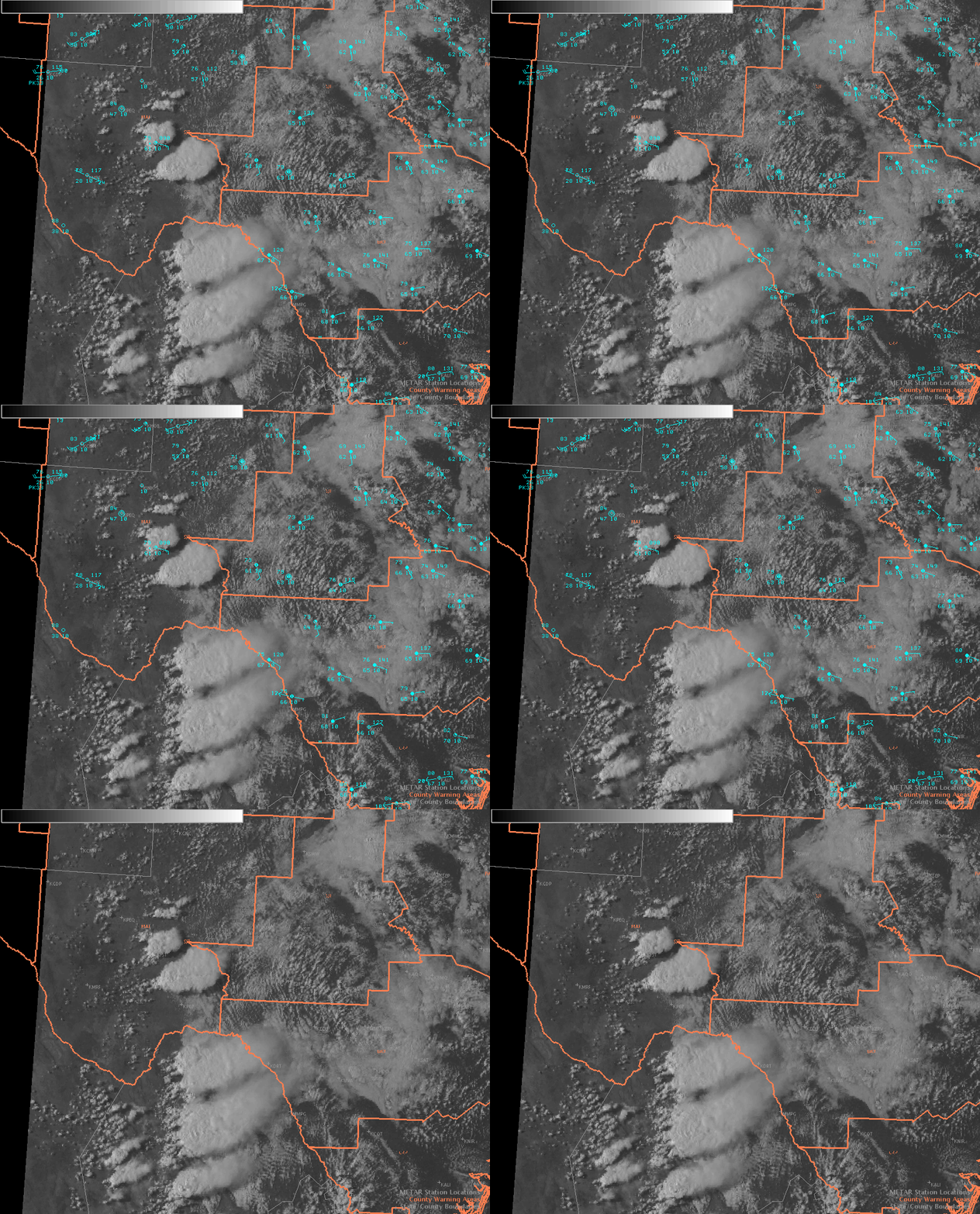
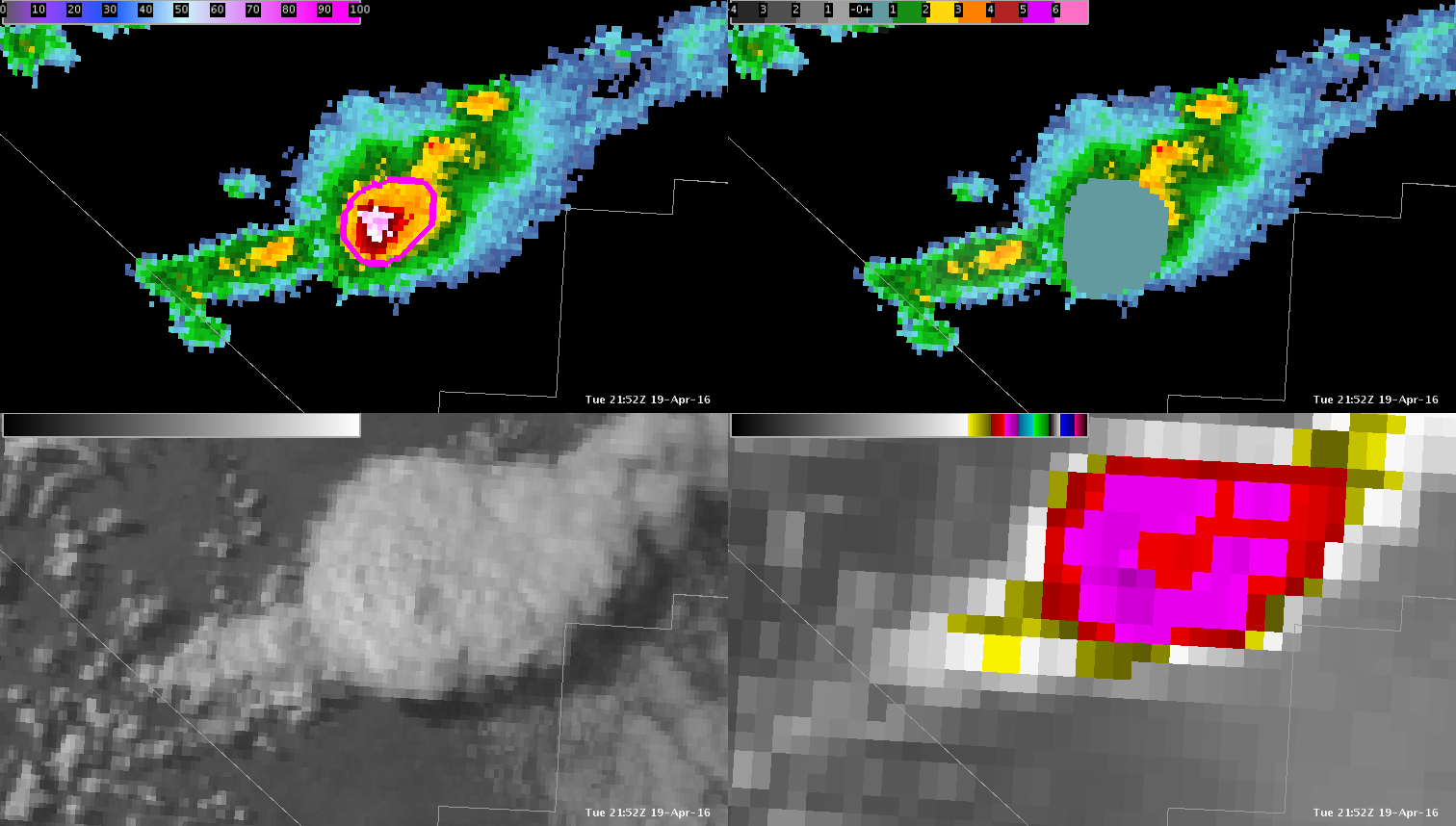
Impressive temporal detail in the SRSOR one minute visibile satellite. See the loop below and notice the detail in the character of the overshooting top and how it changes with time. Compare this with the reflectivity and velocity on the 4.0 elevation angle (~40 KFT). Trends in the overshooting top can be seen quicker in the one minute satellite data compared to the radar, especially when the radar is using meso-SAILS which further slows the upper cuts. The temporal increase in satellite data can fill the void of the temporal loss in radar data with meso-SAILS.

GOESR14 SRSOR Visible
KMAF 0.5 reflectivity at 2200 UTC
KMAF 0.5 storm relative velocity at 2147 UTC

-dryadiabat

Tags: None

LJA and Severe CI

Thunderstorms finally beginning to develop across Pecos County in west Texas as midlevel shortwave trough continues to slowly apprach the area.  Recent development has seen a 8 sigma jump in lightning activity across south-central Pecos County.

Lightning Jump scale 0, from 2124 to 2136.  5 min NLDN CG flashes also plotted.
Lightning Jump scale 0, from 2124 to 2136. 5 min NLDN CG flashes also plotted.

Severe CI actually peaked at 64% for this storm…

UAH Severe CI algorithm for same storm.
Tags: None