


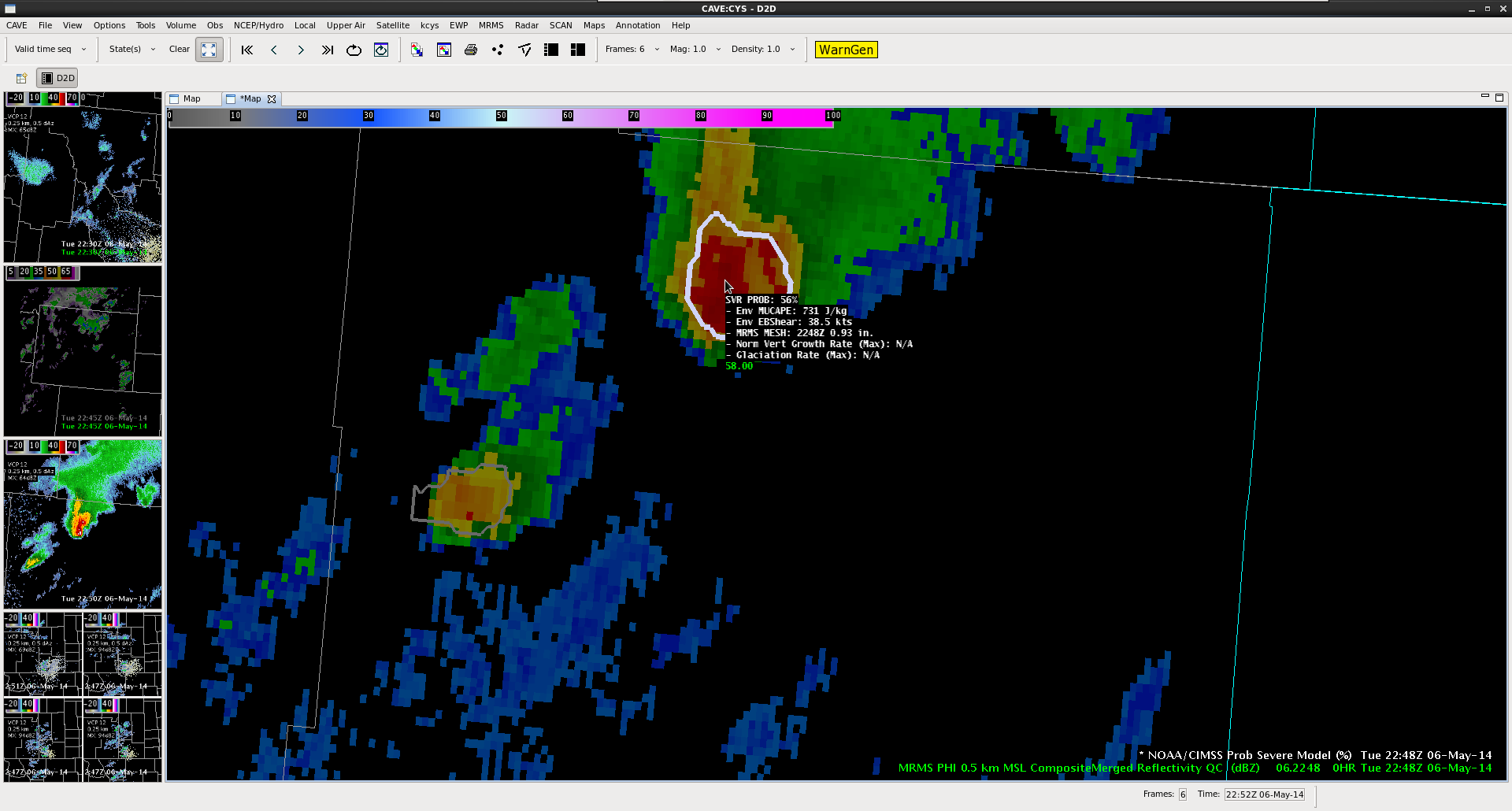
All output of Prob severe model are white text. Change font/color based on certain thresholds. For example, MESH output changes to yellow once 1 inch hail is predicted etc.
Official websites use .gov
A
.gov website belongs to an official government
organization in the United States.
Secure .gov websites use HTTPS
A
lock (
) or https:// means you’ve safely connected to
the .gov website. Share sensitive information only on official,
secure websites.

All output of Prob severe model are white text. Change font/color based on certain thresholds. For example, MESH output changes to yellow once 1 inch hail is predicted etc.
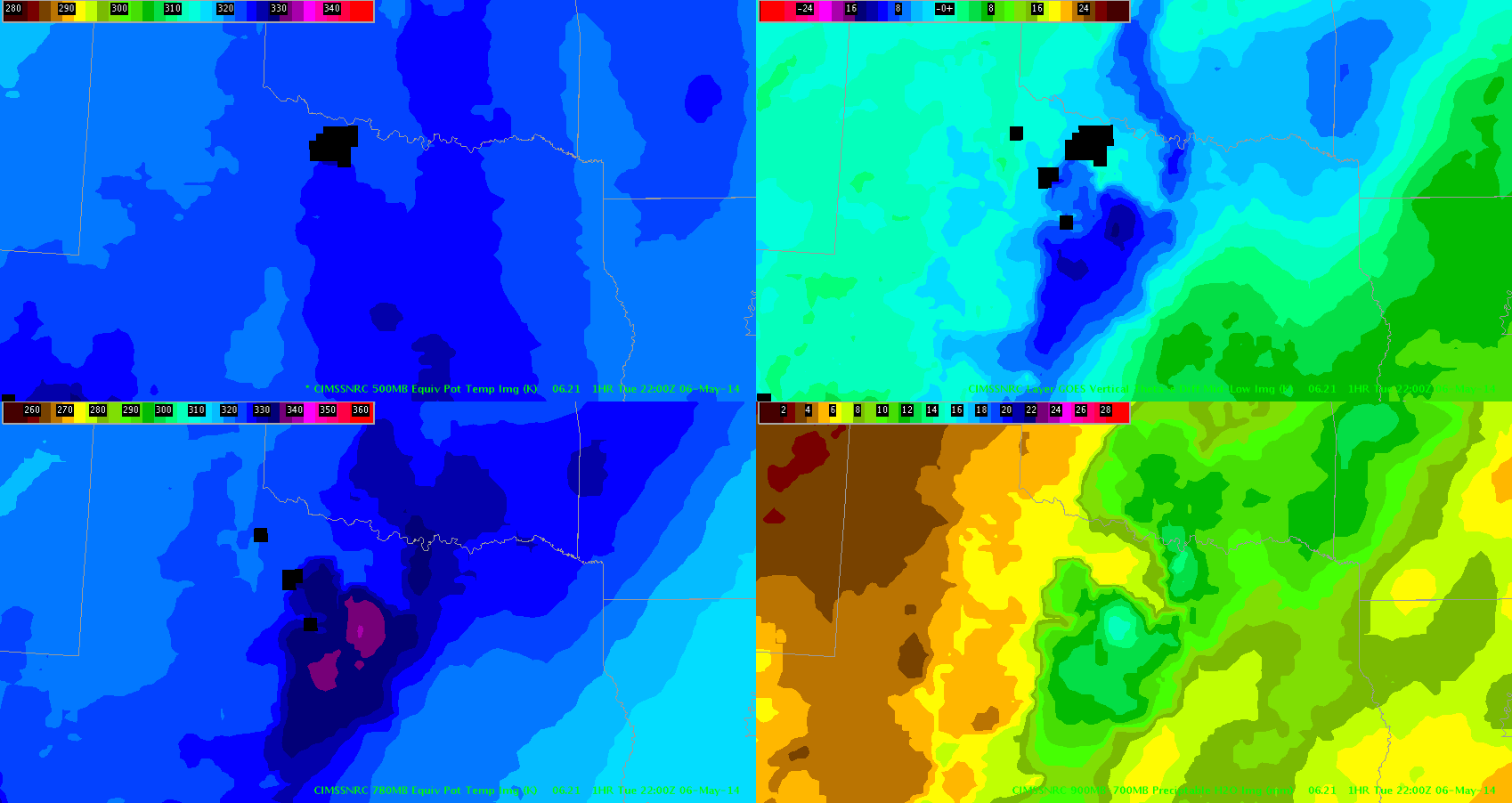
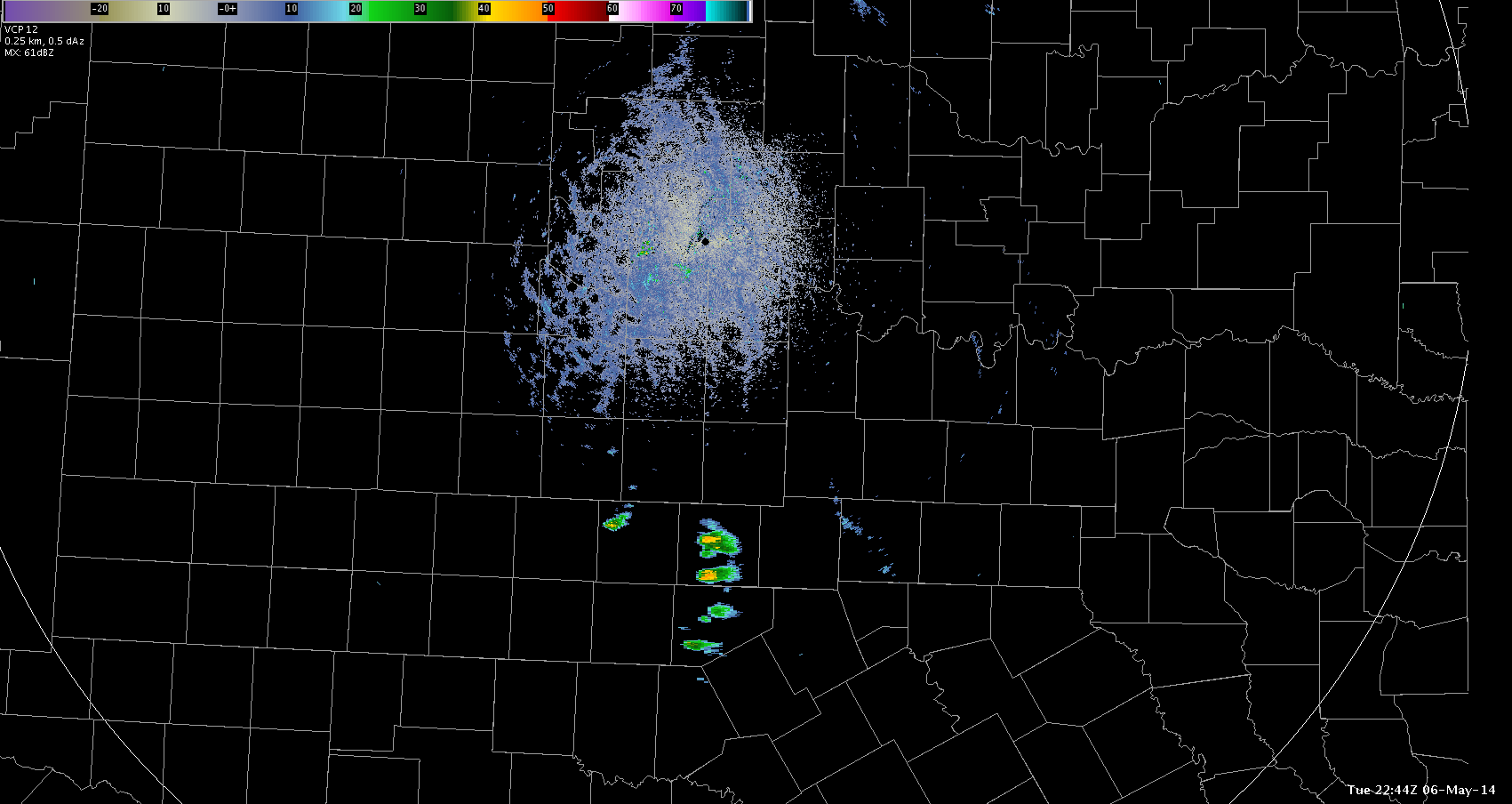
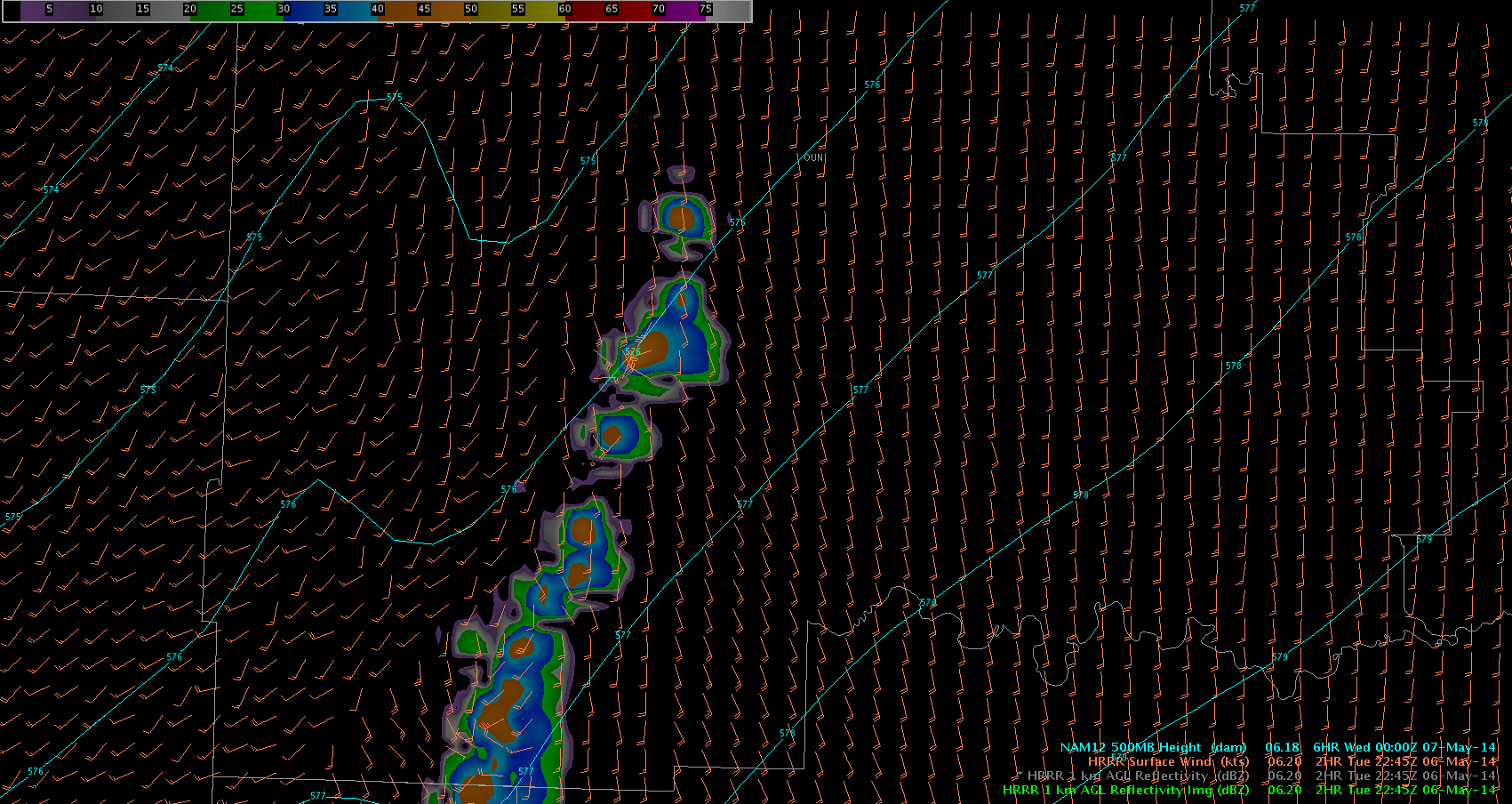
Convective initiation has once again lined up pretty well with the instability depicted on the theta-e difference graphic in the nearcast. I have now seen this in a couple of cases. The nearcast forecast brings some instability north into Oklahoma later this evening. It will be interesting to see how this lines up with the convection at that time, as the HRRR model has shown some decent development across portions of North Central Texas and Southwestern Oklahoma.
Jared Maples
2200Z…KCYS showing a few showers developing. Vis satellite shows these cells developing just out ahead of a deck of cirrus to the west. Instability seems marginal, at best, in this area based on Nearcast analysis. Northern cells are closer to better instability.
Meanwhile, earlier strong storms moving NE out of central WY held some strength likely at just sub-severe levels…and have weakened further. Will monitor as these cells again are in the area of greater instability.
Very dry air in the low and mid levels has been hard to overcome early this afternoon. Cumulus development and shower activity has been elevated, resulting in virga. Moisture will try to make a return late this evening, along with some instability. A short wave will round the main trough later, as well. Storm initiation will be concentrated in North Central Texas and Southwest Oklahoma mainly after 5 p.m. Upper level westerly winds of 50-55 knots move in with lower level south-southwesterly winds of around 30 knots may be conducive for some discrete cells to development. Though conditions are marginal, storms may briefly become strong before running into drier, more stable air later in the evening.
Jared Maples
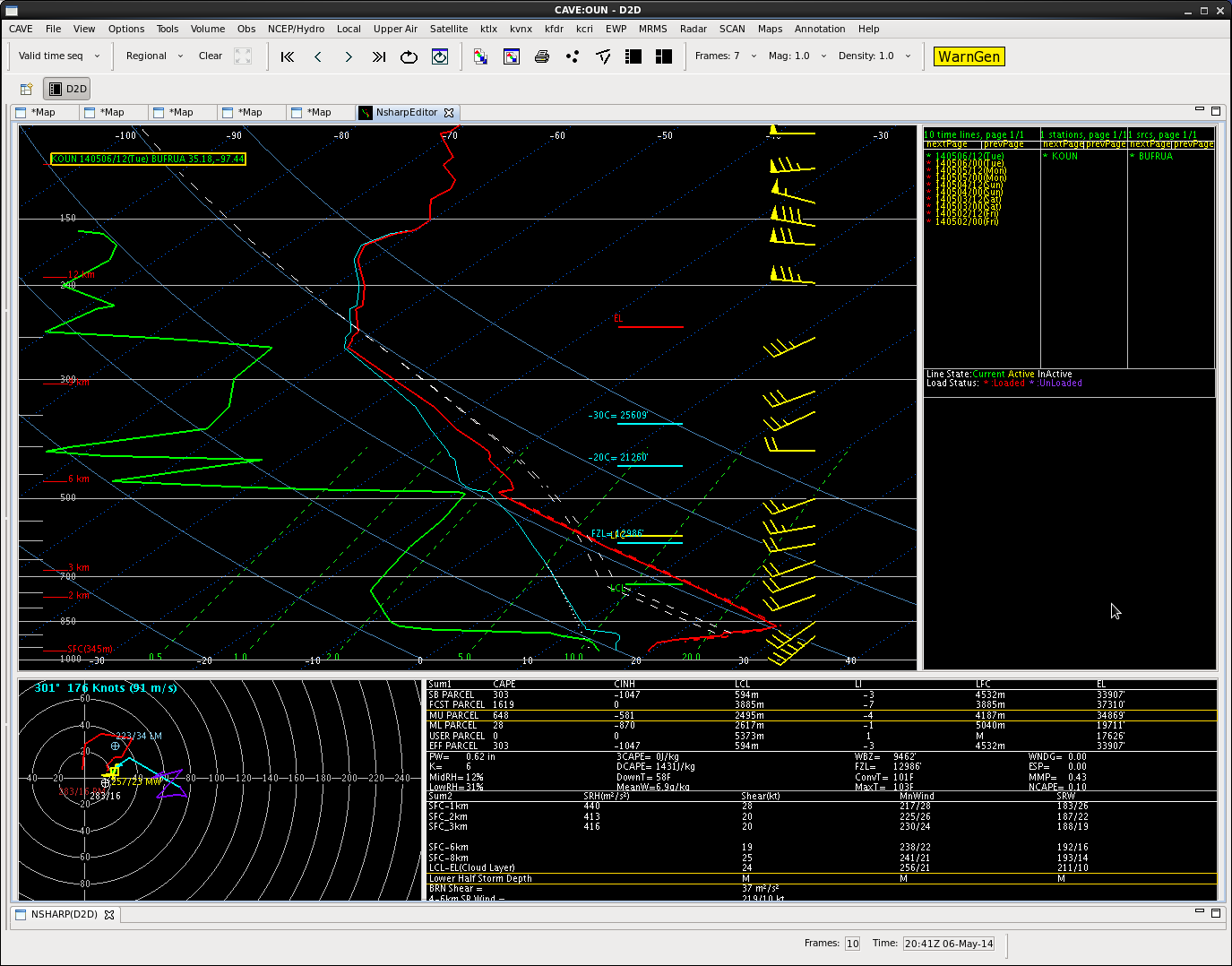
Upper level analysis has large ridge over the central CONUS with trof digging into the Southwest. Skies are partly cloudy with mid level cumulus streaming across the area. At the surface…above average temps are in place with dryline nearly bisecting the CWA. Dewpoints are in the 60s across eastern portions of the forecast area…with dewpoints in the teens and 20s in far northwest OK. Moisture across the eastern zones is very shallow, as indicated by OUN sounding.
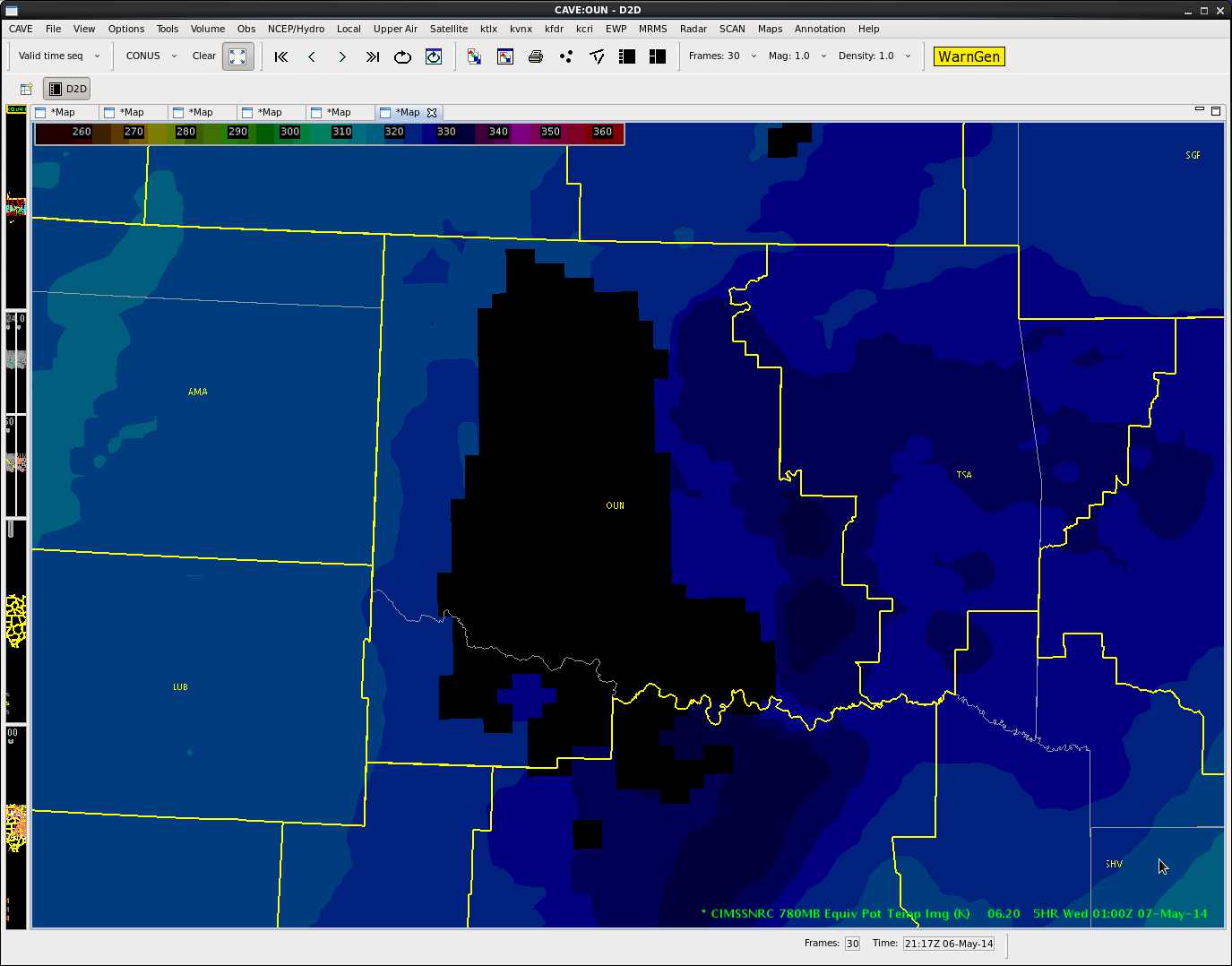
Southerly boundary layer flow will continue to transport moisture into the area. Nearcast Low level Theta E increases across the area around 00z with cap weakening a bit across far southwest portions of the CWA.
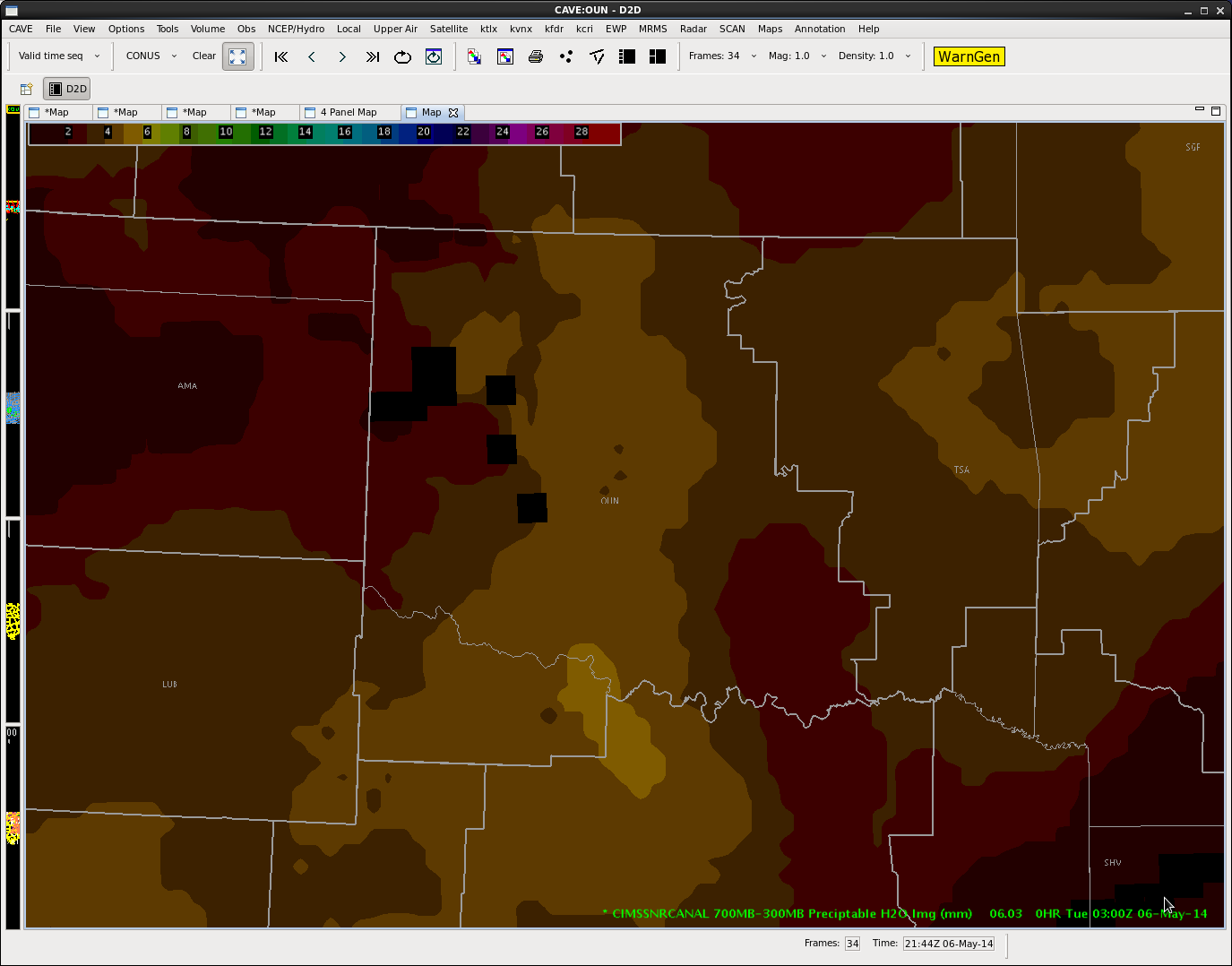
In addition…Nearcast mid level Water Vapor increases across southern portions of the area after 00Z will help to weaken the cap.
Water vapor imagery depicting weak shortwave moving into western Texas…moving northeast at 45 knots. This shortwave will enter the far southwest corner of the CWA between 2Z and 3Z. With a weak cap still in place…surface based convection is not expected…but elevated convection will be possible. 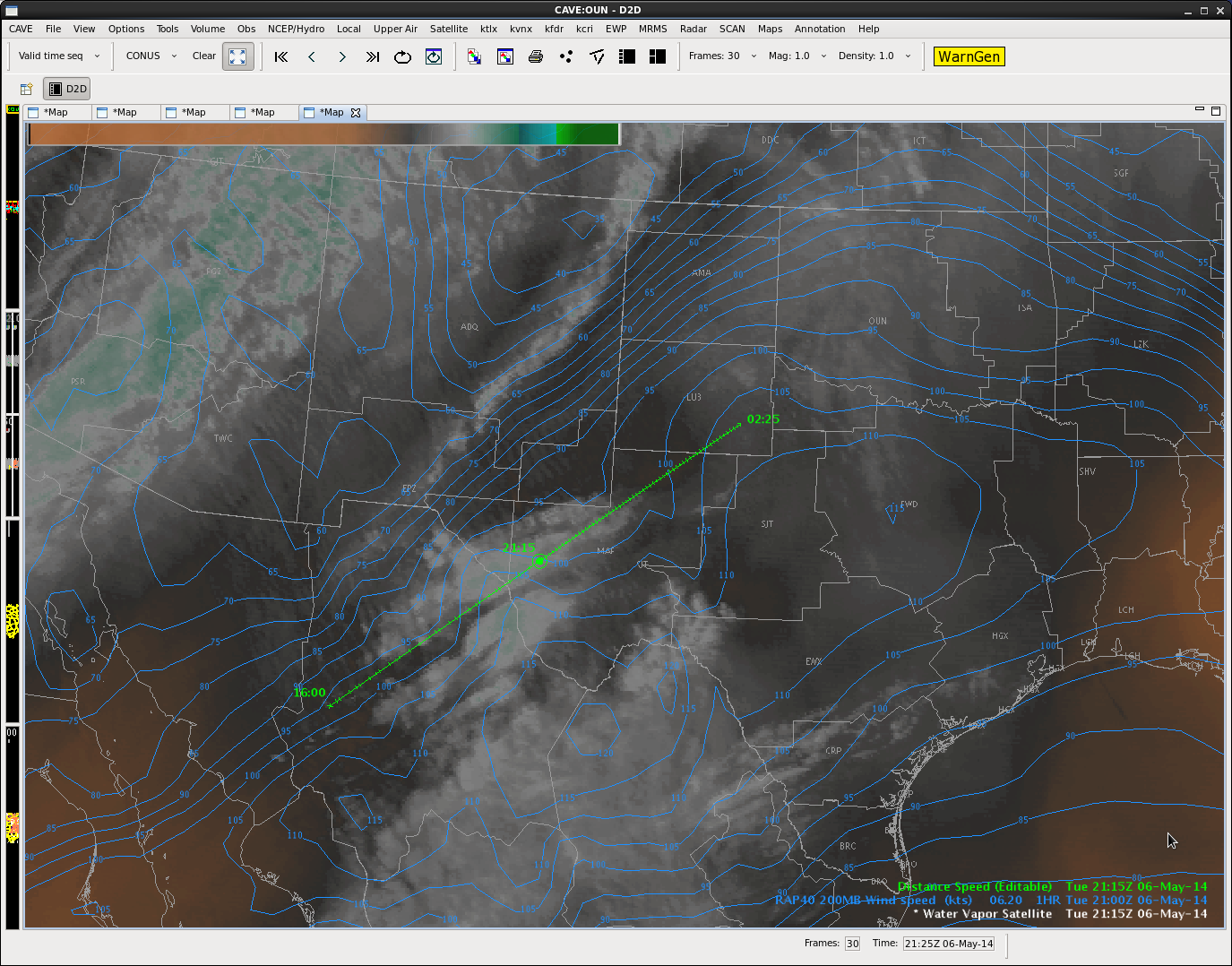
Both RAP and NAM also showing this weak shortwave at 500mb and 700mb over southwestern areas by mid evening.
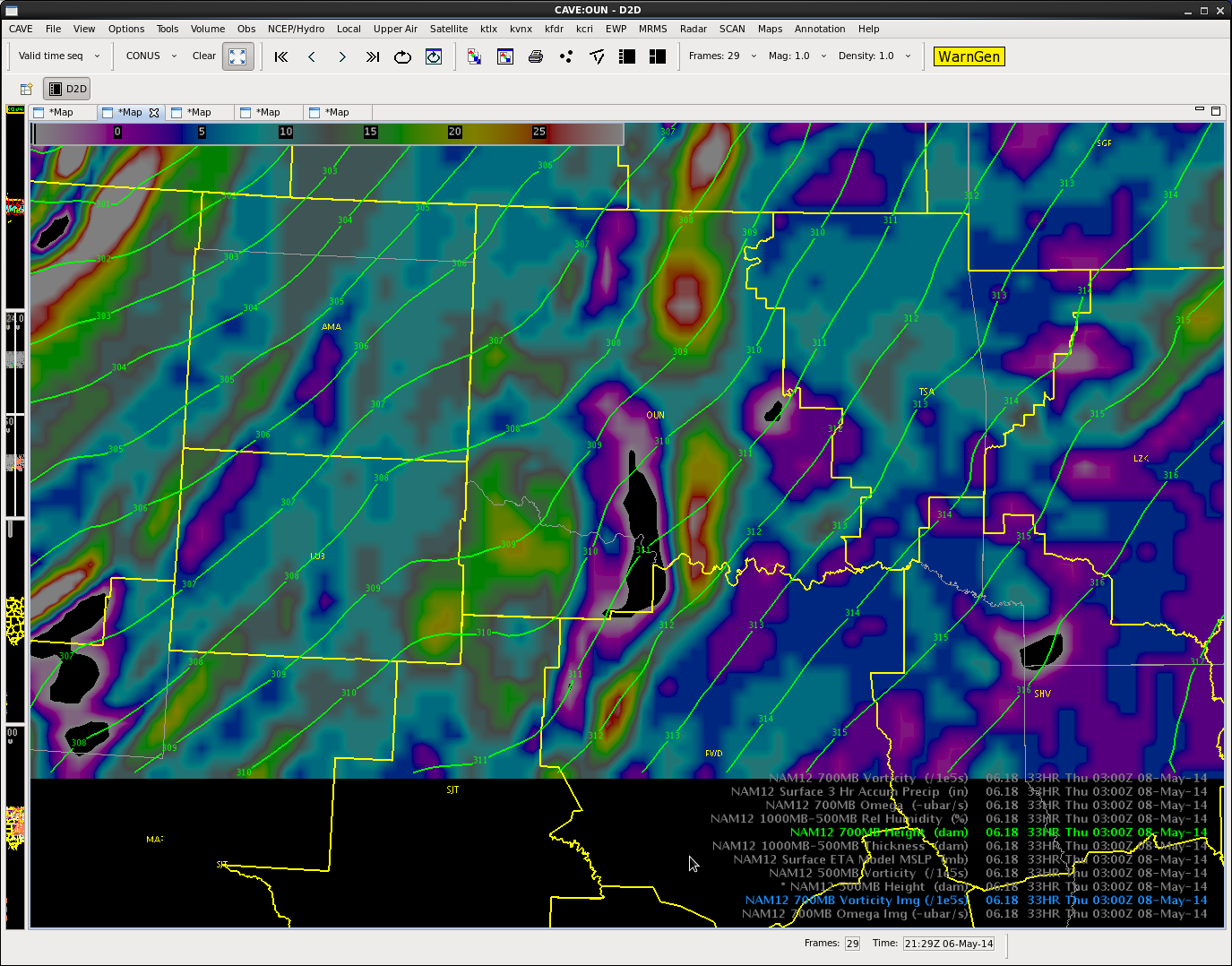
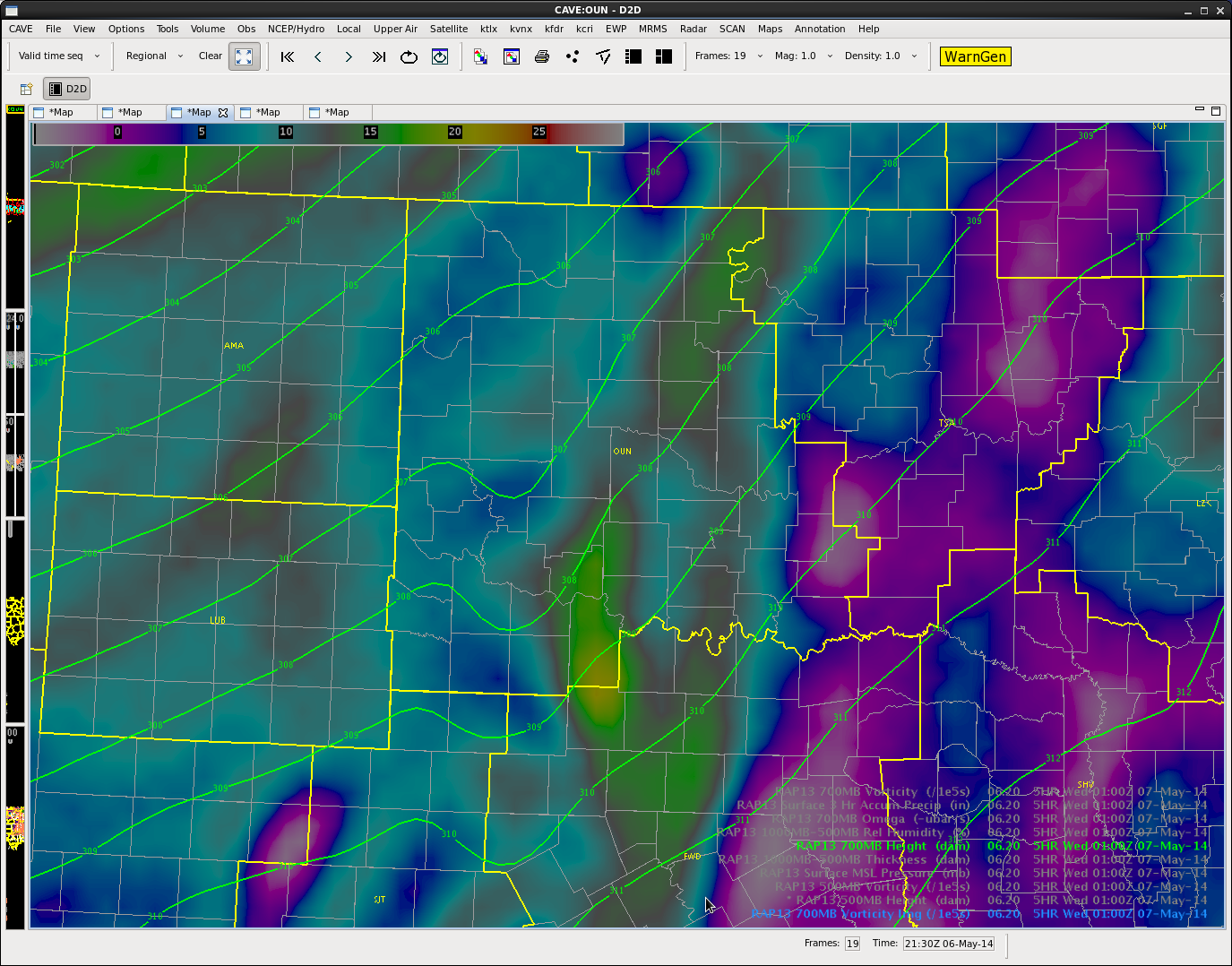
So 55 dBz will be possible across the far southwest OUN CWA before 3Z.
Scott Rudge.
Update 23Z…Convection firing in Abiline’s area.
Convection has initiated just ahead of the dryline just east of Abiline, TX. Convective Initiation probs show high probability of severe wx, but upper level jet has proceeded to shear the tops off of these storms within a matter of 30 minutes.
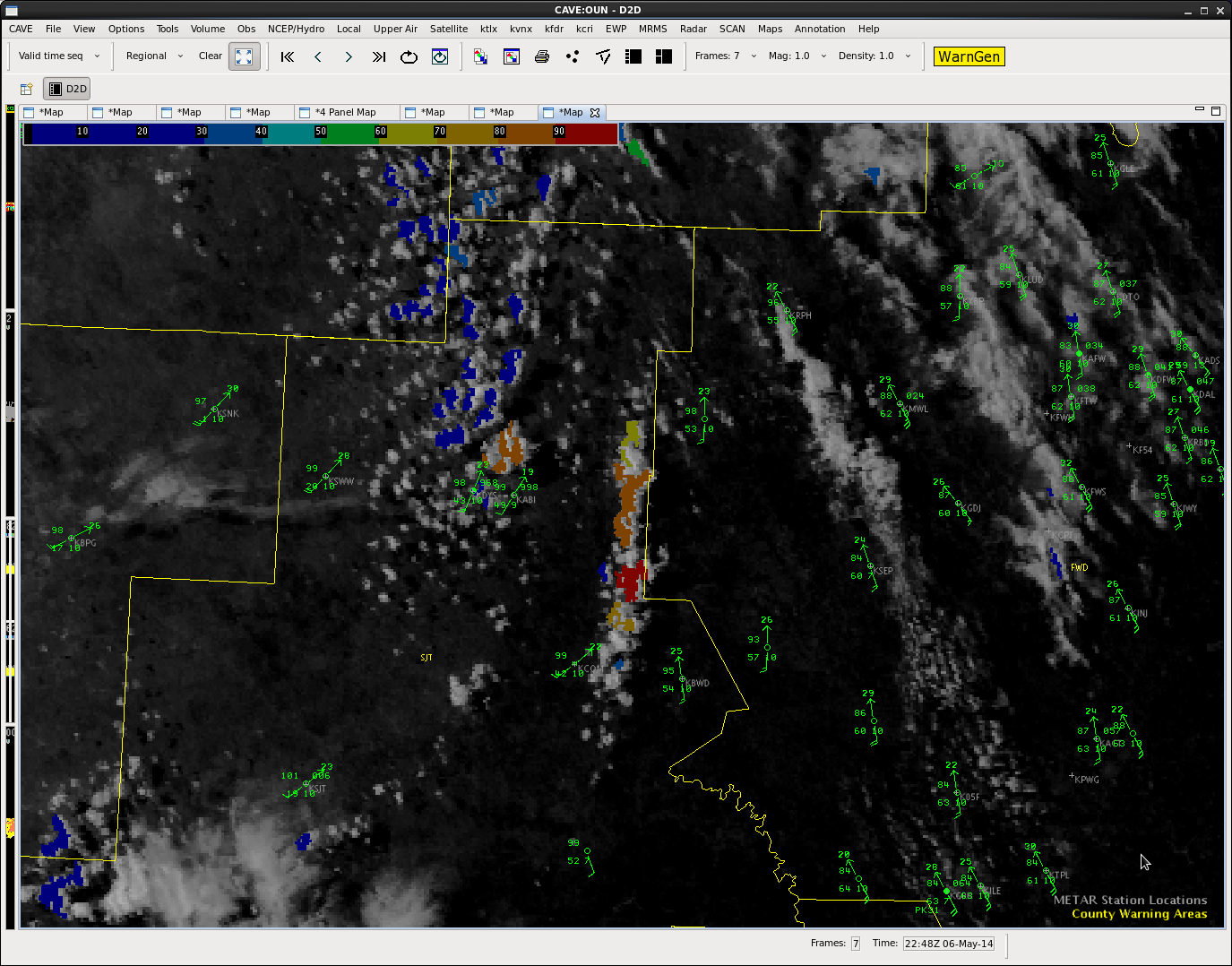
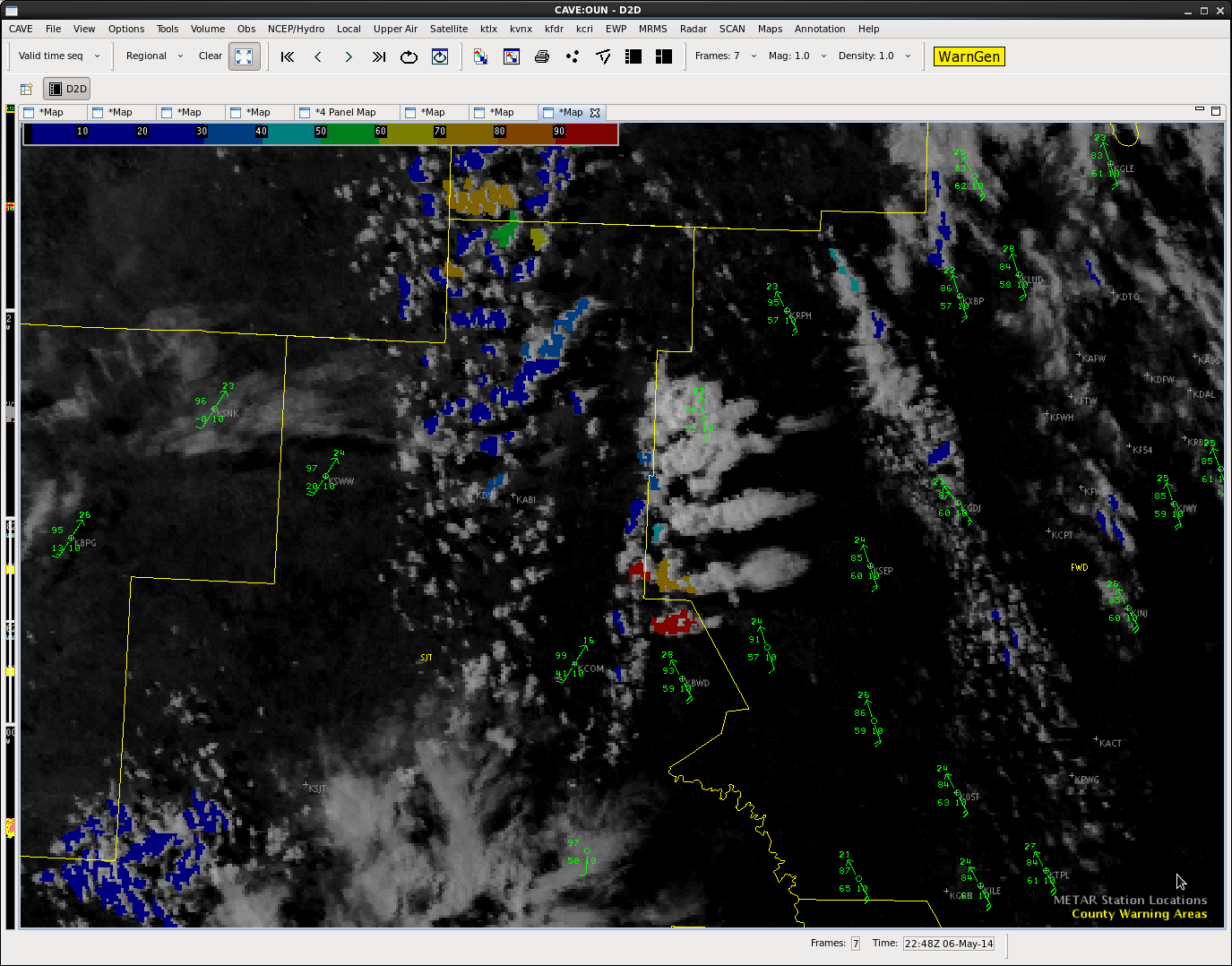
Scott Rudge.
Update 2330Z…60+ dBz just south of the OUN CWA.
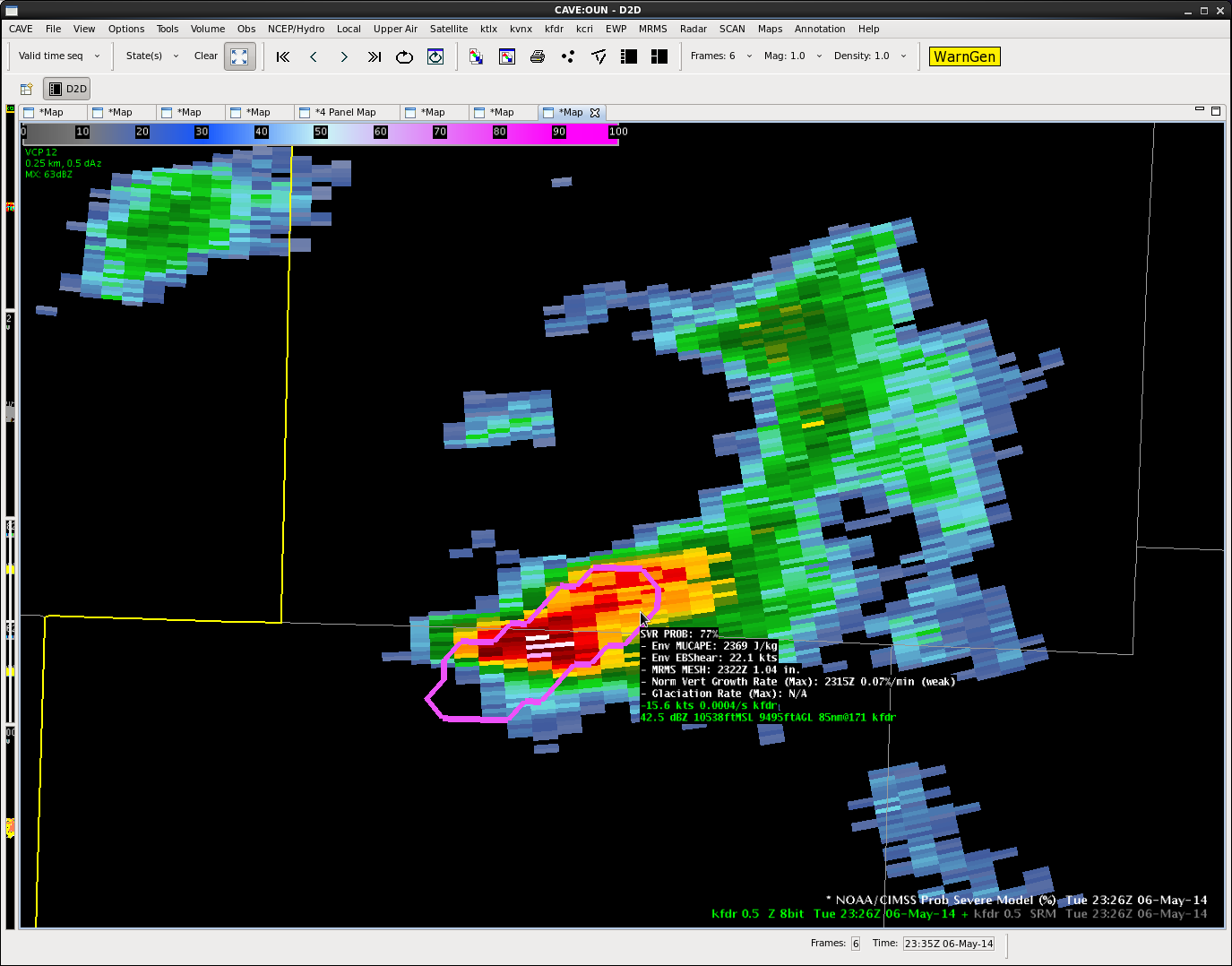
A storm that formed along a boundary just ahead of the dryline is showing some promise. Prob severe increased to 77% before levelling off – with estimated hail size around an inch.
Scott Rudge.
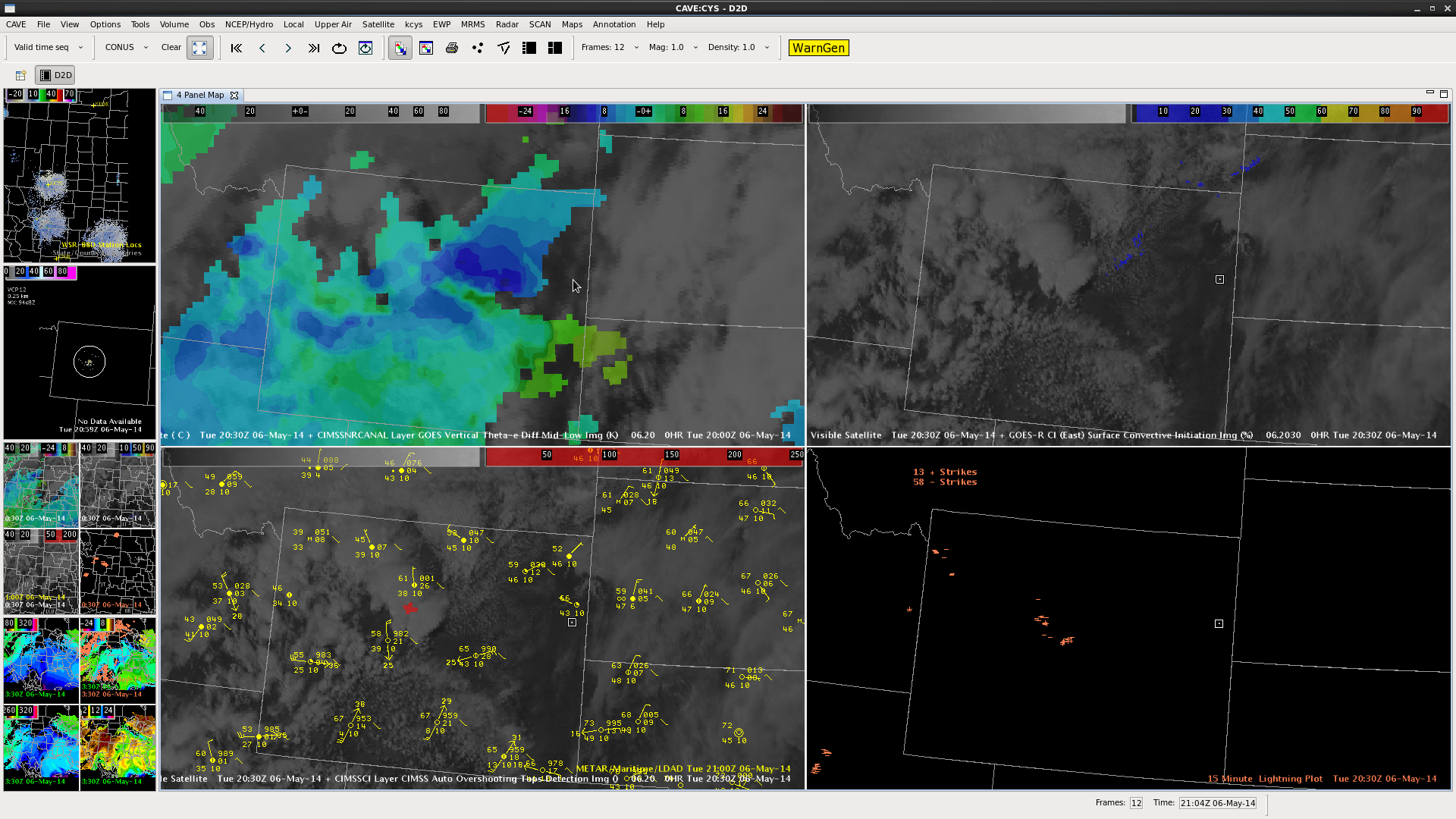
Isolated severe storms near NE of Riverton, at least identified by Prob severe model, continue to weaken this afternoon. Strongest cell is between Lost Cabin and Hiland. Latest GOES vertical theta-e diff indicates better instability over northeast Wyoming. A few light returns are increasing across southeast WY and several ensembles members develop convection across this region around 23z. CI product not very useful at this time in SE WY.
BT
Monitoring eastern WY, western NE in an area outlooked for the possibility for some severe storms.
Was going to provide an outlook concerning the pros/cons concerning getting convection to launch…but storms developed in central WY that are headed east.
A severe storm developed…Probsevere was all over it. CI was not a very useful tool as this developed due to quite a bit of cirrus
Also for the first time today saw an overshooting top. It did display on the already severe storm. Interesting is the fact that we need to mentally adjust to the parallax between this product and actual radar truth. Products will not match up lat/lon to lat/lon!—db
Update 2115Z: storm still strong with possible severe hail…but has shown some weakening. Overshooting top detection is no longer pinpointing anything, Storm does continue to travel along a maximum in instability as seen in the vertical theta-e differences. Interesting is that, while the forecast keeps that general instability around and along a path to the northeast of this storm, the Nearcast model also brings the highest instability back through to the west of where these storms are occurring. Meaning current convection would be moving from higher to lower instability, relatively speaking—db
Test test…this is only a test.
Scott Rudge
We chose to sectorize the forecasters to two different regions… Cheyenne, WY for Thoren/Bickford and Norman, OK for Rudge / Maples.
The forecasters have been asked to provide a mesosale forecast/graphicast discussion for each region (on the blog) by 2100 UTC.
The Wyoming group overlaps a bit with the forecast area of the EFP for day 1:
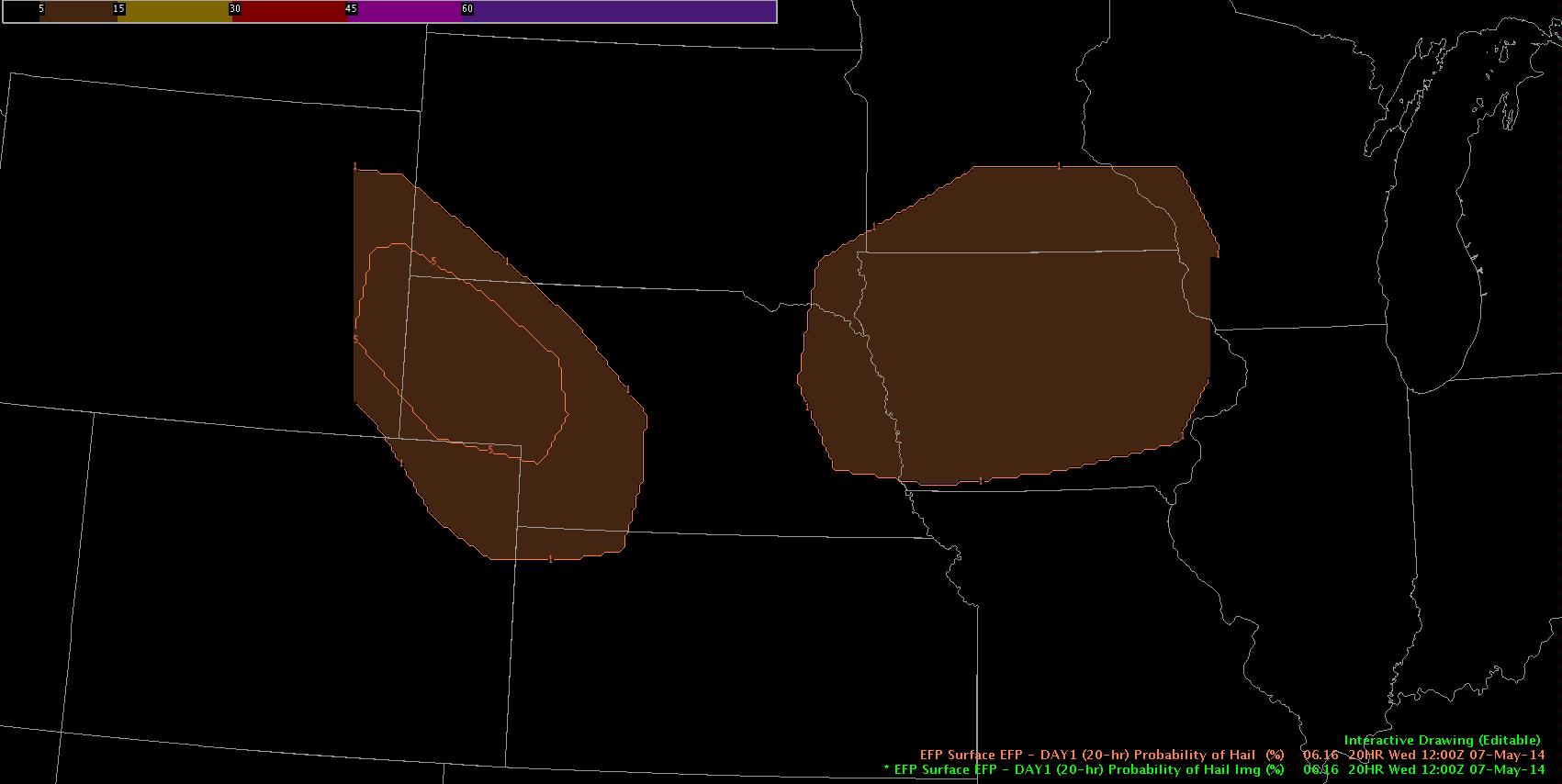
Though current convection is located farther westward in mountainous terrain.
Meanwhile the OK group is watching mixing in central and western Oklahoma:
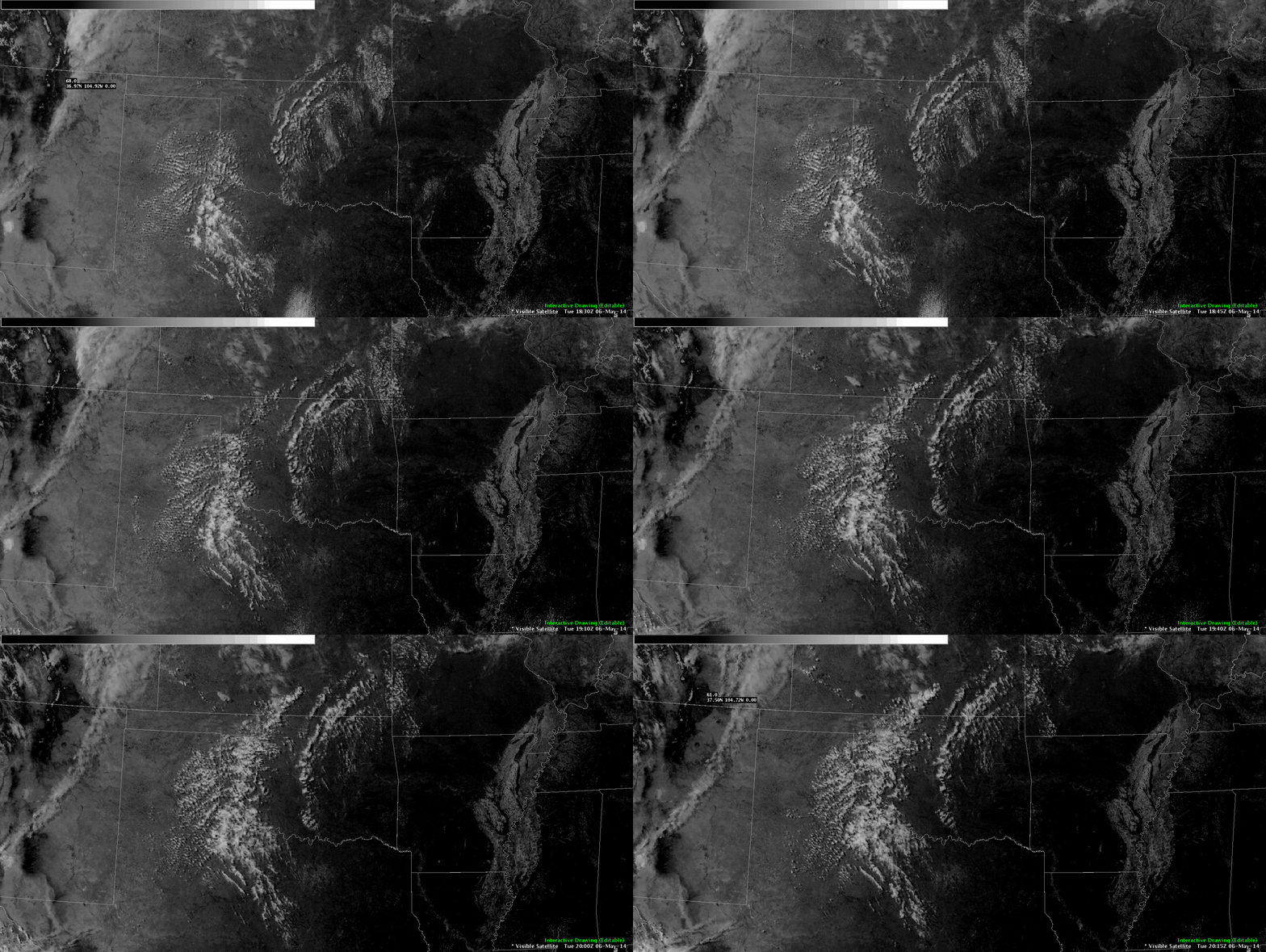
Nothing severe at the moment, but some interesting features including virga / mammatus visible at the same time:
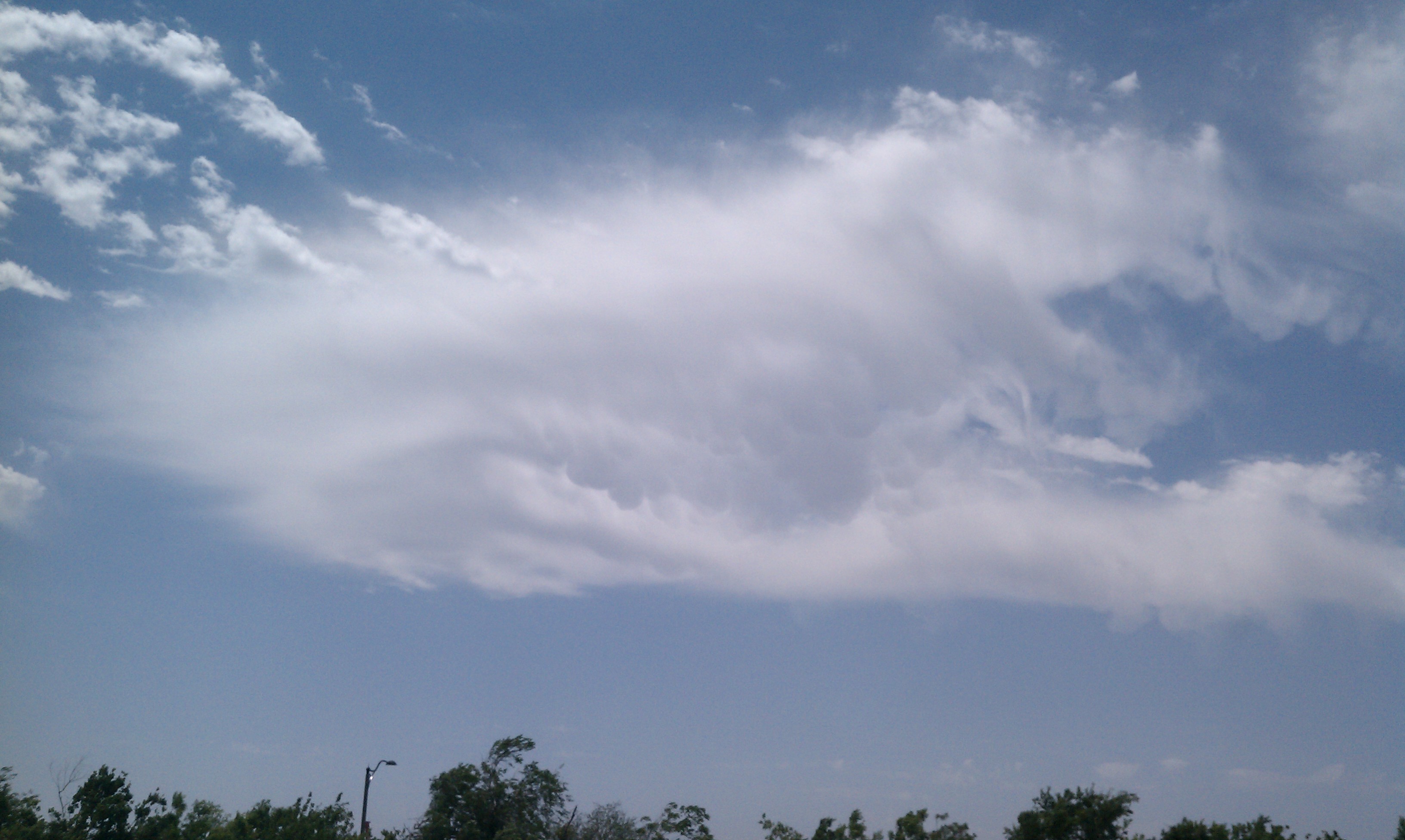
Expectation for severe weather increase Wed / Thurs for the experiment.
-K. Calhoun, Week 1 Coordinator
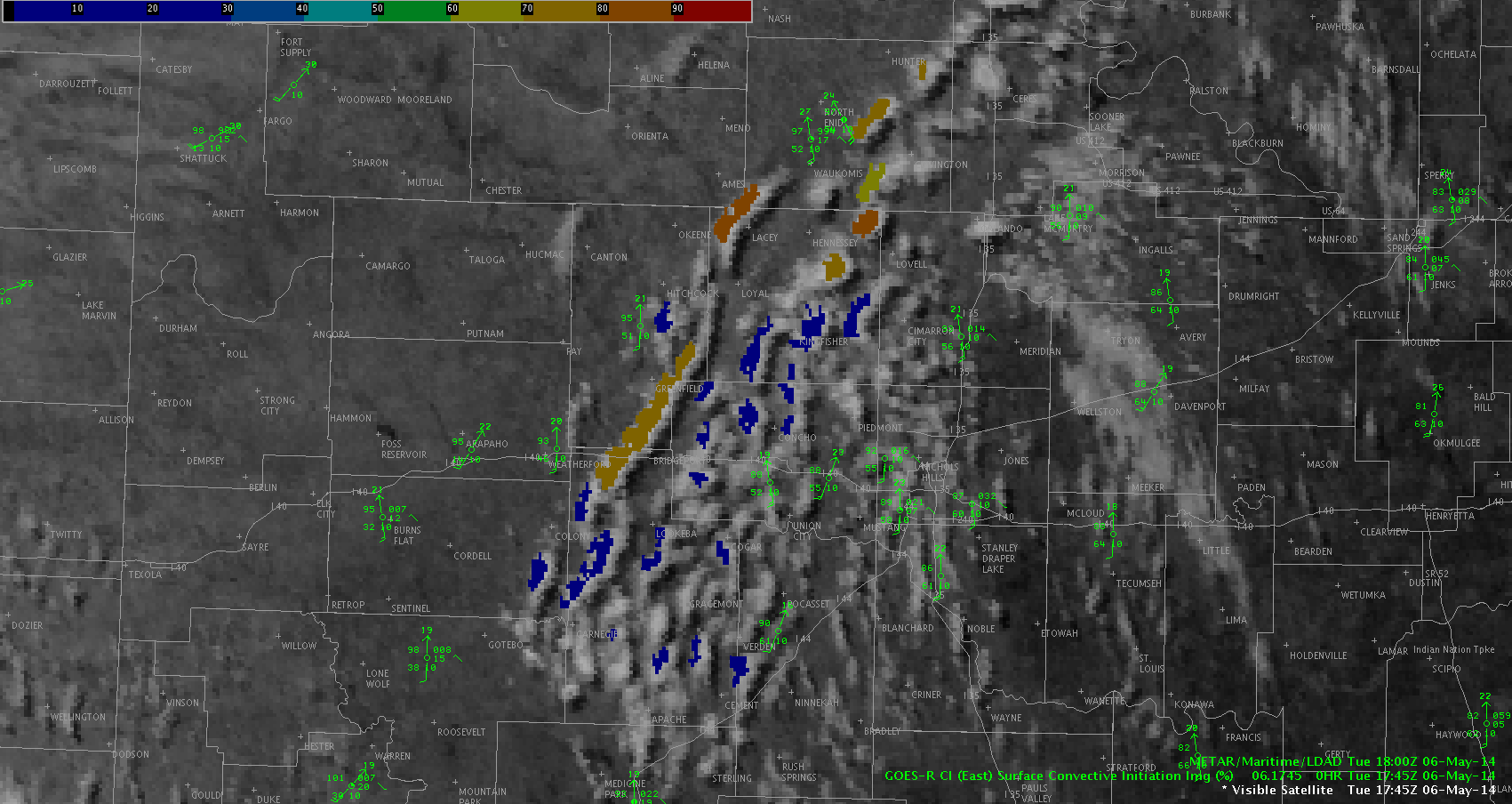
During afternoon cumulus development CI depicted higher probabilities upwards of 80%. Radar did not show much in the way of any precipitation. Sounding data showed very dry air in the low and mid levels with elevated instability, which may support virga. Physical observations were taken by a staff member, who stated that virga was evident. So far, the CI tool is proving to be more of an awareness tool. In a dry air environment forecasters would need to take initiative by investigating soundings to see if these high probabilities are legitimate. I would find that an 80% probability may create the “cry wolf” mindset if they do not verify more often. Would there be a way to incorporate sounding data to mitigate this issue?