


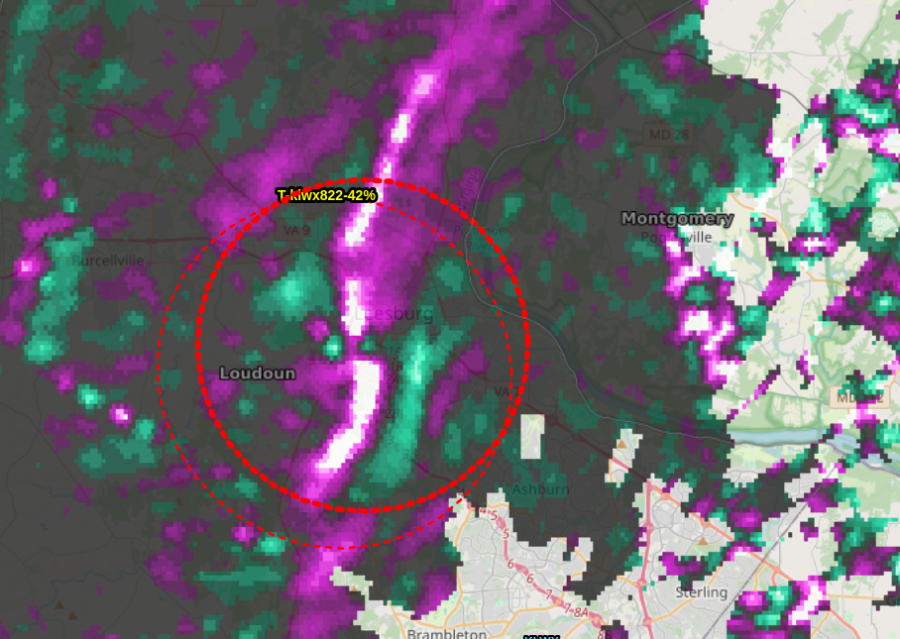
Just wanted to note that it was impressive to see the DivShear show the cloverleaf product associated with the strong circulation around 1221 UTC in this QLCS event.
Flash
Official websites use .gov
A
.gov website belongs to an official government
organization in the United States.
Secure .gov websites use HTTPS
A
lock (
) or https:// means you’ve safely connected to
the .gov website. Share sensitive information only on official,
secure websites.

Just wanted to note that it was impressive to see the DivShear show the cloverleaf product associated with the strong circulation around 1221 UTC in this QLCS event.
Flash
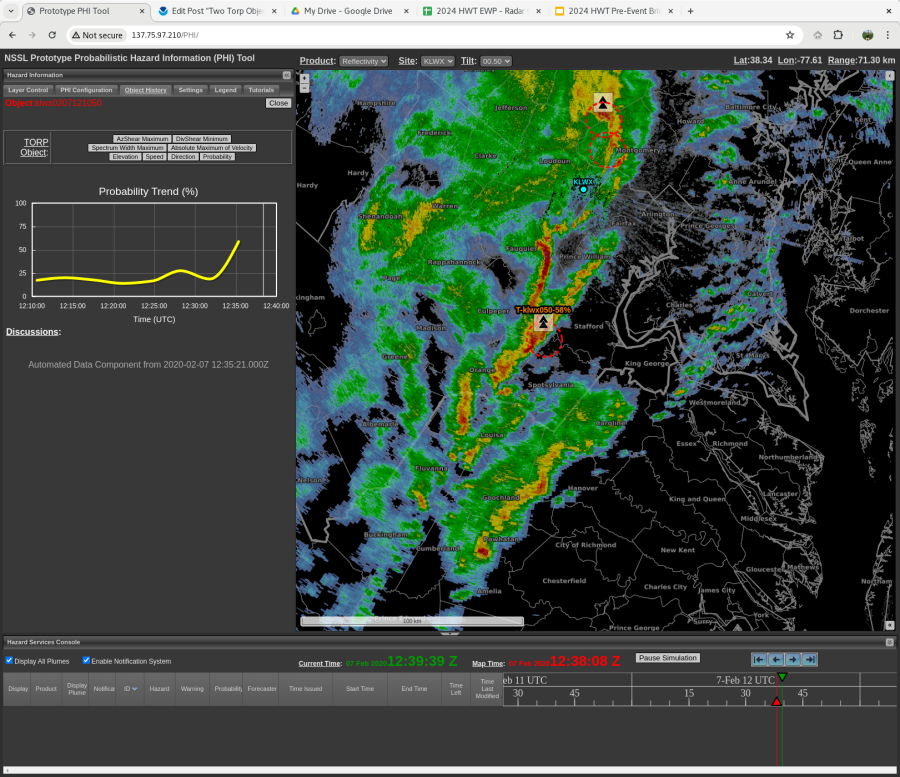
New TORP object showed rapidly increasing probabilities as it exits Orange County, which caught my attention to sparked further investigation. -Sidney Crosby
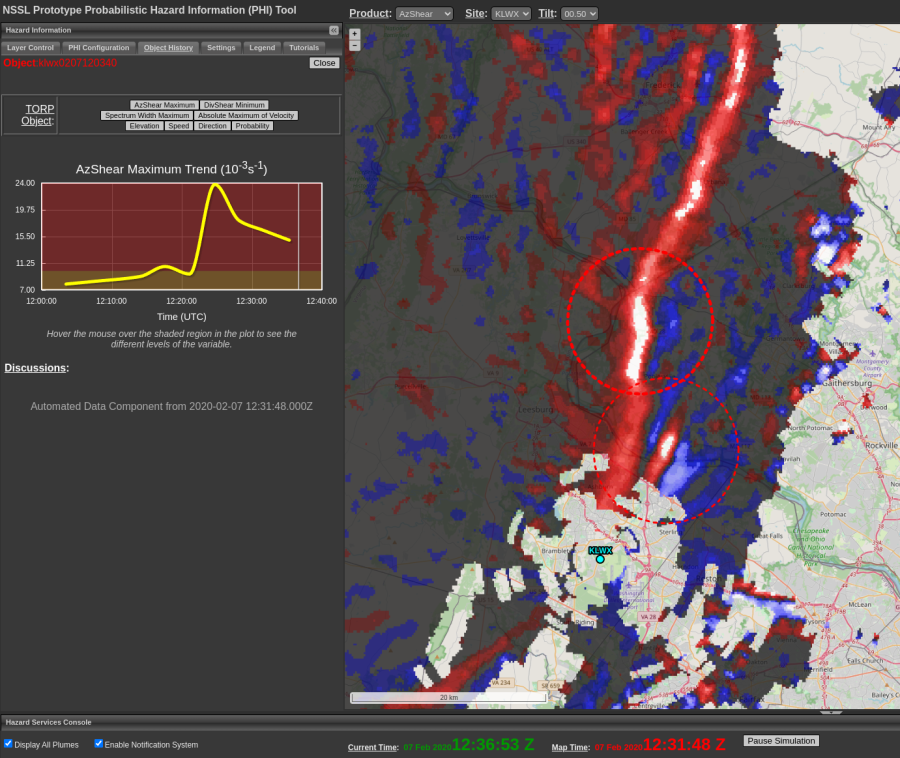
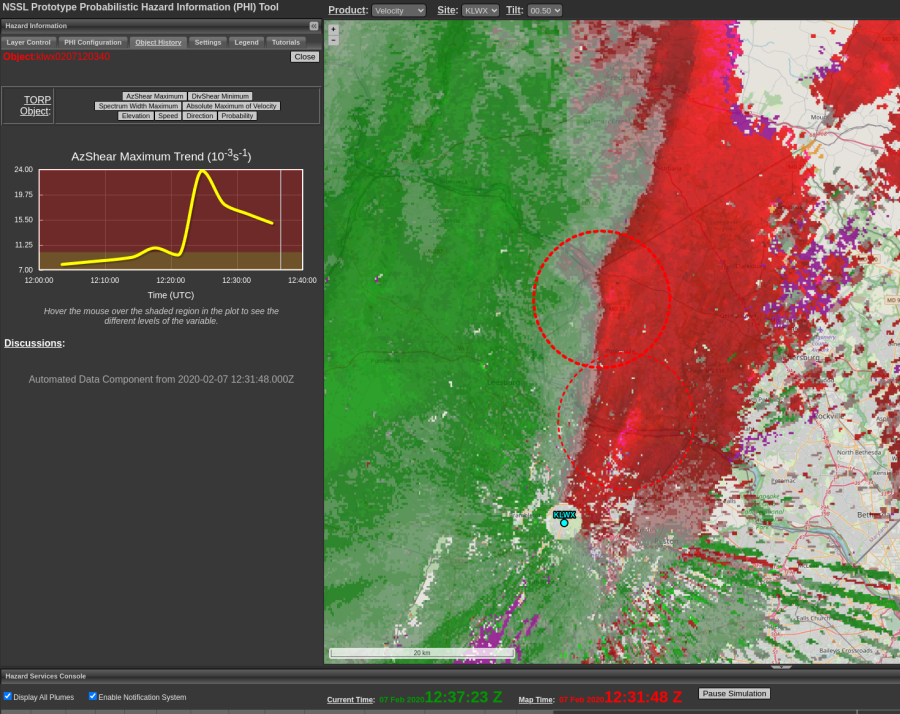
Example of where AzShear indicated a threat even though V data indicated minimal threat. Reports of wind damage within AzShear highlighted area.
-Oppenheimer
Doing a comparison of Torp to ProbSevere, I found Torp to be superior on the tornado that occurred northwest of LWX as ProbSevere Tor probability never reached about 35% while Torp had values well above 50% for this identified object. It is nice to see a new tool like this that can improve on the older ProbSvr model.
Flash
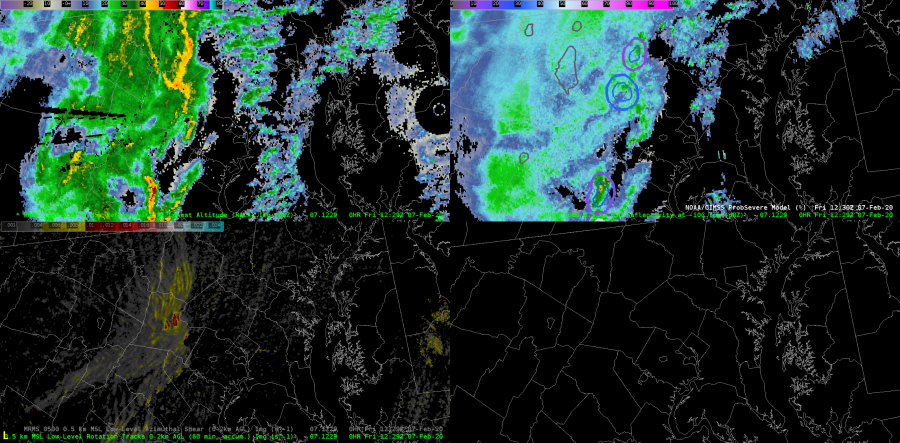
Both AzShear and DiVshear highlighting tornadic area quite well, and coincides great with Z and V data. Good example of high warning confidence “nudgers”.


-Oppenheimer
This line of thunderstorms split into 3 main line segments by 1150-1200Z. These line breaks are one of the nudgers/confidence builders in the QLCS tornado warning process. You can see convergence along the UDCZ and a few areas of weak rotation beginning to form along the southern flanks of each of those line segments.

As things started to look interesting in the reflectivity/velocity images, increasing values of DivShear and AzShear led to a couple TORP 30-40% objects being created on the southern end of a couple of those line segments (a sign that we need to keep a close eye on the radar for possible tornadogenesis).


And ultimately, TORP tornado probabilities increased to ~95% right around the time wind/tornado damage started to be reported all across the city of Leesburg, Virginia (~1220Z). You can also see somewhat of that clover-type shape/look in the DivShear product ususally indicative of tornadic circulations.

Kilometers
TORP created a second object (95%) on the same circulation from the same radar (LWX). The original object maintained a 75%. This caused confusion, and led to a lack of trend on the new, 95% object.

-Nimbus


Two TORP objects were created for this tornado-warned storm. Interestingly, the higher percentage object was new and did not have a trackable history, but the (slightly) lower percent object showed a rapid increase. -Sidney Crosby
An interesting observation of Torp as a tightening and strong circulation moved just northwest of the LWX radar. Torp identified two separate objects (46% and 85%) on what appears to be the only circulation.
Flash


Images show an AzShear maximum in southwestern Loudoun County colocated with a TORP object showing increasing probabilities over time. This coincides with surging reflectivities and broad circulation. -Sidney Crosby