Tracking convection across DLH CWA with Octane, LightningCast, and GREMLIN

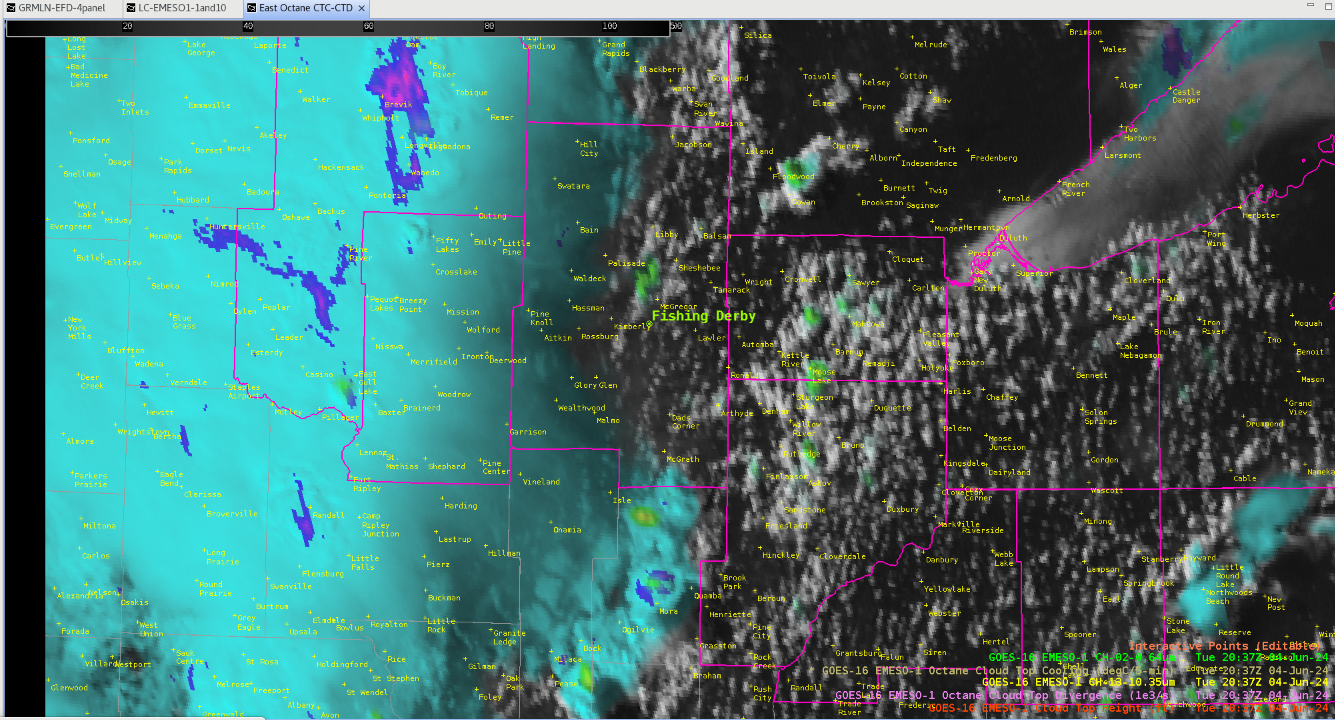
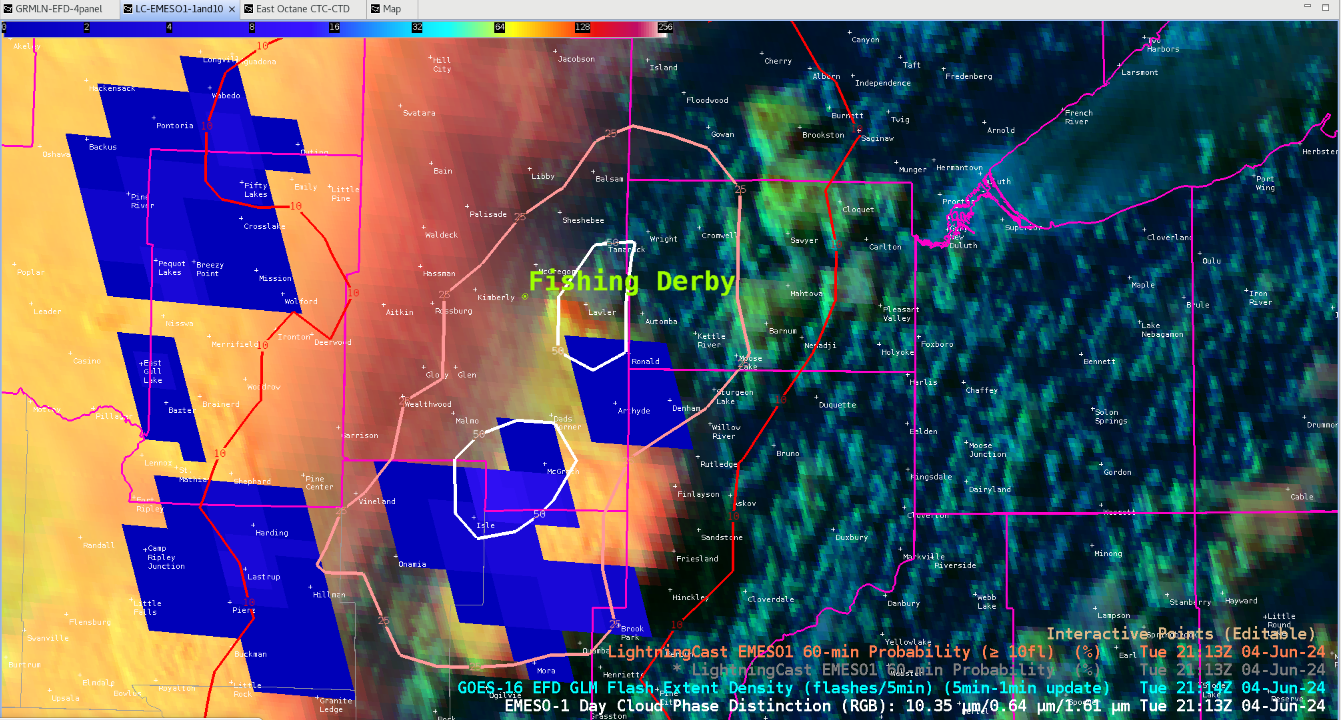
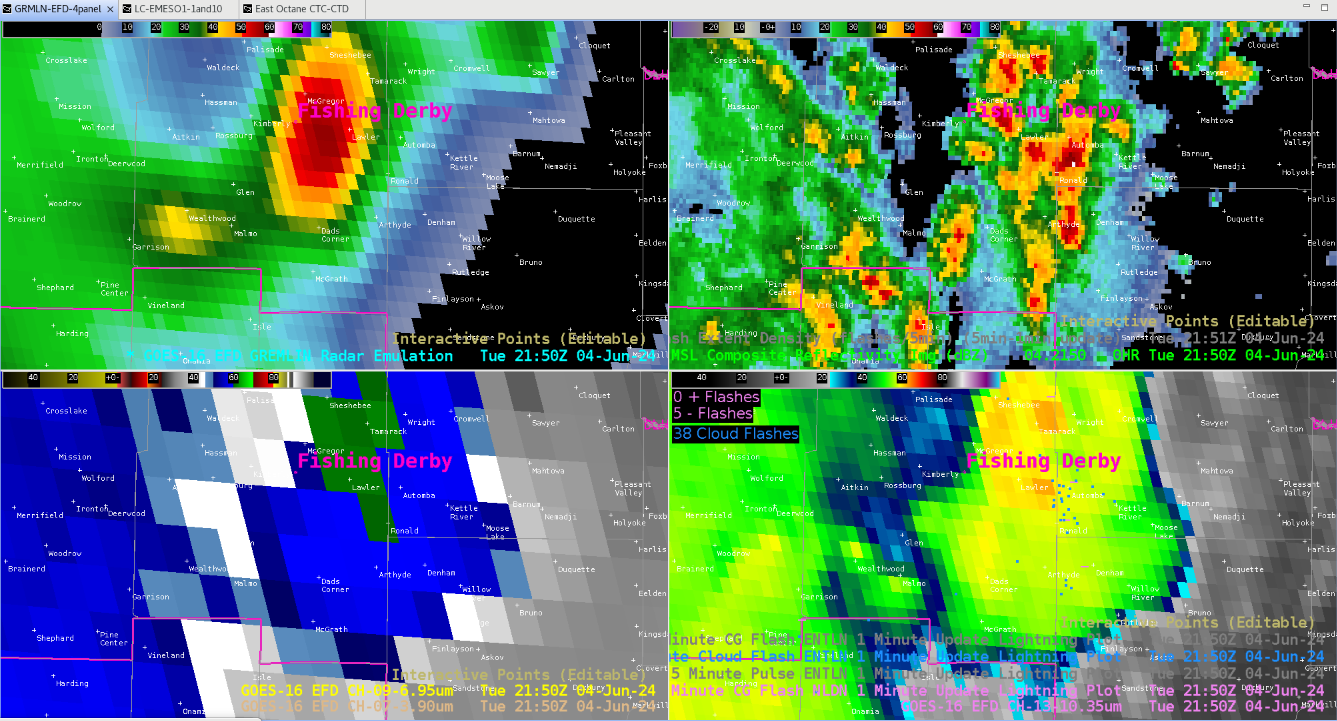
Forecasting in DLH today was challenging due to the radar being made unavailable. However, some of the satellite convective products were able to create accurate forecasts regarding the location of storms and lightning. Firstly, looking at Lightningcast there were gradients of ~25% appearing 1 hour out around the DSS point indicating the possibility of lightning developing within the next hour. This was also supported by Octane, which was showing storms initiating to the south with early signals of cloud top cooling and divergence occurring. Around 1 hour later this seemed to mostly come to fruition, which can be seen on the 4 panel image with GRMLN data on it. Lightning seemed to be mainly concentrated east of the DSS point which was shown in lightningcast. Also these storms originated from the south which Octane began to hint on early out. Overall, it looks as if all three of these satellite convective products did a good job in forecasting possible convection without the use of a radar.

-Sven The Puffin

Tags: None

RADAR DOWN IN DULUTH CWA

Without the use of radar out of Duluth more reliance was given to Satellite derived observations and satellite derived output.

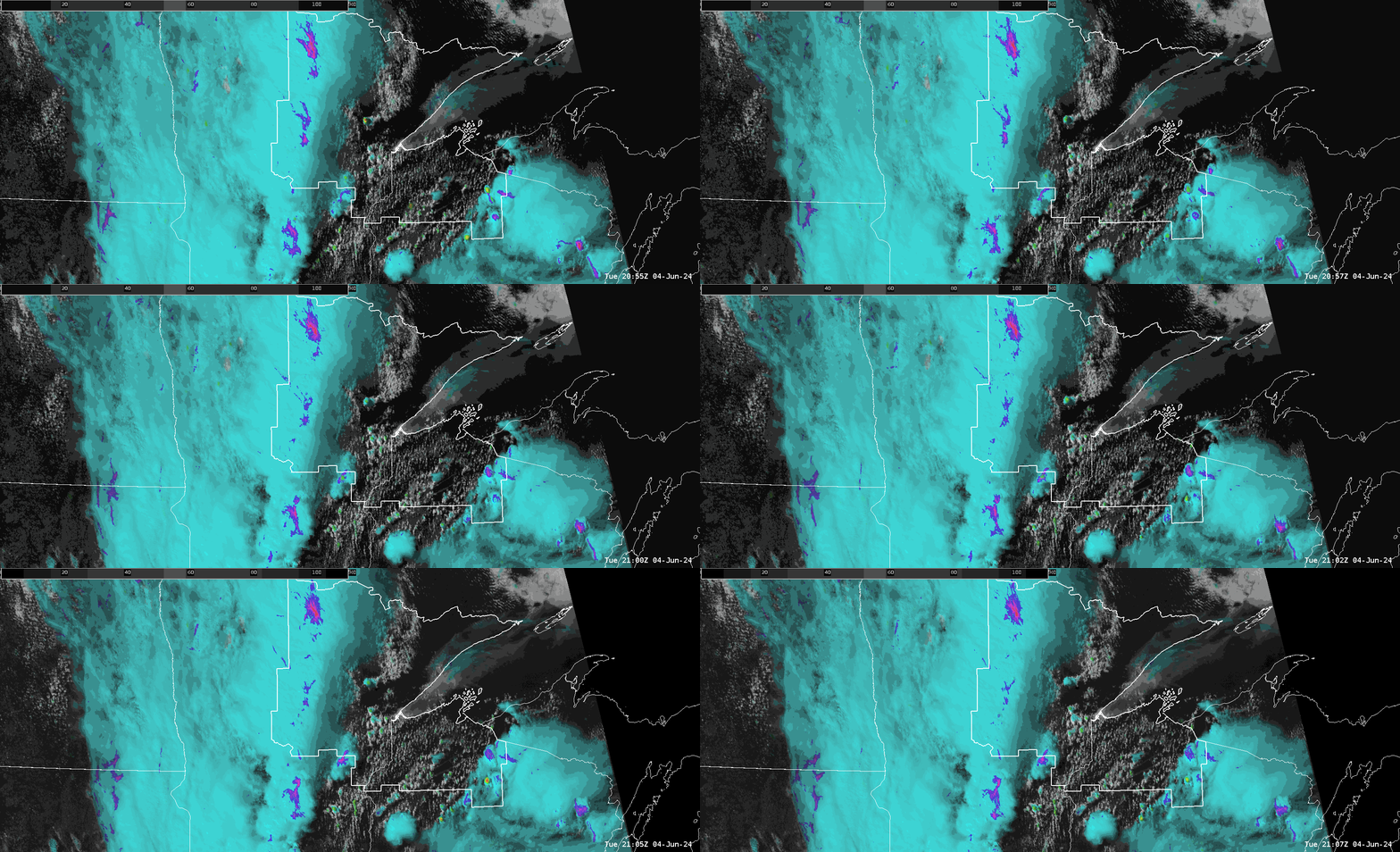
Below is the OCTANE cloud top cooling and cloud top divergence product.  You may notice in an area of moderate but increasing instability there is convective initiation ahead of the main line of convection.  However, you can notice early in the loop that there is convective cooling indicated in the south-central portion of the CWA and the far SE portion of the CWA.  Notice how in the far SE portion of the CWA there is the purple shading indicating cloud top divergence.  And in south central portions there are “hotter” yellow and tiny red(s) (may be hard to notice due to scale) pixels indicating cooling cloud tops, but with no purple shading and thus no meaningful divergence at the cloud top.  This is indicative of orphan anvils. The moral of the story here is that without radar the OCTANE product heightens your attention to the cells in the far SE portion of the CWA, and this would be where to consider SVR or SPS product release, with the activity across South Central portions of the CWA failing to produce significant convection at this point in time despite moderate to strong instability.
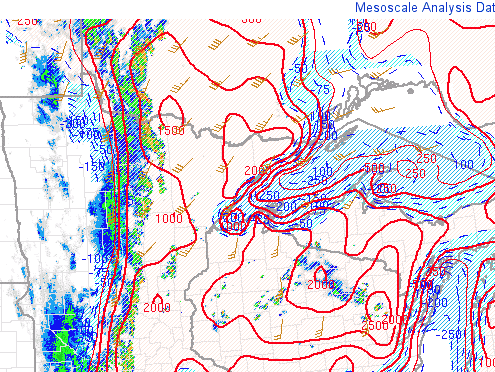
Further southeast however notice that there is stronger instability over SE portions of the CWA, thus the OCTANE product is giving you a result which coincides with where there is higher instability (higher MLCAPE – see SPC mesoanalysis).
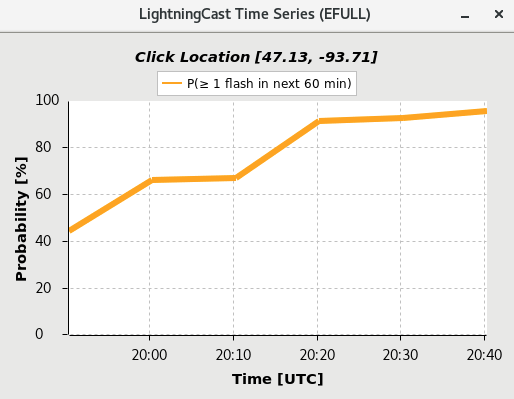
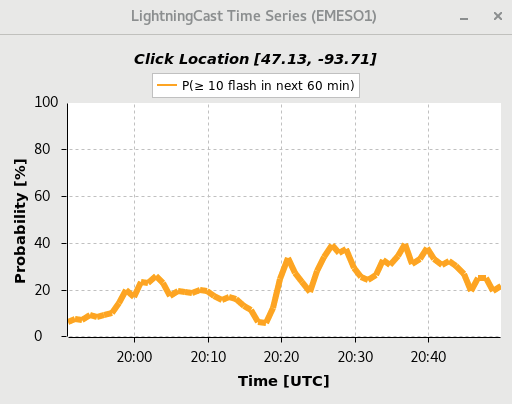
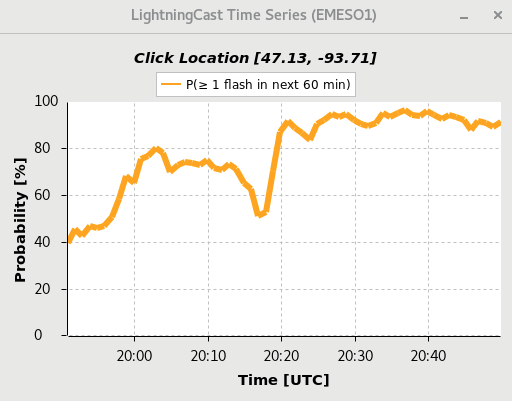
Lightning Cast continued to show high confidence of lightning over the next 60 min with the linear MCS moving into western portions of the CWA.  This lead to high confidence in forecasting lightning for a DSS location (Solana State Forest) during this event.
Steady behavior with the greater than or equal to 10 flashes in the next hour.
High probability of 1 flash of lightning in the next hour, increasing then holding steady
Here (below) is the Lightning Cast and GLM dashboard output comparing the forecast to the GLM flash count.  Note: the dashboard was down initially but came back online
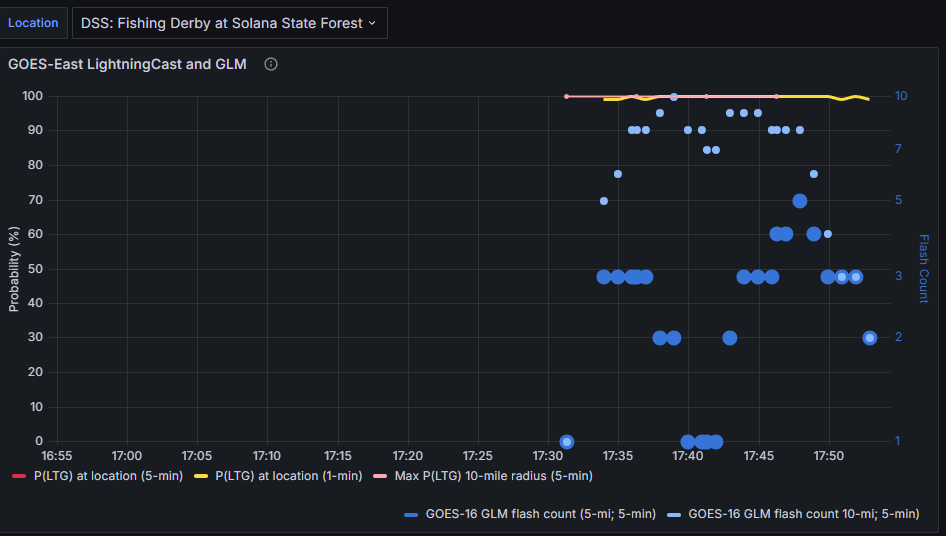
Thus we were able to give a high confidence lightning forecast for DSS.

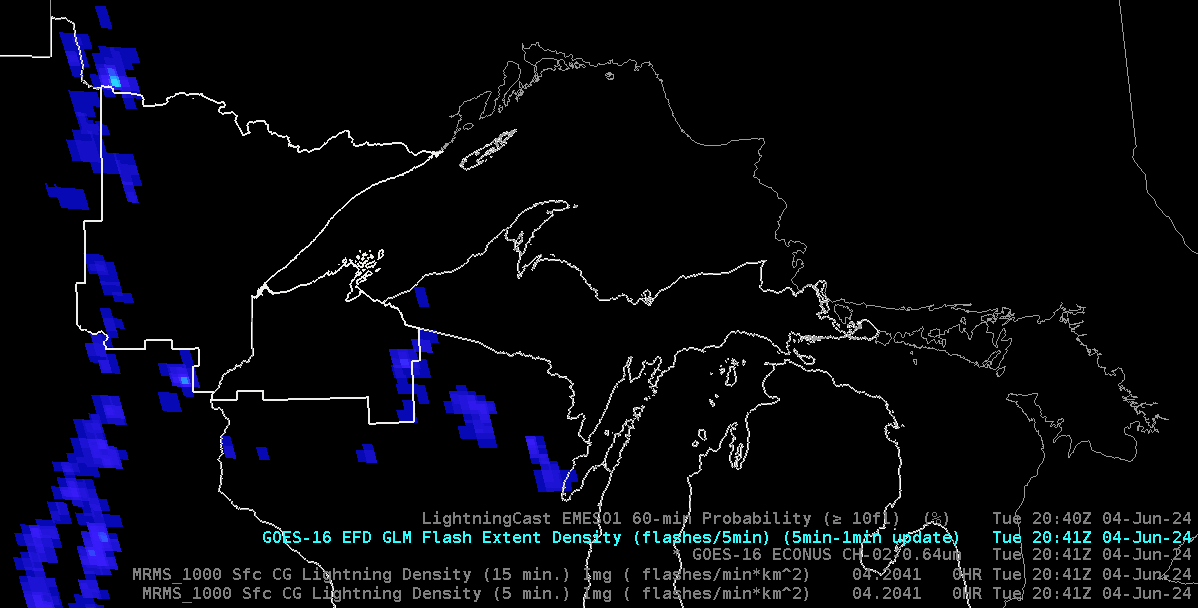
Here is the GLM Flash Extent Density at the time of the Lightning Cast 1 hour forecast.
– 5454wx

Tags: None

OCTANE Speed Product Shows Weakening Trend in Storm Well

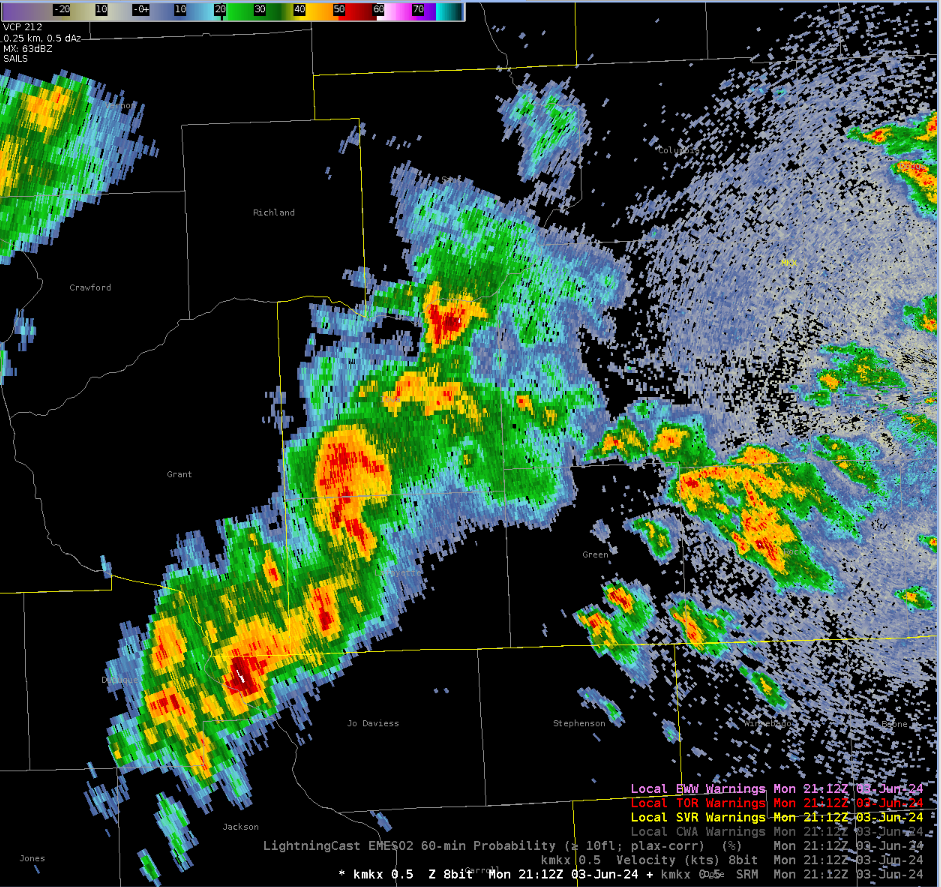
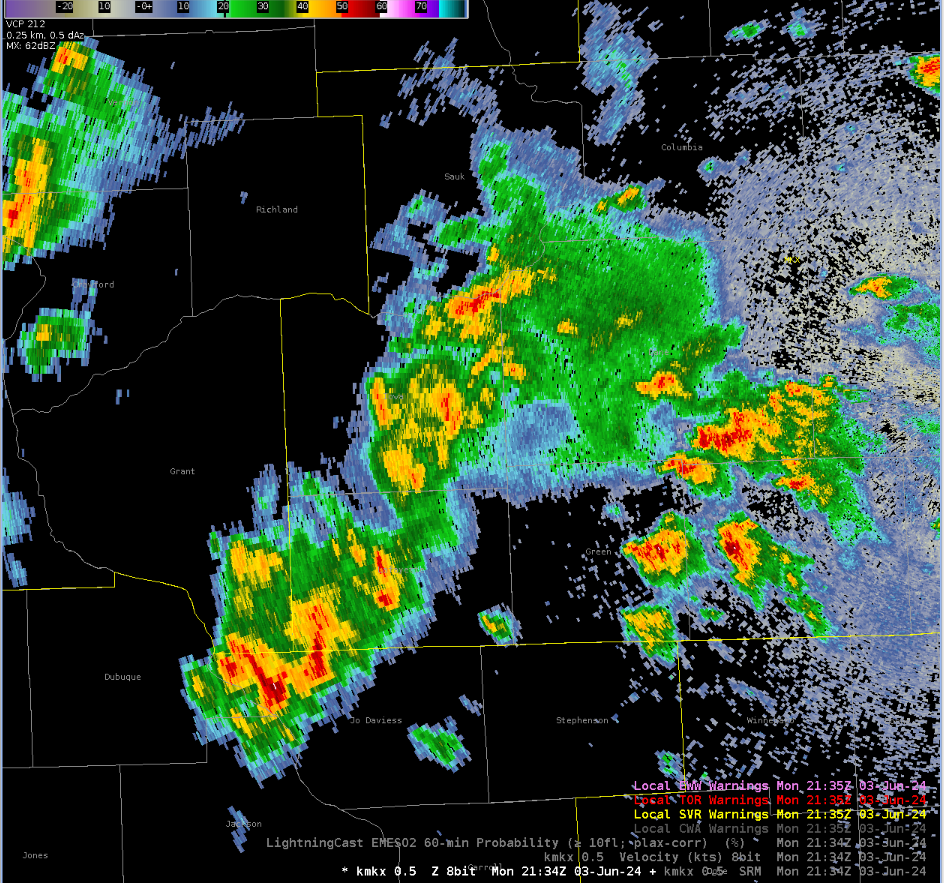
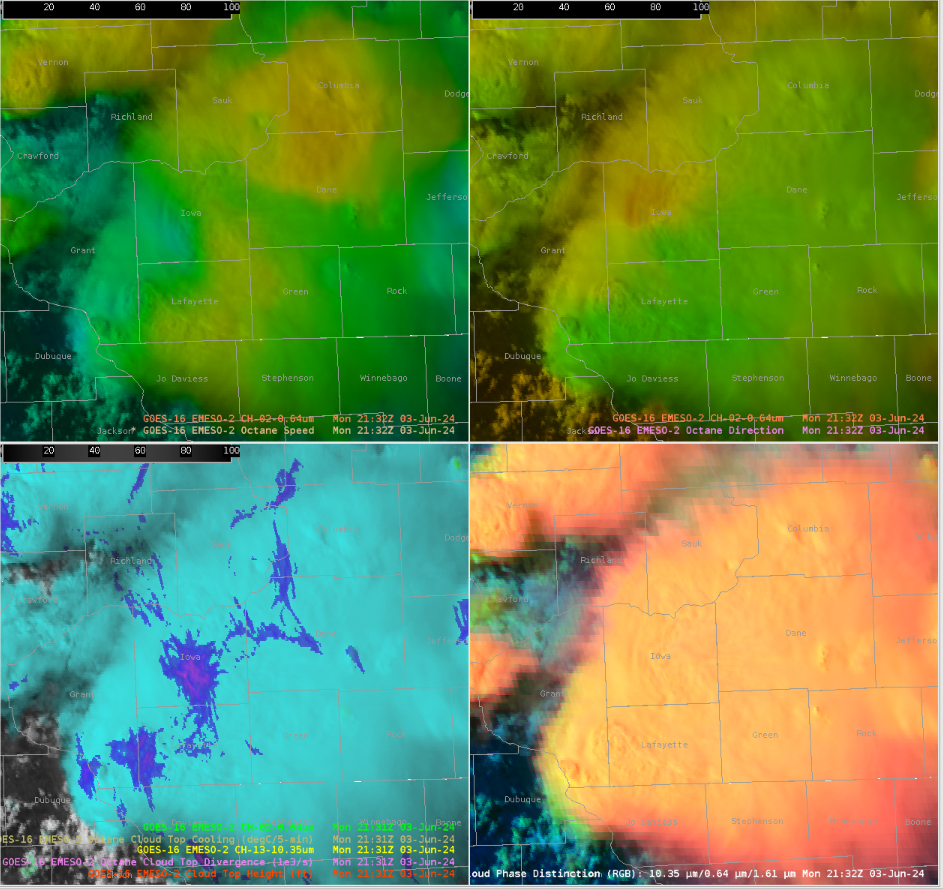
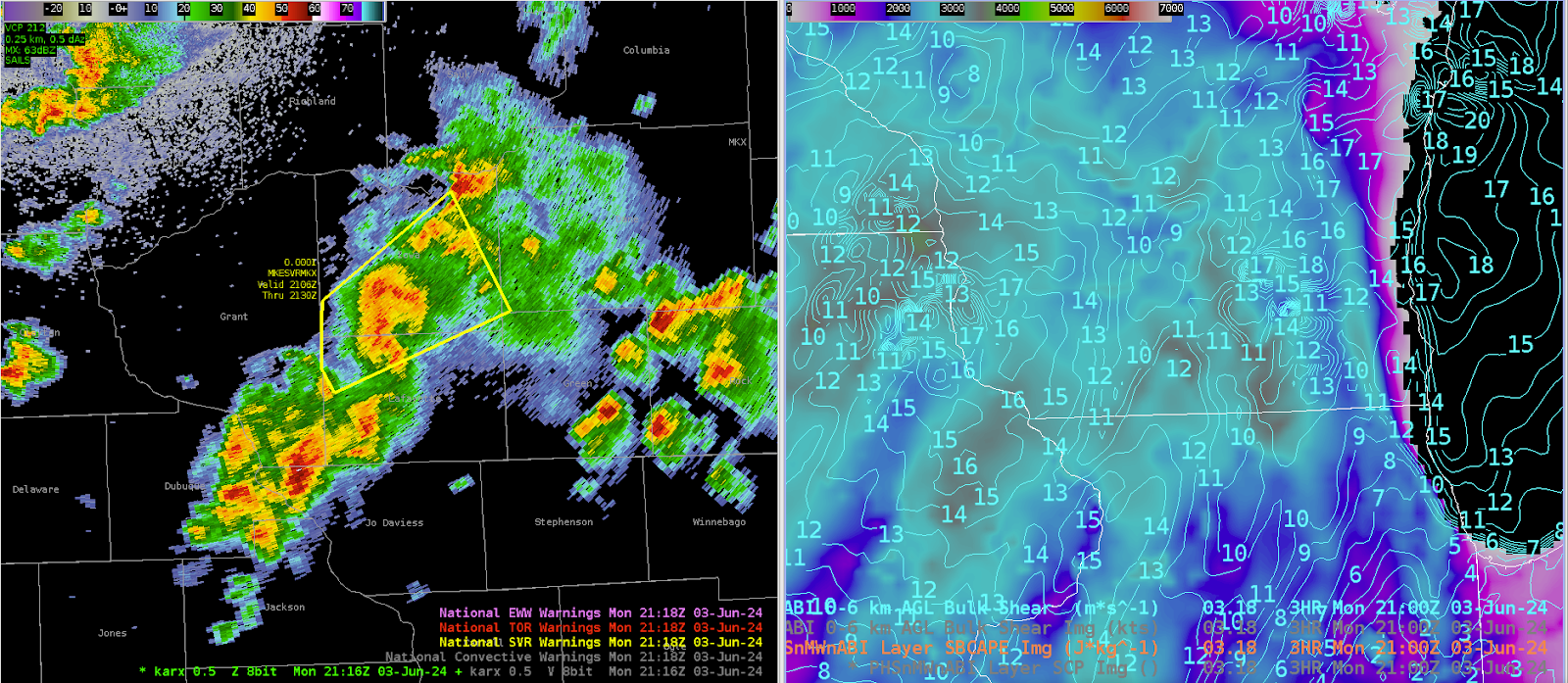
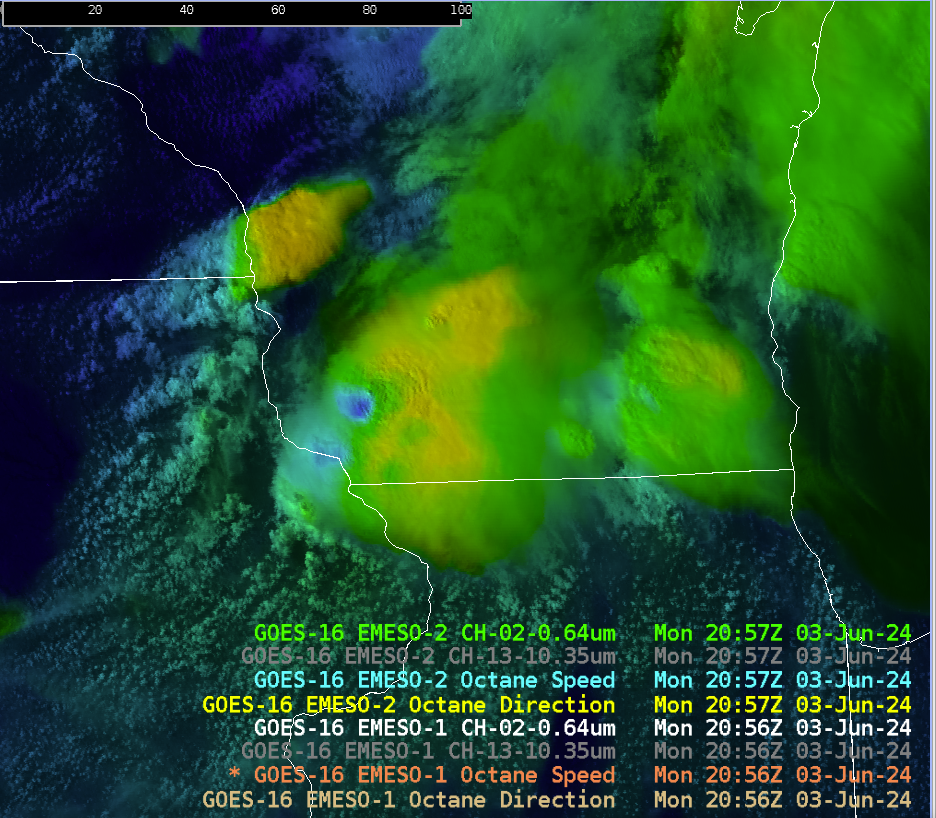
A strong storm with a well defined mid-level mesocyclone entered the western portion of the MKX CWA at around 4:00 PM CDT. At the time, the OCTANE speed product showed a well defined gradient and the divergence product showed fairly high values, indicating that the updraft was quite strong. We decided to issue a severe thunderstorm warning with a tornado possible tag on this cell as a result.

Not long after the warning was issued, we noticed a significant weakening trend in the reflectivity signatures. This weakening trend was supported by the OCTANE products as well, with a much more diffuse gradient in the speed product and lower values in the cloud top divergence. An interesting thing to note, though, is that the Day Cloud Phase imagery looks nearly identical to when we issued the warning, so it did not capture the weakening trend.

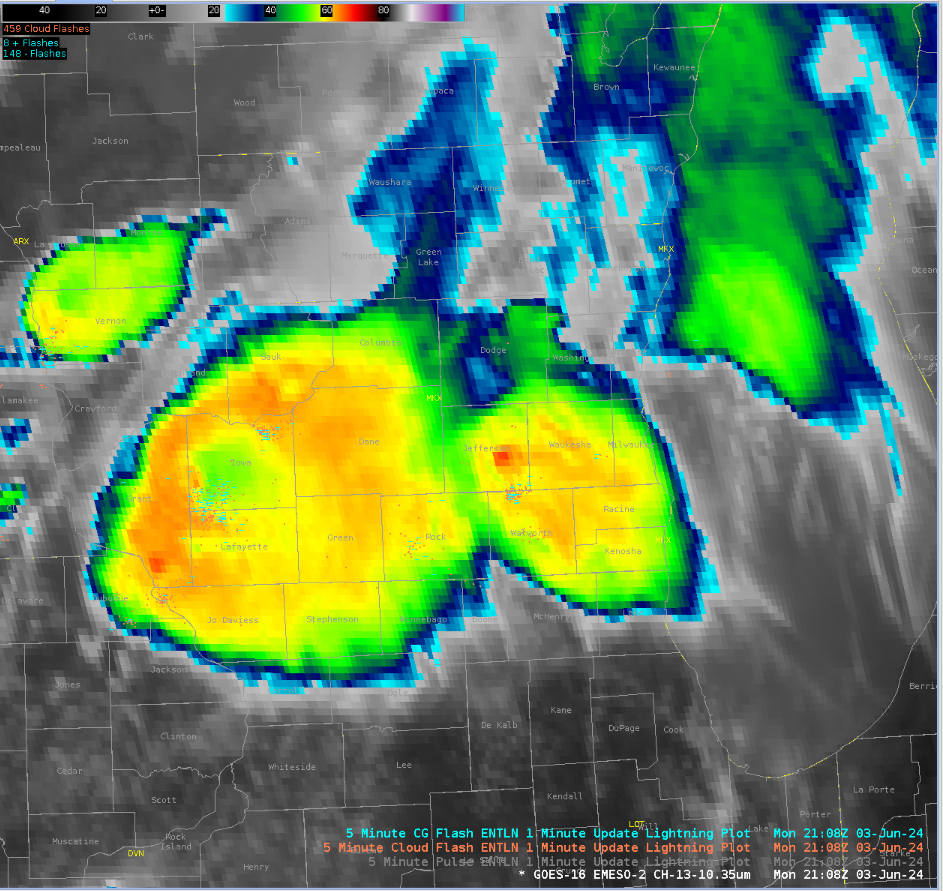
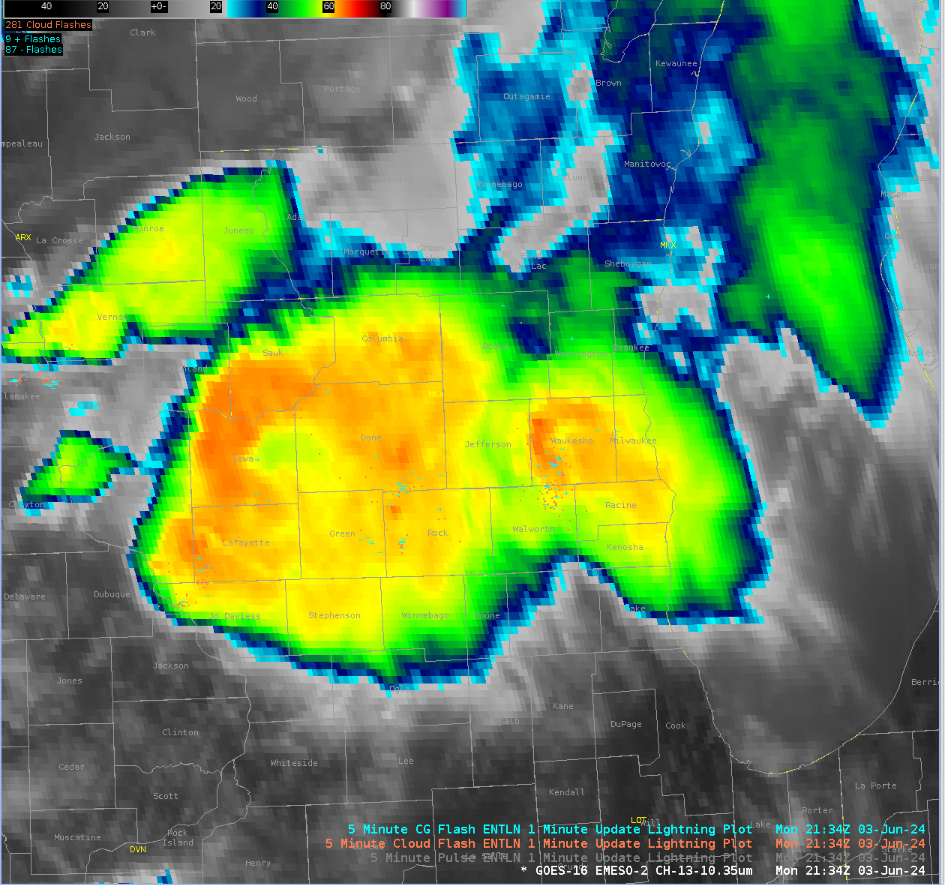
Another interesting thing to note is that the IR imagery did not seem to indicate that there was as much weakening either. One image from around the time of warning issuance and one from around the time when the warning expired are shown below.

In all, the OCTANE products seem to be very useful in assessing the strength of a storm’s updraft. Looking forward to gaining more experience with it and the other products throughout the rest of the week.

– EI2018

Tags: None

THE TALE OF TWO GUIDANCE SYSTEMS

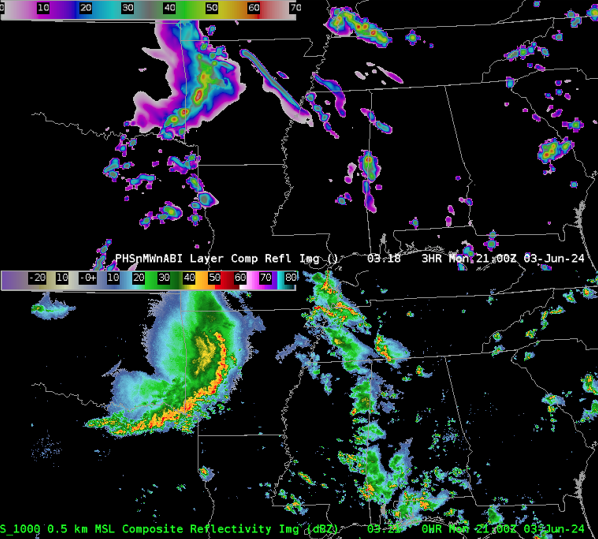
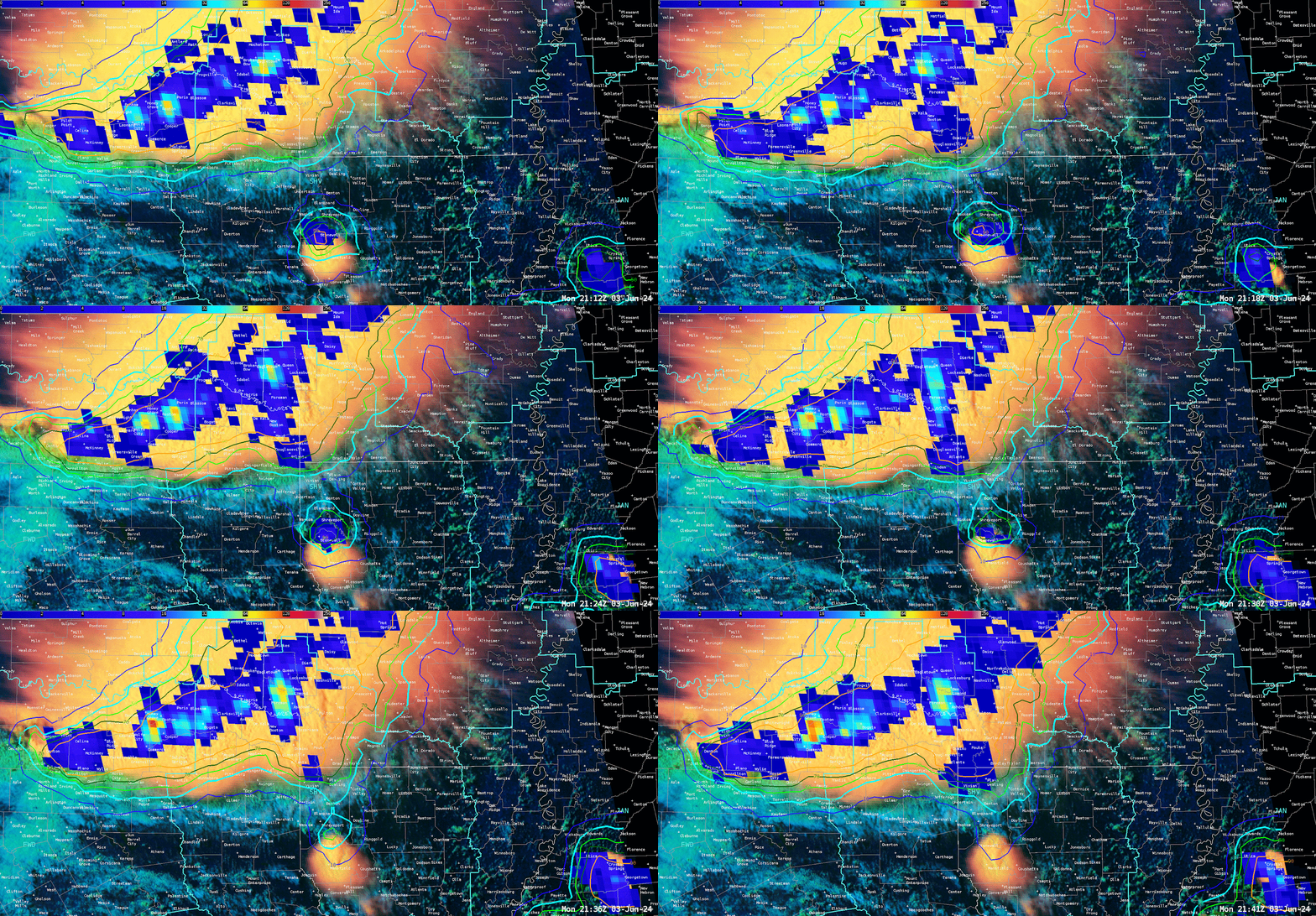
THE PHS MODEL GUIDANCE has had difficulty providing an accurate near term forecast with respect to the purely linear mode to the MCS as it moves east into the Texarkana region. This is most noticeable with respect to the southern portion of the linear convection. This can be seen easily below with the 3 hr forecast (in the image below) is the top panel of the image. The composite reflectivity (considered verification) is the bottom panel of the image.

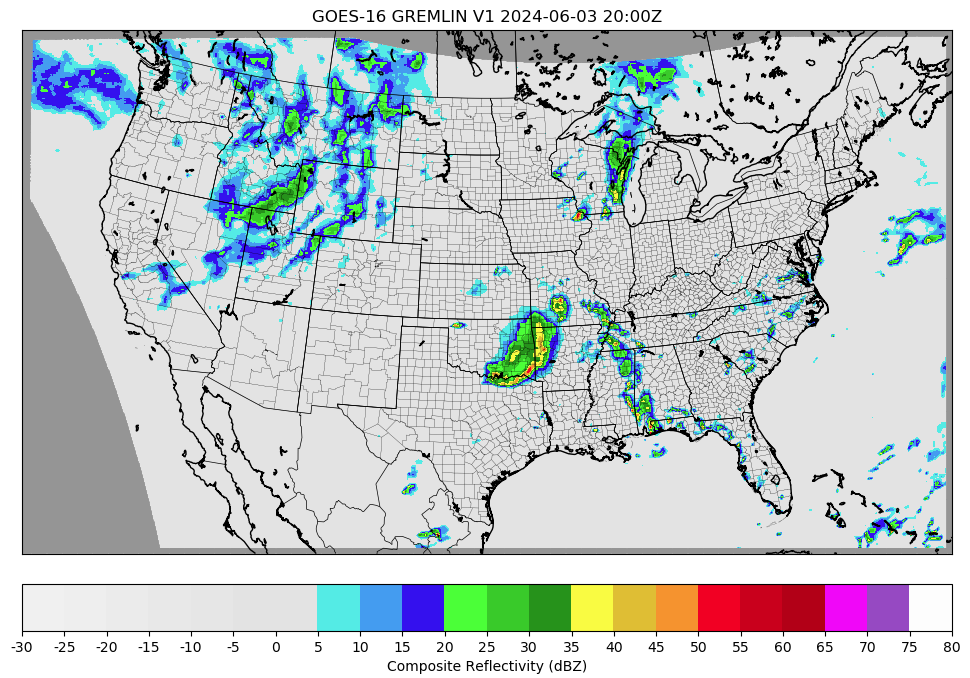
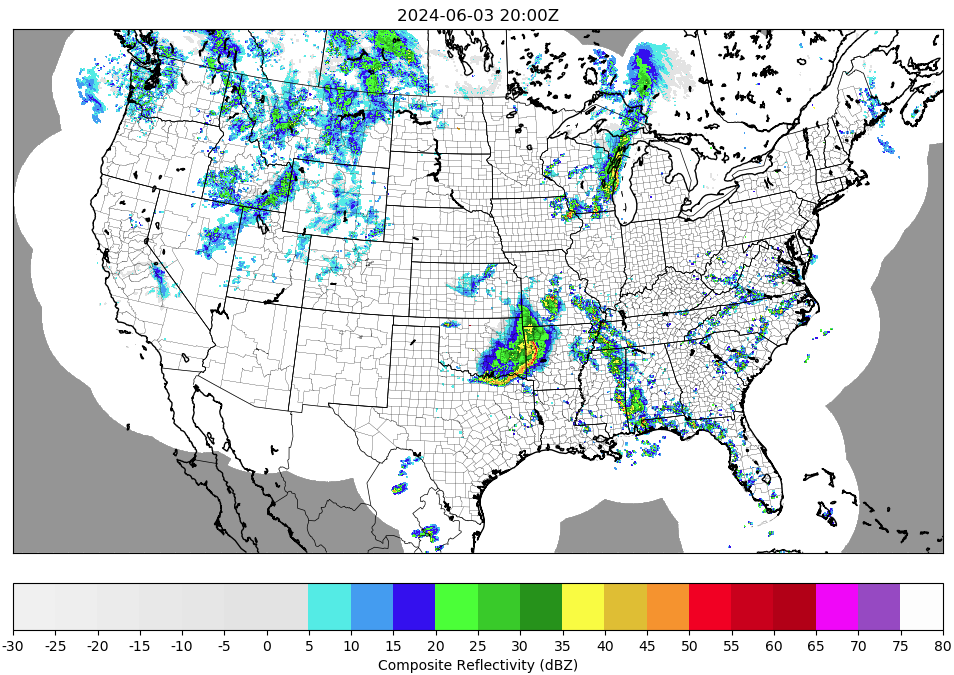
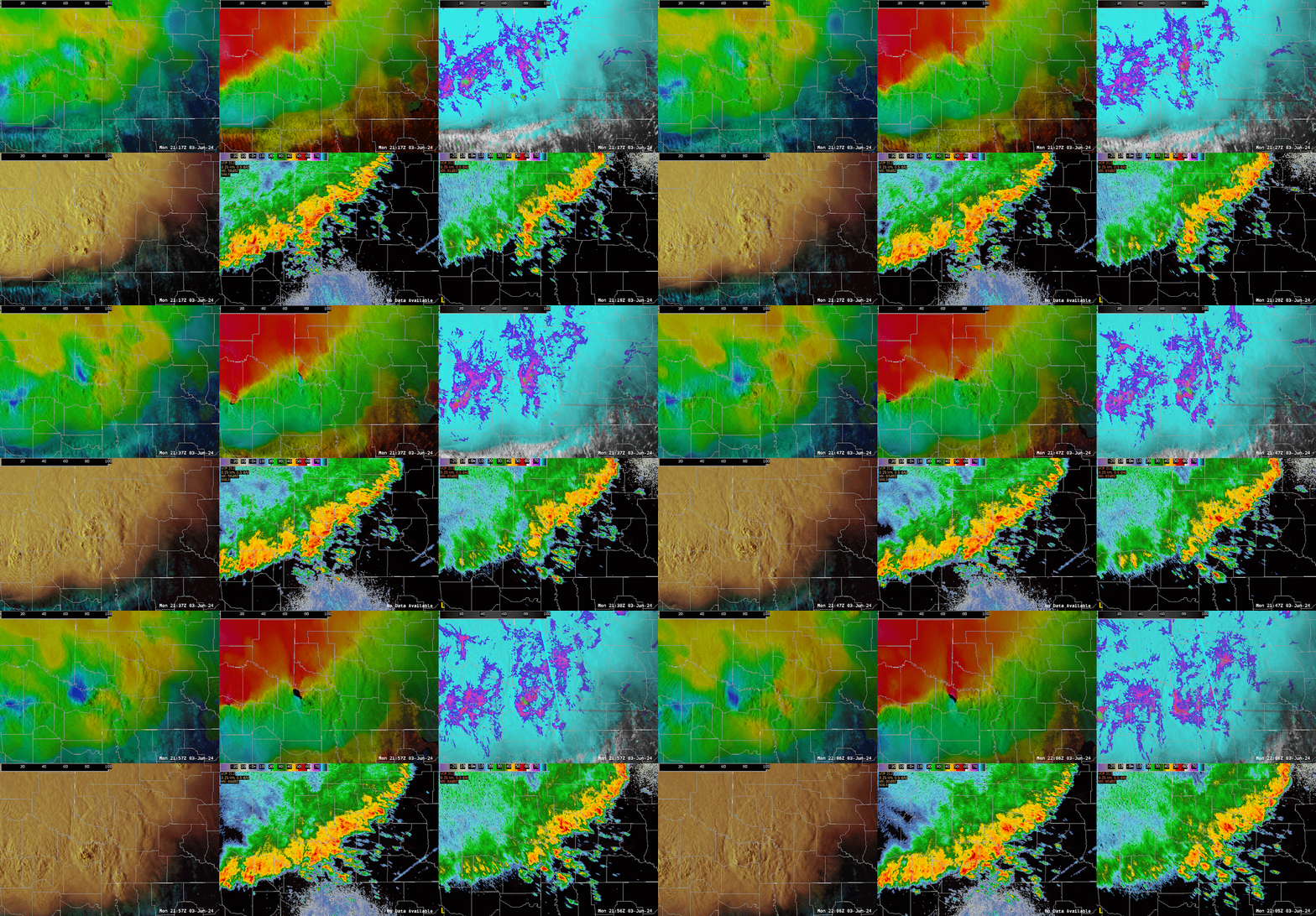
THE GREMLIN MACHINE LEARNING GUIDANCE on the other hand has performed very well with the linear MCS in the near terms, along with other convection further downstream to the east. In the images below Gremlin is the top image and MRMS (considered verification) is the bottom image.

5454wx

Tags: None

Severe thunderstorm warning issued for South Central Wisconsin

Solid signature from both nearby radars but the beam height was at least 8k feet. PHS environmental fields were supportive of a primary wind hazard. OCTANE divergence fields distinctly noted this cell with persistent strong divergence as it moved into the CWA. Low level wind fields were not as impressive with widespread STP of less than 0.2, despite strong instability in the PHS fields.

-Hellothere

Tags: None

High Confidence in Progressive/Weak MCS

KSHV radar trends illustrate a cold-pool dominated, weak MCS approaching the NW corner of the CWA. Many satellite products illustrated a consistent mainly sub-severe weather episode unfolding giving increasing confidence in the near-term forecast and expected impacts. Focus would be on any stronger individual updrafts for potential isolated severe thunderstorm warnings.

Overall, there was high confidence in approaching thunderstorms per radar and LightningCast data pinpointed the ongoing widespread nature of the convection, given several embedded impulses of GLM spikes behind the leading southeastward surging outflow boundary:

East Octane SpeedDirCTD-CTD_4Pan procedure provides more calculated parameters on top of RGB and ABI products to quickly diagnose convective strength/intensity.

The top 3 panels below (OCTANE speed, direction and Cloud-top Cooling and Divergence) identify a large-scale cirrus canopy with embedded updraft impulses.

Situational awareness was enhanced by adding on local KSHV and KLZK radar which helped to identify a SSW to NNE boundary and associated CI ahead of the main line, which OCTANE products began to illustrate (see center of each product, identifying increasing speed/directional divergence colocated to the convection along the boundary)

Given the environmental parameters, this would have been a location to examine for the potential of a severe thunderstorm warning, especially if associated radar trends (RIJ via radial velocity) indicate increasing downdraft wind potential.

– RED11248

Tags: None

High Confidence in Lightning activity:

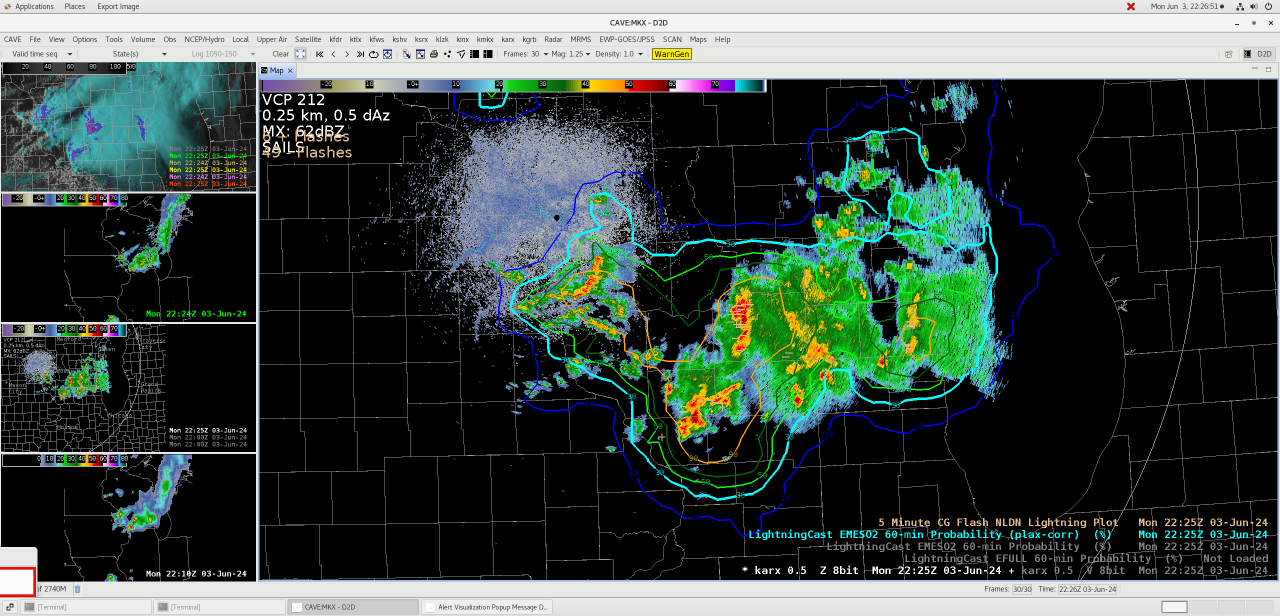
There is high confidence in lightning activity with the storms moving across southern Wisconsin this afternoon into this evening.  Based on the lightningcast product shown below, there is a greater than 90% chance of lightning within the orange outlines over the next hour.

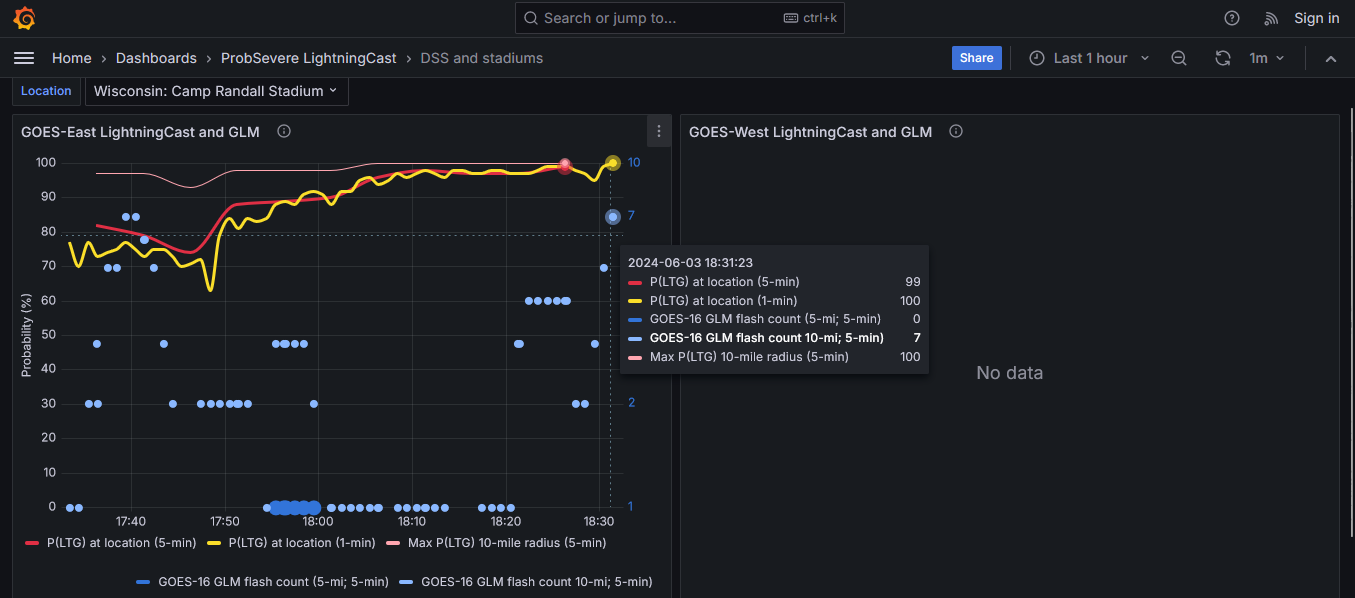
As you can see on the image below, this is a point forecast for Camp Randall Stadium, showing the same results.

-ULMCUBMAN

Tags: None