ENI Cell Merger Rapid Change in Rate/Area

One thing to keep in mind when looking at the ENTLN total lightning time series graphs is that you must pay attention to if there are any cell mergers in the lightning tracking or the change in flash rate could be misleading. Here is an example where it appears that the storm intensified and then weakened, but in reality the algorithm merged to storms together and then separated them. You can see this on on the time series graph for Pt11 at ~2037 UTC where the cell area rapidly increases at the same time that the lightning rate increased. This was followed by a rapid decrease in lightning flash rates and cell area as the algorithm resplit the cell. Note that radar data clearly indicated that the cells were two separate cells the entire time. Pt11

Looking at the cell polygons over the course of a few minutes also shows this well.

ENIBefore
Before ENTLN algorithm merged cells
ENIAfter
ENTLN algorithm merged cells into 1 giant cell
ENILater
ENTLN algorithm now splits cells apart
Tags: None

Lightning Jump Sample

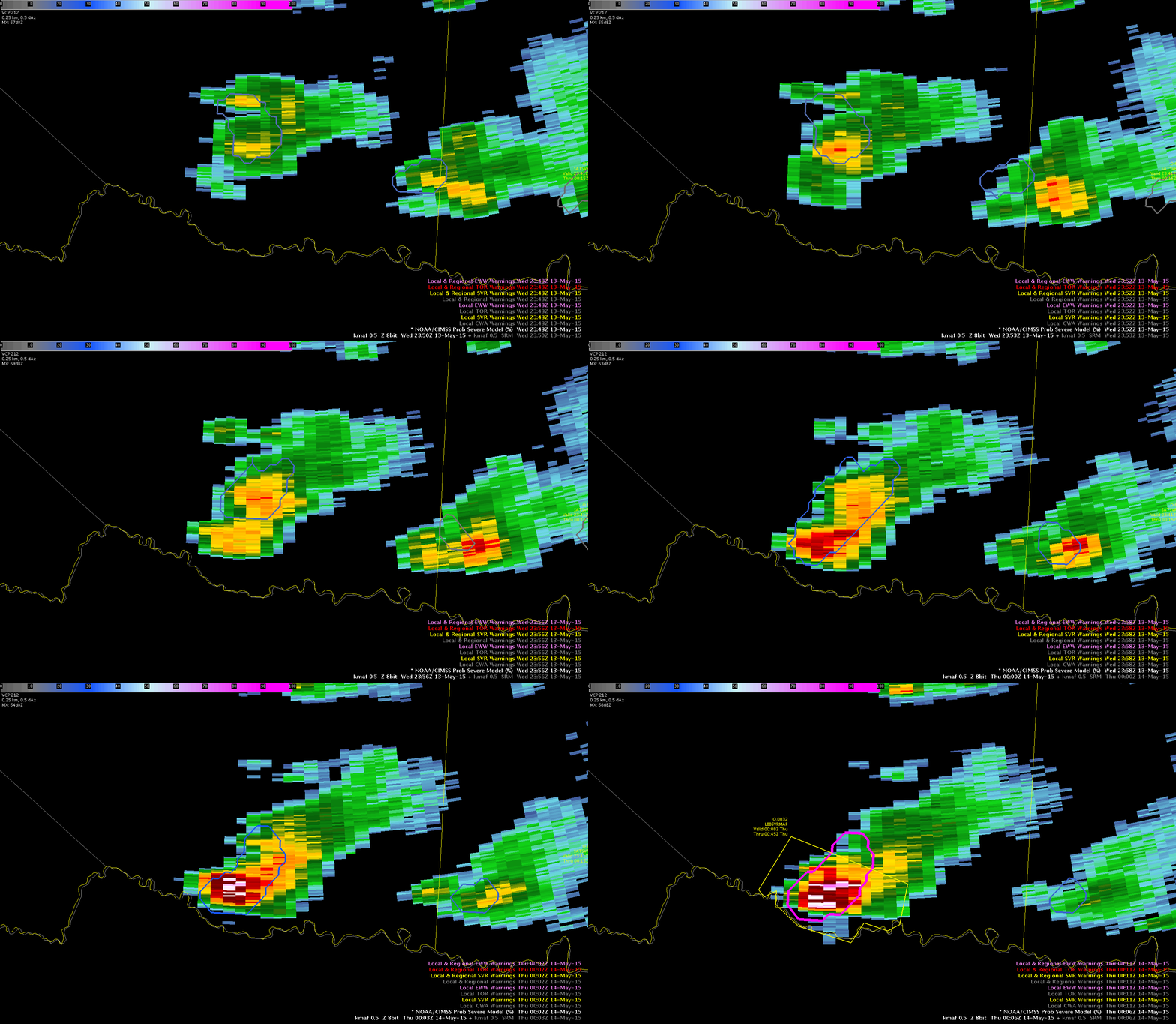
Image 1.  The Lightning Jump showed a 2 sigma at 2358Z (left image) in southwest TX.  The cell was in the process of strengthening at that time (right image).  19

Image 2.  Within 10 minutes the storm strengthened and showed a TBSS.

18

Will note this is using 0.5 degree and is 18,000 ft AGL about 130 nm away from the radar.

Image 3.  The Lightning Jump increased to a 4 sigma at 0010Z (left image).  A few minutes later this was reflected in the radar (right image).20

-Champion

Tags: None

Overshooting Tops and ENI Flash Rate

Just noticed that in one scan, there are what appear to be overshooting tops with the peak in intensity of flash rate in a cell, but the GOES-R OT product isn’t registering any pixels.

no_OT

Now go to the next scan, the Flash rate has decreased but now there are overshooting tops registering on the OT product.

OT_weaker_cell

I thought the OT product was supposed to detect the overshooting tops either when they first form, or before, not several scans after they appear to form in the visible satellite. ???

However, the ENI raw data points do correspond to the cell flash rate trends from scan to scan.

~Regina Phalange

Tags: None

ProbSevere in Warning Decision Making…Part 2

Here is another example where ProbSevere rapidly increased form 18% to 94% (click image to animate):

ProbSevere2The normalized vertical growth rate and the glaciation rate were both strong. In this case, I was confident enough to use the ProbSevere by itself to issue a severe thunderstorm warning. I started drawing the warning polygon prior to the highest percentage coming from ProbSevere. In the end, my polygon was issued nearly coincident with the highest probabilities.

Polarimetric Researcher

Tags: None

Overshooting Tops Observations

SJT had two instances of overshooting tops during the day today. Vigorous storms have been ongoing in or near the cwa through the afternoon and early evening. There have been clouds over these areas where overshooting tops detection has been indicated. In the instance below, you will see the overshooting tops detection showing red markers.  This happens only after there appears to be overshooting tops observed on the visible satellite.  Are the red markers indicating and outgrowth? Or is the red marker indicating new tops about to form. This seemed like a less likely scenario as the storm continued. Follow the next three graphics to see the tops indicated on vis with the red markers emerging.

UFFSU


top1

top2

top3

Tags: None

Need to Expire DTA Example

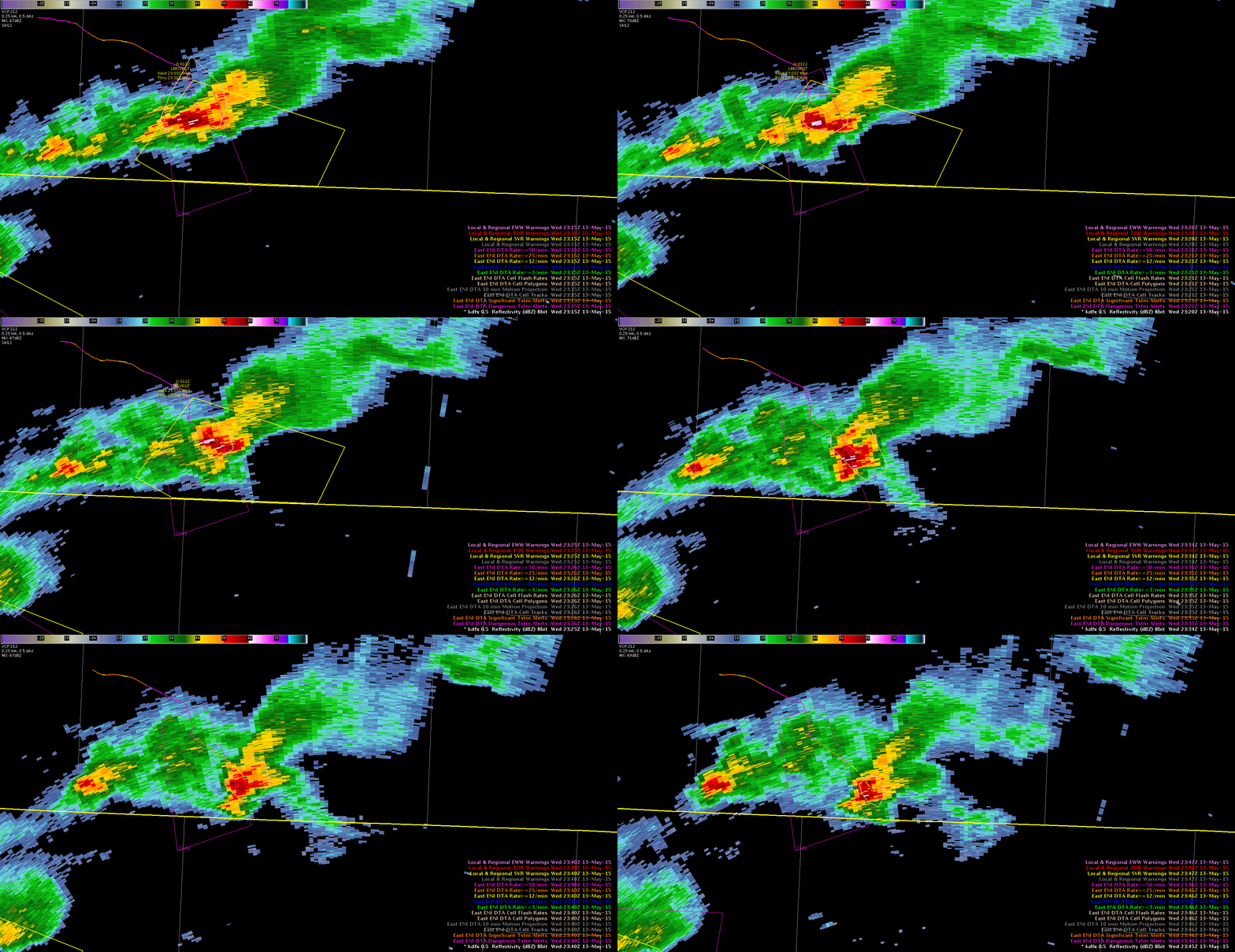
Here is an example where a DTA needs to be expired when the cell weakens.

2315-2345

This first image is from 2315z and it was looking good and properly tracking the storm.

DTA1

BUT….the storm took a hard right and now here at 2345…this doesn’t exactly look correct…

Suggestion- if the storm weakens down a category, the alert needs to be expired. You can see that the alert dropped a level on the line track but I didn’t have the other colors overlaid so you can’t see that polygon. I was focused on the DTA.

DTA2

Here is a radar loop of the progression.

DTA


Lauren13

Tags: None

ProbSevere in Warning Decision Making

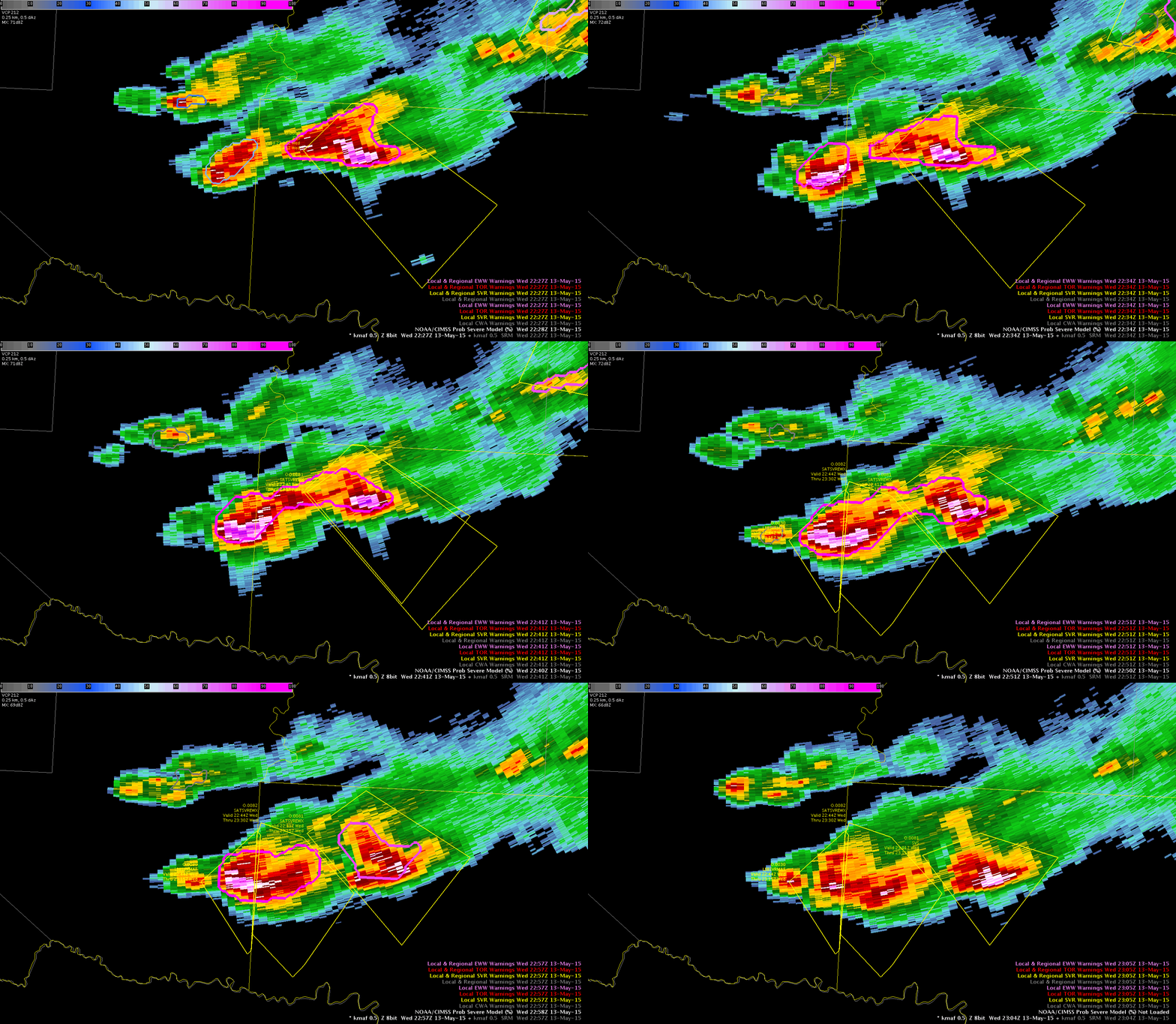
Here is an example where ProbSevere increased from 20% to 97% within 18 minutes (2218 to 2240 UTC) (click image to animate):

ProbSevereWarningA three-body scatter signature (TBSS) developed at the end of this time frame, indicating the presence of hail aloft.

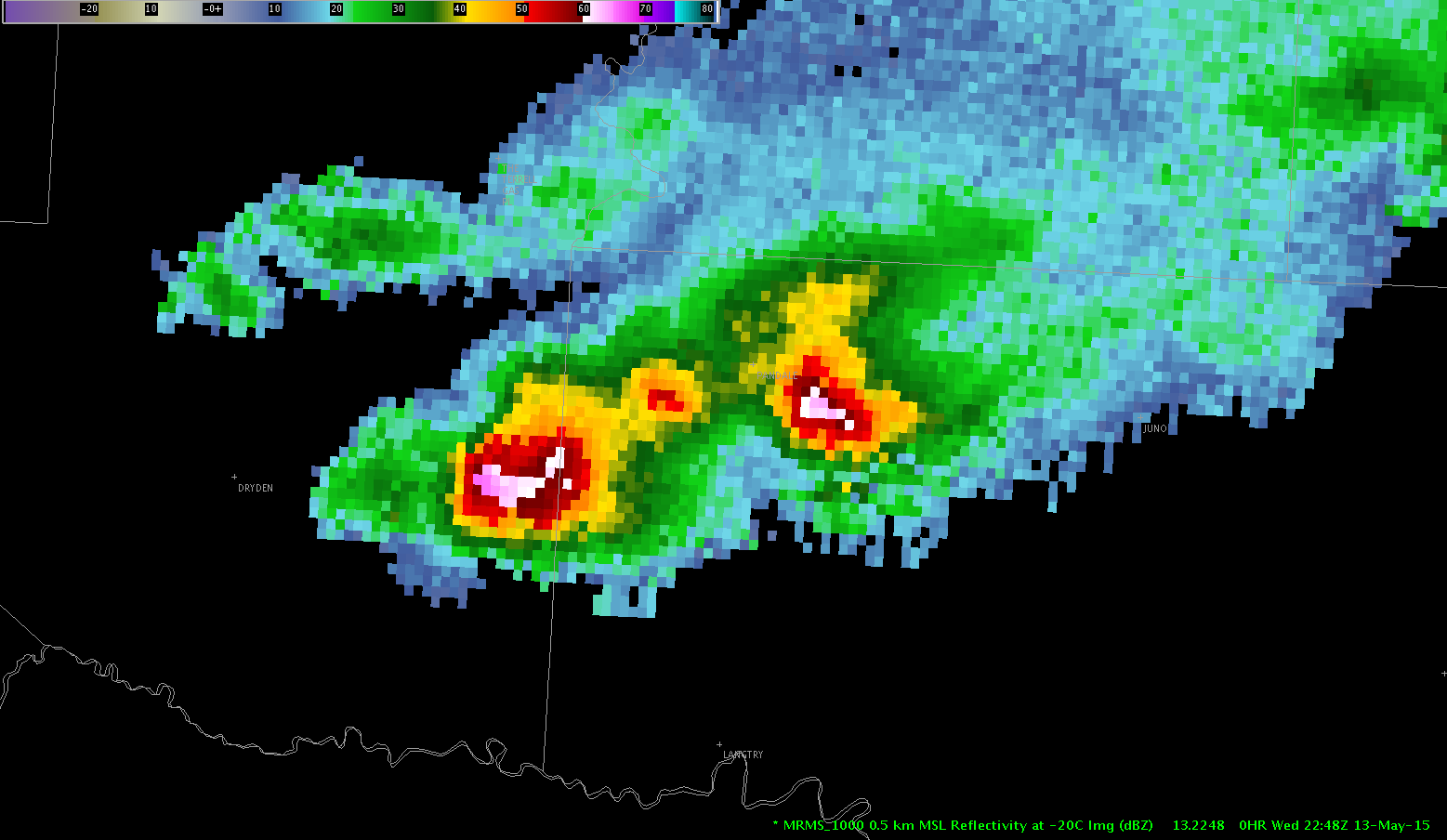
By 2248 UTC, MRMS indicated 65.5 dBZ at -20C:

MRMS_ProbSevereThis is another example where the rapidly increasing ProbSevere indicated an intensifying storm. A severe thunderstorm warning was issued for the storm.

Polarimetric Researcher

Tags: None

ProbSvr/Time Series for Warning Decision Making

With the severe thunderstorms that moved through the EWX CWA, we used ProbSvr and TimeSeries to help us decide if we were going to issue a new warning or expire/cancel a warning. Here are the examples from the two that we had going.

Here at 2308..the warning on the right was expiring at 2315z and the one on the left expires at 2330z. We needed to make a decision soon on the one on the right. It wasn’t too impressive in terms of reflectivity but we noted that the ProbSvr remained high and hadn’t faltered through the life of the storm. As well, the DTA (not shown) was continuing through the life of the storm as well. 2308Radar

At 2312..they are looking similar. At this point we decided to reissue a severe on the storm on the right. The ProbSvr holding strong every two minutes definitely helped us make this decision. Also to note the time series (shown at the bottom) is also steady on the one on the right.

2312Radar

At 2314z…we have issued a new severe on the one on the right and now the storm on the left is weakening per the ProbSvr. We were already considering letting the warning on that one expire so this helped our decision.

2314Radar


At 2322z…the storm on the right is still holding a strong ProbSvr Probability while the one on the left continues to diminish. We were still deciding if we wanted to issue a new one for the left for possibly a wind threat but at this point we decided to expire it.

2322radar

And as you can see at 2335…the left storm has dissipated.

2335z

Here are the time series for both storms. The one on the left is the strom from the left above and you can see the quick drop off. The one on the right held steady and continued to help our decision to issue a new warning.

TimeTwo


Also to note…this is a GIF from 13z-22z of the LAP CAPE data. We have been watching this each hour and the storms have been following the instability axis along the Texas border. We saw this earlier and were prepared for the storms to take that track.

CAPE

Lauren13/Ertel

Tags: None

Lightning Jump Detection Algorithm Suggestion

Image 1.  2238Z.  Sigma 1.

13

Image 2.  2239Z.  Sigma 2.

14

Image 3.  2240Z.  Sigma 3.

15

Image 4.  2241Z.  Sigma 5.

16

Image 5.  2242Z.  Sigma 0?

17

It’s nice having this information update every minute to capture trends.  However, since it updates every minute on AWIPS2 the color could change every minute over a short time (like above).  Forecasters can easily miss these fast changes given all of the data they need to look at.  It would be better for the data to update every minute, but leave the strongest Sigma in place longer.  (Maybe for 5 minutes using a separate product?)  This would allow forecasters to see the largest Sigma more easily.

So in the example above, Image 4 would show Sigma 5 for the area highlighted from 2241Z until 2246Z.  At 2247 the Sigma 5 color for the area highlighted would be replaced by the next strongest Sigma in that area (if any).

-Champion

Tags: None

T’Storm Development Ahead of Line

Thunderstorms have combined to form a line moving southeast across the southwestern SJT cwa. CI Prob was indicating further developing and convection ahead of line. The model showed a good bit of possible development ahead of this line.  The indication of convection has so far been overdone. This is similar to surface based warming that fuels PM convection. Though, a the line has extended north into this region and one new cell has formed in the area being watched closely. The first photo indicated CI Prob and the area forecasters should focus on.

051315 open development ahead of line

Here you can see where a cell in the concerned area within SJT cwa developed and the line elongated northward.

051315 storm pop

UFFSU

Tags: None