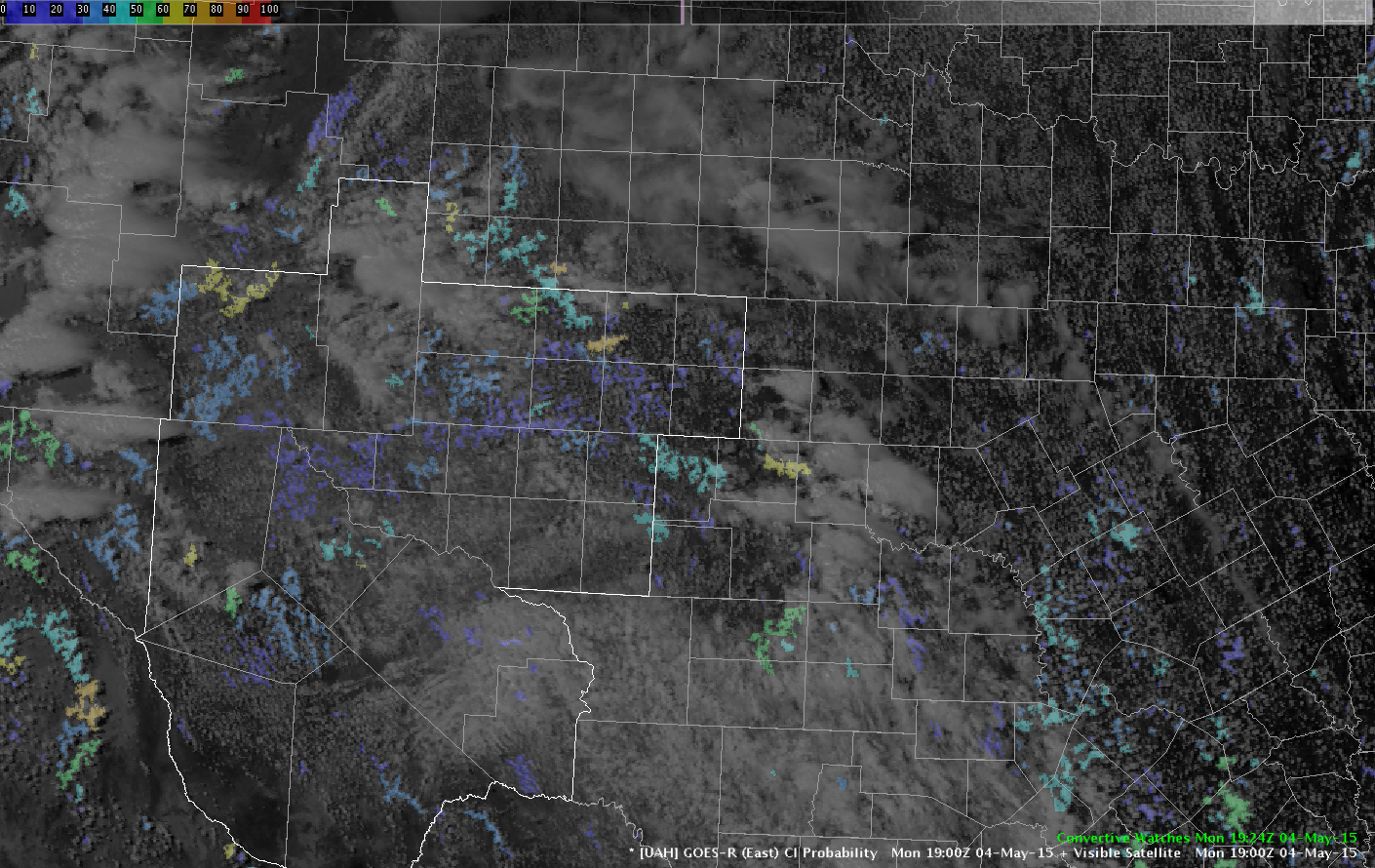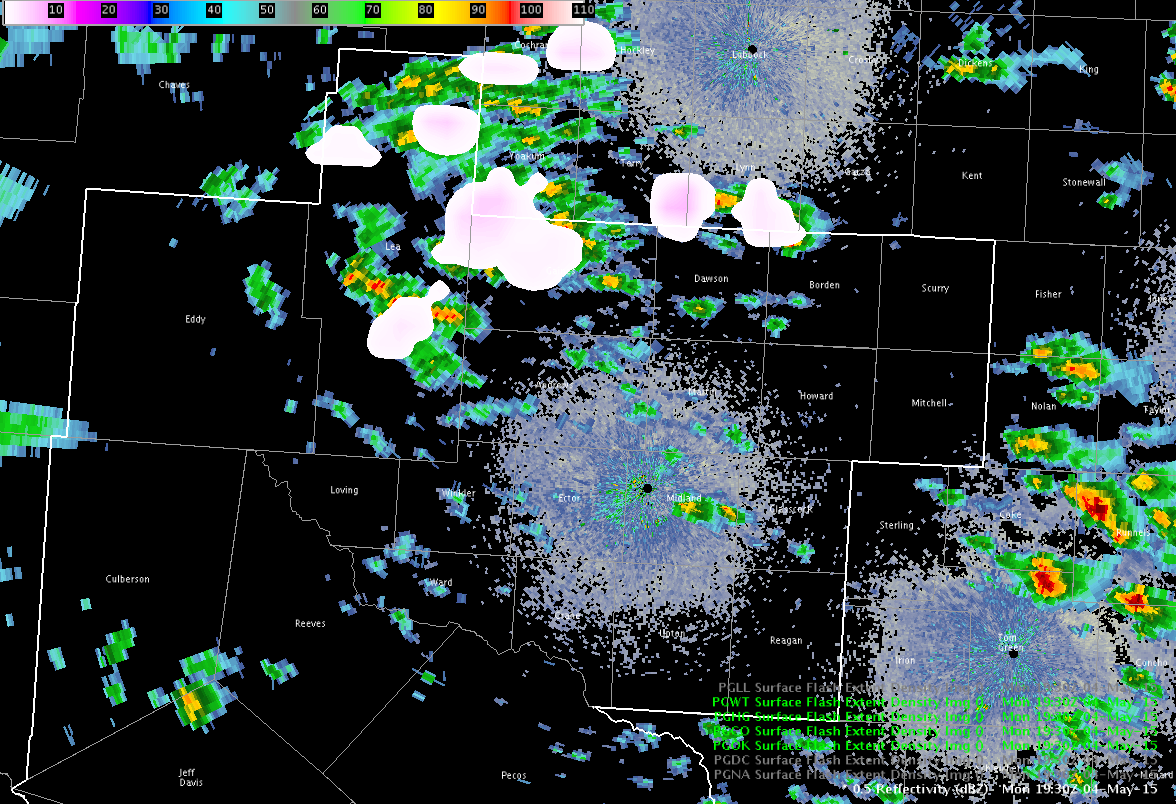
Was hoping to use the Convective Initiation (CI) product closer to the area in eastern Kansas, but unfortunately cirrus in the area limited the ability to use the product. The first image below (1730Z Visible Satellite) indicates the product was trying to indicate convection development, but then cirrus really started to contaminate the area and led to no highlights as the convection started to develop (middle image at 1830Z). The bottom image (1900Z) shows more mature convection on visible satellite. -SRF
Month: May 2015
CI vs Radar
Changing Colors
As always, the first order of business when you’re working at a new office or AWIPS system – build build build! Currently working on procedures and my personal favorite, custom color tables. If I was thinking ahead I would’ve brought some from home.
One of the color tables I always change: CAPE. The default “gridded data” color table that AWIPS loves so much just doesn’t fit well.
That magenta really stands out, as if I really care about areas of zero CAPE.
After:
Much better! I did something similar for the Lifted Index: making everything above about 2C transparent.
Now back to the real fun: convection blowing up in my CWA Du Jour (Midland, TX) and clearing AlertViz banner after AlertViz banner.
-V. Darkbloom
Initial Look at Some of the EWP Products
Initial thoughts on convection at Topeka ~19Z
A quick glance at the surface obs and SPC mesoanlyses indicates a weak boundary located across the Topeka CWA, stretching WSW to ENE.
GOES-R layer CAPE indicates the sharp instability gradient across the CWA with CAPE near 1300 J/KG for southeastern counties (Coffey/Anderson/Franklin) with a few hundredths of CAPE for the northwestern counties where weak showers/thunderstorms pushed through the area earlier today. Convective Initiation suggests low probability of formation moving into the south-central portions.
KTWX radar indicates weak convection across Dickinson county with minimal lightning activity (less than 5-7 flashes/min and 1-2 CGs over the past 30 mins). These storms have greater potential for future development as they move east towards greater instability as noted in the GOES-R products.
Brick Tamland