


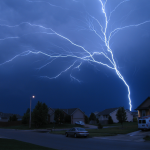
As cell phone towers continue to fill the landscape, evaluating the influence of such human-made structures and their impact on lightning data continues to be a priority for one research scientist. A recent article by…
Official websites use .gov
A
.gov website belongs to an official government
organization in the United States.
Secure .gov websites use HTTPS
A
lock (
) or https:// means you’ve safely connected to
the .gov website. Share sensitive information only on official,
secure websites.
As cell phone towers continue to fill the landscape, evaluating the influence of such human-made structures and their impact on lightning data continues to be a priority for one research scientist. A recent article by…
During the spring, National Severe Storms Laboratory Research Scientist Adam Clark is usually in the NOAA Hazardous Weather Testbed. In fact, he has been a lead planner and facilitator of this groundbreaking experiment since 2010.…
We are saddened to announce the death of one of the NOAA National Severe Storms Laboratory’s renowned scientists who made significant and revolutionary contributions to thunderstorm science. David “Dave” Rust, NSSL scientist emeritus, passed away…
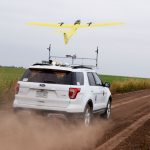
Researchers test unmanned aircraft systems for measuring the lower atmosphere, potentially improving short term weather forecasts Researchers from NOAA’s National Severe Storms Laboratory, The University of Oklahoma, University of Colorado and Meteomatics have begun a…
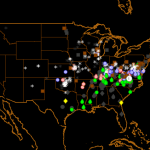
Is it raining, snowing or hailing where you are? Tell us about it! Report the weather at your location any time on the mPING app to help NOAA researchers and forecasters, and join citizen scientists…
Meteorologists are always looking for better ways to measure the lower atmosphere. This spring, researchers from NOAA’s National Severe Storms Laboratory (NSSL) will join with others to test the value of airborne, mobile observing systems…
The national weather radar system used throughout the United States by NOAA National Weather Service forecasters to “see” weather across the country is unique because it can be upgraded and modified with the newest capabilities,…
Check out our Severe Weather 101 pages to learn about thunderstorms, tornadoes, winter weather, and beyond!
Citizen scientists around the world, not just those in the United States, can now submit weather observations and view reports on the go using the newly upgraded mPING smart phone application. Developers from NOAA’s National…
NOAA’s National Severe Storms Laboratory is celebrating 51 years of history. Take a look back at some of the milestones in our first two decades.