



Meteorologists are always looking for better ways to measure the lower atmosphere. This spring, researchers from NOAA’s National Severe Storms Laboratory (NSSL) will join with others to test the value of airborne, mobile observing systems…
Official websites use .gov
A
.gov website belongs to an official government
organization in the United States.
Secure .gov websites use HTTPS
A
lock (
) or https:// means you’ve safely connected to
the .gov website. Share sensitive information only on official,
secure websites.
Meteorologists are always looking for better ways to measure the lower atmosphere. This spring, researchers from NOAA’s National Severe Storms Laboratory (NSSL) will join with others to test the value of airborne, mobile observing systems…

The national weather radar system used throughout the United States by NOAA National Weather Service forecasters to “see” weather across the country is unique because it can be upgraded and modified with the newest capabilities,…
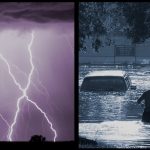
Check out our Severe Weather 101 pages to learn about thunderstorms, tornadoes, winter weather, and beyond!
Citizen scientists around the world, not just those in the United States, can now submit weather observations and view reports on the go using the newly upgraded mPING smart phone application. Developers from NOAA’s National…
NOAA’s National Severe Storms Laboratory is celebrating 51 years of history. Take a look back at some of the milestones in our first two decades.
With several major events in the weather community coming up, here are eight things you need to know about NOAA’s National Severe Storms Laboratory.
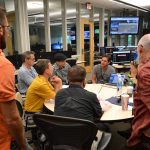
The 2015 Multi-Radar / Multi-Sensor (MRMS) Hydro Experiment aimed to improve the accuracy, timing, and specificity of flash flood watches and warnings.
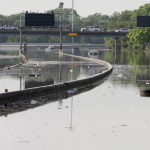
Recent flooding in Texas and Oklahoma tested NSSL’s experimental Multiple Radar Multiple Sensor (MRMS) Flooded Locations and Simulated Hydrograph (MRMS-FLASH) system.

NOAA scientists are staying up late to probe nighttime thunderstorms. Learn more about Plains Elevated Convection at Night, a field campaign to collect data in the western Great Plains.
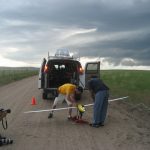
NSSL scientists will participate in the annual meeting of the International Society on Atmospheric Research using Remotely-piloted Aircraft (ISARRA) in Norman, Oklahoma, May 20 to 22 to share knowledge about using these aircraft systems to observe and monitor the atmosphere.