



NSSL researcher Dave Jorgensen will deploy to Diego Garcia, an atoll south of the Equator in the Indian Ocean from November 1 to December 15 2011.
Official websites use .gov
A
.gov website belongs to an official government
organization in the United States.
Secure .gov websites use HTTPS
A
lock (
) or https:// means you’ve safely connected to
the .gov website. Share sensitive information only on official,
secure websites.
NSSL researcher Dave Jorgensen will deploy to Diego Garcia, an atoll south of the Equator in the Indian Ocean from November 1 to December 15 2011.
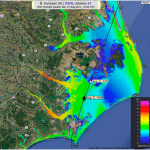
The Coastal and Inland Flooding Observation and Warning (CI-FLOW) project began producing real-time 84-hour simulations of total water level in coastal North Carolina from Hurricane Irene on August 23, 2011.
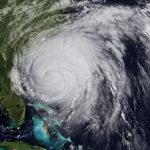
The Coastal and Inland Flooding Observation and Warning (CI-FLOW) project began producing real-time 84-hour simulations of total water level in coastal North Carolina from Hurricane Irene on Tuesday, August 23.
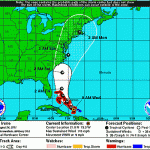
Researchers with the Coastal and Inland Flooding Observation and Warning (CI-FLOW) project are preparing for Hurricane Irene to test their total water level prediction system in North Carolina later this week.
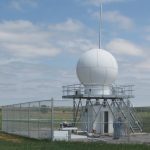
Monthly Weather Review has published the results of an observation system simulation experiment (OSSE) that shows how measurements from various hypothetical remote-sensing networks would impact weather analyses and forecasts.
NSSL co-hosted the Southern Thunder 2011 Workshop at the National Weather Center in Norman, Okla. last week along with the NOAA Storm Prediction Center and the University of Oklahoma.
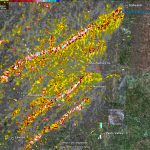
In this record-breaking spring tornado season, emergency responders are saving precious hours when they count the most – in the immediate aftermath of a devastating storm.
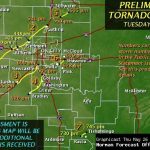
Seven destructive tornadoes struck Oklahoma on May 24, 2011. The tornadoes were well forecast by the National Weather Service (NWS), and NSSL was in position to capture the storms in several ways.
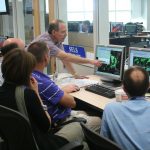
NSSL scientists are preparing to host dozens of researchers, modelers and forecasters from around the world to work side-by-side on improving severe weather forecasts and warnings.
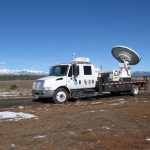
NSSL deployed the NOAA X-Pol mobile radar in southwestern Colorado over the weekend as part of the Southwest Colorado Radar project to collect data on snowfall in the area. The project continues through the end of February, 2011.