


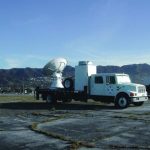
A team of NSSL scientists operated NOAA NSSL’s mobile X-band dual-polarized radar (NO-XP) in Colorado through September 20 to collect data and analyze storm characteristics in the Gunnison river basin.
Official websites use .gov
A
.gov website belongs to an official government
organization in the United States.
Secure .gov websites use HTTPS
A
lock (
) or https:// means you’ve safely connected to
the .gov website. Share sensitive information only on official,
secure websites.
A team of NSSL scientists operated NOAA NSSL’s mobile X-band dual-polarized radar (NO-XP) in Colorado through September 20 to collect data and analyze storm characteristics in the Gunnison river basin.
Students working for the National Severe Storms Laboratory are spending their summers making phone calls to the public affected by severe thunderstorms.
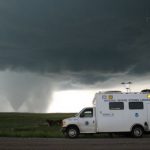
VORTEX2 research teams made science history by deploying 70 instruments, including 10 mobile radars and at least 30 other vehicles, on a tornadic supercell for the first time.
The NOAA Hazardous Weather Testbed (HWT) Experimental Warning Program (EWP) is conducted its 2009 Spring Experiment at the National Weather Center (NWC) in Norman, Oklahoma for six weeks this past Spring.
NSSL’s SMART-R team has deployed a mobile radar near a target burn area each winter to supply real-time close-up radar data during rain eventsA/USGS prototype Debris Flow Warning System experiment.
VORTEX2, the Verification of the Origins of Rotation in Tornadoes Experiment – 2 will focus on answering new questions about how, when, and why tornadoes form, why some thunderstorms produce tornadoes and others do not, the structure of tornadoes, and the relationship of tornadic winds to damage.