


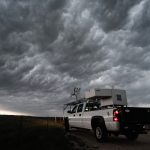
The LiDAR team collects observations for TORUS, utilizing the device to track how quickly all the dust, dirt and particles move in the atmosphere.
Official websites use .gov
A
.gov website belongs to an official government
organization in the United States.
Secure .gov websites use HTTPS
A
lock (
) or https:// means you’ve safely connected to
the .gov website. Share sensitive information only on official,
secure websites.
The LiDAR team collects observations for TORUS, utilizing the device to track how quickly all the dust, dirt and particles move in the atmosphere.
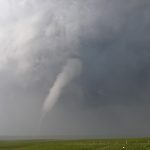
Targeted Observation by Radars and Unmanned Aircraft Systems of Supercells, or TORUS, will be discussed during a news conference and open house.
Severe weather alerts like tornado warnings are aimed at keeping people safe during a storm. But how do people in the path of storms use alerts?
For Women’s History Month in March, we are highlighting some of NOAA’s National Severe Storms Laboratory women scientists and their current research.

For Women’s History Month in March, we are highlighting some of NOAA’s National Severe Storms Laboratory women scientists and their current research.

In honor of Women’s History Month, we are highlighting some of NOAA’s National Severe Storms Laboratory women scientists and their current research.
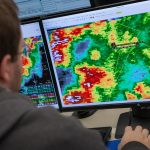
A new book highlights the biggest technological upgrade to Doppler radars since first installed – dual-polarization technology.
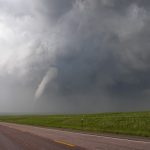
Radars are a vital tool for weather forecasters because they provide a detailed picture of storms as they’re happening. A new radar technique is helping forecasters provide more accurate information about rain and snow storms.
NSSL Deputy Director Lans Rothfusz announced his retirement at the end of 2018 and NSSL is pleased to announce Kurt Hondl as the new deputy director.
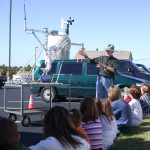
Sherman Fredrickson retired in early December after working over 40 years. He remembers a time atmospheric measurements were made via pen and pad.