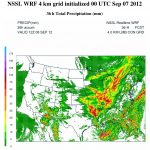
Addition to weather model helps forecast precip types more accurately

An NSSL microphysics scheme that will help forecast six different types of precipitation more accurately was included in the most recent update of the Weather Research and Forecasting (WRF) model. The model is used by operational meteorologists and refined by atmospheric researchers to help forecast thunderstorms and other smaller scale weather with greater realism.
The NSSL scheme predicts the development of water and ice particles in clouds. Like other schemes, it categorizes particles into broad classes of liquid (small cloud droplets or larger rain drops) and ice (small crystals, snow particles, graupel, and hail). Both the amount of mass and the number of particles are tracked, so that the average particle size is predicted. The new NSSL scheme adds a prediction of graupel particle density.

Graupel is a type of ice particle that has a lot of small water drops frozen onto it (rime ice), and can vary in widely in density. Graupel that starts as a freezing rain drop will have higher density than graupel that starts as a rimed ice crystal. Typical schemes have a constant density for graupel and a constant fall speed relationship. Predicting the density, however, allows a much greater range of fall speeds and can result in a more realistic distribution of graupel in a storm. This then affects where the rain (melted graupel) falls to ground, and the melting and evaporation cool the air. The cold air outflow is important for storm motion, longevity, and even severity.

NSSL’s Ted Mansell was instrumental in getting the scheme into NCAR WRF and plans to test it in the NOAA Hazardous Weather Testbed during the 2013 Spring Experiment.

Addition to weather model helps forecast precip types more accurately

An NSSL microphysics scheme that will help forecast six different types of precipitation more accurately was included in the most recent update of the Weather Research and Forecasting (WRF) model. The model is used by operational meteorologists and refined by atmospheric researchers to help forecast thunderstorms and other smaller scale weather with greater realism.

The NSSL scheme predicts the development of water and ice particles in clouds. Like other schemes, it categorizes particles into broad classes of liquid (small cloud droplets or larger rain drops) and ice (small crystals, snow particles, graupel, and hail). Both the amount of mass and the number of particles are tracked, so that the average particle size is predicted. The new NSSL scheme adds a prediction of graupel particle density.

Graupel is a type of ice particle that has a lot of small water drops frozen onto it (rime ice), and can vary in widely in density. Graupel that starts as a freezing rain drop will have higher density than graupel that starts as a rimed ice crystal. Typical schemes have a constant density for graupel and a constant fall speed relationship. Predicting the density, however, allows a much greater range of fall speeds and can result in a more realistic distribution of graupel in a storm. This then affects where the rain (melted graupel) falls to ground, and the melting and evaporation cool the air. The cold air outflow is important for storm motion, longevity, and even severity.

NSSL’s Ted Mansell was instrumental in getting the scheme into NCAR WRF and plans to test it in the NOAA Hazardous Weather Testbed during the 2013 Spring Experiment.

Addition to weather model helps forecast precip types more accurately

An NSSL microphysics scheme that will help forecast six different types of precipitation more accurately was included in the most recent update of the Weather Research and Forecasting (WRF) model. The model is used by operational meteorologists and refined by atmospheric researchers to help forecast thunderstorms and other smaller scale weather with greater realism.

The NSSL scheme predicts the development of water and ice particles in clouds. Like other schemes, it categorizes particles into broad classes of liquid (small cloud droplets or larger rain drops) and ice (small crystals, snow particles, graupel, and hail). Both the amount of mass and the number of particles are tracked, so that the average particle size is predicted. The new NSSL scheme adds a prediction of graupel particle density.

Graupel is a type of ice particle that has a lot of small water drops frozen onto it (rime ice), and can vary in widely in density. Graupel that starts as a freezing rain drop will have higher density than graupel that starts as a rimed ice crystal. Typical schemes have a constant density for graupel and a constant fall speed relationship. Predicting the density, however, allows a much greater range of fall speeds and can result in a more realistic distribution of graupel in a storm. This then affects where the rain (melted graupel) falls to ground, and the melting and evaporation cool the air. The cold air outflow is important for storm motion, longevity, and even severity.

NSSL’s Ted Mansell was instrumental in getting the scheme into NCAR WRF and plans to test it in the NOAA Hazardous Weather Testbed during the 2013 Spring Experiment.

Share this:

NSSL researchers join large, international flash flood project in Europe

10-year project expected to reveal important findings beneficial to the United States

NOAA, NASA and the University of Connecticut are representing the United States in the Hydrological Cycle in the Mediterranean Experiment (HyMeX), the largest weather field research project in European history.

HyMex is a 10-year international effort to better understand, quantify and model the hydrologic cycle in support of improved forecasts and warnings of flash floods in the Mediterranean region.

The project targets central Italy, southern France, the Balearic Islands, Corsica and northern Italy — all areas particularly susceptible to devastating flash flood events. Improved understanding of the land, atmosphere and ocean interactions that contribute to flash flooding in this part of the world will advance the state of the science that will ultimately be represented in forecast models with application in the United States.

NOAA National Severe Storms Laboratory (NSSL) researchers will operate a mobile radar, NOAA – XPol (NOXP), in southeast France from Sept. 10 to Nov. 10. This is the first of several special observation periods during the HyMeX 10-year timeframe. Additionally, NOAA’s Satellite and Information Service is sponsoring scientists from New Mexico Tech to operate and evaluate a Lightning Mapping Array during HyMeX to support product development and validation for the future Geostationary Lightning Mapper on NOAA’s GOES-R satellite, which is scheduled to launch in late 2015.

The radar will provide high-resolution data and low altitude scans to help determine the size of the raindrops, the intensity of rainfall, and rainfall rates to help predict flash flooding conditions in the Cévennes Vivarais region of France.

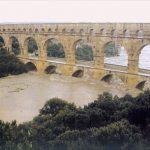
During autumn, onshore moisture from the Mediterranean Sea encounters the 5,000-feet high Cévennes Mountains in southeast France making numerous towns and villages particularly subject to severe flash flood events.

Over the next three months, NSSL researcher will operate the NOAA-XPol mobile radar in southeast France as part of the HyMeX experiment, the largest weather field research project in European history.

“Data collected in the air, at sea and on land will shed light on how catastrophic flash-flooding events begin, which may help local officials better prepare for and respond to these types of emergencies,” said Jonathan Gourley, Ph.D., an NSSL research hydrologist.

Other sensors include three instrumented research aircraft, three research ships, buoys, ocean sensors, additional mobile precipitation radars, cloud radars and microradars, hundreds of rain gauges, ten disdrometers (to measure size and speed of individual raindrops), a dozen lidars, sonar, instrumented balloons, wind profilers, and a lightning mapping array.

NSSL’s participation in HyMeX is sponsored by MétéoFrance, and operations are coordinated with the Cévennes-Vivarais Mediterranean Hydro-Meteorological Observatory, The University of Grenoble, NASA, University of Connecticut and Cemagraf.

Share this: